
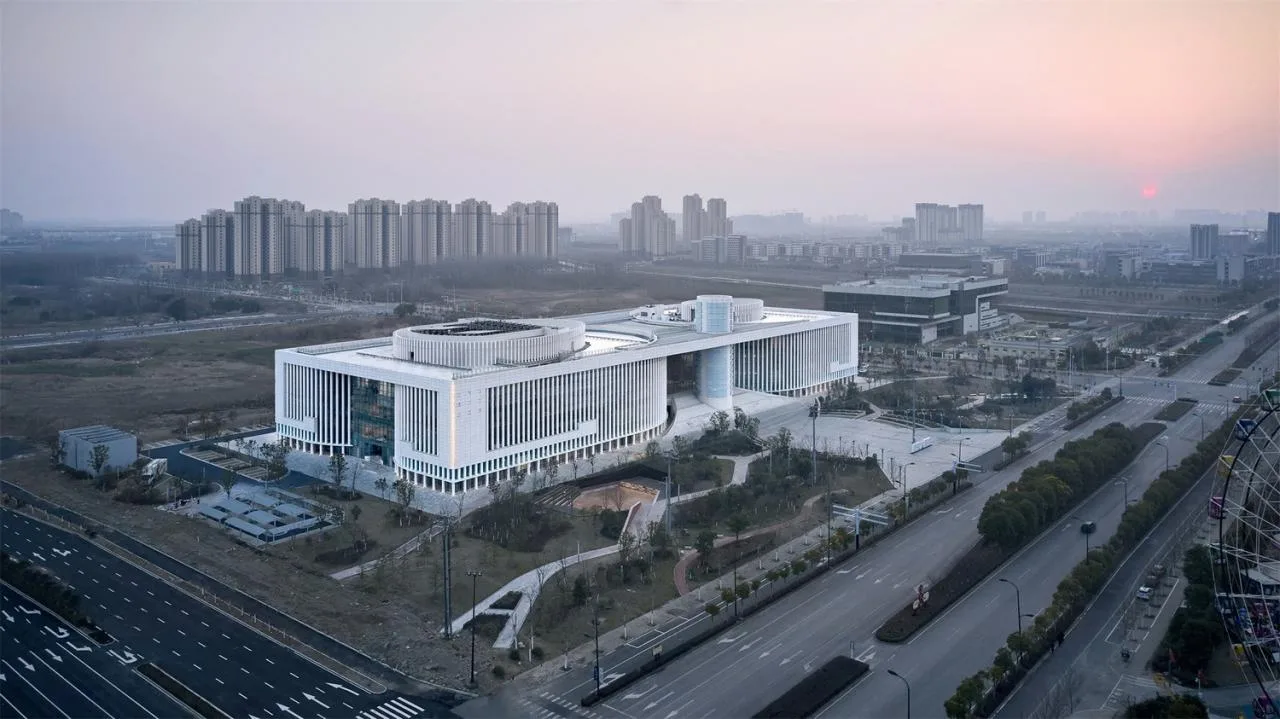
△ Aerial view of the northeast corner © Octopus sees architecture
Overview
The Feidong County Grand Theater Cultural Center is situated within the Feidong County Government Cultural Center area in Hefei City. Serving as a key urban spatial landmark on the main axis of the Eastern New City, this government cultural district is designed to become a comprehensive hub for business offices and premium services with regional significance. It emphasizes the development of four major projects under Feidong County’s 2016 “Ten Major Projects,” known as the “Three Museums and One Center” initiative, which includes the grand theater, government service center, planning museum, and the library and local archives.
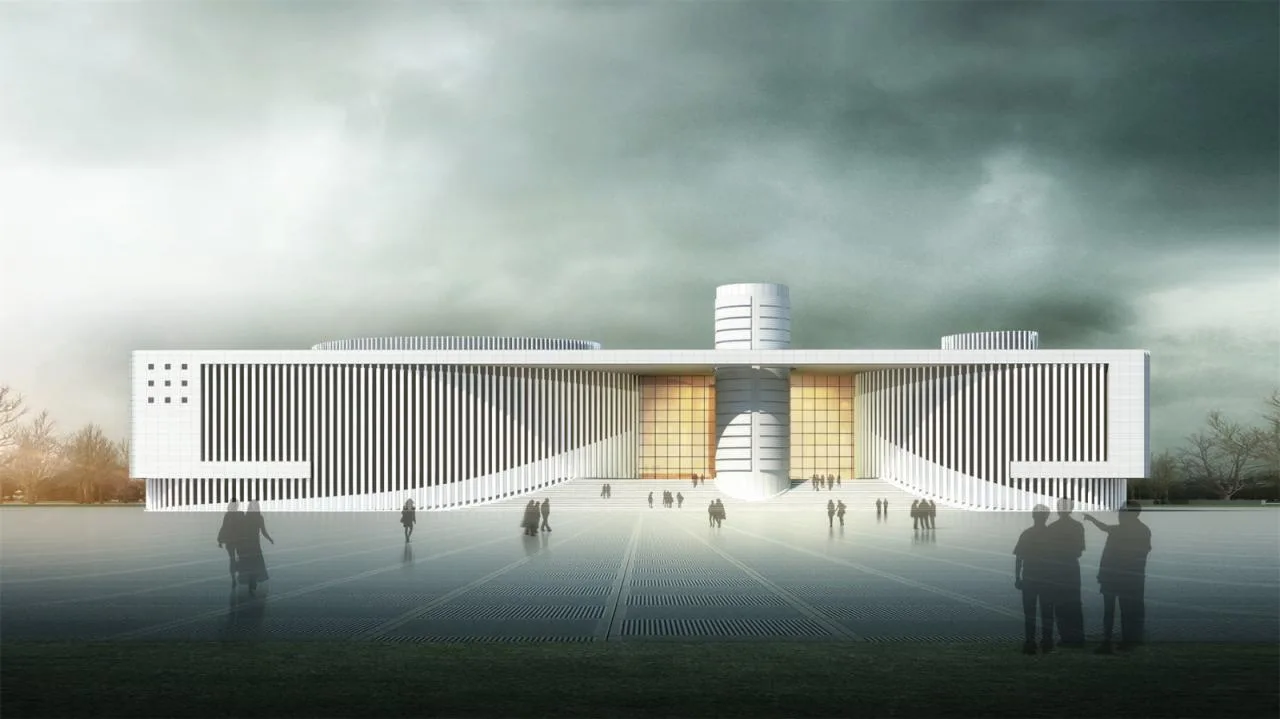
△ Rendered view
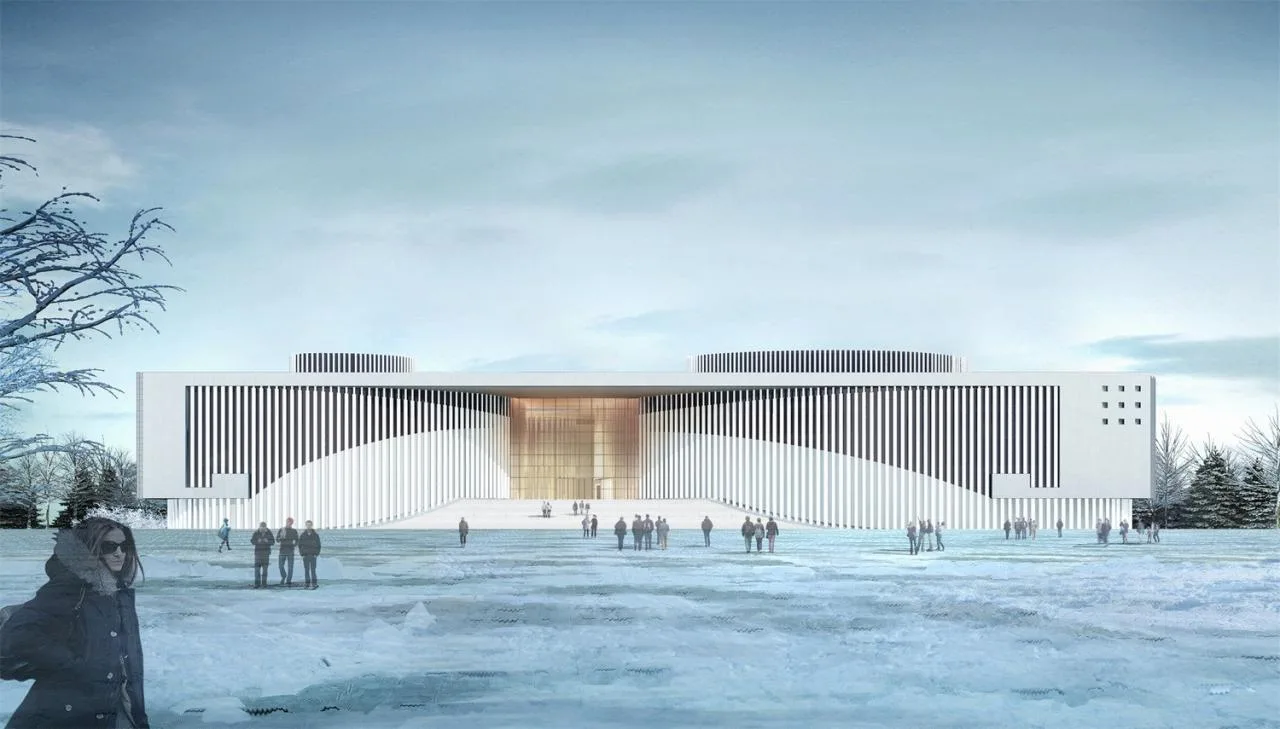
△ Rendered view
Location and Environment
The cultural center occupies the public and landscape core areas of the Eastern New City, positioned south of Yaogang Road and west of Shenxiu Road. To the north, it faces Hehu Lake across the road and extends to the county government office complex, forming the city’s main development axis alongside the Feidong County Government Service Center, Planning Museum, and the High-Speed Railway Feidong Station. On the west, it connects with the Feidong County Library, Archives, and Gazetteer, and together with Feidong No.1 Middle School, it establishes an urban cultural axis, making it a vital intersection within the new city’s development axis that links various urban functions.
The design prioritizes showcasing the uniqueness of the region’s culture while fulfilling residents’ functional needs through its two pavilion structures, positioned as the “Exhibition Hall” symbolizing the Eastern New City’s image.
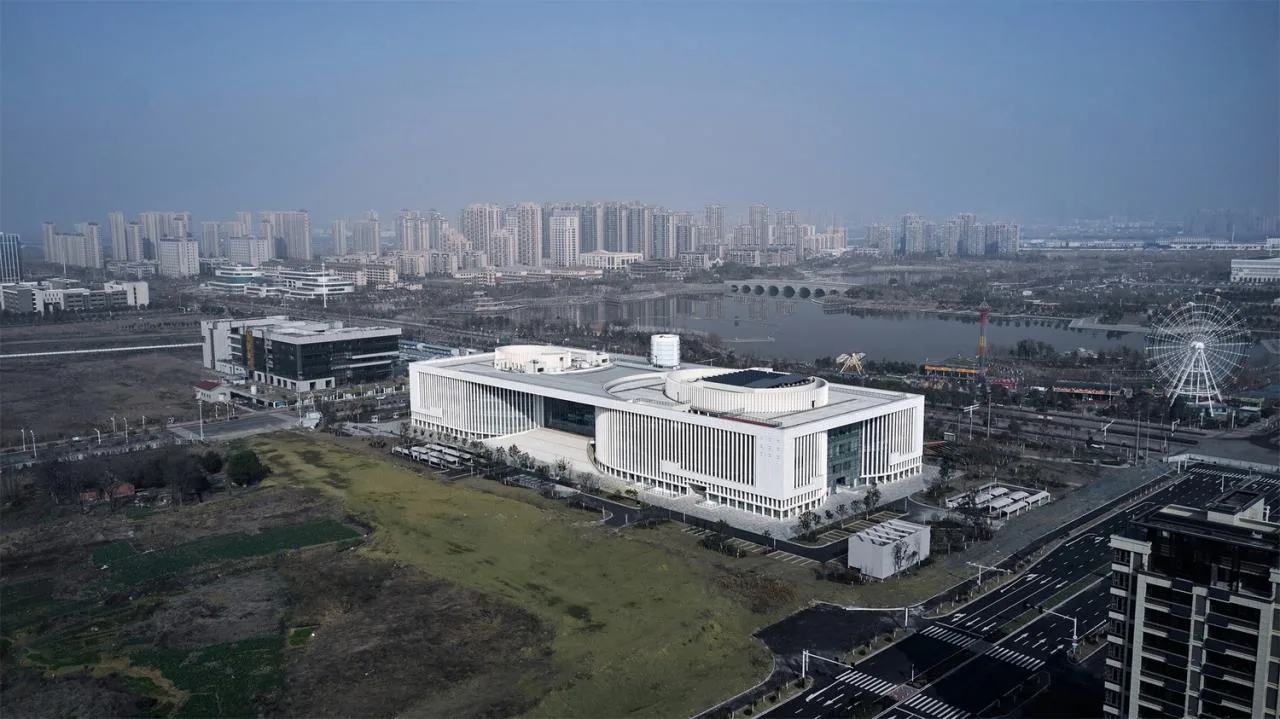
View towards Harmony Lake from the Grand Theater Cultural Center © Octopus sees architecture
Design Philosophy
Feidong, a city rich in history and culture, inspired this project to integrate traditional Chinese culture with contemporary values. Through a modern, abstract, and minimalist design language, the cultural center embodies distinctive cultural architecture that promotes inclusivity and expresses the harmony and tension between tradition and modernity.
Chinese Music Culture — The Cloud Gate Scroll
The design draws inspiration from the ancient “Cloud Gate Scroll,” dating back to the Huangdi period. This historic form represents the earliest ceremonial music and dance, regarded as the premier among the six ceremonial music genres. Symbolizing the creation of life through emotion, unity of people, and flourishing virtue akin to auspicious clouds, the concept carries deep cultural significance.
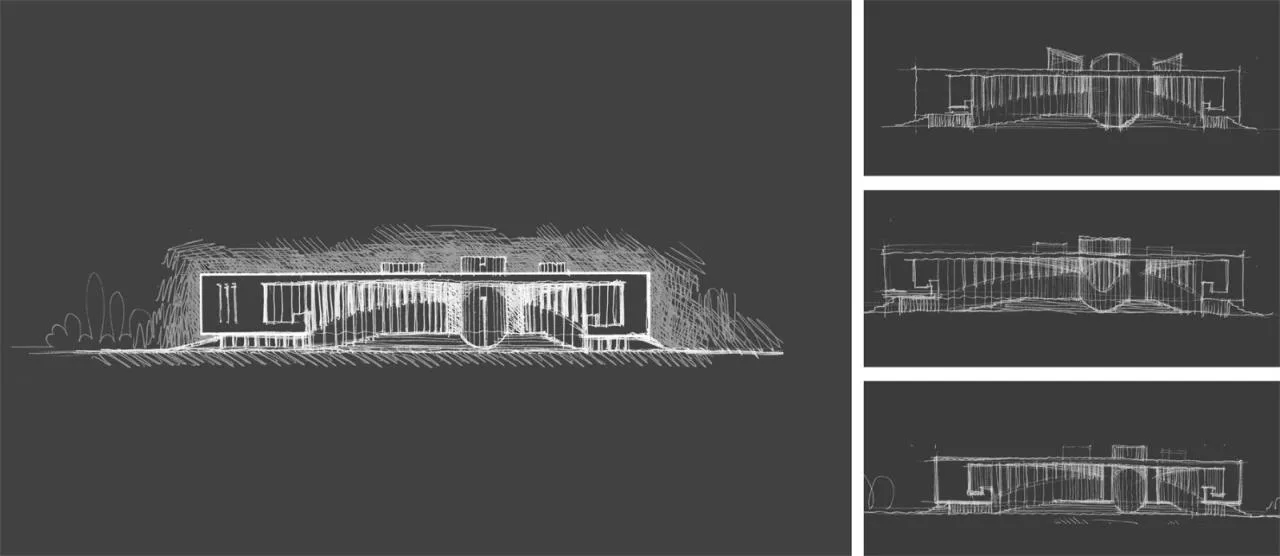
△ Hand-drawn manuscript by Kuang Xiaoming, chief creative designer
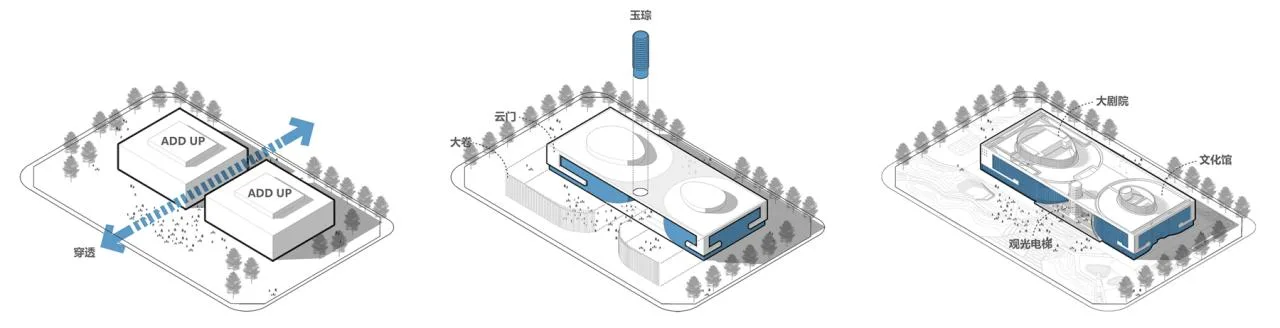
△ Shape generation
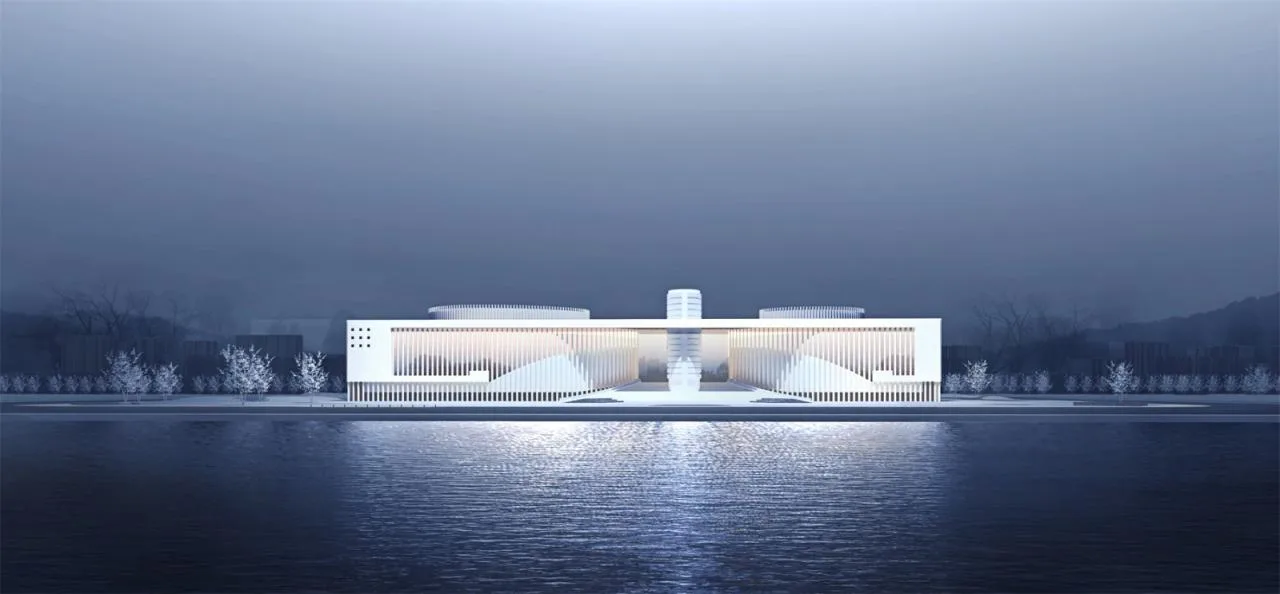
△ Front elevation model diagram
The facade design is inspired by the Cloud Gate Scroll, featuring a square overall shape that blends the forms of “cloud” and “door,” capturing the essence of the “Cloud Gate.” The solid frame forms the main skeleton of the facade, while the detailed structure mimics a stage curtain, creating a gently curved grey space that unfolds slowly like a curtain, together forming the “Cloud Gate Scroll” facade.
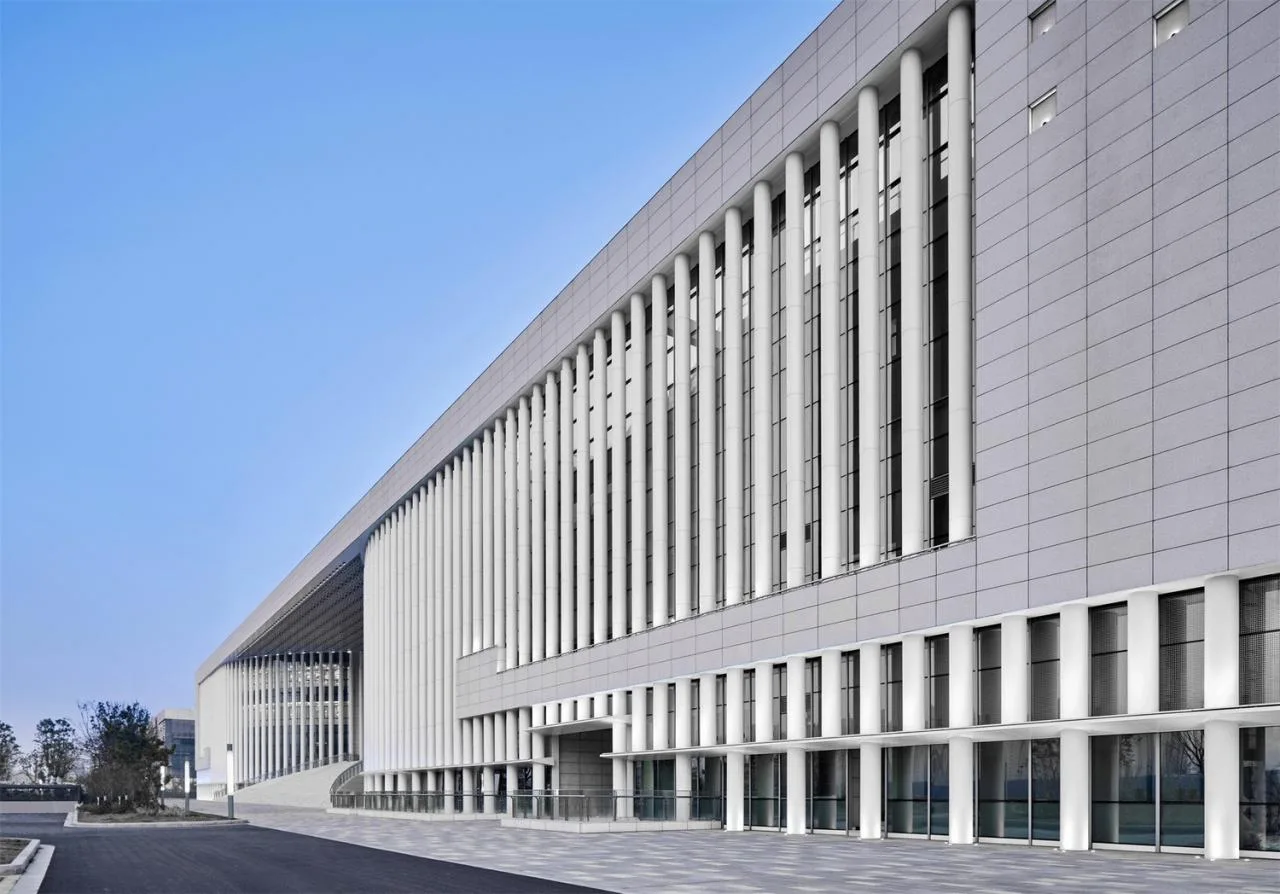
△ Facade details © Octopus sees architecture
Ancient Chinese Artifact Culture — Flute, Cong, Tao Xun
The facade’s detailed spatial design also draws inspiration from unearthed ancient musical instruments. The vertical sequence of the facade resembles ancient stone panpipes, while the roof acts as the building’s fifth facade, echoing the shape of the Tao Xun, an ancient musical instrument.
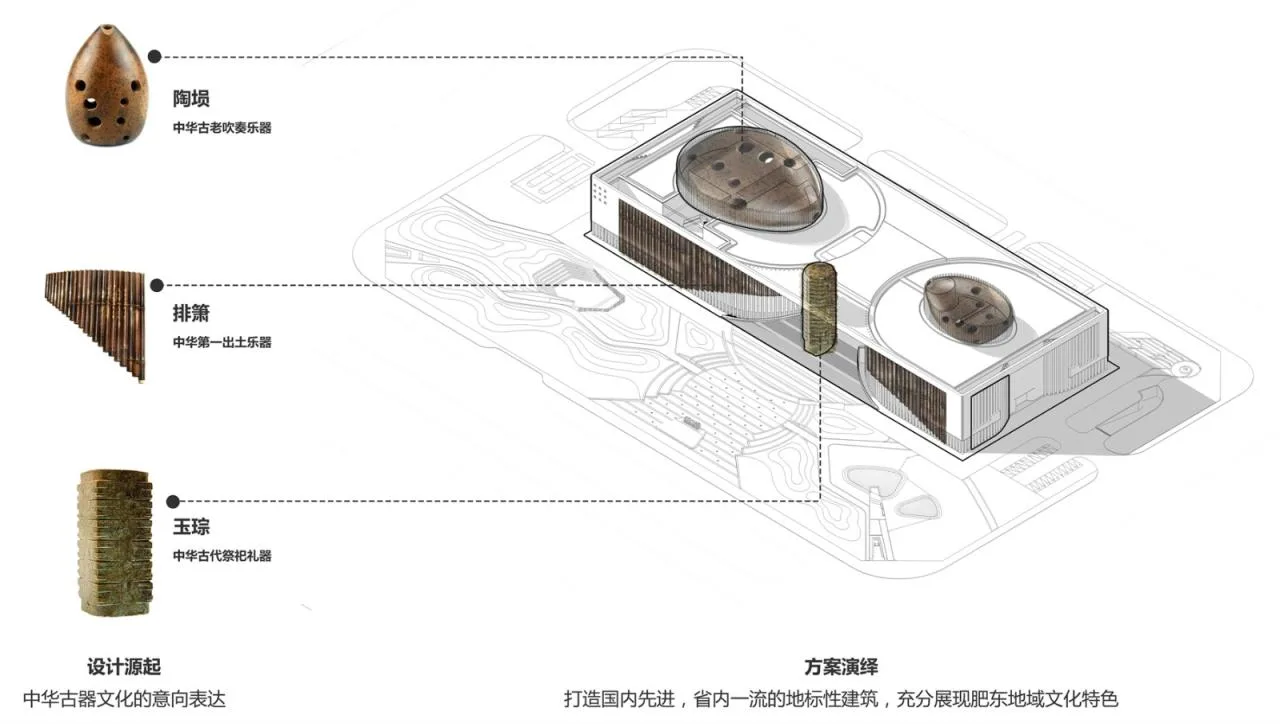
△ Element deduction
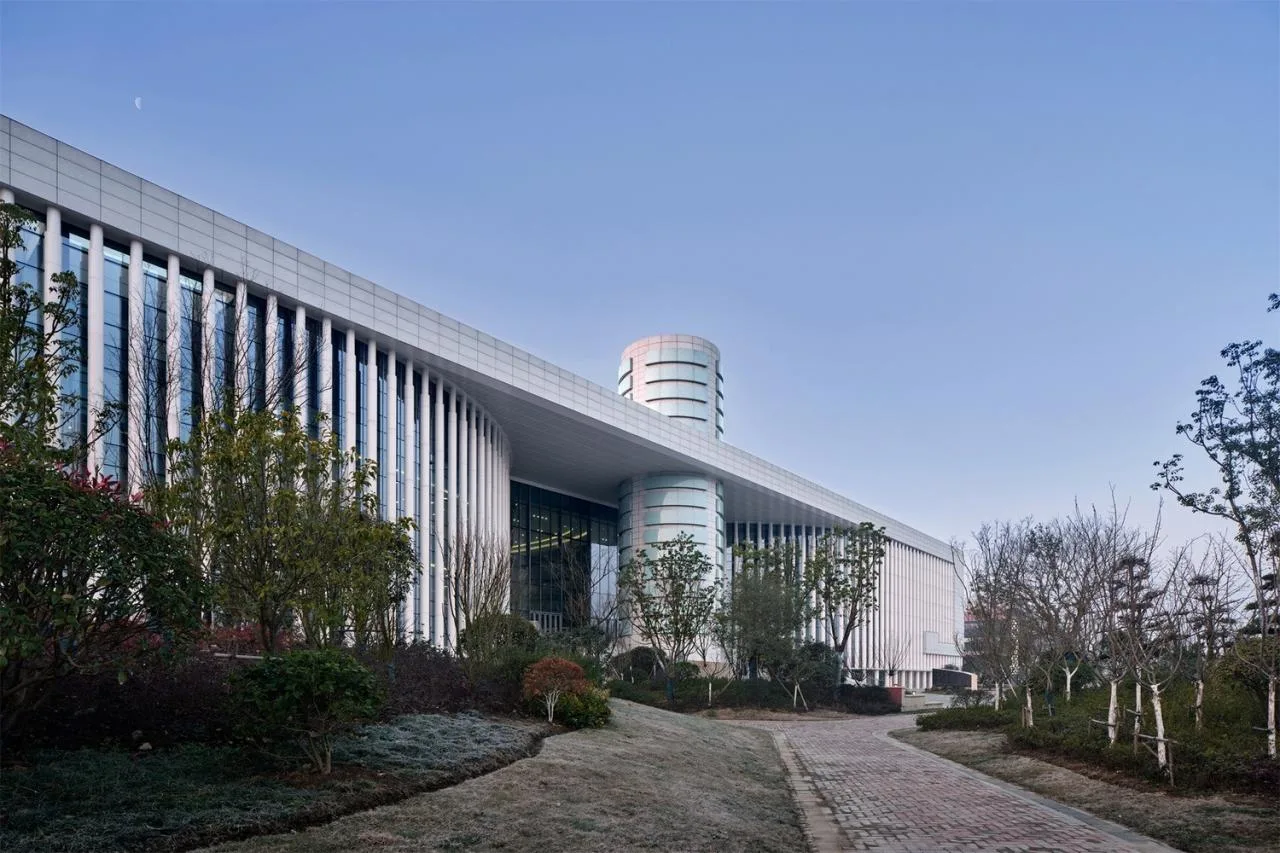
△ Modern minimalist techniques embodying Chinese antique culture © Octopus sees architecture
The facade is uniformly adorned with vertical circular elements arranged in a rhythmic array, shaped like “flutes” to create a smooth, elegant curved facade. Constructed mainly from glass curtain walls, the building conceals a blend of virtual and physical indoor spaces, rendering the structure translucent and crystal-clear. The use of mesh-printed glass and advanced parametric technology enhances the modern cultural atmosphere with a clean and refined aesthetic.
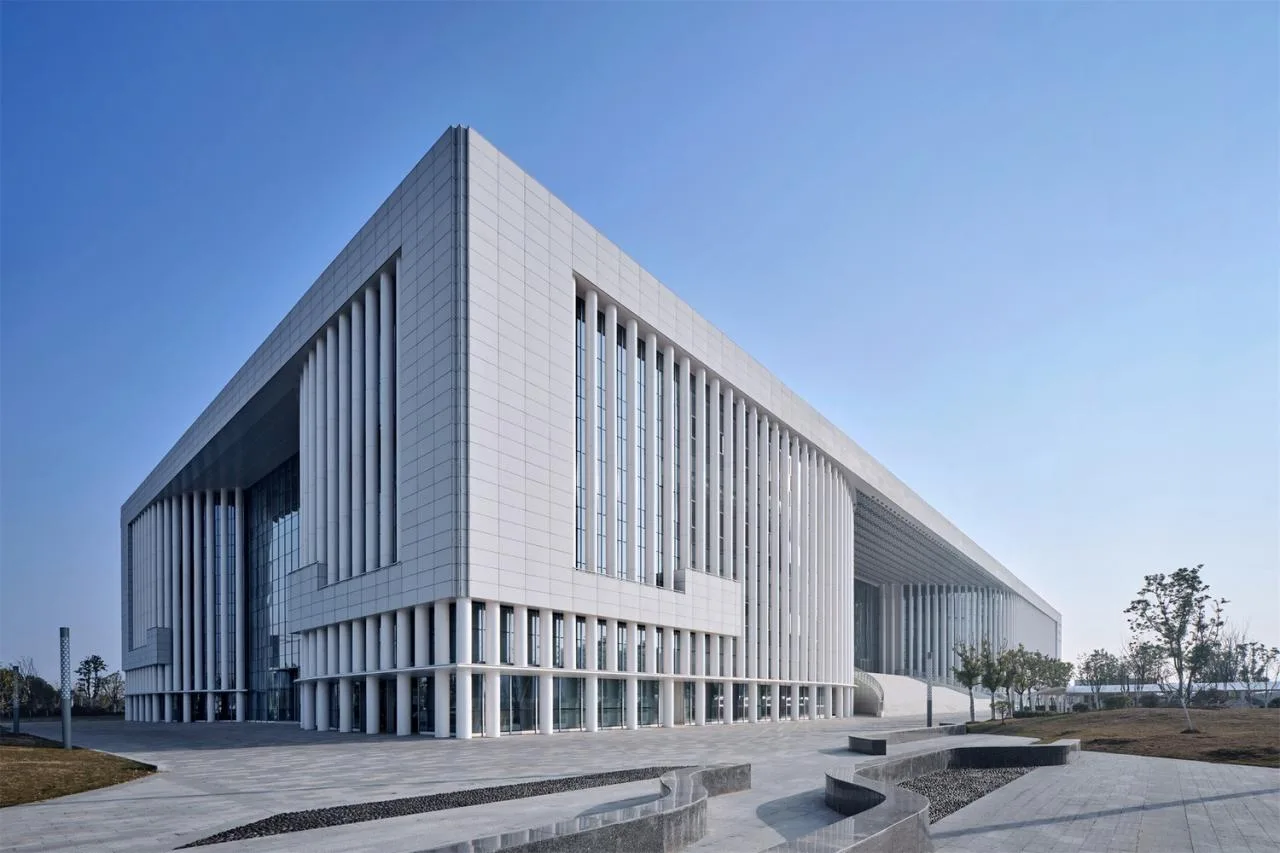
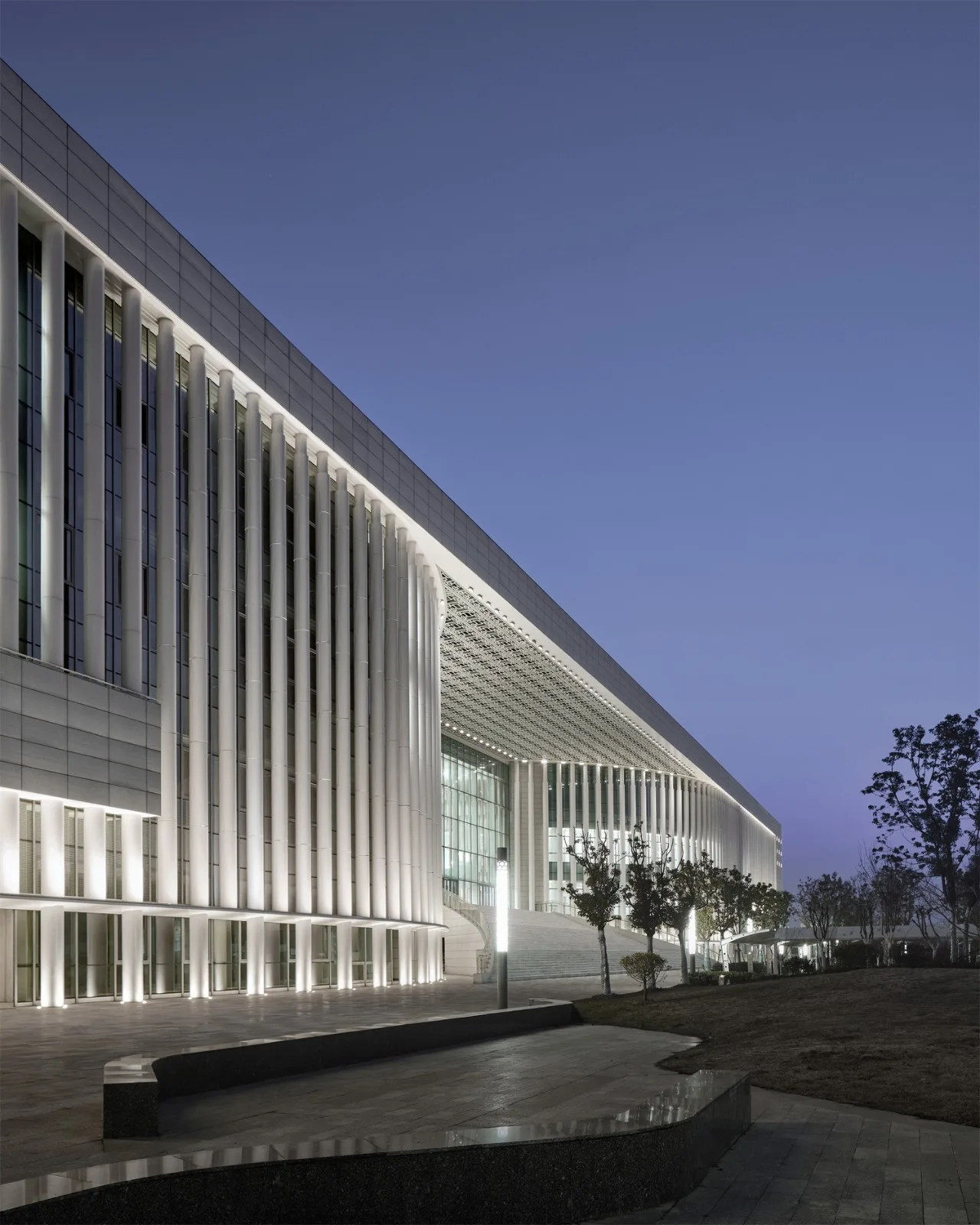
Vertical circular pole facade © Octopus sees architecture
Functional Layout
Collaborative Group Layout
The architectural layout continues the cultural symbol of the “Cloud Gate Scroll,” organizing the structure around music and dance centers. Based on a central enclosed arrangement with group expansions and tailored to specific functional needs, the building plan features a central gathering space surrounded by grouped structures. The design centers on a high-rise public activity space, flanked by a large theater and a cultural center on the east and west sides respectively, achieving functional integration while maintaining spatial independence.
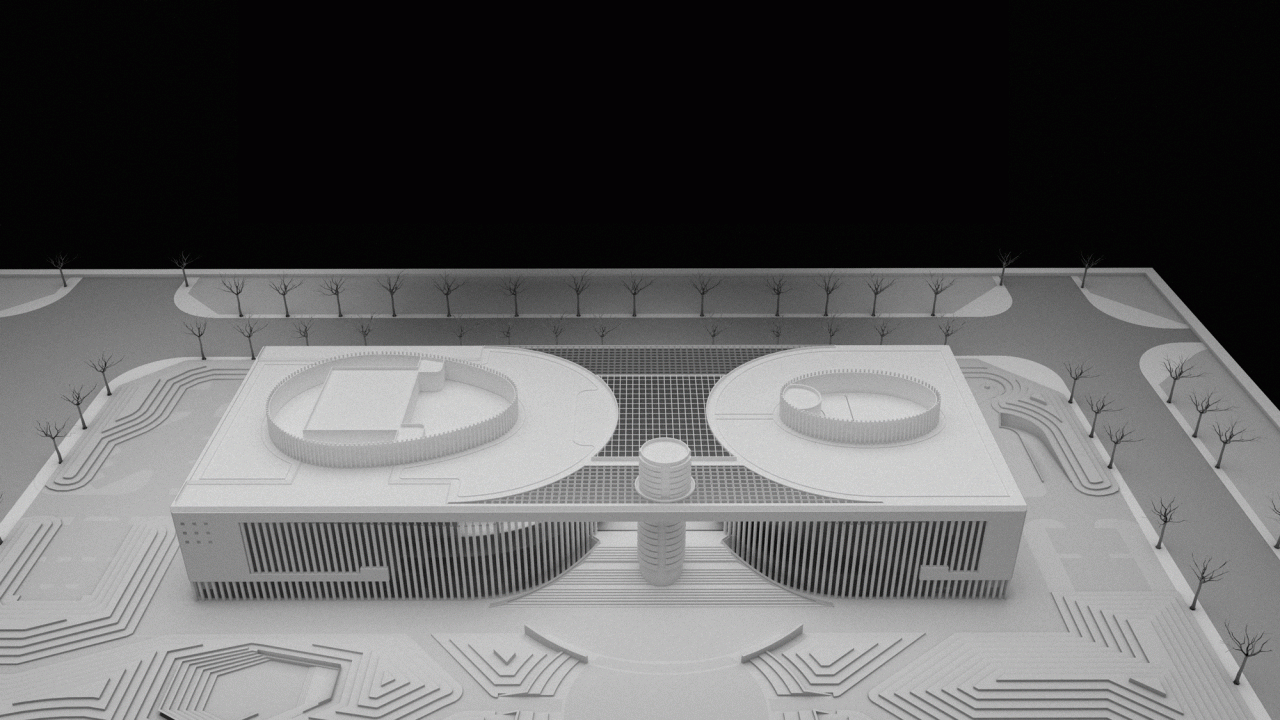
△ Project Model
The curved facade space, complemented by broad stairs, creates an iconic entrance. Each curved facade element corresponds directly to interior spaces, establishing a seamless flow between inside and outside.
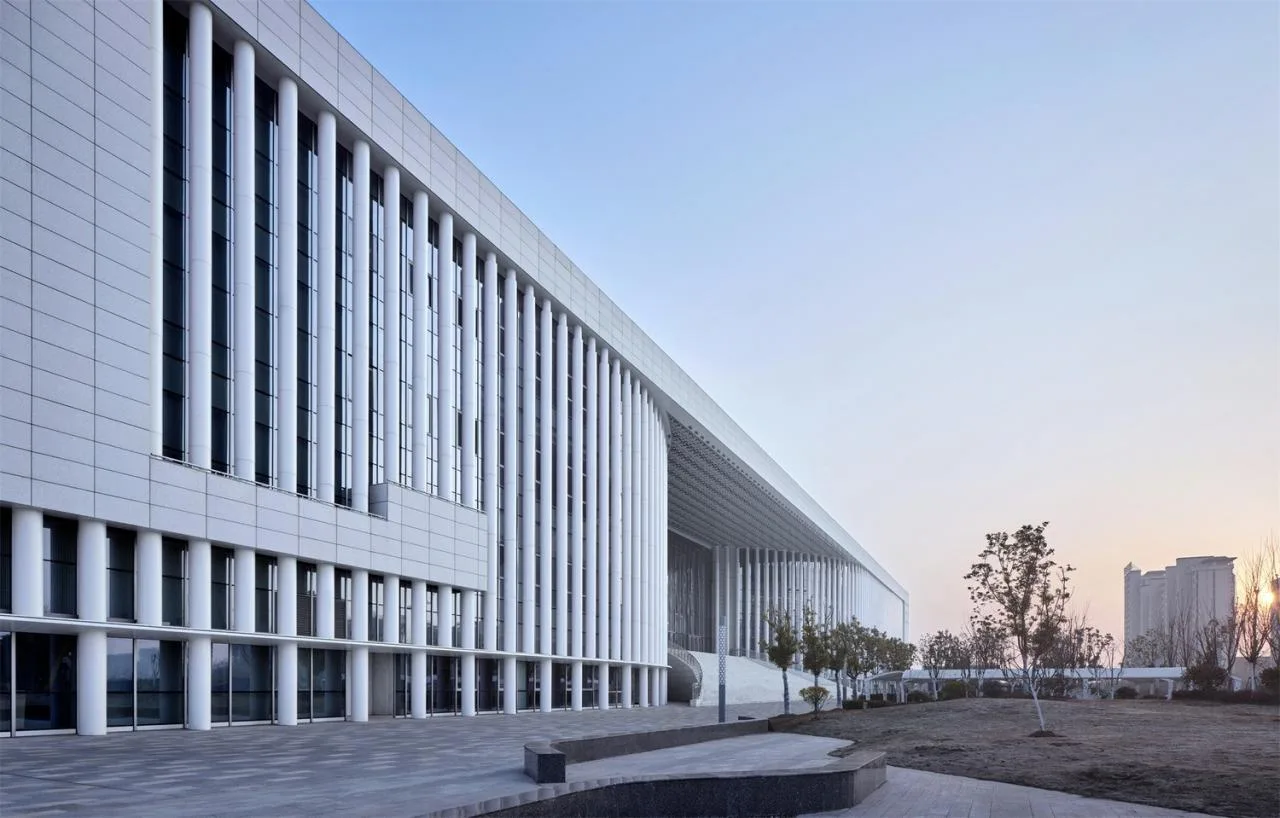
△ Facade close-up © Octopus sees architecture
The interior space at the central entrance is a three-story high public activity area featuring transparent and open north and south entrances that face each other. This central space divides the building into two functional wings—east and west—and extends outward as a public axis, harmonizing with the lakeside water plaza inside and out, ensuring openness and accessibility.
This central zone serves as a shared platform hosting the ticket hall, art exhibition hall, and transportation hub, fostering interaction among visitors while providing access to the eastern and western functional areas.
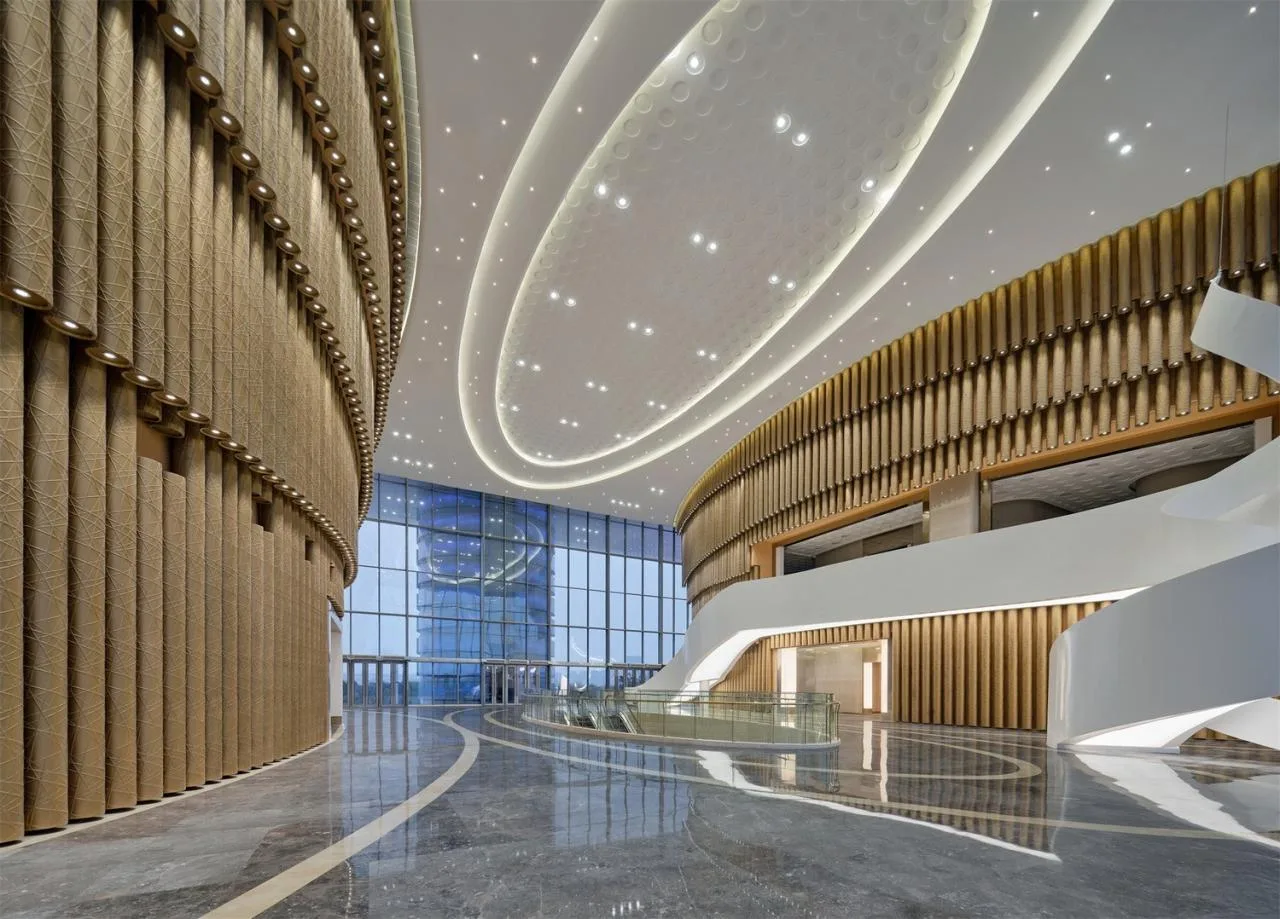
The shared atrium wall is designed to resemble giant panpipes and organs © Octopus sees architecture
The Grand Theater and Cultural Center are aligned along a north-south axis in a rectangular layout connected by a central shared atrium. This approach achieves architectural unity, functional diversity, and relative independence. Interior design continues the architectural themes by incorporating musical instruments and dance elements, creating an elegant and refined artistic environment.
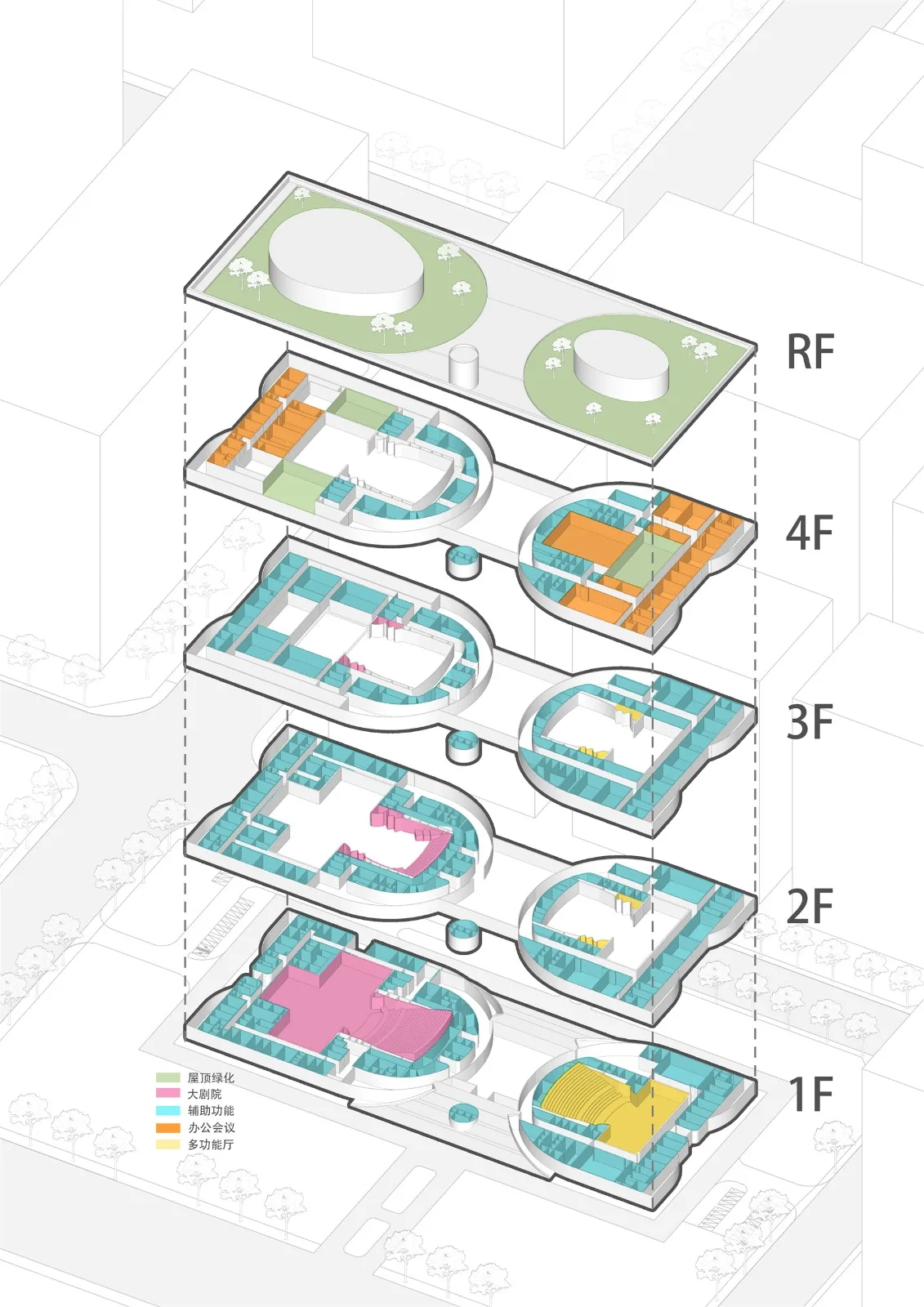
Exploded diagram on the △ axis side
The Grand Theater, located on the west side, accommodates 1,200 seats and supports performances such as musicals, concerts, large-scale variety shows, and conferences, along with backstage facilities. It comprises four above-ground floors and one basement level. The basement includes auxiliary functions like commercial spaces, theater storage, and logistics. The main entrance is on the second floor, accessible via large staircases from the north and south leading to the central hall, with the music hall situated on the third floor reachable by public stairs.
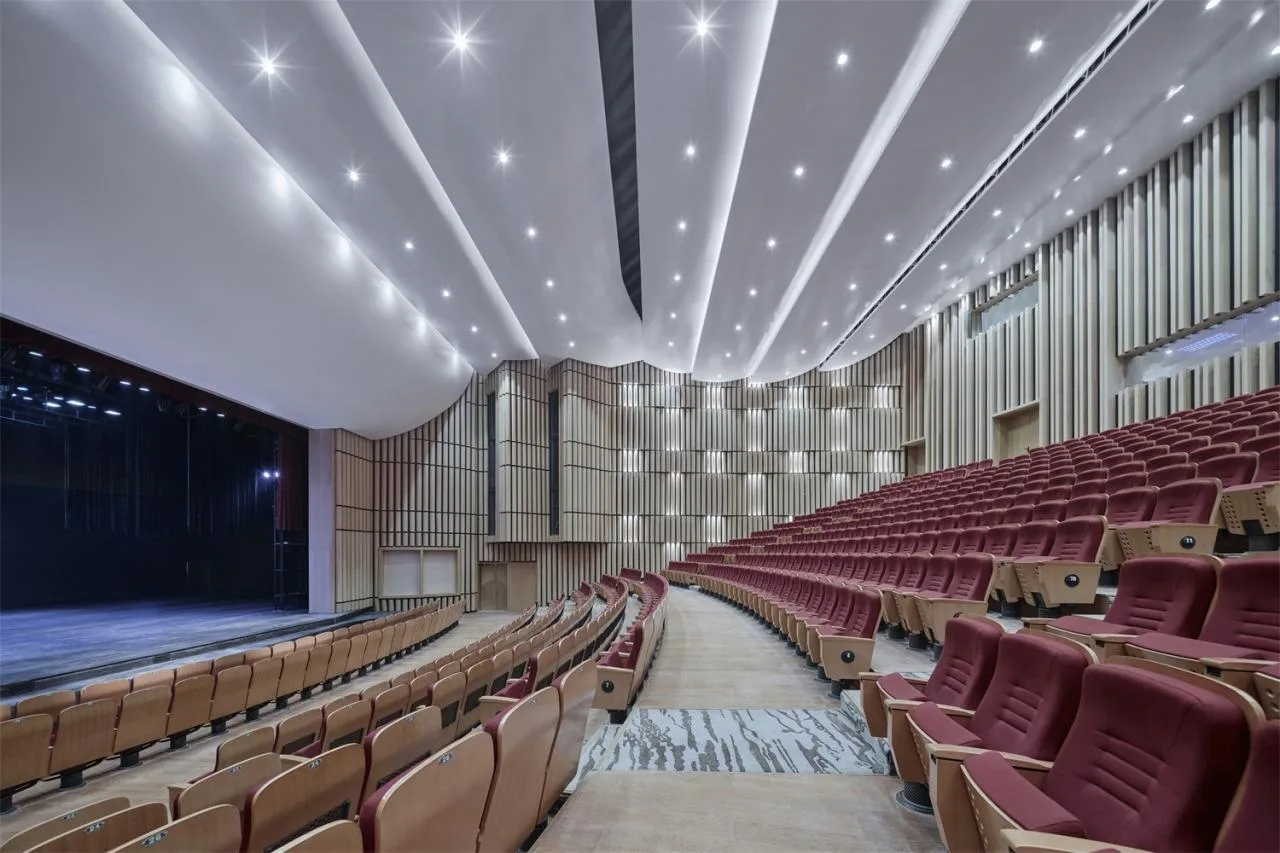
△ Multifunctional Hall © Octopus sees architecture
The Cultural Center, located on the east side, features a 650-seat multifunctional hall and two smaller multifunctional halls on the first floor. The second floor houses four cultural exhibition halls, while the third and fourth floors accommodate conference offices and activity centers. The main entrance is also located in the shared hall on the second floor. Visitors can access the art exhibition on the first floor via the central escalator or proceed directly to the cinema and cultural exhibition halls on the upper floors.
Project Drawings
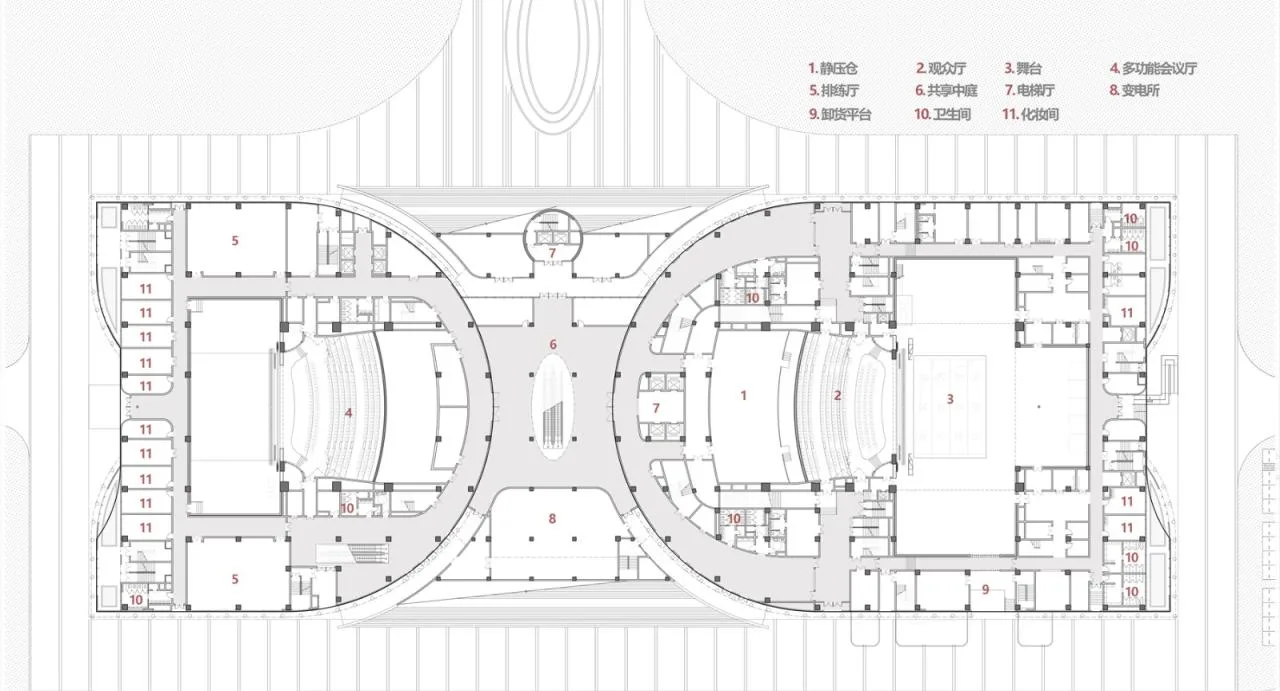
△ First floor plan
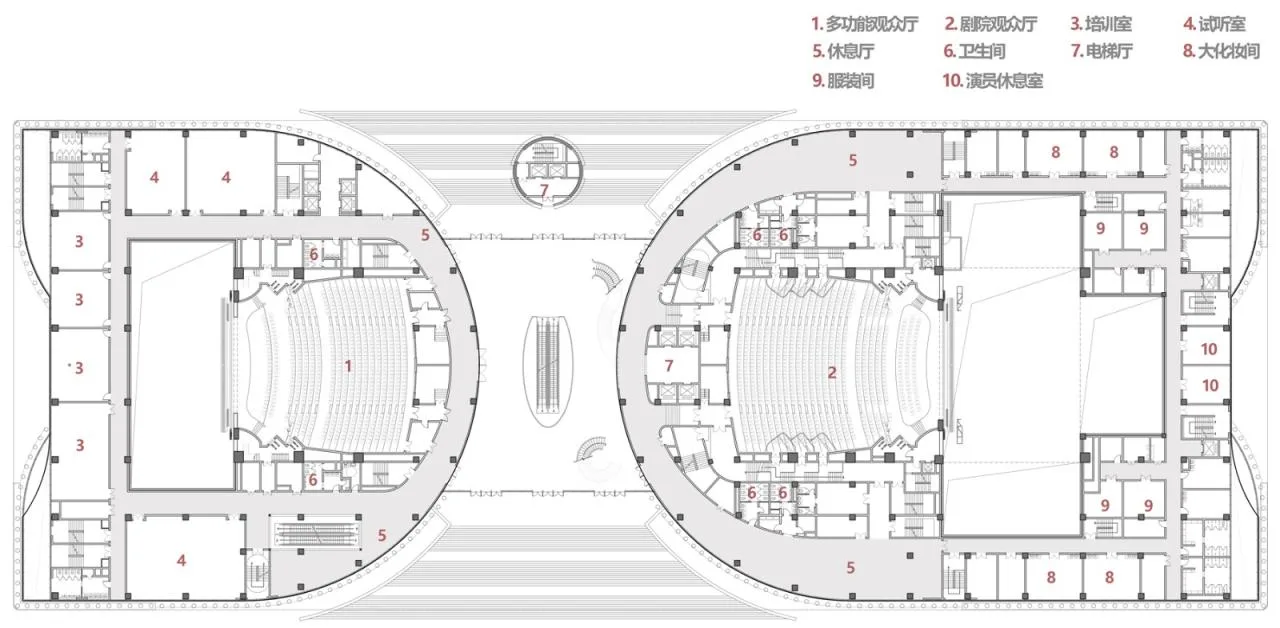
△ Second floor plan
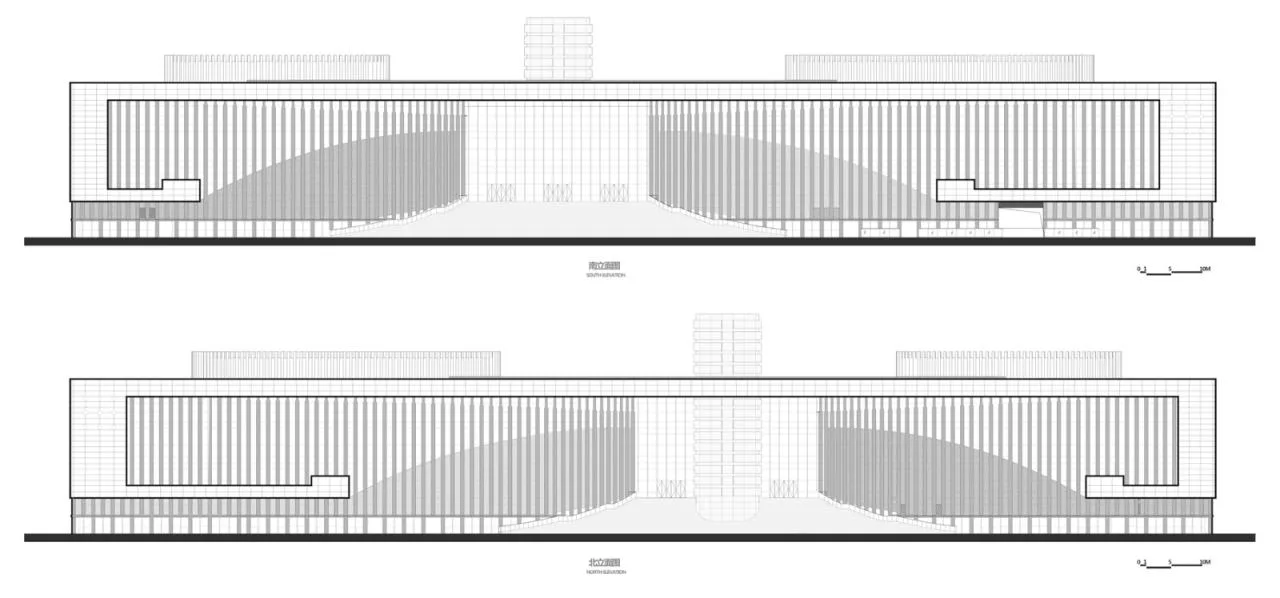
△ Elevation drawing
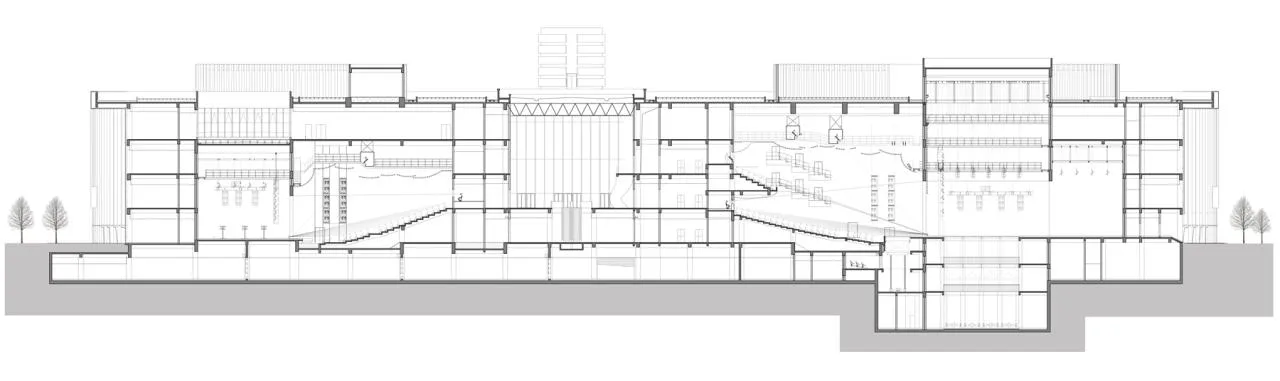
△ Section diagram
Project Information
Project Name: Feidong County Grand Theater Cultural Center
Design Firm: Shanghai Huadu Architectural Planning and Design Co., Ltd
Site Area: 39,381 square meters
Building Area: 47,543.35 square meters
Chief Designer: Kuang Xiaoming
Design Team: Shen Yi, Zhang Haiao, Yao Qiwei, Zhu Tingting, Li Hongxi, Li Jihong, Wu Hao, Huang Anqi
Structural Design Team: Zhou Zhen, Zhang Yongqiang, Wang Guoxun, Pu Yibian, Xue Hao
Water Supply and Drainage Design Team: Jiang Yi, Wu Wenwen, Wang Yikun
Electrical Design Team: Ren Fusheng, Ji Xiaomin, Zhang Yi, Xiao Yan, Chen Yu
HVAC Design Team: Cheng Lingsong, Chai Yunliang, Dong Yunfeng
Landscape Design Team: Zhu Yiyu, Fu Xiao, Wang Dandan, Yang Gang, Fei Yidong, Yu Jiatao
Interior Design Team: Ge Qing, Ai Jingwen, Liu Haitao
Location: Feidong County, Hefei City, Anhui Province, bordered by Cuodong Road (east), Shenxiu Road (west), Dujiang Road (south), and Yaogang Road (north)
Construction Year: 2021
Photography: Zhang Yong (Octopus Jian Zhu ZY Architectural Photography)















Must log in before commenting!
Sign Up