
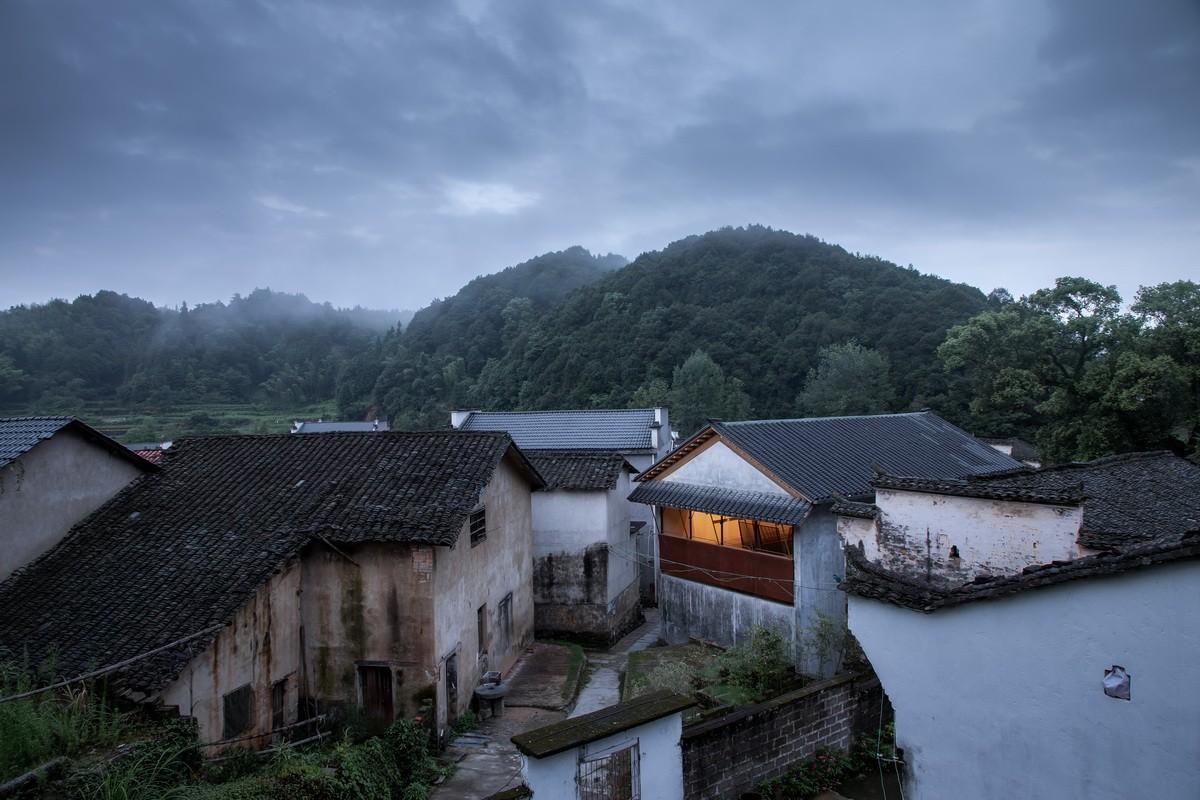
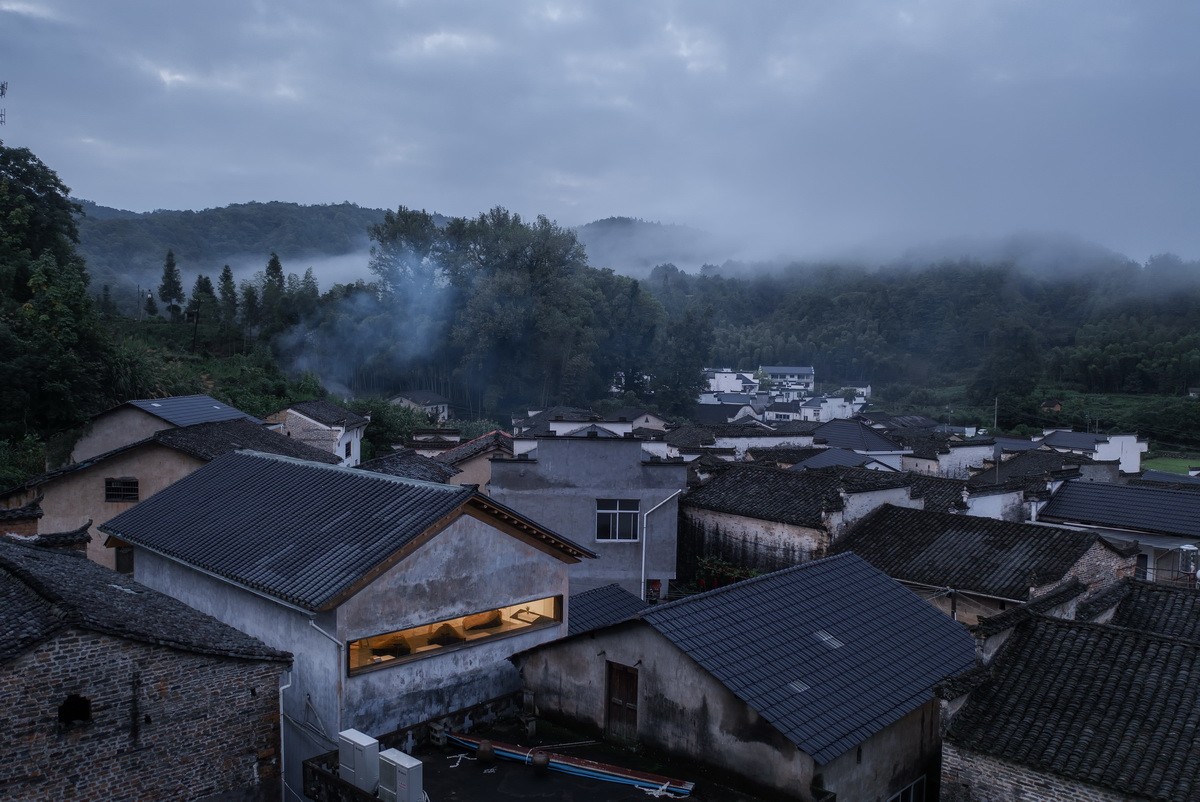
▲ Aerial view © Tang Xuguo
Prologue
Taoyuan Village, located in Qimen County, Anhui Province, is a classic example of an ancient Huizhou settlement. This project sits at a corner near the village entrance and is home to the only café in the village. Surrounded on three sides by neighboring buildings, the café faces a mountain wall on one side and opens toward a relatively spacious triangular courtyard.
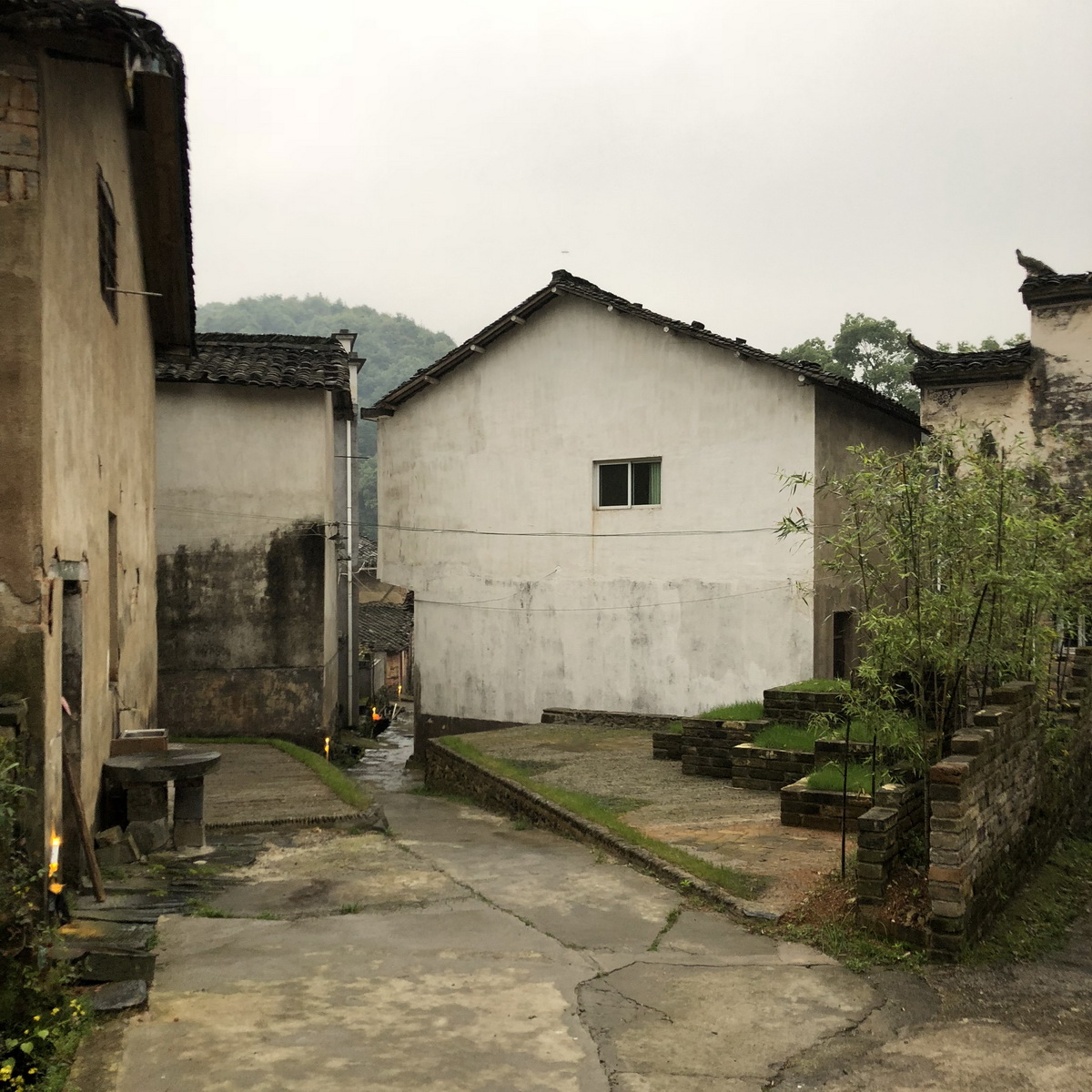
▲ Original state
Originally a farmhouse, Dingwu is situated close to the village’s main stone road. Its new role is to serve as a public space catering to tourism in Taoyuan Village, resulting in the creation of a rural café.
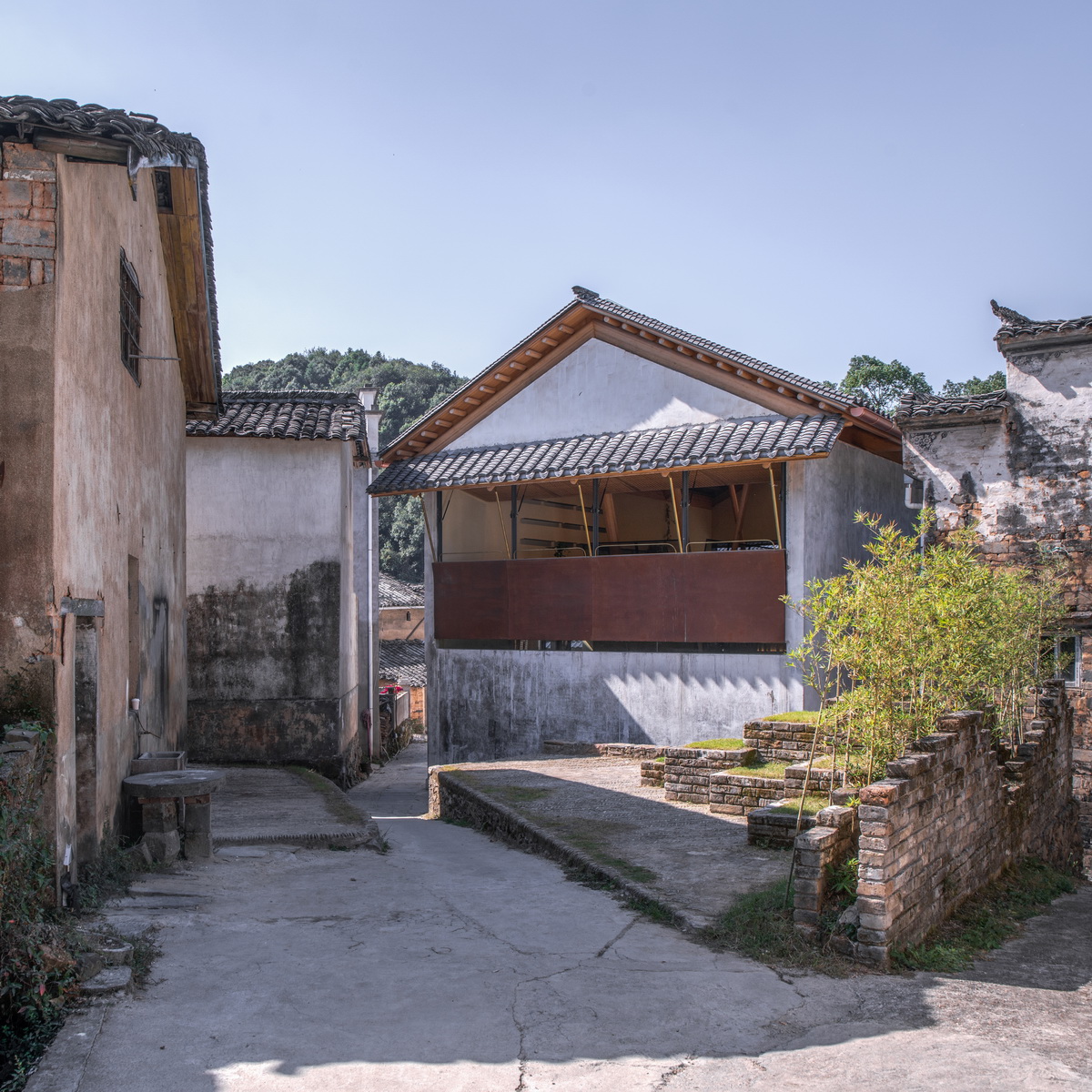
▲ Comparison of the original state © Zhao Yilong
The renovation preserves the original land boundaries, main entrance, roof height, and the traditional roof drainage direction. Given the enclosed, inward-facing layout, the design focuses on creating a welcoming interior courtyard space.
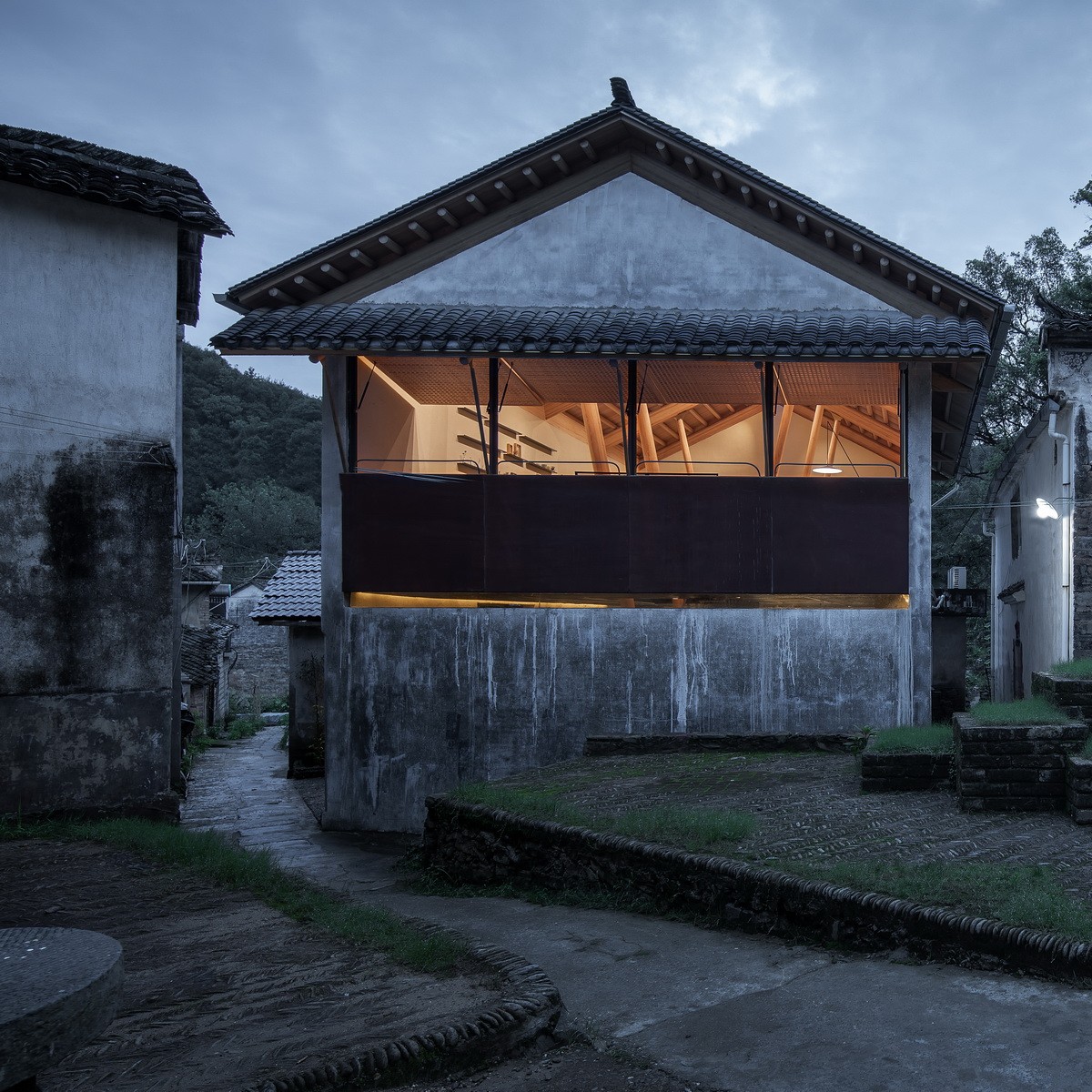
▲ Midnight © Tang Xuguo
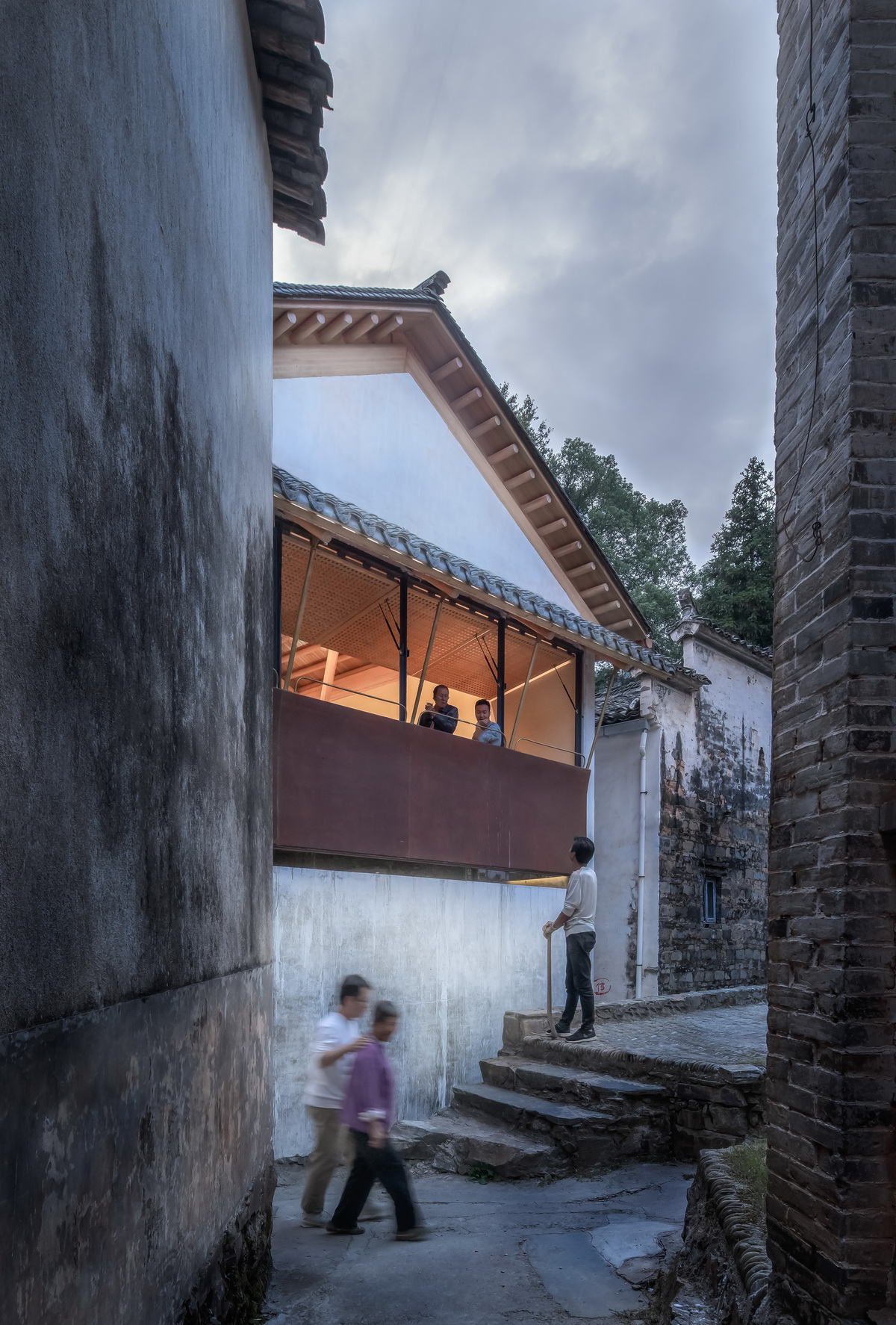
▲ Midnight © Zhao Yilong
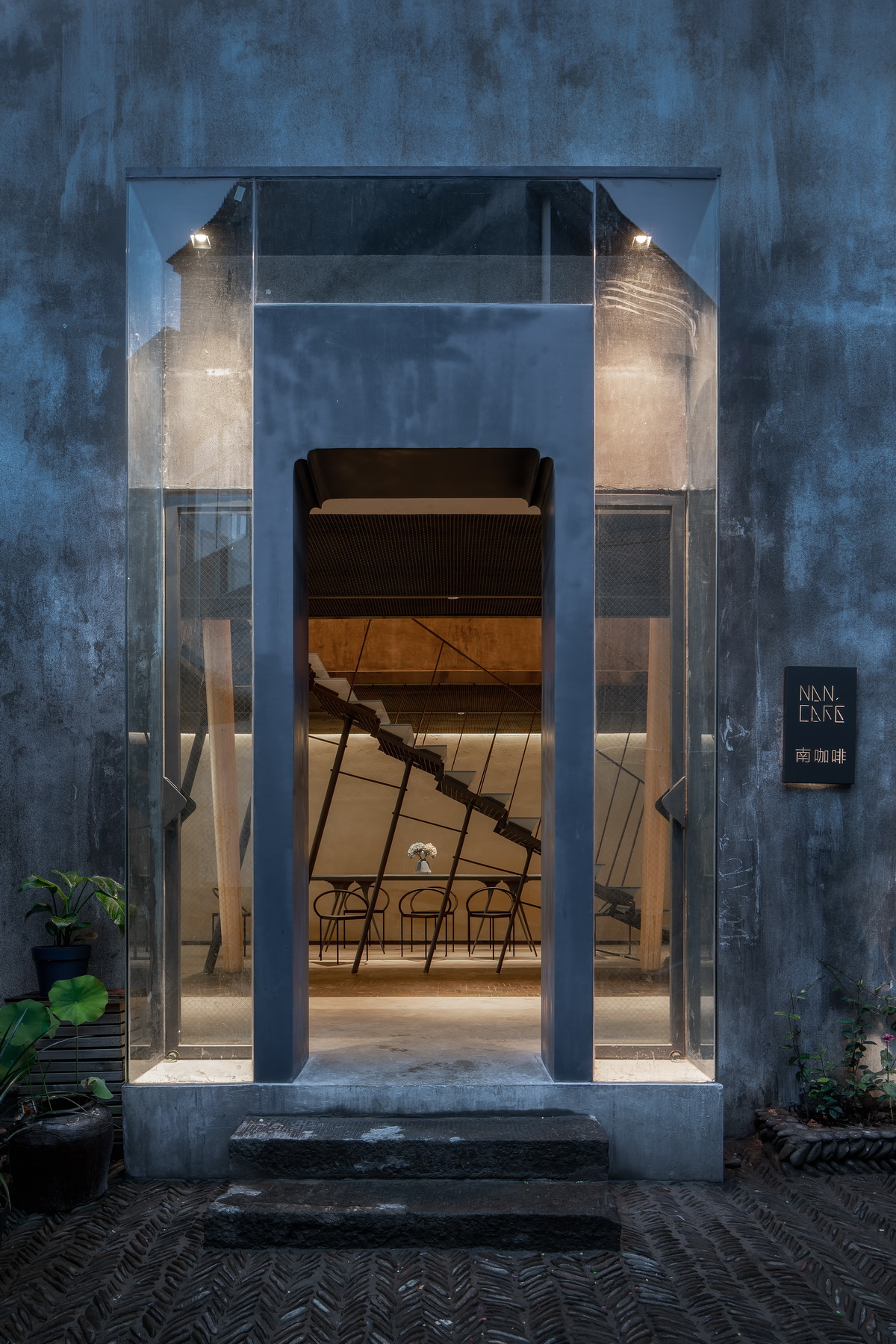
▲ Gate © Tang Xuguo

▲ Bar counter © Zhao Yilong
The Charm of the ‘Beauty Leaning’
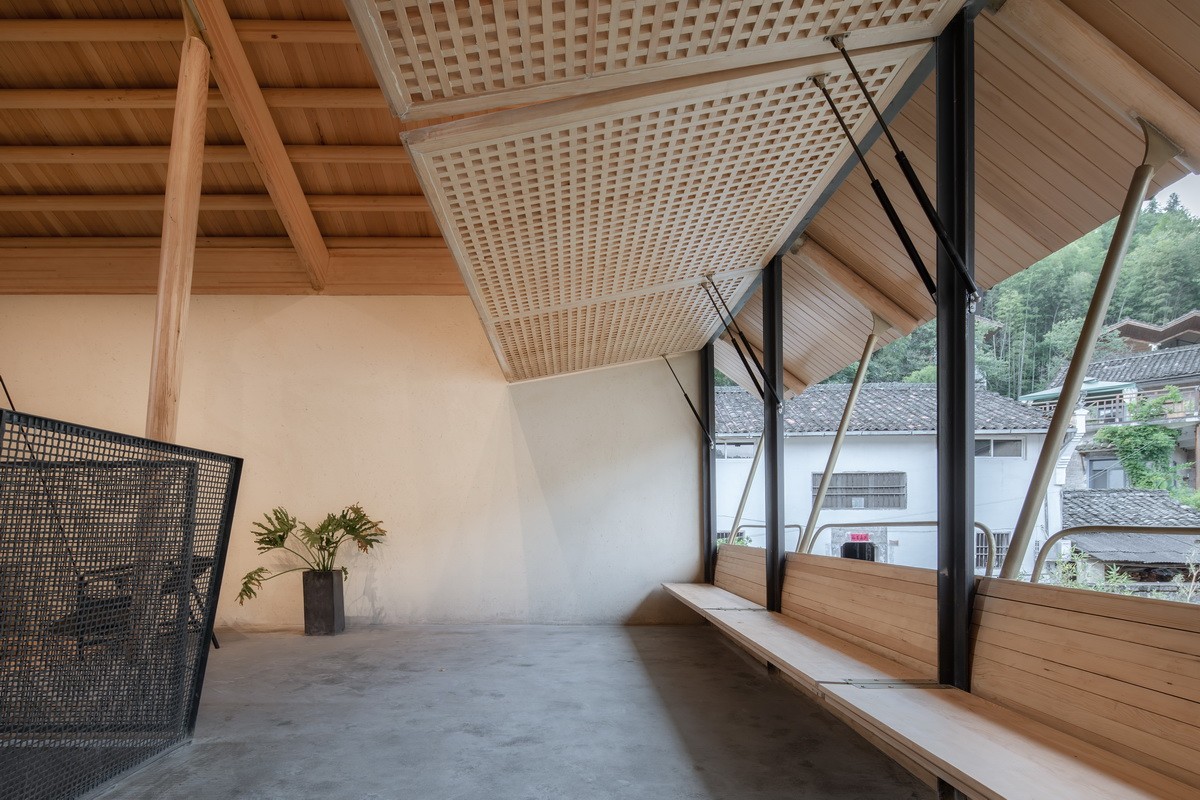
The “Meiren Kao” (Beauty Leaning) is a distinctive wall element found in ancient Huizhou residences, positioned at the threshold between indoors and outdoors. Unlike standard doors and windows, it allows a person to lean comfortably inside. Its poetic form earned it the name “beauty leaning.” In the abandoned house, this feature is further extended to create a unified grey space combining the eaves, supporting windows, and integrated seating.
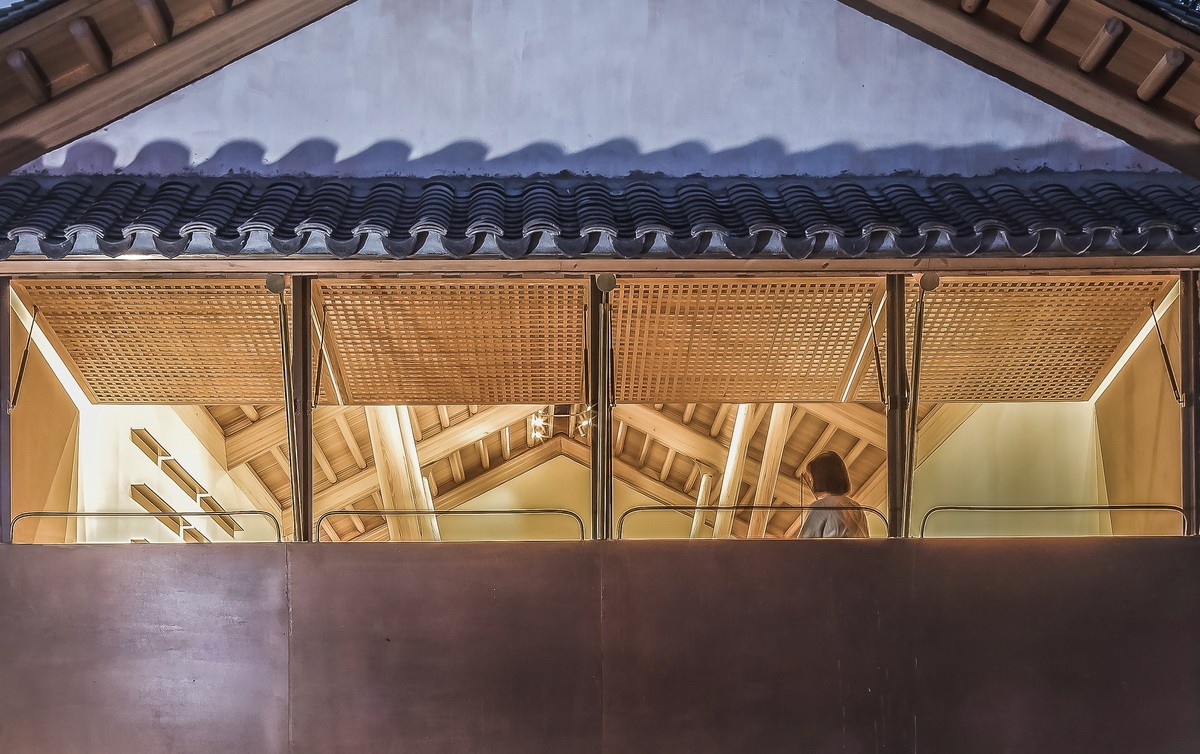
▲ Midnight © Zhao Yilong

▲ Covered eaves © Tang Xuguo
Facing outward, metal diagonal columns support the eaves and seamlessly integrate with metal backrests. Inside, the design creates a resting space by combining “support” for the window and “removal” of the stool. When closed, this assembly forms a complete wall.
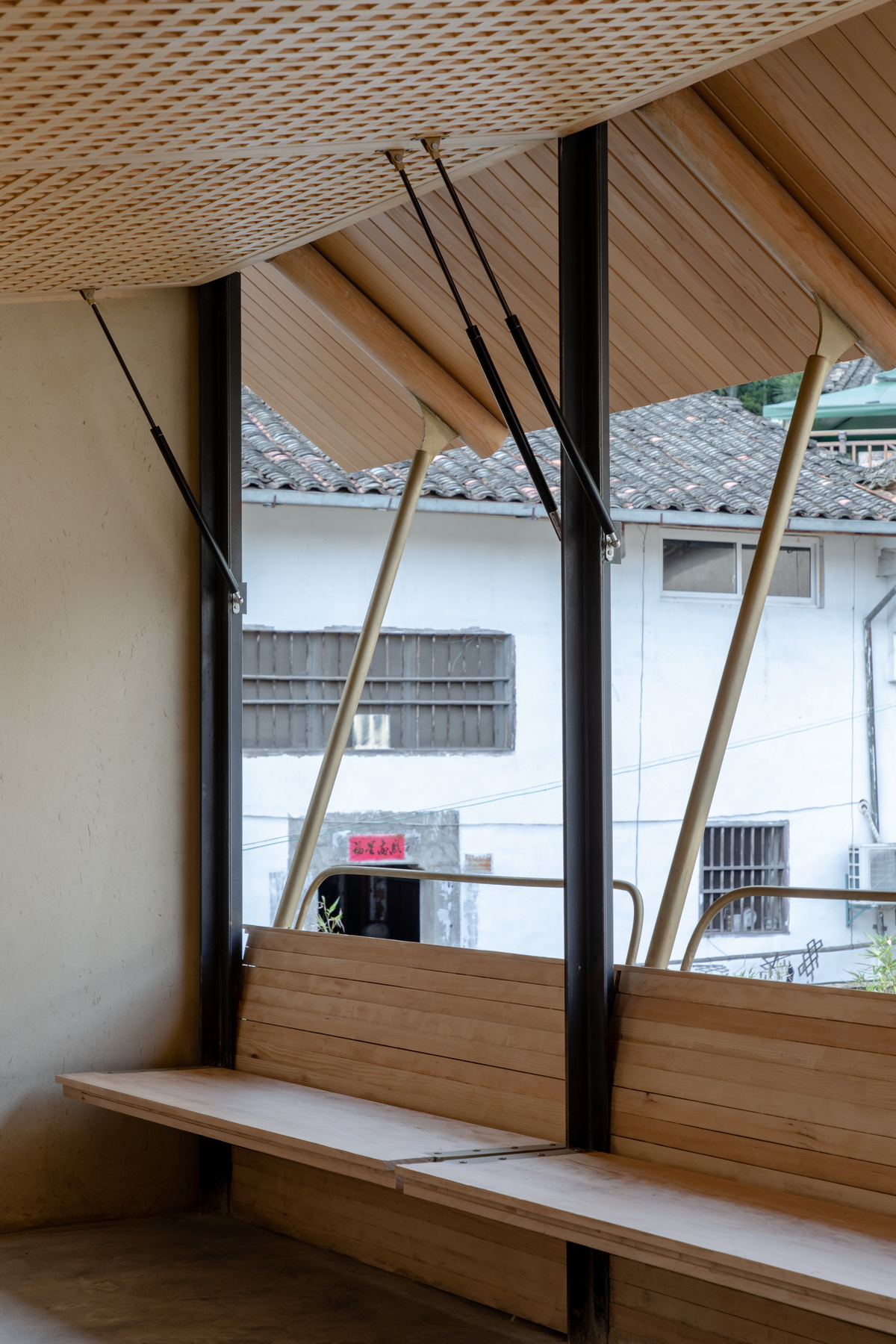
▲ Beauty leaning details © Tang Xuguo
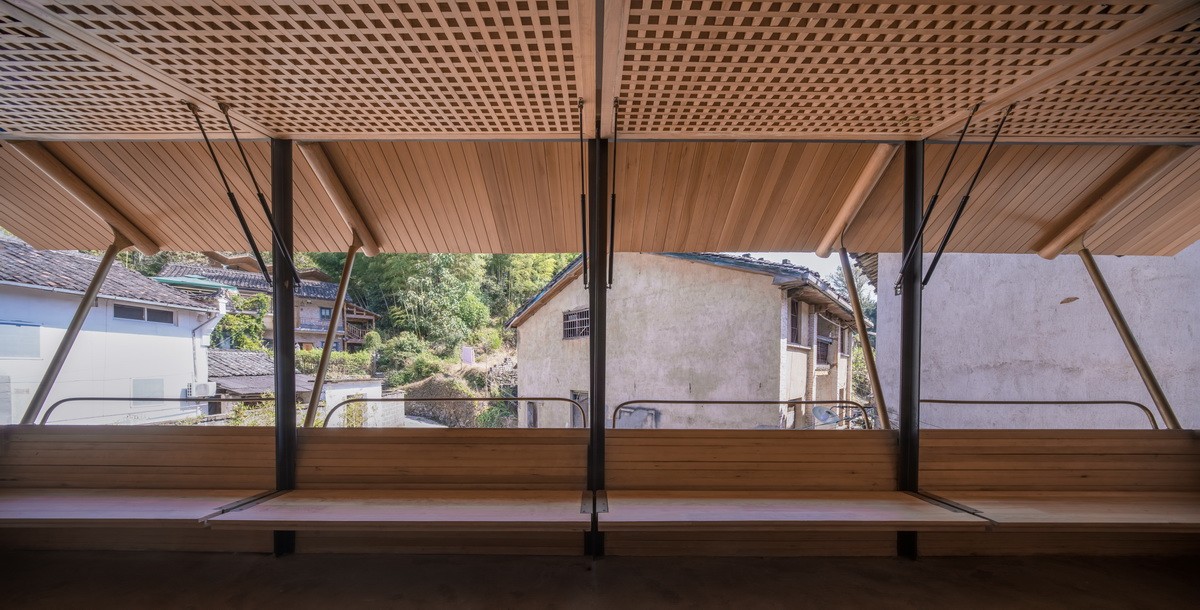
▲ Beauty leaning details © Zhao Yilong
‘Support’ and ‘Pick’
Diagonal supports offer a simple yet elegant way to transfer load. Within the invisible vertical gravity field, diagonal structures appear dynamic and intriguing. Traditional Chinese homes incorporate “supporting and removing windows,” which open horizontally via slant supports—lifting the window is called “support,” while pulling it down is “pick.” Dingwu draws inspiration from these ancient techniques, exploring a building system based on diagonal support relationships.
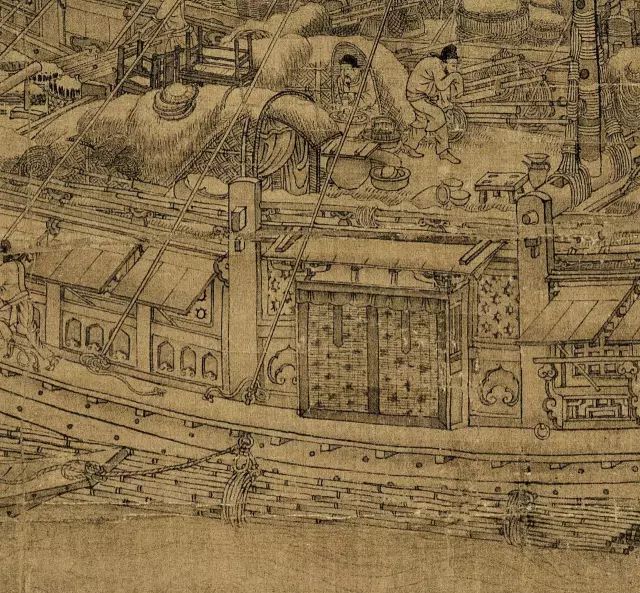
▲ Conceptual intention
Beam and Column Integration
In traditional Chinese architecture, beams and columns form the building’s skeleton and heavily influence the space’s atmosphere and rhythm. Structurally, inclined shuttle columns and melon seed-shaped beams support the double-sloped roof. Proportionally, the design continues the Huizhou tradition of “thick beams and slender columns.” Two shuttle columns run diagonally from the first floor through the second, supporting the roof and creating a transparent spatial connection between the two floors. This “beam and column integration” showcases the craftsmanship of diagonal support and joinery.
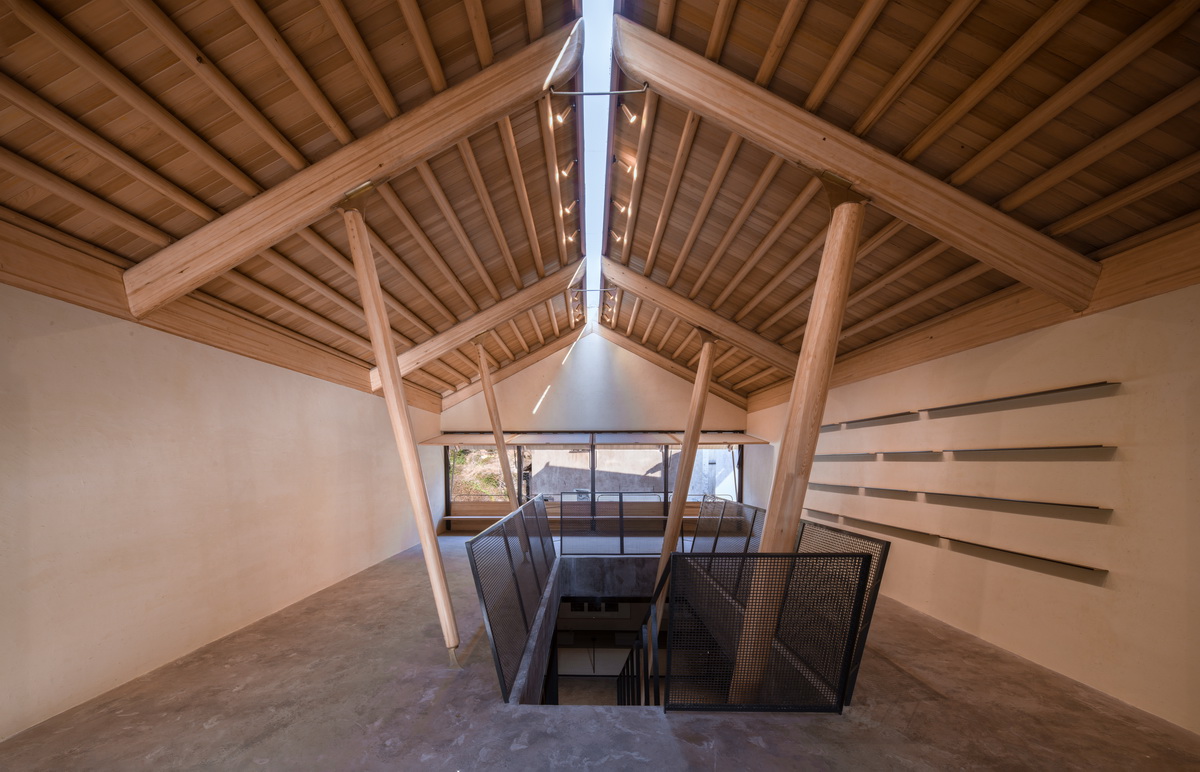
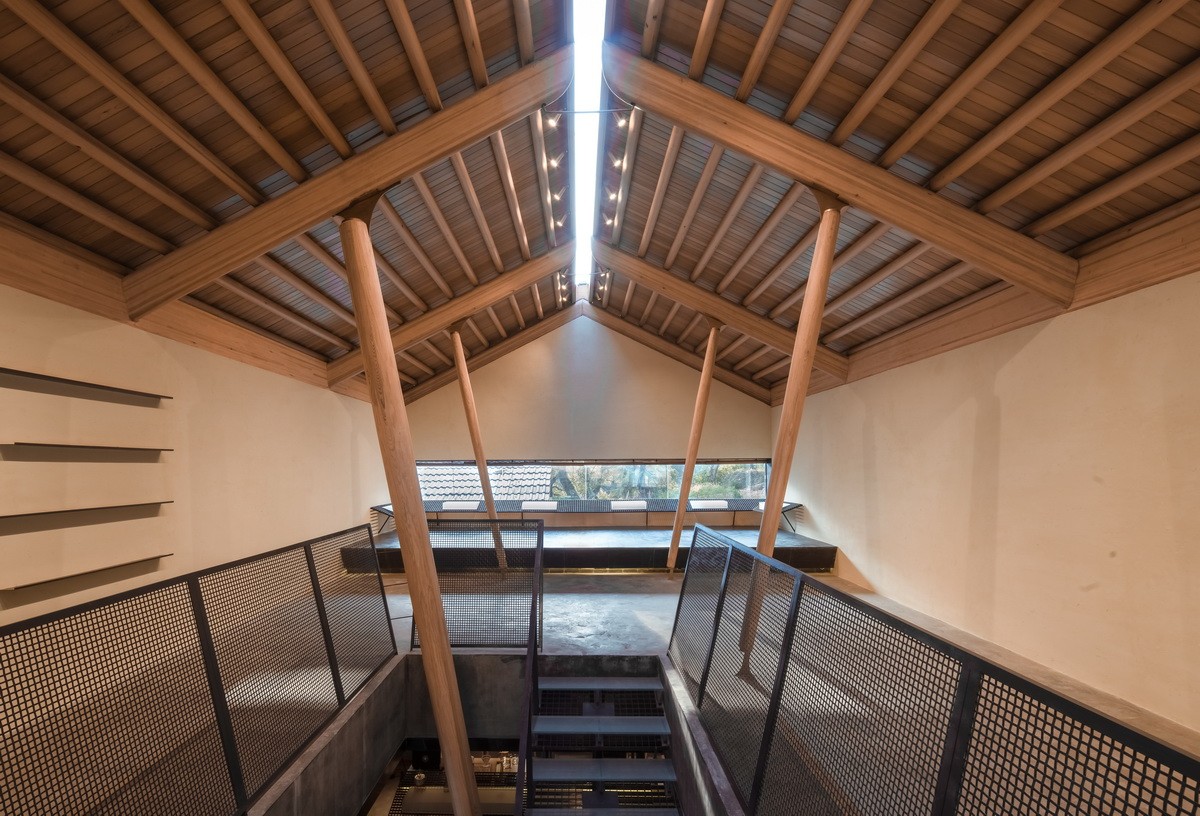
▲ Beams and columns on the second floor © Zhao Yilong
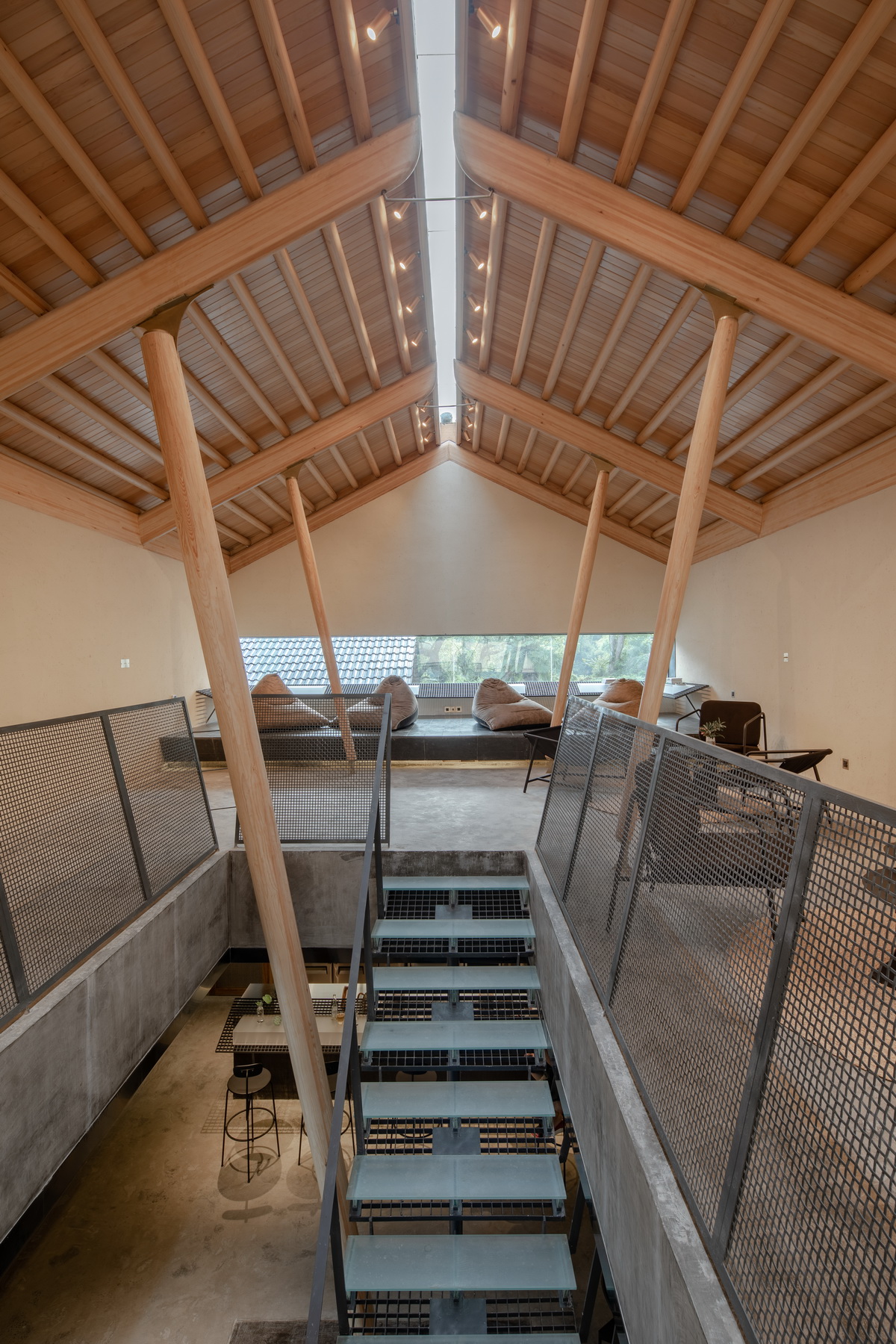
▲ Second floor staircase © Tang Xuguo
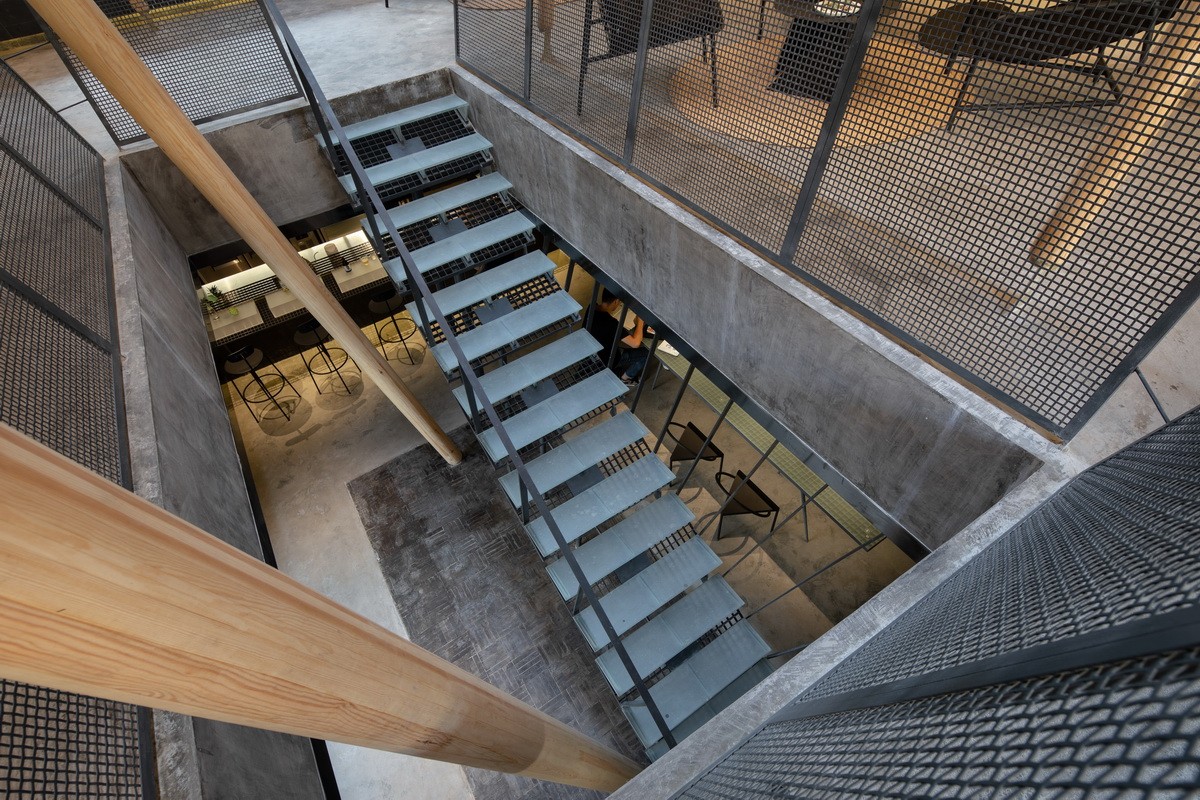
▲ Courtyard © Tang Xuguo
The double-sloped roof, supported by melon seed-shaped beams, is connected by slender metal hooks, allowing sunlight to filter through narrow gaps. The angle of the solid diagonal columns and the changing light throughout the day create a poetic interplay of time—both constant and fleeting.
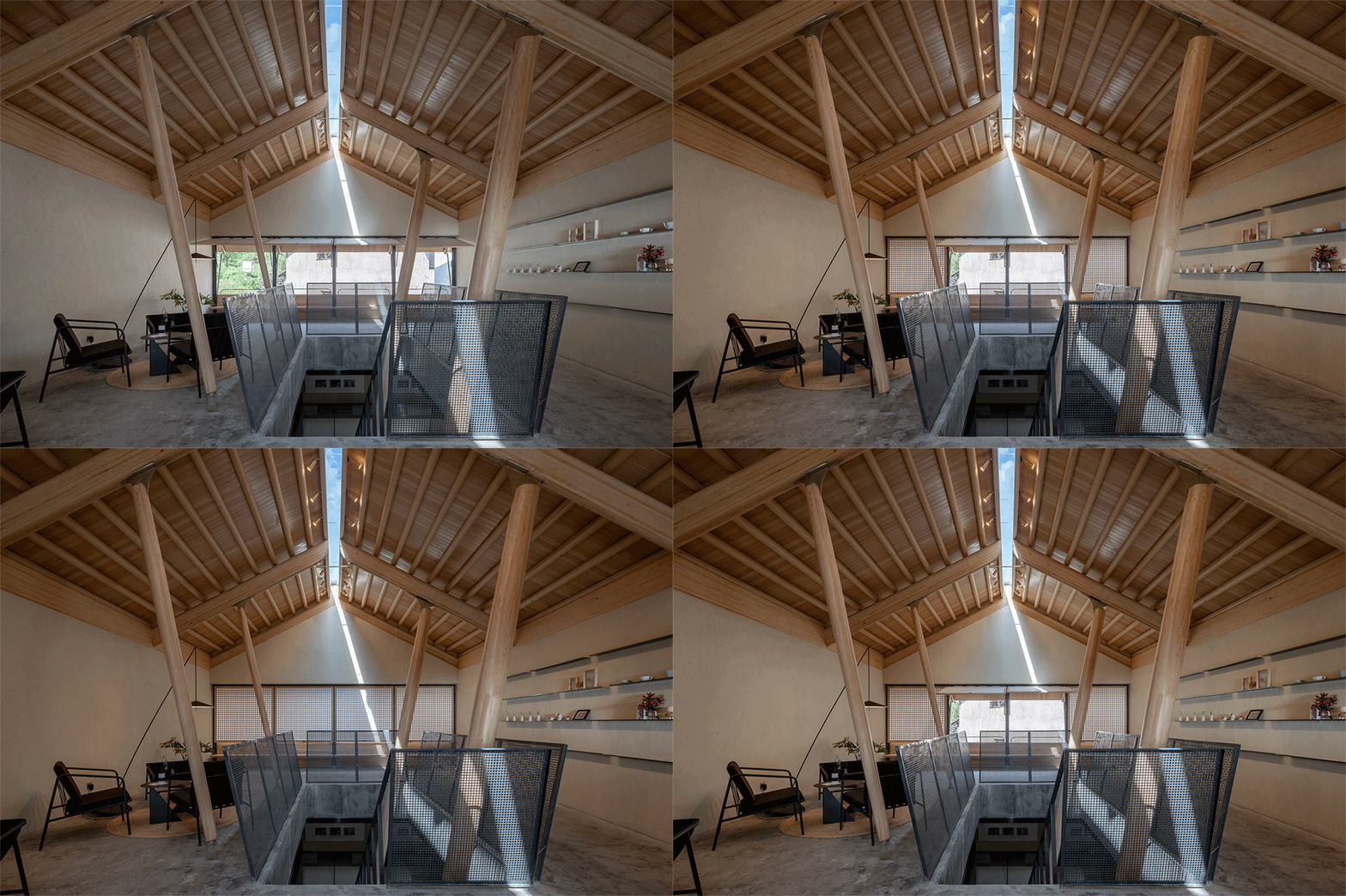
▲ Changes in Light © Tang Xuguo
Support and Remove the Staircase
The staircase is part of the inclined column system. As the columns extend upward, the diagonal supports vary in thickness and are connected top to bottom by slender metal wires. The stairs are entirely detached from the ground and floor slabs, enhancing a sense of structural lightness and mystery. This lifted staircase embodies another “physical” expression of diagonal support and hooked connections.
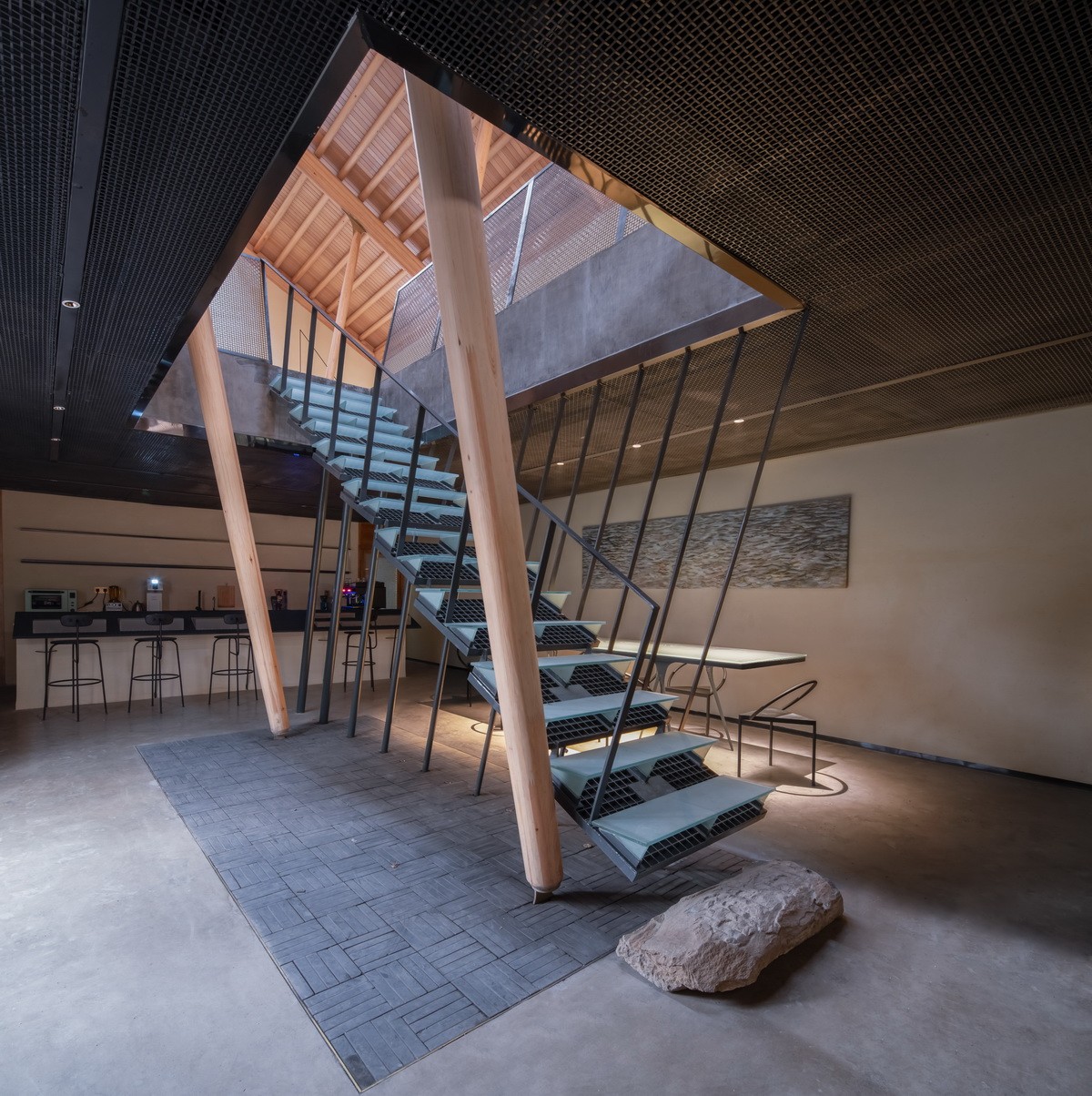


▲ Sloping staircase details © Zhao Yilong, Tang Xuguo

▲ Staircase detail © Tang Xuguo
‘Support Platform’ and ‘Remove Fence’
The storage tabletop extends from the wall via diagonal support and is constructed with semi-transparent triangular plexiglass to form a platform. The second-floor railing handrails also feature inclined connections. These abutments and fences represent the “small carpentry” elements of diagonal support and linkage.
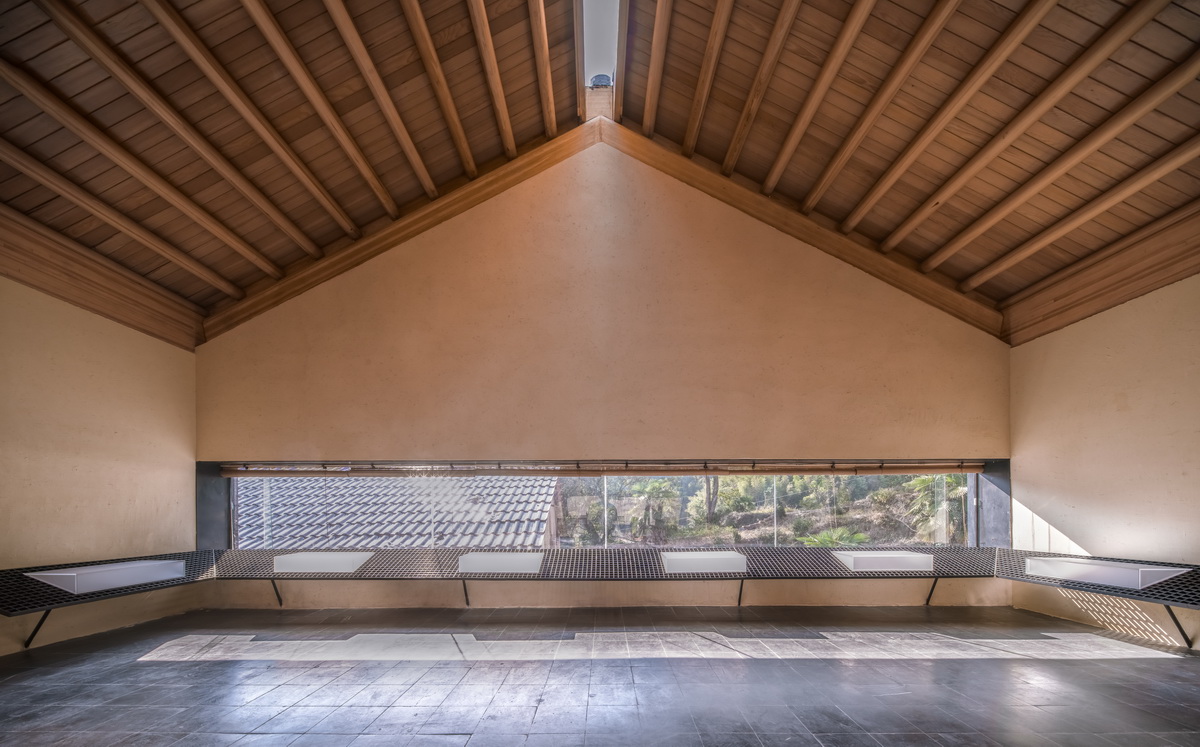
▲ Second-floor platform © Zhao Yilong

▲ Local view © Zhao Yilong
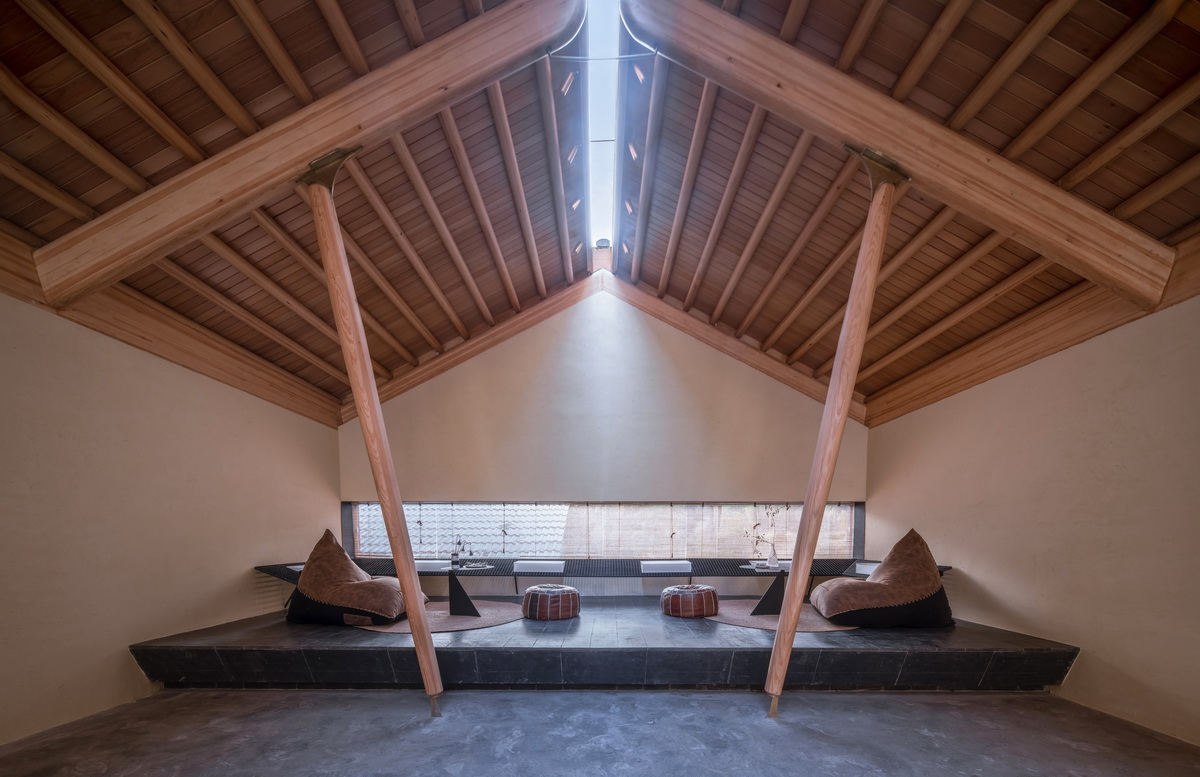
▲ Second-floor platform © Zhao Yilong

▲ Local perspective © Tang Xuguo

▲ Side view of the second floor © Tang Xuguo
Craftsmanship
Dingwu employs modern laminated wood technology, which enhances the strength and durability compared to traditional timber. Robust metal components replace traditional mortise and tenon joints at critical connections. This separation of beams and columns, as well as columns from foundations, optimizes the wooden structure’s efficiency and clarity.
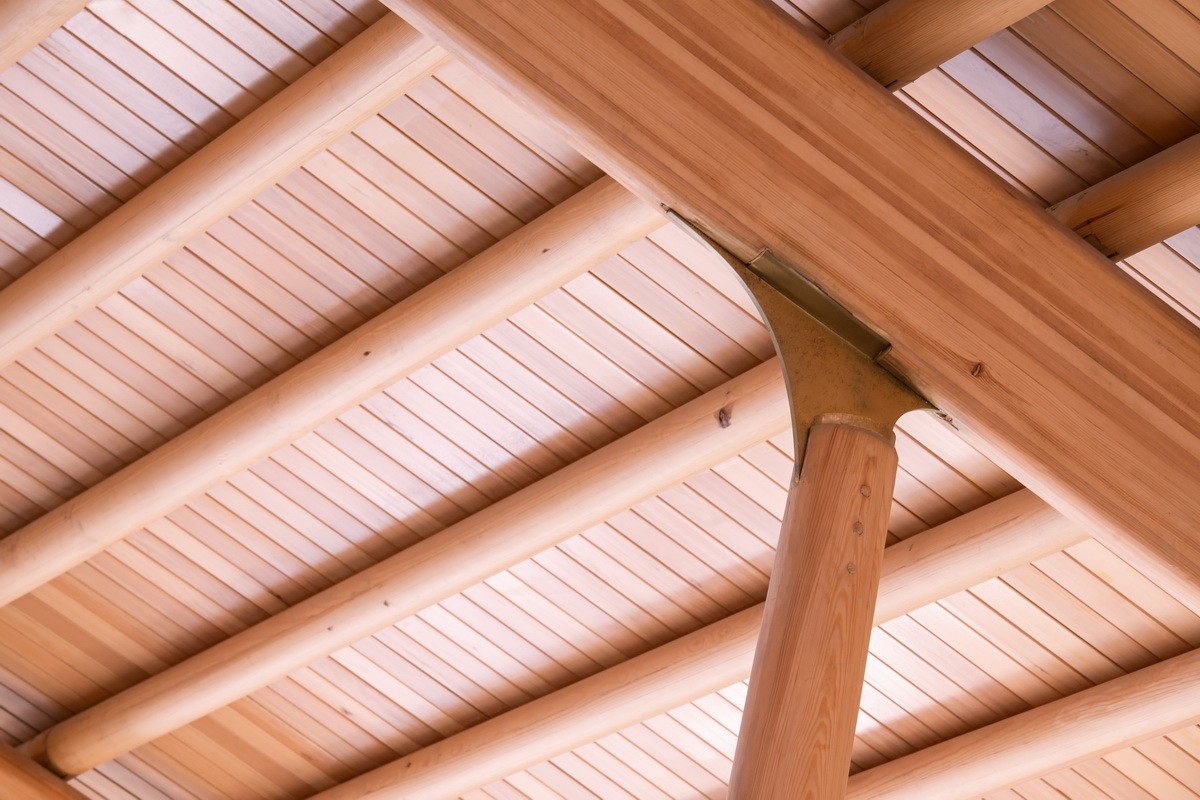
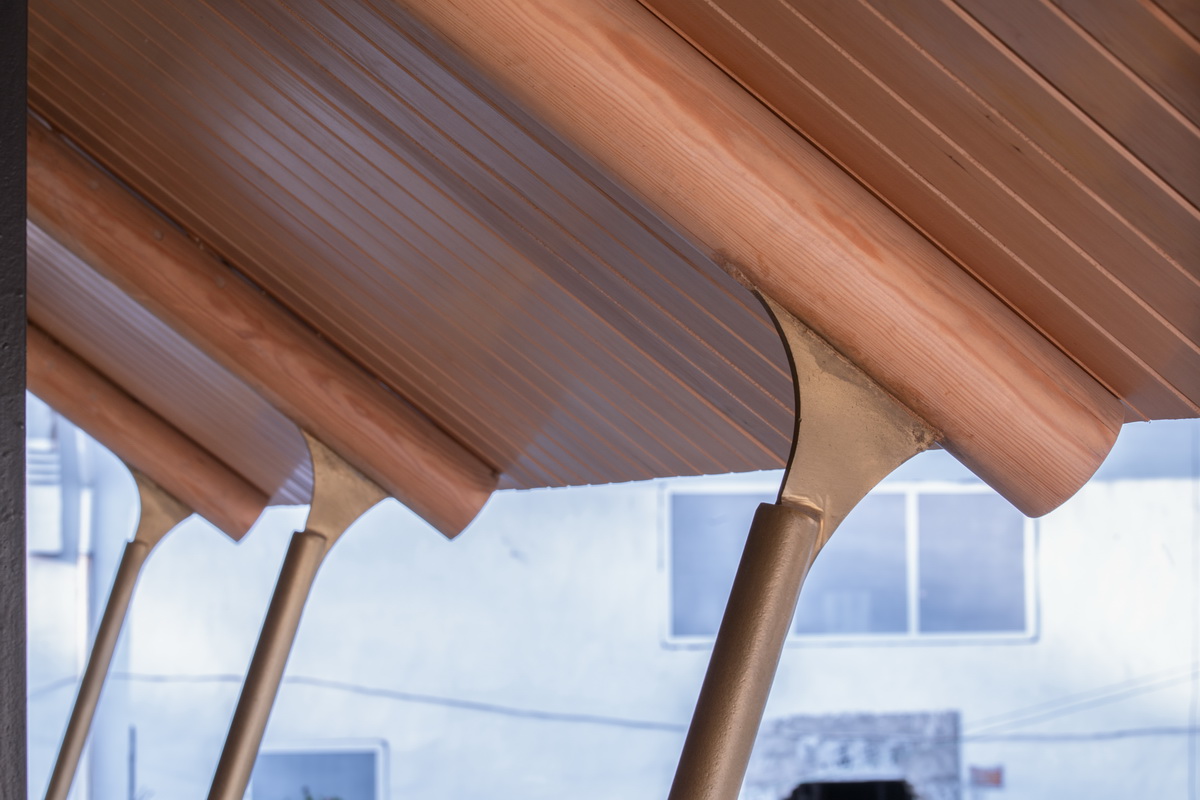
▲ Beam and column joints © Zhao Yilong
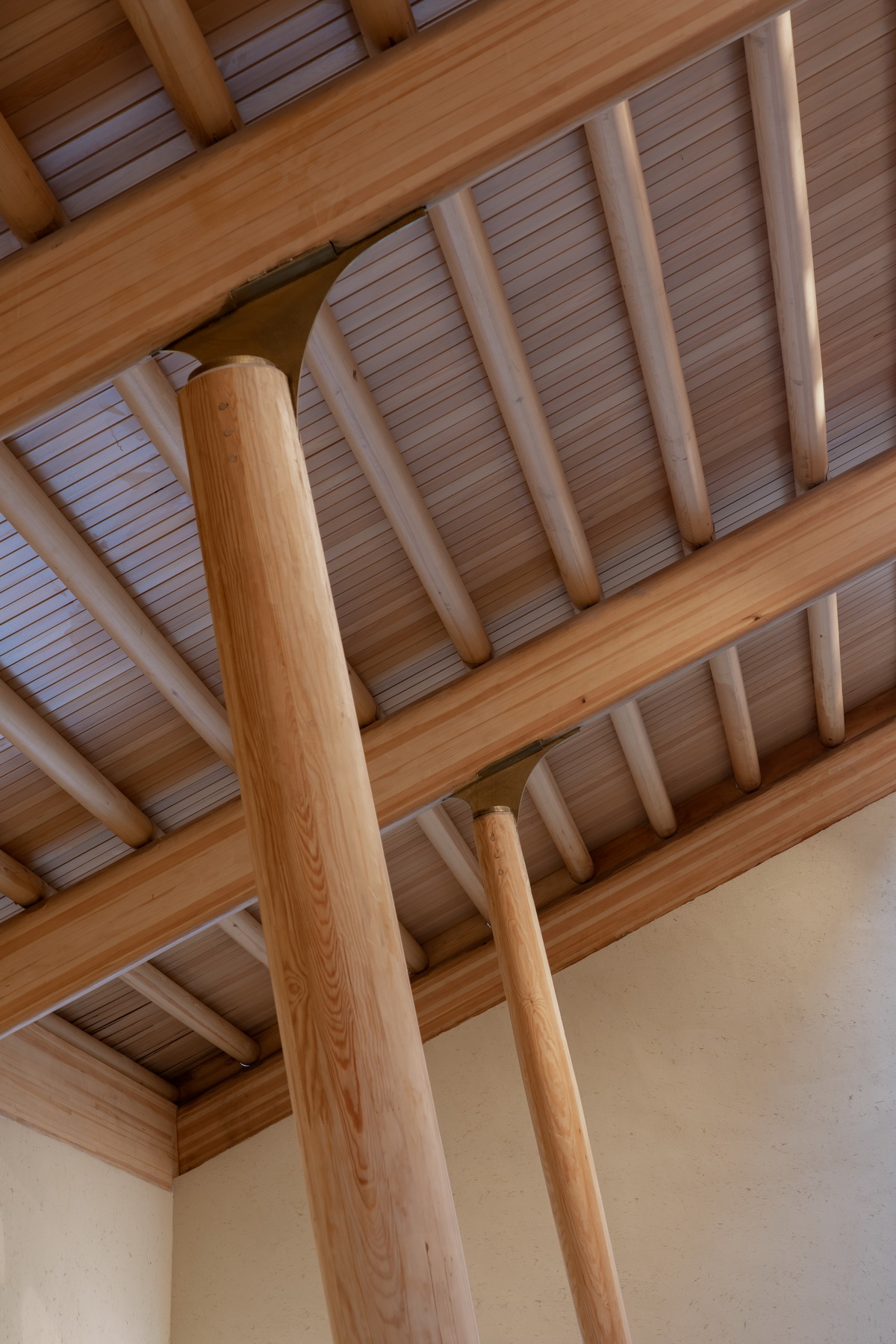
▲ Beam and column joints © Tang Xuguo

▲ Beam and column joints © Zhao Yilong
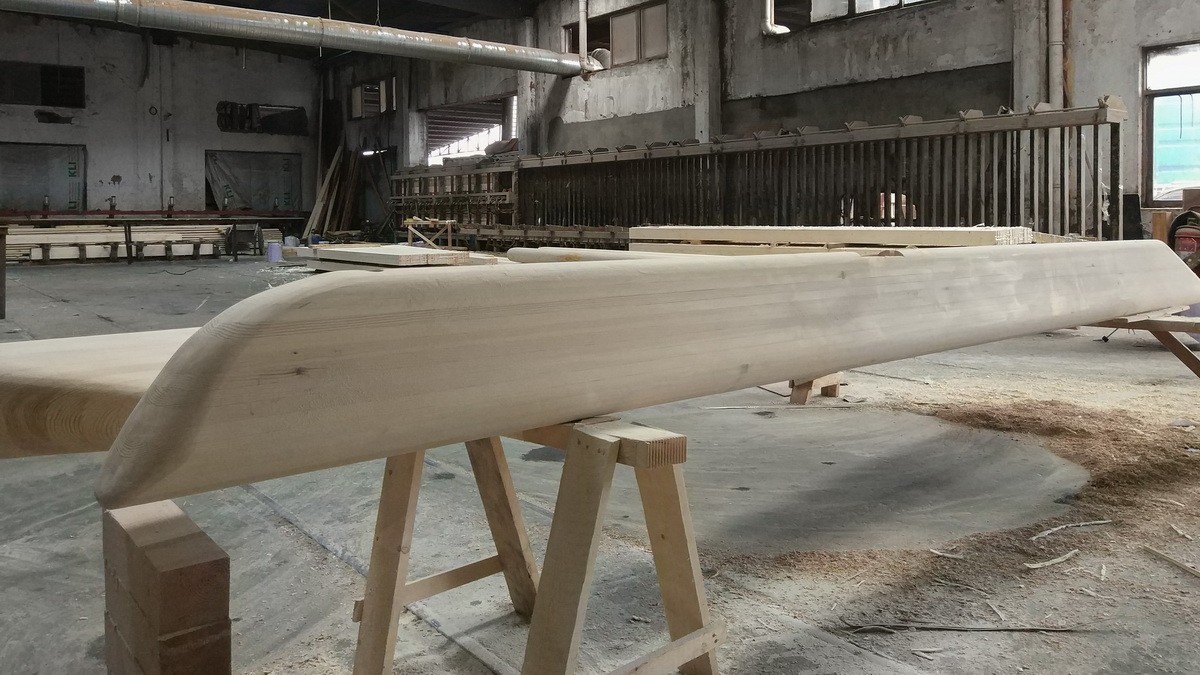
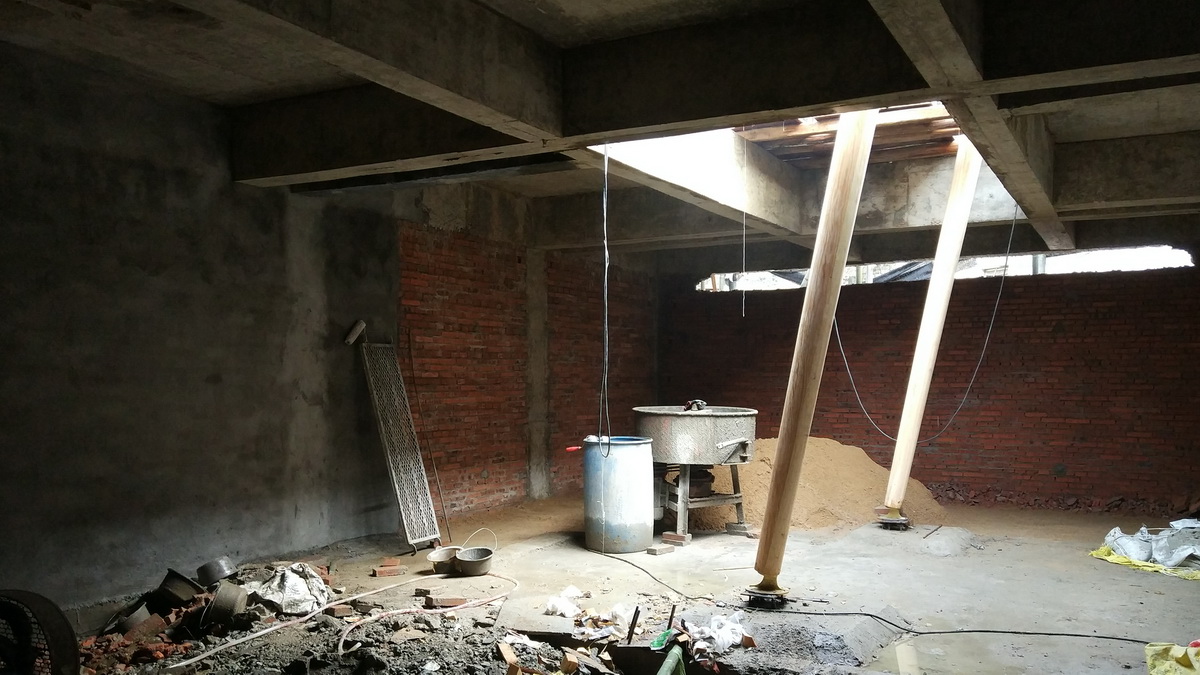
▲ Construction photos
Design Drawings
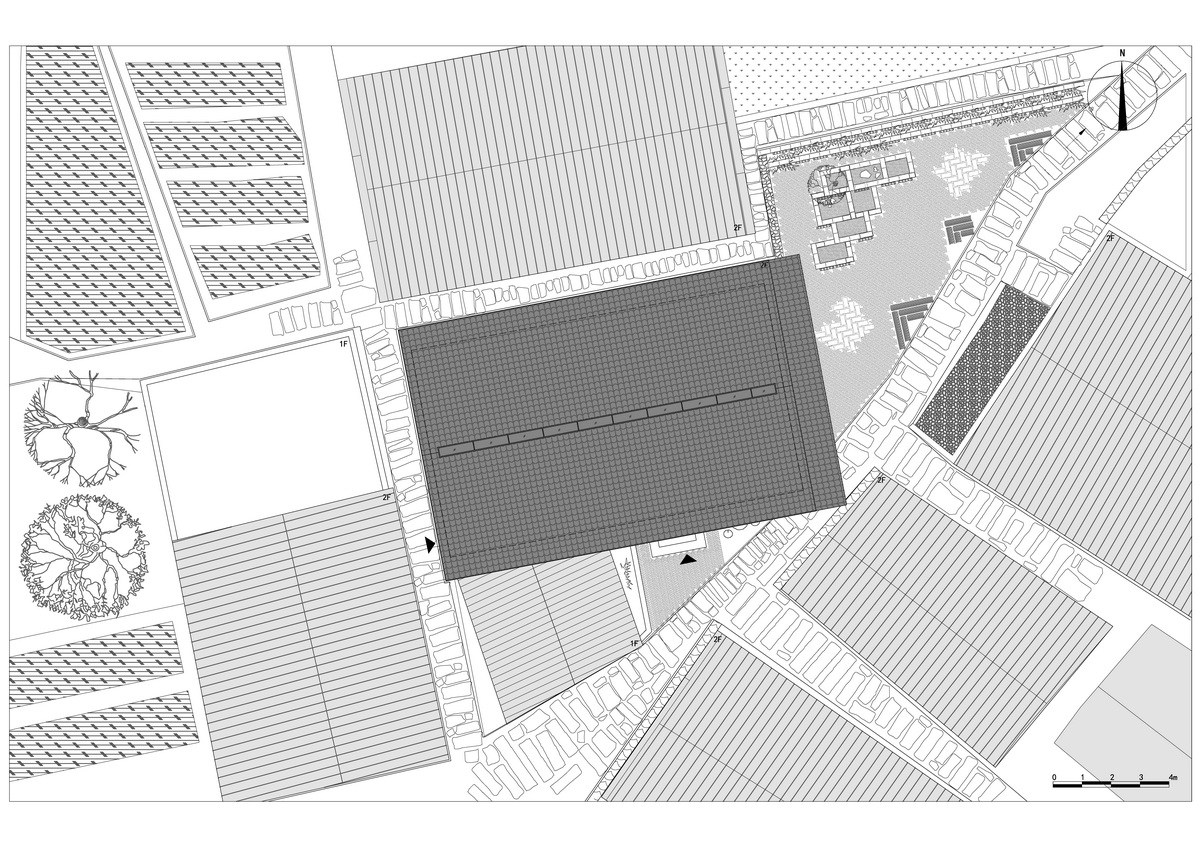
▲ General layout plan
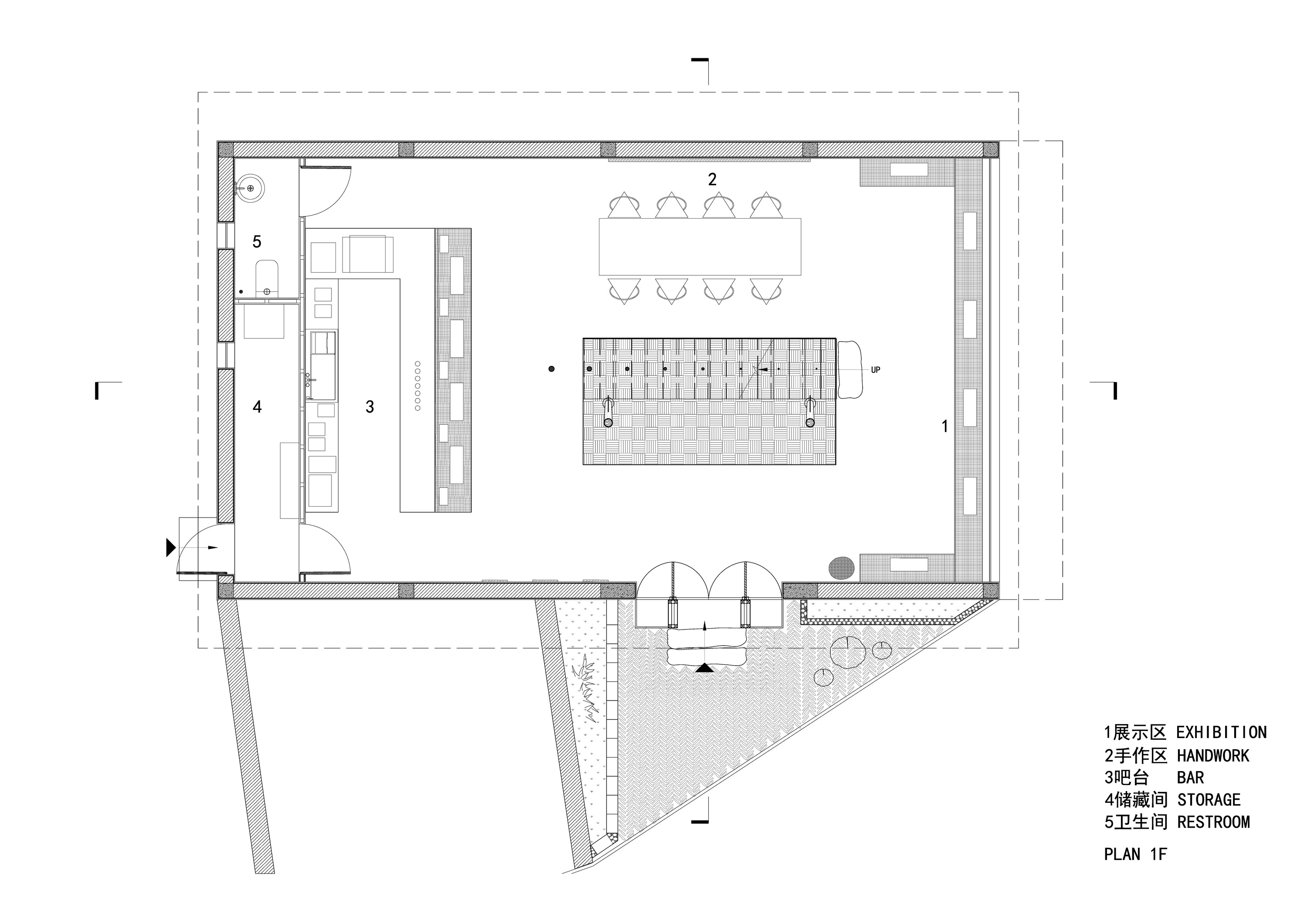
▲ First floor plan
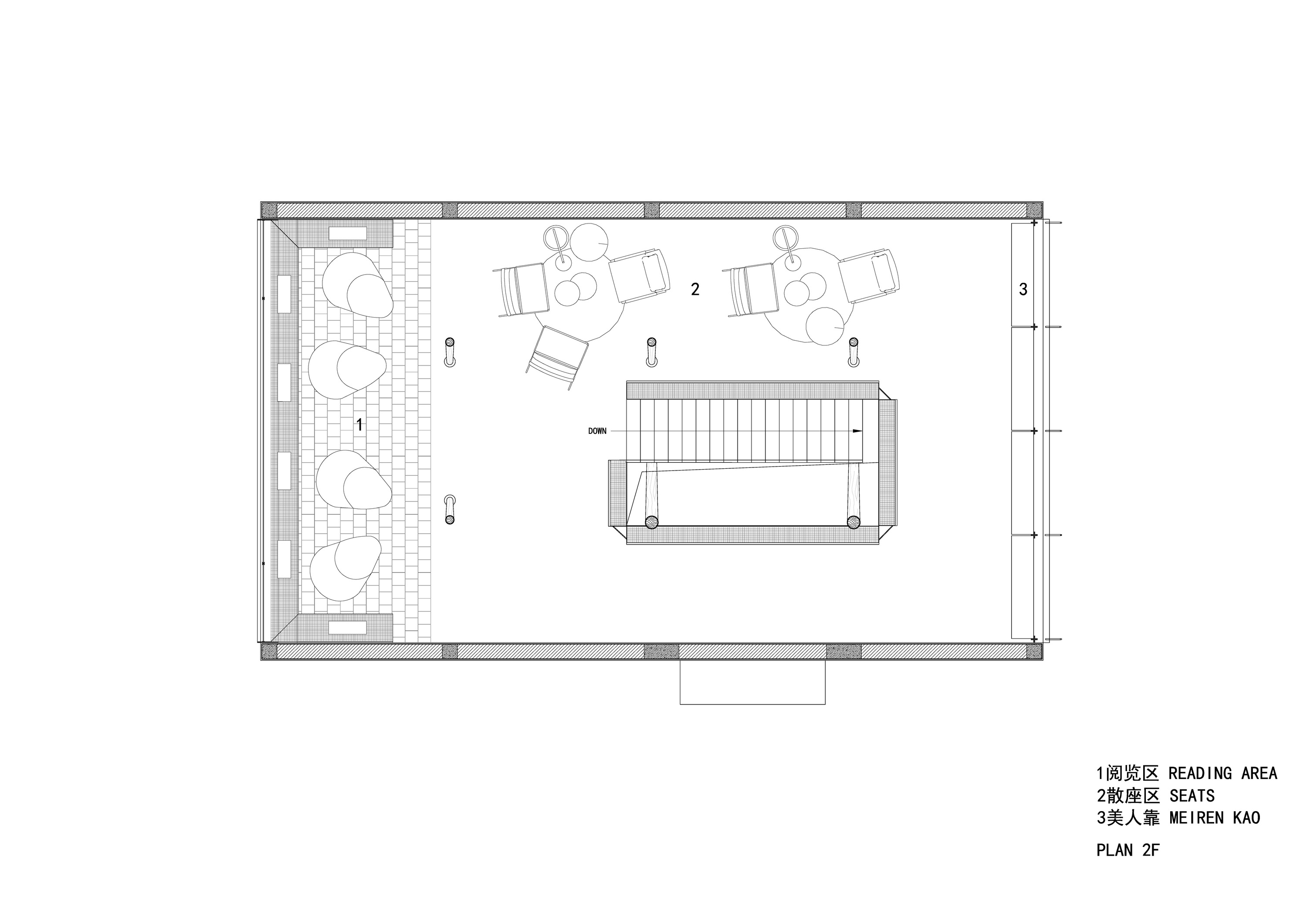
▲ Second floor plan
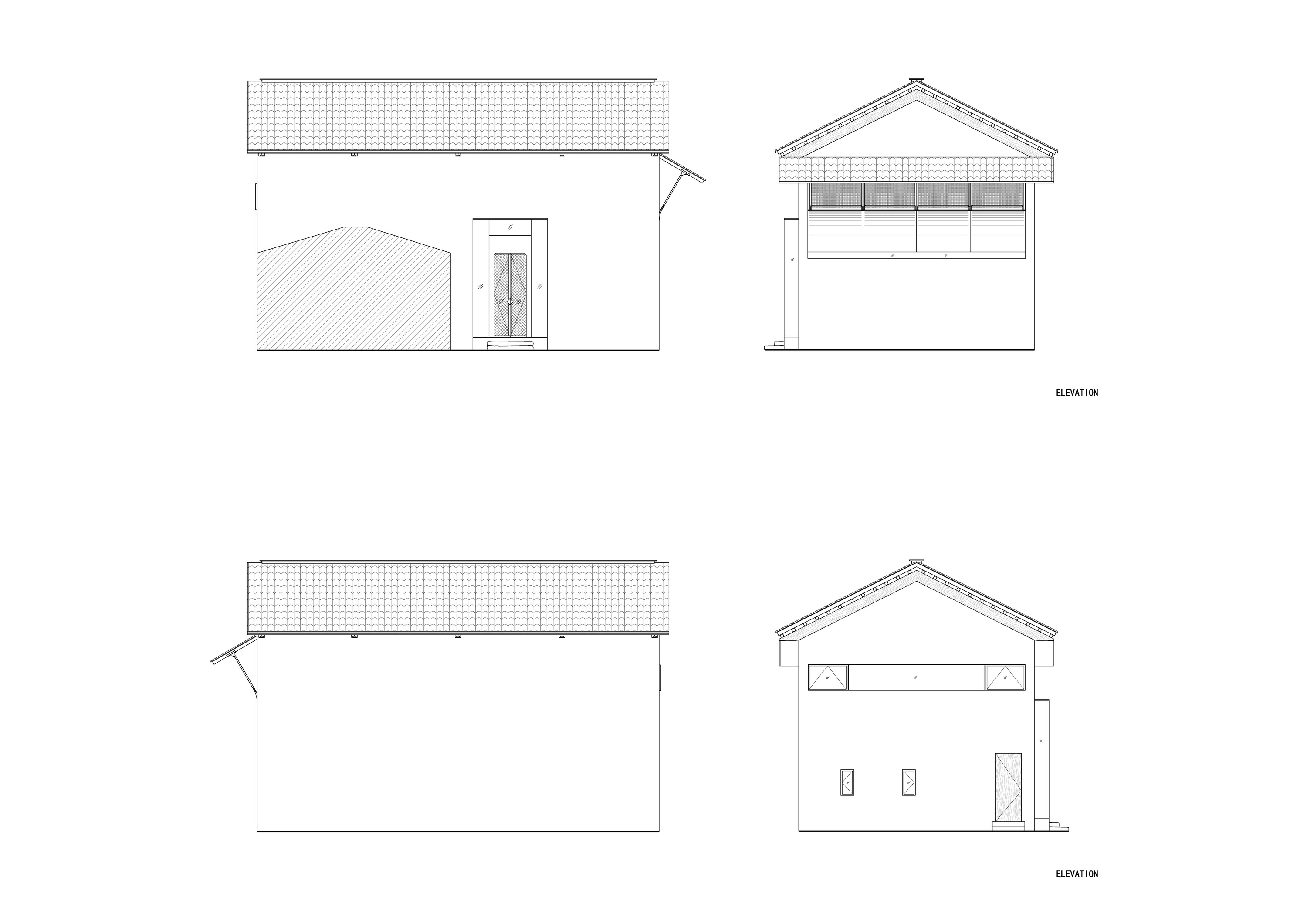
▲ Elevation view
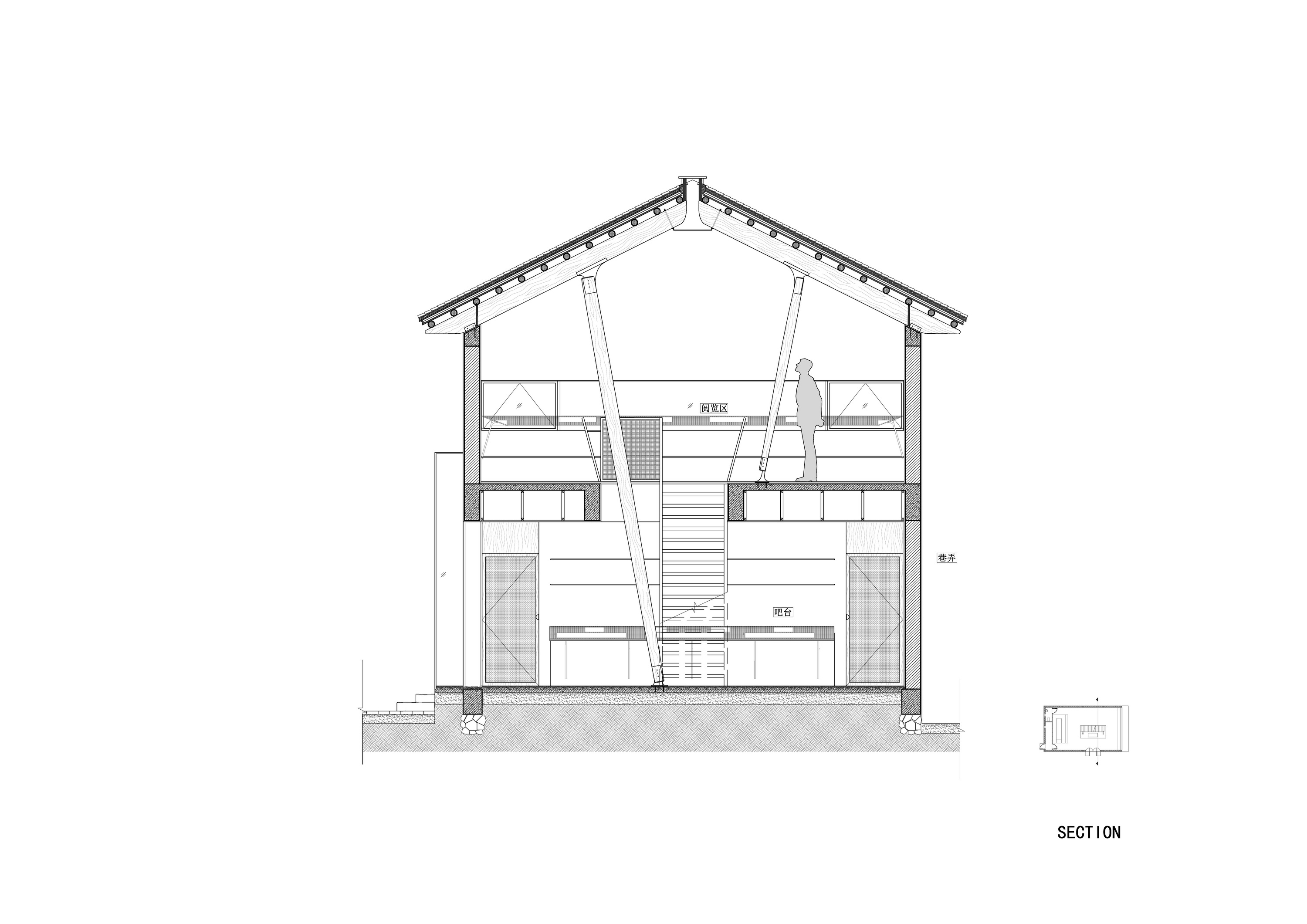
▲ Section 1
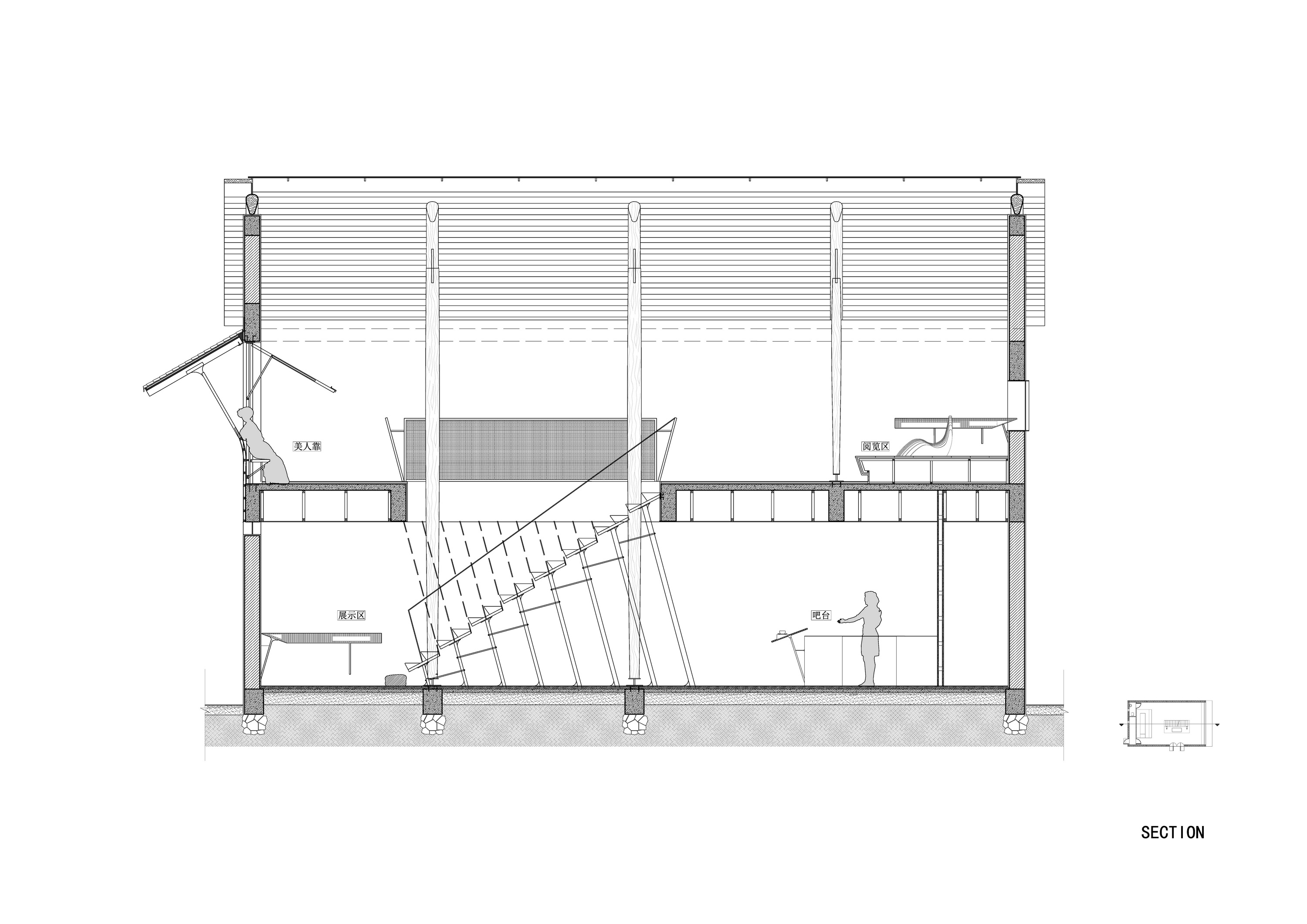
▲ Section 2
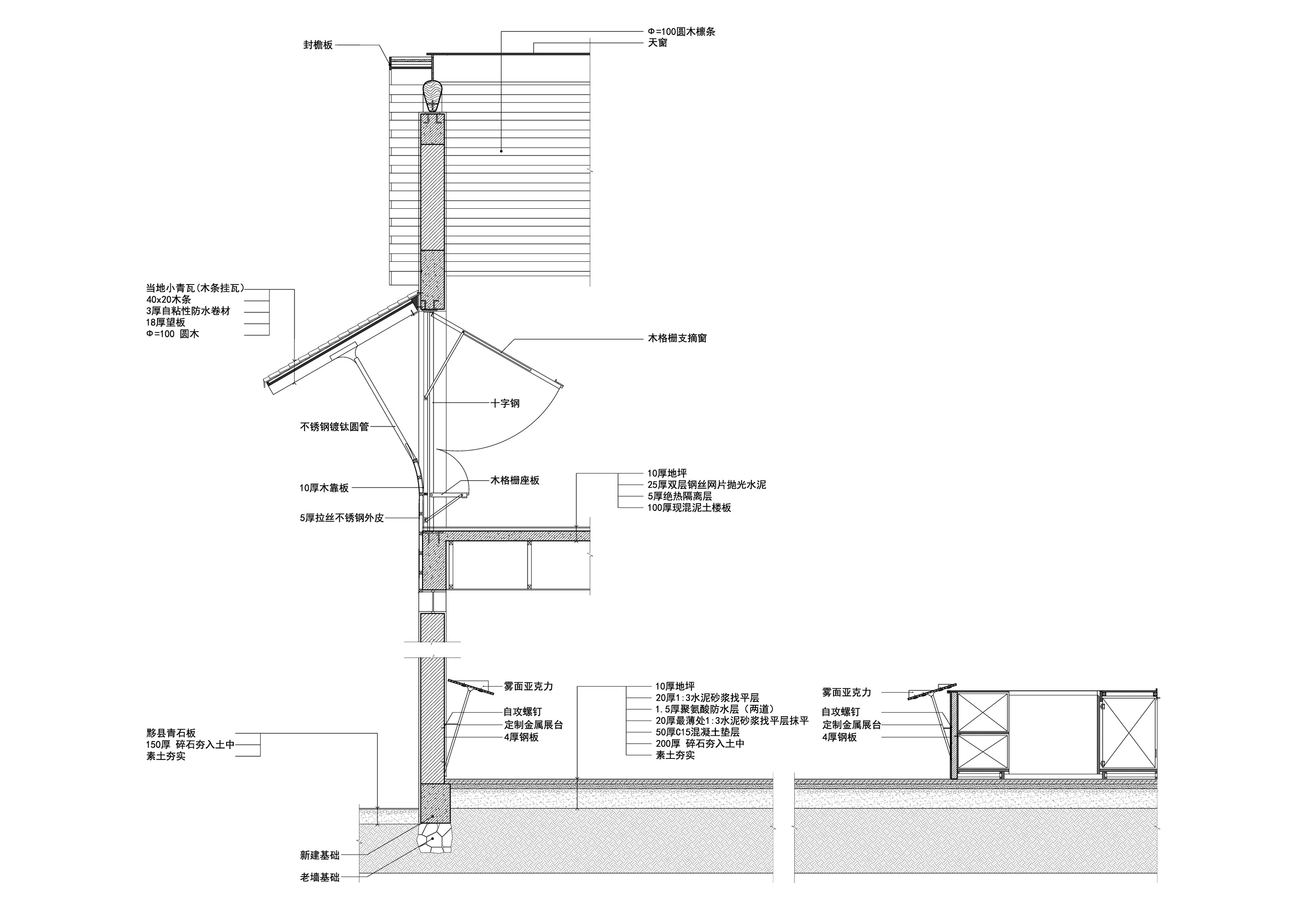
▲ Wall section
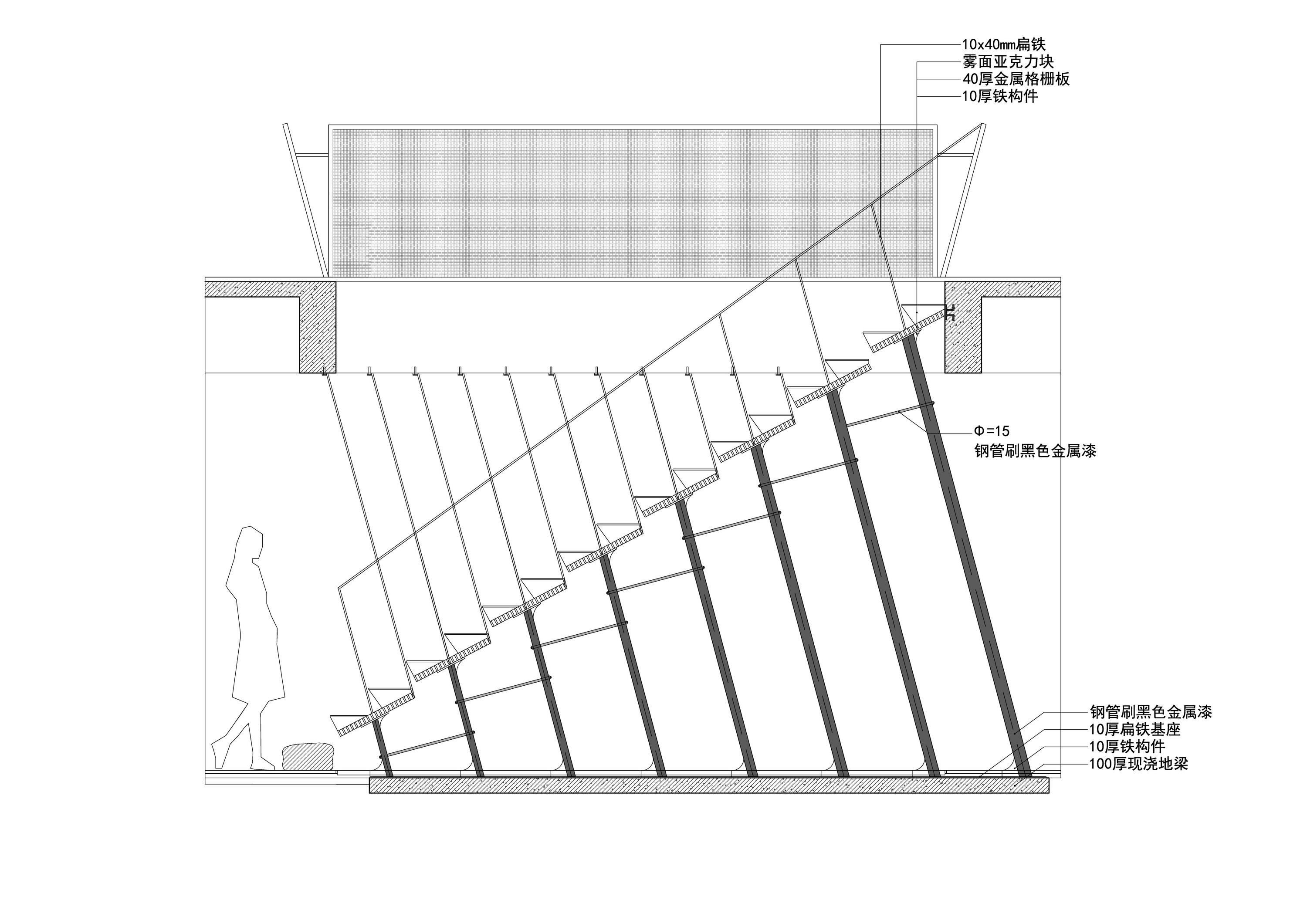
▲ Node diagram
Project Information
Project Name: Dingwu: Nan Coffee Qimen Taoyuan Village Store
Owner: Qimen Wannong Tourism Investment Development Co., Ltd
Designer: Lai Architecture Design Studio
Project Type: Coffee Shop
Wooden Structure Construction: Shanghai Mulekang Wooden Structure Engineering Co., Ltd
Location: Shanli Town, Qimen County, Mount Huangshan City, Anhui Province
Lead Architect: Marco Yuan
Structural Consultant: Zeng Xuewei
Photography: Tang Xuguo, Zhao Yilong
Structure: Wooden structure
Design Team: Chen Yun, Tang Ming
Land Area: 105 m²
Building Area: 172 m²
Design Period: October 2018 – May 2019
Construction Period: December 2018 – July 2019













Must log in before commenting!
Sign Up