
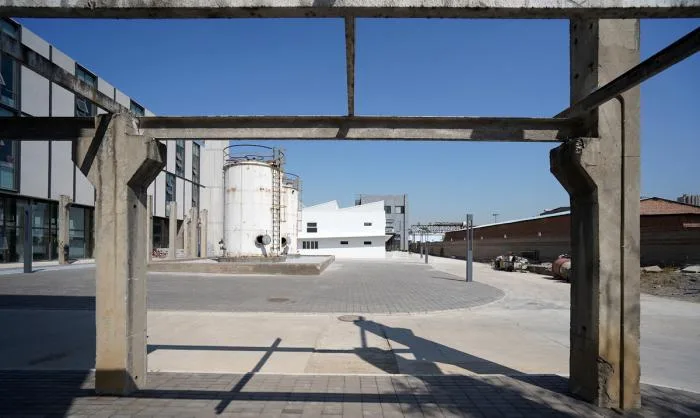
▲ South-side view of the park
This project is situated outside Beijing’s East Fifth Ring Road, on the city’s outskirts. The cultural and creative park where it resides was formerly a chemical factory. The factory area features a sparse texture, with buildings spaced relatively far apart. Most structures are composed of simple geometric volumes.
The renovation focuses on a smaller building located on the park’s southeast side. This structure encloses a small square, flanked on the south by two white industrial tanks.
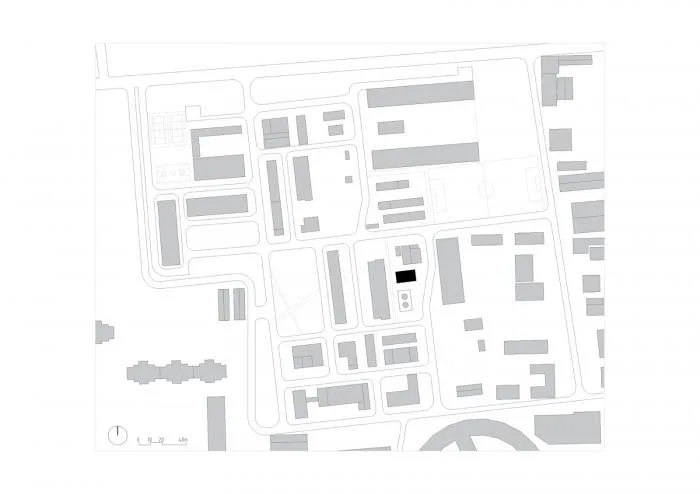
▲ Site plan
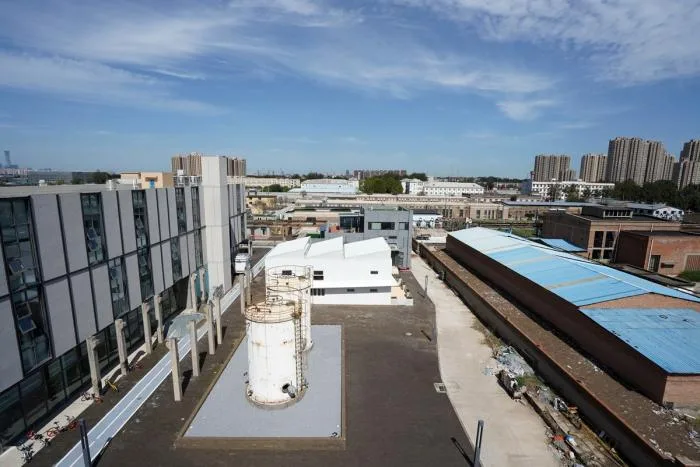
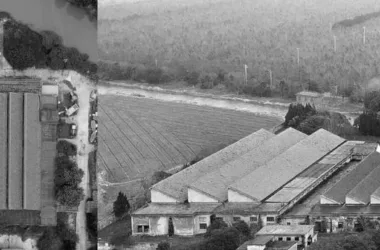
▲ Aerial view
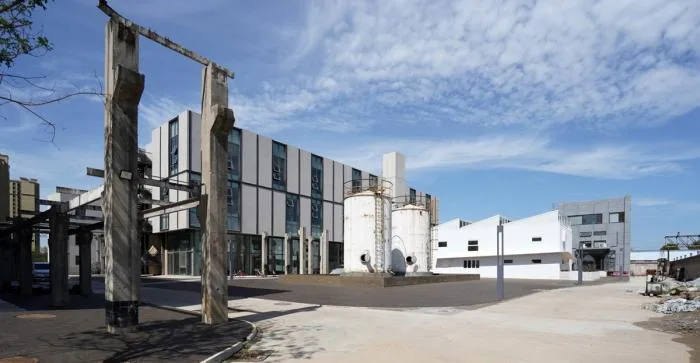
▲ Southeast perspective of the park
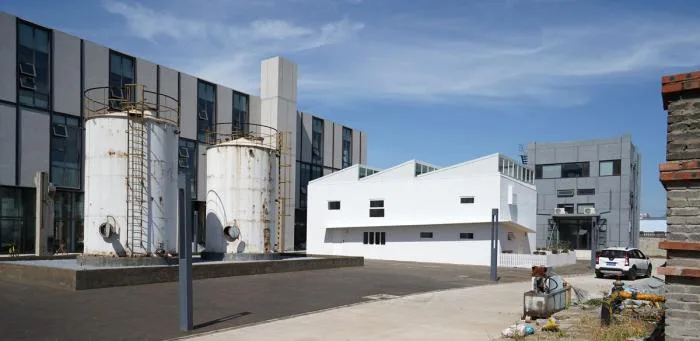
▲ Forming a small square with the tank bodies
The existing building is a single-story structure covering 160 square meters, with an eave height of 5.8 meters. Its soaring spatial scale and the diffused light filtering through the damaged roof evoke strong imagination for the future space.
Understanding that the park’s goal is to transform the former industrial site into a community-oriented cultural and creative hub, we decided to lease this building as our studio. Our design aims to create independent units that respond to the surrounding environment, establishing diverse spatial connections between the building’s interior, the community, and nature.
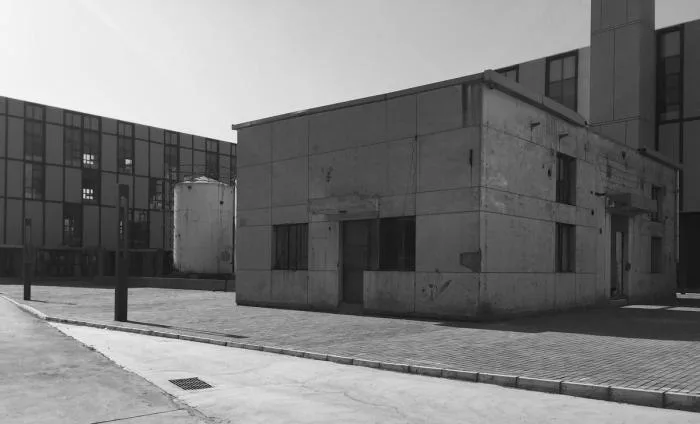
▲ Northeast perspective of the original building
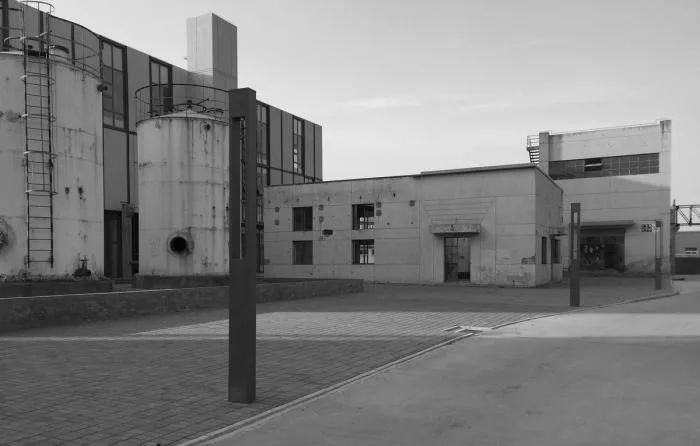
▲ Southeast perspective of the original building
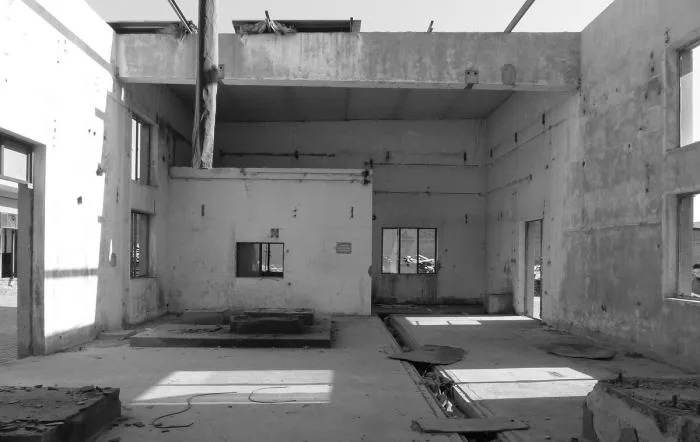
▲ Interior view running west to east
Since this is a rented space, controlling costs and ease of construction were key design considerations. To demonstrate how we refined the design within a limited budget while achieving a high-quality workspace, we carefully selected materials, optimized space usage, and considered structural design.
Our approach uses minimal interventions and elements to shape space and influence human perception. The serrated roof rises towards the sky, with skylights allowing natural light to fill the interior and create dynamic patterns of light and shadow.
The building’s surroundings offer varied atmospheres. Openings on all four exterior walls, the gray space beneath the canopy, and the spatial layering provided by the adjacent garden encourage lingering and interaction, transforming the original industrial building into a community hub.
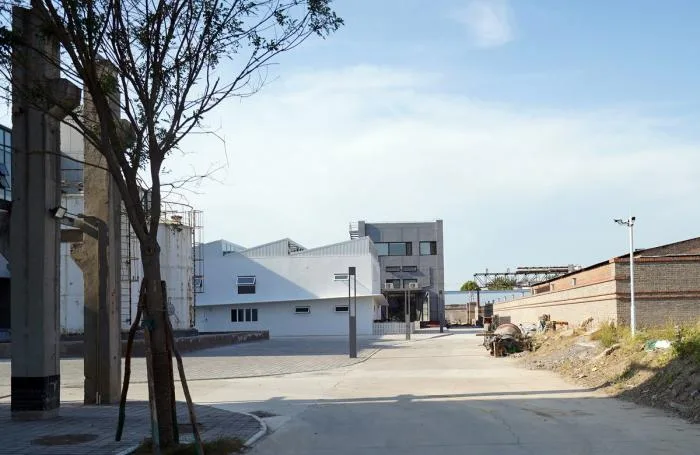
▲ South side view of the park
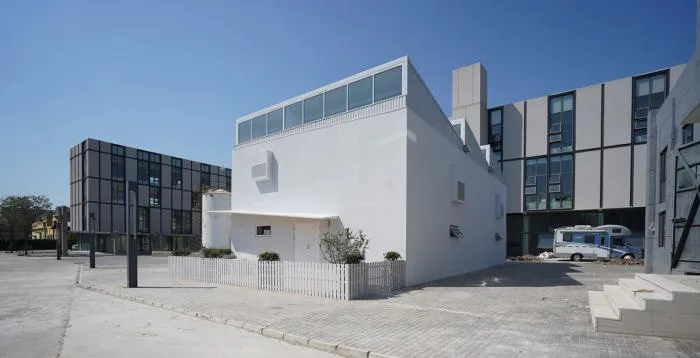
▲ East Small Garden
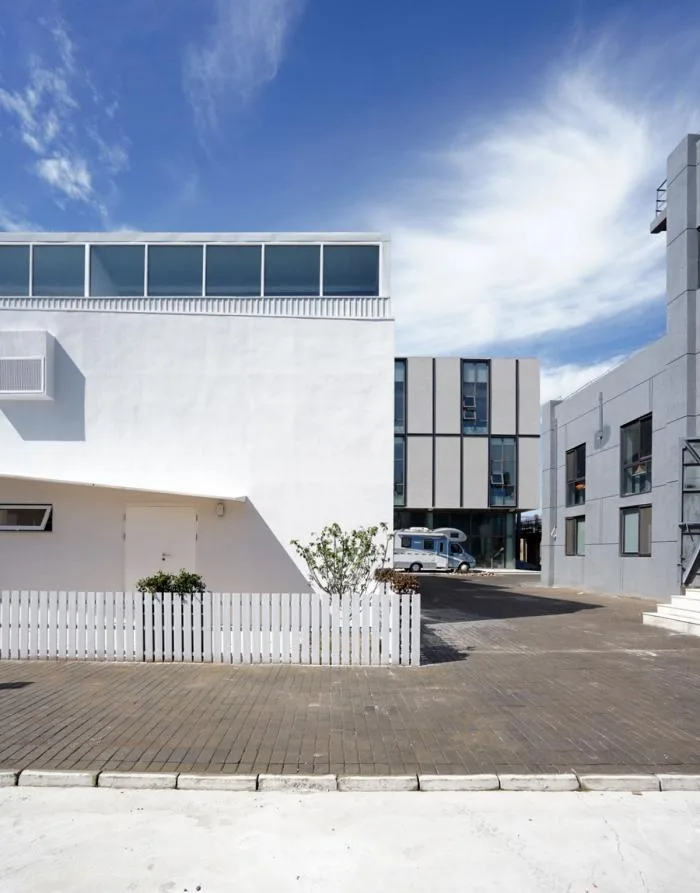
▲ East facade
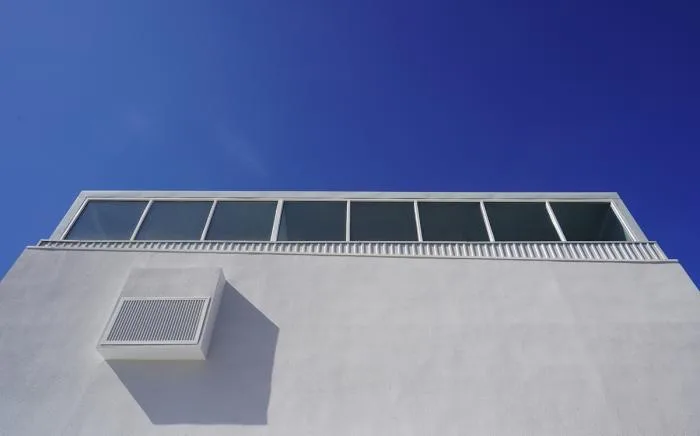
▲ Skylight
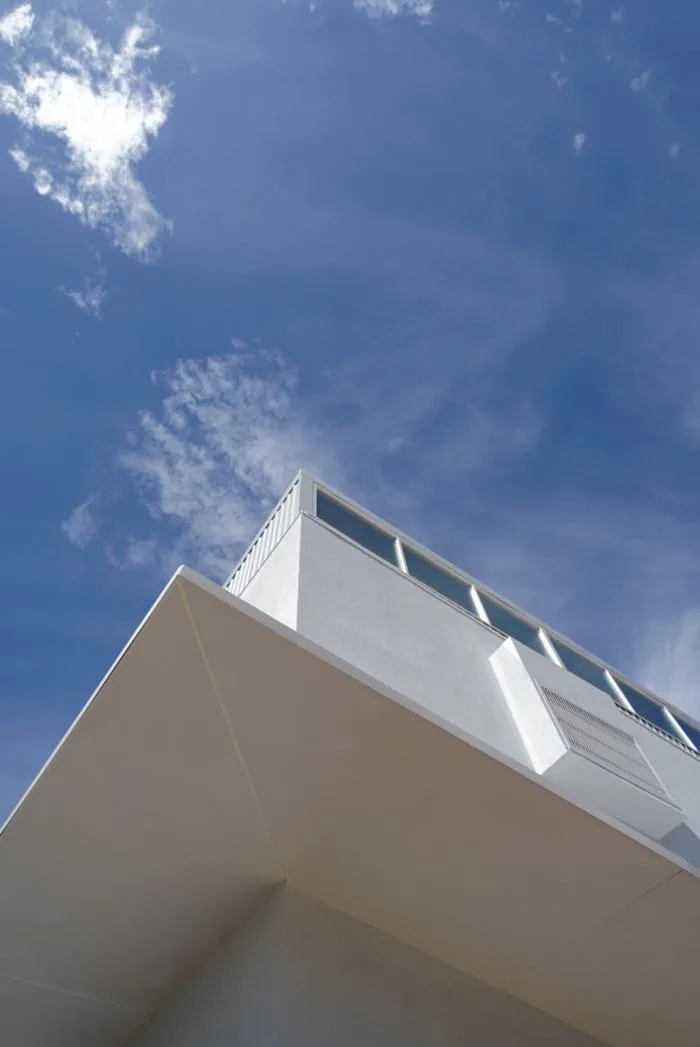
▲ Rain canopy
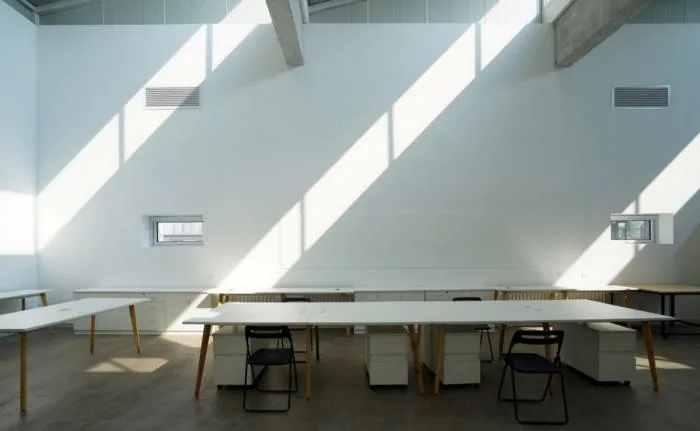
▲ Sunlight on the north wall
Inside, a tall main partition wall divides the space into north and south zones. The expansive northern area, with its unconventional scale, encourages a shift in mindset and offers generous personal space for contemplation.
The southern section spans two floors and opens onto the small square. The main entrance is located here, emphasizing the building’s welcoming nature and focus on communication.
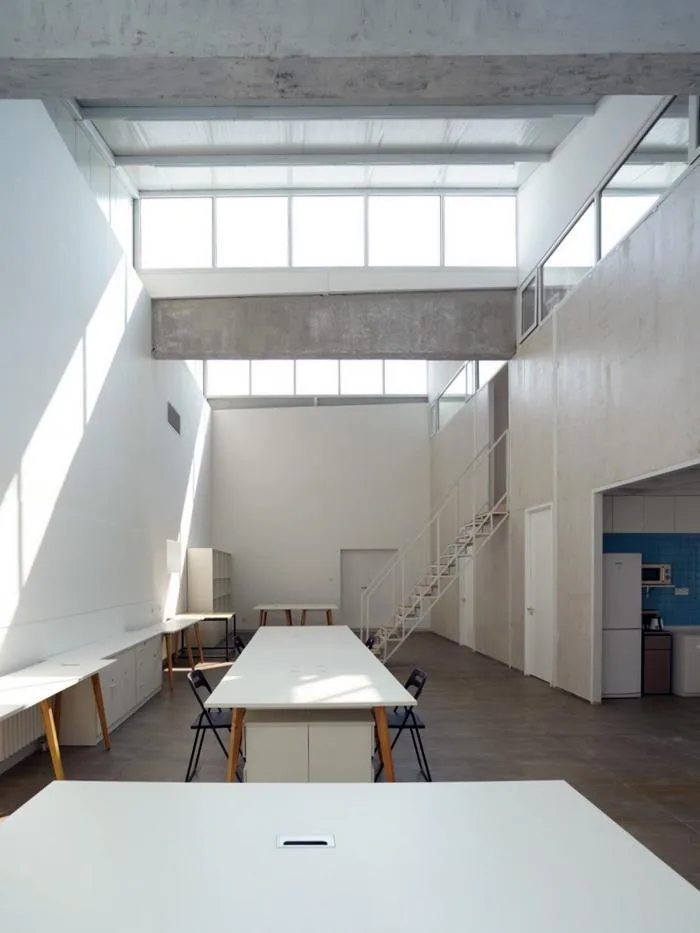
▲ Main space
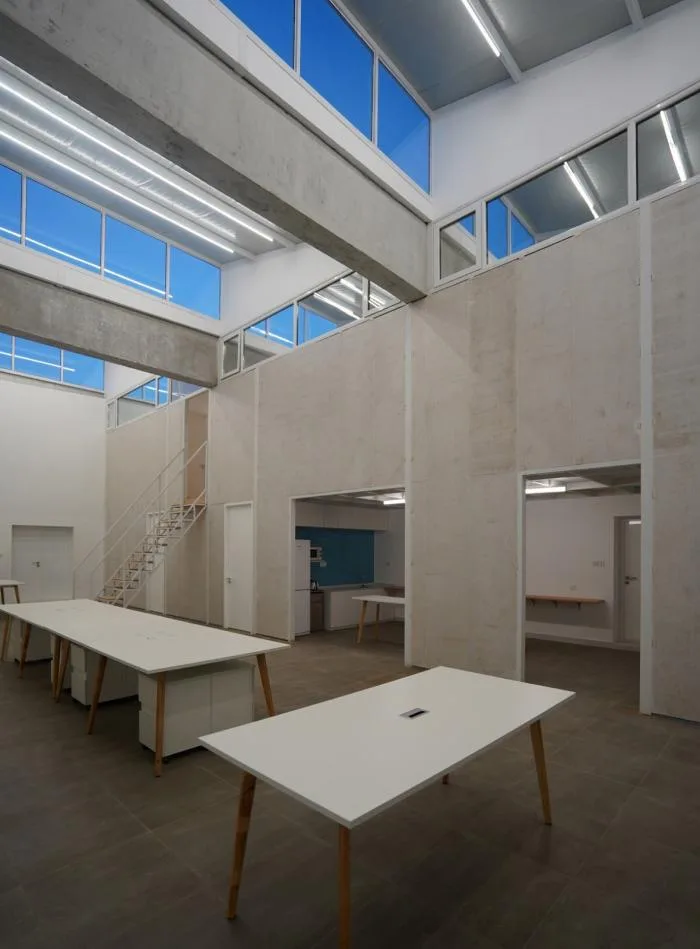
▲ Indoor night view
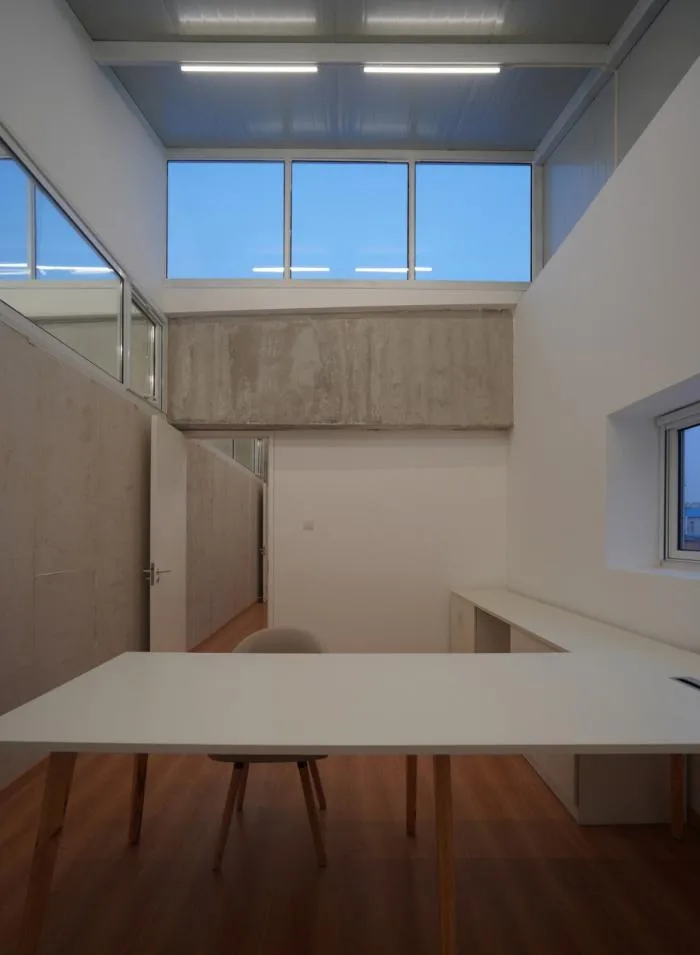
▲ Night view of office space
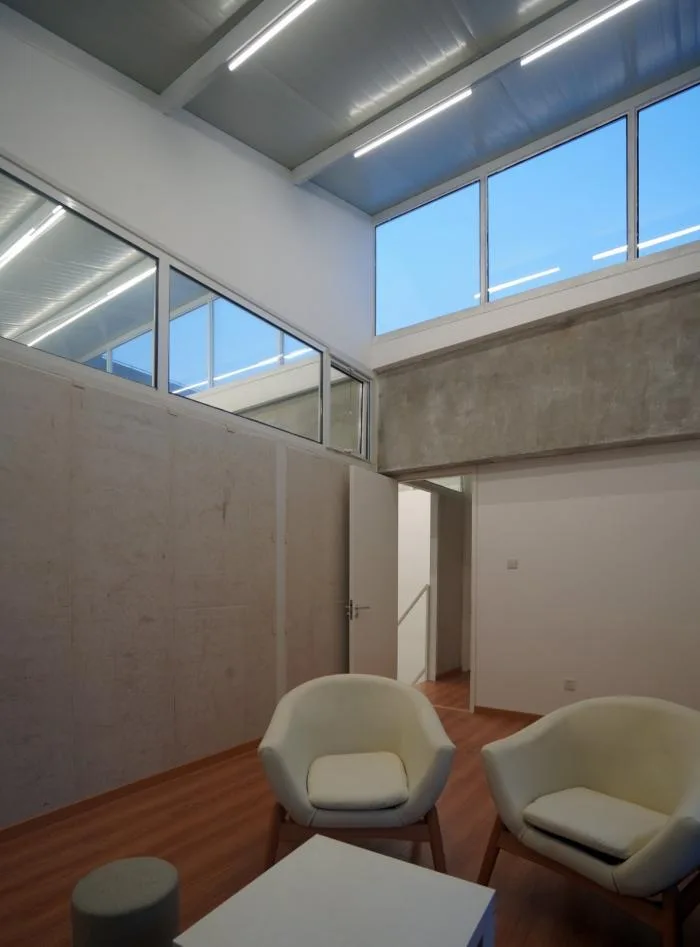
▲ Night view of the second-floor reception area
The lounge area is located near the entrance, featuring large horizontal windows with window seats perfect for work or relaxation. A cantilevered canopy extends outside, creating a sheltered space beneath the eaves.
Windows with horizontal panels of varying heights on both sides foster a conversational atmosphere. On the building’s west side is a park corridor with horizontal exhibition windows, allowing passersby to view exhibits up close and observe work happening deeper inside.
The window heights invite visitors to approach and slightly lower their gaze, encouraging slower movement and a more intimate viewing experience.
The exterior walls and roof are painted white-gray, harmonizing with the two white tanks nearby. Together, these geometric forms create a “sketch-like still life” that changes dynamically with the sun’s movement, casting rich combinations of light and shadow.
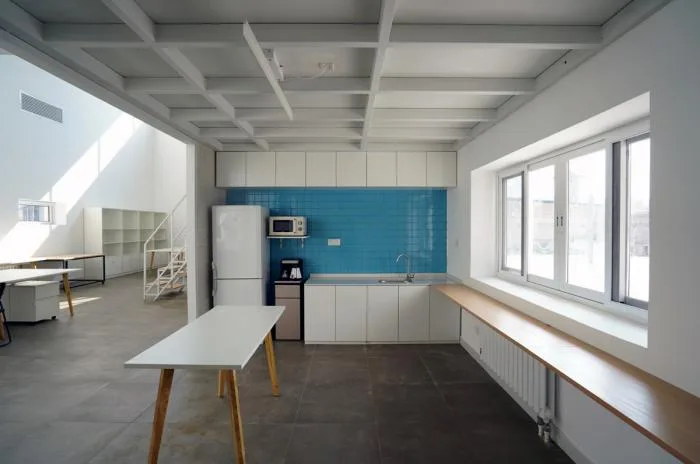
▲ Tea break area
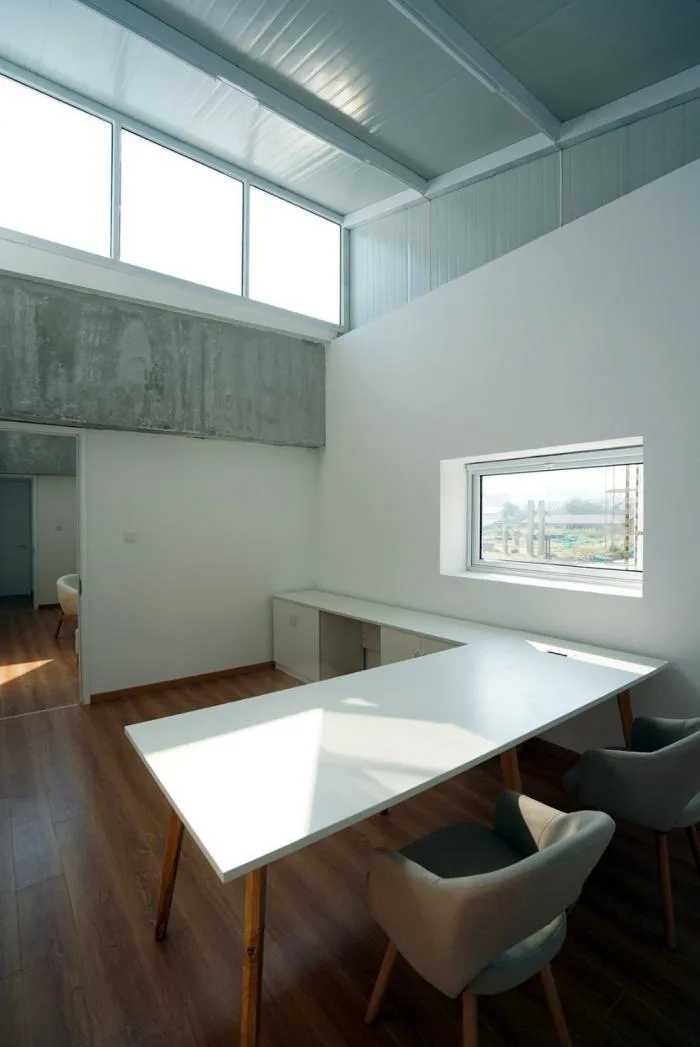
▲ Second-floor office space
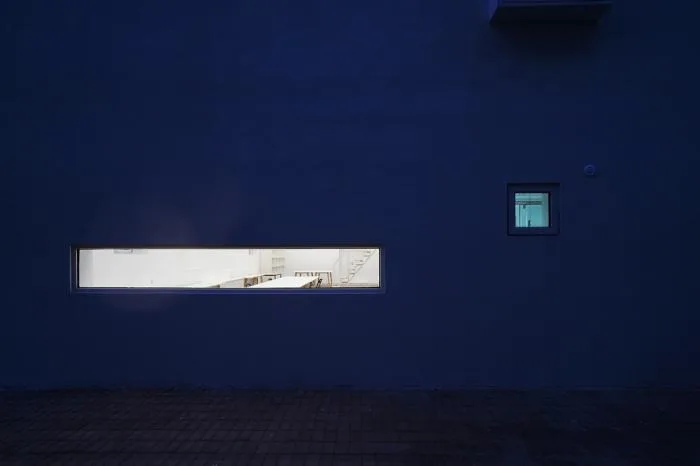
▲ West long exhibition window
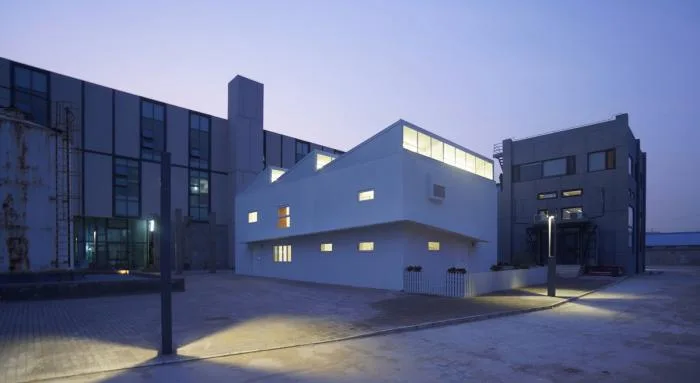
▲ Southeast night view
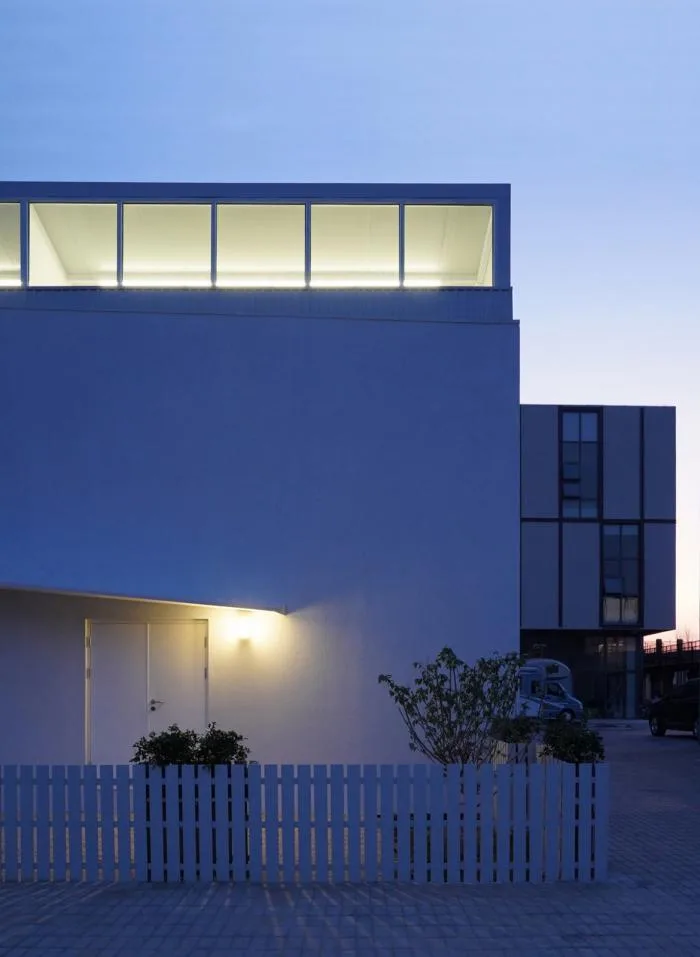
▲ East facade night view
Material choices, construction methods, workforce organization, equipment, and craftsmanship were all starting points for exploring the design’s potential.
Commonly used low-cost industrial materials include square steel, corrugated sandwich panels, polystyrene particle sandwich panels, and cement fiber boards, all widely applied in urban fringe areas.
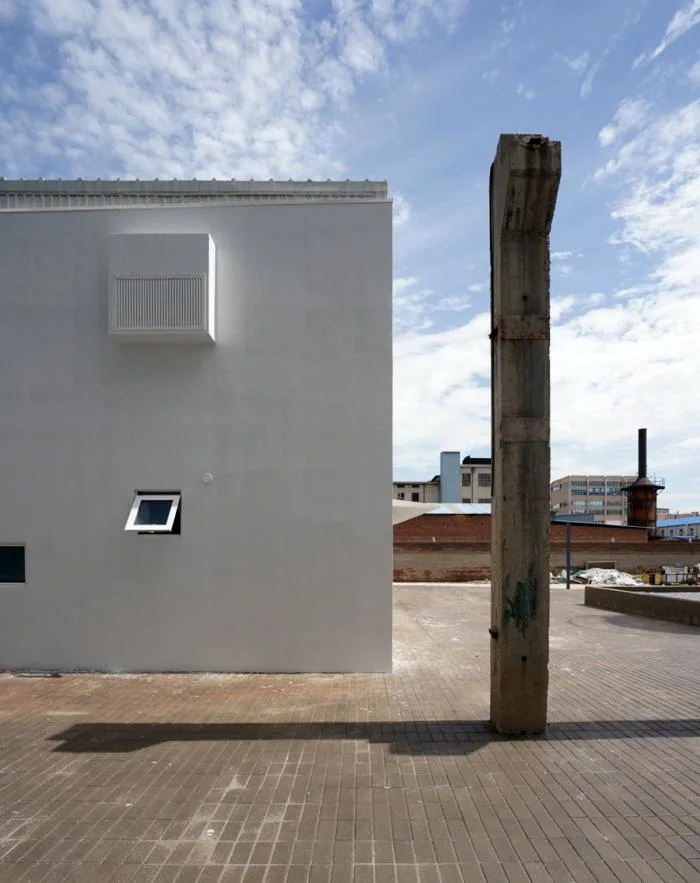
▲ View from the west passage
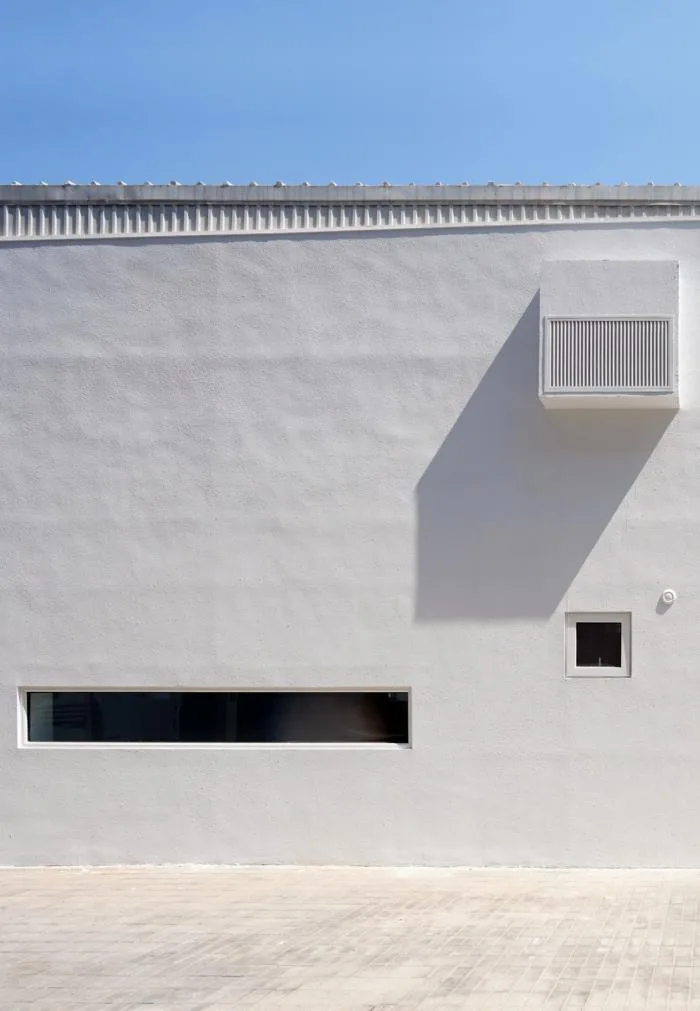
▲ West facade
The newly added elements are all lightweight steel frame structures with enclosing panels. The streamlined construction design allows small teams to complete the work using simple tools and mainly manual labor.
Project Drawings
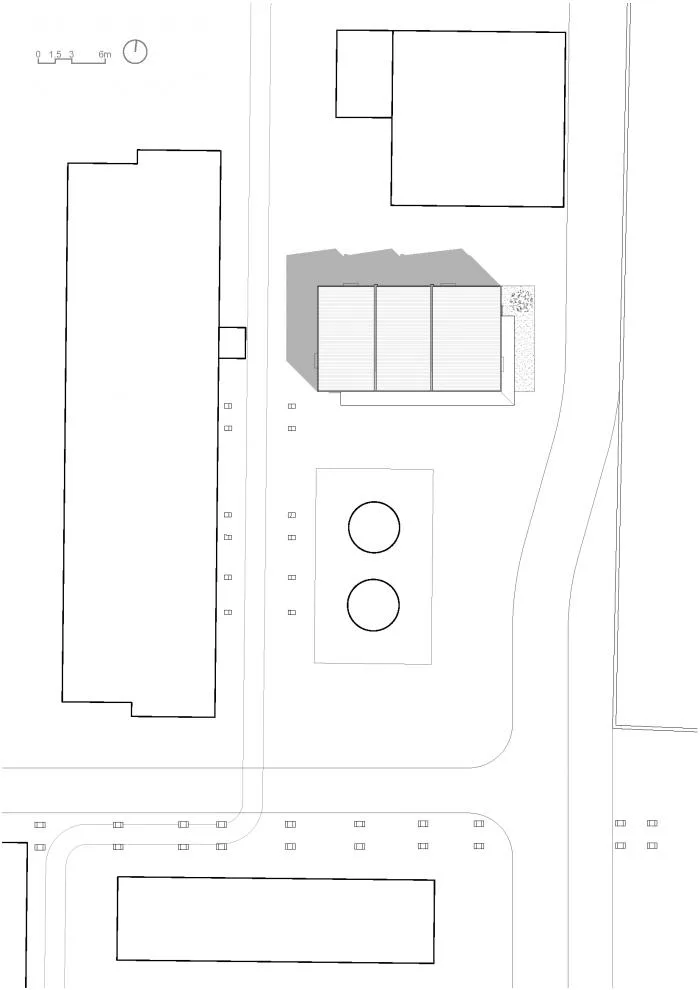
▲ General layout plan
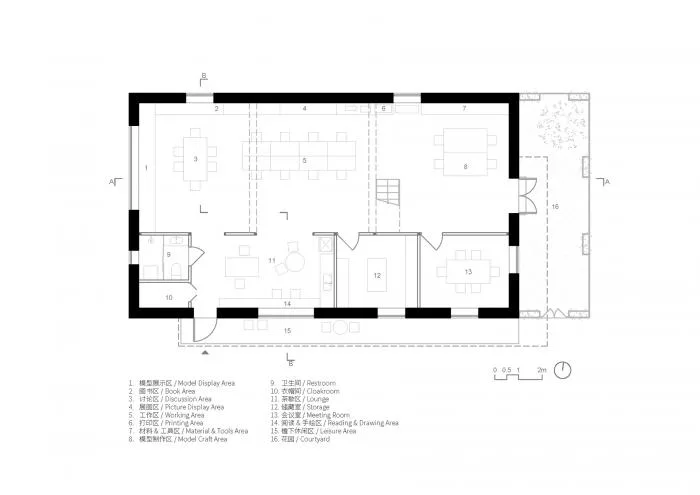
▲ First floor plan
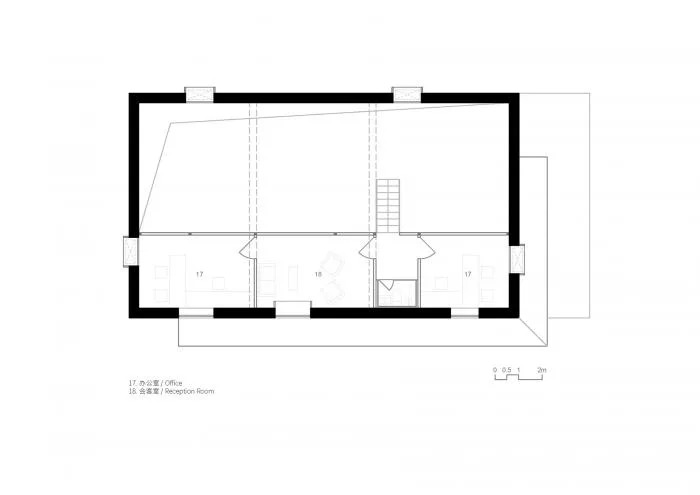
▲ Second floor plan
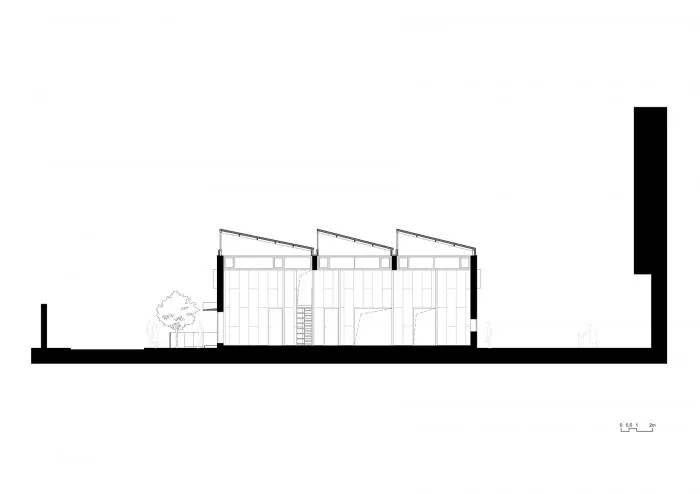
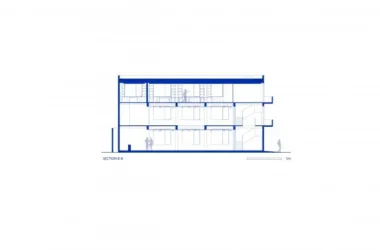
▲ Sectional view
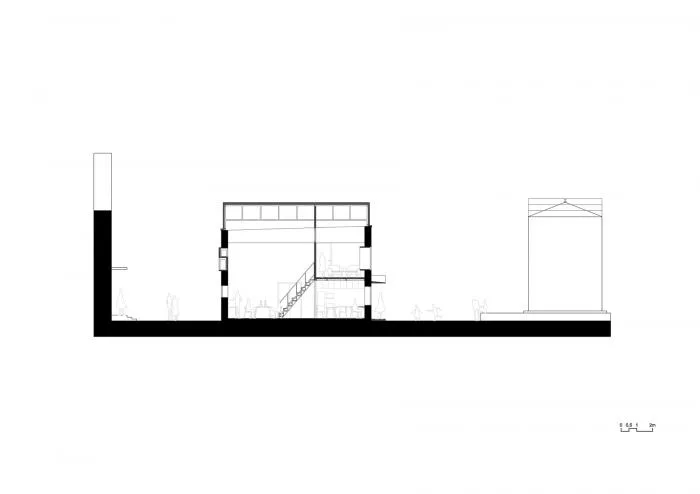
▲ Sectional view
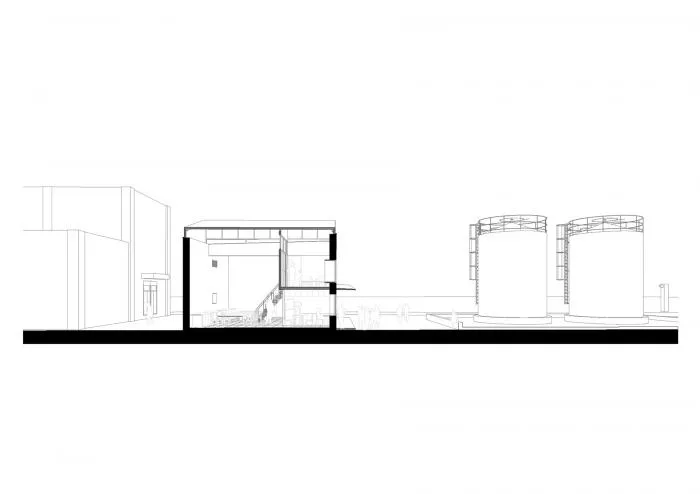
▲ Sectional perspective view
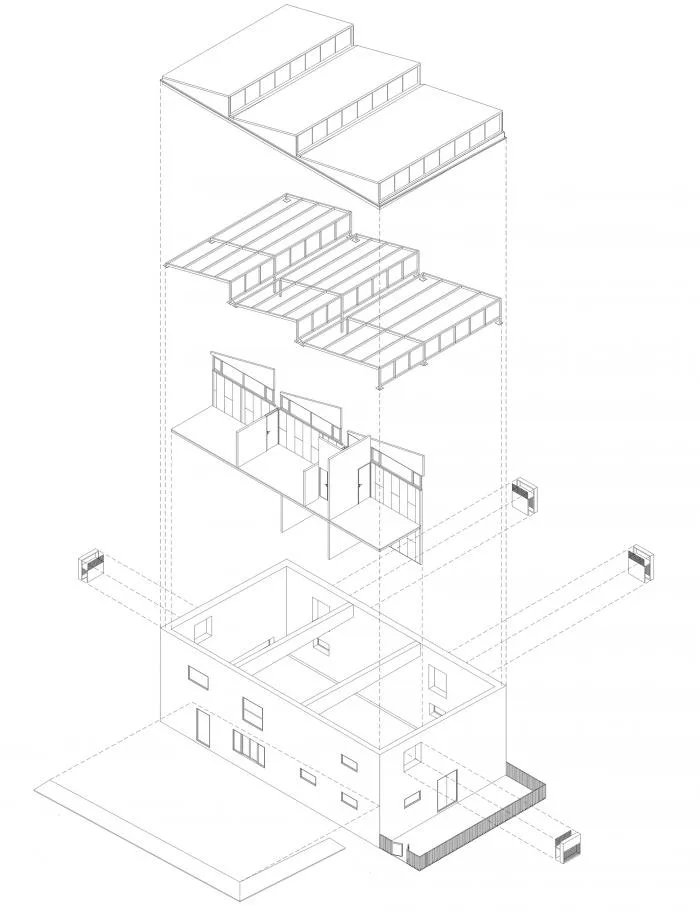
▲ Exploded axonometric diagram
Project Information
Architectural Design: Heimat Architecture Studio | Atelier Heimat
Location: Happiness Seven Harmony Cultural and Creative Park, No.1 Dougezhuang, Chaoyang District, Beijing
Design Team: Liu Wenjuan, Zhang Dongguang, Ma Di
Building Area: 210 square meters
Completion Date: September 2019
Photography: Heimat Architecture Studio | Atelier Heimat
Contact Information: __AI_S_SC0__
General Construction: Beijing Dale Building Decoration Engineering Co., Ltd
Roof Construction: Beijing Baixincheng Construction Engineering Co., Ltd












Must log in before commenting!
Sign Up