
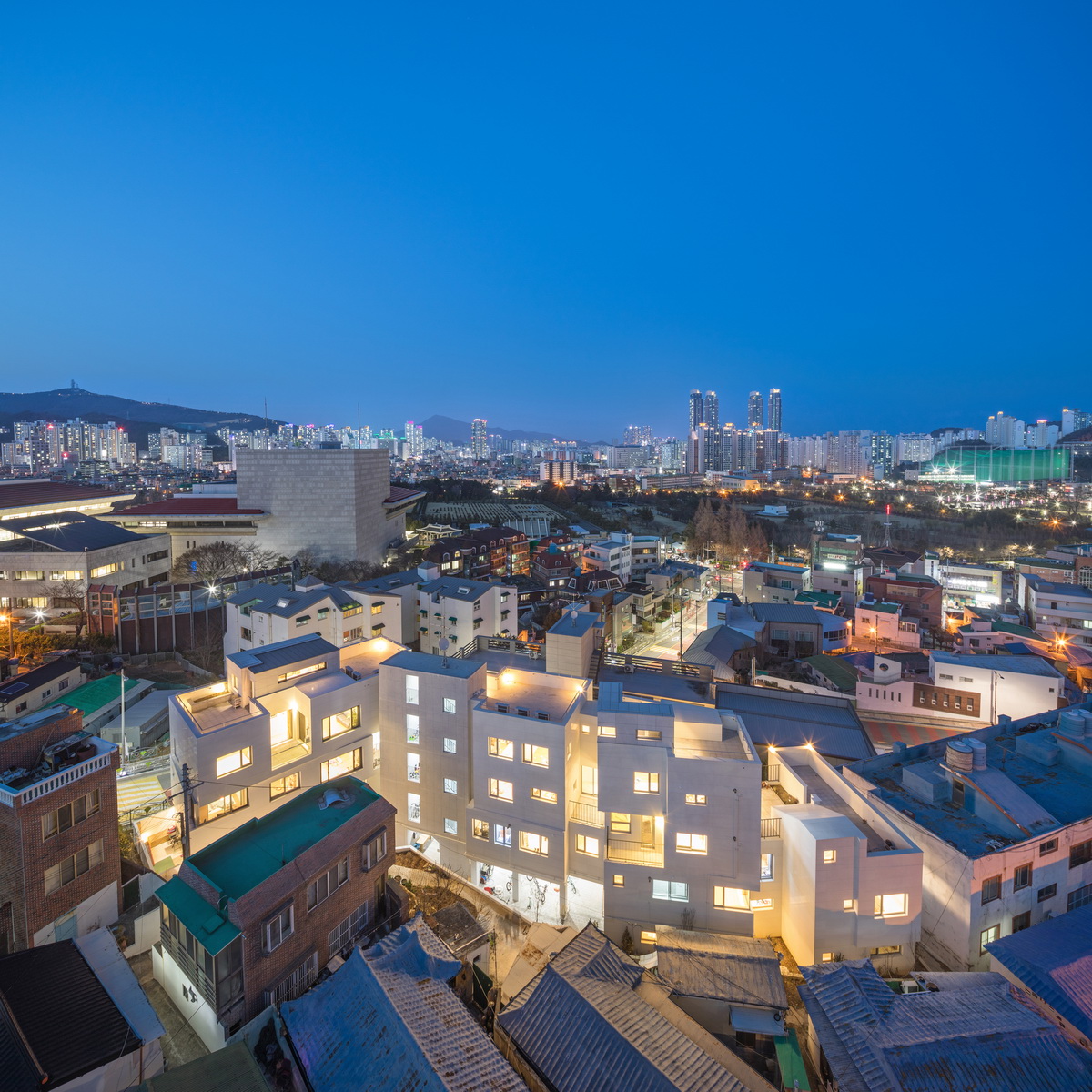
Building a home and living in it is a dream we all share. Over time, more buildings are constructed for various purposes. Yet, catering to the diverse needs of all potential residents and reflecting those needs in housing design remains a challenge. In urban centers, family homes often take the form of multi-family residences, commonly known as “villas” in Korea. These homes are typically categorized as single buildings, influenced by land size, surrounding environment, or construction costs. However, the concept of “Mo yeo ga” — meaning “gathering place” — embodies a romantic vision of owning a city home tailored to family composition, lifestyle, and budget, without compromising significantly on cost.
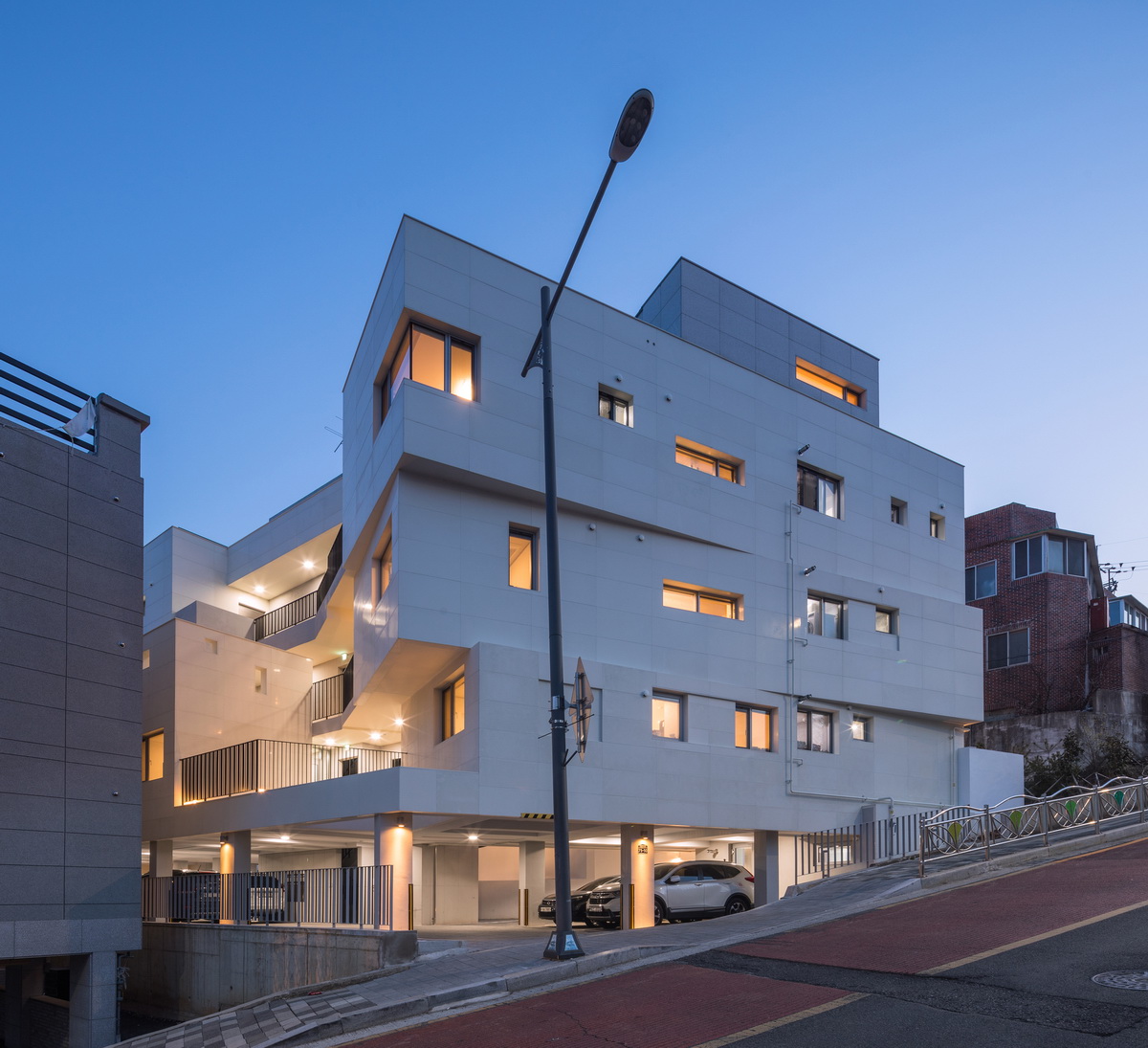
Young couples often find it difficult to relocate far from the city. Considering work commitments and the desire to raise children within a supportive community offering quality education, they rarely move away from urban areas. Yet, traditional apartment living tends to feel monotonous and lacks the charm that creates lasting memories for children. Thus, parents aiming to nurture their kids come together to build homes that foster a vibrant community. They aspire to provide smart childcare options and to nurture their children’s unique personalities. Creating a friendly neighborhood atmosphere where children can bond with their neighbors is key. To realize this vision, they collaborate closely with architects, purchasing land collectively so that around 25 people across 8 families can start building a joyful community.
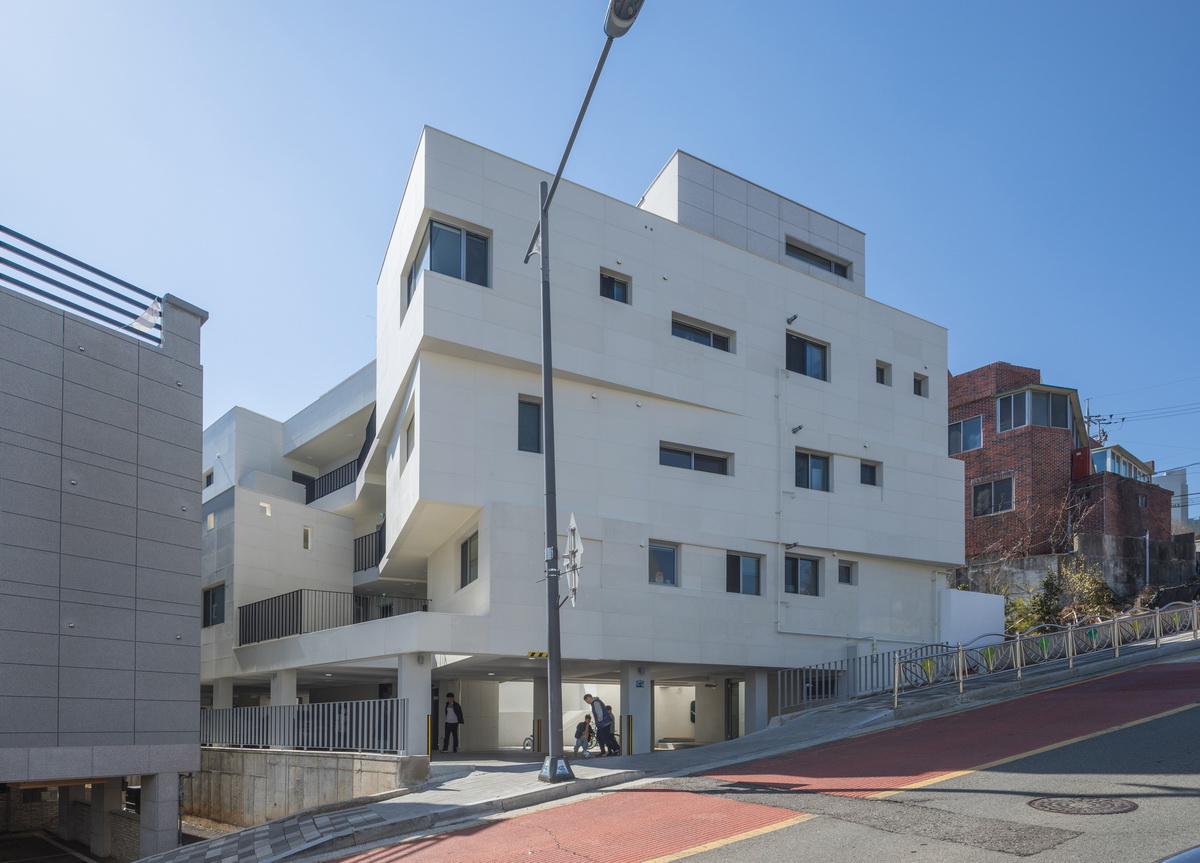
To answer the fundamental question, “How do we want to live after our home is built?”, the families began sharing ideas, situations, and parenting knowledge. This exchange laid the foundation for a cooperative parenting community, fostering intimate relationships among children and friendships between siblings of different families. Each home is customized to reflect the unique structure and spatial preferences of the family, allowing residents to find spaces that truly resonate with their lifestyle—making their dream homes a reality.
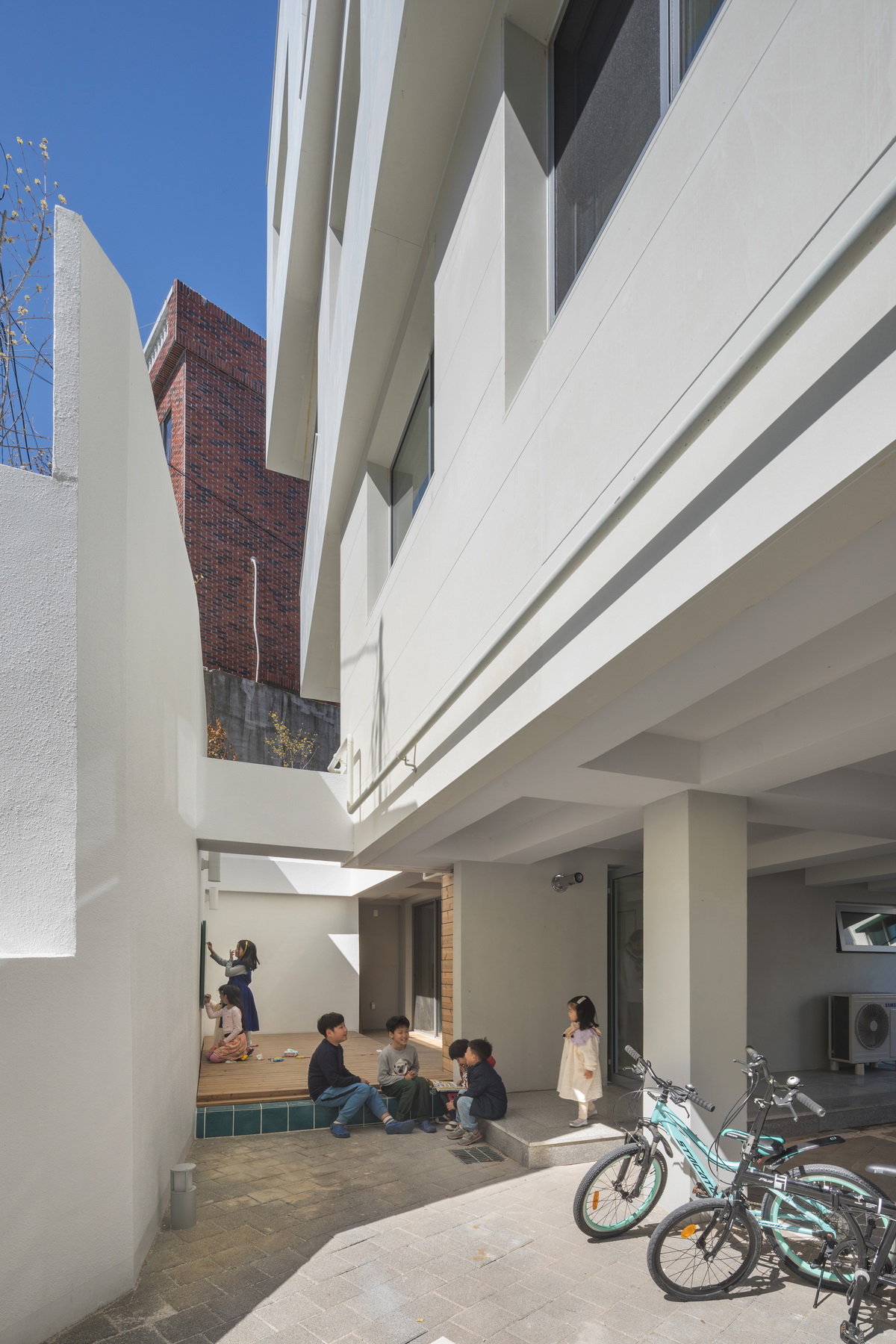
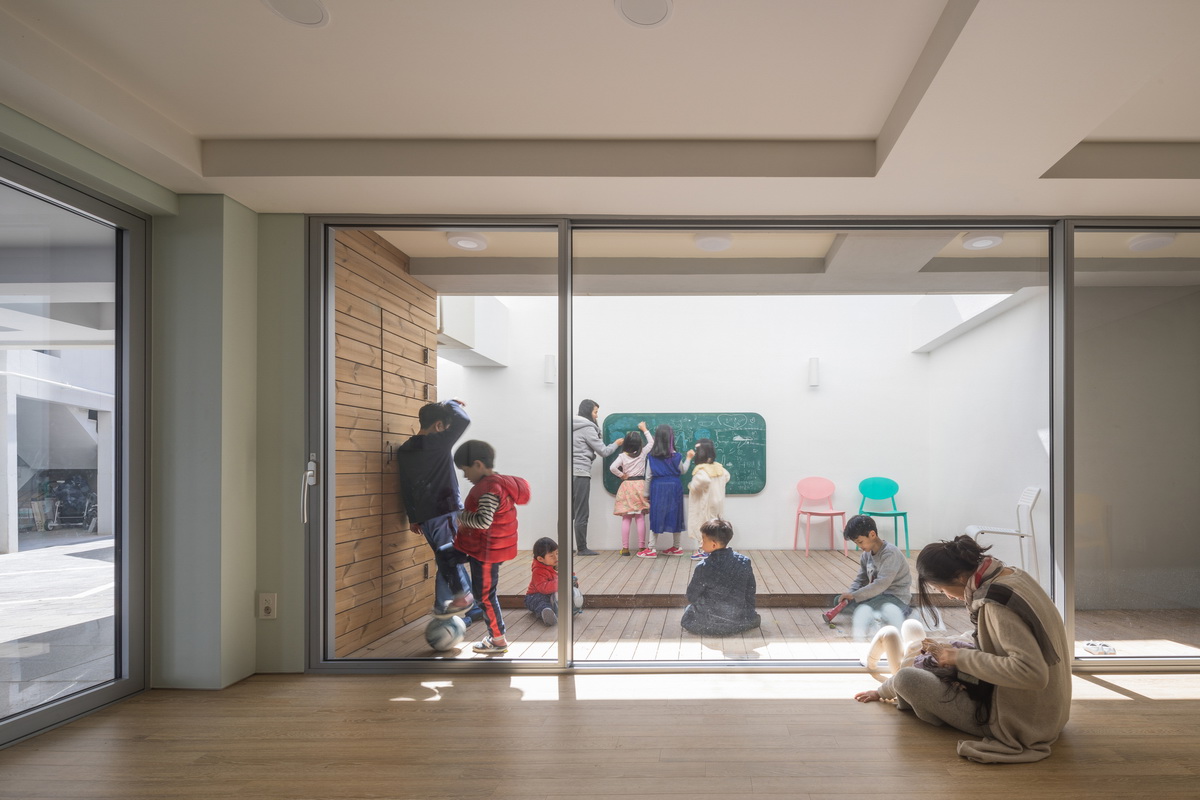
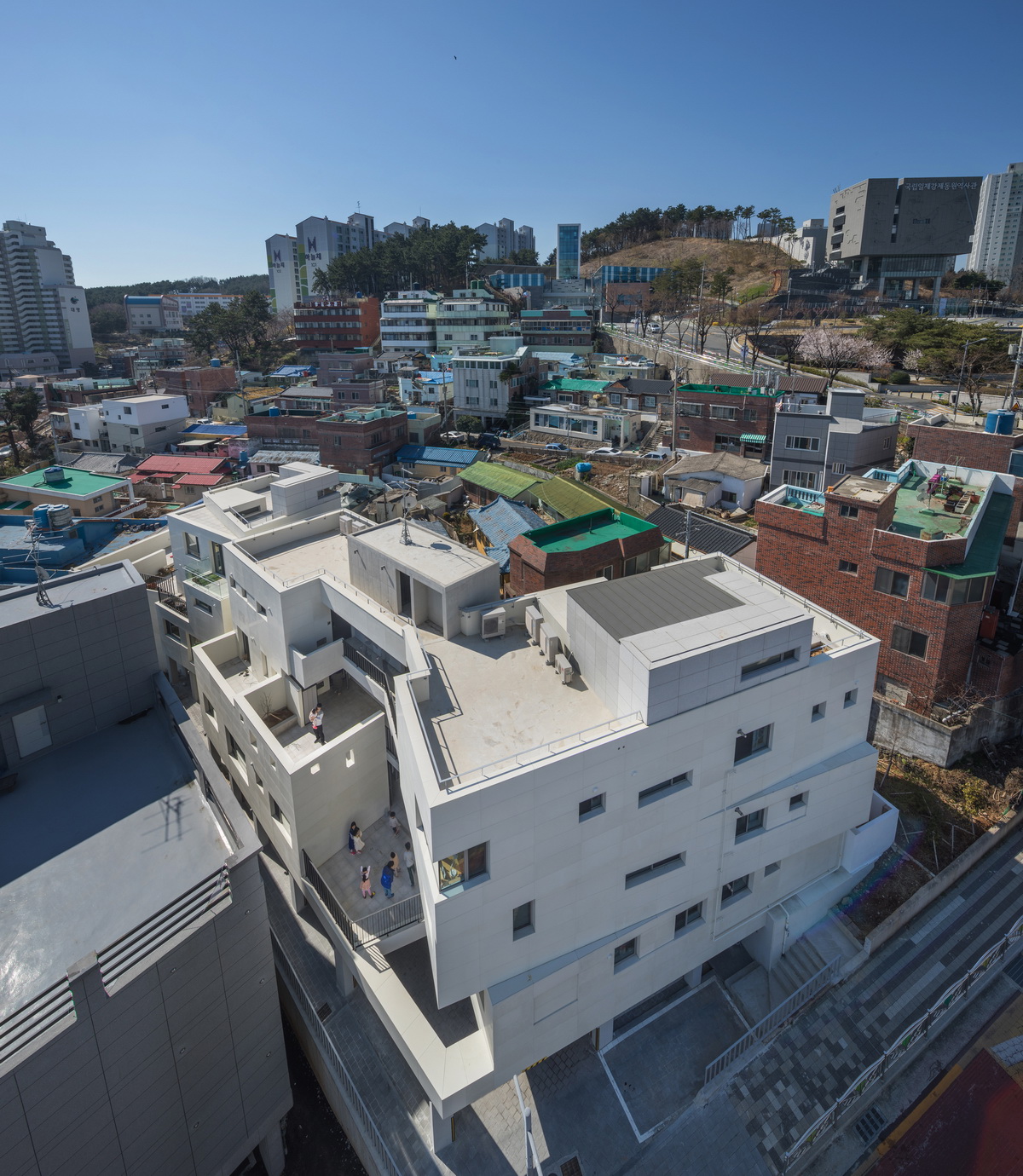
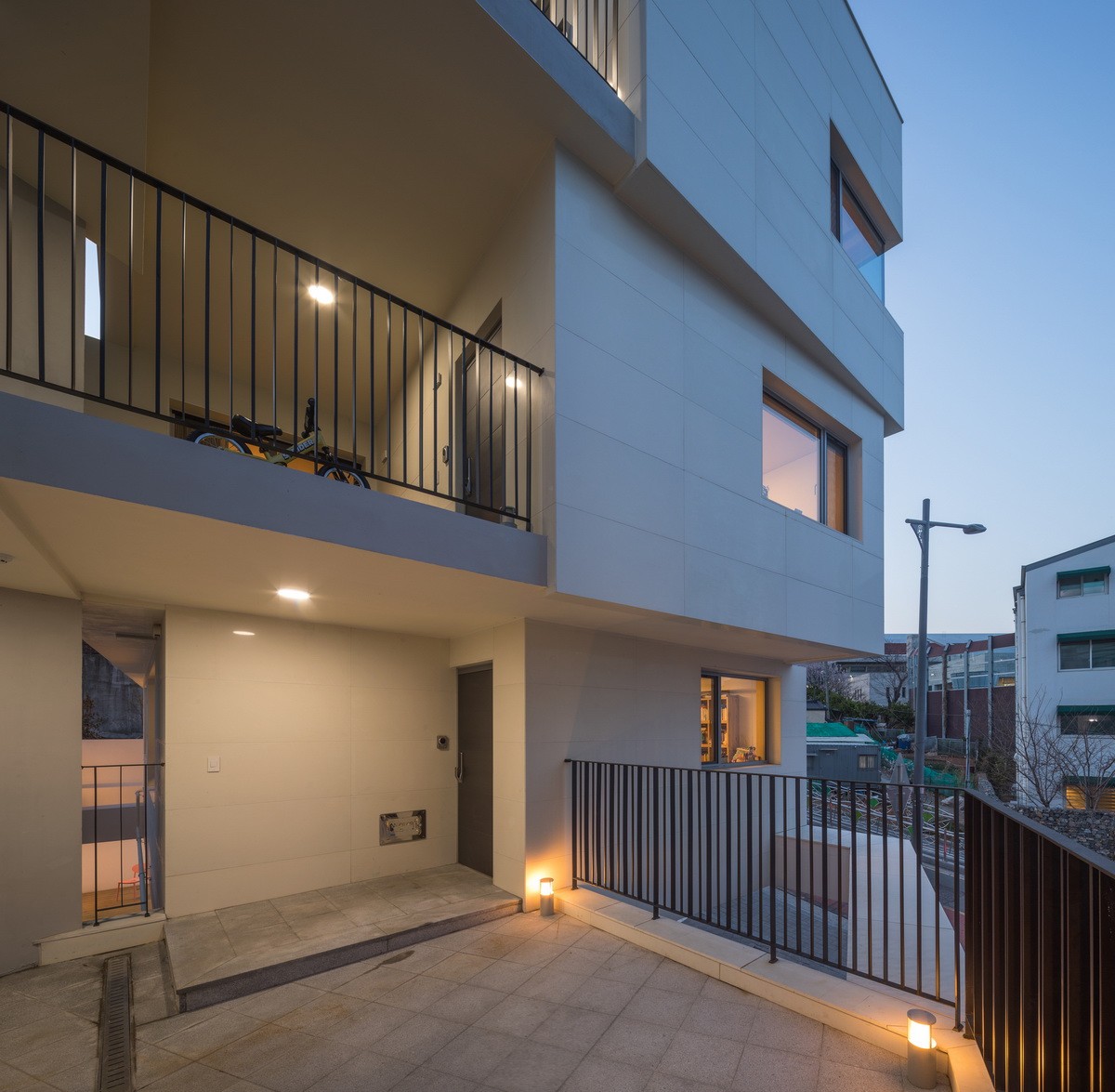
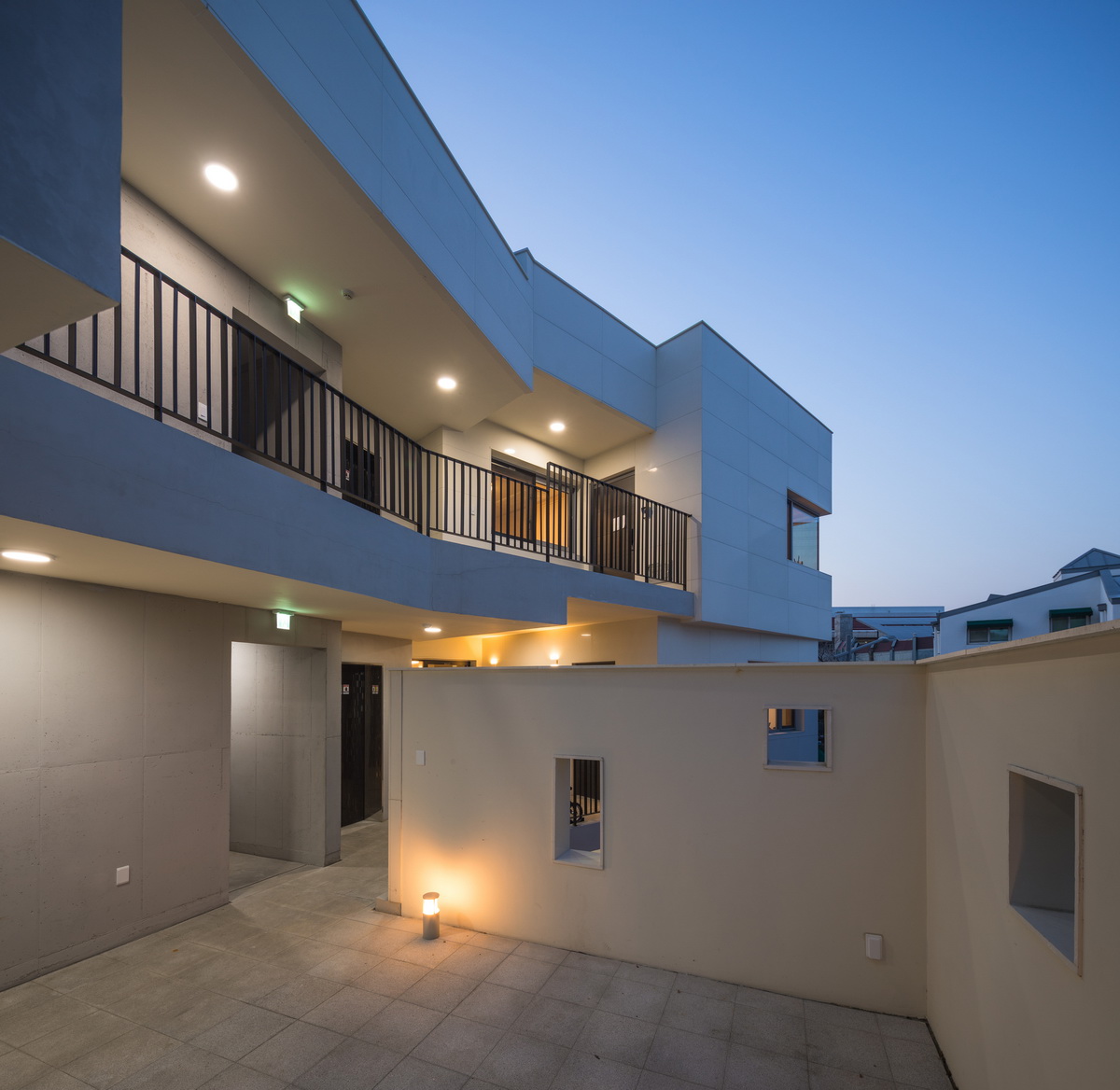
As architects, we designed diverse residential units tailored to each family’s budget. To encourage visual and spatial interaction between children’s areas and other living spaces, balconies, courtyards, terraces, shared sports fields, and outdoor spaces are thoughtfully distributed throughout the complex. To prevent conflicts arising from differences in floor levels, location, and style, each of the eight units was crafted to have its own unique advantages and appeal. By emphasizing features that make each unit desirable to others, we created a harmonious environment where every home boasts distinct charm and spatial arrangements that satisfy all families.
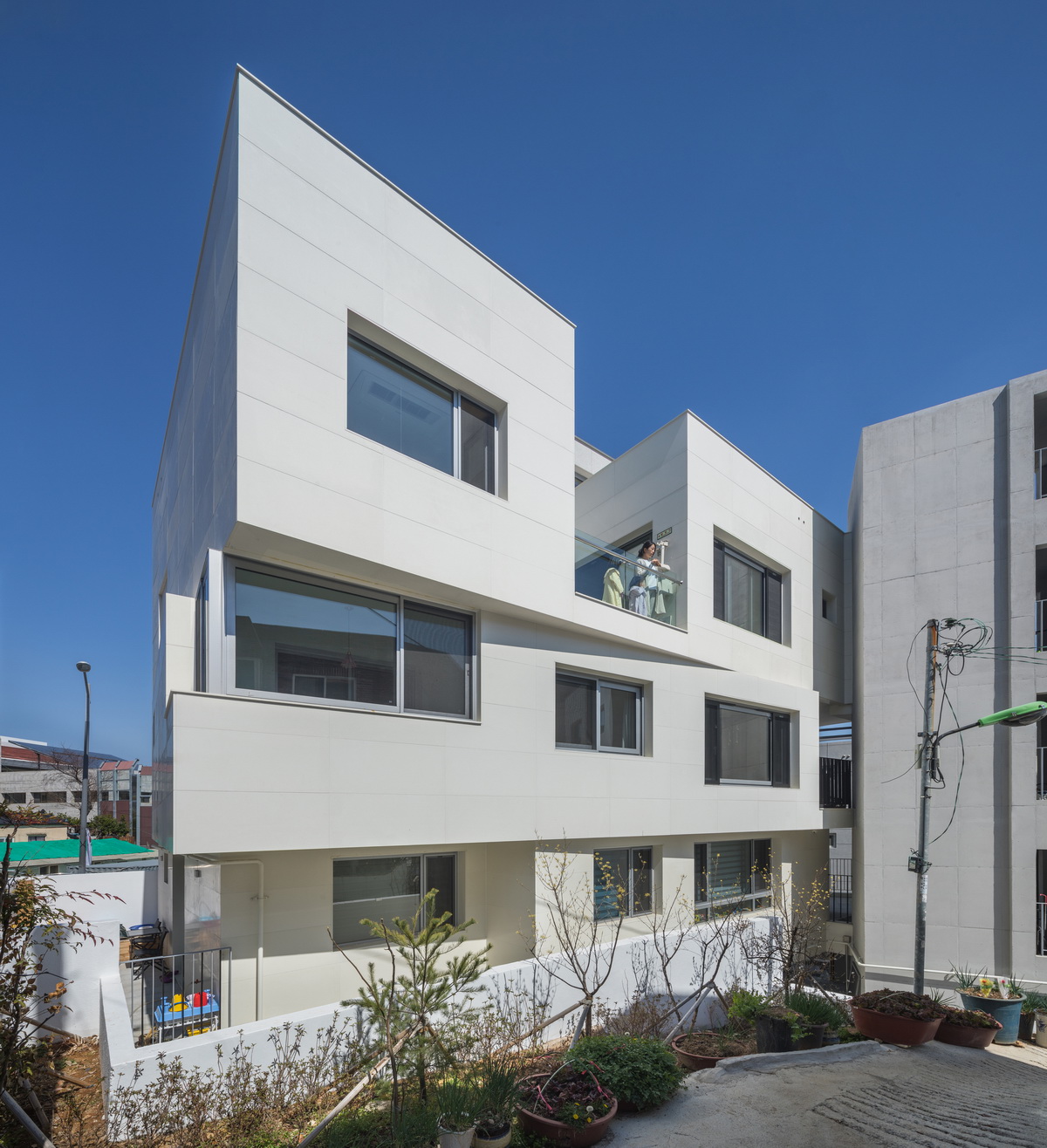

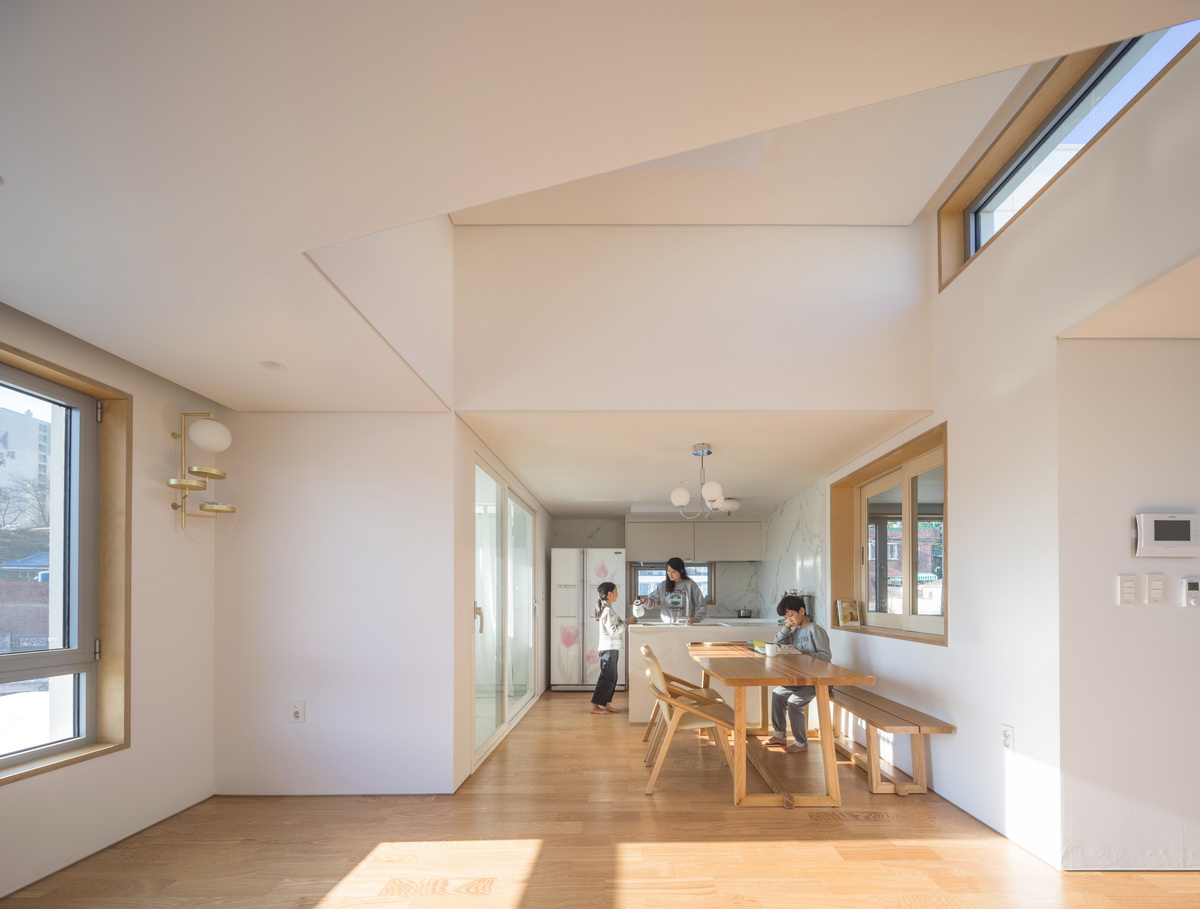
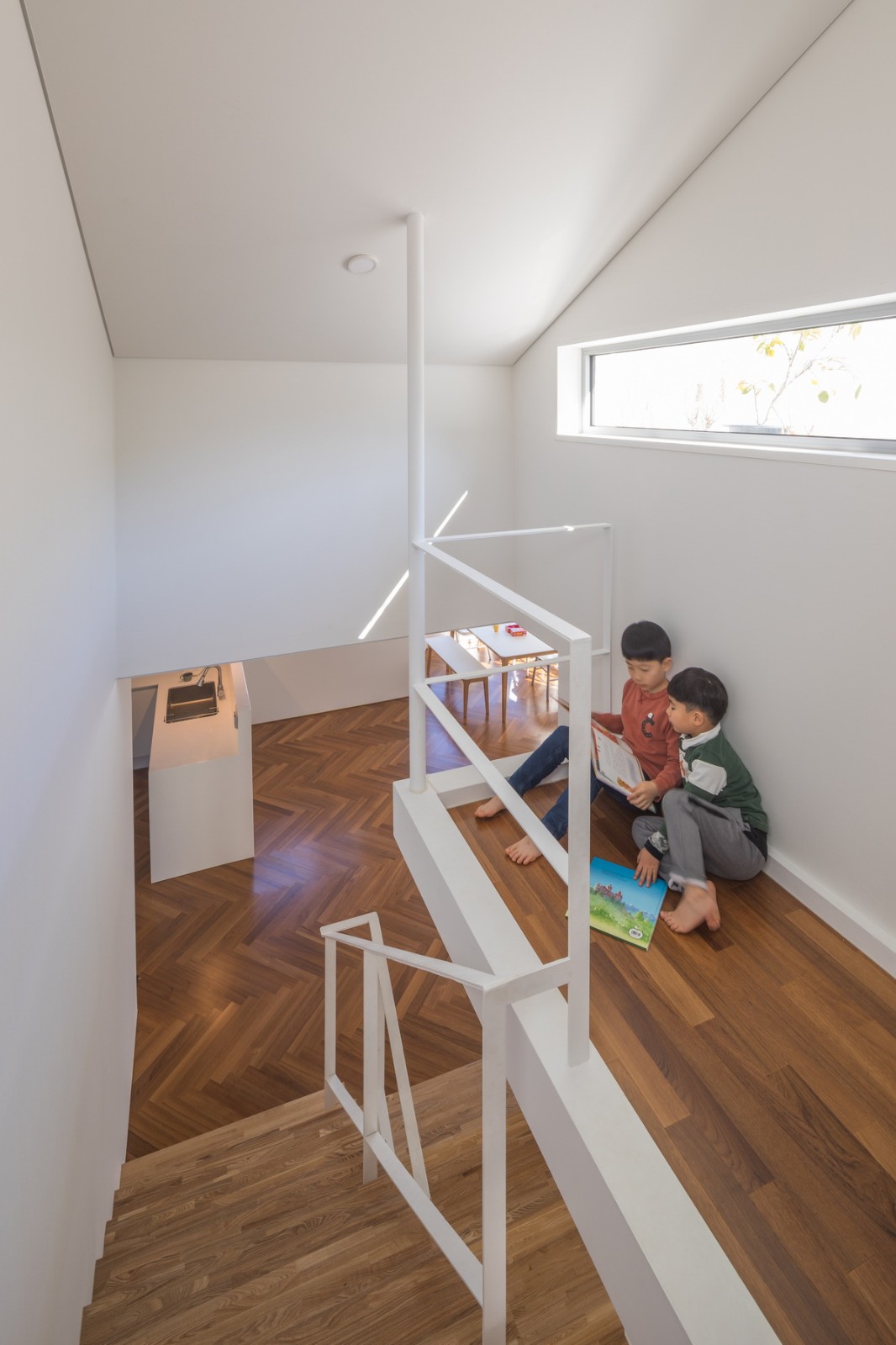
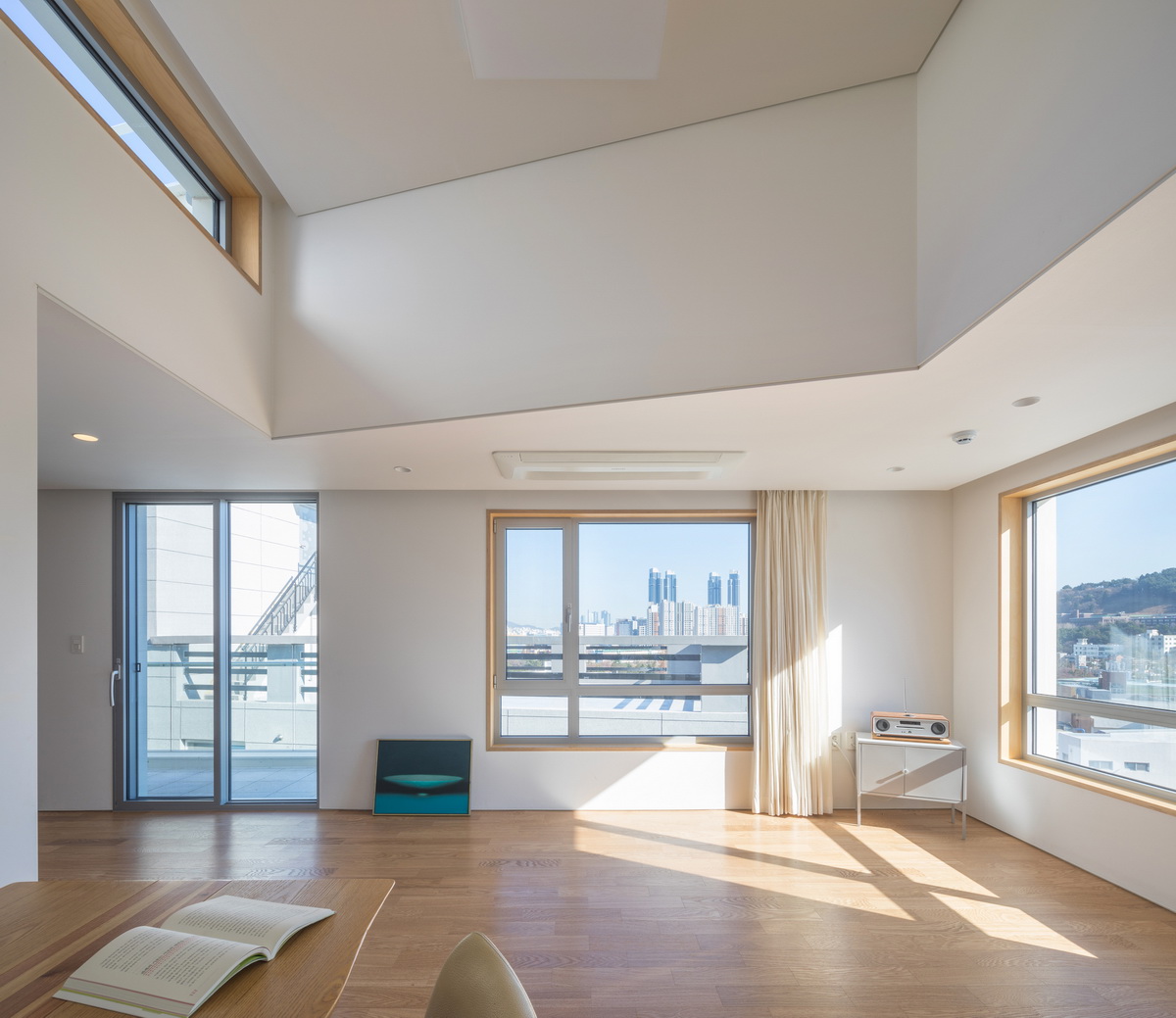
“Mo yeo ga” is neither a typical villa nor a standard detached house or apartment. It is not a continuous row of villas or a “shared villa.” Instead, it offers partial ownership rights to each household or a detached house customized for each family—twice the size of a row house or forest house. This project introduces a new spatio-temporal urban living concept, where residents coexist with their children, friends, and siblings. This residential model represents a new approach to social urban housing.
Project Drawings

▲ Overall Axonometric Diagram
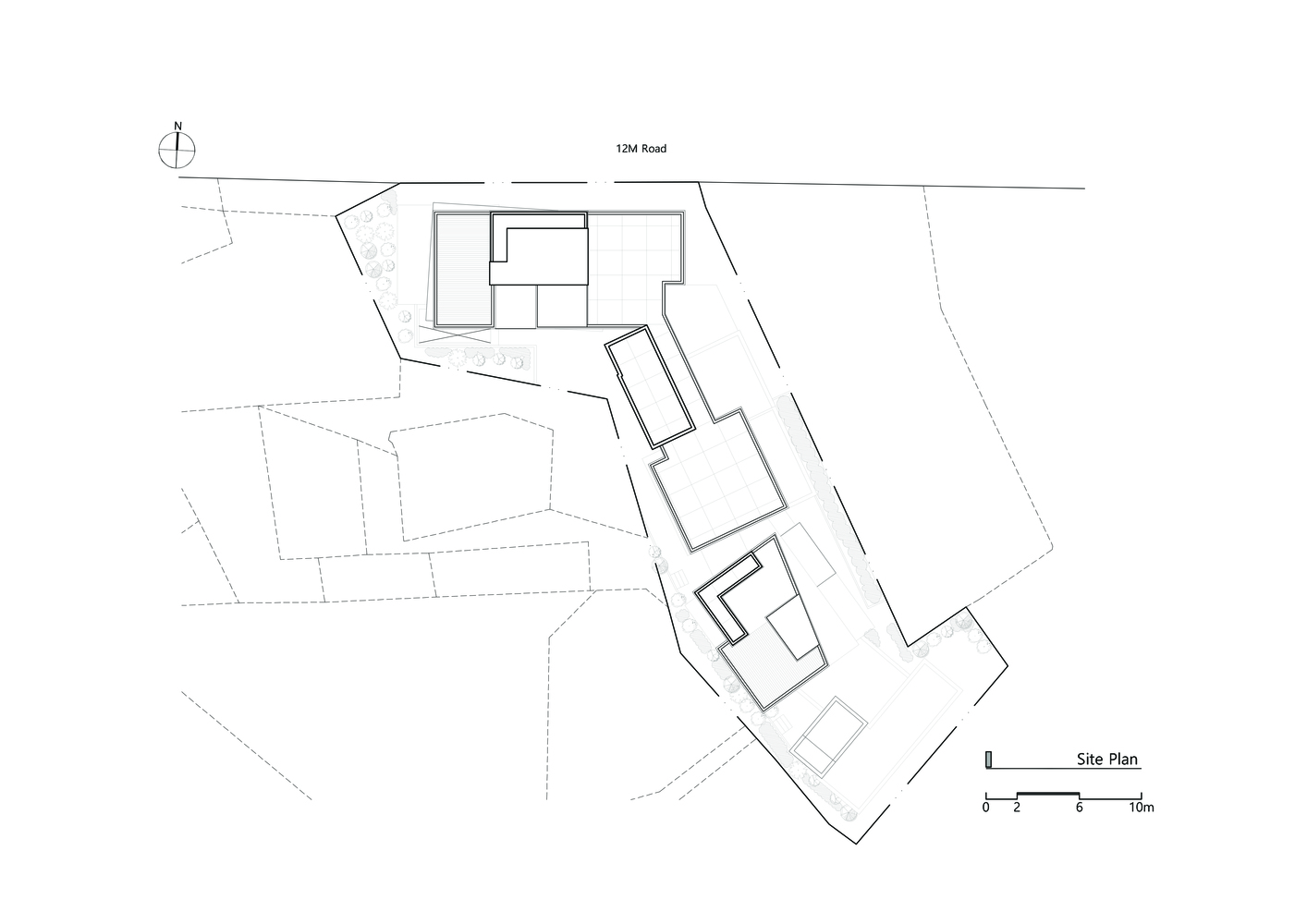
▲ General Layout Plan
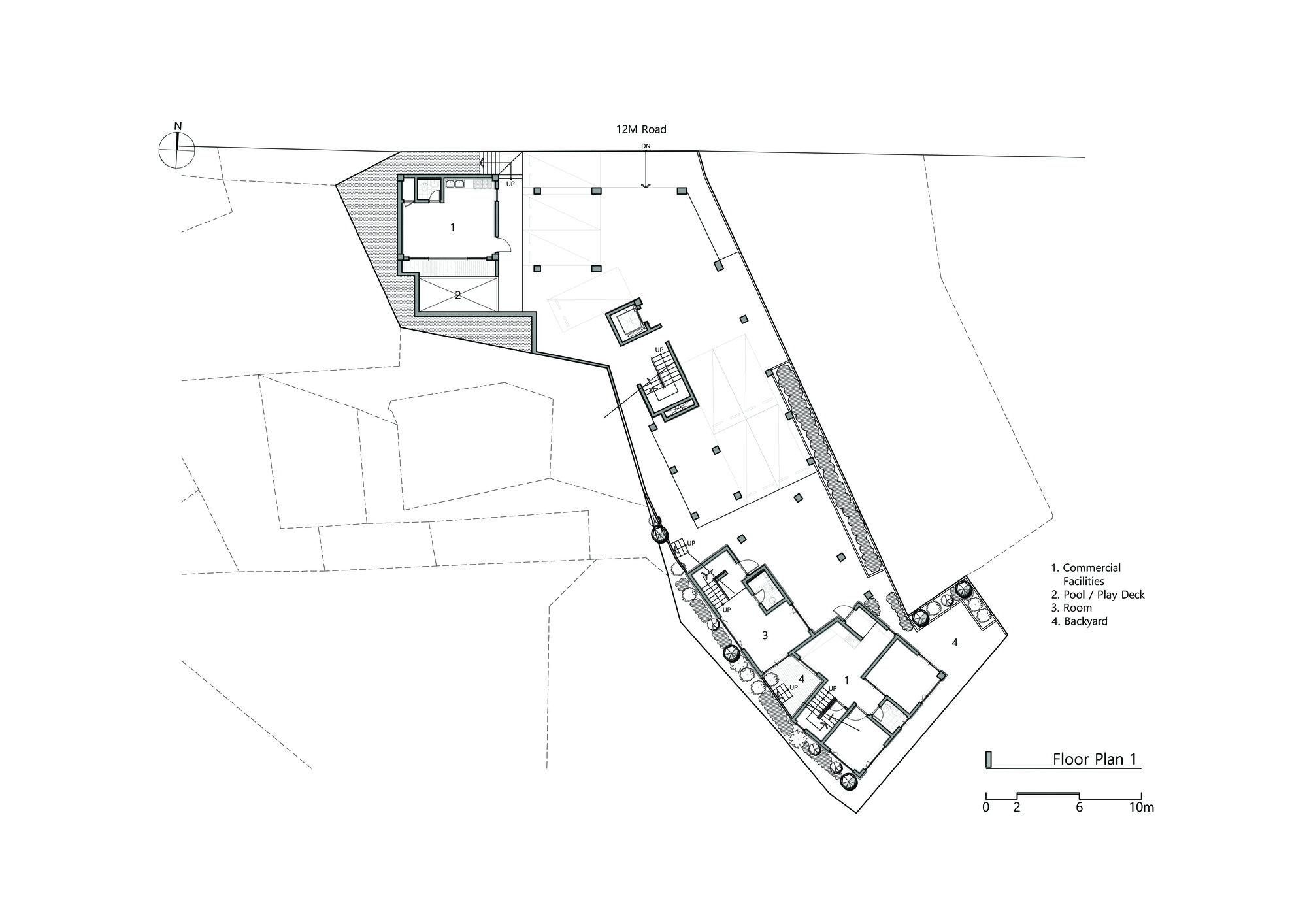
▲ First Floor Plan
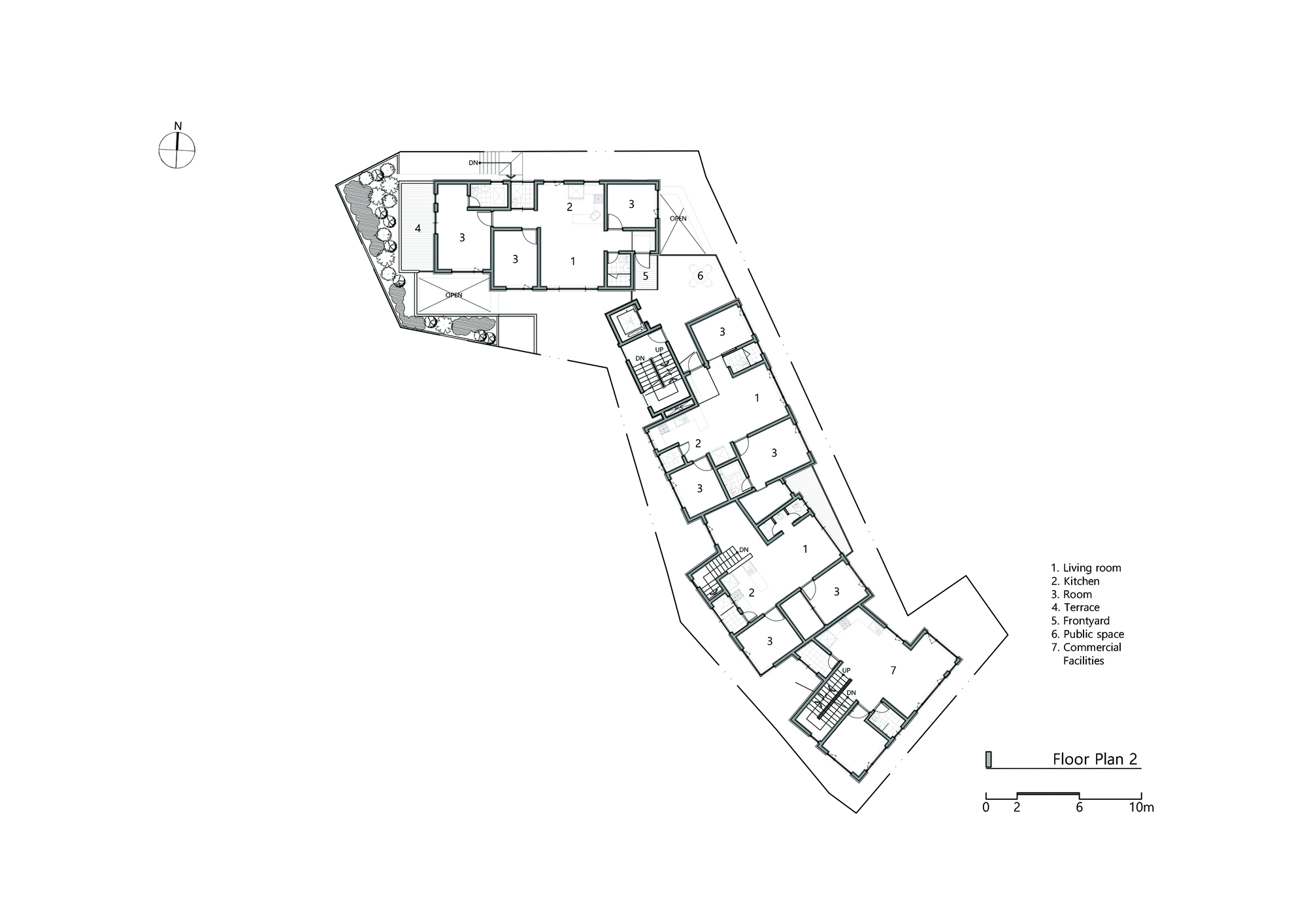
▲ Second Floor Plan
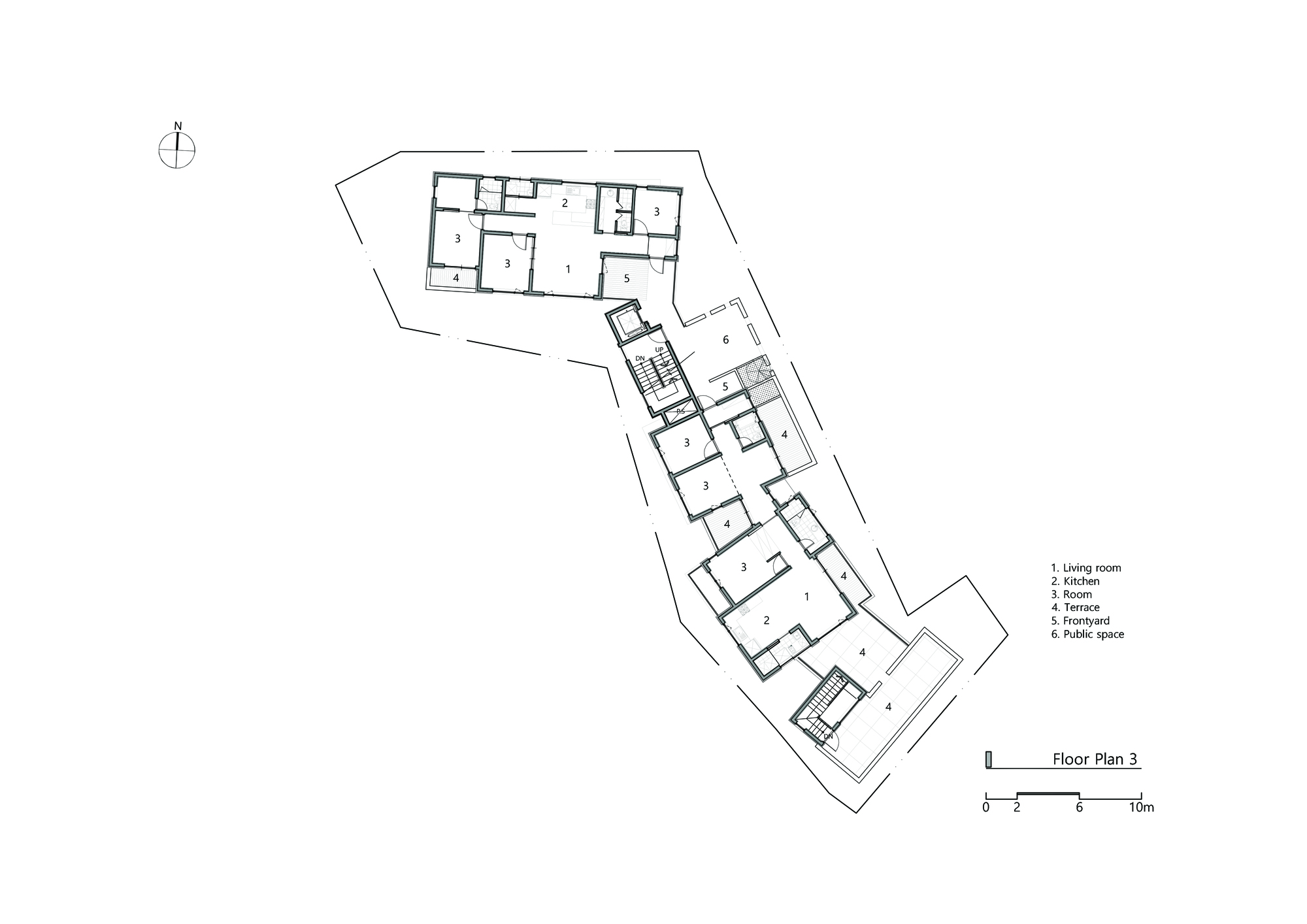
▲ Third Floor Plan
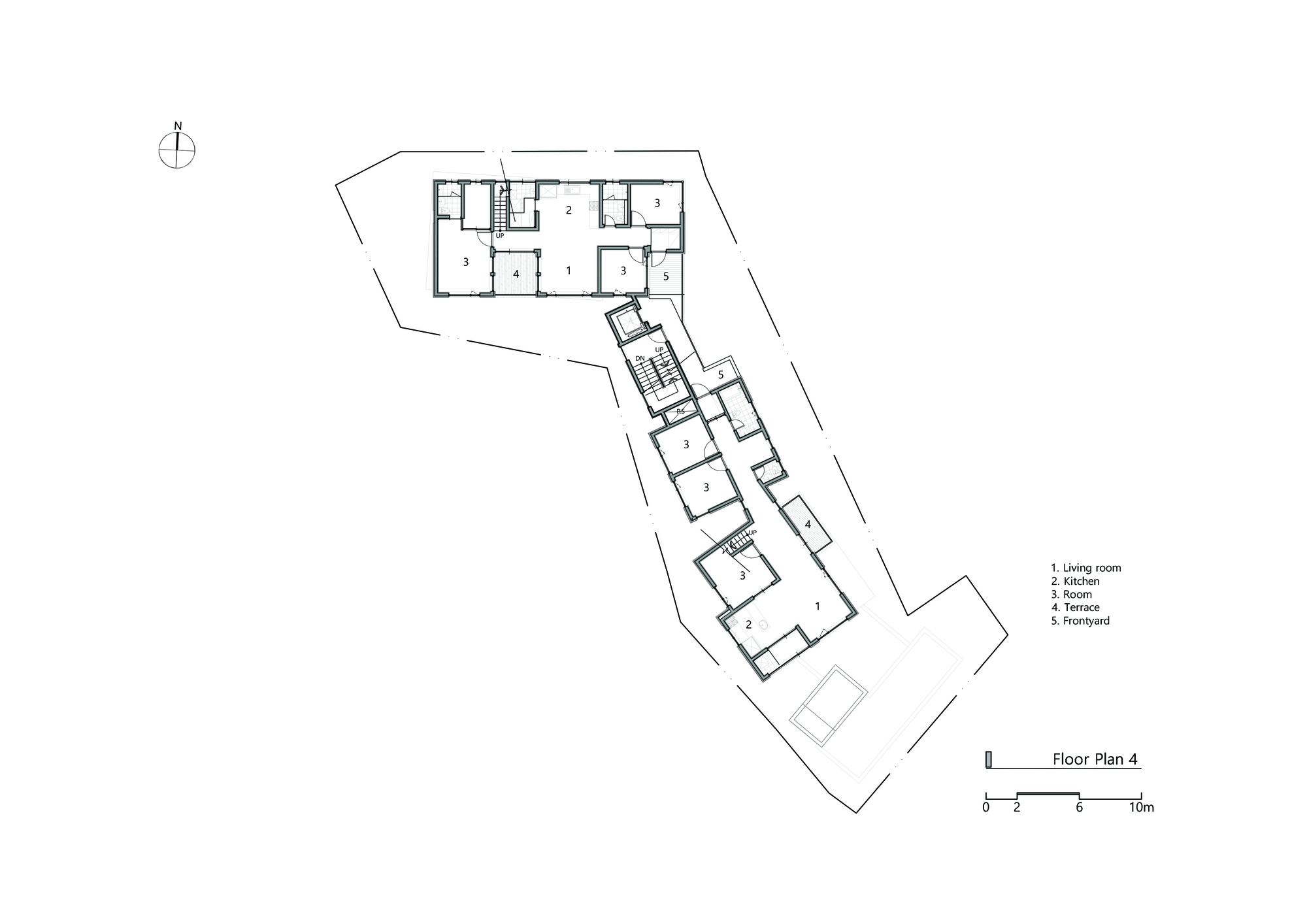
▲ Fourth Floor Plan
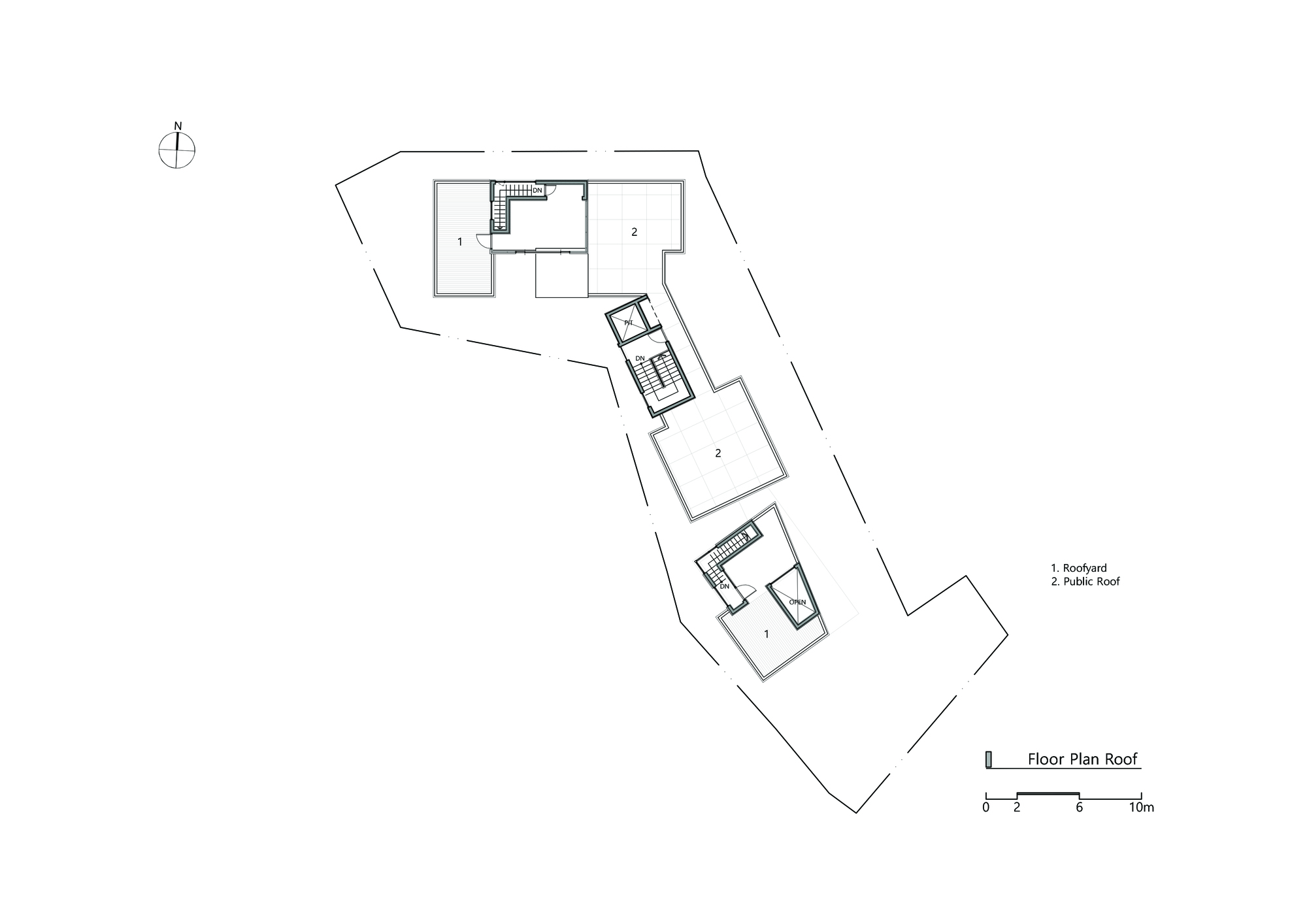
▲ Roof Floor Plan
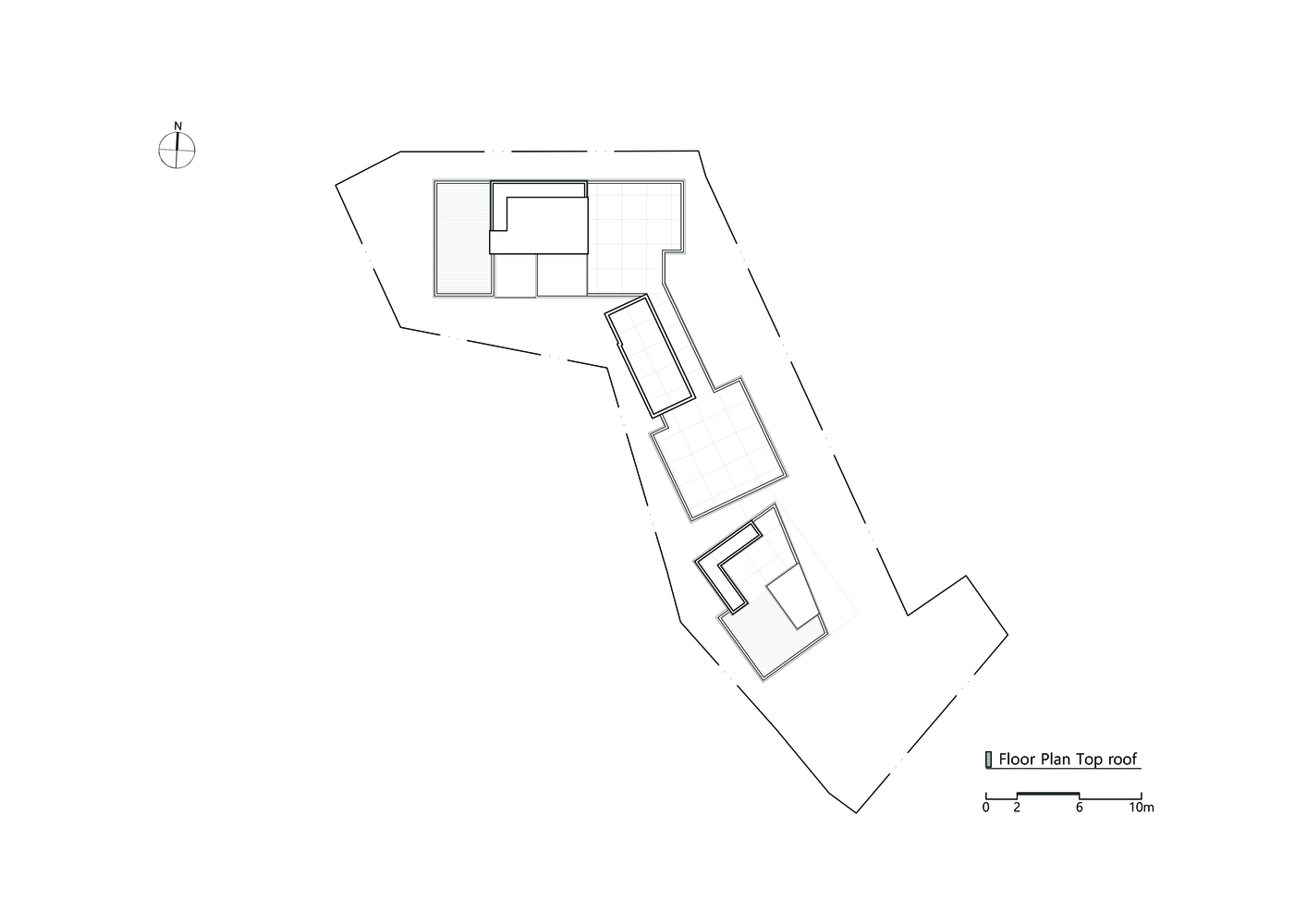
▲ Roof Plan
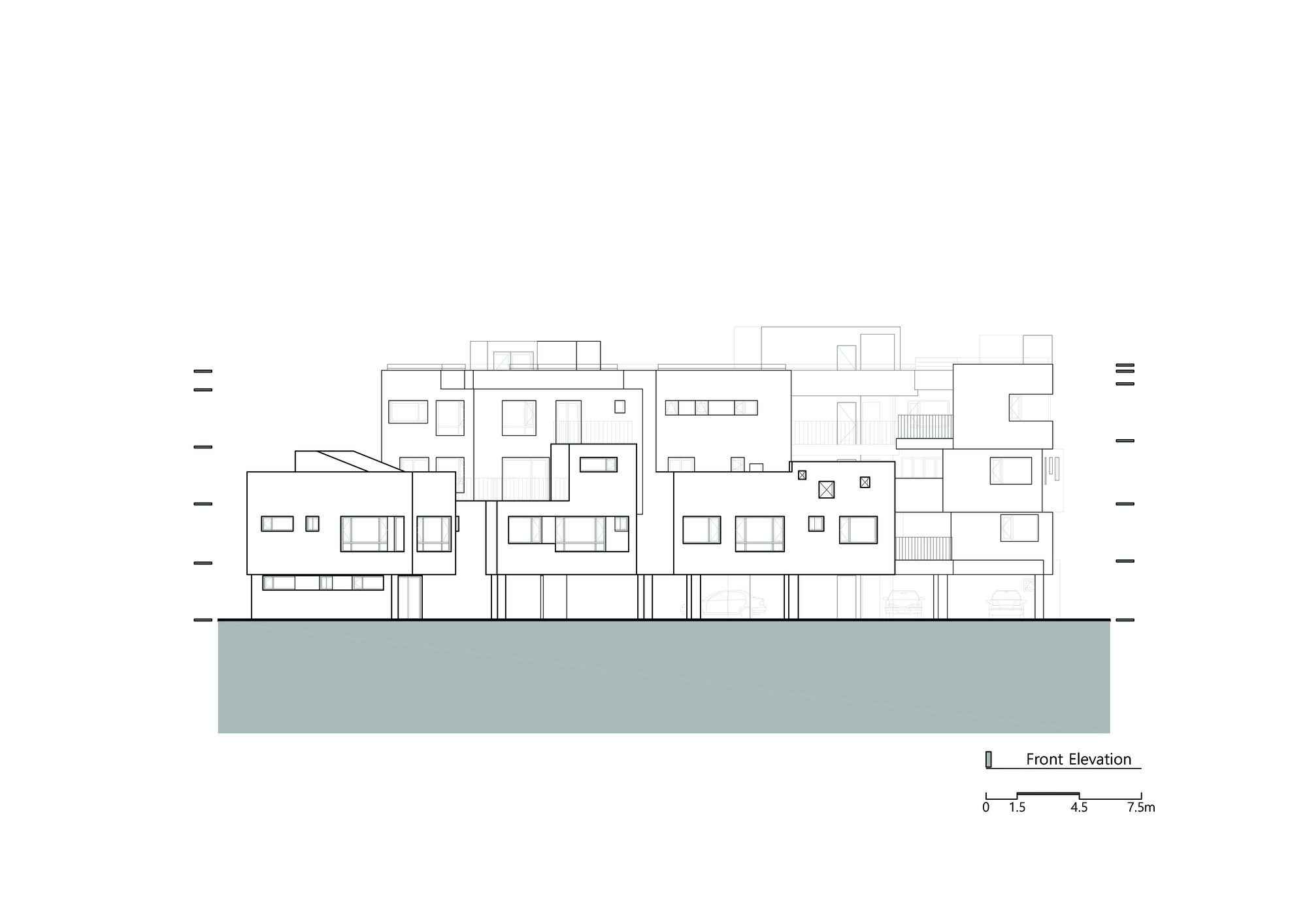
▲ Front View
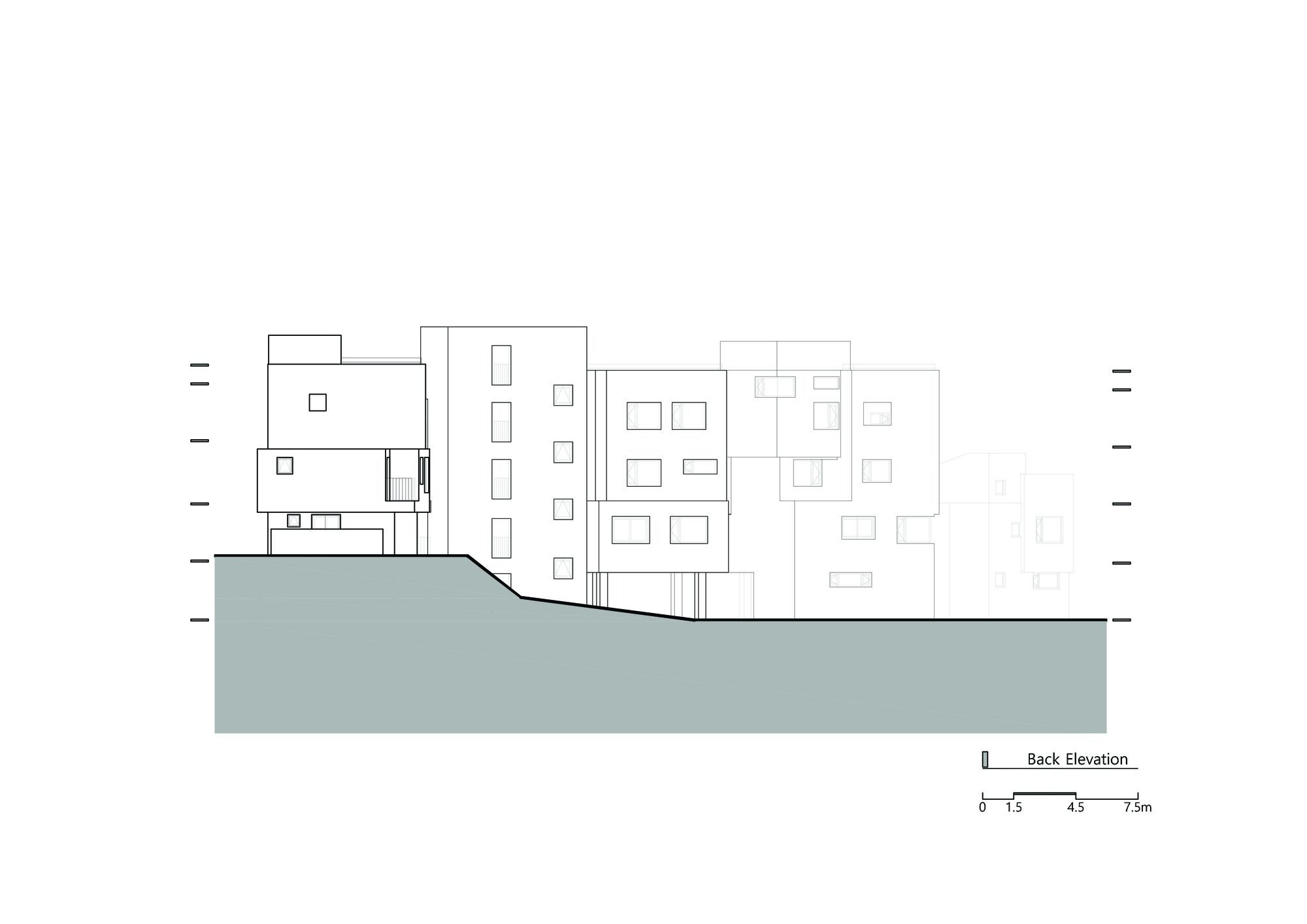
▲ Rear Elevation View
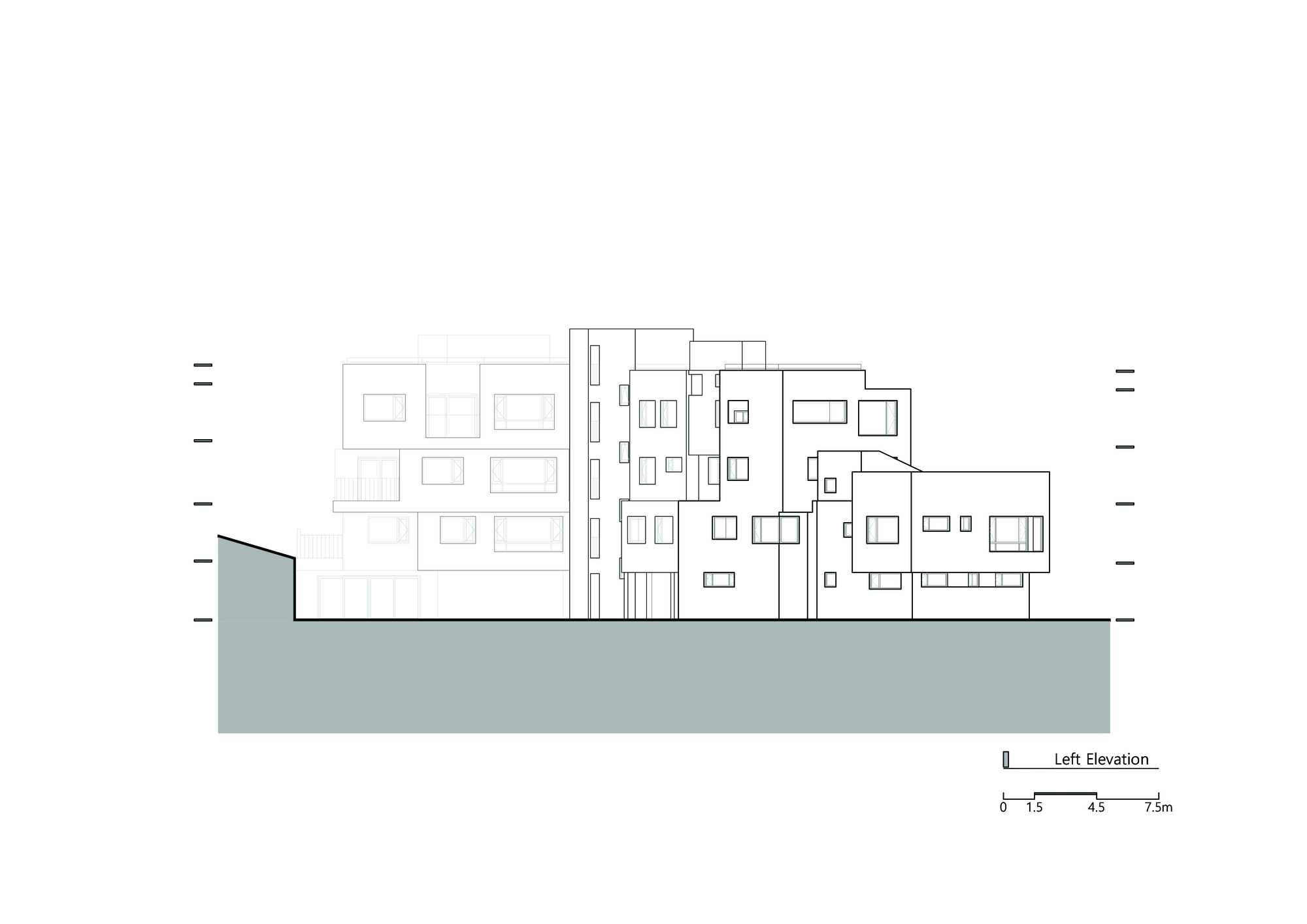
▲ Left Elevation View
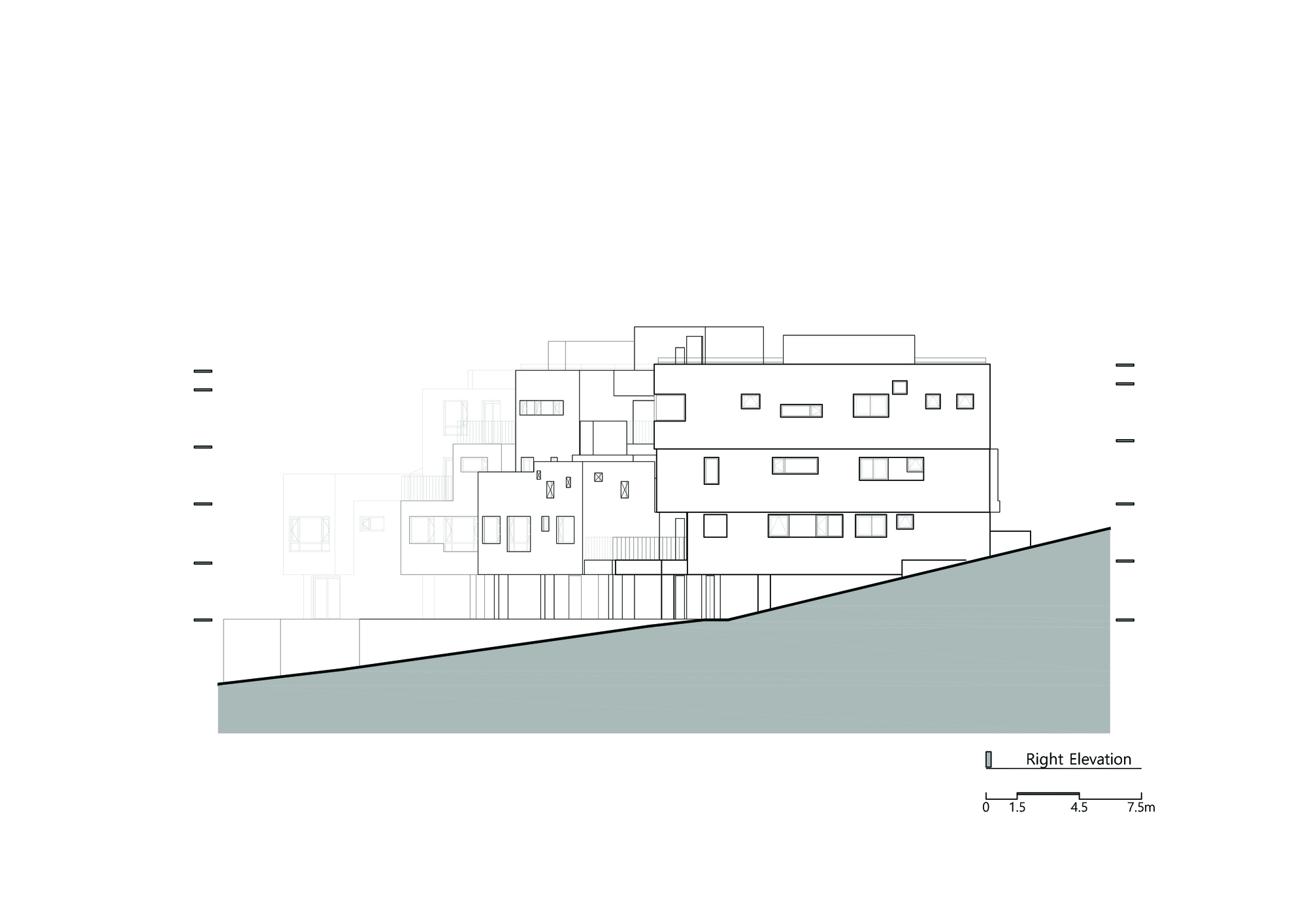
▲ Right Elevation View
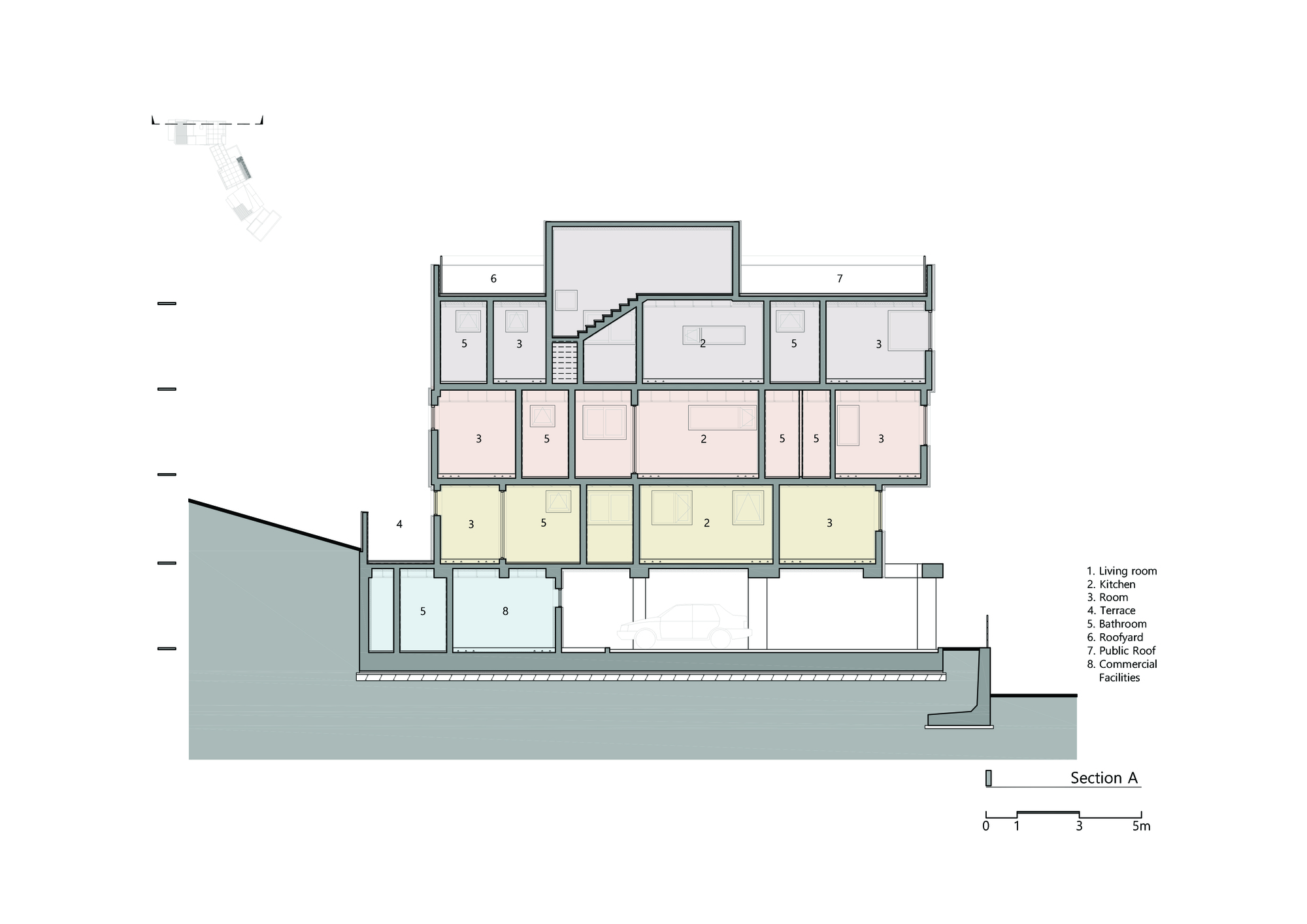
▲ Section A
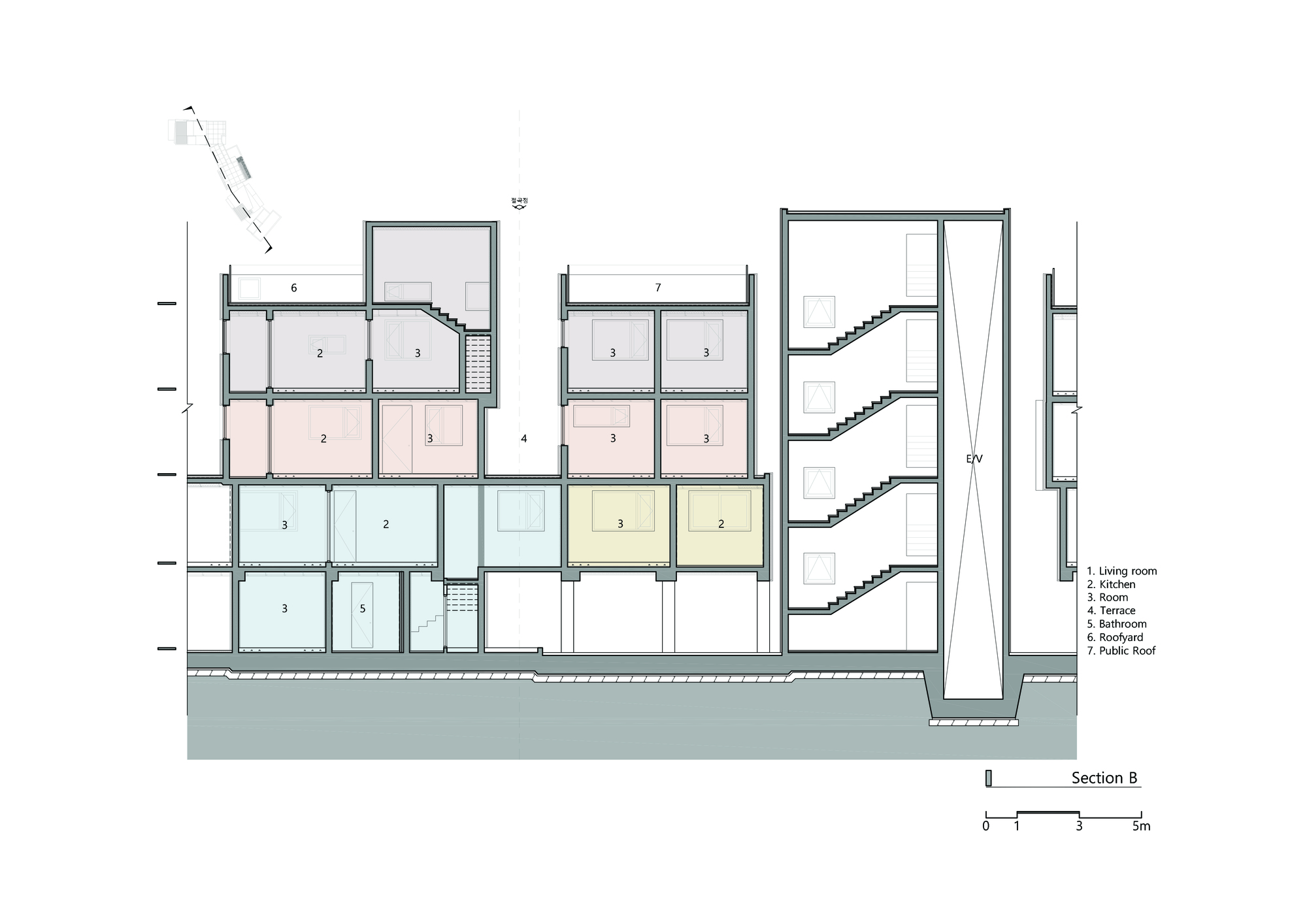
▲ Section B
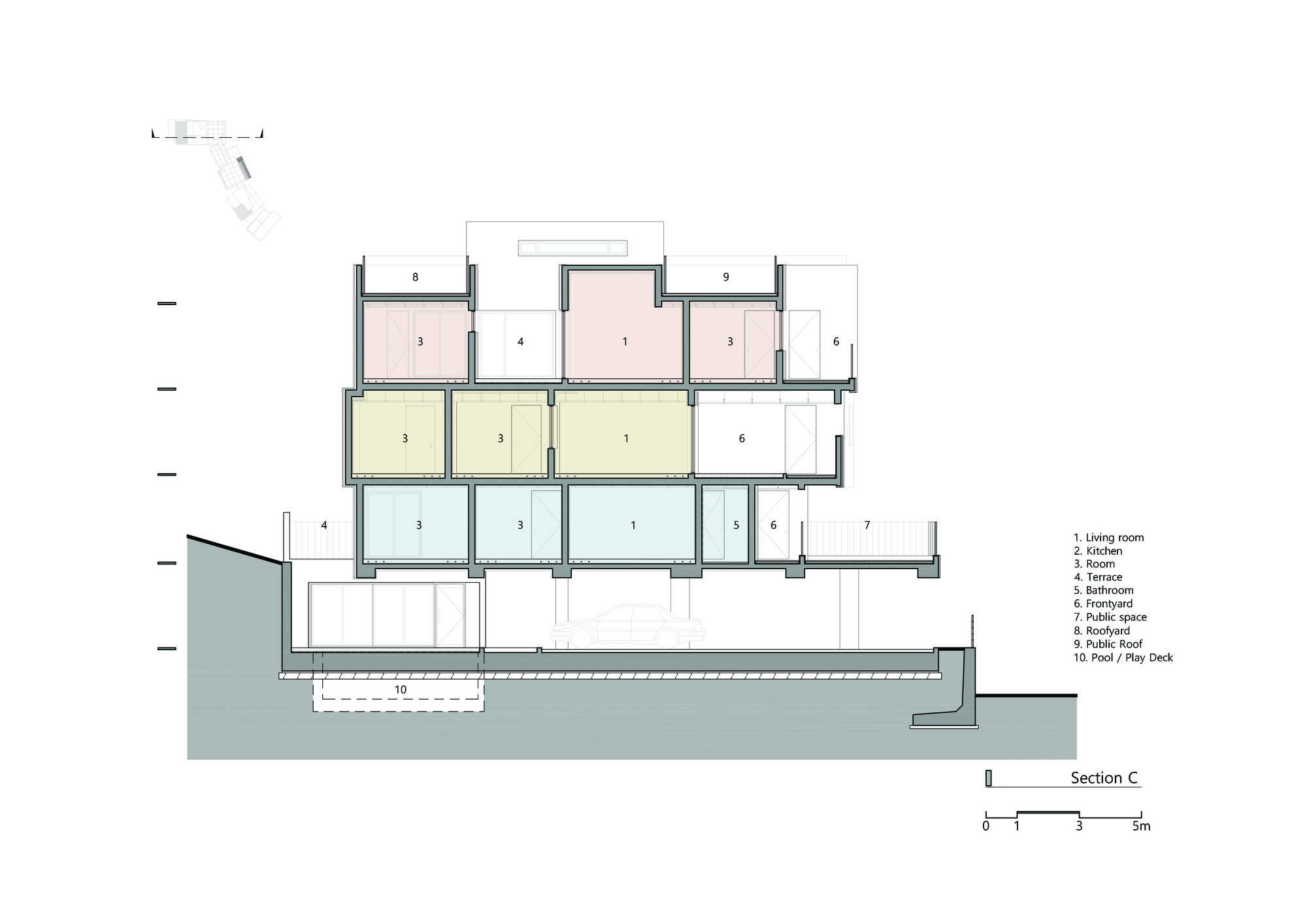
▲ Section C
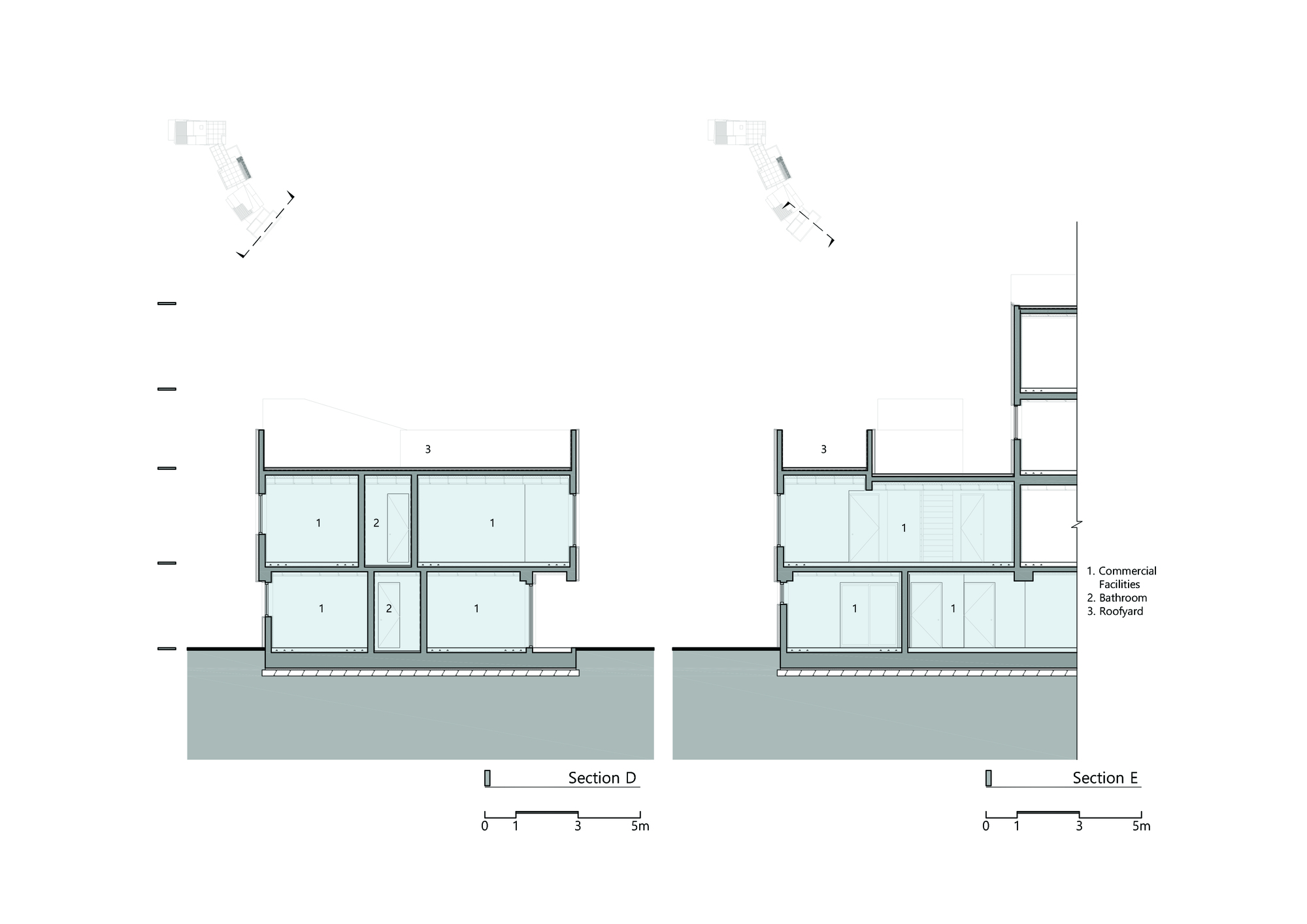
▲ Sectional Views D and E
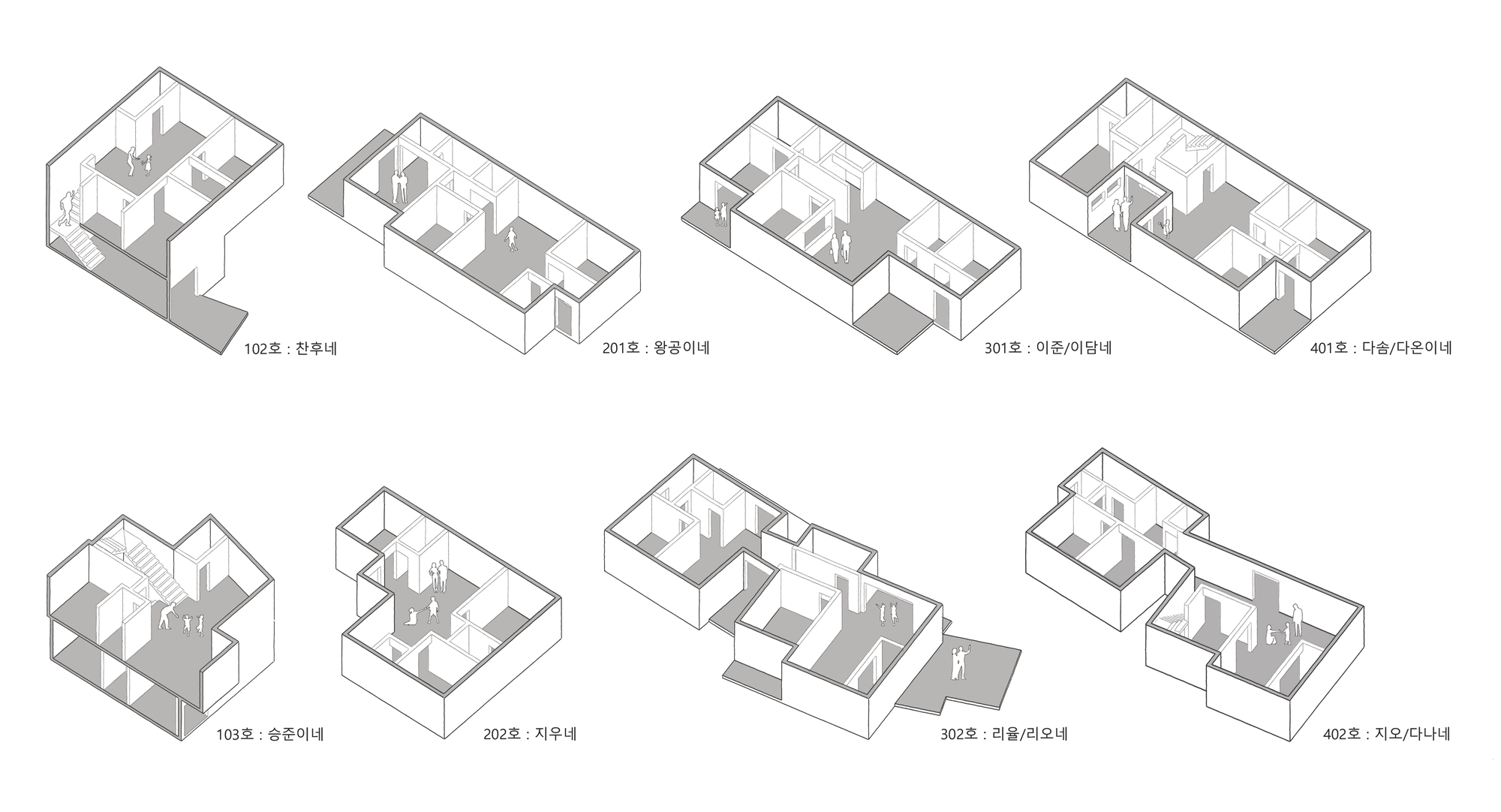
▲ Unit Layout Axis Measurement
Project Information
Project Type: Apartment, Residential Building
Location: Busan, South Korea
Architectural Design: Architects Group RAUM
Area: 820.0 m²
Project Year: 2018
Photographer: Yoon Joon Hwan
Manufacturer: LG Hausys
Lead Architect: Oh Sin Wook
Collaborative Architect: No Jeong Min
Design Team: An Shin, Yu Seongcheol, Yoon Jeongock, Choi Yunjeong, Lim Ahyun, Kim Dayeong
Structural Engineer: In Structure Engineering
Construction Contractor: Concrete Workshop.ENC
Mechanical and Electrical Engineer: Sinheung Engineering
Electrical Engineer: Youngsin Engineering












Must log in before commenting!
Sign Up