
Located in southwest Ireland along both banks of the Shannon River—the country’s longest and largest river—the renowned University of Limerick has recently expanded its medical school campus. This expansion reaches across to the river’s north bank and is connected to the original campus by a pedestrian bridge. The new development includes teaching facilities and dormitories designed for medical school faculty and students. The spacious, open public activity area created by the new building is set to become the focal point of the future northern campus.
The design thoughtfully blends teaching and living spaces to create dynamic, multifunctional public areas that enrich campus life.

▲ Site profile map
The project’s architectural language draws inspiration from the north bank of the Shannon River and its role within the overall campus master plan, aiming to shape public spaces organically. The terrain here slopes gently, and remnants of agricultural features such as embankments and hedgerows remain clearly visible.
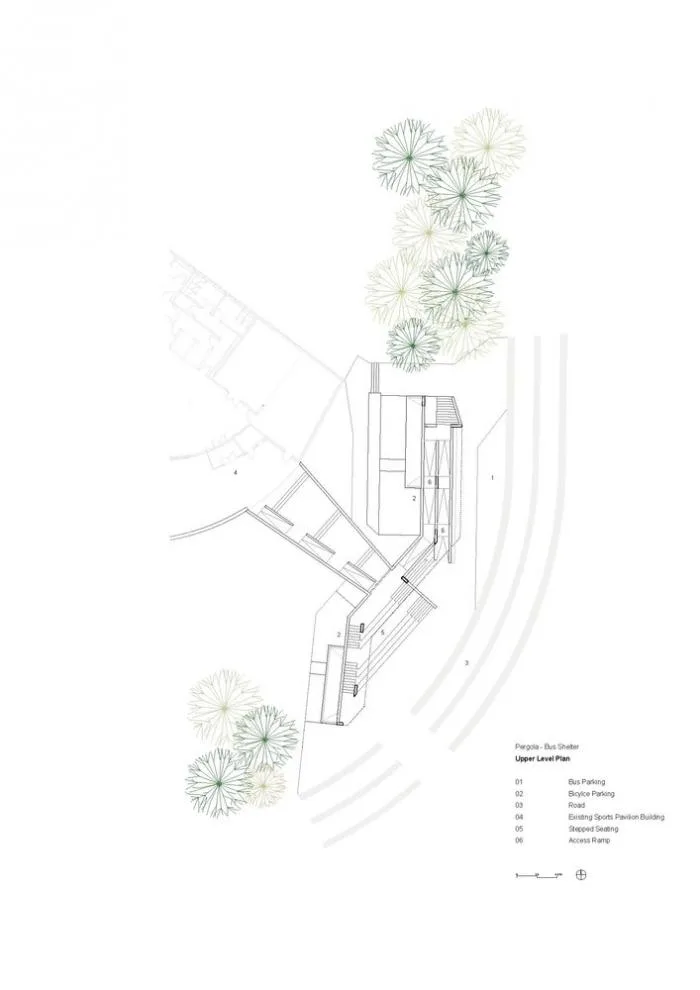
The new building sits adjacent to three existing structures: the sports arena, the Irish World Music and Dance Academy, and the Health Sciences Building. Together, these form a cohesive cluster that defines a fresh, inviting public campus space. The development comprises the medical school, three student dormitories, and a pergola that serves as a bus stop and bicycle parking area.
The medical school anchors the end of the building sequence, while the three dormitories are arranged with slight rotations around it. The design of the medical school reflects the formal character of an educational institution, whereas the dormitories resemble large homes. The concrete bus shelter, dormitories, and medical school are interconnected, creating a soft boundary that encloses the public space. The bus shelter’s ceiling, steps, and ramps adjust in height to accommodate the sports venue’s elevation on the northern side.
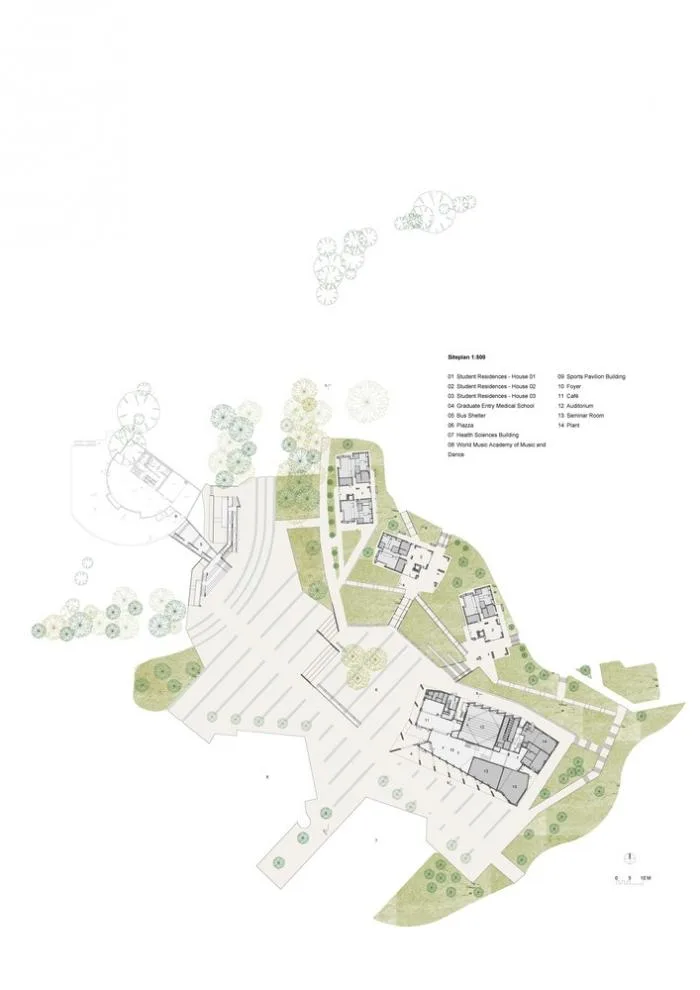
▲ General layout plan
The central public space slopes gently westward. At the heart of this incline, a small square features three elm trees planted beside stone seating and steps, creating a visual and pedestrian focal point. From the edge of this square, connecting paths radiate outward, linking the dormitories, bus shelter, and medical school. The boundaries between public spaces become blurred, with furniture extending onto the sloping grassy areas to the south, offering inviting places to relax and socialize.
The buildings’ materials are striking, lending them a sharp, sentinel-like presence alongside the public areas. Limestone cladding represents the central medical school building—a choice that resonates with the limestone geology of Clare County, where the northern campus is situated. The limestone walls are folded, shaped, and layered in response to orientation, sunlight, wind, rain, and public use patterns. The colonnades at the south and west corners act as welcoming gathering and entrance spaces, while the north and east walls offer quieter, more secluded areas.
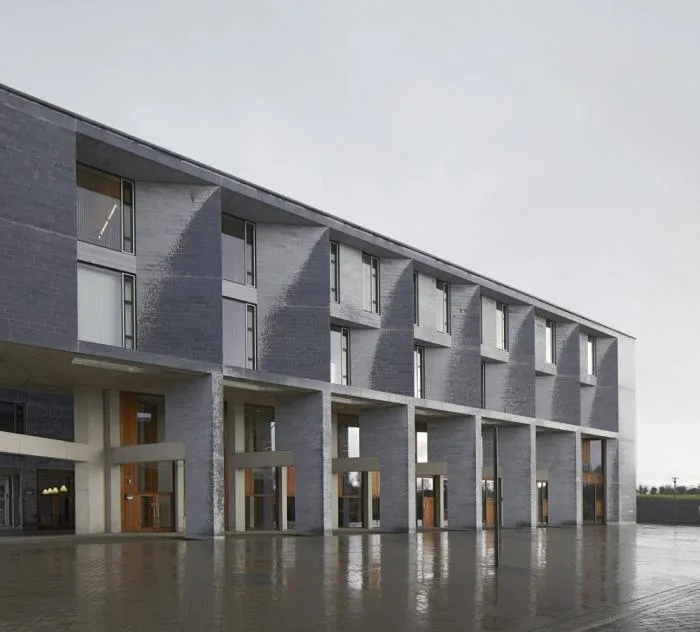
▲ Facade of the Medical College Building
Given the building’s significant depth, the roof form has been carefully adjusted to optimize natural light within the interior. This strategy illuminates multiple spaces, including the central hall, clinical skills laboratory, corridors, and rooftop terraces.
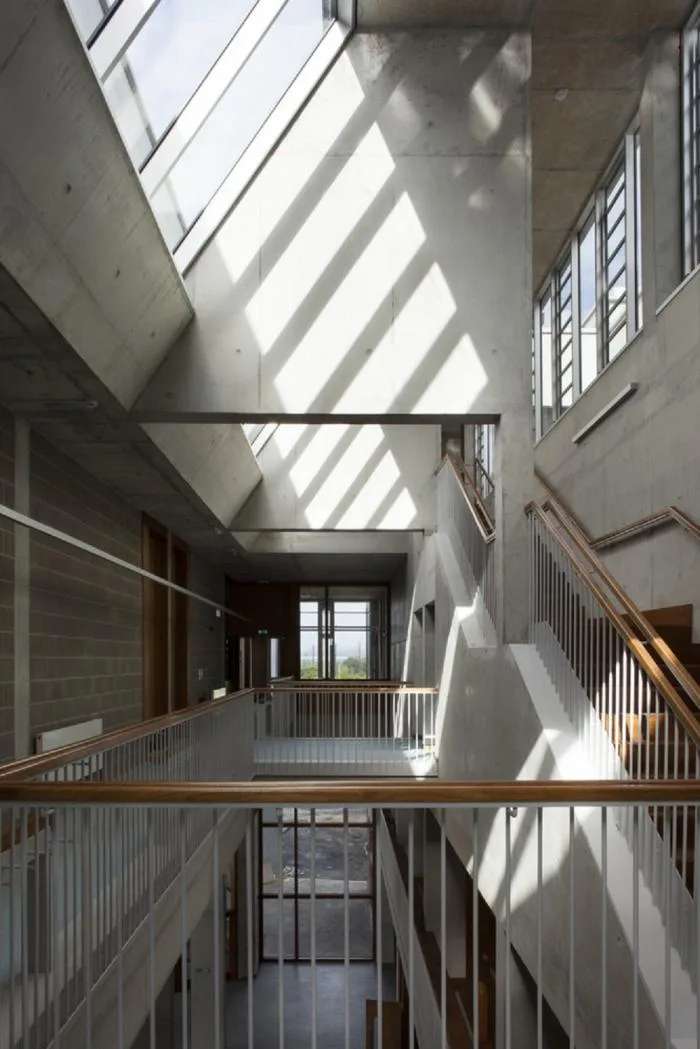
▲ Central skylight of the Medical College Building
An open central staircase connects all the main levels. Extending through the entire interior, it not only links different floors but also transforms the spacious area into a social hub where people can pause, converse, or lean over the railing to observe activities in adjacent spaces.
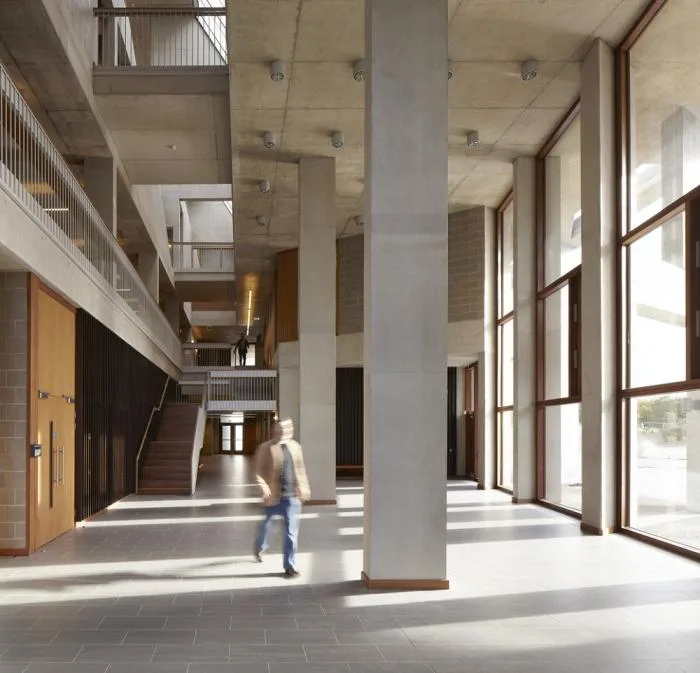
▲ Central Hall of the Medical College Building
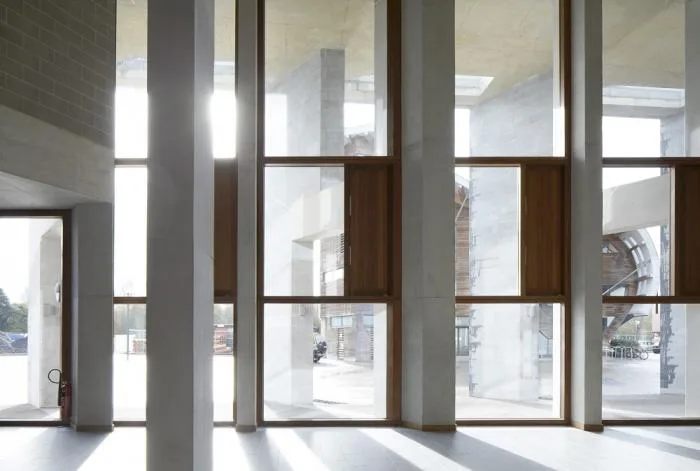
▲ View from the colonnade
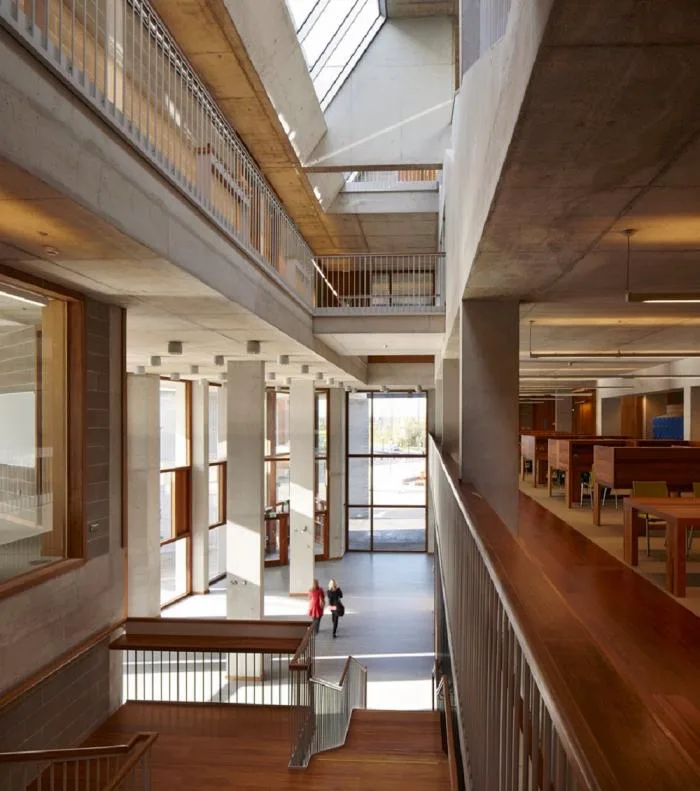
▲ View of the first-floor lobby from the stairs
The brick facade extends from the original housing at the rear to the dormitory at the front, adding depth and character. Deeply recessed exterior walls differentiate between the interior living spaces and the public areas beneath. Public spaces within the residences face southeast, while private study rooms are oriented northeast or northwest.
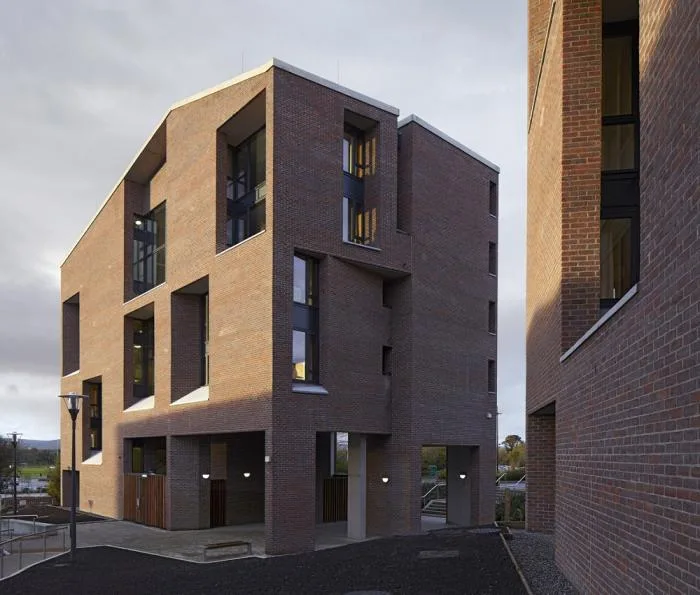
▲ Student Dormitory
The underground section of the residence has been removed, and an added archway improves pedestrian flow from the parking lot and bus stop to the north, providing students with a sheltered social space. The large gated entrance leads to the building’s core areas: stairwell, elevator, bicycle storage, and laundry facilities.
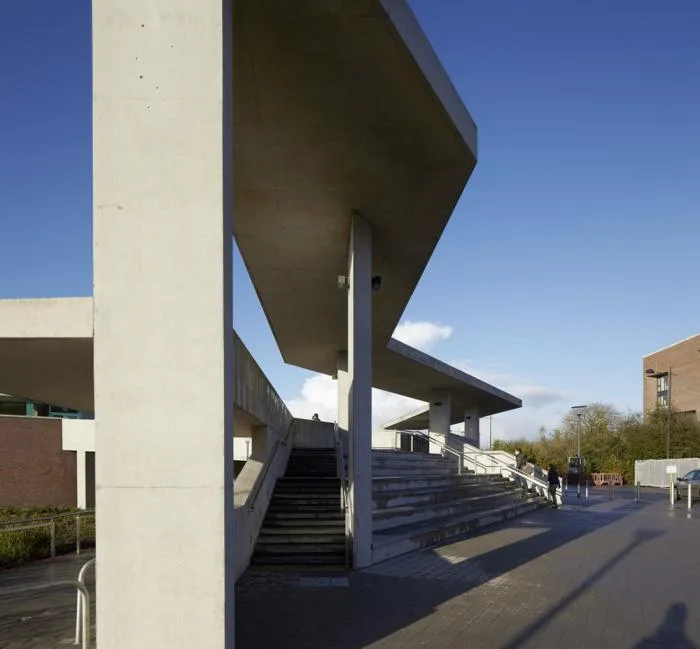
▲ Bus shelter
Project Drawings
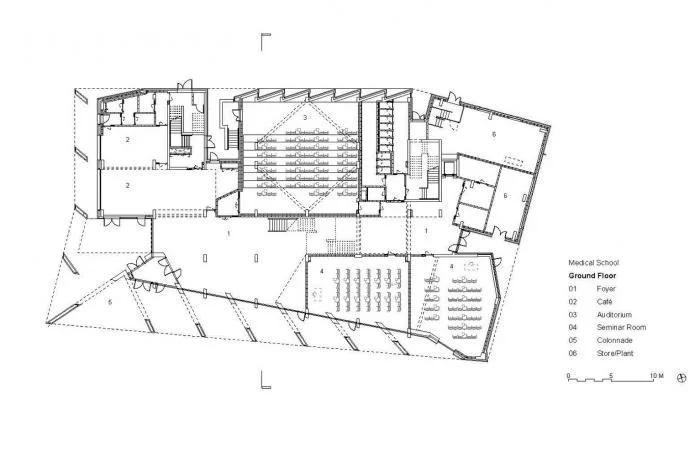
▲ First Floor Plan of the Medical College Building
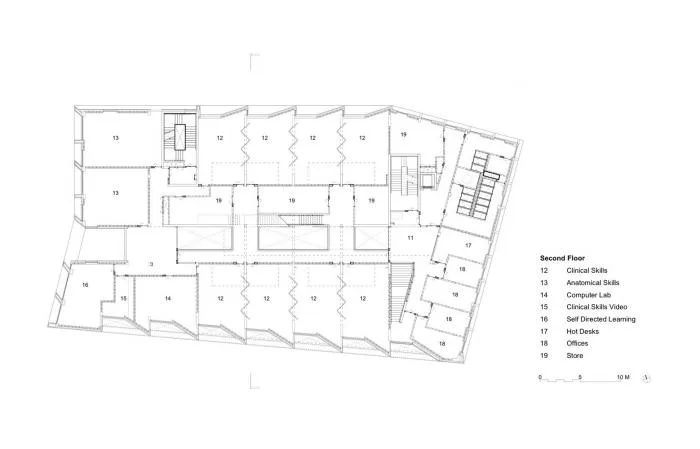
▲ Second Floor Plan of the Medical College Building
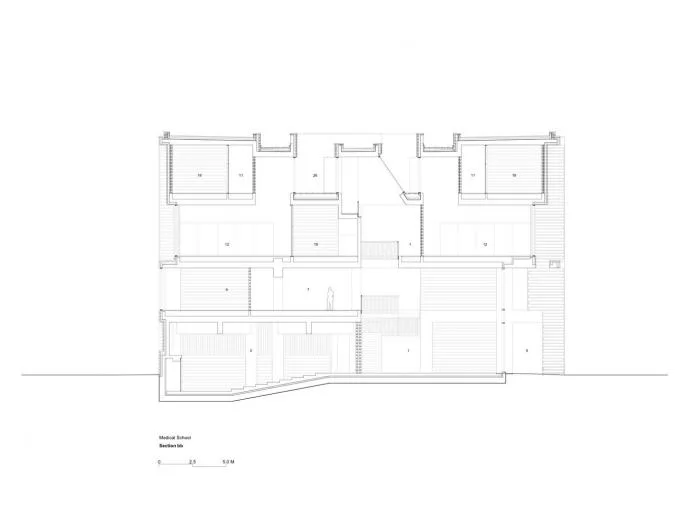
▲ Section of the Medical College Building
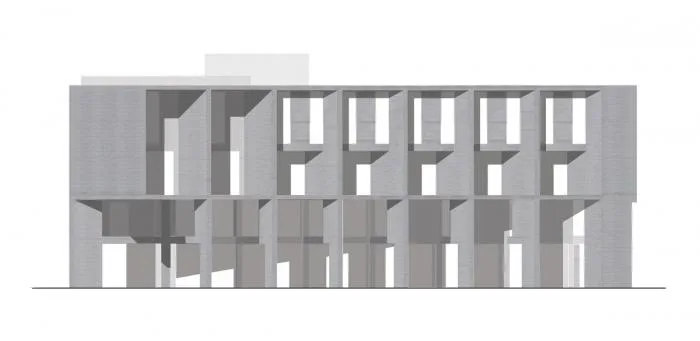
▲ Folding facade of the Medical College Building
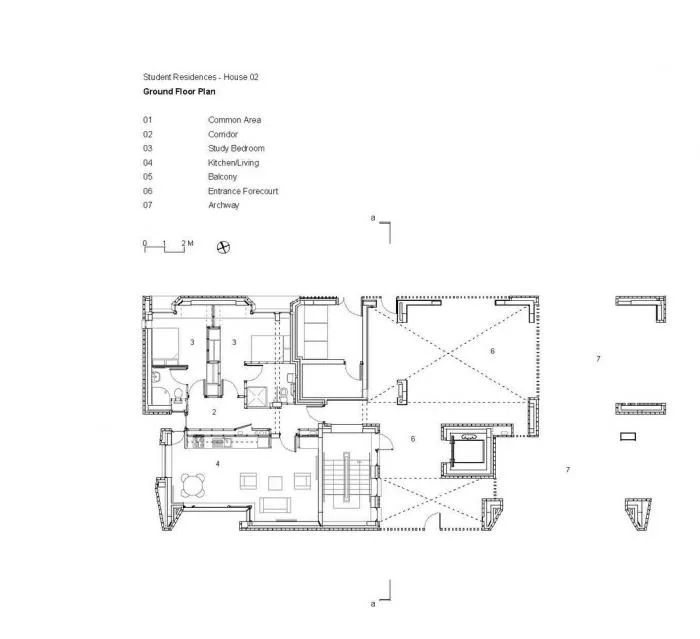
▲ First Floor Plan of the Student Dormitory
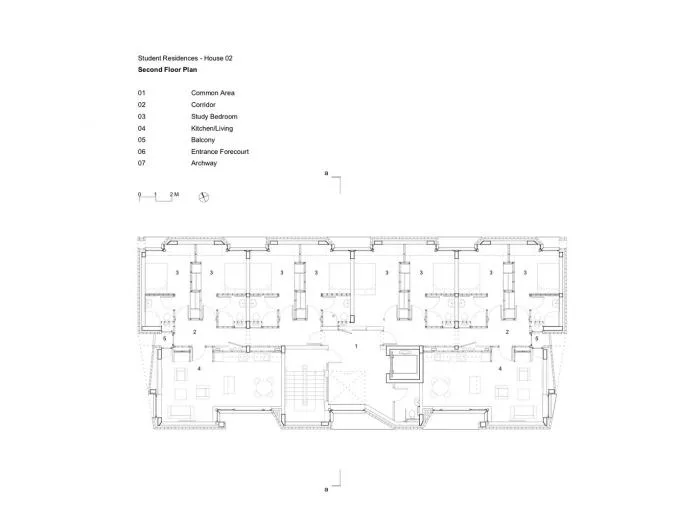
▲ Second Floor Plan of the Student Dormitory
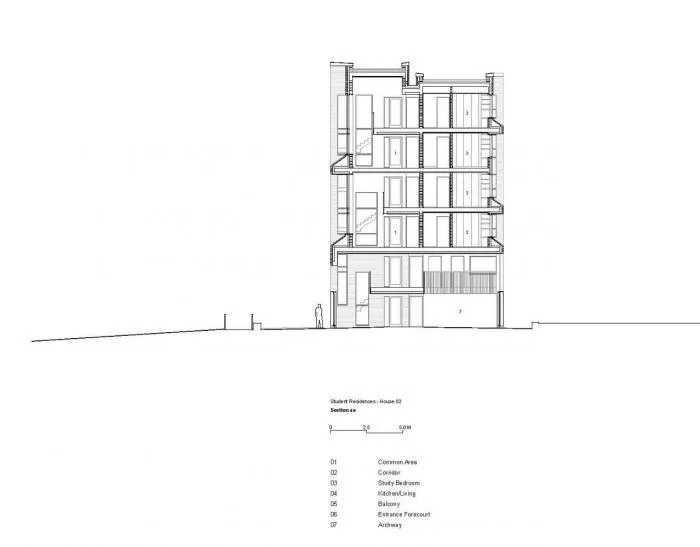
▲ Section of the Student Dormitory
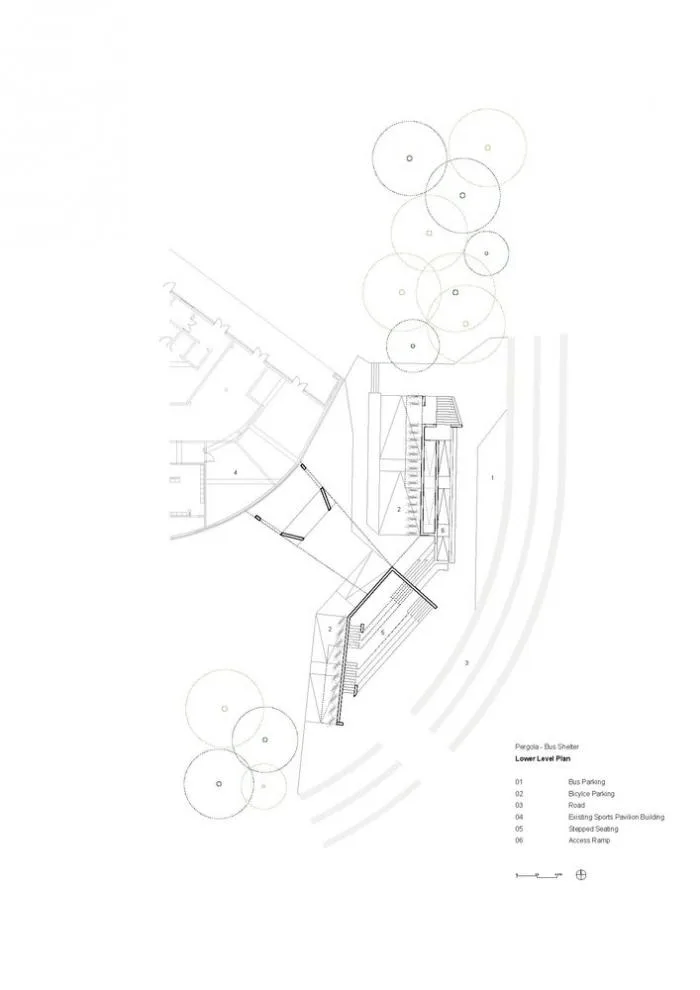
▲ Ground Floor Plan of the Bus Shelter
Project Information
Architectural Firm: Grafton Architects
Area: 4,300 m²
Project Year: 2012
Photographers: Dennis Gilbert, Alice Clancy













Must log in before commenting!
Sign Up