
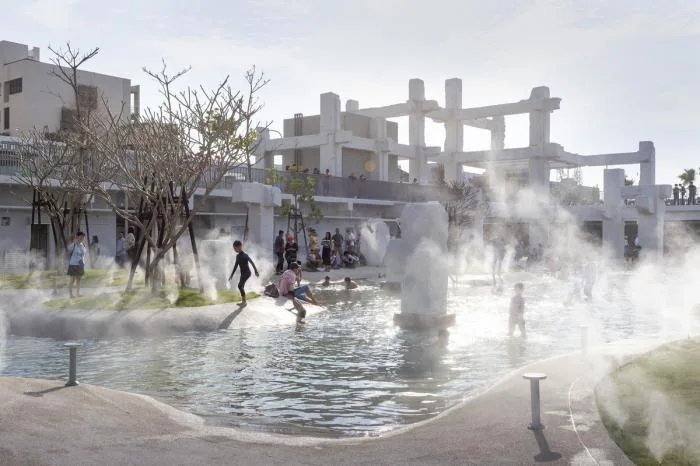
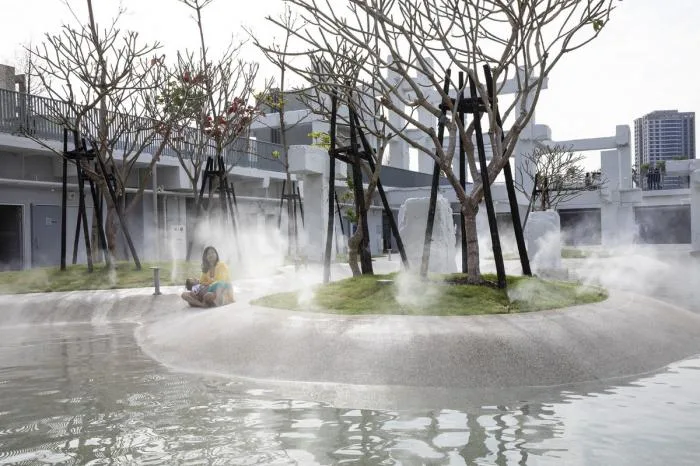
Recently, MVRDV celebrated the opening of “River Music Plaza” in Tainan. The “Hele Square” project focuses on revitalizing urban public spaces by transforming an old shopping mall in the heart of “Tainan Chinatown” into an urban lagoon surrounded by plants. These plants will grow into lush forests, reconnecting the city with nature and the waterfront.
Commissioned by the property owner, MVRDV’s master plan also reshaped a “T” axis along the east side of the Tainan Canal and introduced a new landscape strategy to integrate the original Tainan Chinatown with the one-kilometer-long Hai’an Road. The project includes not only a new public square and urban lagoon but also improvements to public transportation routes, reduction of traffic flow, and an increase in native plantings throughout the area.
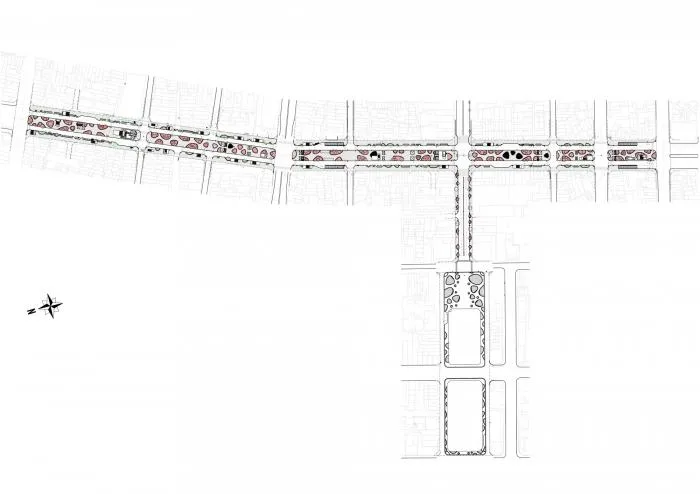
▲ General Plan of Hai’an Road
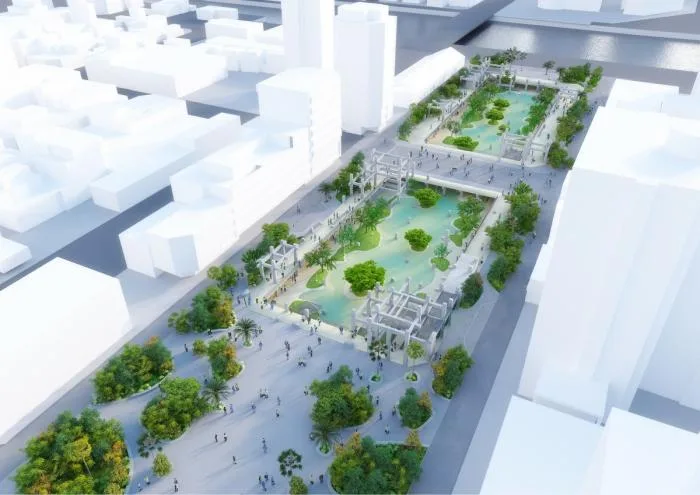
▲ Aerial View of Project Rendering
Since the 17th century, Tainan’s canal network has been the backbone of the city’s marine fishing industry. However, in the 1980s, the city’s development direction shifted. In 1983, the blind section of the Tainan Canal was filled in to build the Tainan Chinatown shopping mall. Over time, this large commercial building lost its original purpose and drained vitality from Tainan’s central and western districts.
The “Hele Square” project proposes a way to repurpose old shopping mall spaces, especially relevant today as online shopping gradually replaces physical retail. This transformation offers new possibilities to rethink time and space in urban environments.
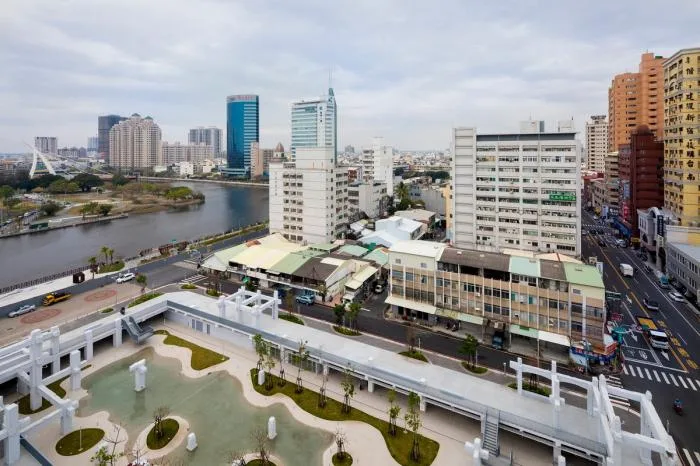
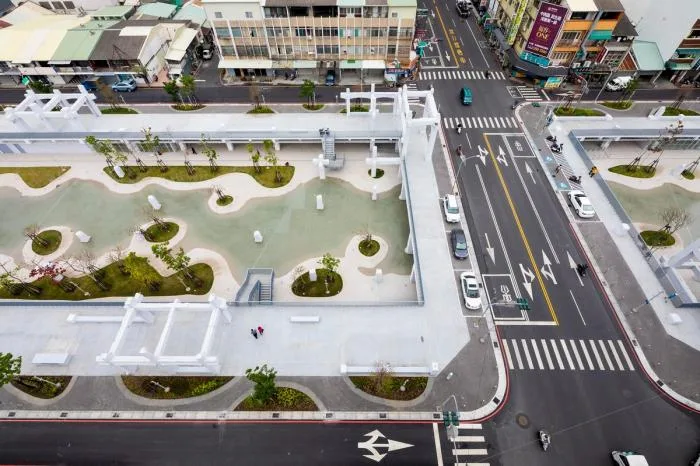
The Tainan Chinatown shopping mall has been demolished, and its original building materials have been cleverly recycled. This project serves as an innovative model of the circular economy.
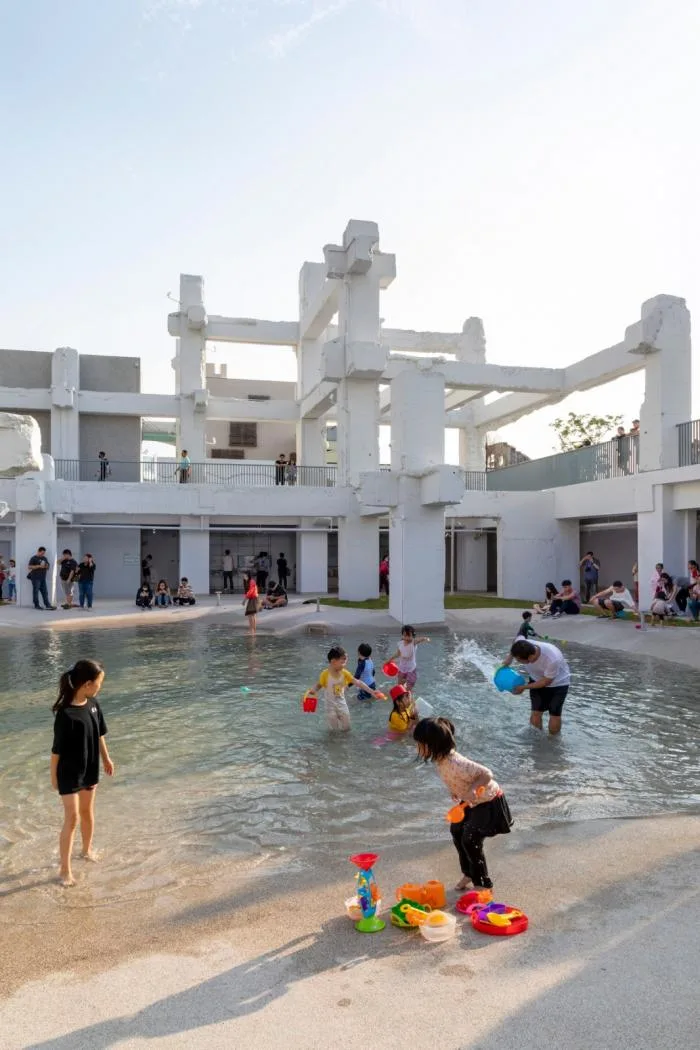
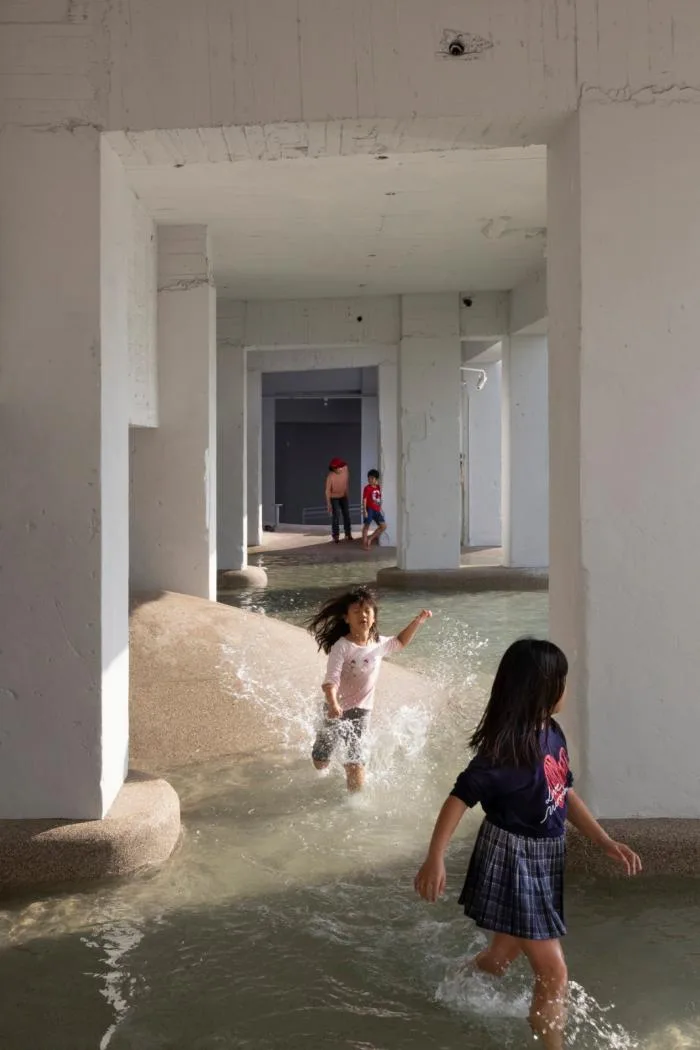
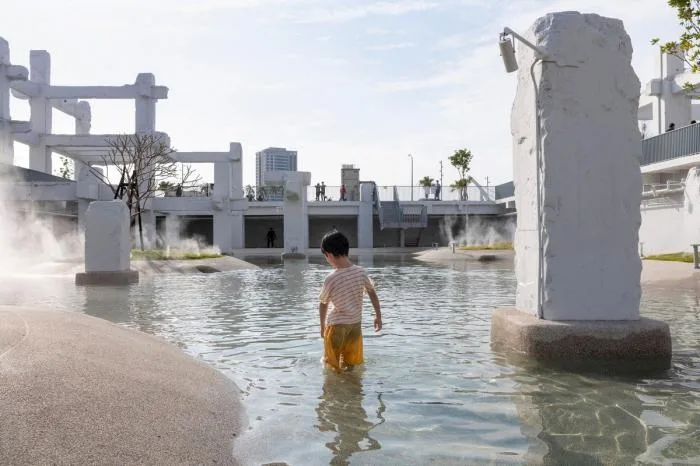
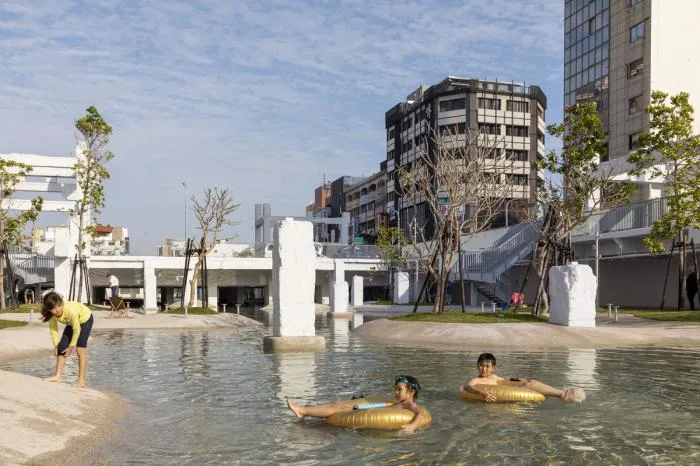
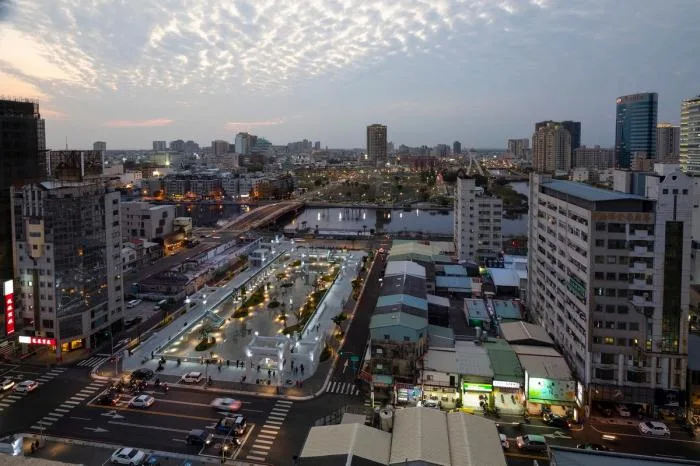
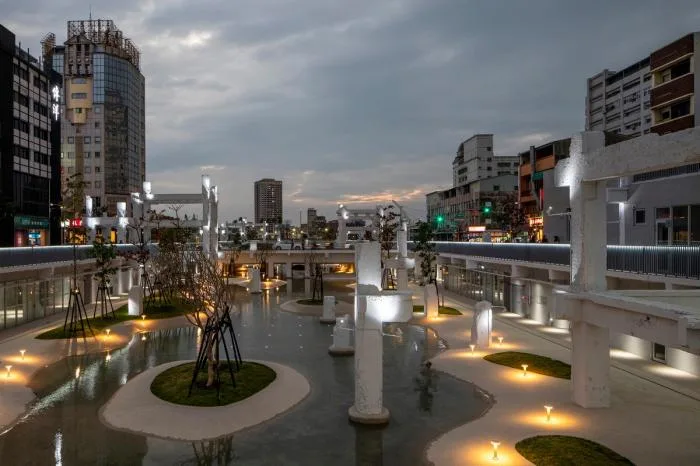
The urban lagoon and abundant local plants complement the sunken plaza, which was transformed from the shopping mall’s underground parking lot and is surrounded by a semi-outdoor shaded corridor. The thoughtfully designed lagoon acts as a versatile gathering space throughout the year: its water level rises and falls with the rainy and dry seasons. During hot weather, a spray cooling system reduces outdoor temperatures, creating a comfortable environment for visitors and lessening reliance on air conditioning.
This space can serve multiple functions, including an amusement park, gathering area, and performance stage. Meanwhile, by artfully dismantling the building, a series of original concrete frame structures were preserved and can be adapted as service centers, pavilions, and other facilities as needed.
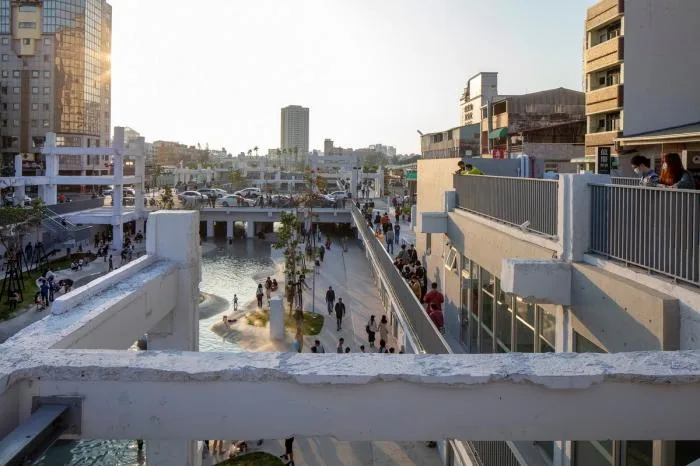
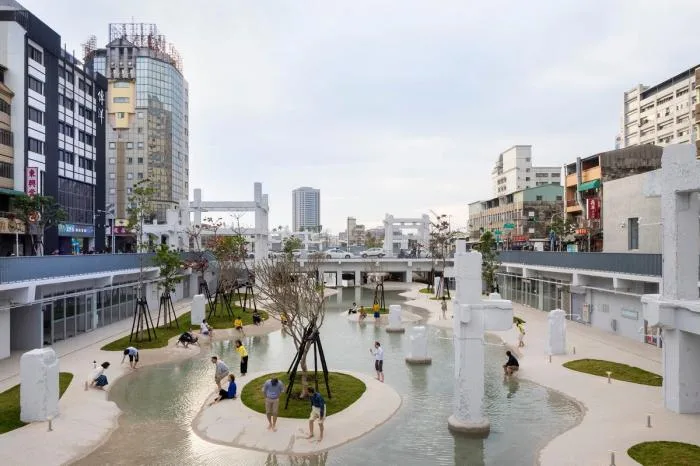
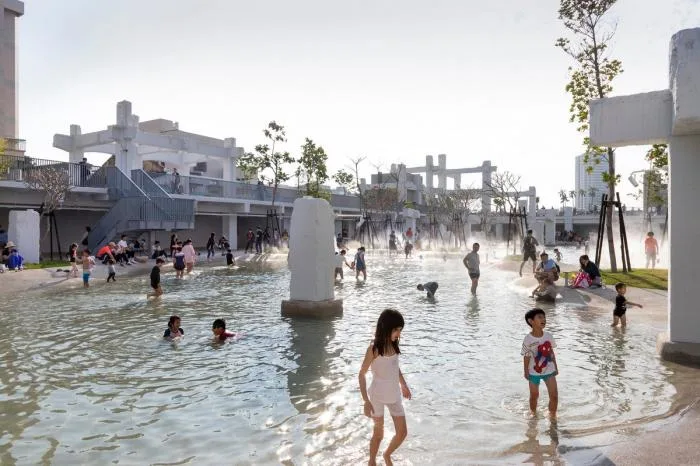
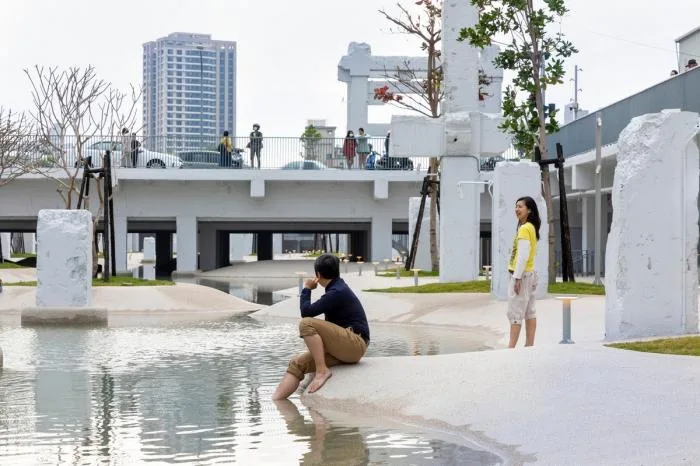
Visitors can view partial structures of the underground second floor and the materials used for backfilling and recycling through a glass floor. This feature highlights the site’s history and commemorates its significance in Tainan’s development.
This innovative approach to heritage preservation does not erase the past to build anew but emphasizes the original mall’s foundation within the park and lagoon. Much like a modern Roman square, it provides a visual landmark commemorating the historical decision to close the canal’s blind section and erect the mall.
MVRDV’s key design strategy for “River Joy Plaza” was to reintroduce greenery into the city. Both the public square and Hai’an Road feature extensive plantings. A mix of native trees, shrubs, and grasses create a layered vegetation landscape that mimics eastern Tainan’s natural environment.
The density of plants varies according to area activity patterns, balancing space for both people and vegetation. Since the completion of the Hai’an Road project, the newly planted greenery has begun to thrive, with full maturation expected in two to three years.
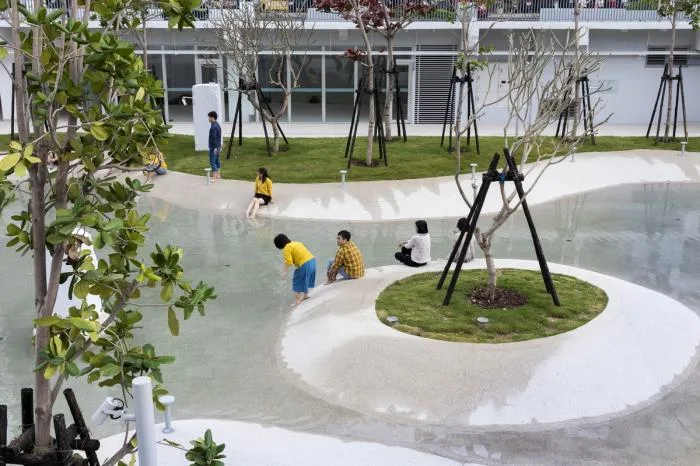
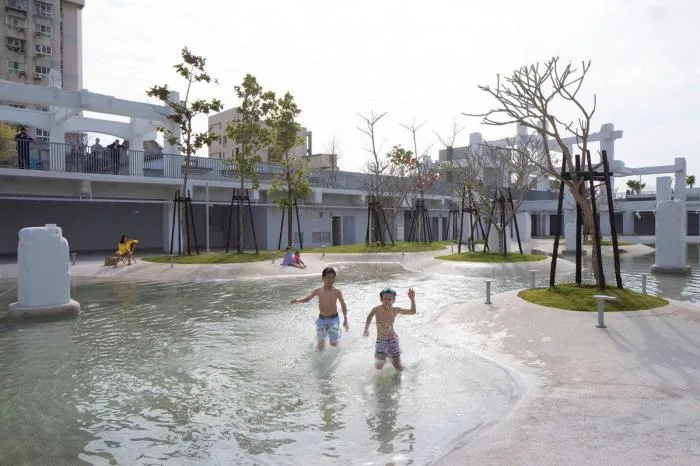
At Hele Plaza, visitors can cool off on the lush site of the former shopping mall. Children will soon be able to play with water amidst these historic ruins — a truly wonderful experience, said Winy Maas, co-founder of MVRDV.
“Inspired by Tainan’s history, primitive jungles and water are key sources of inspiration,” Maas added. “Tainan is a gray city, but as green jungles return to every corner, the city reconnects with its surrounding landscape. Along the green streets of Hai’an Road, reintroducing greenery was a crucial part of our overall plan. We mixed various native plants to simulate eastern Tainan’s natural landscape. I believe this will greatly benefit the city.”
Hai’an Road is one of Tainan’s busiest streets. The recent renovation project has revitalized urban life here. Now, each direction of the road is a single lane, and vehicle traffic has decreased. The road surface, previously made from a patchwork of materials, has been replaced with uniform concrete brick paving.
The greening strategy continues the successful natural landscape approach used in other parts of the city. The project also addressed unsightly elements like large ventilation shafts protruding from underground public spaces. While these infrastructures could not be removed, they were painted a uniform color to minimize visual impact. Local artists were invited to decorate these structures, further enhancing the streetscape.
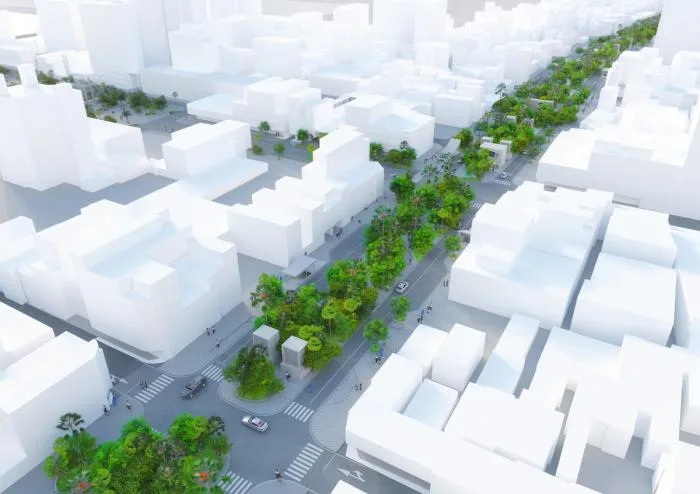
▲ Aerial View of the Tree-Lined Avenue Rendering
“Hele Square” is one of two MVRDV projects completed in Tainan this year. The other, the “Tainan Xinhua Fruit and Vegetable Market,” is in its final construction phase.
This project was realized through collaboration between MVRDV and a multidisciplinary design team, including:
- Collaborating architects: Li Liru Architects
- Sustainability and landscape consultants: Urban Neighborhood Planning and Design Co., Ltd.
- Structural consultants: Chang Hao Structural Technician Firm
- Transportation planners: Wen Dinghan International Engineering Consultant
- Lighting design: Li Heng Lighting Design Co., Ltd.
- Mechanical and electrical consultants: Hong Dian Industry Joint Technician Firm
- General contractor: Yongji Construction Engineering Co., Ltd.
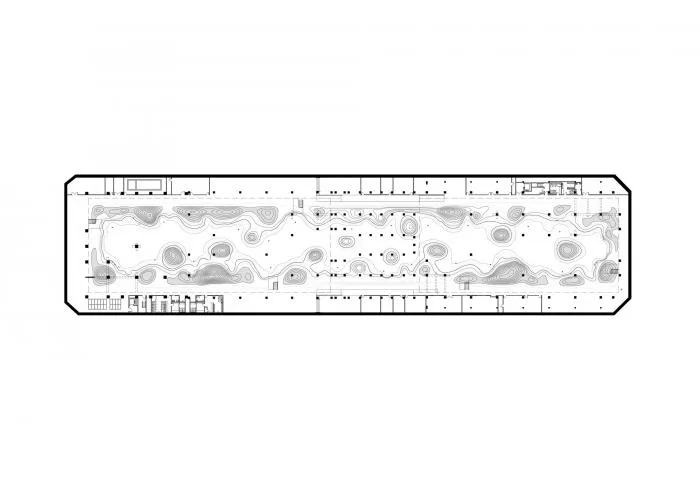
▲ Underground Floor Plan of the Square
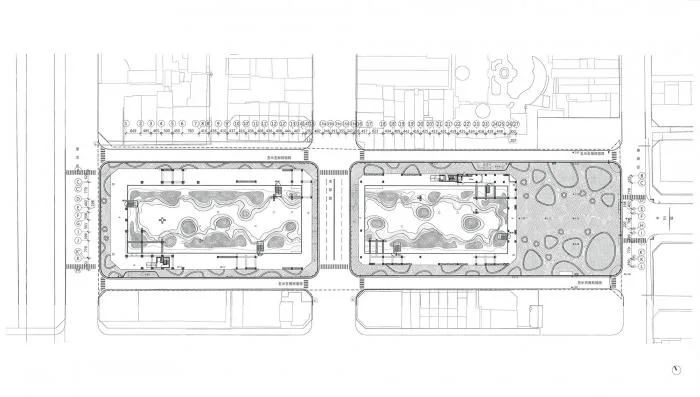
▲ First Floor Plan of the Square
Project Information
Project Type: Hot Springs, Parks, Adaptive Reuse
Location: West Central District, Taiwan, China
Architect: MVRDV
Year: 2020
Photographer: Daria Scagliola
Lead Architect: Winy Maas
Responsible Partners: Wenchian Shi, Jeroen Zuidgeest
Project Coordination: Hui Sin Liao
Design Team: Hui-Hsin Liao, Angel Sanchez Navarro, Stephan Boon, Xiaoting Chen, Andrea Anselmo, Yi Chien Liao, Zuliandi Azli, Olivier Sobels, Dong Min Lee, Chi Yi Liao
Collaborators: Local architects LLJ Architects; sustainability, landscape and urban designers The Urbanists Collaborative; structural engineers consultant Evergreat Associates; transportation planners THI Consultants Inc.; lighting designer LHLD Lighting Design; MEP engineers Frontier Tech Institute; general contractor Yong-Ji Construction Co. Ltd.
Visual Effects: Antonio Luca Coco, Costanza Cuccato, Davide Calabro, Paolo Mossa Idra












Must log in before commenting!
Sign Up