
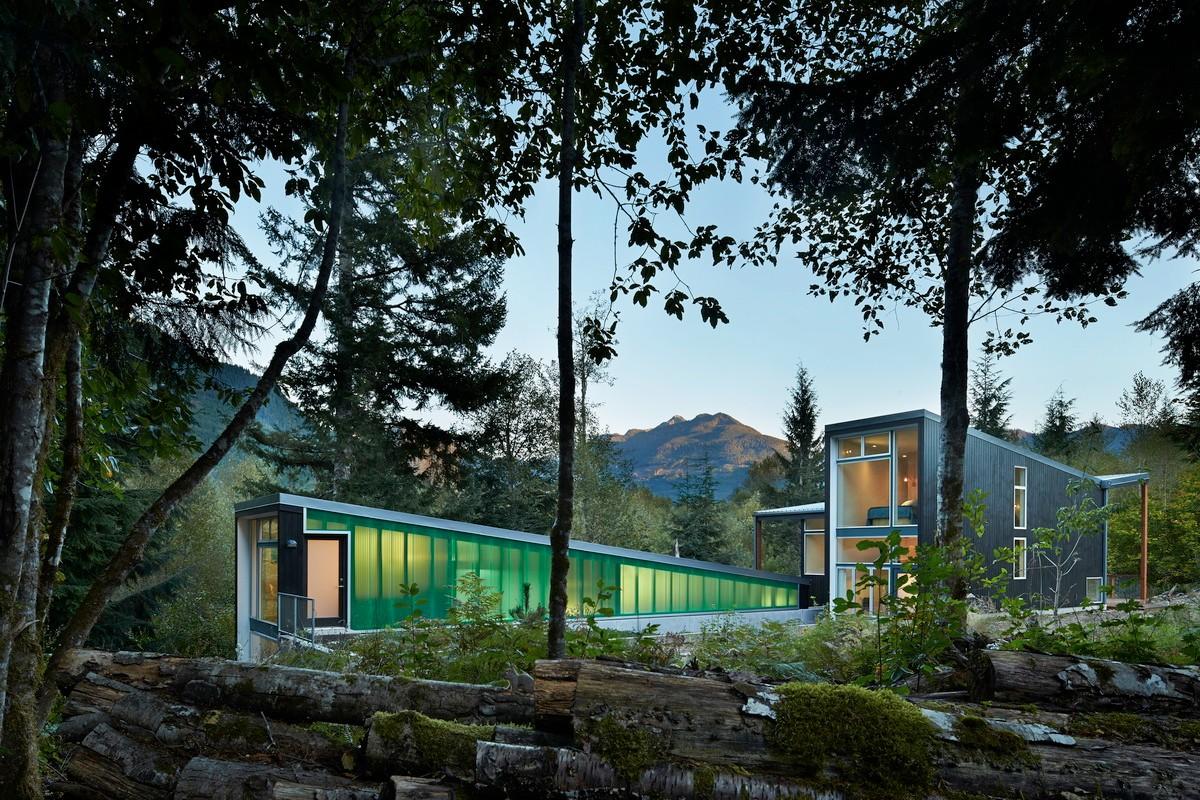
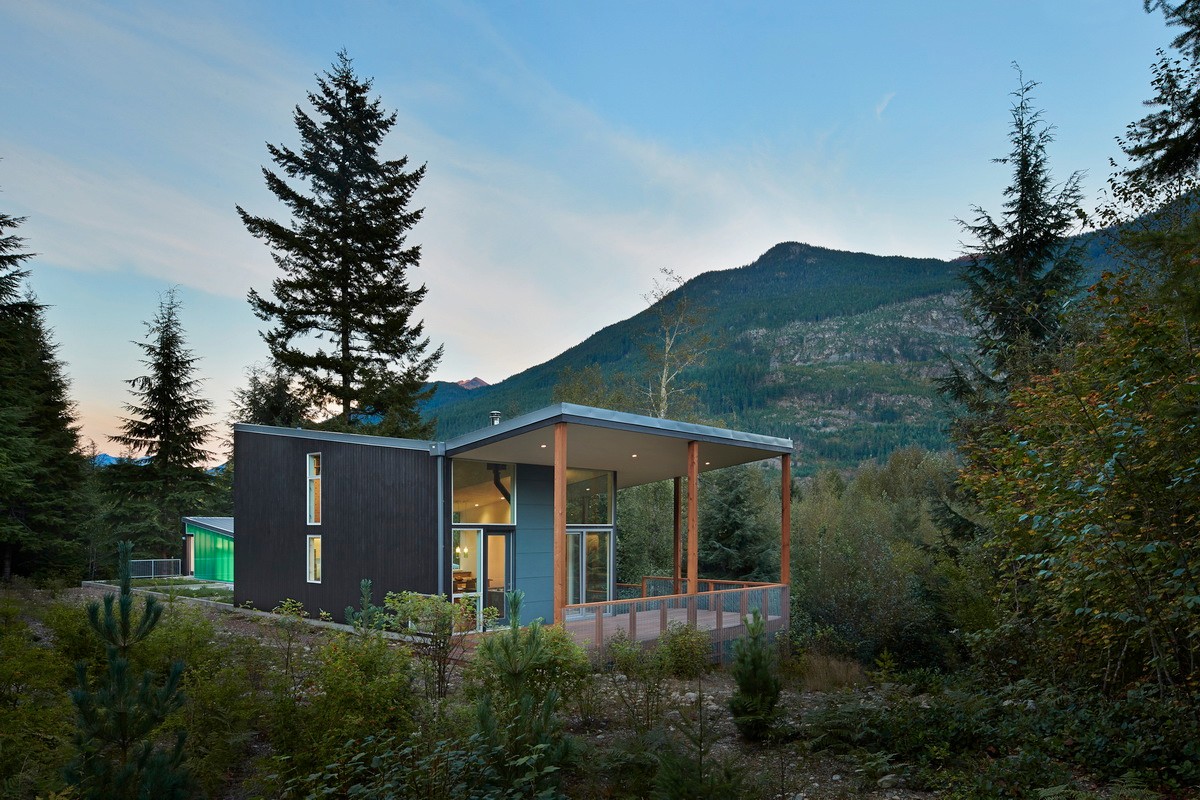
This simple and sustainable residence is situated in a rainy region at the rugged foothills of the northwestern Cascades Mountains, making a profound impact on its natural surroundings. The site slopes gently eastward, overlooking an expansive forest and framed by striking mountain peaks. Our client desired a home that would both blend with and complement the natural landscape. This dual approach—integrating with and contrasting against nature—serves as the core theme of the architectural design.
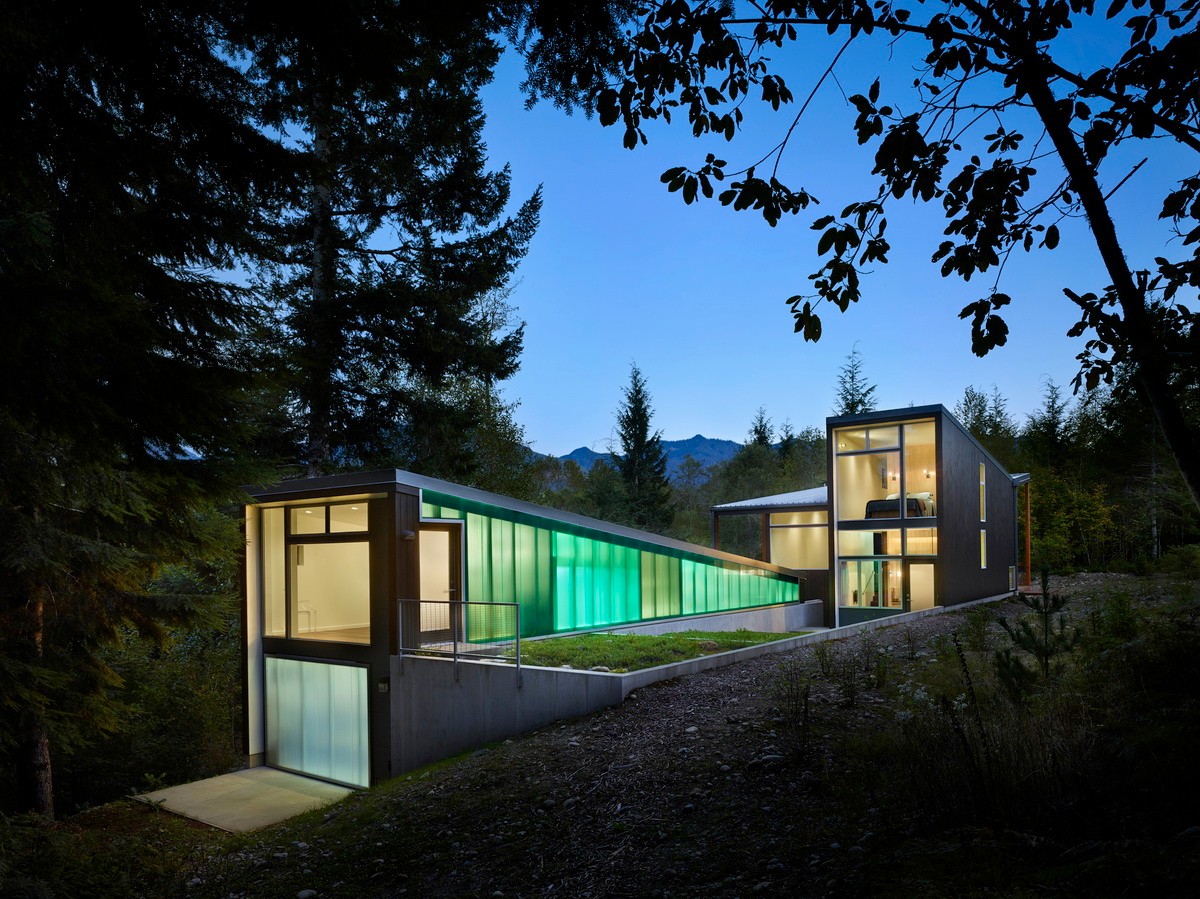
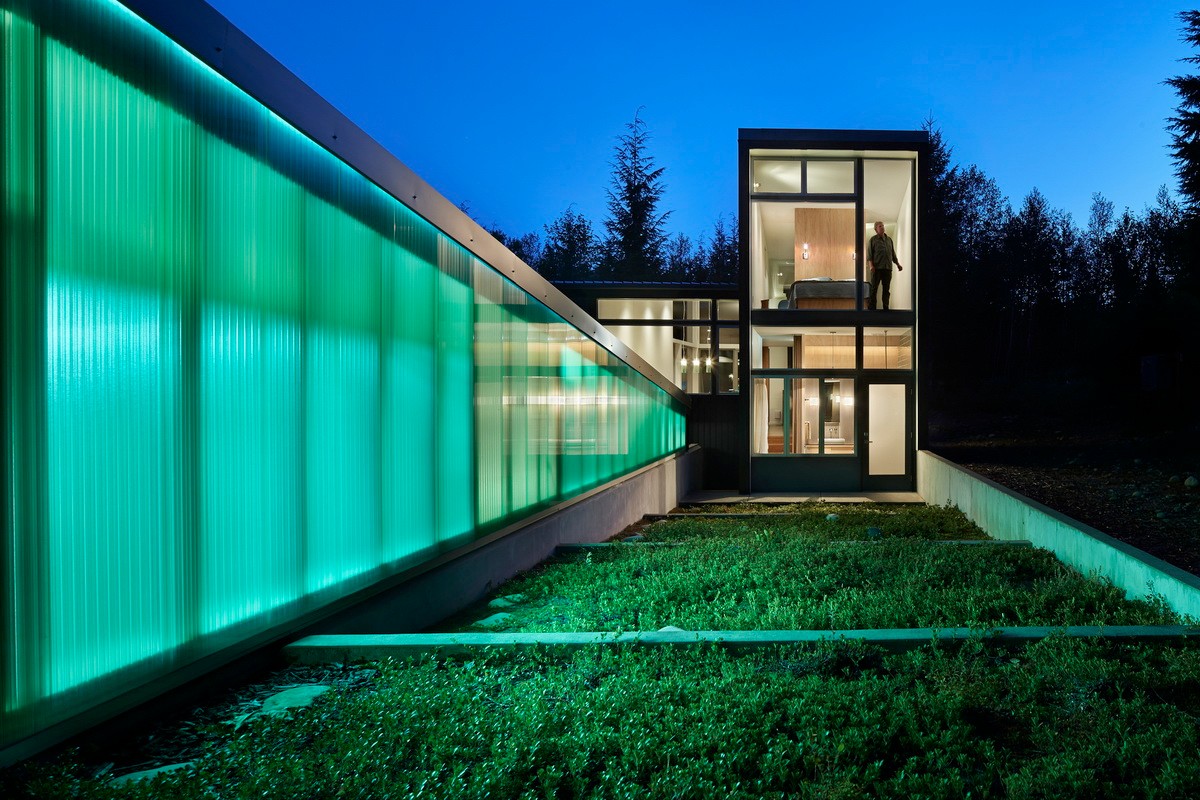
To preserve the rugged terrain, the building footprint is limited to a rectangular area measuring 30 by 100 feet. Within this space, two structures are positioned in a yin-yang arrangement, creating a winding, sheltered outdoor area with diverse spatial experiences. On the west side, a terrace is embedded into the terrain, leading underground to a bathtub situated behind a glass wall. Toward the southeast, a porch and commemorative staircase are sheltered beneath towering roofs that rise prominently above the site, offering protection from rain and summer heat. These two outdoor spaces converge at the ‘Rainwater Garden,’ where seasonal rainfall is collected and guided downstream toward the nearby river.
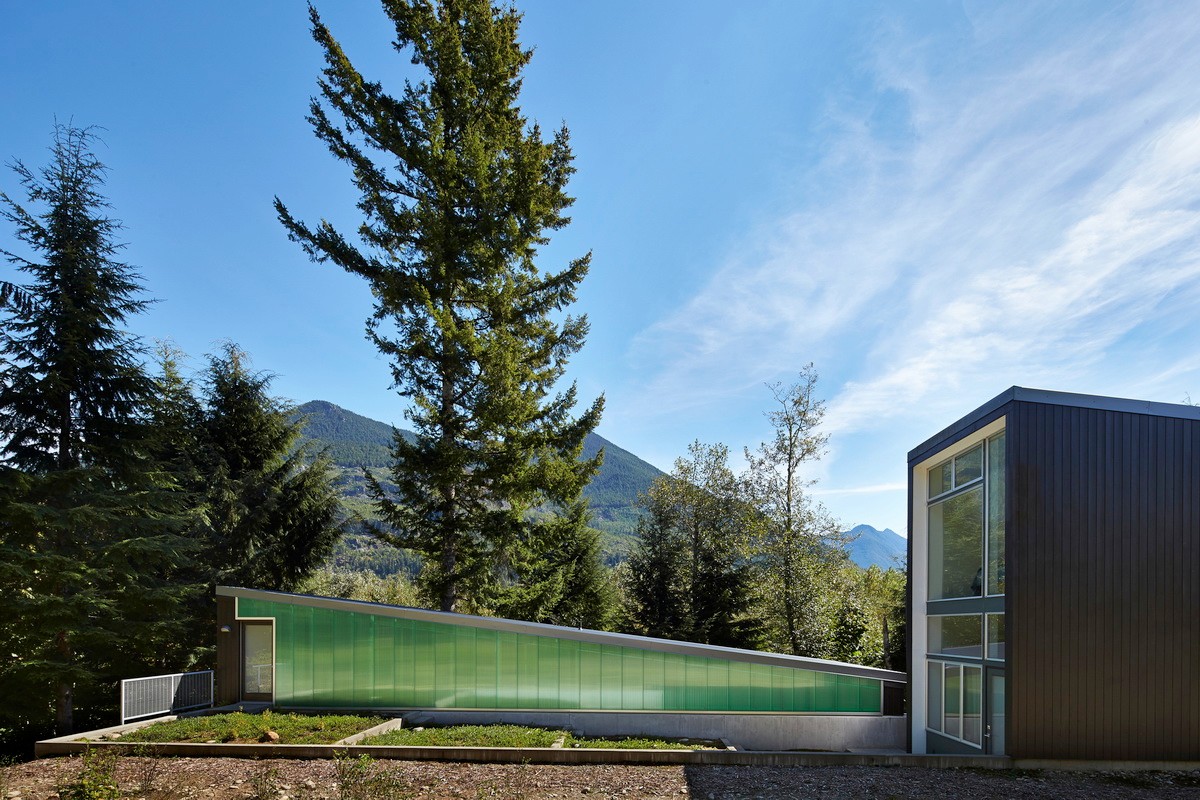

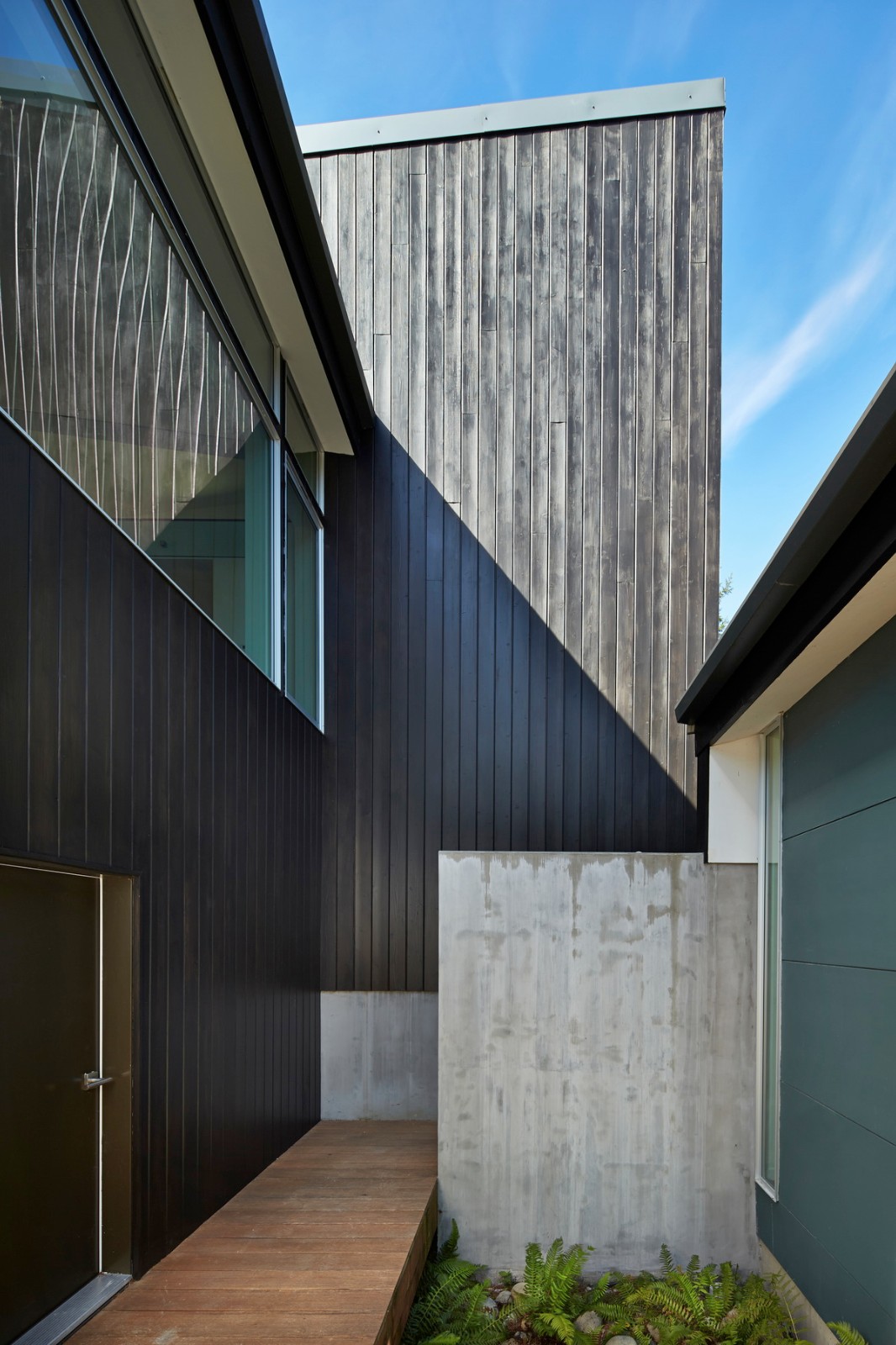
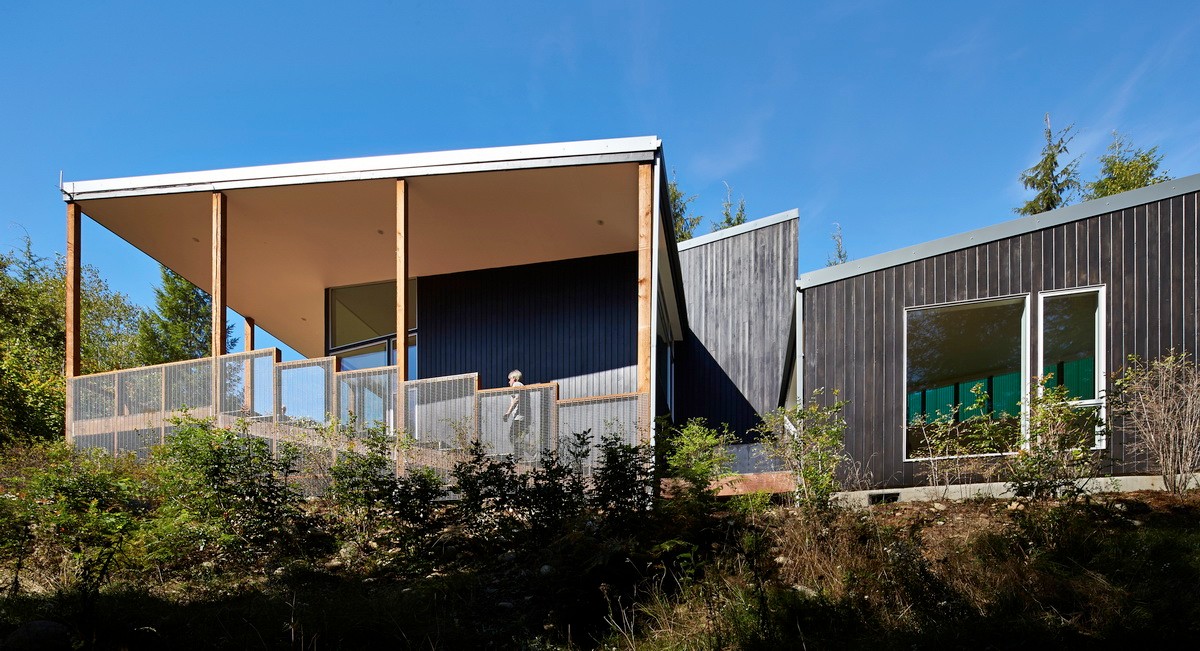

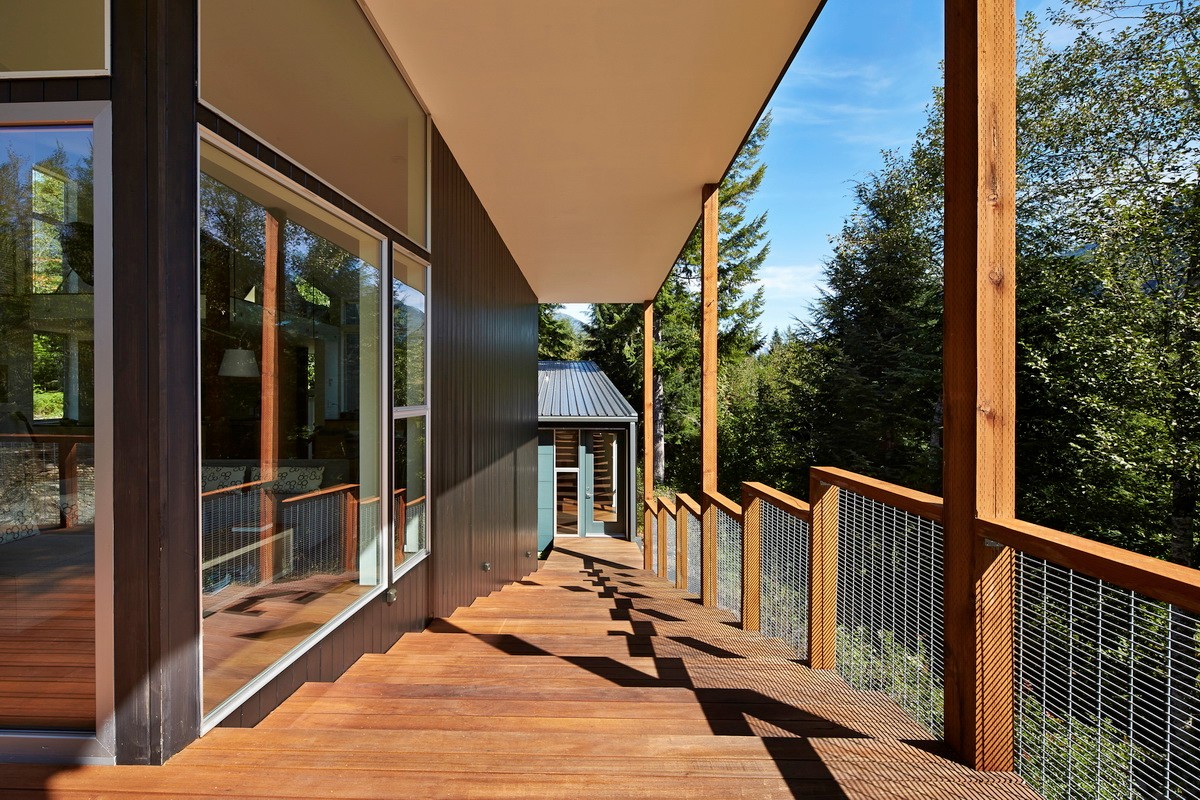
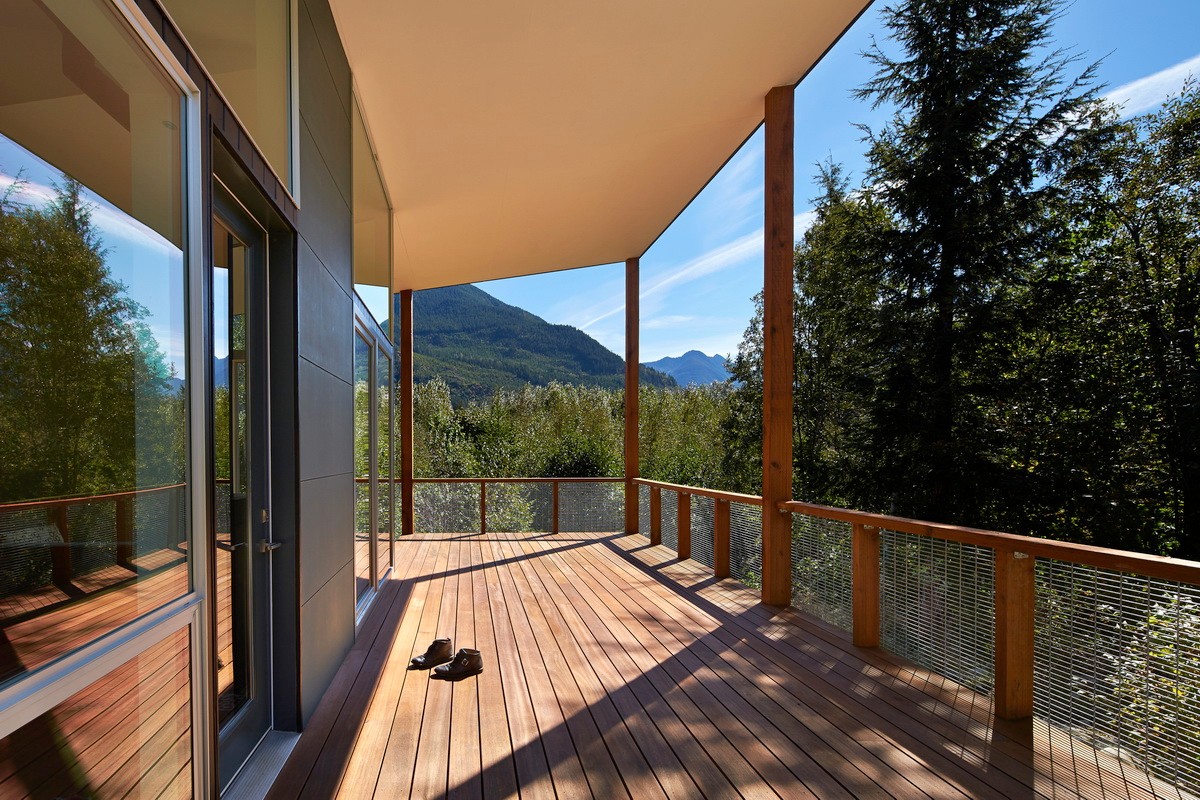
The design adapts to seasonal changes, with living spaces extending onto the porch and terrace during summer, while maintaining efficiency and comfort throughout winter. The 890-square-foot cottage includes a spacious main room, bathroom, and attic bedroom enclosed by frameless glass, all offering unobstructed views of the distant mountains. Adjacent to it, the 1,000-square-foot workspace houses a music room, studio, and guest loft.
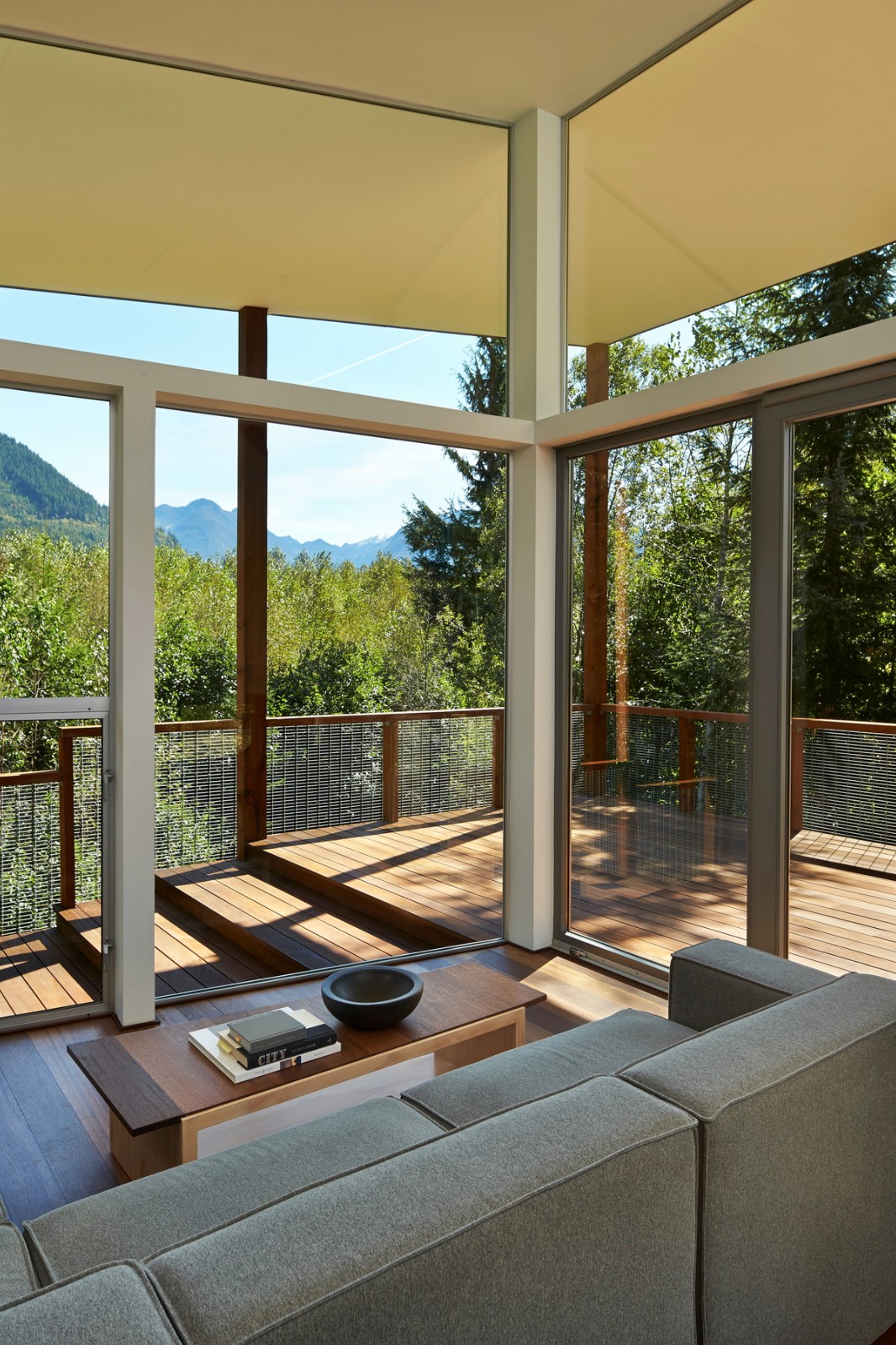
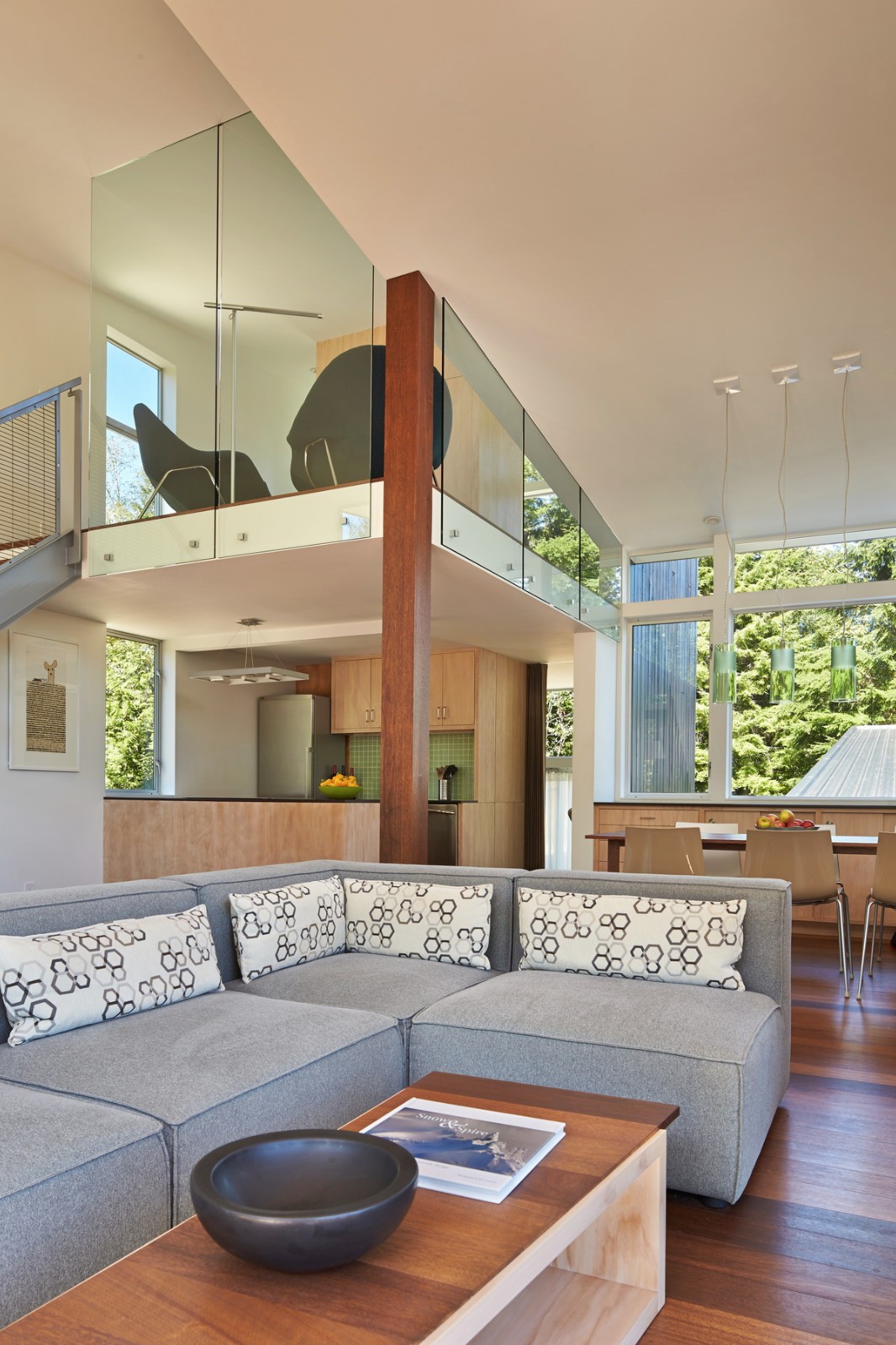
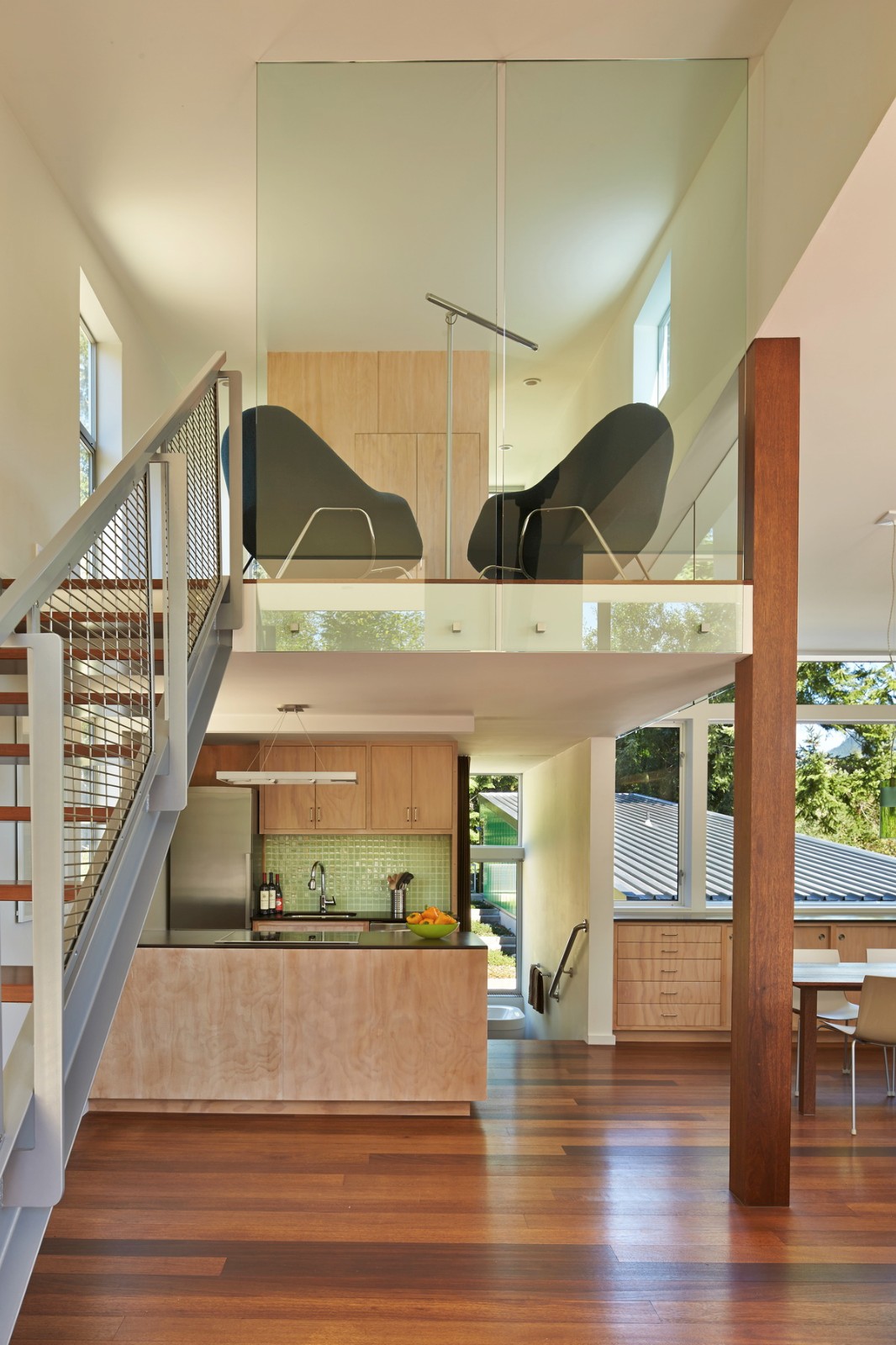

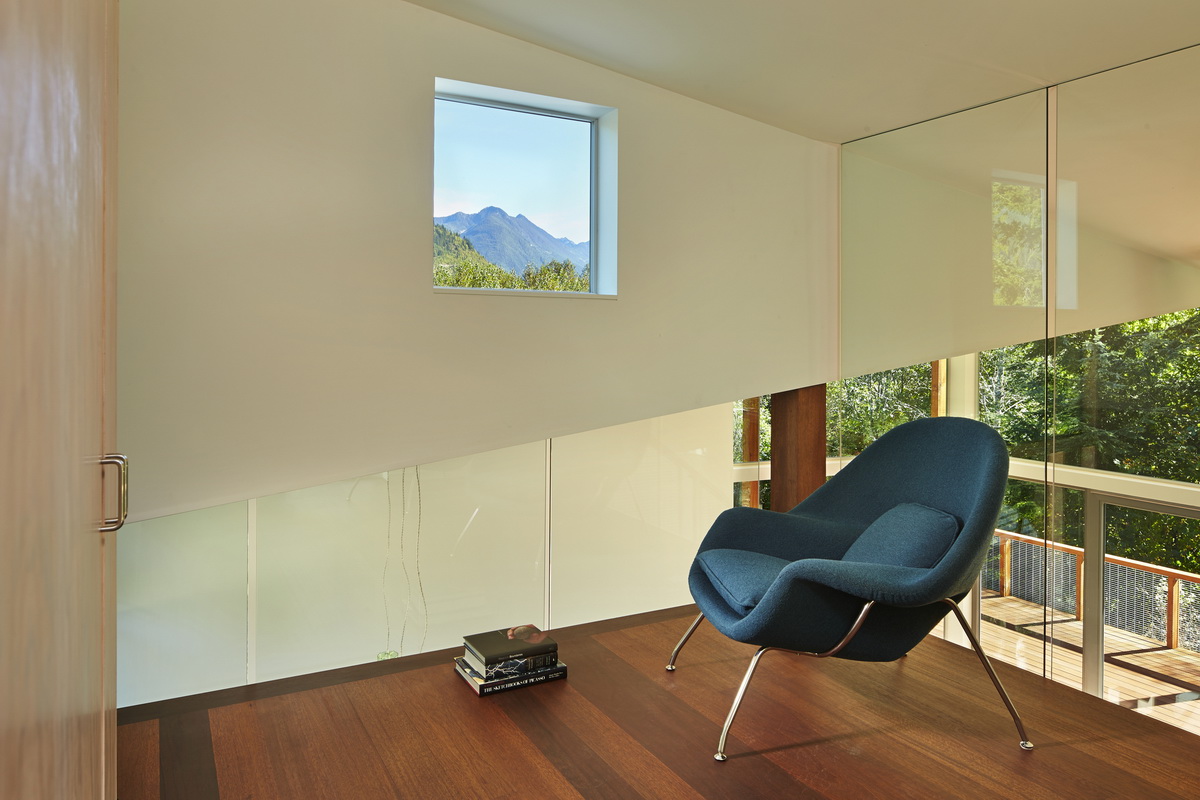
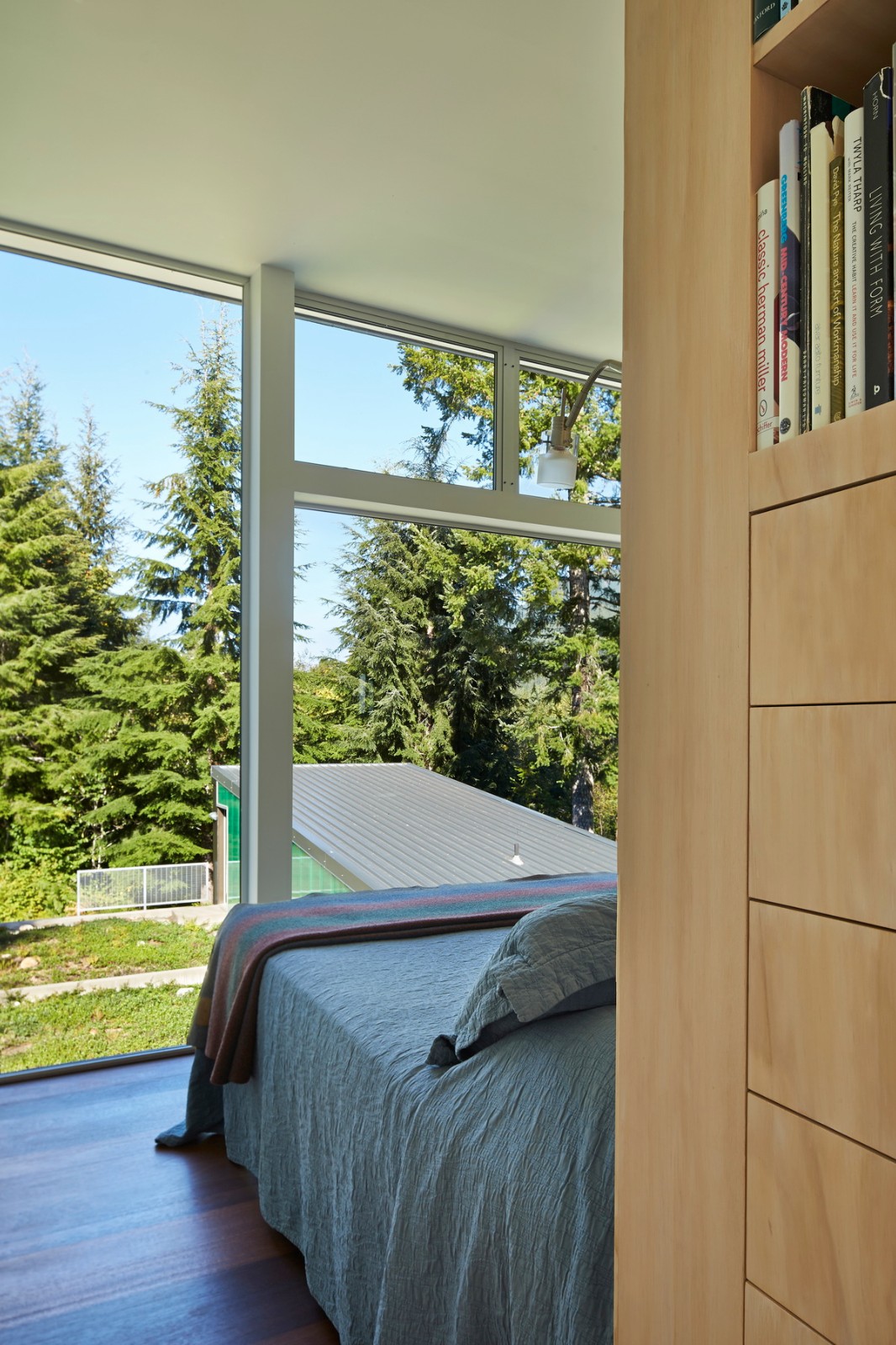
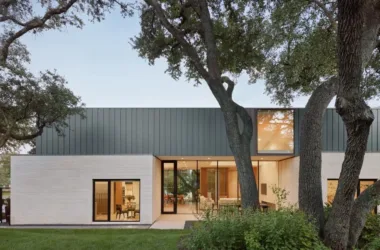
The building’s west wall is constructed from polycarbonate material, allowing natural sunlight to illuminate the interior during the day while providing dramatic lighting effects on the outdoor terrace at night. Though the building’s form echoes the surrounding mountains, its geometric edges and corners give it a modern and crisp appearance. While the overall architecture maintains simplicity, it remains deeply rooted in its site, creating an eye-catching contrast.

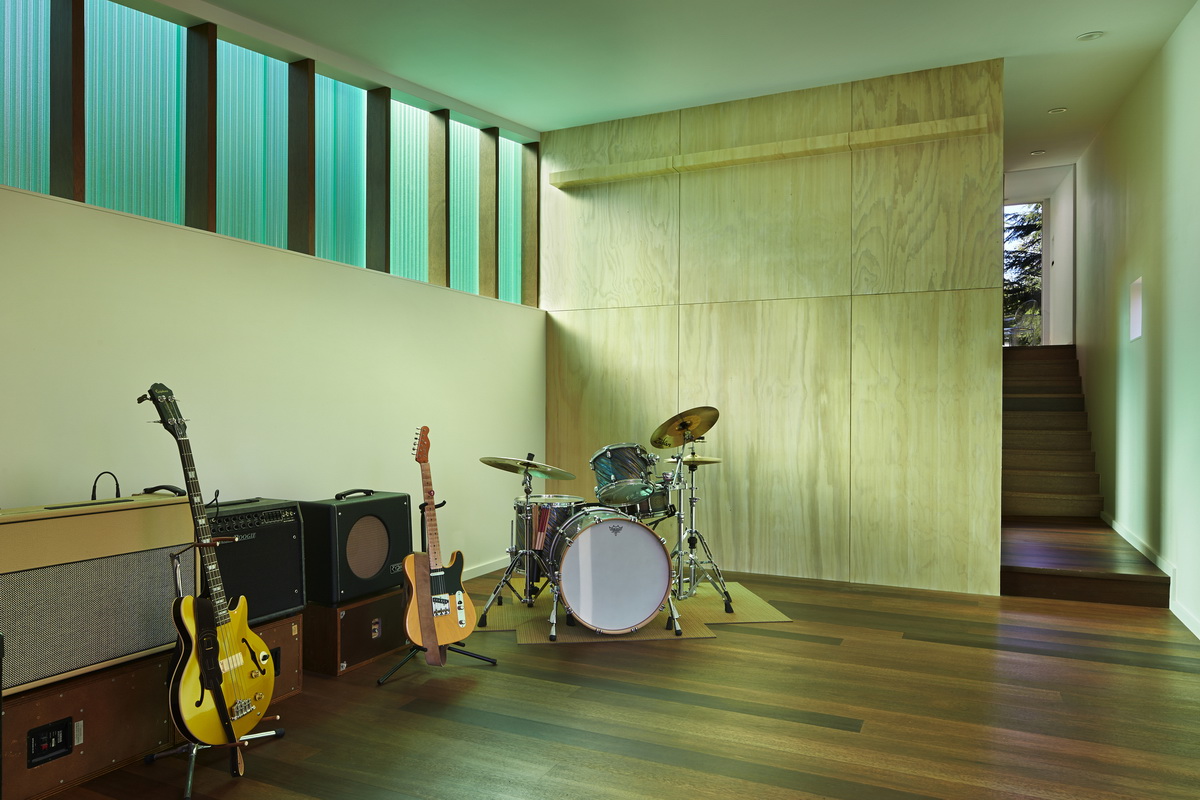
The sustainable technologies incorporated in this building include geothermal energy, wood sourced from managed forests, advanced insulation materials, and solar power. Local contractors constructed the exterior, with the project ultimately completed by the client under a tight budget over several years. The cabin’s name is inspired by a memorable experience the client had during construction.
Project Drawings
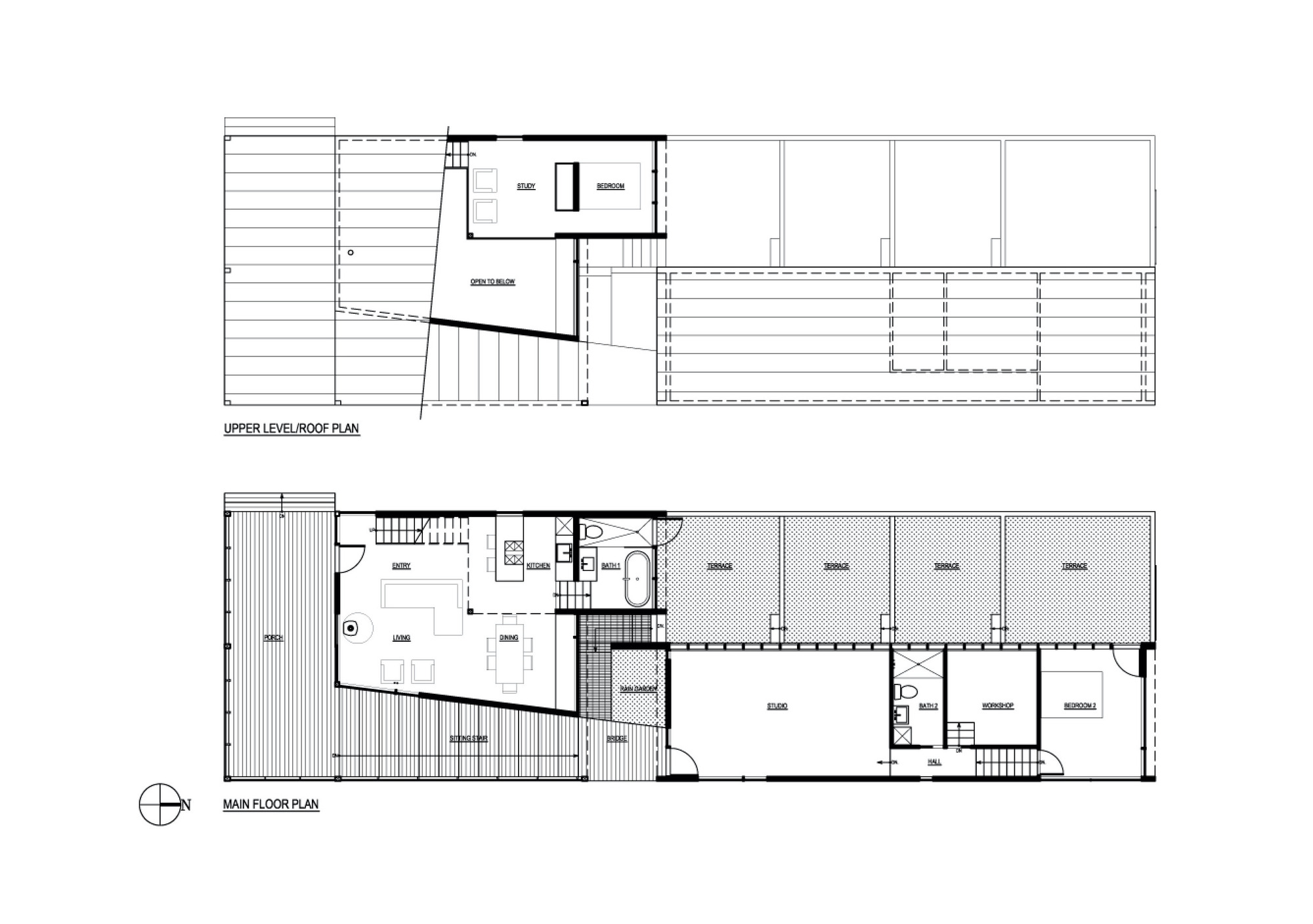
▲ Plan View
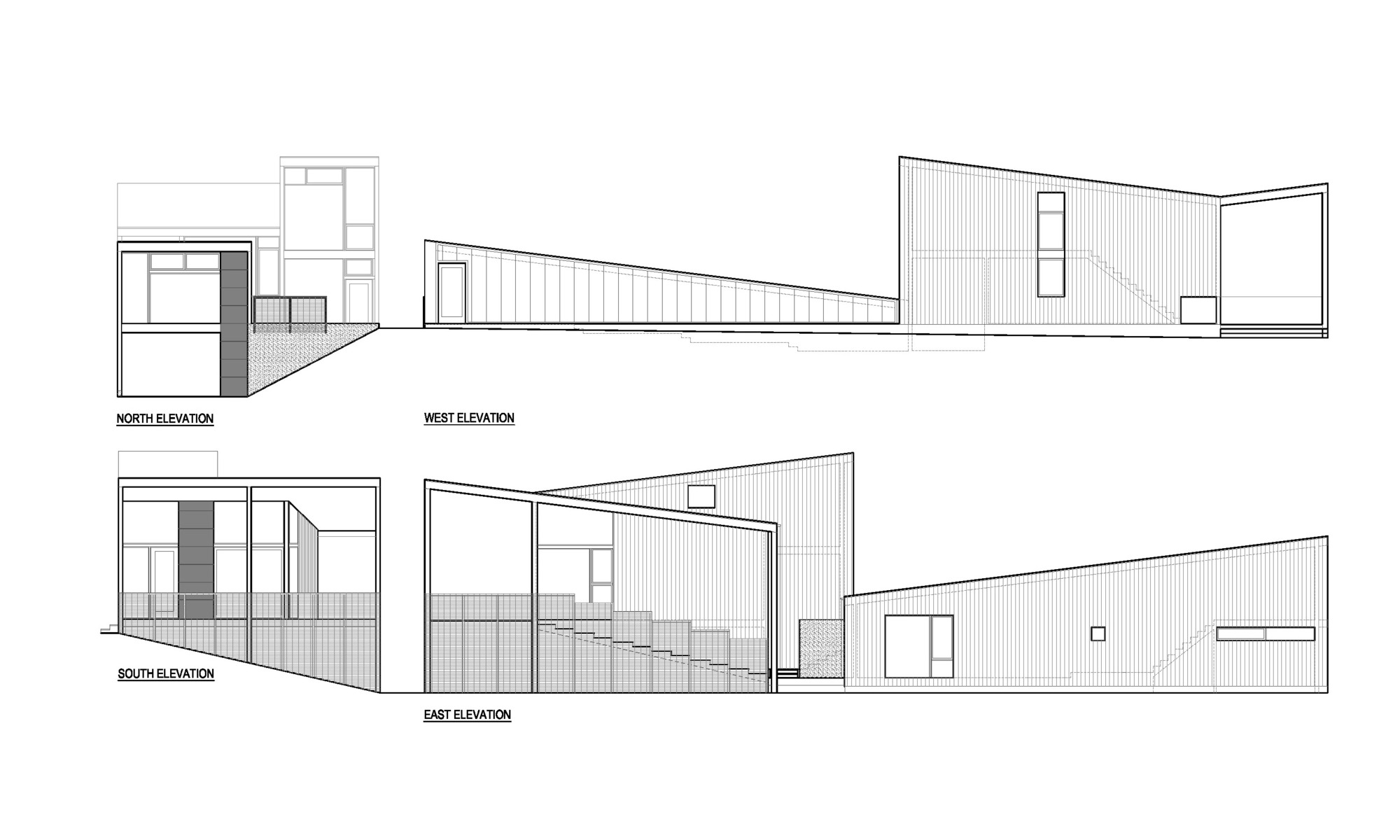
▲ Elevation View
Project Information
Project Type: Independent Residential Building
Location: Marblemount, USA
Architectural Firm: David Coleman Architecture
Area: 1,890 sq ft
Year: 2018
Photographer: Benjamin Benschneider
Suppliers: Toto, Benjamin Moore, Duravit, Milgard, Fry Reglet, James Hardie, McNichols, Ann Sacks, Rais, Aquabrass
Lead Architect: David Coleman
Design Team: David Coleman, Principal; Daniel Payson, Trevor Dykstra
Construction: Piazza Construction
Architectural Finish: Mark Malone












Must log in before commenting!
Sign Up