
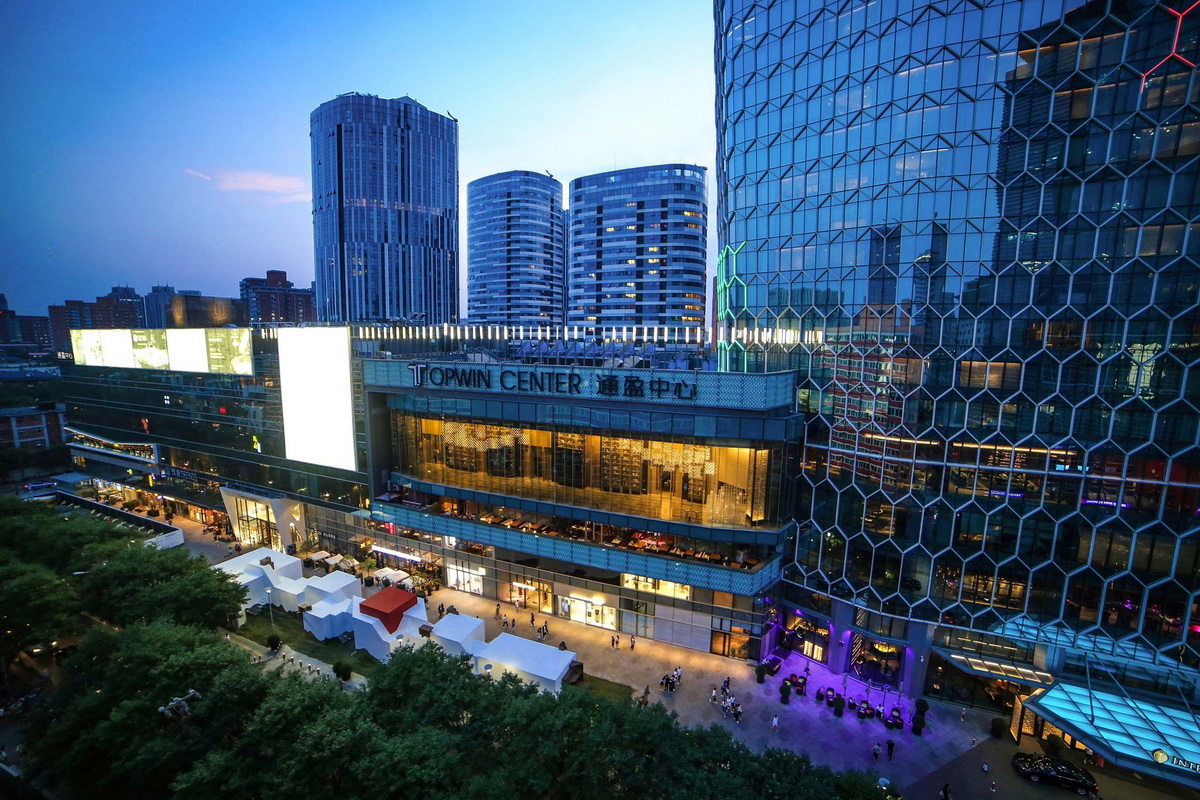
Mandala Hill is an introverted garden suspended within the ideal cityscape.
This digital art museum, situated in the bustling heart of Beijing, establishes a profoundly inward spatial connection.
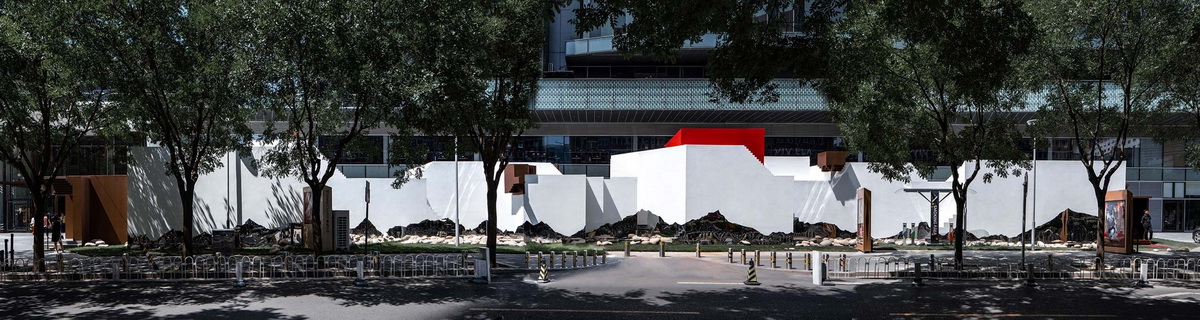
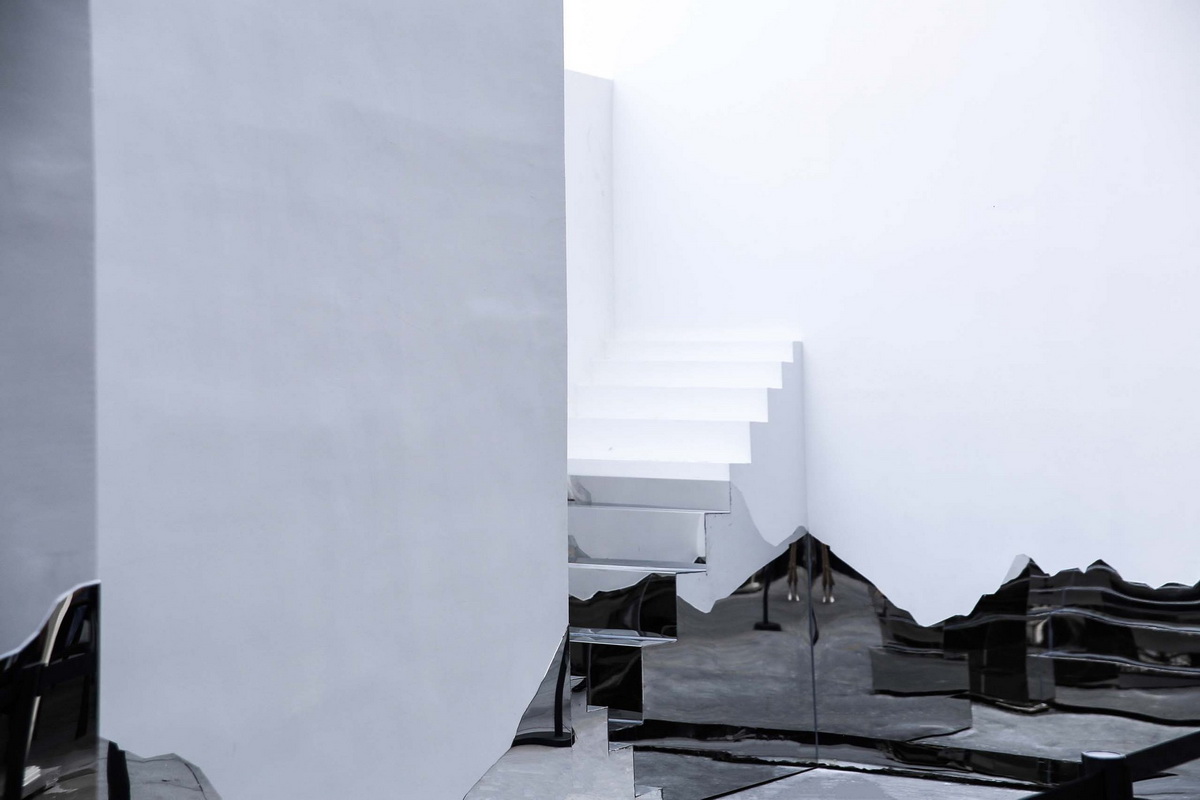
The exterior space resembles a maze—the staggered steps create surprising visual illusions, encouraging interaction between physical movement and architecture. The simple, unadorned stones contrast with the skyline of Mount Namgyapawa, forming a rift between the natural and the mature urban atmosphere, as if the museum were an alien object.
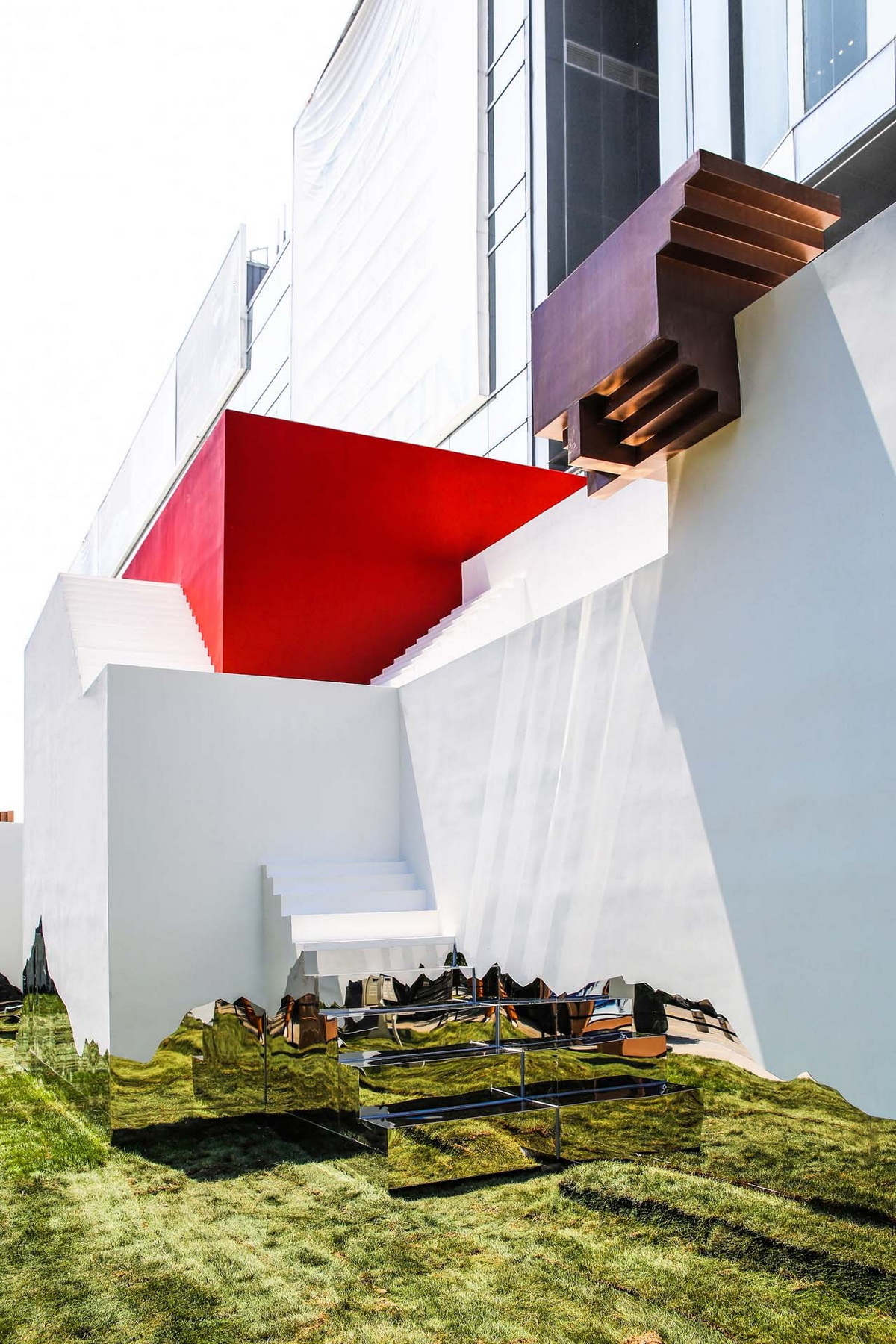
Immersive Experience
As a pop-up themed exhibition space, Mandala Hill integrates a Himalayan-themed digital art exhibition, creating a multi-layered dialogue between concept and form. This approach sets it apart from traditional exhibition buildings by catering exclusively to a fixed theme, offering visitors a truly immersive experience and fostering new relationships between people and space.
On the sides facing the shops and streets, the architect employed distinct strategies: First, they preserved sufficient space to ensure the shops’ operations remained uninterrupted. Second, within confined areas, subtle architectural movements were introduced to enrich spatial expression.
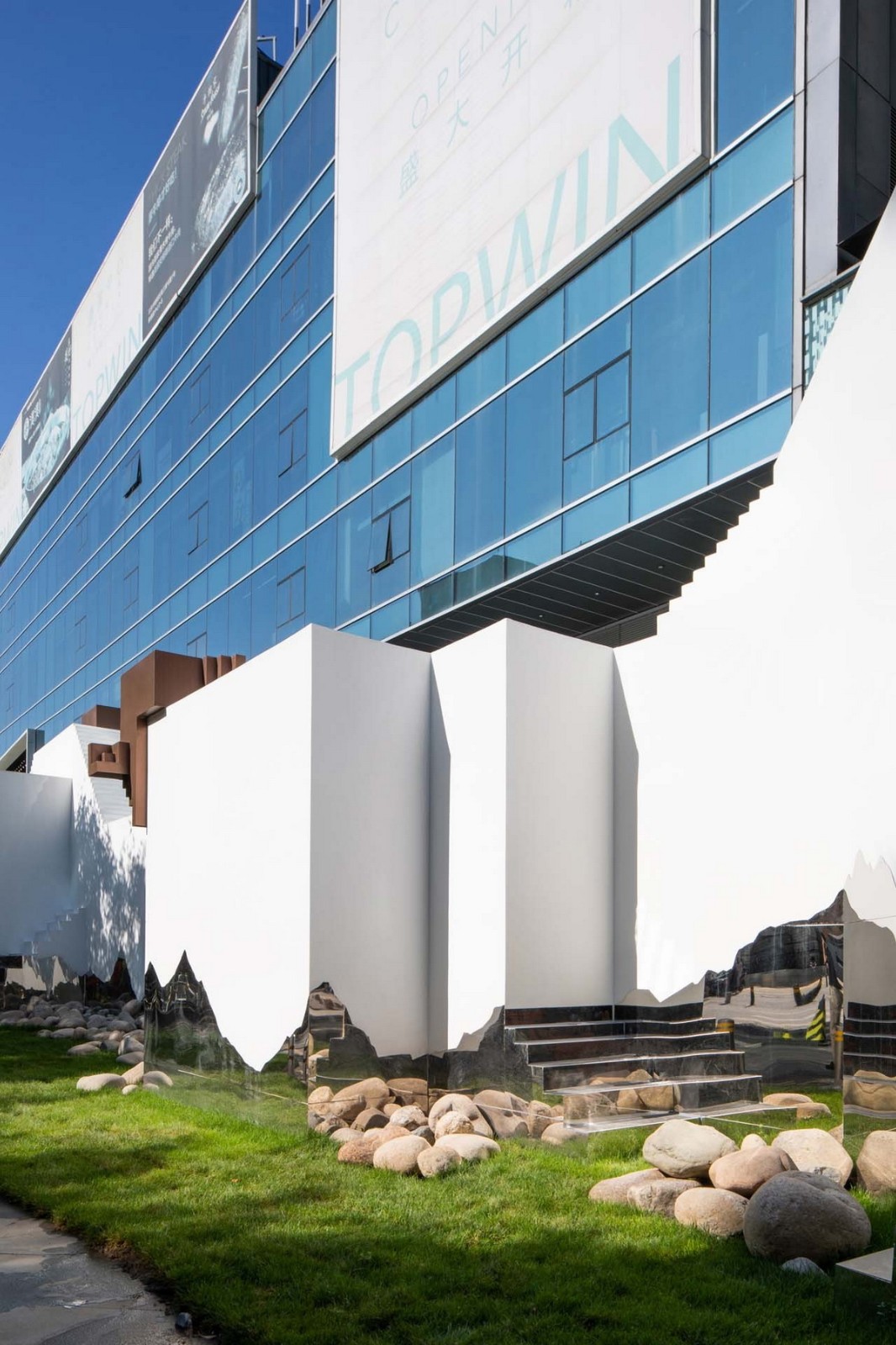
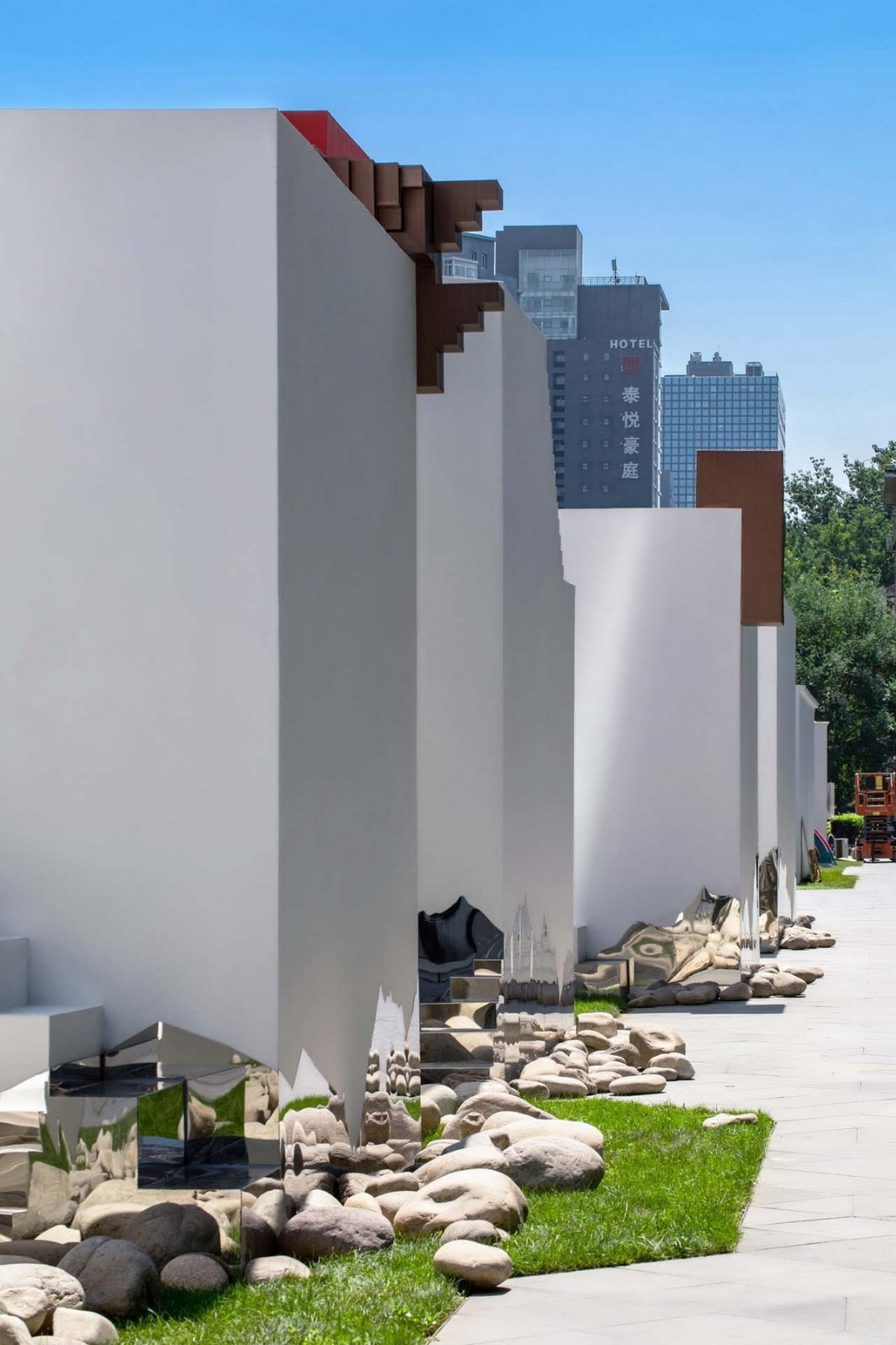
To meet the strict lighting requirements for the internal digital art exhibitions, the architect eliminated external windows entirely. Instead, double nested spaces were designed at the entrances and exits, preventing any glimpse into the interior. Within the completely dark space, ever-changing light and shadow become the sole elements for viewers to engage with.
The windowless façade makes the building’s scale elusive—without familiar reference points, visitors find it difficult to gauge the building’s height and floors. This ambiguity positions Mandala Hill somewhere between sculpture and architecture, inviting further architectural exploration.
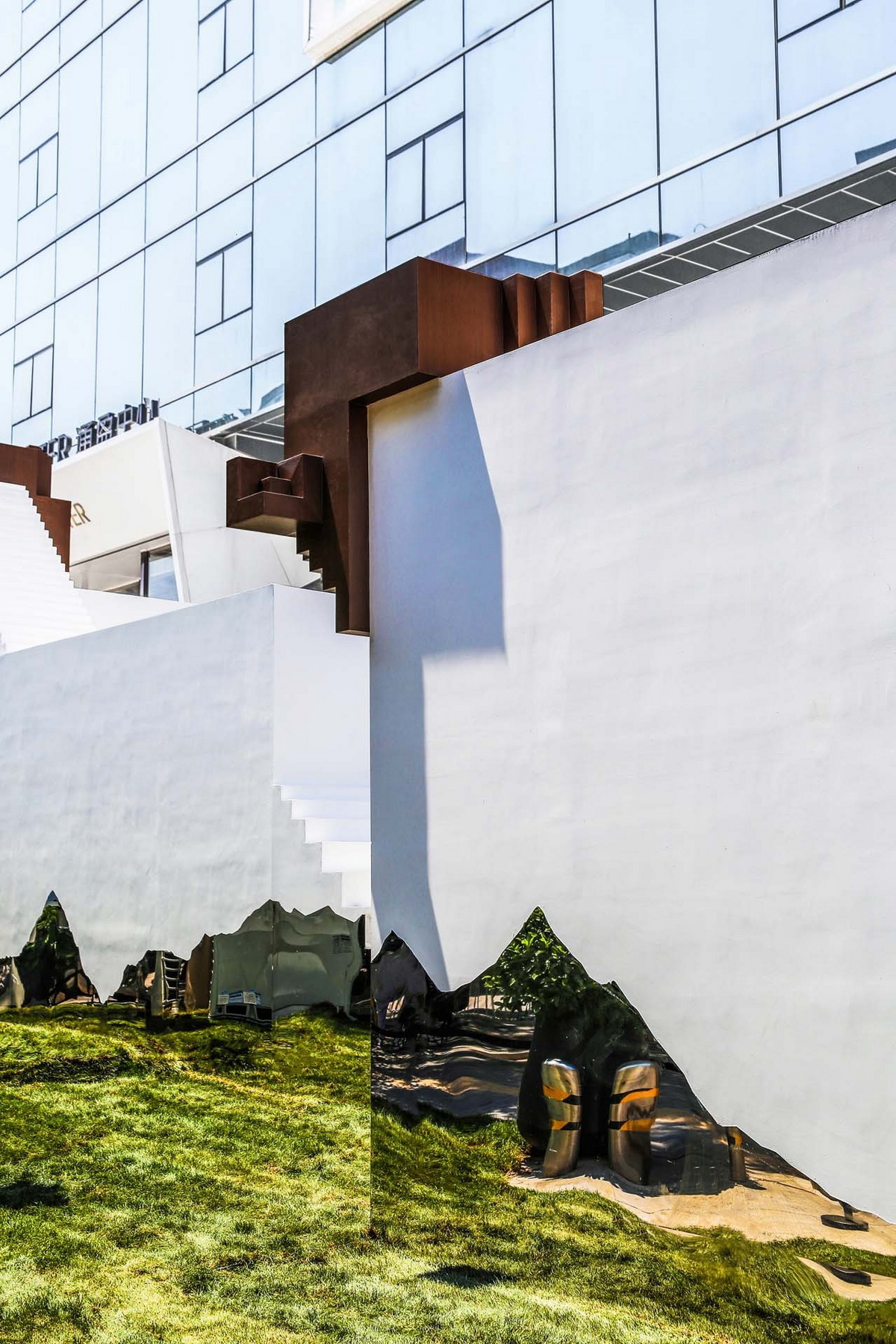
Mandala Building Blocks
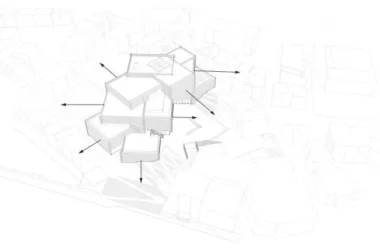
The blocks that constitute Mandala Hill’s volume can be disassembled and reassembled into a “mandala,” reflecting the essence of mandala sand paintings: once completed, the mandala is established in both time and space.

▲ Analysis diagram
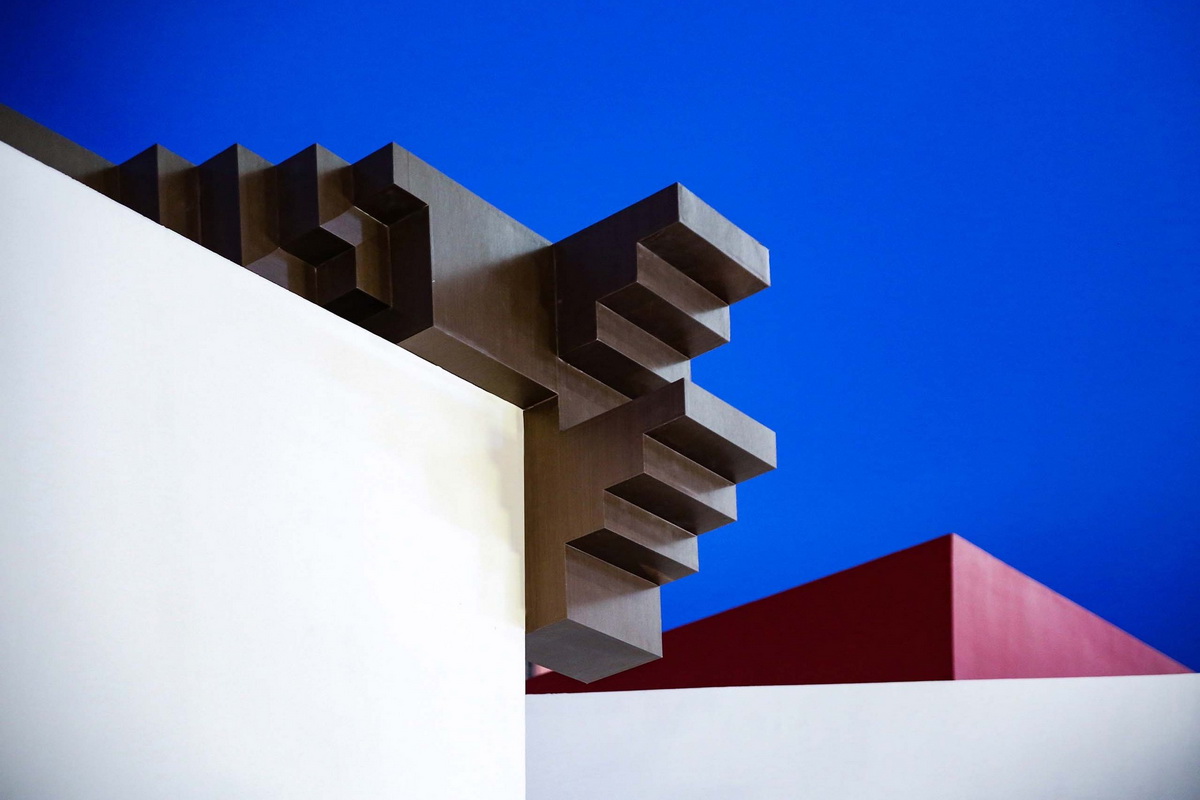
Like a set of modular building blocks, the six golden corner blocks of Mandala Hill interlock in a mortise-and-tenon fashion to form a complete square.

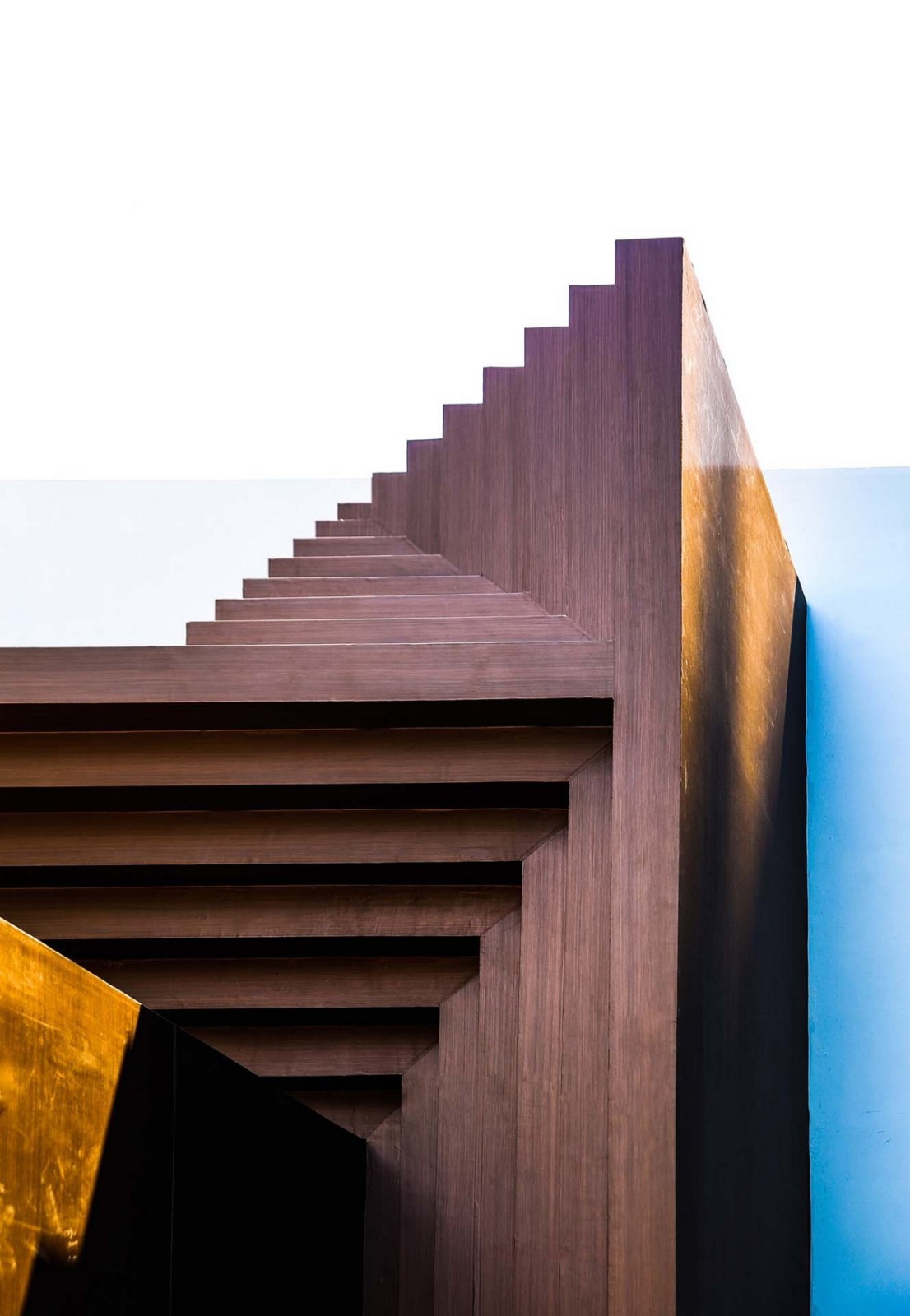
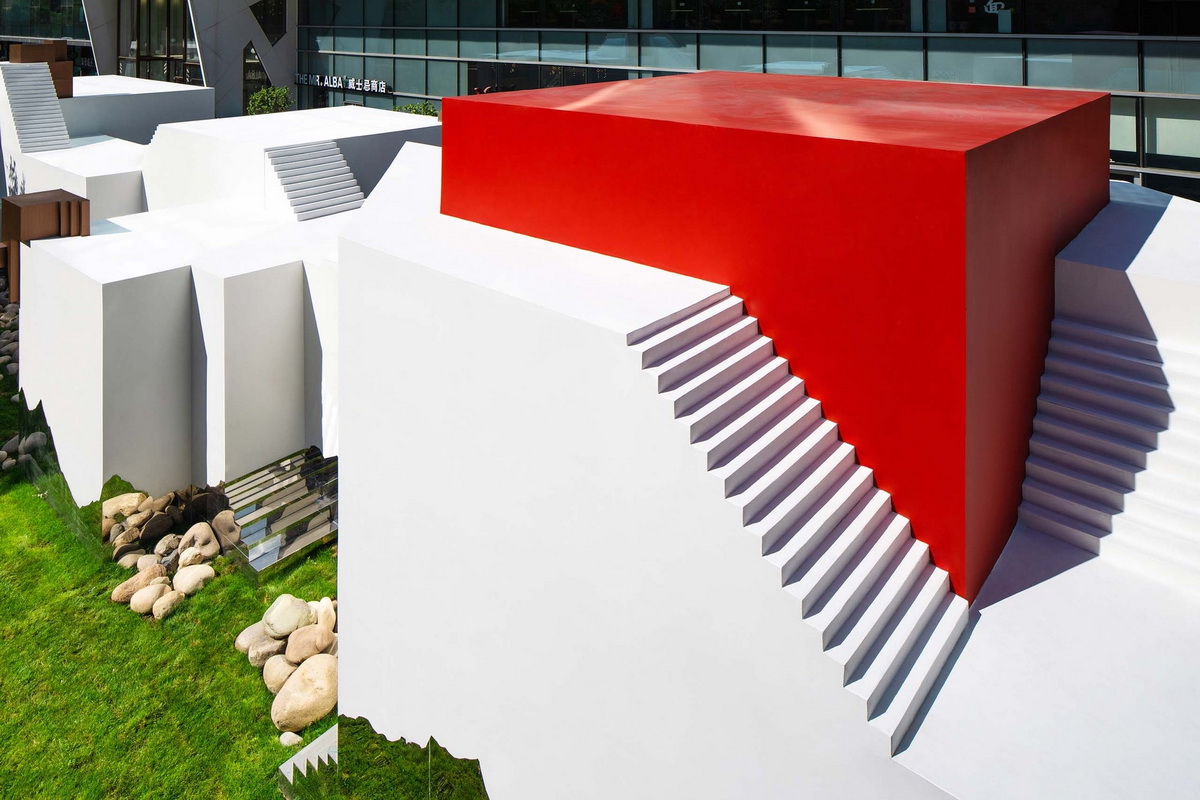
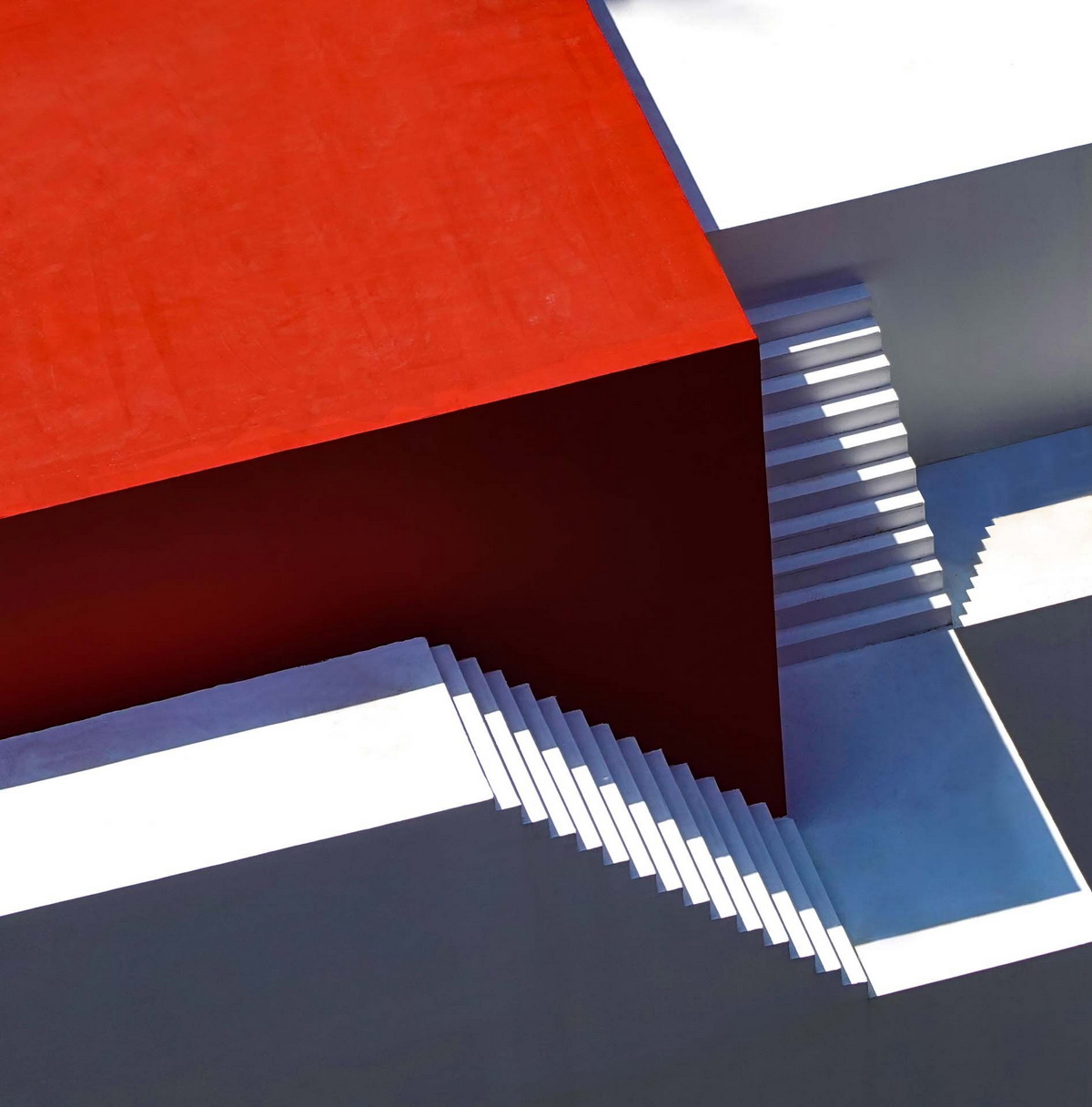
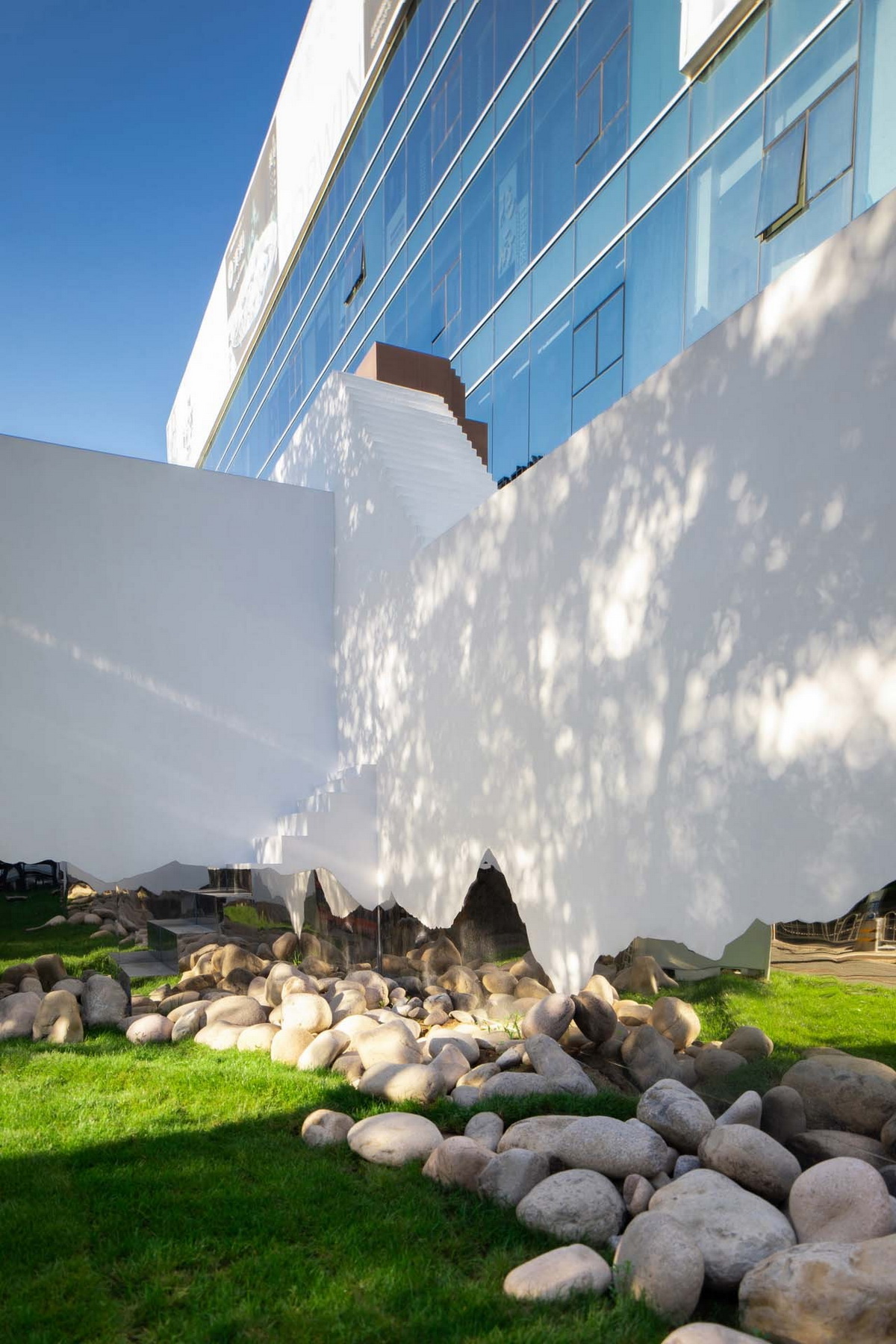
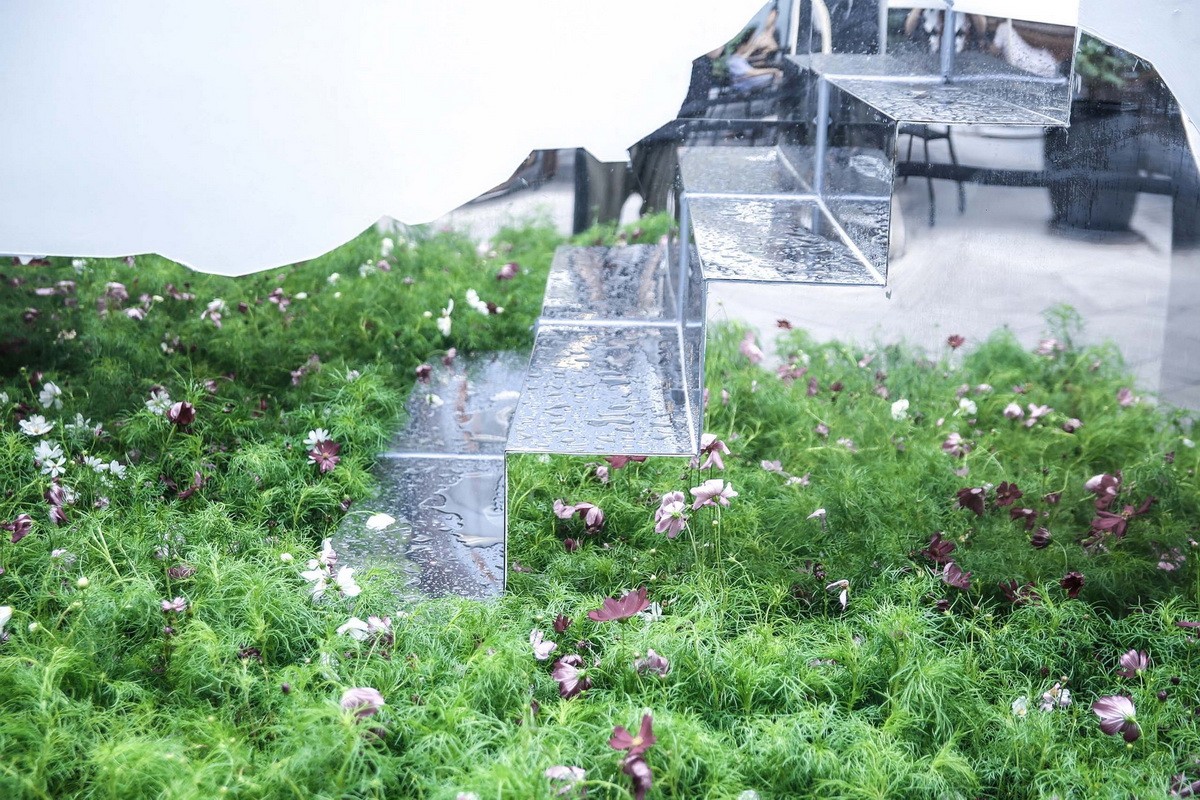
The steps on the building’s exterior have been intentionally varied in height, inviting visitors to lean, sit, or climb on them. This playful design strips the steps of their usual function as scale indicators, introducing humor that contrasts sharply with the otherwise serious urban environment.
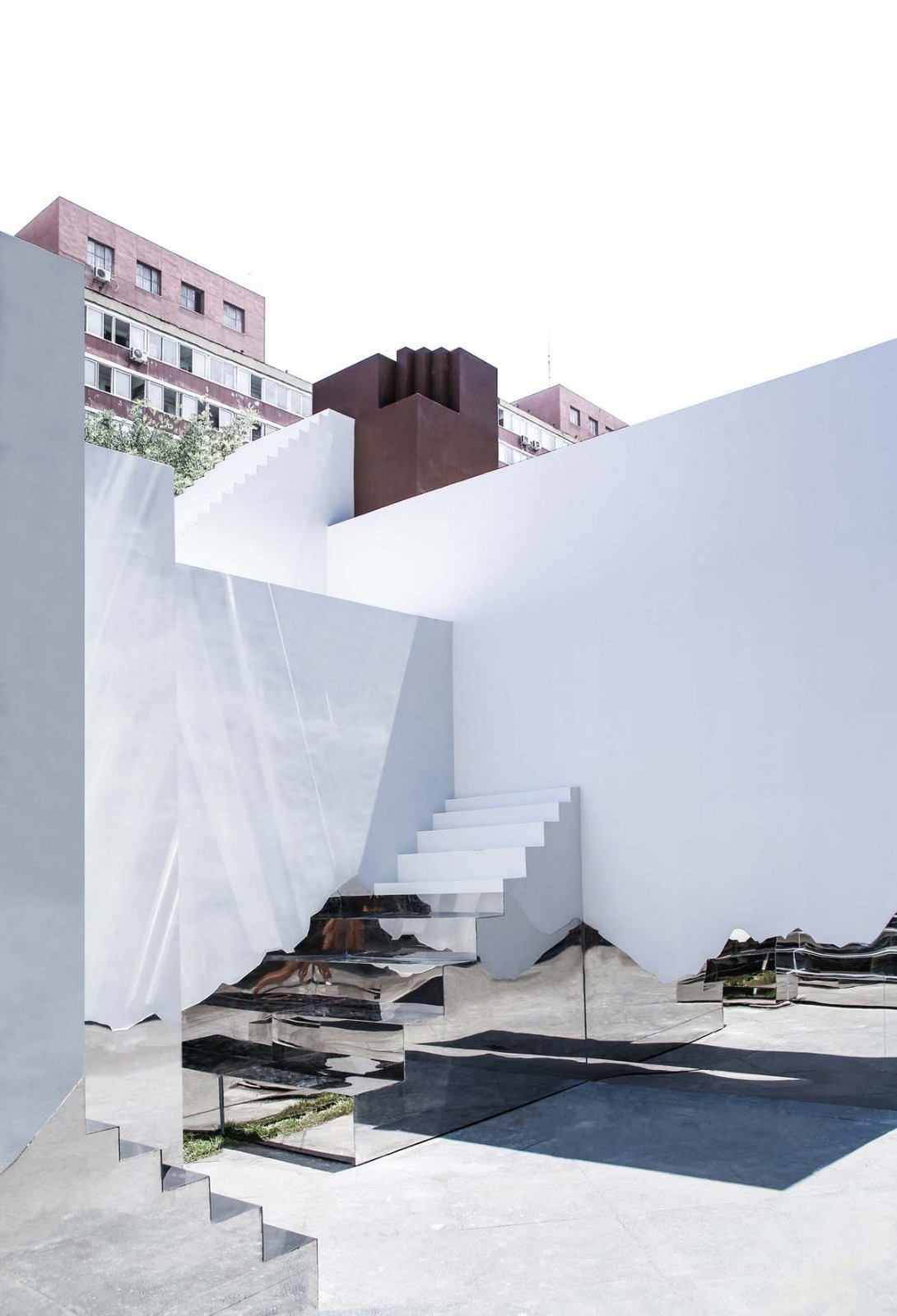
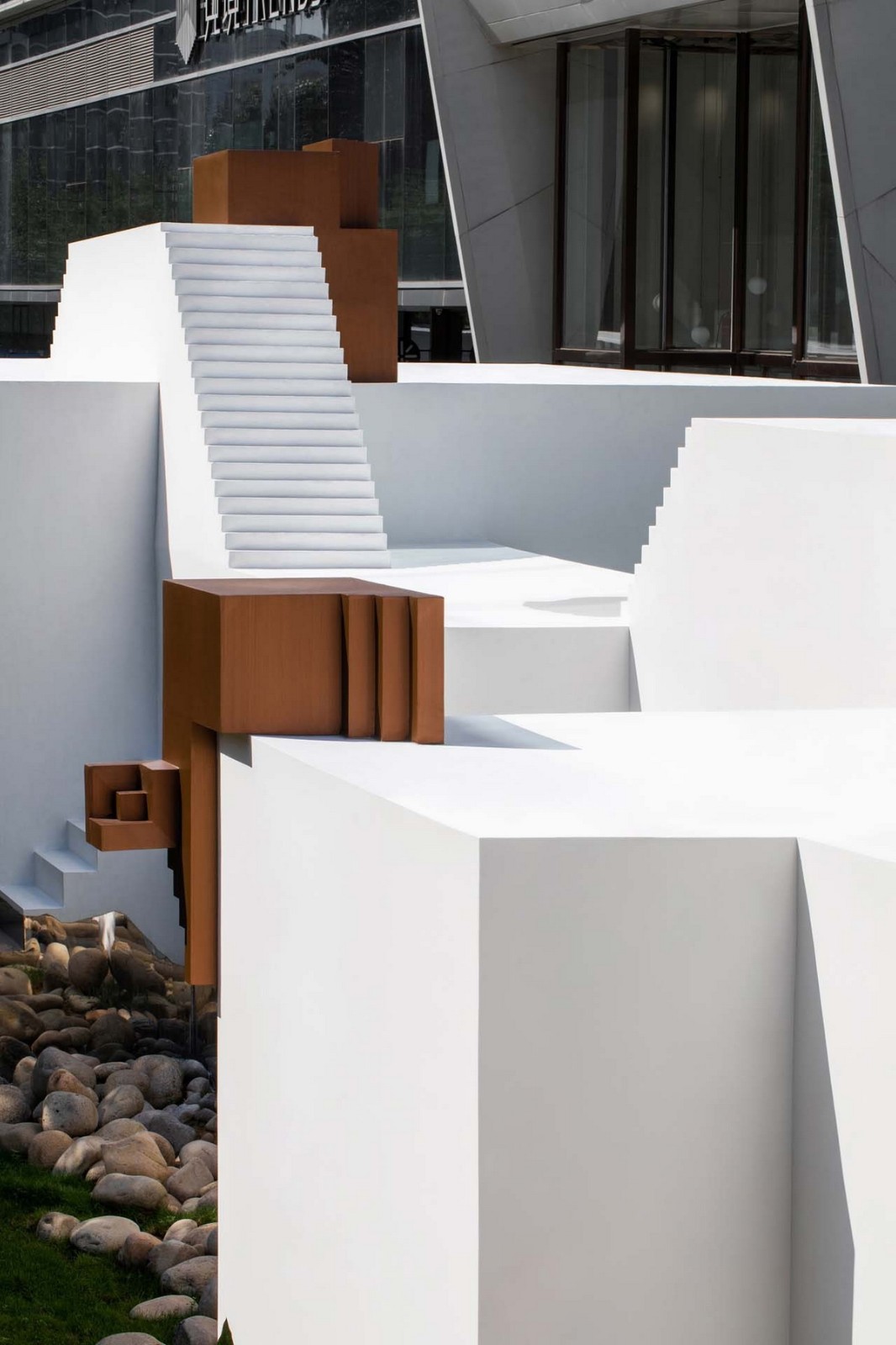

Visual Facade
Instead of emphasizing architectural solidity, the designers infused the surface materials with visual character. The winding lines on Mandala Hill’s façade are inspired by the skyline of Mount Namgyapawa.
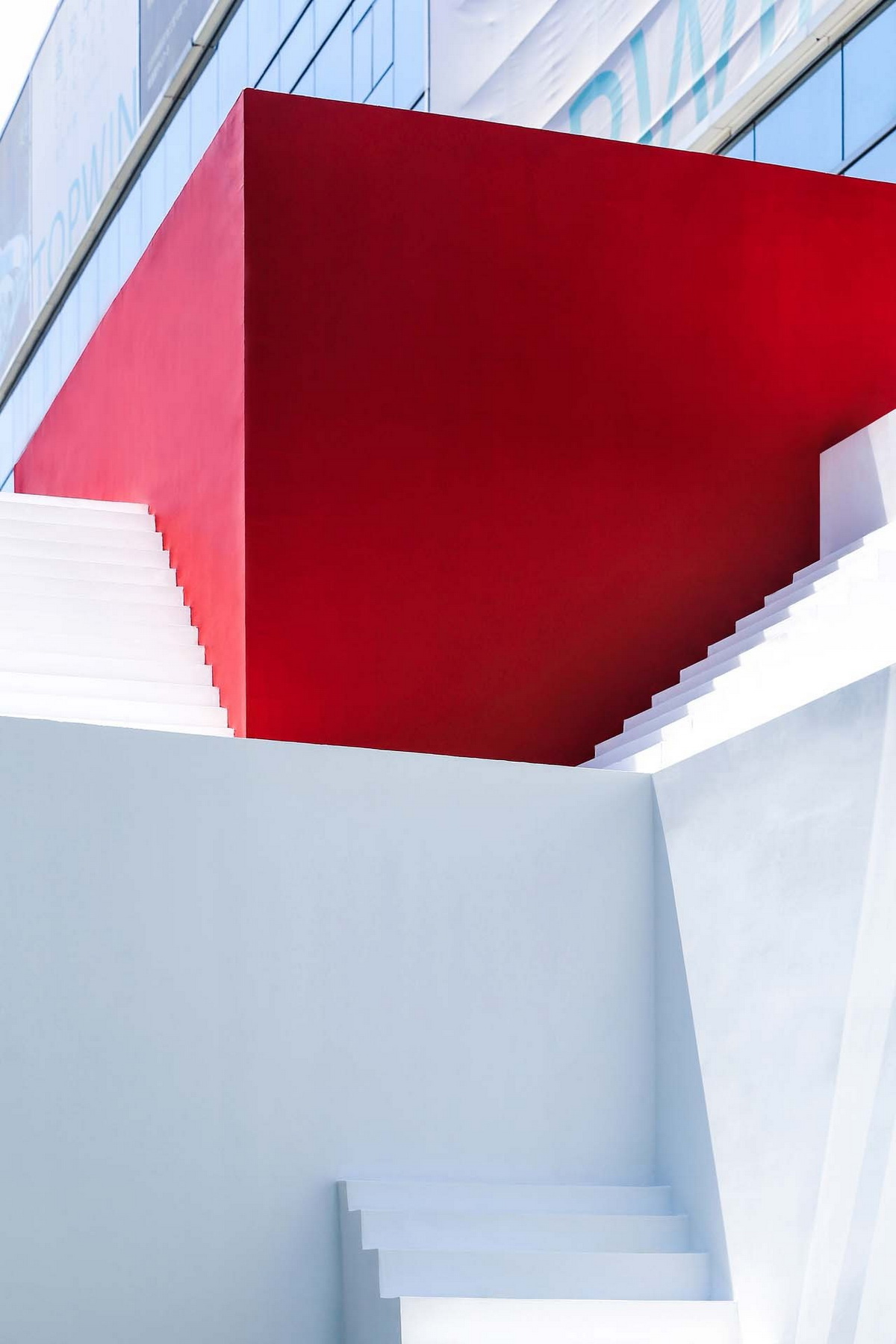

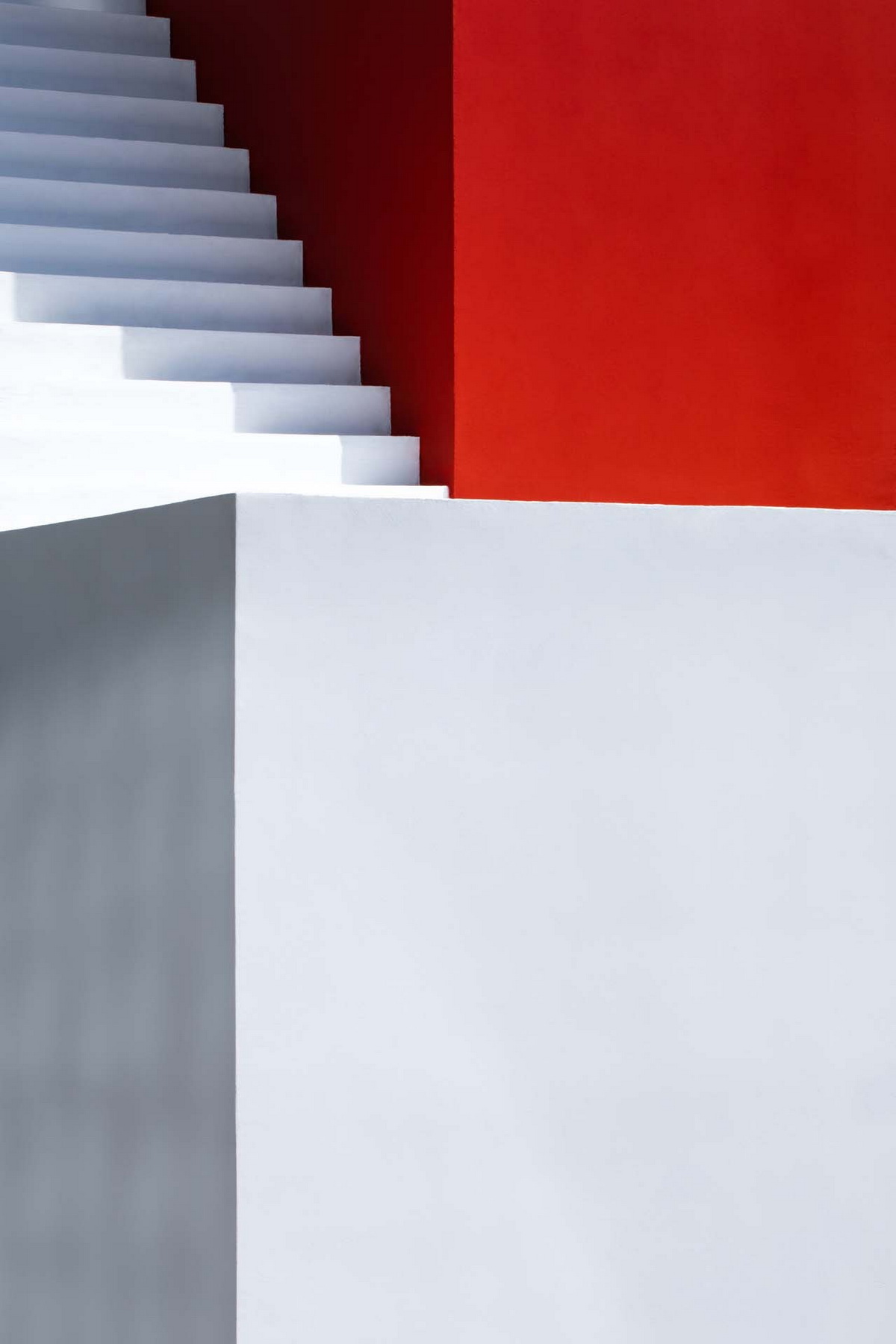
The spear-like peak piercing the blue sky, with snow and lightning burning like fire, perfectly captures Mount Namgyapawa’s essence. Located deep within the mysterious Himalayan region, cloaked by clouds year-round, it remains closely connected to the world we live in, sharing both its fortunes and hardships.
Set against the vibrant urban backdrop of Mount Nangabawah, the mountain reflects the bustling human scene and casts a silver, mysterious glow on Mandala Hill, becoming the most poetic accent in its simplicity.
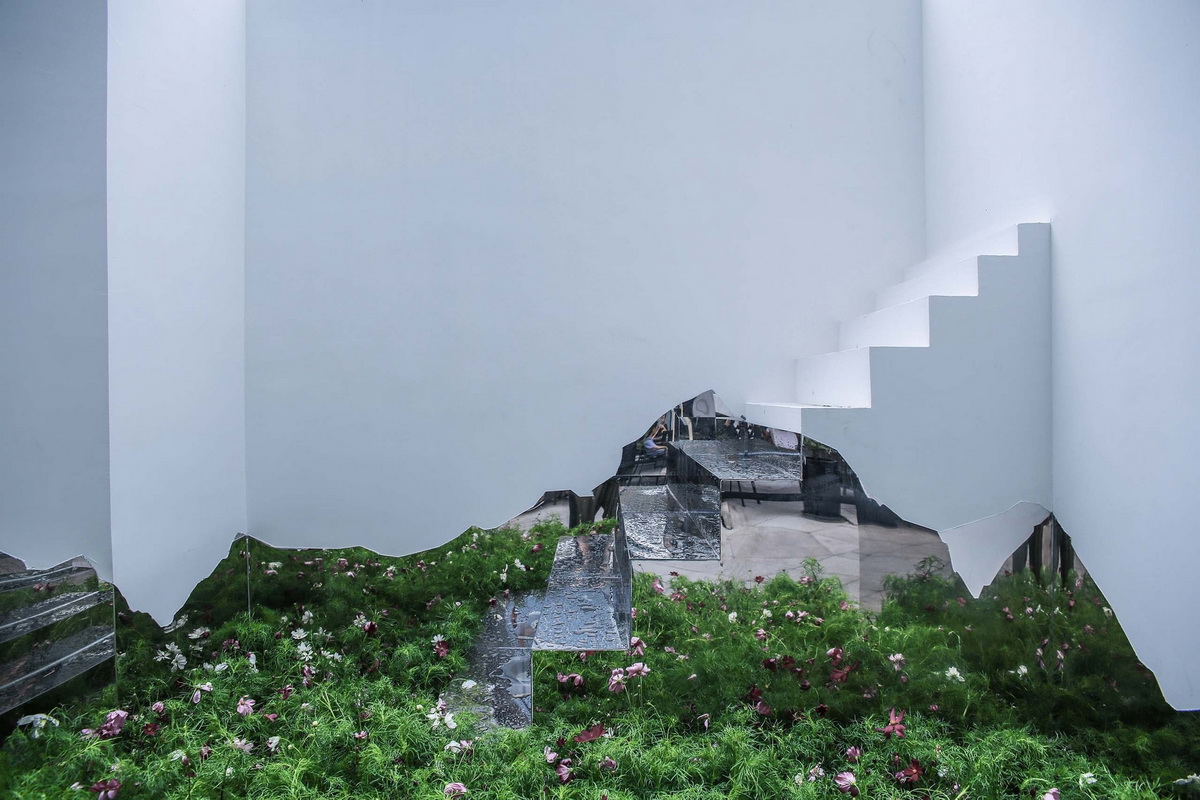
Feilaishi and Gesanghua
The exposed rugged rocks and Gesang flowers from the plateau, mirrored in the reflective metal surfaces, extend deep into the building, supporting the floating Mandala Hill within the city. The scattered stones return to their rightful place. These natural elements are not merely symbolic motifs chosen by the architects, but a bridge linking urban reality with the surreal, secret Himalayan realm—allowing Mandala Hill to transport visitors between the real world and an enchanting realm of unconsciousness and illusion.

Project Drawings
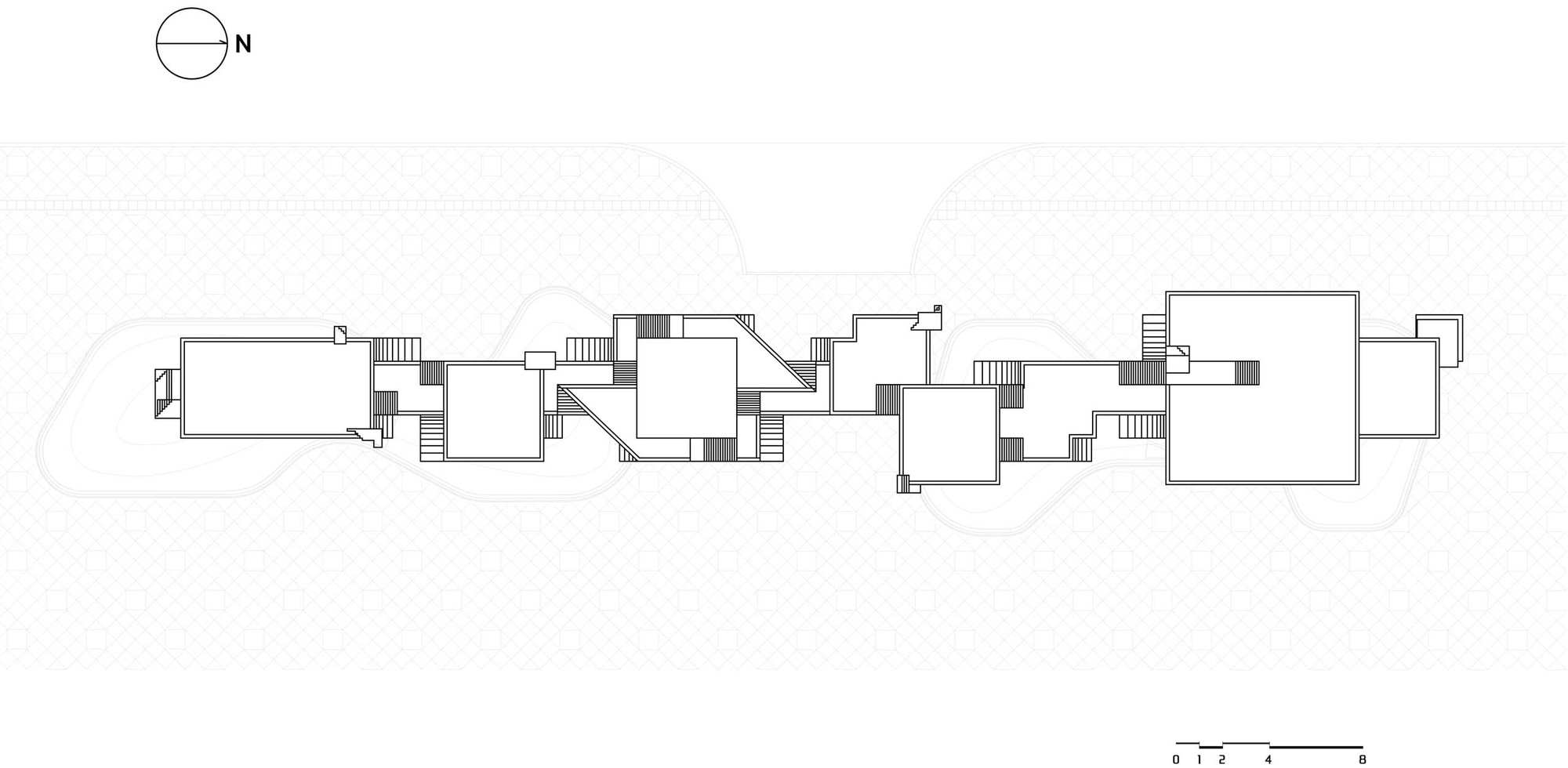
▲ General layout plan
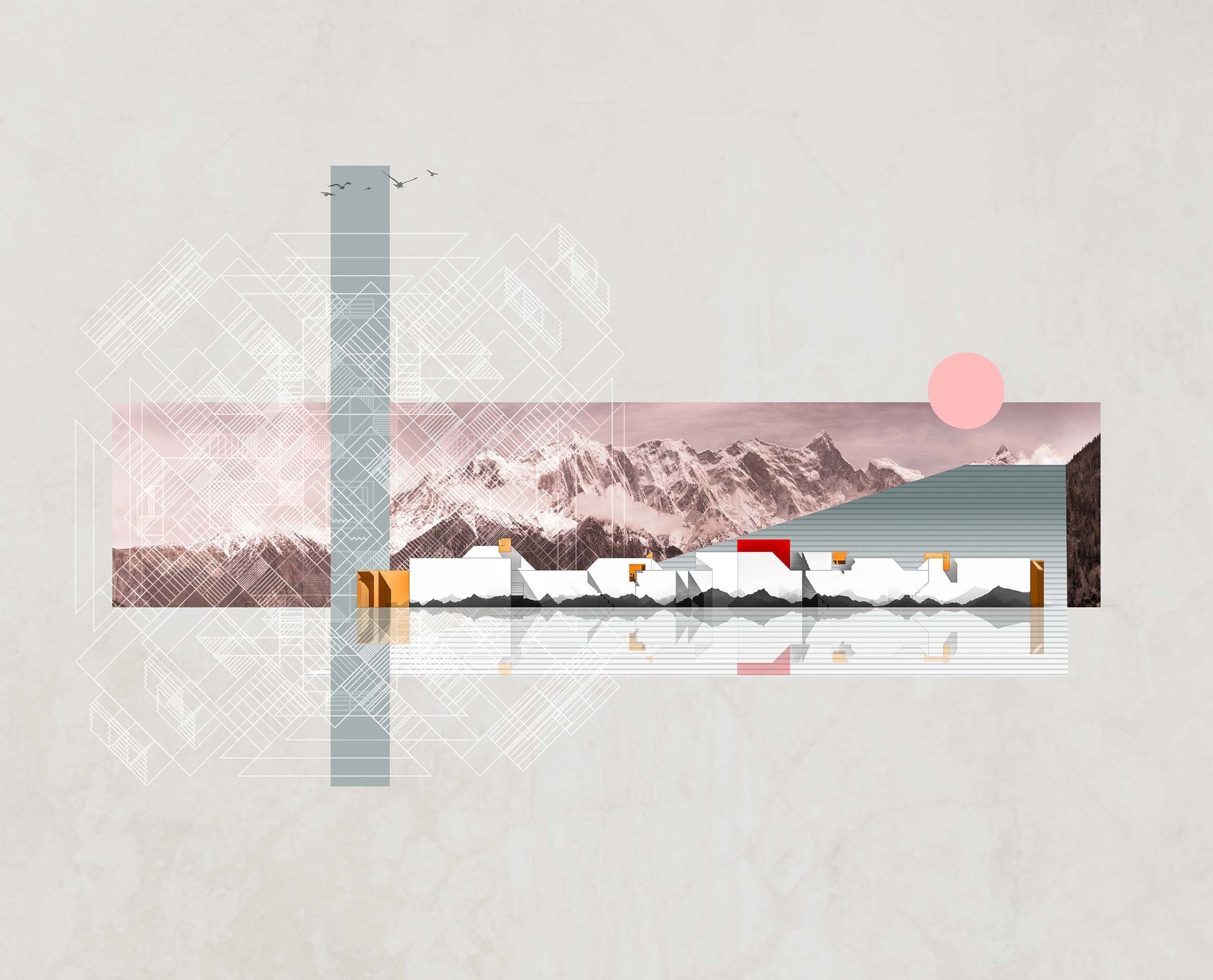
▲ Analysis Diagram 1

▲ Analysis Diagram 2
Project Information
Project Type: Museum, Exhibition Hall
Location: Beijing, China
Architectural Design: A Building Studio
Area: 240 m²
Year: 2019
Photographers: Nan Xueqian, Wang Shilu
Suppliers: Toli, Nippon Paint, Signify
Lead Architect: Li Hao
Partner: SAMAS












Must log in before commenting!
Sign Up