
The Zhejiang Natural History Museum, located in Hangzhou, China, was established in 1929. It houses a vast collection of over 200,000 specimens that span the fields of geology, biology, and paleontology. Zhejiang Province, situated in eastern China, is notable for its significant Cretaceous period discoveries.
The institute’s second, newly constructed museum is situated in Anji County, northern Zhejiang Province, and serves as the centerpiece of a newly developed cultural district.
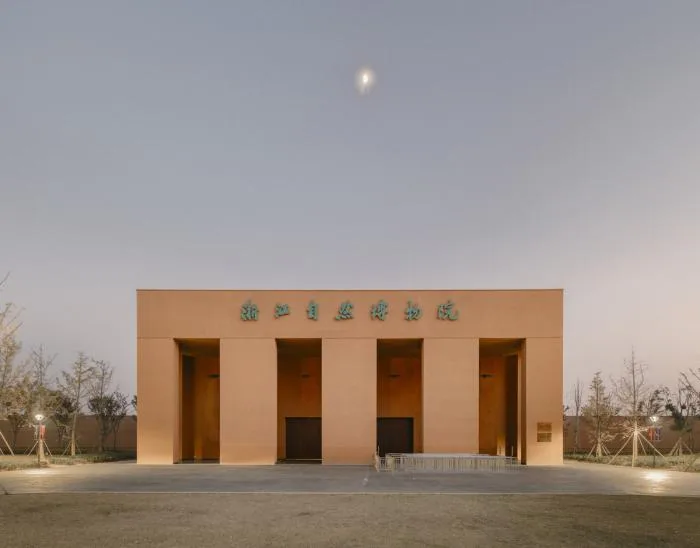
Built on a hillside and surrounded by bamboo forests within a vast natural park, the new building overlooks the fields in the valley below. Its design features a series of spacious exhibition halls configured in a loose arrangement, accommodating large-scale exhibits such as dinosaur fossils, life-sized models, expansive wildlife scenes, as well as multimedia and interactive displays.
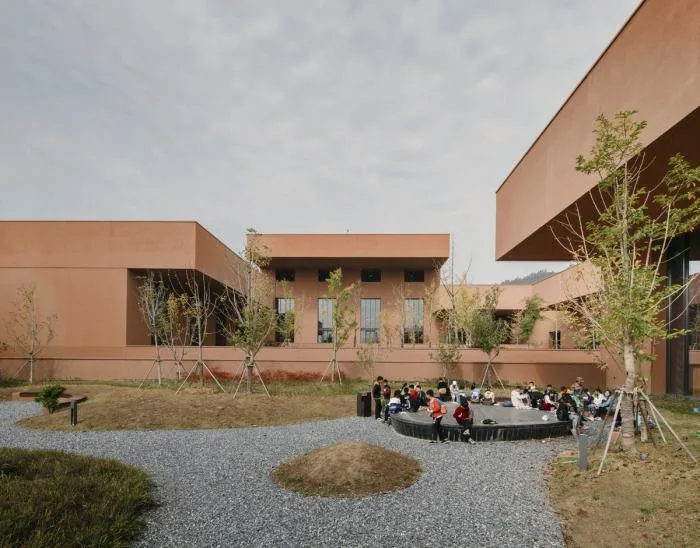
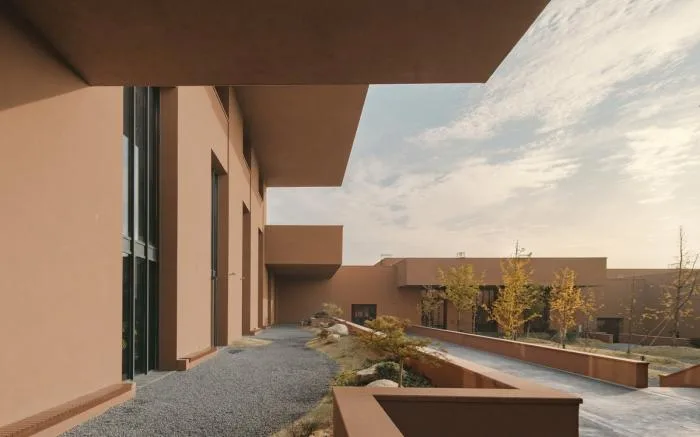
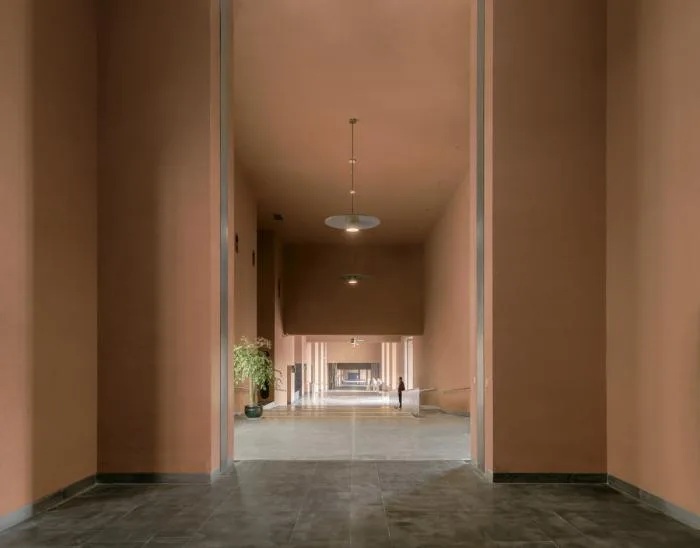
The complex consists of eight single-story exhibition halls arranged progressively along the slope. This layout respects the natural terrain, minimizes visual impact on the landscape, and encloses an open central courtyard. A surrounding loggia functions as a sheltered corridor that seamlessly connects the outdoor environment with the museum’s interior spaces.
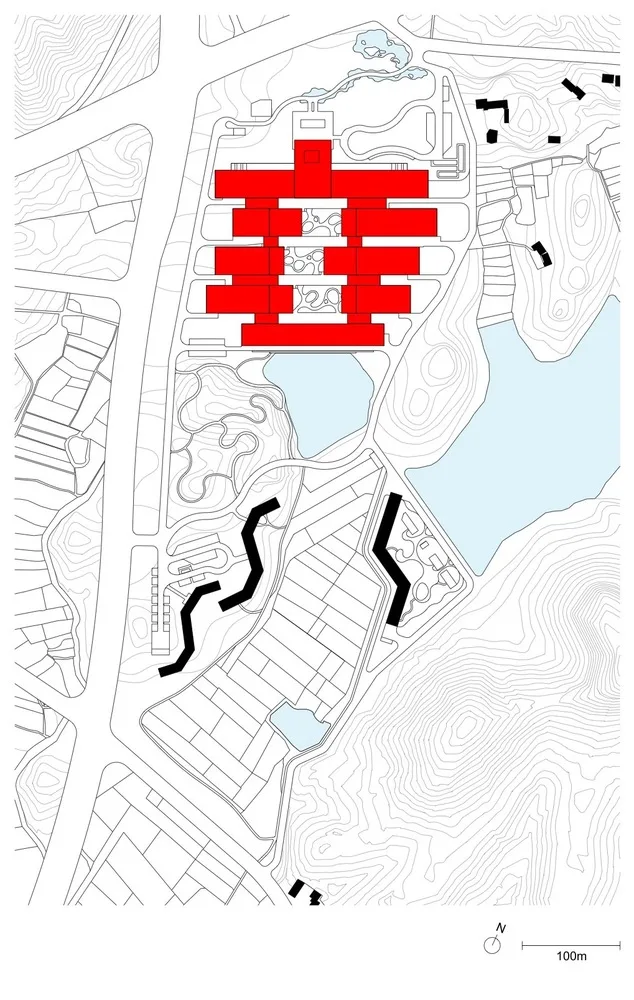
▲ General layout plan
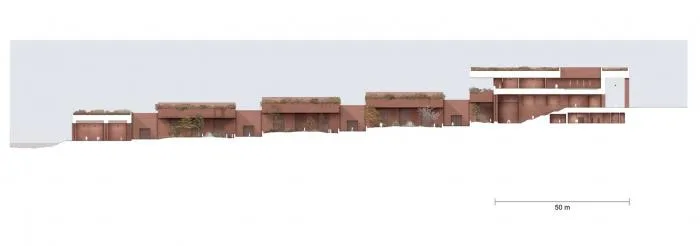
▲ Sectional drawing AA
The northernmost part of the building houses the entrance hall, welcoming visitors with views of the central courtyard and distant landscape. Each exhibition hall is accessible independently from either side of the courtyard or can be visited continuously through cascading corridors. The southernmost hall faces a lake located at the site’s lowest elevation.
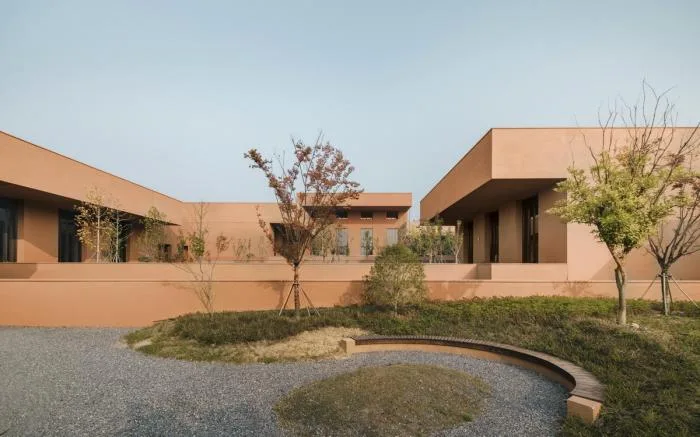
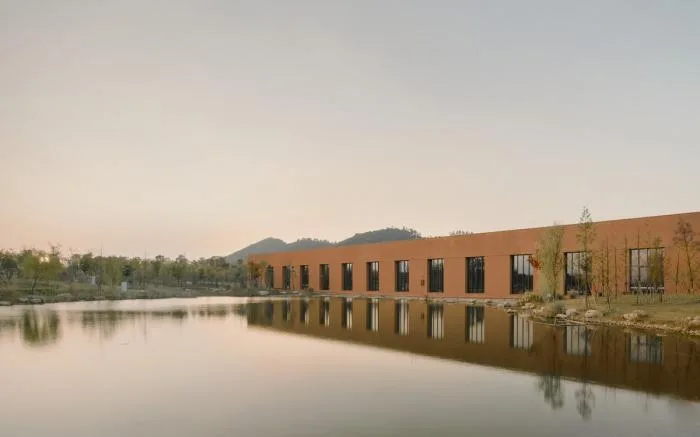
The exhibition halls’ solid architectural forms nestle within the dense greenery of the central courtyard and surrounding parks, with vegetation extending onto the green roofs. The reddish-brown exterior paint echoes the color of the hillside’s clay, reinforcing the connection between the building and its natural surroundings.
Project Drawings
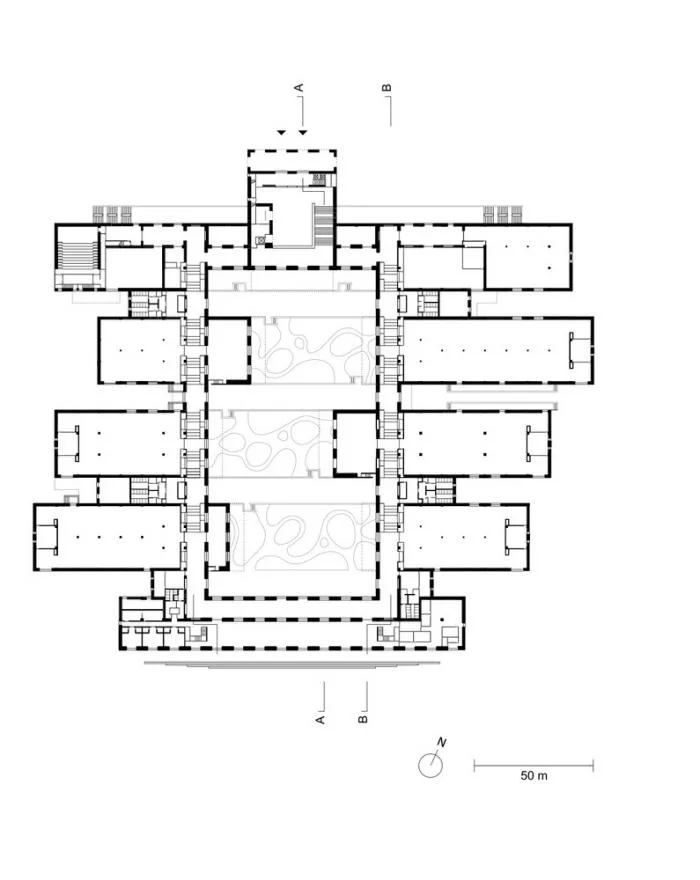
▲ Plan view
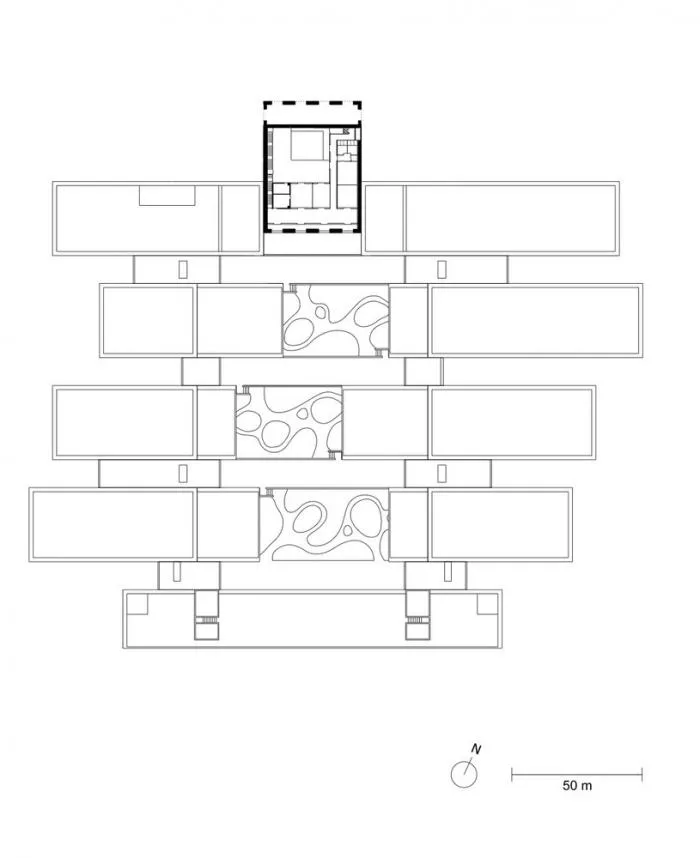
▲ Plan view
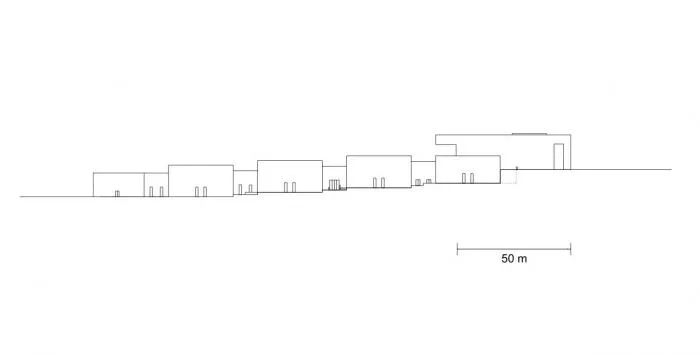
▲ East elevation view
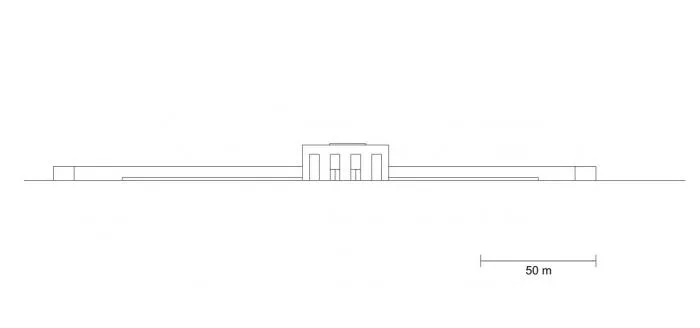
▲ North elevation view
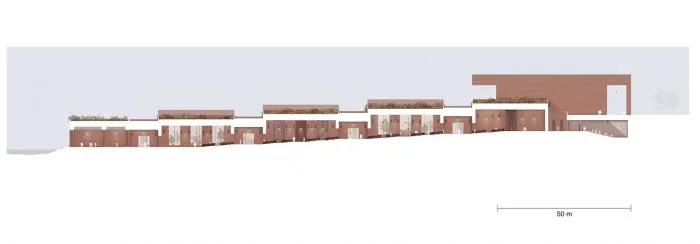
▲ Sectional drawing BB
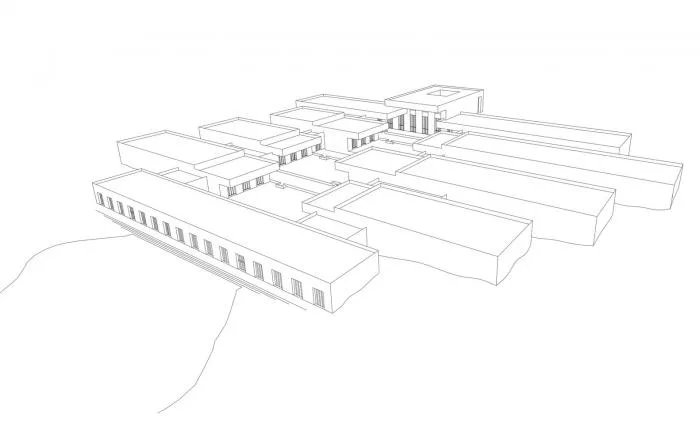
▲ Perspective view
Project Information
Project Type: Museum
Location: Huzhou, China
Architectural Design: David Chipperfield Architects
Area: 58,000 m²
Year: 2018
Project Team: Hans Christian Buhl, Du Zhexu, Fan Tianyuan, Hou Jinghui, Andrew Irvin, Li Han, Liu Huiqun, Pan Jidi, Sun Fengjuan, Nora Wuttke, Xu Liping, Zhou Zhixun; Rendering by Andrew Irvin
Principal: Zhejiang Natural History Museum, Anji County People’s Government
Project Partners: David Chipfield, Mark Randel (Design Lead), Chen Libin
Project Architects: Alessandro Milani (competition), Miguel Angel (conceptual and preliminary design), Shen Huiwen (conceptual and preliminary design), Li Chuxiao (on-site art supervisor)
Competition Team: Du Zhexu, Sun Fengjuan, Nora Wuttke, Xu Liping; Rendering by Alessandro Milani, Du Zhexu
Local Architect: Zhejiang Southern Architectural Design Co., Ltd., Hangzhou (from construction drawing design to supervision)
Structural Engineer: Arup International Consulting Shanghai Co., Ltd. (conceptual design), Zhejiang Southern Architectural Design Co., Ltd. (conceptual design to supervision)
Mechanical and Electrical Engineer: Arup International Consulting Shanghai Co., Ltd. (conceptual design), Zhejiang Southern Architectural Design Co., Ltd. (conceptual design to supervision)
Architectural Physical Engineer: Zhejiang Southern Architectural Design Co., Ltd., Hangzhou
Lighting Consultant: Hangzhou Shengle Lighting Design Co., Ltd.
Exhibition Concept Planning: Shanghai Deli Creative Co., Ltd.
Landscape Design: Levin Monsigny Landschaftsarchitekten, Berlin (conceptual design); Zhejiang Southern Architectural Design Co., Ltd. (conceptual design to supervision)












Must log in before commenting!
Sign Up