
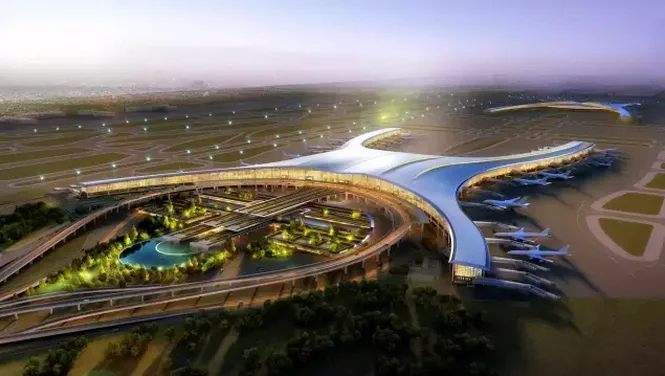
Terminal 3A of Jiangbei Airport
1. Project Overview
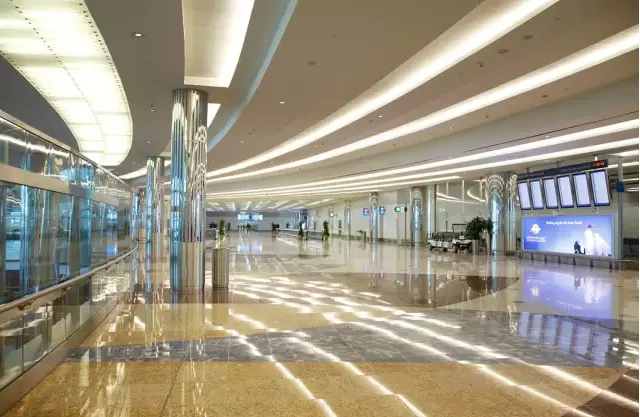
Located in the Jiangbei District northeast of Chongqing’s main urban area, the T3A terminal at Chongqing Jiangbei International Airport spans 168,000 square meters with a total building area of 530,000 square meters. The roof features a steel structure, while the main framework is reinforced concrete. The project comprises five parts: the main building in Zone E and four finger galleries labeled A, B, C, and D. The terminal includes four floors above ground and two underground levels. Key facilities consist of 48 automatic walkways, 77 passenger boarding bridges, 66 nearby stands, and 14 remote stands.
2. Project Application Highlights
1. Slip Simulation of Large-Span Steel Structures
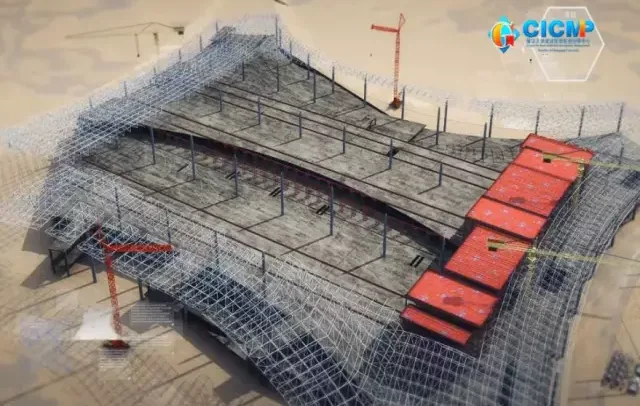
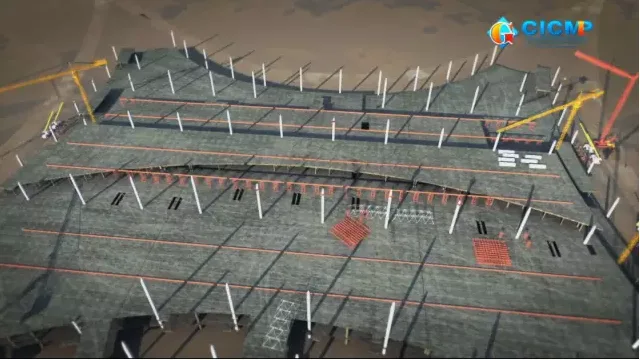
A central focus of this project is the application of BIM-4D simulation technology to the sliding construction of large-span steel structures. Due to the complexity of this construction method, delays and cost overruns are common. BIM-4D simulation optimizes this process by identifying and resolving conflicts between civil construction phases and steel structure sliding. Key adjustments included:
- Changing the sliding unit from double-sided sliding to east-to-west sliding;
- Increasing the number of sliding tracks from 6 to 9;
- Reducing the number of TC7052 tower cranes from 4 to 2 and repositioning them.
By integrating BIM-4D technology with sliding construction techniques, the project optimized its approach, resolving conflicts, saving 10 days in construction time, and reducing costs by 5.2 million yuan.
2. Optimization of Luggage System Construction Plan
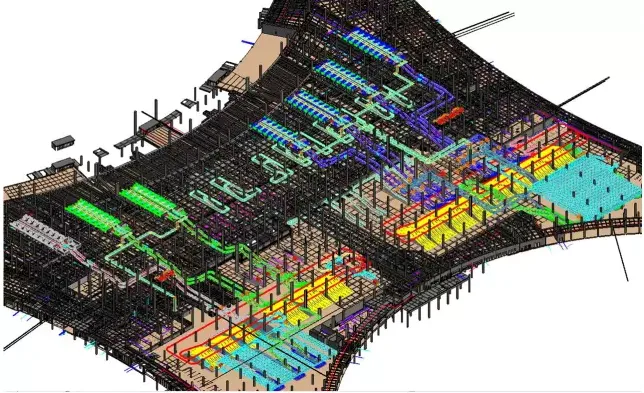
The airport’s luggage system is a unique aspect of this project, and its optimization through BIM technology represents an innovative approach. Before construction, professional drawings of the luggage conveyor system were reviewed to clarify equipment material supply points, system and design interfaces, and construction interfaces. Through BIM-based visualization and walkthroughs, collisions between cable trays, air ducts, and the luggage system were identified and resolved. This approach enhanced system design refinement, equipment procurement, on-site installation, system debugging, and defect correction.
3. Refinement and Simulation of Decoration Plans
BIM was also instrumental in optimizing the refined decoration plans. Specialized analysis reports were generated covering lighting, large space effects, and acoustics based on the building’s characteristics, all applied directly to construction. The design of advertising placements, commercial spaces, and program effectiveness was optimized. Additionally, comprehensive designs for lighting, signage, lightboxes, billboards, and speaker locations were developed.
Further refinement included detailed designs of pipelines and endpoint devices for water supply, drainage, rainwater, heating, cooling, ventilation, fire protection, gas, and electrical systems within the design area. The BIM system guided each construction phase, adapting as needed to reflect the fine decoration construction drawings.
3. BIM Application Points
1. Analysis and Simulation of Key Lifting Schemes for Siphon Rainwater Pipes and Large Steel Columns
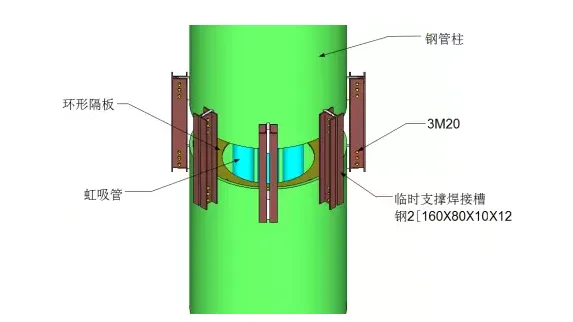
The segmented installation of siphon rainwater pipes inside steel pipe columns presented a major challenge addressed by BIM in this project. This included detailed design of pipelines, threading, bracket fixation, lifting, docking connections, and quality acceptance. The solution simplified secondary installation, reduced construction difficulty, improved control and accuracy, and ensured reliable structural performance. This method also saves labor hours, reduces energy consumption and costs, and delivers high quality with significant economic and social benefits.
Using Revit, the model simulated the connection and construction processes of steel pipe columns and siphon pipes to verify spatial feasibility. The BIM model also resolved issues related to segmented lifting of steel pipe columns, ensuring vertical installation precision and laying the foundation for comprehensive process quality control.
2. Optimal Site Planning Selection
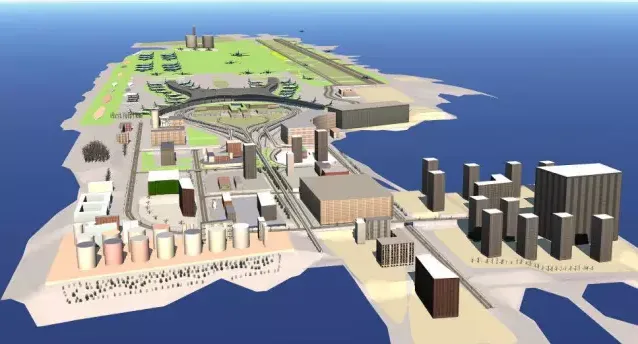
Optimal site planning is a core BIM application at Jiangbei International Airport. With civil aviation growth, airport planning requires technically feasible and economically sound solutions that consider technology, economy, politics, society, finance, and environmental factors.
BIM’s 3D modeling supports civil engineers and architects in planning both natural and built environments. The dynamic 3D engineering model facilitates rapid completion of roadworks, site development, rainwater and sewage systems, and more. Additionally, it enhances collaboration and communication among all stakeholders, anytime and anywhere.
3. BIM-Based Operation and Maintenance Management
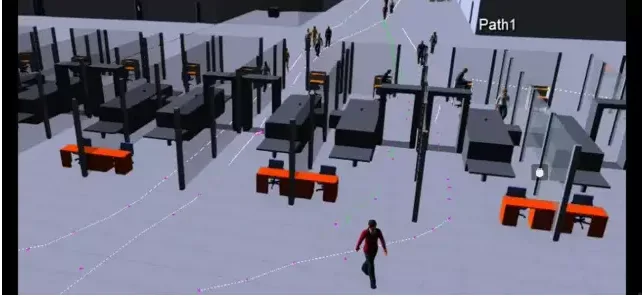
Operation and maintenance planning for Jiangbei International Airport is another key BIM focus. The plan covers both the design and construction phases, as well as post-operation maintenance. Given the high passenger volume and long service life expected for Terminal 3, there are stringent requirements for equipment and facility upkeep, building safety, and environmental management.
BIM supports crisis evacuation simulations and the development of crisis management and emergency response plans, aiding post-construction airport operations.
The main advantages of BIM for facility maintenance include:
- Spatial Information: BIM’s visualization capabilities allow quick location of equipment and pipelines and understanding of spatial relationships.
- Rapid Information Updates: As a component-based 3D model, BIM enables fast addition or removal of equipment without data inconsistencies.
4. Optimization of Large-Scale Mechanical and Electrical Construction Plans
This BIM study also focused on optimizing the construction phase for large-scale mechanical and electrical systems. Key aspects included the lifting arrangements for heavy machinery, coordination of pipeline layouts with clearance requirements, and the layout and maintenance of equipment within the model machine rooms.
By leveraging BIM’s visualization, the project improved construction sequencing and quality before work began using 3D models. Benefits included:
- Enhanced understanding and resolution of the lifting sequence for transport machinery;
- Clearer visualization of dense pipeline areas, reducing rework;
- Better insight into reserved openings, equipment foundations, and support placements;
- Faster verification of equipment sizes and spatial requirements.












Must log in before commenting!
Sign Up