
The rural practice of “localism” explores the modernization of traditional residential buildings, highlighting their unique development while aiming to integrate architecture harmoniously with the surrounding environment. This approach draws inspiration from local, practical methods.
Rural development has become increasingly diverse. In 2017, the 19th National Congress of the Communist Party of China introduced a rural revitalization strategy, leading to large-scale rural construction and modernization. Artists and designers have engaged in in-depth fieldwork in rural areas, using art and culture to drive regional development.
In recent years, Xiaolongmen Village, which was gradually becoming a “hollow village,” has initiated planning and development efforts. The challenge lies in integrating old house renovations with the village’s local style while preserving the fading rural culture—both serving as opportunities and starting points for this project.
Project Location – Beijing West Highland
This project is situated in Xiaolongmen Village, Qingshui Town, Mentougou District, western Beijing. As the westernmost village in Beijing, Xiaolongmen was first documented in the “Qijiasi Zhilue.” The village lies at an average elevation of 1300 meters, adjacent to National Highway 109, with the settlement and mountains stretching along both sides of the road. The dense forest and high vegetation reflect the seasonal changes unique to Xiaolongmen.
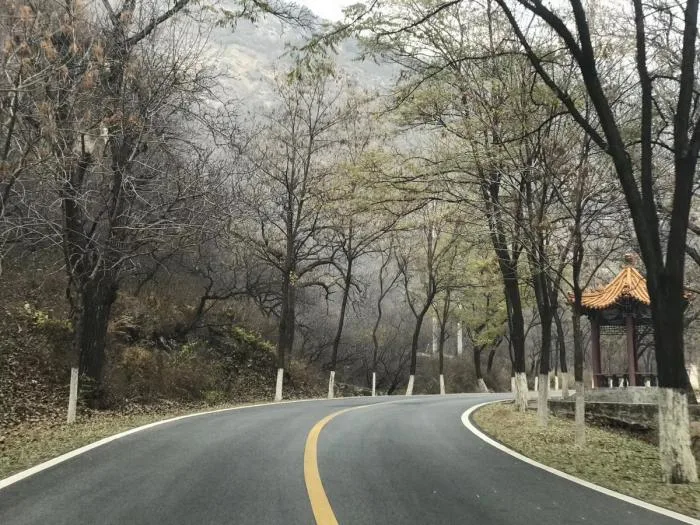
▲ Mountain road of Xiaolongmen
The courtyard houses typical to western Beijing are mostly built along mountainous terrains. Two courtyard types have evolved due to the terrain’s influence. One example is the renovated Fuziyuan, which uses the staggered mountain base to create a two-level courtyard arrangement.
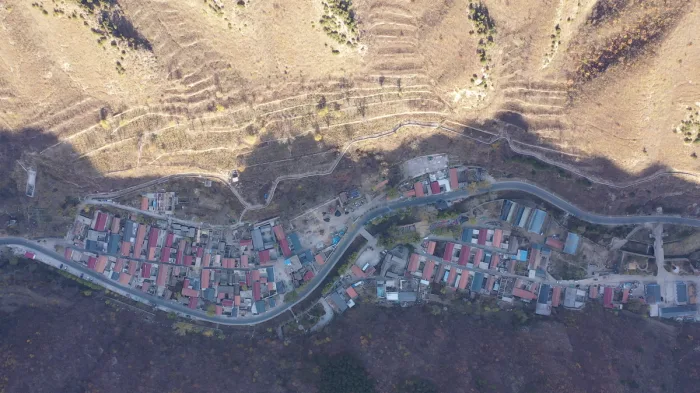
▲ Aerial view of Xiaolongmen Village
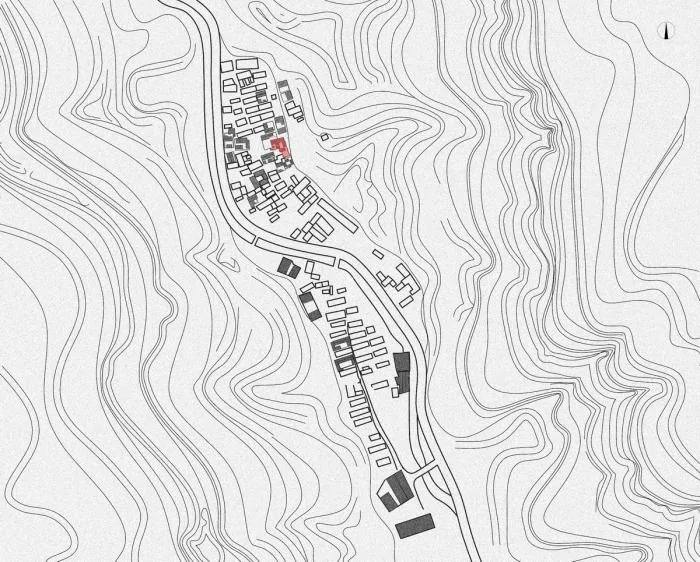
▲ Topographic plan of Xiaolongmen Village
Original State Before Renovation
The original Fuziyuan residential area covers 224 m² and includes ten houses. Upon entering the ancient compound, visitors encounter the century-old “Fu” character at the alley’s end. This gatehouse, with a history exceeding 400 years, has been preserved and passed down through generations.
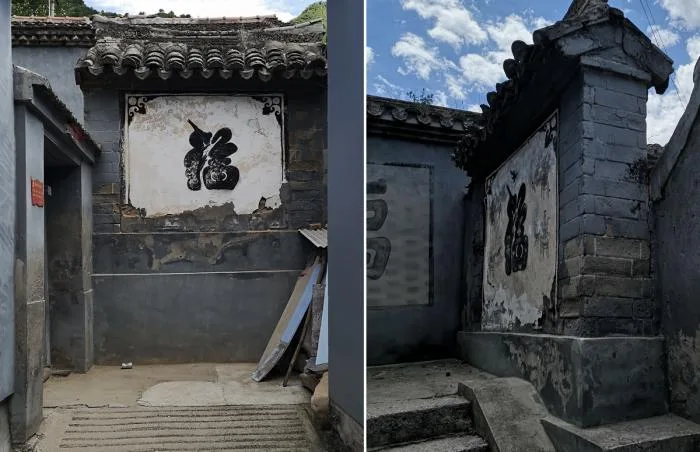
▲ Gate tower bearing the “Fu” character, over 400 years old
Inside, the first courtyard contains a standalone shed recently used as a utility room. The second courtyard building was simply renovated in the 1980s with gypsum board, ceramic tiles, and plastic steel doors and windows, sacrificing the original charm and making it difficult to harmonize with the historic gatehouse.
This transformation reflects the broader issue of unchecked urbanization in rural areas. Hence, preserving local regional and cultural characteristics became central to this renovation.
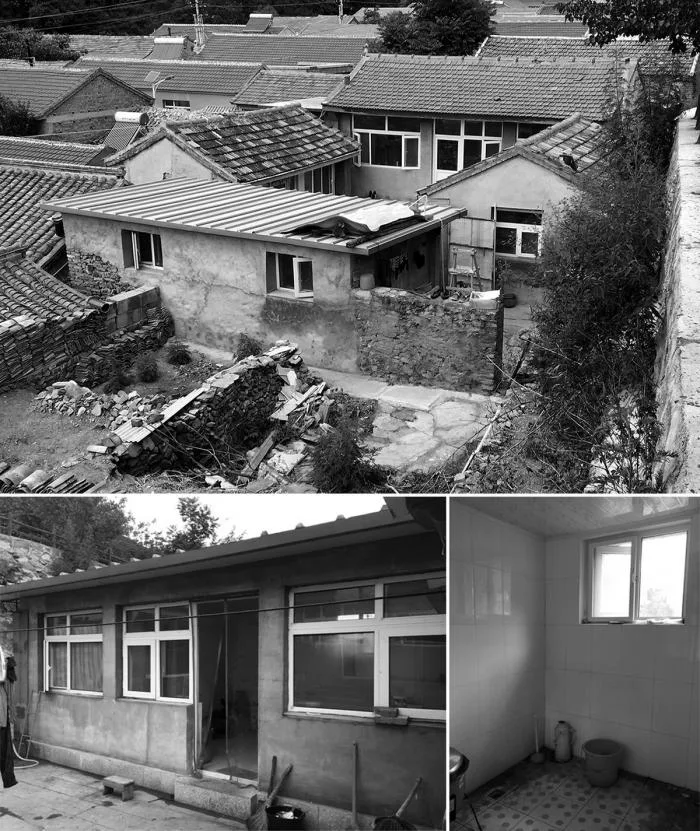
▲ Pre-renovation condition showing loss of the old house’s original character
Design Philosophy & Features – Reconstructing and Revitalizing
The renovation is grounded in the original space’s scale, orientation, location, and spatial perception. The design team aimed to revive the inherent qualities of the old houses, celebrating the wisdom of ancient builders while accommodating modern living needs.
Based on the principle of “locality” and drawing from the “Fu” character as a conceptual source, the project involved demolishing and rebuilding on the original foundation. Functional upgrades ensure suitability for contemporary use.
Green building technologies addressed challenges such as humidity, odor, cold winters, and pests. The renovation achieved energy-saving standards through improved thermal insulation, airtight external doors and windows, waterproofing, fresh air circulation, haze removal, and insect prevention.
Material choices emphasized natural textures. Walls were rebuilt with green bricks preserving the village wall’s rough texture, while yellow clay veneer accents highlighted spatial expression without relying on lavish materials.
Guided by this approach and understanding the users’ needs, the courtyard was structurally reconfigured and functionally reorganized. The original ten bedrooms were consolidated into four bedrooms, one dining room, and one multifunctional room.
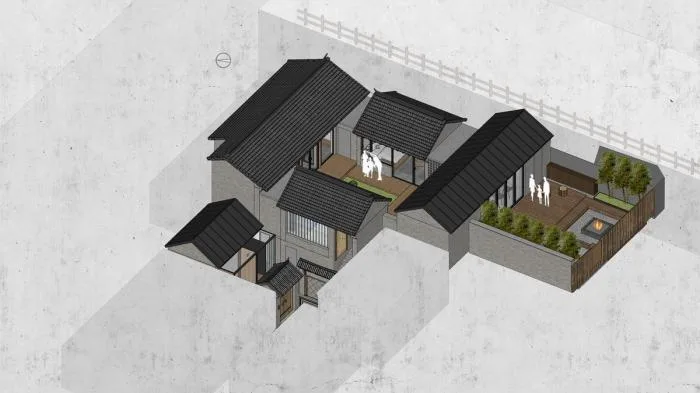
▲ Courtyard axis measurements
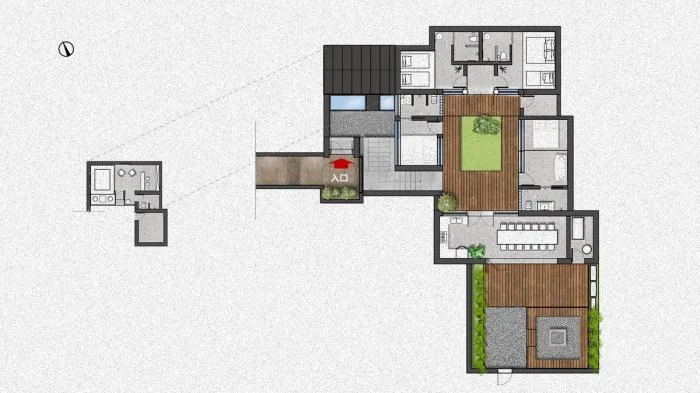
▲ Spatial plan
The original shed was converted into a multifunctional room. The site’s height differences allowed the excavation of a wine cellar beneath the north room and a bathroom and linen storage beneath the west room. The general layout of the north room and east and west wings within the second courtyard was preserved, while the south bedroom was transformed into a full-length dining room opening onto a spacious backyard.
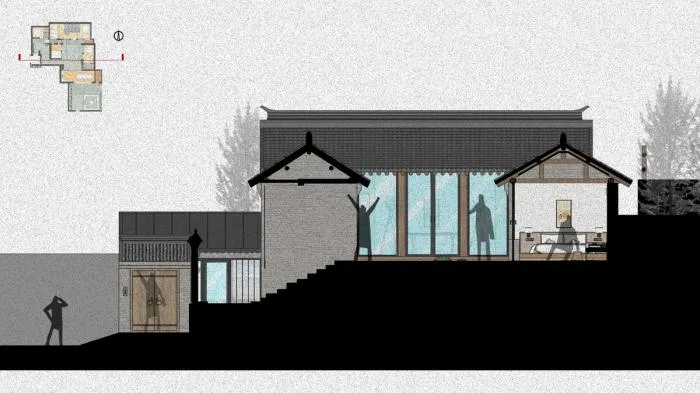
▲ Elevation profile showing the height differences between the first and second courtyard entrances
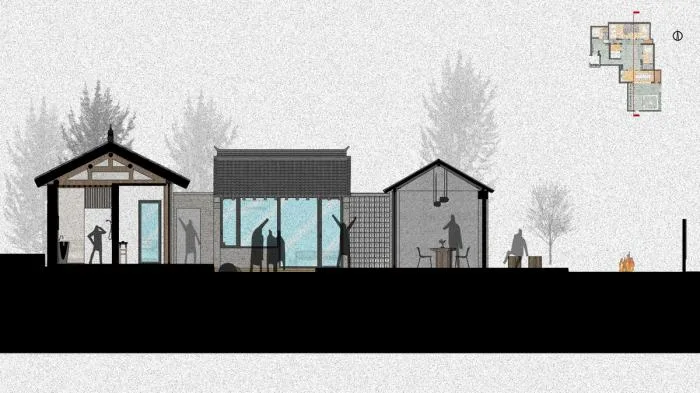
▲ Sectional relationship within the second courtyard
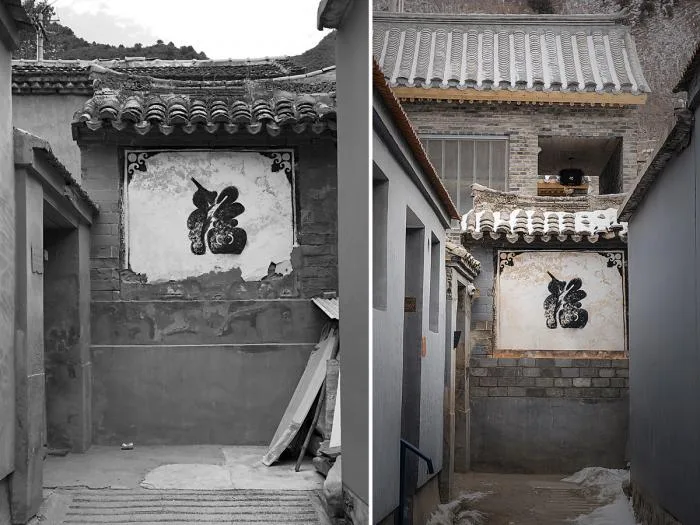
▲ Gatehouse before and after renovation comparison
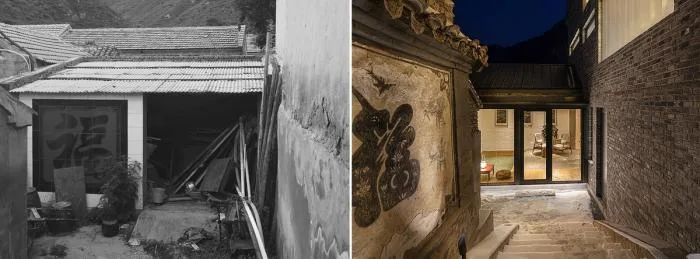
▲ Shed before renovation compared to post-renovation multifunctional hall
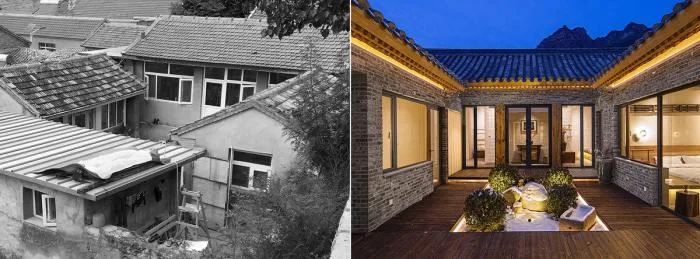
▲ North building before and after renovation comparison
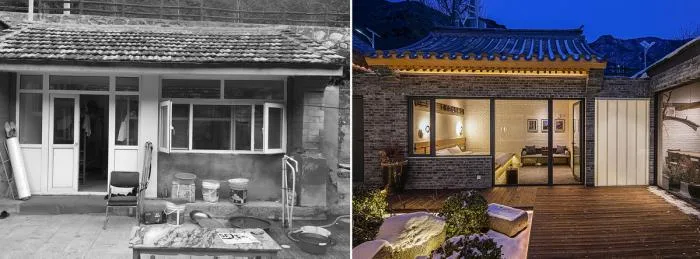
▲ East wing house before and after renovation comparison
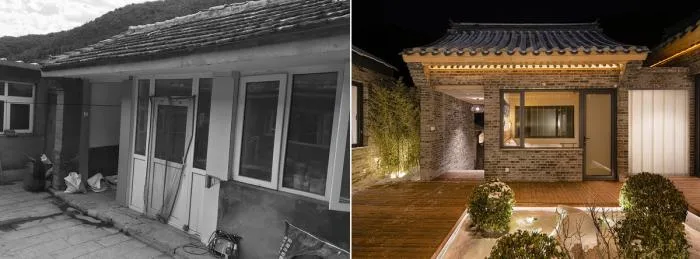
▲ West wing house before and after renovation comparison
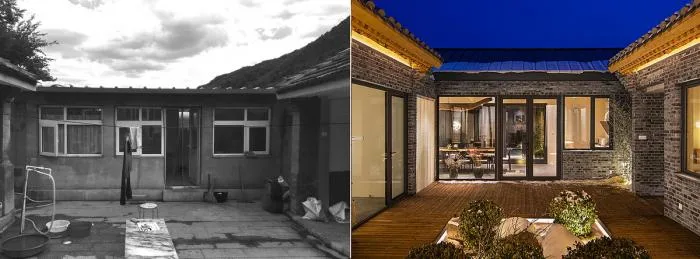
▲ Former building before renovation compared with renovated restaurant
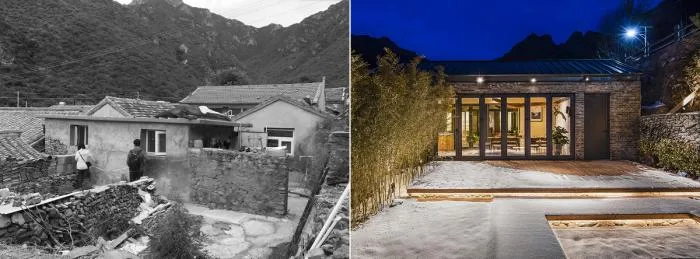
▲ Backyard before and after renovation comparison
Spatial Design – The Sequence of Spaces
The design honors the original spatial progression, guiding visitors from the alleyway through the compound in layers. Different materials, lighting, and design techniques highlight key turning points to evoke distinct psychological experiences.
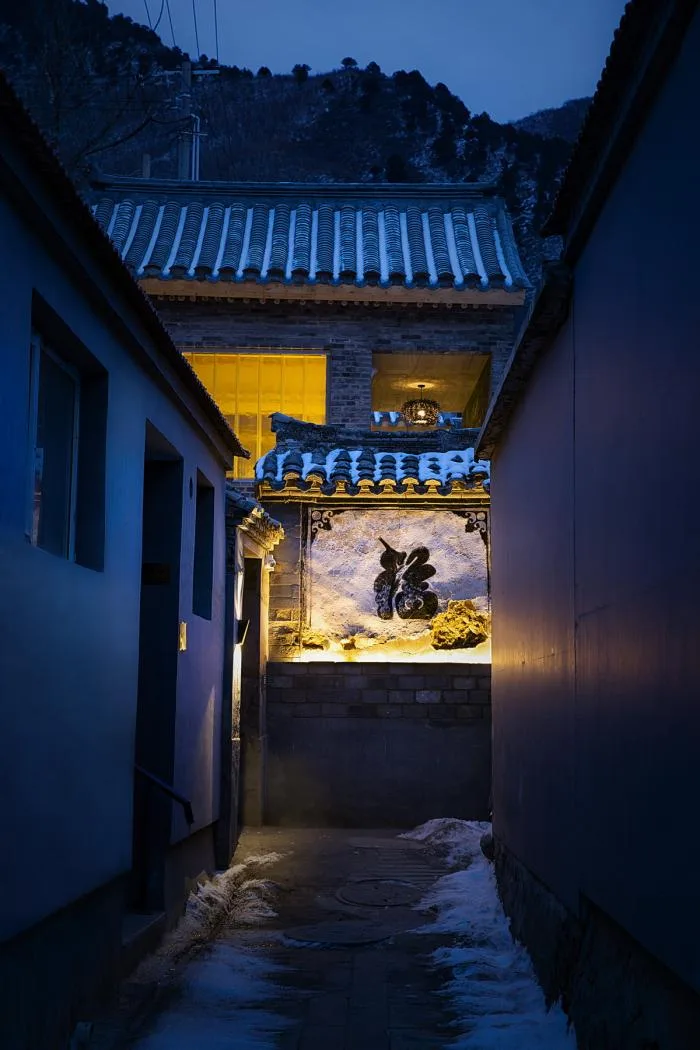
▲ Alley and Fuzi Gate Tower
The multifunctional room serves as an entry point and activation space for the courtyard. It acts as a buffer upon entering the home and serves as a communal area for gatherings, tea drinking, painting, movie watching, and wine tasting.
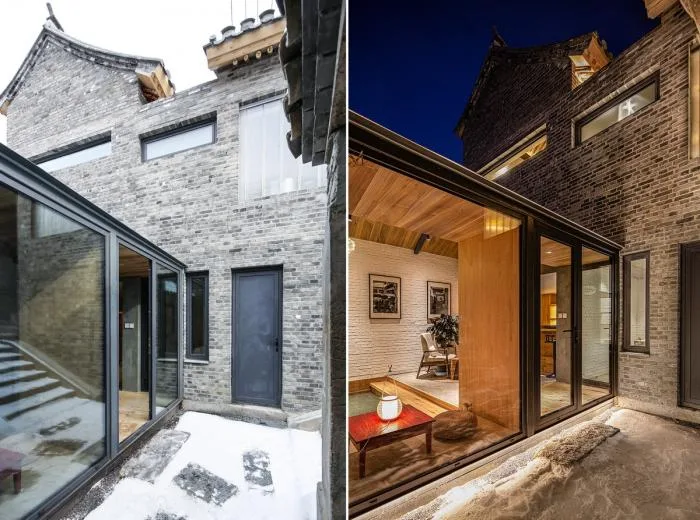
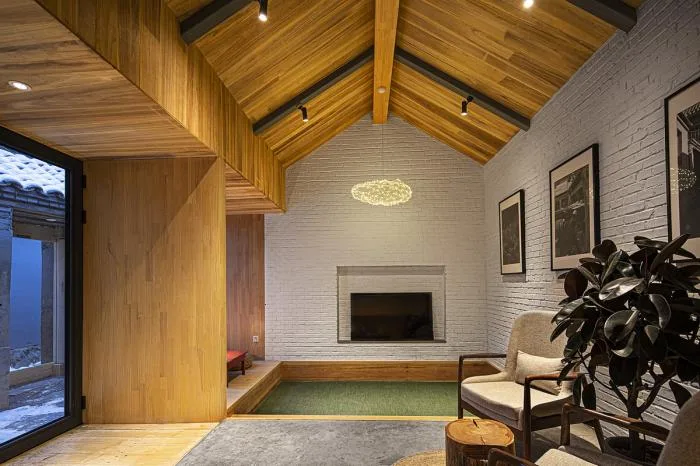
▲ Height difference between multifunctional hall and second courtyard ▲ Multifunctional hall pit space
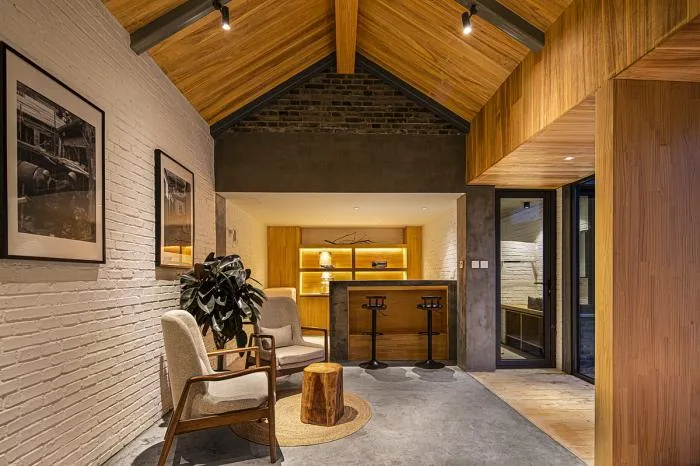
▲ Multifunctional hall wine cellar space
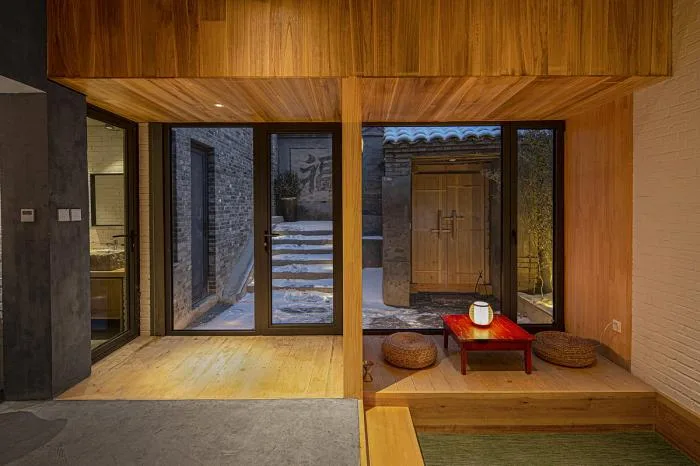
▲ Relationship among the multifunctional hall, gatehouse, and second courtyard
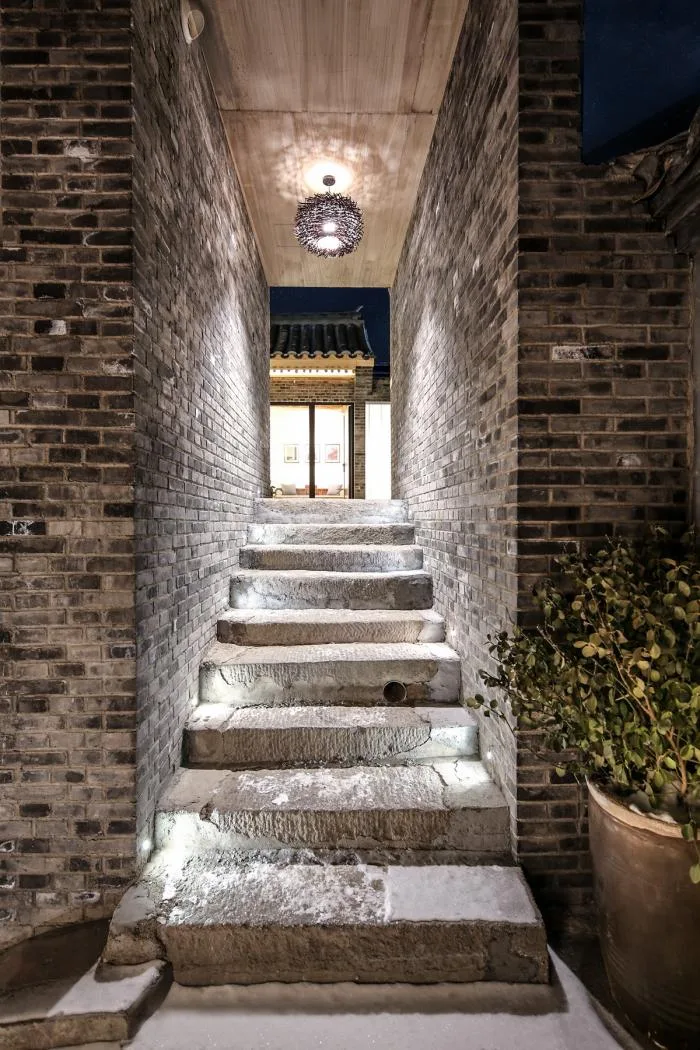
▲ Outdoor and semi-outdoor steps, the threshold into the second courtyard
Ascending the stairs into the second courtyard reveals four bedrooms across the north, east, and west wings. The design restores the original brick and wood structure, with the north room positioned slightly higher than the east and west wings. A wooden boardwalk wraps the courtyard in a “Hui”-shaped corridor connecting all spaces. The center is decorated with local sand and greenery, gently dividing activity zones and guiding visitors toward the restaurant and backyard.
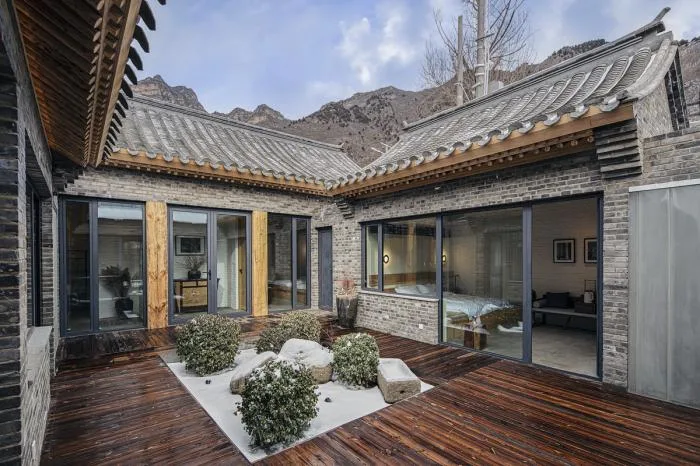
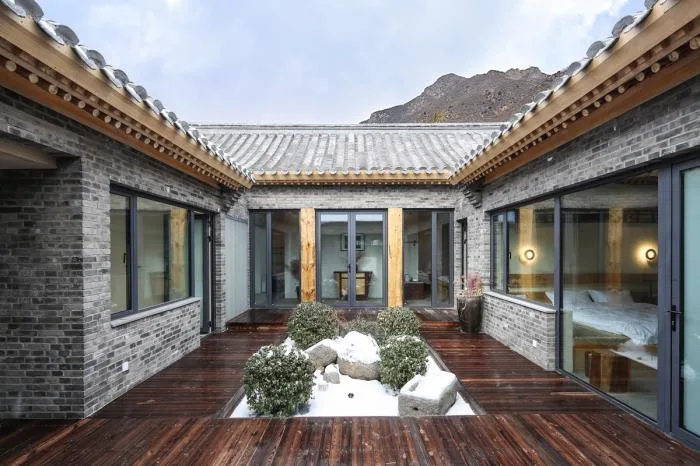
▲ Comfortable scale of the second courtyard
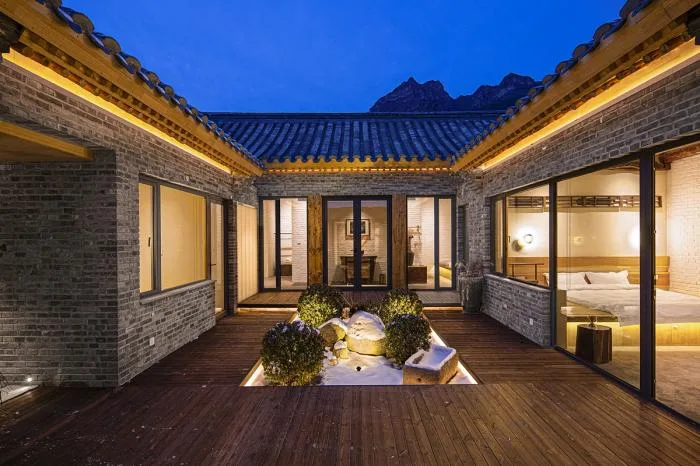
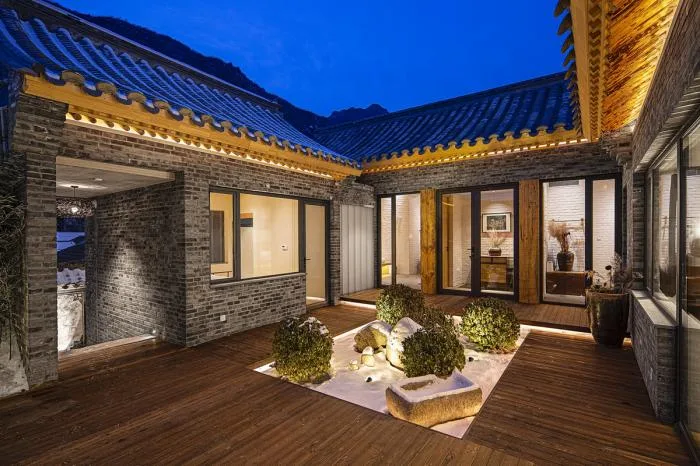
▲ Thoughtfully designed indirect lighting for the courtyard at night
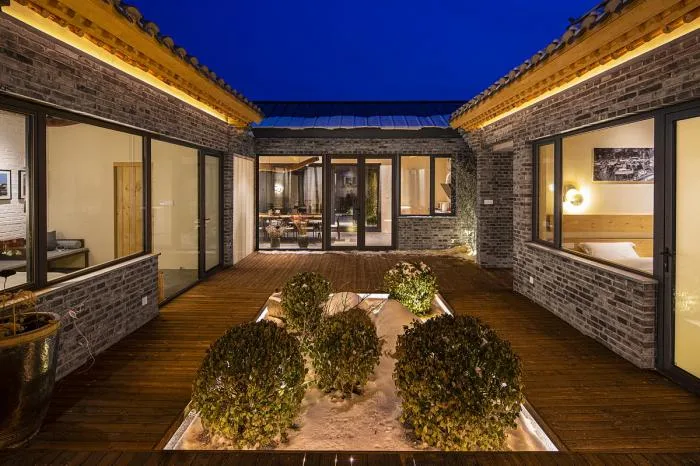
▲ The courtyard’s connection to the metal-roofed restaurant
Inside, antique wooden beams serve as the house’s load-bearing structure. All original wooden beams, previously dismantled, were restored and reused. The walls display rough textures, enhancing the antique atmosphere and enriching residents’ experience of the space’s original character.
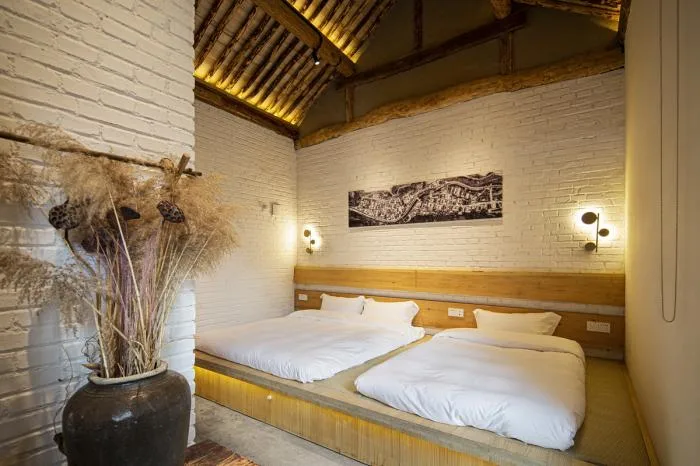
▲ North landlord’s family room
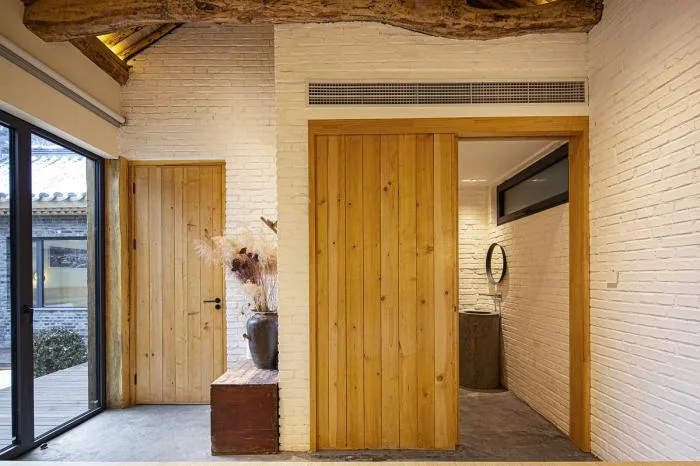
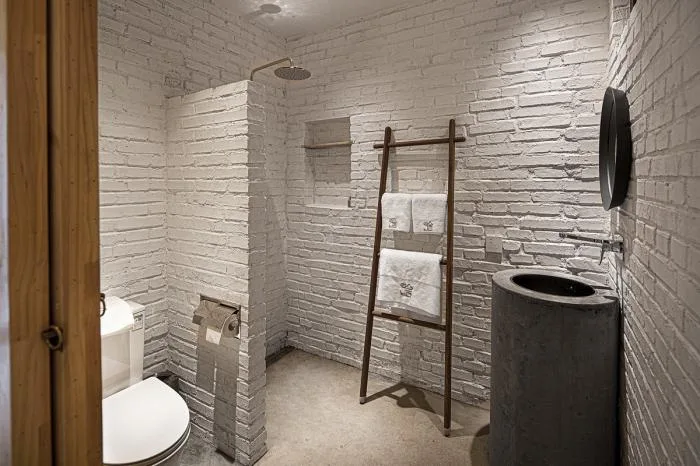
▲ North landlord’s bedroom facing the bathroom and outdoors ▲ Bathroom with natural stone basin
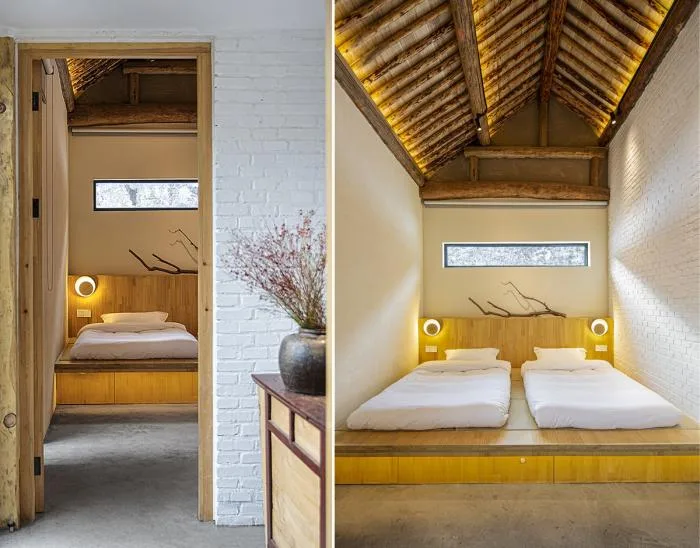
▲ Relationship between North house entrance hall and West house
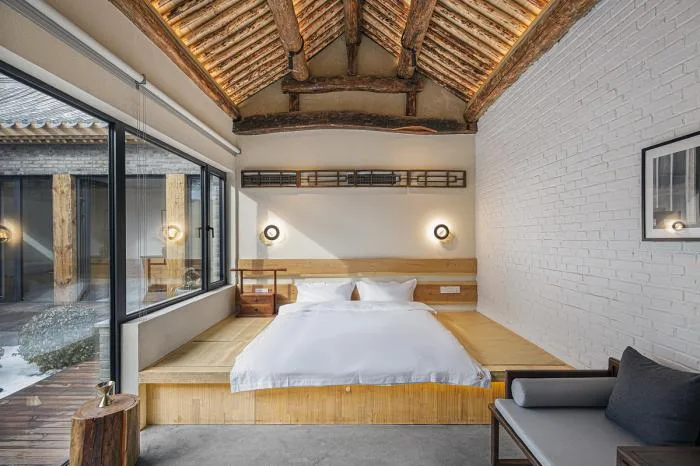
▲ East wing room
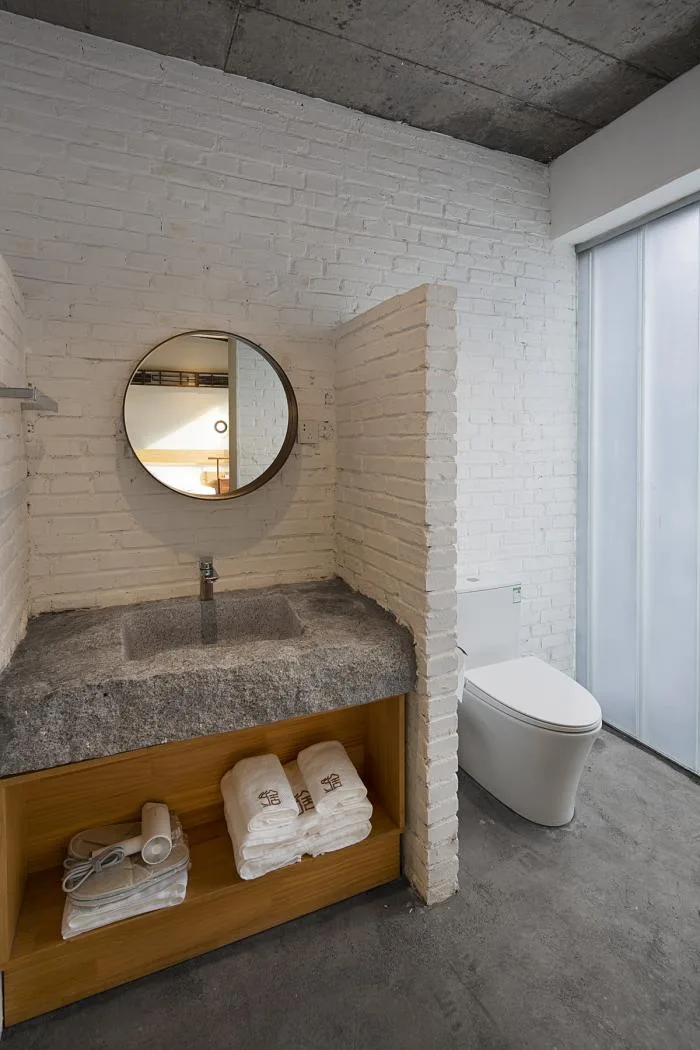
▲ East wing bathroom with natural stone basin
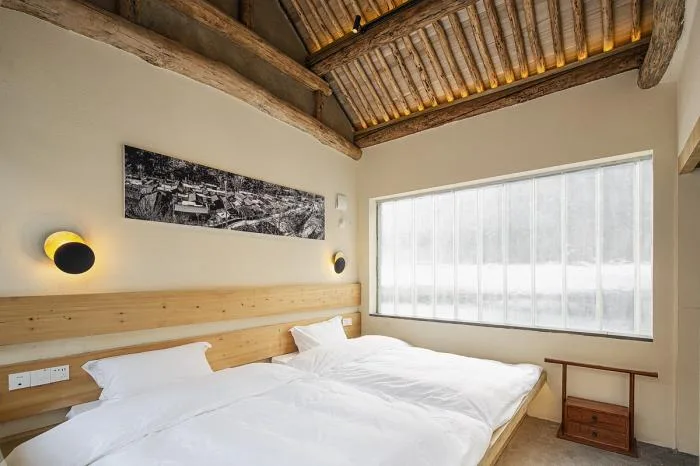
▲ West wing room
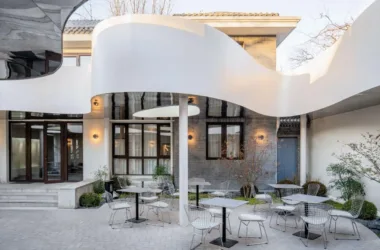
Restaurants serve as primary public spaces. The design carefully considers human behavior and movement, treating the restaurant and backyard as one integrated area. Folding doors replace fixed doors, allowing the spaces to merge seamlessly when opened, creating a large, flexible gathering area.
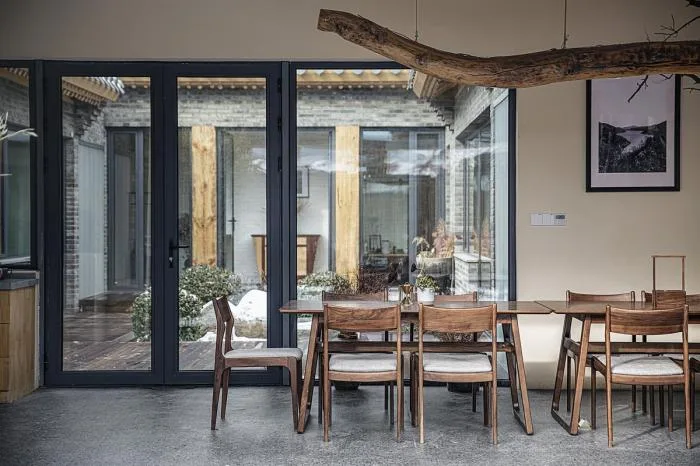
▲ Restaurant and front yard space
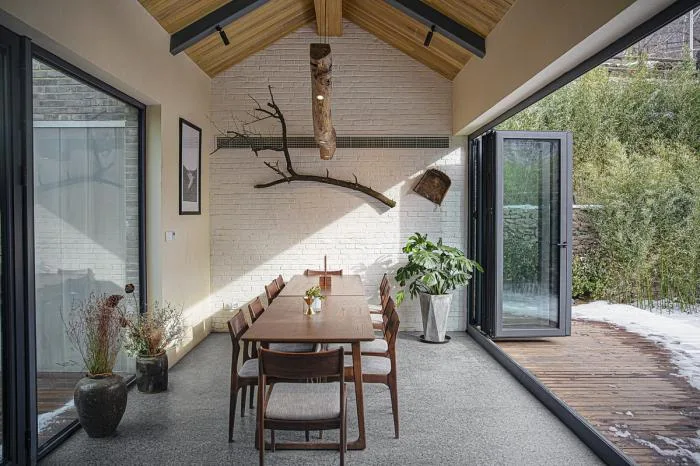
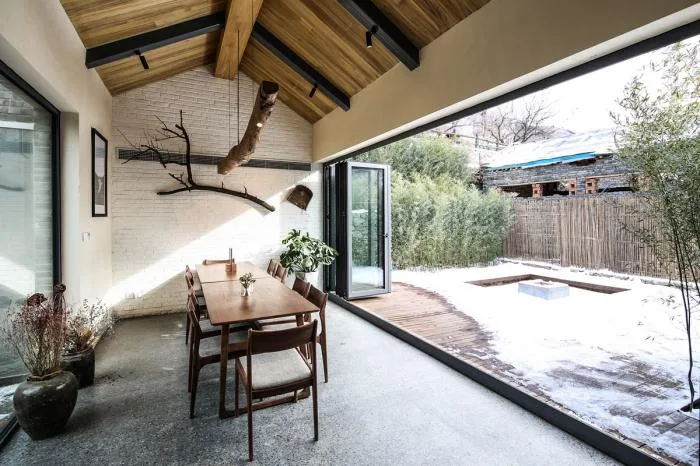
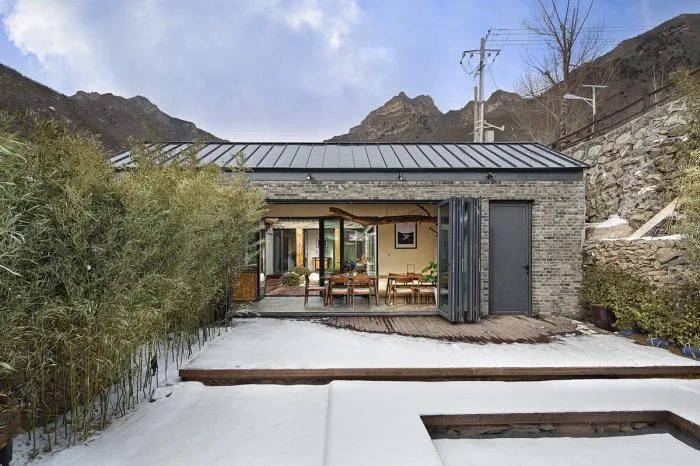
▲ The restaurant and backyard spaces flow seamlessly into each other
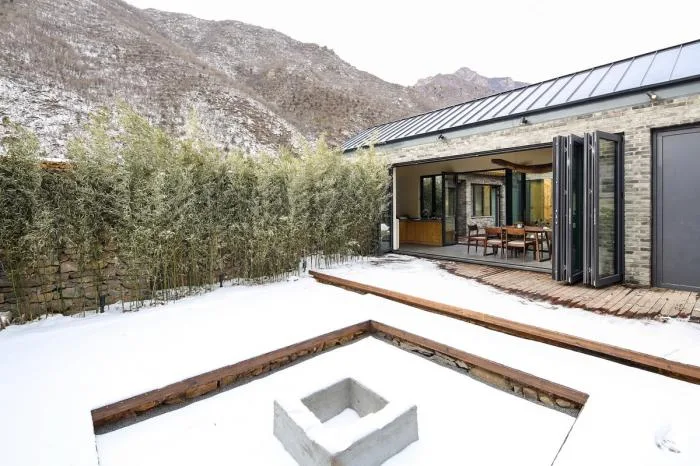
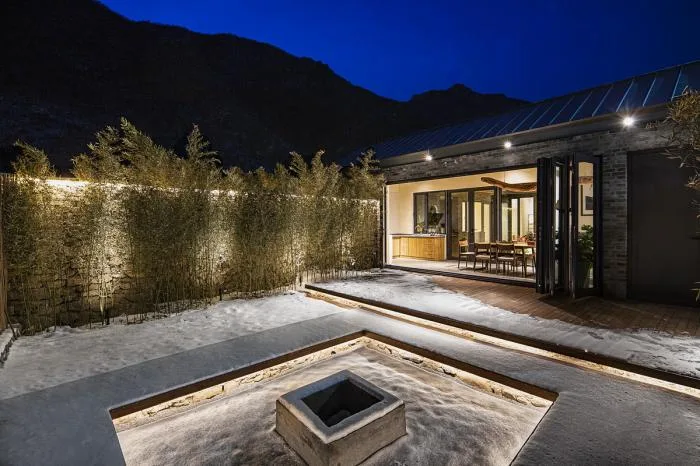
▲ Backyard barbecue area
The renovation respects local spatial structures and materials to seamlessly integrate the old houses with the village’s overall style.
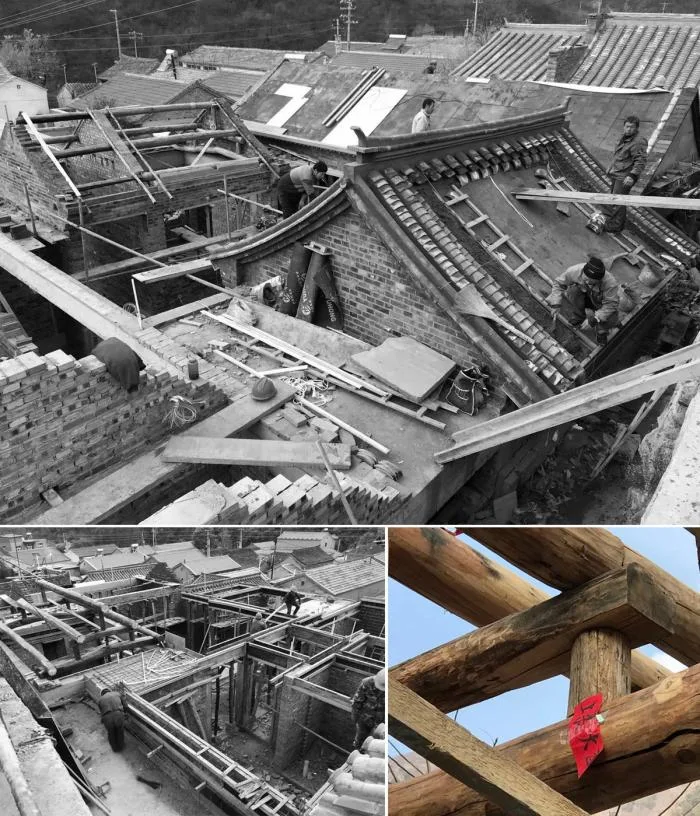
▲ Construction process photos
The design details reflect the dedication of the designers and the craftsmanship’s resilience.
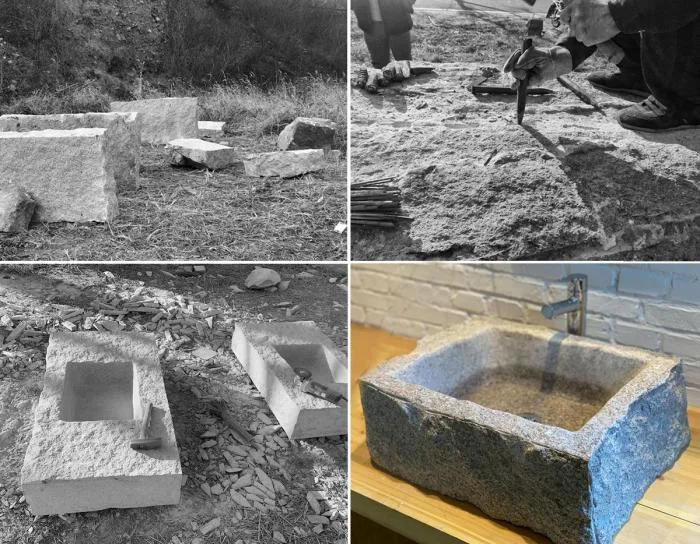
▲ Handmade stone trough basin
Indoor decorative paintings are carefully crafted artworks by the designers, capturing memories of Xiaolongmen village scenes.
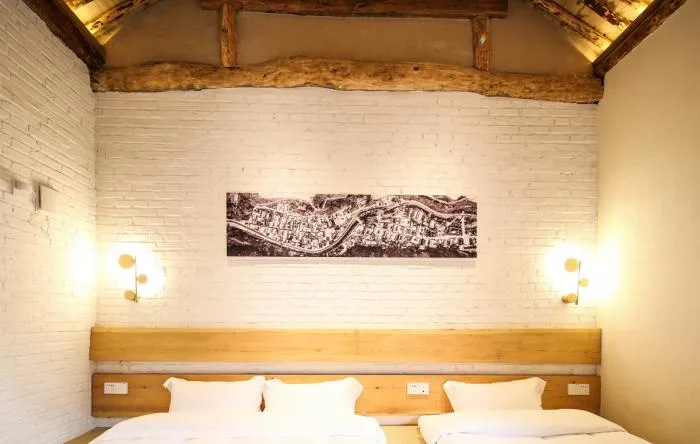
▲ Xiaolongmen Photography Artworks Decorative Paintings
Decorative lights, dried branches on the headboard, and wooden pillars mostly use raw materials sourced locally from Xiaolongmen Mountain, emphasizing the region’s character.
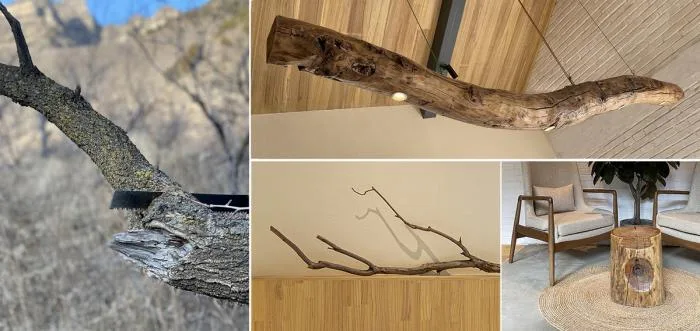
▲ Dried branches from Xiaolongmen Village
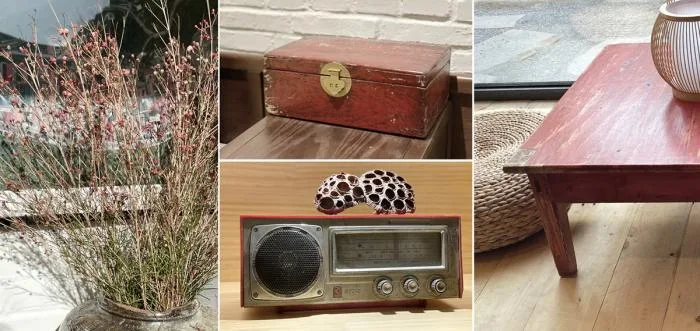
▲ Old ornaments collected from the village
Design Insights
Completed and operational by late 2019, this renovation project focuses on exploring the simple lifestyle of local villagers and their modern quality-of-life needs. The design integrates the old house’s spatial layout with rural cultural elements, enhancing the sense of rural identity.

▲ On-site collection of old objects
This renovation of Fuziyuan’s second courtyard leads the way for the subsequent renovation of ten courtyards in the village. The following projects will apply the same renovation principles but explore different themes and techniques to meet diverse rural experiences.
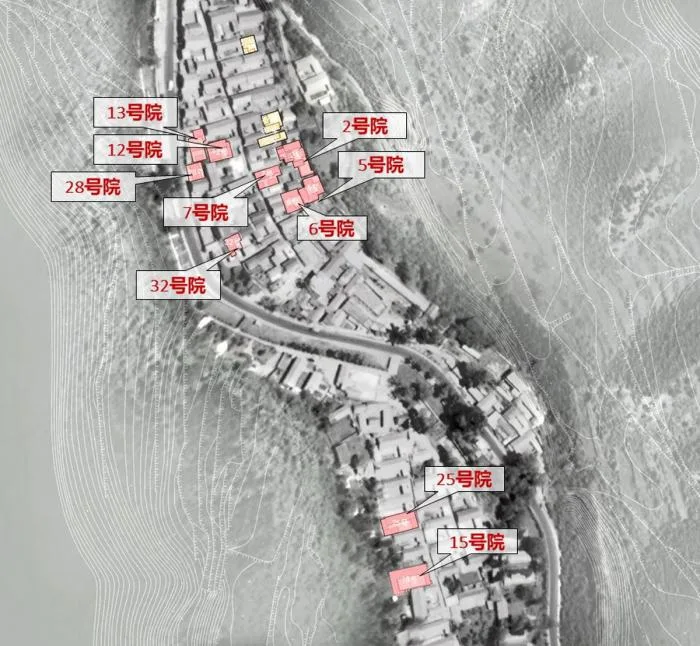
▲ Distribution map of ten courtyard renovations in the village
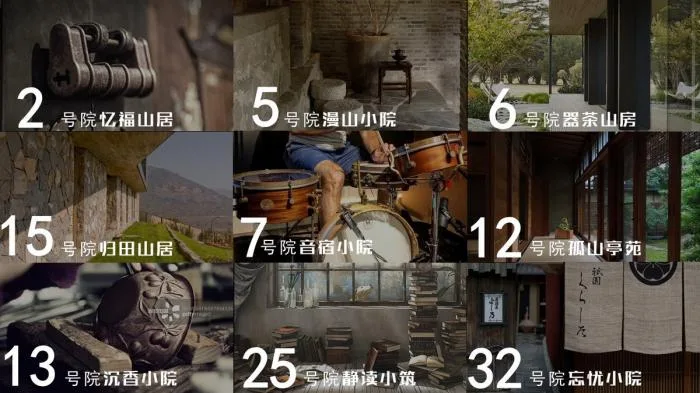
▲ Diagram illustrating different courtyard renovation themes
This series of renovations in Xiaolongmen Village exemplifies rural “localization,” aiming to establish Xiaolongmen as a model village in western Beijing and foster rural symbiosis. It reflects on current rural renewal methods and explores pathways toward broader rural revitalization.
Project Information
Project Name: Xiaolongmen Village’s Centennial “Fu” Character Courtyard Rebirth
Project Type: Ancient Building Renovation
Location: Xiaolongmen Village, Qingshui Town, Mentougou District, Beijing
Area: 224 square meters
Design Period: June 2018
Project Duration: June 2018 – September 12, 2019
Design Firm: CCDI International
Project Lead: Li Zhiyu
EPC Management: Yang Yanling
Design Team: Cui Dina, Chen Jinxia, Zhang Xinyu, Wang Huan, Ma Yiming, Li Zhenxing
Structural Team: Zhan Yanjie
Owner: Langshi Township Residence
Photographer: Lu Fei Team
Aerial Photography: Zhang Haoran Team
Author: Chen Jinxia
Design Contact: __AI_S_SC0__












Must log in before commenting!
Sign Up