
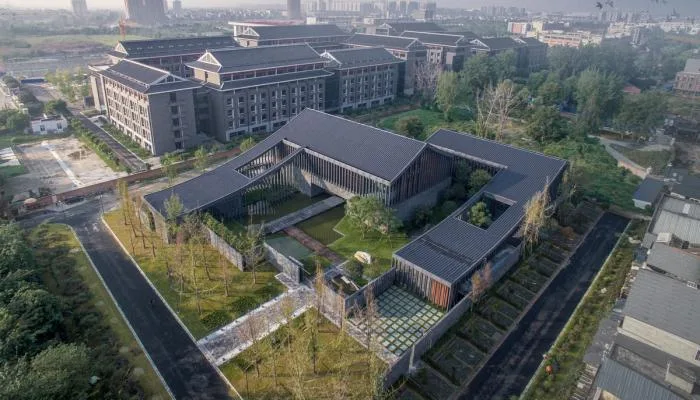
The Sichuan University Himalayan Culture and Religion Research Center, situated within Sichuan University, focuses on the study of South Asian Himalayan cultures and religions, while also showcasing related artworks. Drawing inspiration from traditional Chinese courtyards, the center harmoniously blends Buddhist spirituality with its physical environment through contemporary architectural design and natural landscaping.
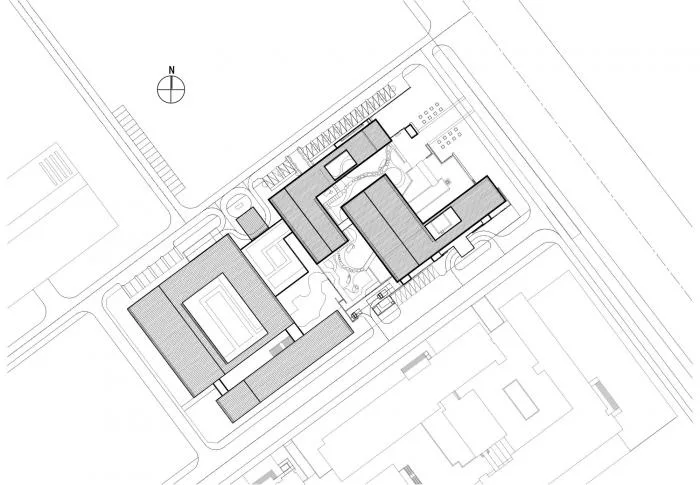
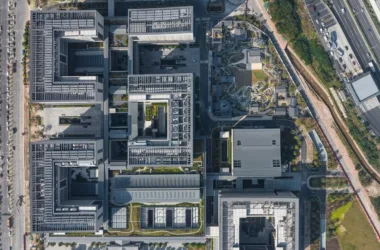
▲ Overall site plan
The Himalayan Culture and Religion Research Center is located on the Jiang’an Campus of Sichuan University and is composed of three main components: a museum, a research center, and a multipurpose building. The museum and research center, completed thus far, serve as dedicated spaces for researching Himalayan cultures and religions, as well as displaying their artworks.
Addressing the challenges
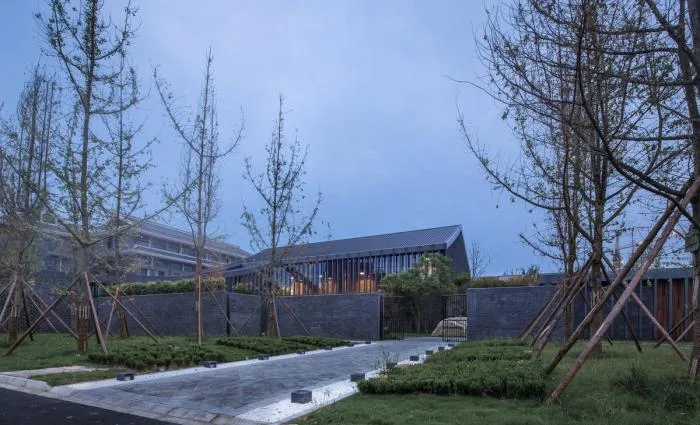
The unique themes, distinctive location, and low plot ratio presented both opportunities and challenges for the project. Early in the design process, key questions arose: How could the project blend seamlessly with the campus environment? How could it reflect the thematic essence? How could it offer rich spatial experiences while balancing exhibition and visitor flow? After thorough analysis and comparisons, the architect adopted the concept of the “courtyard” as the primary design element.
Design concept
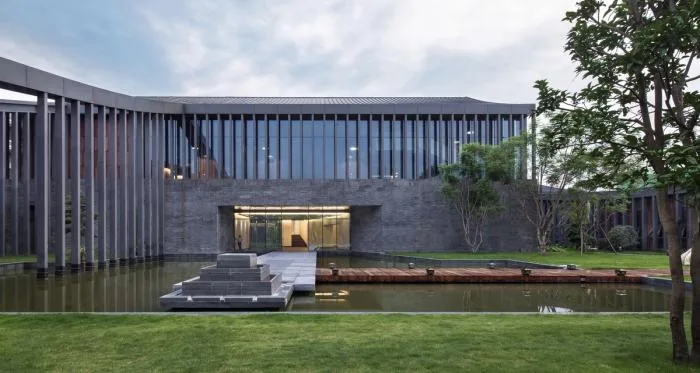
The design separates the museum and research center into distinct volumes, arranged as two “L”-shaped structures with extended walls that enclose four courtyards: two central courtyards on the east and west sides, and two smaller courtyards situated between the buildings. Each courtyard is autonomous yet interconnected, extending into the building interiors with unique spatial qualities and thematic landscapes. This approach creates expansive spatial experiences within a limited footprint.
Visitors enter the museum on the first floor through the east courtyard, which features modern geometric landscaping. The west courtyard contrasts with a more natural, softer landscape, complementing the rigid geometry of the east. The two side courtyards serve as a VIP reception study and a multifunctional lecture hall, respectively.
Architectural form
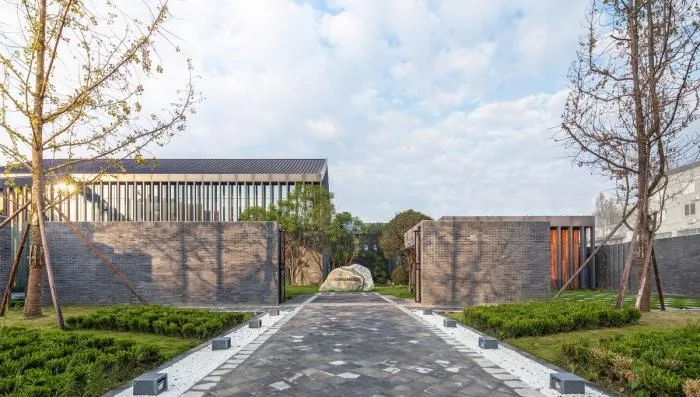
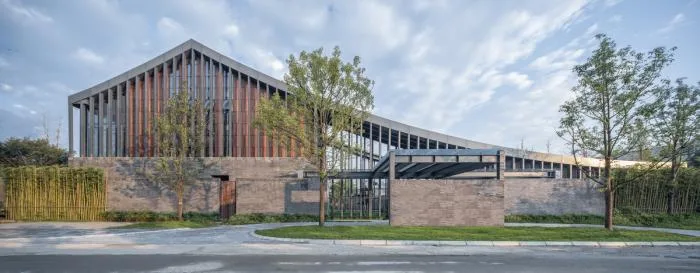
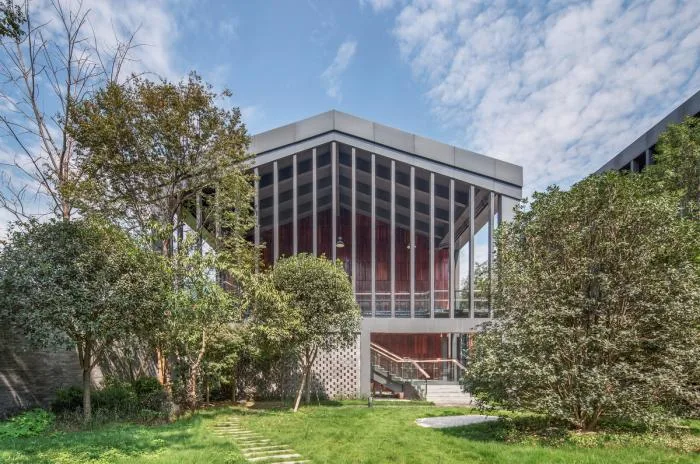
The overall architecture draws from the traditional sloping roofs typical of the Sichuan region. These roofs are reinterpreted with modern techniques such as cutting and deformation, producing layered, undulating forms of varying lengths that create a dynamic skyline. Within the Jiang’an campus, where traditional Chinese architecture prevails, these roofs not only blend stylistically but also symbolically represent the cultural identity of Sichuan residential buildings through their abstract design.
Materiality and facade treatment
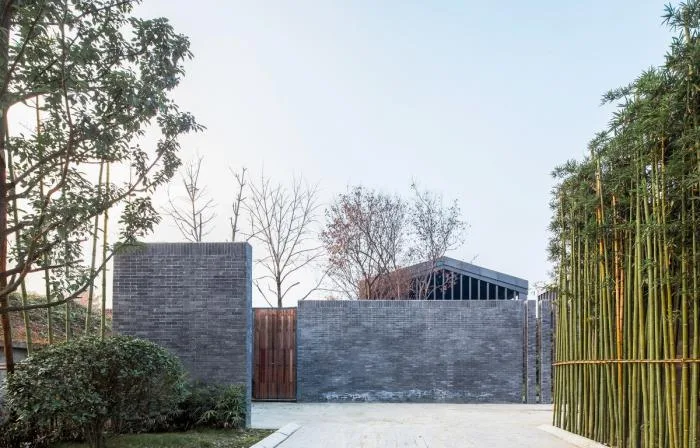
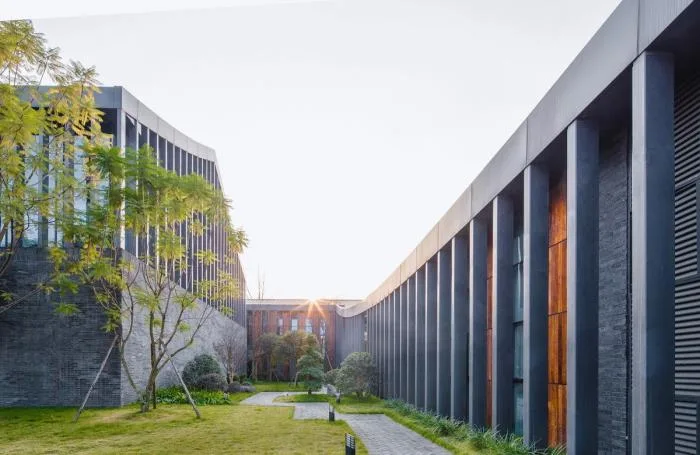
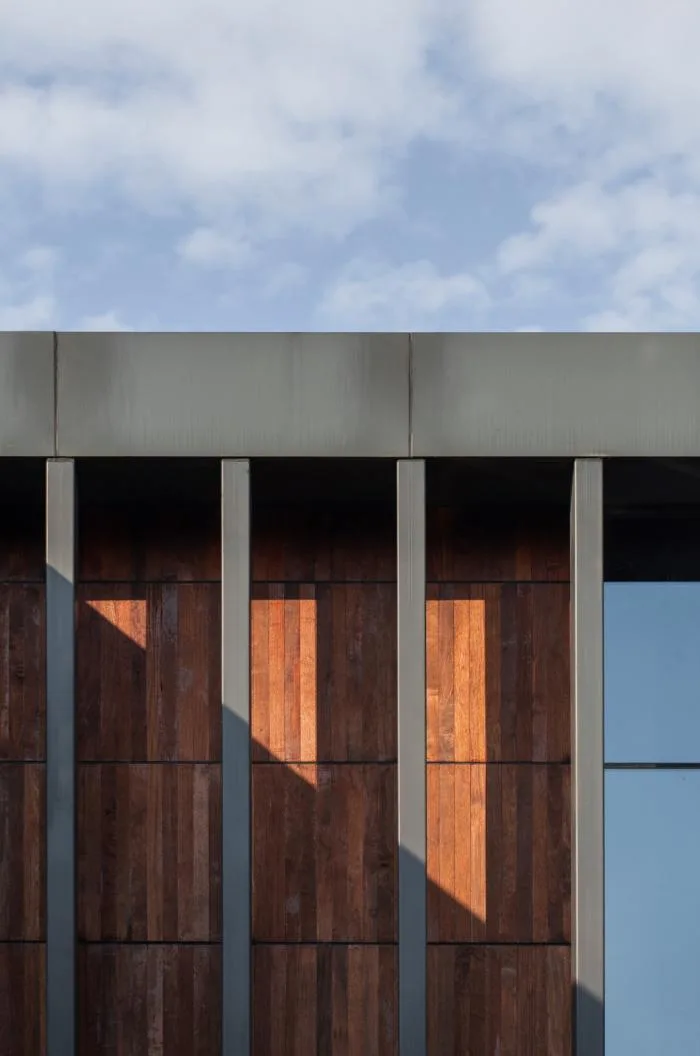
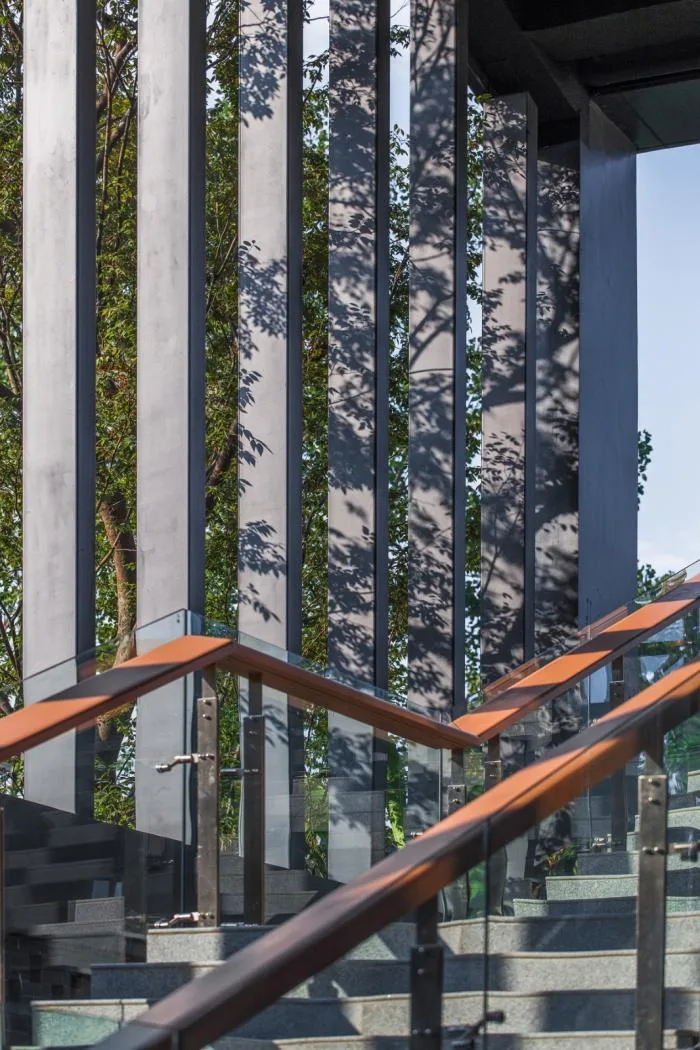
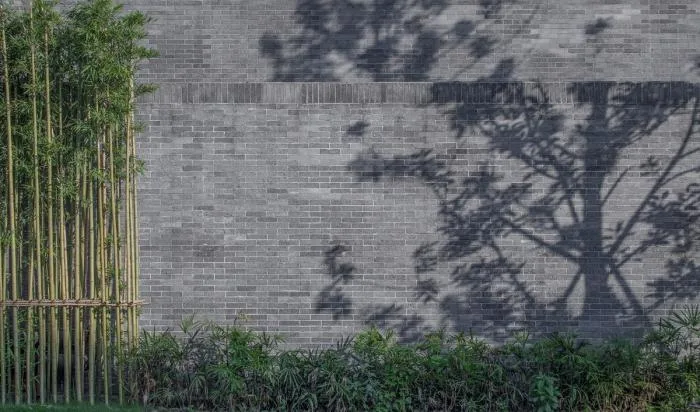
The selection of materials, colors, and textures continues the tradition of simple materials characteristic of Sichuan residential architecture. The building facades are treated in two distinct ways based on their spatial orientation. The museum’s facade is solemn and stable, featuring a blend of solid and void elements reminiscent of ancient city residential streetscapes. In contrast, the research center, which faces the landscaped courtyard and requires enhanced lighting and ventilation, employs floor-to-ceiling lattice wooden walls inspired by traditional ancient city residences, offering permeability and connection with the outdoors.
Exhibition design
The interplay between the architecture and the courtyards offers a compelling framework for an engaging exhibition route. The surrounding park serves not only as exhibition space but also as a central theme within the design. The entire exhibition path is intricately integrated with the landscape.
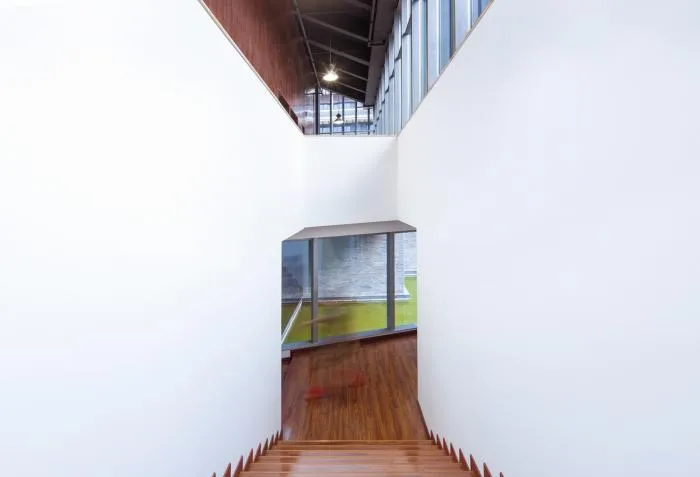
Visitors enter the museum on the first floor through a water courtyard framed by the building and surrounding walls. The first floor houses temporary exhibition spaces and multimedia halls, while the second and third floors contain permanent exhibition halls with various themes. The high, bright side courtyards unify the space and facilitate vertical circulation through staircases.
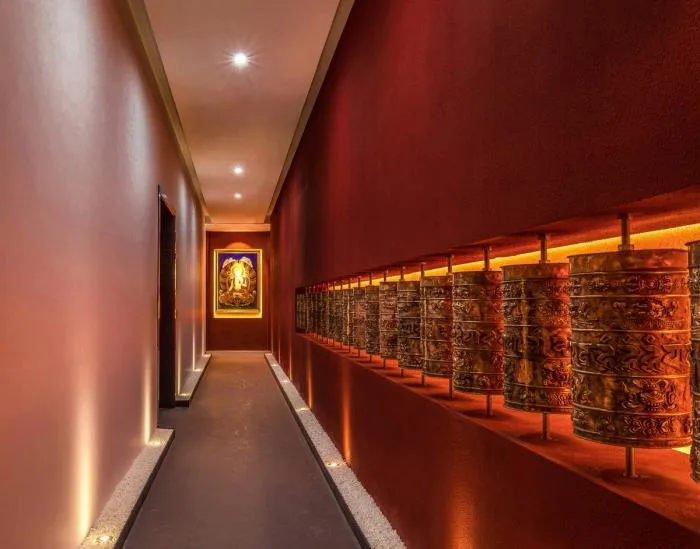
After exploring the temporary exhibitions on the first floor, visitors ascend the “L”-shaped staircase on the west side to reach the second-floor permanent exhibition halls. They then use the staircase at the northeast corner to access the third-floor exhibition area. Upon arrival at the boutique exhibition on the third floor, the atmosphere shifts dramatically: the previously bright and open public spaces give way to a dark and mysterious ambiance dominated by a revolving tube gallery. This contrast creates a powerful climax in the exhibition experience.
After touring the museum, visitors exit through the outdoor park area. A pedestrian bridge connects the museum and the research center, facilitating staff movement between the two and offering visitors a relaxing spot with views over the courtyards.
Project drawings
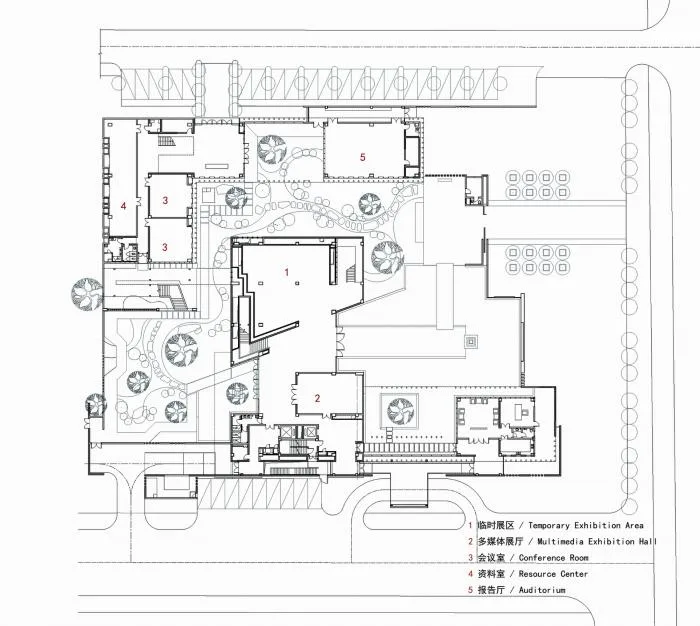
▲ First floor plan
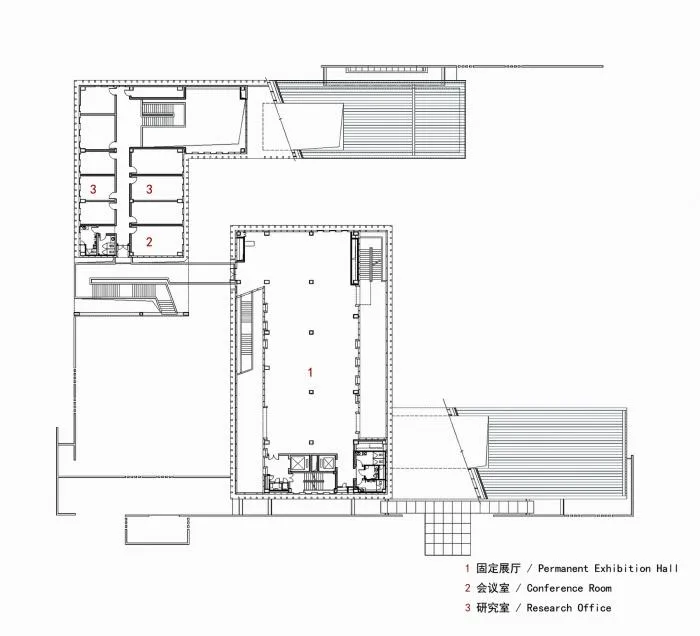
▲ Second floor plan
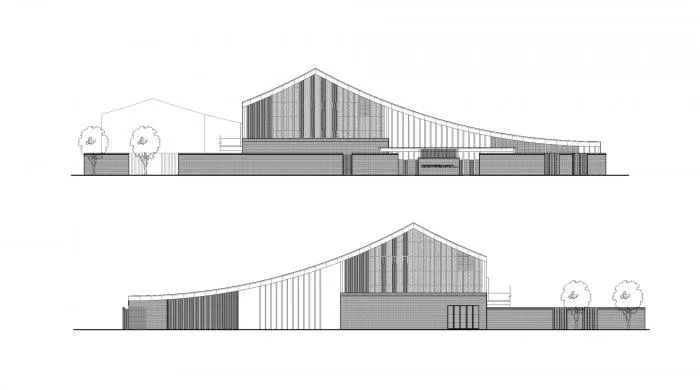
▲ Elevation view
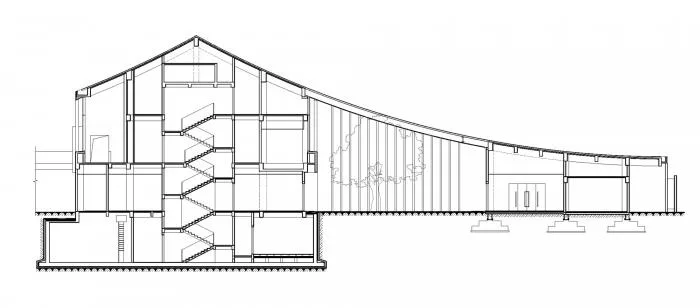
▲ Section view
Project Details
Type: Cultural Center
Location: Chengdu, China
Designer: China Southwest Architectural Design and Research Institute, Zheng Yong Studio
Area: 4,100 m²
Year: 2016
Photographer: Existence of Architecture
Principal Architect: Zheng Yong
Design Team: Jia Wei, Xiao Dijia, Wang Liwei, Zhang Huidong, Hou Yubo, Hou Jian, Dong Biao, Chen Yanyan, Zhang Yan, Liu Yunna, Liu Ganying, Yang Ke, Zhou Yu, Liu Han












Must log in before commenting!
Sign Up