
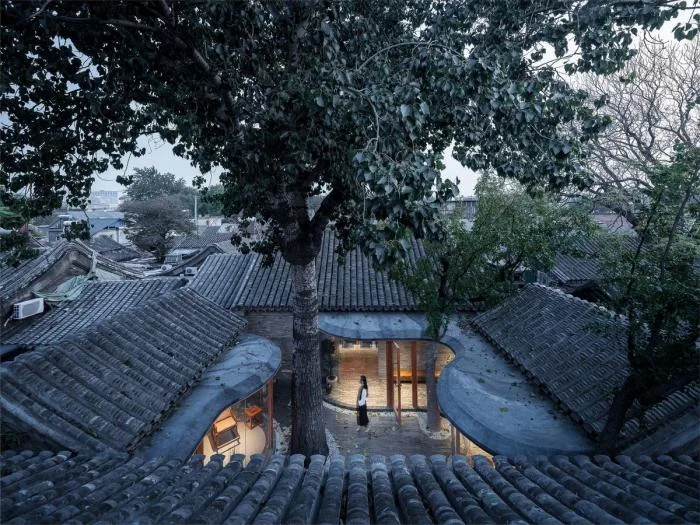
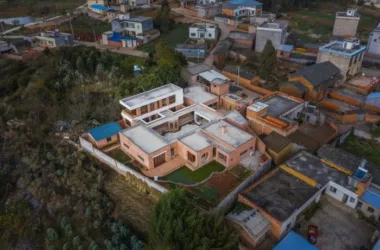
▲ Overall bird’s-eye view
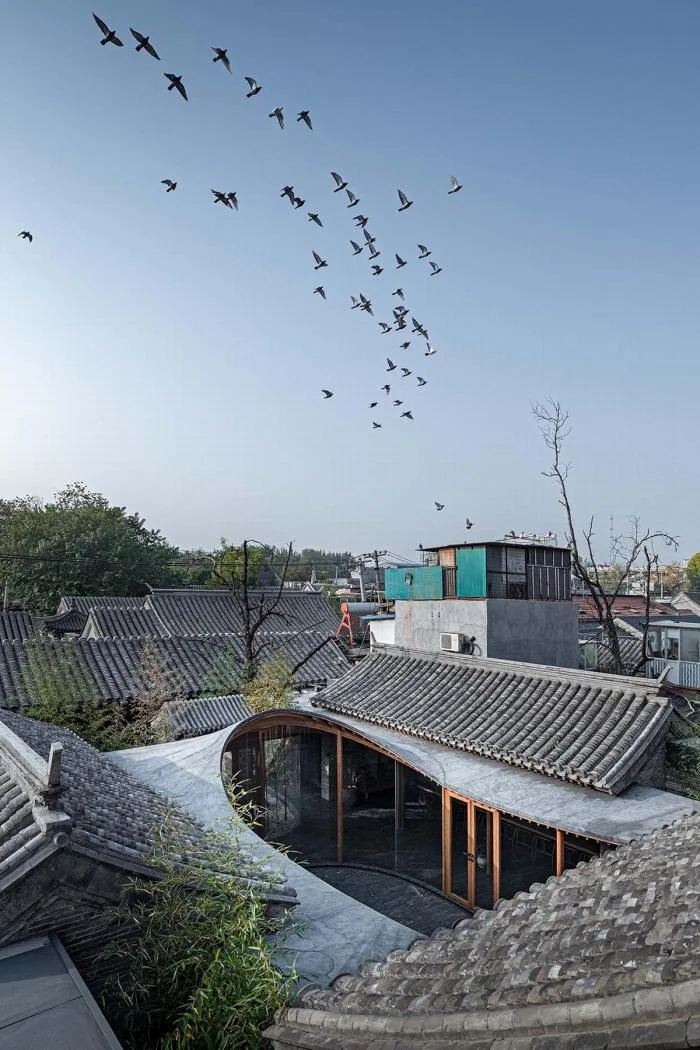
▲ Overall bird’s-eye view
The Seven Houses Courtyard, located in the heart of Beijing’s historic old city, spans approximately 15 meters in width and 42 meters in length. This modest residential complex consists of three courtyards. The original structure featured seven sloped-roof houses, which coincidentally aligned with house number seven in the alley, hence the name “Qishe.”
The architecture is quite aged; most roofs, walls, doors, and windows have suffered damage or are missing. However, many wooden beams and columns remain largely intact, alongside arched doorways reflecting Republican-era characteristics. The courtyard also contains numerous temporary structures from the large courtyard era, which are now covered by cleared construction debris, overgrown weeds, and general decay.
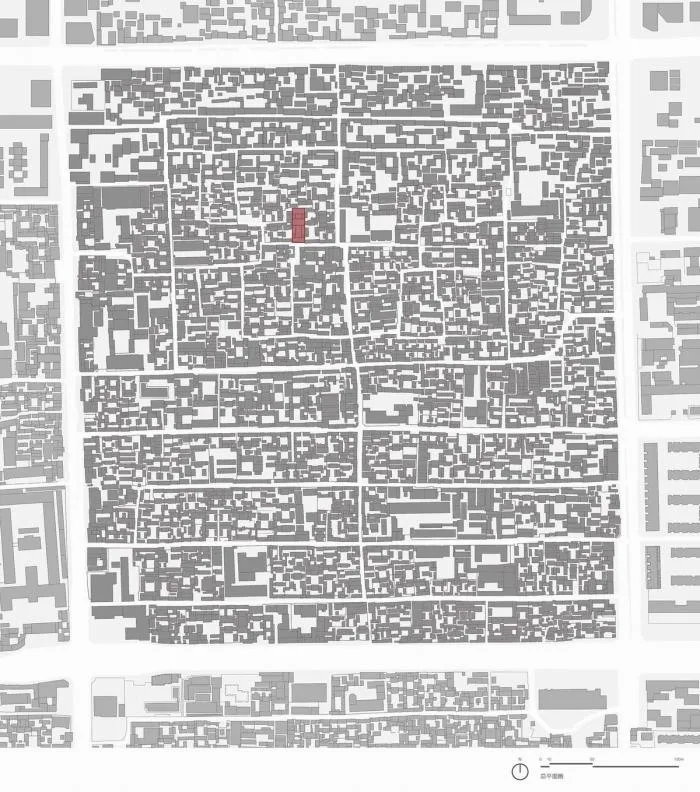
▲ Project location
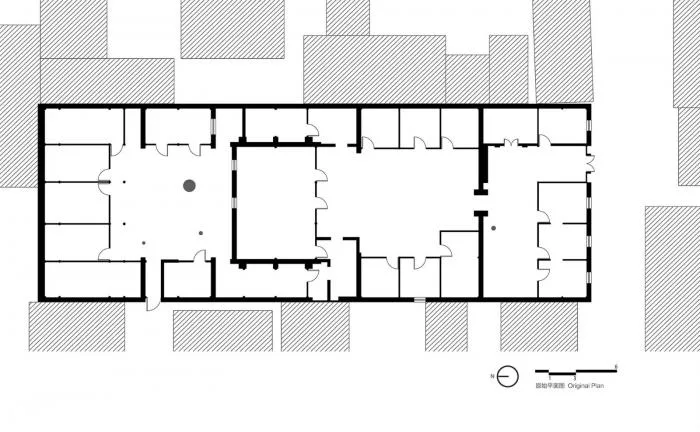
▲ Original floor plan
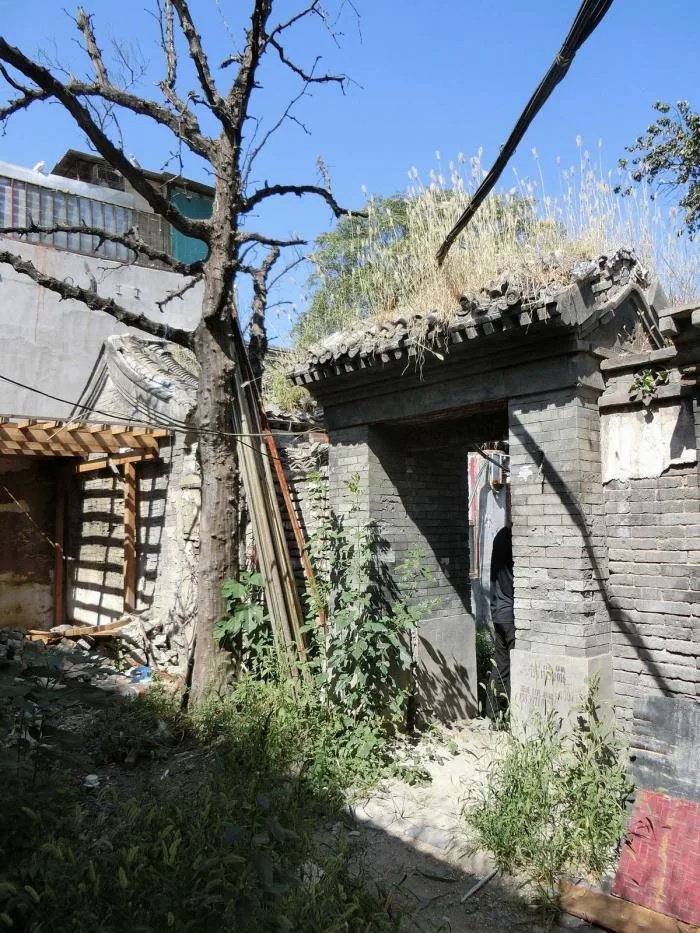
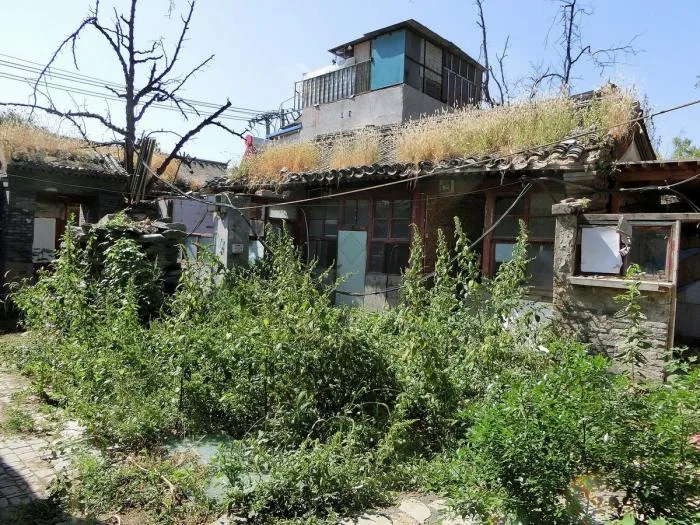
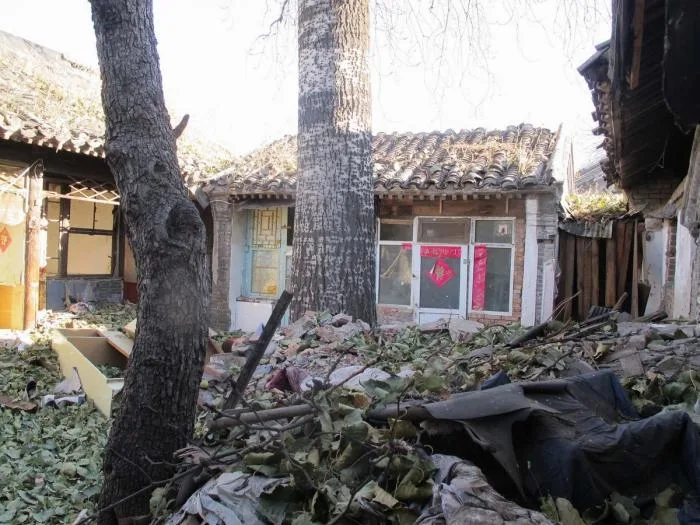
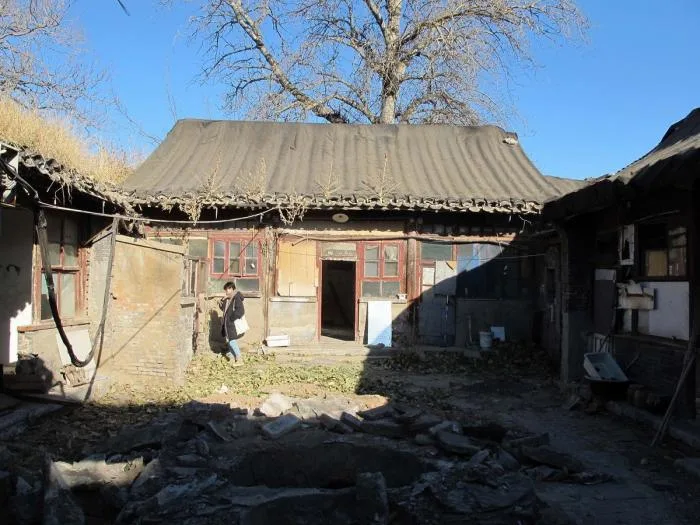
▲ Original architecture
This renovation project has two main goals. First, to restore the aged courtyard houses by preserving the traces of time, repairing various building facades, reinforcing structural elements, and recreating the traditional architectural appearance. Second, to integrate modern functions such as bathrooms, kitchens, garages, and updated infrastructure including plumbing and electrical systems. New corridor spaces will also be introduced, blending old and new to form a cohesive whole suitable for future use as both a public reception area and living space.
Corridors have always played a key role in traditional architecture. In this renovation, a corridor is the most prominent new addition, connecting the originally separate seven houses into a unified complex. It functions as both a passageway and a means to redefine courtyard levels, enhancing the experience of viewing and wandering through the space.
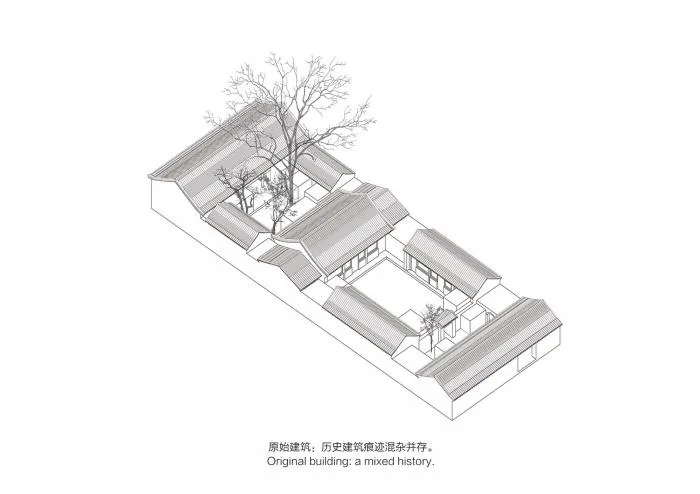
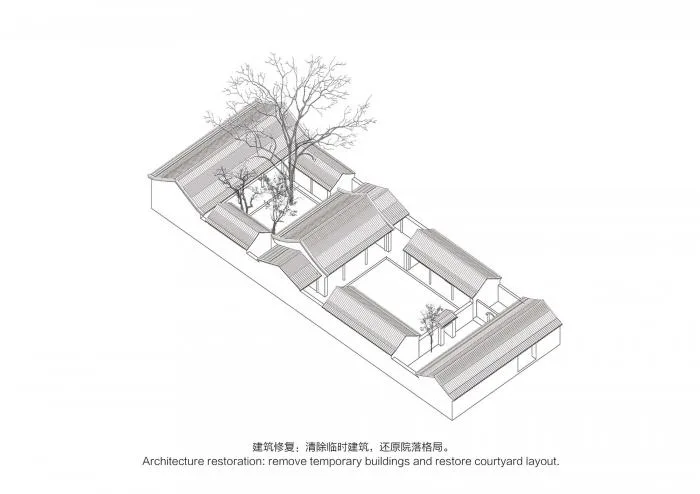
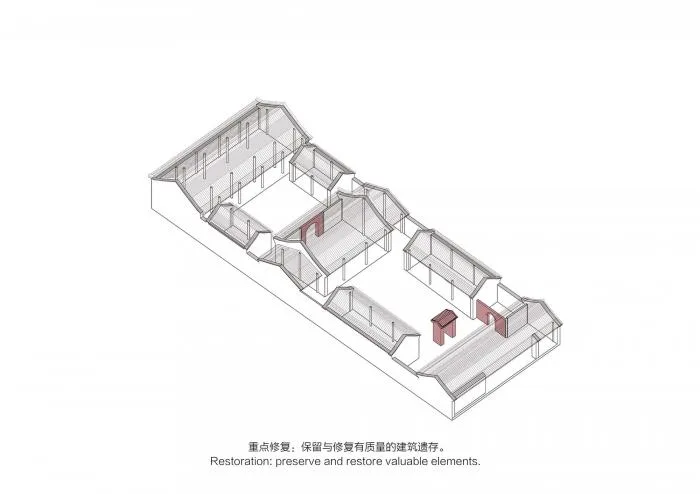
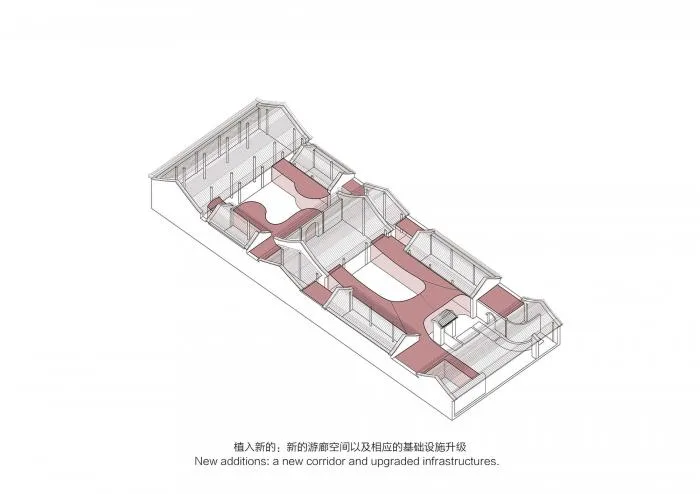
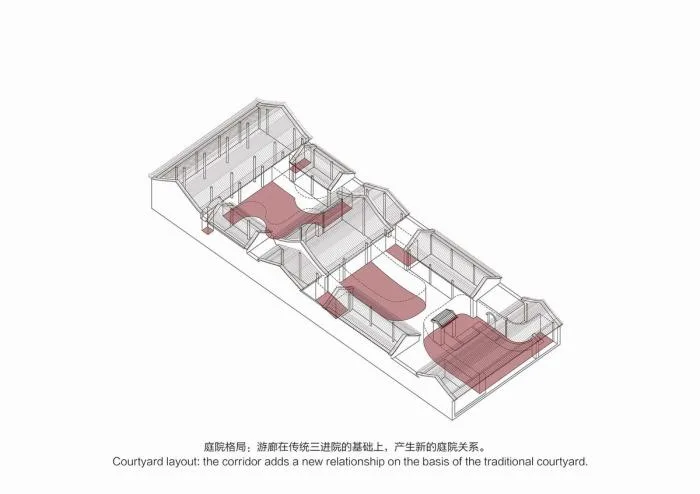
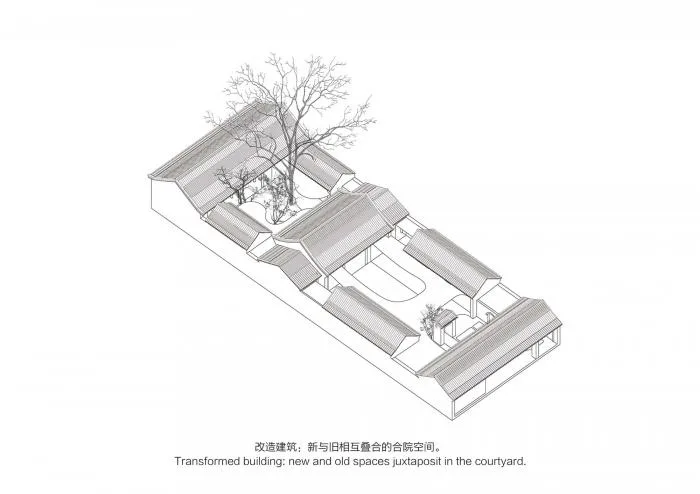
▲ Analysis diagram
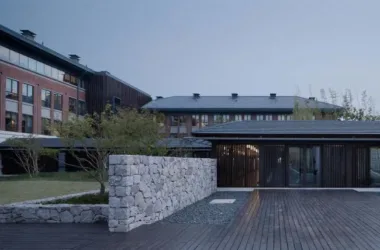
The entrance area serves as a parking lot. The design retains the original roof of the building while removing walls and repositioning the main entrance to maximize parking space. The front yard preserves and restores significant historical artifacts such as gatehouses, carved arches, and even a dead tree. The walls separating the front and rear yards have been replaced with transparent corridors, which now serve as the new building entrance.
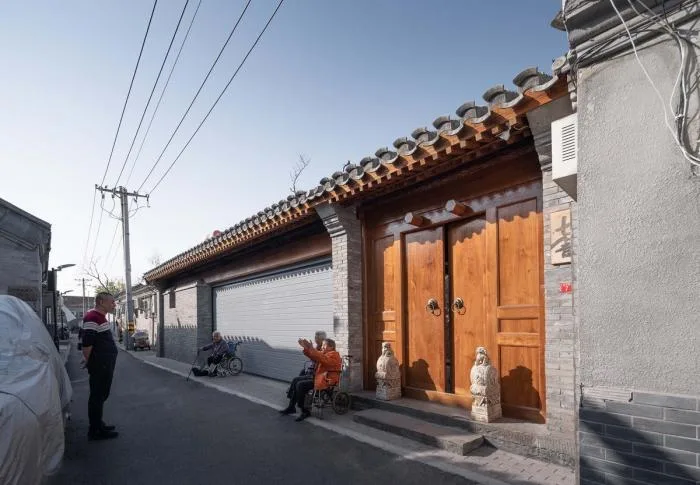
▲ Along the outer facade and alley entrance
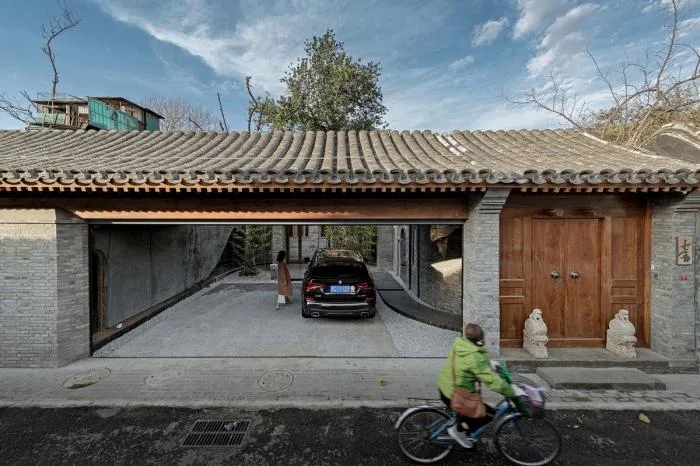
▲ Exterior facade
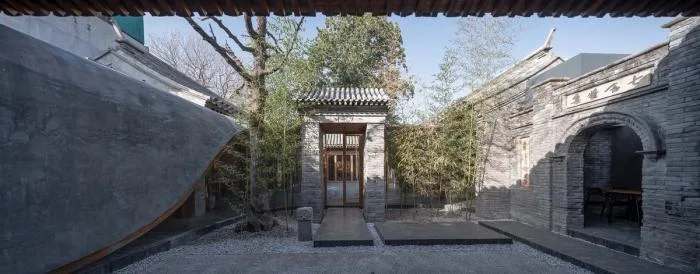
▲ Entrance during daytime
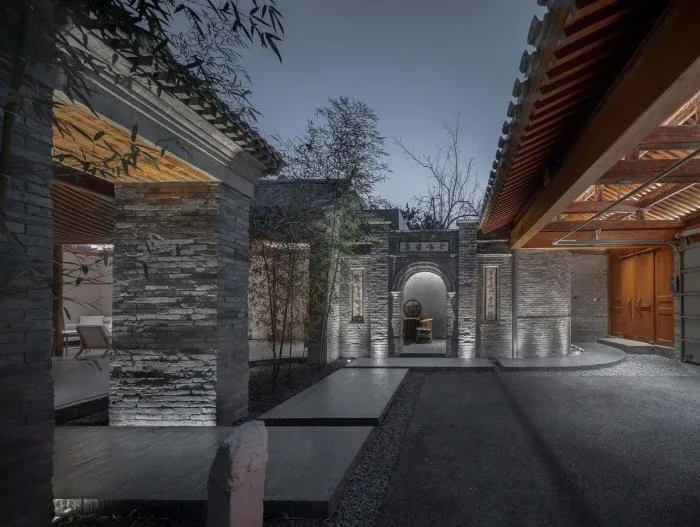
▲ Entrance at night
The corridor echoes the curved form of the sloped roofs, adapting to the landscape and functional requirements of the front and rear courtyards. At the entrance, the corridor gently rises, complementing the curved roofs on either side to create a circular framed view that incorporates the buildings, backyard trees, and sky. On the opposite side, the corridor’s roof slopes downward to form a curved wall that separates functional areas such as bathrooms, service rooms, and equipment rooms within the parking lot.
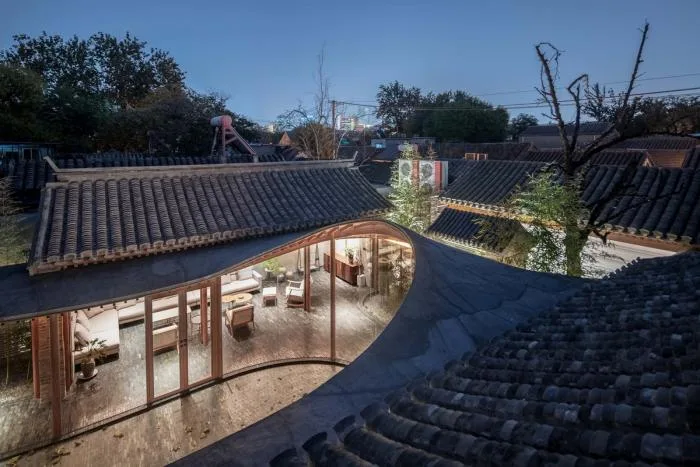
▲ Overall bird’s-eye view
The second courtyard serves as a public activity space, maintaining the original layout of a one-square, two-box, and three-room structure. It includes a living room, tea room, dining room, kitchen, and more. The division between indoor and outdoor spaces preserves the symmetrical layout, upholding the traditional courtyard’s spatial formality. Steps between buildings have been replaced with gentle ramps, and transparent corridors enhance the connection between interior public spaces and the courtyards. The dining room, located in the main building, can fully open to the courtyard through new folding doors, allowing flexible indoor activities that seamlessly extend into the curved courtyard. The central archway of the dining room has been restored to serve as the entrance to the backyard.
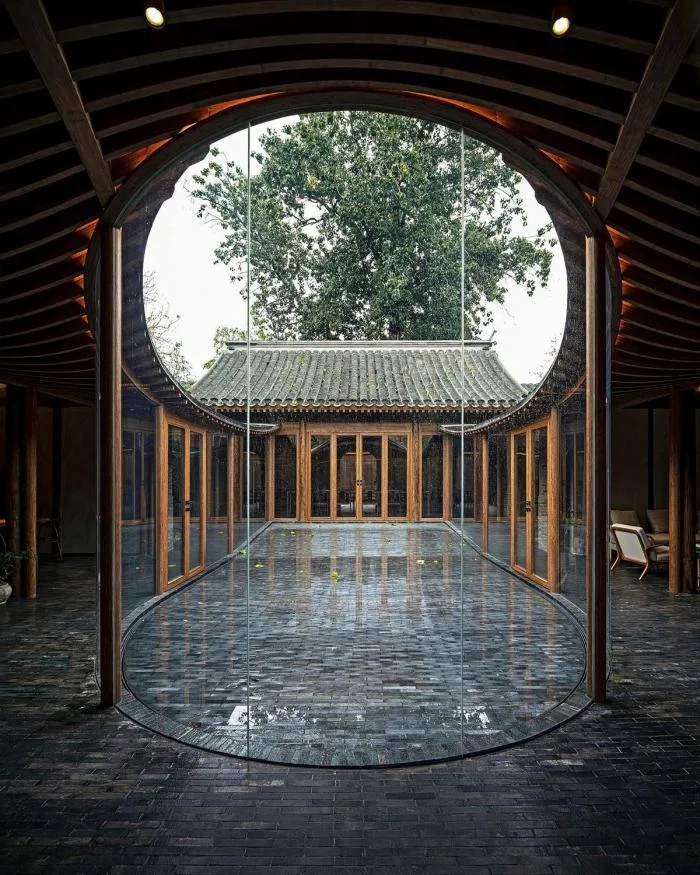
▲ Second entrance (daytime)
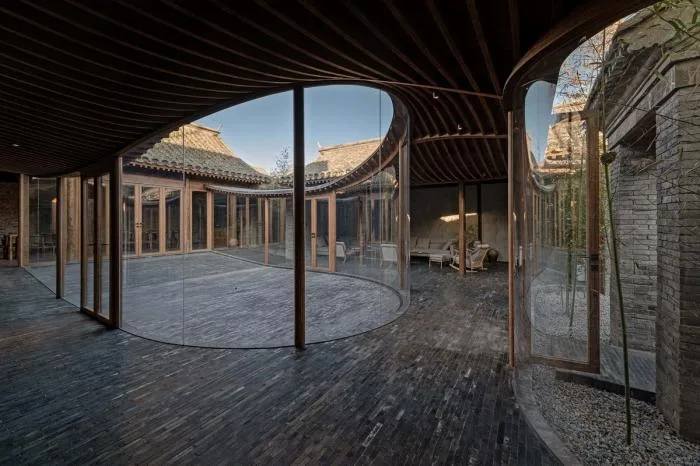
▲ Second entrance (daytime)
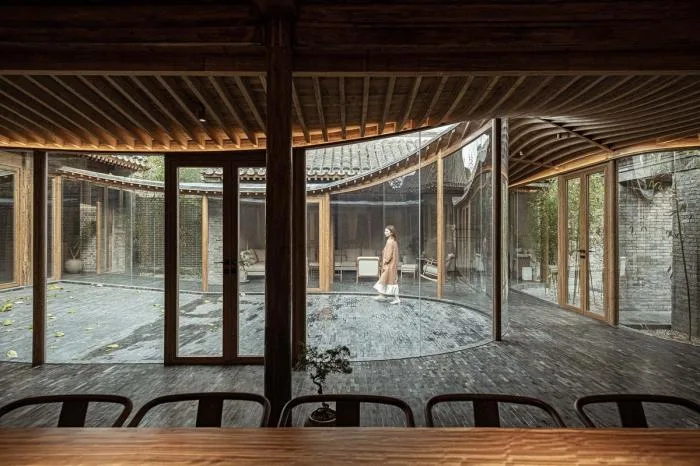
▲ Second entrance (daytime)
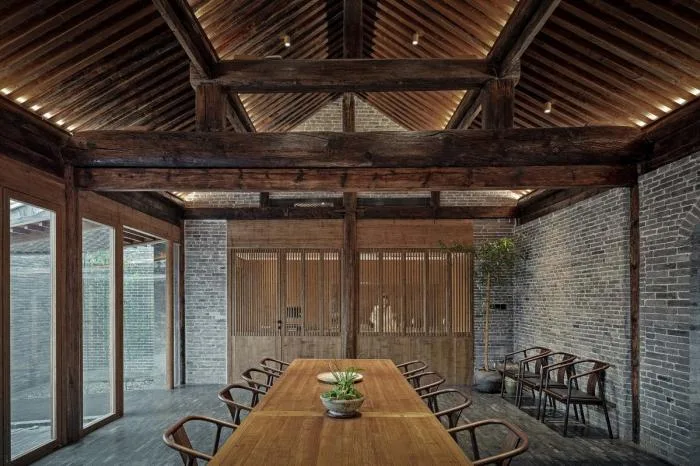
▲ Second courtyard restaurant (daytime)
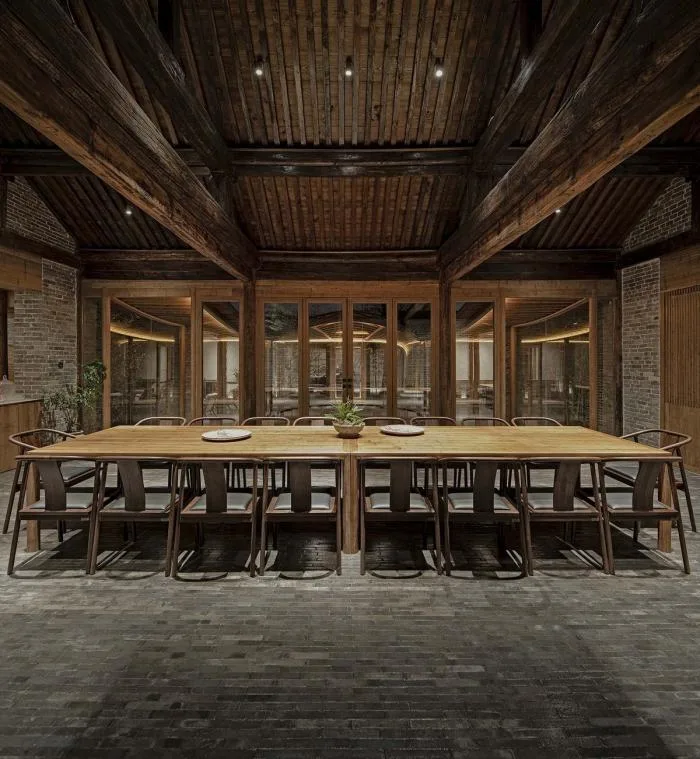
▲ Second courtyard restaurant (night)
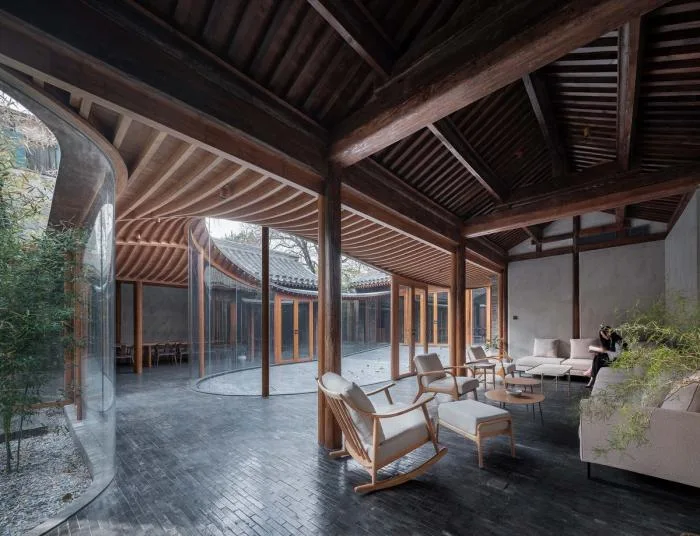
▲ Second entrance (daytime)
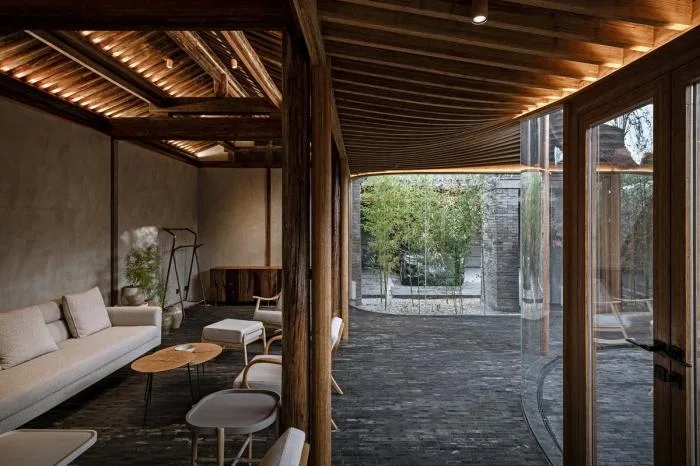
▲ Second entrance (daytime)
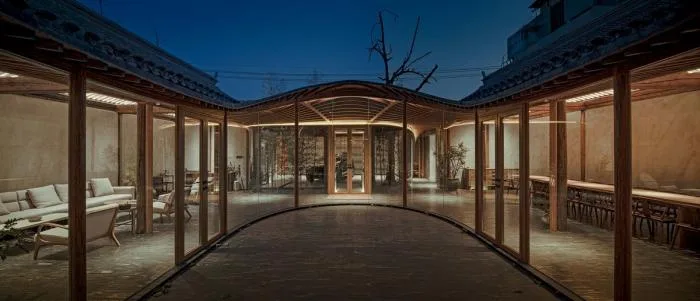
▲ Second courtyard – Night view
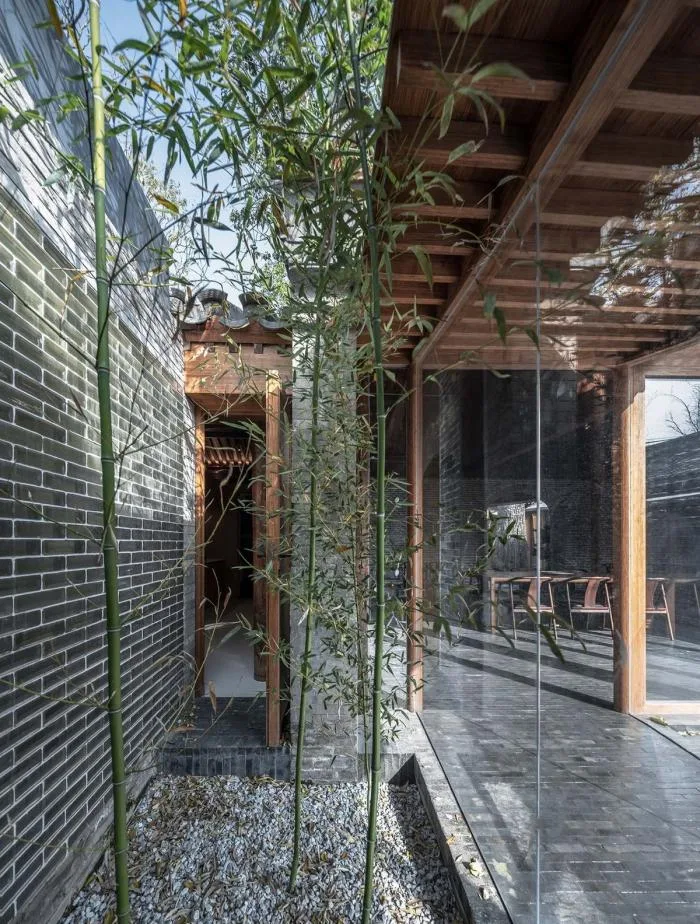
▲ Second entrance corridor
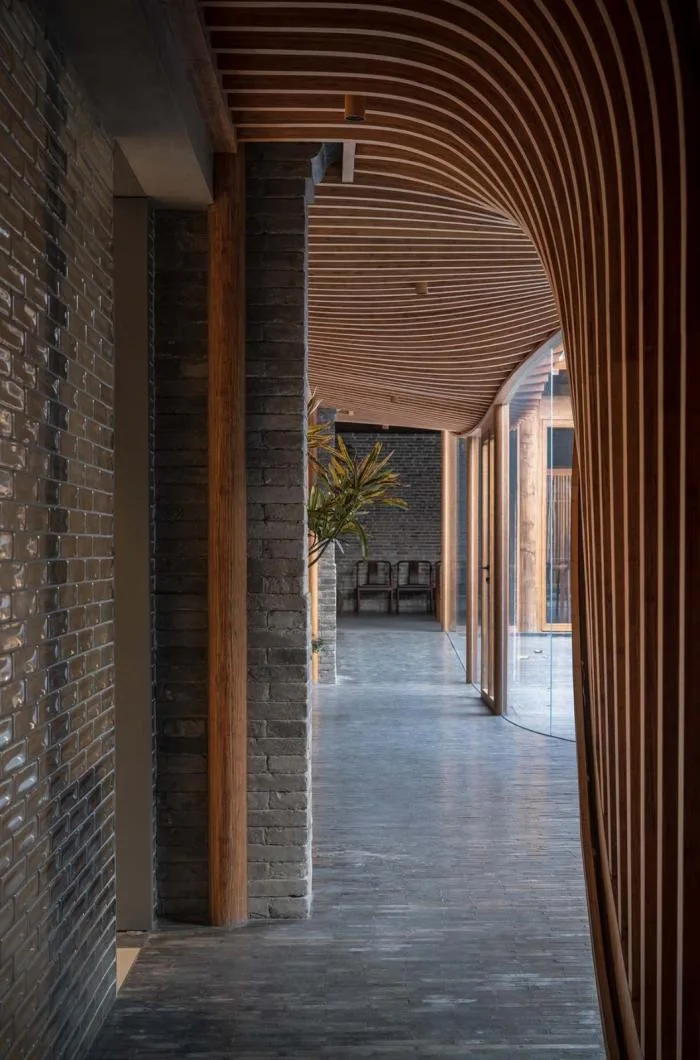
▲ Second entrance (daytime)
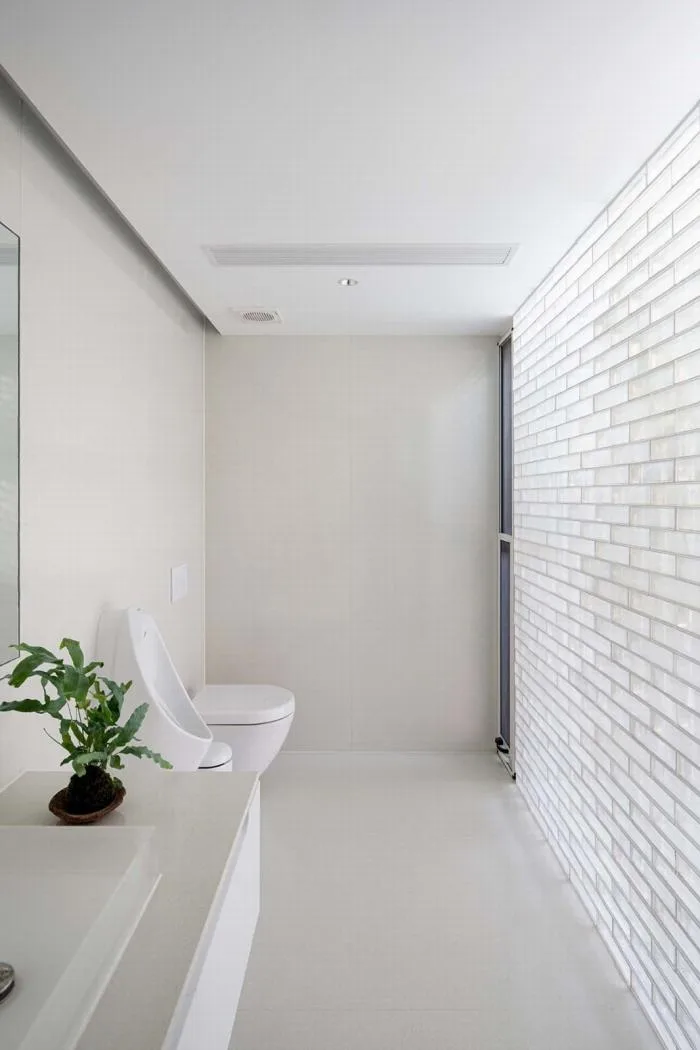
▲ Second courtyard public health area
San Jin Yuan is a residential section featuring two bedrooms along with a tea room and study. The original one-square, two-box layout remains intact, complemented by three mature trees in the courtyard. Here, the corridor evolves into a continuous curved form that interacts with the trees, creating multiple small curved leisure spaces. The two bedrooms are symmetrically arranged at the back of the building along the ridge. Both bathrooms face the small courtyard, ensuring ample lighting and ventilation.
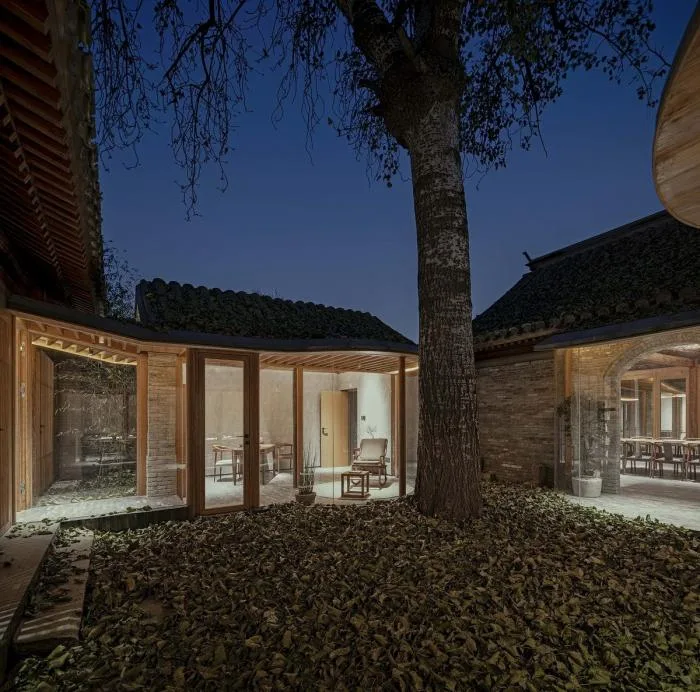
▲ Night view of San Jin Yuan
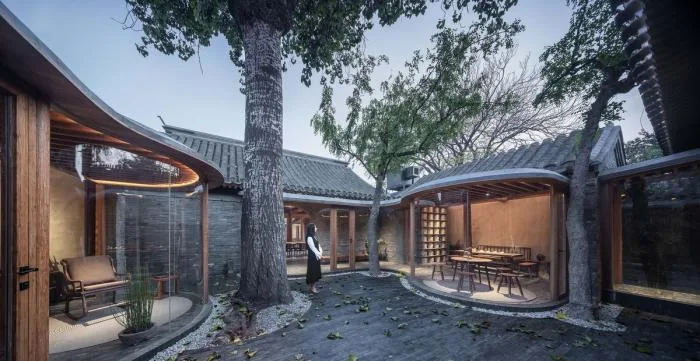
▲ Tea room in the three-entry courtyard
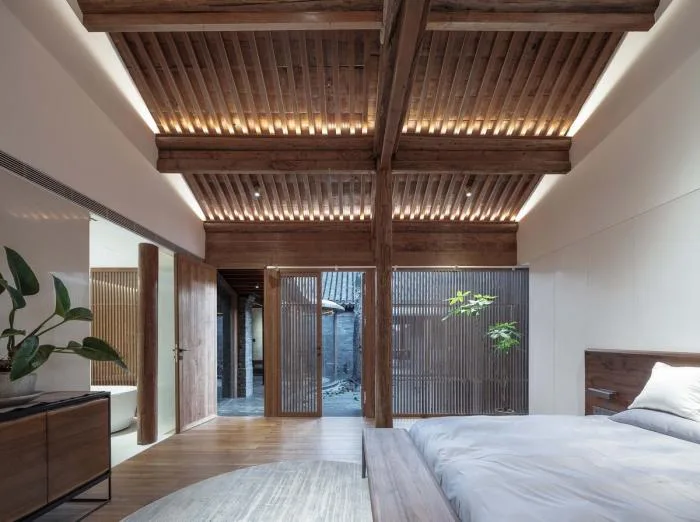
▲ Master bedroom in the three-entry courtyard
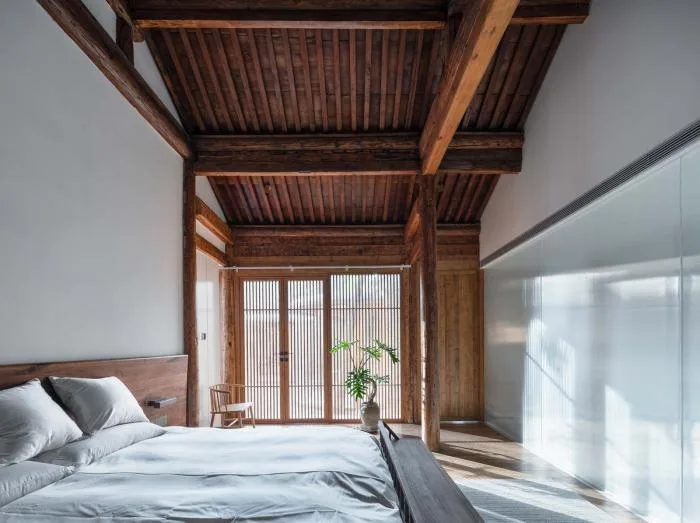
▲ Third bedroom in the courtyard
While preserving the traditional architectural materials, the design introduces new materials in a balanced manner, emphasizing the preservation of the passage of time. This results in subtle contrasts and overlaps between old and new. The original building structure remains intact, with damaged elements replaced by pine wood. New corridors, doors, windows, and some furniture incorporate bamboo steel as a modern counterpart to the old wood. The corridor features a frame structure supported by ribbed beams and slabs, designed to be as transparent and lightweight as possible to blend seamlessly with the historic environment. Interiors combine functional layouts with varied old and natural wood furniture, allowing different wood textures and colors to harmonize.
Traditional roofs lack modern waterproofing and insulation. Therefore, the renovation maintains the original gray tiled roof while optimizing the roof construction method to improve its physical properties.
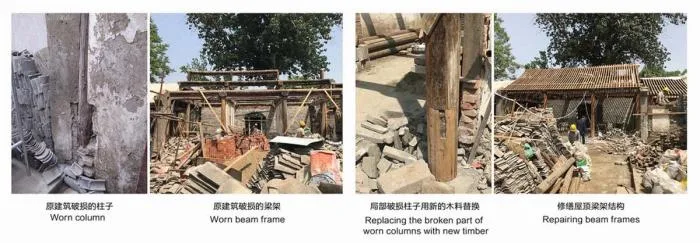
▲ Structural repair
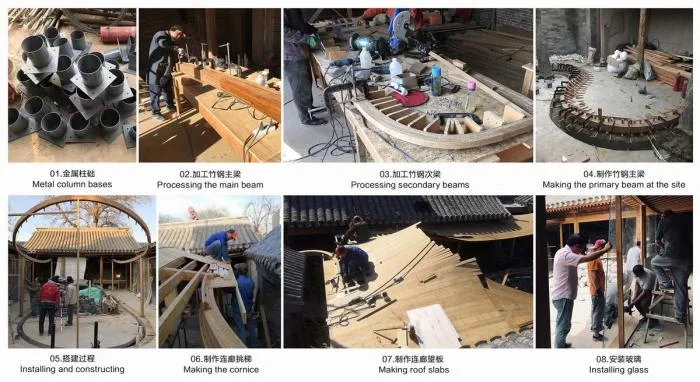
▲ Corridor construction
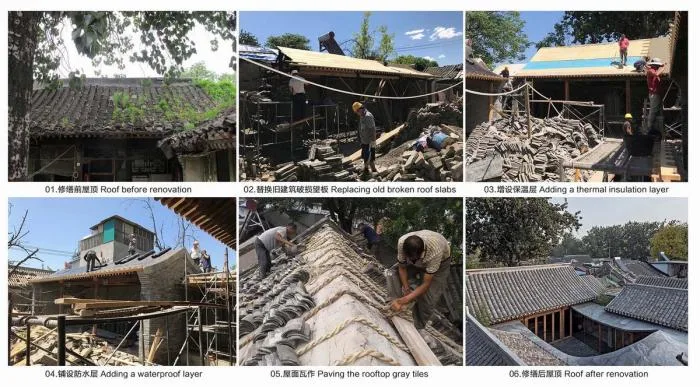
▲ Roof repair
The new corridor roof is crafted from polymer mortar with a smooth gray finish, harmonizing with the textured tiled roof. The old building’s walls are repaired using original bricks recovered from the courtyard, recycling previously demolished materials. Both indoor and outdoor floors are paved with these gray bricks, maintaining a seamless integration between inside and outside spaces. Some new walls incorporate translucent glass bricks sized to match the original gray bricks.
During construction, stone fragments, clay pots, grinding discs, and other artifacts were unexpectedly discovered. These have been repurposed as landscape elements, steps, and planters to enhance indoor and outdoor spaces. Wooden beams discarded during restoration were transformed into seating, giving new life to old materials.
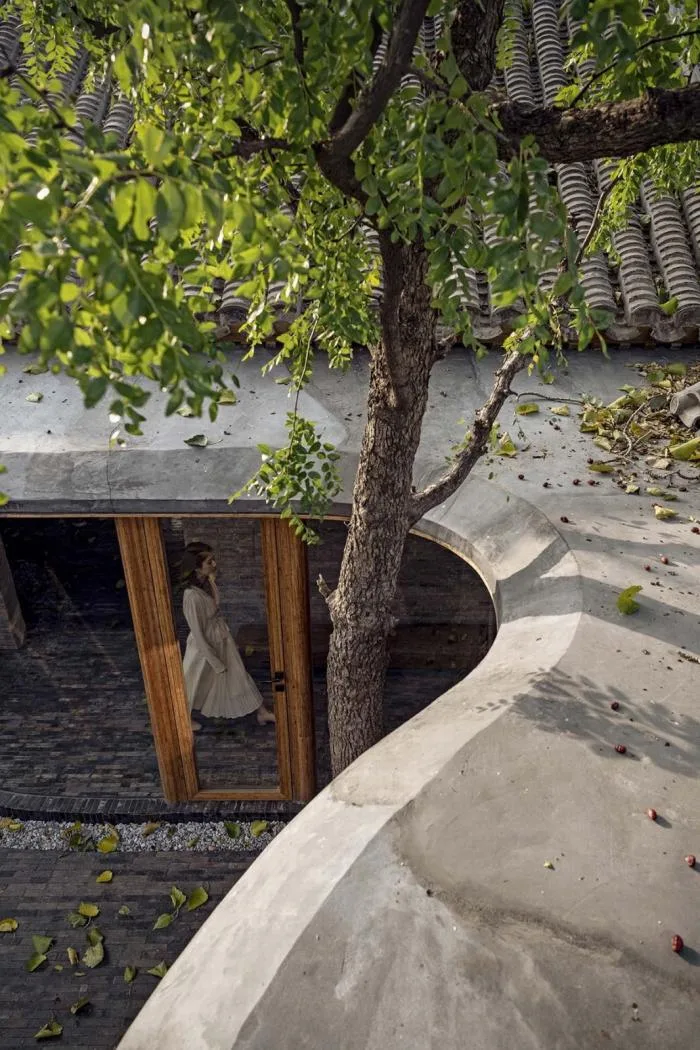
▲ Aerial view
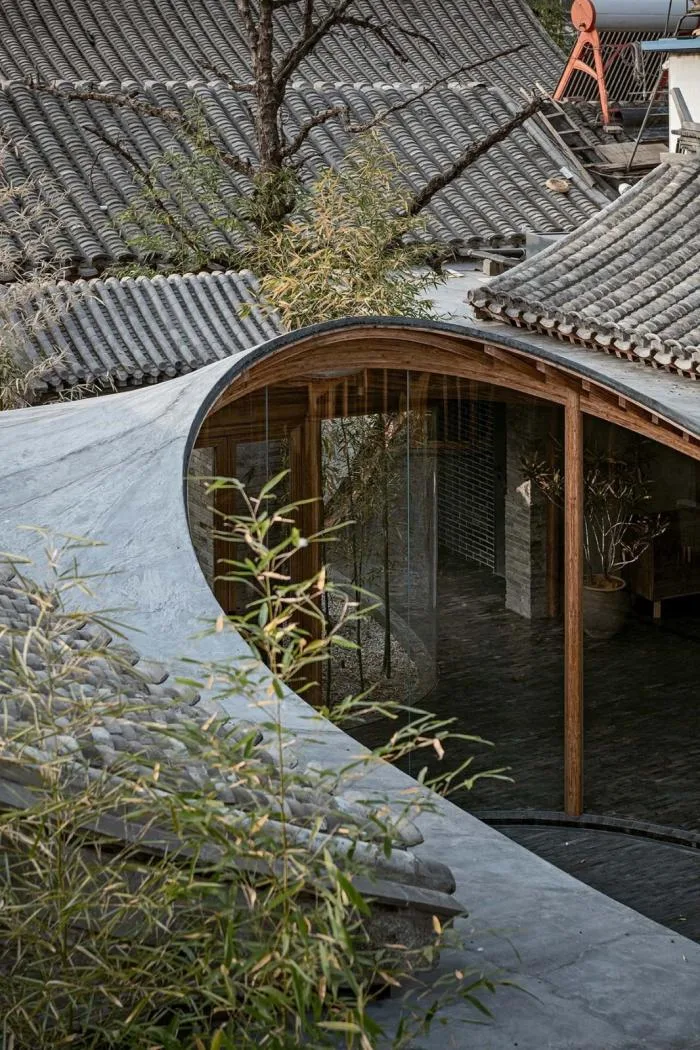
▲ Aerial view
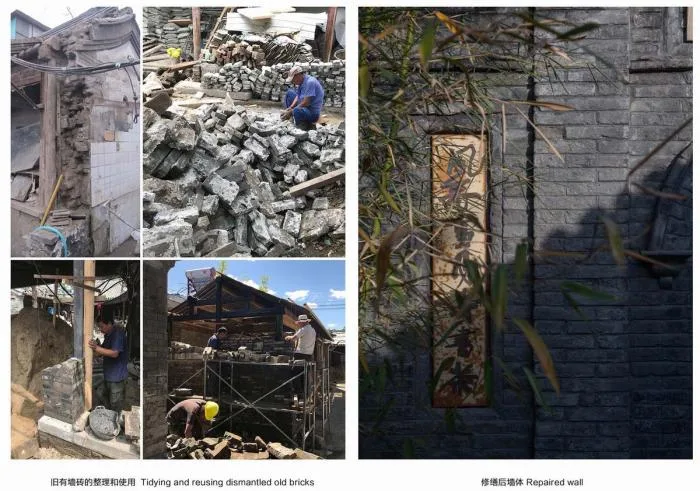
▲ Reuse of original bricks
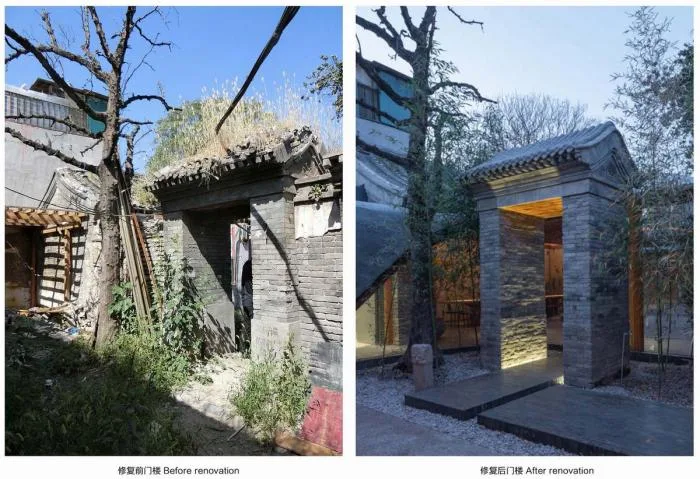
▲ Gate tower restoration
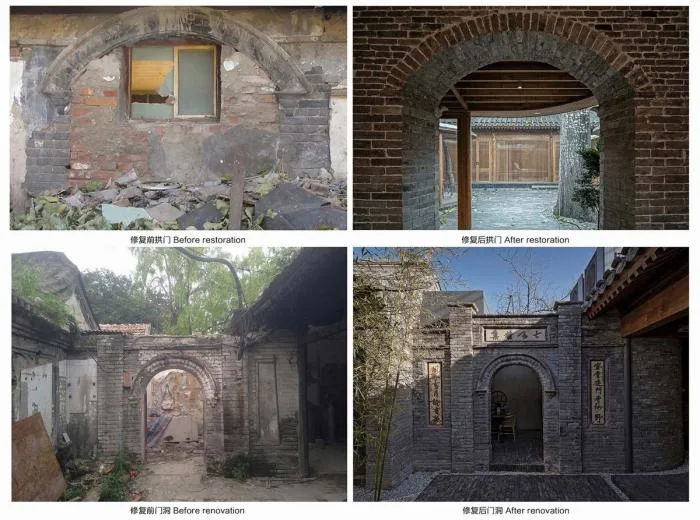
▲ Doorways and arch repairs
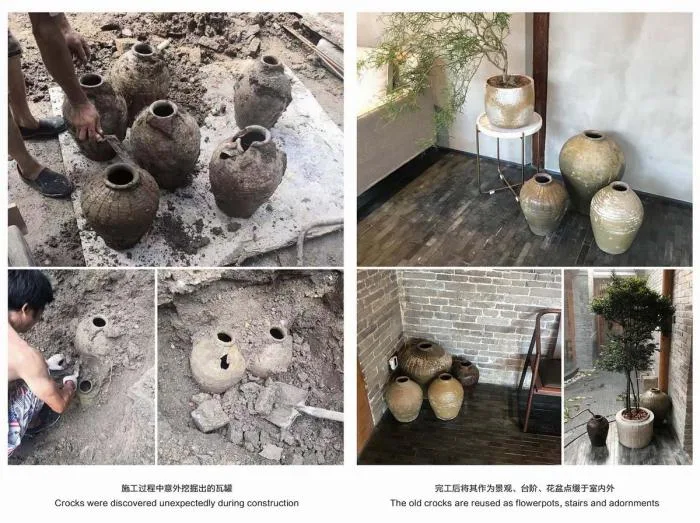
▲ Reuse of old clay pots
Project Drawings
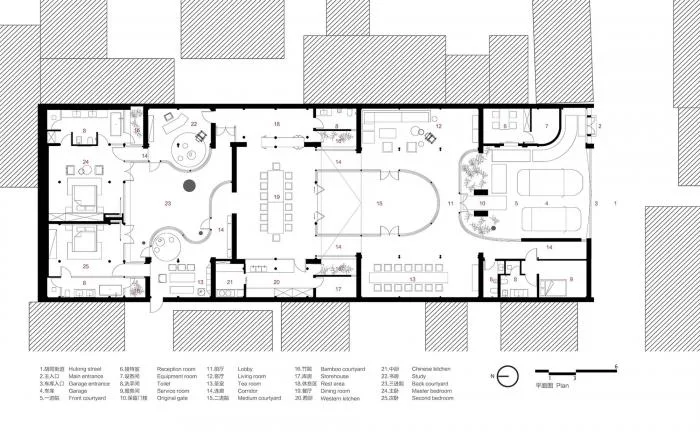
▲ Plan view
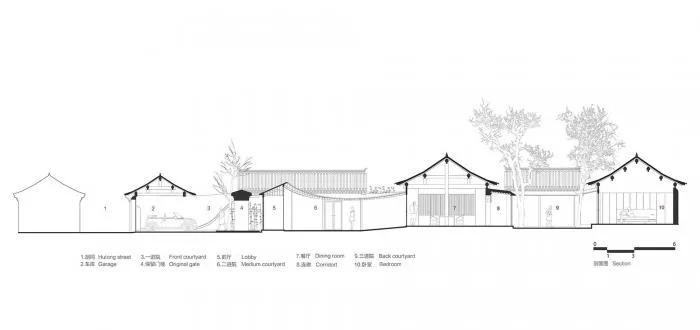
▲ Sectional view
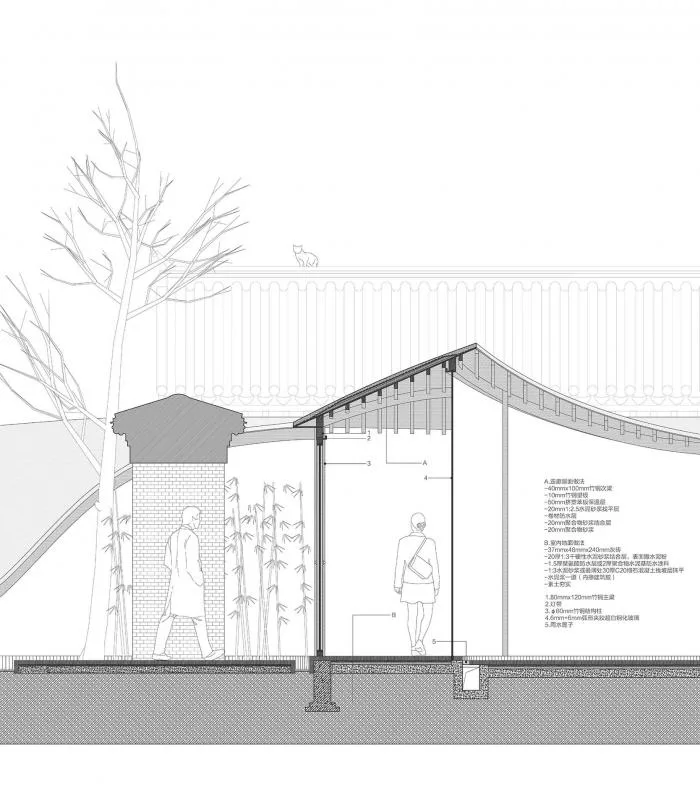
▲ Structural node diagram
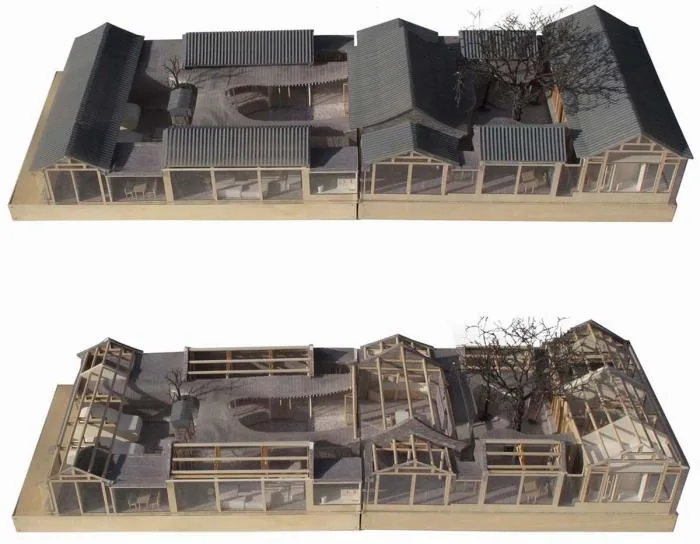
▲ Model
Project Information
Project Type: Independent Residential, Renovation
Location: Beijing, China
Designer: Architectural Camp Design Studio
Area: 500 m²
Year: 2020
Photographer: Wu Qingshan
Manufacturers: Toto, Hongya Zhuyuan Technology
Chief Designer: Han Wenqiang
Project Designer: Wang Tonghui
Structural Consultants: Zhang Yong, Hongya Zhuyuan Technology
Mechanical & Electrical Consultants: Zheng Baowei, Yu Yan, Li Dongjie
Lighting Consultant: Dong Tianhua
Landscape Consultant: Zhang Xiaoguang
Image Editors: Wang Tonghui, Wen Chenhan
Construction Team: Chen Weixing et al., Hongya Zhuyuan Technology
Video Production: Wang Ning













Must log in before commenting!
Sign Up