
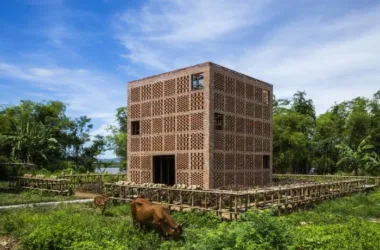
This project employs contemporary vocabulary to engage harmoniously with its surrounding rural residential areas. It draws inspiration from traditional classic architectural spaces, carefully extracting their original and consistent spatial composition relationships. The use of red bricks as the primary building material reflects traditional craftsmanship and wisdom, preserving the form and integrity of village clusters. This approach responds thoughtfully to rural traditional culture, breathing soul into the architecture and creating a space that feels authentic and pure.
▲ Overall aerial view
Spatial System
Built around the framework of two entrance courtyards, different building blocks are integrated into the alleyways by separating and spacing them apart. This design creates multiple pathways and complex spatial interfaces, encouraging movement and exploration.
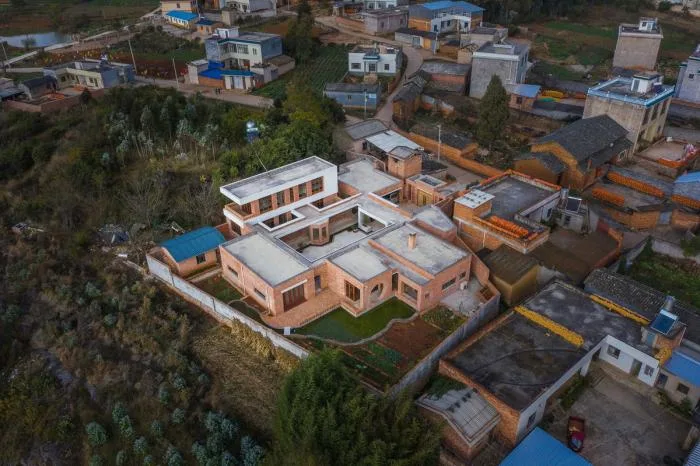
▲ Overall bird’s-eye view
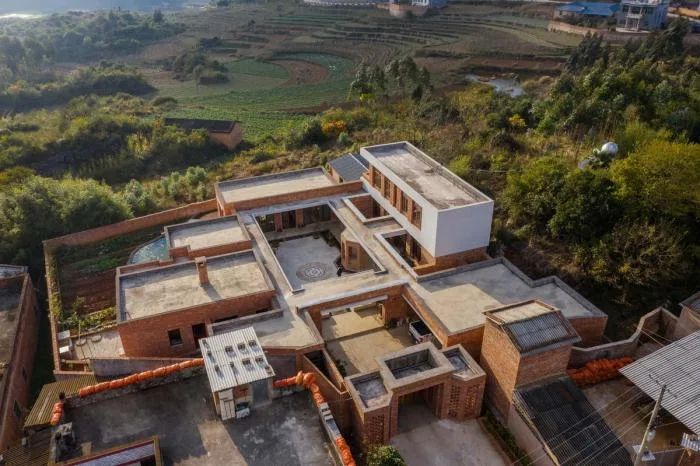
▲ Overall bird’s-eye view
Central Courtyard – An Abstract Garden of Extreme Compression
The design of the courtyard space is inspired by the Jixu Studio in Wangshi Garden. The small building on the north side is recessed to create two intimate courtyards, separated by hollowed-out tiles and open space. This arrangement effectively addresses privacy concerns in the bedroom area and alleviates any sense of confinement within the courtyard.
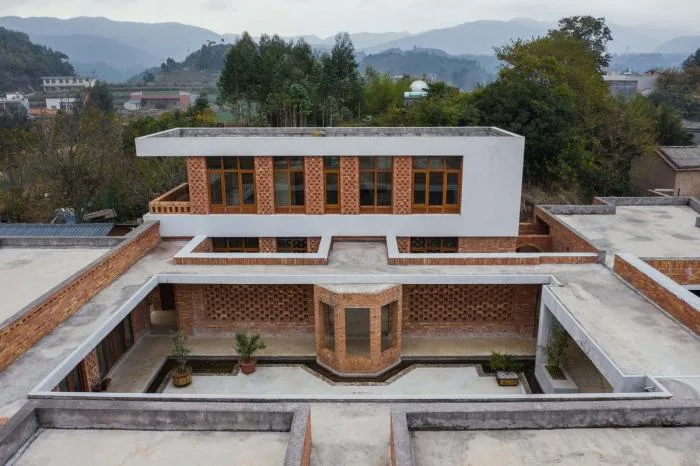
▲ Joint Hospital
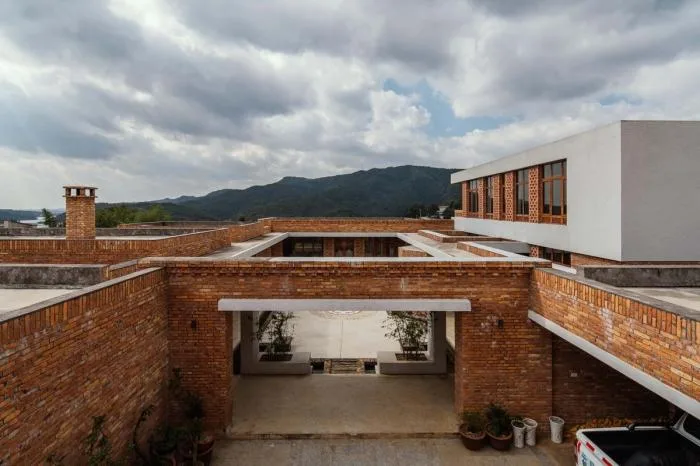
▲ First and second hospital admissions
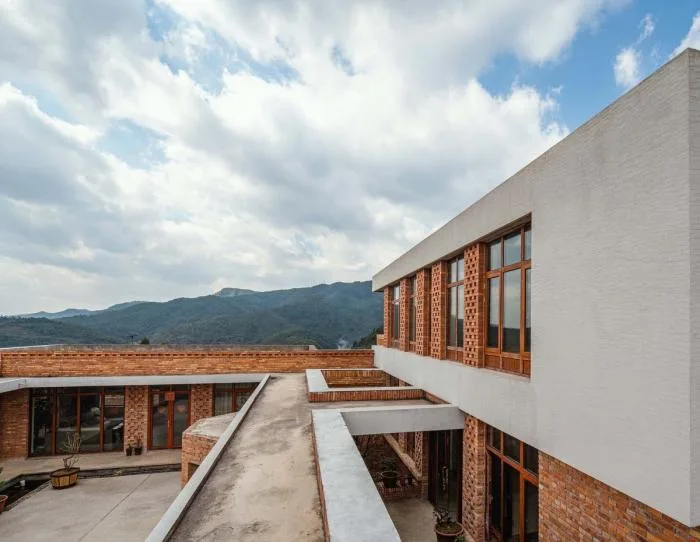
▲ Separation of the main building block
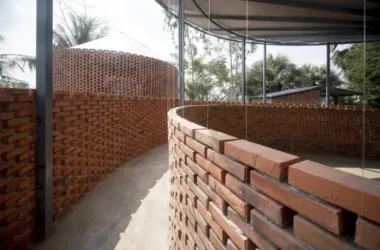
The half pavilion, constructed with red bricks, introduces a folded corridor effect, breaking the conventional square shape of the courtyard. The water pool surrounding the pavilion’s entrance provides seating and leaning space, reminiscent of the “Bamboo Pavilion” in the Webmaster Garden, framing views from various angles.
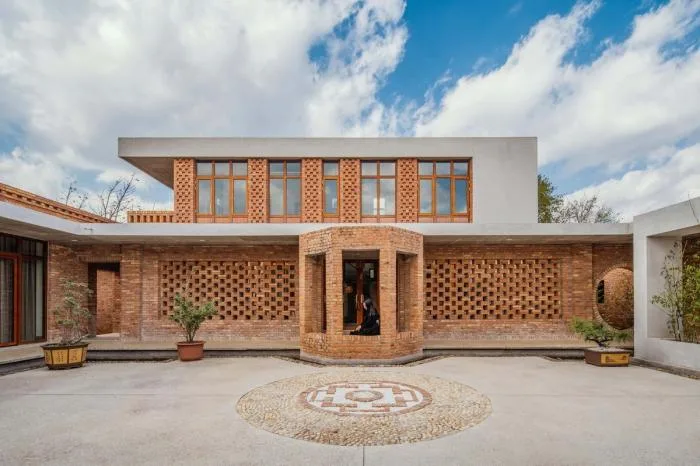
▲ Half Pavilion and Courtyard
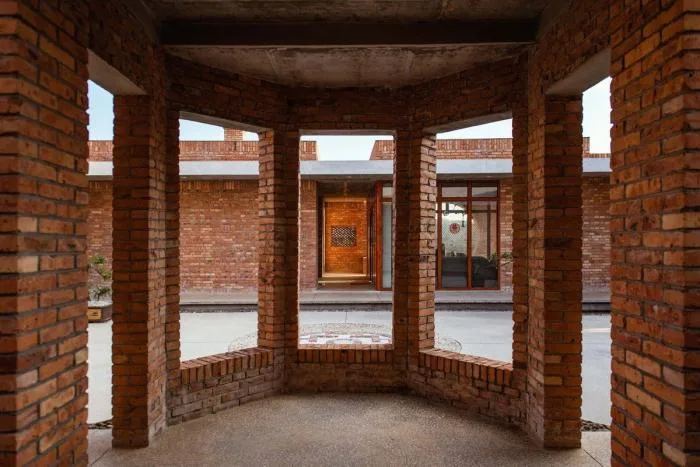
▲ Half Pavilion
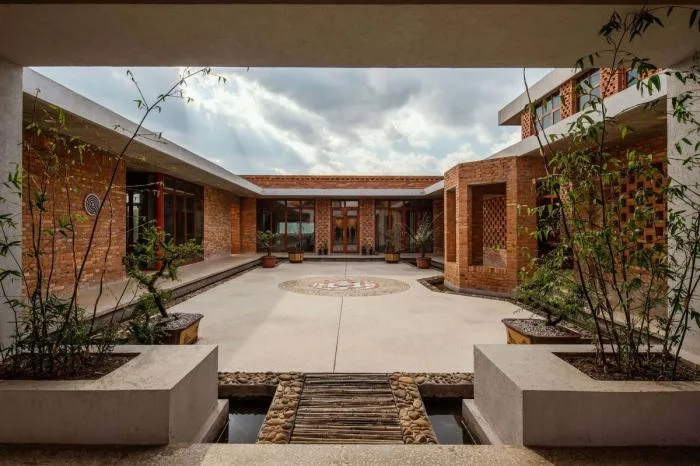
▲ Perspective from the second entrance
At the junction between the first and second courtyards stands the Baoyin Pavilion, or prayer pavilion. Its veranda has been extended forward, becoming a prominent feature. Connected to the back sill, the veranda enhances the visual depth and layering of the courtyard.
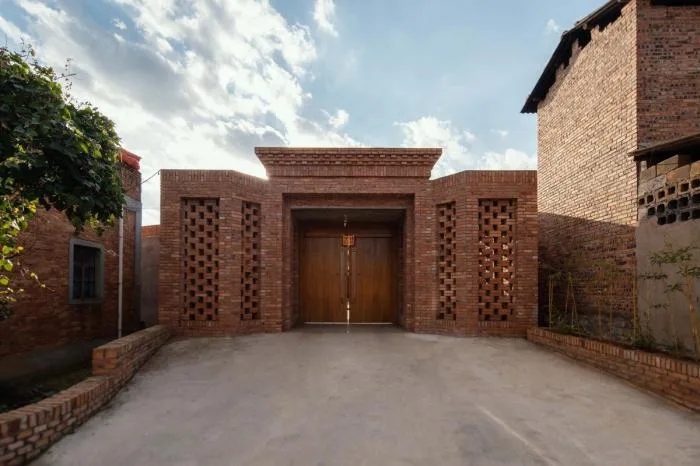
▲ Street gate
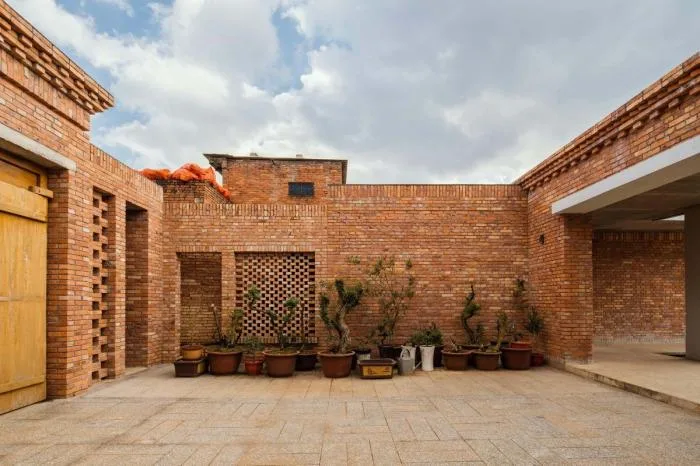
▲ Entrance to the complex
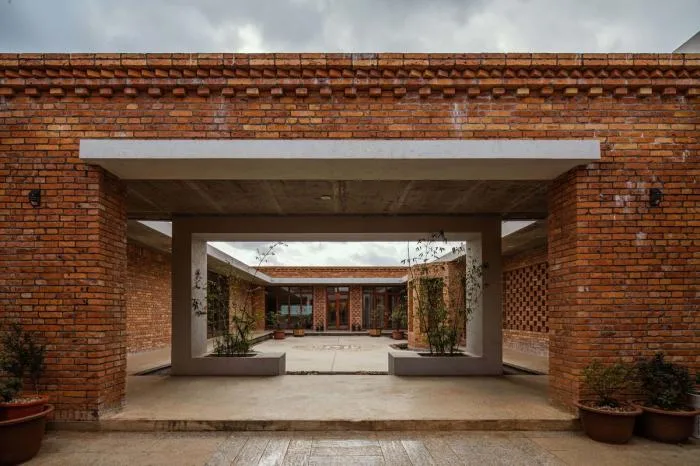
▲ View from the second entrance
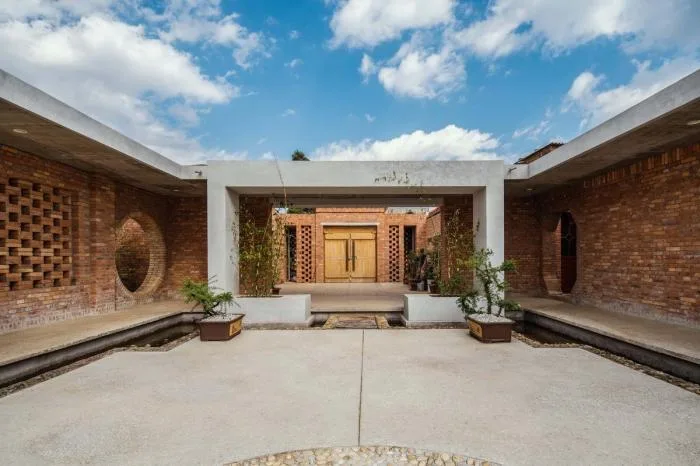
▲ Looking back at the gate from the courtyard
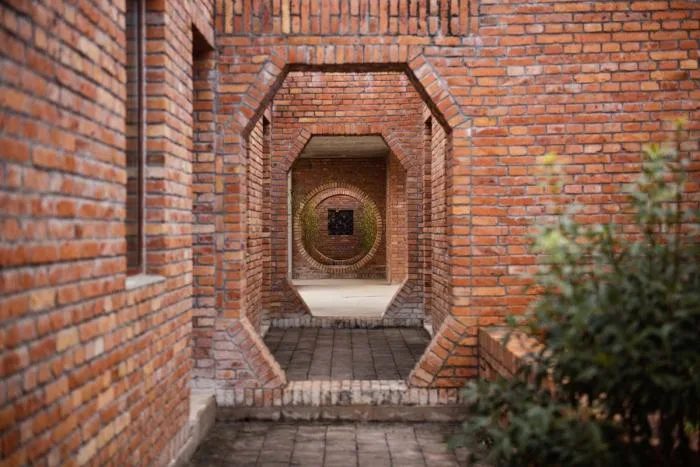
▲ Entrance perspective between the first and second courtyards
The courtyard floor design follows a mandala pattern concept, featuring a red brick altar at the center symbolizing the main deity, surrounded by a stream acting as an outer path. The borders are lined with pebbles and partially filled with stones, simulating a natural stream landscape.
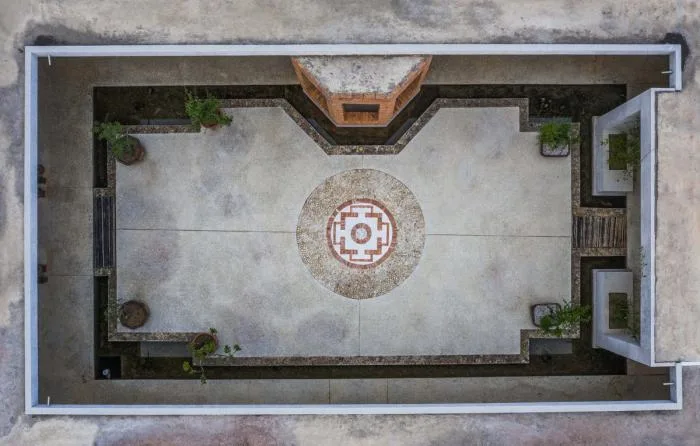
▲ Aerial view of the main courtyard
The surrounding corridor’s floor extends cantilevered over the stream, concealing visual boundaries. At each of the courtyard’s four corners, the stream widens into square pools where water lilies float peacefully, adding a serene, detached atmosphere.
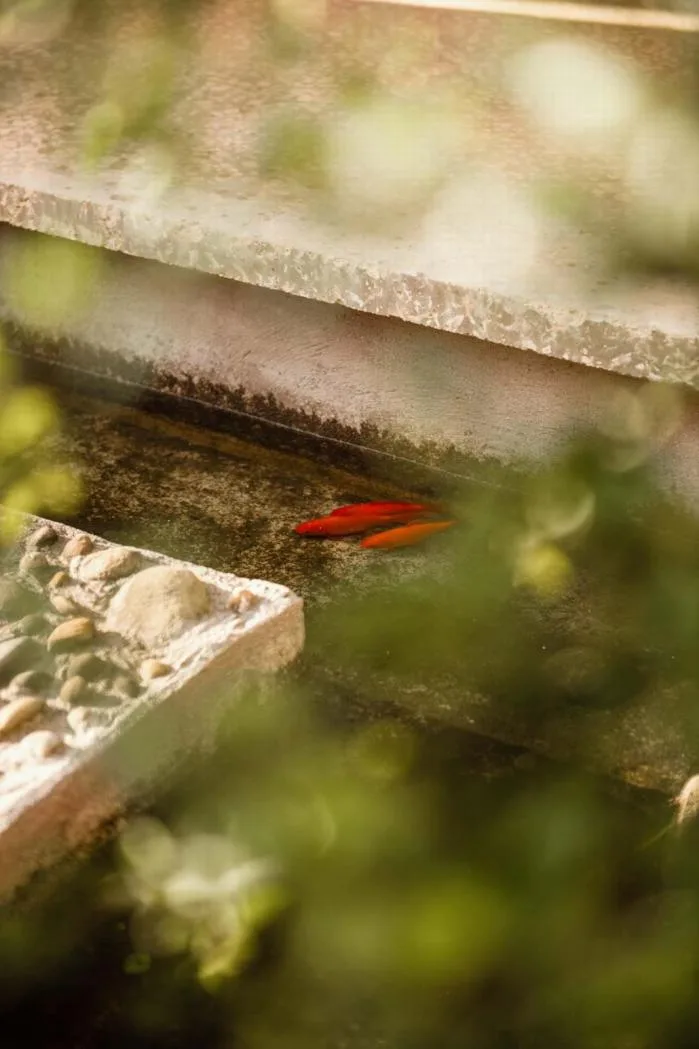
▲ Stream bordered by raised wooden boards and pebbles
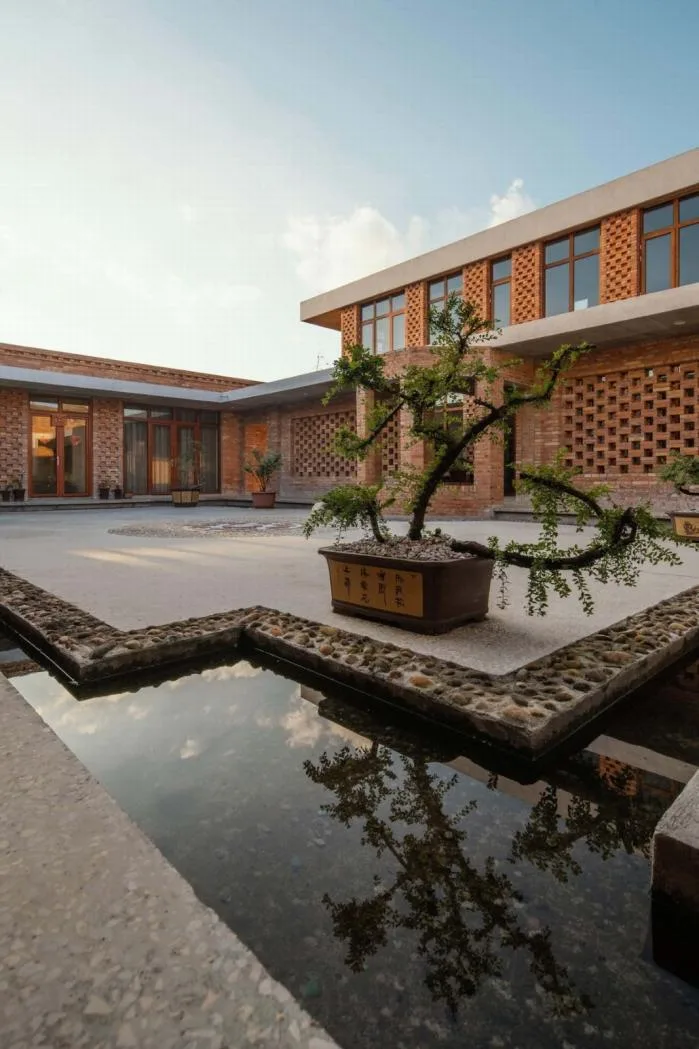
▲ Square pool and courtyard
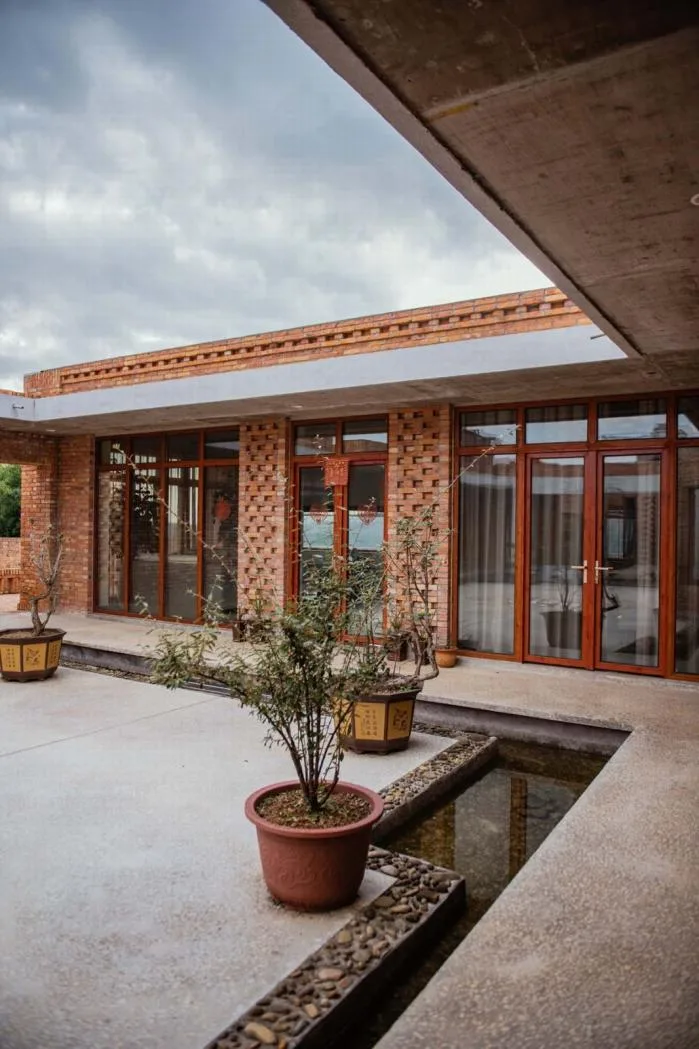
▲ Covered eaves providing shelter
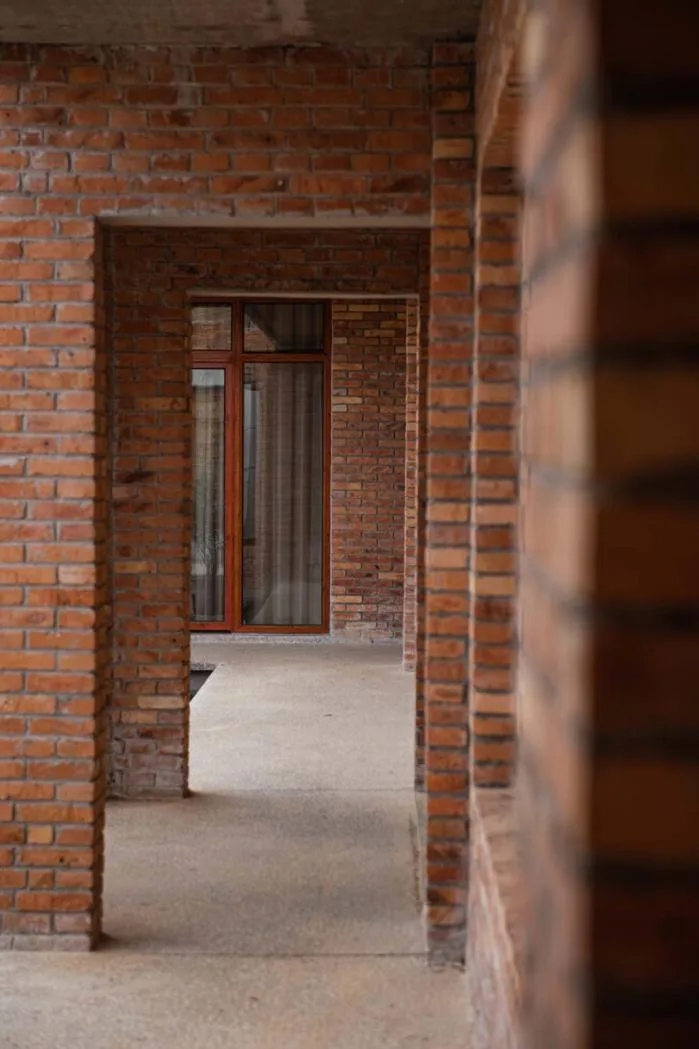
▲ Eave corridor
The central courtyard condenses the sky and earth to an extreme degree by eliminating traditional elements like rockeries and water pools. This leaves only an abstract perception, blurring and redefining the conventional concept of a garden.
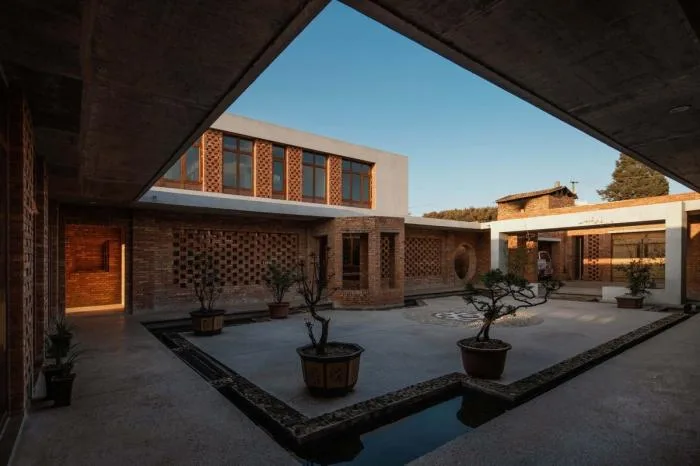
▲ Sunset illuminating the Buddhist niche
Peripheral Garden – A Retreat Back to Garden Fields
The living room, dining room, and sister’s bedroom form a cluster of buildings designed to evoke a relaxed atmosphere reminiscent of “winding, slanting small pond pavilions.” This creates a meandering, lost path that feels like a fragment from a Ming and Qing literati garden. This fragment represents just a corner of the “field residence,” where simplicity and rustic garden scenery define the ambiance. From the cultivation room, distant mountains can be enjoyed at leisure.
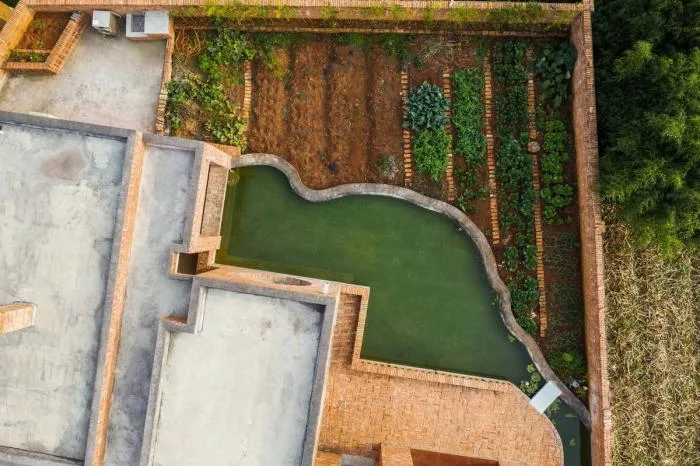
▲ Yuantian
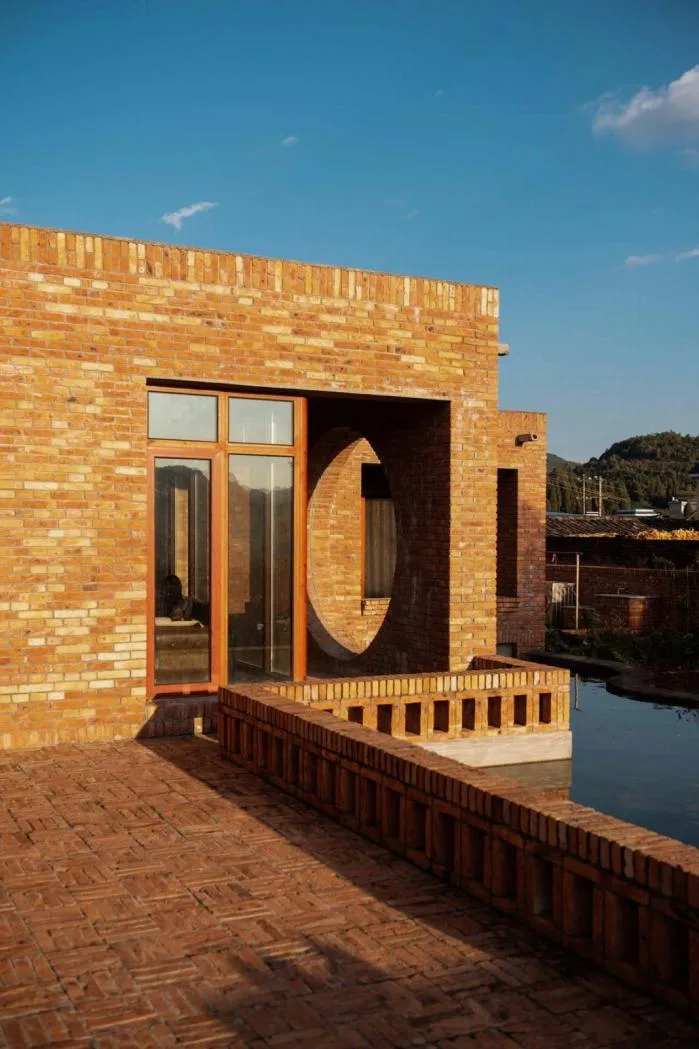
▲ Meandering paths creating a sense of discovery
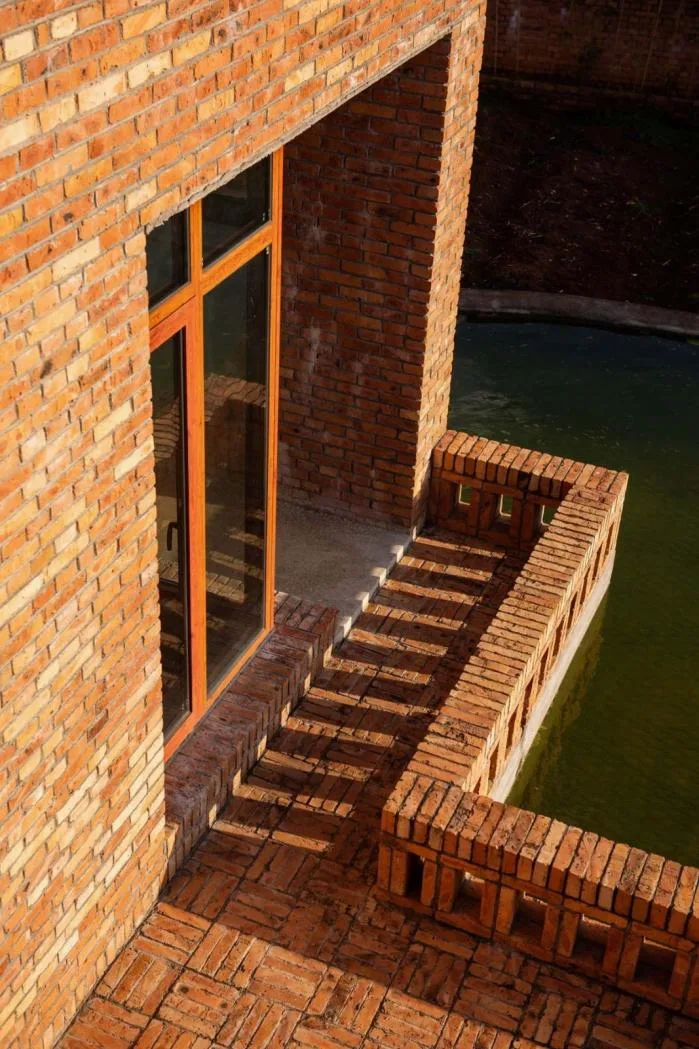
▲ Meandering paths creating a sense of discovery
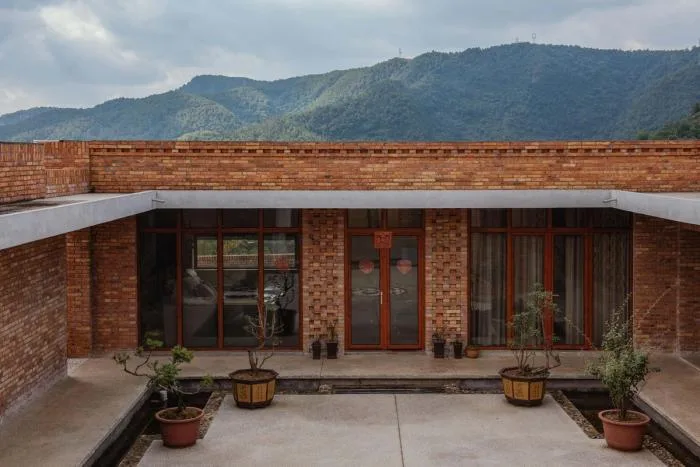
▲ Courtyard with distant mountain views
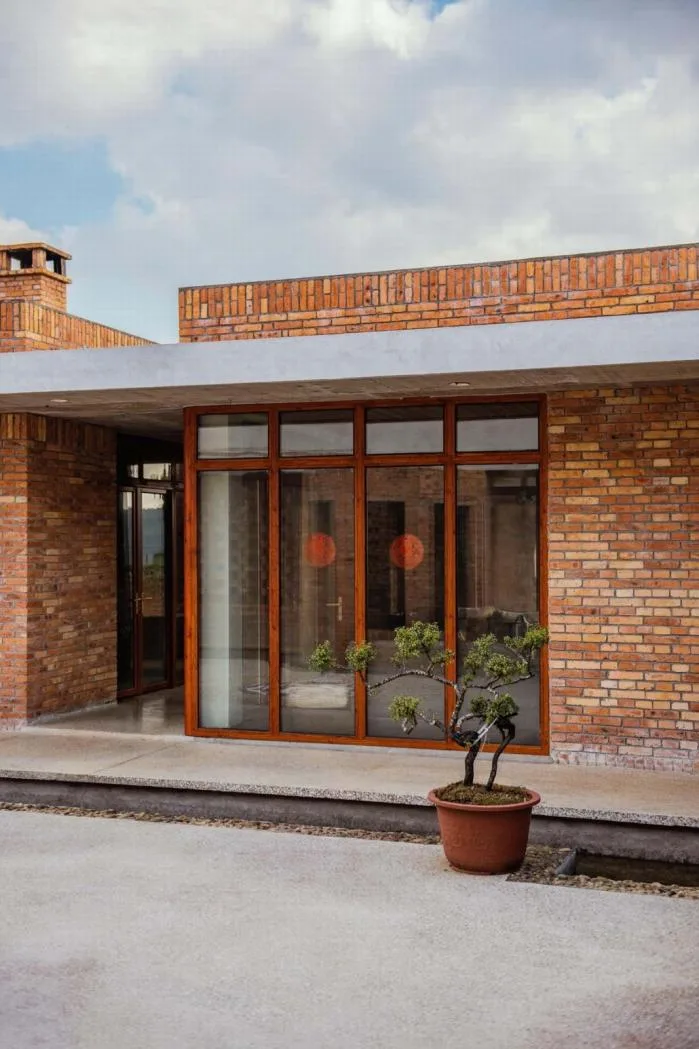
▲ Contrast of reality and concept in the restaurant area
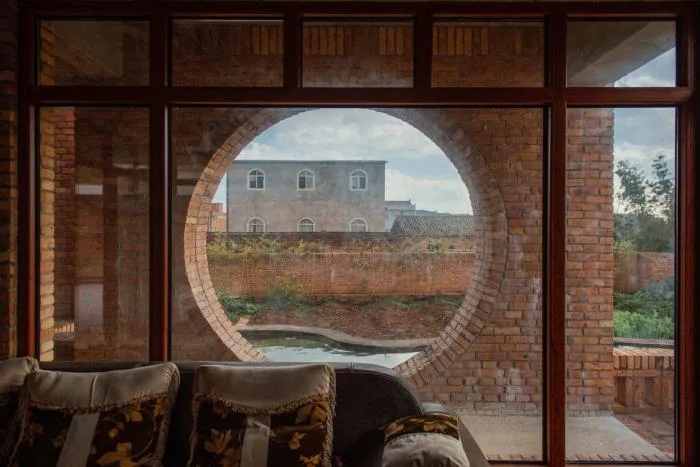
▲ View towards Yuantian from the restaurant
▲ Composite interface outside the restaurant
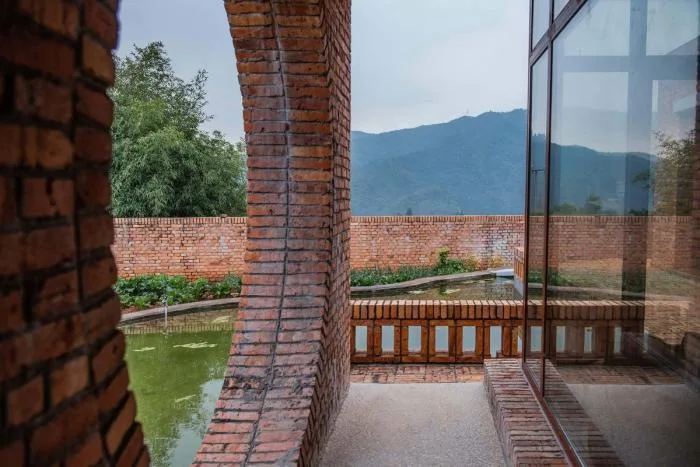
▲ Composite interface outside the restaurant
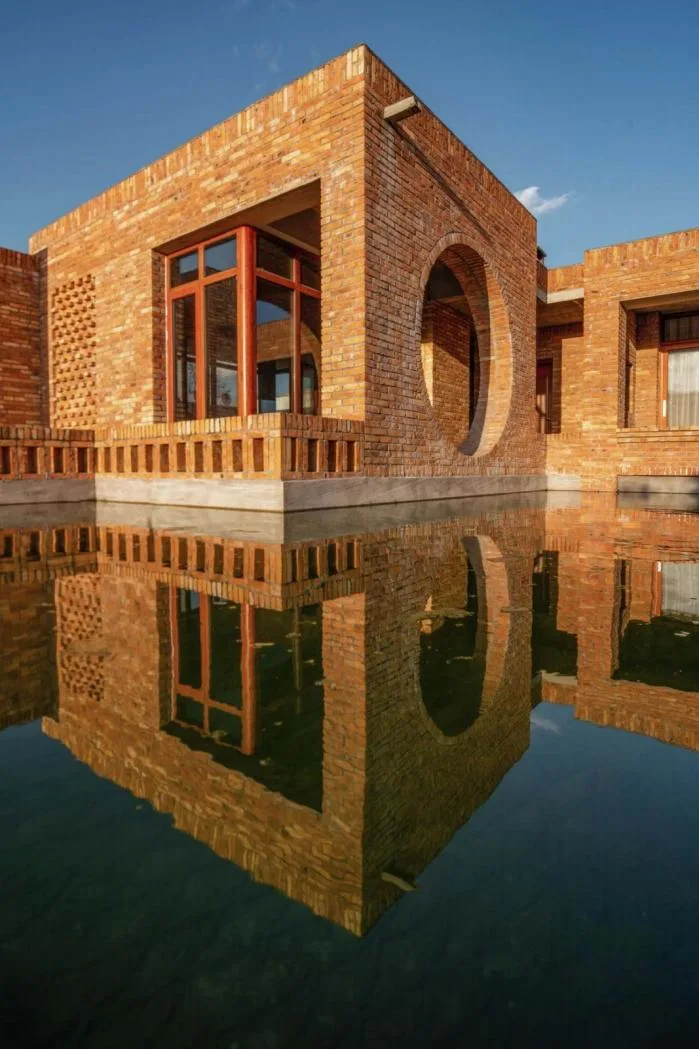
▲ Reversed interface relationship of the “Wuzhu Youju Pavilion”
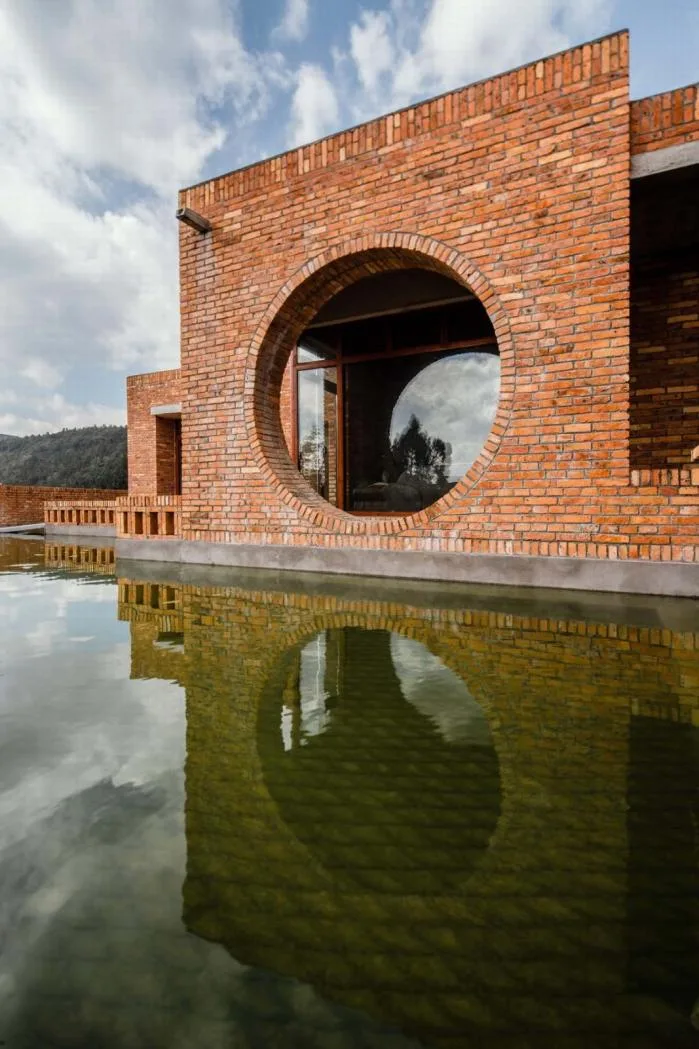
▲ Gentle waves
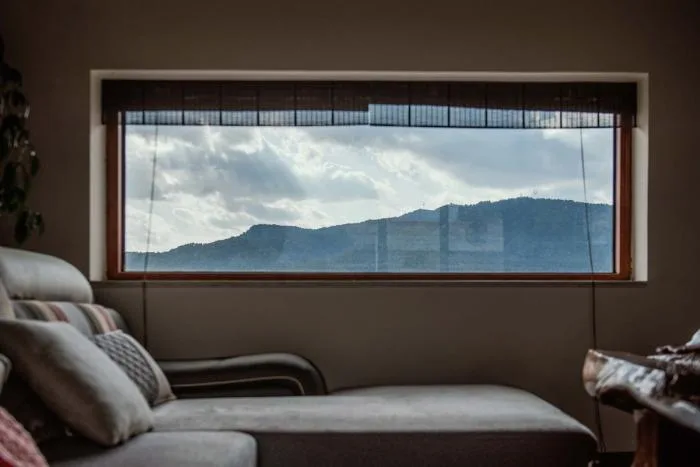
▲ View of distant mountains from the living room’s long window
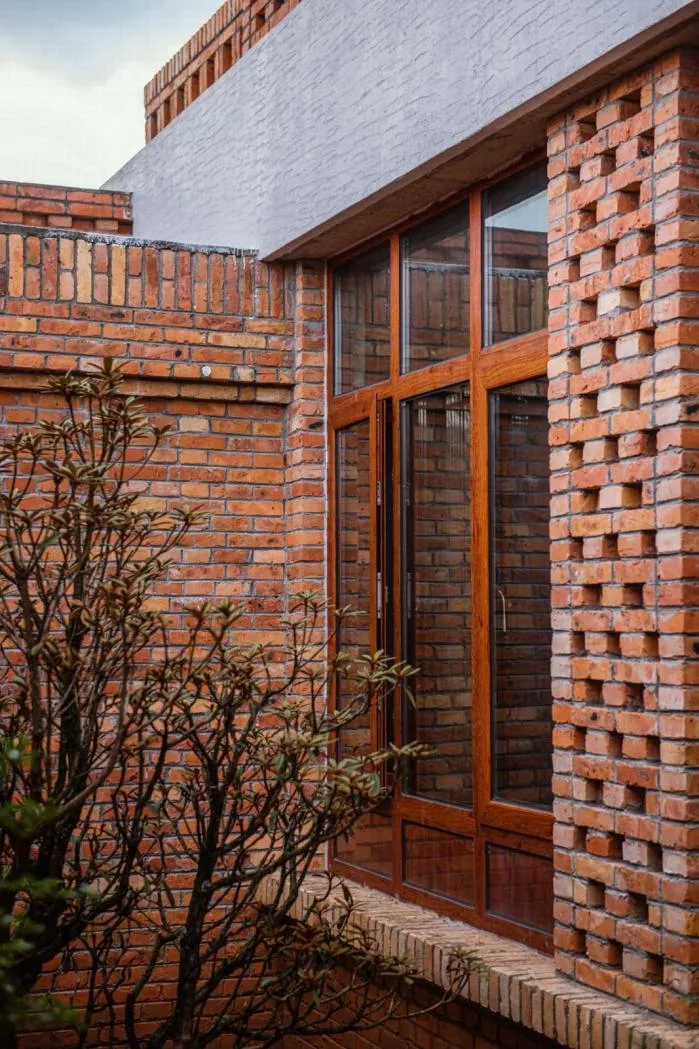
▲ Parents’ study room outside the courtyard
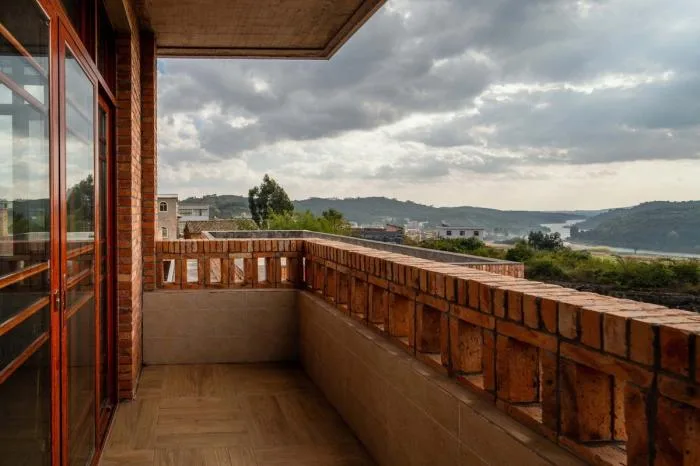
▲ Second floor study balcony overlooking distant mountains
We hope that ‘Zhao Zhai’ serves as a conceptual guide and example, aiming to counteract the excessive urbanization and vulgarization trends found in spontaneous rural construction.
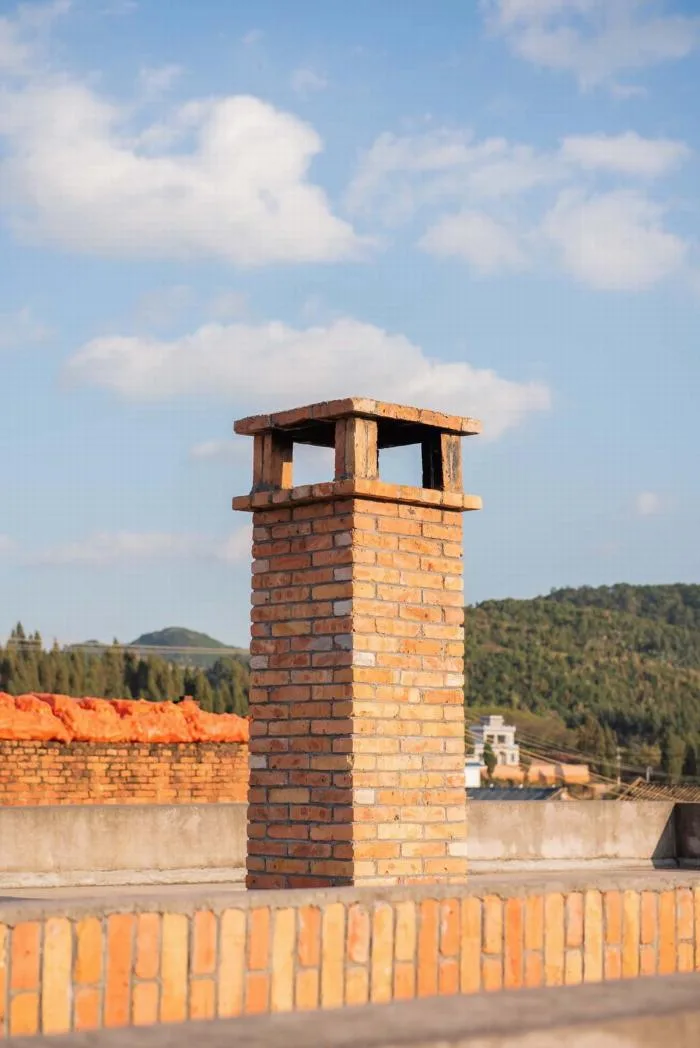
▲ Chimney details
Project Drawings
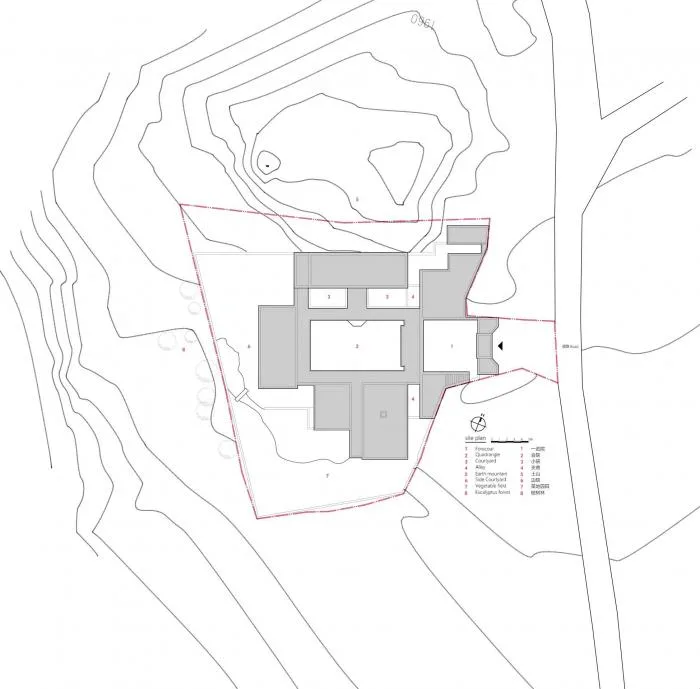
▲ General layout plan
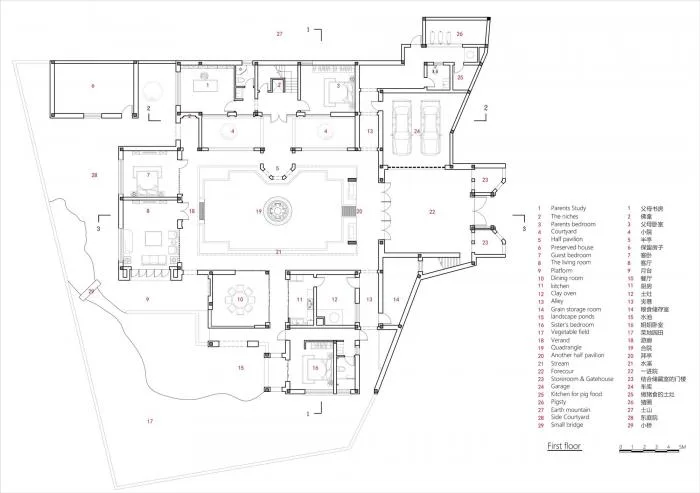
▲ First floor plan
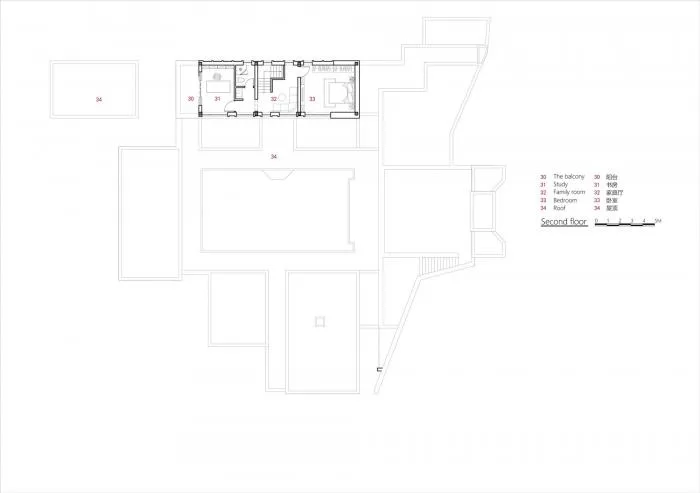
▲ Second floor plan
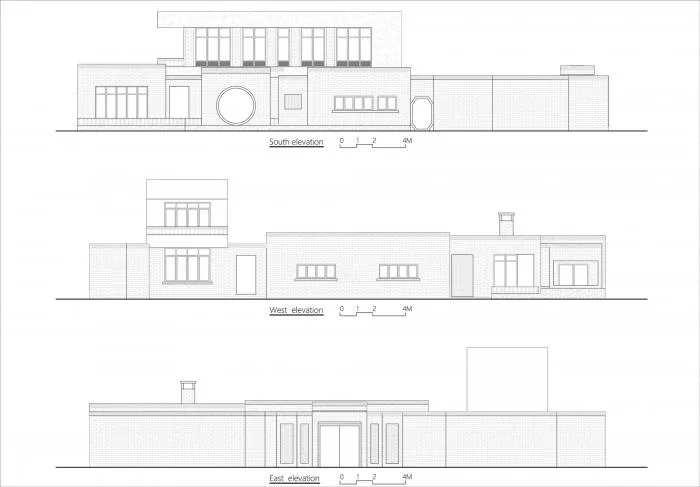
▲ Elevation view
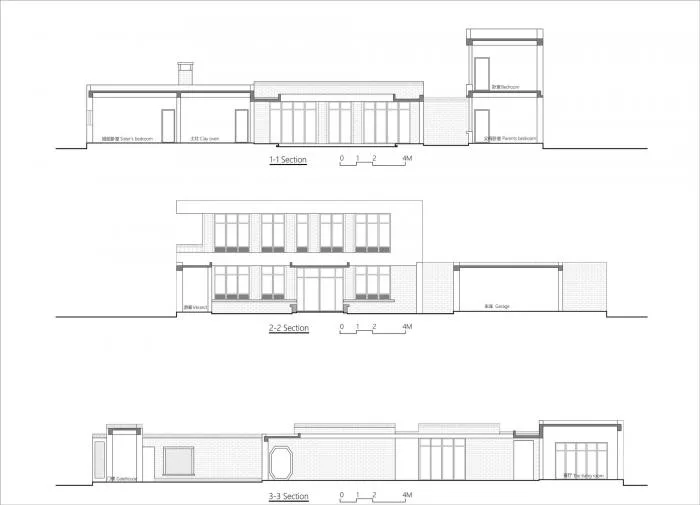
▲ Sectional view
Project Information
Project type: Independent residential building
Location: Qujing, China
Architectural Design: Qingdao Chuantuo Architectural Design Studio
Area: 395.0 m²
Year: 2018
Principal Architect: Qingdao Chuantuo Architectural Design Studio, Wang Kai
Engineering Team: Mr. Gao Can, Mr. Tang Wenhua (Architecture), Mr. Li Hengtong (Structure), Mr. Zheng Zulin (Water Engineering), Mr. Su Zhenyi and other property owners (Electrical Engineering)
Landscape Design: Qingdao Chuantuo Architectural Design Studio, Wang Kai
Client: Mr. Zhao (Private)
Photography: Kunming Tundra Photography












Must log in before commenting!
Sign Up