
The Hall in the Temple
The Zushan Wooden Buddha Museum is situated within Jixin Temple, nestled in the Zushan Scenic Area of Qinhuangdao. This unique temple museum traces its history back to the Song Dynasty. Perched midway up the mountain, it offers sweeping views of the city and the Bohai Sea, making it a key attraction in the Zushan Scenic Area. The current temple was reconstructed on its original site in 2002, oriented west to east along the mountain, and features a three-courtyard layout. The museum is located at the complex’s final entrance. Visitors passing through the cloister of the Shakya Mani Hall will encounter three prominent halls on a raised platform: the Guanxin Pavilion, the Herbalist Hall, and the Mituo Hall. These halls serve as exhibition spaces for the wooden Buddha statues.
△ Project video
The central exhibit of the museum is the camphor wood Buddha, which boasts a rich history. Originally crafted as a custom wooden Buddha statue for a Japanese collector in Dongyang, Zhejiang, it spent decades in Japan before being repatriated by its owner. After careful consideration, it was decided to place the statue at Zushan’s Jixin Temple. Following renovation, the museum supplements the temple’s traditional functions, offering visitors a space to pray for peace, appreciate sculptural art, meditate, and explore the wisdom and philosophy embedded in Chinese culture. This enhanced space provides a richer, multi-dimensional temple experience for tourists.
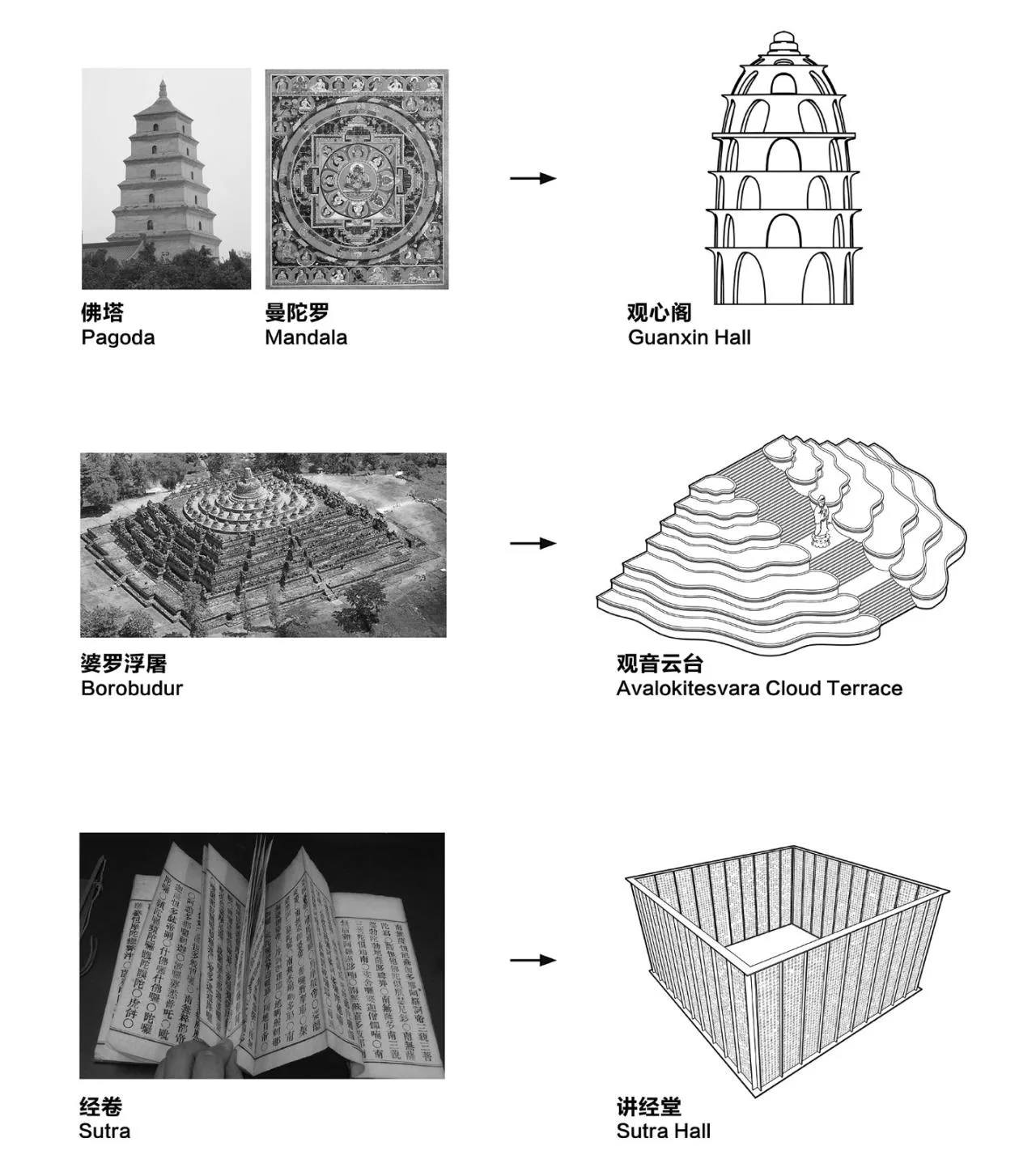
Concept analysis © Architectural Camp Design Studio
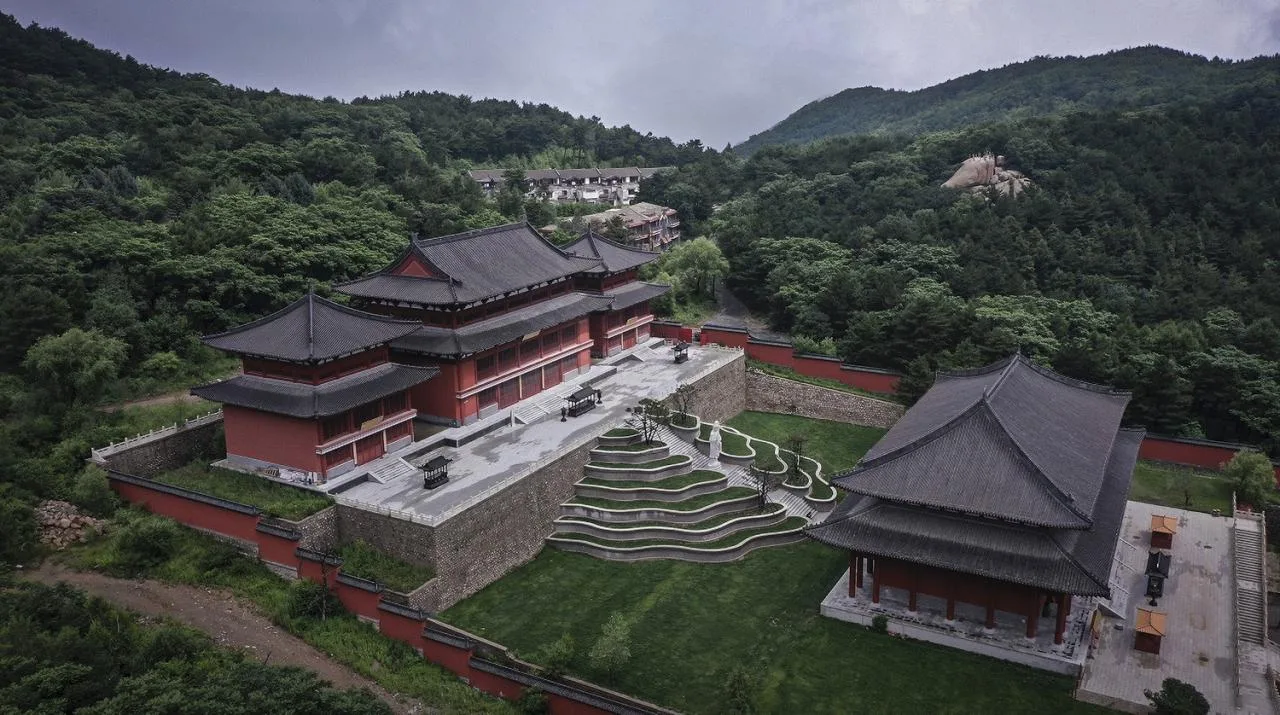
△ Guanyin gimbal bird’s-eye view © Jin Weiqi
The Platform Outside the Hall
The Shakya Mani Hall and the Wooden Buddha Museum differ in elevation by nearly 10 meters. Originally, a steep set of steps connected these levels, with a Guanyin stone statue positioned midway. This area serves as an important transitional space for visitors entering the Wooden Buddha Museum and was a focus of the recent design update.
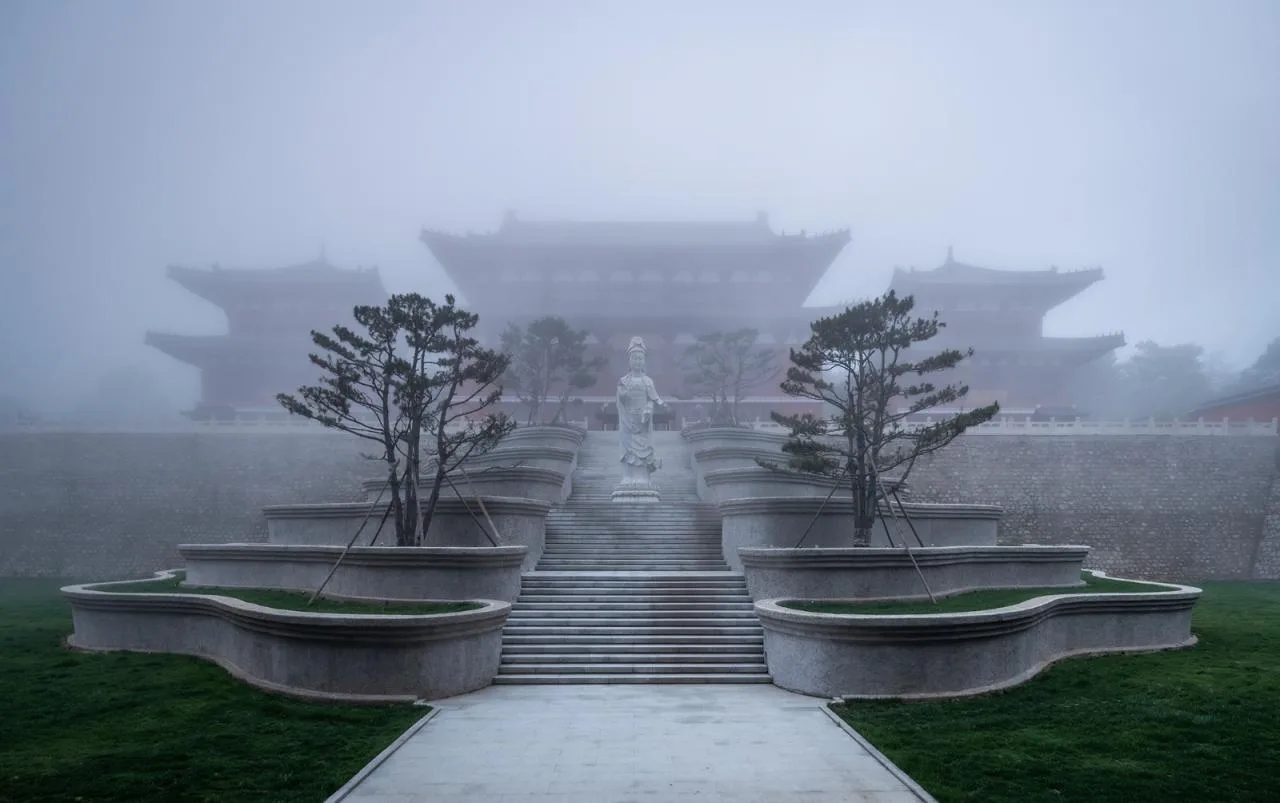
△ Guanyin gimbal main perspective © Jin Weiqi
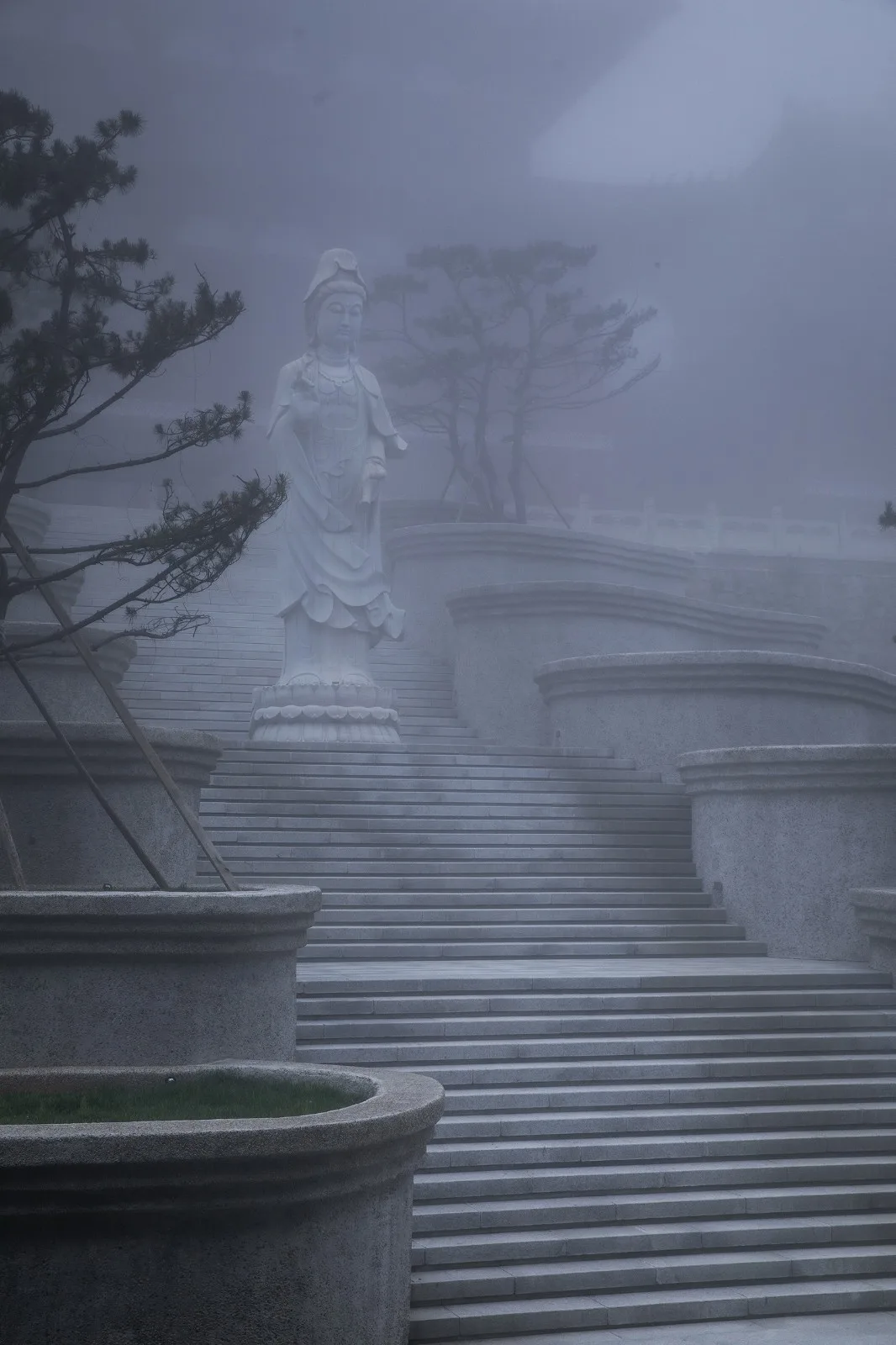
Details of Guanyin gimbal © Jin Weiqi
The redesign enhances the existing landscape while maintaining the temple’s central axis and preserving the standing Guanyin statue. To amplify the sense of ceremony upon entering the museum, the front area was transformed into a “cloud platform.” This features a seven-story washed stone staircase with platforms of varying heights around a central staircase, accommodating the site’s elevation changes.
The resting platform around the Guanyin statue was expanded, and the slope of the steps was gently reduced for easier walking and resting. The cloud platform unfolds in soft, graceful curves, reminiscent of Zushan Mountain’s clouds. It includes mist spray systems, lawns, and scattered pine trees. As visitors ascend through the shifting mist, their spirits gradually calm, revealing the three main halls in a serene and majestic manner.
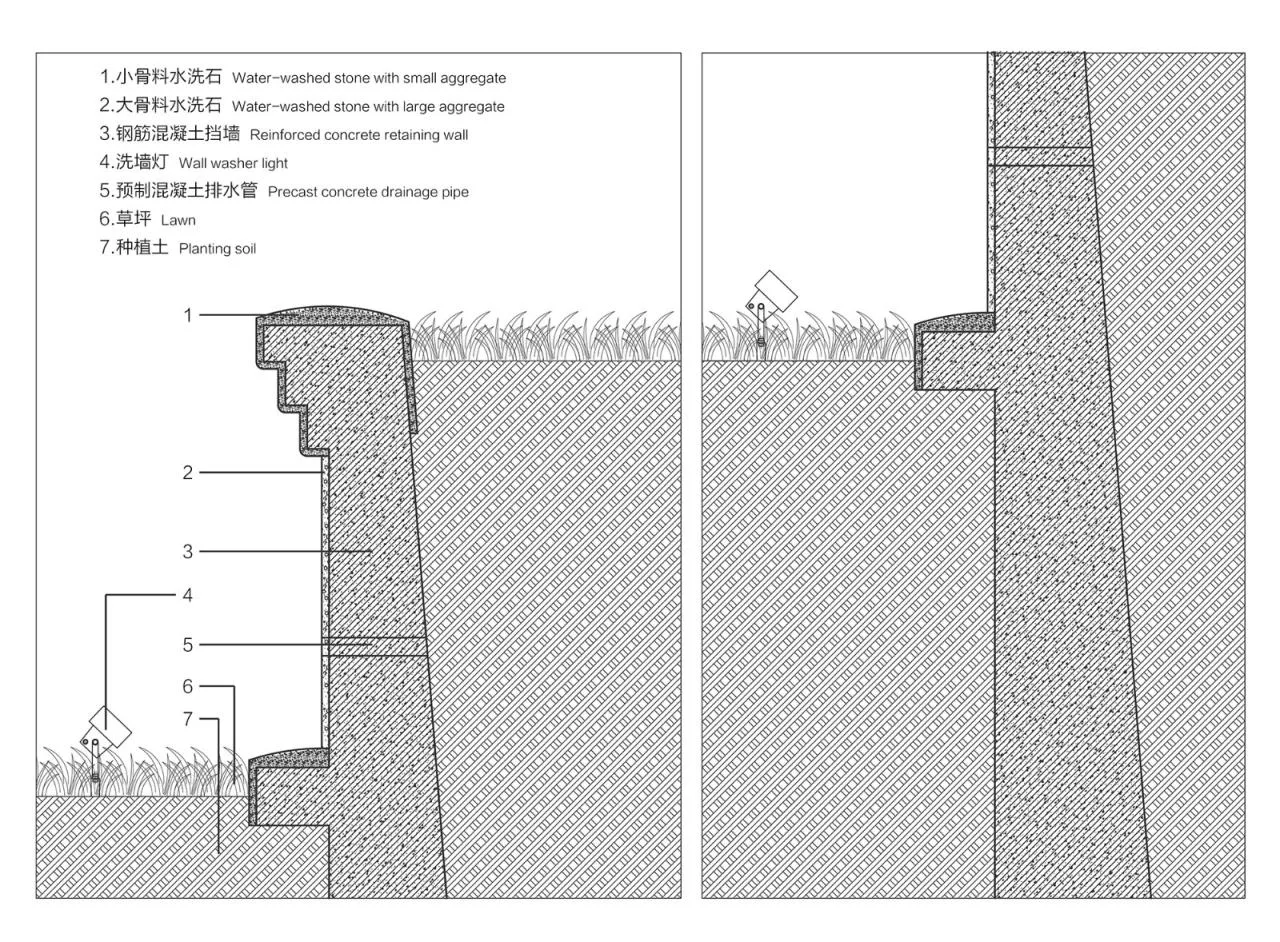
Partial structural nodes of Guanyin gimbal © Architectural Camp Design Studio
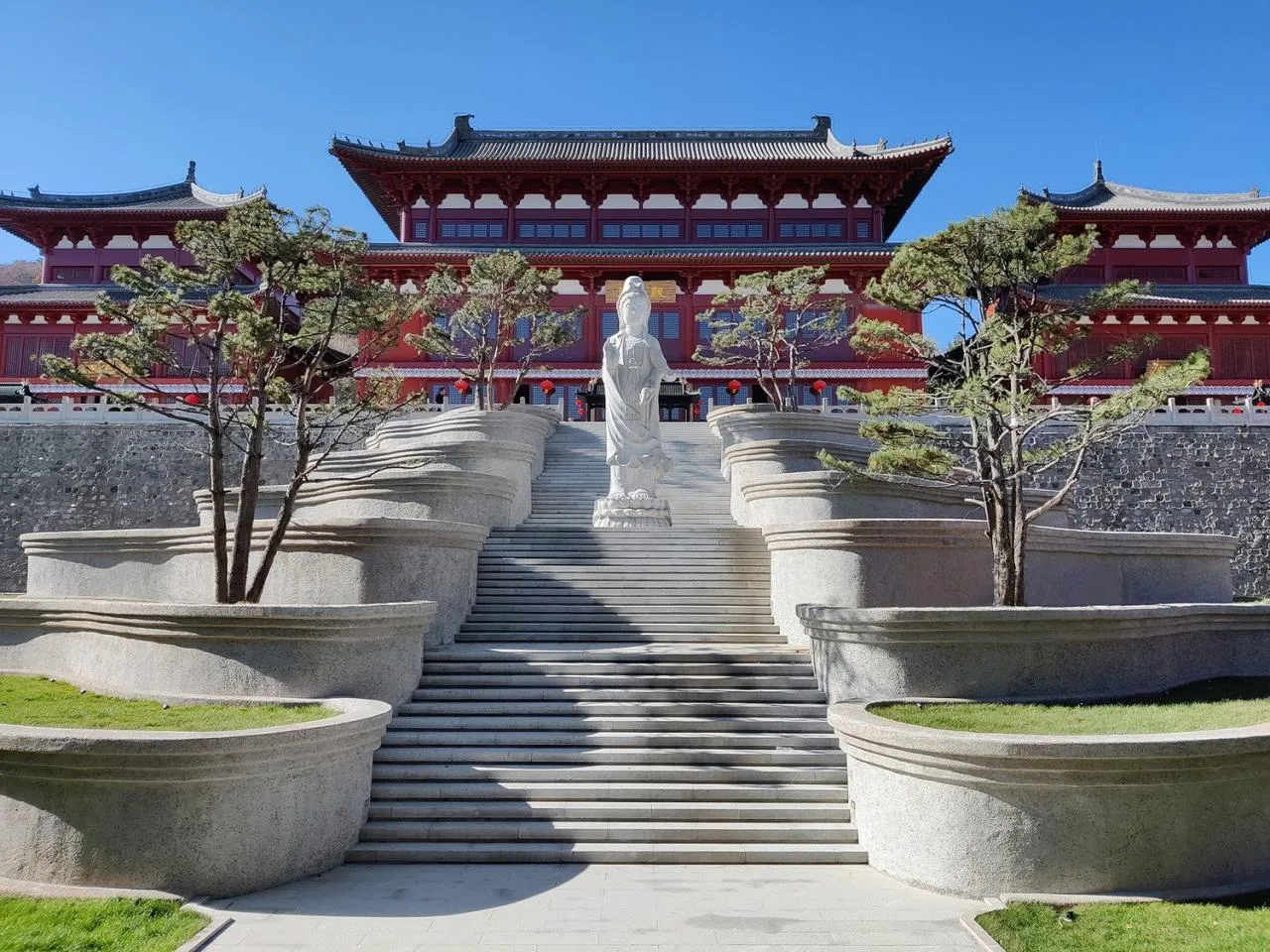
△ Guanyin gimbal main perspective © Wang Tonghui
The Tower in the Palace
The main hall, designed for the centralized exhibition of wooden Buddha statues, is a framed structure inspired by Song Dynasty architecture. It measures 30 meters wide by 16.8 meters deep and features two levels of corridors and stairs, enclosing a soaring space with a central height of nearly 20 meters.
The key design challenge was to integrate wooden Buddha statues of various sizes to create a multi-level exhibition experience within the spatial constraints of the historic temple. The goal was to craft a contemporary spiritual space that is both visually engaging and experiential.
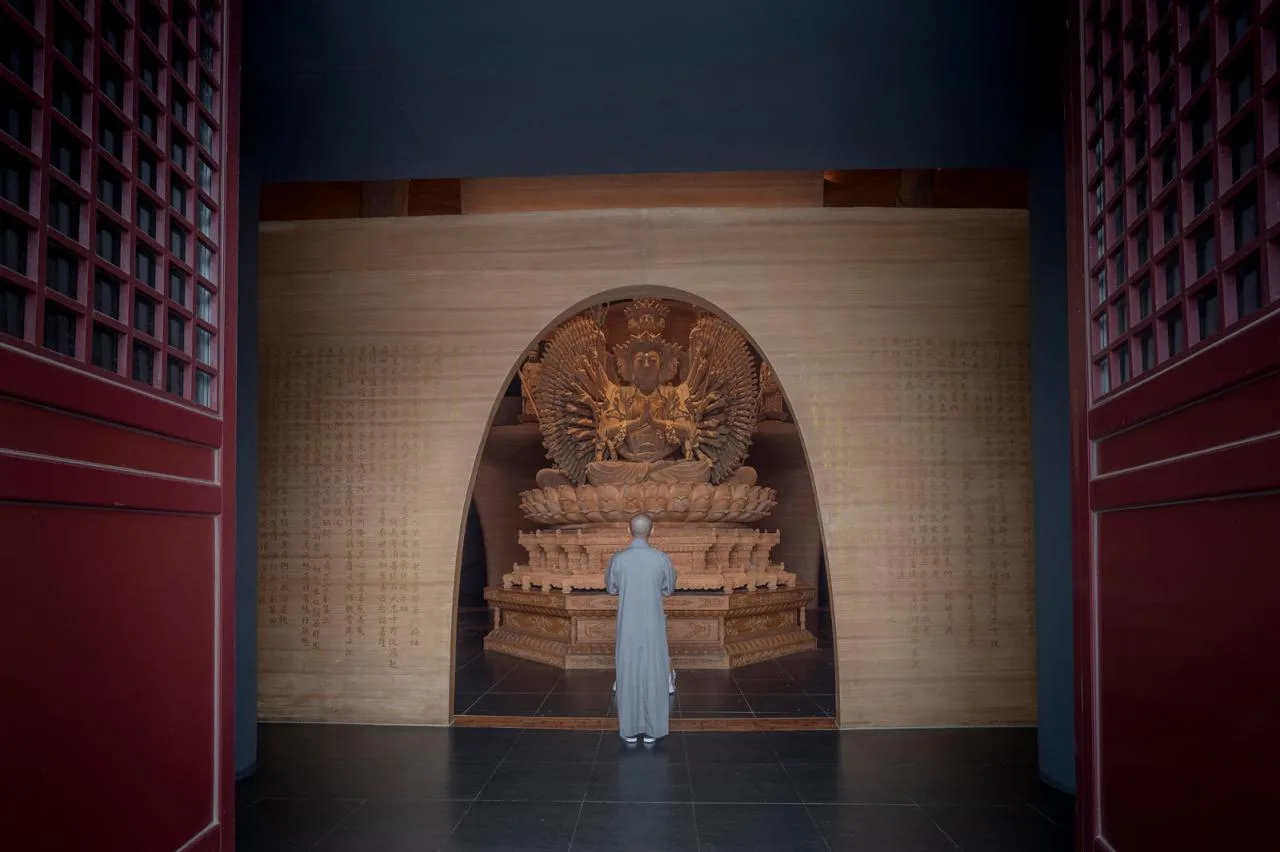
△ Main entrance perspective © Jin Weiqi
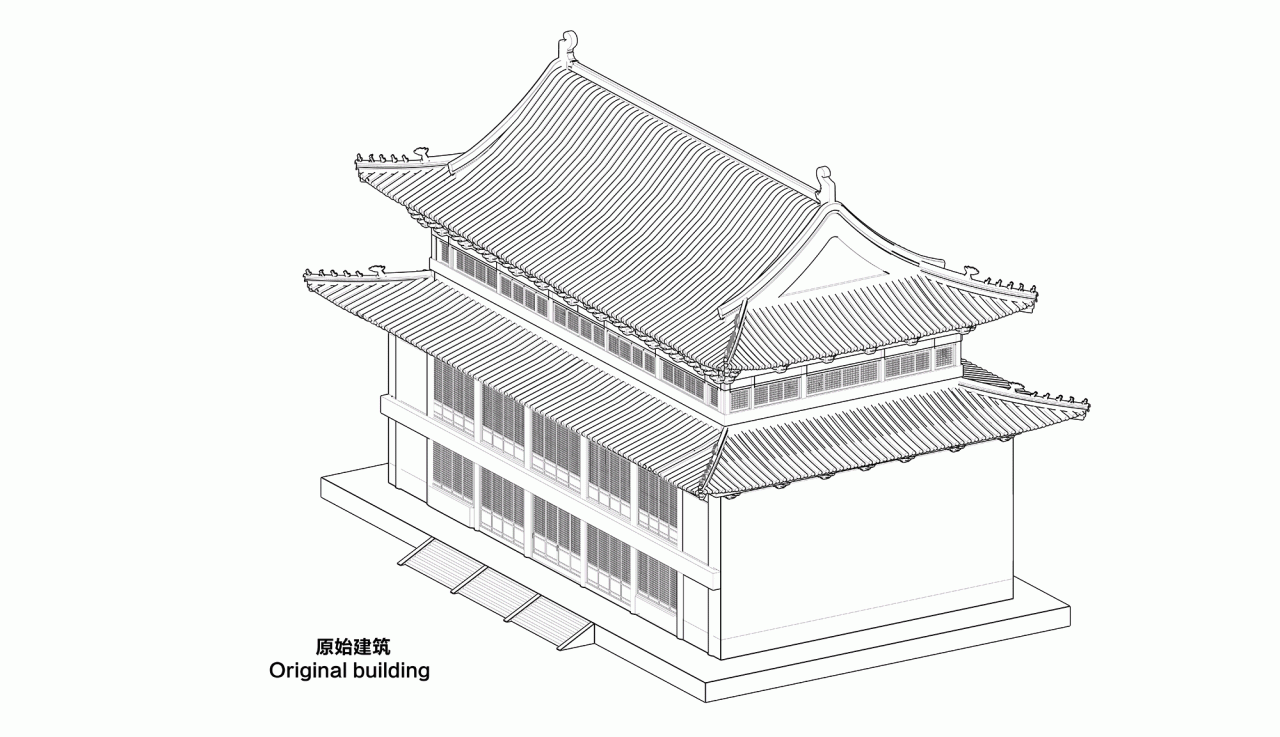
△ Space generation diagram © Architectural Camp Design Studio
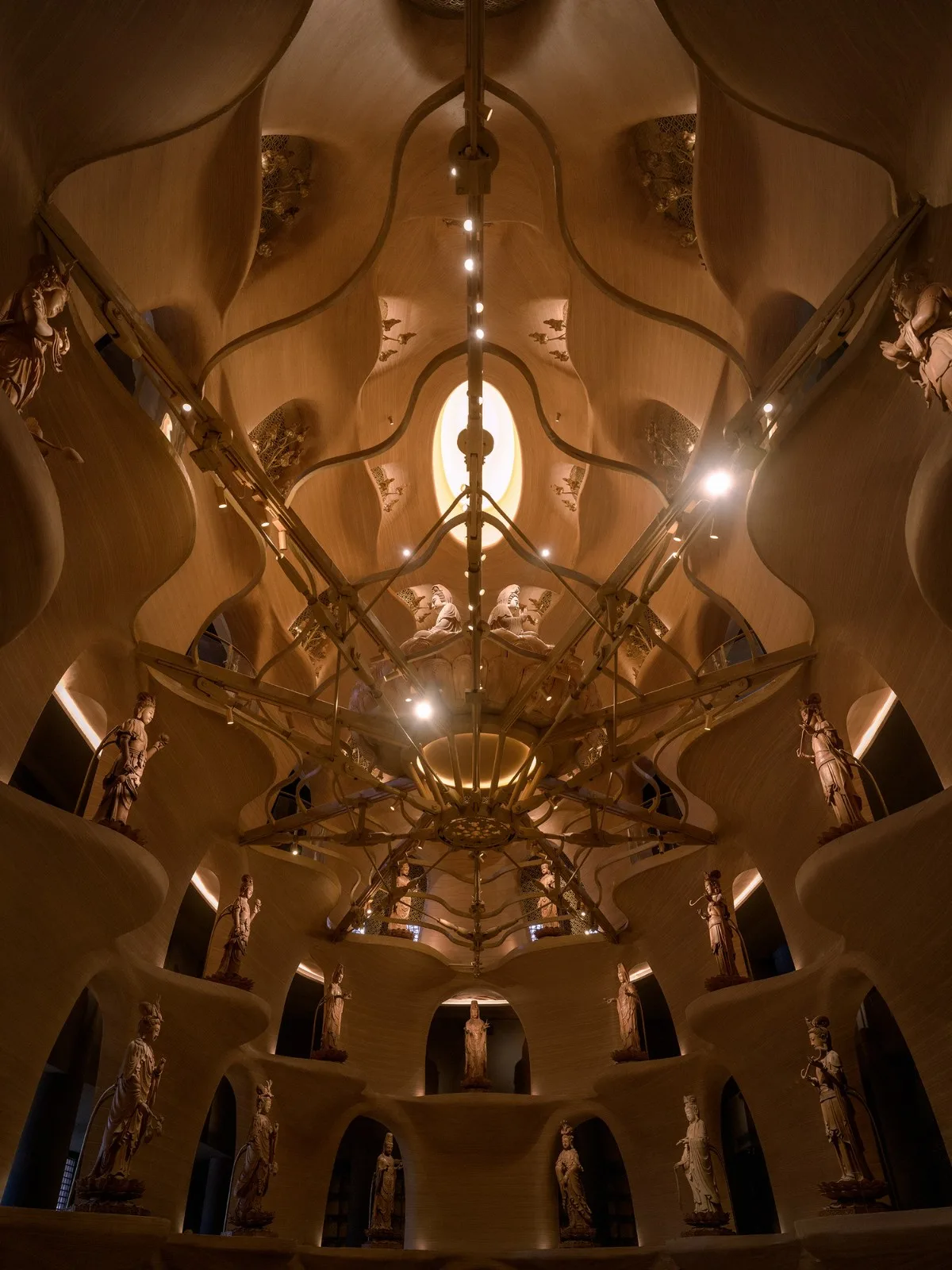
The design draws inspiration from the “tower” architectural prototype, creating a hollow Buddhist pagoda within the main hall as the primary structure for the three-dimensional display of wooden Buddha statues. The pagoda has an elliptical footprint, rising through seven levels that taper upwards, culminating at the top of the rectangular hall.
The interior is inspired by mandalas, which symbolize altars and cosmic models in Buddhist culture—a gathering place for sages and merits.
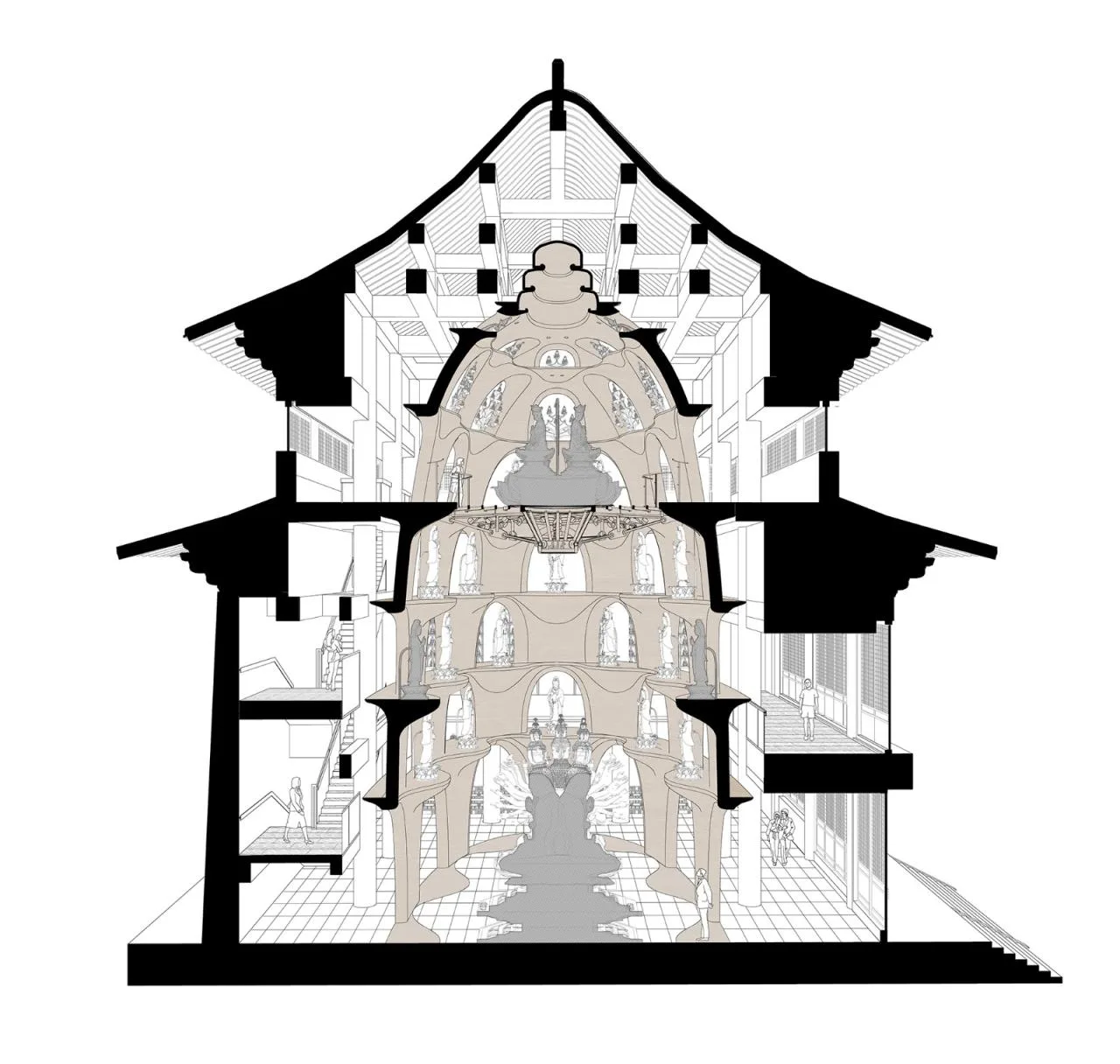
△ Perspective view of Guanxin Pavilion A-A section © Architectural Camp Design Studio
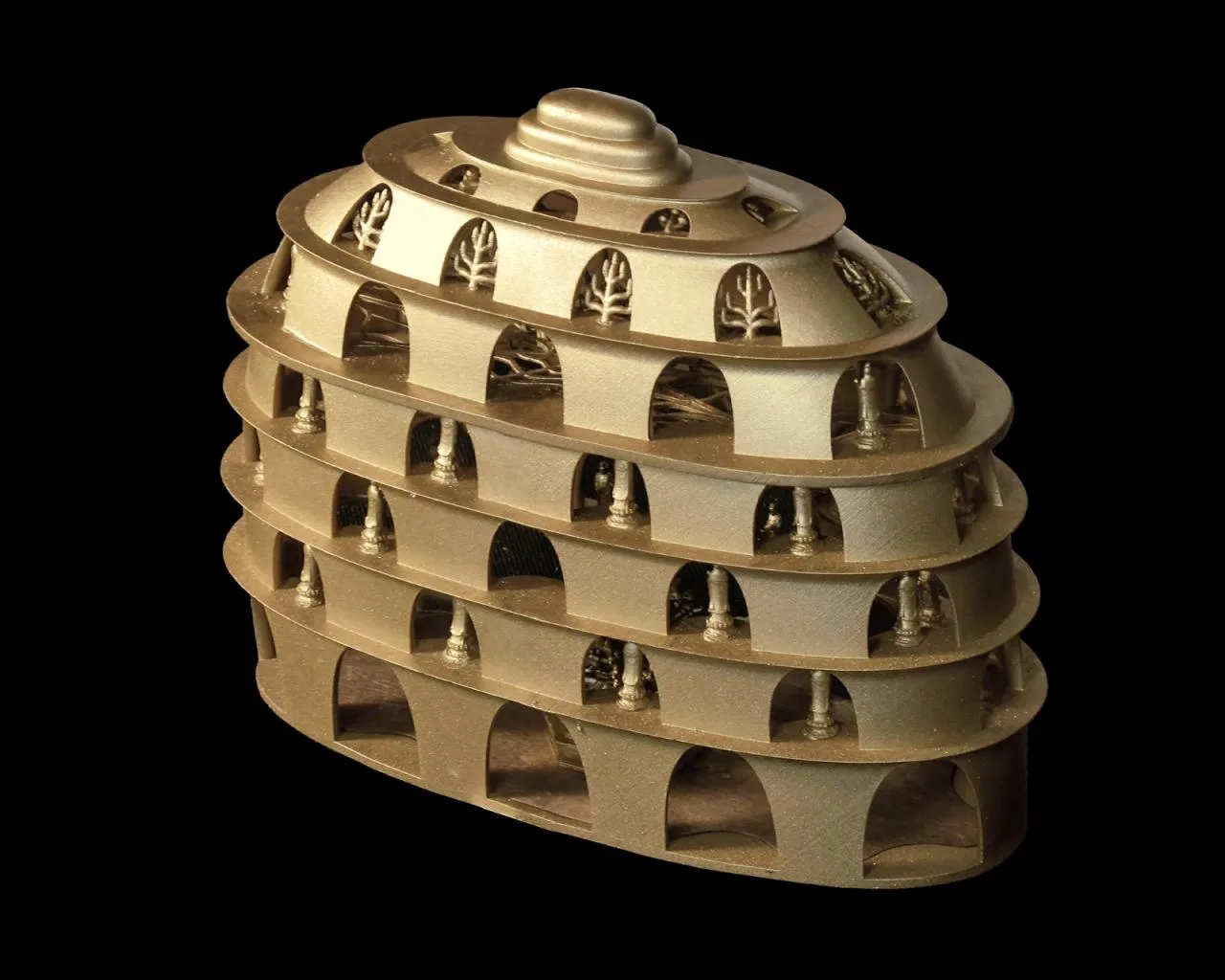
△ Working Model © Architectural Camp Design Studio
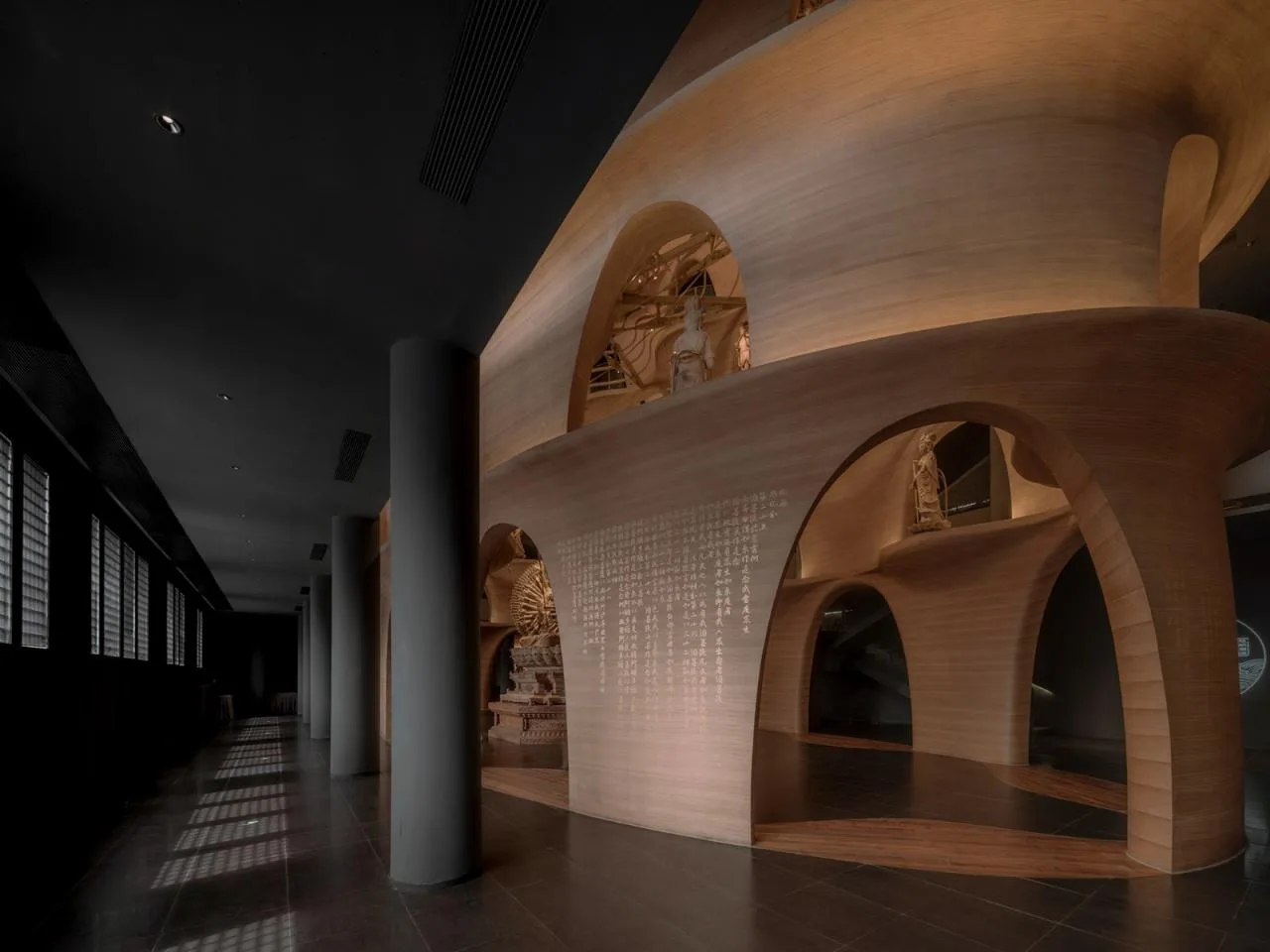
△ First layer perspective © Jin Weiqi
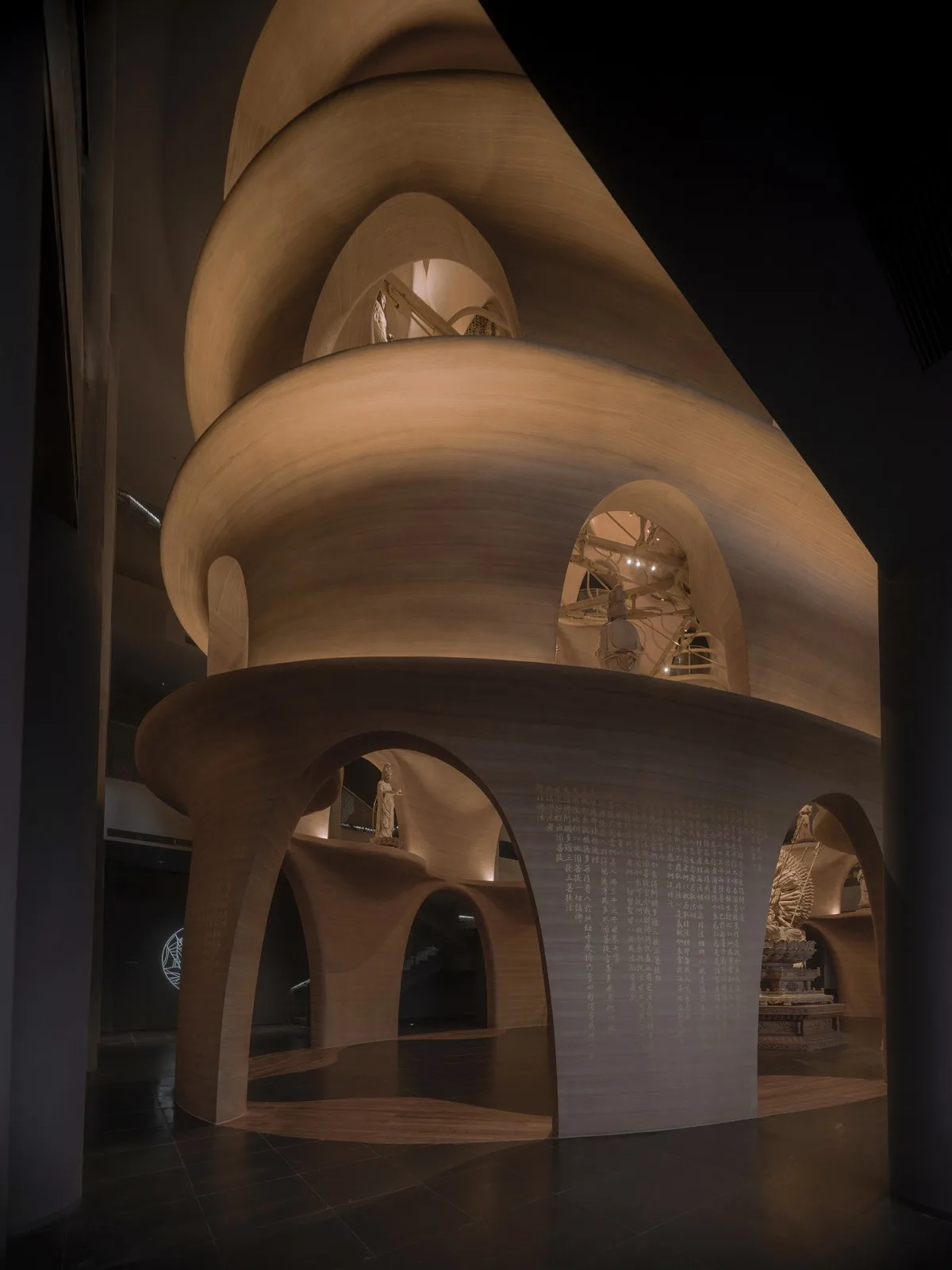
△ First layer perspective © Jin Weiqi
The pagoda’s first floor centers on a 6-meter-high seated statue of the Thousand-Armed Avalokitesvara, surrounded by 30 statues representing its incarnations. Niches were carefully designed based on the size and position of each Buddha statue, featuring arched openings and petal-shaped bases extending from the pagoda body to support the wooden Buddhas.
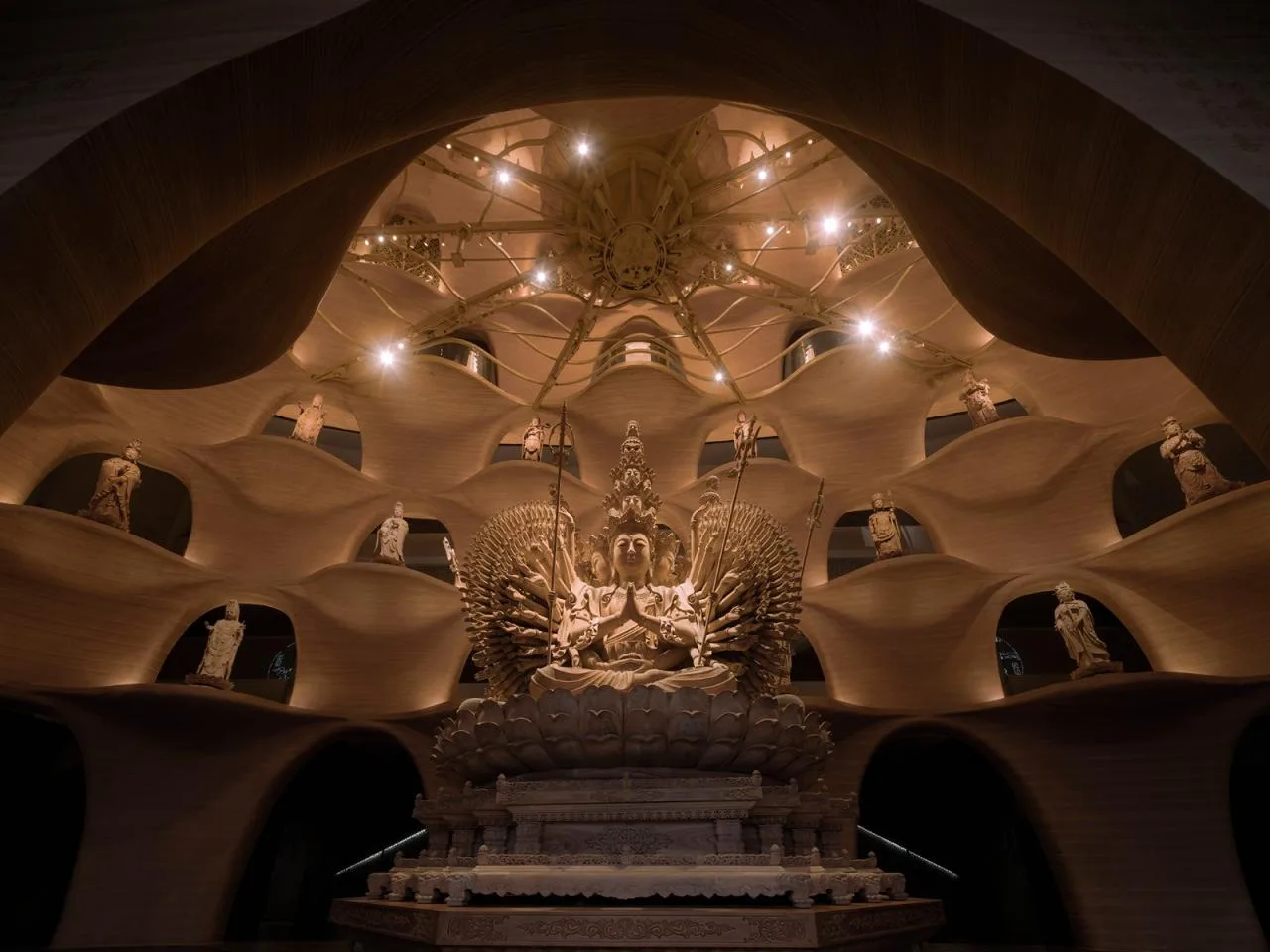
Looking up from inside the tower © Jin Weiqi
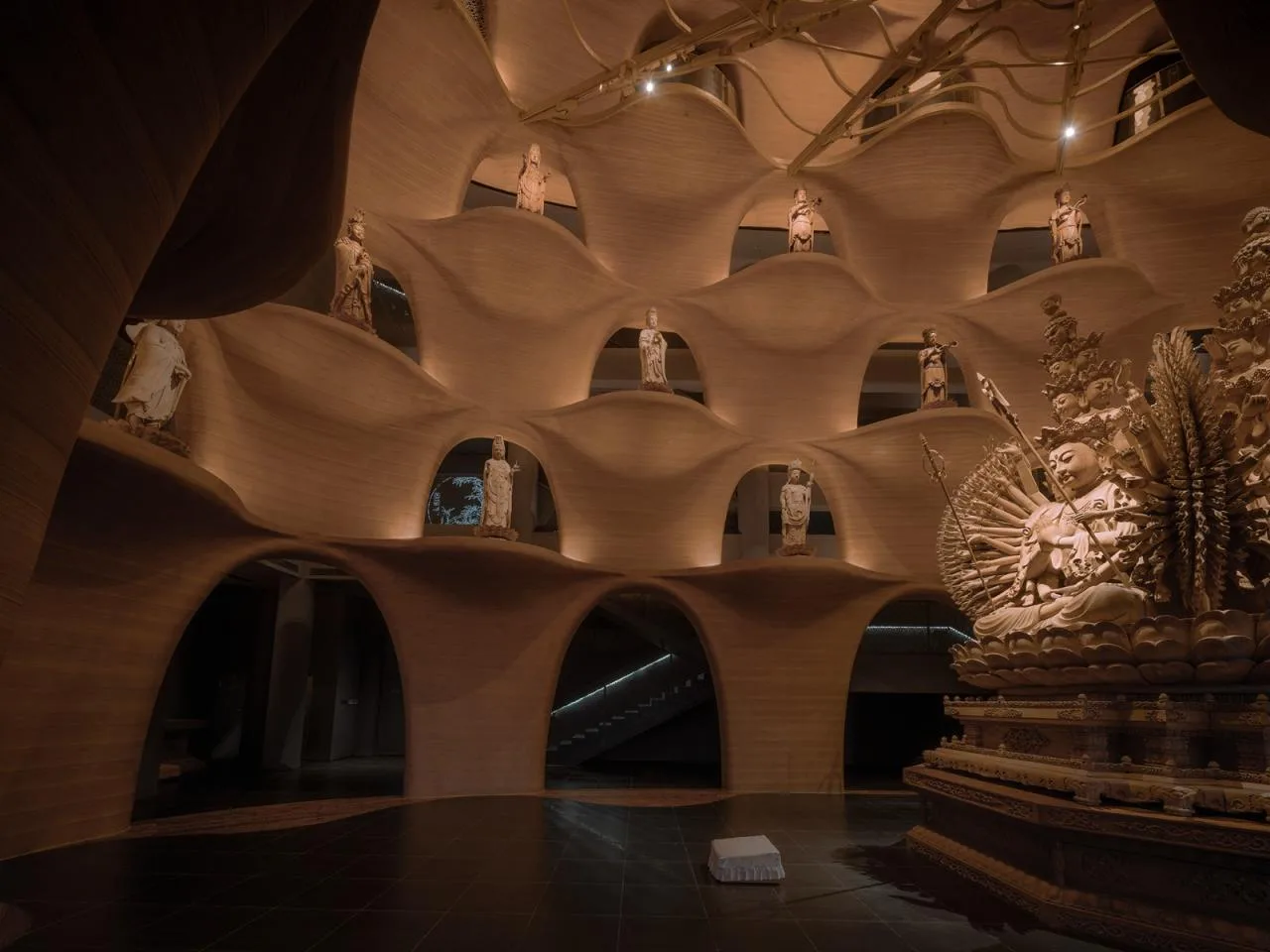
△ Tower perspective © Jin Weiqi
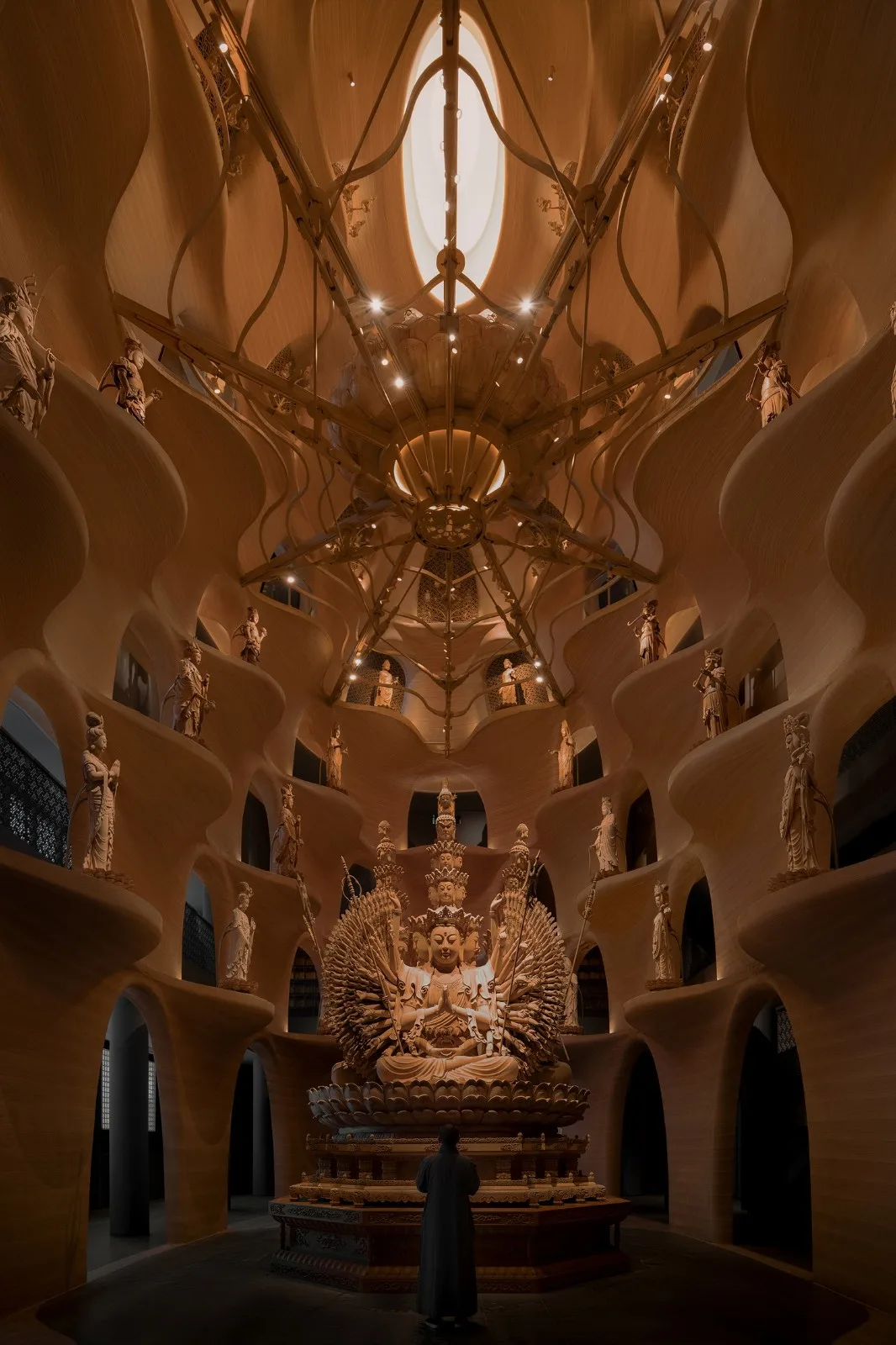
△ Main perspective inside the tower © Wang Ning
The pagoda exhibits statues of Saint Guanyin from the fifth to seventh floors. The center of the fifth floor features two seated holy Guanyin statues. To emphasize the centrality and suspension, a string beam structure is employed, complemented by decorative lotus pedestals, creating a rippling landscape within the tower.
The sixth and seventh floors house the smallest Shengguan audio-visual exhibits, displayed on leaf-shaped metal brackets. The tower’s top culminates in layers of fading light. Visitors pausing inside the tower experience the convergence of petal-like Buddha seats toward a radiant peak, arranging myriad elements harmoniously to evoke a sublime, infinite, and profound Zen realm.
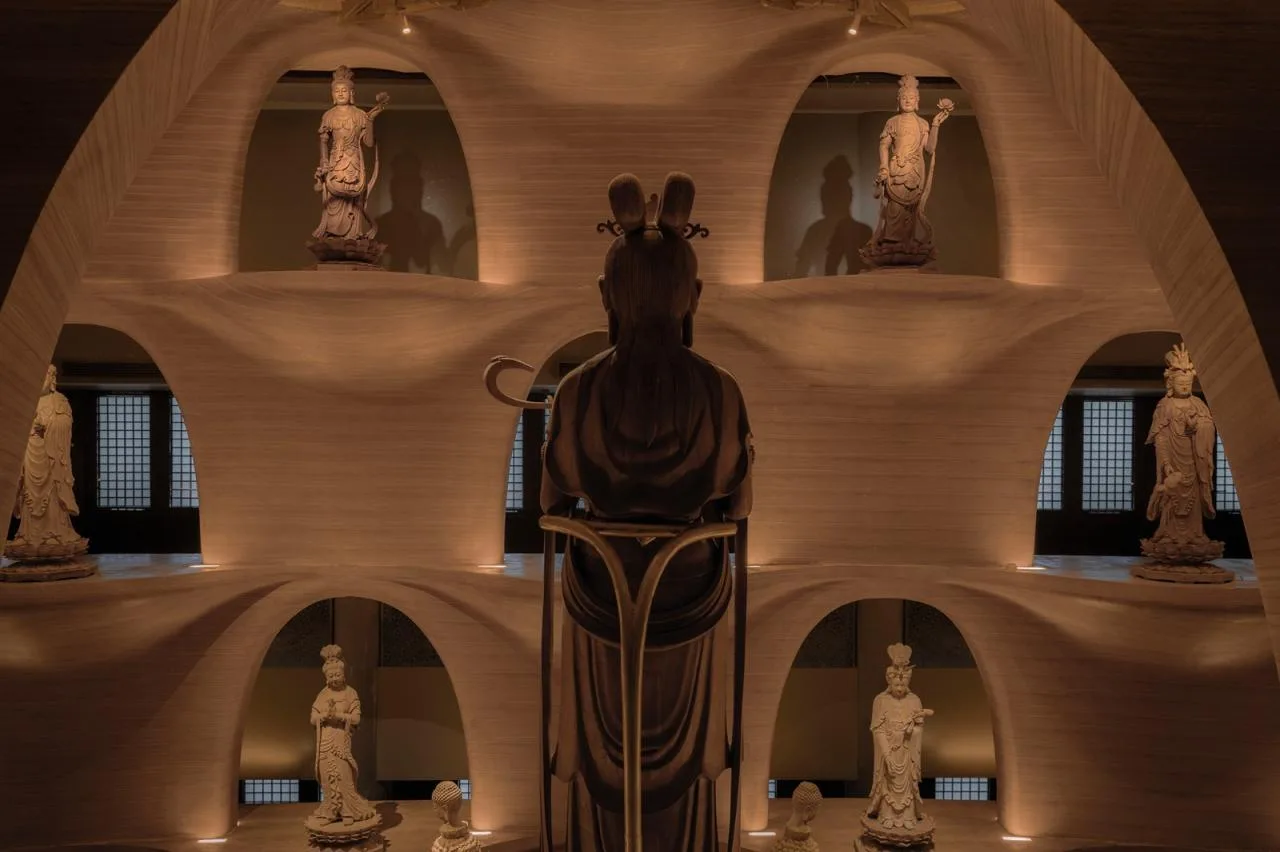
Details inside the tower © Jin Weiqi
Looking up from inside the tower © Wang Ning
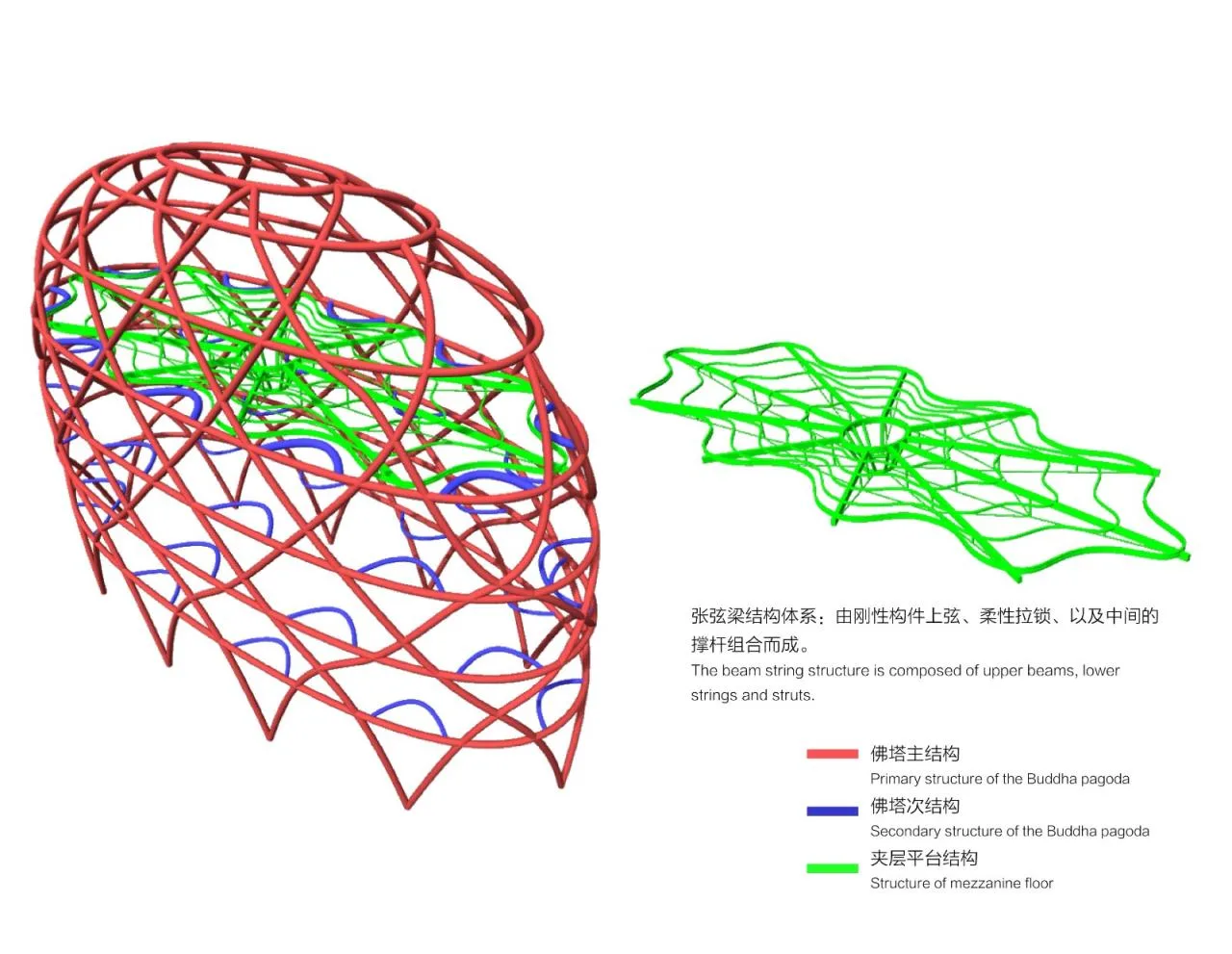
△ Structural diagram © Architectural Camp Design Studio
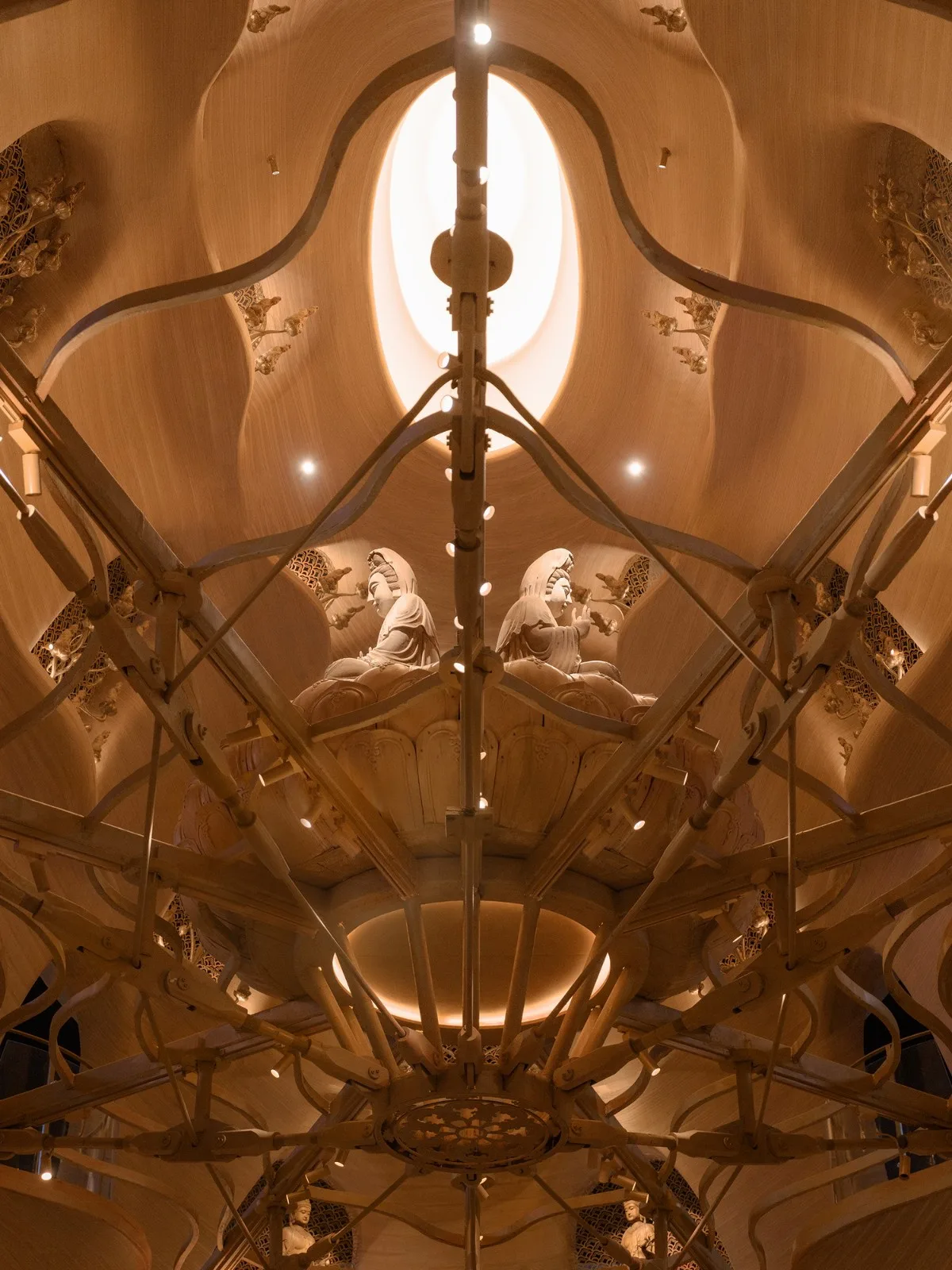
Details inside the tower © Wang Ning
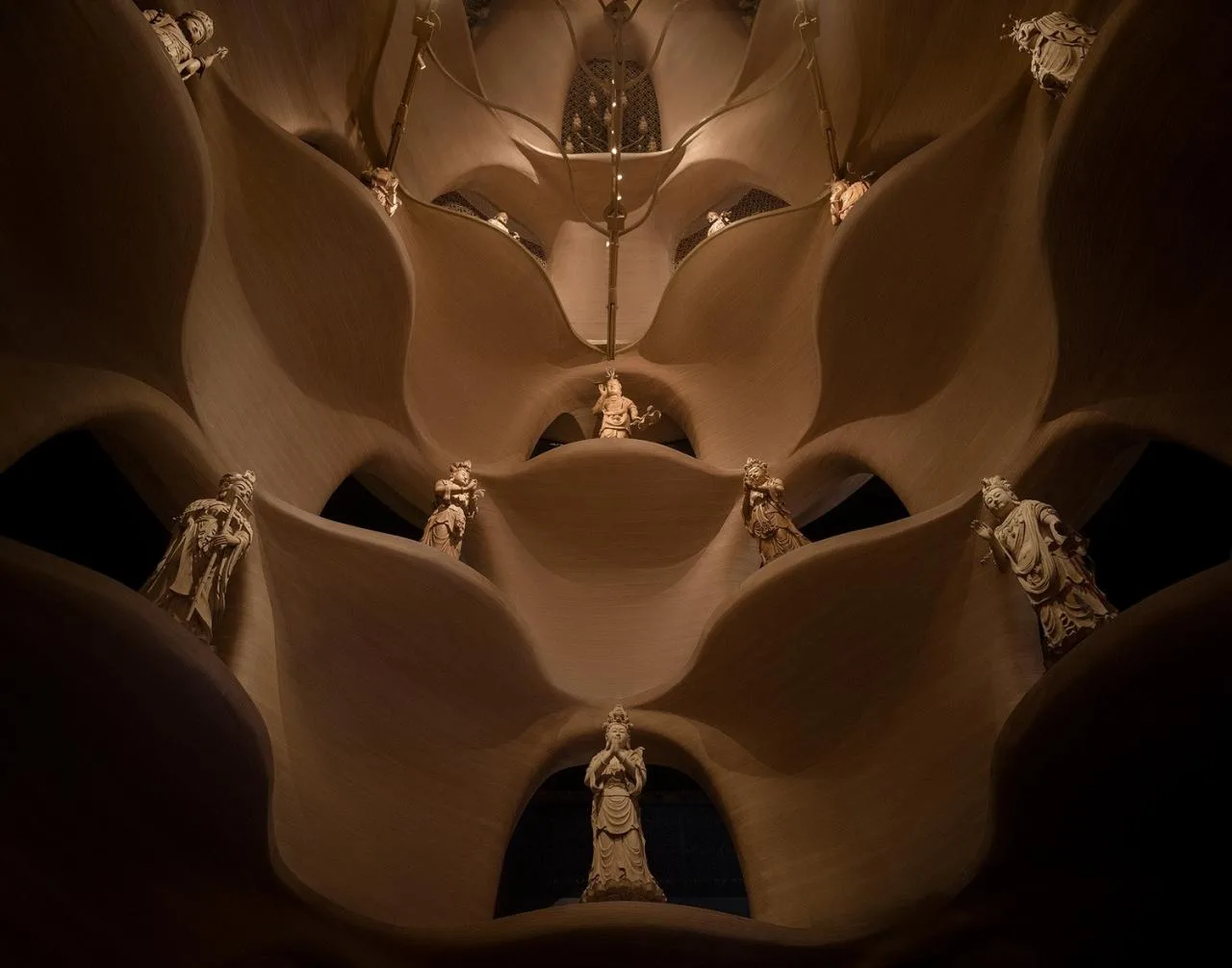
Details inside the tower © Wang Ning
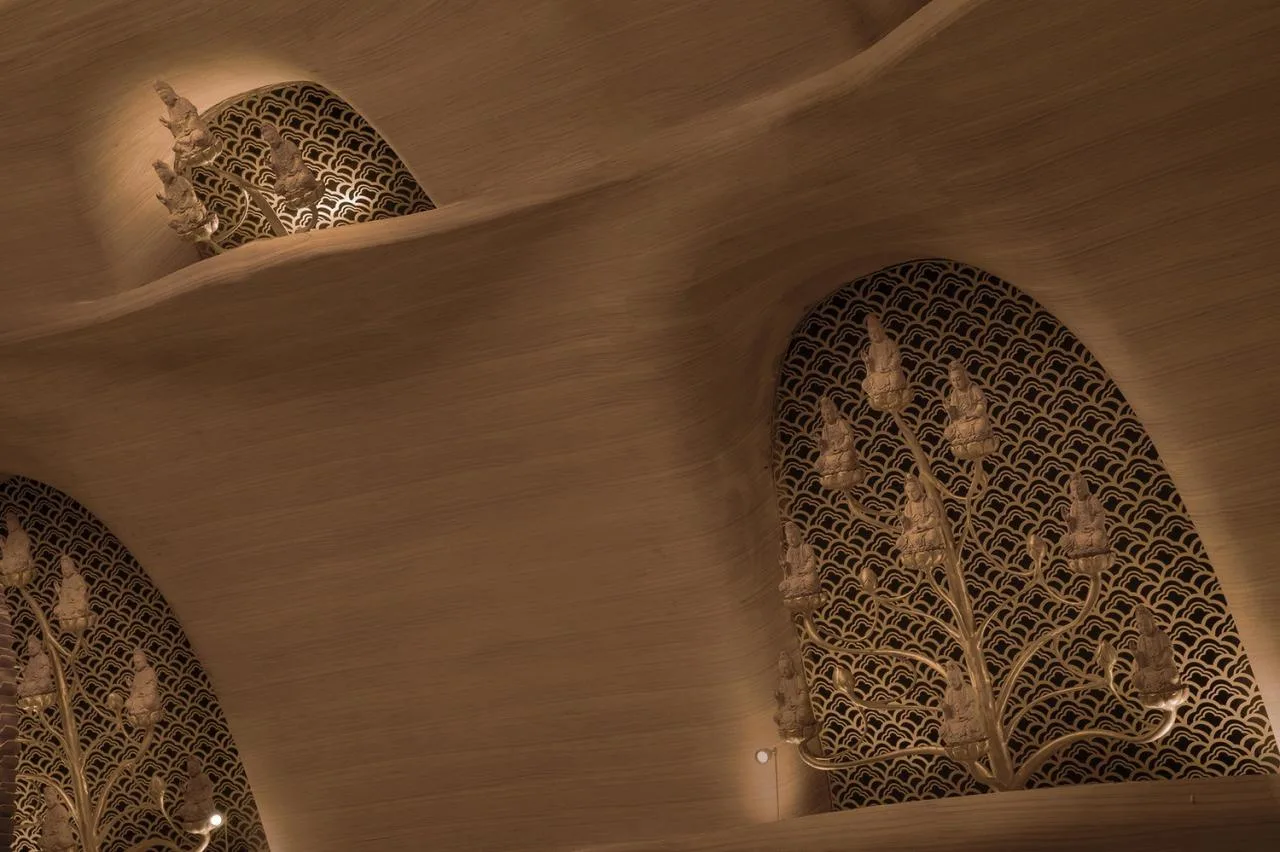
Details inside the tower © Jin Weiqi
The pagoda also introduces a circumambulatory path around the stupa, symbolizing prayer for blessings. Existing structures were transformed into three platforms for visitors to explore: the first floor, the mezzanine ring corridor, and the top floor, forming a three-dimensional circular path.
The outer wall of the first tower features inscriptions from the Diamond Sutra, inviting visitors to contemplate as they circle the tower. Additionally, six statues of Guanyin incarnations flank the main hall’s first floor for worship. The original staircase was renovated to guide visitors up to the top floor.
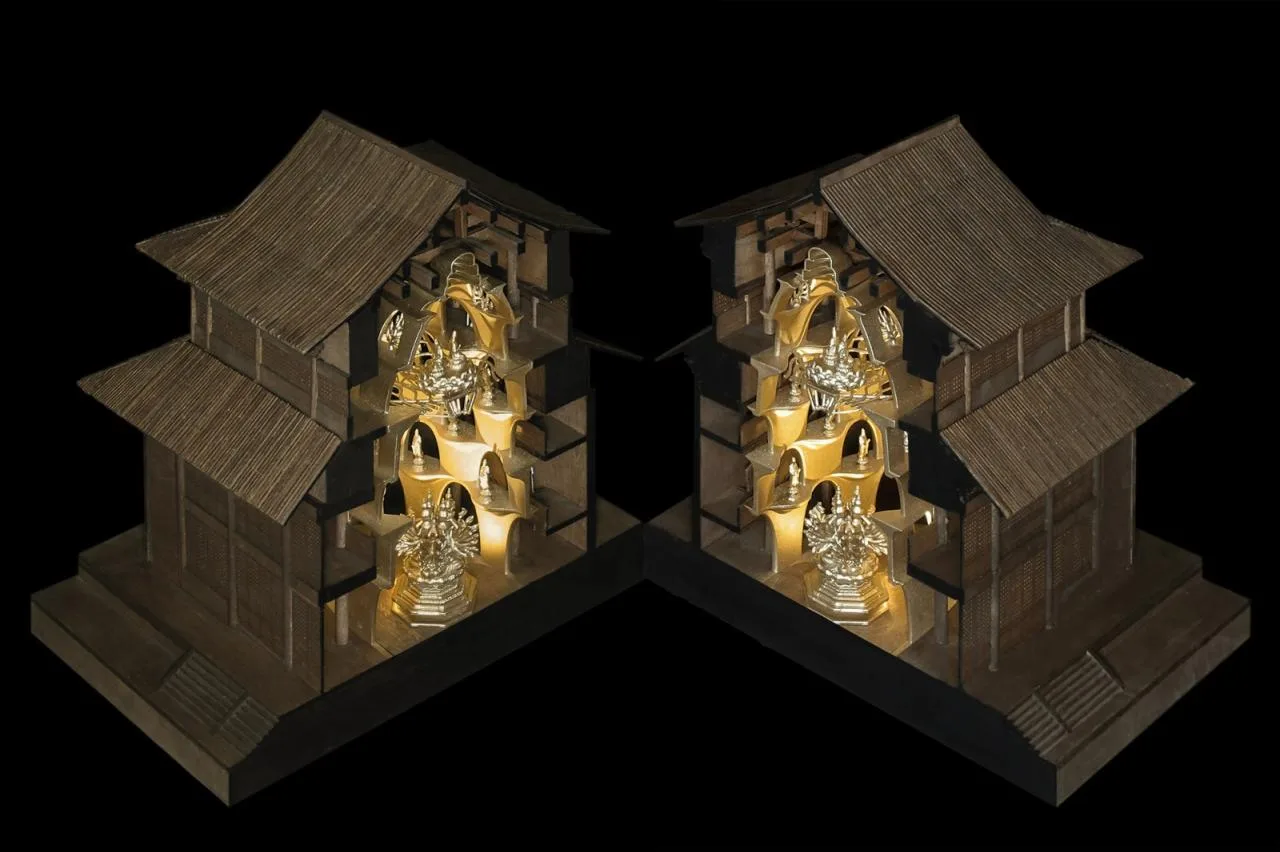
△ Working Model © Architectural Camp Design Studio
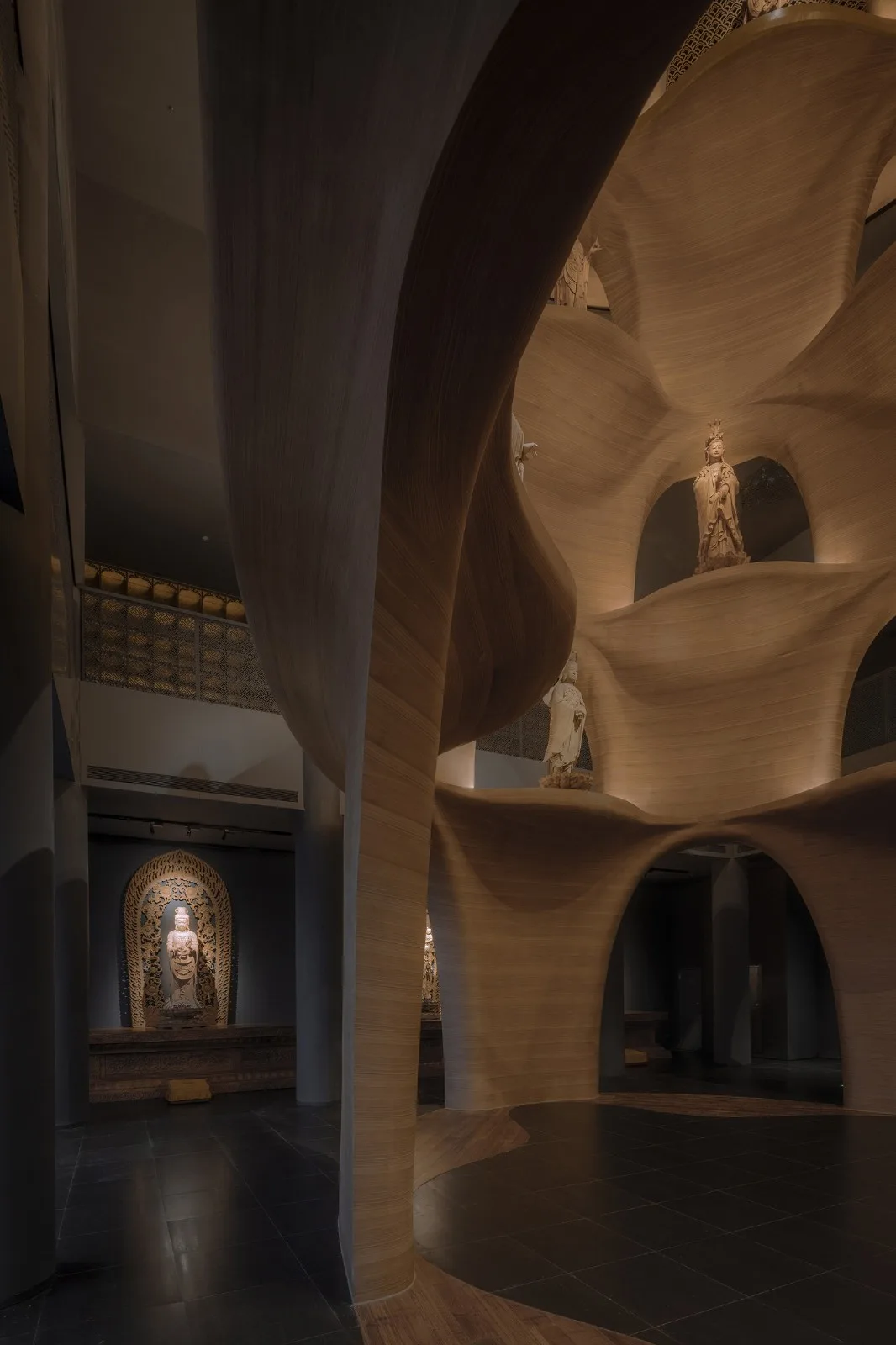
△ First layer perspective © Jin Weiqi
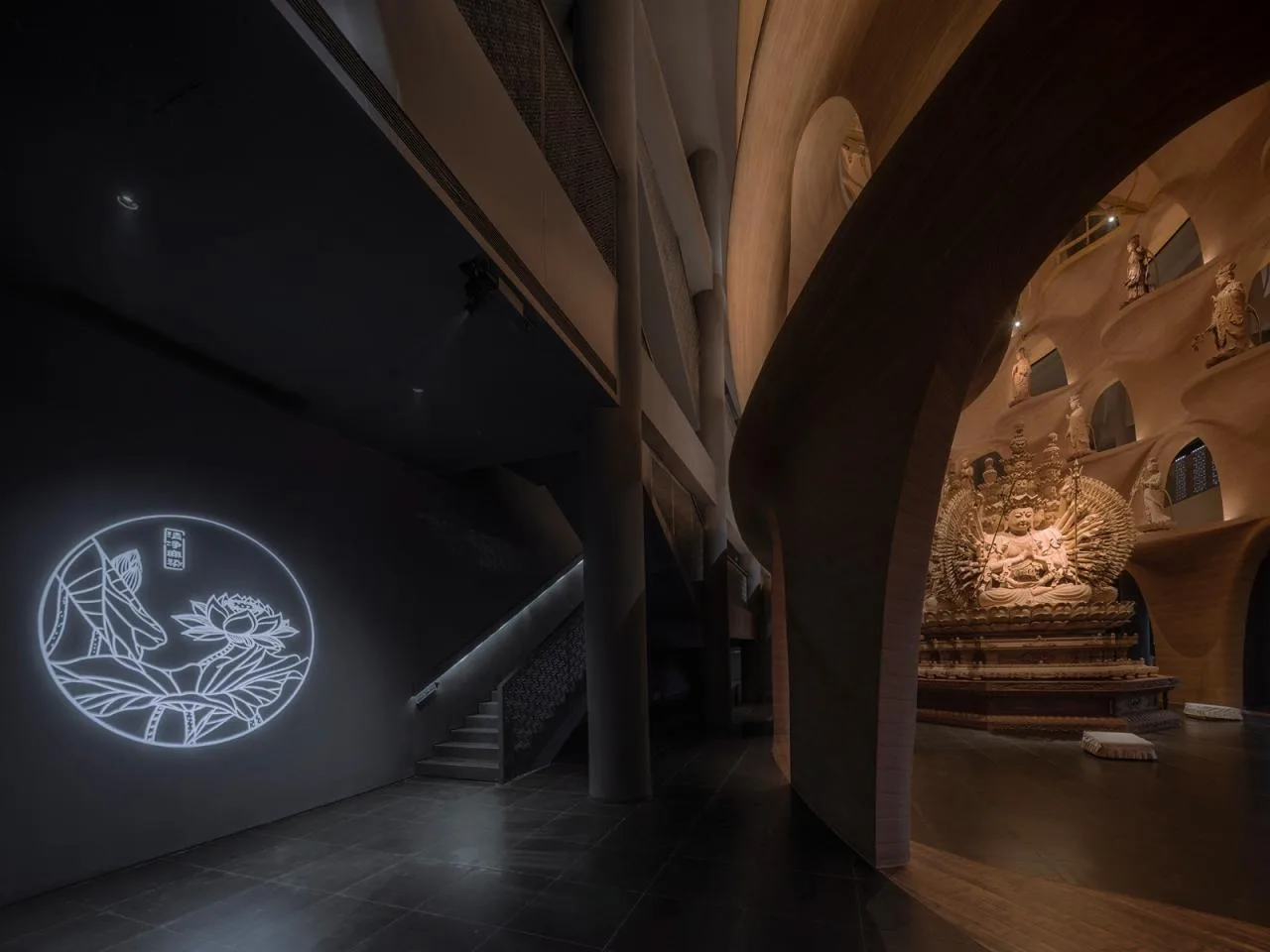
△ First layer perspective © Jin Weiqi
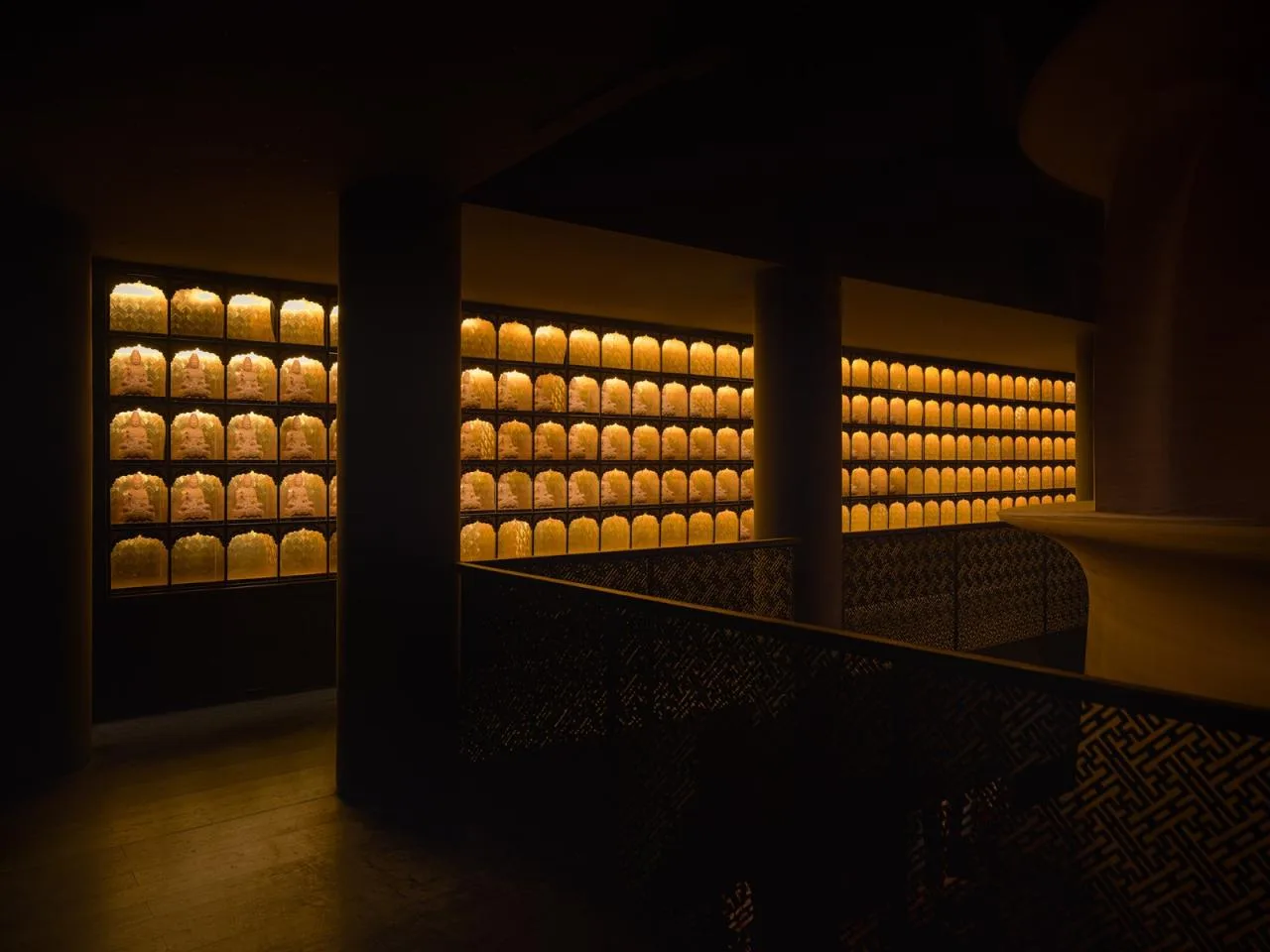
△ Corridor perspective © Wang Ning
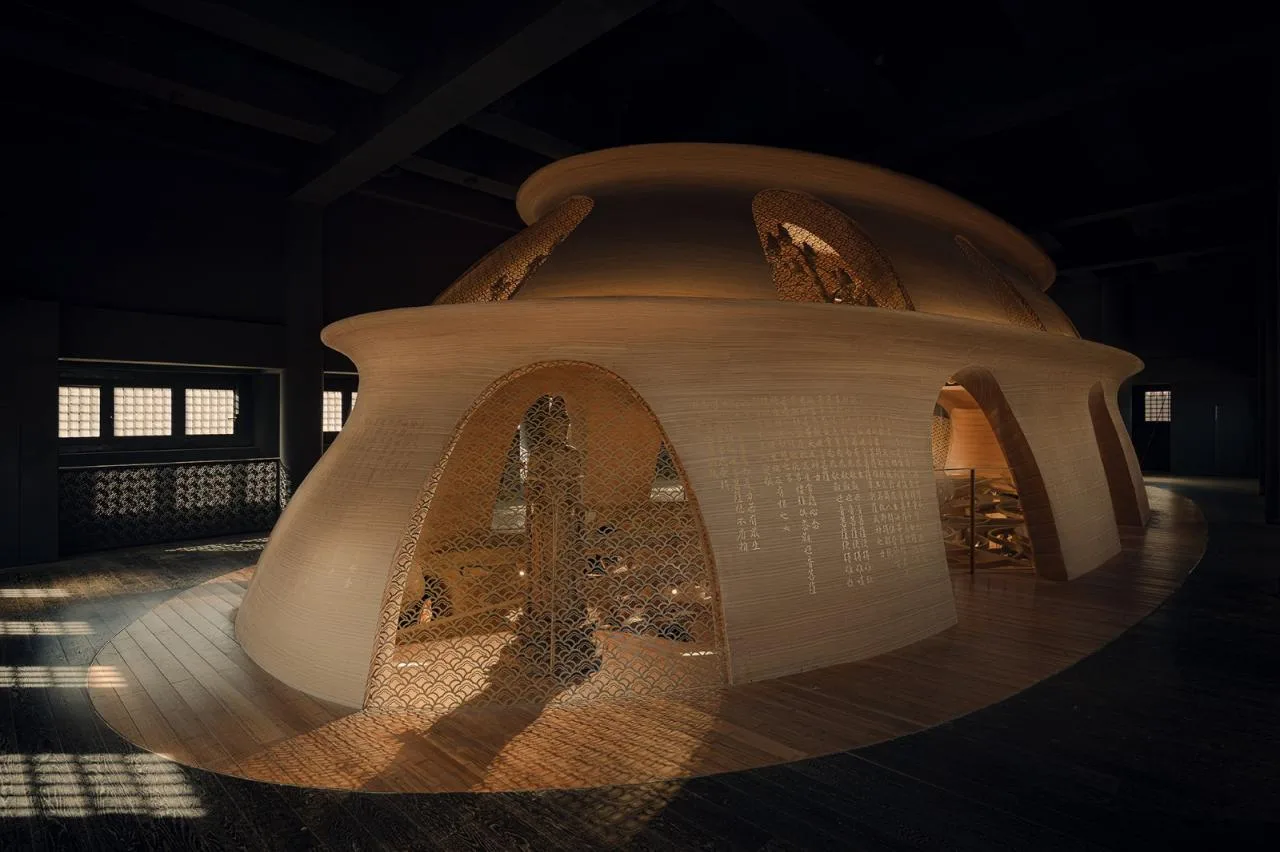
Top level perspective © Wang Ning
Five projections are designed around the streamlined form, showcasing Guanyin’s gestures and the four major practice areas, enriching the visitor experience. The top floor is an 11-meter-high circular platform, the highest point offering panoramic views of the distant mountains.
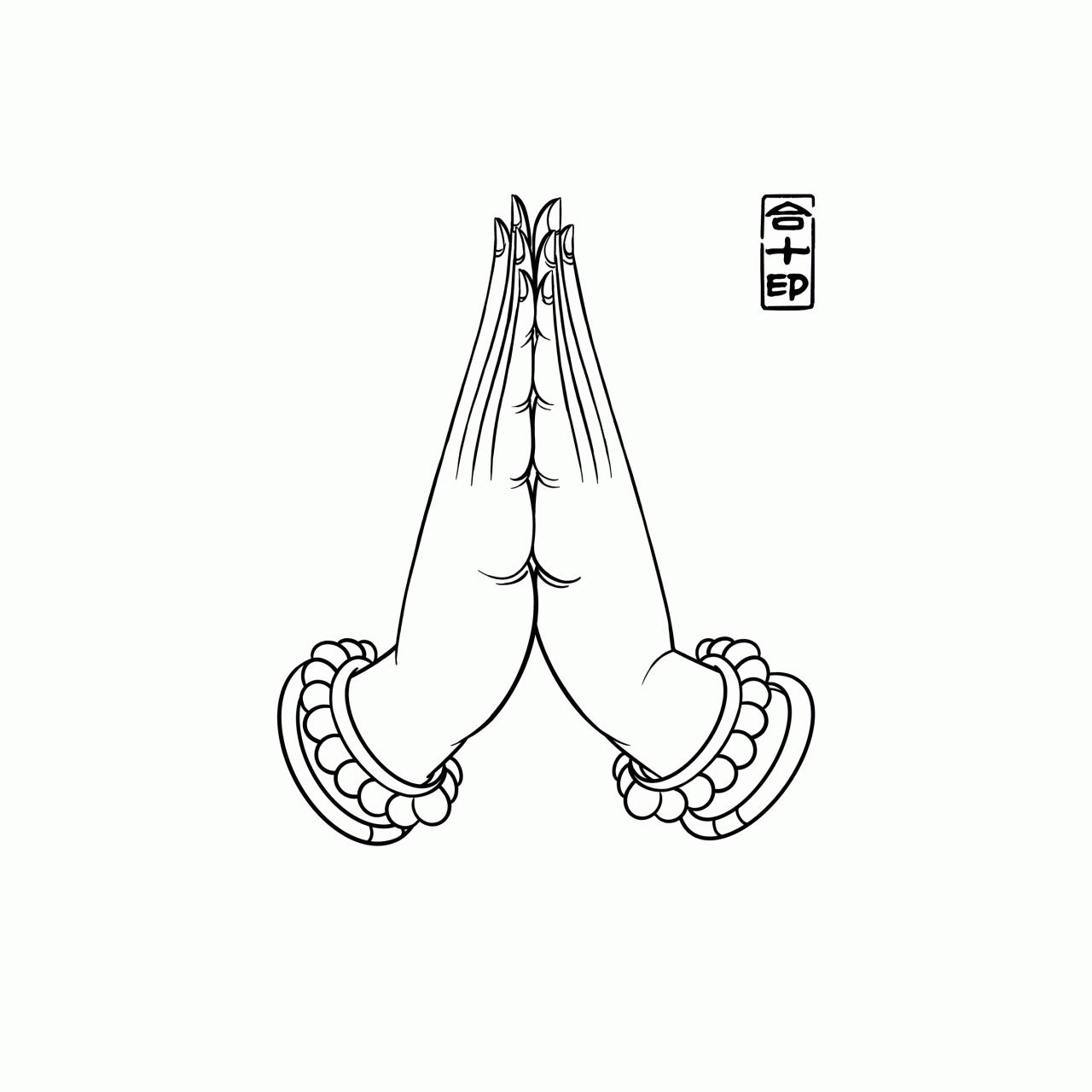
△ Guanyin gesture © Architectural Camp Design Studio
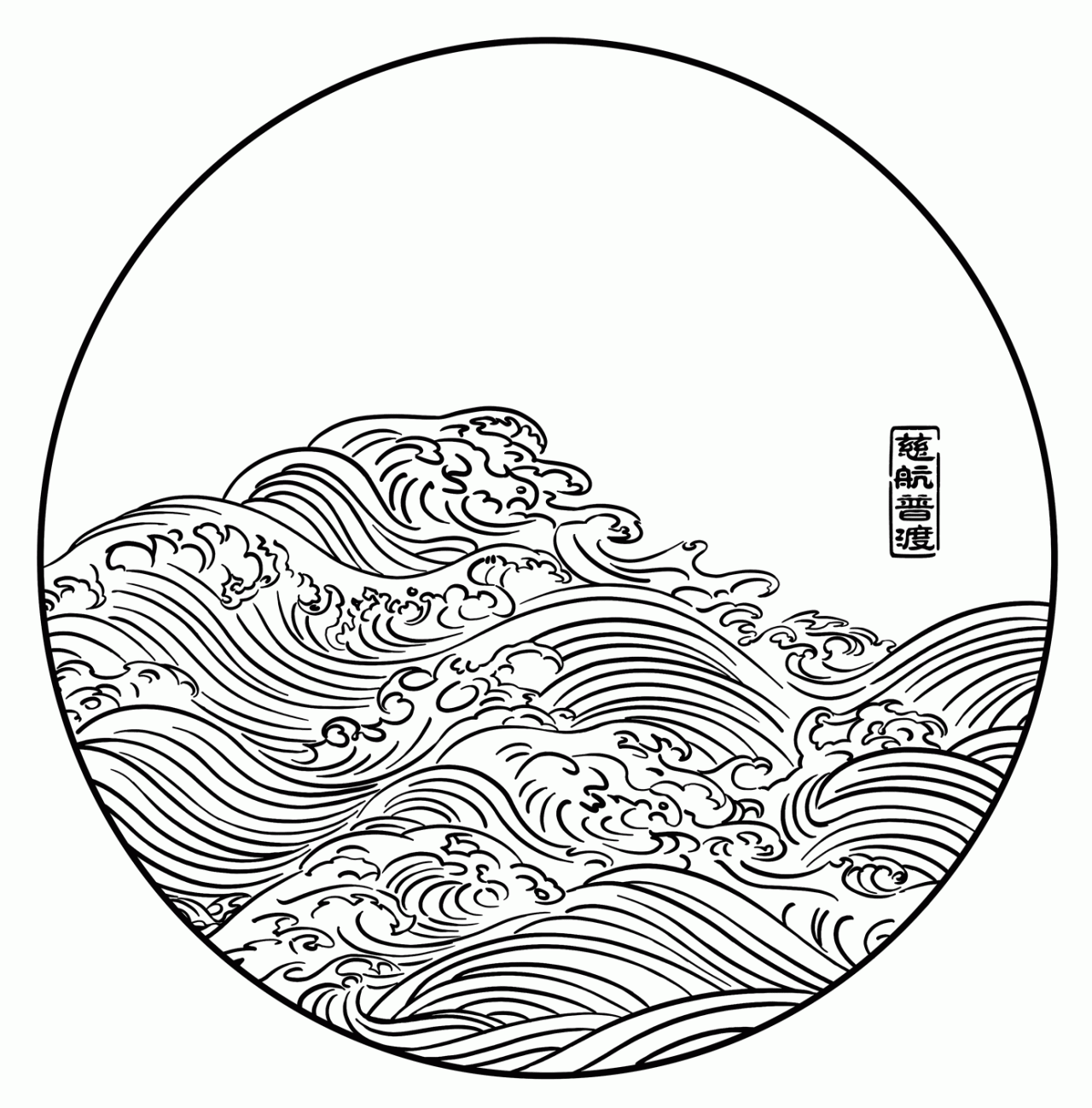
△ Practice Scene © Architectural Camp Design Studio
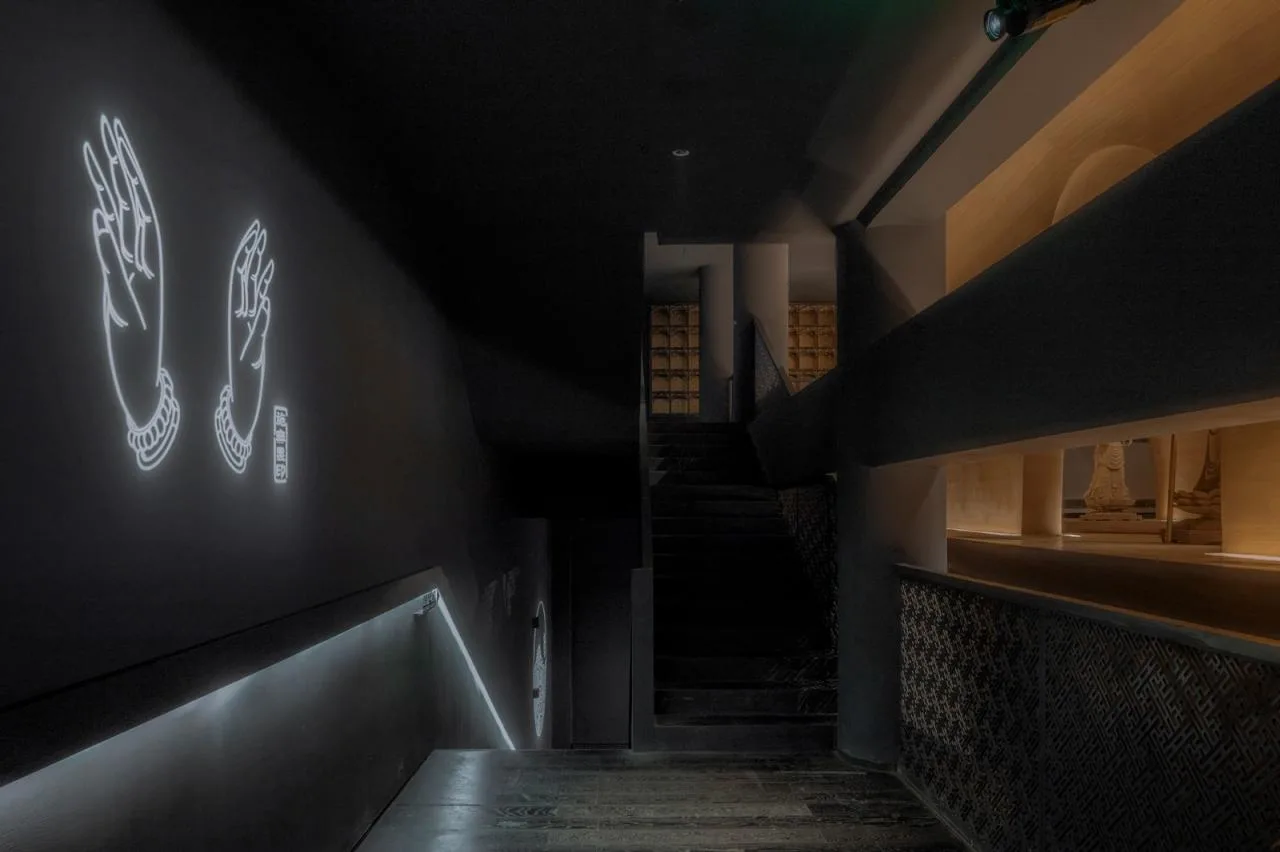
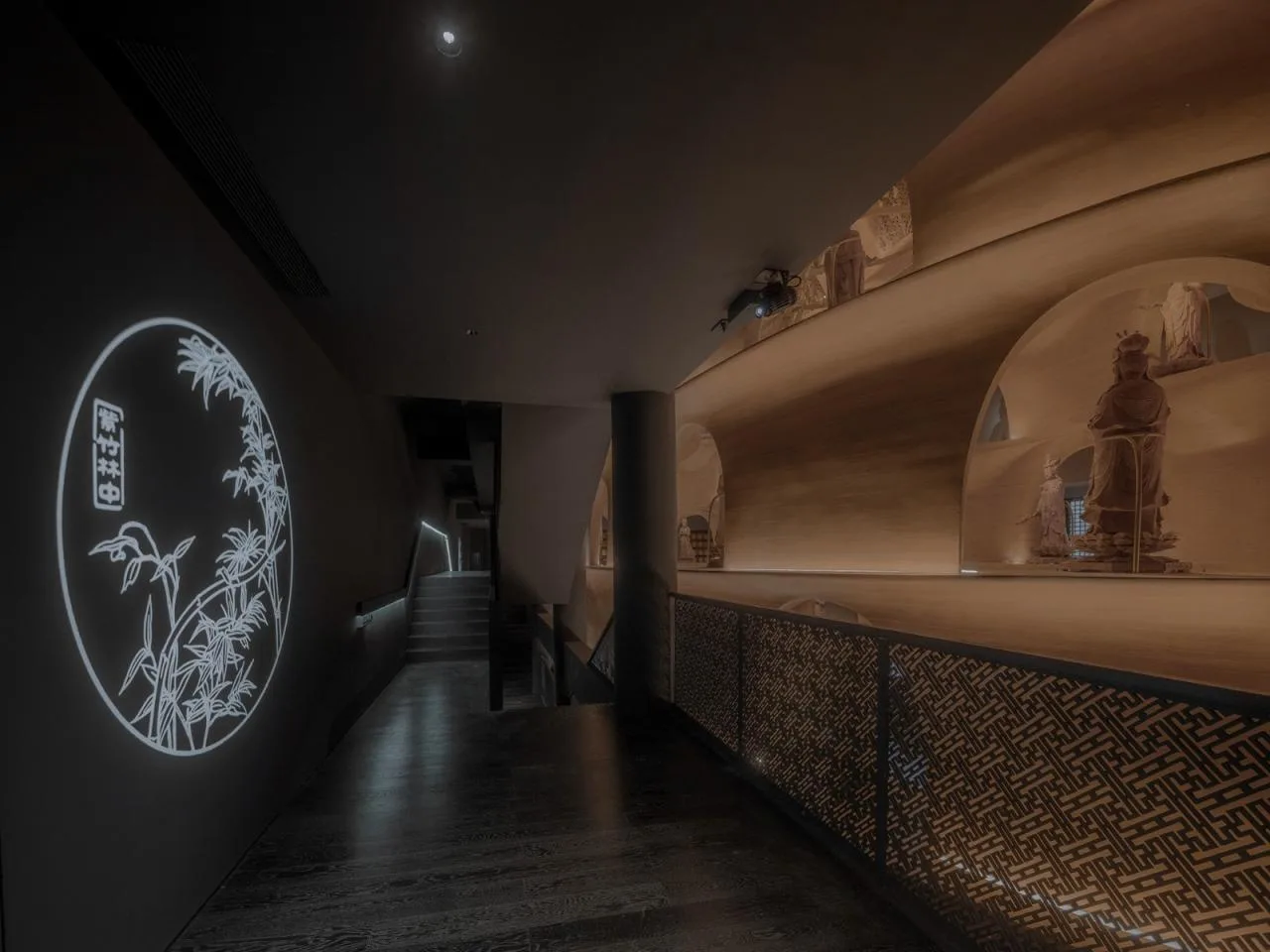
△ Corridor perspective © Jin Weiqi
The interior lighting was carefully designed to enhance the tranquil atmosphere, especially in areas with limited natural light. A transparent film with 9% light transmittance is applied on the building’s exterior glass to reduce glare. The tower is fully equipped with concealed lighting that highlights the building’s structural beauty through subtle illumination.
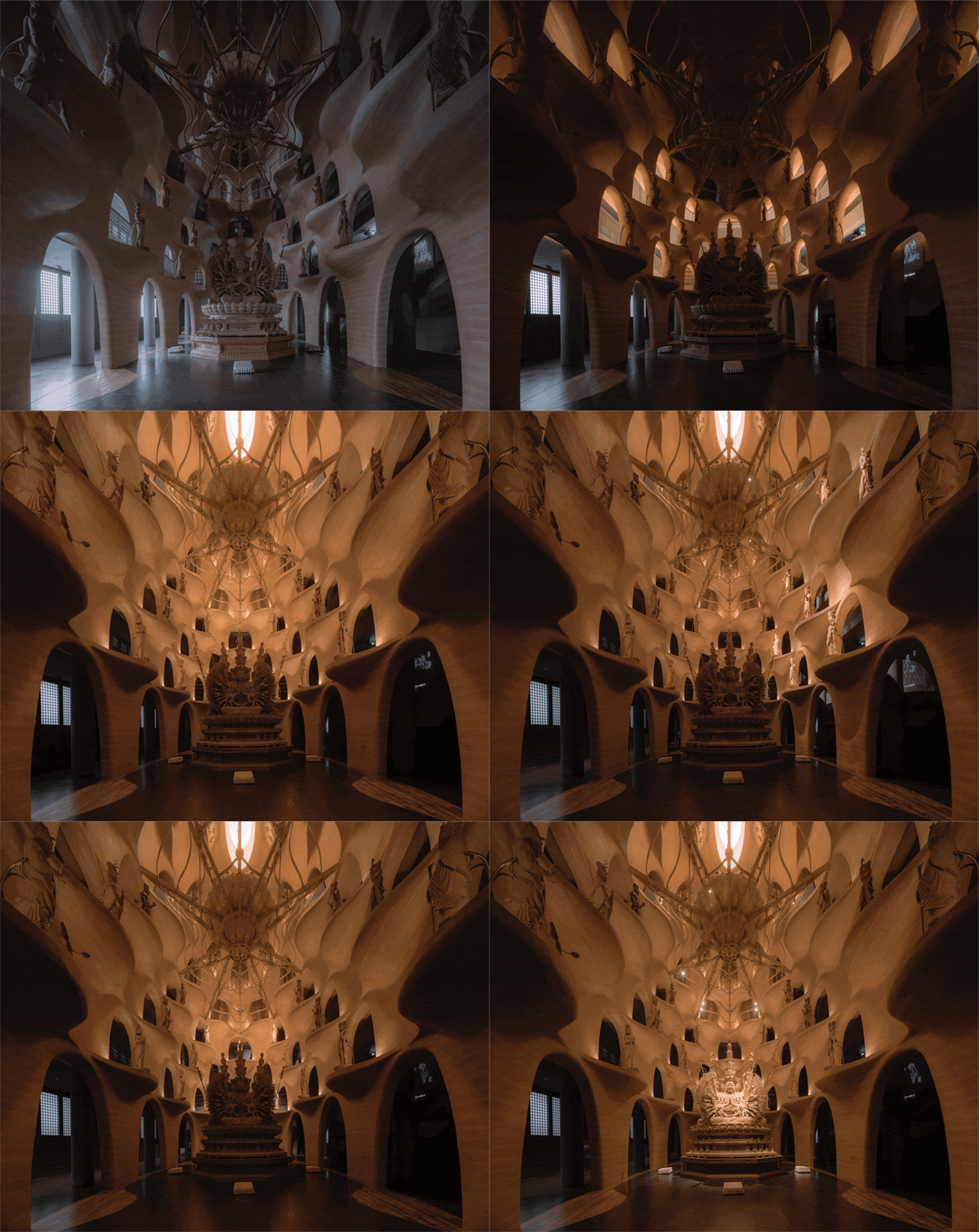
△ Main perspective inside the tower © Jin Weiqi
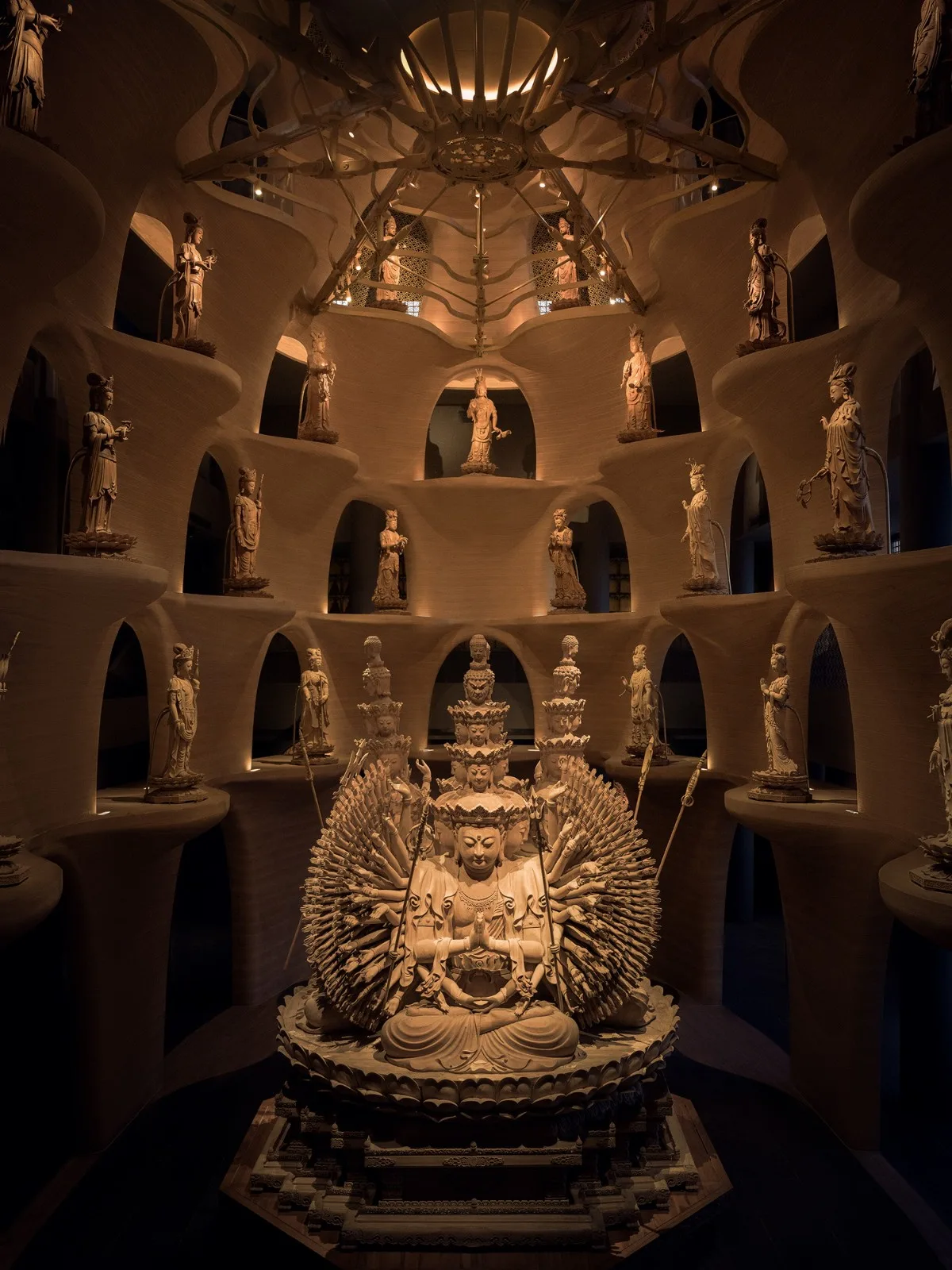
△ Tower perspective © Wang Ning
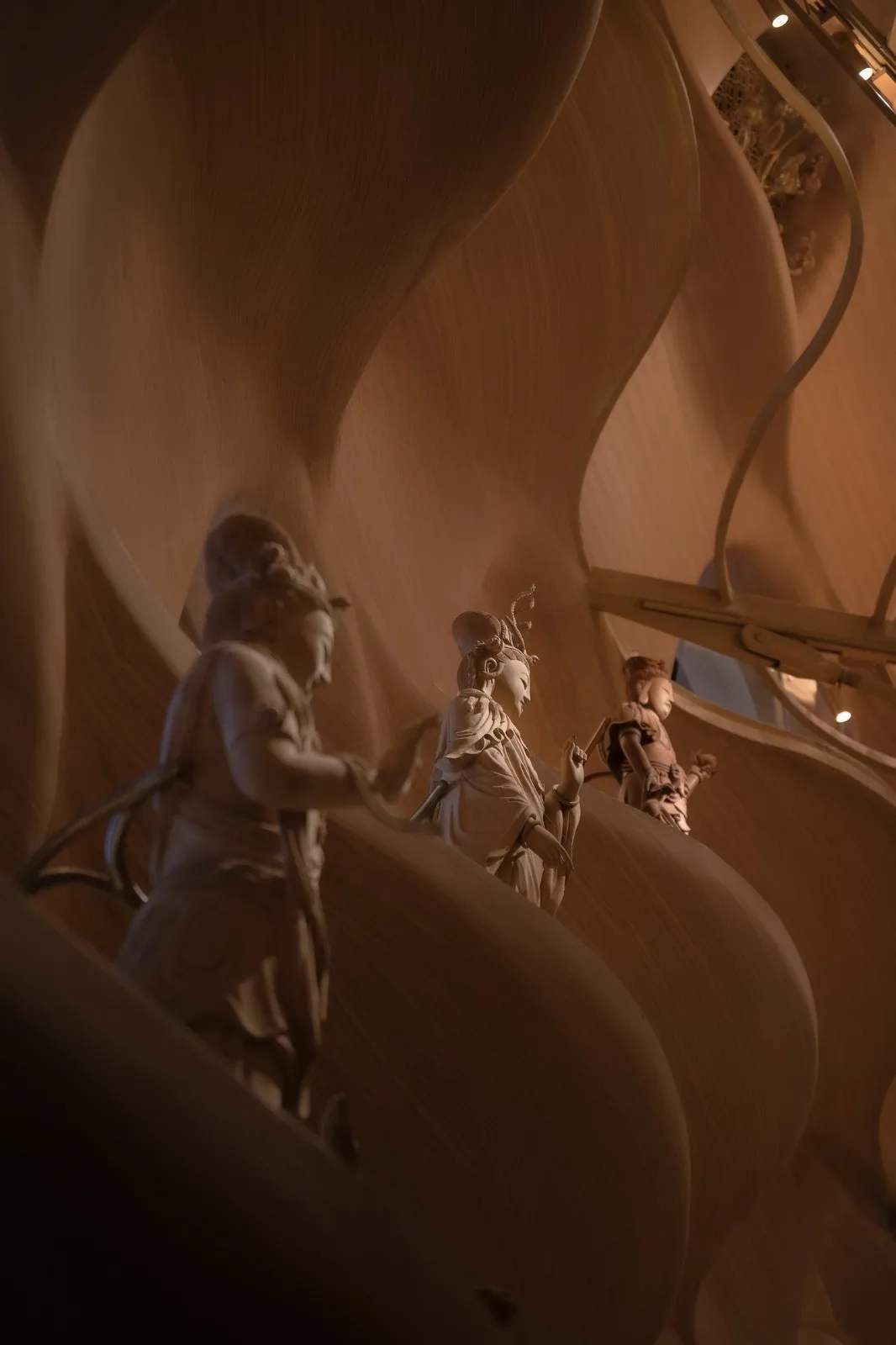
Details inside the tower © Wang Ning
The dome atop the tower features three layers of light troughs with a gradient of colors that lighten upward, creating a sense of vertical ascent. The design team rigorously tested illumination angles, beam sizes, brightness, and distance to ensure optimal lighting for each Buddha statue.
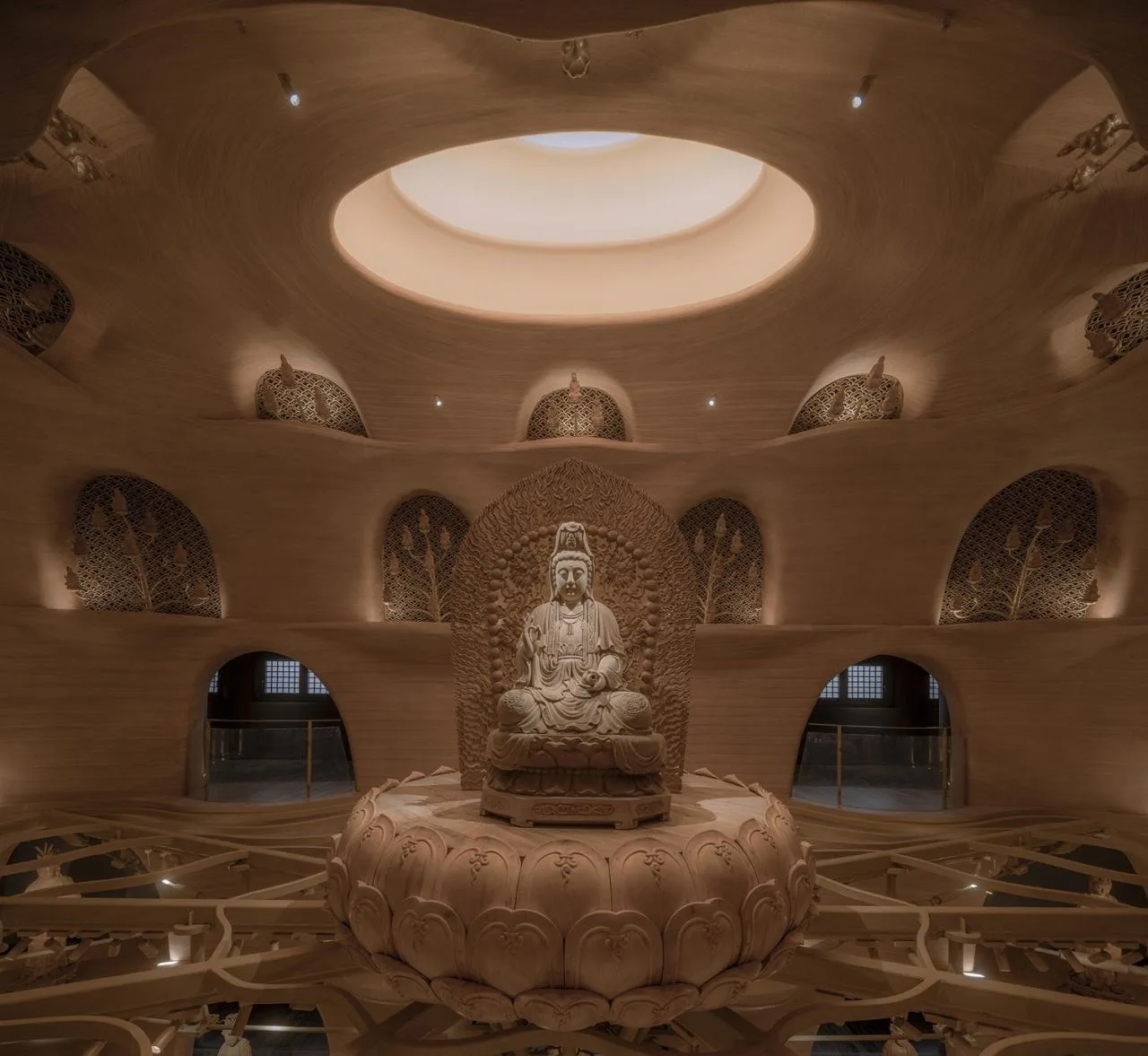
△ Tower interlayer © Jin Weiqi
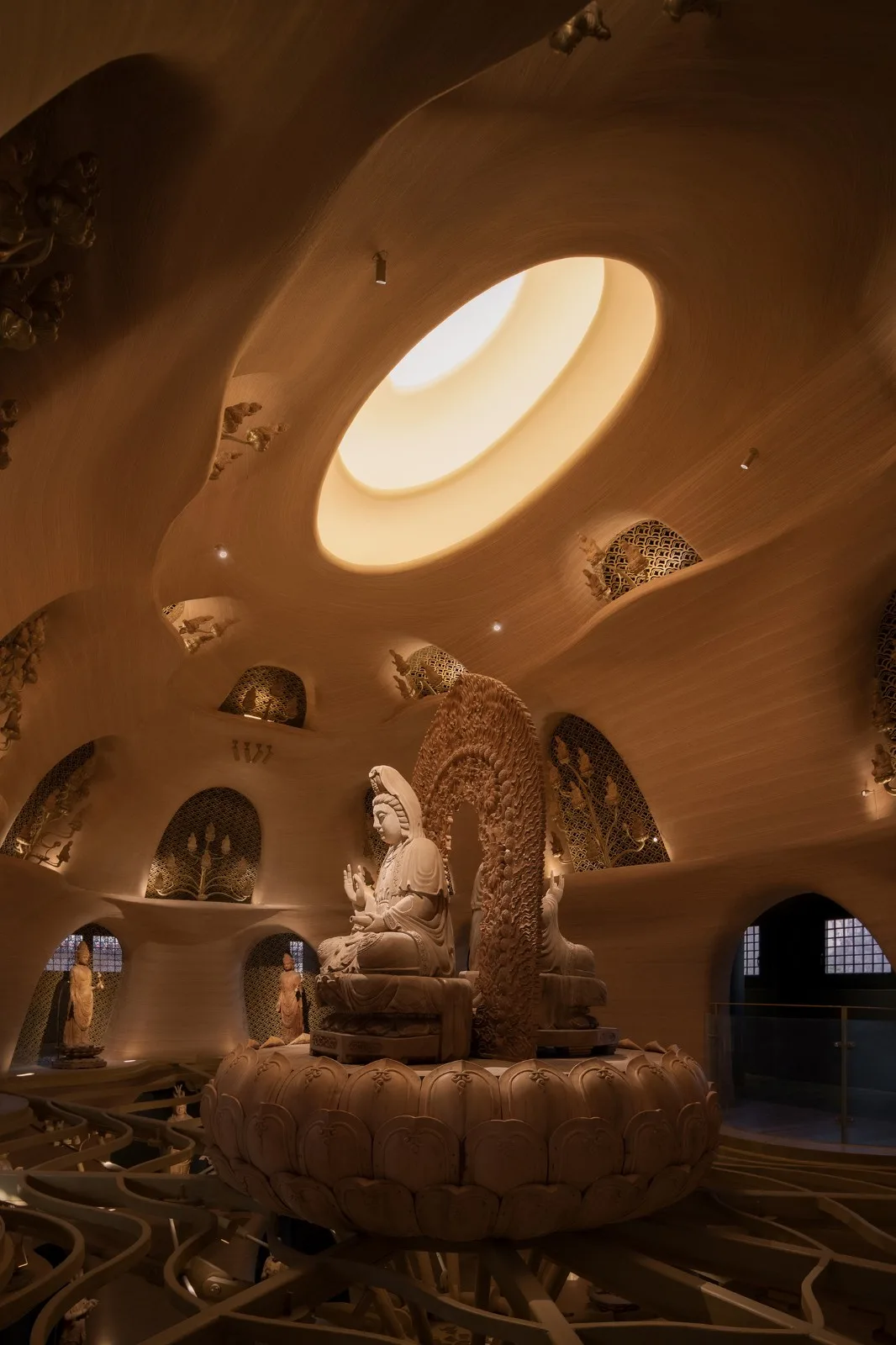
△ Tower interlayer © Wang Ning
Hall Outside the Museum
The side halls flanking the museum are designated lecture halls, playing a vital role in the museum’s public education programs. Leveraging the nearly 11-meter height of these buildings, the design suspends four-sided illuminated scripture metal plates near the ceiling. Reflective mirror materials amplify the space, creating a futuristic and immersive artistic atmosphere. The surrounding walls are clad in dark, sound-absorbing panels to optimize both acoustics and visual comfort, supporting the museum’s functional and spiritual goals.
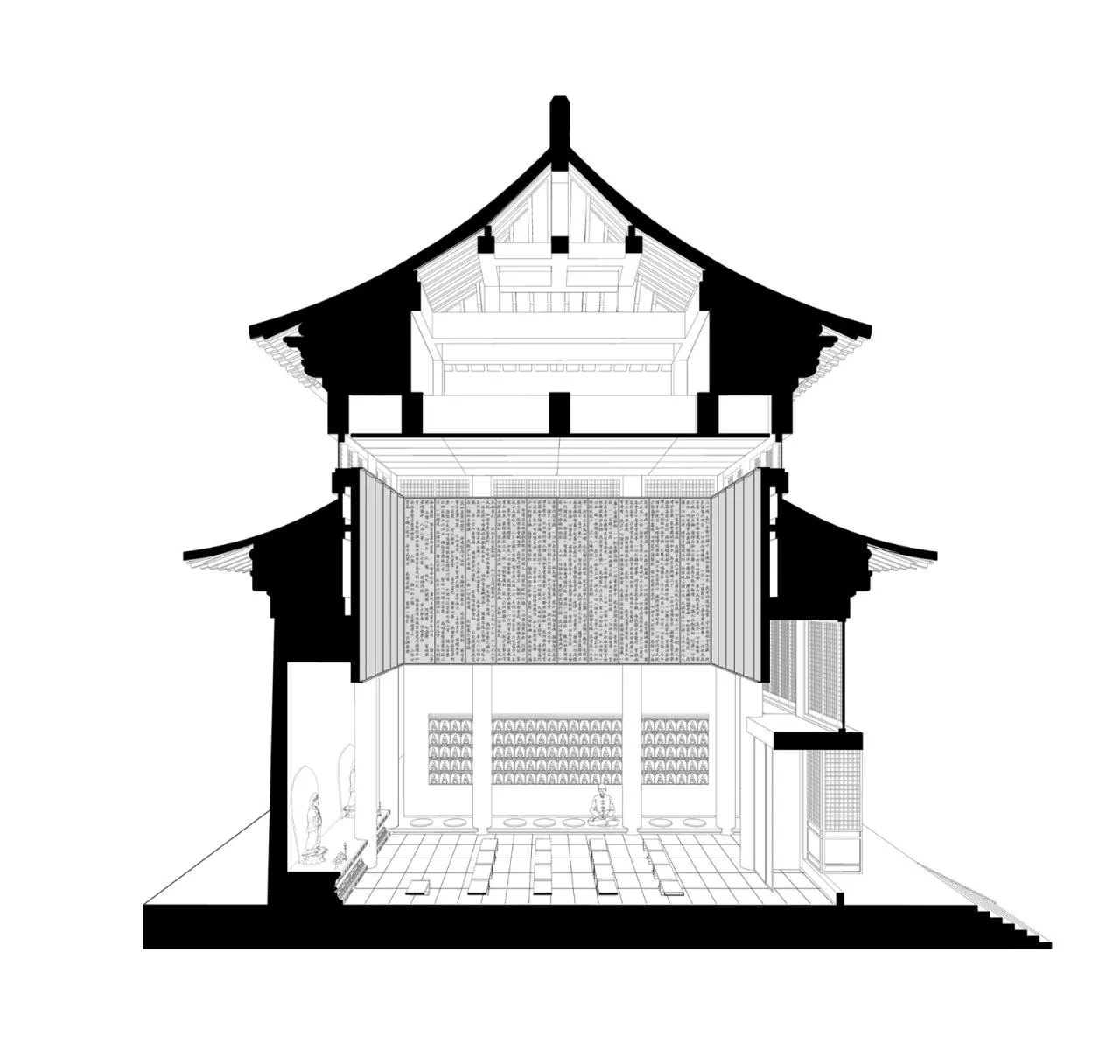
△ Lecture Hall A-A sectional perspective view © Architectural Camp Design Studio
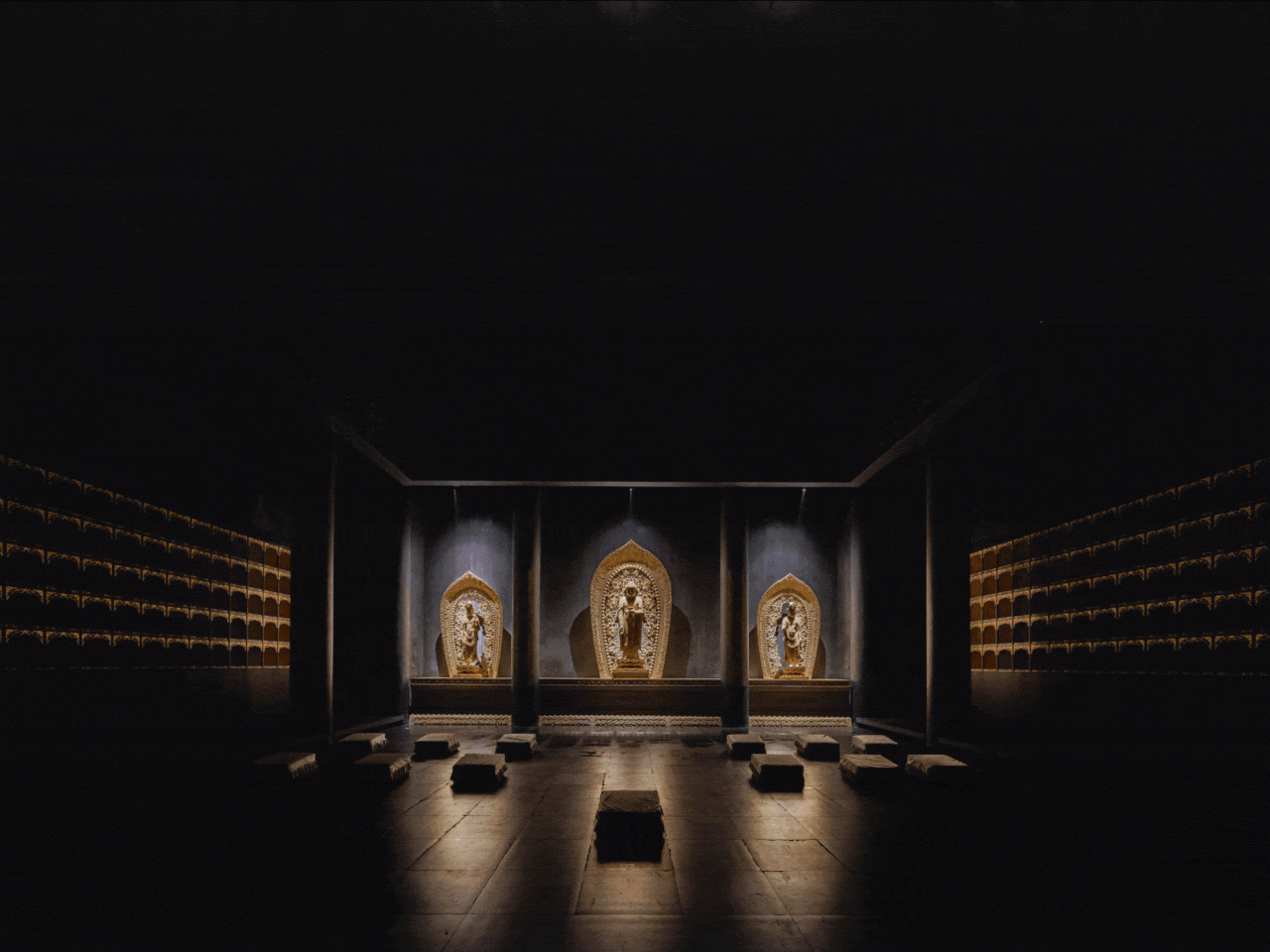
△ Lecture Hall Master’s Perspective © Jin Weiqi
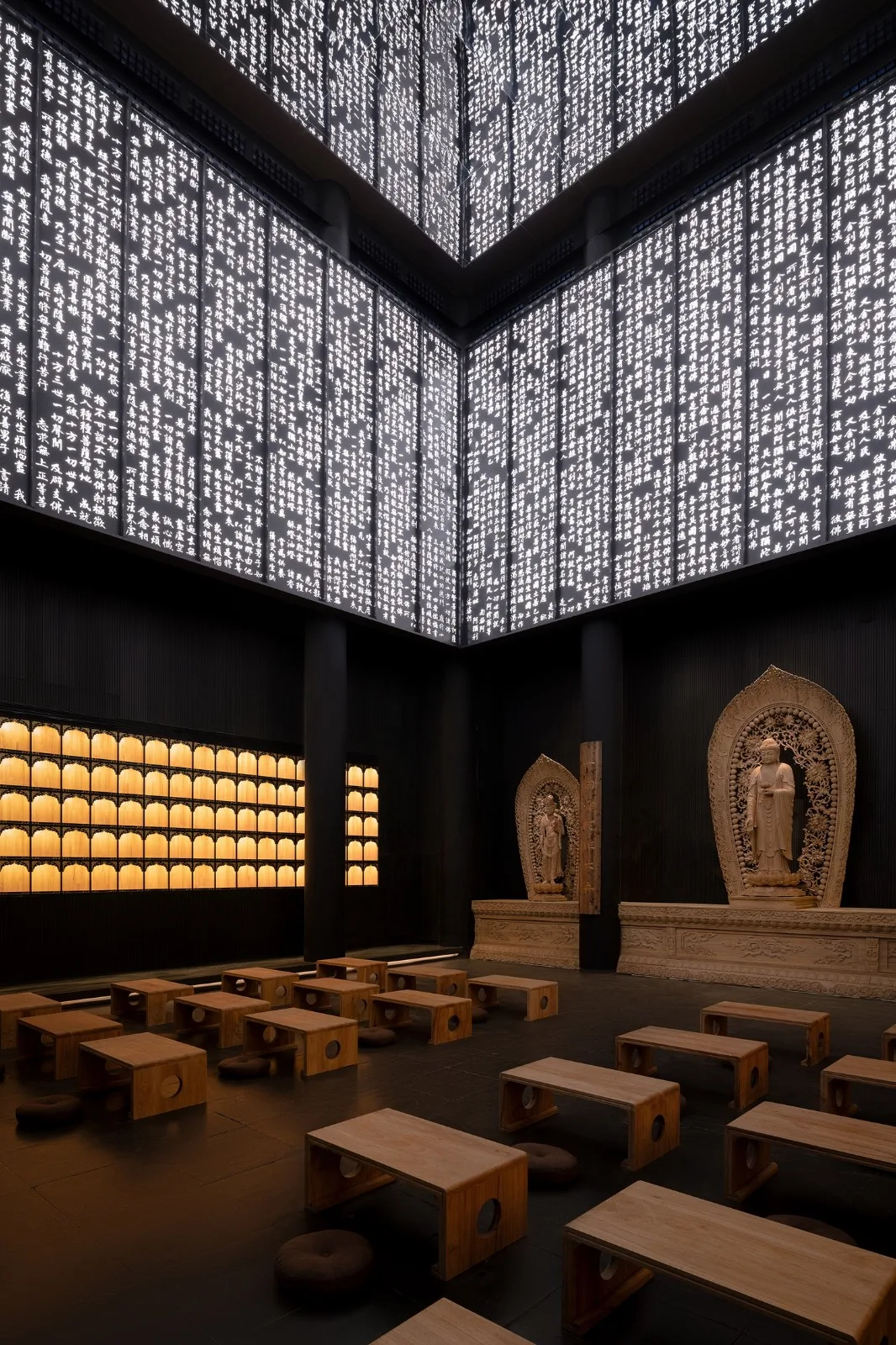
Lecture Hall © Wang Ning
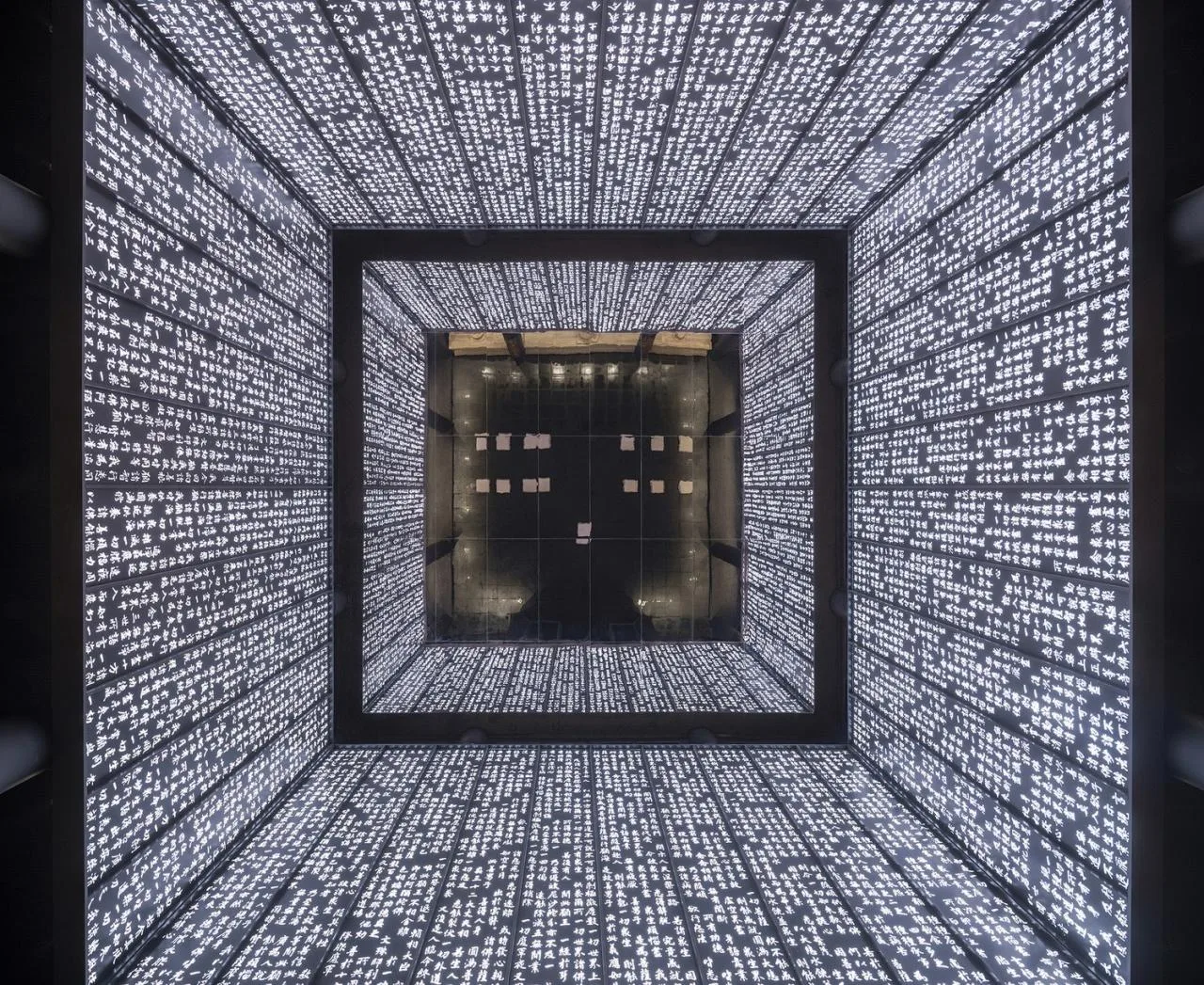
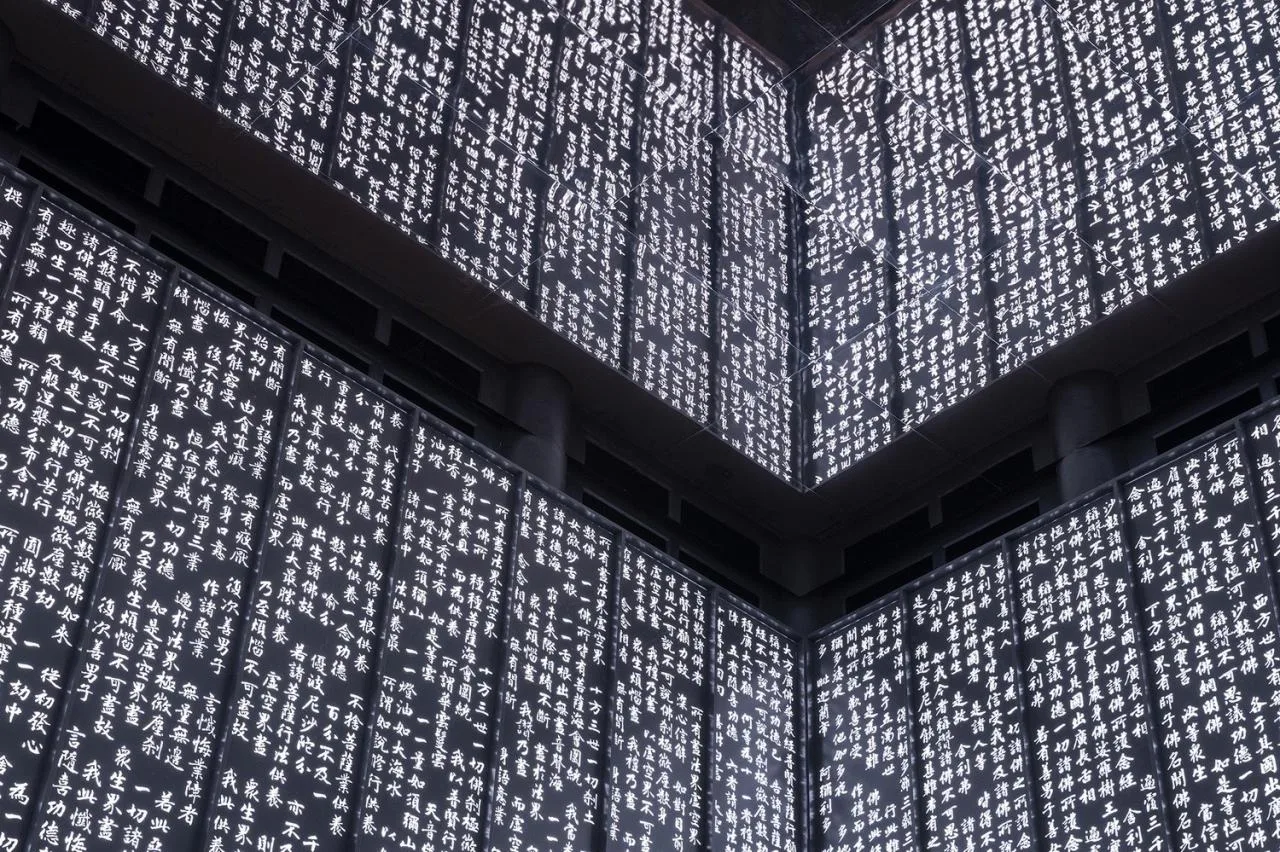
Details of the Lecture Hall © Jin Weiqi
Conclusion
The museum design integrates multiple art forms—including interior design, exhibitions, sculpture, imaging, and landscape—to present a comprehensive spiritual experience. Drawing from religious symbolism such as mandalas and lotus motifs, this contemporary interpretation immerses visitors in the spiritual charm of Buddhist culture and art, inviting them to journey inward through travel, meditation, and reflection.
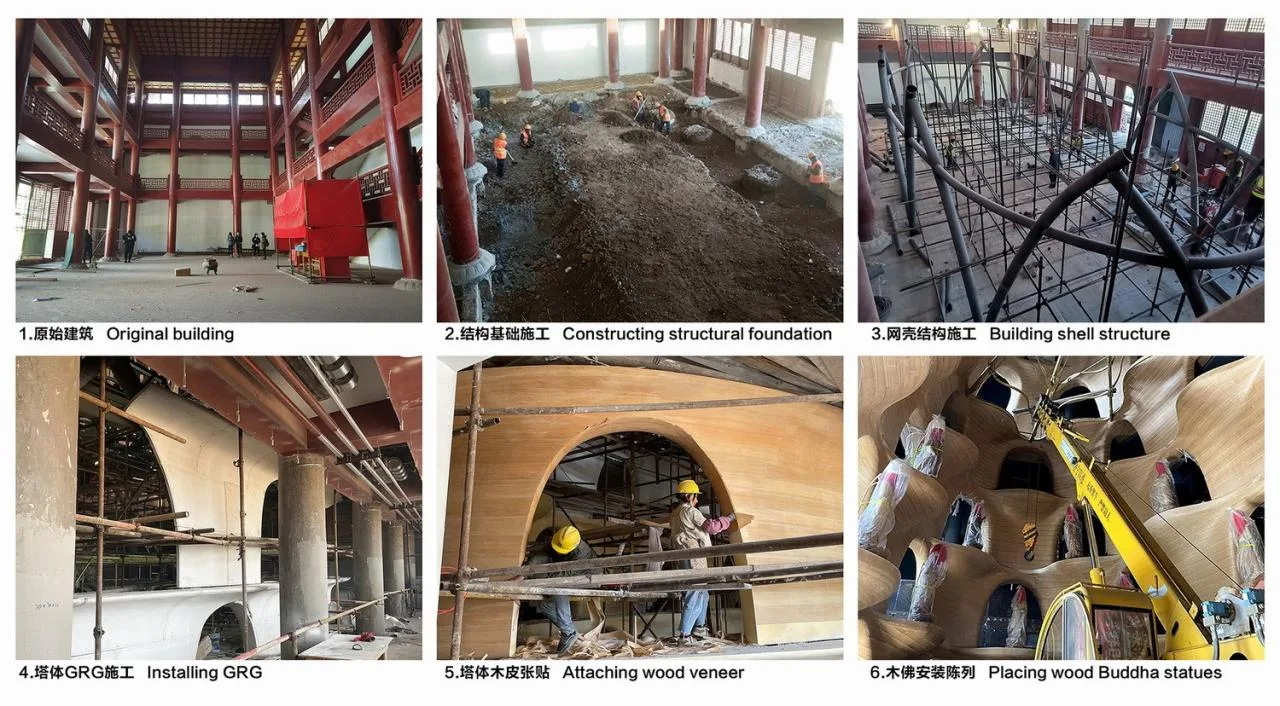
△ Construction Process Diagram © Architectural Camp Design Studio
Project Drawings
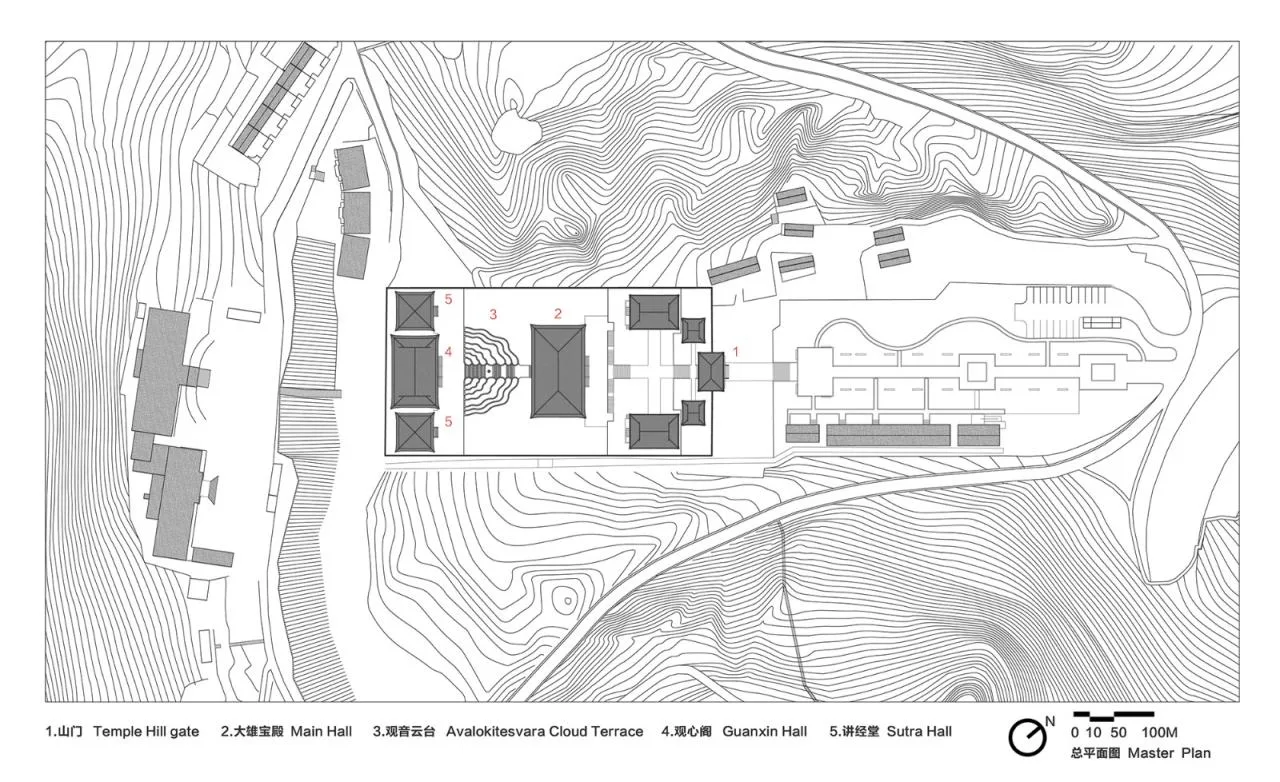
△ General layout plan © Architectural Camp Design Studio
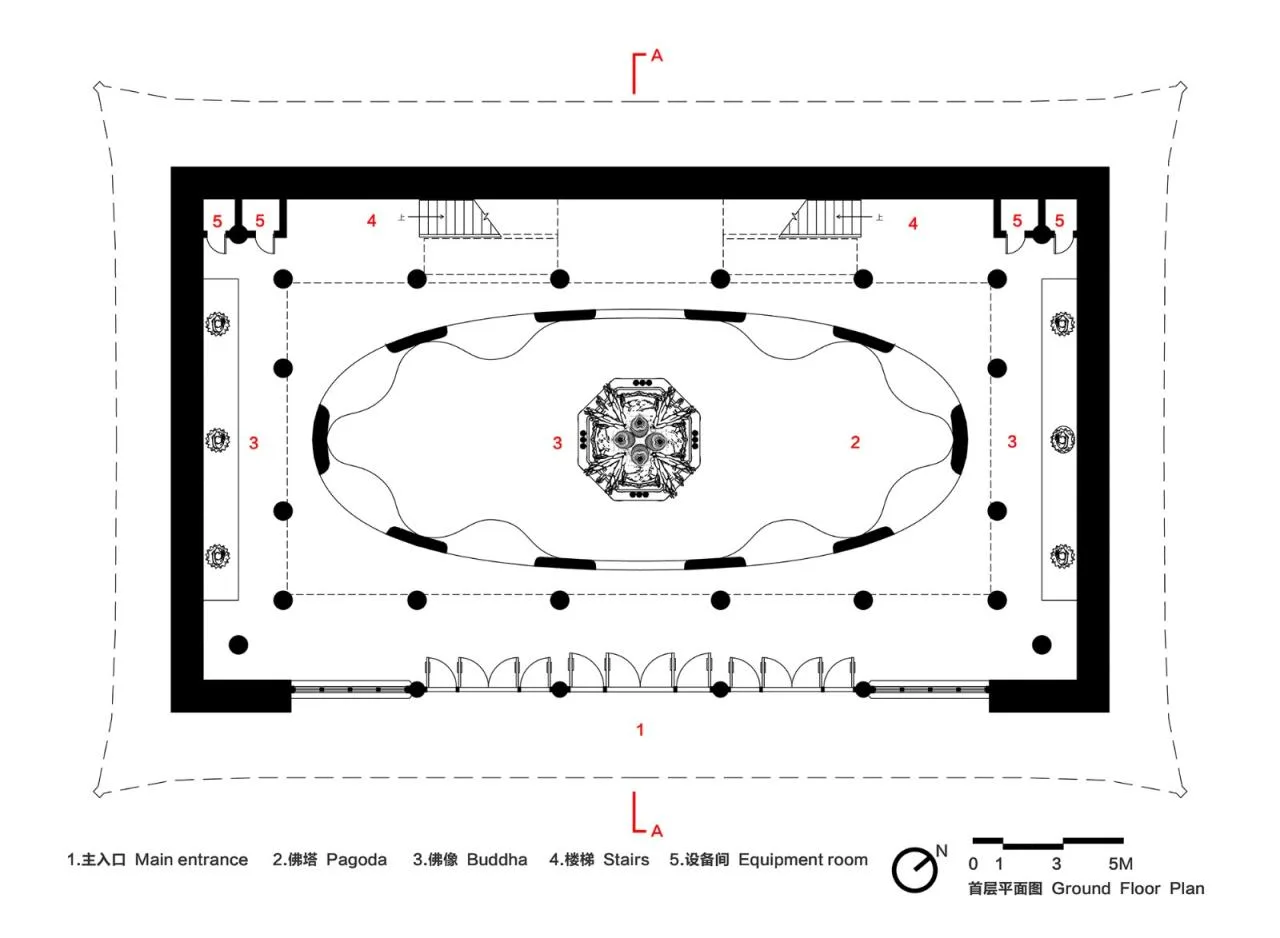
△ Plan of the first floor of Guanxin Pavilion © Architectural Camp Design Studio
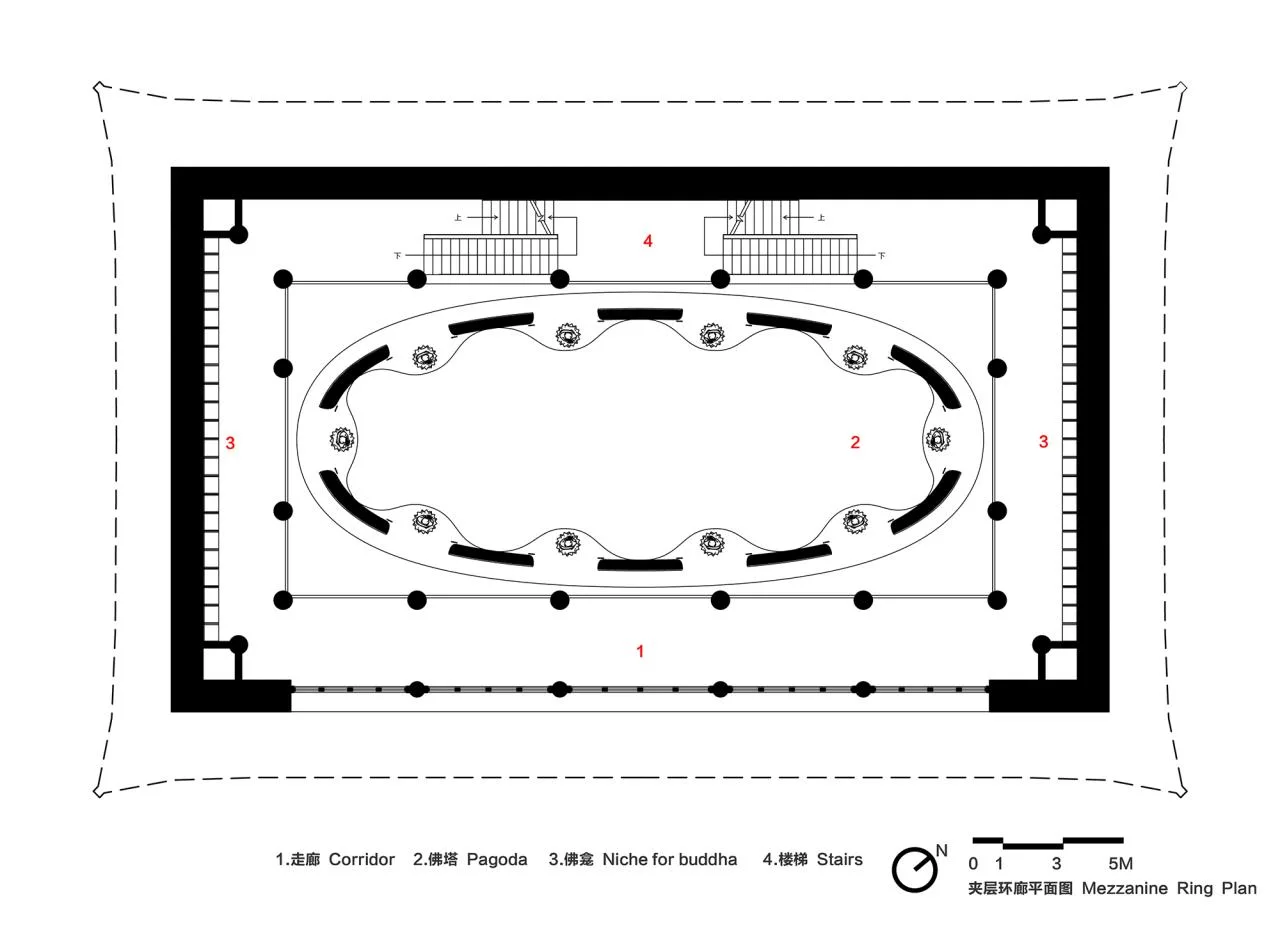
△ Plan of the mezzanine corridor of Guanxin Pavilion © Architectural Camp Design Studio
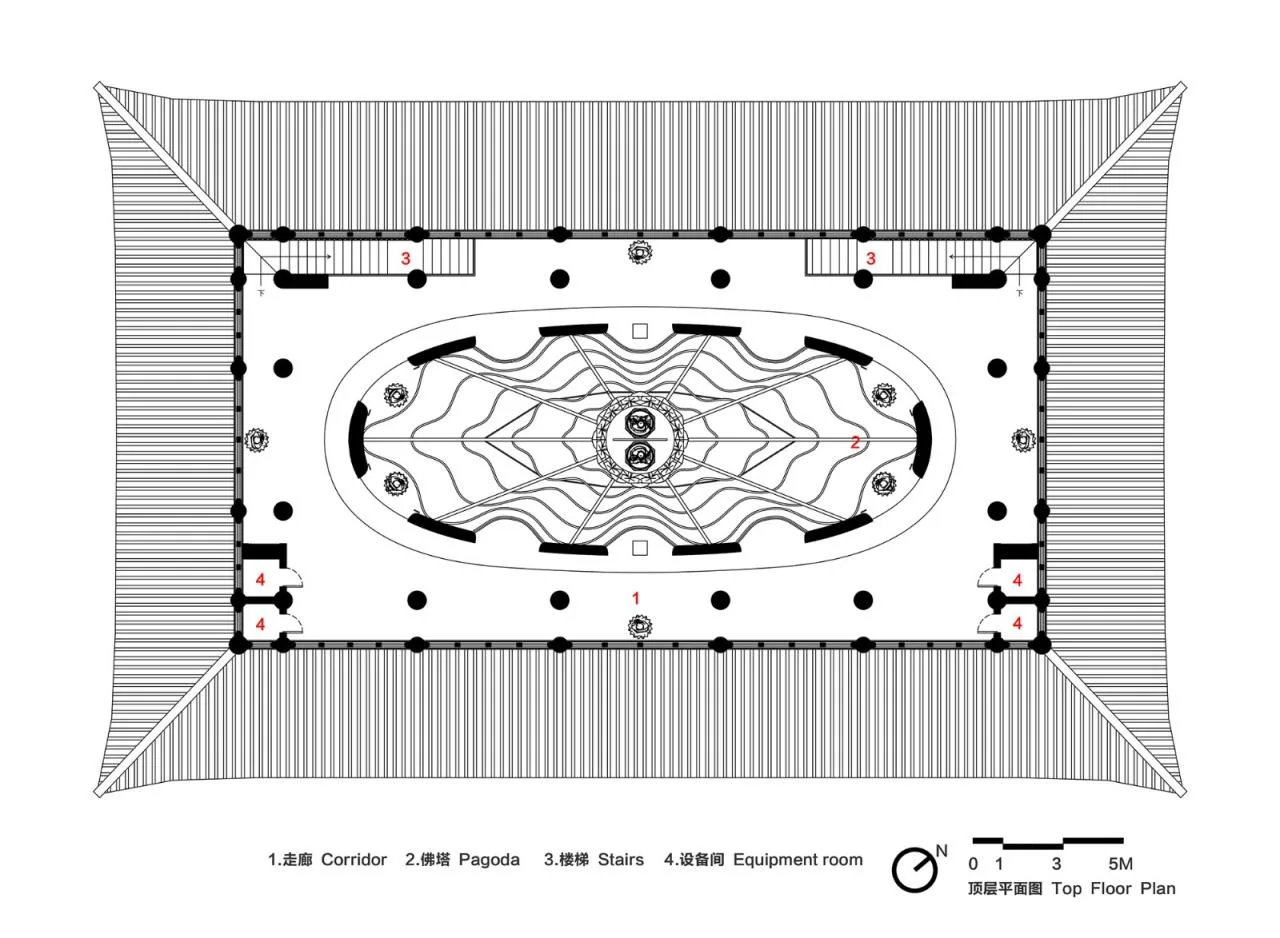
Top floor plan of Guanxin Pavilion © Architectural Camp Design Studio
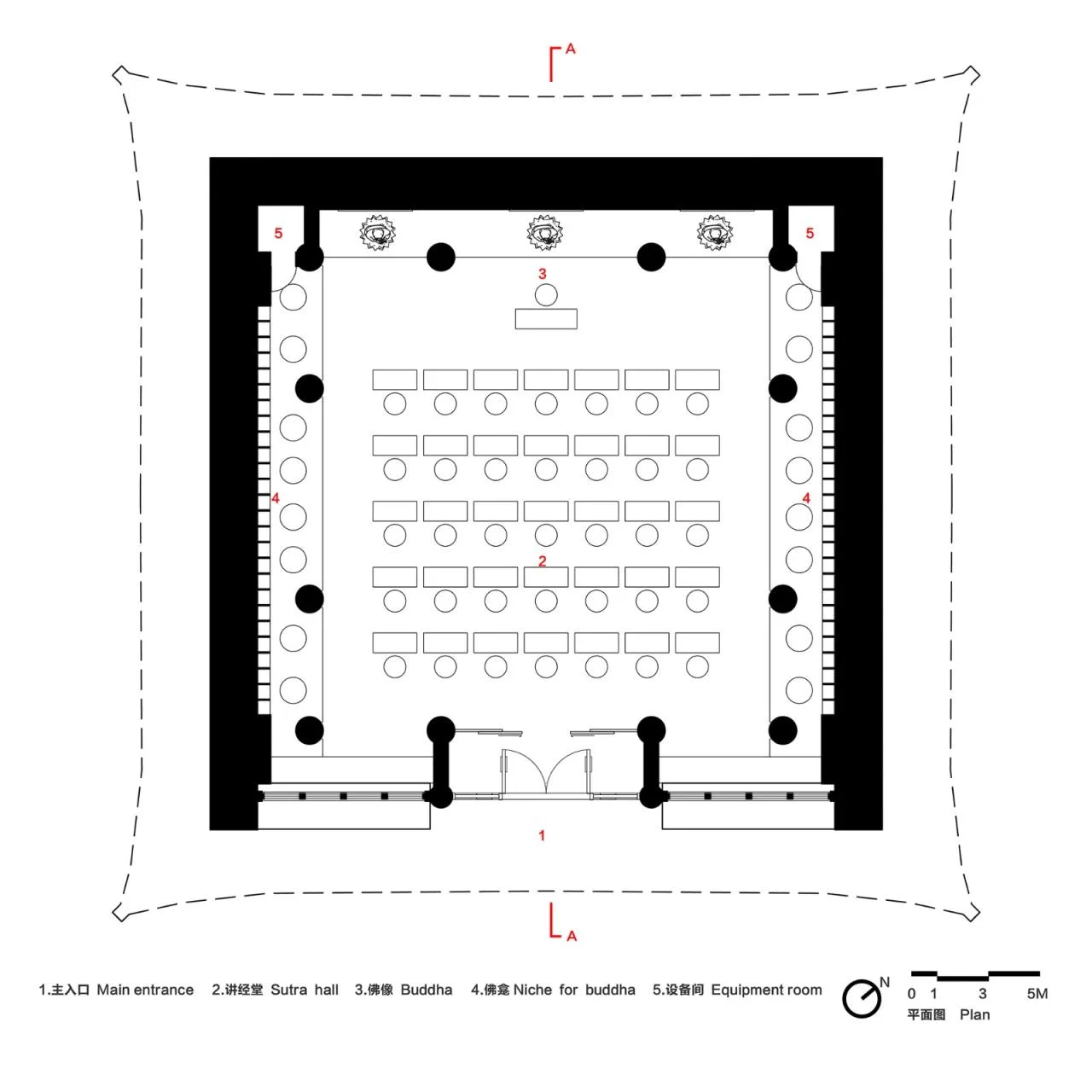
△ Plan of the Lecture Hall © Architectural Camp Design Studio
Project Information
Project Name: Zushan Jixin Temple · Wooden Buddha Museum
Location: Jixin Temple, Zushan, Qinhuangdao
Owner: Zushan Xinchao Tourism Development Co., Ltd., Qinglong Manchu Autonomous County
Designer: Architectural Camp Design Studio
Lead Designer: Han Wenqiang
Project Designer: Wang Tonghui
Interior Design: Wang Tonghui, Cao Chong, Wei Jie, Xu Ye (Resident Designer)
Landscape Design: Wang Tonghui, Cao Chong, Han Fei
Lighting Consultant: Dong Tianhua
Structural Consultant: Zhang Yong
Mechanical and Electrical Consultants: Jiang Mao, Zheng Baowei
Guide Design: Wang Tonghui, Liu Xuan
Sculpture Coordinator: Qin Huaqin
Construction Unit: China Construction Eighth Engineering Division
Building Area: 1,657 square meters
Design Period: December 2019 – October 2020
Construction Period: November 2020 – March 2022
Photography and Videography: Wang Ning, Jin Weiqi, Xiao Shiming















Must log in before commenting!
Sign Up