
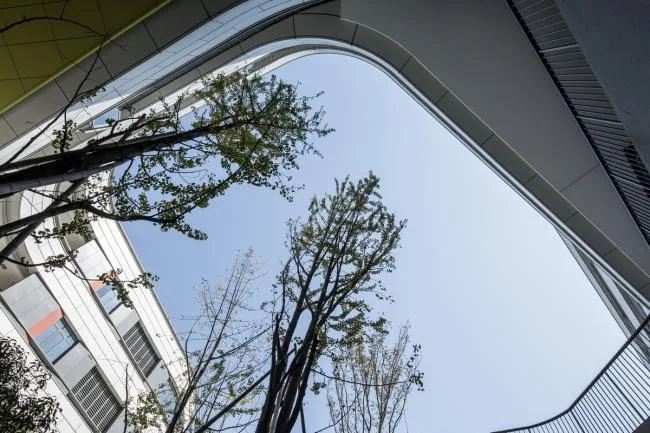
▲ View looking up from the sunken courtyard
Every educational journey creates memories that are unique and unrepeatable, each tied intimately to the campus itself. Whether it’s the gentle spring breeze in the courtyard, the summer cicadas under the eaves, the crisp autumn air by the playground, or the winter snow atop the roof, these moments shape our memories. The campus nourishes these memories, allowing them to grow infinitely without repetition. Piece these moments together, and you begin to see the true essence of the campus.
Designing an Open and Vibrant Campus
The Zhejiang University School of Education’s affiliated high school is a 36-class facility located near Zhijiang Bridge in Hangzhou’s Binjiang District. Surrounded by dense, uniform urban development, the architects envisioned this school as a lively oasis amid the concrete cityscape. It is designed not just as a place for learning, but as a dynamic community learning center that thrives throughout the day.
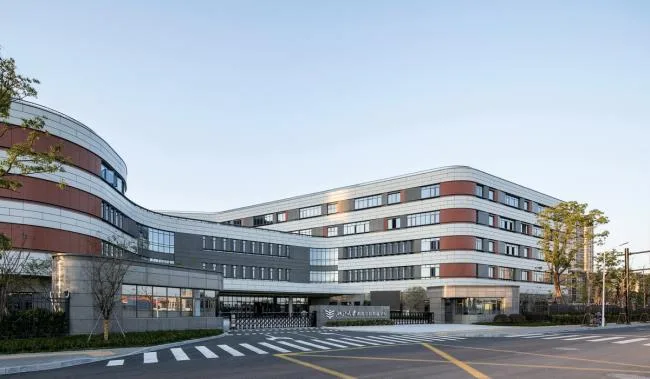
▲ Main entrance of the campus
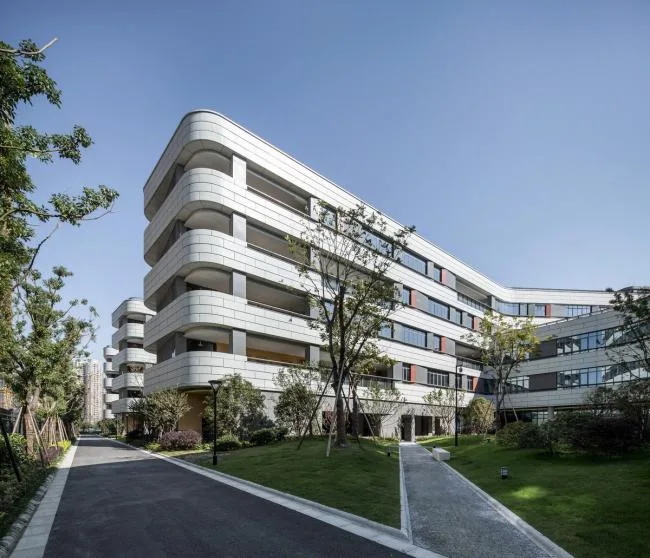
▲ Teaching building complex
To fully integrate sunlight, greenery, and open space into the campus, the design incorporates elements like overhead structures, interwoven forms, stacking, staggered layouts, and rooftop gardens. These features turn the buildings themselves into connective links between the campus’s many functions and areas.
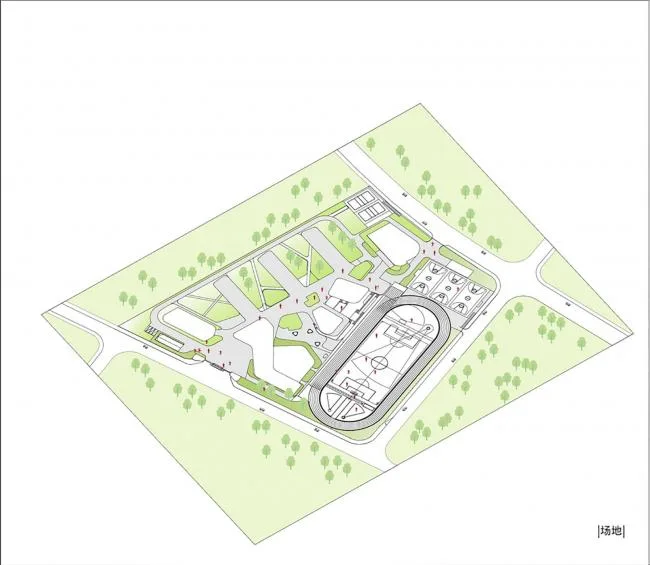
▲ Campus venue
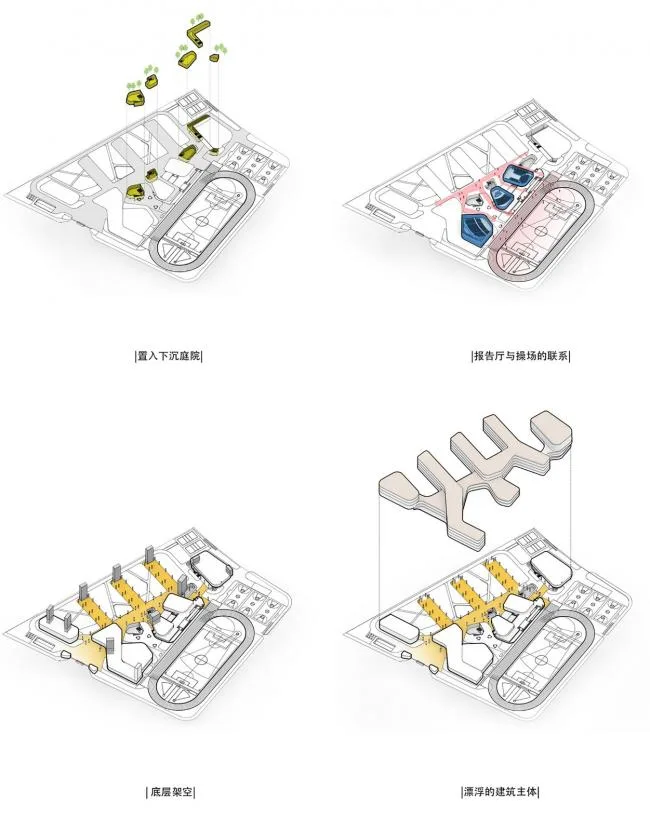
▲ Shape development
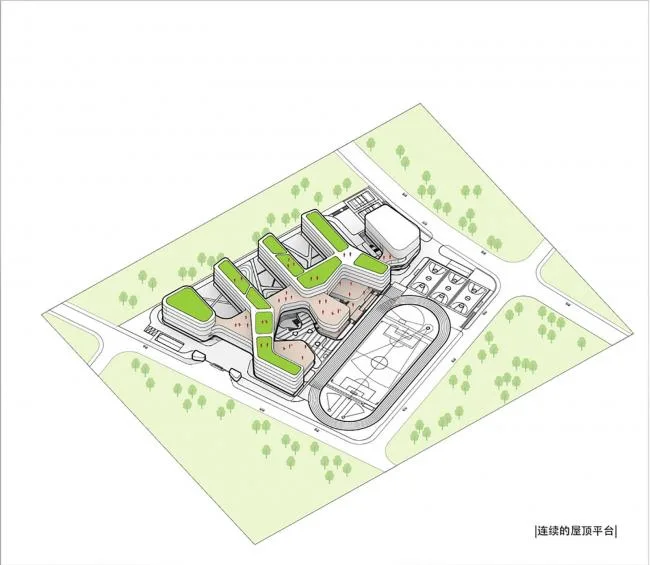
▲ Continuous rooftop platform
The multi-level rooftop platforms serve various functional and educational purposes, enriching the campus’s “fifth facade” vertically.
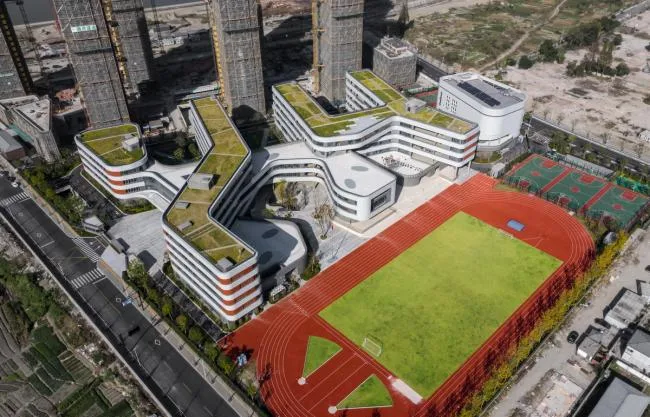
▲ Panoramic campus view
Maximizing the Use of Underlying Space
The flexible layout of the buildings opens new possibilities for usage and circulation. Interaction between students and teachers extends beyond classrooms to every corner of the campus.
The core teaching area is elevated, featuring a vertical transportation hub and three lecture halls of varying sizes.
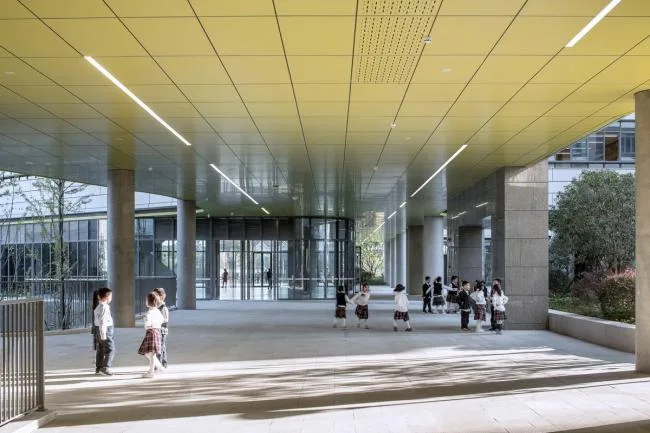
▲ Seamless integration of indoor and outdoor spaces
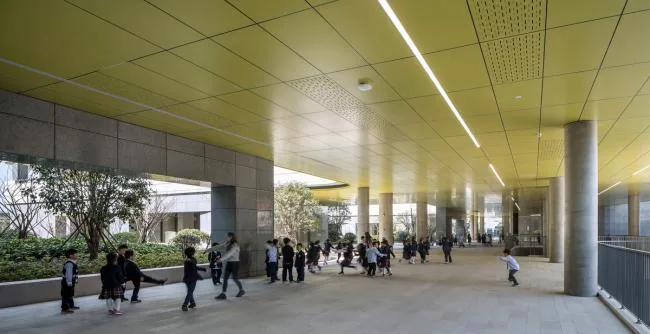
▲ Elevated level allows students to participate in outdoor activities regardless of weather
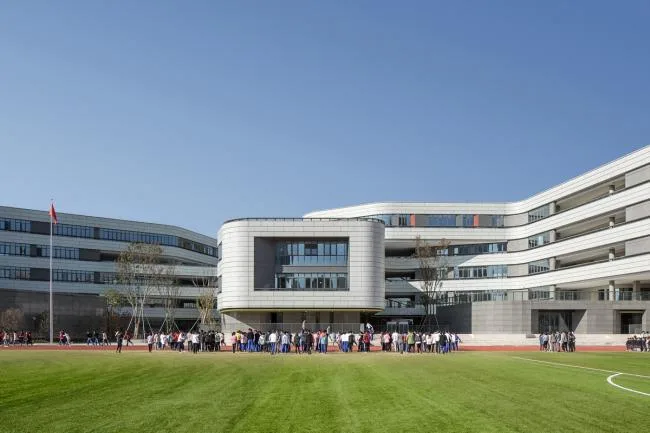
▲ Three lecture halls distributed along the east sports field
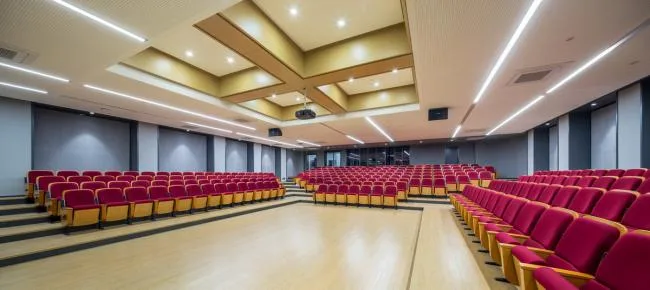
▲ Central Lecture Hall
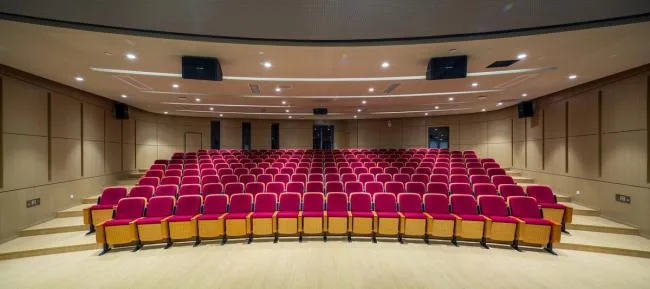
▲ Newspaper Hall
The campus features covered walkways free from wind and rain, combined with accessible green spaces, forming an open teaching park ideal for student activities. The buildings’ volumes begin at the second floor, appearing to float above the park, which reduces the sense of mass and adds liveliness.
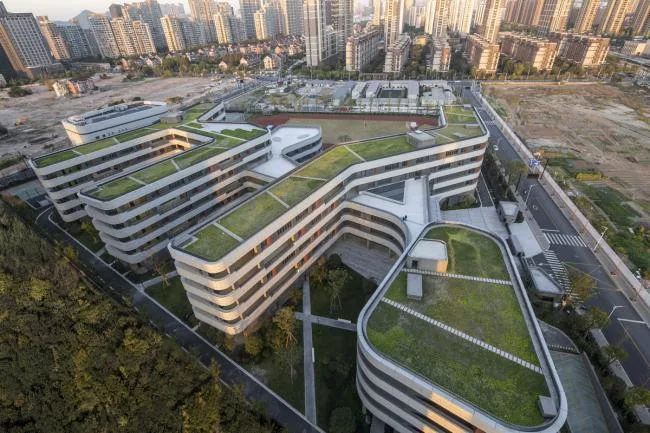
▲ Floating campus buildings
Creating Inviting, Serendipitous Walking Paths
Learning thrives on communication and social interaction, which often happen spontaneously. Traditional campus routes tend to be fixed, and even with interesting spaces along the way, the experience can become predictable over time.
To encourage natural interaction, the architects designed three distinct courtyard types: sunken daylight courtyards, ground-level enclosed courtyards, and rooftop gardens. As these different pathways intersect at various nodes, they create continuous opportunities for spontaneous communication, making the campus lively and engaging.
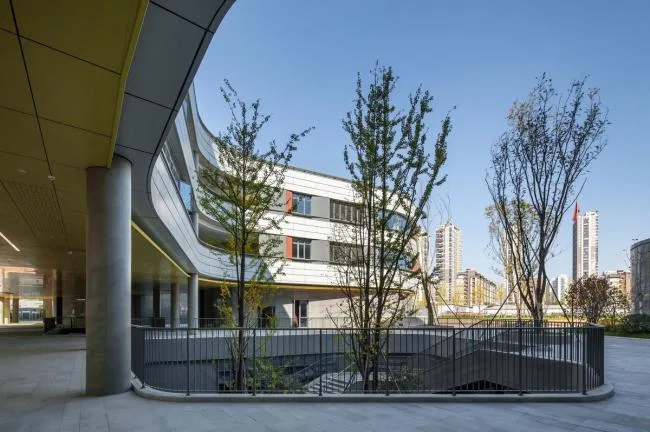
▲ Sunken courtyard
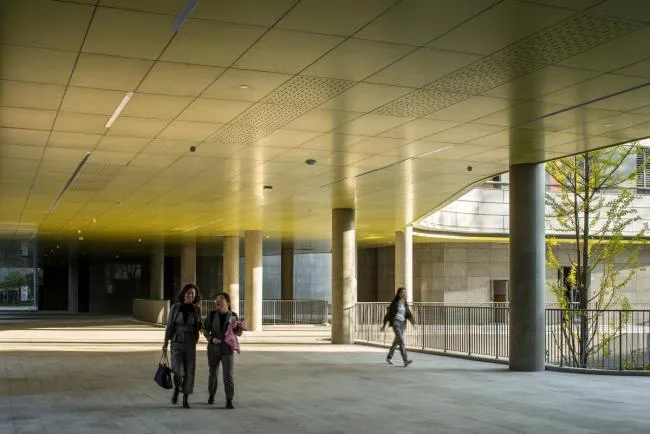
▲ Overhead layer
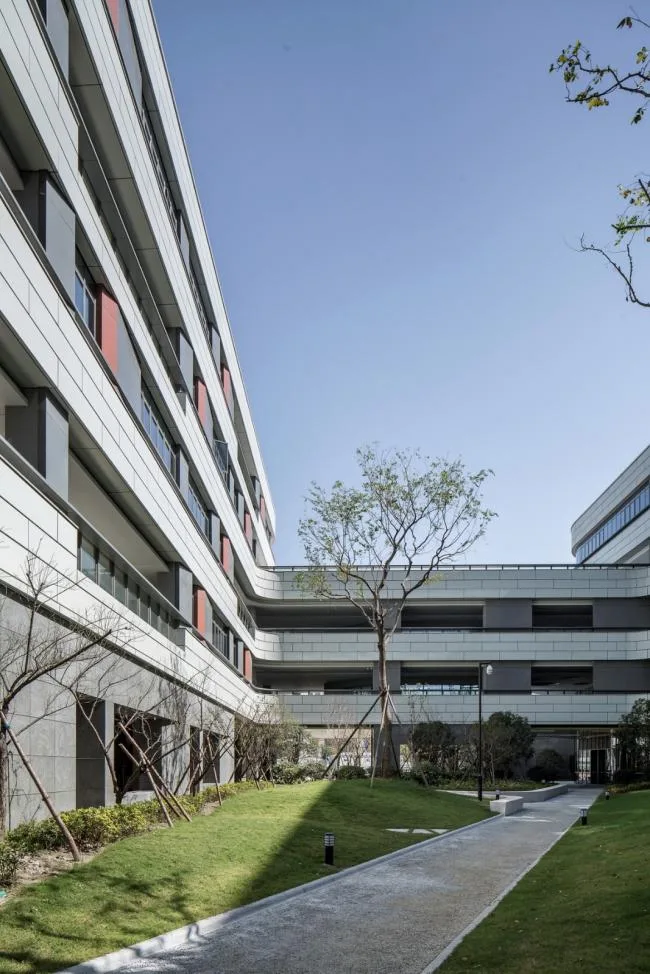
▲ Teaching building courtyard
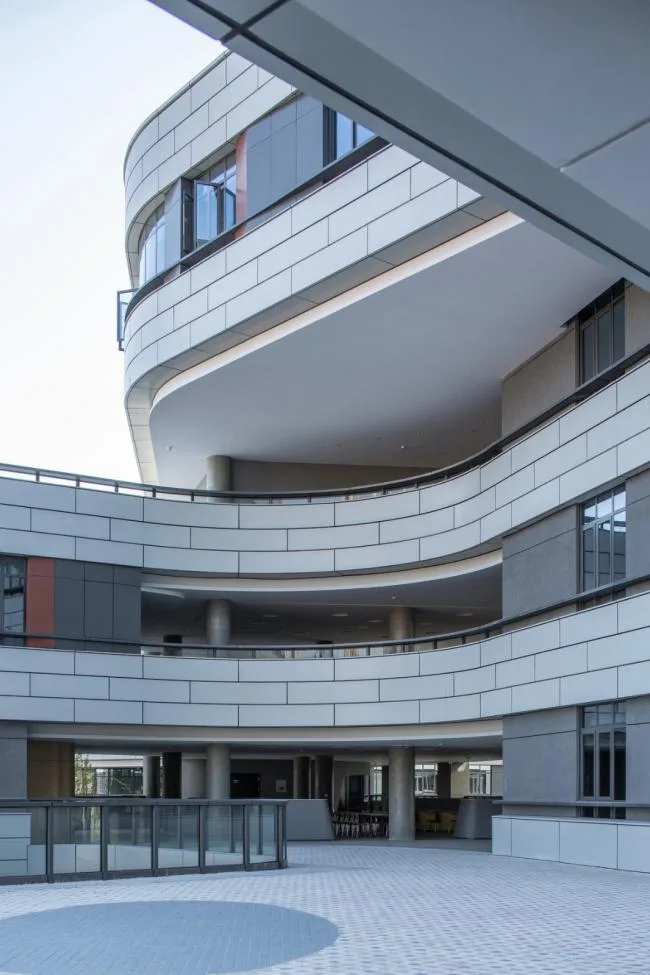
▲ Second floor activity platform
A Dynamic Campus Complex
The design organizes spatial functions into three open levels according to the importance and frequency of campus interactions. These areas are connected by a “vitality sharing axis,” breaking away from the isolation common in traditional campus layouts.
Standard classrooms, where students spend most of their time, are located on the west side of this axis, in the quietest and most accessible part of the campus.
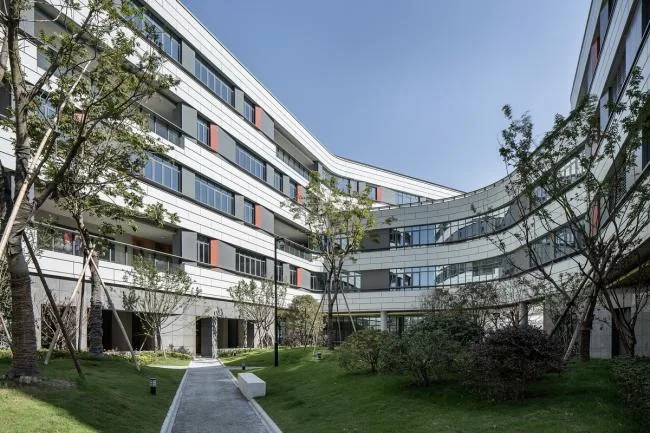
▲ West teaching campus
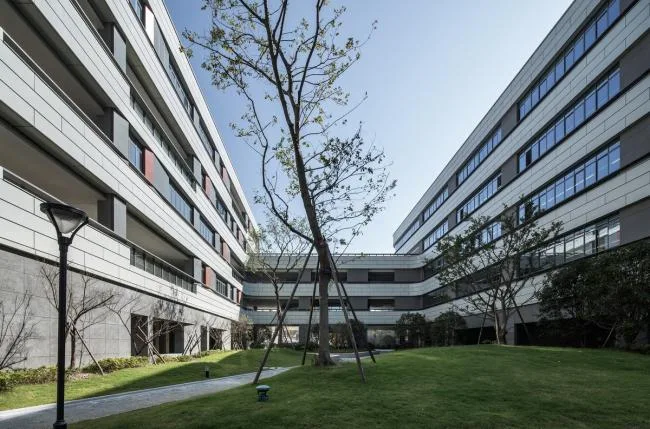
▲ West teaching campus
Supporting facilities like specialized classrooms, libraries, and lecture halls are situated on the east side of the vitality axis, close to standard classrooms. These connecting spaces are ideal for informal individual or group study.
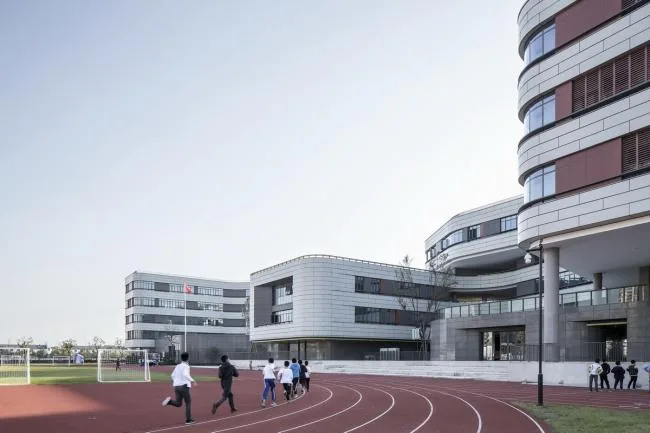
▲ Building complex on the east side
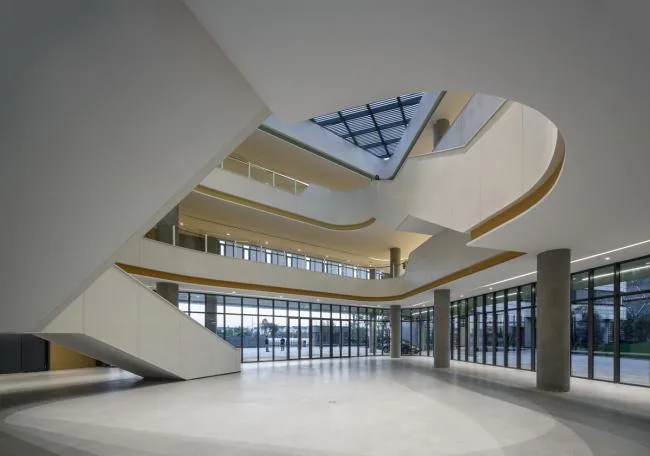
▲ First floor shared hall
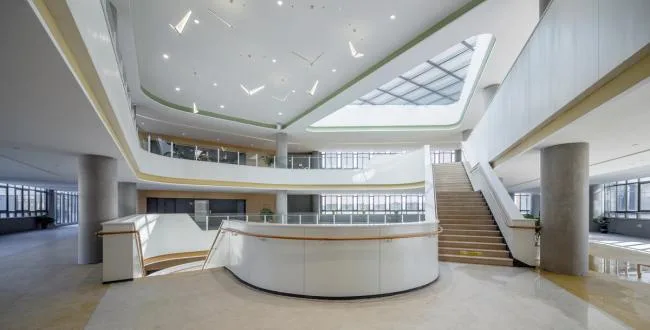
▲ Second floor shared hall
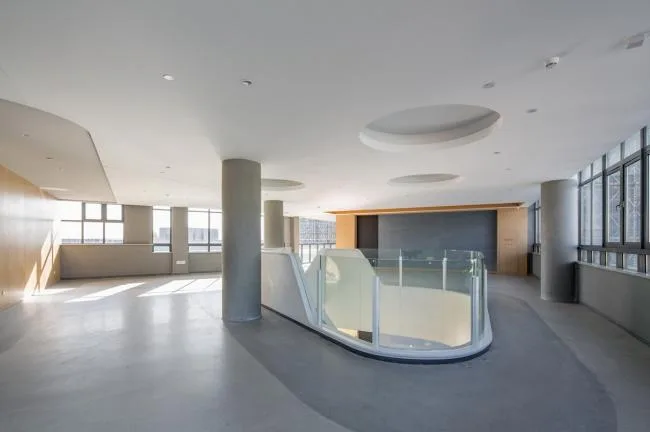
▲ Five-level shared space
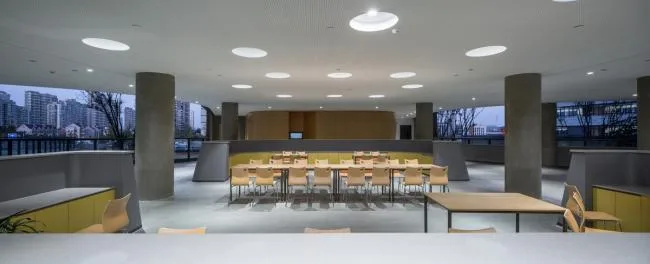
▲ Open vitality axis fully connected to the city
Public auxiliary spaces such as canteens, covered playgrounds, and faculty offices are located at the north and south ends of the campus. They are easily accessible and act as buffers protecting the core teaching areas.
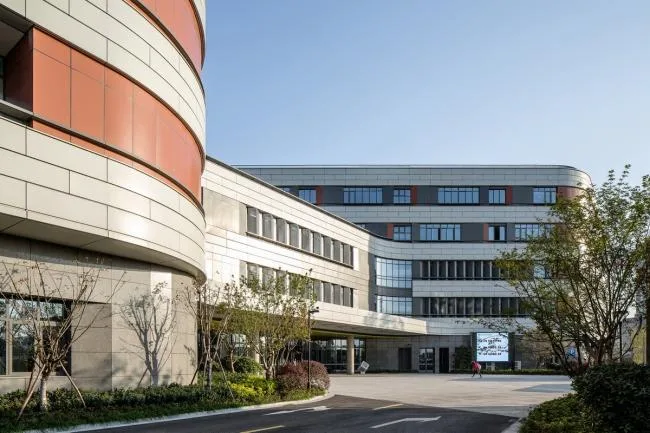
▲ South main entrance plaza
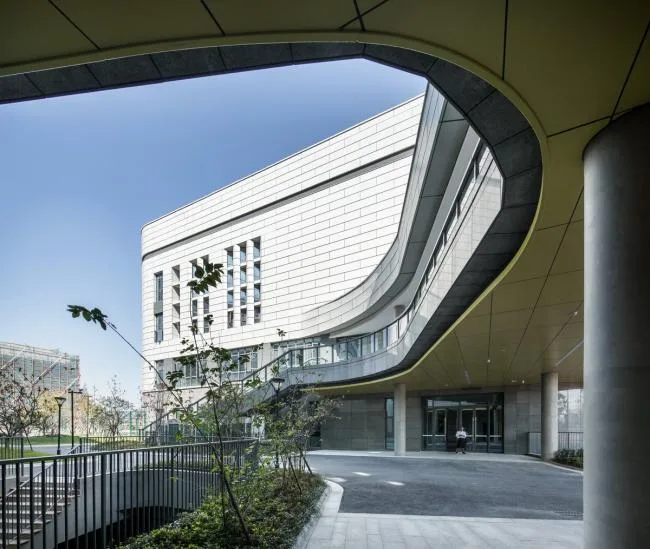
▲ North canteen and covered playground
Dynamic and Playful Facades
The buildings’ exteriors feature continuous circular panels of light white-gray ceramic aluminum with staggered joints, emphasizing horizontal flow. Some exterior corridors are partially open, with gray aluminum panels arranged in layered, staggered angles and accented with red elements, creating a rhythmic and dynamic facade.
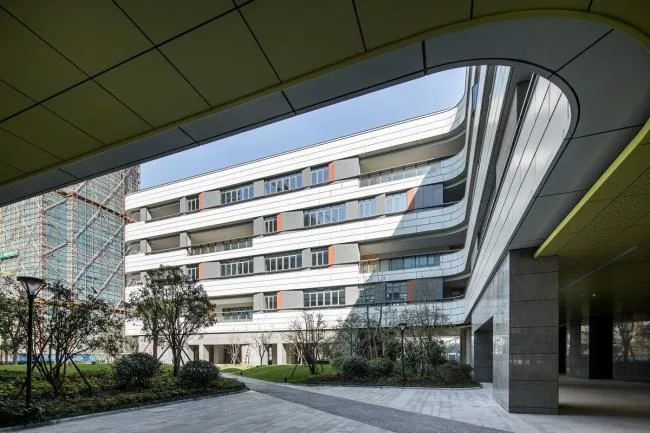
▲ South-facing teaching building facade
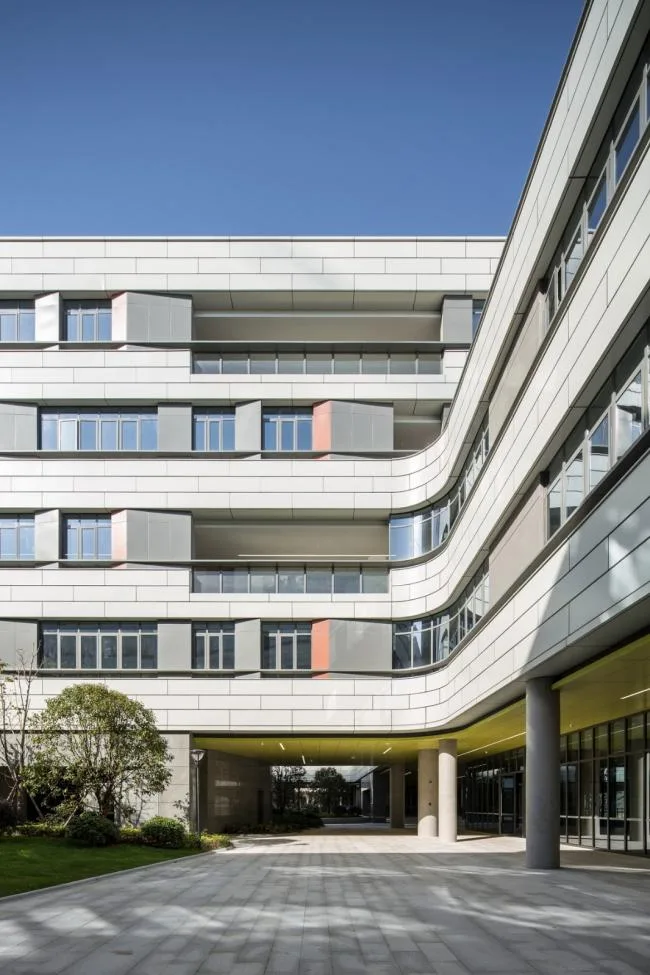
▲ Interweaving forms creating contrasts between reality and illusion
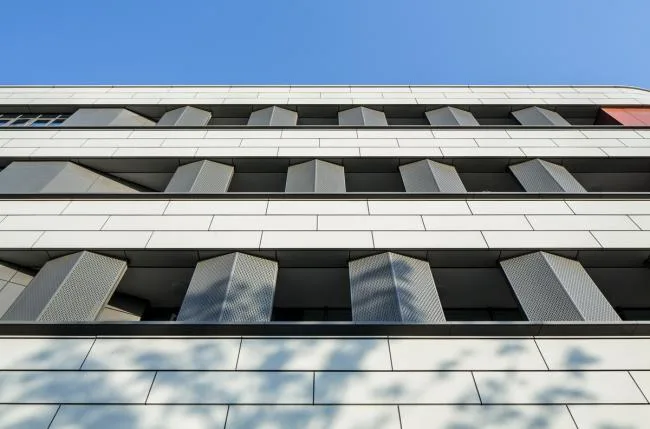
▲ Partial facade of the administrative building
The contrast of light and shadow, along with detailed craftsmanship, results in a simple yet vivid architectural composition. This multi-dimensional campus embodies the character of a modern educational facility aligned with Binjiang District’s smart city development.
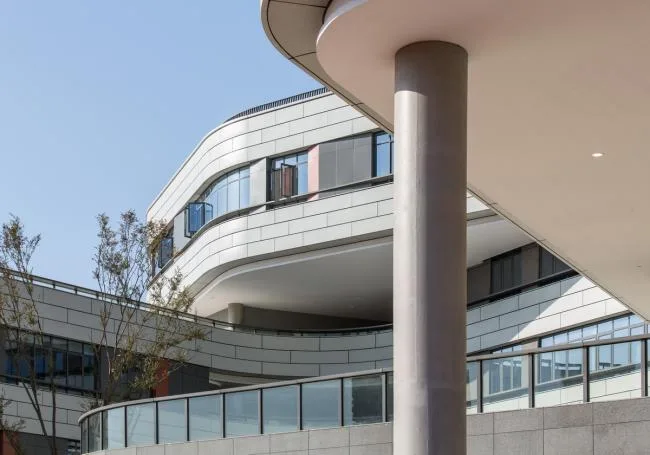
▲ Flowing architectural forms
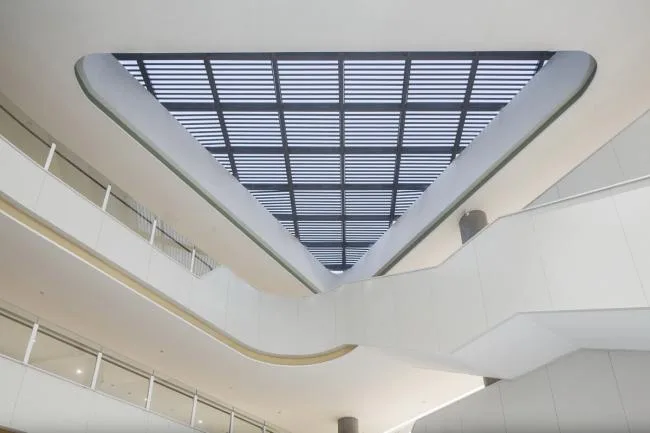
▲ Skylight in shared hall
The green-toned ceiling, combined with suspended plain concrete columns, creates an extension of the outdoor greenery indoors. This design element helps relieve student stress, energizes the space, and supports their physical and mental well-being.
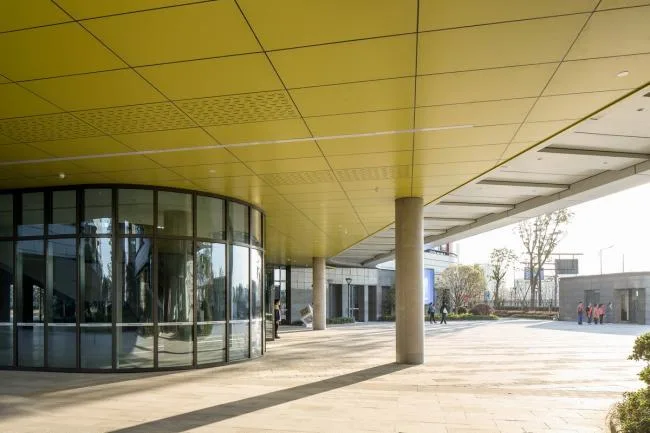
▲ Elevated entrance level
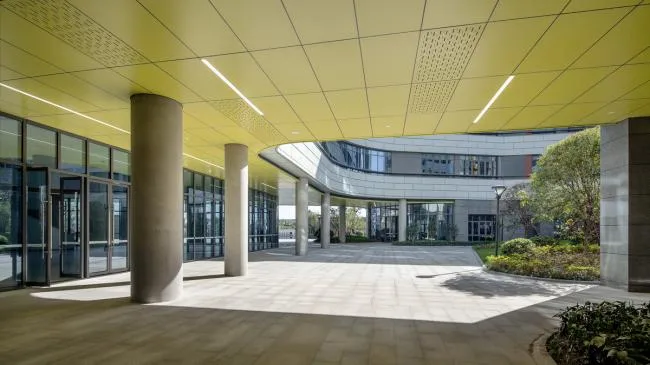
▲ Bright elevated corridor
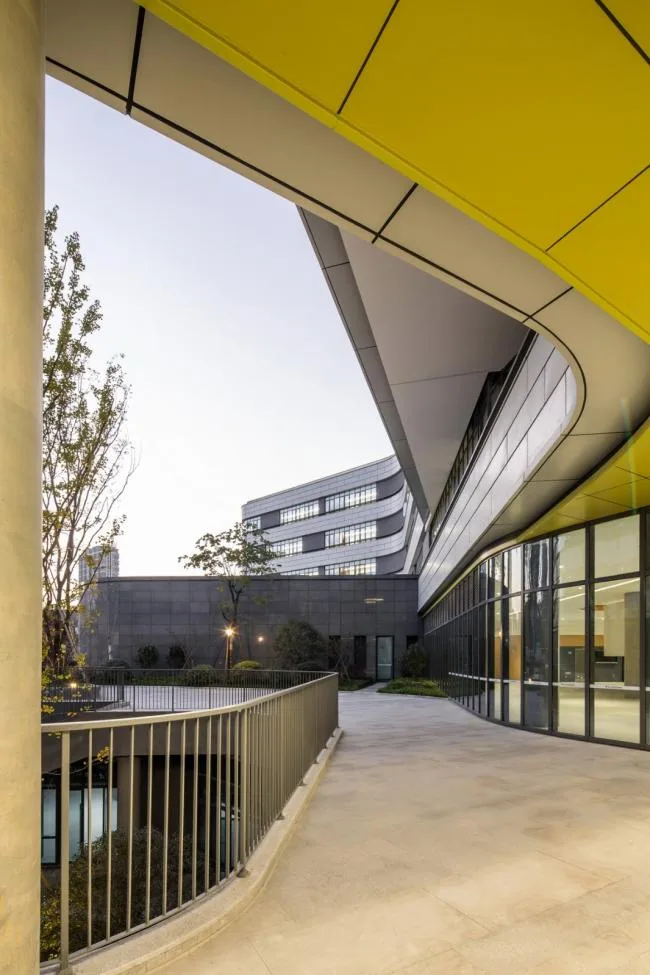
▲ Overhead layer and sunken courtyard
Conclusion
In recent years, educators have grown weary of the “one-size-fits-all” approach to school design and are increasingly focusing on how spatial design within school buildings can support evolving teaching methods. Architects, too, are shifting their focus beyond architectural aesthetics to address these educational challenges.
Just as every city carries its own history, every school yearns to build its own cultural legacy. Educational architects bear the responsibility to create and guide this legacy, taking an active role rather than a passive one. Their work not only influences students’ knowledge acquisition and well-being but also shapes the future of education as a whole.
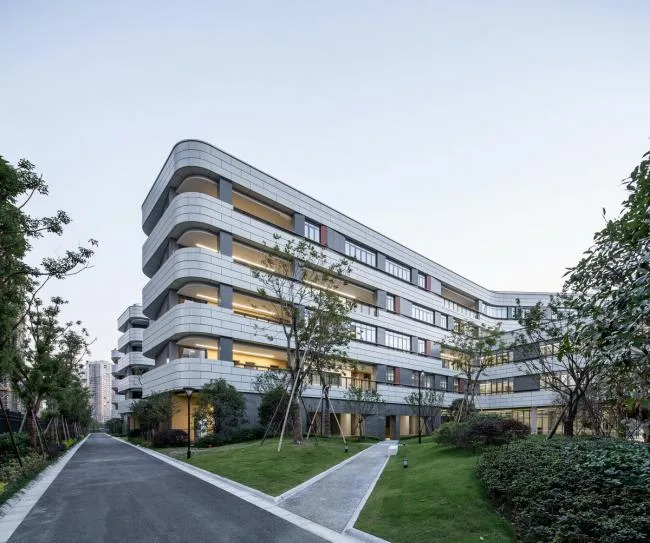
Illuminated by bright lights, the teaching building regains its tranquility.
Project Drawings
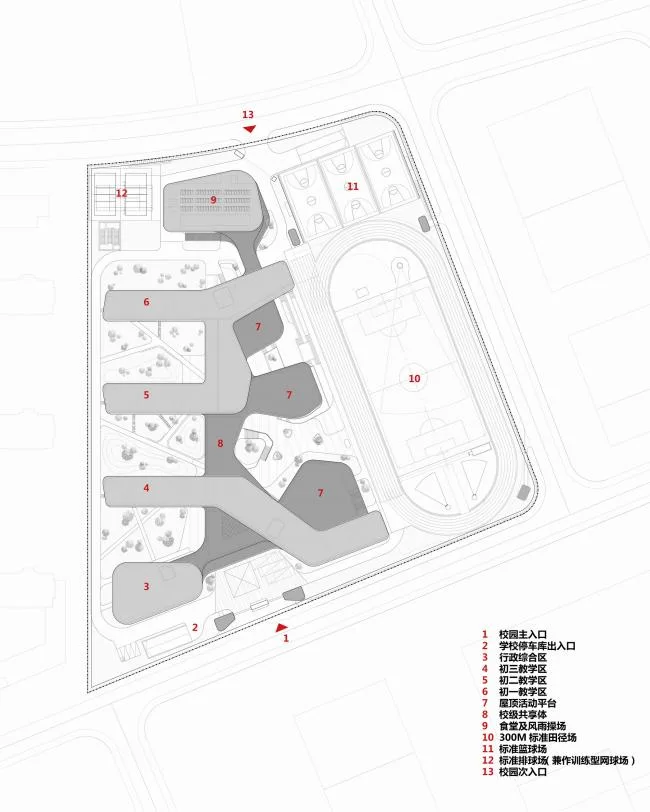
▲ General layout plan
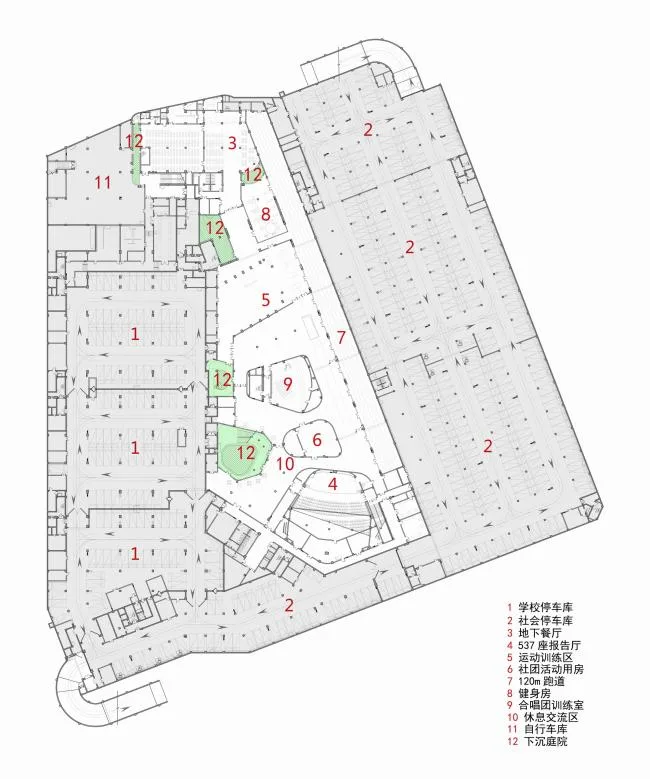
▲ Basement plan
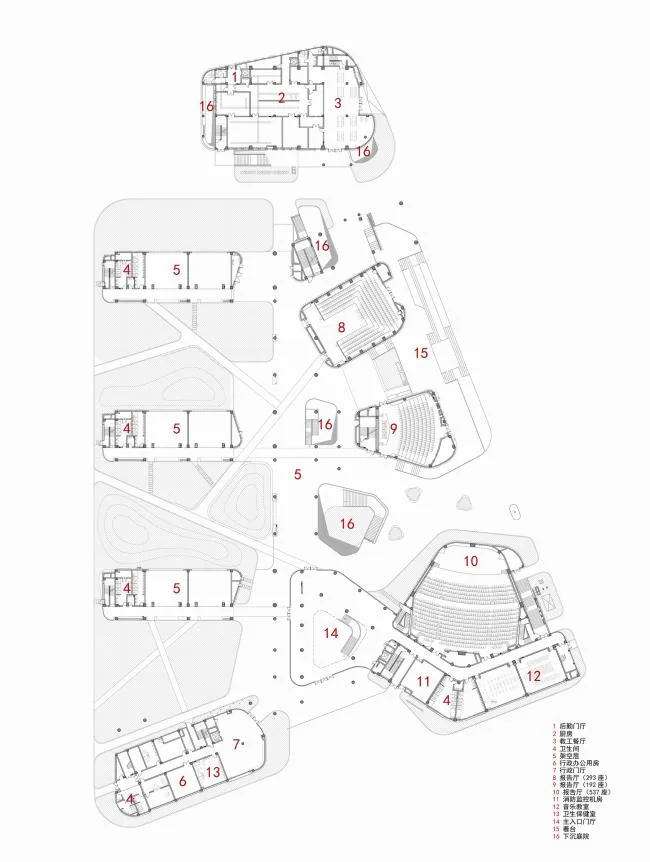
▲ First floor plan
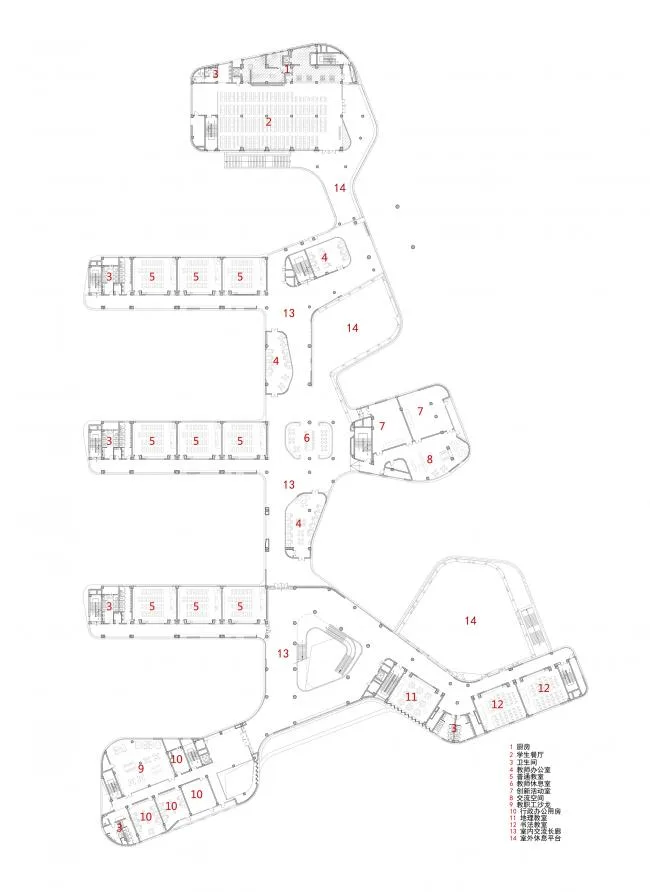
▲ Second floor plan
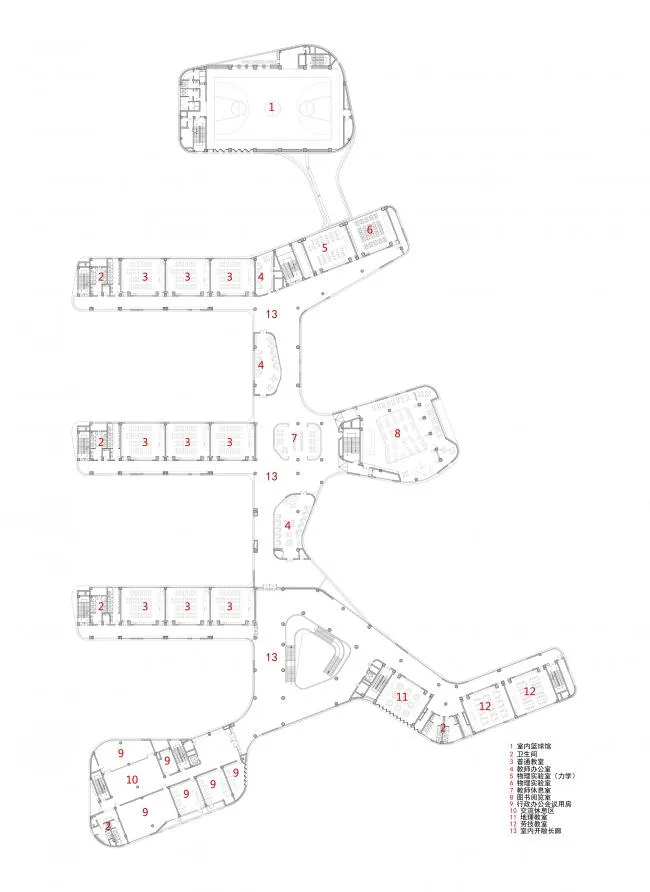
▲ Third floor plan
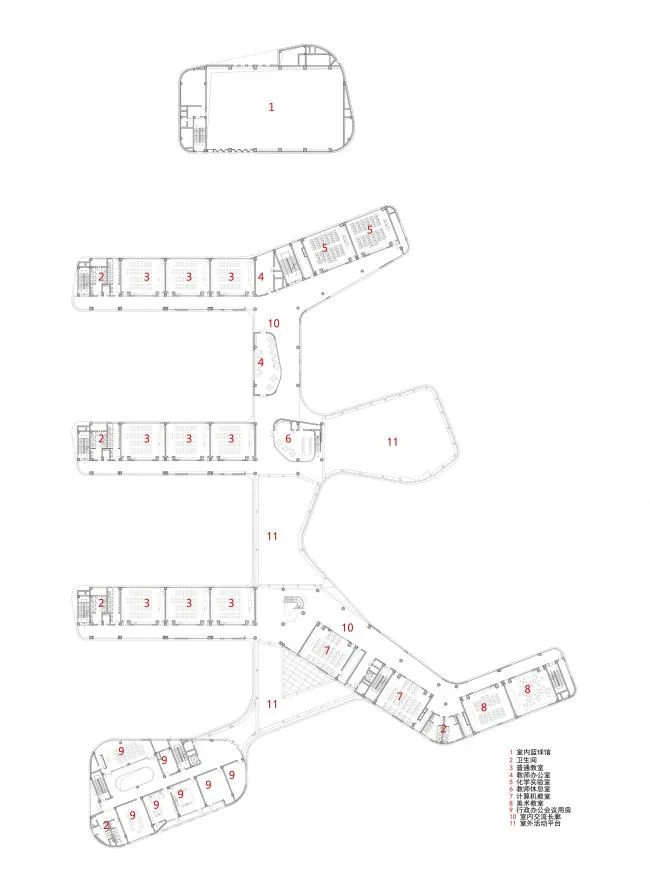
▲ Fourth floor plan
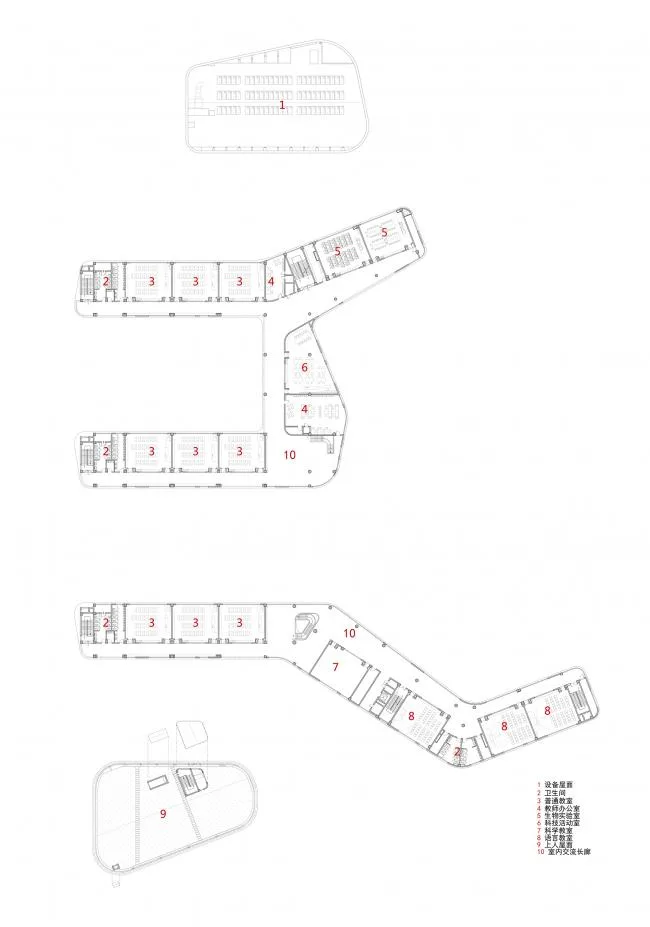
▲ Fifth floor plan
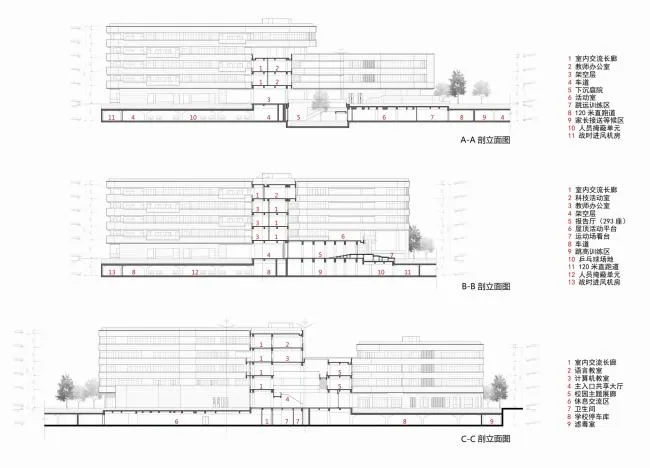
▲ Sectional elevation view
Project Information
Project Name: Affiliated Middle School of Education College, Zhejiang University
Design Firm: Zhejiang University Architectural Design and Research Institute Co., Ltd
Design Period: July 2015 – May 2016
Completion: November 2016 – August 2018
Total Construction Area: 56,585 square meters
Ground Floor Area: 29,177 square meters
Client: Education Bureau of Binjiang District, Hangzhou City
Material Brands: Aluminum Plate – Guangdong Phnom Penh, Clear Water Coating – SKK, Smooth Stone – Kangli, Colorful Genuine Stone Paint – Three Trees
Design Team:
Lead Architect: Fan Xuzhuang
Architectural Design Team: Wang Hao, Chen Bing, Cai Xiaobing
Structural Design Team: Shen Jin, Jin Zhenxin, Hua Dan, Ni Wenhao, Chen Gang
Equipment Design Team: Chen Ji, Zheng Guoxing, Ren Xiaodong, Ding Li, Yang Guozhong, Wang Lei, Ye Agile, Liu Peiju, Sun Dengfeng, Huang Qinpeng
Interior Design Team: Li Jingyuan, Tian Ning, Hu Xu, Wang Guancui, Chen Yuxiong, Zhang Ci
Landscape Design Team: Liu Shuangyan, Wu Jina, Zhang Beibei, Li Wenjiang
Curtain Wall Design Team: Bai Qi’an, Jiang Hao, Ji Shaobo
Photography Credit: Zhang Yong












Must log in before commenting!
Sign Up