
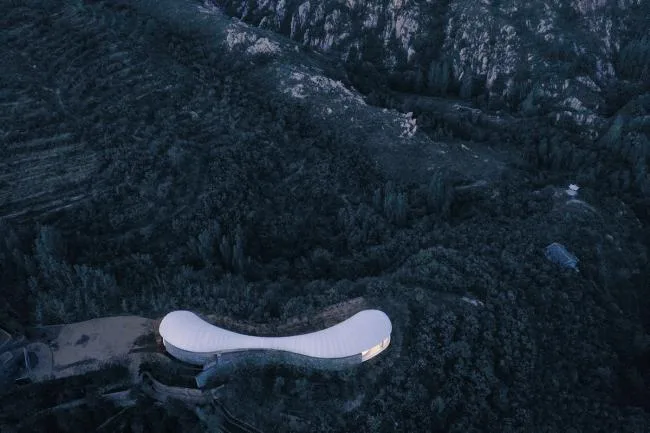
The Dao Zhi Jian, derived from Laozi’s Tao Te Ching, reflects an ancient Chinese architectural philosophy that parallels Western modernism’s “less is more” and the minimalism of contemporary Japanese architects. Thousands of years ago, Chinese architecture embraced the idea of breaking free from physical constraints, achieving an ethereal lightness bordering on invisibility.
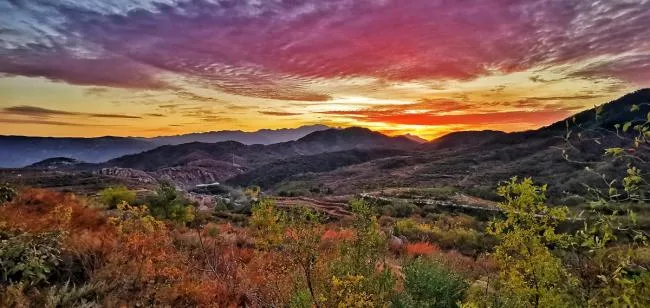
The Jiunvfeng Study is situated in Daiyue District, Tai’an City, near the Shenlong Grand Canyon and east of Mount Taishan, the foremost of the five sacred mountains. Surrounded by rugged peaks resembling grazing sheep, the site offers expansive views over canyons, ravines, and mountains. Against the backdrop of thick, rocky northern slopes, a contrasting, ethereal white space forms the project’s initial design concept.
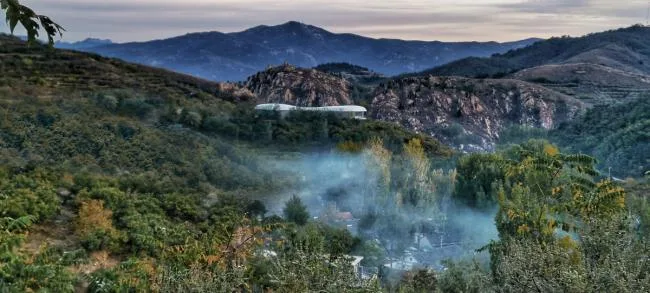
Location and Design Concept
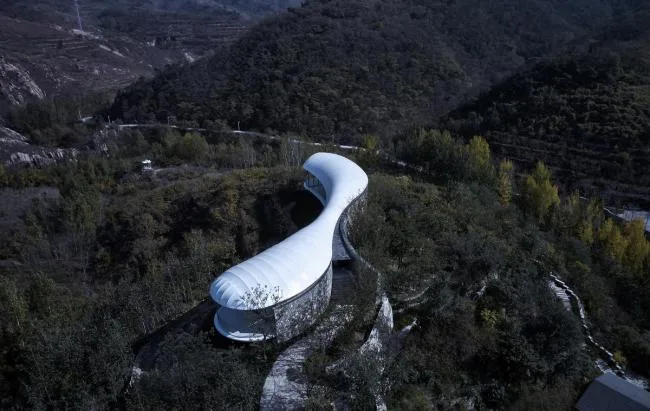
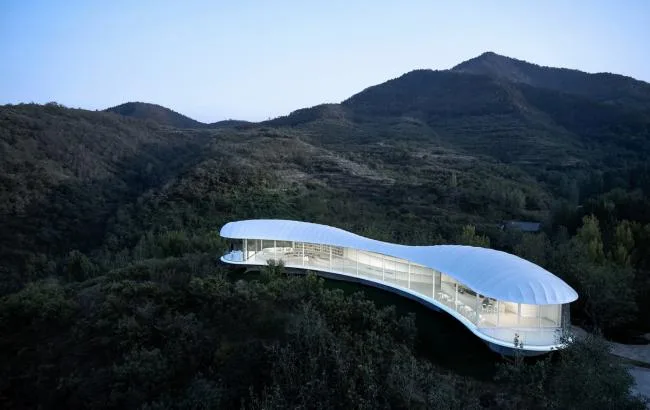
Overlooking the majestic Mount Taishan, Jiunv Peak embodies simplicity and introspection. Line+Studio aspired to create “a floating cloud suspended among the mountains,” harmonizing with the magnificent waves of the Mount Taishan Cloud Sea.
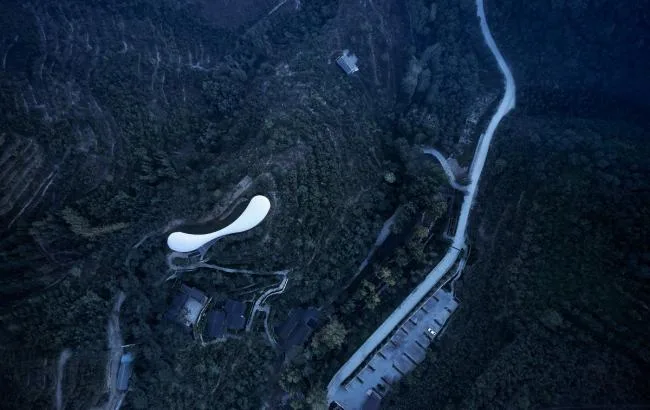
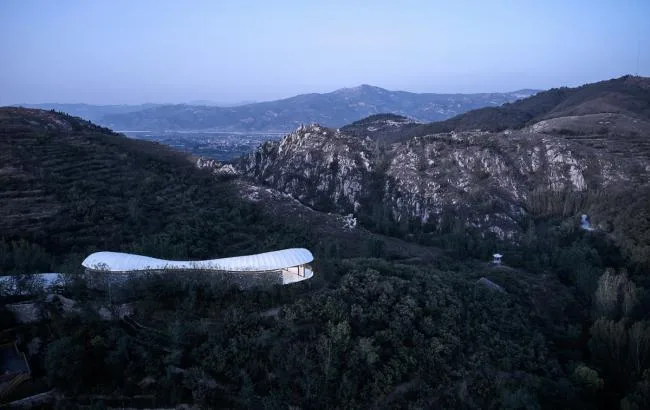
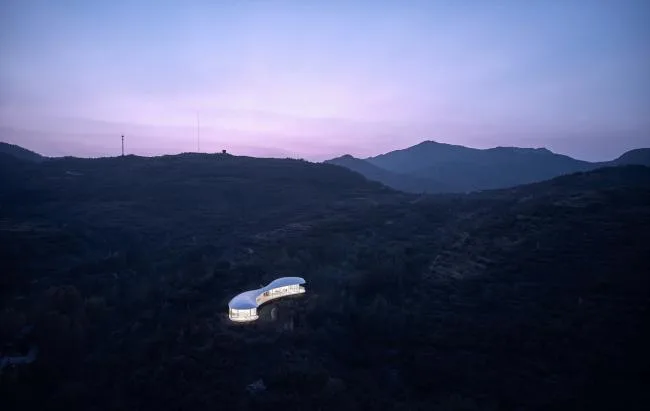
Perched at a high point within the mountain valley, the study faces east towards the mountains and backs onto a village. It remains subtly visible when driving along the winding road.
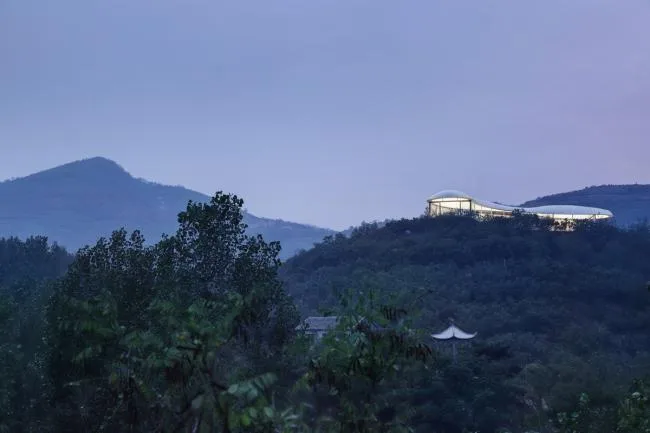
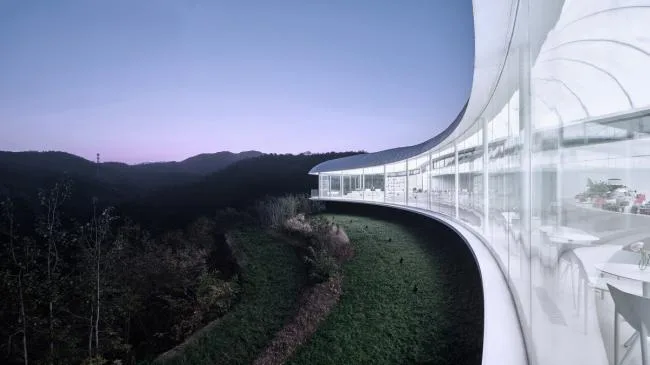
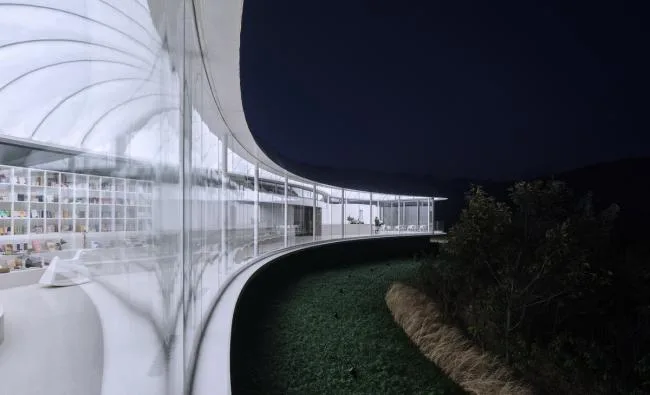
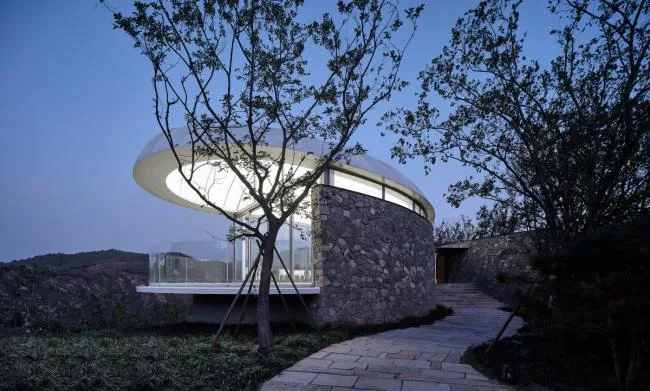
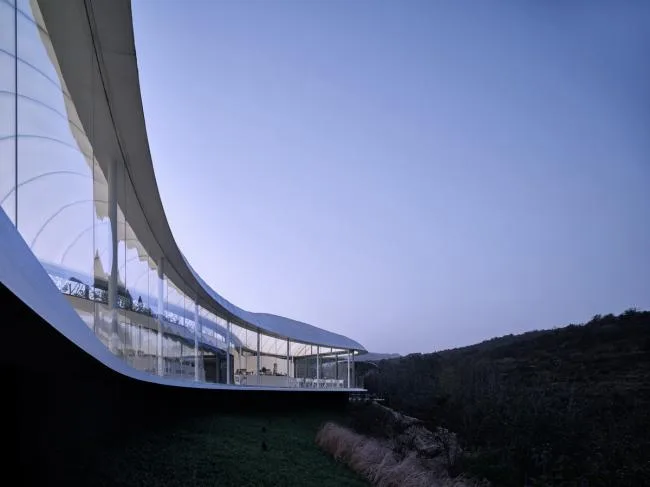
The architecture is composed of three vertical layers: a white “cloud body” at the top, transparent glass in the middle, and a solid rubble wall base at the bottom. The transparent facade facing the northern canyon peaks features a narrow entrance corridor connecting a coffee area and a reading lounge, blurring the line between built environment and nature. This design evokes the sensation of being immersed among mountain peaks and forests.
Materials and Construction
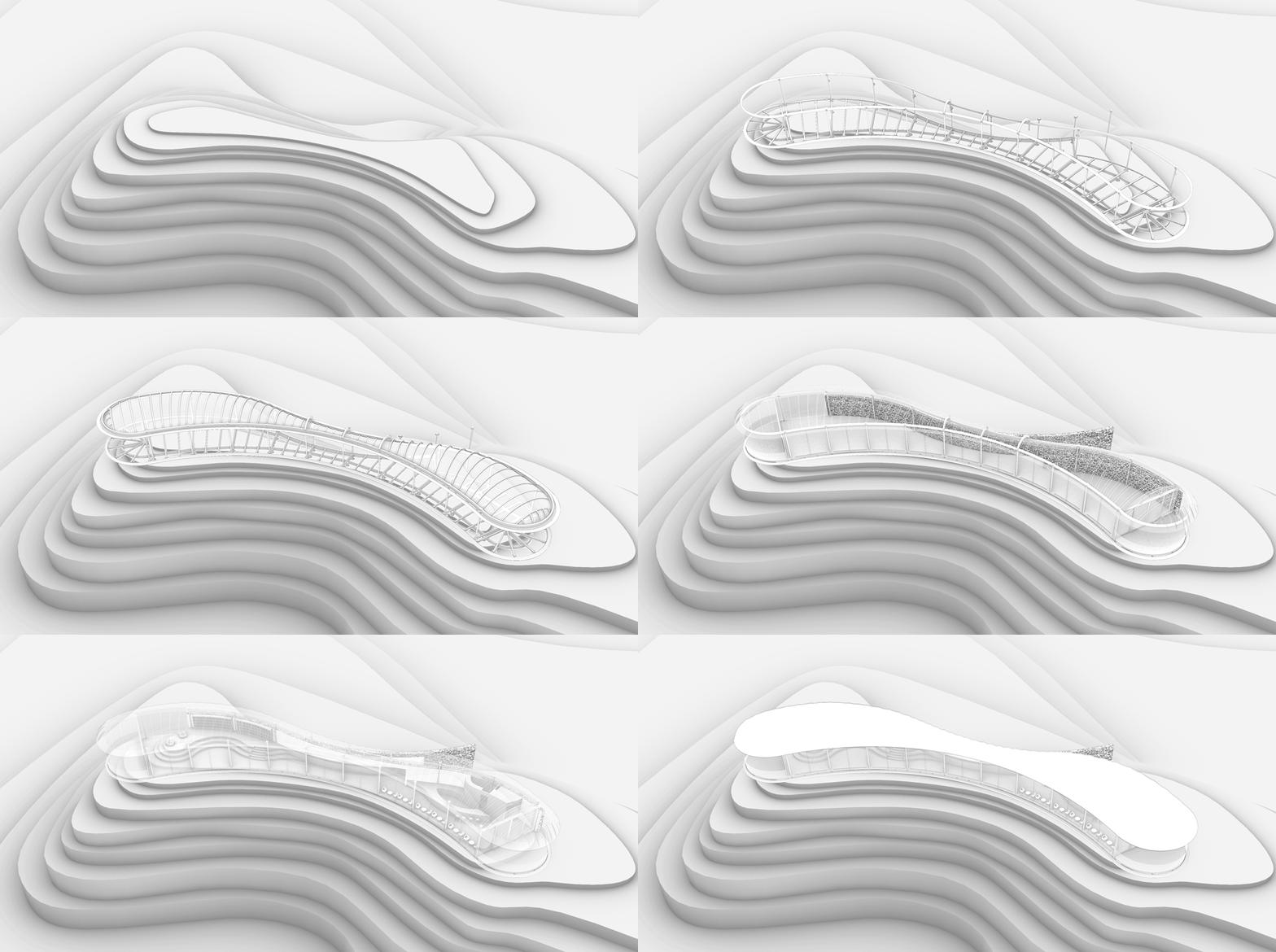
▲ Structure Generation Diagram
The choice of materials and construction methods was crucial to express the design concept. To embody the essence of “clouds,” the key qualities highlighted are floating, lightness, and transparency. This juxtaposition of the soft, intuitive nature of clouds against the rugged northern mountain environment creates a relaxed and pleasant sensory experience.
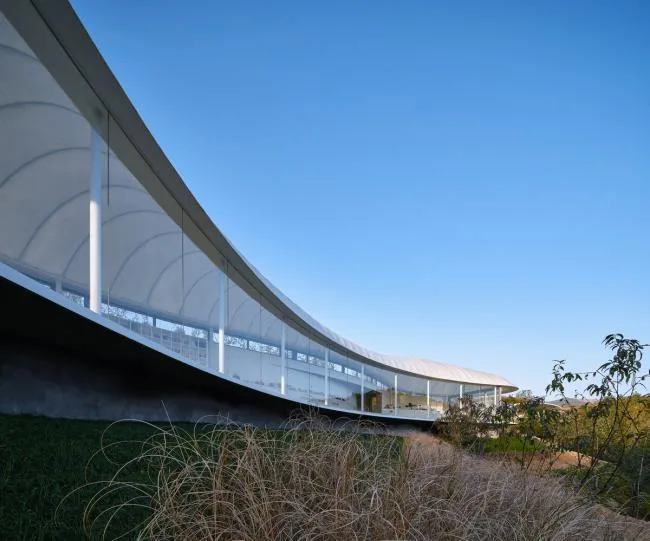
The main building uses a light steel and membrane structure system known for its strength, reliability, and lightness. This allows the design to follow the mountain’s natural curves, outlining a delicate and flexible form.
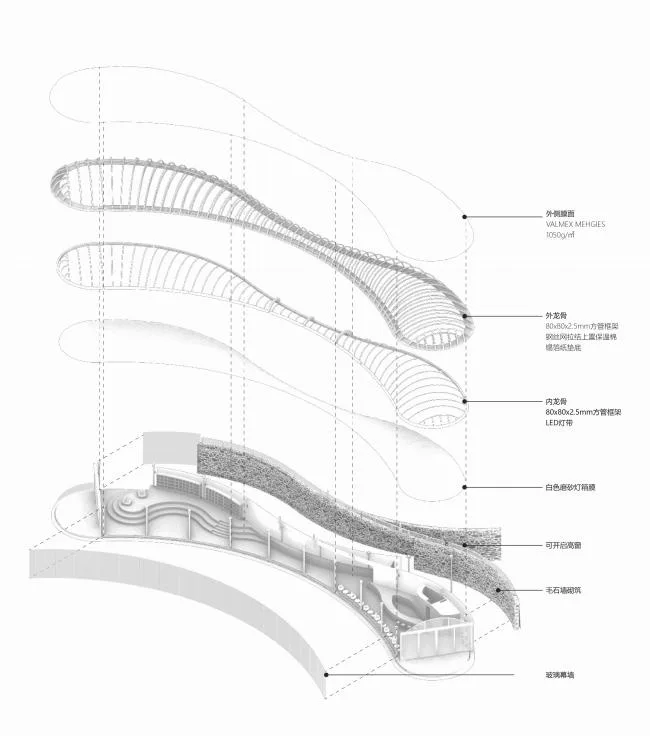
▲ Axonometric decomposition diagram
The horizontal base structure is recessed inward as much as possible, with balconies extending from both ends, enhancing the sensation of suspension.
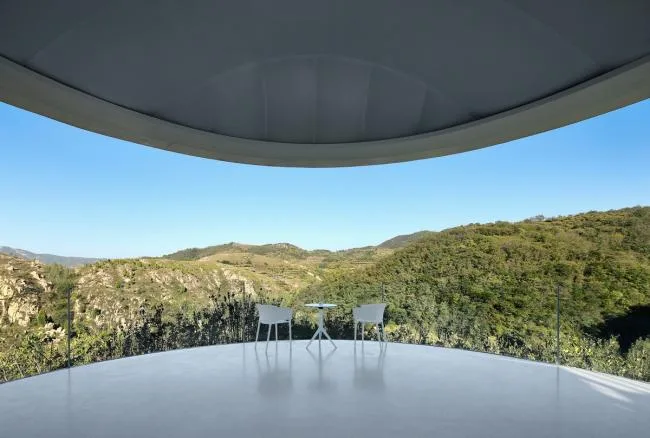
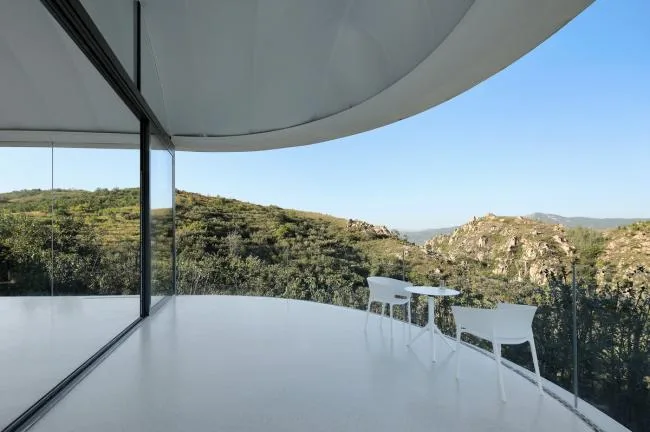
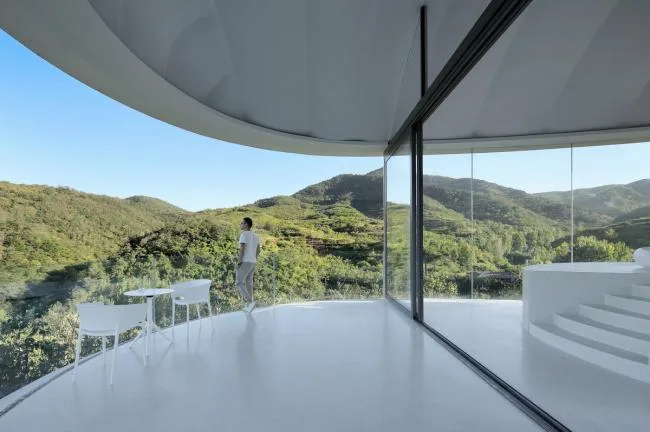
The roof features a double-layered white membrane tensioned over a series of gradually arching light steel keels, ensuring the smooth, soft contours of its irregular shape.
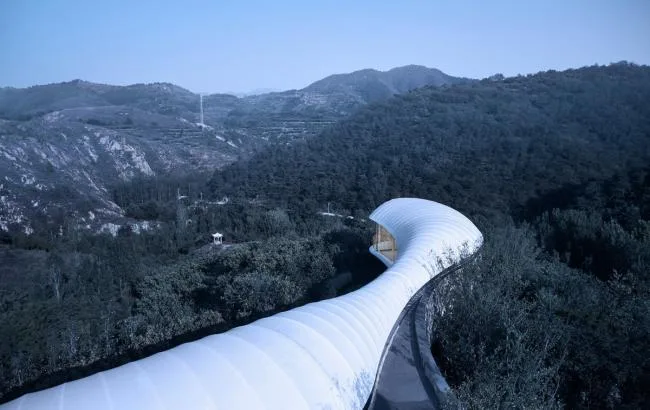
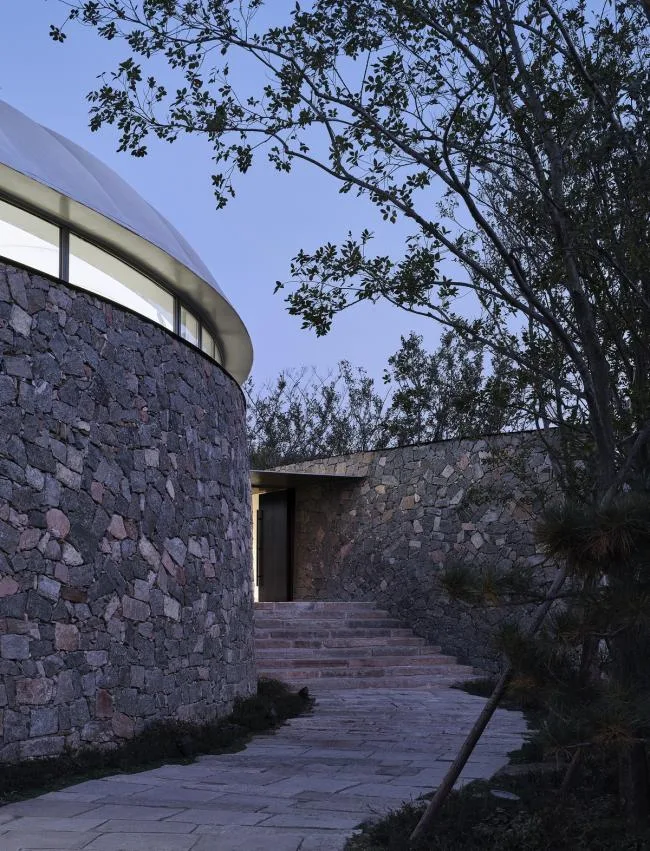
On the village’s southern side, thick walls of local rough stone blend seamlessly into the rising mountain, complementing the rustic charm of nearby residences. The curved walls subtly direct visitors toward the entrance, signifying the building’s orientation within the site.
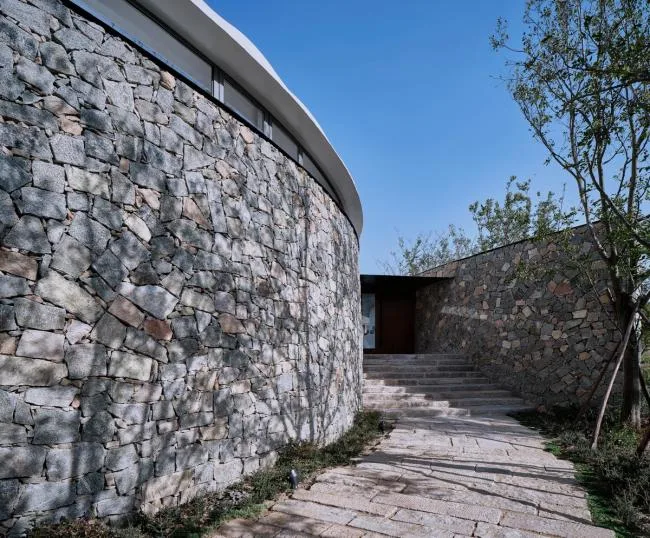
A glass strip window positioned between the rubble wall and roof facilitates a natural vertical transition from “heavy” to “light.” This design not only provides ventilation and daylight but also creates a subtle dialogue between the solid wall and the ethereal white membrane roof.
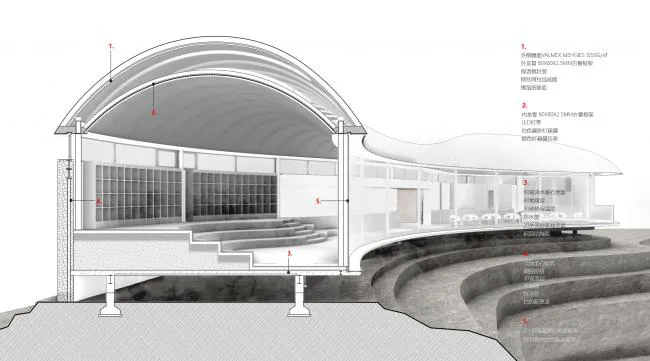
▲ Sectional perspective view
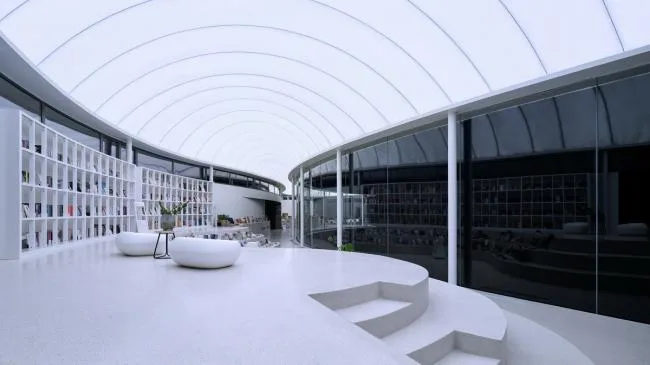
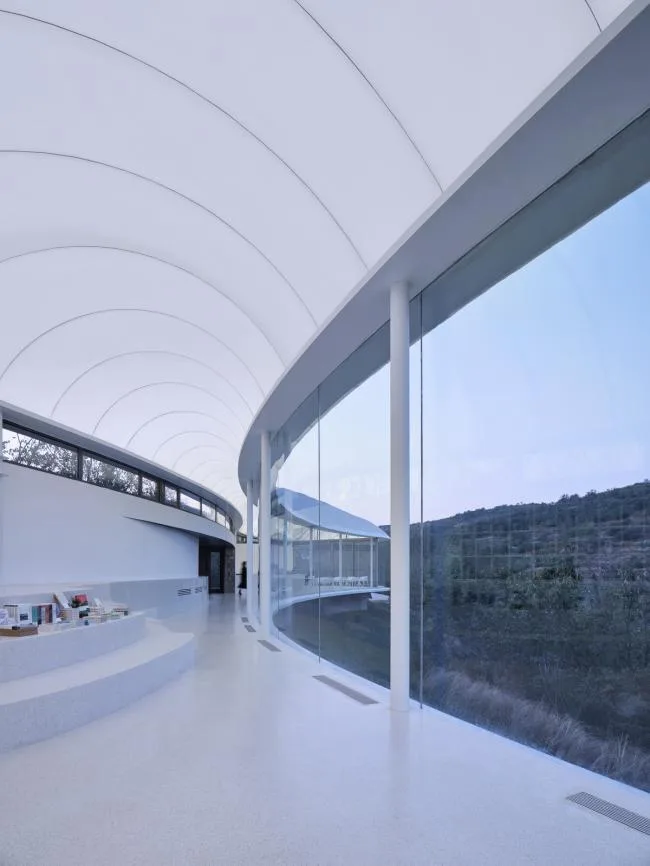
The north-facing facade overlooking the canyon and mountains is predominantly frameless glass, offering unobstructed views of the flowing landscape outside. This transparency conceals the building’s solid structure beneath the roof, giving the impression that clouds are floating amidst the rocky terrain.
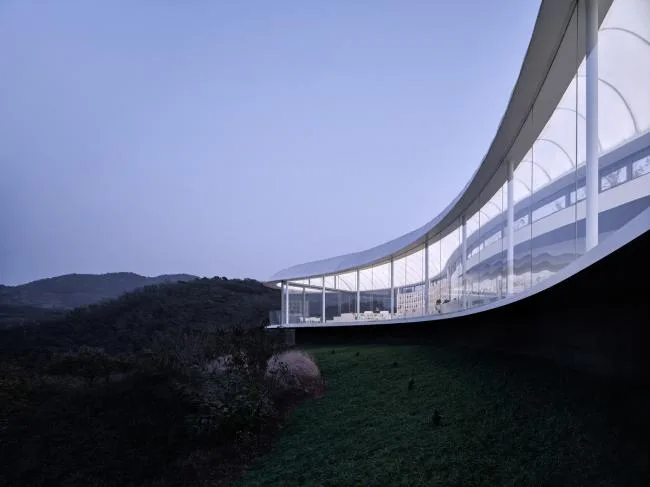
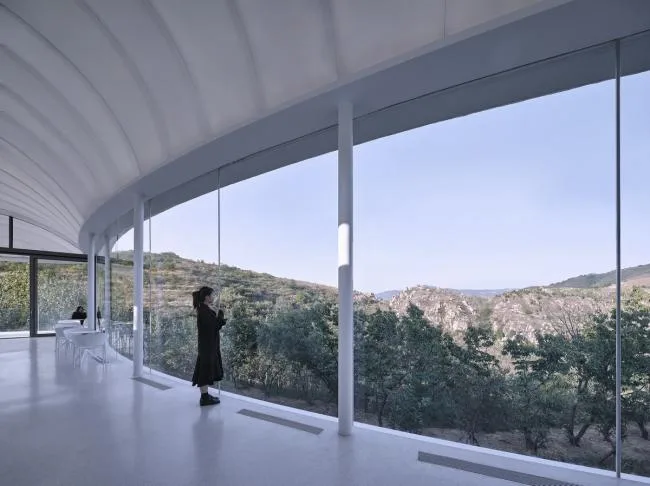
Inside, curved bookshelves and seating areas are layered to create a dynamic yet harmonious environment.
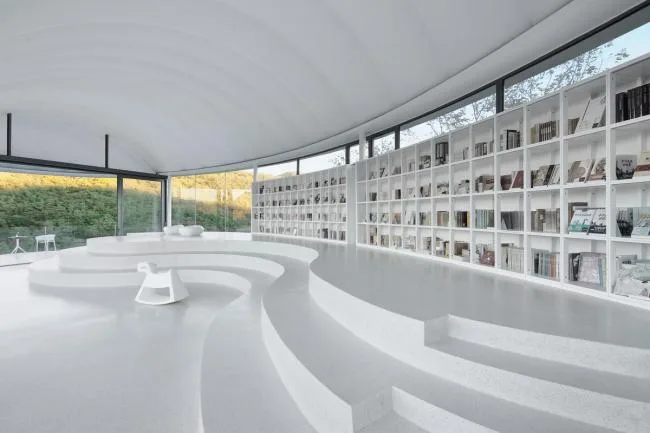
The gently curving corridor, varying in width, smoothly transitions between lively and quiet public spaces, subtly defining spatial boundaries.
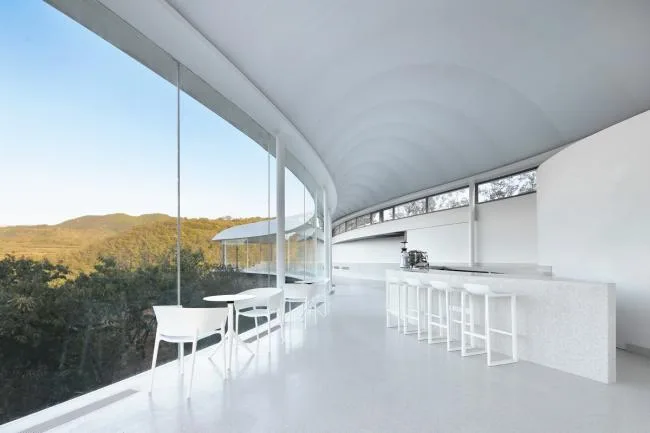
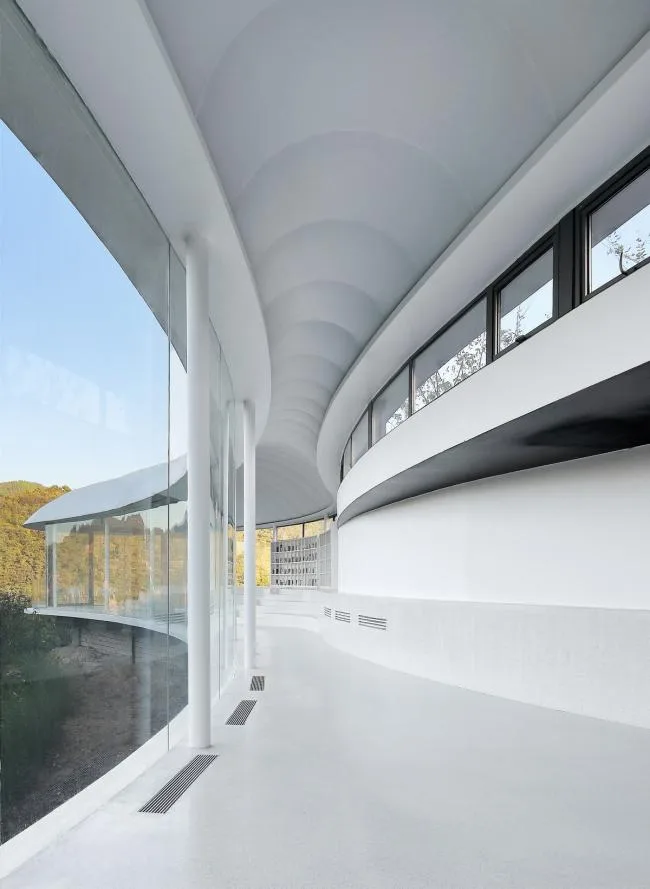
Concealed behind the inner membrane at the ceiling’s peak is a light strip. At night, this emits a uniform glow through the curved membrane, with light escaping from the high windows between the stone wall and the membrane, resembling a halo of clouds from afar.
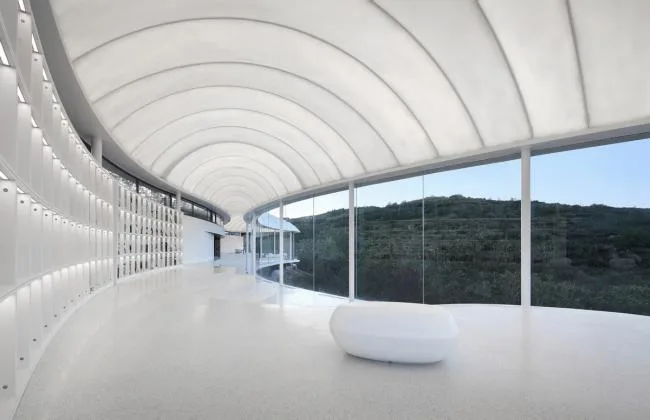
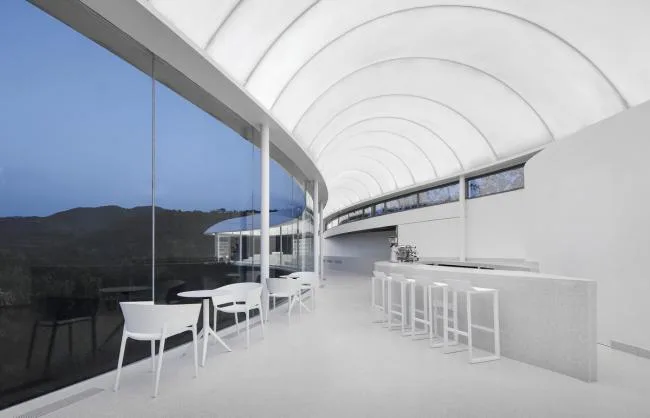
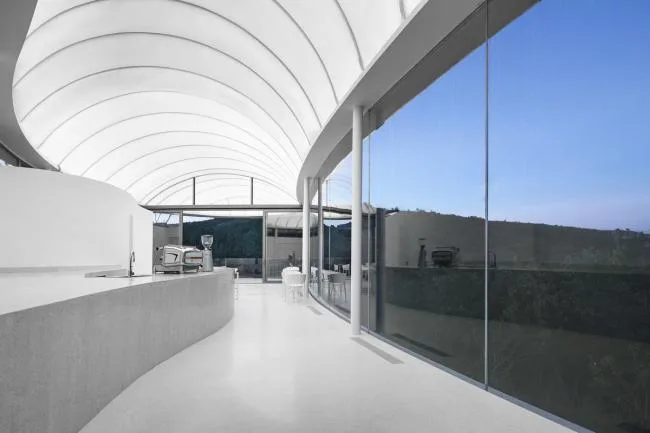
To preserve the integrity and purity of the indoor ceiling membrane, a floor-level air outlet system was implemented. The main air duct is concealed beneath the floor slab adjacent to the rubble wall, with branch ducts rising within the ring beam cavity to connect strip-shaped outlets. This design minimizes the visible height of the outer aluminum panel edges, maintaining the building’s lightweight and floating aesthetic.
Construction and Implementation
Construction began in April 2019 and was completed by September 2019. The precise and efficient assembly of the light steel construction system ensured a timely build. Throughout the process, the design evolved as architects adapted to site conditions, making necessary updates and adjustments.
1. Foundation Construction
To achieve the effect of the building “floating” above ground, the foundation was elevated slightly above the surrounding terrain. On-site assessments of terrain, lighting, and landscape informed repositioning the foundation to a height of 400mm, optimizing views and vegetation interactions.
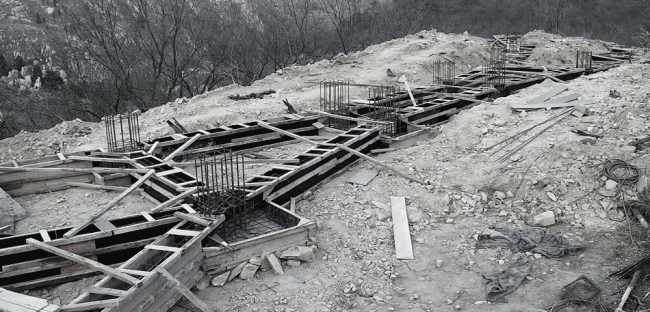
▲ Foundation construction
2. Main Structure Assembly
Prefabricated components manufactured off-site ensured construction precision. Thin steel columns, 150mm in diameter, support an arched ring beam. Twenty-eight pairs of double-layered arched keels are mounted on the ring beam, providing a gradually changing, dense framework for tensioning the inner and outer membrane layers.
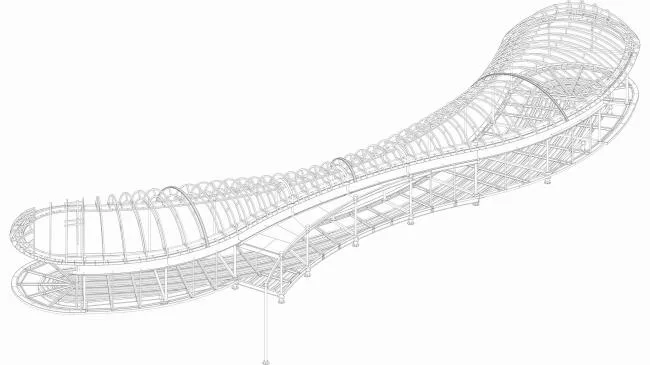
▲ Dragon bone structure
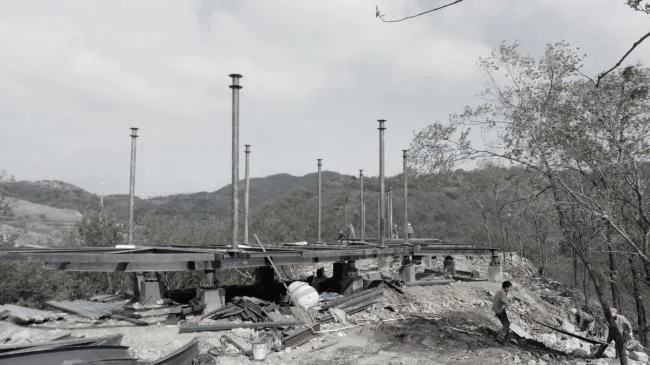
▲ Standing steel column
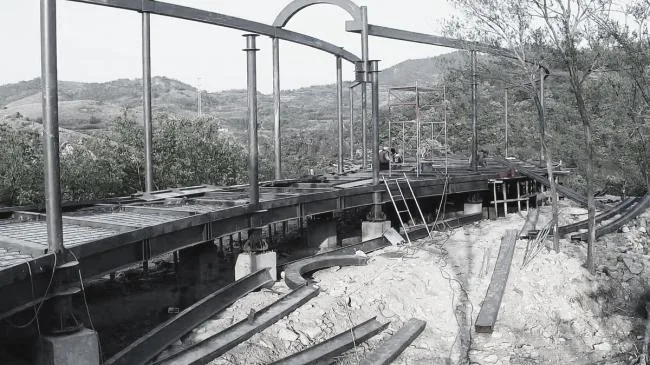
▲ Ring beam construction
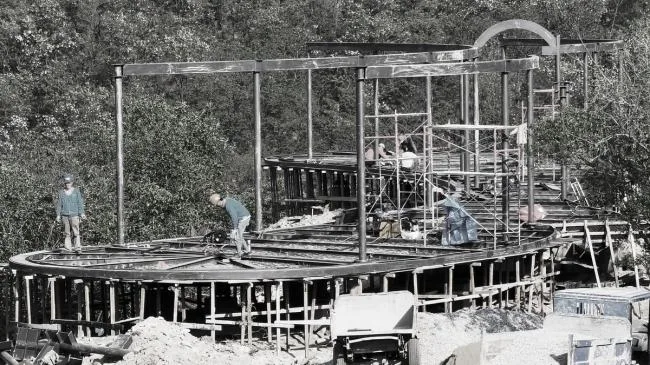
▲ Construction of chassis main beam and secondary beam
3. Installation of Membrane Structures
Wire mesh was installed between the 28 pairs of arched keels, covered with tin foil to evenly reflect LED strip lighting. The foil is fully wrapped and secured with insulated cotton bags. The inner membrane, fixed beneath the lower keel, is made of lightbox cloth and is suspended with metal buckles to maintain tension.
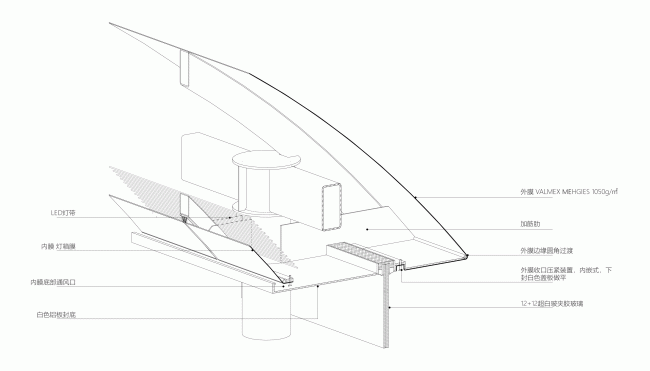
▲ Membrane structure nodes
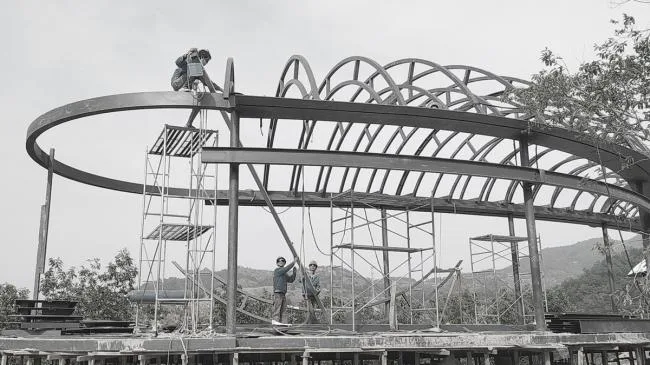
▲ Construction of roof main keel
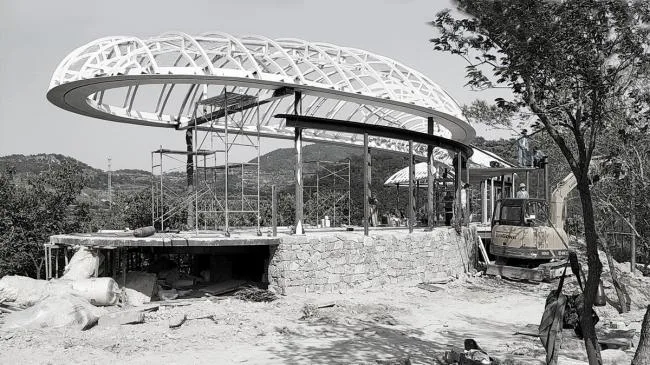
▲ Construction of roof secondary keel
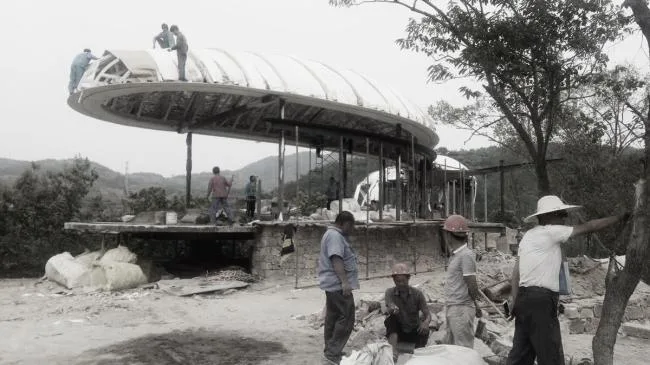
▲ Roof insulation and outer membrane installation
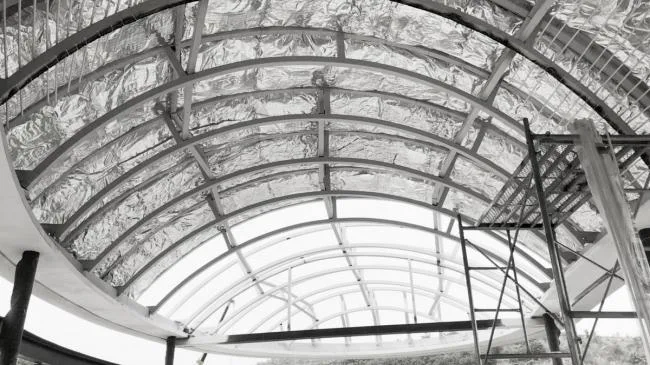
▲ Inner membrane installation
4. Masonry of Rubble Walls
Rubble walls were constructed at the south entrance and front facade, reinforced with small steel columns. The architect selected appropriate sizes and colors of local rough stones on site and supervised the masonry process.
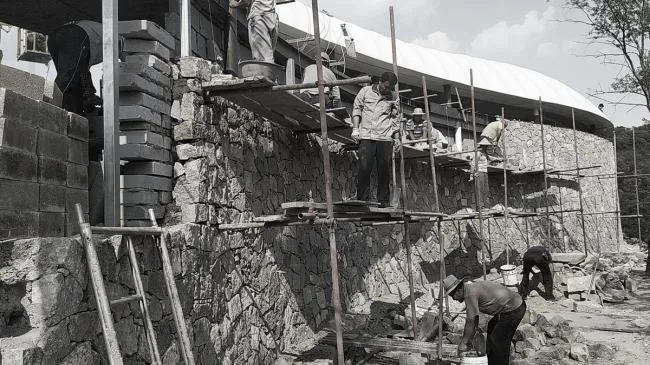
▲ Masonry of rubble walls
5. Lighting and Interior Finishes
LED strips were vertically arranged above the lower keel to produce uniform lighting across the indoor membrane ceiling. Multiple on-site tests were conducted to optimize LED placement, brightness, and spacing.
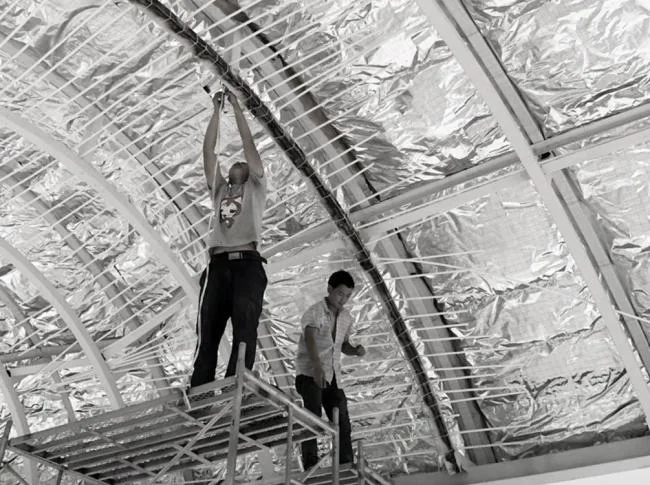
▲ LED tube testing and installation
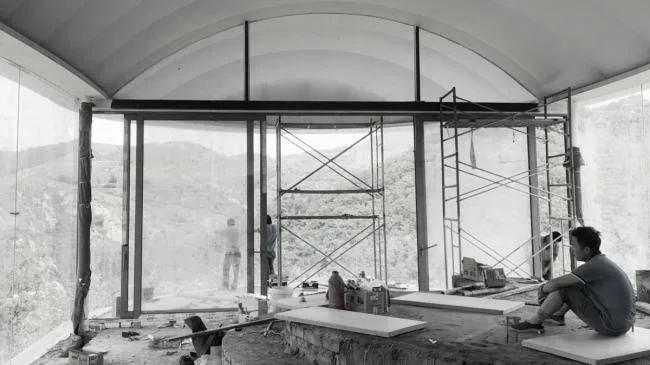
▲ Door and window installation
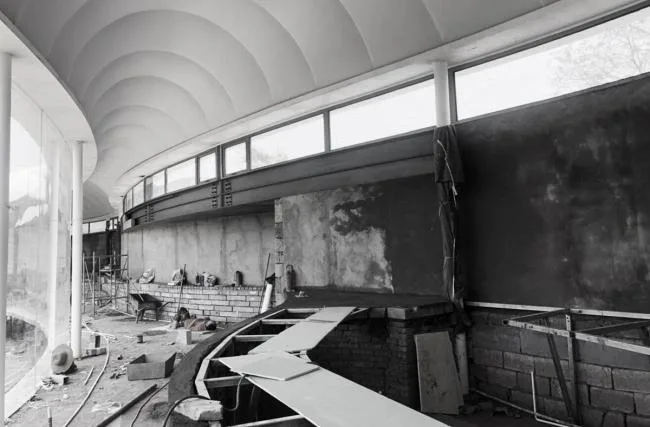
▲ Interior construction
Conclusion
At dawn, the transparent glass volume is concealed within the forest; by night, the “clouds” gently glow as they float above the mountains. Inside, visitors are enveloped in a serene atmosphere perfect for reading and contemplation. This architectural space, born from its environment, exists harmoniously within the ever-evolving natural landscape, embracing nature in the simplest and most direct way.
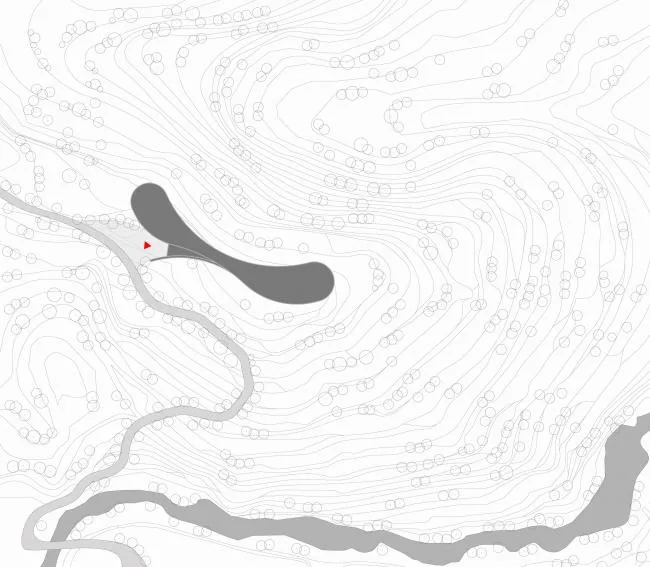
▲ General layout plan
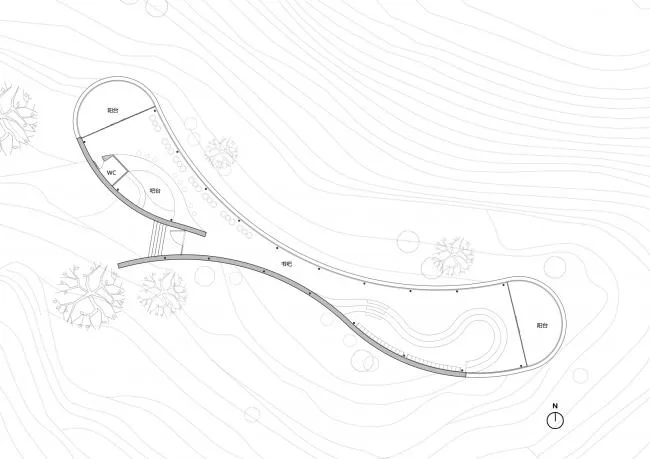
▲ Plan view
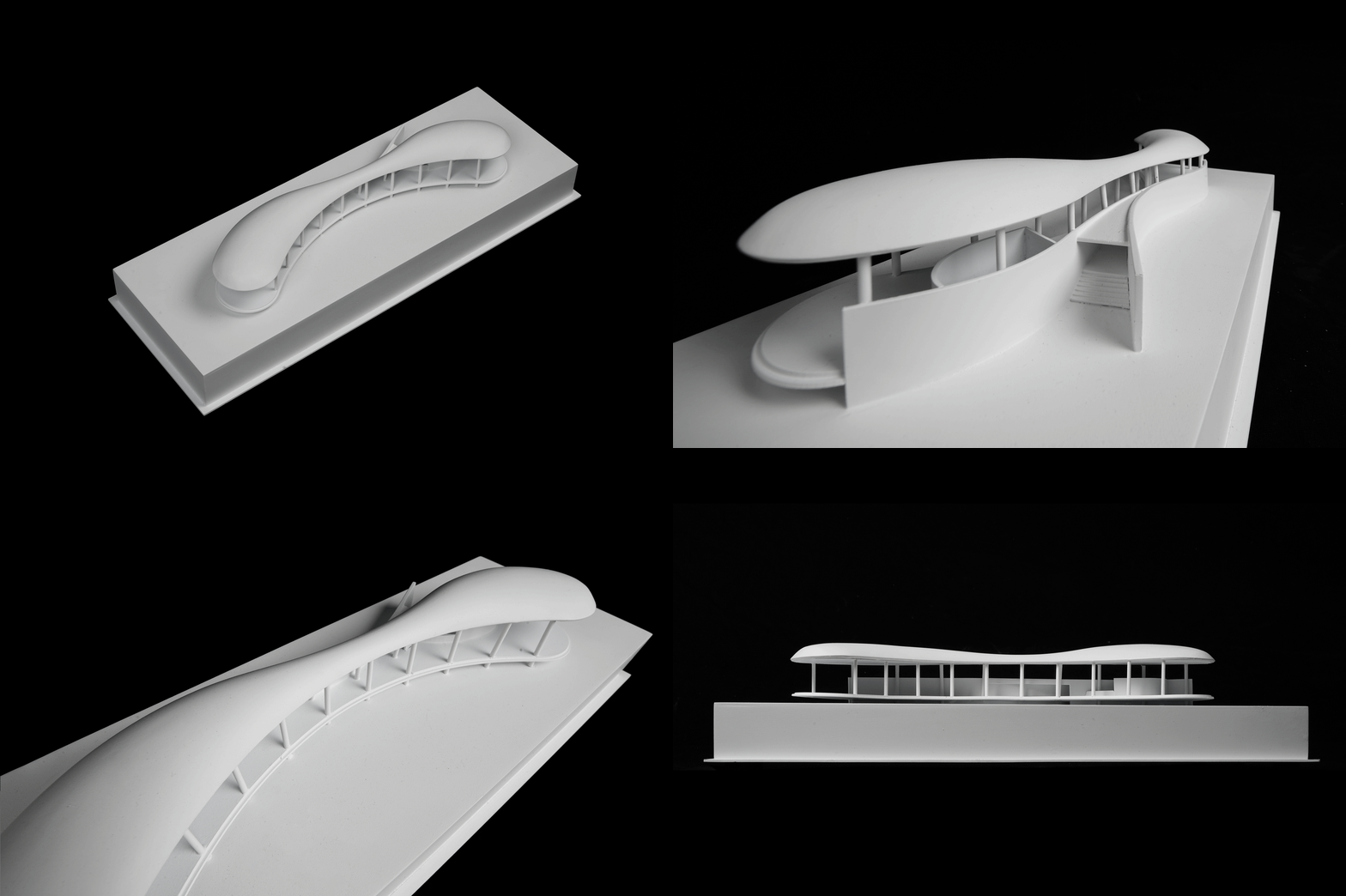
▲ Model photo
Project Information
Project Name: Mount Taishan Jiunvfeng Study
Location: Daiyue District, Tai’an City, Shandong Province
Design Company: Gad · Line+Studio (Architecture, Interior, Landscape)
Lead Architect / Project Creator: Meng Fanhao
Design Team:
Architecture: Zhu Min, Zhang Erjia, Xu Hao
Interior: Jin Xin, Hu Jinwei, Zhou Xinyi
Landscape: Li Shangyang, Jin Jianbo, Chi Xiaomei
Building Area: 287.3 square meters
Design Period: April 2019 – June 2019
Construction Period: May 2019 – September 2019
Owner: Lushang Pusu (Tai’an) Cultural Tourism Development Co., Ltd.
Structural Coordination and Construction: Hangzhou Zhongpu Construction Technology Co., Ltd.
Structure: Membrane roof structure, main steel framework
Materials: Membrane material, steel, rough stone
Photography: Octopus Jianzhu, Jin Xiaowen, Pan Bing












Must log in before commenting!
Sign Up