
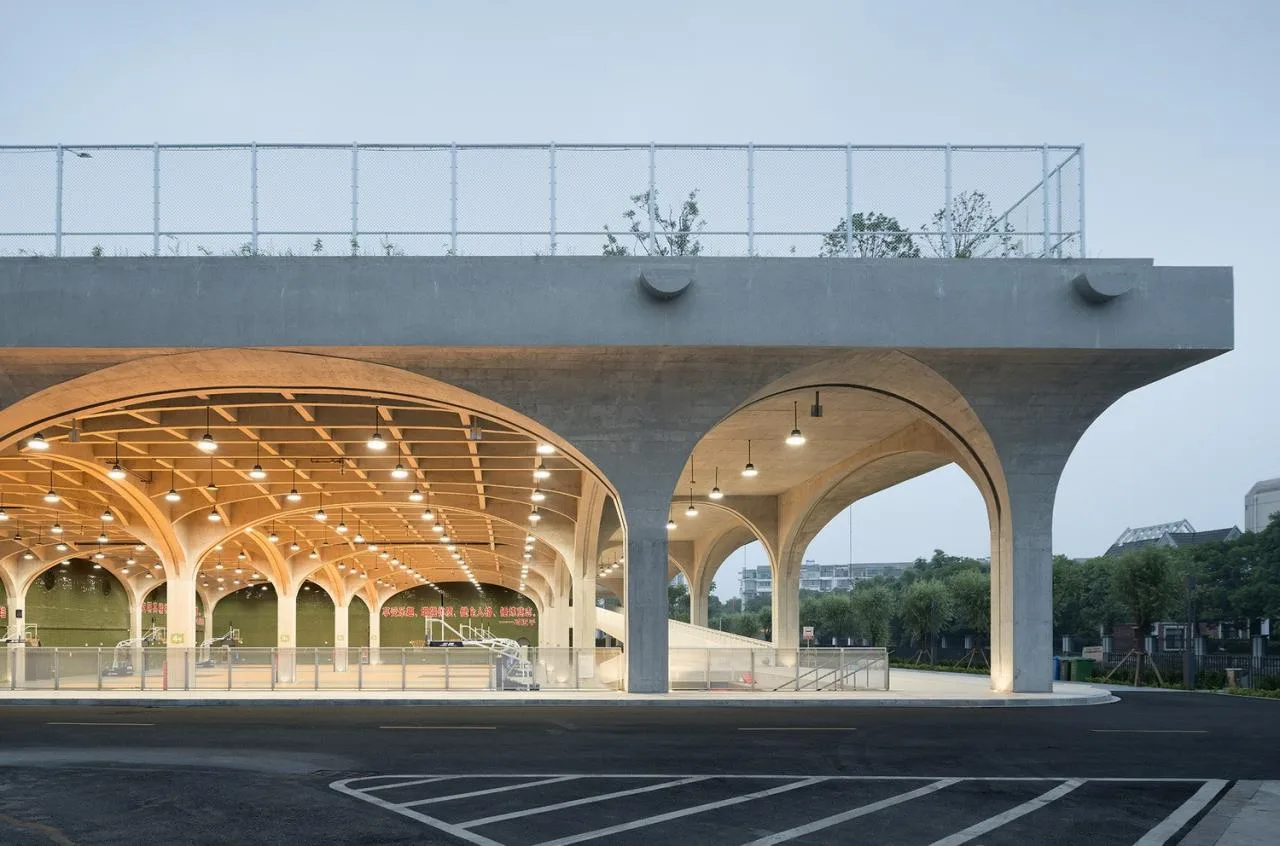
We view humans, architecture, and cities as a symbiotic system. Human existence and activities deeply influence the appearance of buildings and urban spaces. Architecture is not merely a container for human behavior; it also inspires diverse activities, giving spaces a spontaneous vitality and flexibility. — Dong Danshen
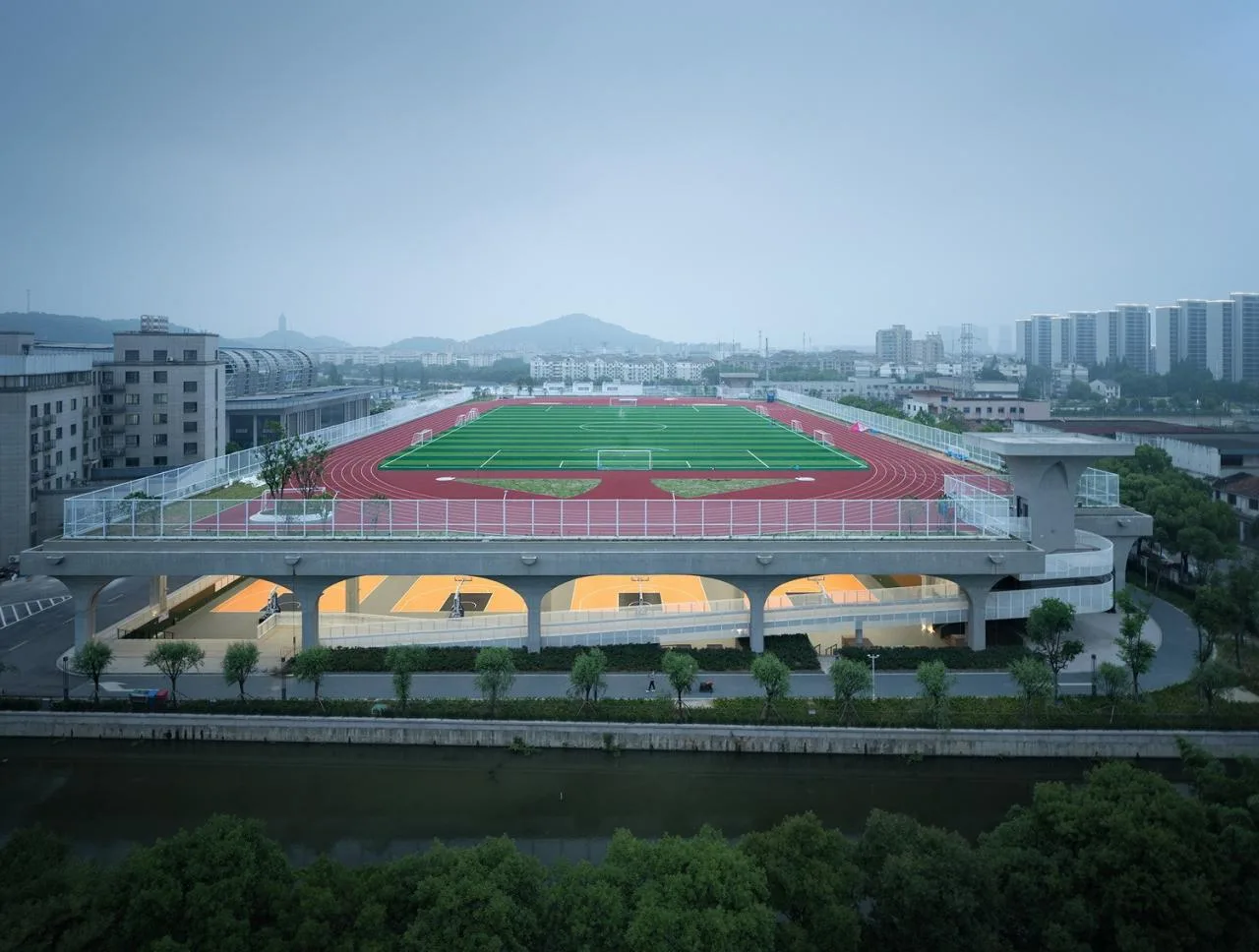
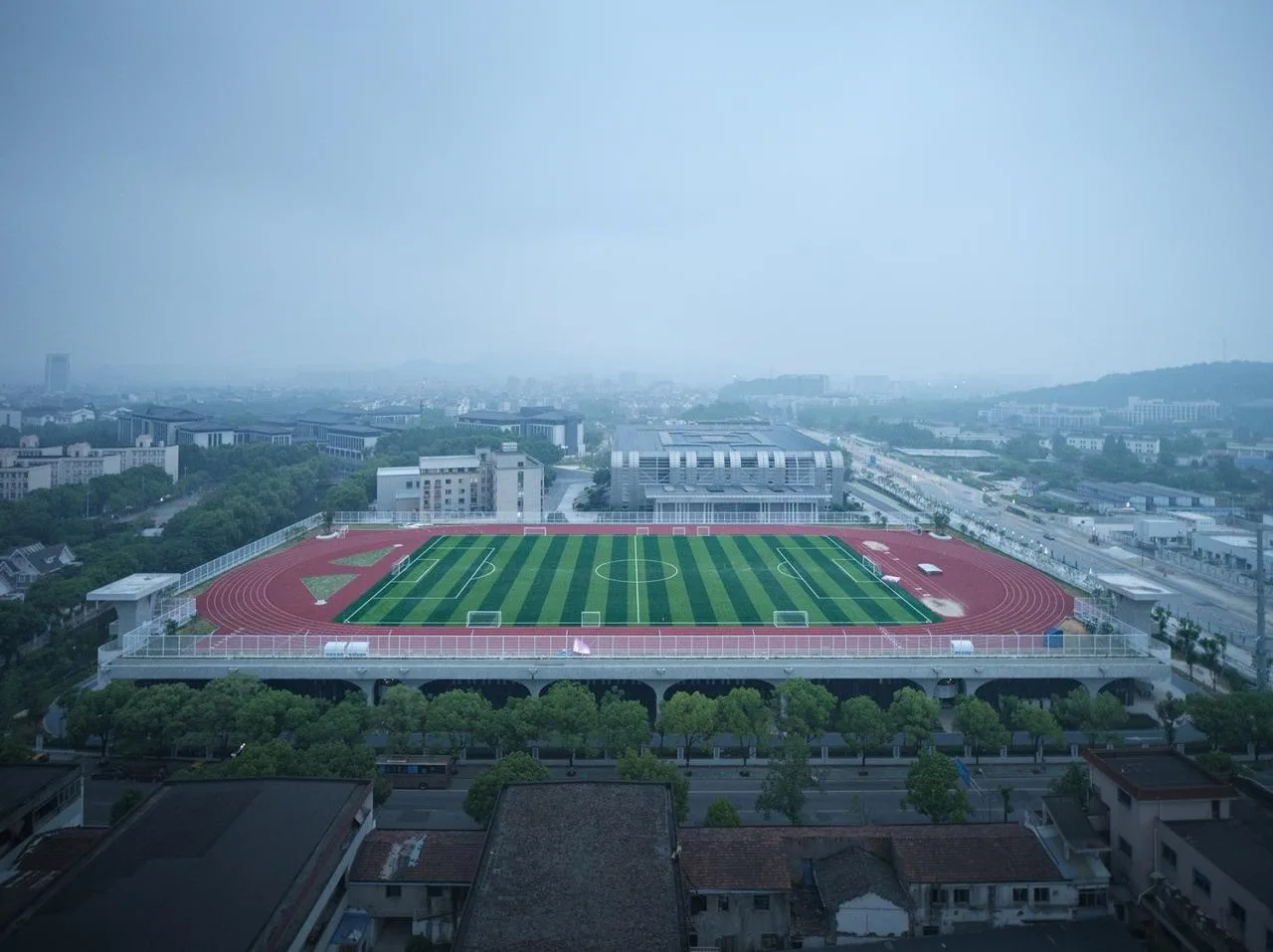
Buildings in everyday life are deeply rooted in bustling urban environments, seamlessly integrating into all aspects of daily living. Because they are so ubiquitous, we often overlook their significance—such as eaves that shelter from rain, walls that offer shade in summer, or sidewalks that become resting spots. Ideally, architectural design should integrate people, physical form, and natural elements into a unified context, shaping the essence and spirit of the space.
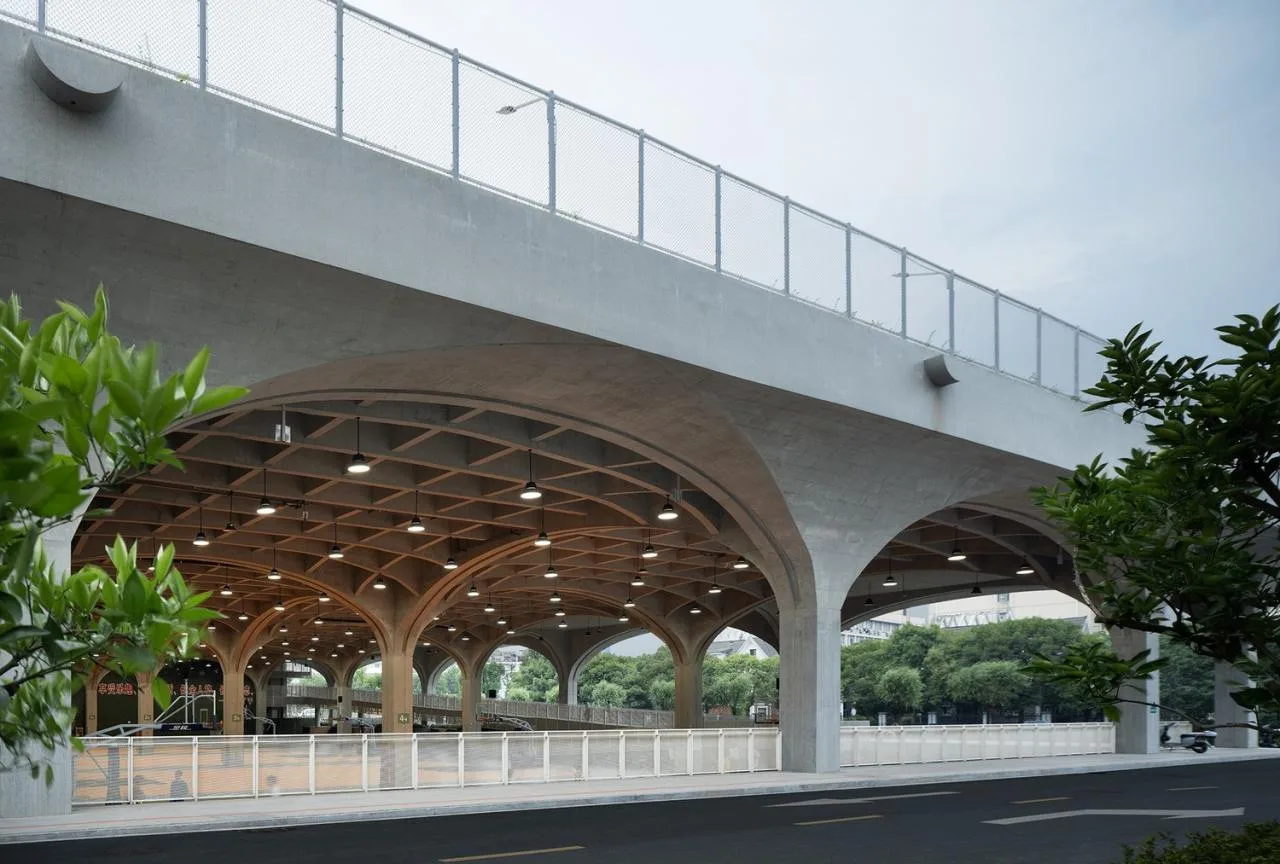
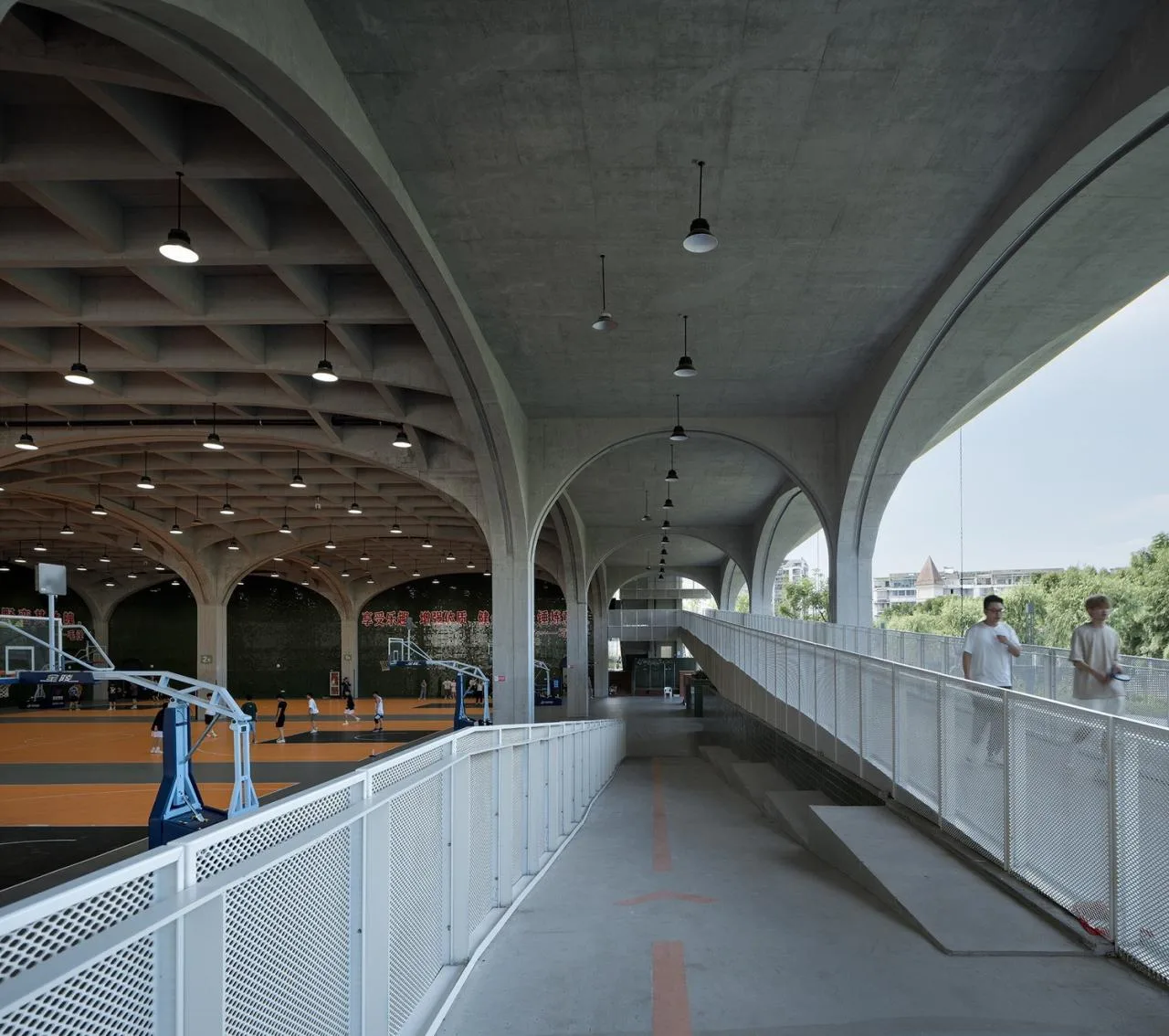
The Hexi Wind and Rain Playground at Shaoxing University of Arts and Sciences is situated in the northwest corner of the campus, adjacent to the historic old streets of Shaoxing City to the west and north. Amid the constraints of limited urban land and the hollowing out of the old city, we aimed to create a sports center that fosters true interaction and shared experiences between the city and the campus. When discussing the ‘public sphere,’ people often think of squares, theaters, and museums, but public sports facilities are equally vital, providing spaces that encourage social interaction, physical activity, and communal enjoyment. Our goal is for the Wind and Rain Playground to be an open, diverse space where vibrancy, inspiration, passion, and team spirit flow naturally.
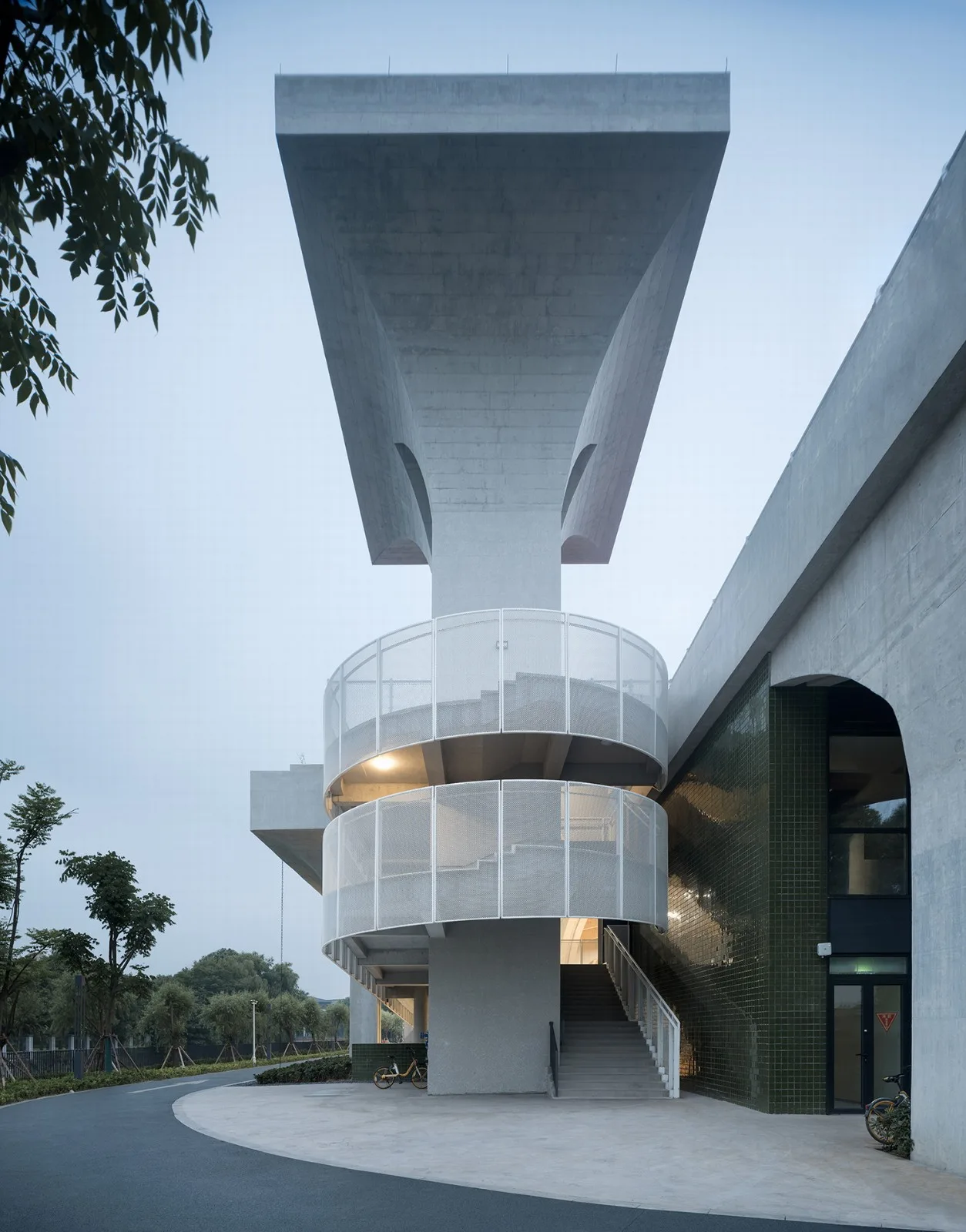
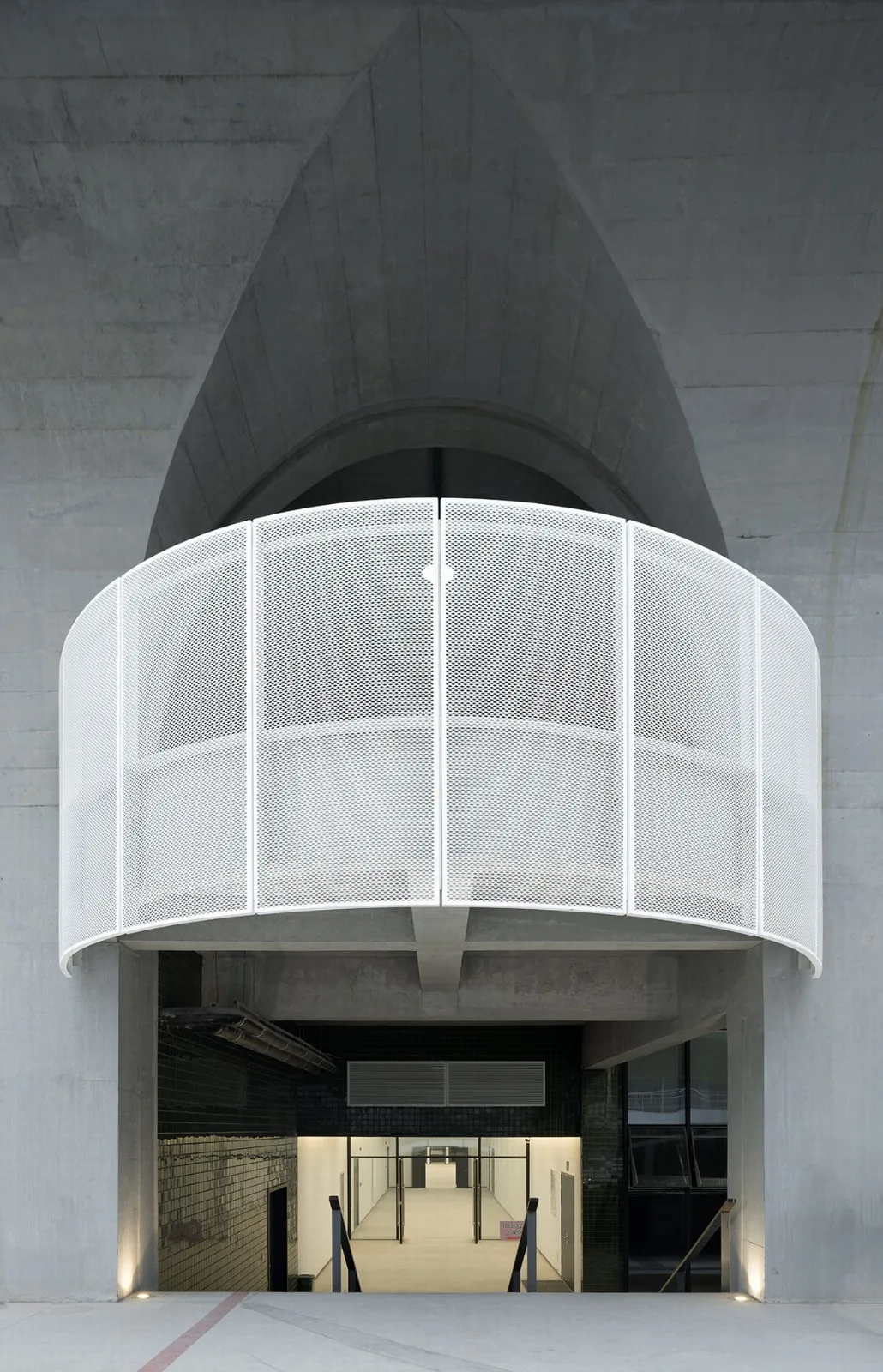
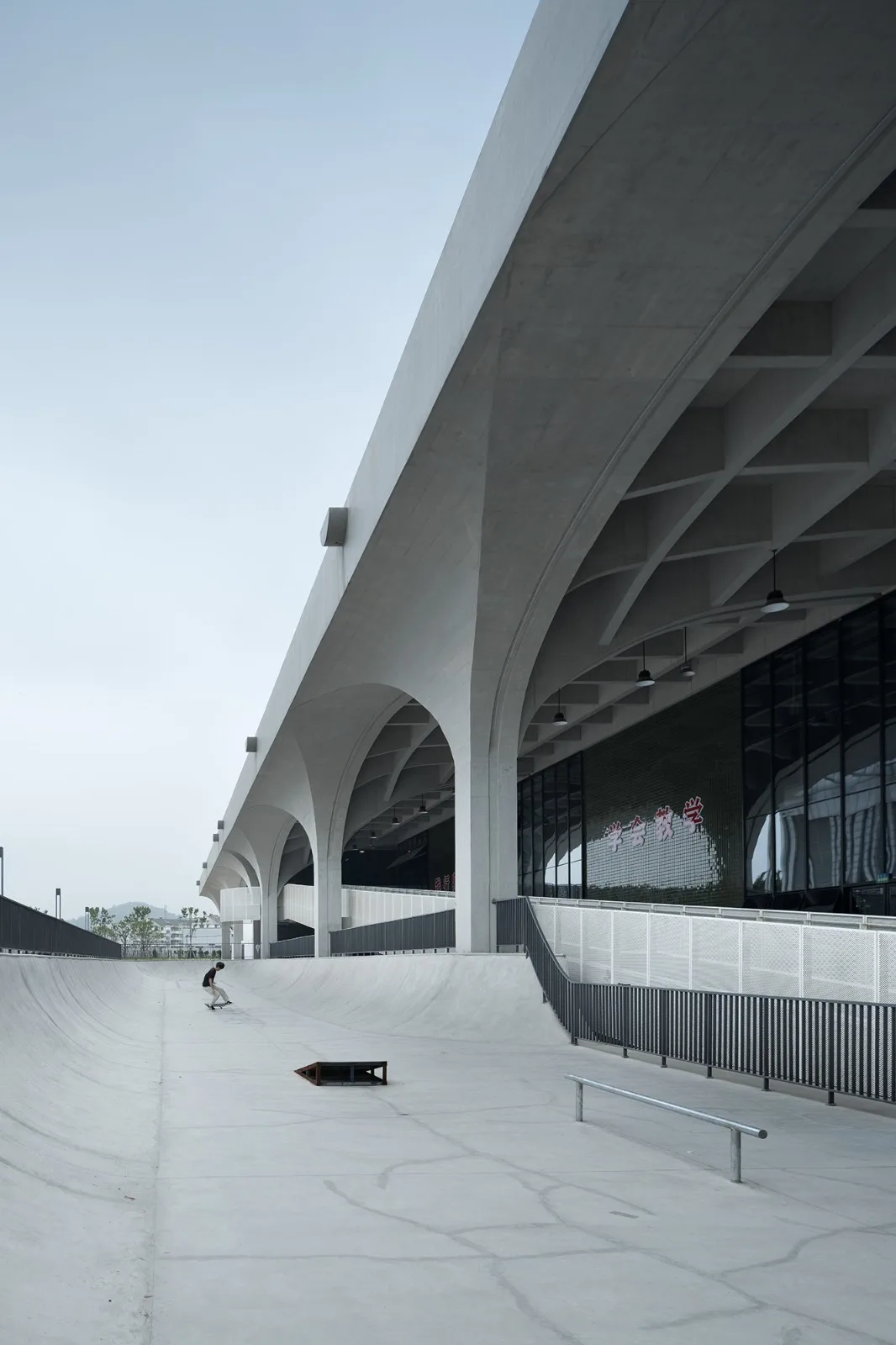
To address the challenge of limited land, we stacked the football field and other sports facilities vertically. This created a large covered space underneath the elevated football field. Embracing the openness of the sports field, we introduced additional functions on this “elevated level,” similar to the open public spaces formed by shadows beneath urban buildings. These areas are simple and unadorned, requiring no elaborate decoration or high costs. Whether under the scorching sun or pouring rain, people naturally seek refuge in these sheltered spaces. We aim for the playground to endure seasonal and urban changes, constantly adapting and evolving. Positioned as the project’s core, the elevated sports field serves as an all-weather, outdoor shared space rather than just a ground or indoor facility.
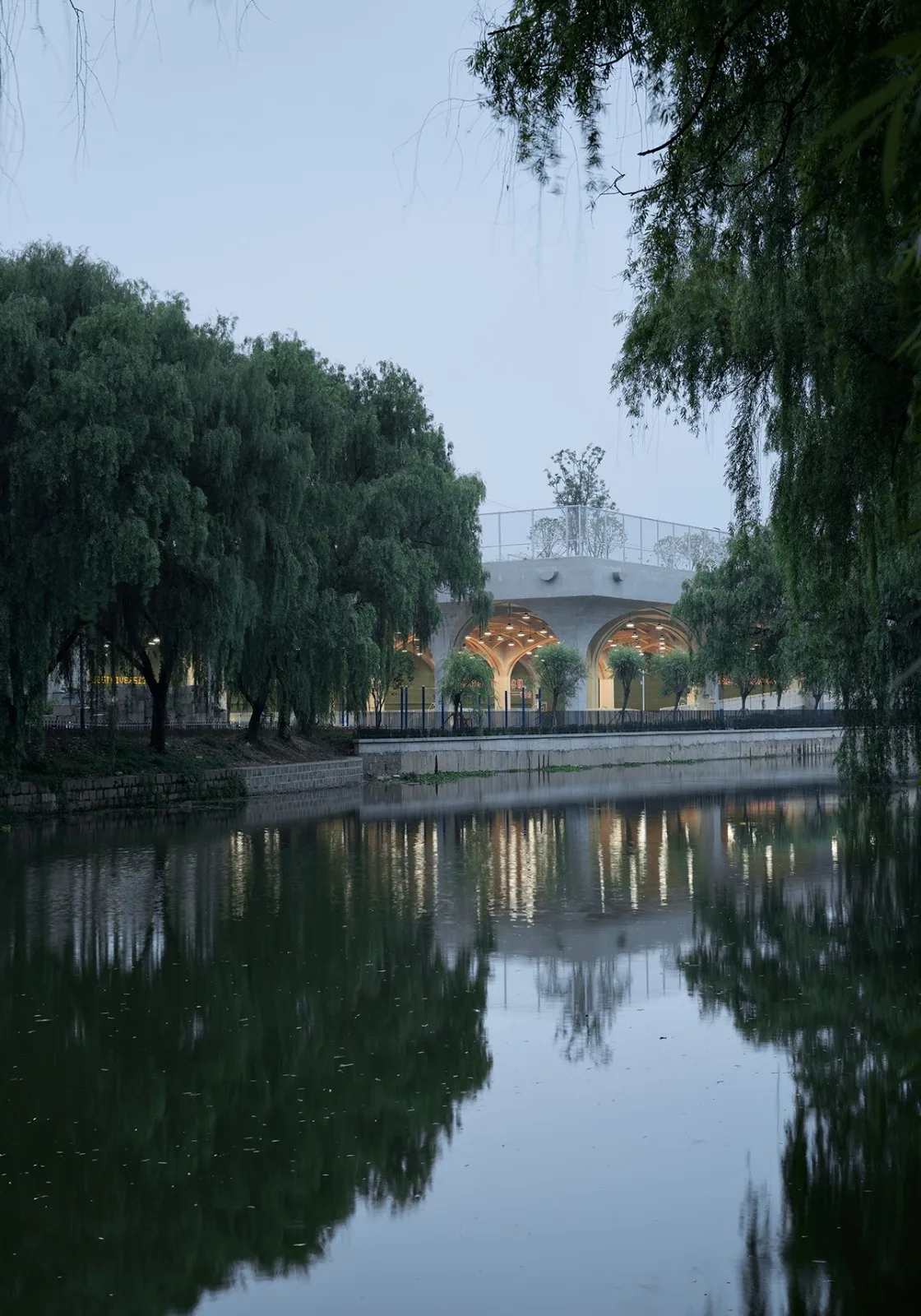
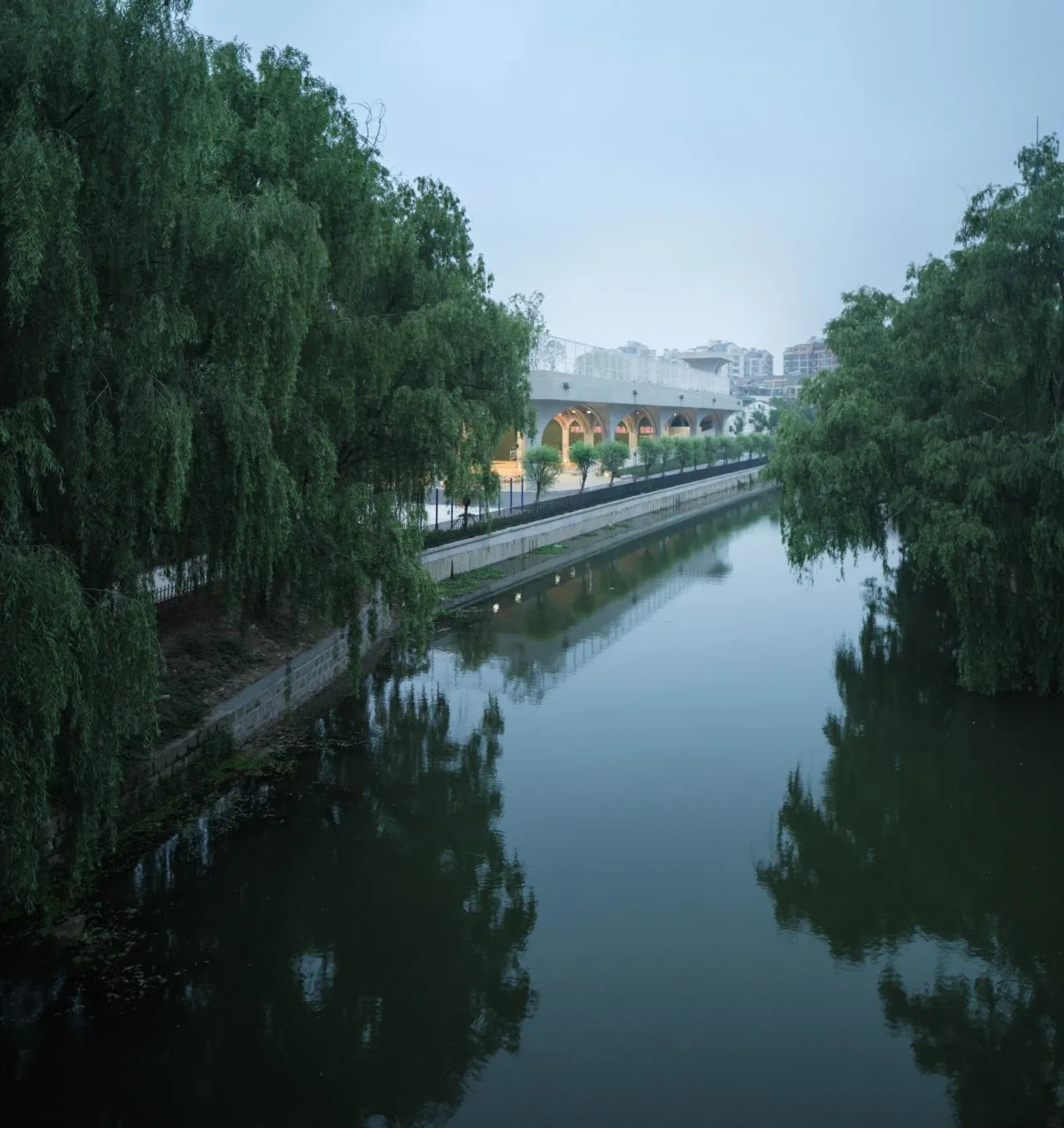
Facilities such as basketball and volleyball courts, 50-meter running tracks, and extreme sports areas are located at the building ends, where environmental wind speeds are low, attracting people of all ages to exercise and spectate. Meanwhile, badminton courts, exercise rooms, and martial arts spaces that require some climate control are situated centrally on the elevated level, separated by walls. The elevated structure itself becomes the dominant spatial element, shaping the building’s form. We embraced arches as the primary architectural theme, featuring curved beams and walls to define the exterior and partitions. This flexible design blurs boundaries, creating an open and unobstructed shared space.
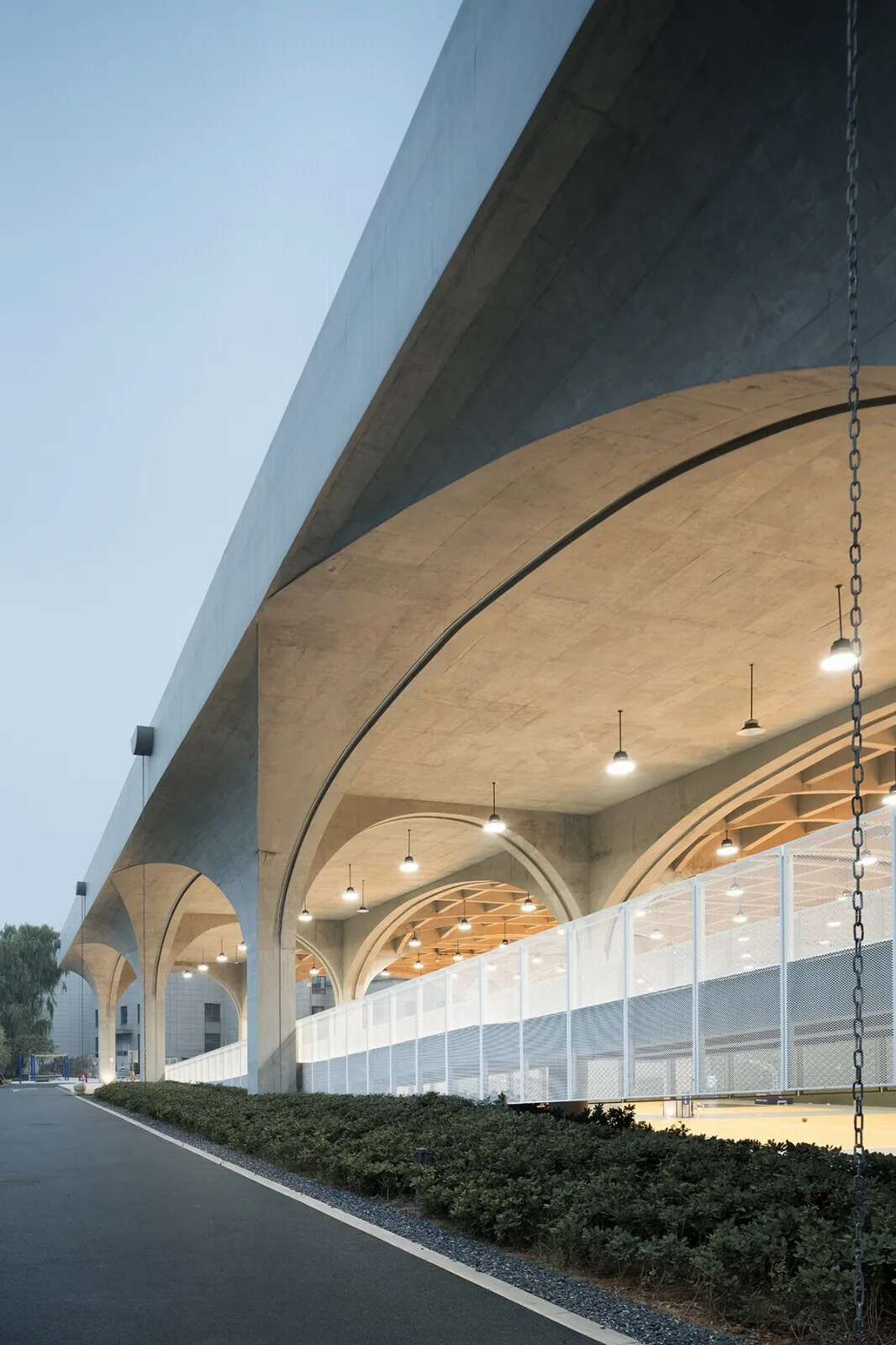
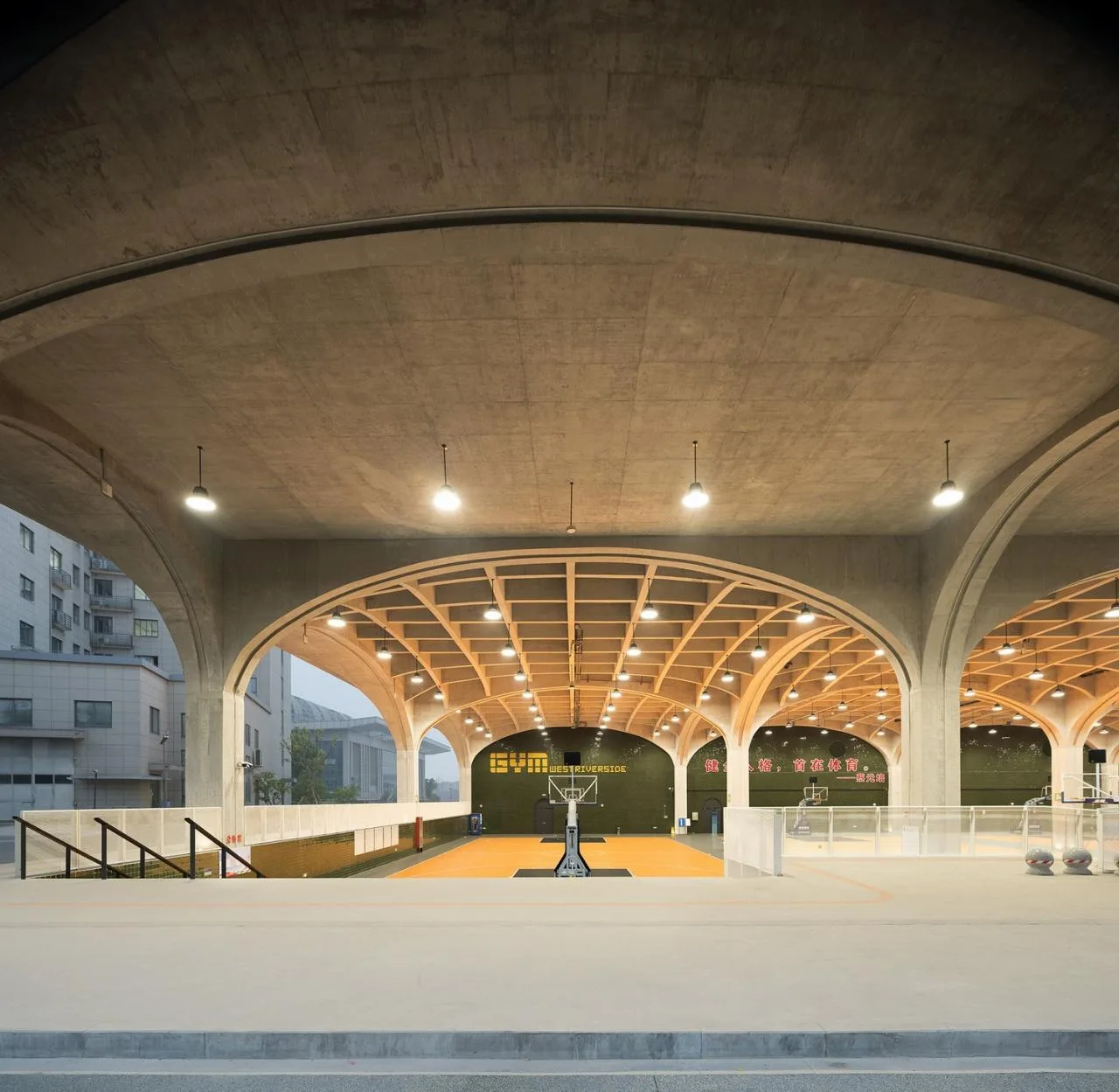
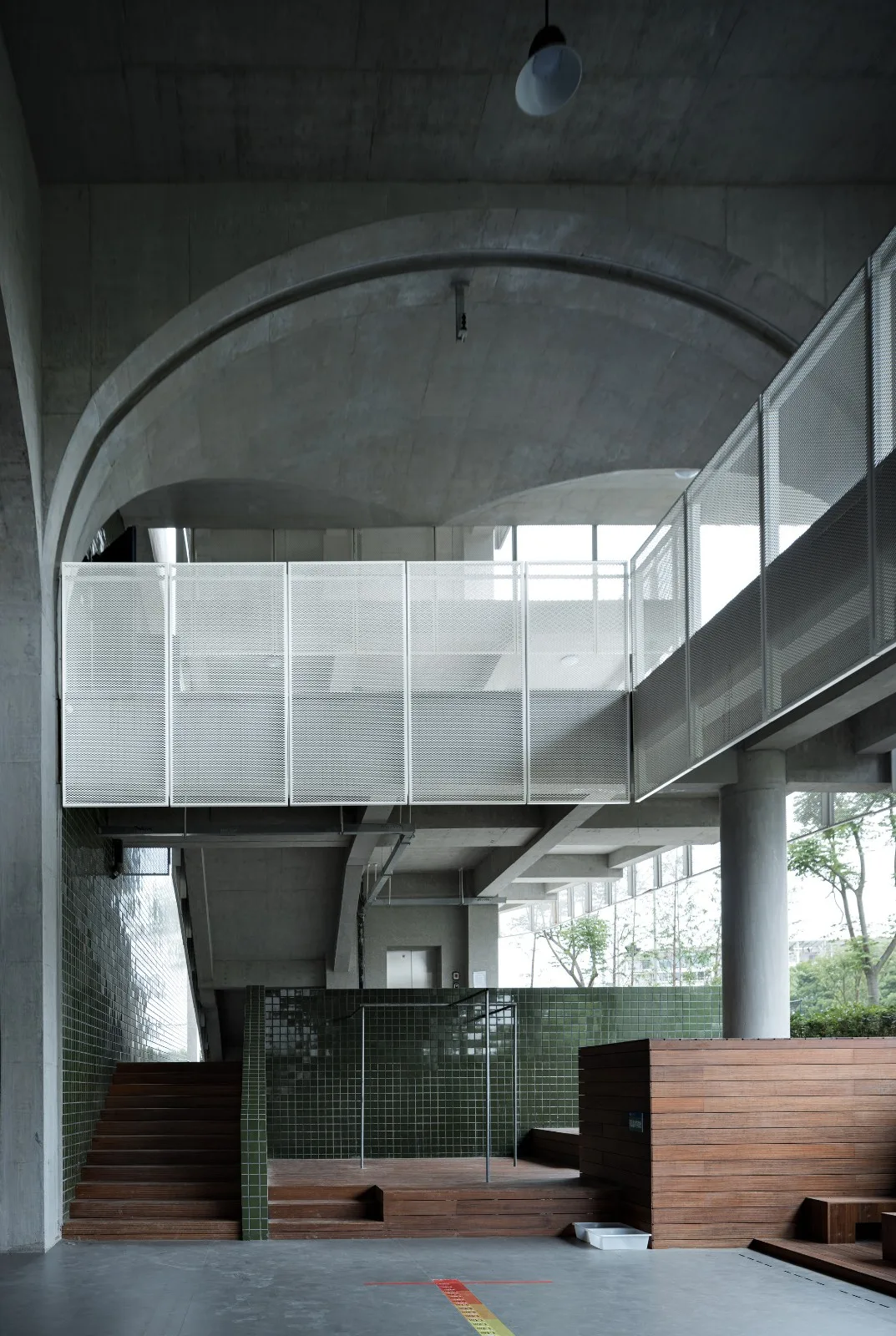
To foster coexistence between humans and their environment, we employed various strategies to create a lively, creative space that encourages teamwork. The Wind and Rain Playground features no rigid boundaries between functional areas, inviting users to move and interact freely. Carefully designed pathways create natural flow throughout the site. A ramp wrapped in white perforated aluminum panels facilitates easy transitions between sports fields. Wooden rest areas, viewing platforms, and social spaces surround the venue, offering places for users to share experiences and support one another. Ground markings promote team sports and competitions, inspiring cooperation and competitive spirit among students.
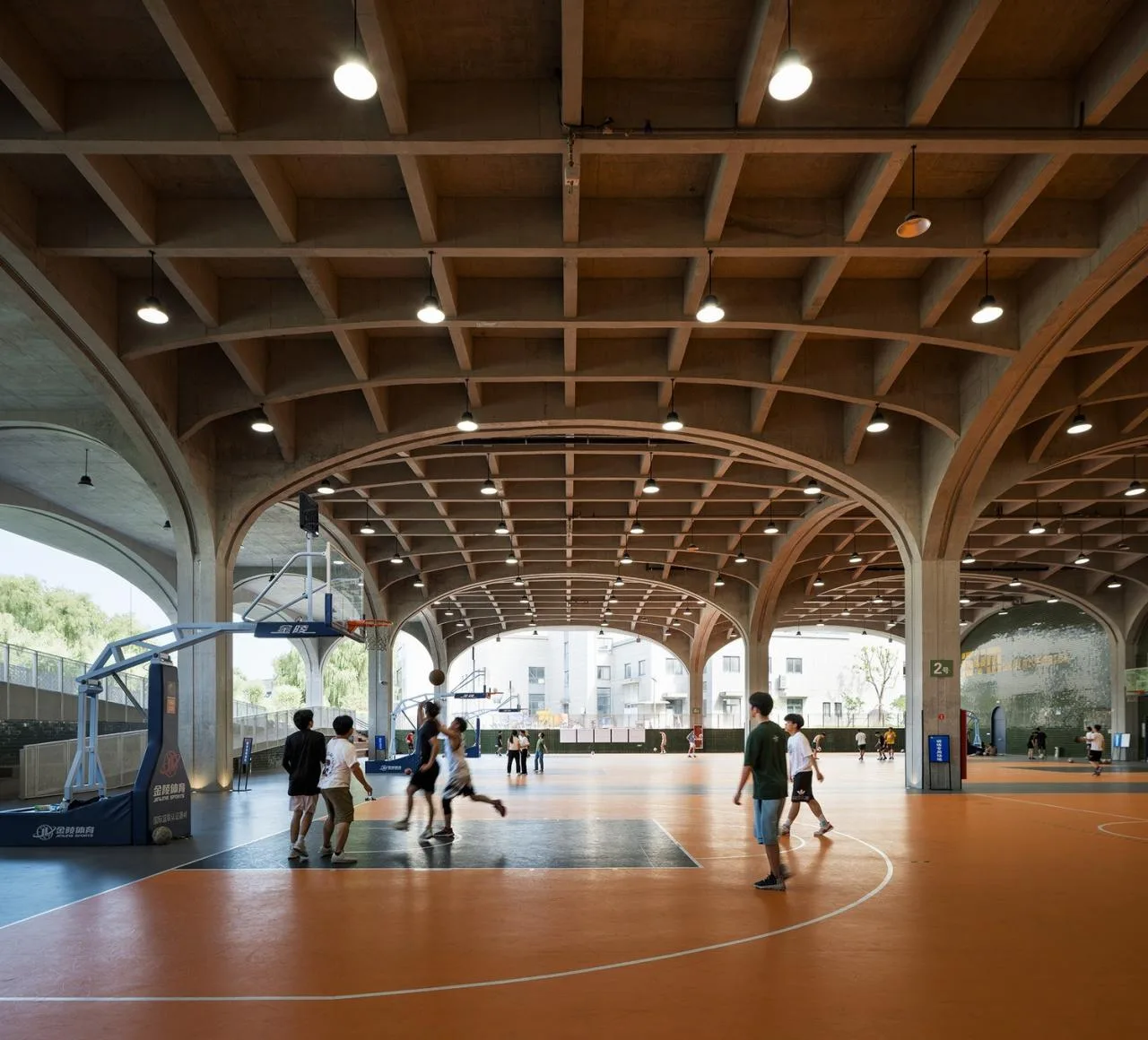
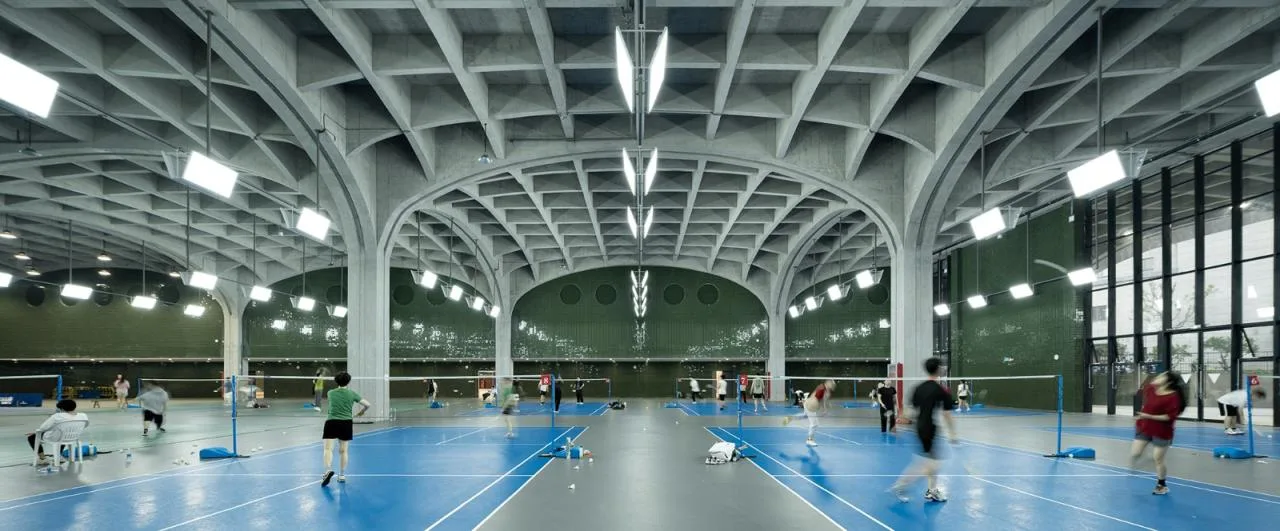
Natural lighting and ventilation are preserved to ensure a comfortable and healthy indoor environment. By integrating natural elements, the Wind and Rain Playground harmonizes with its surroundings—the curved pillars complement the roadside trees, and the building’s shadows blend seamlessly with natural shade. Our aspiration is that this space transcends an ordinary playground to become a vibrant, creative public venue that nurtures users’ potential and encourages their growth and development.
Project Drawings
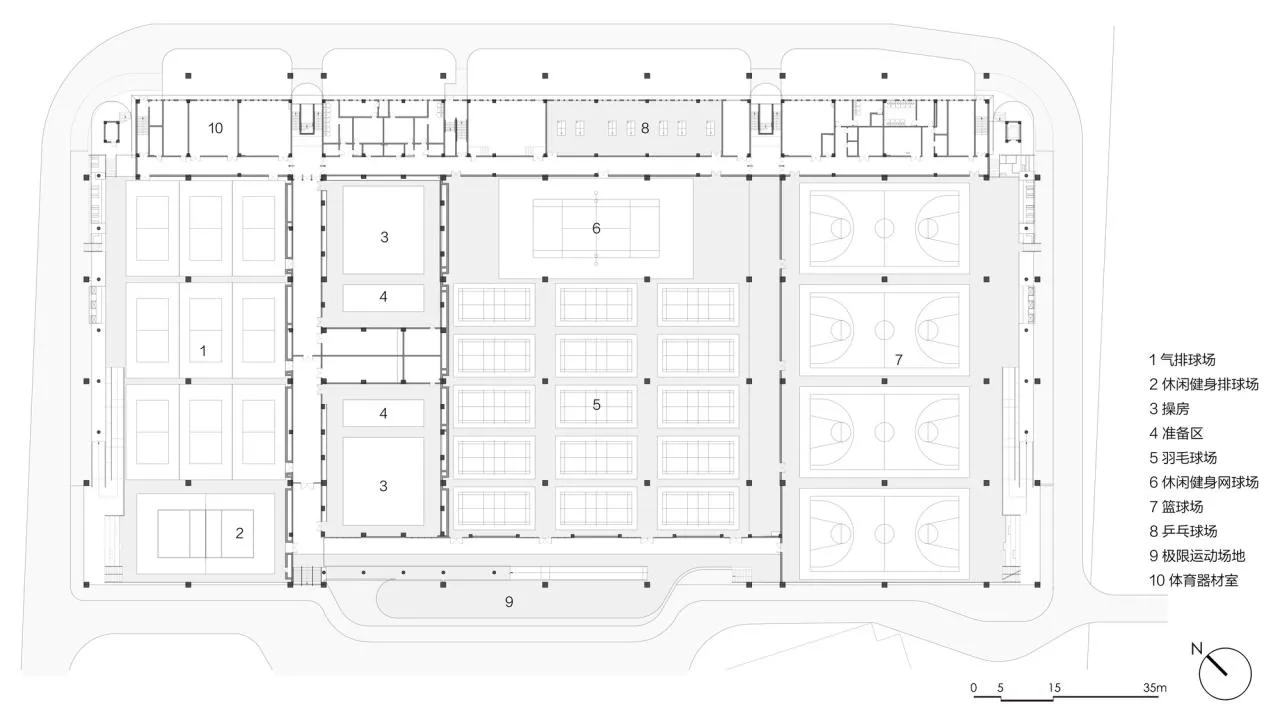
△ First Floor Plan
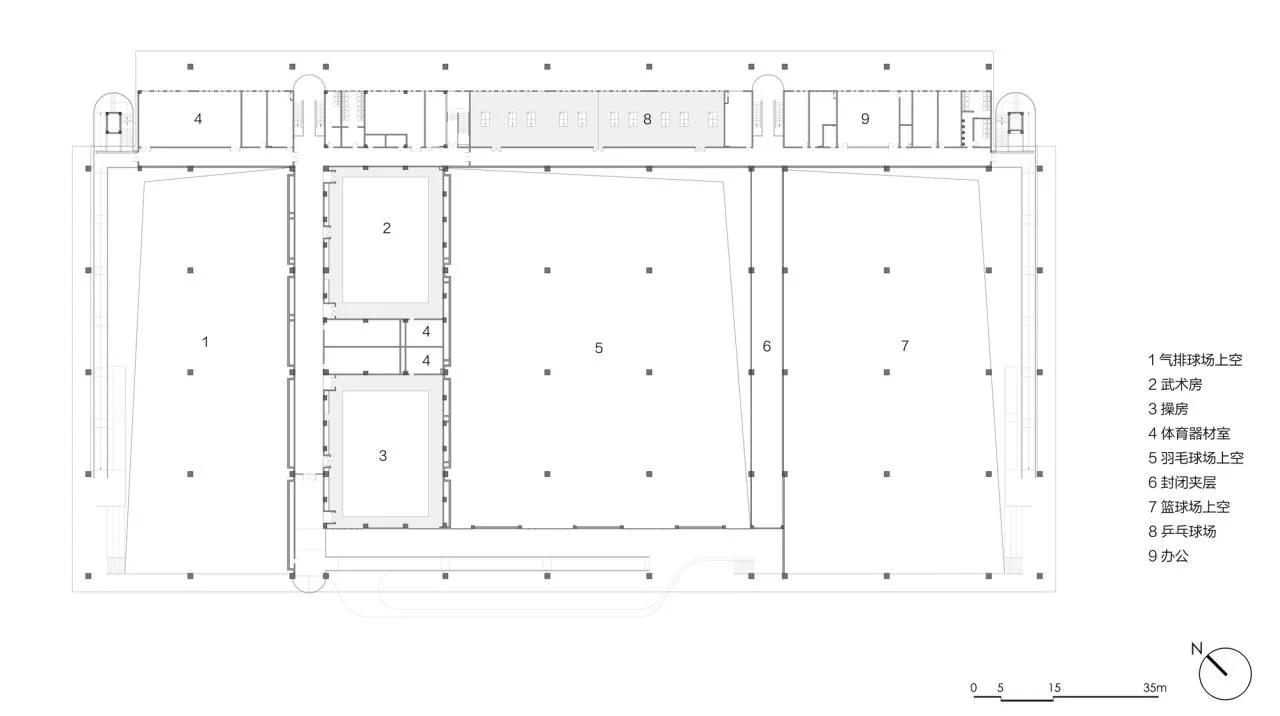
△ Second Floor Plan
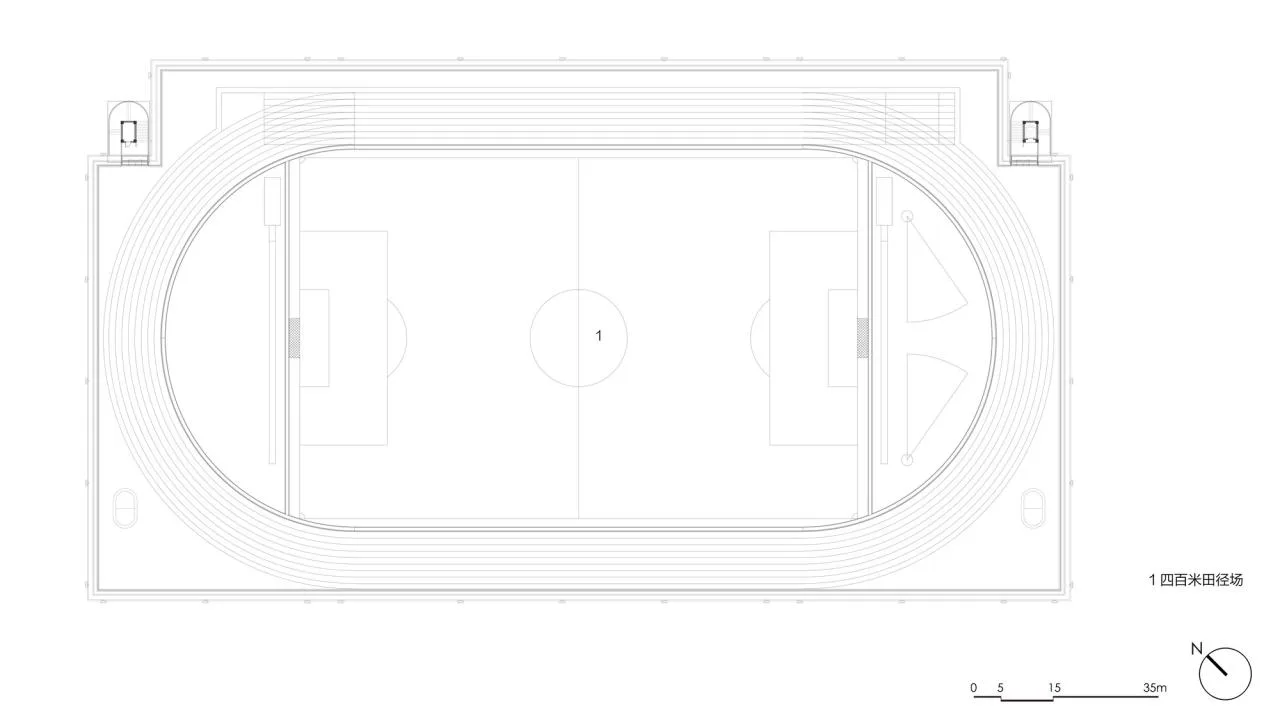
△ Roof Plan
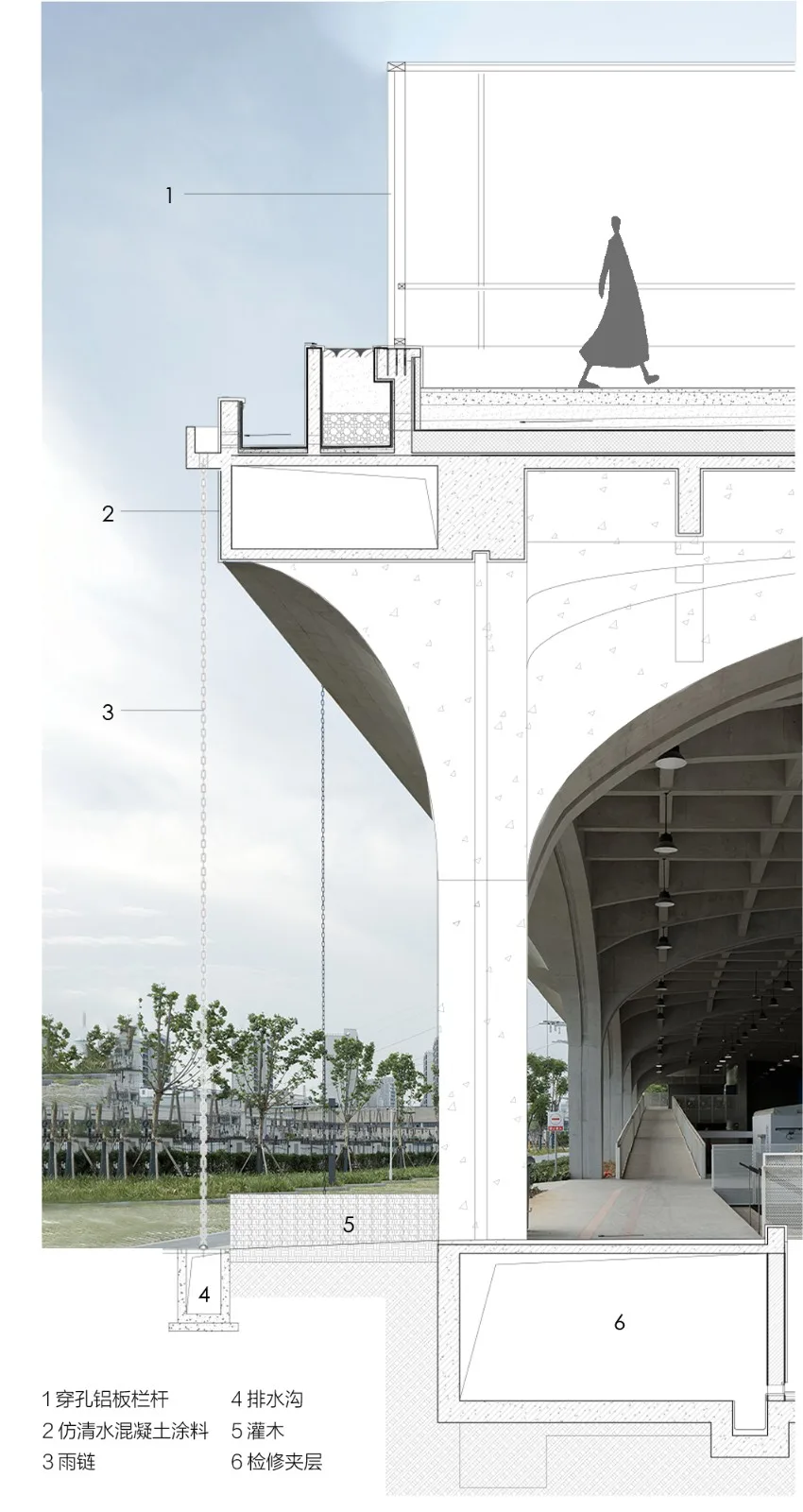
△ Detailed Section View
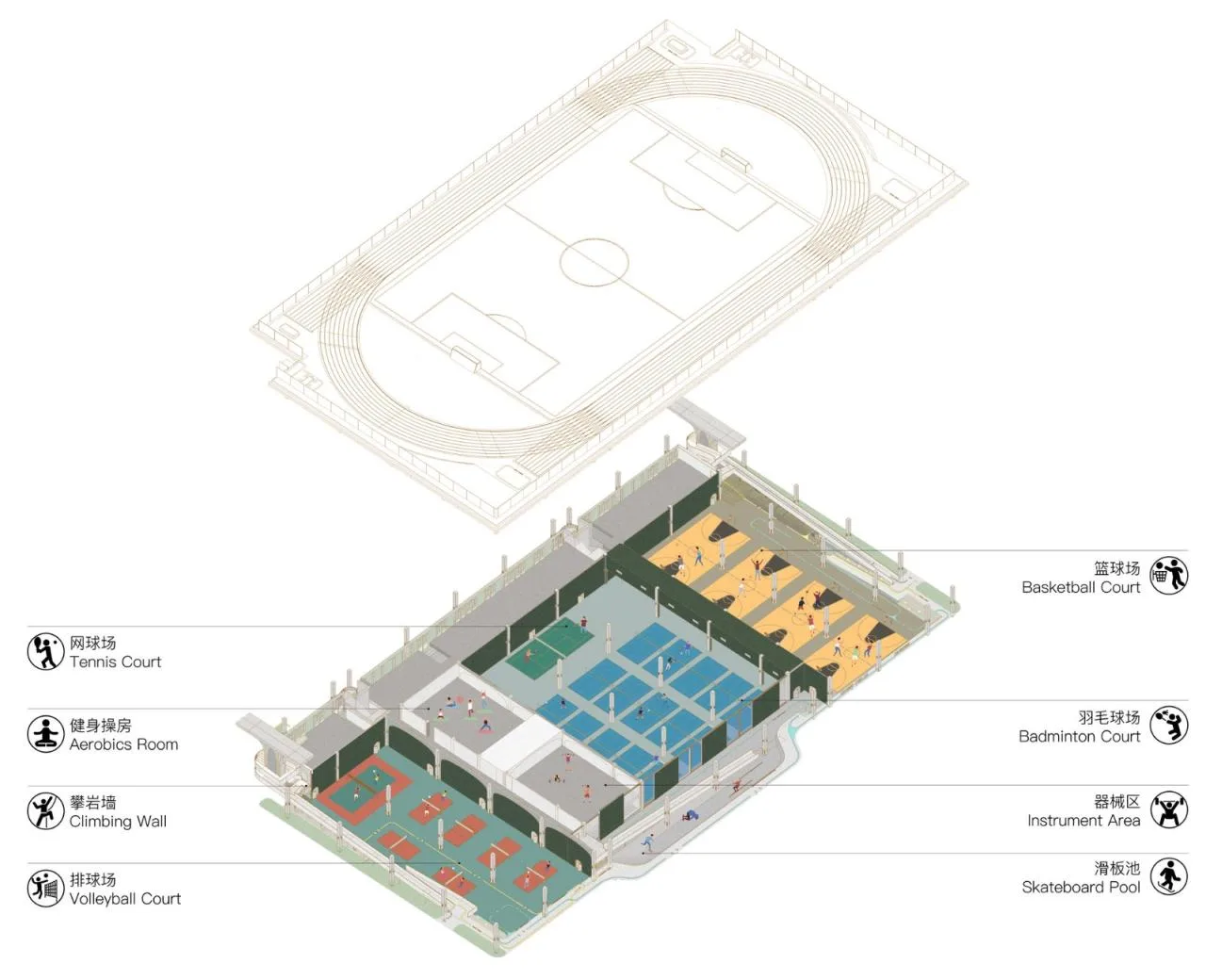
△ Function Diagram
Project Information
Architect: Zhejiang University Architectural Design and Research Institute
Area: 23,124 m²
Project Year: 2022
Photographer: Zhao Qiang
Lead Designers: Dong Danshen, Mo Zhoujin
Architectural Design: Mo Zhoujin, Su Renyi, Qu Jie, Jiang Yajing, Lu Zhaoyang
Structural Design: Jin Xingxin, Wu Qiang, Li Shaohua
Water Supply and Drainage Design: Sangsong Table
Electrical Design: Xu Songjie, Feng Baile, Deng Zhouning
Intelligent Design: Ni Gaojun, Ma Jian
HVAC Design: Pan Dahong, Yi Kai, Mao Xikai
Curtain Wall Design: Bai Qi’an, Cao Dongqiu, Yu Ping, Ge Minxia
Interior Design: Chu Ran, Kong Xiang
Landscape Design: The Architectural Design & Research Institute of Zhejiang University Co., Ltd. (UAD), Sun Dongming, Lou Xuantan
Engineer: Zhejiang Zhongcheng Construction Co., Ltd.
Location: Shaoxing












Must log in before commenting!
Sign Up