
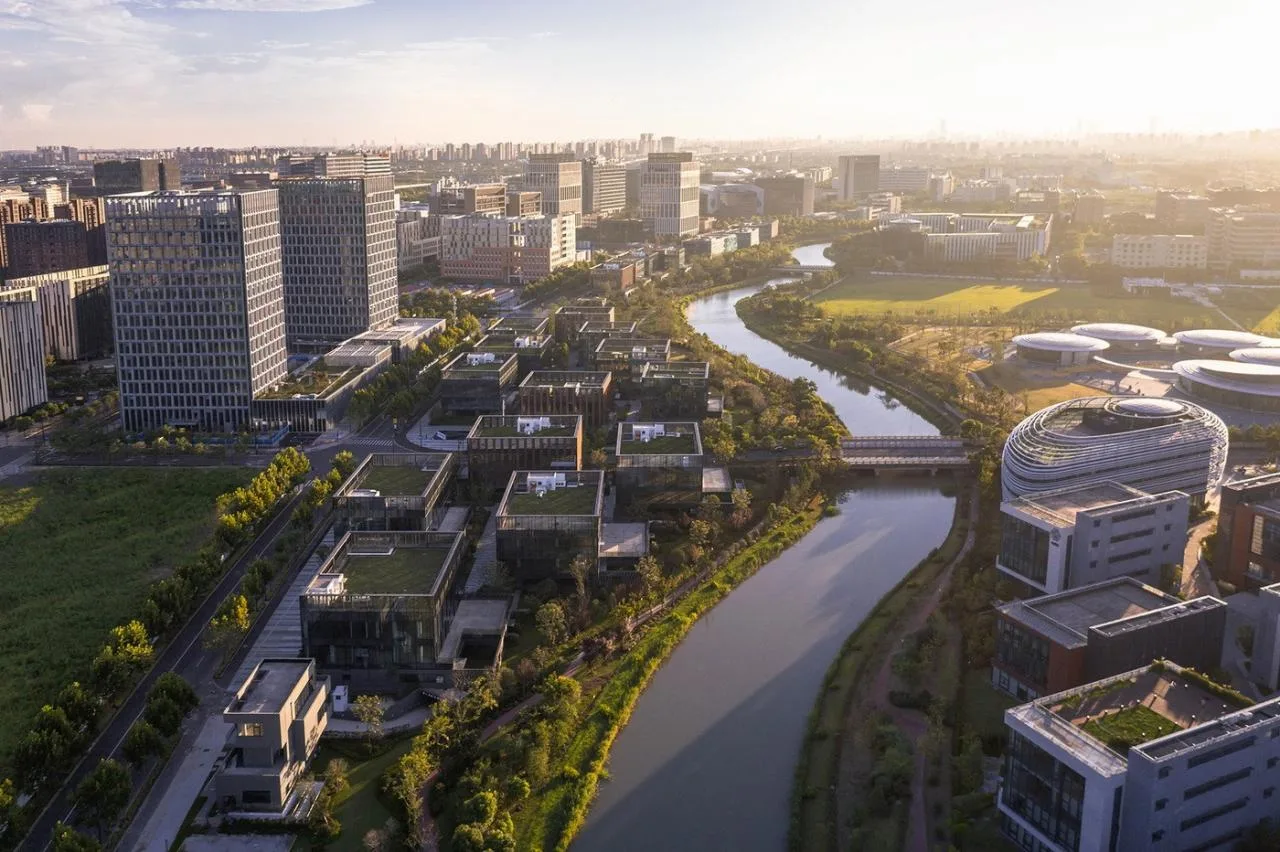
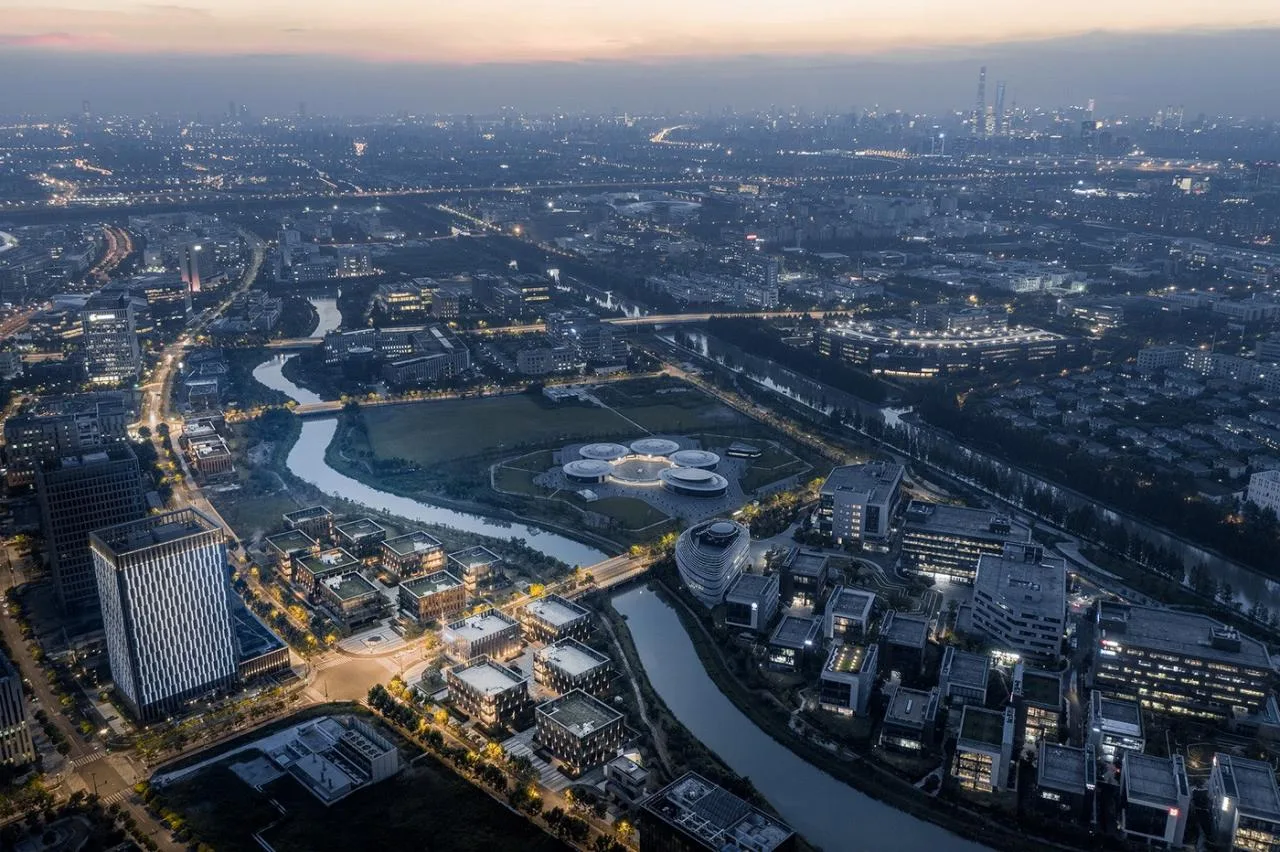
Successful companies are not created within walls alone—they thrive in strong ecosystems. Shanghai’s Zhangjiang Science City is one of the world’s most influential technology hubs, with the local government aiming to develop it into a cutting-edge science and technology center. However, years of rapid development have resulted in a dense, repetitive, and isolated concrete jungle. The project site has become a forest of reinforced concrete, characterized by high density, minimal greenery, and limited interaction.
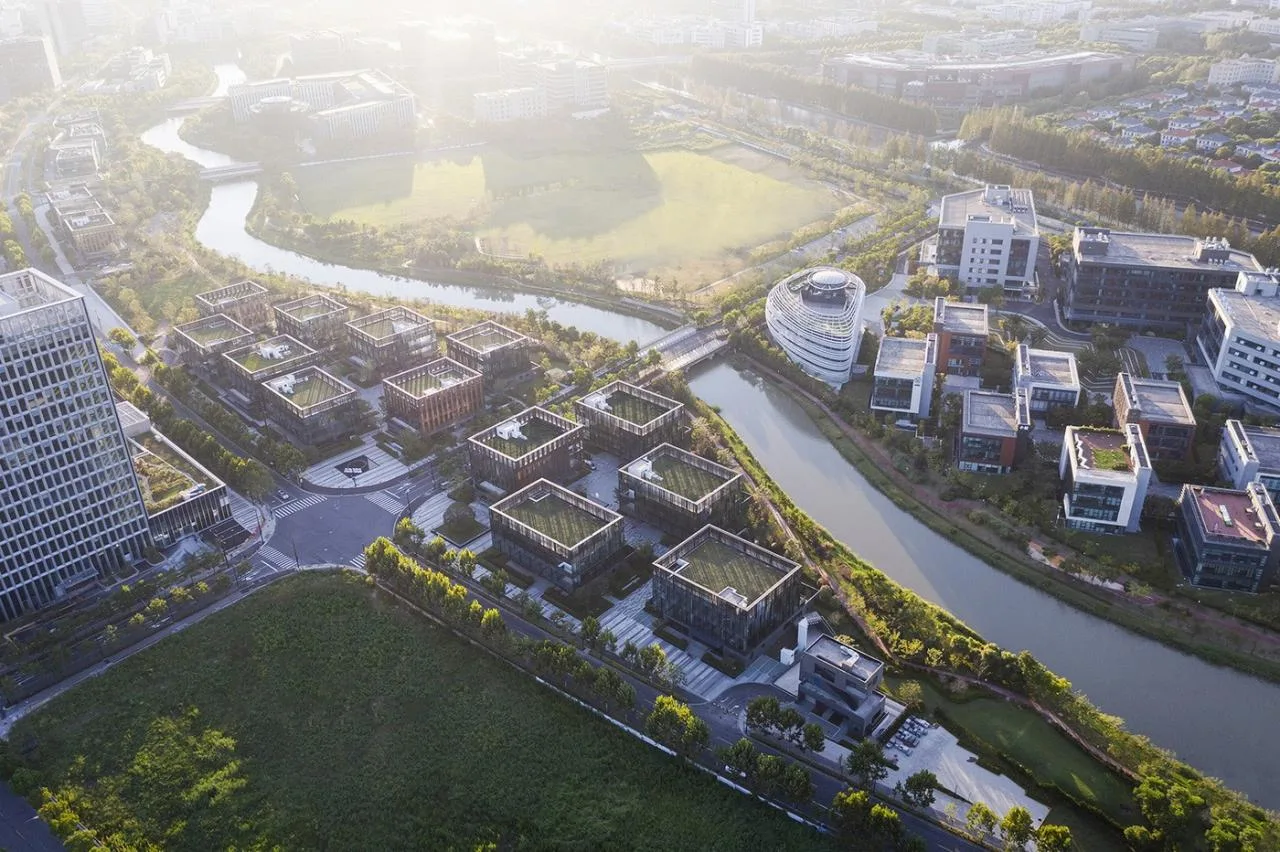
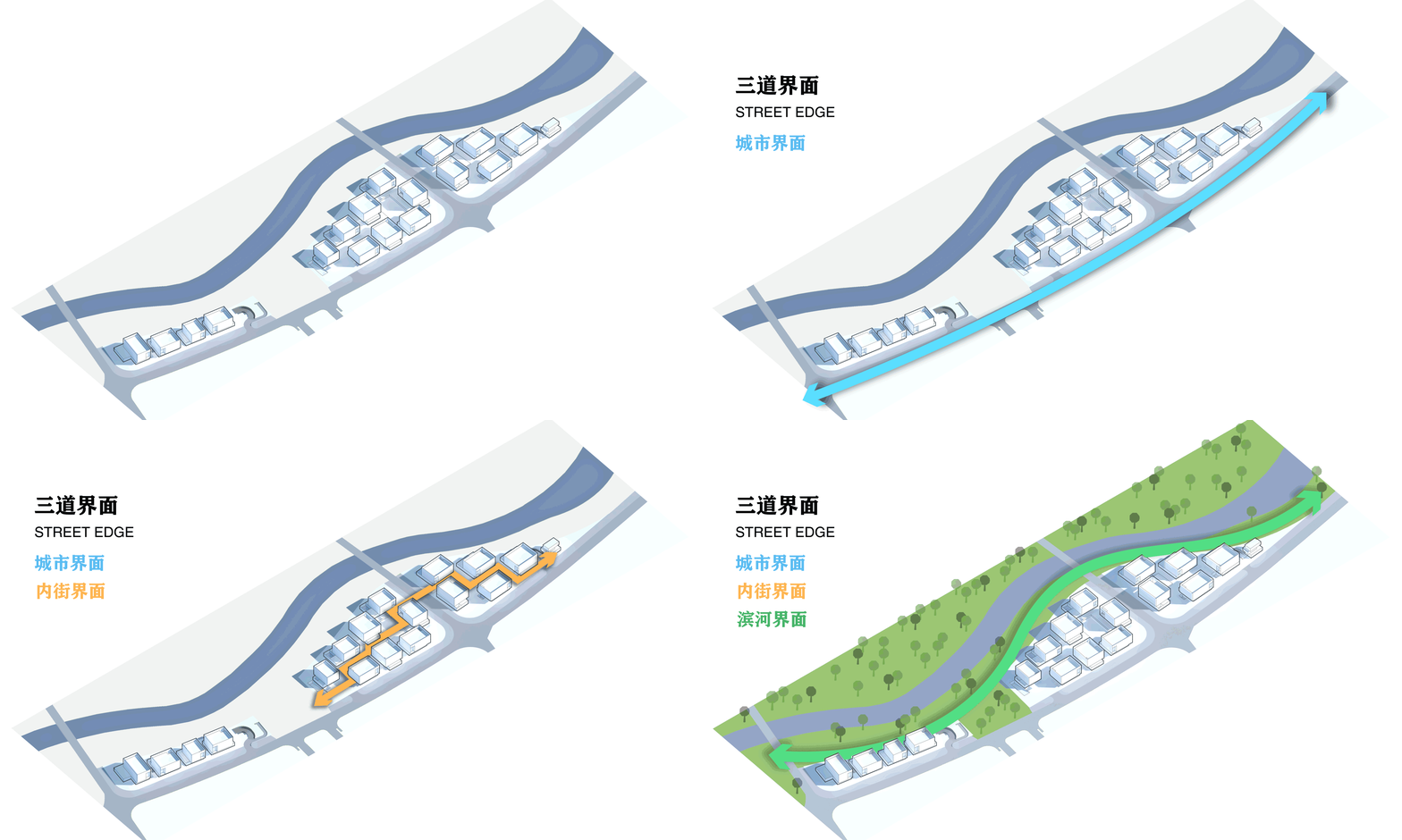
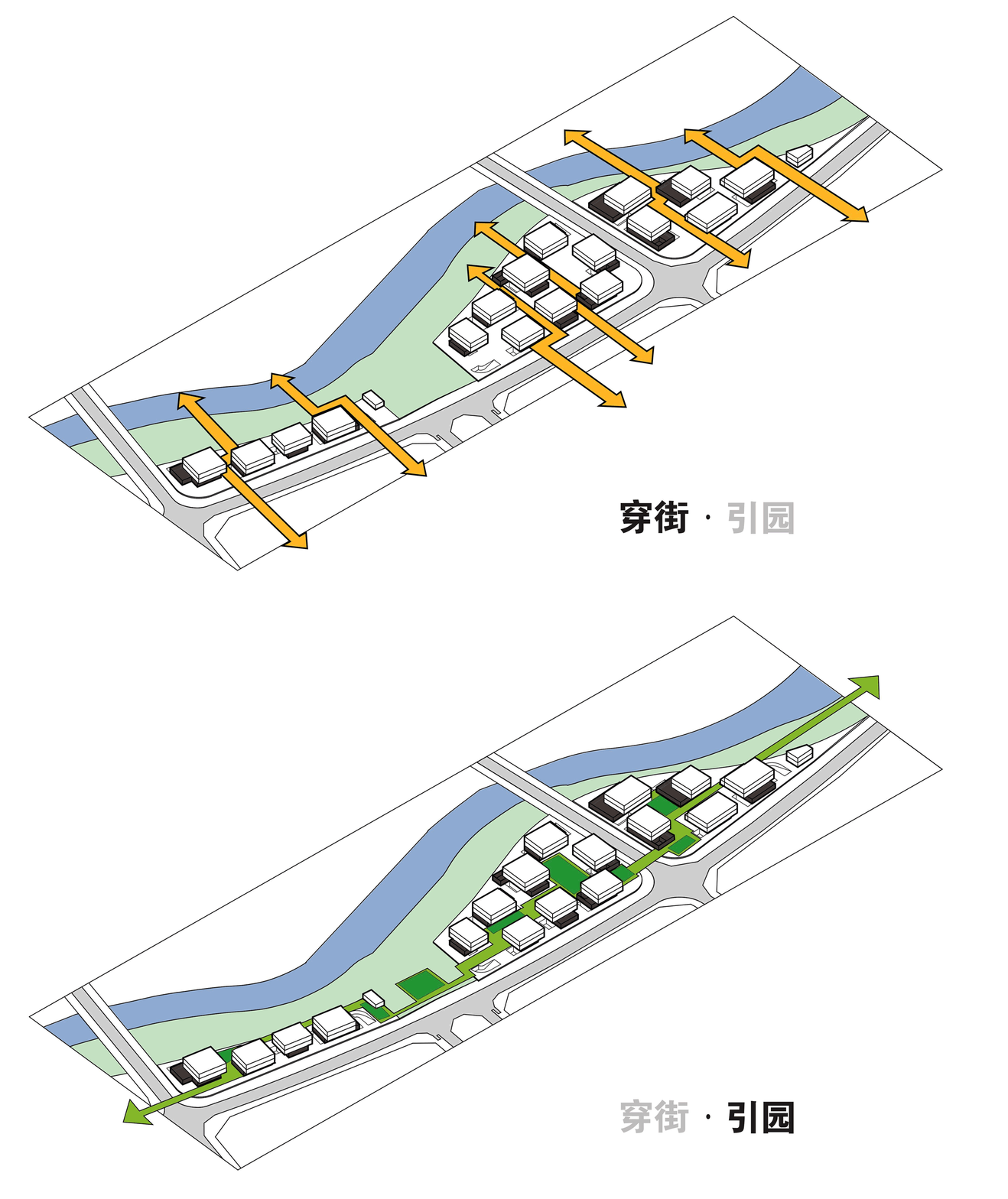
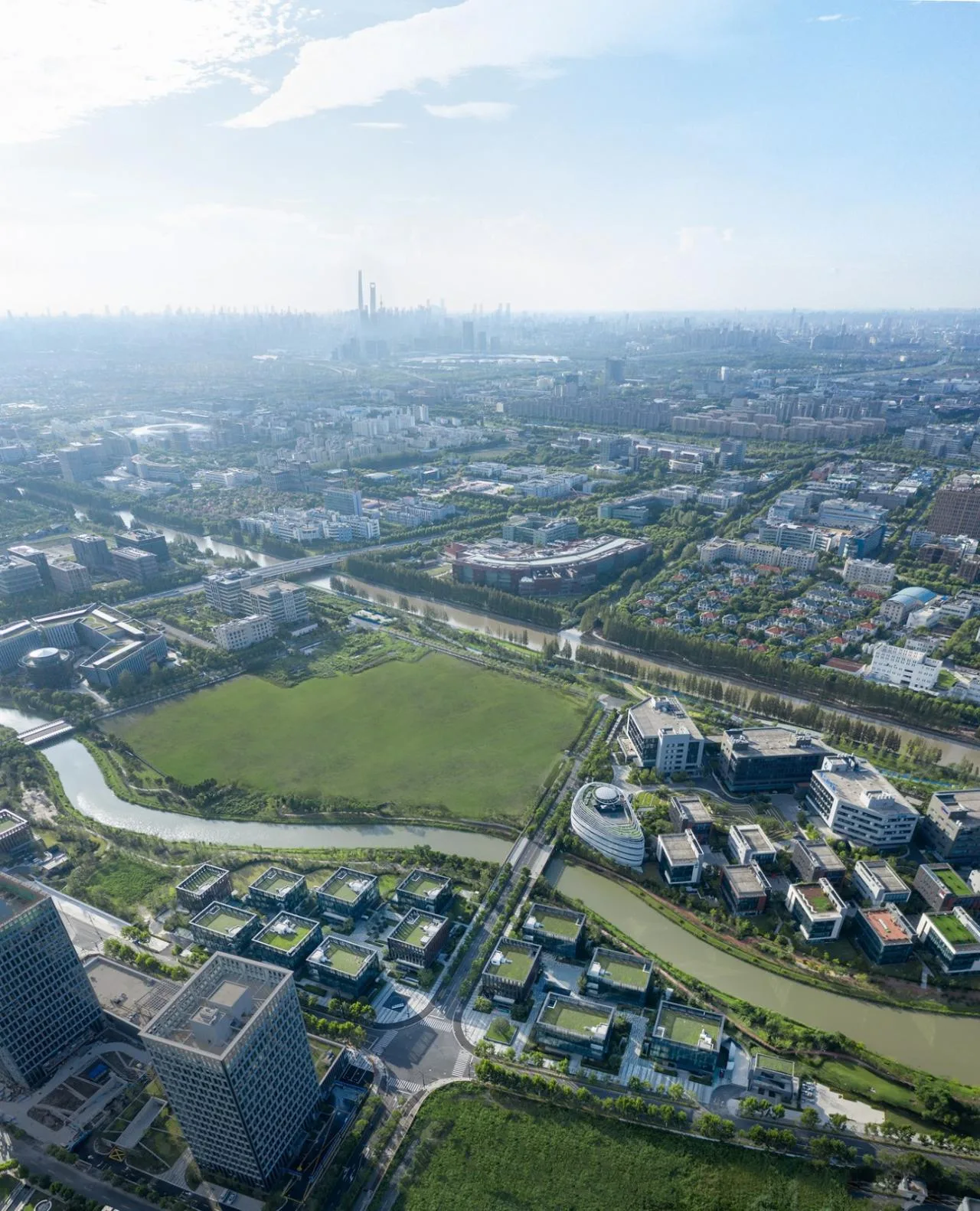
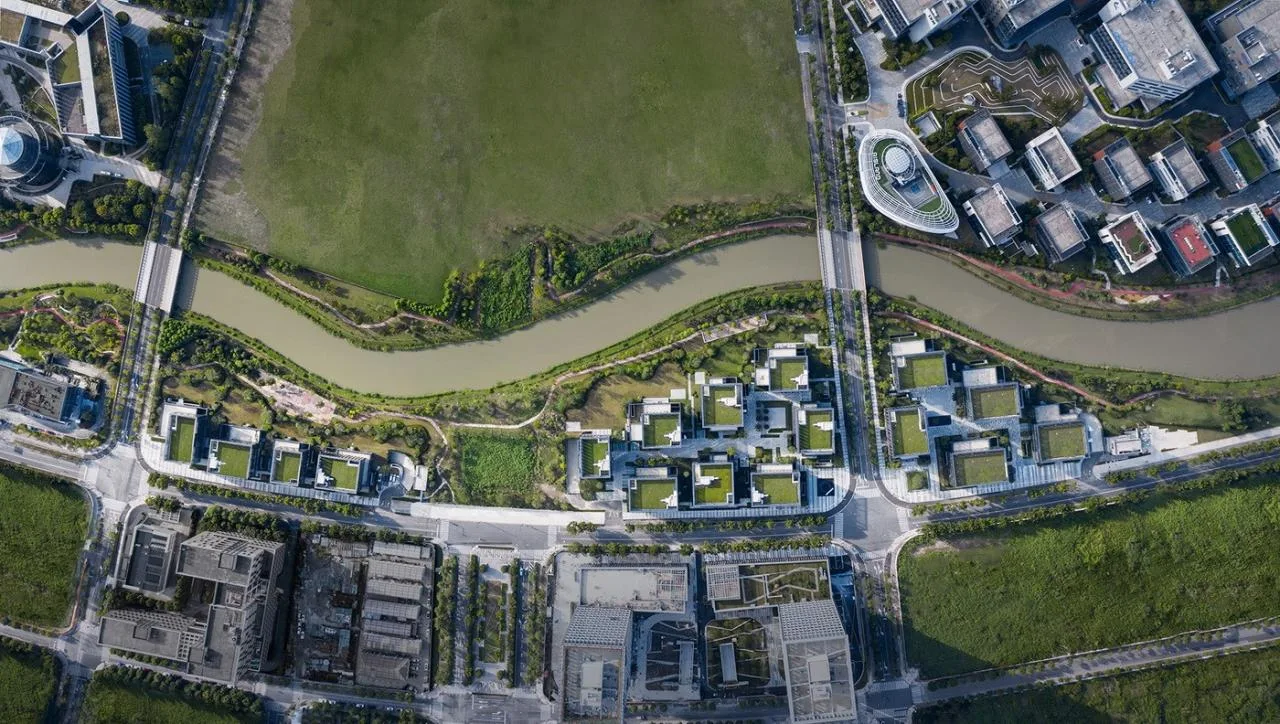
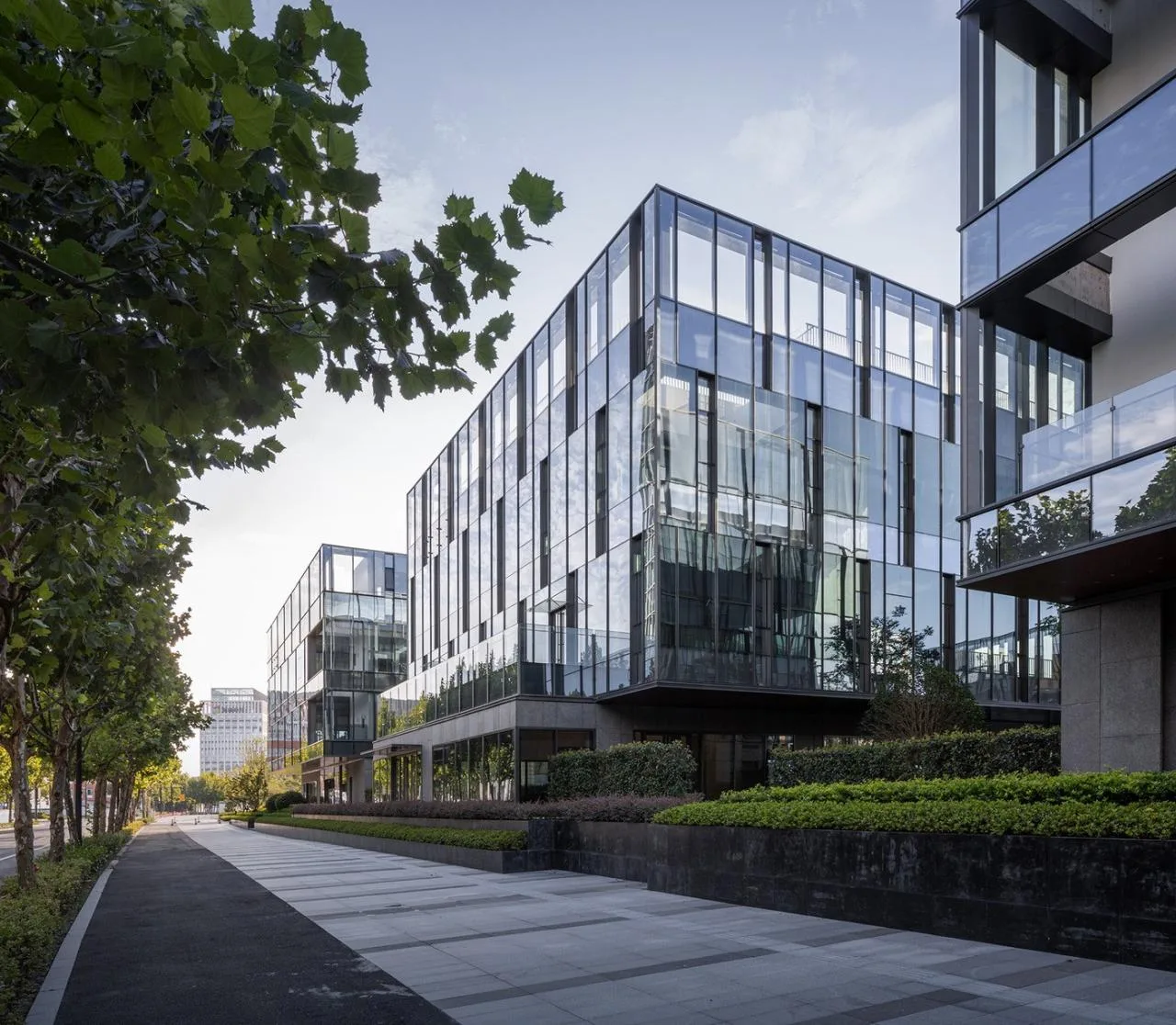
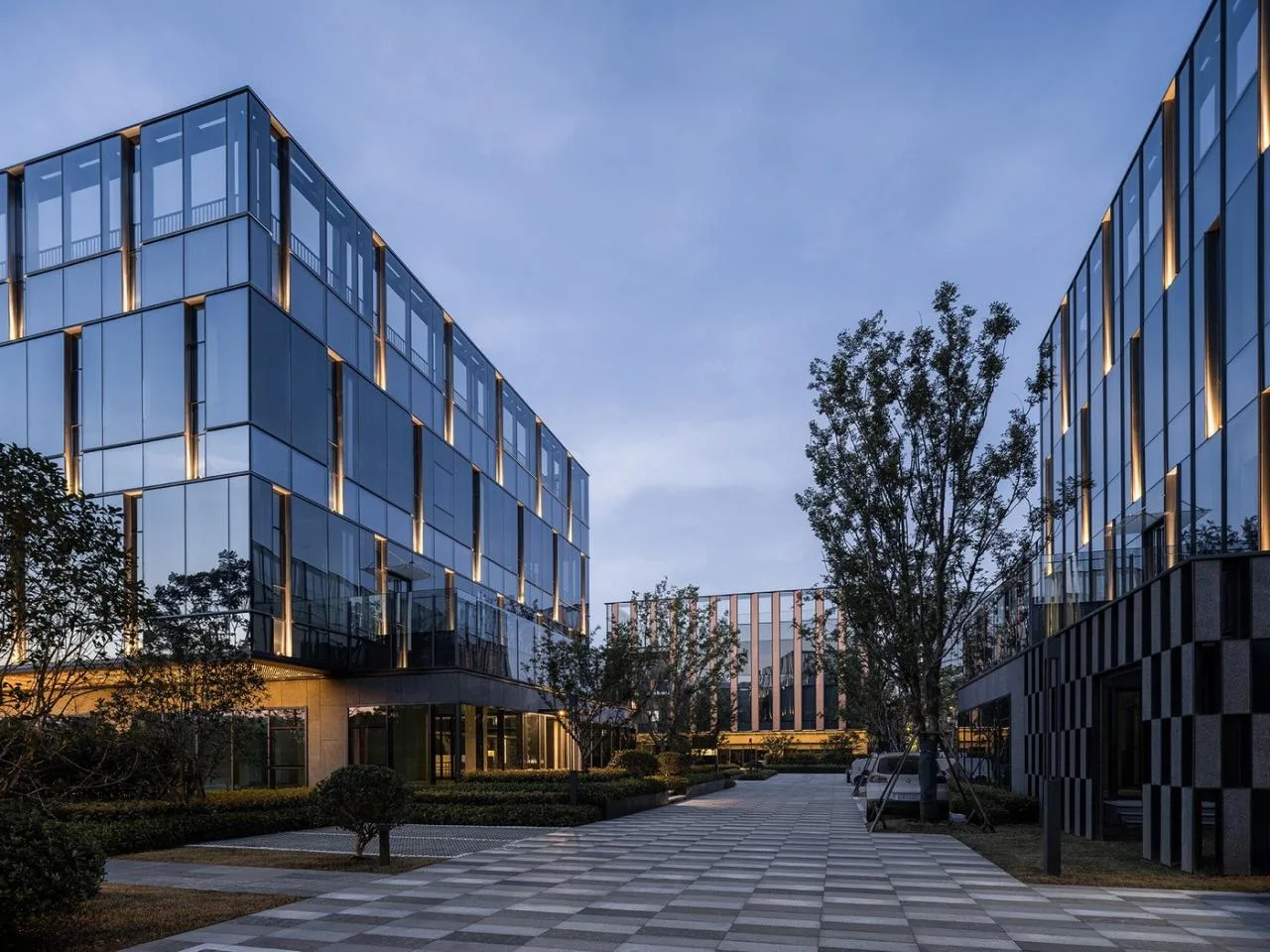
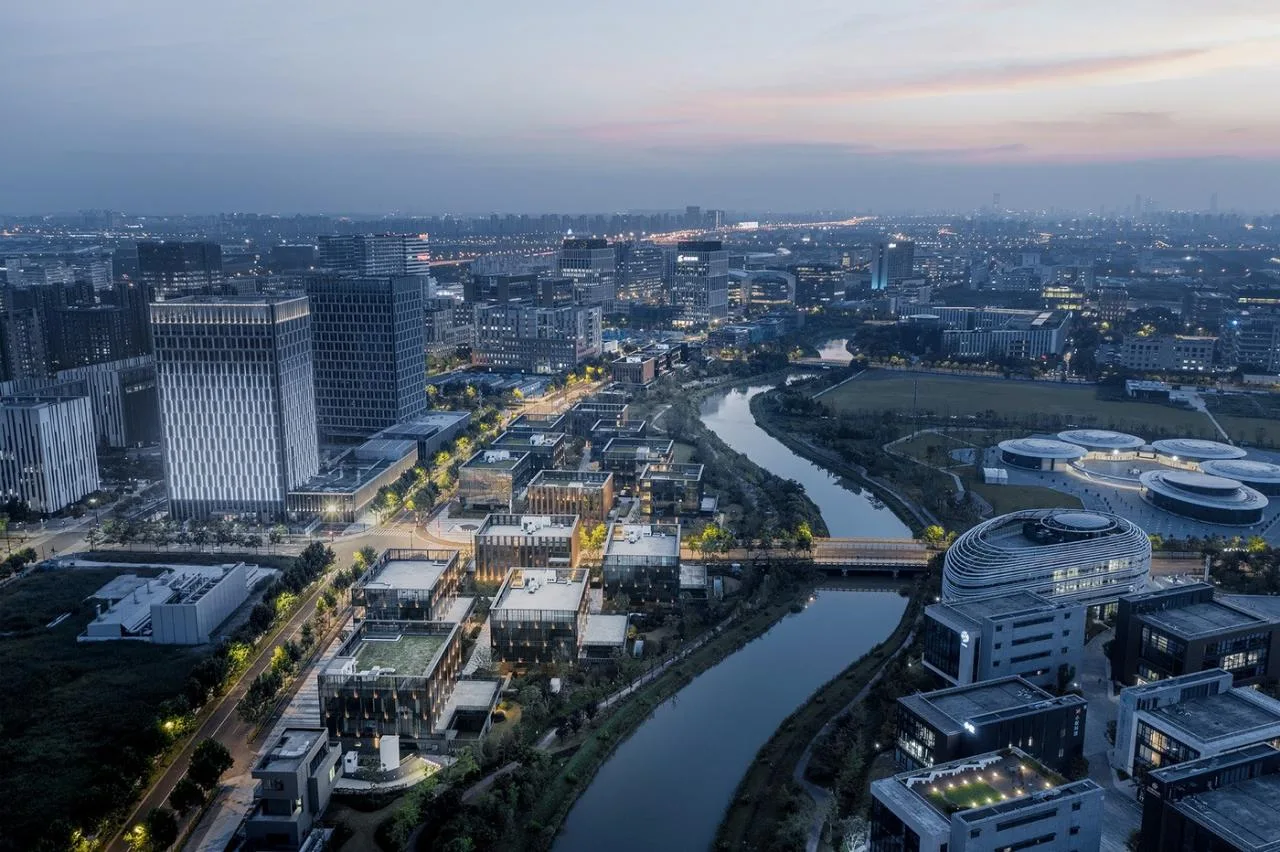
To tackle these challenges, we designed the AI Future Block, inspired by the settlement patterns in urban spatial layouts. The total building volume is segmented into 17 independent office units, each with its own courtyard. These units are thoughtfully dispersed, creating a sense of openness and order. The design strategically brings the waterfront landscape from the north into the heart of the site, ensuring that this natural resource is visually and physically accessible to the dense building clusters in the south. This innovative layout establishes the AI Future Block as a benchmark for Pudong’s neighborhood-style building clusters, pioneering a new approach to low-density landscaping within Zhangjiang Science City.
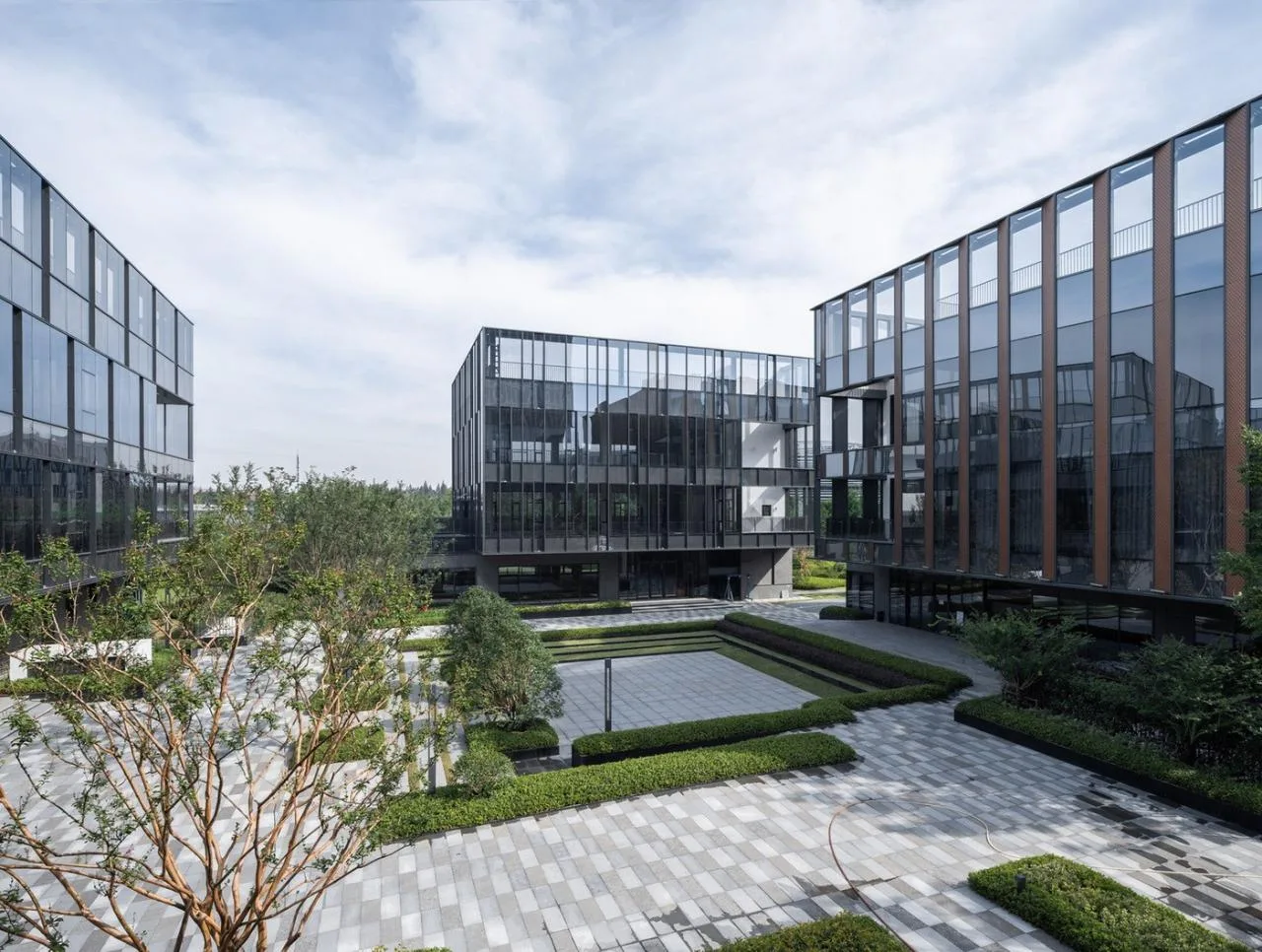
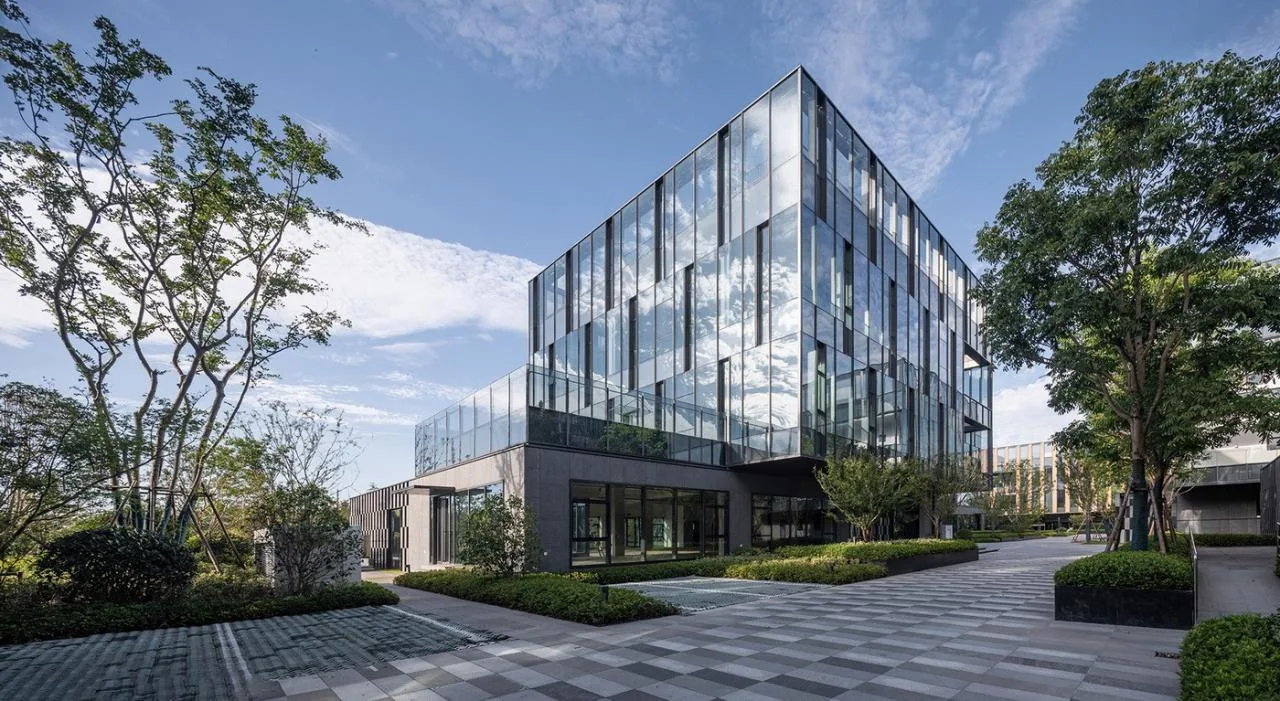
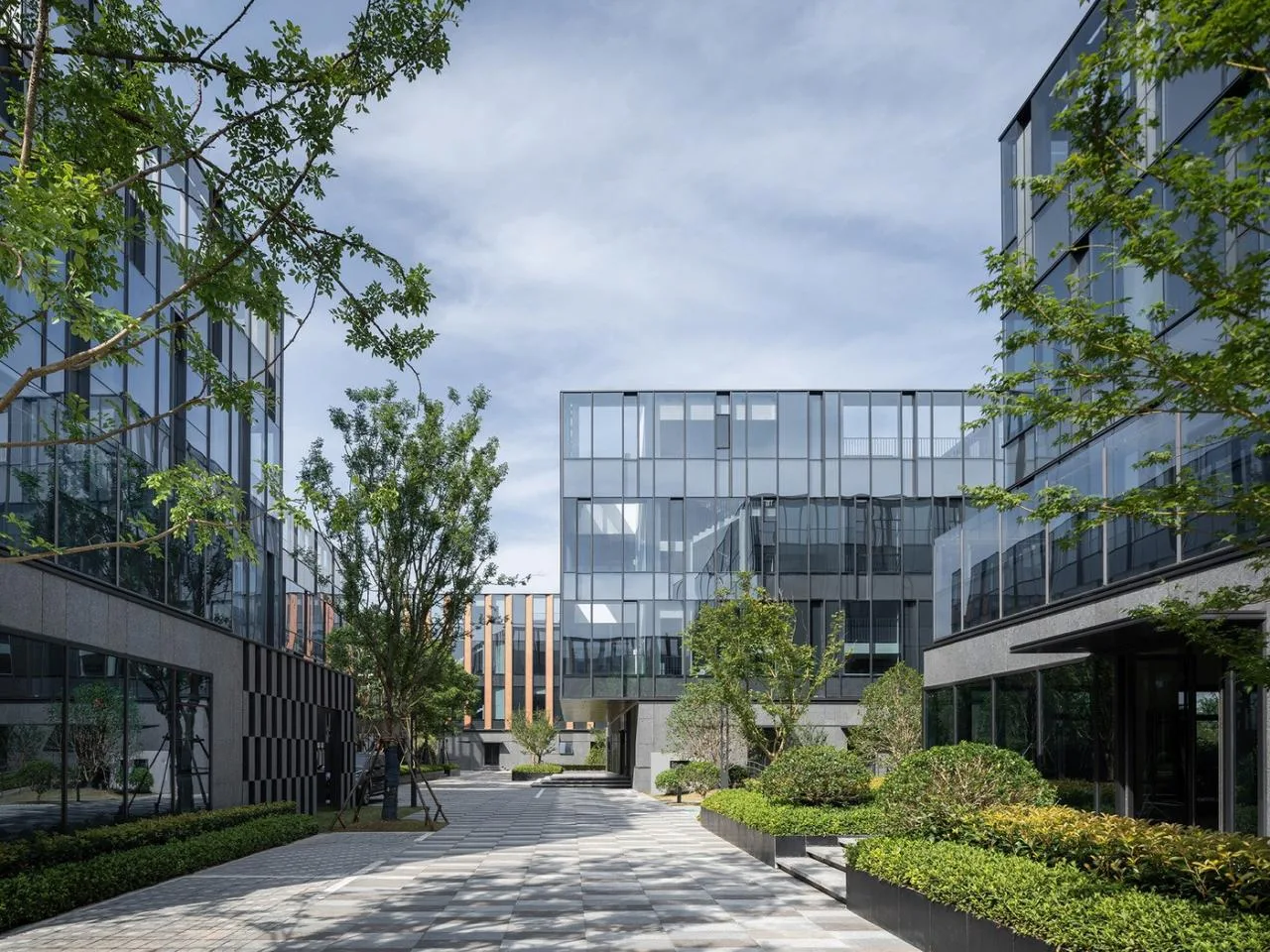
Additionally, we introduced the concept of “streets leading to gardens,” which integrates traditional Chinese garden landscapes into both the horizontal spaces between blocks and the vertical spaces within individual buildings.
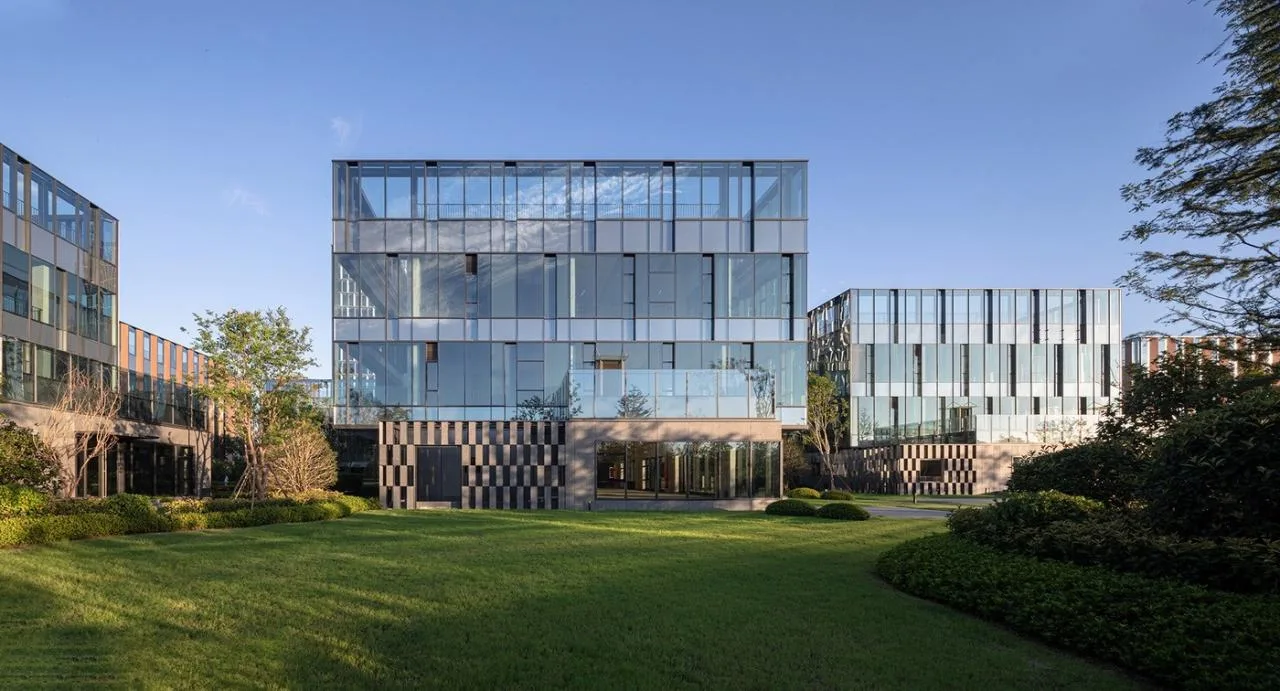
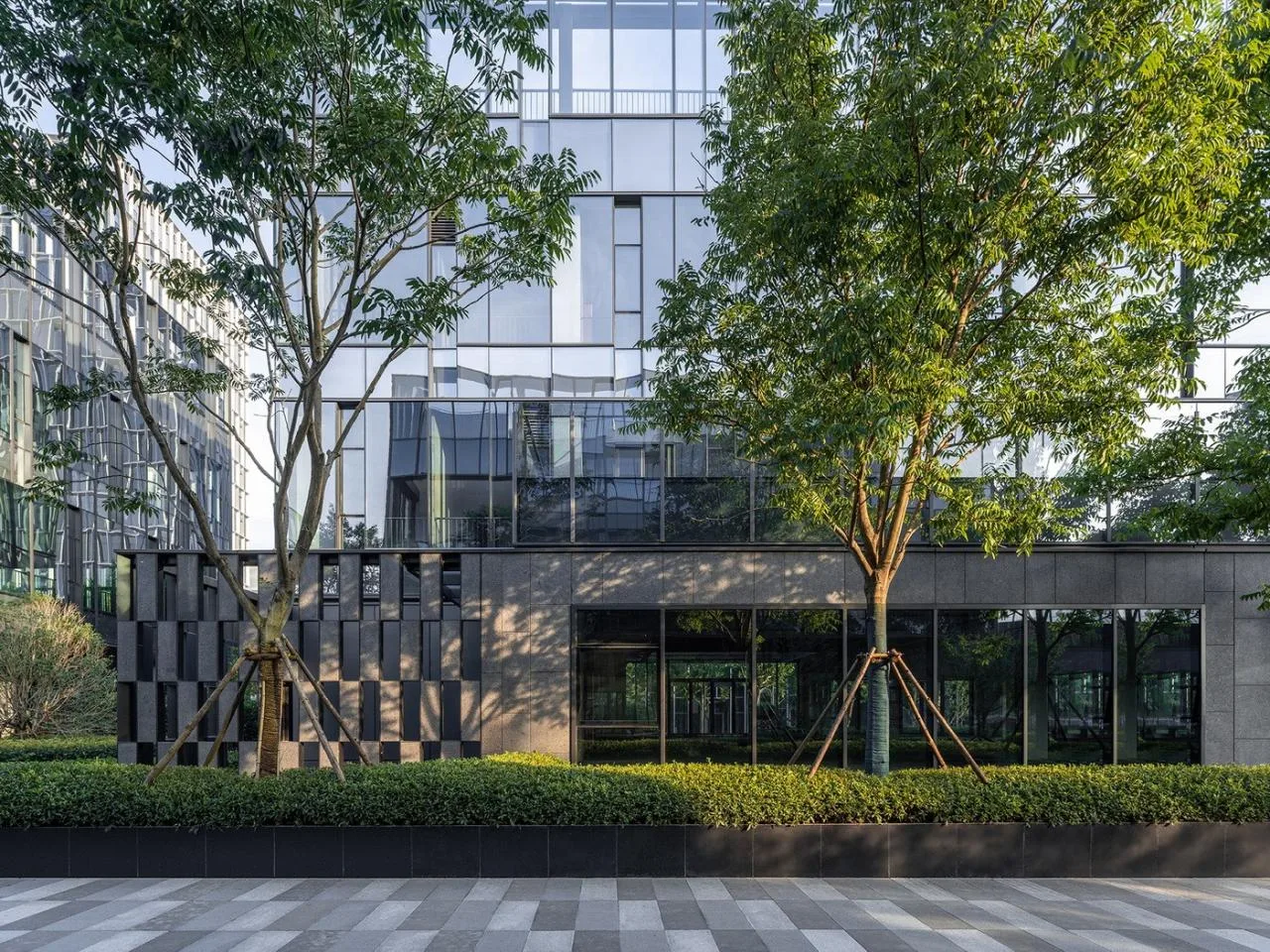
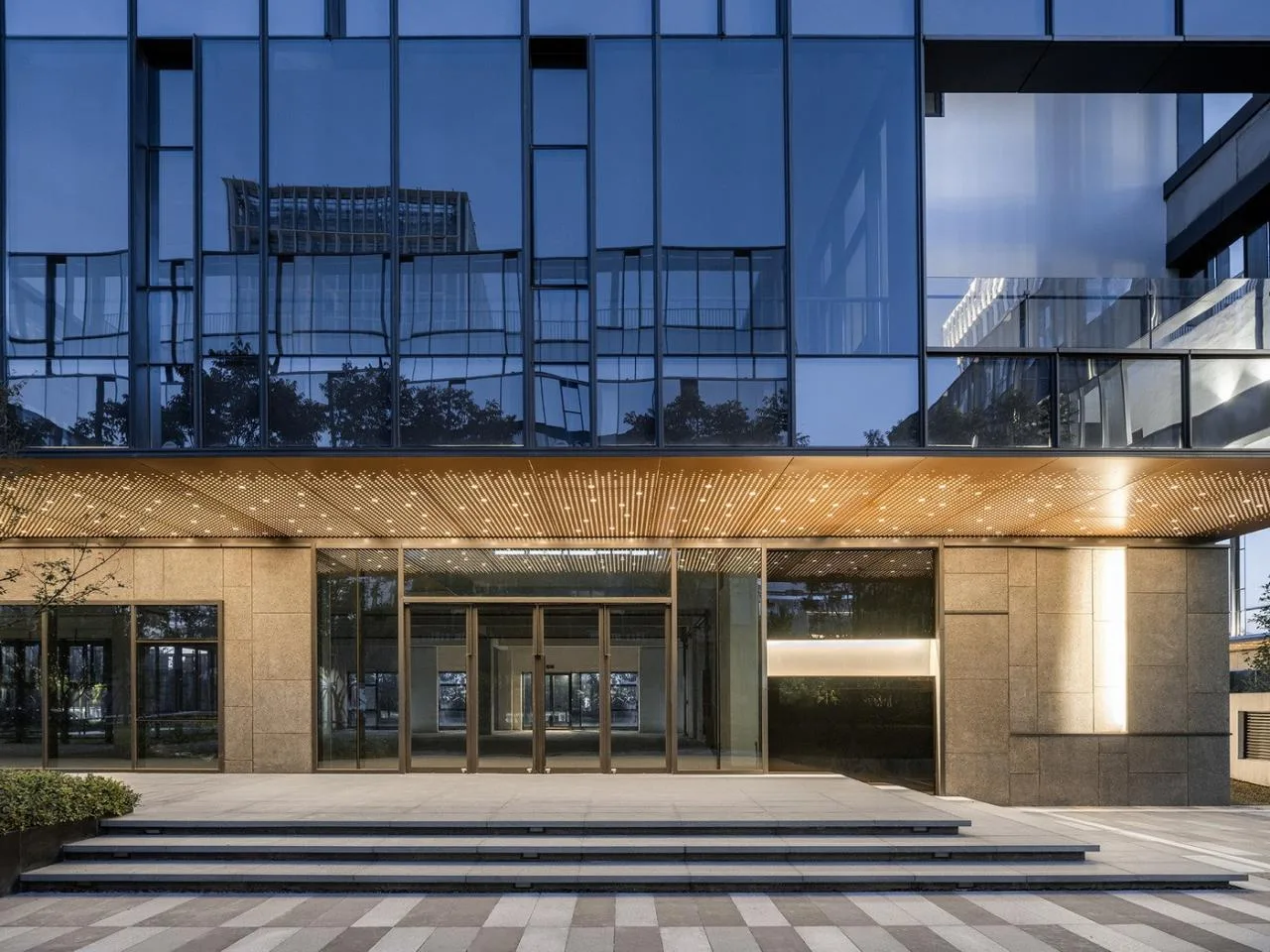
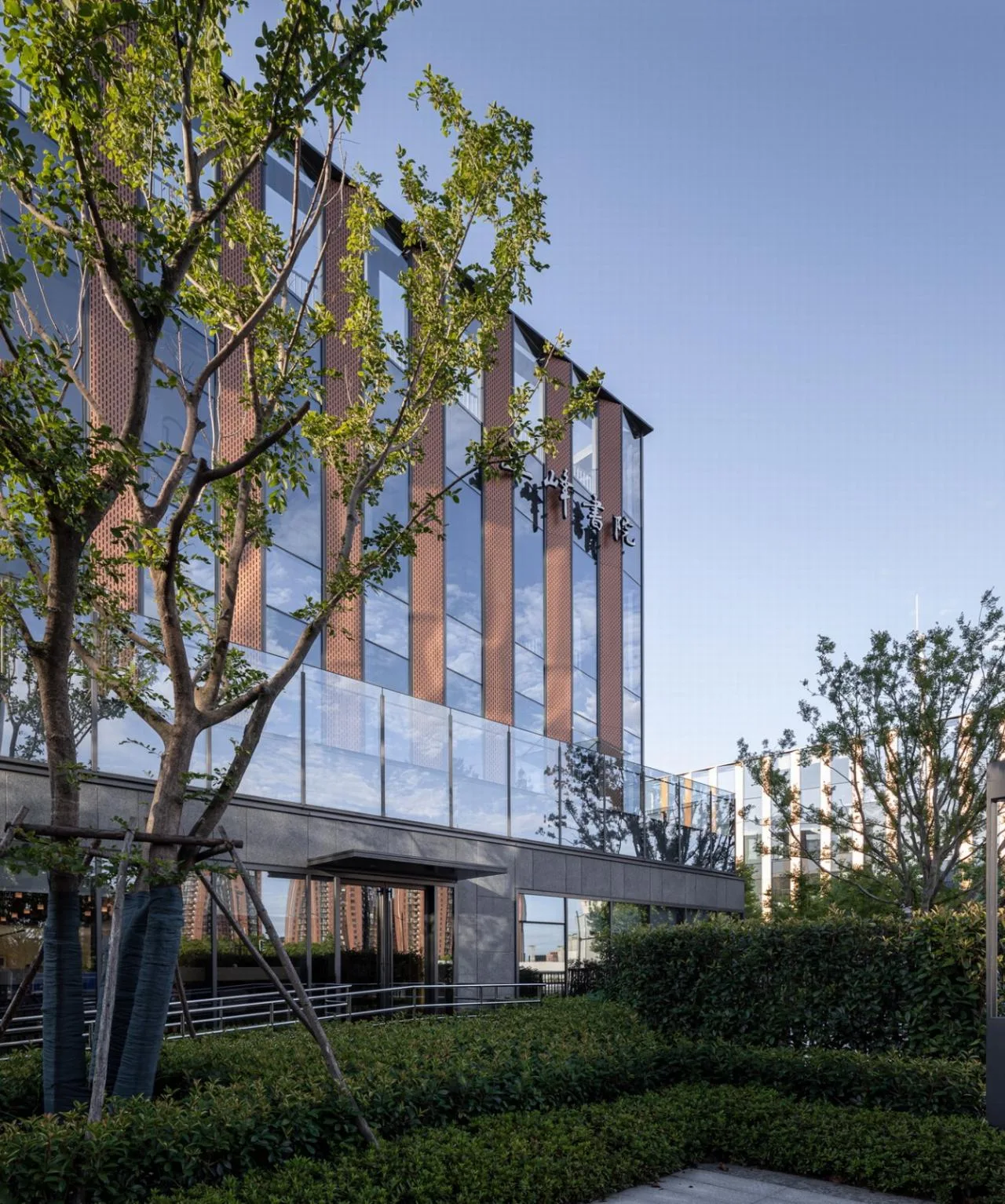
The largest outdoor courtyard features a substantial sunken plaza designed to host cultural and creative events. Each building also boasts a private courtyard at its entrance, enhancing the sense of privacy and identity.
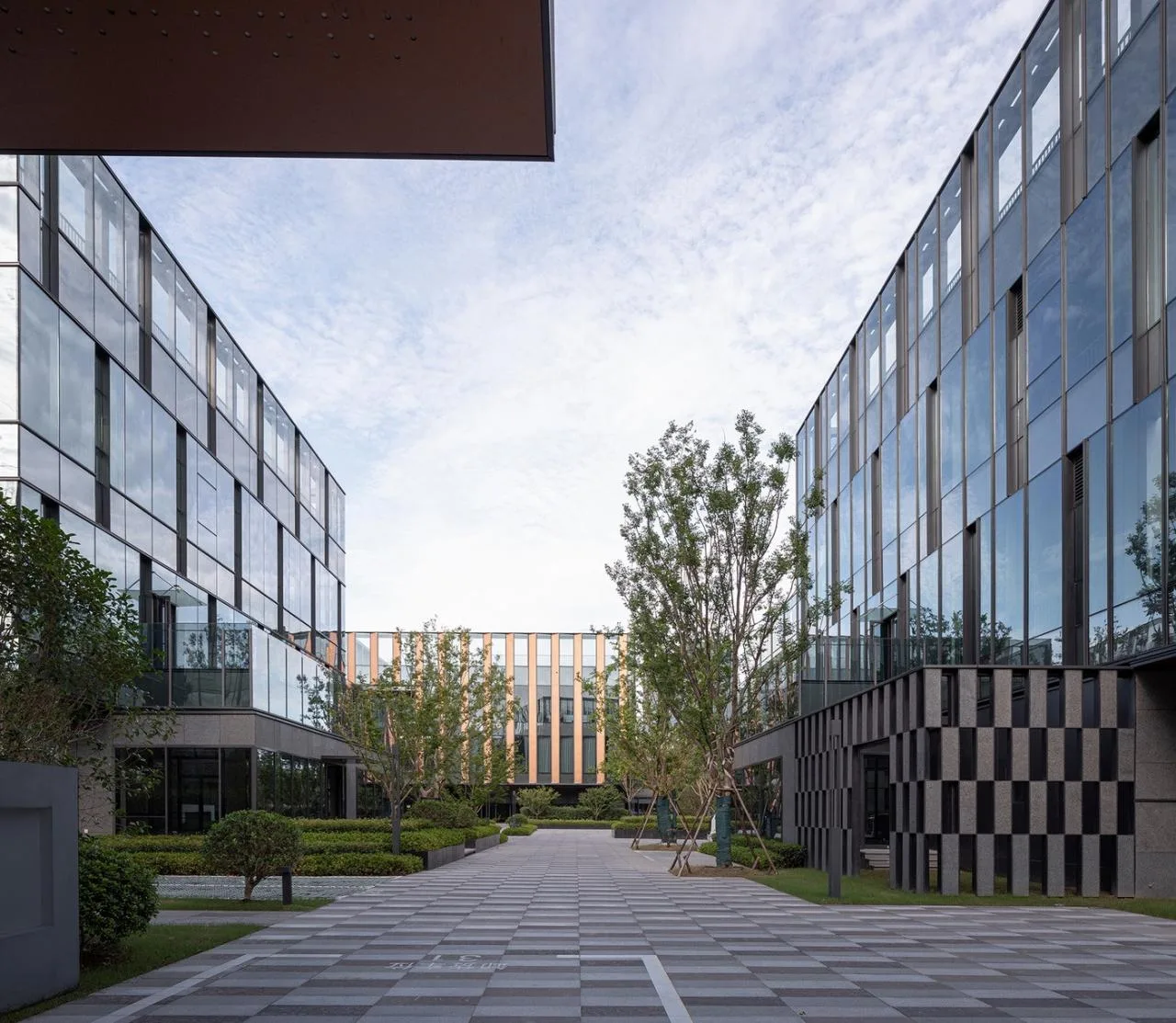
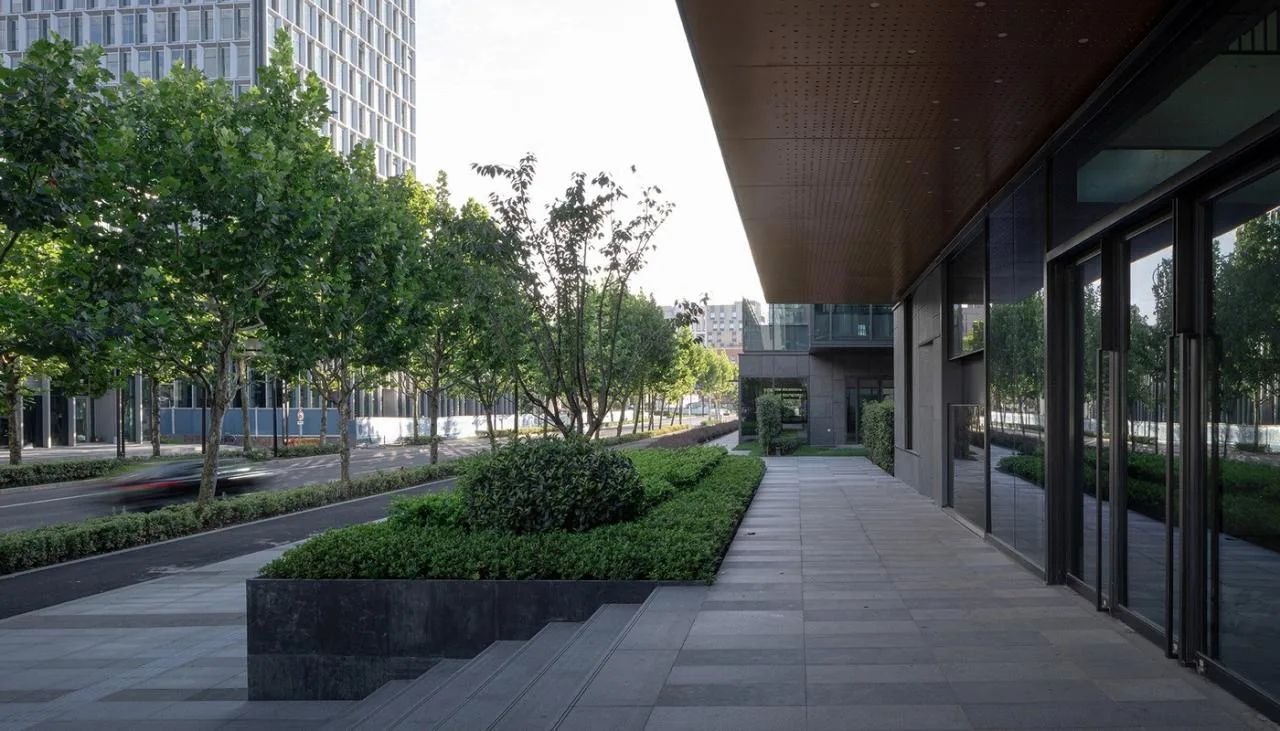
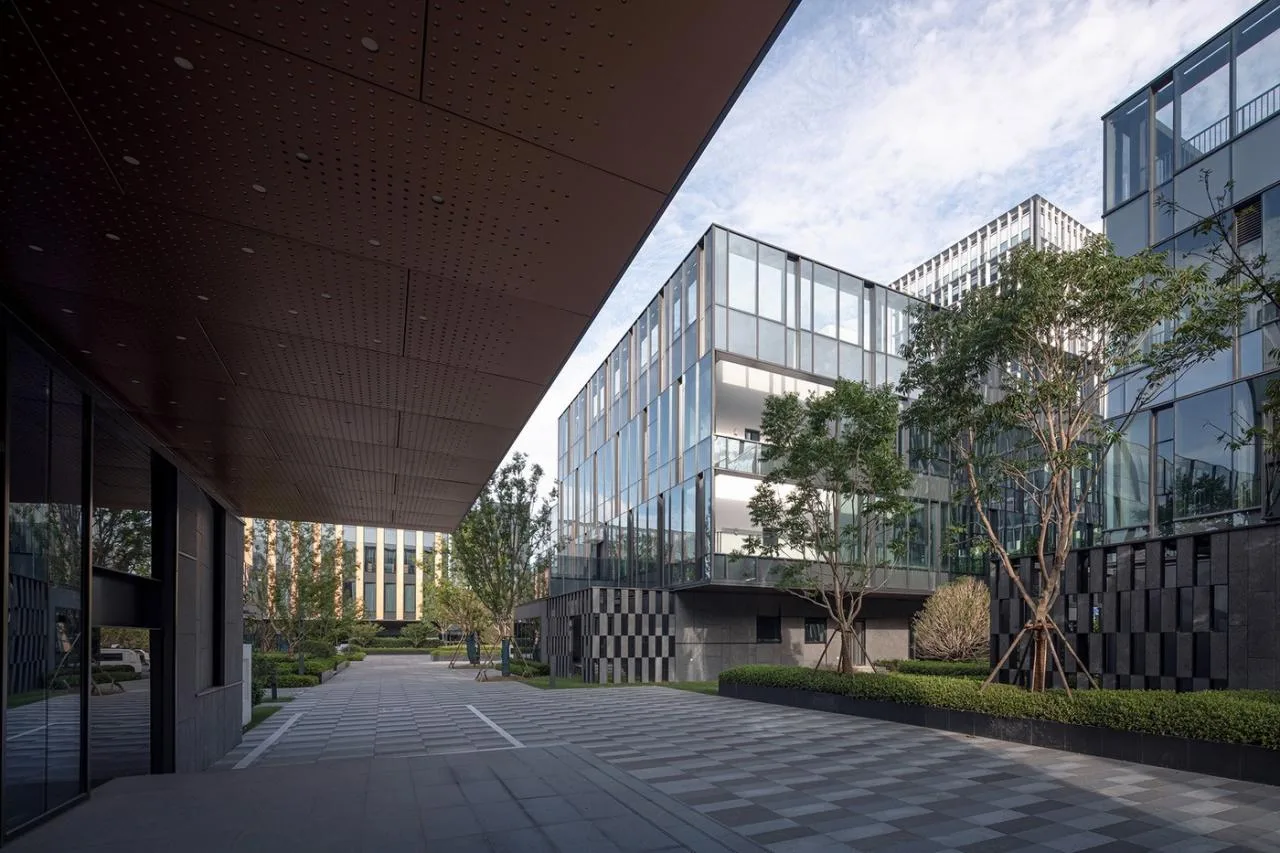
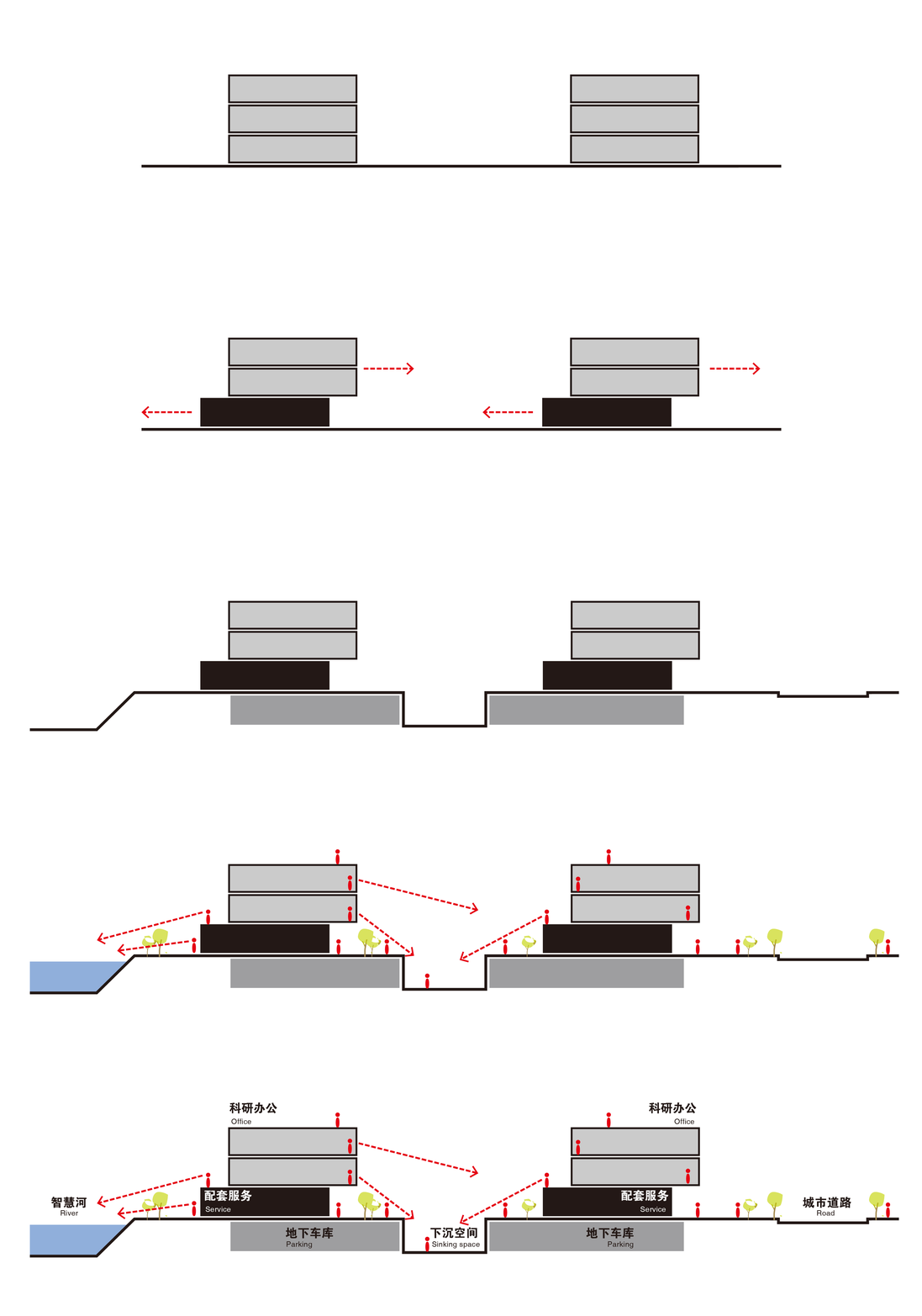
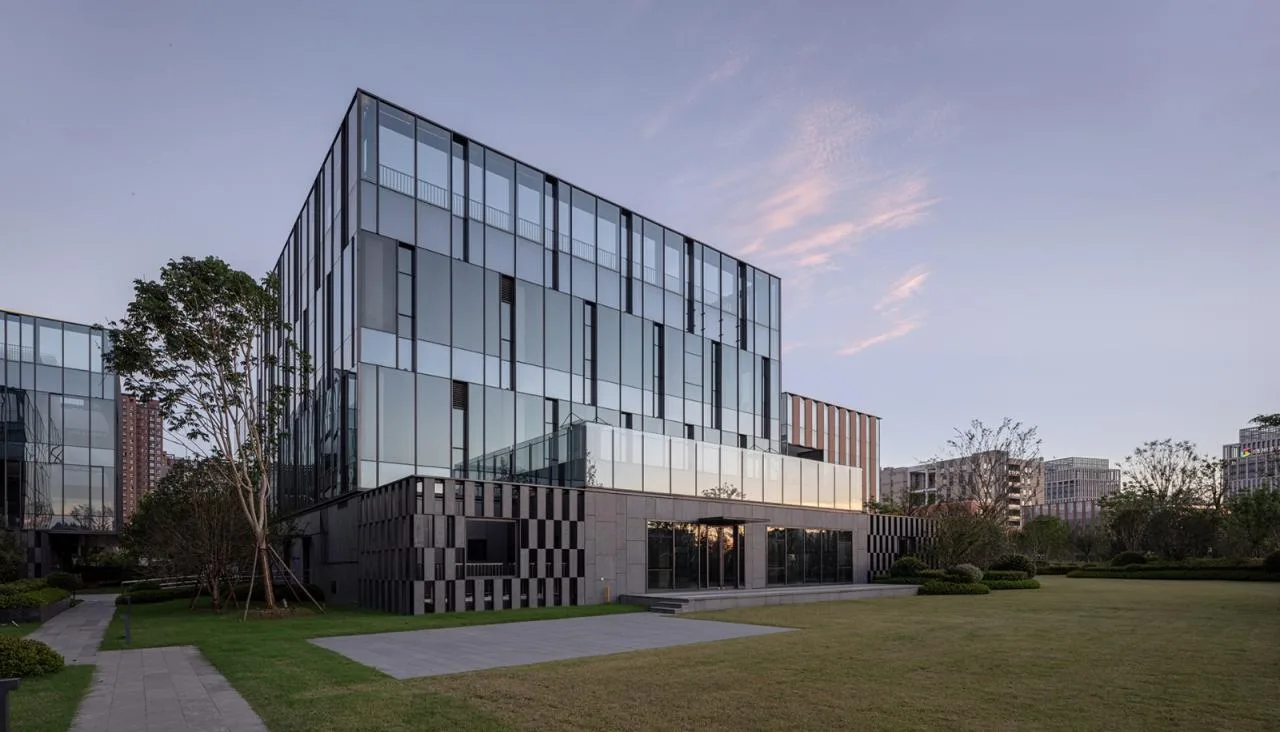
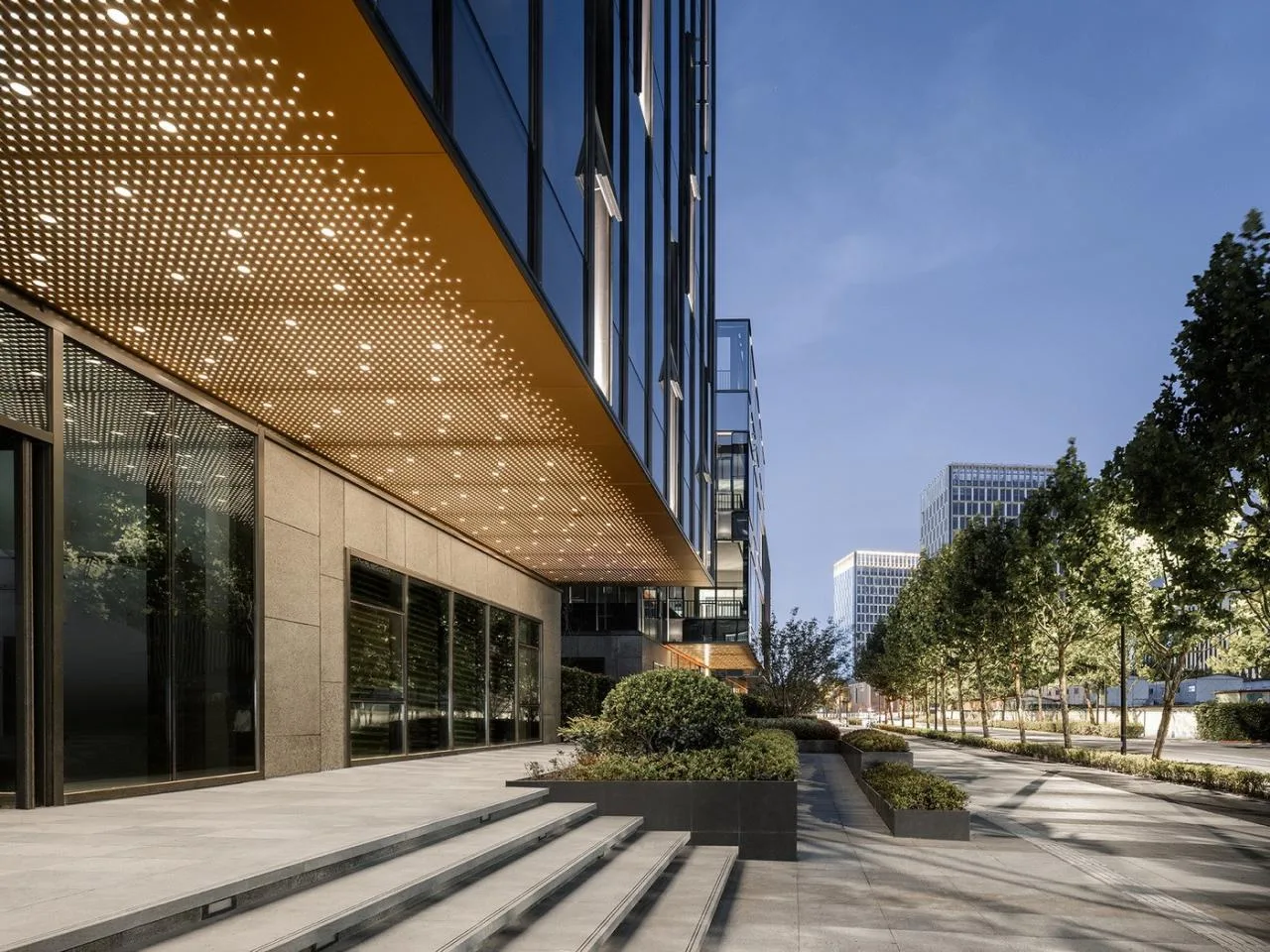
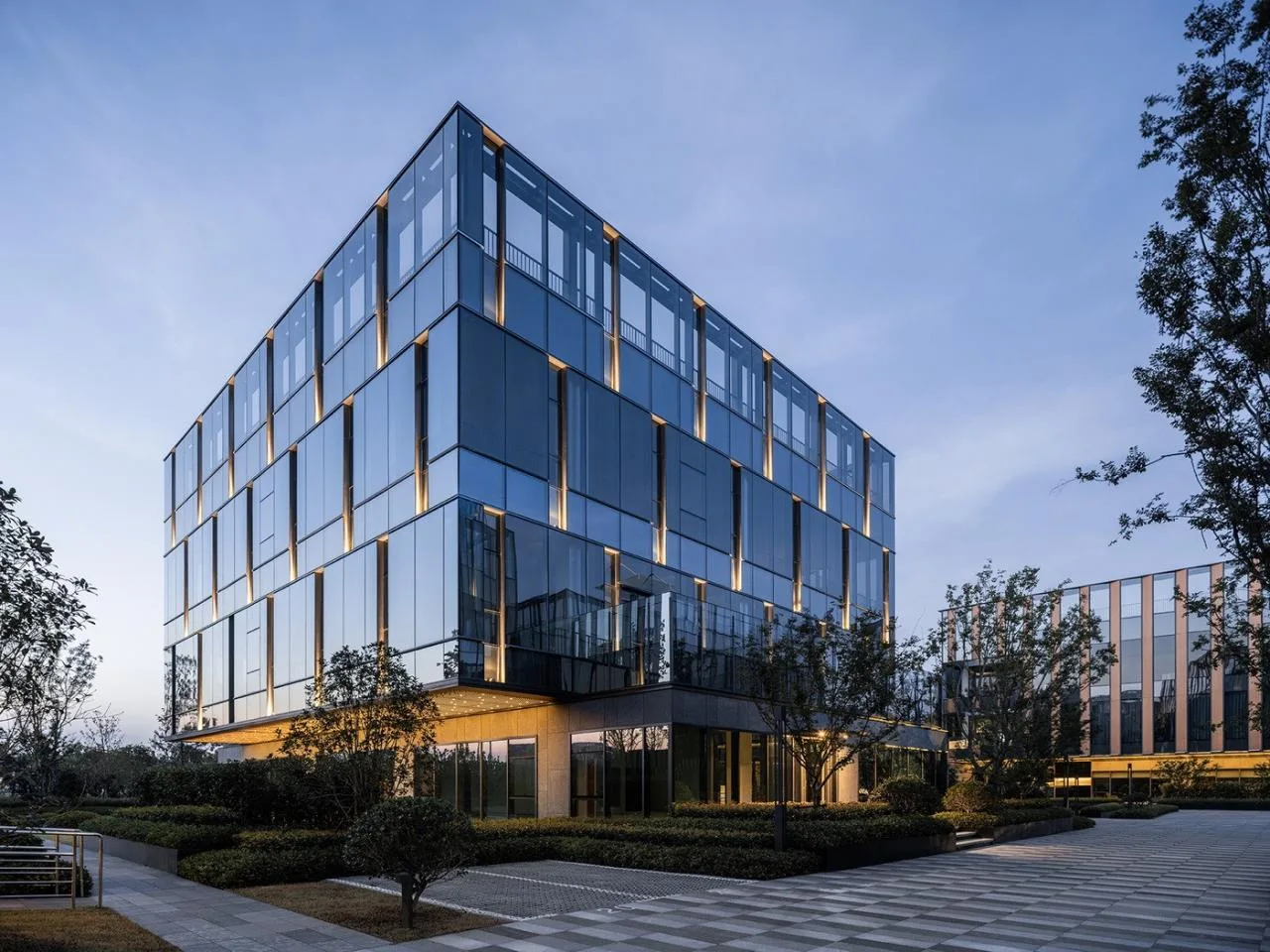
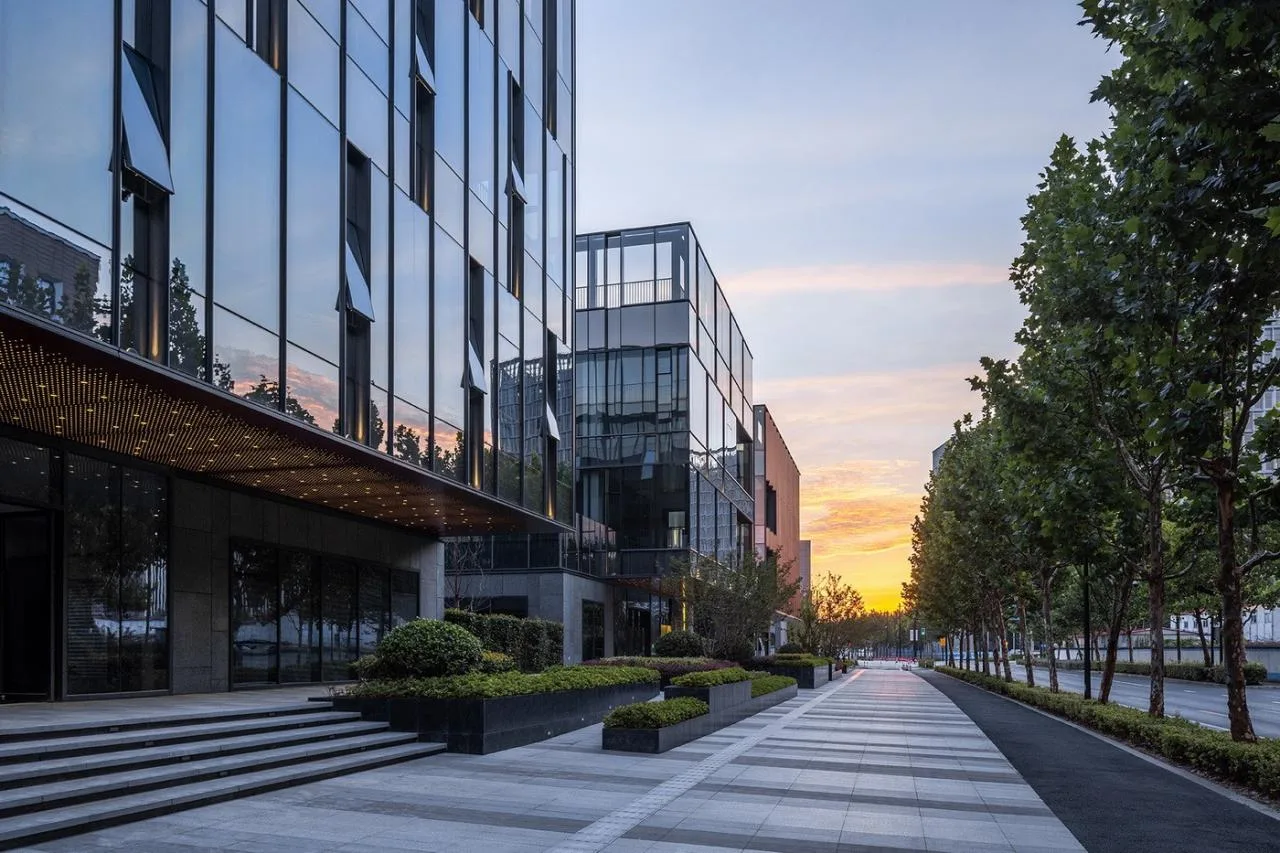
Architecturally, the building volumes are horizontally displaced between upper and lower sections. This design creates a rooftop terrace overlooking the Smart River landscape to the north, and a cantilevered semi-public space facing Haike Road to the south. The interplay between these spaces and the adjacent sunken courtyards forms a dynamic three-dimensional courtyard experience.
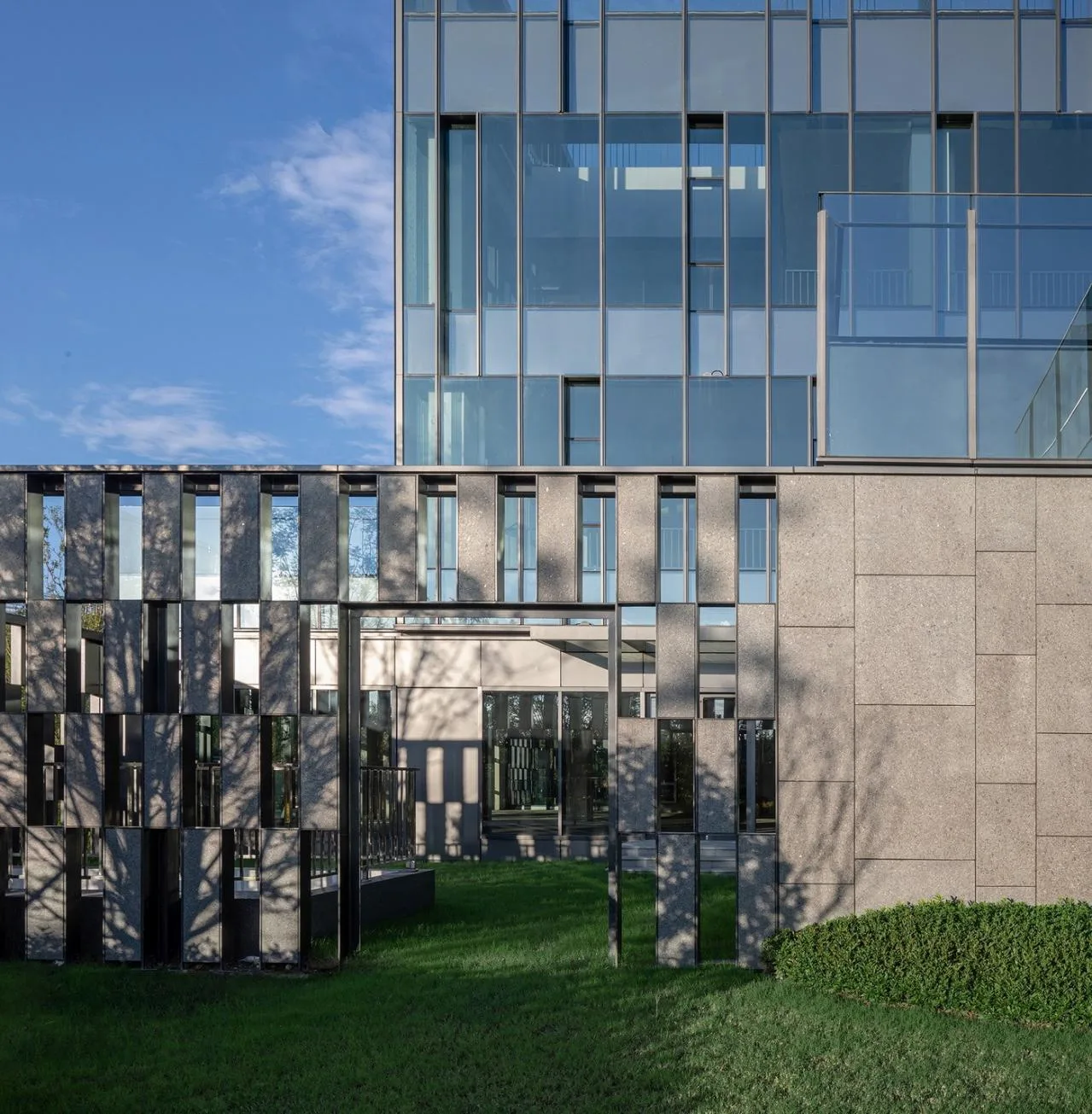
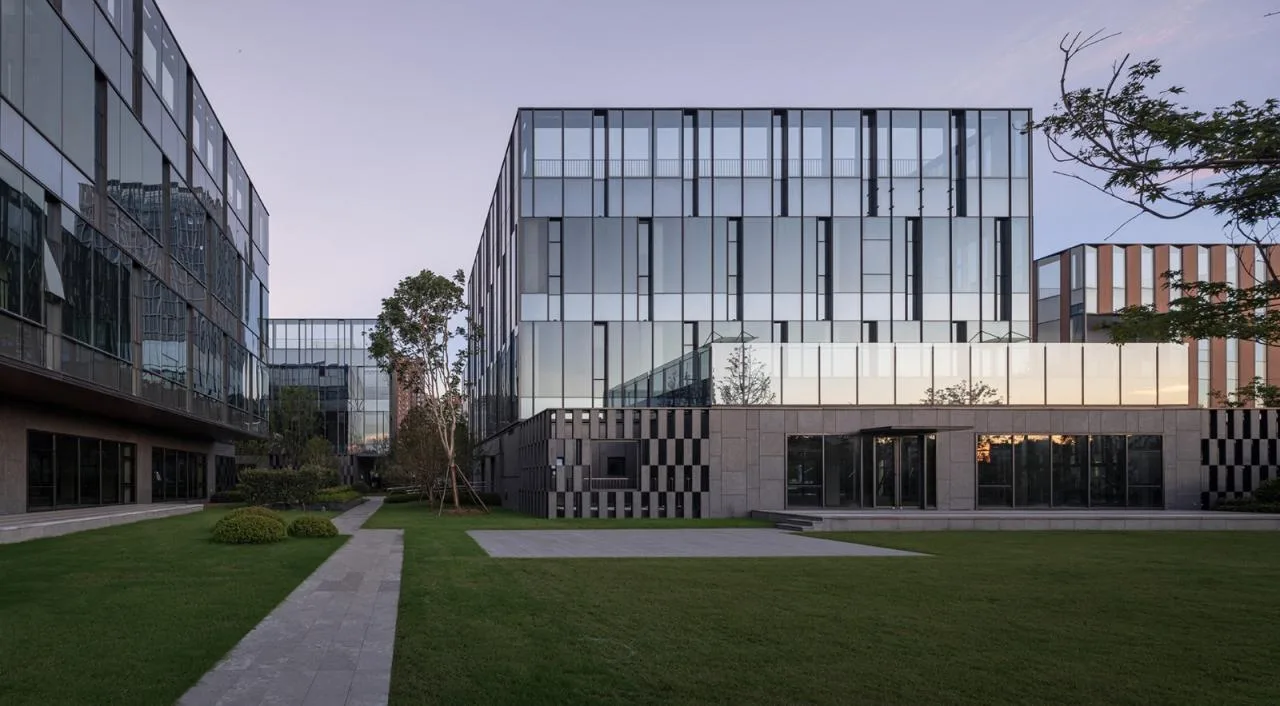
The first floor features a solid facade and landscaping both crafted from the same black stone, merging wall and ground into a unified, sturdy “base” for the park. This strengthens the continuity and flow throughout the entire block—from the street to the public square inside.
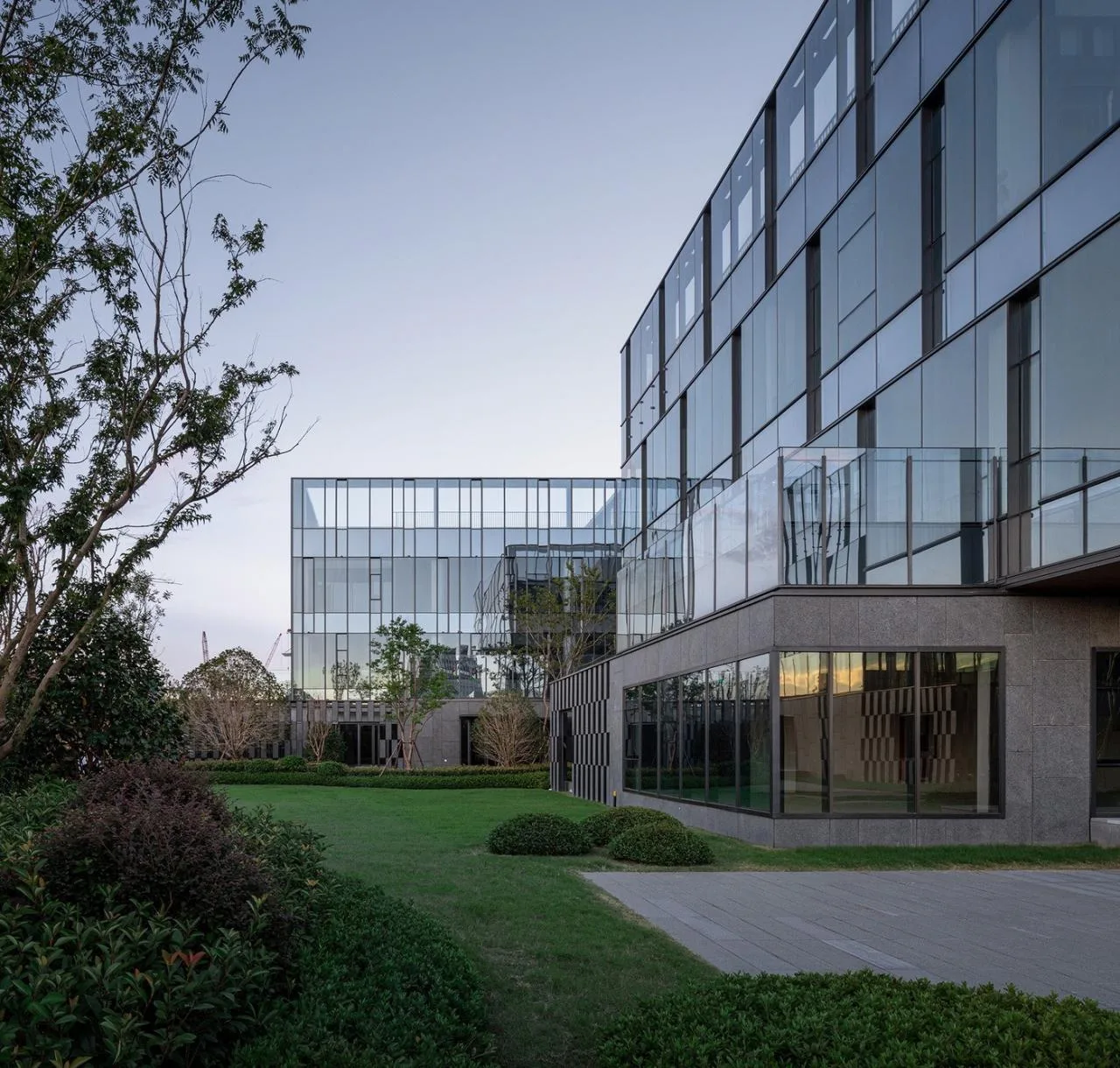
Above the second floor, a glass curtain wall encloses the volume, appearing to float and shift in response to the street layout, offering a light and transparent presence.
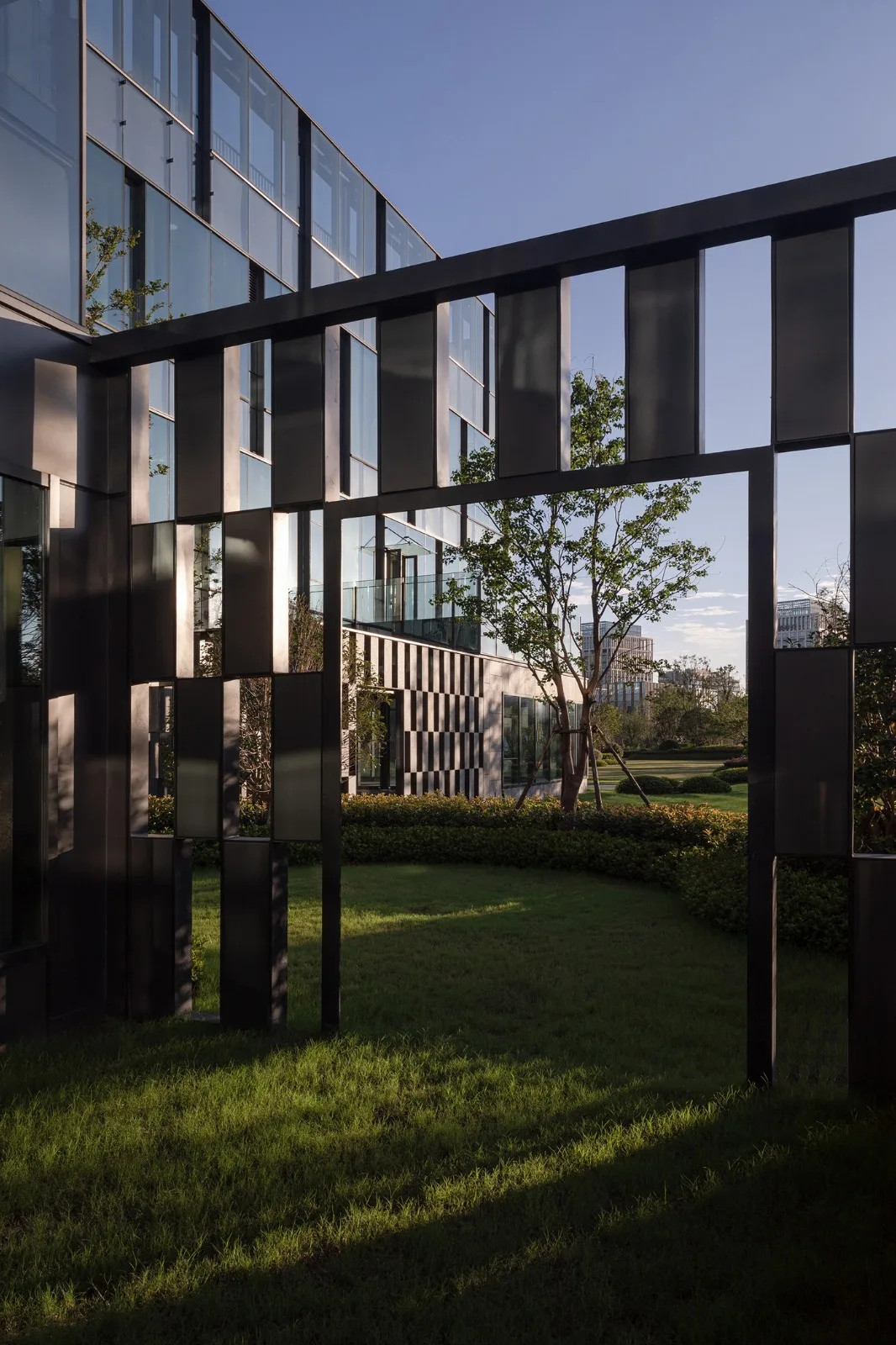
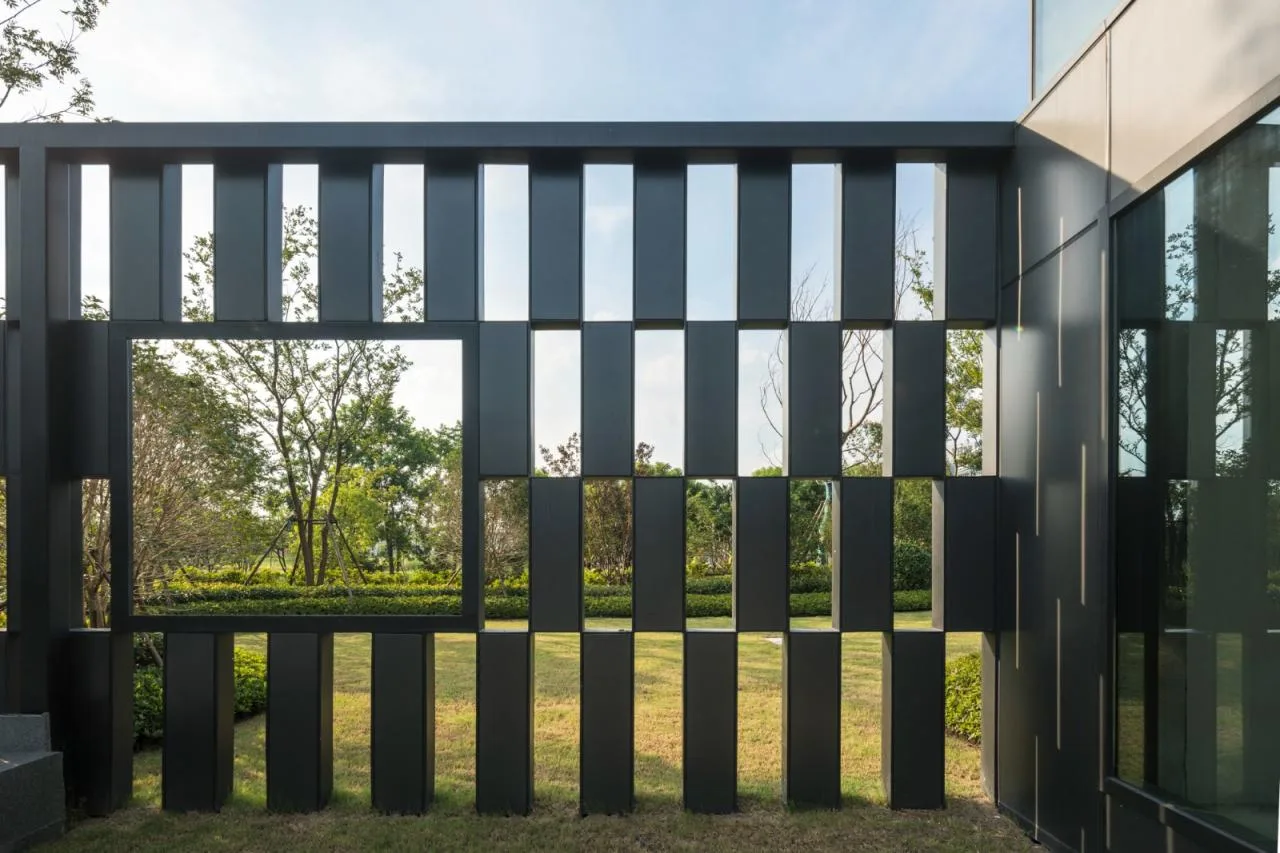
The hollow walls feature door and window openings that create dynamic visual interactions and intriguing spatial layers. To achieve a lightweight and transparent effect, the stone panels are embedded within 15 thick grid-shaped steel plates. This structural approach cleverly conceals the true support system, resulting in a delicate, curtain-like facade.
Project Drawings
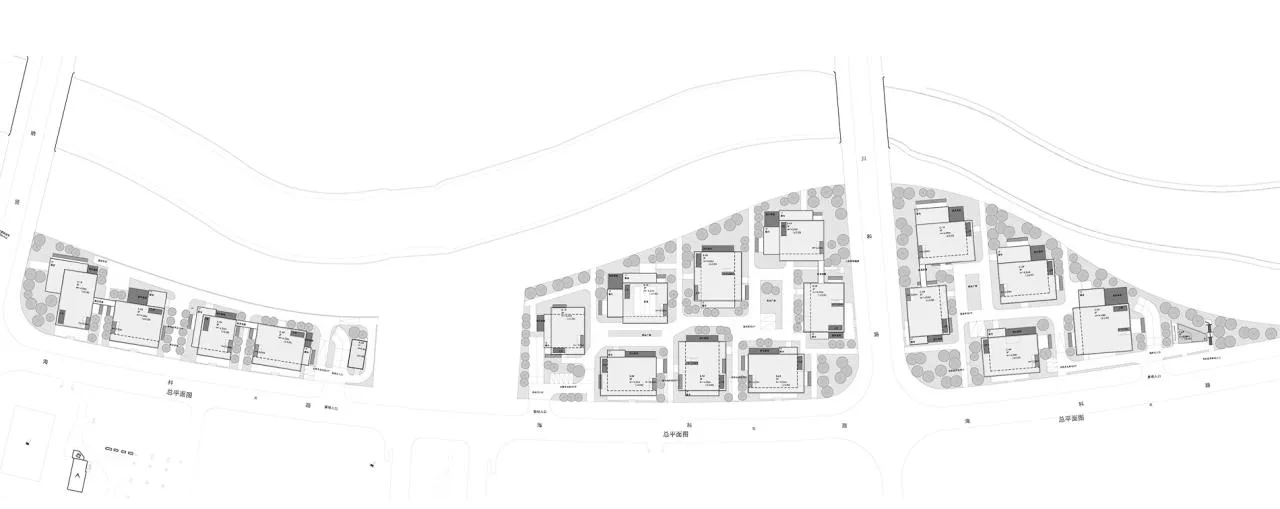
△ General Layout Plan
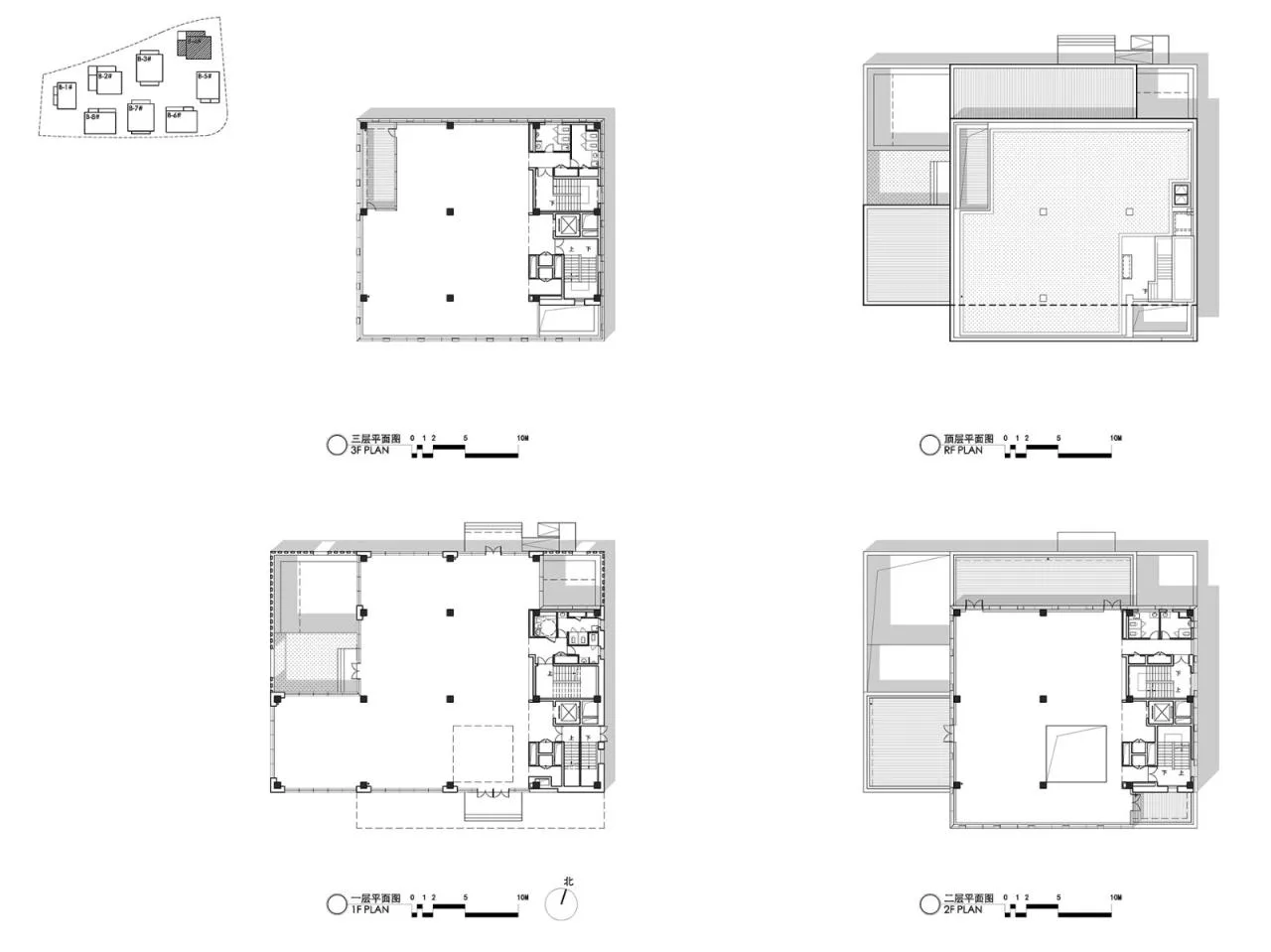
△ Plan View
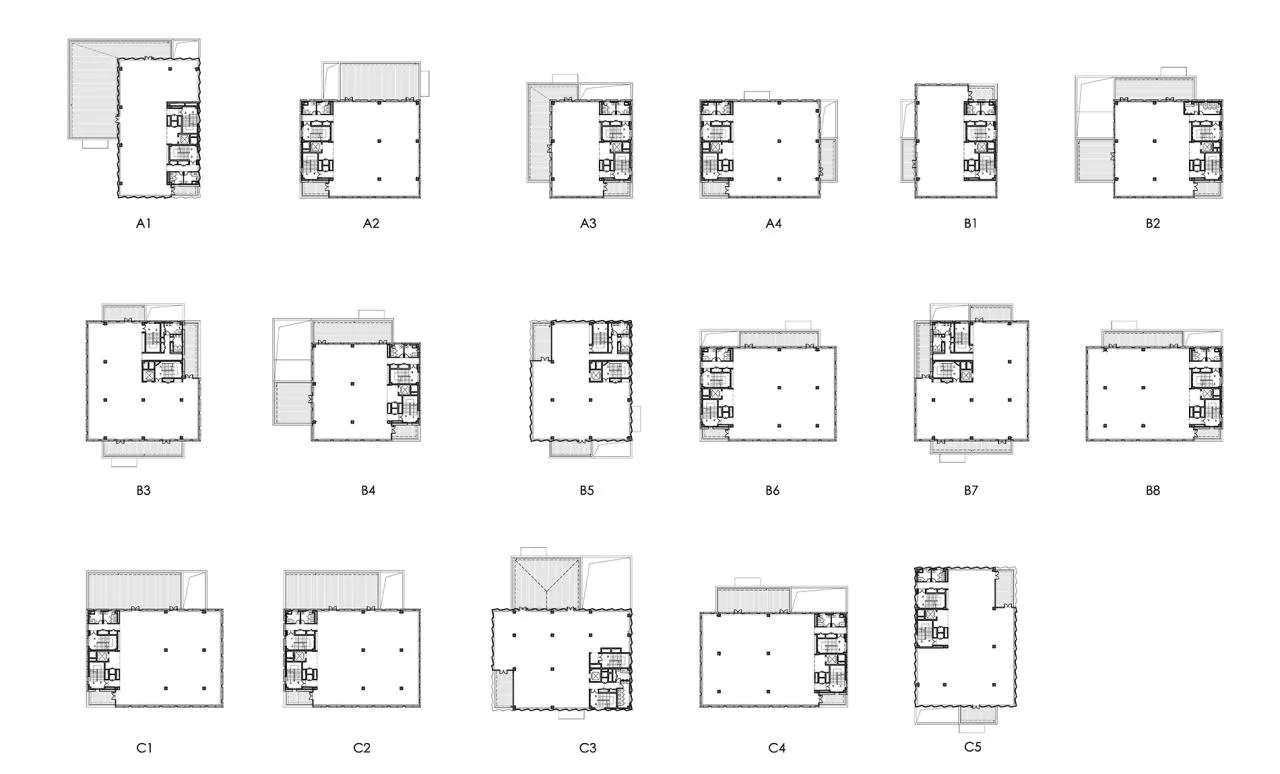
△ Floor Plan
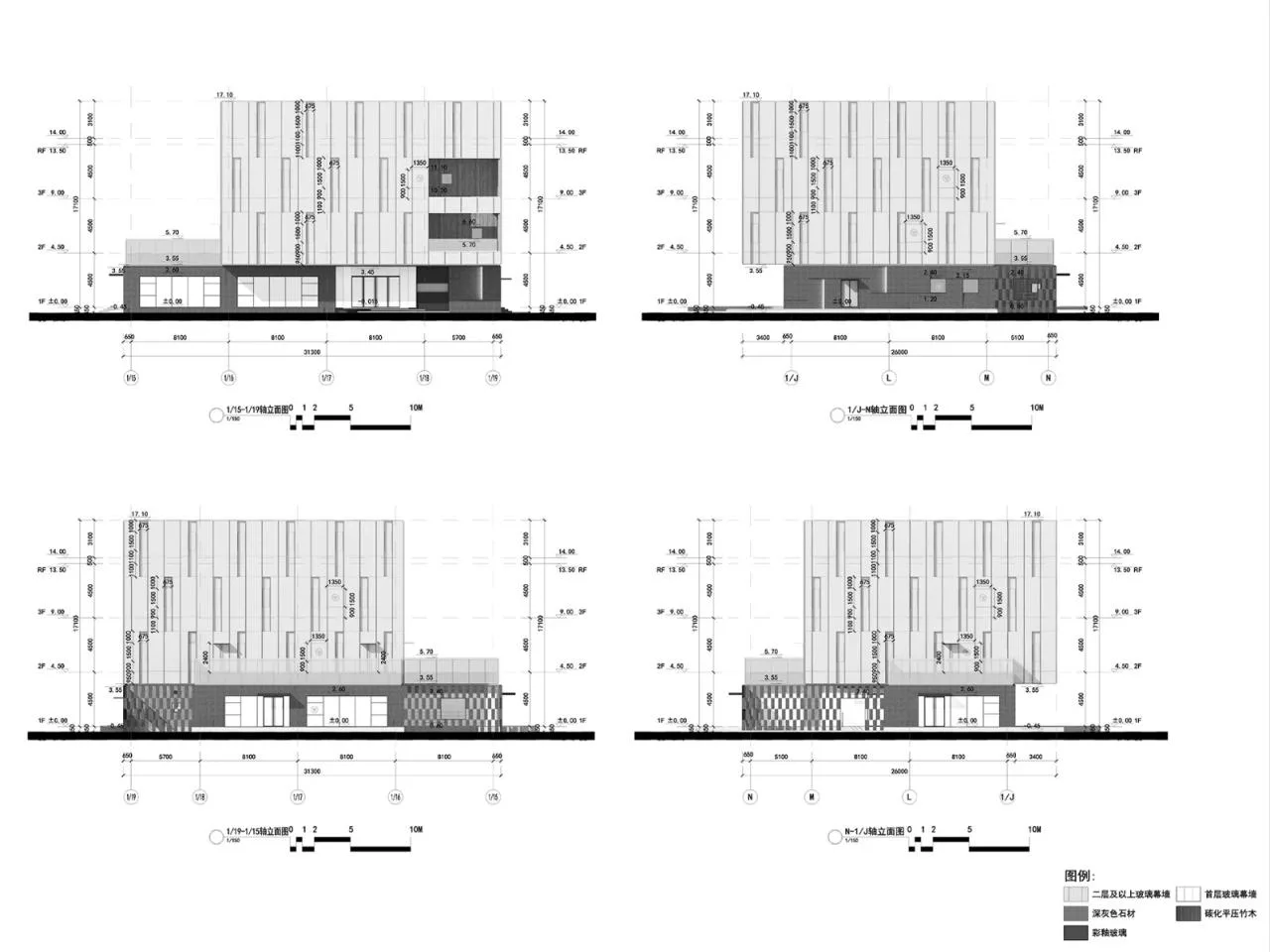
△ Elevation Drawing
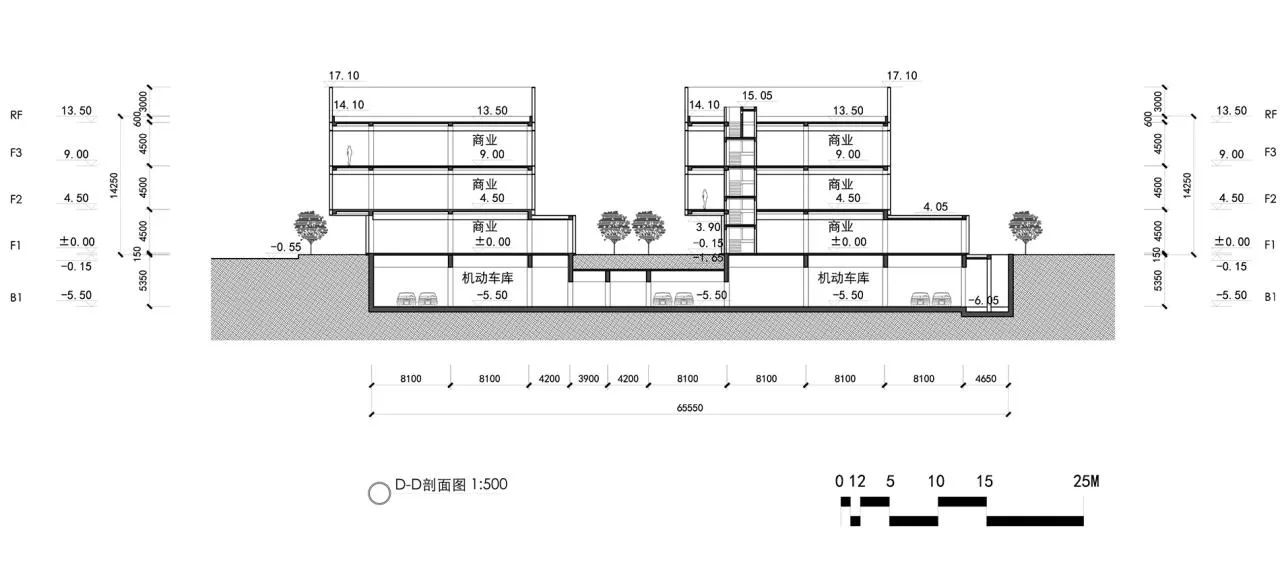
△ Section Diagram
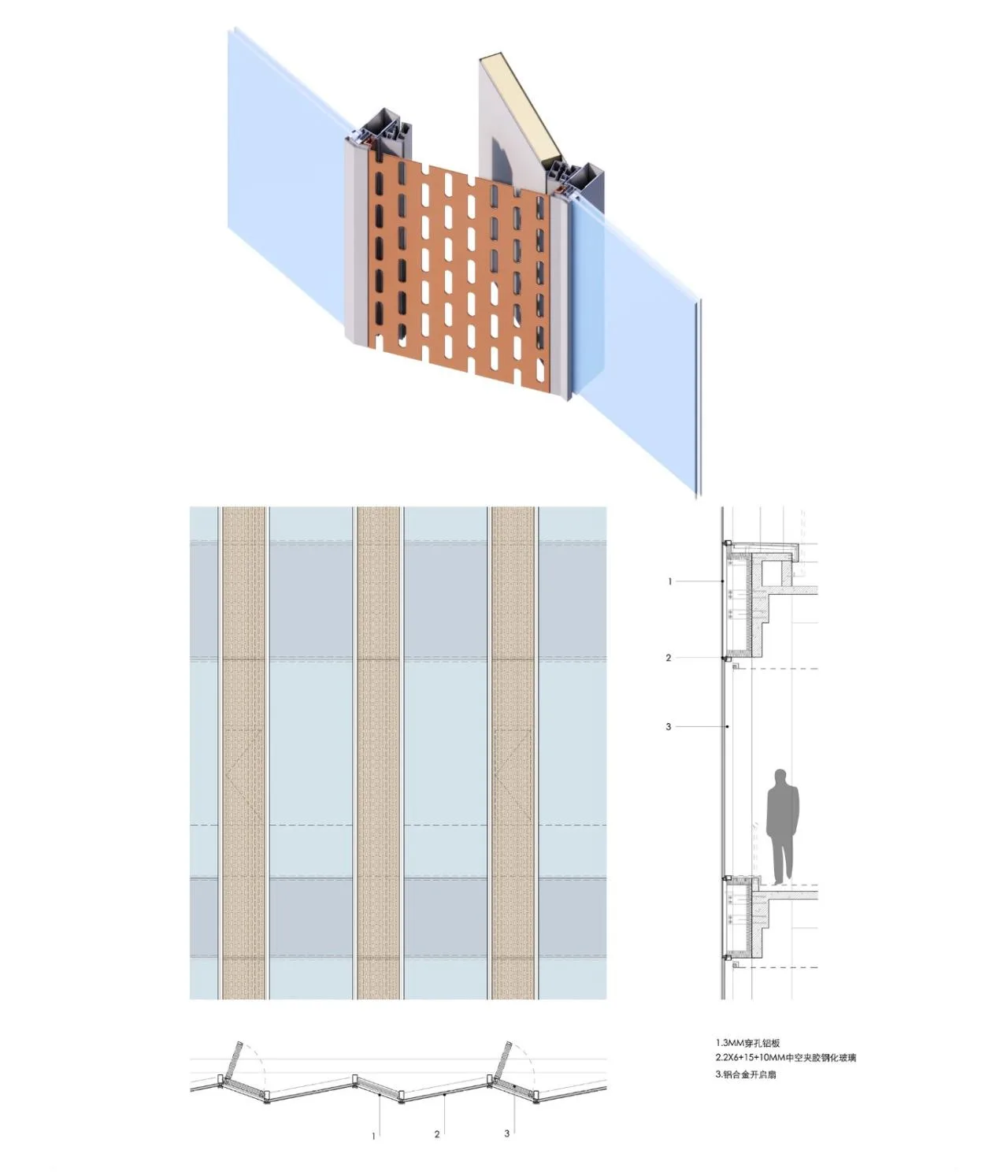
△ Detailed Structural Drawing
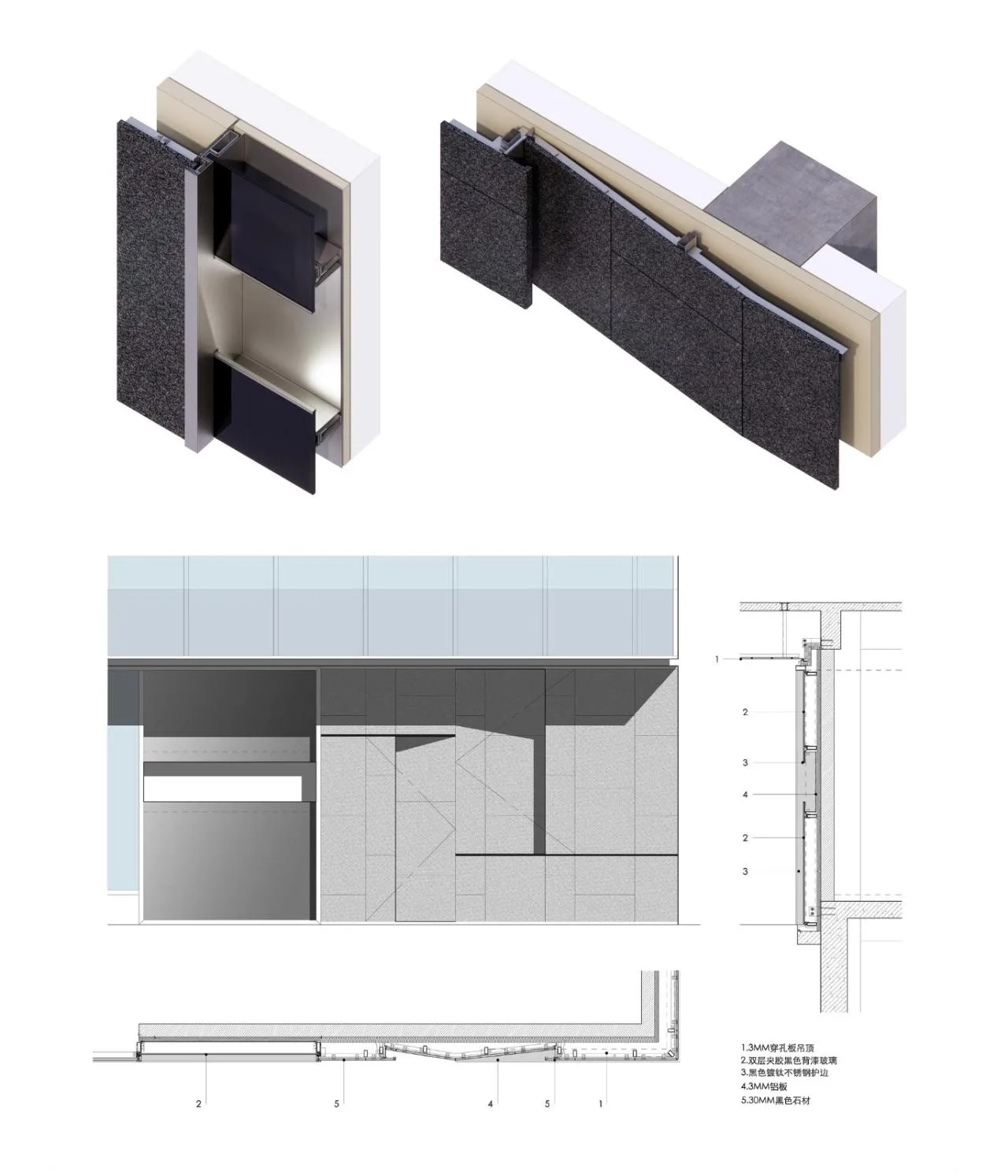
△ Detailed Structural Drawing
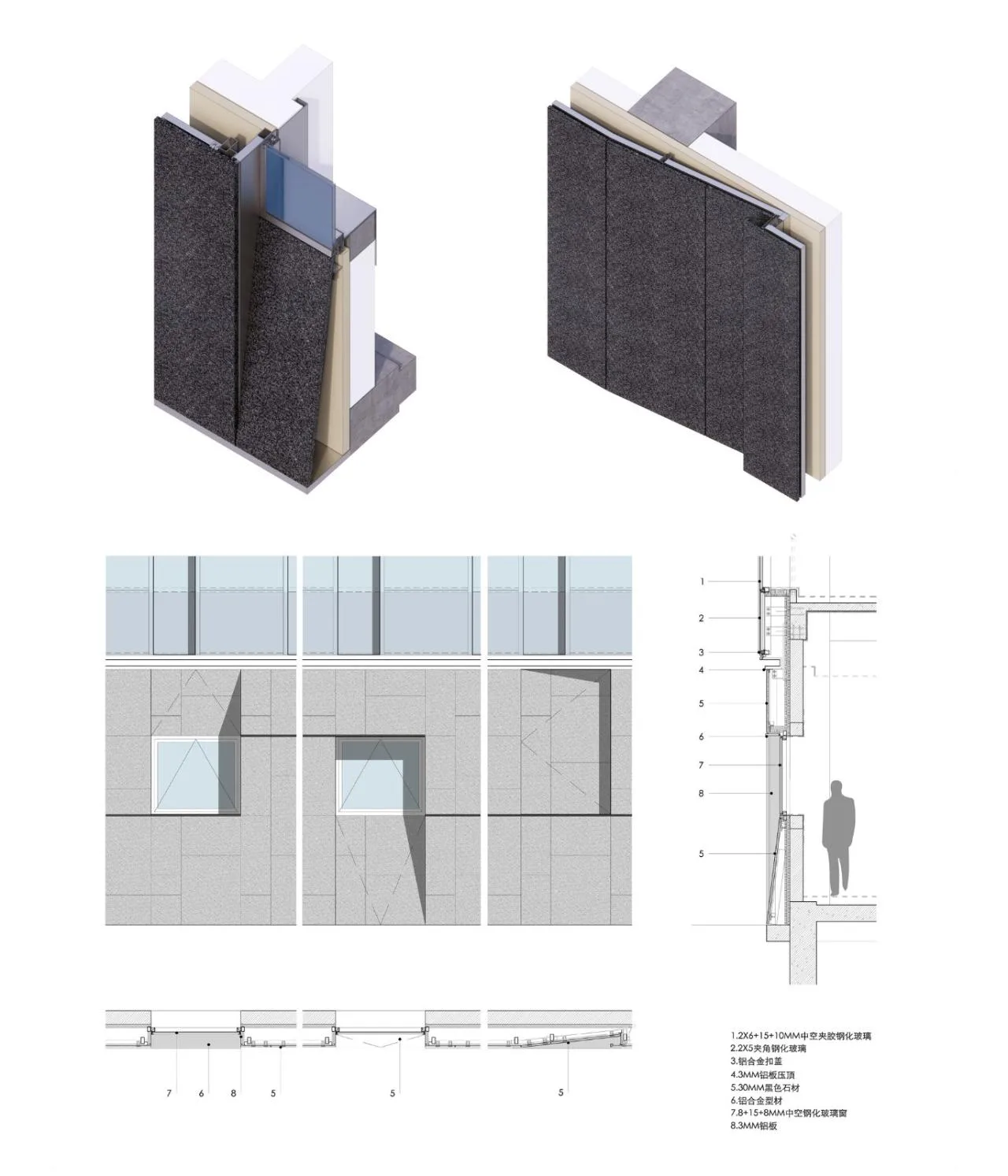
△ Detailed Structural Drawing
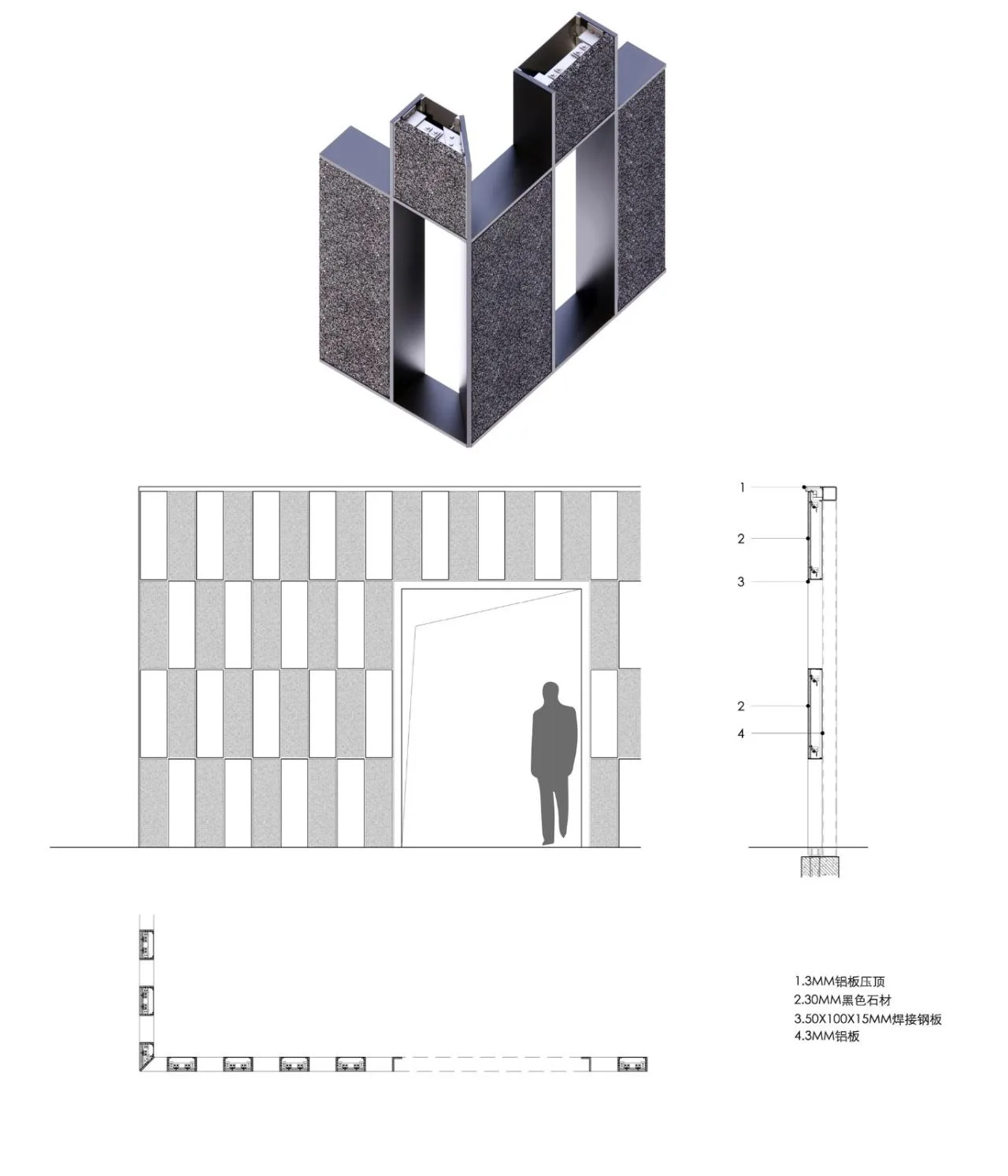
△ Detailed Structural Drawing
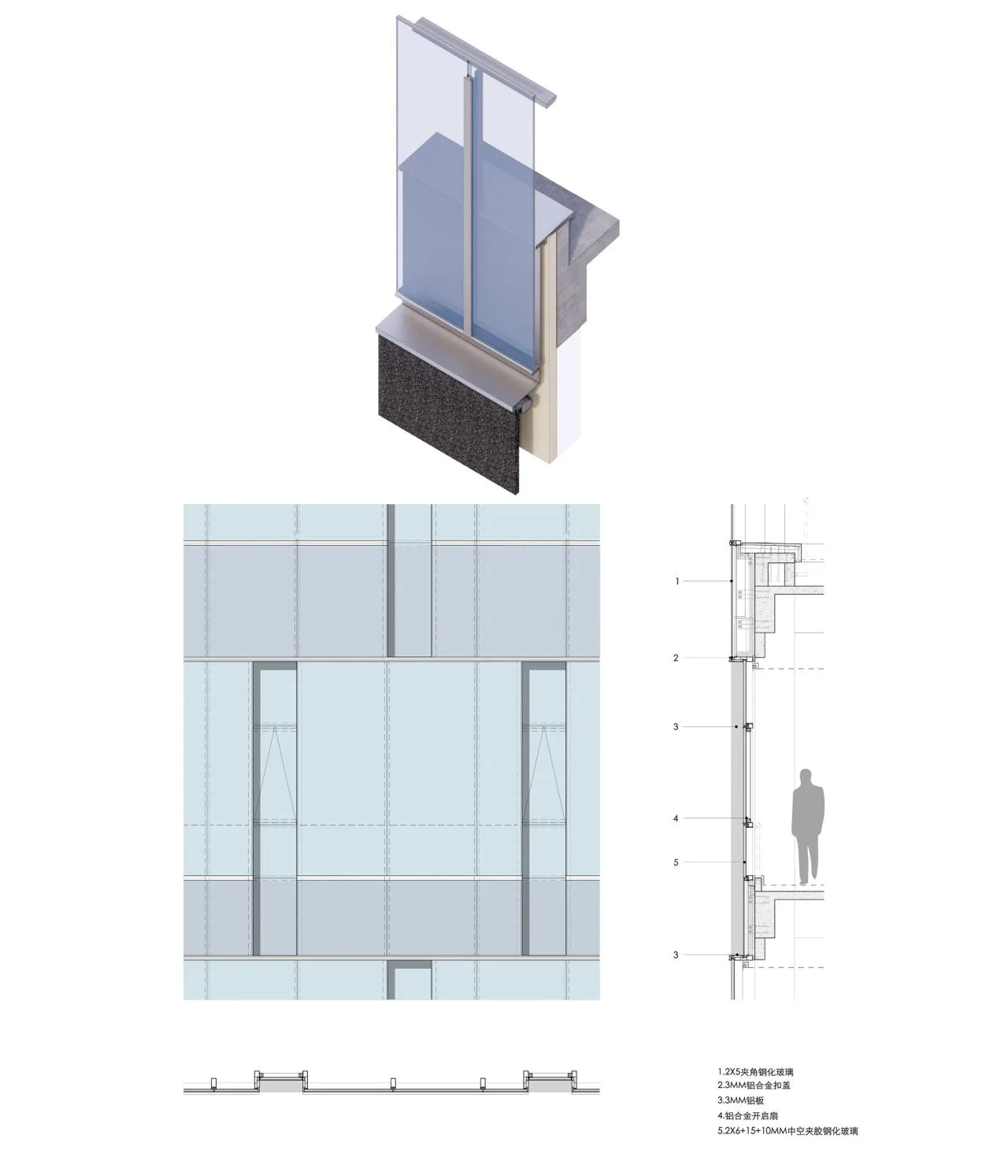
△ Detailed Structural Drawing
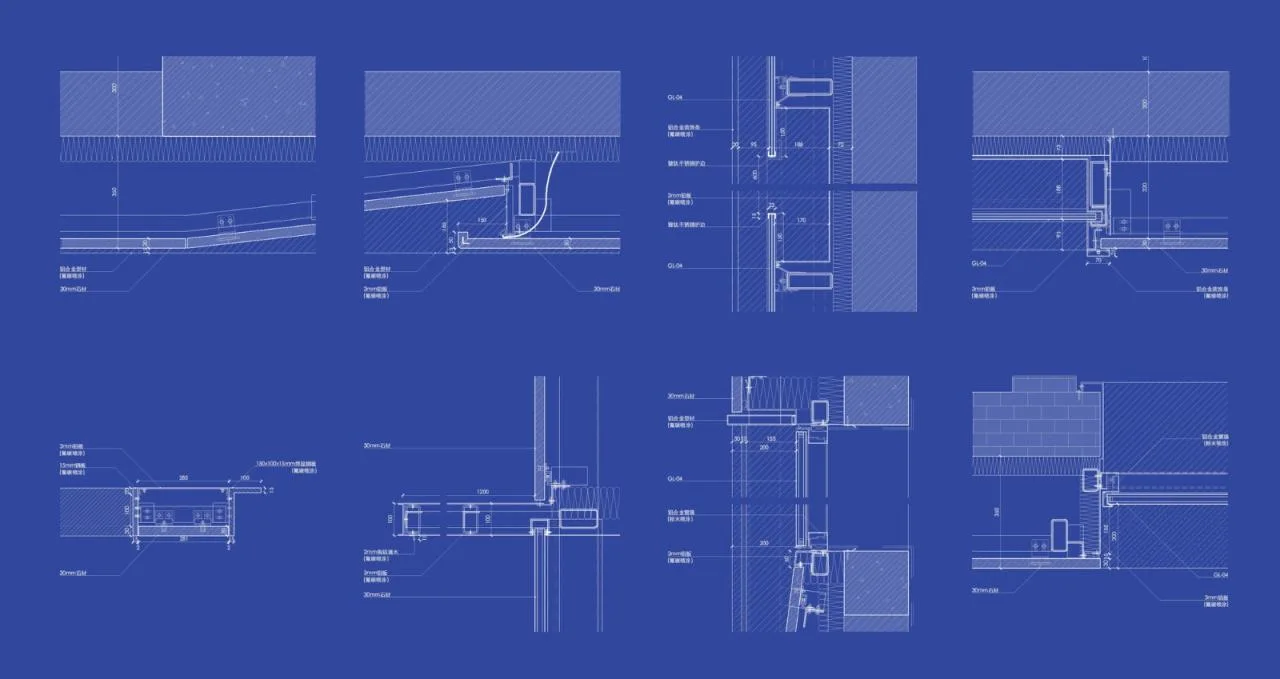
△ Detailed Structural Drawing
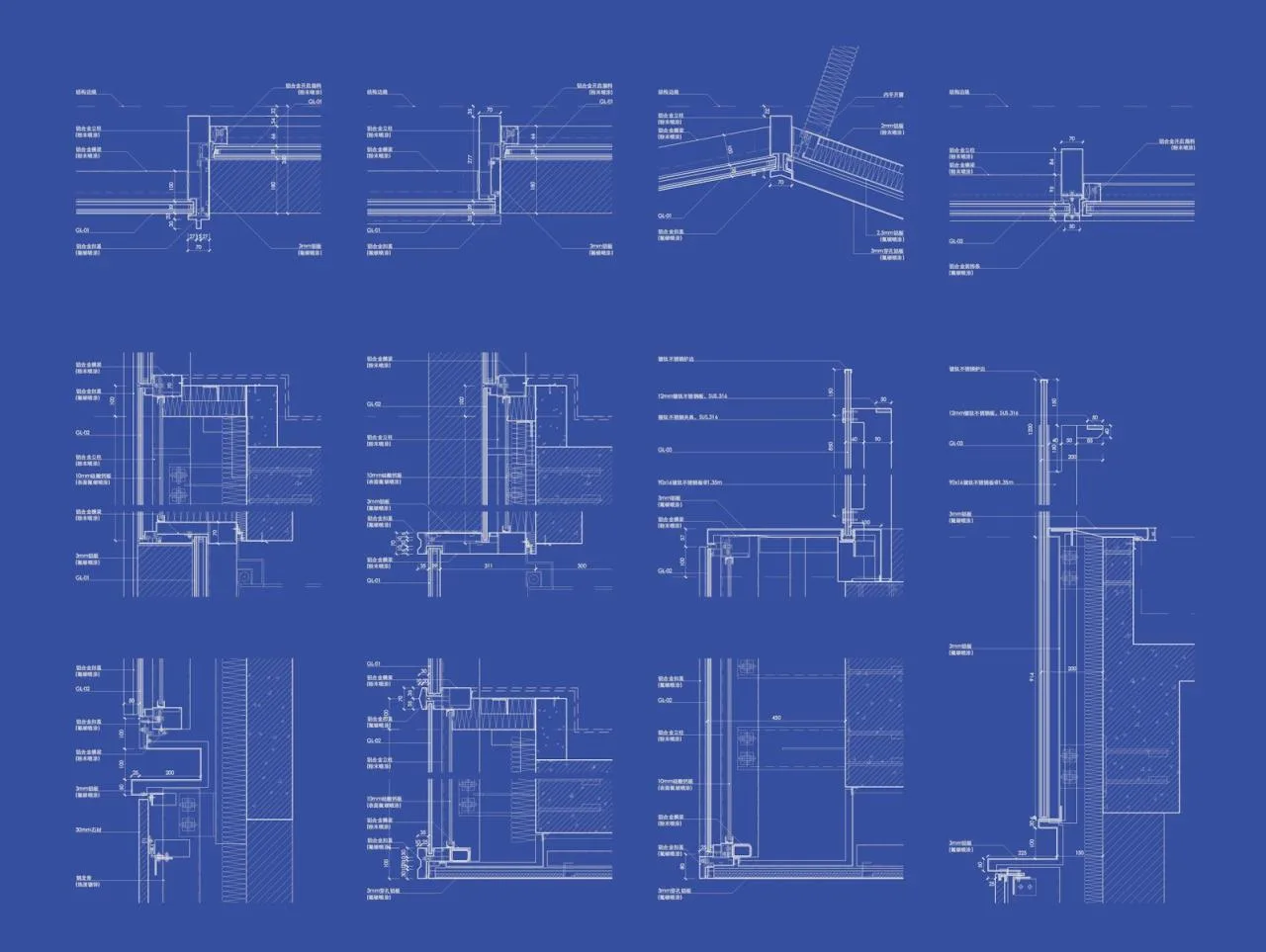
△ Detailed Structural Drawing
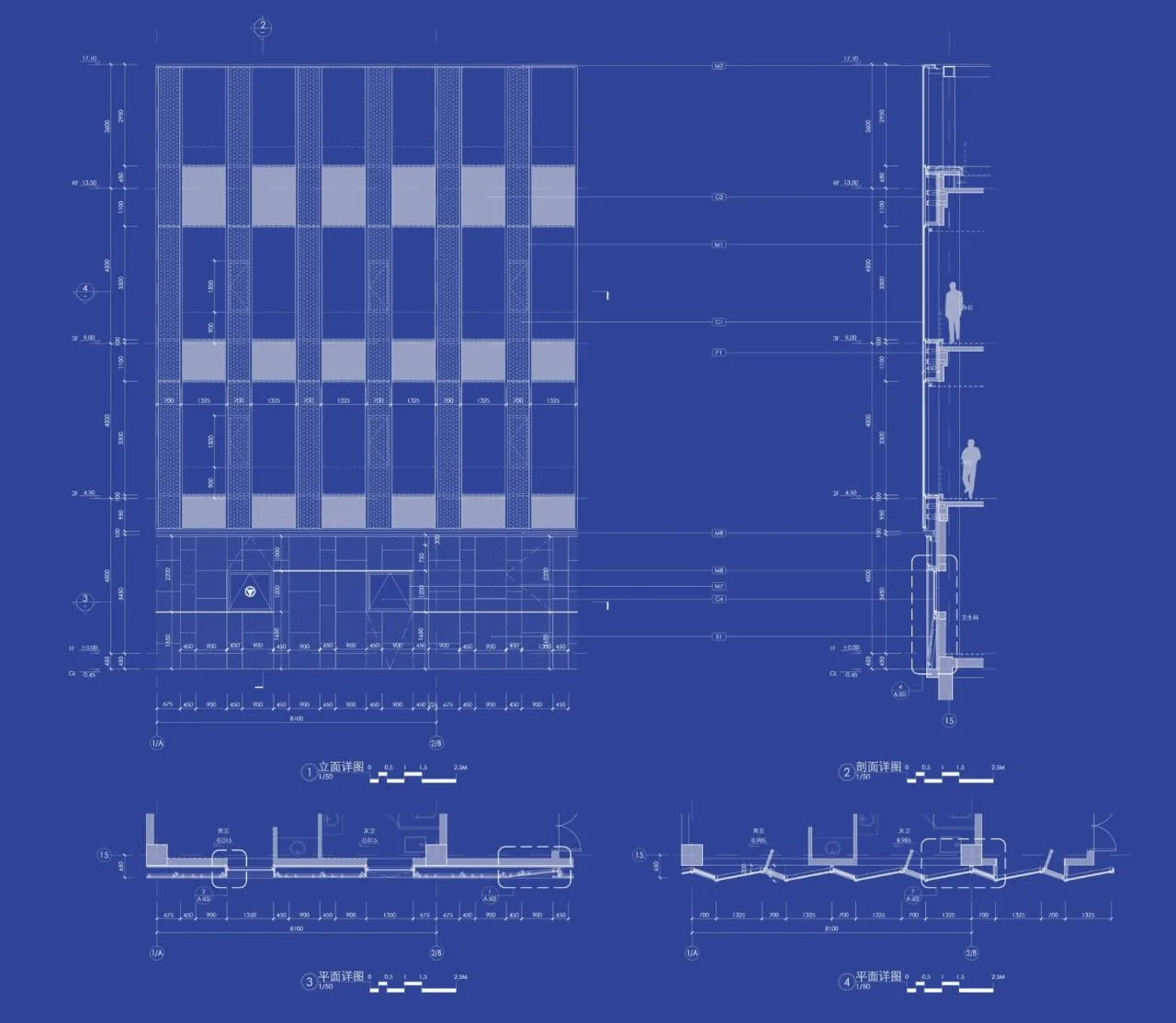
△ Detailed Structural Drawing
Project Information
Architect: Taisho Architecture
Area: 40,000 square meters
Project Year: 2021
Photographers: Su Shengliang, CreateAR Images
Lead Architects: Li Shuo, Zhou Xuefeng, Yu Jiangfan
Design Team: Fan Mingming, Li Le, Ye Lei, Tu Dan
Function: Public office building
Owner: Xingyue Investment
Landscape Design: Aoyana
Curtain Wall Consultant: Kaiteng Curtain Wall
Construction: China Construction Eighth Engineering Division
Location: Shanghai















Must log in before commenting!
Sign Up