
1. What is Residential Industrialization?
Residential industrialization encompasses the entire residential industry chain, integrating all key stages such as land allocation, residential industry positioning and design, production and installation of building components, sales of residential products, and post-service management. The primary goal of housing industrialization is to improve both the economic and social benefits within the housing sector.
2. What is Architectural Industrialization?
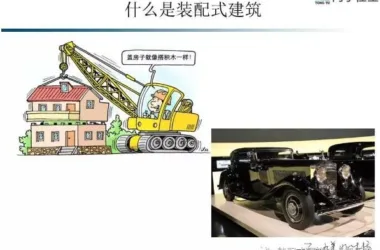
Architectural industrialization forms the core of residential industrialization. It focuses exclusively on the design of residential buildings, production and installation of components, and construction site management, essentially covering the construction process itself. The aim is to replace traditional handcrafted construction methods with advanced, large-scale industrial production techniques. This is achieved through standardized design, industrialized component manufacturing, mechanized construction, and scientific management.
3. Industrialized Construction Methods:
1. Factory Construction.
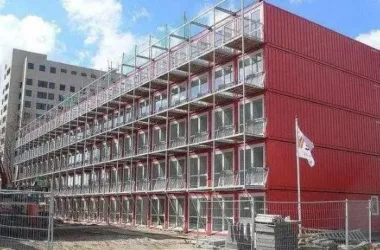
Factory construction involves assembling buildings by producing standardized components in a factory setting. Components are designed according to unified standards and manufactured in batches before being transported to the construction site for mechanical assembly into houses. These are commonly known as prefabricated modular houses and include types such as large block houses, large wall panel houses, framed light panel houses, and modular houses.
The main advantages of prefabricated residential buildings include high production efficiency, consistent quality, reduced seasonal impact, and fast on-site assembly. However, the method requires substantial initial investment in material and component production facilities. Once components are finalized, flexibility is limited, and poor handling can result in monotonous, rigid designs. Additionally, these structures may have reduced overall integrity, stability, and seismic resistance.
2. On-site Construction.
On-site construction refers to producing and assembling components directly at the construction site. This method integrates production and assembly processes, using large tools and factory-level production management standards. Depending on the templates and tools used, industrialized on-site construction mainly includes large template residences, sliding template residences, and tunnel template residences.
Highly mechanized use of tool templates in on-site construction replaces labor-intensive prefabrication. Compared to factory assembly, it requires less upfront investment and offers greater adaptability to different environments and architectural styles, along with stronger structural integrity. However, on-site labor demands are higher, more templates are needed, and the process is more vulnerable to seasonal influences.
4. Insights from Prefabricated Concrete Residential Building Industrialization:
During the 12th Five-Year Plan period, China initiated pilot projects for industrialized prefabricated concrete housing in various regions. Despite these efforts, significant challenges in implementation led to unsatisfactory results. While prefabricated concrete structures offer benefits such as being green, energy-efficient, and environmentally friendly, market prices for these homes remain comparable to traditional housing.
Consequently, the benefits of housing industrialization primarily favor the government and future generations, whereas developers, builders, and the entire industry chain bear the extra costs involved. Developers, focused on construction costs and profits, resist increased expenses. Traditional builders face the challenge of reconfiguring technology, personnel, and equipment for assembly construction, which raises short-term costs. Furthermore, all stakeholders in the industry chain—including design firms, material suppliers, transporters, and regulatory bodies—must adjust existing business practices, often leading to increased costs and reduced profits, which many are reluctant to accept.
Therefore, cost and technical challenges are often cited as reasons for resistance, but these can be overcome during implementation. The fundamental barrier to prefabricated housing industrialization remains the entrenched interests within the traditional housing industry chain.
The current obstacles limiting residential industrialization development include:
- Incomplete policies, regulations, and standards covering the entire industry chain;
- Lack of experience in pilot project management and technology, with an urgent need for systematic analysis and innovation;
- Immature industrial chains with weak coordination among design, construction, and production, resulting in low efficiency and weak cost advantages;
- Shortage of skilled professionals and industrial workers, compromising large-scale project quality;
- Low industry entry barriers, insufficient regulation, and unhealthy competition, leading to inconsistent quality.
In the early stages of residential industrialization, under market-driven pricing, resource reconfiguration—such as personnel, technology, and equipment—raises short-term costs compared to traditional methods. Developers, builders, and other participants are generally unwilling to change their management habits and vested interests, making reliance on market forces alone ineffective.
5. Strategies for Industrial Development:
1. Addressing Personnel Bottlenecks
To overcome workforce challenges, a robust talent strategy must be implemented. This includes establishing a multi-tiered professional training system and mobilizing societal resources to cultivate a skilled workforce that meets market demands. This talent pipeline should include:
- High-level experts such as academicians, design masters, chief engineers, and entrepreneurs;
- Mid-level professionals including R&D personnel, designers, engineers, technicians, and inspectors;
- Basic operational talent like technical and industrial workers.
Priority should be given to strengthening the training and re-education of professional designers through collaboration with educational institutions, enterprises, and industry organizations.
2. Addressing Technological Bottlenecks
An innovation-driven approach is essential to overcome technological constraints. This involves establishing dedicated research and education funds and leveraging national key projects such as “Green Building and Building Industrialization”. A collaborative innovation system involving enterprises, academia, and makers should be created to achieve breakthroughs in key technologies.
Focus areas include structural system innovation, standard specification reform, building enclosure system industrialization, integration of standardization and information technology, and lifecycle integration of design, construction, and production. Technical standards should align with international benchmarks.
Key initiatives under the national project include demonstrating and applying green, high-performance structural systems such as advanced steel and composite structures, resolving technical challenges in structural industrialization and component manufacturing, researching new building envelope materials, and enhancing information technology support for prefabricated assembly building systems.
3. Addressing Market Bottlenecks
To tackle market and regulatory challenges, establishing special development funds and strengthening supply-side reforms are critical. Policy support must be increased, and the State Council’s pilot construction projects fully implemented. Regions should provide targeted aid to leading enterprises or alliances that integrate the entire industry chain and explore expanding markets from localized points to broader areas.
Supply-side reforms should focus on:
- Transforming and upgrading industrial structures;
- Resolving overcapacity issues;
- Cultivating new markets and expanding existing ones;
- Driving technological innovation to enhance the quality of steel structure construction products.














Must log in before commenting!
Sign Up