
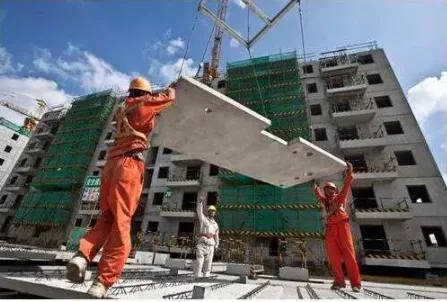
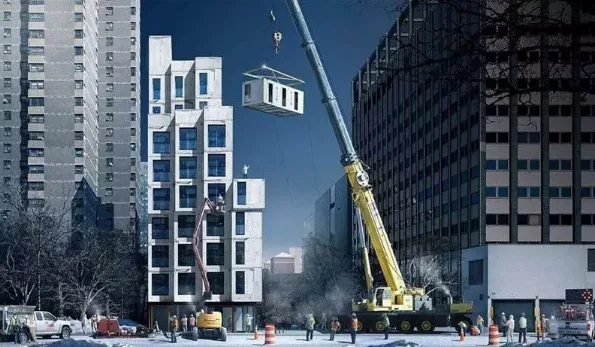
By mid-2018, an increasing number of provinces, municipalities, and autonomous regions began introducing targets and supportive policies for prefabricated buildings. These measures have significantly boosted the sector, with many areas setting clear development goals for prefabricated construction. A notable example is the Xiong’an Citizen Service Center project, recognized as the “first standard” in Xiong’an. This project features eight fully prefabricated buildings, with the main structure completed in just 40 days. Prefabricated buildings, now in the public spotlight, have garnered attention for their convenience, speed, energy efficiency, and reduced consumption. Their future development trajectory is becoming increasingly evident. As prefabricated buildings gain momentum, the central air conditioning industry is also poised for significant changes.
Impact 1: Nationwide Adoption of Full Decoration
A closer look at regional policies reveals a strong focus on the construction and renovation of residential buildings using prefabrication. Current prefabricated building policies emphasize the concept of “full decoration,” signaling its wider adoption across the industry. What was once limited to select regions is expected to spread nationwide, driven by these policies. Industry professionals should remain vigilant, as fully decorated homes are becoming increasingly popular, especially in urban high-end real estate markets.
Impact 2: Centralized Procurement Projects Becoming the Industry Norm
Central air conditioning products have reached new heights in development and are now the preferred choice for many real estate companies. This shift is positive news for central air conditioning manufacturers who have faced a shrinking project market in recent years. This trend was evident in the industry’s market performance during the first quarter of 2018. However, increased centralized procurement will intensify brand competition within the industry.
It is important to note that centralized procurement projects driven by prefabricated building policies may face challenges related to the compatibility of existing central air conditioning products due to the constraints of prefabricated building designs. For the central air conditioning sector, especially the project market that has struggled for years, the rise of full decoration presents both opportunities and challenges. Companies will need to prove their comprehensive competitiveness as a new phase of market restructuring begins.
Impact 3: The Future of the Retail Market
Not everyone views these policies positively. An increase in fully furnished homes will inevitably reduce the market share of unfinished houses. Despite the current retail growth surge, many retail-focused channel dealers remain uncertain about their future. Manufacturers have already adjusted their development strategies in response to this trend.
What concerns many is the goal to have prefabricated buildings account for 30% of new constructions within the next decade—a notably ambitious target. Until the overall new construction market rebounds, achieving this benchmark will likely depend heavily on civilian residential projects.
Considering the current market landscape, the large-scale expansion of specialty stores and retail channel networks faces uncertainty in this evolving environment. For central air conditioning companies, balancing the interests of existing retail channels with the demands of centralized procurement projects presents a significant challenge.
Responsible Editor: Shi Dandan














Must log in before commenting!
Sign Up