
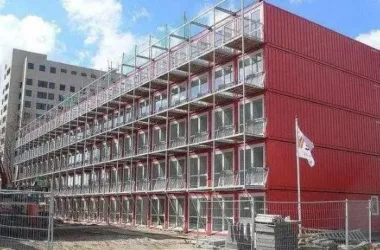
The Ministry of Housing and Urban-Rural Development has announced that China will focus on three major urban agglomerations: Beijing-Tianjin-Hebei, the Yangtze River Delta, and the Pearl River Delta. The government plans to vigorously promote prefabricated buildings, aiming to have prefabricated structures account for 30% of newly constructed building areas within the next decade.
The market outlook is promising. Prefabricated buildings not only simplify construction but also enhance energy efficiency and environmental sustainability. Data shows that this technology can save 65% of water, 37% of energy, 2% of steel, 85% of wood, 59% of waste, and reduce sewage discharge by 65% per square meter of building area. It also effectively minimizes environmental impacts such as dust and noise pollution.
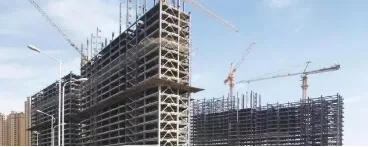
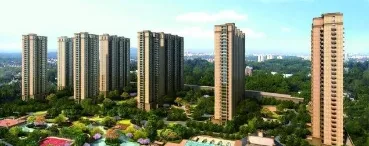
Currently, the total cost of prefabricated buildings is 300-500 yuan per square meter higher than traditional construction methods, mainly due to material production and transportation expenses. As a relatively new construction technology, prefabricated components require new manufacturing processes. However, the limited number of capable and willing upstream manufacturers poses a challenge that needs to be addressed. At present, prefabricated buildings make up less than 5% of the construction market in China, lagging behind developed countries. Industry experts predict that the cumulative market size for prefabricated buildings in China will reach 2.5 trillion yuan within the next ten years, highlighting significant growth potential.
In recent years, many provinces, municipalities, and autonomous regions have introduced policies to promote prefabricated buildings aggressively. By 2018, prefabricated construction is expected to become a key focus across regions. Below is a summary of national and regional policies for reference.
Beijing
Goal: Achieve over 20% prefabricated building ratio of newly constructed buildings by 2018 and exceed 30% by 2020.
Subsidies: Financial incentives for non-governmental projects with prefabrication rates above 50% and assembly rates over 70%. Projects voluntarily adopting prefabricated buildings may receive financial rewards based on incremental costs, capped at 3% of the project area. Additional benefits include immediate VAT refunds and discounts.
Applicable Projects:
- Government-invested affordable housing and new buildings.
- Commercial housing projects with state-owned land use rights of 50,000 square meters or more in Chengliu and Tongzhou Districts.
- Commercial housing projects with land use rights of 100,000 square meters or more in other districts.
Shanghai
Goal: Implement mandatory ratios for prefabricated building area and assembly rates. By 2015, at least 50% of the total land supply area should be prefabricated; by 2016, all eligible new civil buildings within the Outer Ring Road must be prefabricated, with over 50% outside the Outer Ring Road; the percentage outside this area has been increasing annually since 2017.
Subsidies: Prefabricated residential projects over 30,000 square meters with an assembly rate above 45% receive 100 yuan per square meter, capped at 10 million yuan per project. Additional plot ratio rewards of up to 3% are available for voluntary prefabricated construction, including for exterior prefabricated sandwich insulation walls.
Guangdong
Goal: Reach 15% prefabricated building ratio in new constructions by 2020, with over 15% in the Pearl River Delta and major cities, and 10% in other areas. By 2025, the Pearl River Delta aims for over 35%, major cities over 30%, and other areas over 20%.
Subsidies: Support for prefabricated buildings and BIM applications through the city’s building energy conservation development funds, with subsidies exceeding 2 million yuan for qualified projects.
Jiangsu
Goal: Achieve over 30% prefabricated building ratio in new constructions by 2020.
Subsidies: Demonstration projects, including residential, public buildings, and municipal infrastructure, receive 1.5-2.5 million yuan. Affordable housing projects with precast assembly rates of at least 40% for concrete and 50% for steel/wood structures receive 300 yuan per square meter, capped at 18 million yuan per project.
Zhejiang
Goal: Reach 30% prefabricated building ratio in new constructions by 2020.
Subsidies: Increased housing provident fund loans by 20% for purchasing prefabricated commercial housing. Quality guarantee deposits and residential warranty deposits are calculated with reduced rates based on prefabricated component costs. Floor area ratio rewards are also available.
Policy: Since October 1, 2016, all new residential buildings on land sold or allocated in central urban areas must be delivered fully decorated as finished products.
Hubei Province
Goal: By 2020, prefabricated construction areas should exceed 35% in Wuhan, 20% in Xiangyang, Yichang, and Jingmen, and 15% in other prefecture-level cities. By 2025, the provincial ratio should surpass 30%.
Policy: Since July 1, 2017, all newly built public rental housing must use prefabricated construction. Additionally, new residential buildings in key cities will be fully renovated by 2020.
Shandong
Goal: Reach approximately 10% prefabricated building area ratio by 2017, 30% in Jinan and Qingdao by 2020, and over 40% province-wide by 2025.
Subsidies: Financial incentives for homebuyers, plot ratio rewards, and deductions on quality guarantee deposits, labor wages, and performance guarantees.
Applicable Projects: New public rental housing, shantytown renovations, resettlement housing, and government investment projects.
Hunan
Goal: Achieve over 30% prefabricated building ratio in central cities by 2020.
Subsidies: Financial rewards, green channel engineering approvals, plot ratio rewards, tax incentives, prioritized pre-sale of commercial housing, and optimized bidding processes.
Applicable Projects:
- Government-invested affordable housing, schools, hospitals, research, offices, hotels, industrial plants, and comprehensive buildings.
- Prefabricated urban subway pipe segments, underground pipe galleries, road auxiliary facilities, landscaping, and other municipal projects.
- Engineering projects within Changsha’s second ring road and high-tech zones suitable for social capital investment.
Sichuan
Goal: By 2020, prefabricated buildings should account for 30% of new construction with over 30% assembly rate, and fully decorated new residential buildings should reach 50%. By 2025, buildings with over 50% assembly rate will represent 40%, and fully decorated residences will reach 70%.
Subsidies: Priority land allocation, research funding, corporate income tax reductions, and floor area ratio rewards.
Policy: All Class 1 projects, including bridges, railways, roads, tunnels, and municipal engineering, must use prefabricated assembly except for cast-in-place construction.
Hebei Province
Goal: Reach over 20% prefabricated building ratio by 2020 and over 30% by 2025.
Subsidies: Priority land use, plot ratio rewards, refunds of wall renovation and bulk cement funds, and 50% VAT refunds.
Policy: Since 2017, public buildings like hospitals, nursing homes, schools, kindergartens, and venues funded by the government generally adopt prefabricated construction.
Anhui Province
Goal: Achieve 15% prefabricated building ratio by 2020 and strive for 30% by 2025.
Fujian
Goal: Reach over 20% prefabricated building ratio in new constructions by 2020 and 35% by 2025.
Subsidies: Land security, plot ratio rewards, financial benefits for buyers, and tax incentives.
Policy: Since 2019, all newly started affordable housing, educational, medical, and office complex projects with state-owned investment in Fuzhou, Xiamen, Quanzhou, and Zhangzhou must adopt prefabricated construction.
Jiangxi
Goal: By 2020, prefabricated buildings should make up 15% of new construction, with increasing targets for urban agglomerations and prefecture-level cities by 2025.
Subsidies: Support for prefabricated buildings and BIM applications through building energy conservation funds, with subsidies exceeding 2 million yuan for qualified projects.
Henan
Goal: Reach over 15% prefabrication rate for assembled buildings by 2017.
Subsidies: Rewards for affordable housing with green building certifications, preferential policies for new wall materials, and plot ratio incentives.
Gansu Province
Policy: Class 2 projects include strong promotion of steel or steel-concrete structures in public buildings, large-span, super tall buildings, urban bridges, and full steel structure industrial plants.
Shanxi
Goal: Achieve over 30% prefabricated building ratio by 2025.
Subsidies: 50% VAT refund, minimum down payment ratios for housing provident fund loans, prioritized land allocation, plot ratio rewards, and green channel engineering applications.
Shaanxi
Goal: By 2020, over 20% prefabricated building ratio in key urban areas; by 2025, exceed 30% province-wide.
Subsidies: Financial assistance, priority supply of prefabricated building projects and industrial land, bonus points for corporate integrity linked to bidding and awards, plot ratio rewards, buyer financial benefits, and special research funds.
Hainan
Goal: By 2020, modern construction methods should account for 10% of new building area, with at least 20% prefabrication rate in individual buildings and over 25% finished housing supply in new residential projects.
Subsidies: Priority land quota allocation, special research funds, tax and fee incentives, and administrative licensing support.
Jilin
Goal: Establish 2-3 national-level prefabricated building industry bases by 2020, with at least 3 million square meters total prefabricated area; exceed 30% prefabricated building ratio by 2025.
Subsidies: Special funds, tax and fee incentives, and priority protection for industry bases and construction land.
Guizhou
Goal: By 2017, new building materials industry output value to exceed 120 billion yuan with 40 billion yuan added value; by 2020, output to exceed 220 billion yuan with 60 billion yuan added value, and prefabricated buildings over 15% of new construction.
Subsidies: Priority land allocation and planning for key parks and major projects, with provincial and local governments coordinating land supply for investments over 500 million yuan.
Yunnan
Goal: By 2020, prefabricated buildings in Kunming, Qujing, and Honghe Prefecture to account for 20% of new construction, with demonstration projects in other areas; 30% provincial ratio by 2025, with 40% in key cities.
Subsidies: Tax and fee reductions, priority housing provident fund loans, and prioritized land use allocation.
Responsible Editor: Shi Dandan













Must log in before commenting!
Sign Up