
3D printed concrete is commonly used in the construction industry and is seen as a promising solution to the global housing crisis. However, in the design world, few have explored concrete 3D printing to create furniture or sculptures. Recently, designer Philipp Aduatz collaborated with the 3D printing startup Incremental3D to produce a 3D printed concrete chair, which was showcased at the 2018 Milan Design Week.
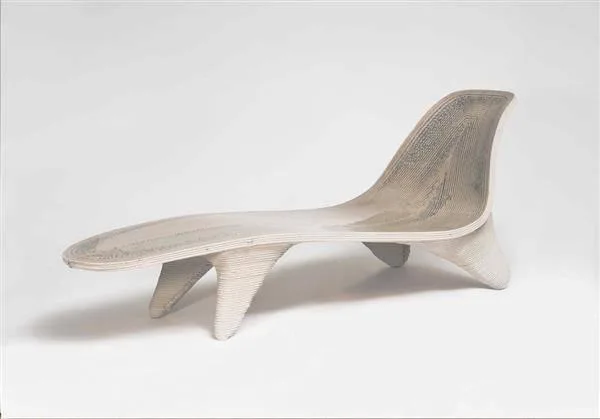
3D Printed Concrete Chair
Vienna-based designer Aduatz is well-known in the design community for crafting limited-edition functional objects with strong sculptural qualities using 3D printing technology. In September 2017, Incremental3D, an Austrian company specializing in prefabricated residential solutions, developed a unique concrete 3D printing technique similar to FDM printing. This method allows for the rapid creation of intricate free-form geometric shapes without the need for support structures.
The production process involves several stages, including the reinforcement of the concrete with carbon fiber in select areas to enhance stability and tensile strength for the unconventional shapes.
After printing, the chair is coated with a UV-resistant polyurethane finish. This final step is completed through traditional craftsmanship, highlighting how innovative design projects can blend manual skill with digital automation.
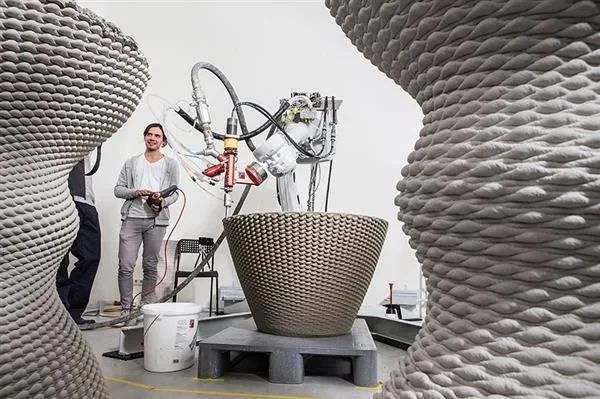
This mix of diverse elements, backgrounds, and methods extends to other works in Aduatz’s exhibition. Another piece, called the “Gradient Chair,” was constructed entirely from building materials salvaged during studio renovations. Like any great artist, Aduatz repurposed found objects—its base is wooden, covered with bricks, then plastered and reinforced with fiberglass fabric. A third piece, the “Cloud Chair,” combines wood, wire, polyurethane foam, epoxy resin, fiberglass, and paint.
Incremental3D also applied concrete 3D printing technology to create other striking sculptures for the exhibition. One notable example is a large vase, designed to resemble heavy fabric draped loosely and gathered at the top. Its complex geometric design demonstrates the high resolution capabilities of the company’s 3D printing technology.
The European Union’s First 3D Printed Concrete House Project
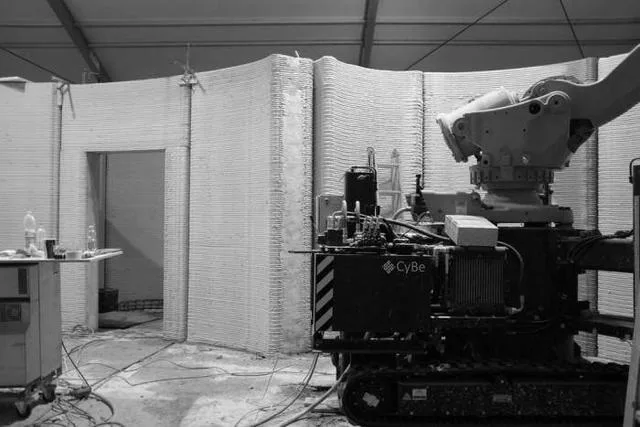
According to NewAtlas, 3D printed architecture is moving closer to mainstream adoption. Engineering firms Arup and CLSArchitetti are collaborating on the EU’s first 3D printed concrete house project, named 3DHousing05, which aims to demonstrate the potential of cutting-edge technology.
The prototype is currently under construction at Piazza Cesare Beccaria in Milan’s central square and is set to debut at the Salone del Mobile design exhibition in April. Partners on the project include Italian cement suppliers Italcementi and Cybe Construction.
Like many other 3D printed construction projects, the walls are built by extruding a cement mixture layer by layer through a nozzle. However, 3DHousing05 employs a robot manipulator mounted on a movable base, offering greater flexibility compared to traditional static printers. After printing, human workers complete the installation of the roof, windows, doors, and other finishing touches. Arup hopes to automate these stages in the future.
The 3DHousing05 project is larger and more complex than previous 3D printed houses, covering 100 square meters and including a living room, bedroom, kitchen, and bathroom. Its design also allows for easy disassembly, enabling relocation after the exhibition concludes.
Representatives from Arup highlighted that the project’s cost will be significantly lower than comparable houses built with traditional methods, and the printing process itself takes only 48 hours. They praised the technology’s potential to deliver projects faster, with less waste, lower costs, and improved precision.
Concrete 3D printing technology has shown enormous potential both in architecture and art design. Traditional construction methods generate a substantial amount of waste. For example, in China alone, over 2 billion square meters of construction annually produce approximately 600 million tons of waste each year. 3D printed concrete technology enables full material utilization during construction, significantly reducing waste and aligning with today’s focus on sustainable development.
As a key symbol of Industry 4.0, 3D printed concrete technology promises to mark a major turning point in the evolution of concrete construction.














Must log in before commenting!
Sign Up