
Prefabricated buildings consist of structural systems, maintenance systems, interior systems, and electromechanical systems. A key distinction between prefabricated and traditional interiors lies in the same floor drainage technology.
Same floor drainage means that bathroom sanitary drainage pipes do not penetrate the floor slab. Instead, horizontal drainage pipes connect directly to the main drainage pipe on the same floor. This design allows for maintenance and cleaning to be performed without affecting other floors.
This drainage technology offers several advantages:
1) Clear property rights: The drainage system is contained within each resident’s unit, enabling indoor pipe maintenance without disturbing residents below.
2) Reduced noise: Drainage branch pipes are embedded within the floor slab and insulated by backfill layers, significantly lowering drainage noise.
3) Lower risk of water leakage: Since pipes do not penetrate the bathroom floor, the chance of leaks is minimized, helping prevent bacterial spread.
Below, we explore common same floor drainage technologies along with their pros and cons.
Lowering Plate Method
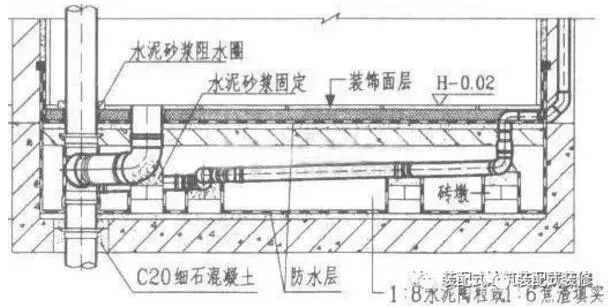
Design and Construction Highlights:
① The lowering plate typically has a height of 30–40cm to accommodate the necessary slope for horizontal pipes.
② Special connectors are used to link drainage branch pipes to risers, meeting installation and slope requirements.
③ Waterproofing is critical for both the lowered layer and the floor surface and must be executed thoroughly.
④ Proper drainage of the sunken box area is essential. A side drain should be installed at the lowest point to prevent water accumulation, wrapped with a filter to block solid particles from entering the pipe.
Advantages
① Pipes are placed on the lower floor, keeping bathrooms free of visible piping. This allows flexible sanitary ware layout and reduces drainage noise interference for lower floors, simplifying construction.
② Without pipes penetrating the bathroom floor, water leakage risk is lower and maintenance does not impact residents below.
Disadvantages
① Structural modifications and filling materials increase costs and add load, raising decoration expenses for residents.
② Water can accumulate inside the lowered plate, making drainage difficult.
Non-Lowering Plate Method
This approach installs drainage pipes directly on the bathroom floor or places horizontal drainage pipes on exterior walls without lowering the floor.
Design and Construction Highlights:
Floor drain installation is challenging here. The solution involves placing a floor drain near the riser with a water trap in the pipe well. Showers and bathtubs must have traps and be slightly elevated.
Advantages
The primary benefit is avoiding the need for a lowered floor.
Disadvantages
① Toilets must be rear outlet types, limiting selection options. Elevating showers or bathtubs slightly may affect user experience.
② Bathroom layouts must align closely with building plans, ideally positioning sanitary fixtures on the same or adjacent walls, which restricts design flexibility.
③ Side outlet floor drains have poor hydraulic performance and hygiene conditions.
Horizontal Drainage Pipes on Exterior Walls
Design and Construction Highlights:
① Drainage risers, horizontal branch pipes, and dedicated ventilation pipes are installed outside the walls. Toilet sewage pipes are routed separately through the exterior wall to the drainage riser, while other wastewater (from sanitary ware, floor drains, washing) is connected to the horizontal branch pipe outside the wall, then to the riser via a shared water seal.
② The horizontal branch pipe outside the wall should be installed as close as possible to the sanitary outlet, especially for low drainage outlets like bathtub drains.
③ Use side outlet floor drains.
Advantages
① All bathroom drainage pipes remain hidden, creating a clean and attractive appearance. Noise impact is reduced, and bathrooms can forgo ceilings, saving on secondary decoration costs.
② Leakage points are easier to detect.
Disadvantages
① This method is only suitable in non-freezing climates.
② Precision in reserved openings is critical due to pipes passing through exterior walls, complicating construction and increasing risk of errors.
③ Maintenance is more difficult as all pipes are exposed on external walls, affecting building aesthetics and requiring placement in recessed areas.
④ Sanitary ware must be located near exterior walls, limiting layout options. Waterproofing where pipes penetrate exterior walls requires extensive work.
Concealed System
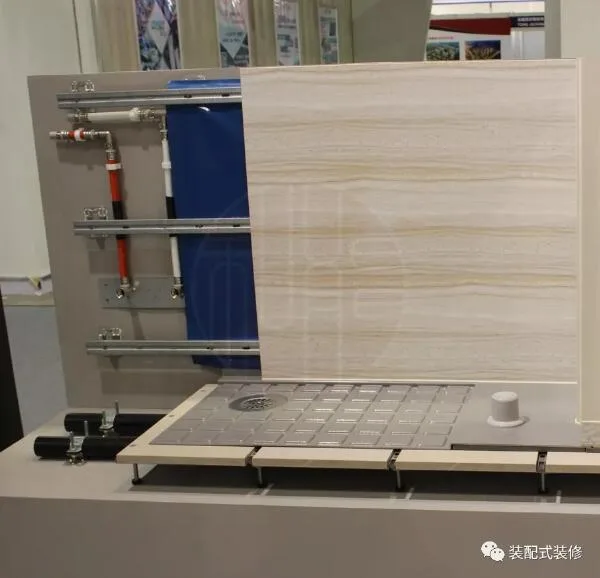
Same floor drainage scheme for prefabricated decoration by He Neng Ren Ju Technology
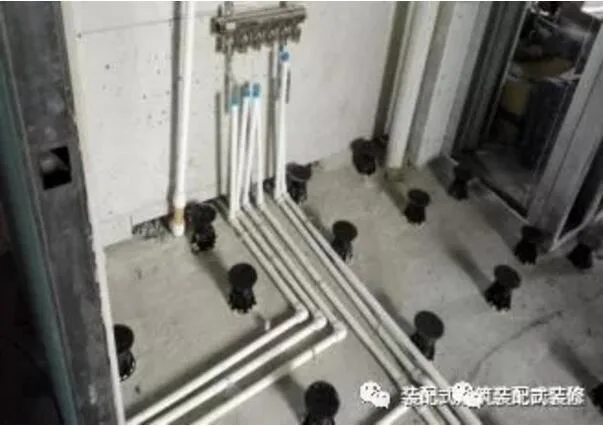
Design and Construction Highlights:
① Use a combined sewage and wastewater flow system, arranging sanitary fixtures on the same wall side as much as possible, or adjacent walls when necessary.
② Use wall-mounted toilets with thin or ultra-thin concealed flushing tanks. According to current Chinese regulations, toilets should be water-saving with a maximum 6L flush capacity and dual flush levels.
③ Polyethylene pipes must be used for drainage, avoiding water supply fittings. Pipe joints should be butt-welded to improve hydraulic efficiency, reduce noise, and save space.
④ Drainage branch pipes should connect independently to risers, minimizing horizontal pipe length. Horizontal pipes should remain full and maintain a moderate slope.
⑤ Floor drains should be avoided or minimized. If installed, side outlet or shorter new floor drains are preferred.
⑥ Conduct water and filling tests before concealing pipelines.
Advantages
① Flexible bathroom layout options.
② Industrialized construction with concealed pipes and tanks offers a clean, elegant look.
③ Pipes do not penetrate floor slabs, preventing condensation and dripping on horizontal pipes, increasing ceiling height, improving fire safety, and simplifying maintenance.
④ Significantly reduces drainage noise, creating a quiet living environment.
⑤ Secure brackets and reliable installation ensure stable sanitary ware use.
⑥ Suitable for residential and public bathrooms, hotel rooms, and sports facilities.
Disadvantage
Installing floor drains remains challenging.
Summary
Each construction method has specific limitations and ideal applications. Careful selection is essential to meet project requirements effectively.














Must log in before commenting!
Sign Up