
Basic Information
Ceramic Board Production
Ceramic boards are primarily made from natural clay, combined with small amounts of quartz, pumice, feldspar, and pigments. They are shaped through high-pressure extrusion, dried at low temperatures, and then fired at 1200°C. This process results in eco-friendly boards that emit no radiation, feature subtle colors, and avoid light pollution. Due to thermal expansion and contraction during firing, ceramic plates may exhibit dimensional variations and require precise mechanical cutting and quality inspection before market release.
Raw Materials for Ceramic Boards
The key raw materials for ceramic boards include various types of clay and processing additives. Clay is a porous or layered hydrated alumina or magnesium silicate structure containing iron oxide and manganese oxide. When mixed with water, it becomes plastic and retains its form after drying; firing then hardens and strengthens it. In China, common clays include kaolinite (Al2SiO5(OH)4), illite/mica (KAl3Si3O10(OH)4), and montmorillonite (Al2Si4O10(OH)2). The clay’s composition, mineral content, particle size, and plasticity vary depending on geological sources, affecting drying and firing conditions and causing product differences among manufacturers. Processing aids, though constituting only 0.5% to 2% of the mix, significantly influence properties—such as salt enhancing plasticity and drying strength, barium carbonate reducing surface whitening, and manganese dioxide improving color stability. Imperfect raw material preparation can lead to defects like lime spots, rust stains, blooming, weathering, expansion, impurities, cracks, color inconsistencies, and damage during production.
Ceramic Board Colors
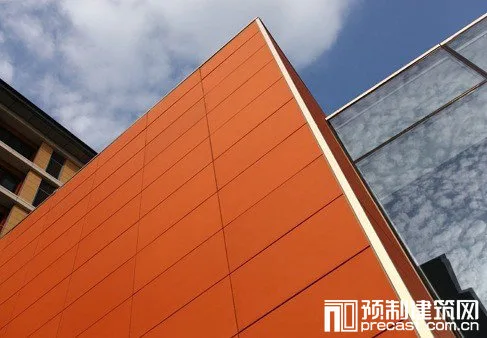
Ceramic tiles typically display the natural hues of clay after firing, mainly in red, yellow, and gray tones. These rich colors meet architectural and homeowner preferences for exterior wall aesthetics. The boards’ lustrous, soft colors and natural texture have captivated many designers and property owners.
Advantages
Eco-Friendly Material
1. Crafted from natural clay and quartz sand, extruded and fired at high temperatures, ceramic boards are non-radioactive and highly durable.
2. Their colors are permanent: the natural clay color is bright, even, and fade-resistant, ensuring long-lasting vibrancy for curtain walls.
3. The hollow structure reduces weight and enhances thermal insulation.
Available Exterior Wall Tile Colors
Colors include deep red, rust red, natural red, pink, orange-red, light brown, sandy yellow, blue-gray, pearl gray, iron gray, volcanic gray, and tile gray. These shades come from the clay body itself, without paints or glazes, allowing tiles to be cut freely without affecting appearance.
Surface finishes include natural, glazed, brushed, grooved, printed, sandblasted, corrugated, and gradient styles.
Easy-Clean Feature
The physical and chemical stability of ceramic plates, along with special surface treatments, provide acid and alkali resistance and anti-static properties, preventing dust adhesion. The “equal pressure rain curtain” principle ensures that rainwater washes away dirt, restoring the plate’s original warm, vibrant color.
Outstanding Performance
1. Ceramic clay panel curtain walls offer stable performance, robust impact resistance, and meet wind load design standards.
2. They exhibit excellent heat and frost resistance.
3. Their flame retardancy ensures safety and fire resistance.
4. Ceramic boards are green, sustainable, and recyclable building materials.
5. Lightweight and fade-resistant, they maintain their fresh appearance over time.
Smart Structural Design
1. The dry-hanging system allows for easy replacement of individual panels in case of damage, facilitating maintenance.
2. The hollow clay board structure provides noise reduction and reduces overall weight.
3. High-strength clay boards accommodate custom cuts to various sizes.
Excellent Compatibility
1. The gentle appearance of clay panels pairs harmoniously with glass and metal elements.
2. Ceramic board curtain walls help reduce light pollution and improve seismic resistance.
3. Their warm, soft colors enhance the building’s humanistic ambiance.
Easy Installation
The curtain wall system’s design is straightforward and adaptable to local architectural needs, enabling smooth installation while preserving the facade’s continuity, natural look, and aesthetic appeal across flat surfaces, corners, and other details.
Lower Supporting Costs
Thanks to their lightweight nature, clay panel curtain walls require simpler and lighter supporting structures than stone curtain walls, reducing overall support costs.
Ceramic Product Classifications
Based on structure, clay curtain wall products include single-layer ceramic panels, double-layer hollow ceramic panels, and clay louvers. Surface effects vary from natural, sandblasted, grooved, printed, corrugated, to glazed finishes. The hollow design of double-layer panels reduces weight while enhancing breathability, sound insulation, and thermal performance.
Ceramic Panel Curtain Wall Drainage
The system employs the equal pressure rain curtain principle, water guide plates, and closed vertical joint installation to create a comprehensive drainage system that prevents sediment buildup and maintains the curtain wall’s appearance.
Ceramic Board Specifications
Typical thickness ranges from 15mm to 40mm. Lengths are available in 300mm, 600mm, 900mm, 1200mm, 1500mm, and 1800mm. Width options include 200mm, 250mm, 300mm, 450mm, 500mm, 550mm, and 600mm. Panels can be cut to accommodate various architectural styles and installation needs.
History of Ceramic Curtain Walls
Ceramic panel curtain walls originated in Germany. In the 1980s, Engineer Professor Thomas Herzog envisioned applying roof tiles to walls and developed a dry-hanging system for exterior walls based on ceramic tile installation. He founded a factory specializing in ceramic panel production. The first project was completed in Munich in 1985. Since then, the hanging methods evolved from wooden structures to two main curtain wall systems—with and without horizontal keel frameworks.
China historically depended on imported ceramic plates, facing high transportation costs, long lead times, and limited technical support, which hindered widespread adoption.
Since 2006, China has developed independent production capabilities, filling the previous gap in prefabricated ceramic panel manufacturing. By 2011, 30 production lines produced 30-50 million square meters annually, with growing investment in capacity and R&D.
Ceramic Panel Curtain Wall Installation
Adapting to China’s unique typhoon and seismic conditions, domestic experts innovated the curtain wall system to suit local environments. Key features include:
1. Two waterproofing system options: open and closed.
A. Open system: Uses splicing based on equal pressure rain curtain principles, offering excellent waterproofing without the need for joint sealants, preserving the ceramic board’s appearance.
B. Closed system: Employs special ceramic plate sealants for joint filling, enhancing waterproofing. A sealed air layer behind the board improves insulation and energy efficiency.
2. Installation gaskets: Flexible insulation gaskets separate ceramic boards from hanging hardware and crossbeams, boosting seismic performance, preventing electrolytic corrosion between metals, and reducing noise and deformation.
3. Exterior wall protection: Ceramic plates safeguard structural walls from weather and pollution, reducing maintenance costs and extending building lifespan.
4. Thermal and sound insulation: Double-layer panels with hollow structures and air gaps reduce heat transfer and provide effective sound insulation, lowering energy consumption.
5. Back ventilation: Airflow behind the panels removes moisture, preventing condensation and keeping exterior walls dry.
6. Wind and seismic resistance: The enhanced system withstands wind pressure and seismic forces, achieving seismic fortification above 10 degrees, ideal for demanding conditions.
7. Vertical seam adhesive strips: Closed installations use EPDM rubber strips that provide waterproofing, prevent lateral movement, and cushion impacts, protecting ceramic panels.
8. Drainage system: Open systems feature water guide plates above and beside windows, with additional plates every three floors on large facades, channeling condensation and seepage water outward.
Technical Parameters of Ceramic Boards
◇ Seam width: Vertical seams 4-8mm, horizontal seams 6-10mm
◇ Edge straightness: -0.08% to +0.06%; warping: 0.03% to 0.11%
◇ Breathable gap: 2mm
◇ Water absorption: 3-10%
◇ Dry weight: ≤32kg/m² for 18mm thickness, ≤46kg/m² for 30mm thickness
◇ System weight: ≤47kg/m² for 18mm, ≤66kg/m² for 30mm thickness
◇ Frost resistance: No cracking after 100 freeze-thaw cycles
◇ Breaking strength: 4.01 KN for 18mm, 6.64 KN for 30mm thickness
◇ Fire resistance rating: A1
◇ Acid and alkali resistance: UA grade
◇ Shrinkage: None
◇ UV resistance: Excellent
◇ Seismic resistance: Over 10 degrees of fortification
◇ Wind pressure resistance: Up to 9 kPa without damage
◇ Fracture modulus: Average 16.5 MPa (min 14.4 MPa) for 18mm, average 18.5 MPa (min 18.0 MPa) for 30mm
◇ Acoustic performance: Noise reduction exceeding 9 dB
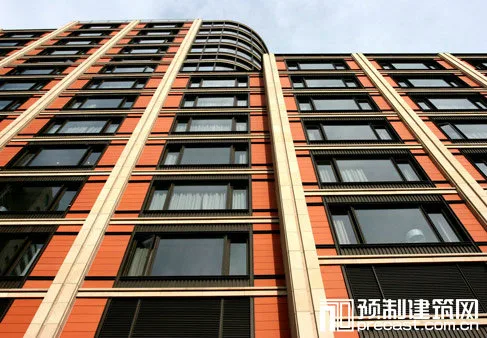
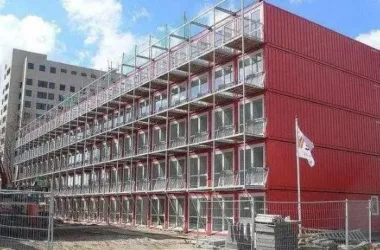
Practical Case:















Must log in before commenting!
Sign Up