
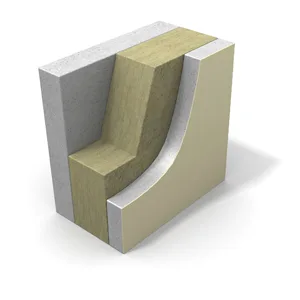
The sandwich wall is a unique type of precast concrete facade panel, named for its structure that resembles a sandwich: an insulation layer is sandwiched between two concrete wall panels.
The inner wall panel is designed to handle structural stresses and is reinforced according to mechanical requirements. The outer panel defines the appearance of the sandwich wall and the building facade. It often features colored concrete and offers a wide variety of surface texture options. Connectors can be used to securely join the two concrete layers around the insulation.
Thanks to the thermal inertia of concrete, the inner concrete layer acts as a stable thermal energy storage. The insulation board in the middle serves as a thermal barrier, slowing the transfer of heat between the building’s interior and exterior walls. According to ASHRAE Basic Standards, this delayed heat transfer provides several benefits:
First, it reduces indoor temperature fluctuations by delaying heat flow, helping maintain a more constant indoor environment despite outdoor temperature changes.
Second, in both hot and cold climates, energy consumption is significantly lower compared to similarly sized buildings without this system.
Third, the energy storage capacity of the inner concrete layer allows energy demand to be shifted to off-peak periods. For example, cooling can be done entirely at night, reducing electricity costs. Thanks to the insulation, indoor temperatures remain comfortable during the day without additional cooling. This off-peak energy use helps balance power demand and reduces energy expenses.















Must log in before commenting!
Sign Up