
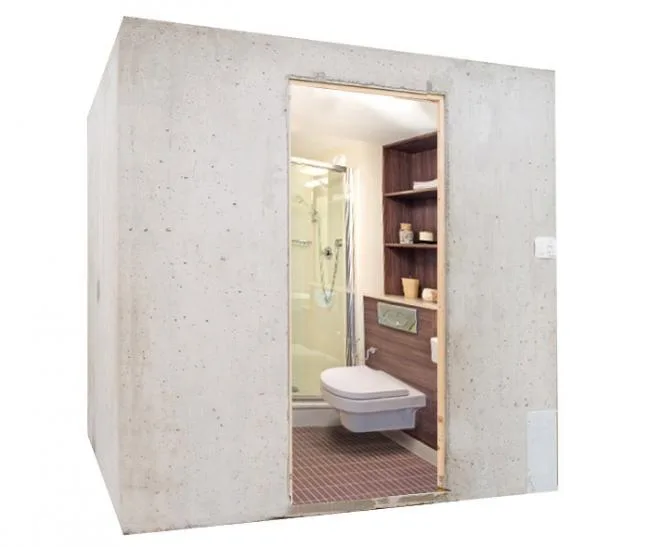
The concept of an overall bathroom design refers to a comprehensive solution that integrates the ceiling, floor, walls, and all bathroom fixtures into one cohesive unit. Unlike traditional bathrooms, these integrated bathrooms are factory-manufactured in a single molding process, resulting in a compact, elegant, and fully functional space. They save floor area, eliminate the need for bathroom heaters, and promote cleanliness and hygiene. Originating in Japan, the integrated bathroom—also known as a prefabricated bathroom or modular bathroom—has become widely appreciated for its sanitary advantages.
Introduction
Integrated bathrooms, a concept developed in Japan, are also referred to as prefabricated or modular bathrooms.
Traditional bathrooms are constructed in a fragmented manner by bricklayers, assembling floor tiles, wall tiles, ceilings, washbasins, sanitary ware, and toilets separately. This method requires thorough waterproofing of the floor. Poor waterproofing can lead to water seepage and leaks, while the junctions between brickwork and installed equipment often create hygiene blind spots.
In contrast, integrated bathrooms are produced in factories as a single molded unit. This approach results in a compact, stylish, and fully functional bathroom that saves space and negates the need for bathroom heaters. The overall bathroom promotes cleanliness and hygiene. In Japan, integrated bathrooms are used in approximately 80% of residential buildings. They reflect the occupants’ quality of life, as bathroom design moves beyond merely combining tiles and sanitary fixtures. The integrated bathroom has become a favored solution for those pursuing an elevated lifestyle, marking a shift away from hastily assembled bathrooms toward a culture that values bathroom aesthetics and functionality.
Design Advantages
Overall bathroom design offers a complete solution covering the ceiling, floor, walls, and all bathroom fixtures. It encompasses the full range of services—from environment design and product selection to manufacturing, installation, and professional support provided by experienced design and construction teams.
Functionality
When designing an integrated bathroom, the primary goal is to satisfy the customer’s needs for overall functionality. This involves carefully selecting all sanitary fixtures and optimizing their use. Thanks to the integrated product line, designers can choose the most suitable components and customize combinations according to client preferences.
Aesthetic Appeal
Another important consideration is the bathroom’s visual appeal. It should embody a sense of beauty and thoughtful design. Designers study the overall style of the client’s home and their personal tastes to create and implement an ideal design that harmonizes the bathroom with the rest of the home décor.
Convenience
Customers increasingly prefer integrated bathrooms to simplify the renovation process. From initial design through maintenance and after-sales service, working with a single company saves time and minimizes post-renovation issues.
Professionalism
Once the products are selected, designers coordinate directly with installation and construction teams. This fixed, specialized, and systematic approach ensures the client’s needs and the designer’s vision are fully realized throughout the project. Strict quality standards significantly enhance renovation quality and safeguard the client’s interests.
Cost Efficiency
Pricing and product offerings in integrated bathroom design cater to a wide range of customers. The singularity of suppliers allows for discounts on bulk purchases and extensive after-sales support, reducing future expenses.
As an innovative bathroom solution, integrated bathroom design has gained global acceptance. With increasing demand for high-quality living, integrated bathrooms are becoming an essential and valued component of modern home decoration.
Key Features
Clean and Dry Environment
Integrated bathrooms eliminate hygiene blind spots. Their walls, floors, and ceilings are made from dense, smooth materials that feel pleasant to the touch. These surfaces prevent water accumulation, resist moisture absorption, maintain dryness, eliminate odors, and are easy to clean.
Traditional bathrooms often have hard-to-clean blind spots that accumulate bacteria and odors over time. Additionally, traditional materials may emit radiation and are less environmentally friendly, negatively impacting family health.
Exceptional Durability
The main components of integrated bathrooms, such as the base and wall panels, are molded from SMC (Sheet Molding Compound) material. SMC is widely used in aerospace applications like launch vehicle shells and aircraft cabins due to its outstanding durability.
In contrast, traditional bathroom materials like ceramic tiles and sanitary ware tend to yellow, discolor, lose shine, crack, and develop mold over time, typically requiring renovation every 5 to 8 years.
Seamless Construction
The base and wall panels of integrated bathrooms are formed through high-temperature, high-pressure molding (with pressures exceeding 2500 tons). This results in an integral waterproof base plate, completely eliminating leakage risks common in traditional bathrooms.
Traditional bathroom floors and walls are prone to leaks and mold growth. Constructed by masons using manual methods, these issues cannot be fundamentally resolved.
Thermal Insulation
SMC materials offer excellent thermal insulation and a skin-friendly feel, keeping the bathroom warm in winter and cool in summer.
Traditional bathroom materials typically have poor insulation and heat retention, causing heat loss and necessitating additional heating devices such as bathroom heaters.
Environmental Safety
SMC is a high-tech, environmentally friendly material that is solid, smooth, and resistant to aging.
SMC composites are commonly used for tableware in developed countries across Europe and North America.
By contrast, low-quality traditional bathroom tiles or natural marble countertops may emit trace radiation, potentially impacting health over long-term use.
Dry Installation
Integrated bathrooms use dry construction techniques, allowing installation and immediate use on the same day, significantly reducing construction time.
Longevity
High-quality integrated bathrooms typically last over 20 years, featuring a low failure rate and simple maintenance.
Development Trend in China
After being introduced from Japan a decade ago, integrated bathrooms have rapidly developed in China. Many domestic manufacturers produce integrated bathrooms, with some products exported back to Japan and other Western countries. Integrated bathrooms have become popular in Chinese residential buildings, signaling a trend away from traditional bathroom construction.
Size Considerations
Integrated bathrooms are molded as complete units, with the base (floor) usually formed as a single piece. Due to mold limitations, most manufacturers offer fixed sizes, while only a few provide customization options for individual needs. Before purchasing, it is crucial to confirm whether customization is possible to avoid wasting valuable residential space—especially important given high housing costs.
Selection Criteria
Brand reputation is the primary factor when choosing an integrated bathroom. Established brands provide guarantees for quality, after-sales service, industry recognition, and customer satisfaction.
For lesser-known brands, consumers should verify certifications, the manufacturer’s strength, and the completeness of after-sales support.
A key feature of integrated bathrooms is that they do not require waterproofing. The quality of the bathroom base, usually made of aerospace-grade SMC material, is critical. Produced by low-temperature dense extrusion with presses exceeding 2000 tons, these bases typically last 20 to 30 years. Consumers should carefully assess the manufacturer’s equipment and production scale.
Additionally, the overall quality of bathroom components—including bathtubs, toilets, shower doors, exhaust fans, network management systems, and hardware accessories—requires attention.
Bathroom components are often OEM products; consumers should inquire about the OEM manufacturer for each part, especially the toilet.
Exhaust fans, hardware accessories, connecting valves, and pipelines are generally branded products. Consumers should ask for specific brand details, as these are critical factors in overall quality.
Key Design Considerations
The overall bathroom design must prioritize ease of use, maintenance, and installation. All components and accessories should be easy to maintain, inspect, repair, and replace.
The architectural layout of bathrooms should align with the minimum installation dimensions of the integrated bathroom unit.
The door’s opening direction must match that of the building’s bathroom door.
The side of the integrated bathroom containing plumbing should correspond to the building’s pipe layout.
For buildings with open bathrooms, coordination with the product supplier is necessary to adjust window and accessory positions. For concealed bathrooms, the building should include a shared exhaust duct with anti-backflow and anti-blow capabilities. The bathroom should reserve space for exhaust machinery and align with the exhaust outlet.
The integrated bathroom floor must have a floor drain with a sealing depth of at least 50mm, and feature anti-slip surfaces that are easy to clean. After cleaning, the floor should drain completely without water retention.
Metal bathroom parts prone to rust should not be exposed, and rust prevention treatment should be applied when needed. All electrical systems must be properly waterproofed.
Heating and hot water supply systems should be tailored to each specific project.
The bathroom door should be designed to open from the outside in case of emergencies.















Must log in before commenting!
Sign Up