
Characteristics and Applications
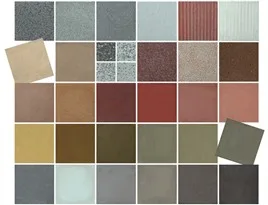
Prefabricated concrete cladding leverages concrete’s high plasticity to fully realize architects’ design visions, lending large public buildings’ exteriors a distinctive aesthetic appeal. This type of decorative concrete cladding consists of reinforced concrete panels with a surface layer crafted through reverse molding technology. By creatively manipulating colors, tones, textures, styles, and irregular lines, and by combining patterns and hues, decorative concrete can mimic natural materials such as marble, granite, brick, tile, and wood.
The simplicity and solidity of plain concrete evoke the timeless elegance of ancient and natural architecture. Manufactured industrially in factories, these panels enable rapid construction, ensure high quality, and reduce maintenance costs. Depending on project requirements, they can be designed as composite insulated exterior wall panels that integrate decoration, insulation, and enclosure functions, or serve solely as decorative cladding for composite walls.
Types of Finishes
■ Brick Veneer

■ Stone Veneer
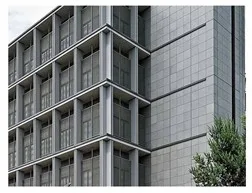
■ Clear Water Concrete Finish
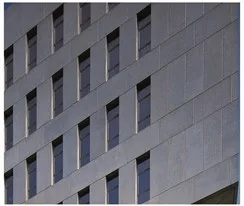
■ Colorful Concrete Veneer
Technical Performance Indicators and Standards
■ Thermal Insulation
Standard concrete panels are combined with 50-80mm thick polystyrene boards, achieving a thermal transmittance below 0.60 W/(m²·K), effectively complying with the “Energy Saving Design Standards for Civil Buildings”.
■ Structural Performance
These claddings meet the requirements of GB50010 “Code for Design of Concrete Structures” and GB50204 “Code for Acceptance of Construction Quality of Concrete Structures”.
■ Decorative Quality
They conform to GB50210 “Code for Quality Acceptance of Building Decoration and Renovation Engineering”.
■ Seismic Performance
The decorative concrete cladding is attached to the main structure via flexible connectors, allowing for inter-story displacement during earthquakes. This design is suitable for regions with seismic fortification intensity up to 8 degrees.
Classification of Panel Types and Design Parameters for Exterior Wall Cladding
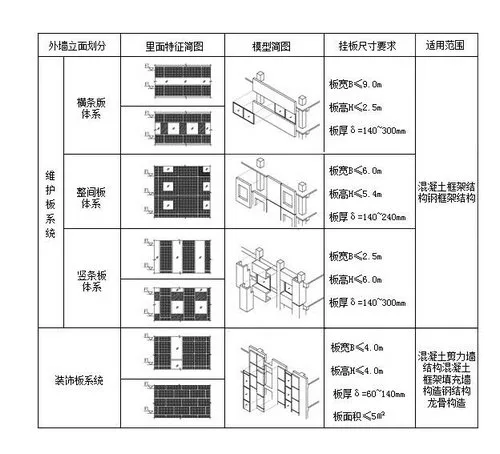
External Wall Panel Connection Structure
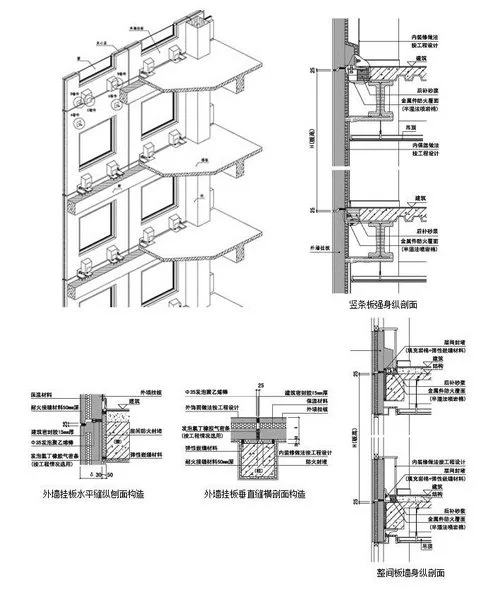
Installation Method
■ Installation and Connections
The prefabricated concrete cladding should be attached to the main structure using flexible connection nodes that provide support below and tension above. Currently, these flexible nodes include elastic sliding connectors and elastoplastic deformation connectors.
■ Interface Dimensions
The gap between the panel and the main structure should be 30-50mm, while the joint width between panels should range from 15-25mm.
Waterproofing of Panel Joints
■ Building Sealants
Select sealants appropriate for the exterior finish, ensuring their performance meets relevant national or industry standards.
Residential Industrialization Private Think Tank Group: 147874495
Industrial Architectural Designer Group: 138517101
Industrial Architecture Student Group: 199516367















Must log in before commenting!
Sign Up