
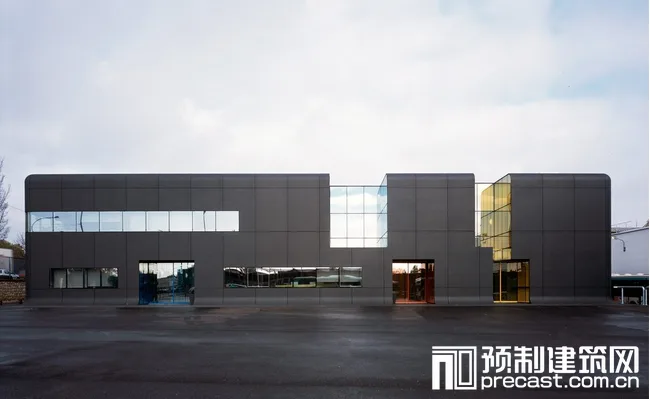
The easiest way to assess the level of industrialization during the design phase is by calculating the prefabrication rate. This rate is defined as the ratio of the volume (or value) of prefabricated components to the total volume (or value) of all components in the building.
Using volume ratio works well when the component materials are generally the same and their unit volumes don’t differ significantly. However, if steel structures replace traditional reinforced concrete, the unit price of steel is much higher while its volume is smaller. In such cases, volume ratio does not accurately reflect the real situation.
Similarly, calculating the prefabrication rate by value can be misleading. For example, prefabricated reinforced concrete exterior wall panels typically cost more than masonry walls. This can inflate the prefabrication rate when using these panels, giving a false impression of a higher industrialization level.
Therefore, when using the prefabrication rate to describe a building’s degree of industrialization, it is important to clarify what this rate truly represents.
Furthermore, prefabrication alone does not fully capture industrialization. If the design lacks standardization, resulting in many unique components that don’t follow modular principles and have low repetition, this should not be considered industrialized. For instance, consider a music hall in a major city where the roof consists of several irregular geometric shapes and the glass panels between steel beams vary greatly in size. Even if these panels are factory-cut, they are rarely identical or repeatable. Installation becomes complex and requires precise fitting, driving up costs significantly. In such cases, the benefits of factory prefabrication are difficult to demonstrate.















Must log in before commenting!
Sign Up