
Medical Aircraft
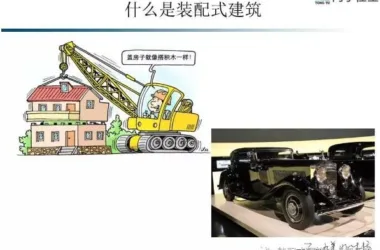
Residential industrialization refers to the production methods and technological approaches applied in constructing residential buildings. It involves utilizing modern industrial techniques and organizational systems to systematically integrate various production factors throughout different stages of residential construction. This approach standardizes building designs, industrializes component manufacturing, serializes residential parts and products, and facilitates on-site assembly. It also integrates civil engineering with decoration, promotes socialized production and operations, and establishes a streamlined factory workflow. As a result, residential industrialization enhances quality, efficiency, lifespan, and cost savings while reducing energy consumption.
Introduction
Residential industrialization represents the modernization and industrialization of housing production. It is the comprehensive transformation of the traditional housing industry by adopting advanced science and technology, management methods, and industrialized production processes to meet contemporary development demands.
This production mode employs modern industrial means and organizations to coordinate and integrate all factors involved in residential building construction. It ensures standardized building designs, industrialized component production, serialized parts and products, on-site assembly, integrated civil engineering and decoration, and socialized production and operations. This coordinated approach forms an efficient factory-like workflow, improving quality, efficiency, durability, reducing costs, and lowering energy use.
By emphasizing large-scale industrial production methods for residential buildings, industrialization aims to boost production efficiency and overall quality while effectively reducing energy consumption. It fundamentally transforms traditional building methods that heavily consume resources and energy and negatively impact the environment.
Construction Methods
Industrialized construction employs standardized components and general large-scale tools such as standardized steel plates. Depending on where residential components are produced, industrial construction can be classified into two types: factory production and on-site production.
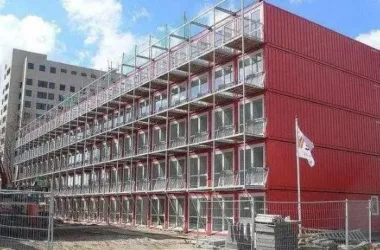
 Factory construction involves batch-producing standardized components in factories according to unified standards. These components are then transported to the site and mechanically assembled into homes. Such homes, known as prefabricated modular houses, include large block houses, large wall panel houses, frame light panel houses, modular houses, and others.
On-site construction refers to producing components directly at the construction site, where production and assembly happen simultaneously. Despite being on-site, this method still uses large tools and management standards typical of factory production. Types of on-site industrialized residences include large template (building industrialization) residences, sliding template residences, and tunnel template residences.
Application and Development
Residential industrialization is now the mainstream development trend in the global housing construction industry. Originating in Western developed countries after World War II, it has become a leading residential development model in nations like France, the United States, and Japan. After more than fifty years of growth, its adoption continues to rise in these countries, becoming the norm in real estate development.
In China, residential industrialization began later and has undergone a long development process. With rapid economic reforms and growth in the real estate sector, China has made significant progress in residential industrialization, entering a new phase of development. Several major developers and construction companies—such as Yuanda Residential Industry Co., Ltd., Vanke Enterprise Co., Ltd., Rui’an Real Estate Co., Ltd., and Qingdao Haier Group—are exploring and implementing industrialized residential technologies. Due to the long construction periods, low efficiency, and inconsistent quality associated with traditional building methods, industrialized residential construction has become an inevitable trend in technological advancement.
Benefits of Residential Industrialization
1. Promoting Affordable Housing Construction
Industrialized residential construction relies on standardization, serialization, and industrialization, ensuring consistent component production. This prevents issues like cracks caused by dimensional mismatches and addresses common problems in traditional construction, such as water leakage in kitchens and bathrooms, window sills and exterior walls, safety hazards in water and electrical pipelines, and fire protection facilities. It also guarantees high-quality finishes and simplifies maintenance and component replacement, significantly enhancing overall building quality.
2. Advancing Residential Industrial Development
Traditional residential construction methods increasingly hinder industrialization due to low levels of mechanization and poor productivity. In China, construction is still largely manual and on-site, resulting in high labor intensity, poor working conditions, and low productivity. Additionally, the integration of technologies remains weak, with developments relying mostly on isolated technologies rather than a cohesive, standardized building system. Critical technical challenges related to industrial development remain unresolved. Resource consumption and waste during construction are high compared to developed countries, with environmental pollution resulting from inefficient practices. Residential industrialization demands a fundamental change in production methods, focusing on technological innovation in the building’s main structure to overcome these challenges.
3. Significance in Building a Conservation-Oriented Society
China’s 11th Five-Year Plan emphasizes building a conservation-oriented society, highlighting the need for sustainable construction practices. Prefabricated structures provide an effective solution by promoting resource efficiency and environmental protection in the construction sector.
4. Economic Benefits
Because prefabricated components are mostly manufactured in factories, with only assembly and connection required on-site, the construction timeline shortens significantly, speeding up capital recovery. Data shows that in prefabricated concrete construction, component production accounts for about 65% of labor hours, transportation 10-15%, and structural installation 20-25%. This streamlined process greatly enhances project profitability.
5. Quality and Efficiency Improvements
China’s construction industry faces issues such as excessive manual labor, which introduces variability and inconsistency in workmanship. For example, steel reinforcement work in cast-in-place structures depends heavily on manual labor, causing uneven quality and frequent rework before concrete pouring. Moreover, damage to reinforcement often occurs during pouring, further compromising quality. Prefabricated structures, manufactured in controlled factory environments, benefit from stable personnel, accumulated expertise, and easier quality control. Although initial challenges exist, ongoing research aims to overcome these, ultimately resulting in superior quality and efficiency.
6. Environmental Benefits
Environmental protection is crucial amid rapid development. Using prefabricated construction reduces energy consumption and pollution throughout the material lifecycle—from mining and processing to transportation and installation. For instance, traditional cast-in-place concrete construction consumes significant wood for temporary supports and formwork, whereas prefabrication conserves wood resources, helping preserve forests and wildlife.
Additionally, reduced material usage lowers transportation frequency, decreasing road maintenance costs and energy consumption linked to road repairs. Prefabricated structures have also been shown to emit fewer greenhouse gases than cast-in-place alternatives, addressing global climate concerns.
7. Social Benefits
Prefabricated construction offers significant social advantages. Factory pre-production reduces the number of material transport trips, easing urban traffic congestion and minimizing related issues such as vehicle wear, road maintenance, air pollution, and public dissatisfaction. Traditional cast-in-place construction demands extensive manual labor, often sourcing workers from rural areas or abroad, which can create social challenges post-construction. Widespread adoption of prefabrication can alleviate these labor and social problems.













Must log in before commenting!
Sign Up