
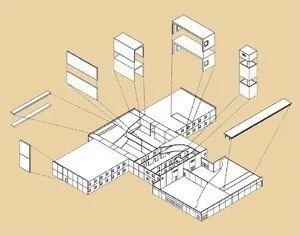
Housing industrialization essentially involves the industrialization of housing production, supply, and related processes. The foundation for this transformation is standardization.
Introduction
Residential industrialization is the application of industrialized production techniques to build residential structures. This approach is a necessary step to upgrade traditional, low-mechanization, and labor-intensive construction methods. Its goals include increasing labor productivity, improving overall building quality, reducing costs, and minimizing material and energy consumption.
Originally, the term “industrialization of residential properties” focused primarily on housing. However, this should not be limited strictly to residential construction; it should encompass the industrialization of all property types, including residential buildings. Therefore, the term “housing industrialization” may be somewhat narrow, as “housing” here broadly refers to all building products.
Key conditions for achieving housing industrialization include: ① employing industrialized construction methods and ② using standardized, serialized components and parts in housing.
Main Concept
Housing industrialization consists of two main aspects: the industrialization of technological achievements related to housing, and the industrialization of housing production methods.
The industrialization of technological achievements involves rapidly converting scientific advancements in residential construction into productive applications that yield economic and social benefits. This process is closely tied to ongoing reforms in China’s scientific and technological systems.
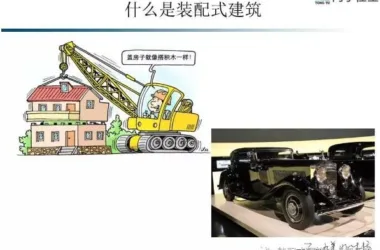
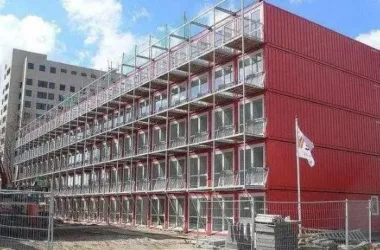
When we commonly refer to residential industrialization, we usually mean the industrialization of production methods. Japan exemplifies this with its advanced practices. For instance, Mizuki Chemical Industry Co., Ltd. in Saitama Prefecture operates a residential factory that uses assembly lines to produce houses. They break down houses into box-shaped components and manufacture all necessary parts on the production line within about 40 minutes, then transport and assemble them on-site in a single day.
China has also made significant strides in housing industrialization, with companies like Yuanda Housing Industry, Vanke, and Heilongjiang Yuhui Group achieving notable progress in this field.
Standards for Residential Industrialization
The United Nations has outlined six standards for industrialized integrated home decoration: continuous production, standardized production materials, integrated production processes, standardized engineering and construction management, mechanized production, and integration of technology, production, and research.
Broadly, residential industrialization standards include:
(1) Standardization of residential buildings;
(2) Industrialization of residential construction;
(3) Integration of residential production and operations;
(4) Socialization of residential collaborative services.
The modernization of the housing industry is an advanced stage of housing industrialization. It leverages modern science and technology to transform traditional housing, with a focus on technological progress. This includes standardizing design, industrializing production, and applying a large number of “four new” technologies—new technology, materials, processes, and equipment. The goal is to improve productivity, quality, functional use, and living standards, enabling rapid, high-quality, efficient construction of market-demanded housing.
Main Benefits
Housing industrialization fundamentally changes the traditional construction industry’s production model. By using industrialized production methods, residential industrialization lowers costs, boosts efficiency, and ensures quality. This approach has become an inevitable trend in the construction industry and presents new opportunities for affordable housing development.
Internationally, housing industrialization is well-established. Japan has fully embraced this concept in housing construction. In China, the current process still relies heavily on subcontracting. However, the rise of residential industrialization management companies has facilitated direct communication with consumers, allowing them to better understand customer needs and oversee the entire home purchasing and building process. These companies coordinate with real estate developers, markets, and consumers to optimize resource allocation without gaps in construction.
Currently, fully decorated finished homes dominate the domestic market. This shift aligns with government promotion of the “four savings and one environmental protection” concept—water conservation, land conservation, energy conservation, material conservation, and environmental protection. By avoiding the waste associated with secondary decoration of unfinished homes, residents can move in immediately with their belongings, saving time and effort. This trend is expected to drive the future of real estate development.
Suggestions for Advancing Residential Industrialization in China
As China advances housing industrialization, it is crucial to balance technological application with social equity. The following recommendations highlight key areas of focus:
Develop Multiple Residential Standards to Narrow Gaps
There is an urgent need to establish comprehensive housing standards. From a social equity perspective, these standards should address the diverse needs of different income groups and avoid the current trend of uniformly high standards. Maintaining a range of standards helps reflect social fairness and inclusivity.
Create Policies for Mixed-Standard Residential Construction
Currently, industrial production tends to produce uniform housing within communities, limiting differentiation. To address this, a mixed construction model using multiple housing standards is recommended. This approach supports social diversity and equity during industrialization. Developing standardized components and assembly techniques that can be used across different housing standards will facilitate efficient industrial production.
Strengthen Cost Control in Residential Construction
International experience shows that mature housing industrialization reduces construction costs, helping to alleviate high housing prices. To promote social equity, China’s priority should be researching methods to reduce construction costs rather than solely focusing on modernization and informatization. Controlling costs will enable more urban residents to afford housing.
Enhance Government Role in Housing Industrialization
The government plays a crucial role, especially in urban renewal projects. It should consider local residents’ economic conditions and provide adequate compensation to help them purchase homes in their original neighborhoods or nearby areas. Government-led housing industrialization projects can boost market acceptance and set an example for the industry, accelerating development and supporting housing equity.














Must log in before commenting!
Sign Up