
1. Prefabricated Modular Buildings
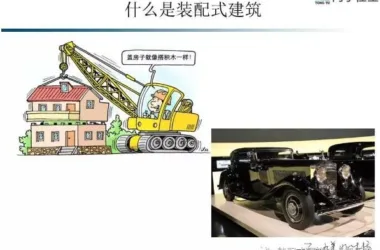
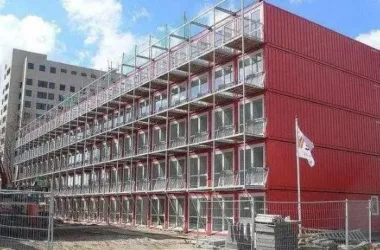
Prefabricated buildings are constructed by manufacturing some or all components in a factory, then transporting them to the construction site for assembly through secure connections.
2. Assembly Rate (also known as PC Rate)
The assembly rate is the ratio of precast concrete to the total concrete used in a single building. It is typically calculated based on both positive and negative areas above ground level. Currently, there is no unified national standard governing this calculation.
This index reflects the level of industrialization in building construction—the higher the assembly rate, the greater the degree of industrialization.
3. Assembly Rate for Projects
This refers to the ratio between the area of individual buildings that meet assembly rate requirements and the total project area. Like the building assembly rate, there is no nationwide regulation, and local governments or construction authorities usually control this during land transfer and project development.
4. Assembled Integral Concrete Structures
These structures are formed by connecting prefabricated concrete components using steel bars, connectors, or prestressing techniques, followed by on-site concrete pouring.
Industry-standard design and construction methods typically use stacked horizontal components with cast-in-place vertical elements. This approach creates a monolithic structural system capable of meeting seismic requirements.
5. Composite Concrete Bending Members
These members are created by pouring concrete over prefabricated concrete components to form a single integral bending element. Examples include composite concrete slabs and composite concrete beams.
6. Prefabricated Insulation Walls
These walls consist of a sandwich structure with an insulation layer between inner and outer concrete panels, connected by fiber-reinforced plastic (FRP) connectors. They are manufactured in prefabrication factories and transported to the construction site for installation.
7. Fiber Reinforced Plastic (FRP) Connectors
FRP connectors are used to join the inner and outer concrete panels of prefabricated insulation walls. They transfer shear forces between wall panels, creating a unified structural element. These connectors are made from fiber-reinforced composite plastic.













Must log in before commenting!
Sign Up