
In recent years, prefabricated buildings have experienced rapid growth, supported by government regulations that promote their development. This surge has opened new opportunities in the architectural design industry. But how exactly are prefabricated homes constructed? What distinguishes their design and construction from traditional methods, especially regarding design approaches and specific requirements?
1. Focus on Different Scales
Traditional residential projects typically focus on the specific needs of individual developments, addressing client conditions, functional requirements, and aesthetic preferences. Each community is often treated as a separate, unrelated entity. In contrast, prefabricated housing design considers the entire community as part of a larger, integrated prefabricated system. This system influences other communities adopting similar construction methods by sharing design techniques, assembly components, standard modules, and building types. Therefore, at the outset of designing prefabricated buildings, it is essential to assess the community’s relationship within the broader prefabricated housing system and its connection to other prefabricated neighborhoods.
2. Differences in Design Objectives
The goals for traditional versus prefabricated housing differ mainly in two ways. First, most traditional residential designs start from scratch, guided by project briefs focused mainly on functionality and livability. Prefabricated housing design, however, must also consider factory production processes and on-site assembly. This requires standardizing axis dimensions and layouts to reduce the variety of exterior wall and floor components, thereby improving construction efficiency and balancing functionality with cost-effectiveness.
Second, the industrial nature of prefabricated housing allows for the reuse of component modules across different communities, enabling multiple uses of standardized components and buildings.
3. Expanded Design Stages
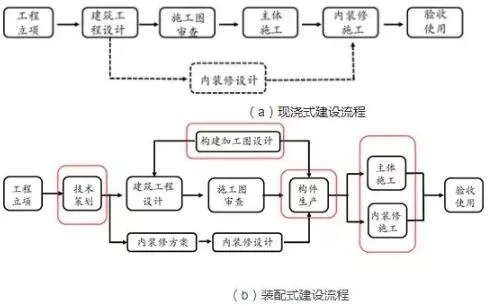
Traditional residential projects usually involve stages like community planning and conceptual building design. Prefabricated housing design extends throughout the entire construction process, from initial design to component production and on-site assembly. It requires detailed consideration of component disassembly and refined design, along with close collaboration among structural, mechanical, electrical, and interior design disciplines to achieve integrated design across all professions and stages.
This approach reflects the global trend toward industrialized construction and international product standardization, highlighting the growing integration of architectural design within the entire construction process and its influence over project development.
4. Establishing a Standardized Design System
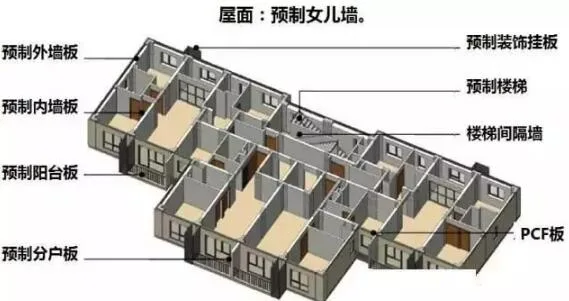
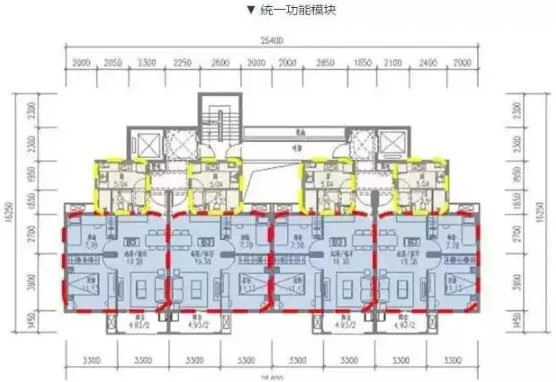
Prefabricated housing demands a comprehensive standardized design system, typically composed of standardized layout modules and transportation core modules. Layout modules organize shear walls into flexible configurations, allowing internal partition walls to be adjusted while ensuring functional dimensions align with interior design principles, furniture arrangements, and ergonomics. The design also respects modular principles and reserves interfaces for standardized interiors.
Transportation core modules standardize elements like stairs, elevator shafts, mechanical and electrical ducts, and corridors in compliance with industrial requirements. This modular approach facilitates flexible combinations, enabling diverse standardized floor plan configurations in the future.
5. Diverse Floor Plan Combinations
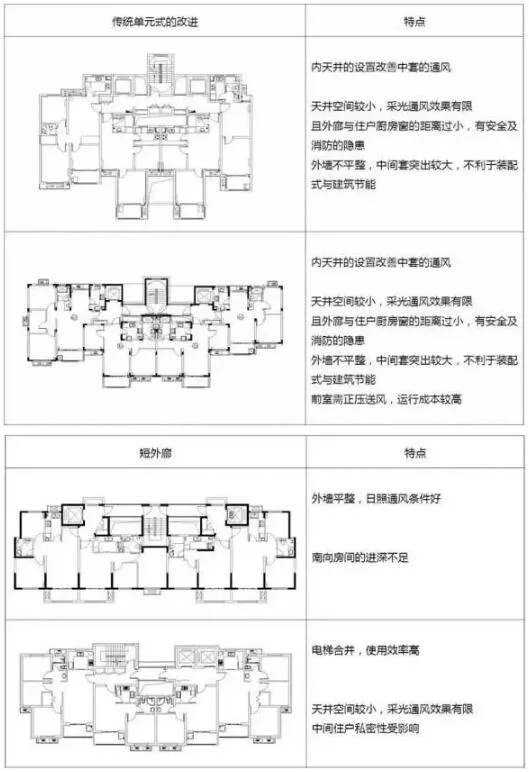
Planning and designing prefabricated residential communities is based on standardized building modules, while also integrating the urban context and surrounding environment. Factors such as historical context, development conditions, surrounding buildings, and traffic flow must be fully considered. Different planning scenarios require varied building forms and floor plan combinations.
The modularity and standardization of prefabricated housing enable diverse unit combinations, allowing for many types of floor plans—such as slab, tower, and corridor houses. This flexibility supports a wide range of planning needs and urban settings.
6. Emphasis on System Integration
System integration has become a key trend in prefabricated housing design. This includes separating structural systems, which have longer lifespans, from filling systems with shorter lifespans. Integrating equipment shafts and service spaces is also rational, extending building lifespans and promoting efficient maintenance.
7. Principles for Optimizing Unit Layouts
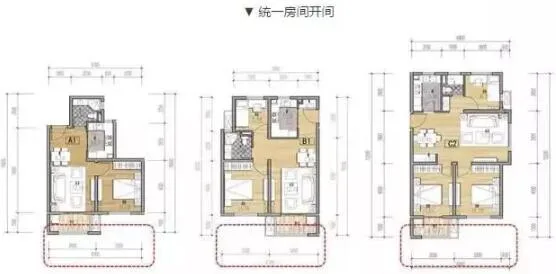
Good layout design aims to create functional, comfortable living spaces. This principle applies to both traditional and prefabricated housing. In prefabricated units, axis adjustments and functional fine-tuning optimize layouts to improve livability.
Particular attention is given to standardizing kitchens and bathrooms. By leveraging standardized designs and component integration for these spaces, functional layouts become more efficient and integrated. This approach also facilitates the installation and performance optimization of modular bathrooms.
8. Diverse Facade Designs
Unlike traditional projects, prefabricated housing requires a facade aesthetic system that aligns with material properties and construction methods. Using the “wall layer” theory, facades can achieve varied forms. Although standardized design limits geometric dimensions of layouts and structures—fixing exterior wall sizes—elements like color, light and shadow, texture, combination, construction techniques, and sequencing can be creatively manipulated. By editing these ‘wall layers,’ designers can produce a wide range of facade appearances.
9. Different Evaluation Criteria
Prefabricated housing design involves broader evaluation criteria beyond traditional residential concerns. It emphasizes comprehensive assessment of quality, cost, construction timelines, efficiency, and environmental impact. Industrialized assembly methods enhance product quality and make visual outcomes more controllable. Additionally, computer-aided design and factory production improve predictability of costs and schedules. Industrial production also facilitates the adoption of new environmental protection measures.













Must log in before commenting!
Sign Up