
In the mid-19th century, London, England, faced severe traffic congestion. Charles Pearson, a lawyer, wondered how to bring the speed of trains into the city. One day, inspired by a mouse scurrying through a hole in the wall, he had a brilliant idea: why not run trains underground? In 1863, this vision became reality with the launch of the world’s first subway in London. Since then, major cities around the globe have followed suit, embracing this fast, traffic-free, environmentally friendly, and comfortable mode of transportation beloved by many.
1. Building a Subway Is No Easy Task
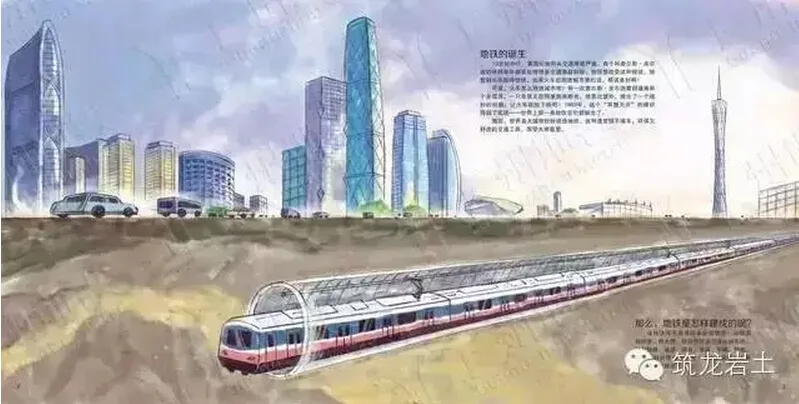
Constructing a subway is a complex and challenging project. It is a high-density, large-scale rail transit system that involves over 40 specialized technical fields and requires several years to complete.
1.2 Subway Network: A Spider Web of Lines
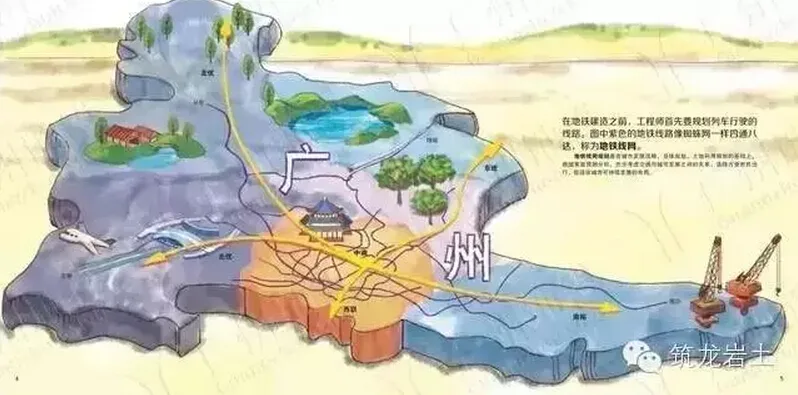
Before construction begins, engineers meticulously plan the train routes. The purple lines shown in the image spread out like a spider’s web, forming the subway network.
This network planning is guided by urban development strategies, comprehensive city planning, and land use considerations. It carefully balances transportation needs with urban growth by forecasting passenger flow, ensuring convenient travel for citizens while supporting sustainable development.
2. Geological Structure and Exploration in Guangzhou
2.1 Guangzhou: A “Geological Museum”
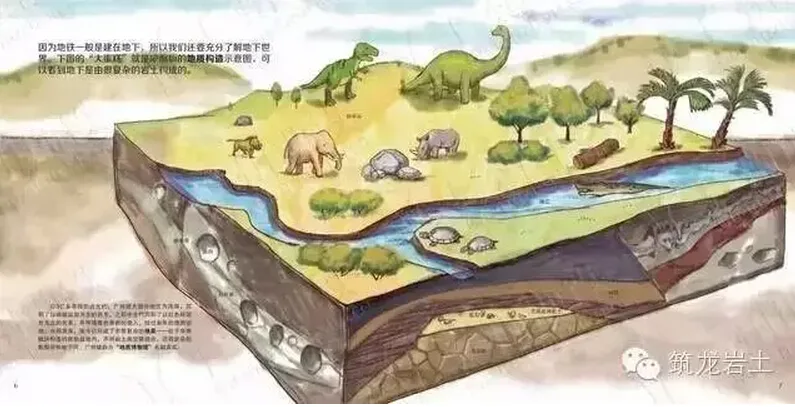
Since subways are built underground, understanding the subsurface geology is crucial. The diagram above is a simplified geological map showing the complex layers of rock and soil beneath Guangzhou.
Over 300 million years ago, during the Paleozoic era, most of Guangzhou was a shallow sea with carbonate rocks dominating. Later, in the Mesozoic era, red fragmented rocks formed alongside magmatic intrusions. Today, due to geological shifts and water systems, Guangzhou sits in a fault basin with a complex mix of rock and soil types, fault zones, and underground rivers—truly earning the nickname “Geological Museum.”
2.2 Engineering Geological Surveys: Our Window Underground
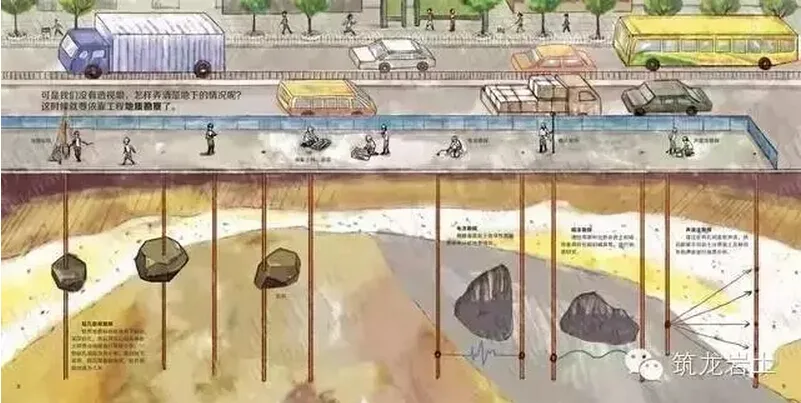
Without the ability to see underground, we rely on engineering geological surveys to understand subsurface conditions.
Drilling Sampling Exploration
Using geological drilling rigs, deep holes are drilled to collect soil samples for analysis. Typically spaced tens of meters apart, the drilling is more frequent in complex areas like caves or isolated rocks.
Electrical Prospecting
This method analyzes geological conditions based on electrical property differences among rock and soil types.
Magnetic Exploration
By studying magnetic anomalies caused by varying rock and soil magnetism, geological features are identified.
Sonic Exploration
Sound waves sent between boreholes help analyze subsurface structures based on the reflected signals from different layers.
3. Determining Subway Station Locations
3.1 Station Placement
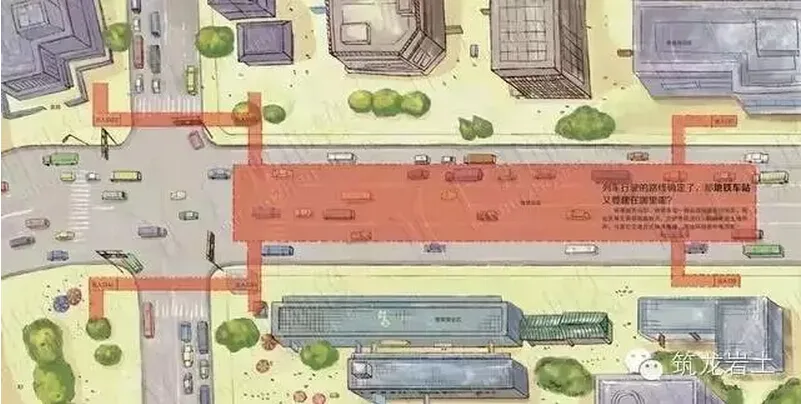
Once train routes are established, the next step is deciding where to build subway stations.
Stations are typically located in high-traffic areas such as residential or commercial hubs to maximize convenience. Factors like land use, ease of transfer to other transport modes, and surrounding environmental conditions are also considered.
4. Open Cut Construction Method
4.1 Safe and Cost-Effective Open Cut Method
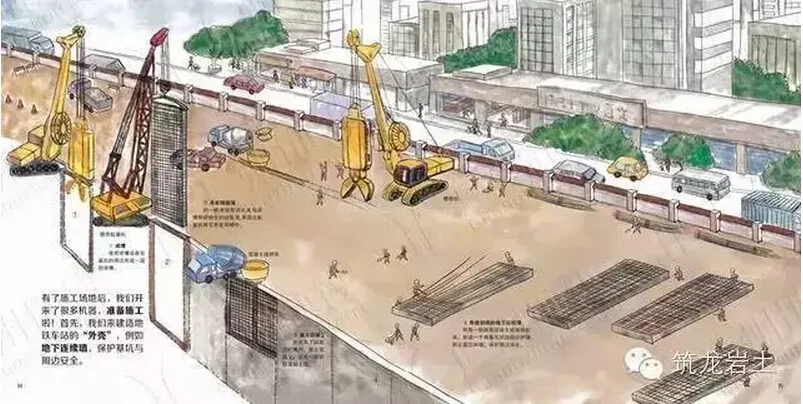
Construction begins with preparing a suitable site. Subway stations are often excavated from the surface downwards using the open cut method, which is both safe and economical.
Before excavation, buildings, trees, and underground pipelines that interfere with construction must be addressed. Temporary roads are created to minimize traffic disruption.
A. Green Relocation
Plants within the construction area are carefully relocated and restored after work is completed.
B. Traffic Relief
Roads are widened or rerouted temporarily to maintain smooth traffic flow. After construction, roads are restored.
C. Building Demolition
Structures within the impact zone are either protected or demolished to ensure safety.
D. Pipeline Relocation
Underground utilities such as power, communication, gas, and water lines must be protected or moved before construction begins.
4.2 Constructing the Subway Station’s “Outer Shell”
Once the site is ready, heavy machinery arrives to start building the station’s protective structure.
① Groove Excavation
Special equipment digs deep grooves around the foundation pit perimeter.
② Steel Cage Installation
Steel bars are tied into cages matching the groove shape, then lifted into position.
③ Concrete Pouring
Concrete is poured into the grooves holding the steel cages to form reinforced concrete walls.
④ Continuous Wall Formation
Connecting these walls creates a protective enclosure around the pit, preventing collapse and safeguarding the surroundings.
4.3 Building Subway Stations in Deep Excavations
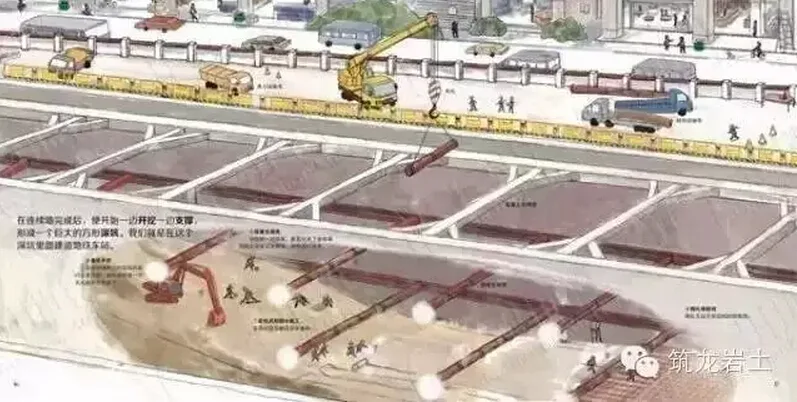
After the continuous wall is complete, excavation and support work proceed simultaneously, creating a large, square deep pit for the station.
⑤ Excavation
The soil inside the protective wall is excavated, forming a rectangular foundation pit.
⑥ Support Beams
Support beams are installed between the walls each time excavation reaches a new depth to maintain pit stability.
⑦ Waterproofing
A waterproof membrane is laid at the bottom of the pit.
⑧ Steel Mesh Installation
Steel mesh is tied for the main station structure.
4.4 Subway Station Takes Shape
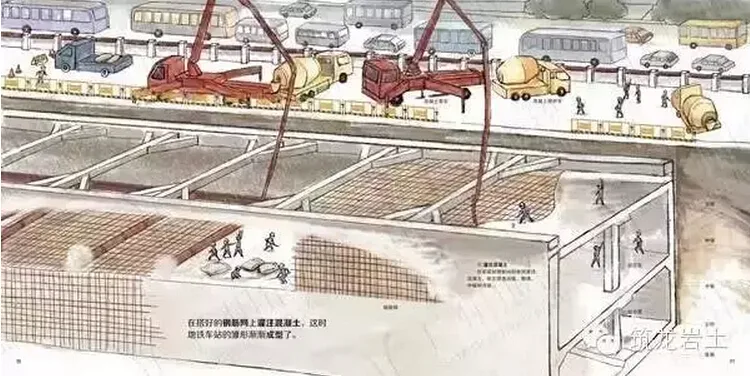
Concrete is poured into the steel mesh with formwork, gradually forming the station’s foundational structures including the base plate, side walls, middle plate, and roof.
4.5 Restoring Pipelines and Roads
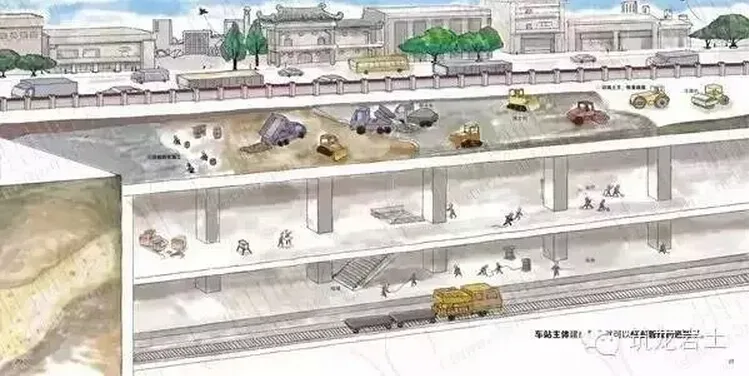
Once the station’s main structure is finished, underground utilities and surface roads are restored to their original state.
5. Paving and Mining Construction Methods
5.1 Paving Method
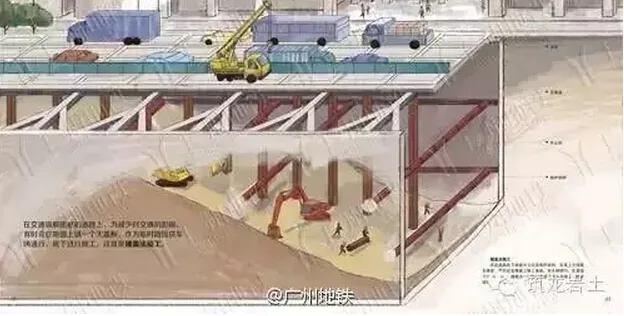
In areas where traffic cannot be easily diverted, a large cover plate is installed over the road to create a temporary surface for vehicles. Construction proceeds underneath this cover, minimizing traffic disruption.
The process involves building a central pillar and enclosure beneath the road, then adding support beams and finally covering them with the plate to allow traffic above while work continues below. Although this method balances traffic flow and construction, it increases complexity.
5.2 Mining Method for Underground Excavation
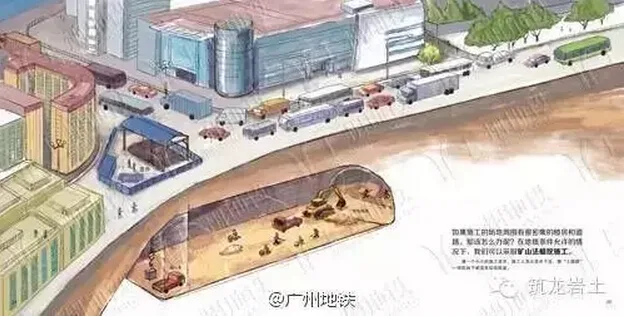
When dense buildings and roads surround the site, the mining method is used if conditions allow. A small shaft is built, and workers descend underground to excavate stations or tunnels, much like a “groundhog.”
5.3 Sequential Excavation in Mining Method
Excavation is done in small sections sequentially, gradually creating underground space. When encountering water-rich layers that threaten tunnel wall stability, artificial freezing is used to solidify the soil before continuing.
Many subway stations, passageways, and sections are constructed using this mining technique.
6. The Steel Earthworm Shield Machine
One of the most fascinating aspects of subway construction is the shield tunneling machine.
6.1 Shield Tunneling Method for Subway Tunnels
Most subway tunnels are built using shield tunneling machines.
① Tunnel segments are prefabricated piece by piece at a factory and transported to the site.
② A gantry crane lifts the segments into the tunnel’s starting shaft.
③ A segment handling vehicle moves the pieces into the tunnel.
④ The shield machine assembles the segments to form the tunnel.
6.2 The Shield Machine: A “Steel Worm”
This machine acts like a “steel worm,” boring forward and simultaneously building the tunnel behind it.
A. Control Room
Operators control excavation parameters such as thrust, speed, and direction.
B. Spiral Soil Discharger
This component moves excavated soil and rock from the cutterhead to a conveyor belt, eventually removing debris from the tunnel.
C. Pipe Assembly Machine
Assembles tunnel segments, typically six segments forming a circle about 1.5 meters wide each.
6.3 Navigating Underground Without Getting Lost
Advanced shield machines are equipped with high-precision measurement systems that show their position relative to the tunnel design axis in real time. Operators adjust accordingly to ensure accurate progress.
The machine only moves forward, digging its way to the next station or shaft, completing its task before being lifted out.
7. Overcoming Obstacles: Isolated Rocks and Caves
7.1 Tunnel Design for Energy Efficiency
Tunnels are typically built higher on the sides and lower in the middle, allowing trains to accelerate downhill when departing stations and decelerate uphill when arriving, saving energy.
Ventilation Shafts (Fengting)
These shafts maintain air exchange between the subway and ground, ensuring fresh air circulation. The emitted gases are harmless.
Flood Gates
When tunnels cross rivers or lakes, flood gates can be closed to prevent water backflow, protecting the subway.
Drainage Pumps
These remove accumulated water from tunnels and discharge it into municipal sewage systems.
7.2 The “Lonely Stone” Obstacle
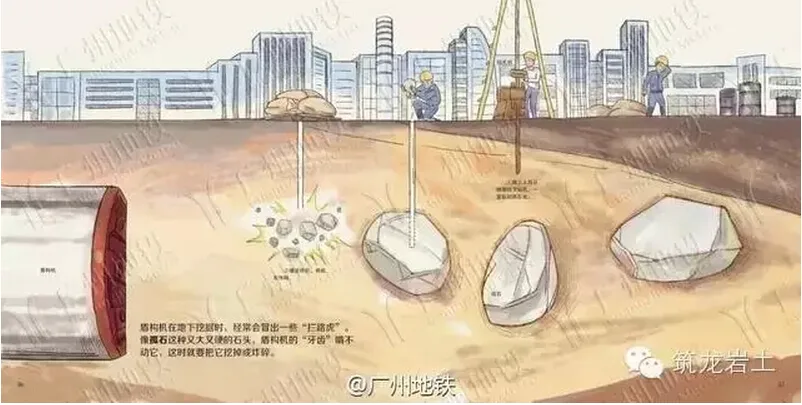
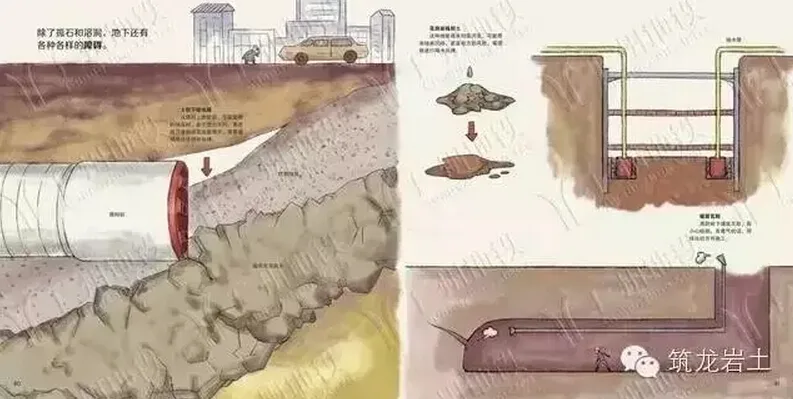
Shield machines often encounter large, hard boulders—“lonely stones”—that their cutters cannot break. These must be drilled from above, filled with explosives, and blasted into smaller pieces.
7.3 The “Monster Mouth”: Underground Caves
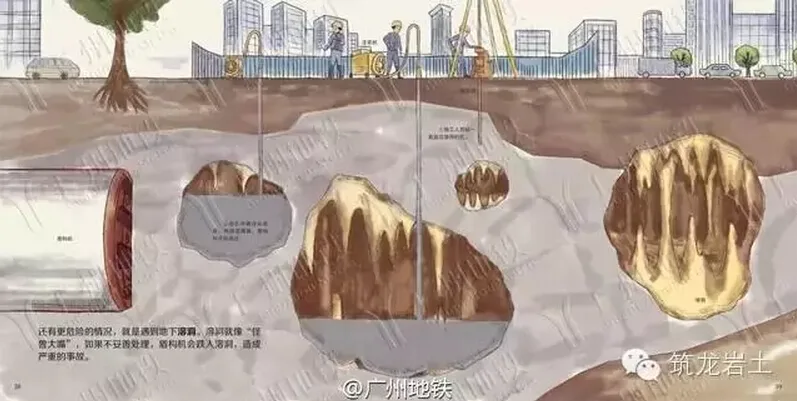
Underground karst caves pose serious risks. If a shield machine falls into one, severe accidents can occur. To prevent this:
① Workers drill into the cave from above.
② Cement slurry is injected to fill and stabilize the cave before tunneling resumes.
8. Excavating and Protecting Structures Beneath Rivers
8.1 Additional Challenges
10.3 The Home of Trains: Vehicle Depot
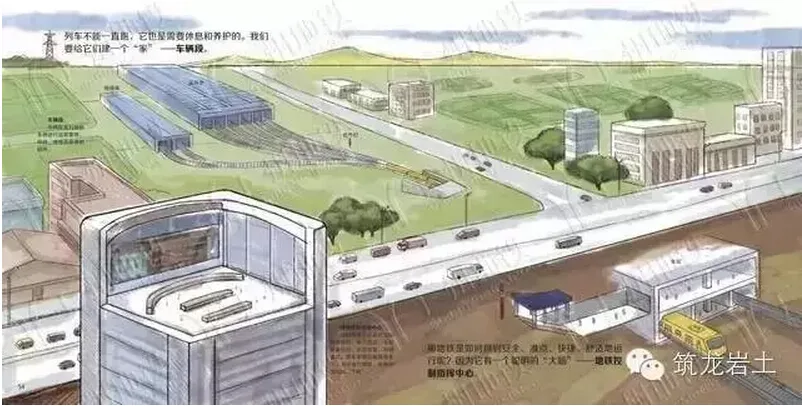
Subway trains need regular maintenance and resting periods. This is why vehicle depots are essential—a place where trains are operated, managed, parked, repaired, and maintained.
Safe, efficient, and comfortable subway operation is coordinated by a sophisticated control command center.
This center manages train scheduling, power supply, station equipment, fire alarms, environmental monitoring, ticketing, and passenger services, ensuring smooth daily operation.
11. Ongoing Subway Protection
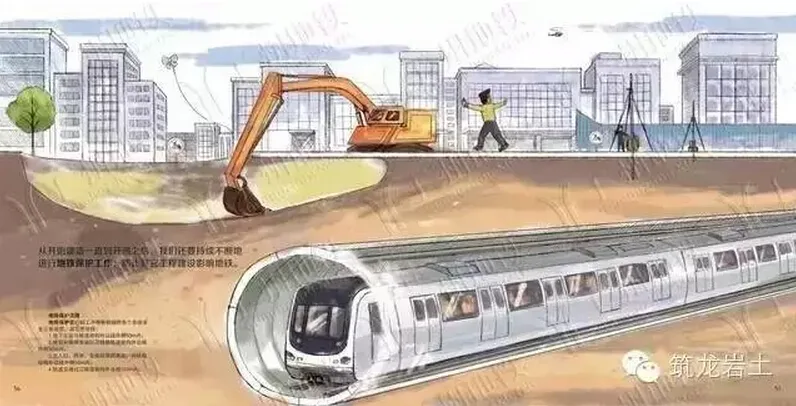
From construction start to opening, continuous subway protection efforts prevent interference from other projects and ensure safety.
Subway Protection Zones Include:
1. Within 50 meters outside the perimeter of underground stations and tunnel structures.
2. Within 30 meters around ground-level and elevated stations and track structures.
3. Within 10 meters of ancillary structures such as entrances, ventilation pavilions, and substations.
4. Within 100 meters of river-crossing tunnel structures.
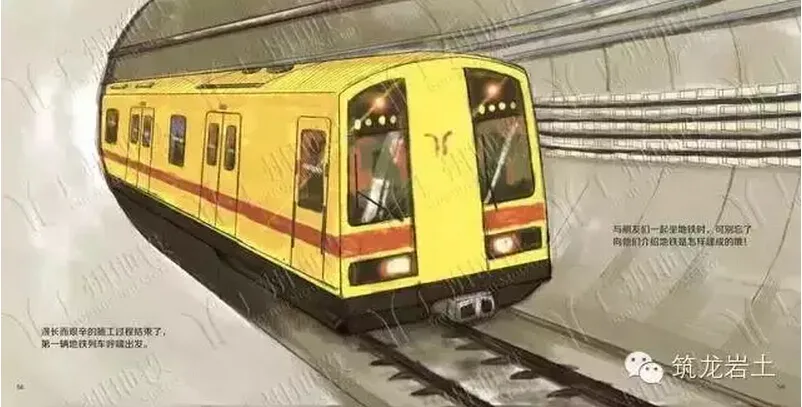
After a long and challenging construction journey, the first subway train roars to life. Next time you ride the subway with friends, don’t forget to share the fascinating story of how it was built!












Must log in before commenting!
Sign Up