
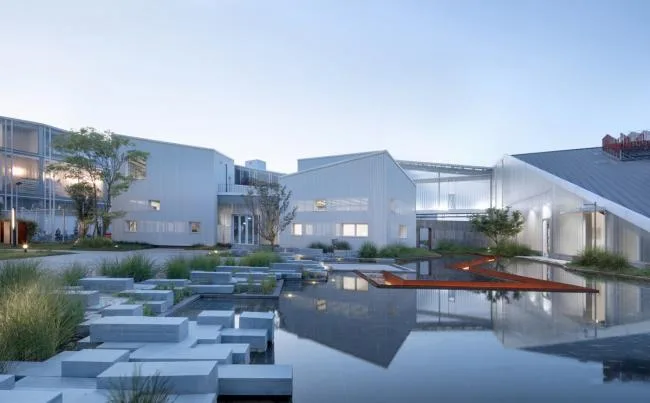
▲ Warm evening view of the central courtyard and life service center © Existence of Architecture – Architectural Photography
Over recent years, driven by traditional economic growth models, numerous industrial new towns have emerged across the country. These industrial parks largely share a similar spatial layout and architectural approach focused on organizing production at minimal cost and maximum efficiency. Large-scale “barracks-style” layouts and “matchbox-style” spaces have become the predominant solutions.
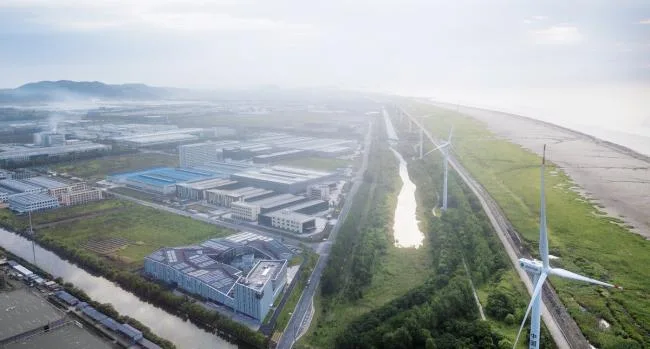
▲ Park by the Qiantang River, where water and sky blend seamlessly © Existence of Architecture – Architectural Photography
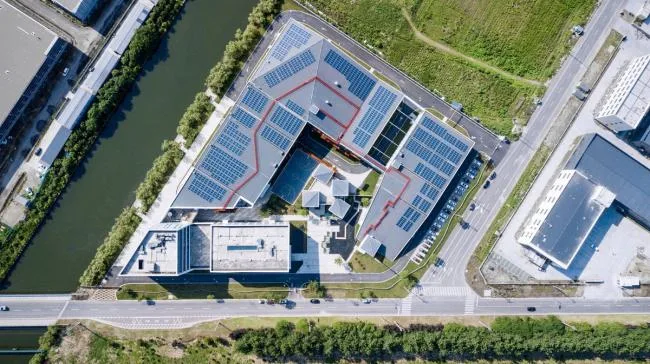
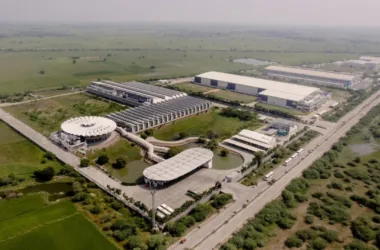
▲ Aerial view from above © Existence of Architecture – Architectural Photography
Zhejiang Pulifeite, an innovative company in automotive technology, commissioned the design of a site located in Jianshan New District, Haining, near the mouth of the Qiantang River. They requested a departure from the traditional industrial park spatial model dominating the area. This aligned with the architect’s own critique of conventional industrial parks, encouraging a deeper exploration of this shared aspiration.
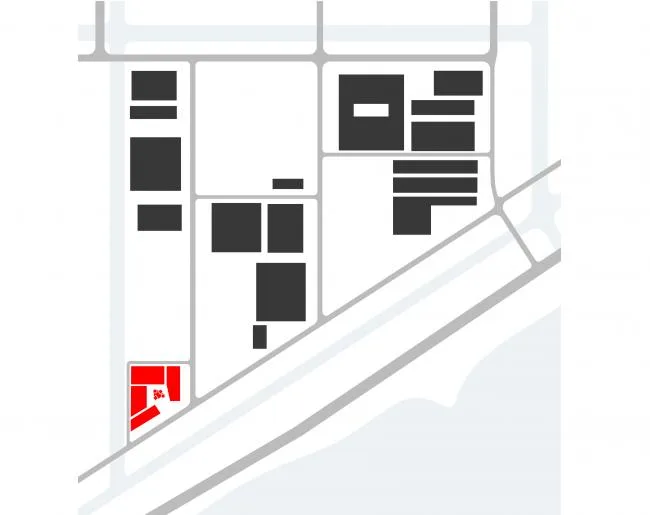
▲ Site texture analysis © gad ·line+ studio
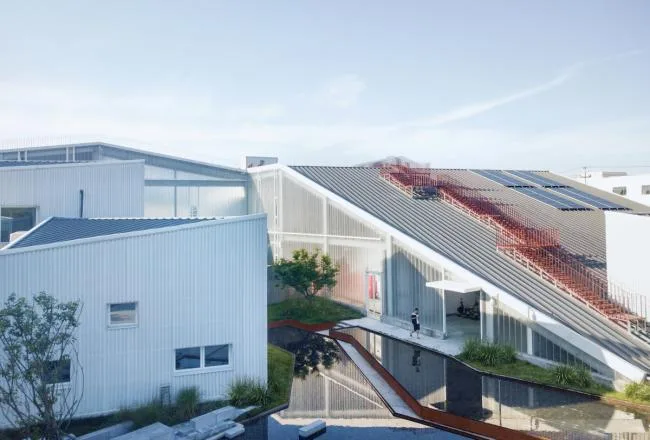
▲ Inner courtyard corner featuring buildings and mountain trail © Existence of Architecture – Architectural Photography
In an age demanding extreme efficiency and spiritual reflection, this project seeks to break away from the enclosed management typical of surrounding parks. Drawing inspiration from traditional village collective labor and daily life, the design explores possible interactions between these traditions and the gradually settling enterprises. By integrating architecture, interior, and landscape design, the project creates a garden-like spatial experience through “streamline reconstruction,” reviving the collective memory of a “mountain house” lifestyle.
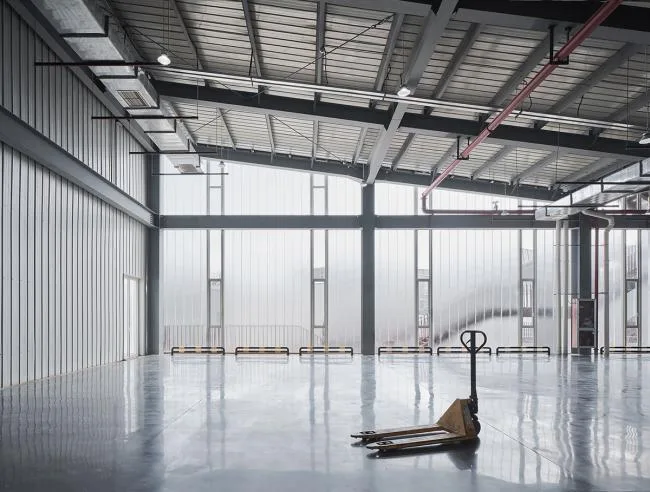
▲ Indoor factory building © wen studio
01. Stable Internal Building Layout
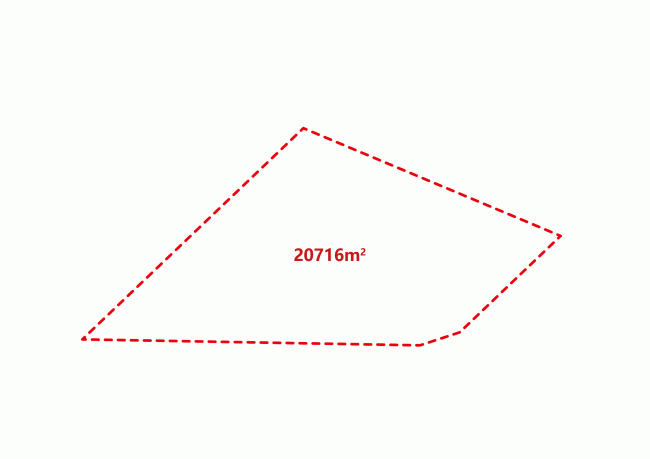
▲ Modular block generation © gad ·line+ studio
After thoroughly understanding the production requirements of the owner’s enterprise and extensive site research, the architect focused on the fundamental element of “streamline” as the entry point for the design. This concept encompasses not only the process and freight flows essential to industrial production but also the daily movement patterns of workers and managers living and working on-site.
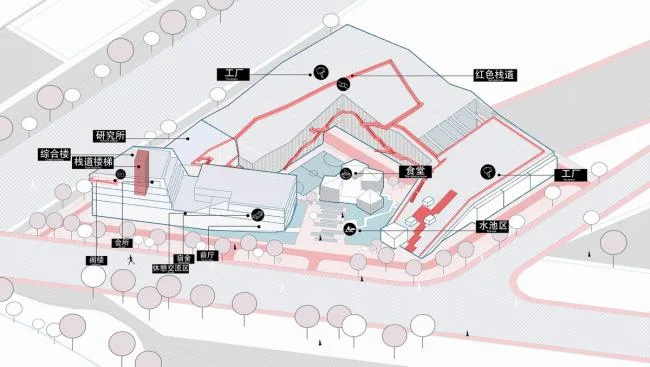
▲ Functional analysis © gad ·line+ studio
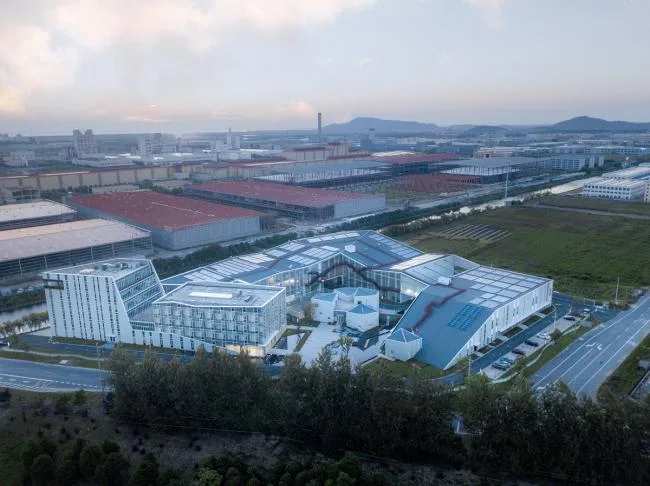
▲ Southeast bird’s-eye view showing a differentiated industrial park distinct from its surroundings © Existence of Architecture – Architectural Photography
From a production logistics perspective, the architect maximized the extension of four buildings along the site’s edges, linking them with a peripheral circular lane to facilitate efficient logistics access. The central area is left as an inner courtyard dedicated to life and community.
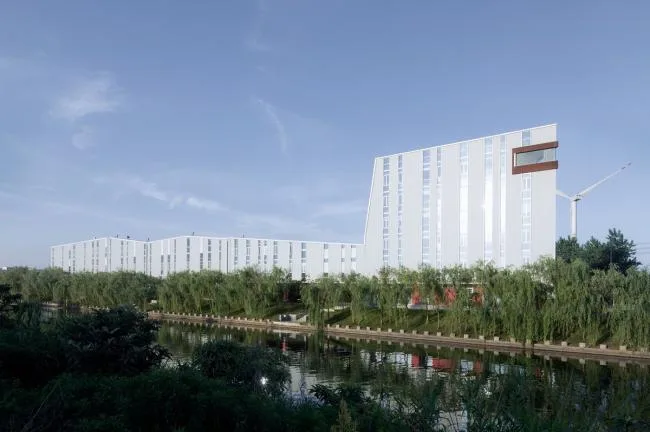
▲ Continuous mountain-shaped building forms viewed from the flood discharge channel to the west © Existence of Architecture – Architectural Photography
An external service workshop is positioned adjacent to the eastern road; basic production workshops are located on the north side, next to the future Phase II site; dust-free workshops and laboratories line the west spillway; and a comprehensive building for research, offices, and living facilities faces the Qiantang River to the south. The fifth volume, housing the canteen and life service center, is situated centrally, acting as a hub for daily activity.
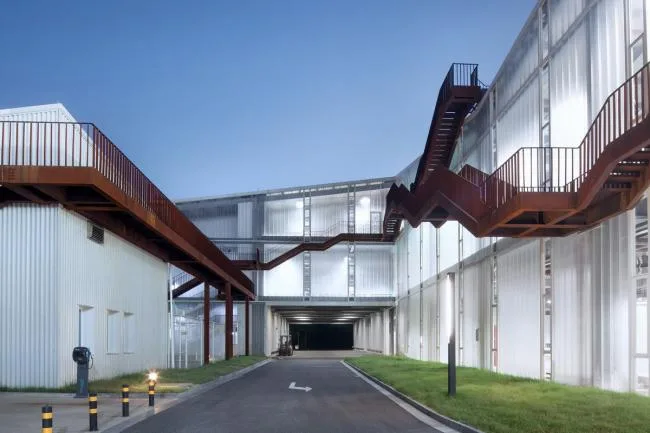
▲ Interior courtyard with U-glass facade illuminated at night © Existence of Architecture – Architectural Photography
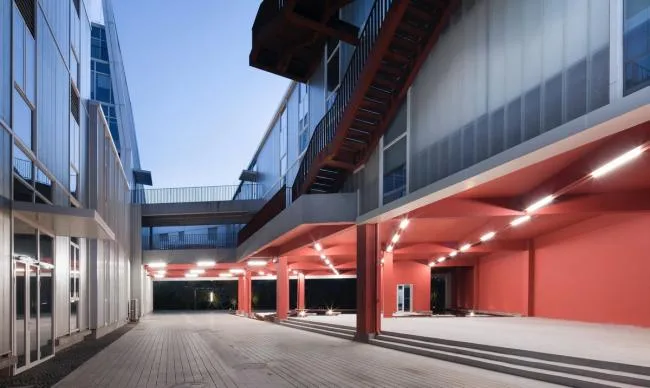
▲ View westward across the flood discharge channel from the R&D center’s upper level © Existence of Architecture – Architectural Photography
This centrally organized layout creates efficient pathways connecting workers’ production and leisure activities during the day. Rooted in the logic of park efficiency, the spatial composition balances limitation and enclosure around natural mountains and rivers, establishing a psychologically comforting sense of security and identity.
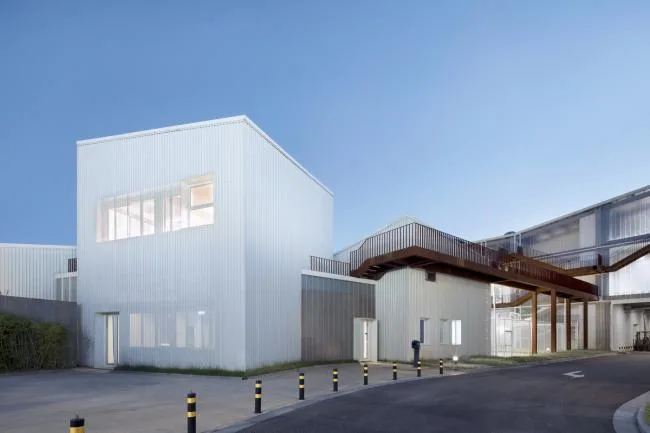
▲ Staff canteen logistics entrance © Existence of Architecture – Architectural Photography
02. Traditional Settlements in a Local Narrative Context
When Western industrial civilization met design, the mechanized production process trapped laborers in repetitive, monotonous cycles. This project sought to transform that environment into a traditional settlement landscape rich in local narrative and humanistic interest.
The design draws inspiration from the classic Chinese painting manual Mustard Seed Garden Painting Manual, using a typological approach to deconstruct traditional landscape elements—mountains, stones, buildings, water, fences, pavilions, doorways—and reinterpret them through contemporary architectural language:
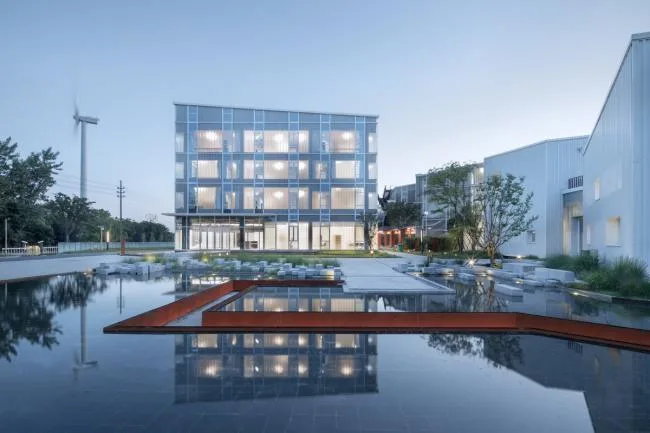
▲ View towards the staff dormitory from the pool on the west side © Existence of Architecture – Architectural Photography
- Mountain: Four building groups arranged around the site evoke mountain terrain through their volumes and roof treatments, opening a “curved mouth” towards the southeast to create an enclosed yet inviting “bag-shaped” space.
- Stone: Stacked precast concrete geometric blocks symbolize piled stones.
- Water: A shallow pond is situated near the central living support buildings, facing the open southeast corner, bringing vitality to the space.
- Building: To avoid overpowering the small mountain courtyard, the canteen and life service center are divided into three interconnected mountain house groups located by the water.
- Fence: Instead of traditional physical walls, a linear sequence of standardized modular white dotted gradient glazed glass forms the site boundary, maintaining openness for visual and resource sharing.
- Taige: A tide-watching platform is placed at the southwest corner of the main office R&D building’s top floor, offering views of the river during tides.
- Path: The red boardwalk element is extracted and expressed through brightly colored curved bridges and walkways, acting as core visual and spatial links connecting all scenes.
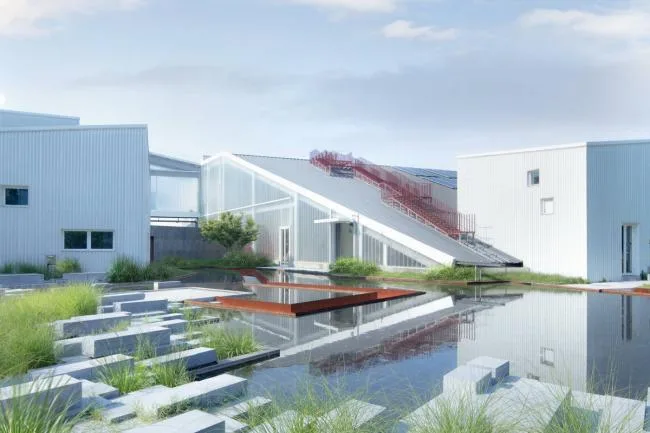
▲ Corner of the inner courtyard featuring buildings and mountain trail © Amazing Architecture – Space Photography
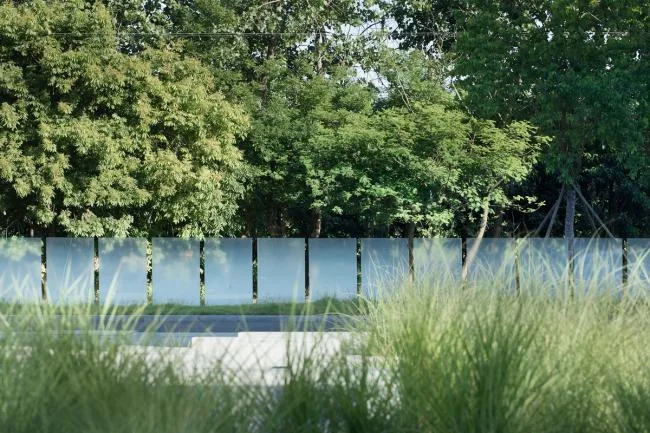
▲ Linear sequence of colored glazed glass constructions defining the site boundary © Existence of Architecture – Architectural Photography
03. Streamline Reconstruction Highlighted by the Red Boardwalk
The architect reinterpreted evacuation staircases, rooftop solar panel maintenance paths, small water-crossing paths, and indoor staircases by covering them with uniform weather-resistant steel plates. These elements are externalized, sunken, or elevated through floors, recreating the elusive, winding mountain paths reminiscent of traditional Chinese landscape paintings. This forms a core connective thread for all landscape elements—both visible and functional.
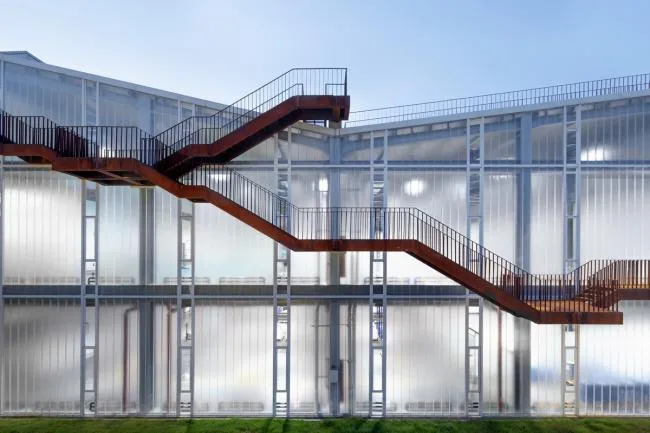
▲ External weather-resistant steel plate evacuation staircase © Existence of Architecture – Architectural Photography
These evacuation stairs and auxiliary walkways are placed outside the workshop areas, enhancing internal space flexibility. Corridors and wall-mounted stairs provide direct access to the cafeteria and dormitories, while also offering spaces for workers to take short breaks. Roof staircases facilitate solar panel maintenance and serve as outdoor activity spaces for climbing and enjoying views after work.
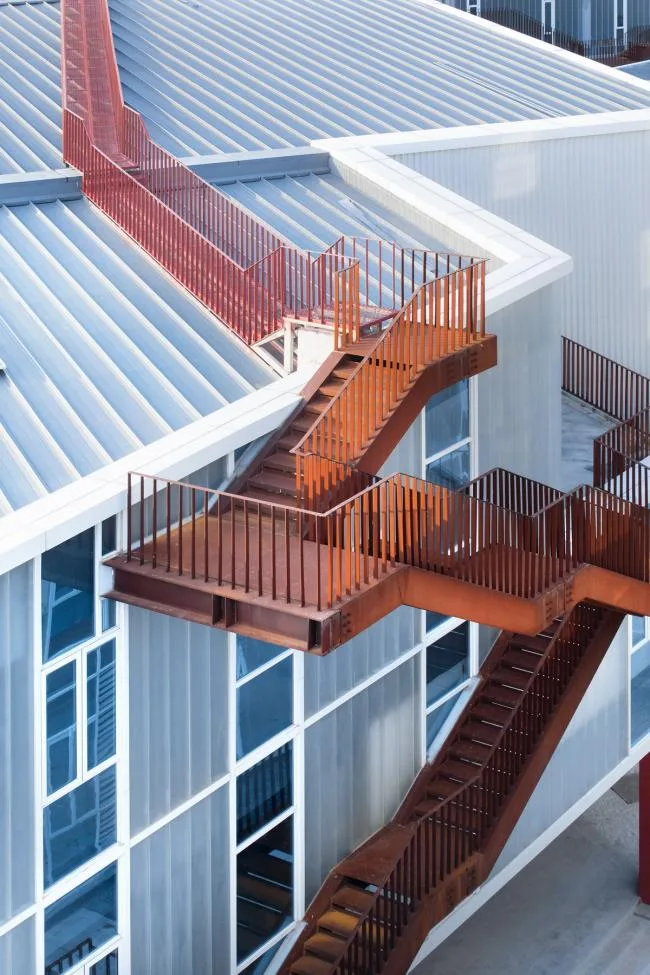
(BIM Learning)
▲ Connection between roof raceways and evacuation stairs © Existence of Architecture – Architectural Photography
The design offers rich linear experiences—walking along shores, climbing mountains, traversing cliffs, crossing bridges, and swimming through winding paths. The architecture and landscape mimic natural features: building facades as cliffs, connecting channels as bridges, and flowing water paths as swimming routes. This resonates with the charm and spirit of Jiangnan garden architecture.
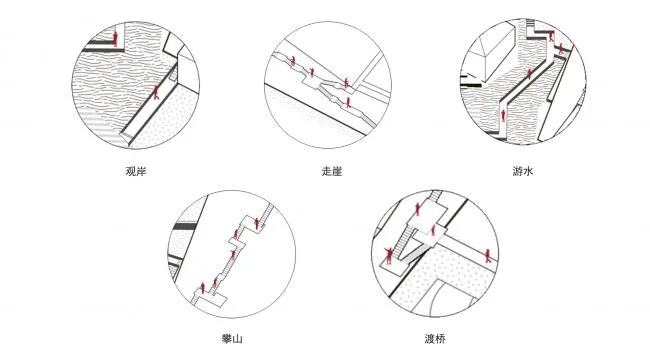
▲ Boardwalk path experience © gad ·line+ studio
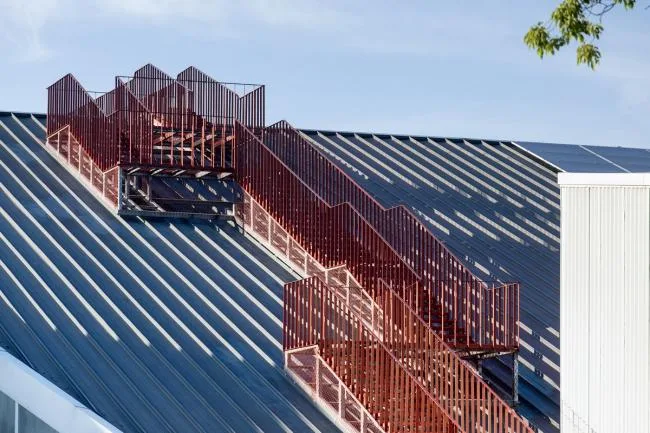
▲ Maintenance track for rooftop photovoltaic panels © Existence of Architecture – Architectural Photography
04. Material Expression of Transparency
Facing the picturesque Qiantang River and its surrounding water and sky, the exterior walls use white corrugated steel plates and ultra-white U-glass. These contrasting materials integrate the building into the larger scene while creating a distinct contrast between the park and the outside world.
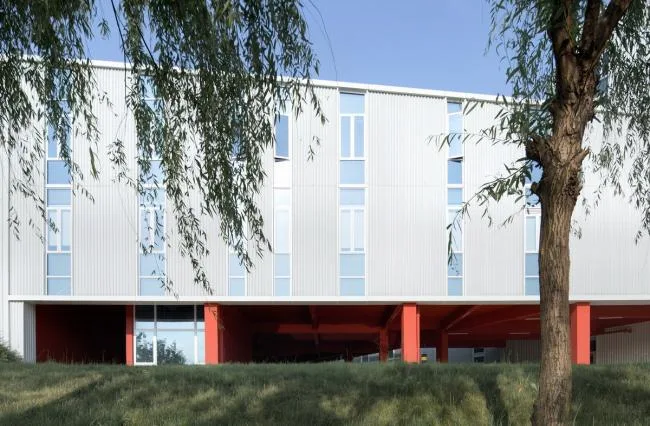
▲ Mountain-shaped facade facing away from the park © Existence of Architecture – Architectural Photography
The building’s exterior walls feature white corrugated steel plates, with longitudinal strip windows, corrugated textures, and folded roofs that evoke a sleek, solid “mountain” appearance.
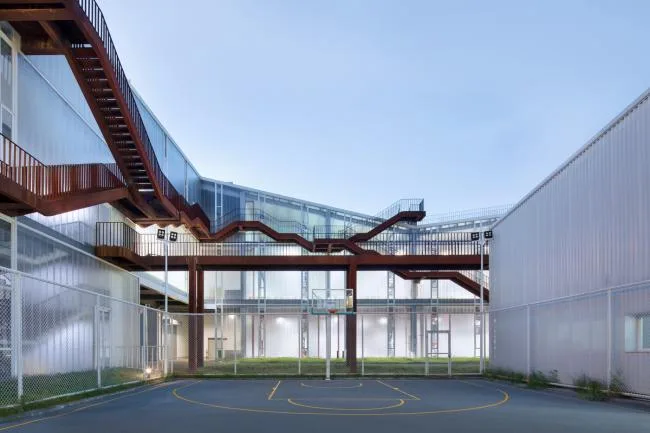
▲ U-glass facade and external evacuation staircase forming a mountain path in the inner courtyard © Existence of Architecture – Architectural Photography
Inside the park, continuous U-shaped glass walls create a semi-transparent facade that shifts in character from cool daylight to warm nighttime glow. The building’s light posture along the water subtly reveals the daily activities within.
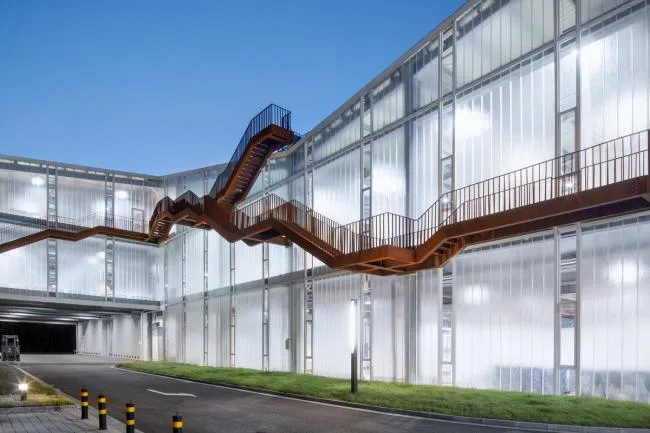
▲ Interior courtyard U-glass facade illuminated at night © Existence of Architecture – Architectural Photography
05. Interior: Continuing the Architectural Narrative
The integration of architecture, landscape, and interior design reflects a consistent philosophy throughout the project. Following the initial architectural concept, the design team further adapted spaces to meet the park’s functional needs through targeted renovations and interior transformations.
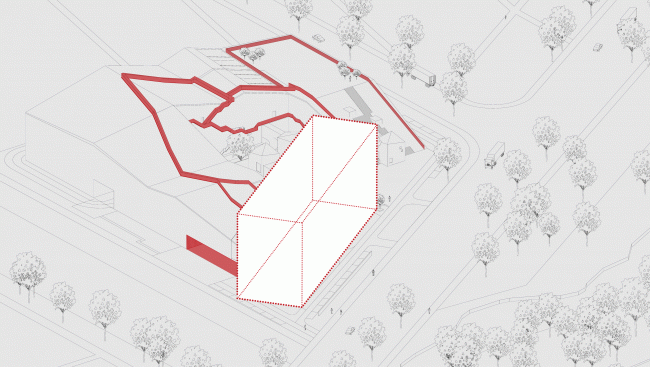
▲ Comprehensive building form generation © gad ·line+ studio
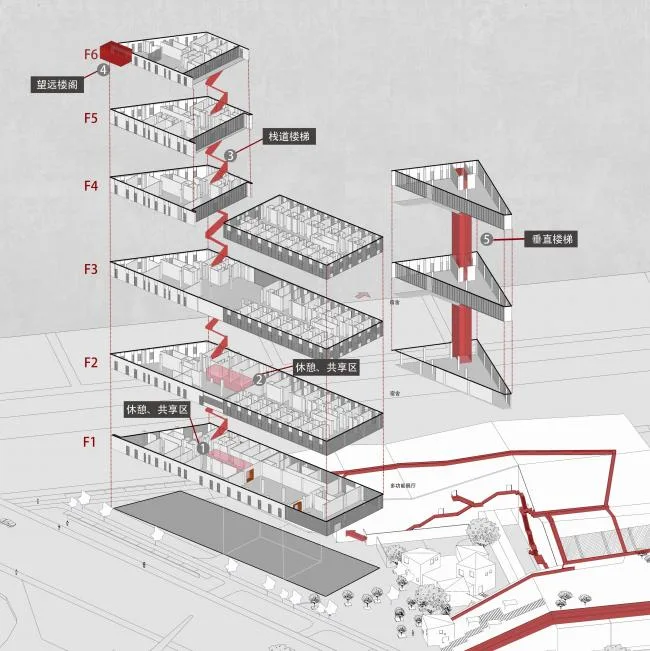
▲ Functional breakdown of the comprehensive building © gad ·line+ studio
The interior design continues the architectural narrative by creating a modern office environment rich with landscape imagery. This experience unfolds through four phases: “encounter,” “exploration,” “climbing,” and “looking far.”
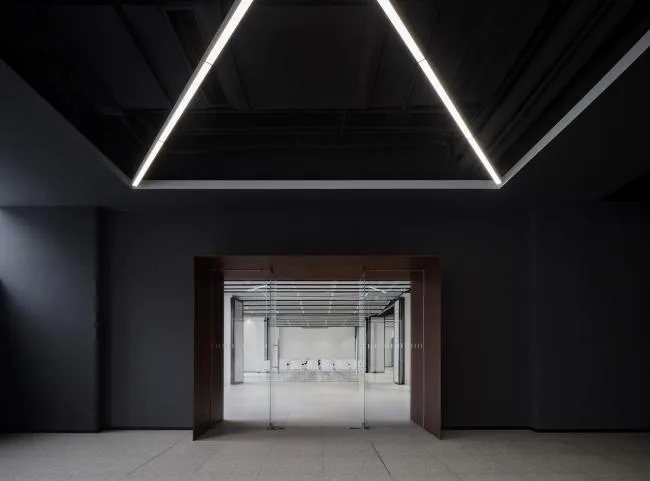
▲ Entrance © wen studio
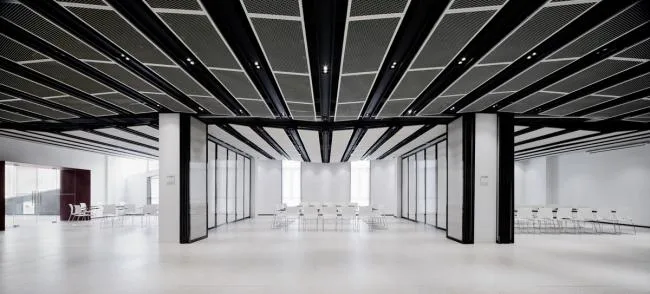
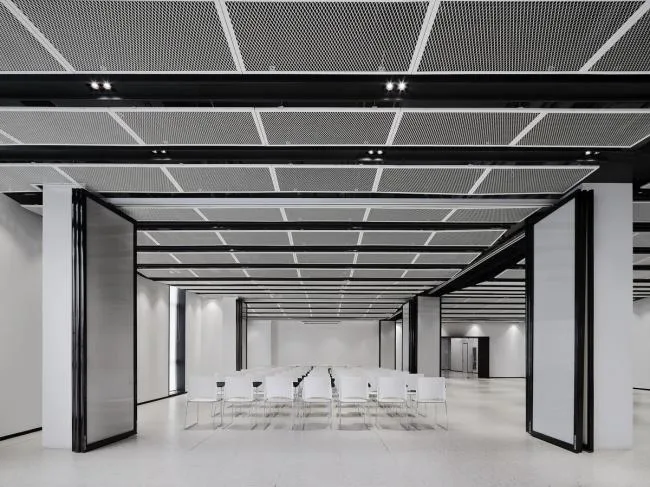
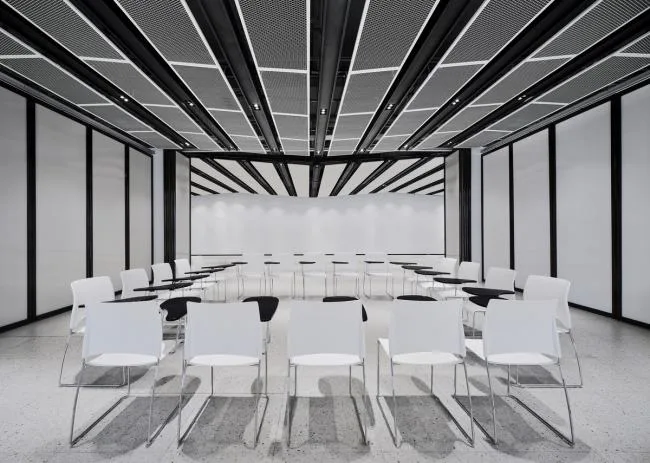
▲ Multi-functional hall © wen studio
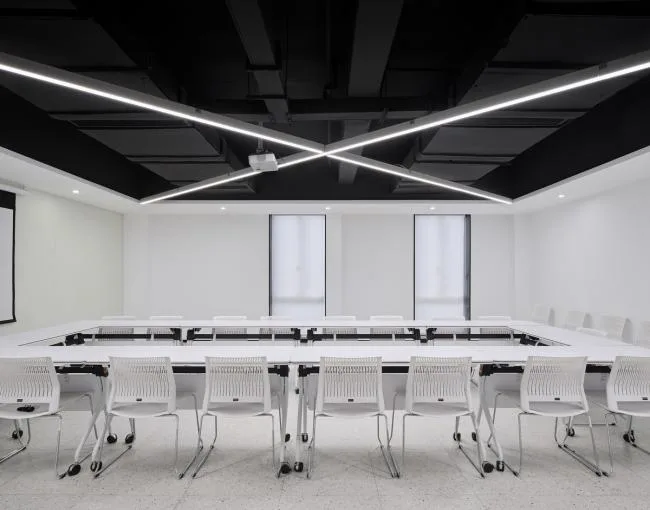
▲ Conference room © wen studio
The weather-resistant steel folded entrance hall creates a ceremonial atmosphere, harmonizing with the exterior facade while softening the transition between interior and exterior. Semi-transparent metal mesh panels on the ceiling, combined with T8 and linear strip lighting and the exposed original structure, enrich the spatial experience with layers of depth and openness.
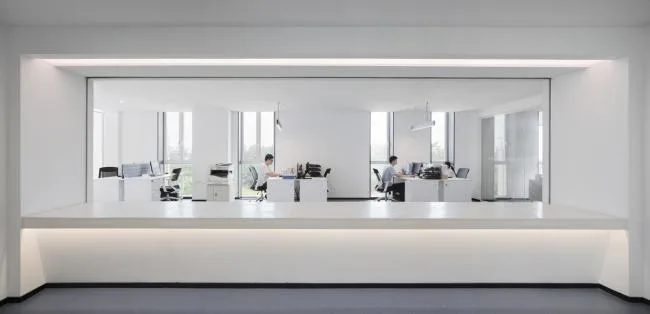
▲ Office space © wen studio
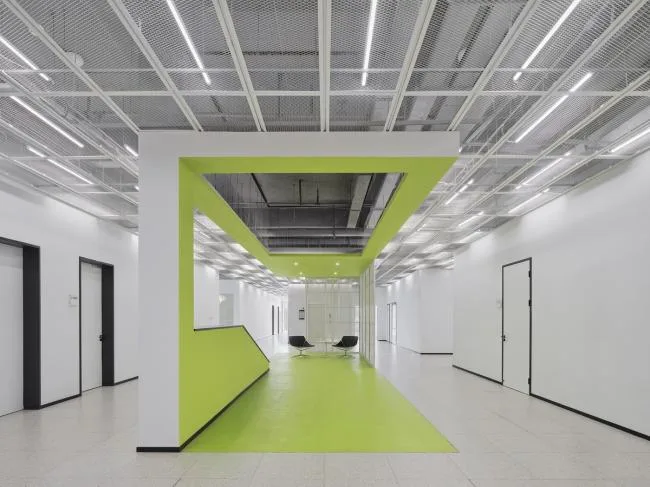
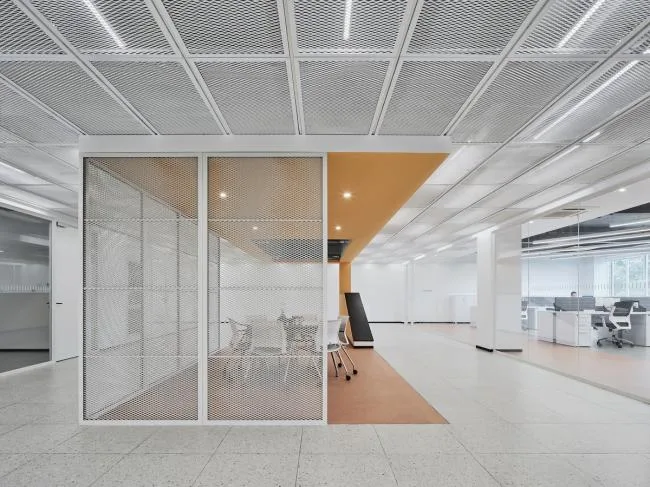
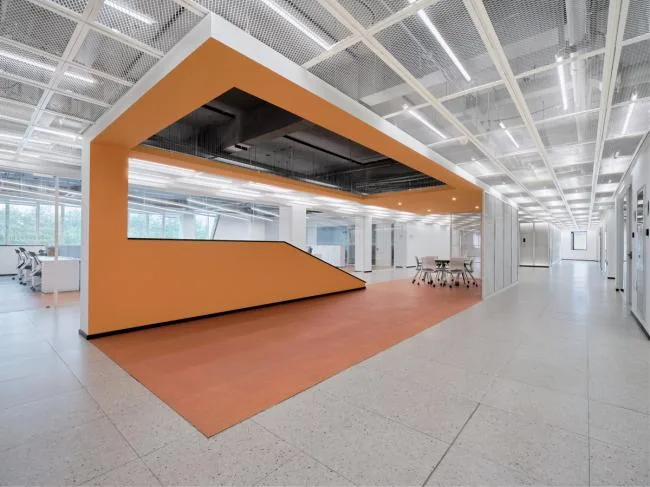
▲ Indoor ‘courtyard’ © wen studio
Additionally, a “village courtyard” concept is introduced inside the office area—a semi-enclosed space crafted with lightweight metal mesh and warm colors, serving as a shared workspace and indoor resting area.
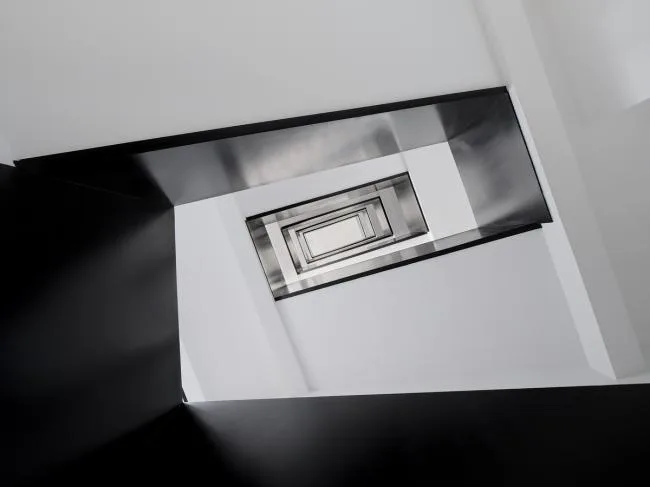
▲ Steel plate staircase © wen studio
Continuing the red boardwalk motif, the indoor steel staircase spirals upward through the building, echoing the exterior pathways and adding a playful vertical circulation experience.
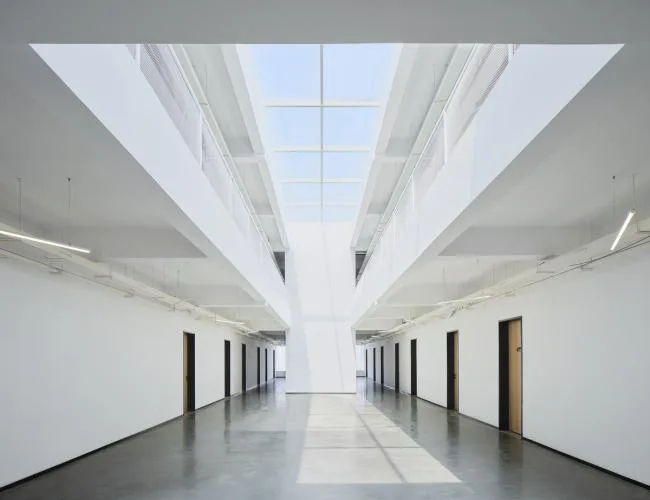
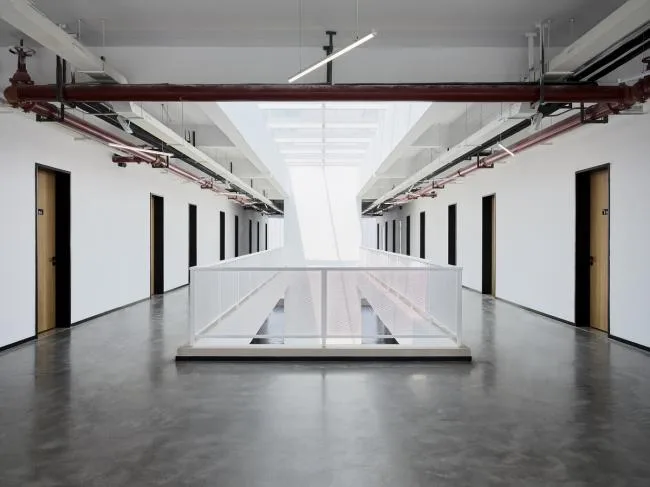
▲ Employee dormitory © wen studio
At the building’s top floor lies the owner’s private reception and office area. Here, wooden block ceilings and walls mimic water ripples, reflecting the distant waves of the Qiantang River.
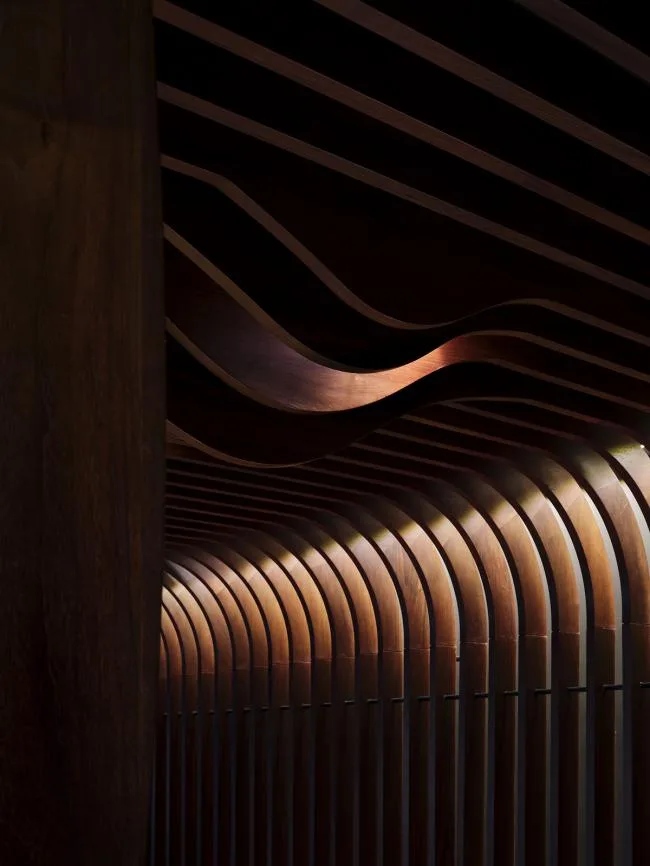
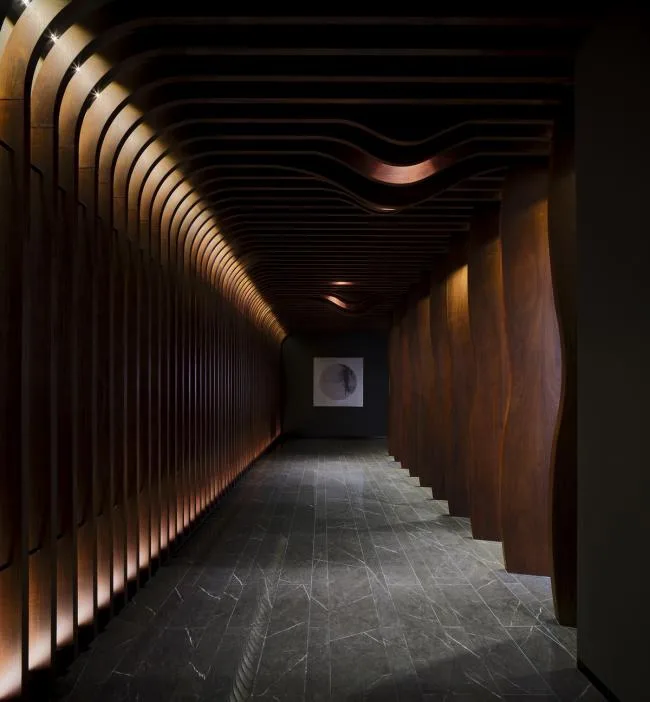
▲ Entrance ceiling featuring “water ripple” design © wen studio
Graphic design elements disrupt the original floor layout, creating a grey space that blurs indoor and outdoor boundaries. Modern techniques reinterpret traditional residential layouts combining house, courtyard, stone, and forest elements.
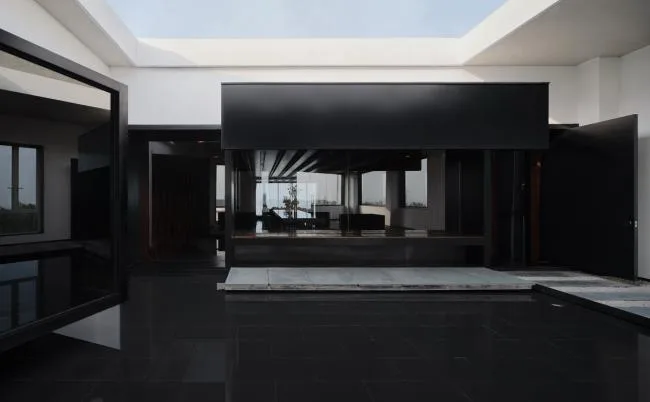
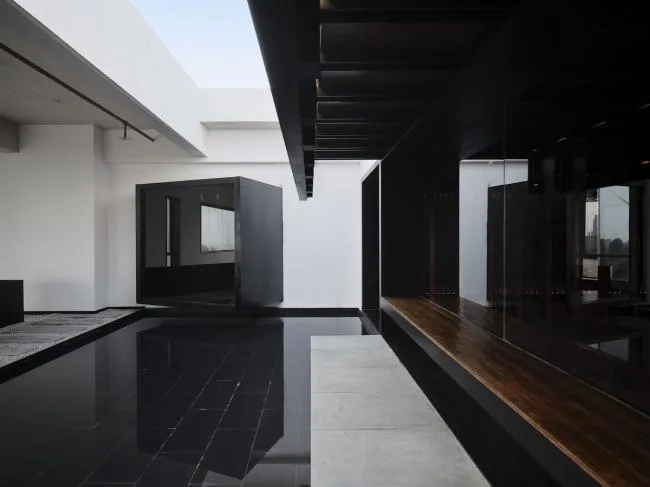
▲ Black Box © wen studio
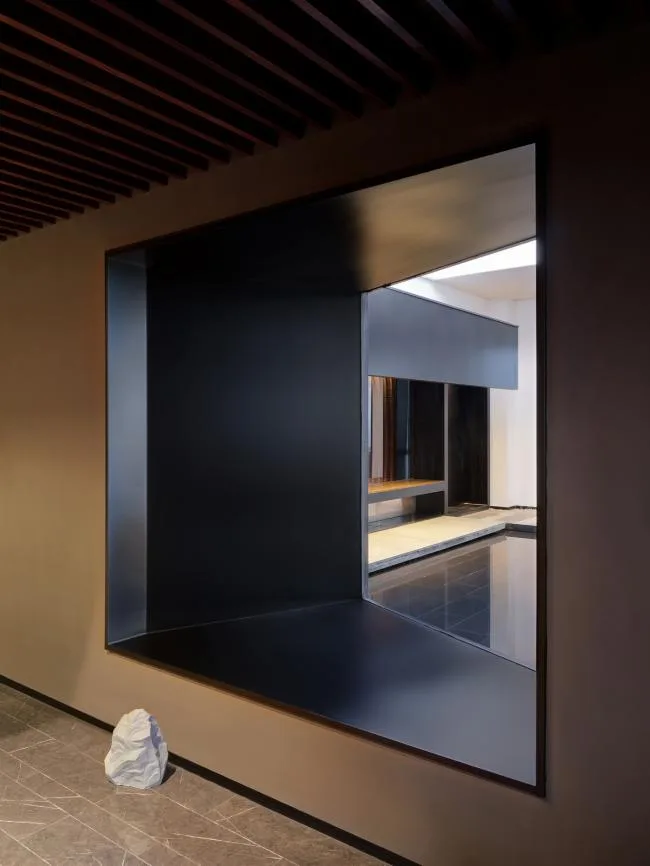
▲ The “black box” extends interior space outward © wen studio
Finally, a “black box” attic is dramatically positioned in the southeast corner, serving both as a dialogue and tribute to the red pavilions on the facade and as a pavilion-like element from landscape paintings, overlooking the river scenery.
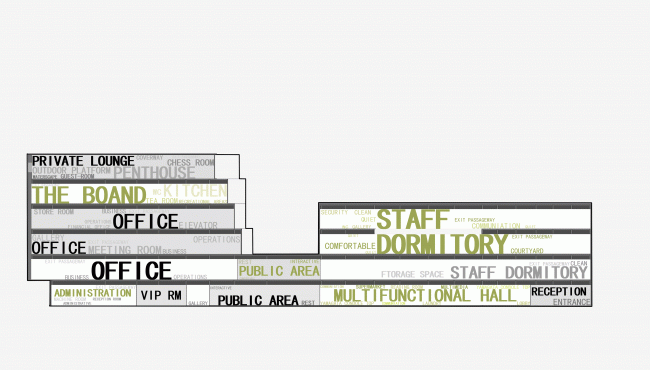
▲ Functional diagram of the comprehensive building © gad ·line+ studio
06. Landscape: A Simple and Abstract Spirit of Mountains and Waters
The landscape design aligns with the architectural concept, conveying the essence of mountains and water in a simple, abstract form.
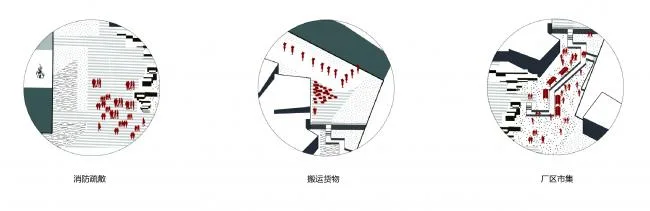
▲ Landscape function analysis © gad ·line+ studio
Though small, the courtyard includes five key functional zones. The vestibule and basketball court serve as emergency assembly points; behind the courtyard wall lies a goods stacking area; the stacked stone area offers a tranquil space to relax or chat; and the shallow pool acts as a virtual space within the factory, doubling as a sunken plaza during dry seasons for market events.
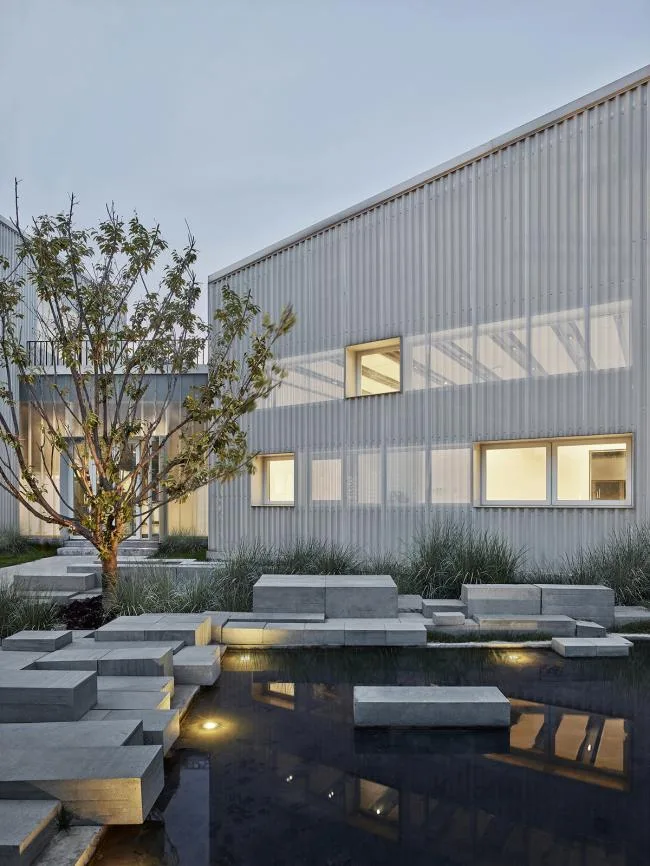
▲ Shore stones, flora, and trees © Amazing Architecture – Space Photography
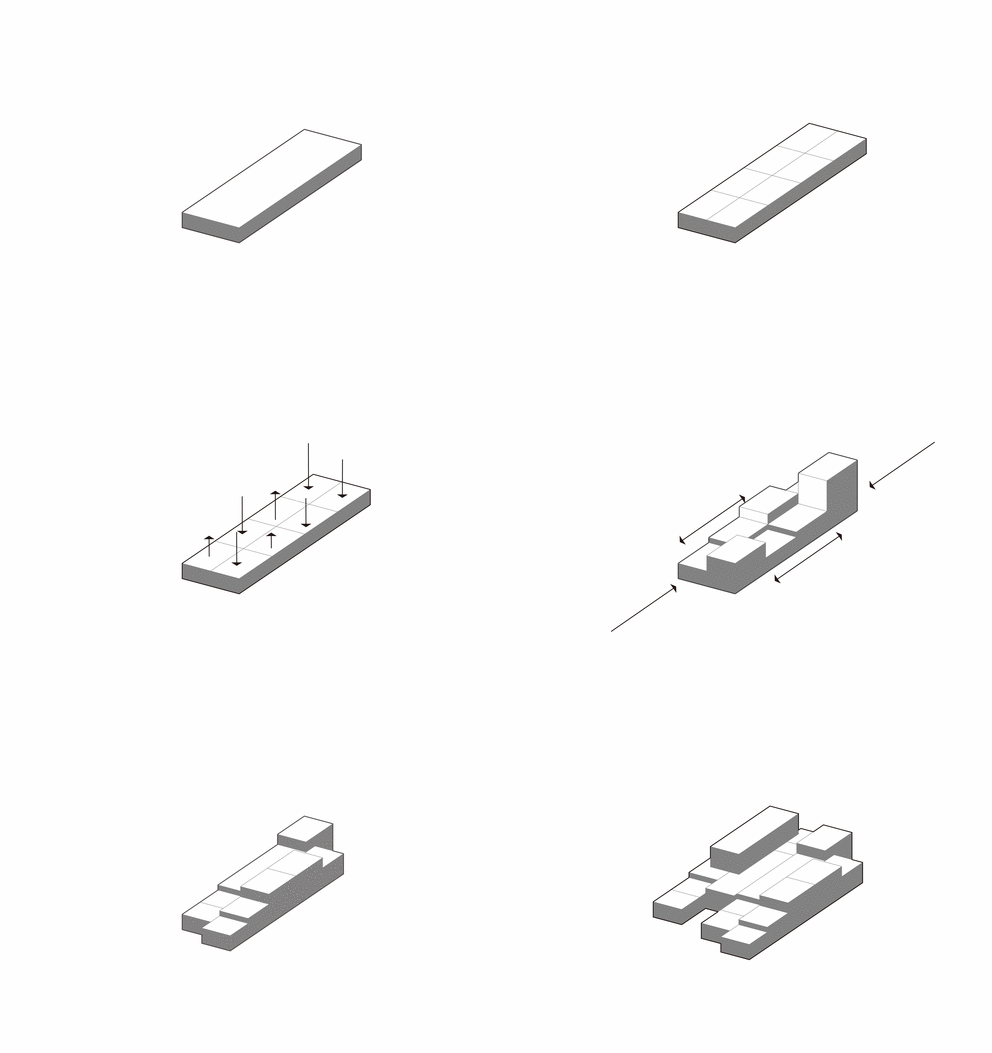
▲ Evolution of shore stone morphology © gad · line+ studio
The curved bridge, constructed from dark red rust plates, is sunken to bring visitors closer to the water surface. Alongside the brightly colored curved red boardwalk atop the building, it encircles and connects the site, evoking sensations of walking mountains and swimming water.
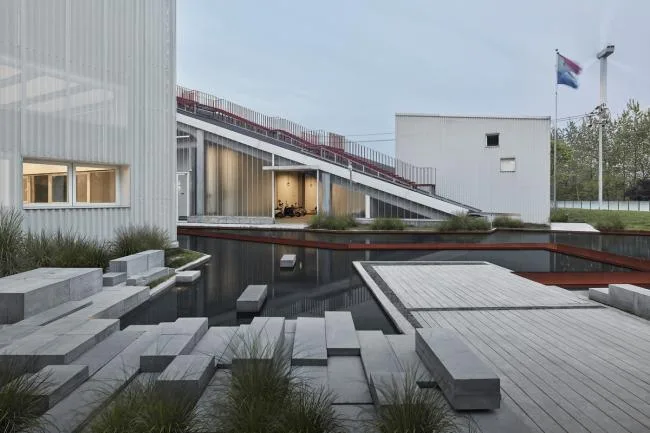
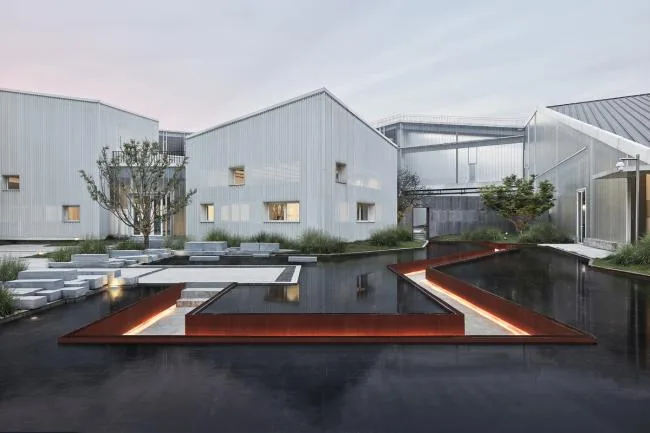
© Amazing Architecture – Space Photography
By embracing the culture of mountains and waters and employing innovative materials, this project redefines village production, reconstructs the poetic essence of landscape paintings, and revitalizes production spaces. For workers, this is not merely a modern, monotonous assembly line but a lively landscape where they can labor intensively and enjoy nature and leisure.
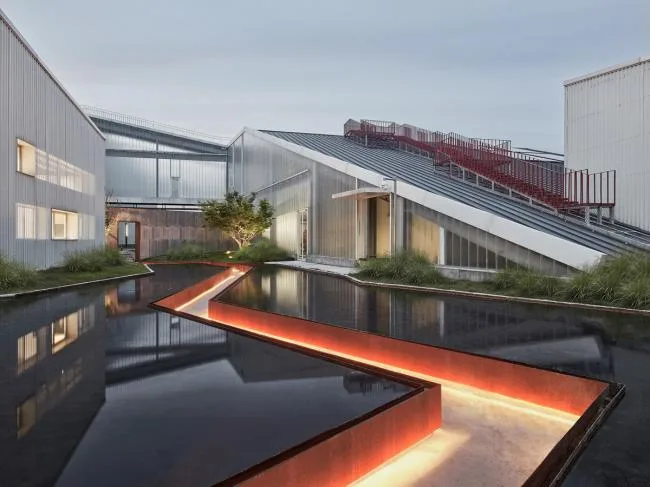
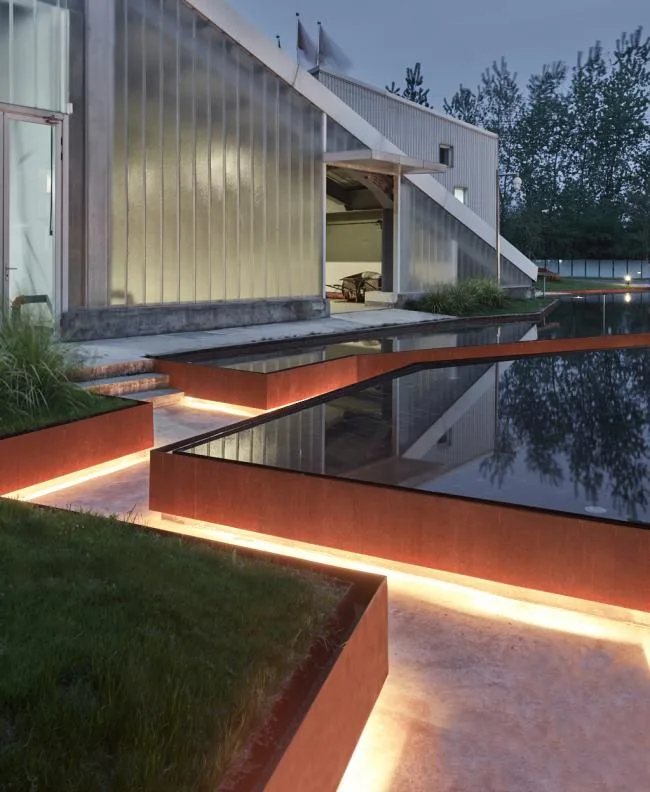
▲ Curved bridge and boardwalk © Amazing Architecture – Space Photography
07. Conclusion
After numerous challenges, the project has been quietly completed and is now in use. While maintaining core industrial design logic and efficiency, the architect’s vision for a differentiated industrial park has been realized through reinterpretation inspired by traditional painting.
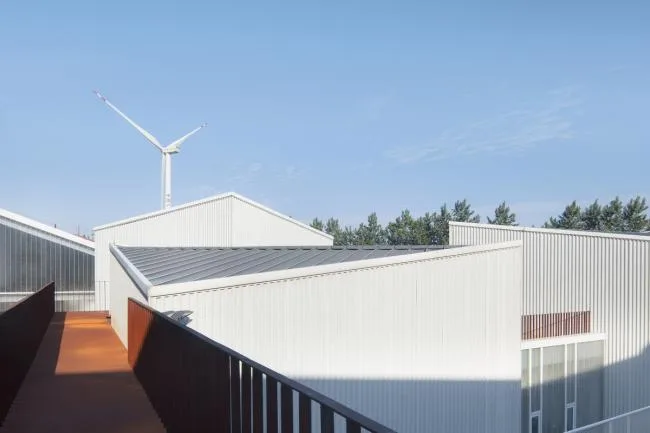
▲ Mountain path connecting the cleanroom to the cafeteria © Existence of Architecture – Architectural Photography
Individual experience and perception shape the understanding of spatial and local meaning. When workers ascend to the rooftop, relax by the water, or enjoy lively markets in the sunken courtyard, the industrial park transcends its image as a cold factory, becoming a vibrant community where diverse groups operate and engage.
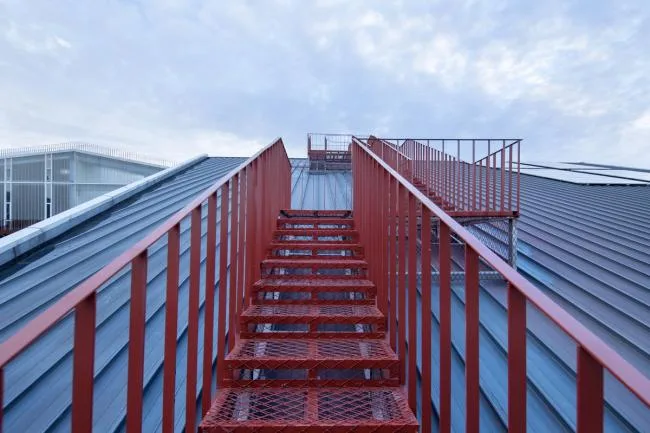
▲ Maintenance track for rooftop photovoltaic panels © Existence of Architecture – Architectural Photography
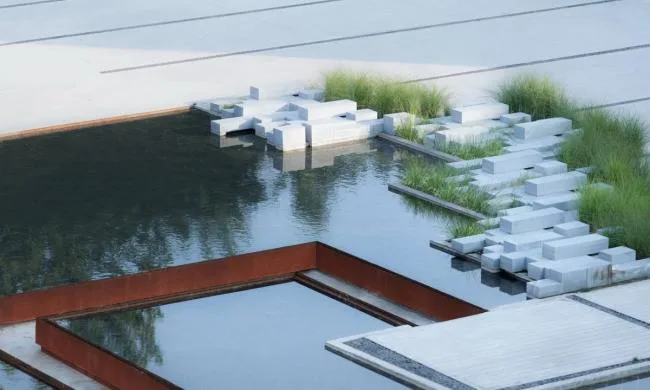
© Amazing Architecture – Space Photography
The use of traditional flat painting techniques to evoke rich, interactive scenes in this riverside garden “Shanshe” continues to influence the lives of workers and attract curious visitors nearby. The owners themselves are reportedly considering moving here to live alongside their workforce.
A prospect we warmly welcome.
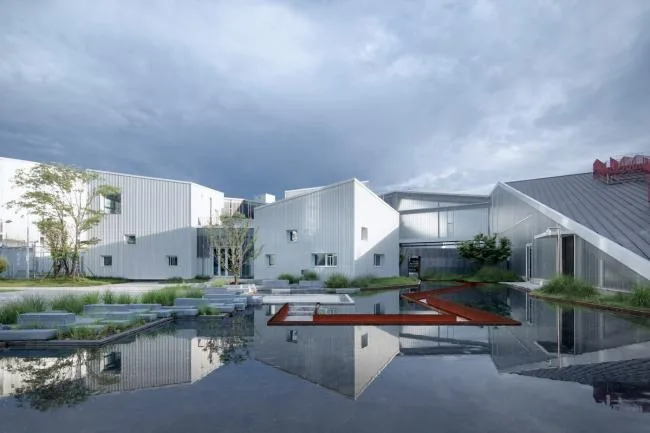
▲ Cool morning view of the central courtyard and life service center © Existence of Architecture – Architectural Photography
Project Drawings
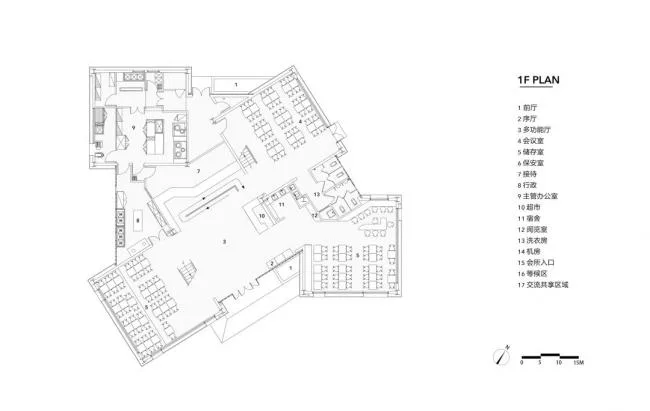
▲ Restaurant floor plan © gad ·line+ studio
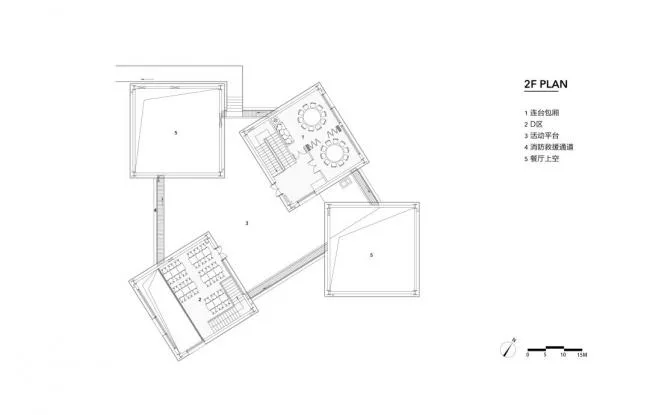
▲ Restaurant second floor plan © gad ·line+ studio
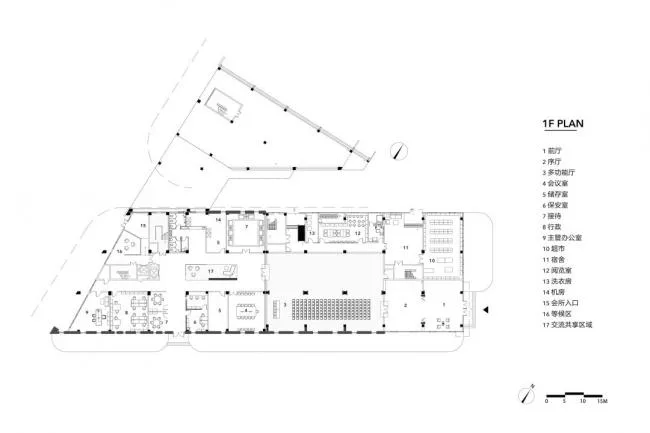
▲ First floor plan of the comprehensive building © gad ·line+ studio
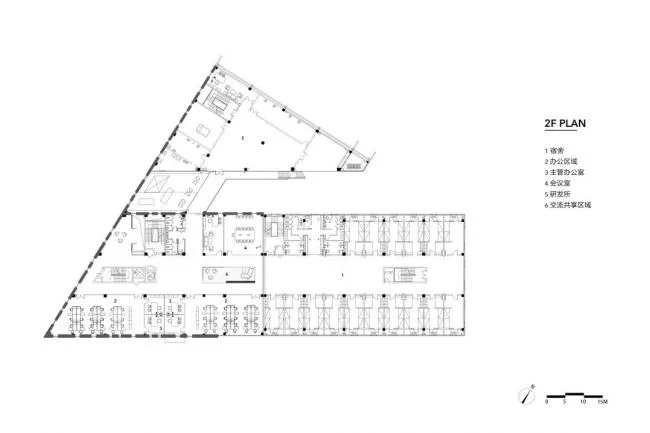
▲ Second floor plan of the comprehensive building © gad ·line+ studio
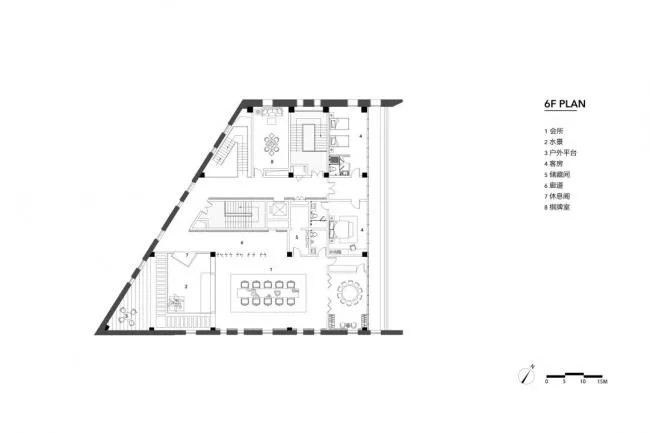
▲ Sixth floor plan of the comprehensive building © gad ·line+ studio
Project Information
Project Name: Zhejiang Pulifeite Production Base Phase I Cluster
Design Teams:
Original Architectural Design: GLA Architectural Design
Overall renovation, interior, and landscape design: Gad · Line+ST (BIM Architecture)
Lead Architect: Zhu Peidong
GLA Design Team:
Architecture: Zhu Peidong, Shen Xiaofeng, Wang Yufei, Gong Yue, Chen Zhihang, Xie Daoqing, Zhou Jian, Feng Jianhua, Huang Guohua
Gad · line+studio Design Team:
Architecture: Zhu Peidong, Sun Xiaoyu
Interior: Jin Yuting, Liu Jia, Cai Xiaoyu, Shi Jianguo, Liu Moran, Chen Weilong, Gu Chuanjie
Landscape: Li Shangyang, Jin Jianbo, Su Chenjuan, Tang Ruixian
Location: Jianshan New District, Haining, Zhejiang
Design Period: 2015–2018
Completion: 2019
Owner: Zhejiang Pulifeite Automotive Technology Co., Ltd.
Site Area: 20,716 square meters
Building Area: 26,004.2 square meters
Structure: Steel structure and reinforced concrete frame
Photography: Existence of Architecture – Architectural Photography; wen studio; Amazing Architecture – Space Photography












Must log in before commenting!
Sign Up