
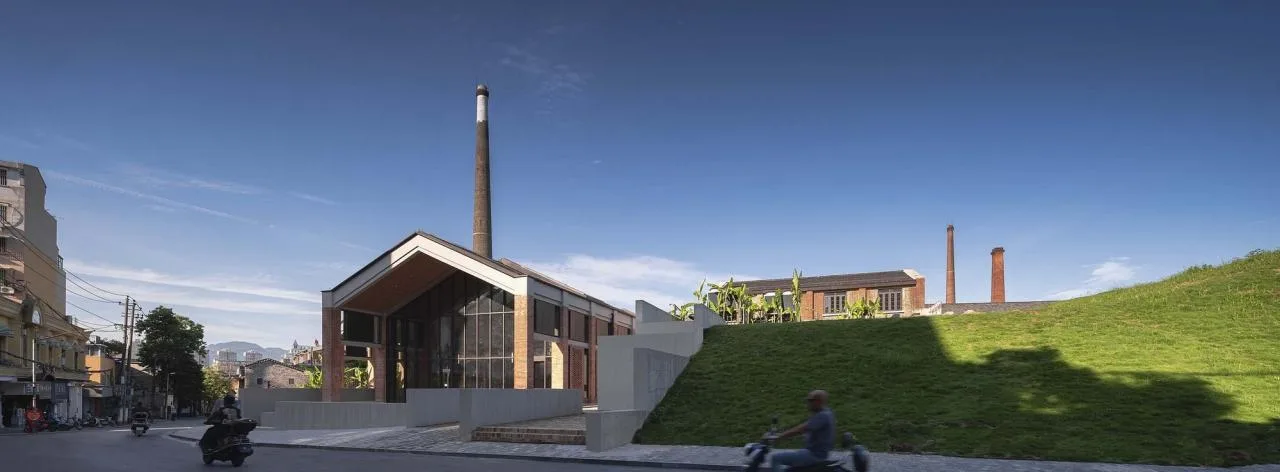
The rich cultural heritage of Jingdezhen, known as the millennium porcelain capital, has survived through changing eras and industrial shifts, even as its industrial history gradually fades. The city’s economy has fundamentally transformed from production to consumption, yet its ceramic culture remains preserved for eternity. The old porcelain factory has been revitalized into a ceramic cultural tourism destination, attracting young ceramic designers and artists who infuse new energy and vitality into the city.
As a cultural relic representing the “traces” of a bygone era, the Jianguo Porcelain Factory poses a question: how should it be preserved within the context of the entire historic Imperial Kiln district? Should it be maintained as a timeless craft with historical value, or should it be transformed with creative new elements? We chose the latter—like regenerated cells, breathing new life into the urban fabric and enabling city life to thrive.
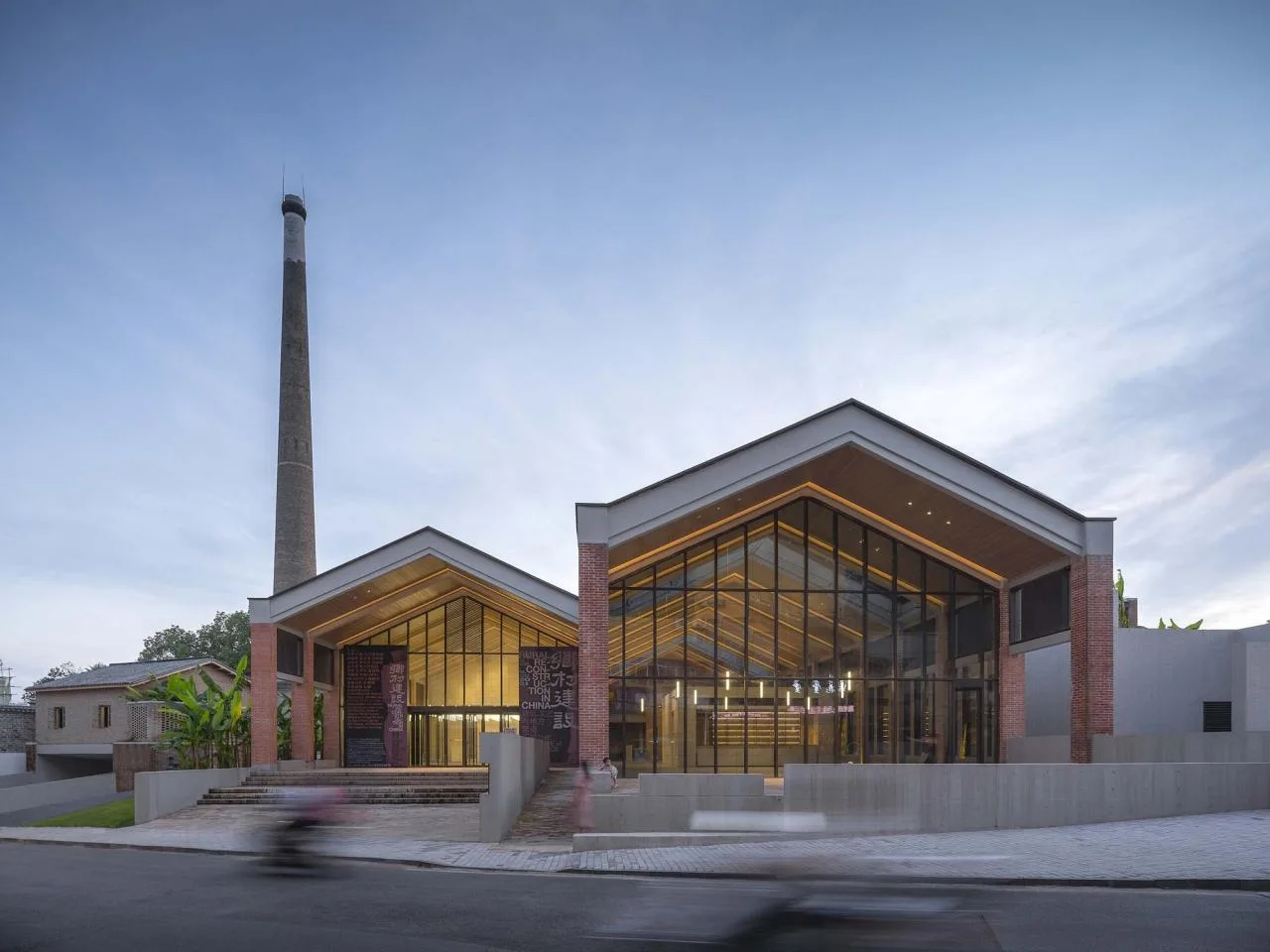
The original Jianguo Porcelain Factory has been converted into a professional art museum, embracing the artistic mission of the new era while honoring cultural heritage. Simultaneously, targeted interventions invigorate the surrounding area, transforming the old blocks into vibrant, lively spaces.
Updating and Transforming According to Context
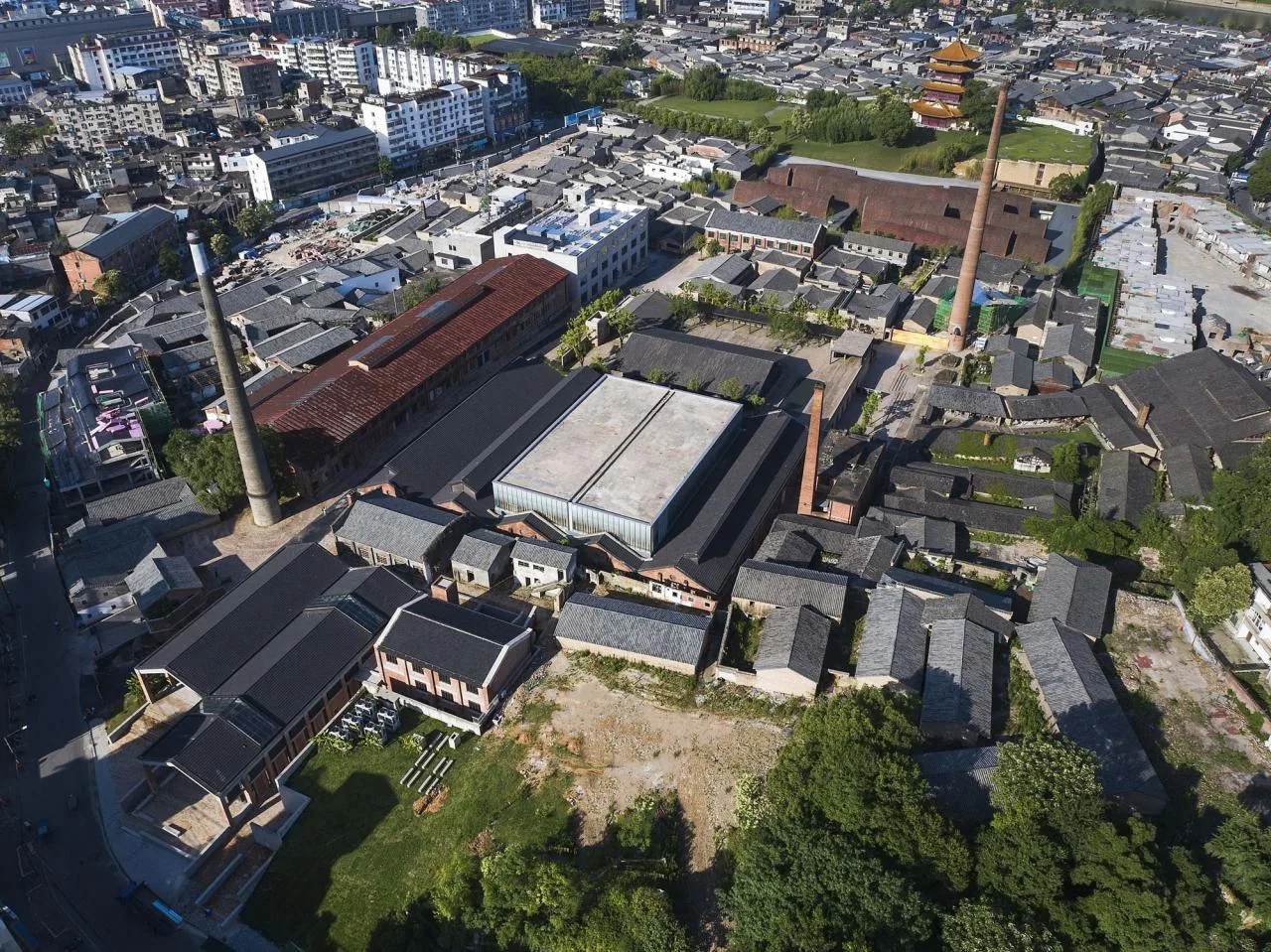
This renovation project encompasses Factory Building #1 of the Jianguo Porcelain Factory, the employee bathrooms, dormitories, nearby residential buildings, and vacant land to the north. Taking into account the existing conditions, the museum’s spatial and functional needs, and the site’s surrounding environment, we designed a dialogue between the new and the historic district.
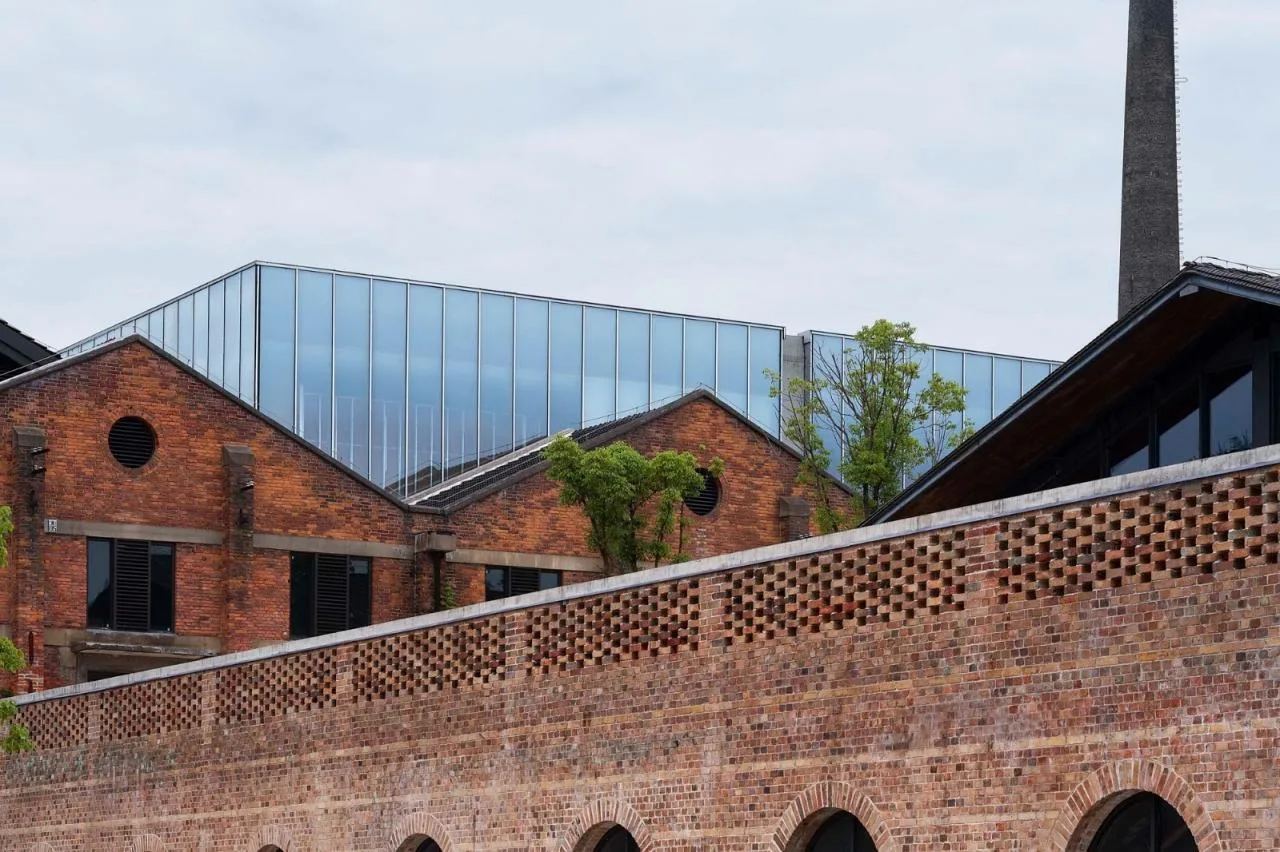
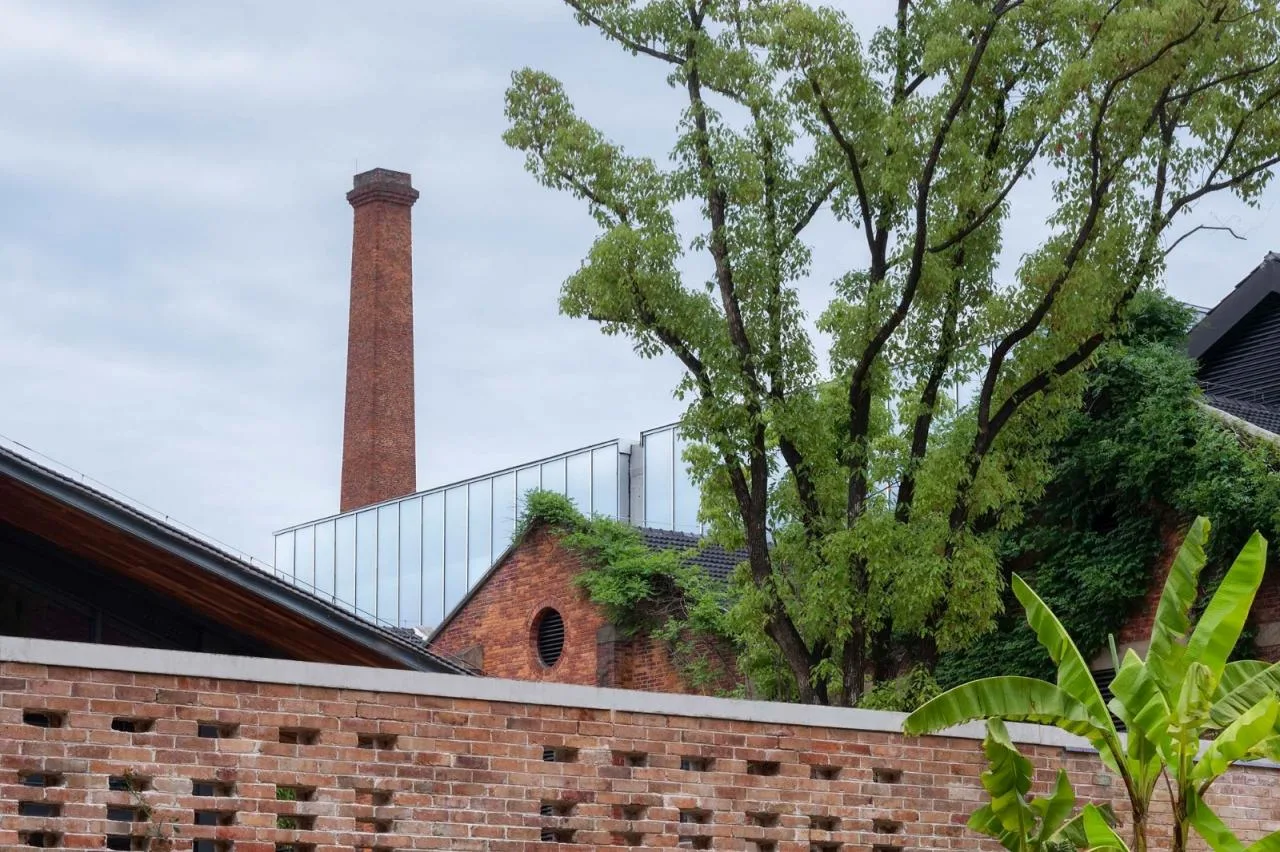
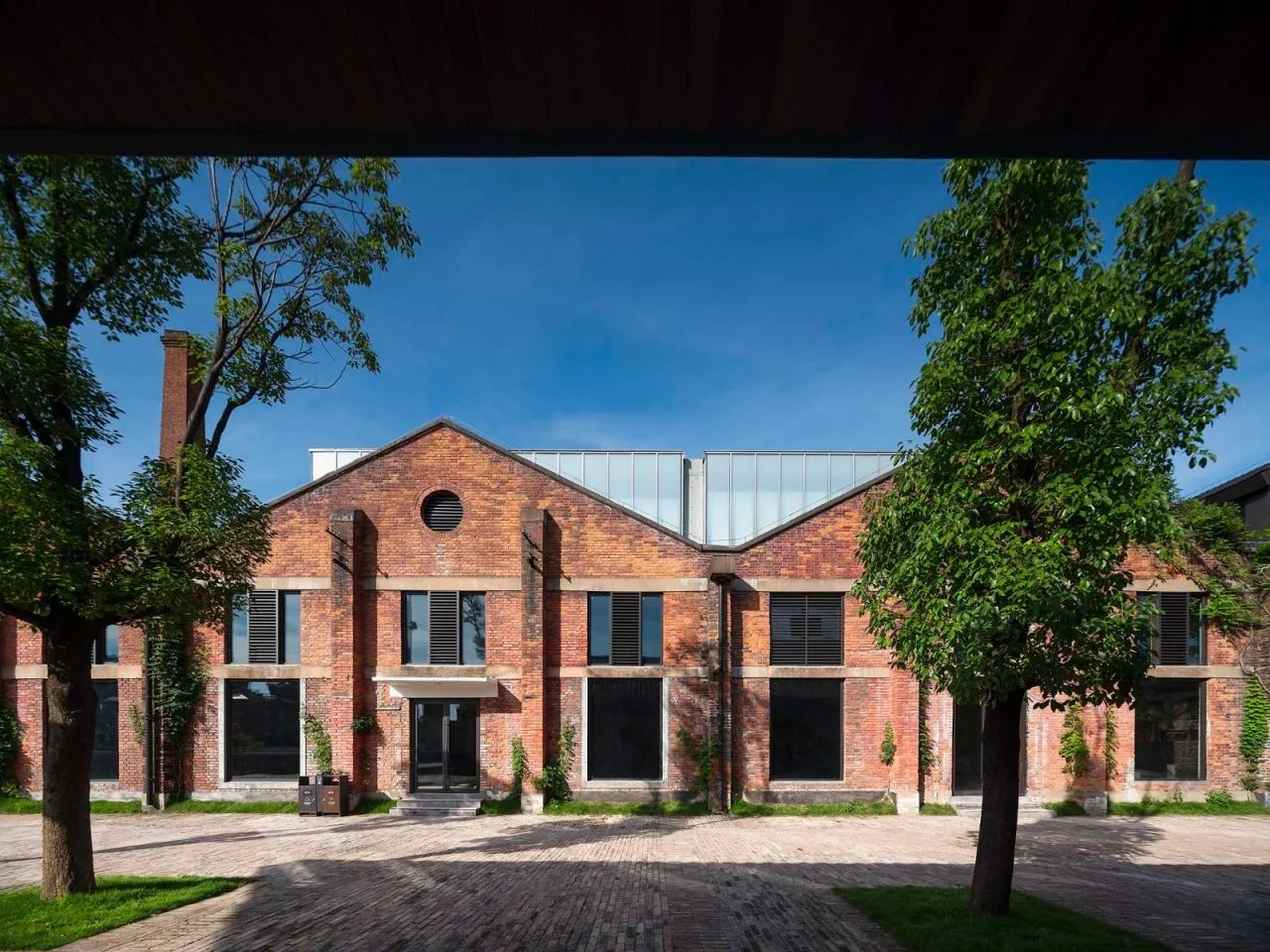
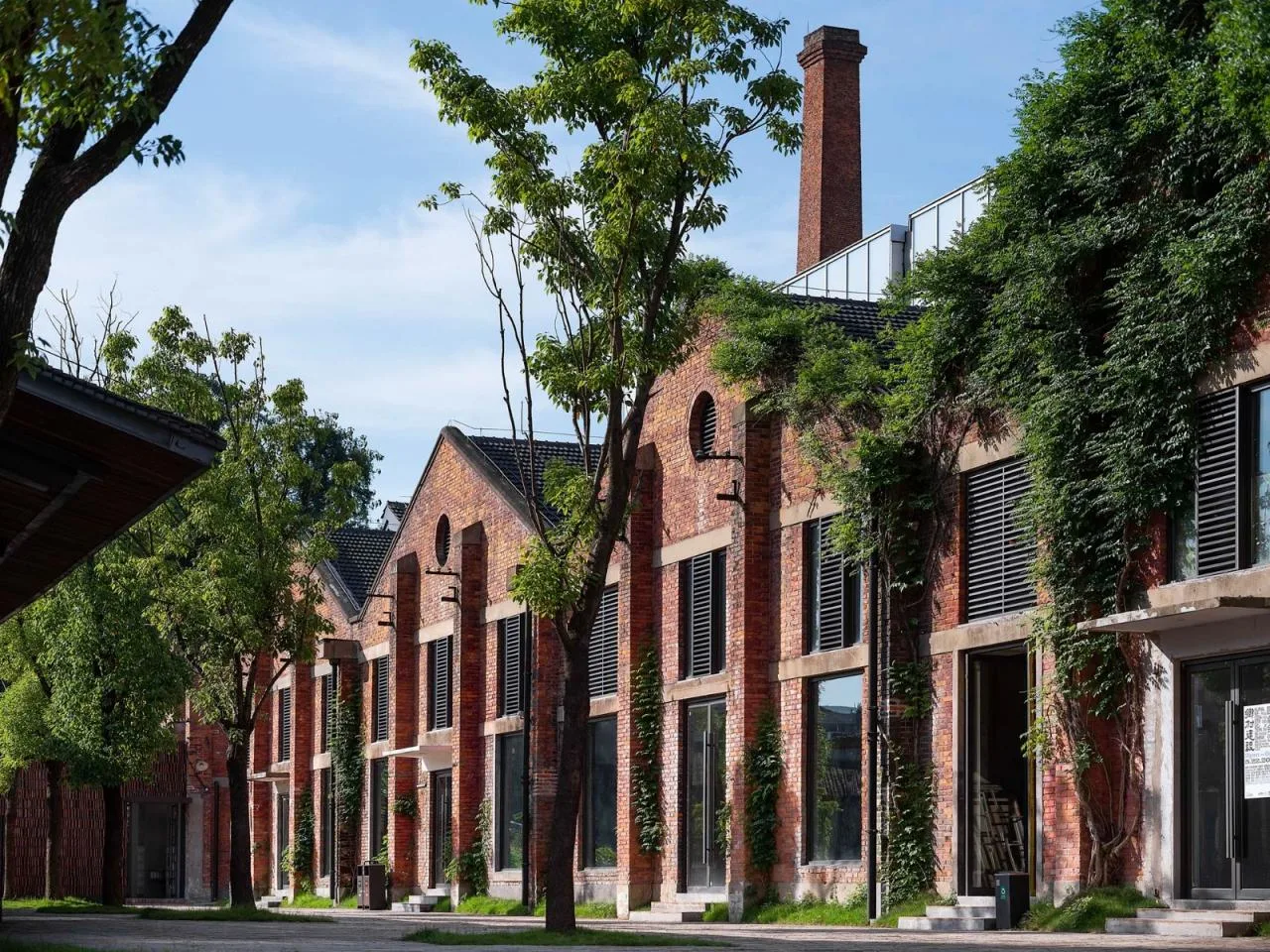
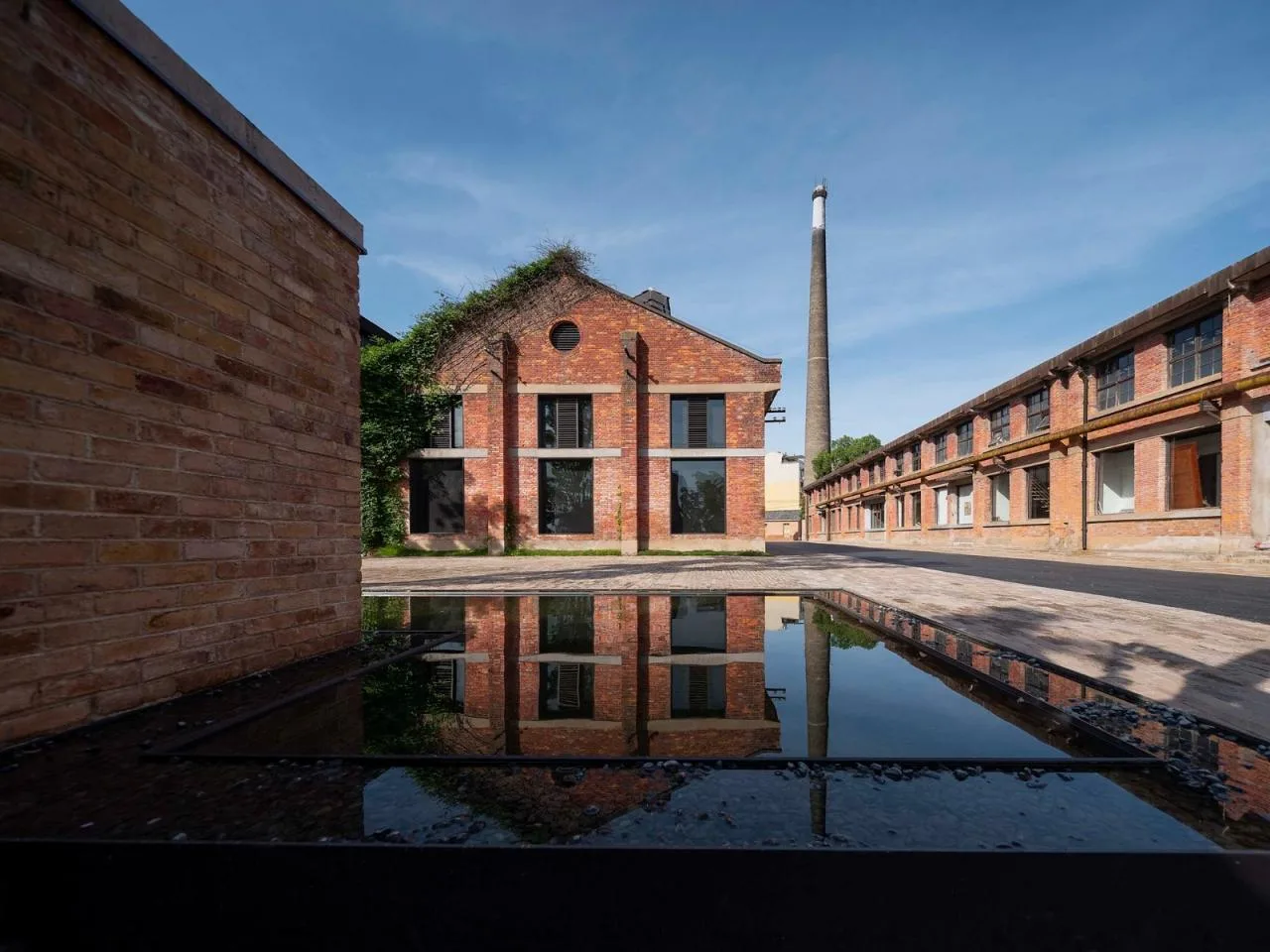
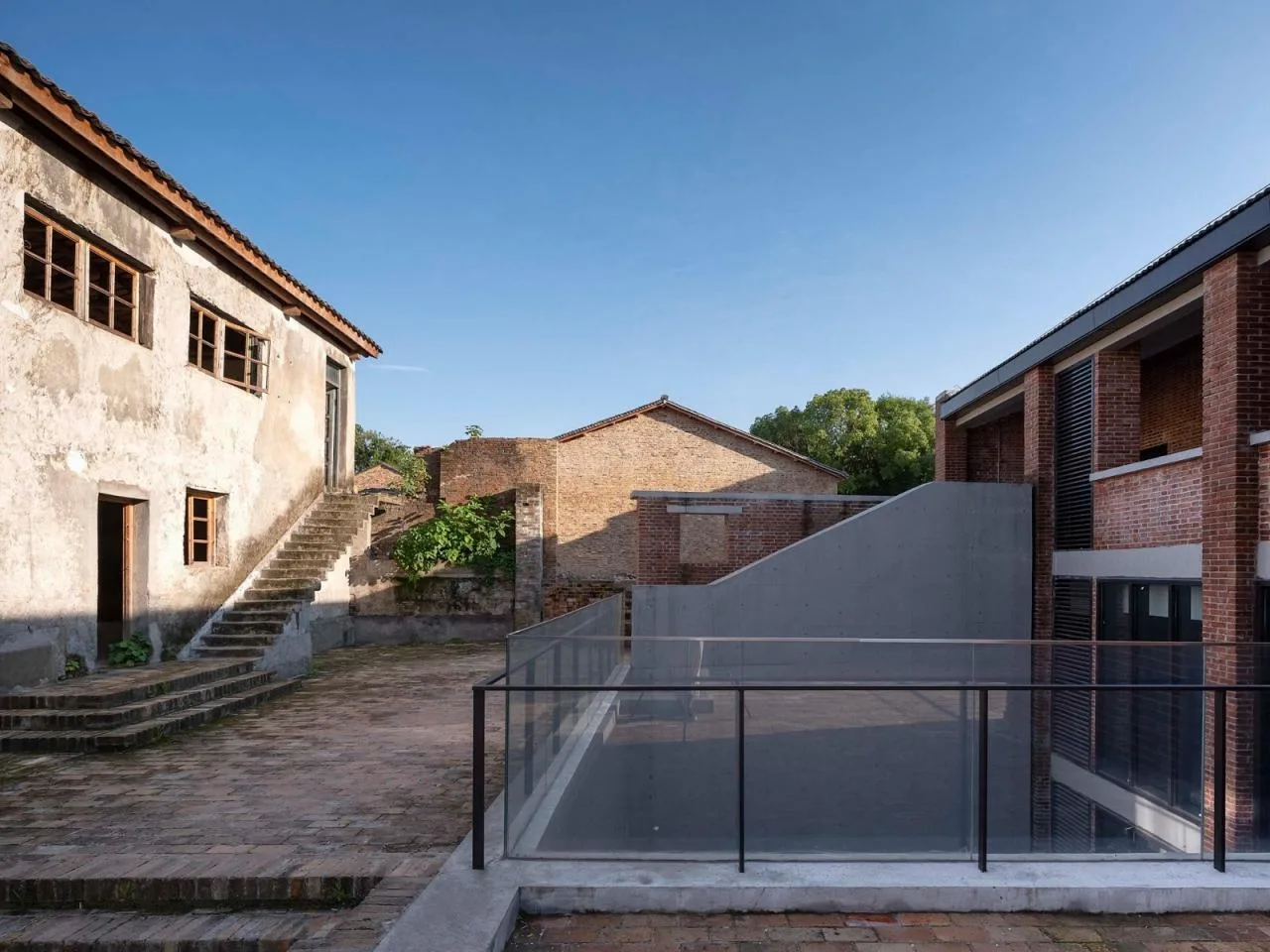
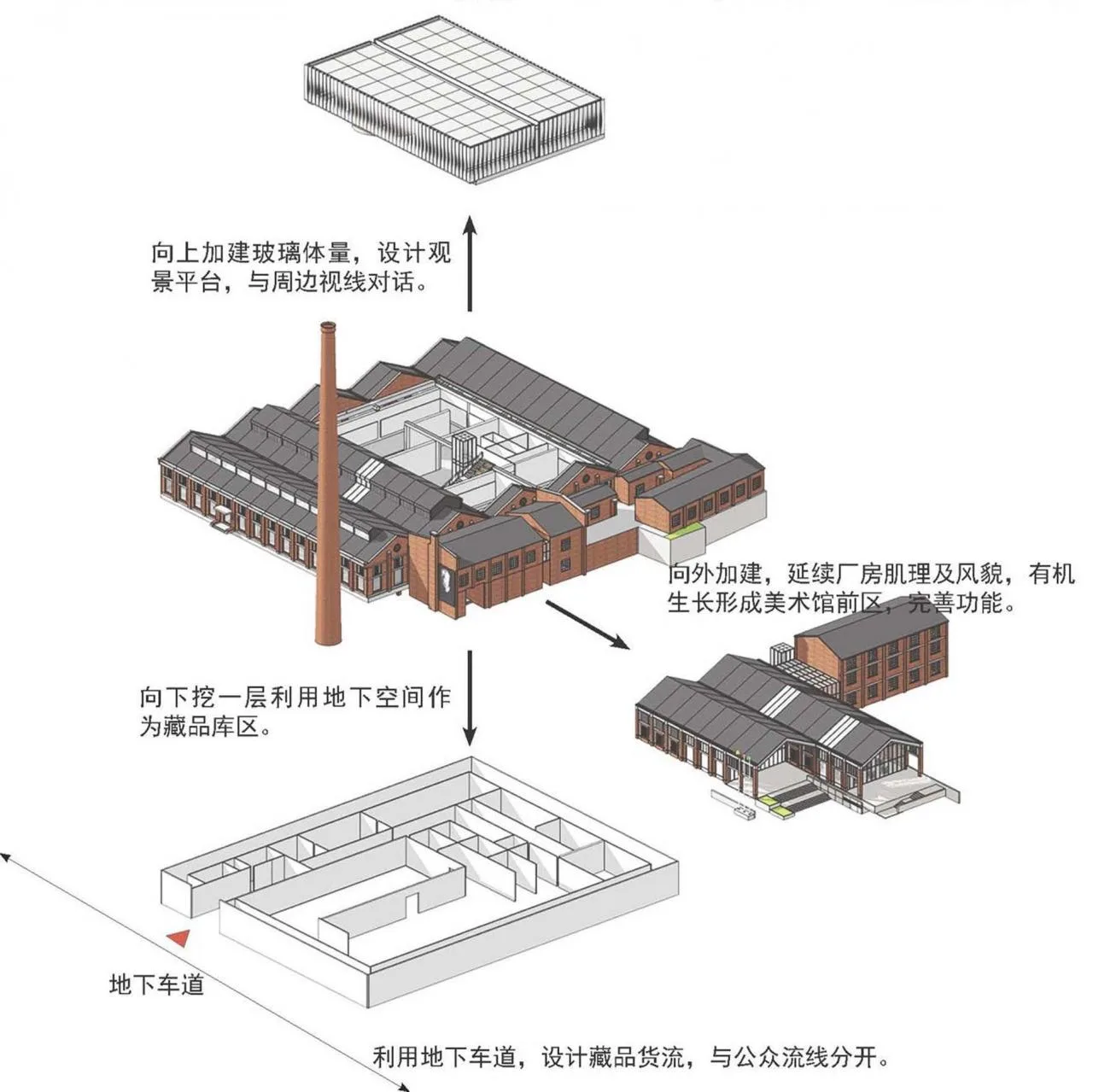
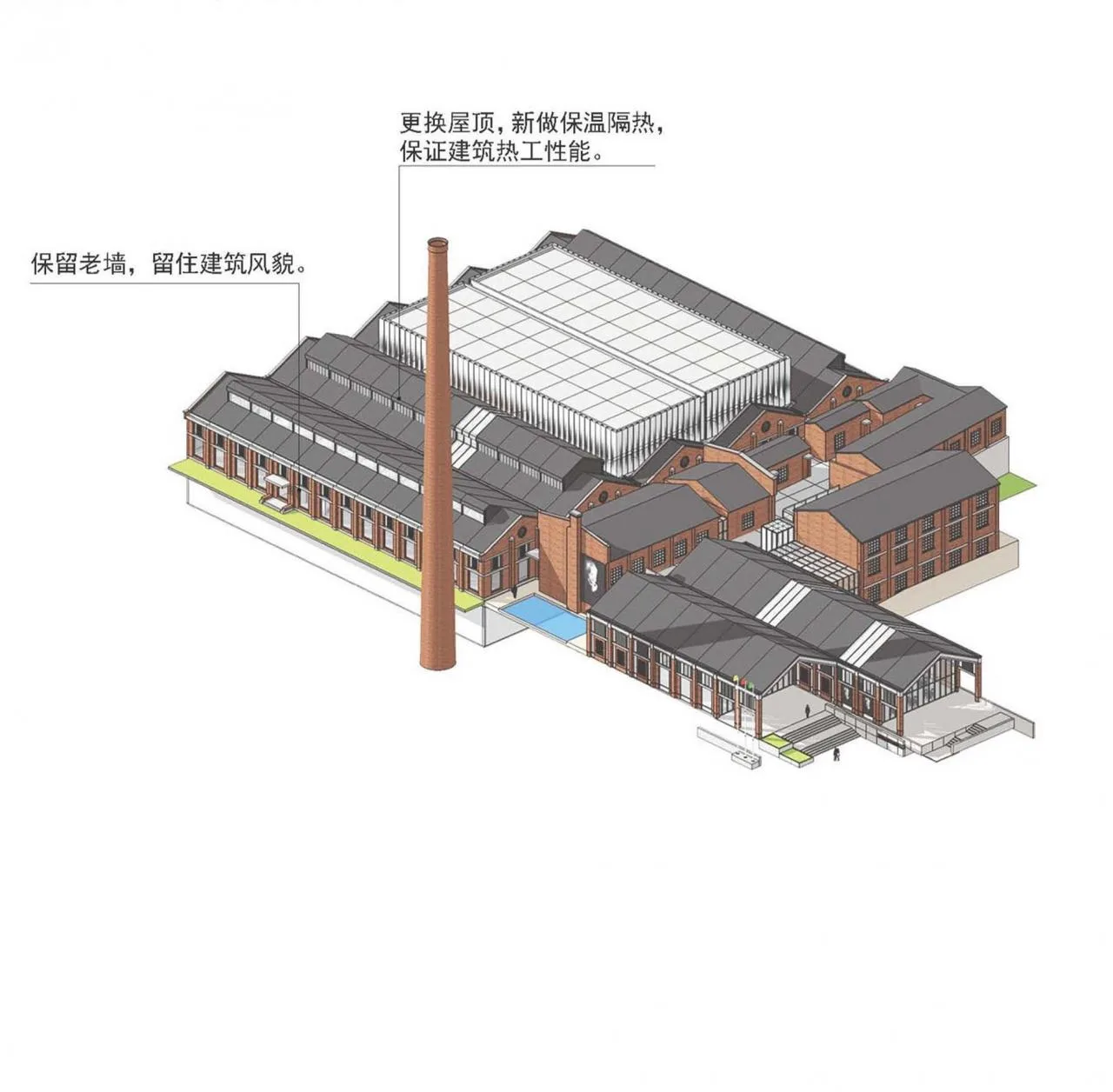
The exterior facade of Factory Building 1 is well preserved, featuring brick column load-bearing structures and a lightweight wooden truss roof. To retain the building’s original style, the exterior walls remain untouched. However, the old factory’s limited scale and space could not meet the requirements of a professional art museum. To address this, an underground level was added, expanding space for storage, equipment, and exhibition halls. This expansion improves logistics and separates public and operational flows efficiently.
Vertically, a second-floor glass volume was introduced at the center of the old factory to house special exhibitions. This addition strategically blocks views of surrounding roads, preserving the original street aesthetics.
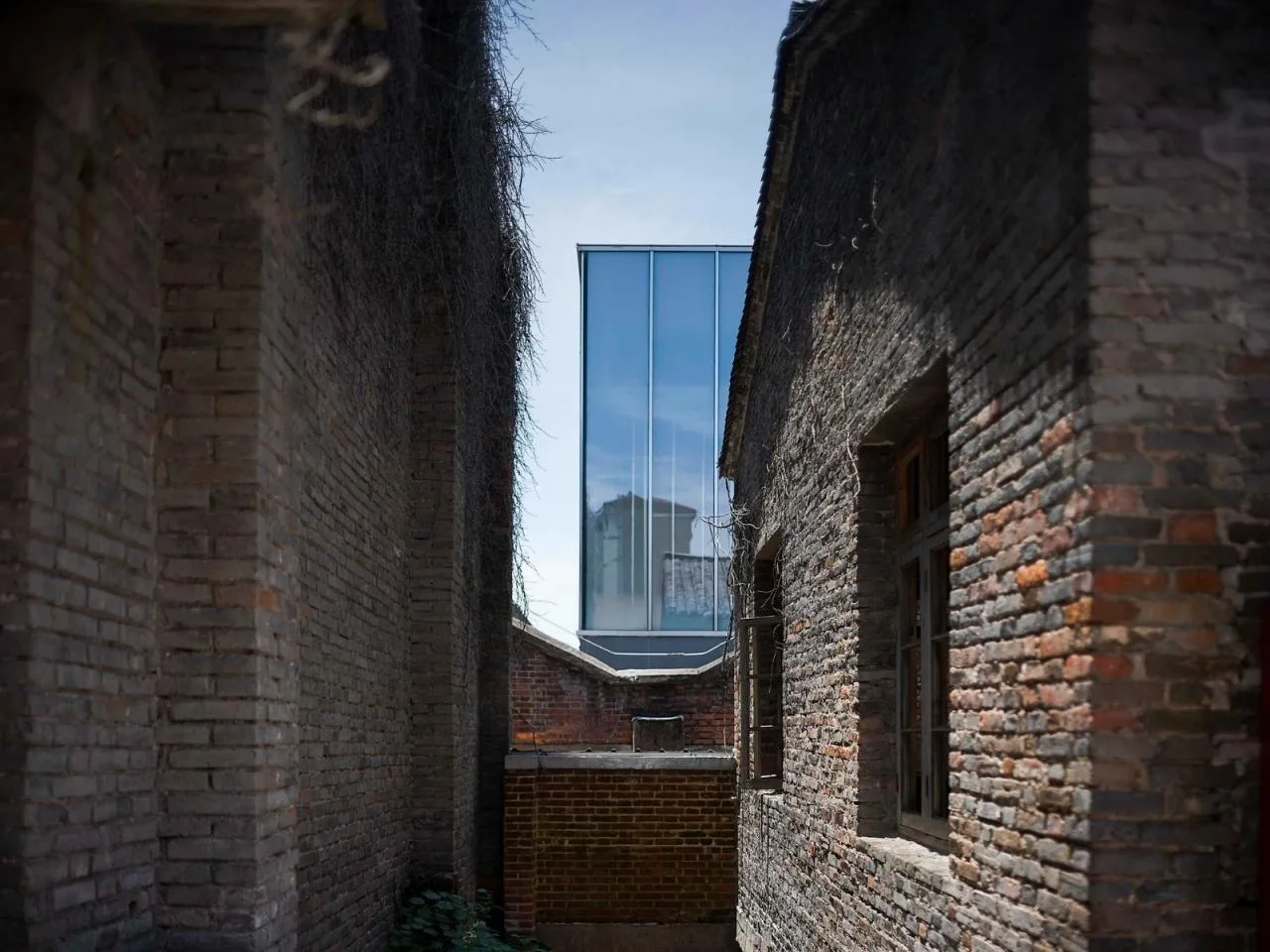
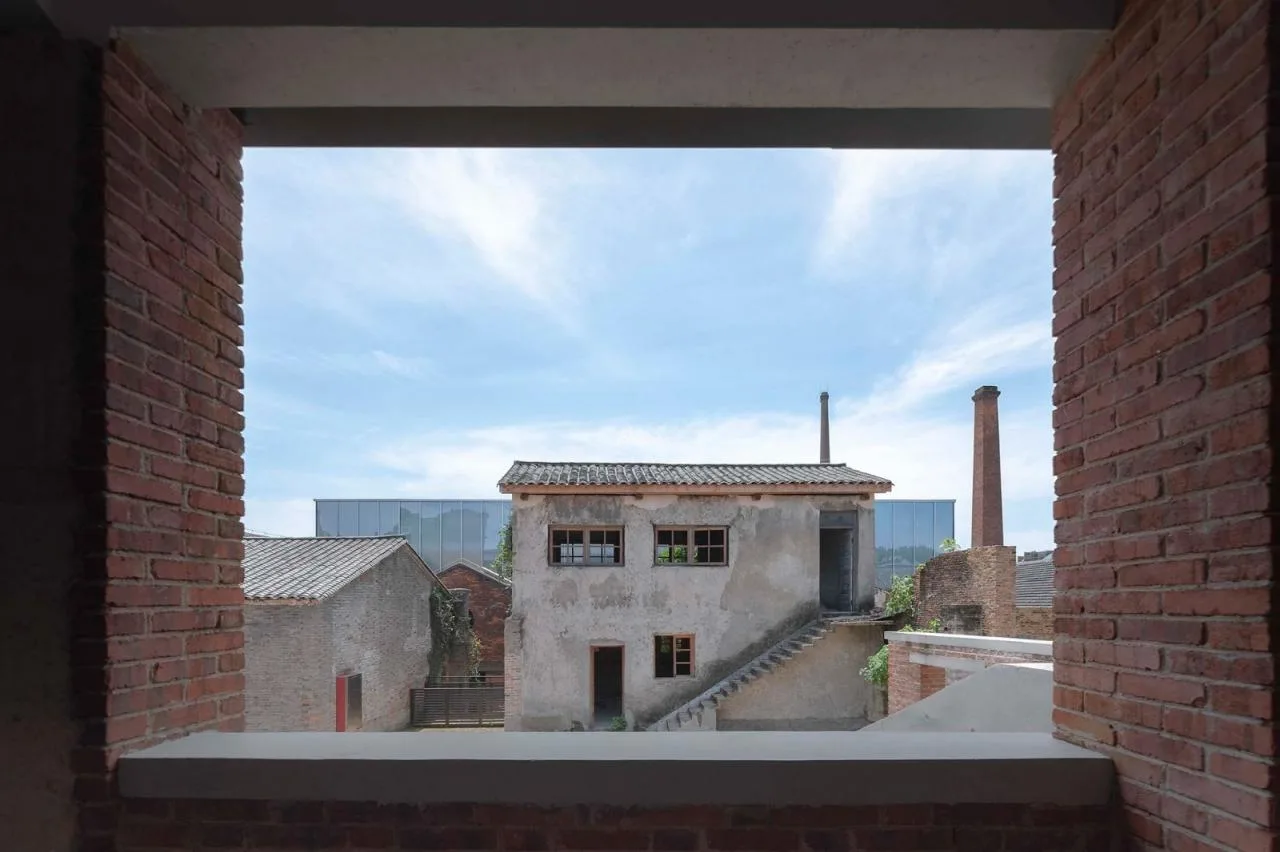
The newly added second-floor volume uses gradient colored glazed glass, which lightens the massing and blends harmoniously with the surroundings. The gradient glaze evokes the clarity and beauty of freshly fired ceramics, as well as ink paintings that reflect local ceramic culture. Inside, a viewing platform offers panoramic views of the millennium-old historic district, creating a spatial and temporal dialogue with the Imperial Kiln factory.
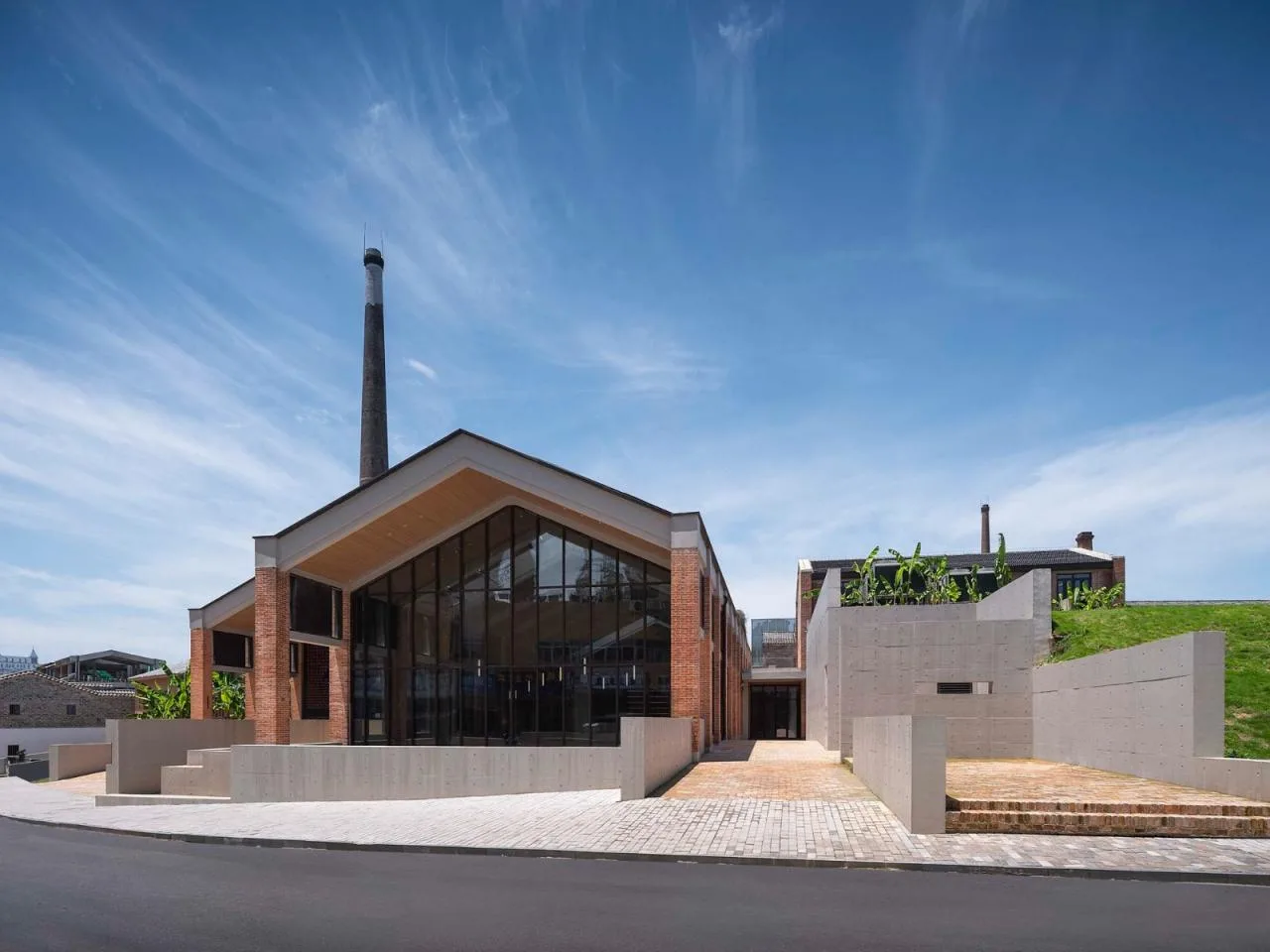
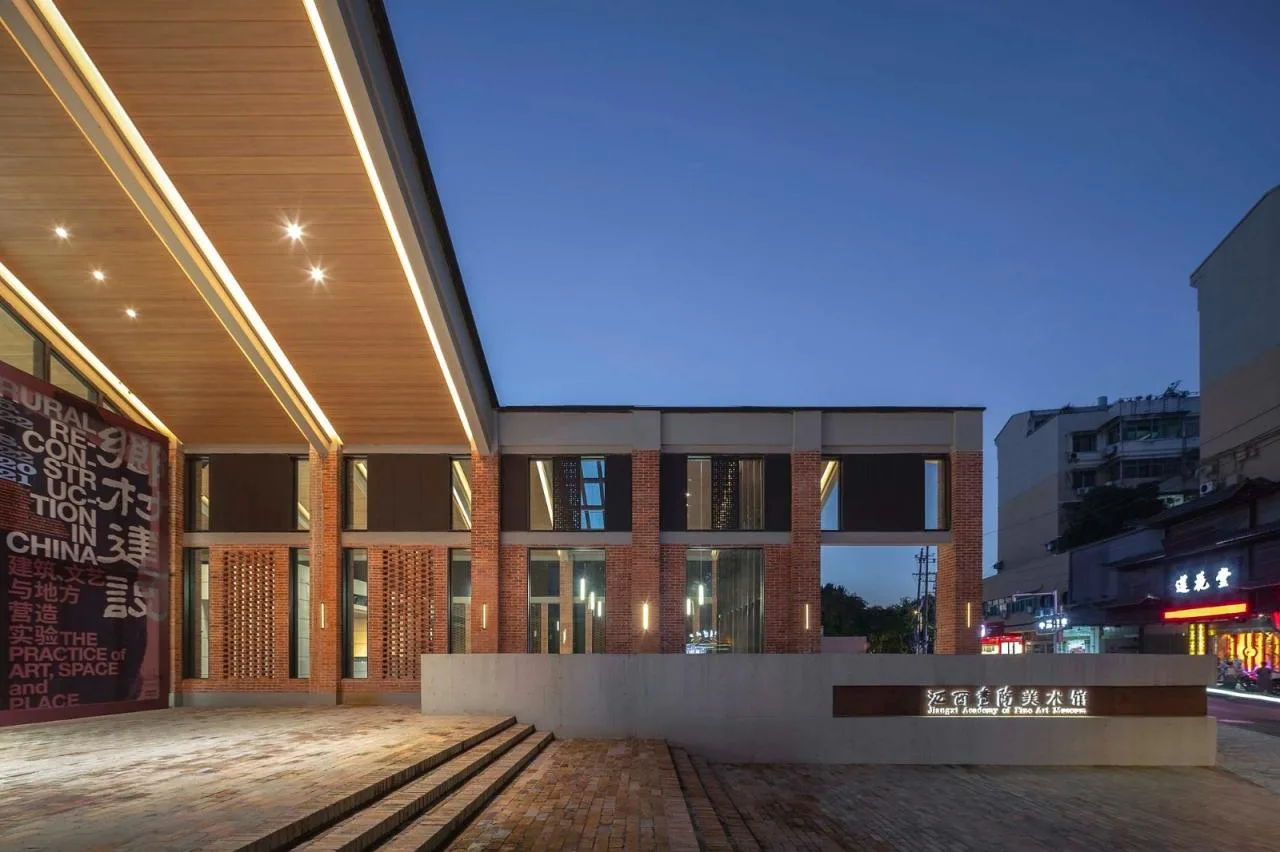
Beyond renovating the old factory, we introduced an organically grown entrance volume in the open space north of the building. This extension mirrors the original building’s scale, architectural form, column spacing, and facade rhythm, using modern materials such as concrete, glass, and aluminum panels. The interplay between old and new volumes maintains harmony in texture and proportion while expressing distinct architectural languages of their respective eras. This approach infuses contemporary expression into the historic district.
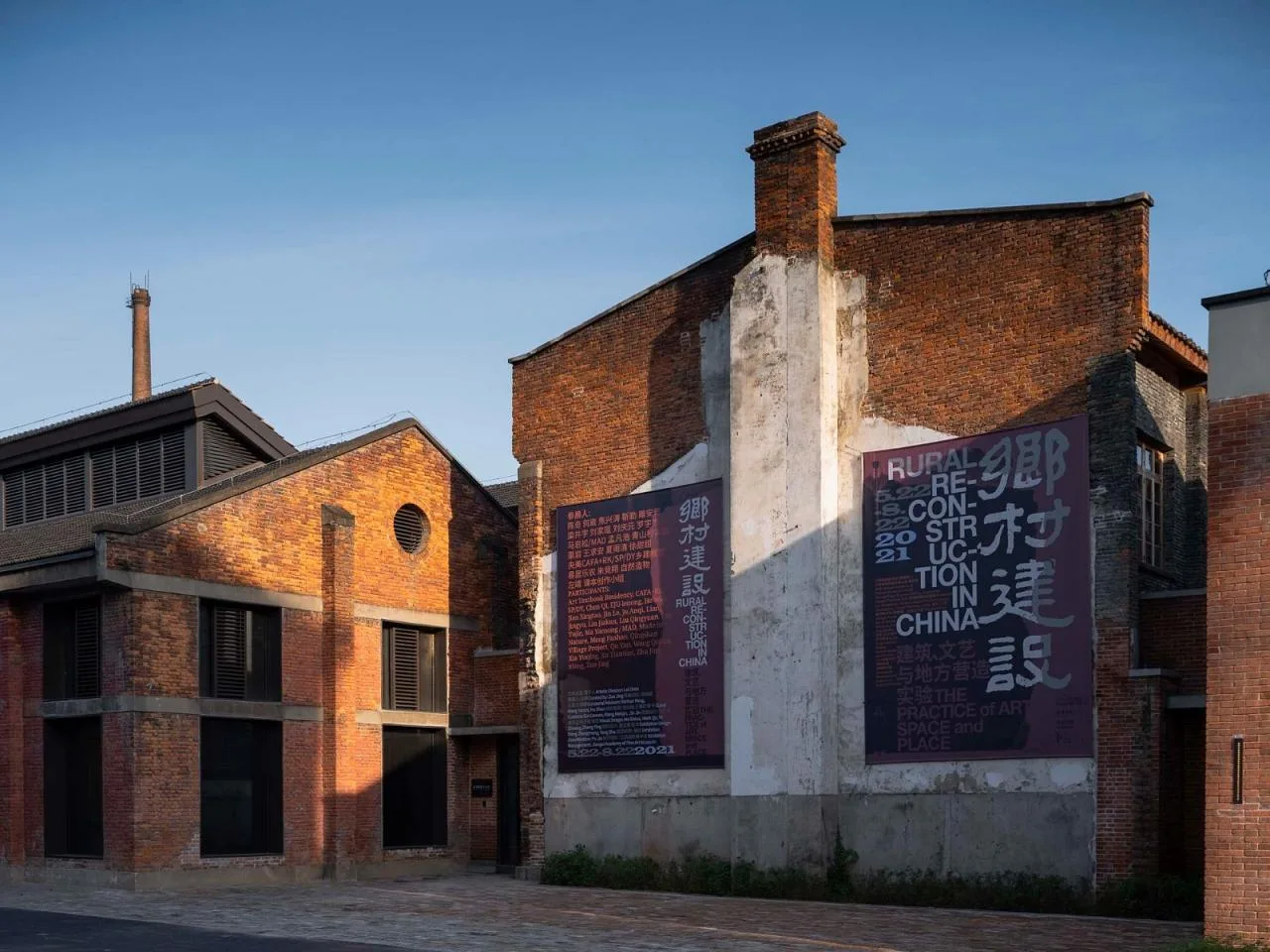
The original staff bathroom building, constructed with brick and concrete and characterized by its distinctive gable facade, has been fully preserved and repurposed as VIP rooms and other service spaces. It also serves as a poster wall for the museum. Surrounding residential buildings included in the museum’s land have been renovated with care, transforming them into artist studios that seamlessly integrate with the historic district while injecting new artistic functions.
Spatial Evolution: Time Travel Through Architecture
Originally an industrial plant with a simple spatial layout, the Jianguo Porcelain Factory now offers a richer spatial experience. By adding volumes and layering spaces both horizontally and vertically, we created a sequence of spaces that contrast old and new, evoking a sensation of time travel.
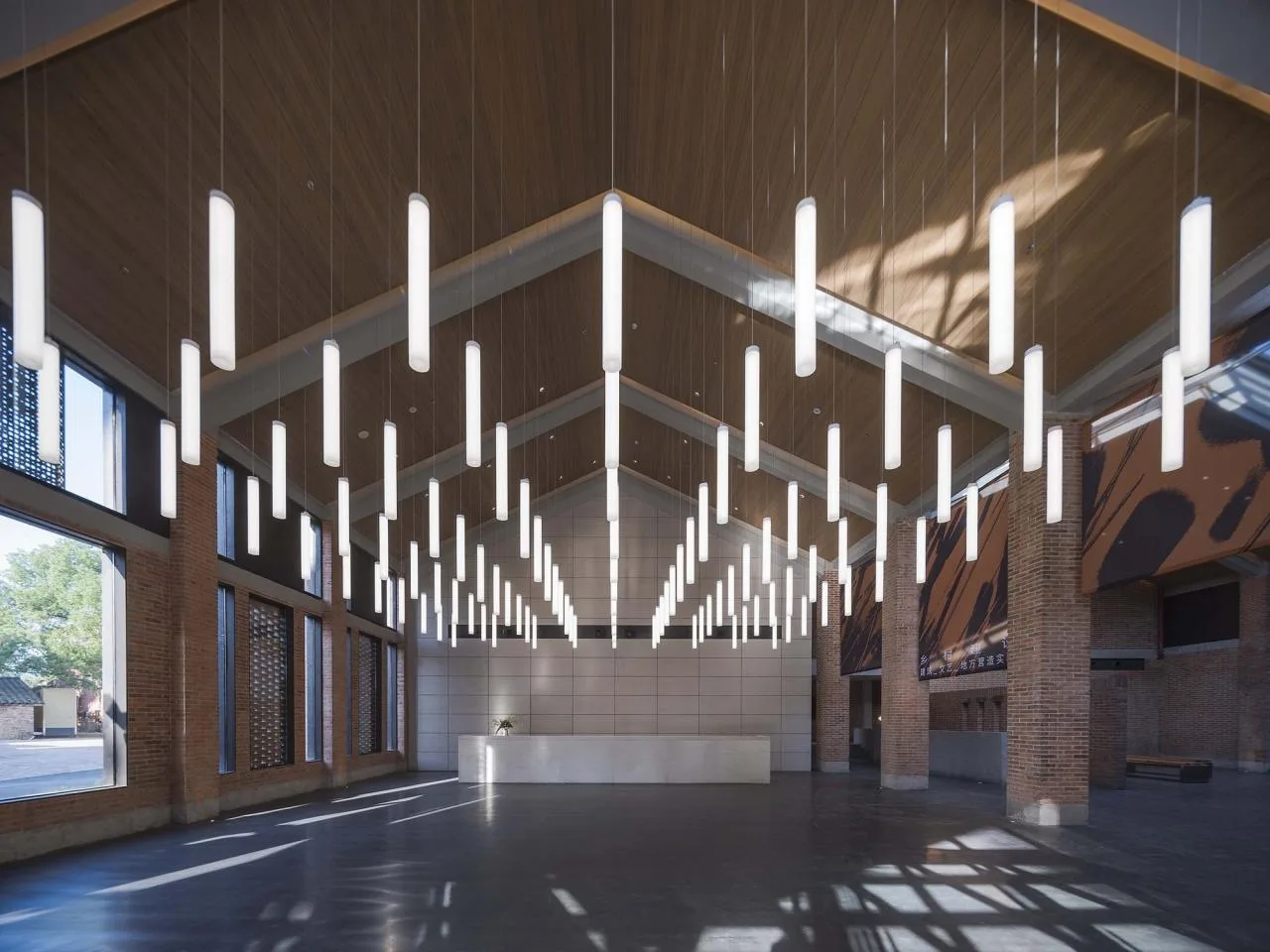
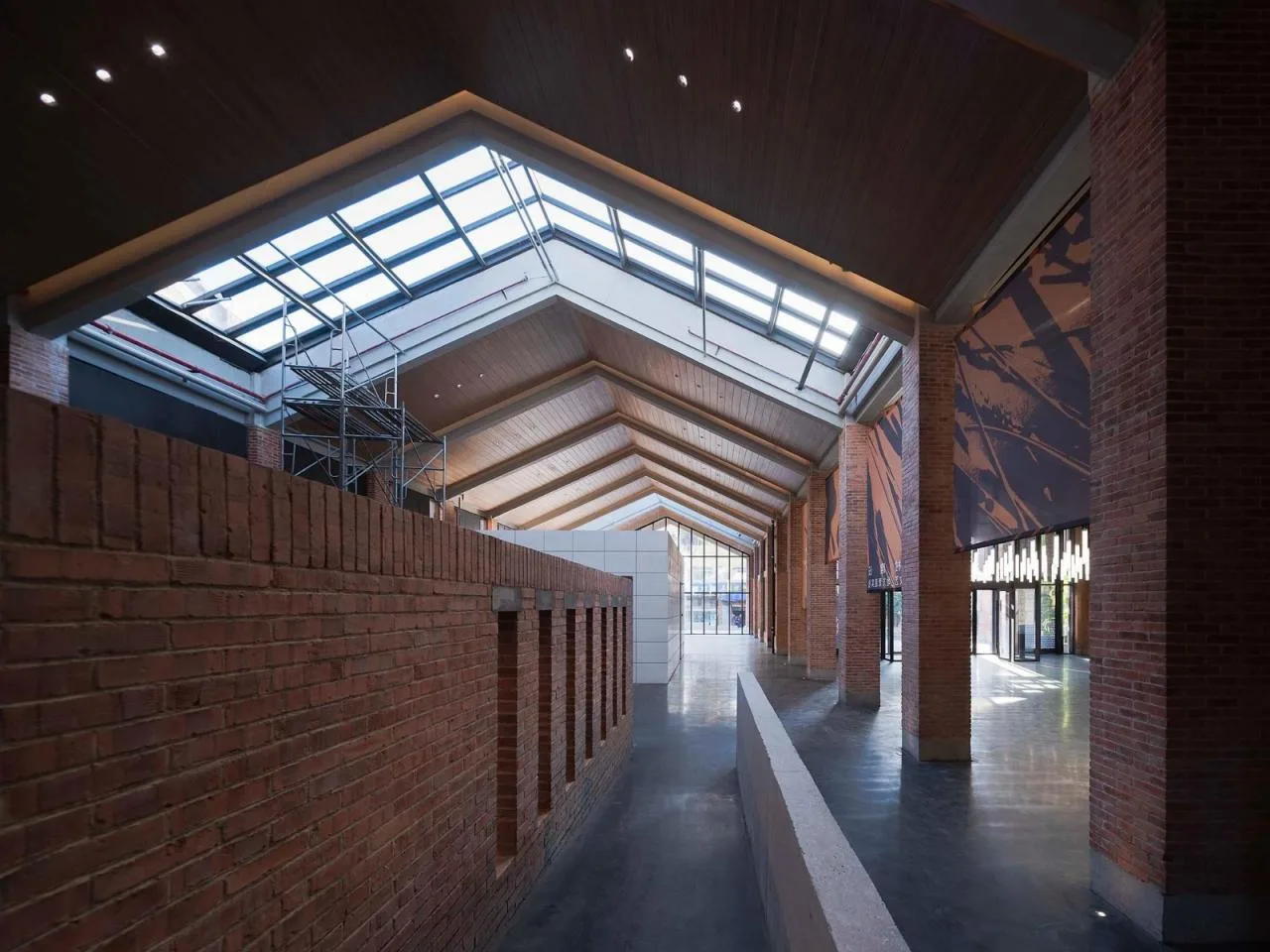
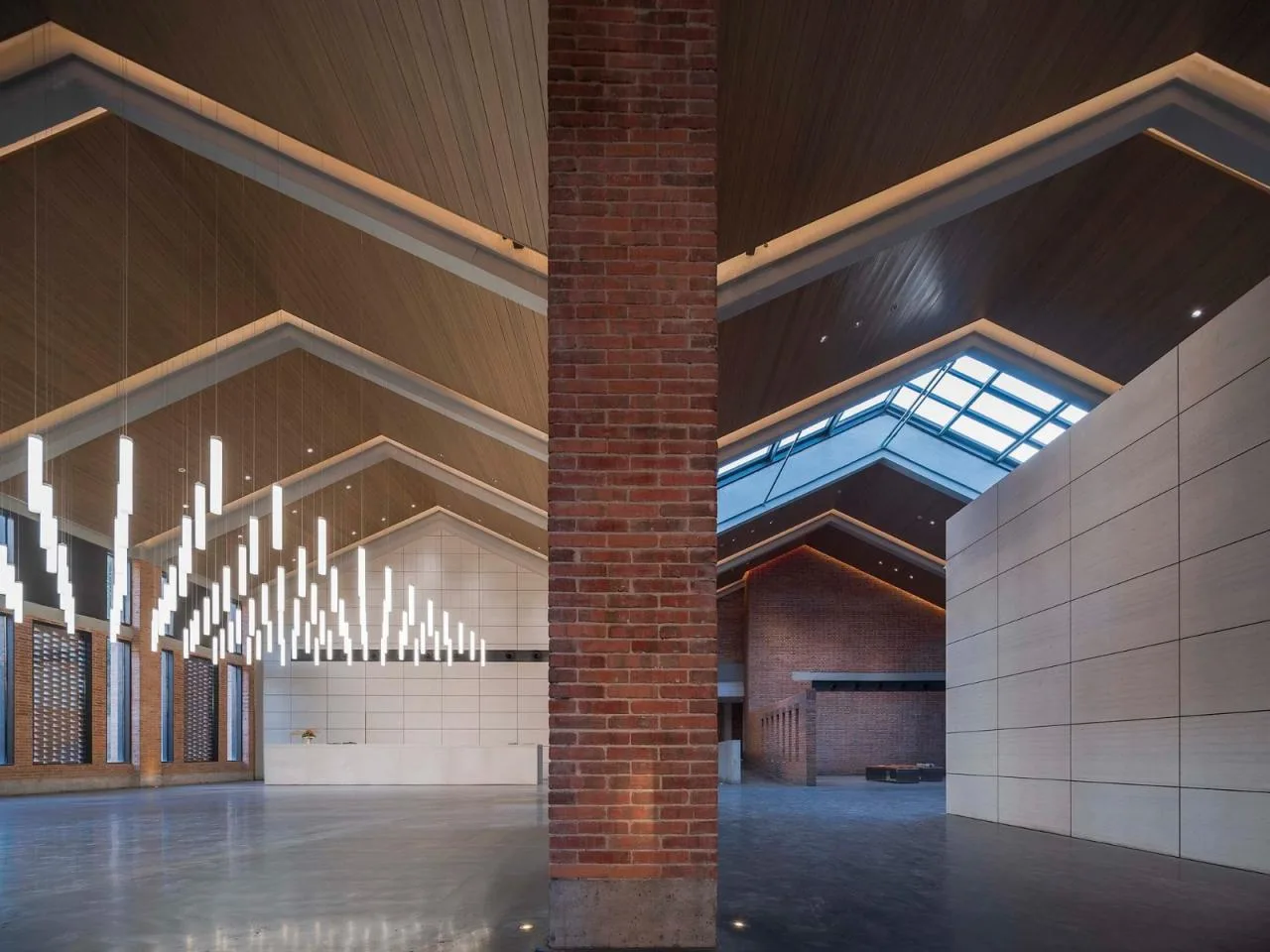
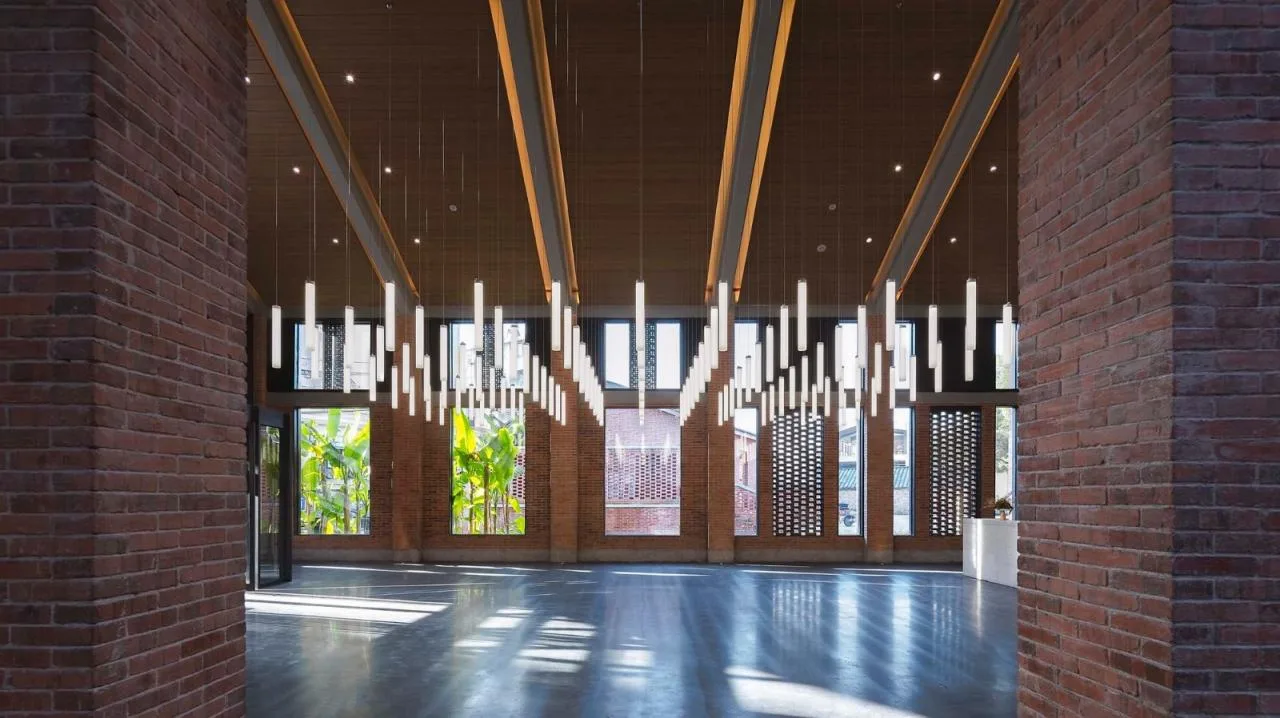
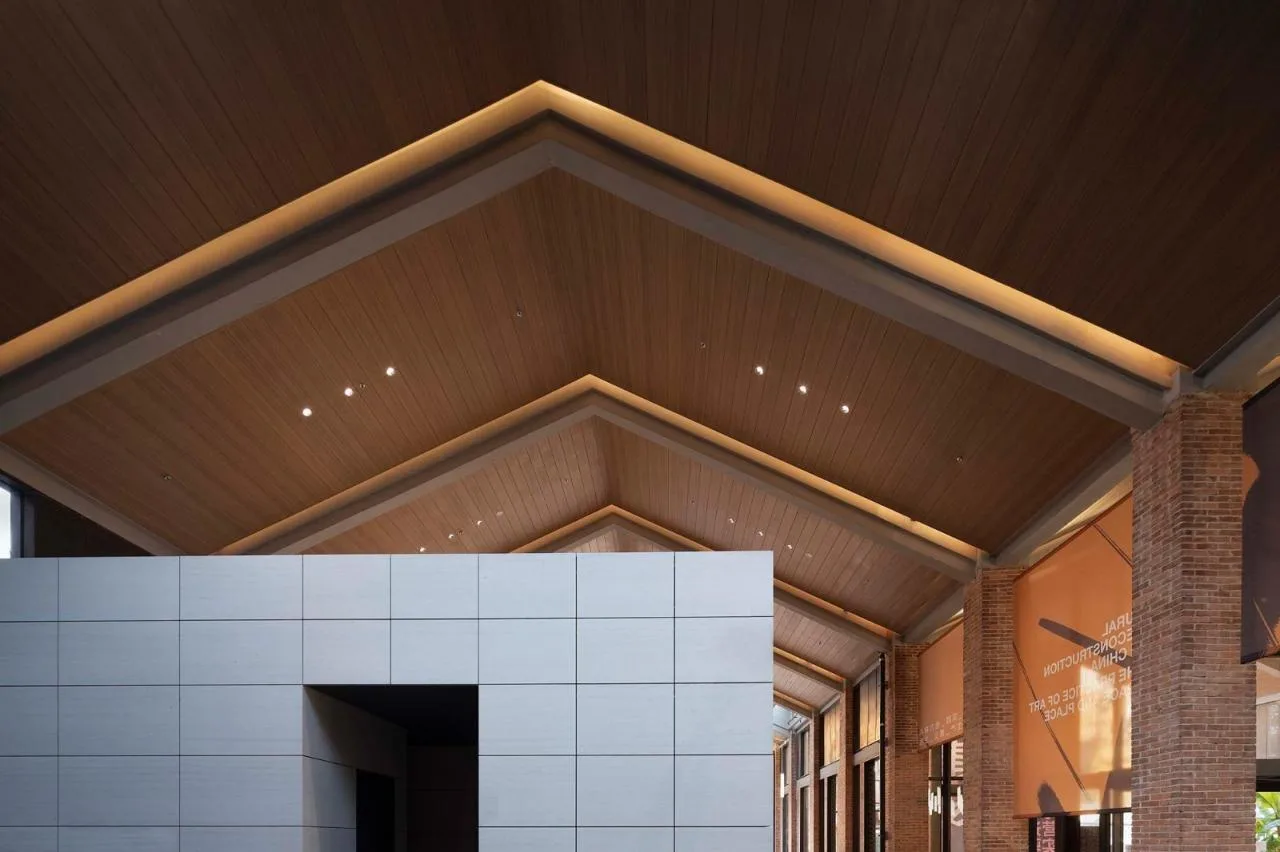
Visitors enter the new foyer via an entrance square and stairs. The foyer features a “herringbone” concrete roof inspired by the original factory truss, interpreted in a modern, minimalist style. Ceramic-shaped lighting fixtures reinforce the local cultural connection and add artistic character to the space. The design honors its prototype while transcending it—merging history with contemporary life, individuality with society, and the particular with the universal.
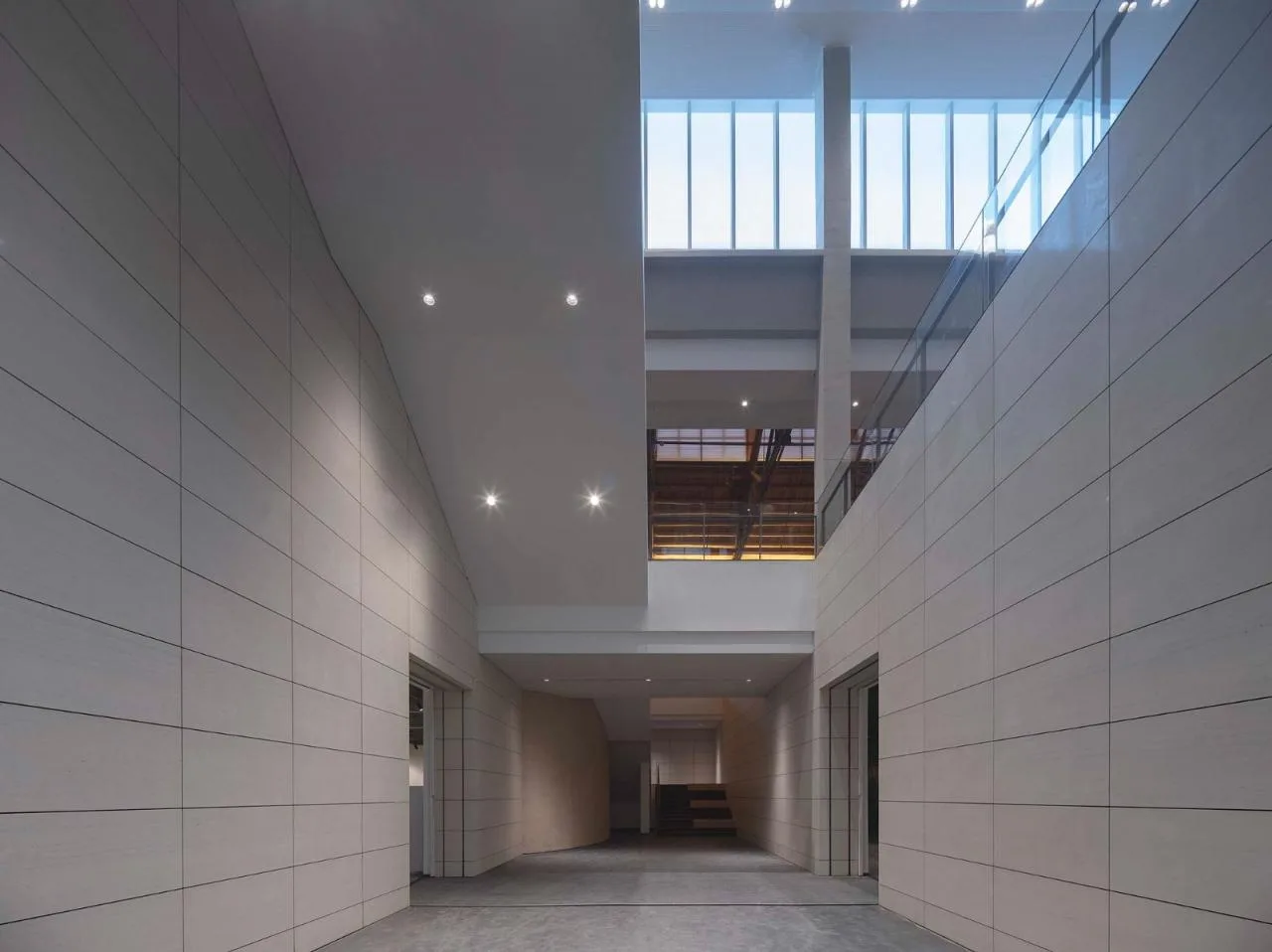
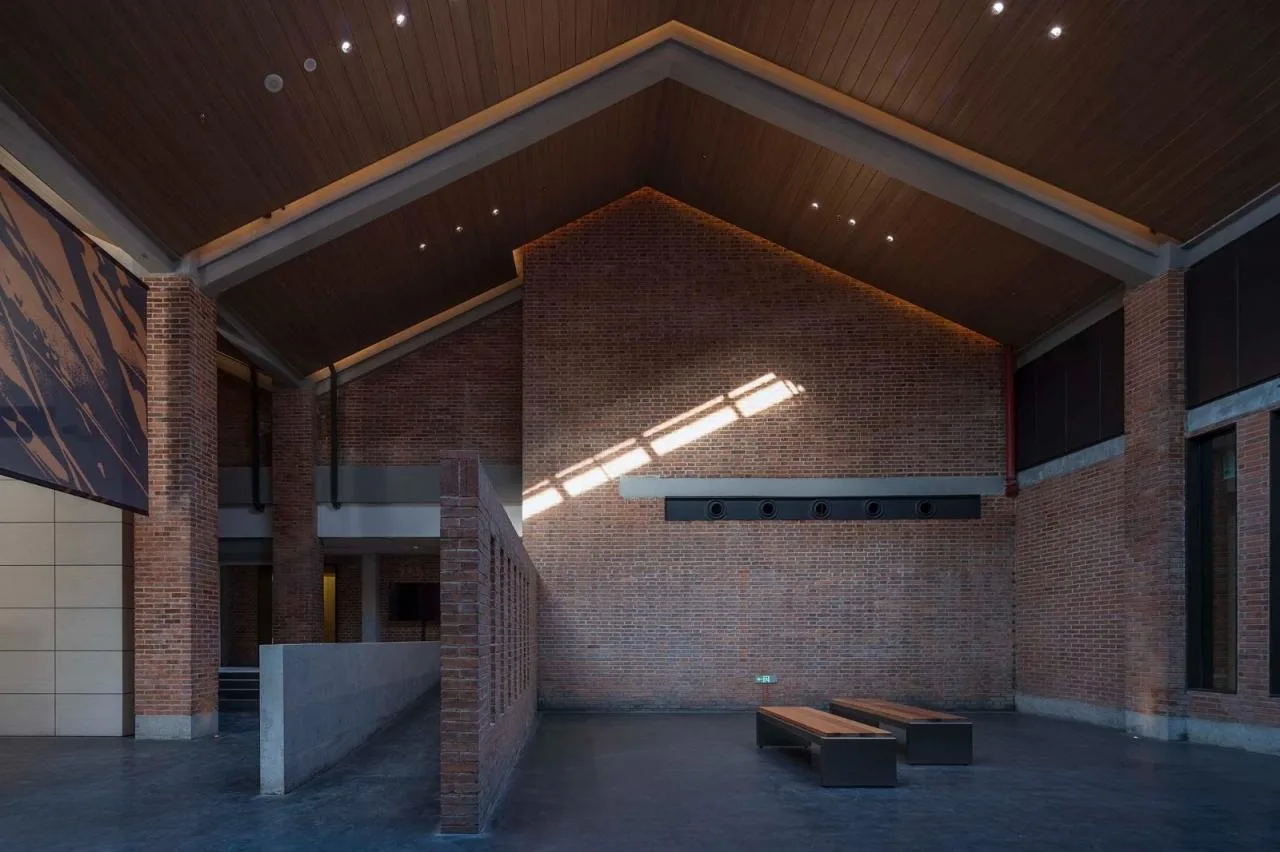
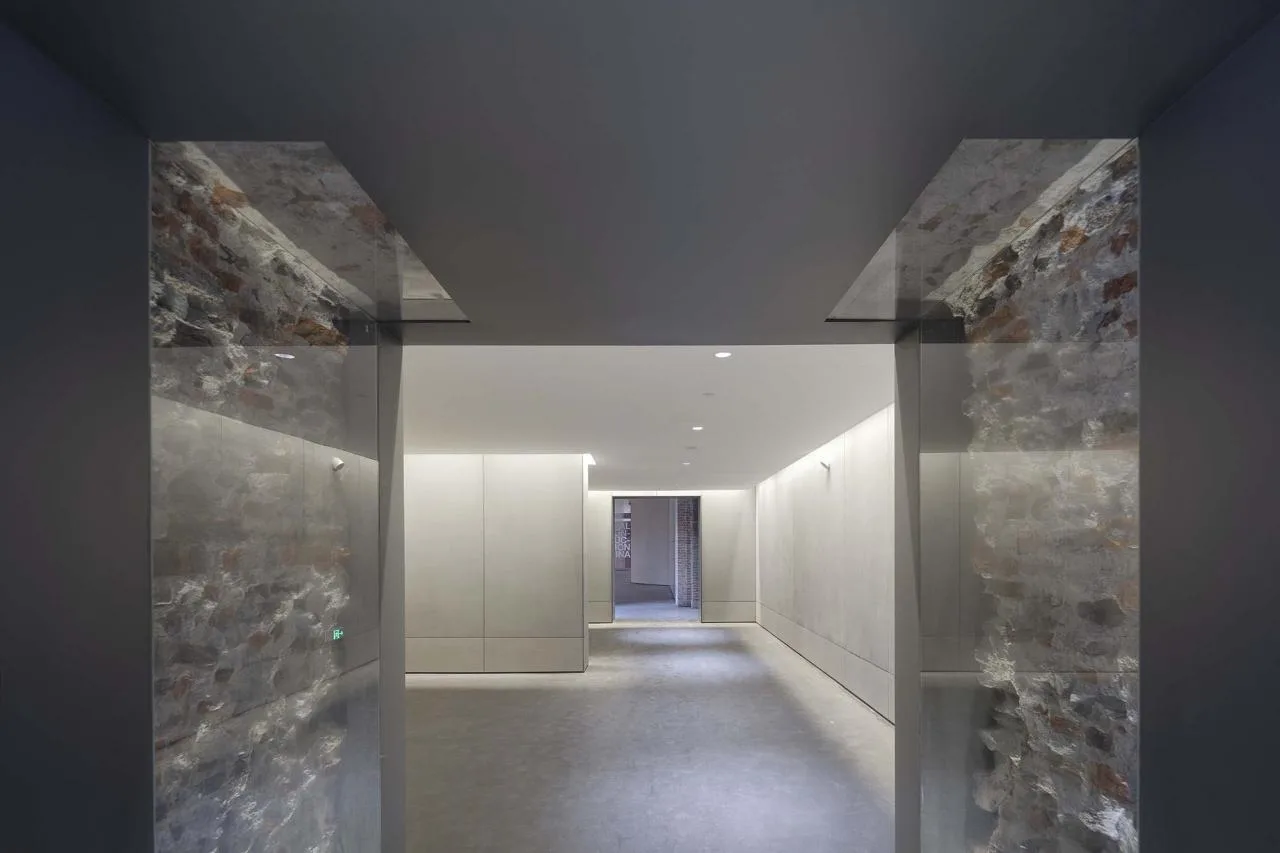
From the entrance hall, visitors pass along a guiding wall into the old factory through a transitional space with a height difference, preserving the original bathroom building’s ground floor. The old bathroom walls are protected behind glass, displayed like exhibits. Walking through this low-ceilinged space feels like traveling through a tunnel in time and space, leading into the public hall of the old factory from the new entrance.
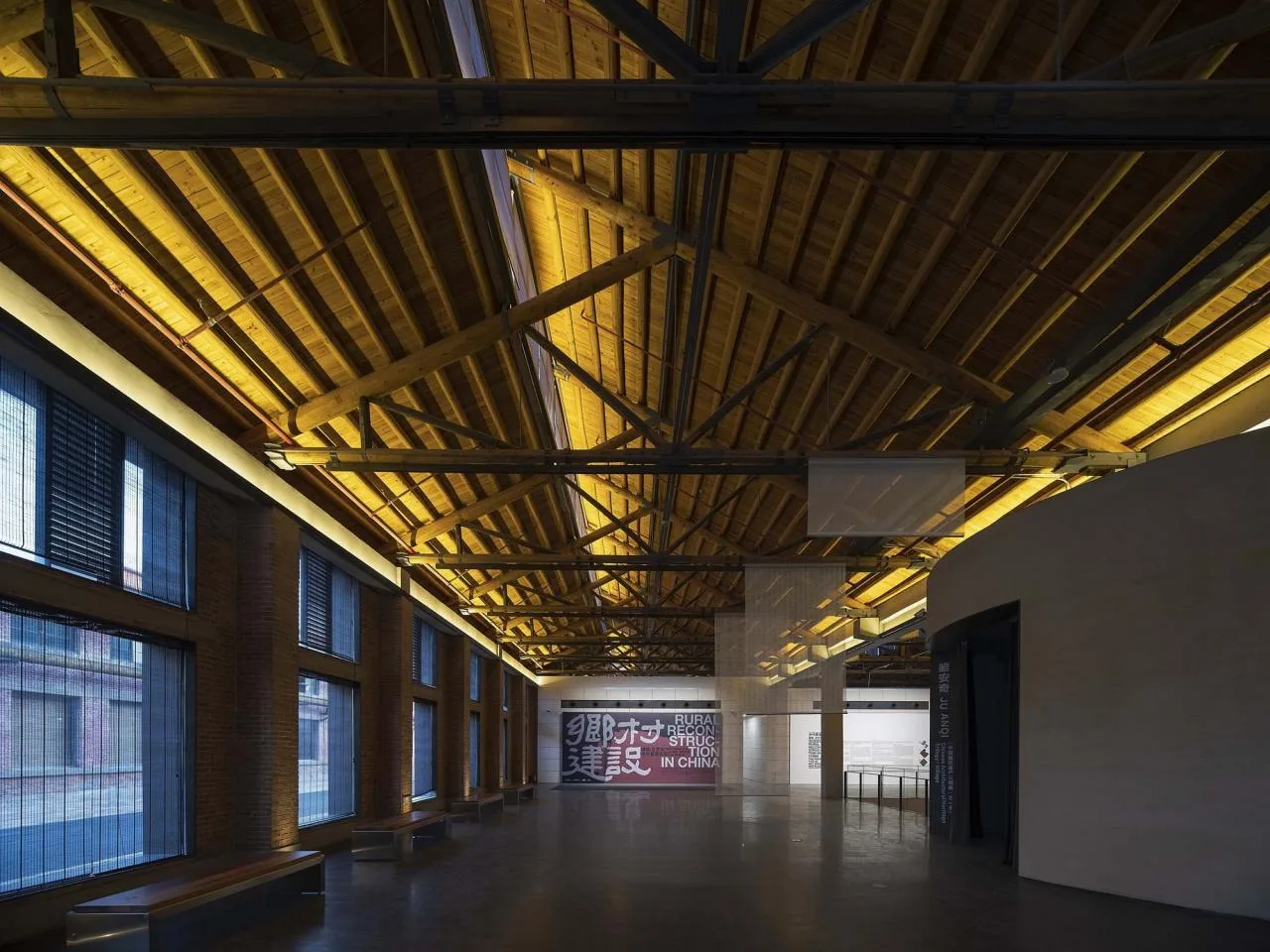
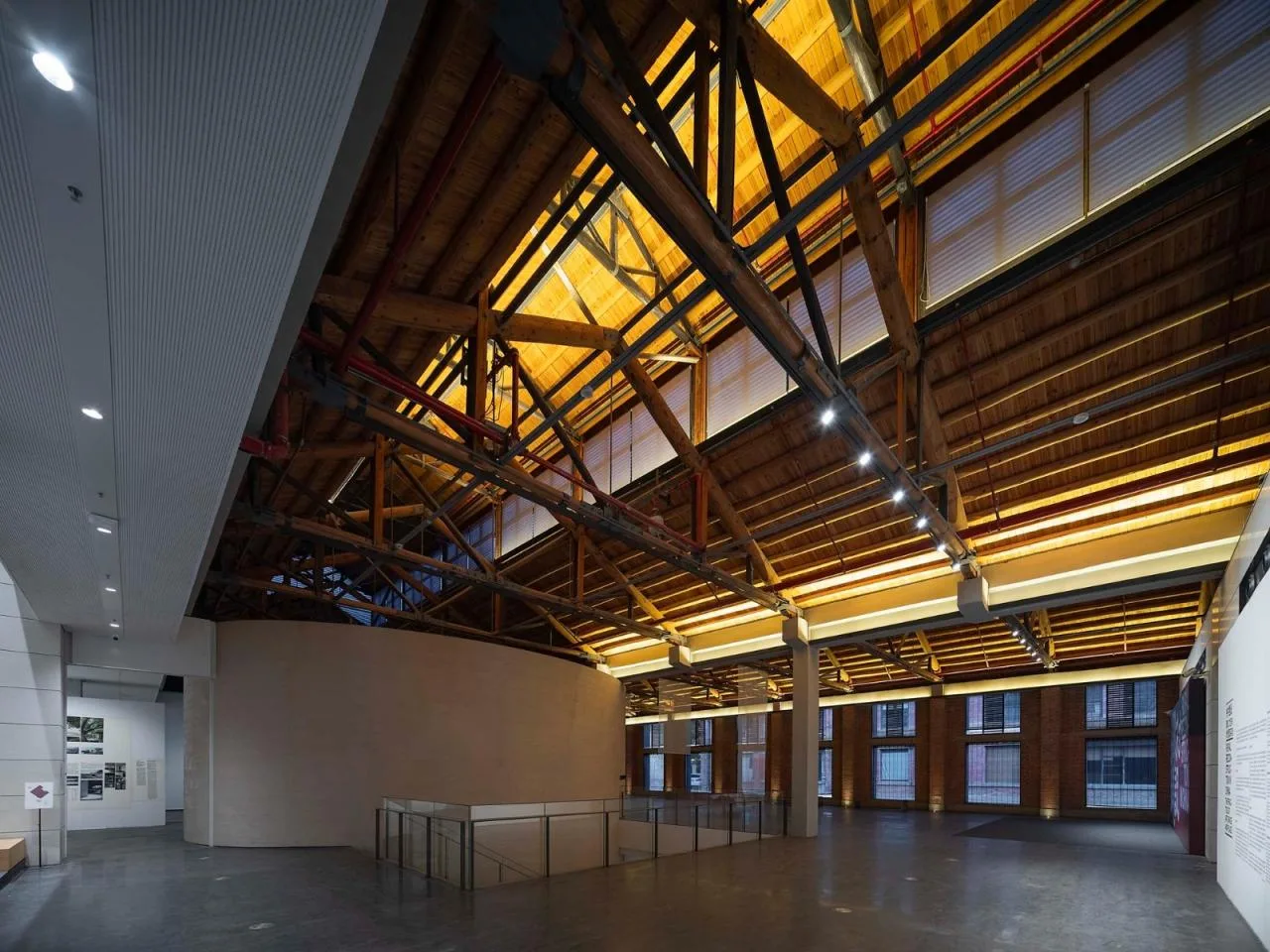
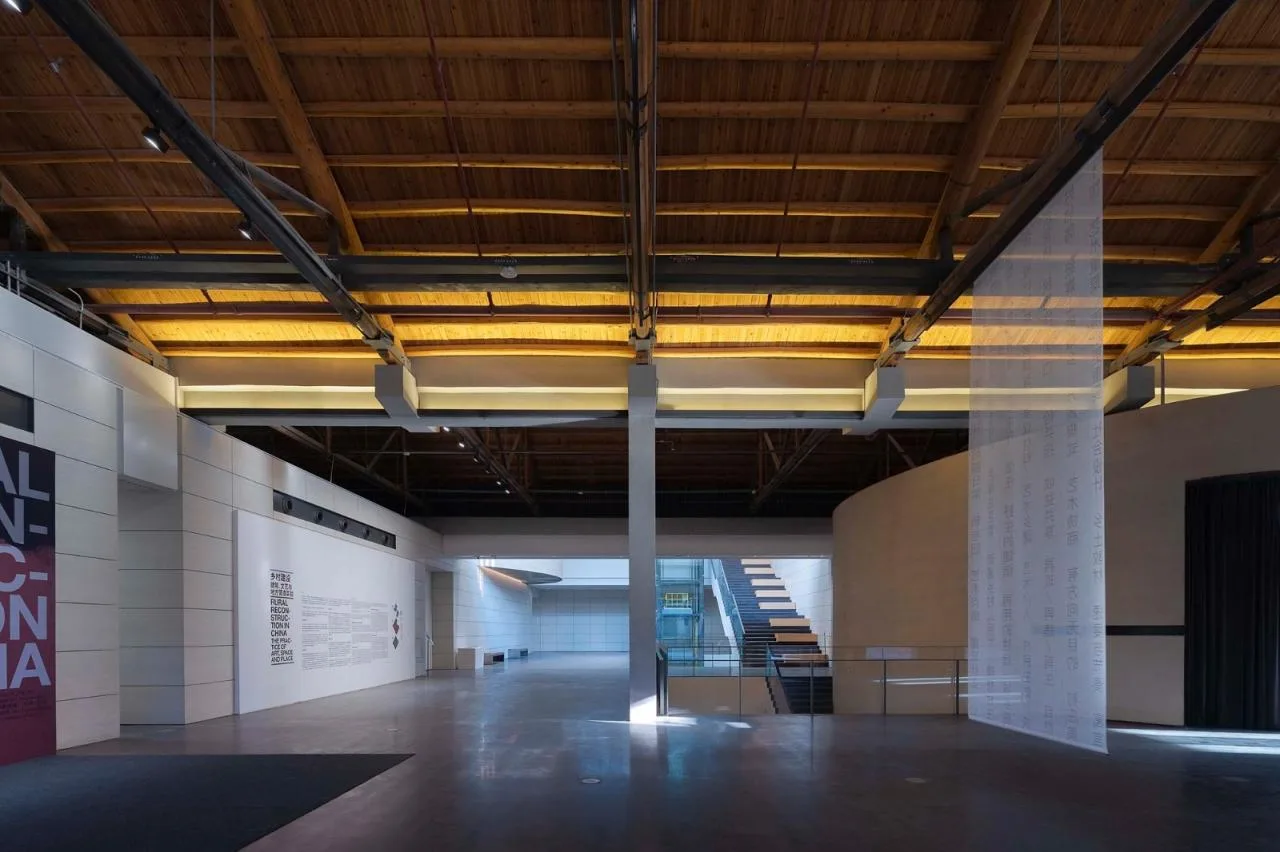
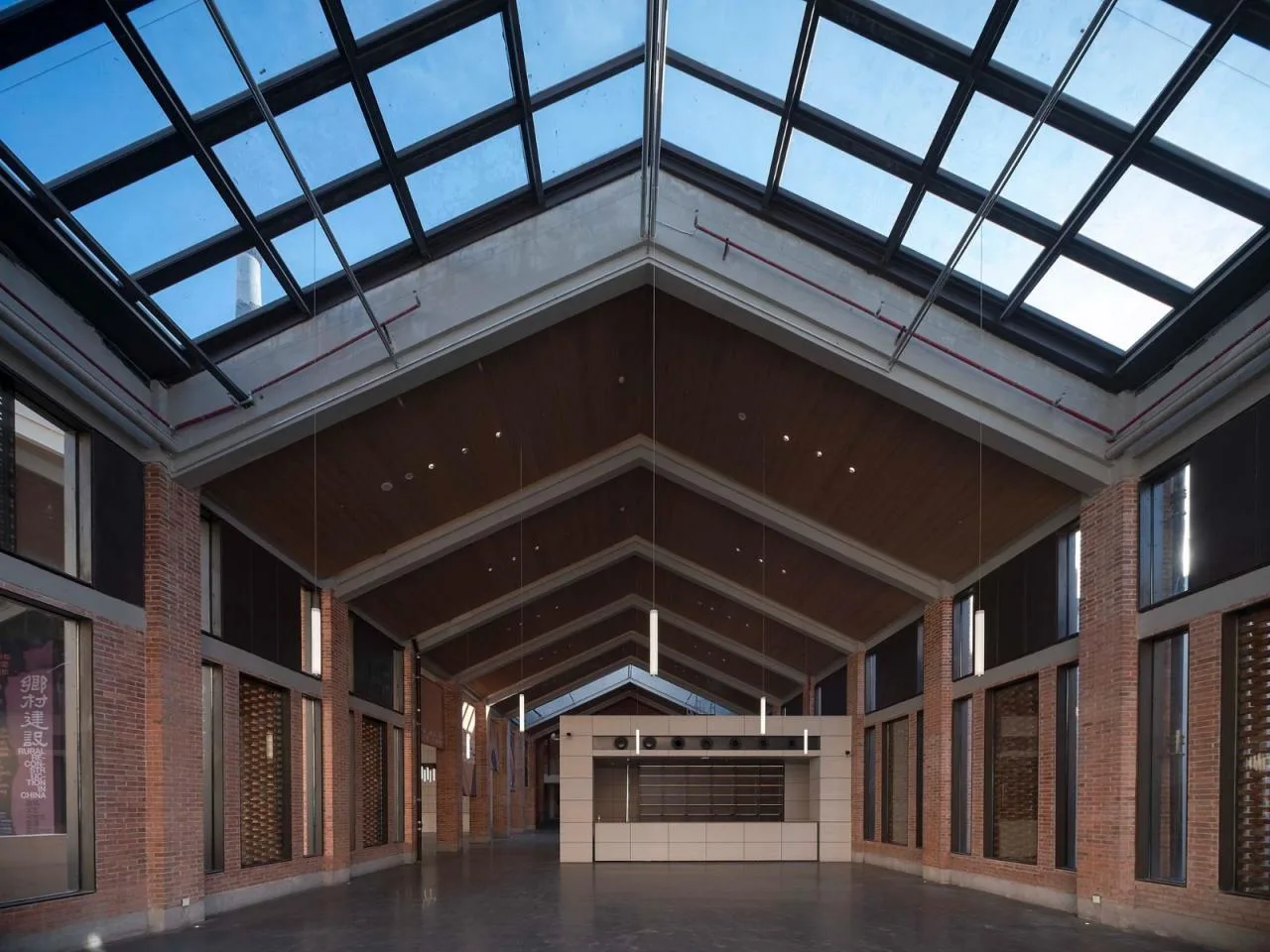
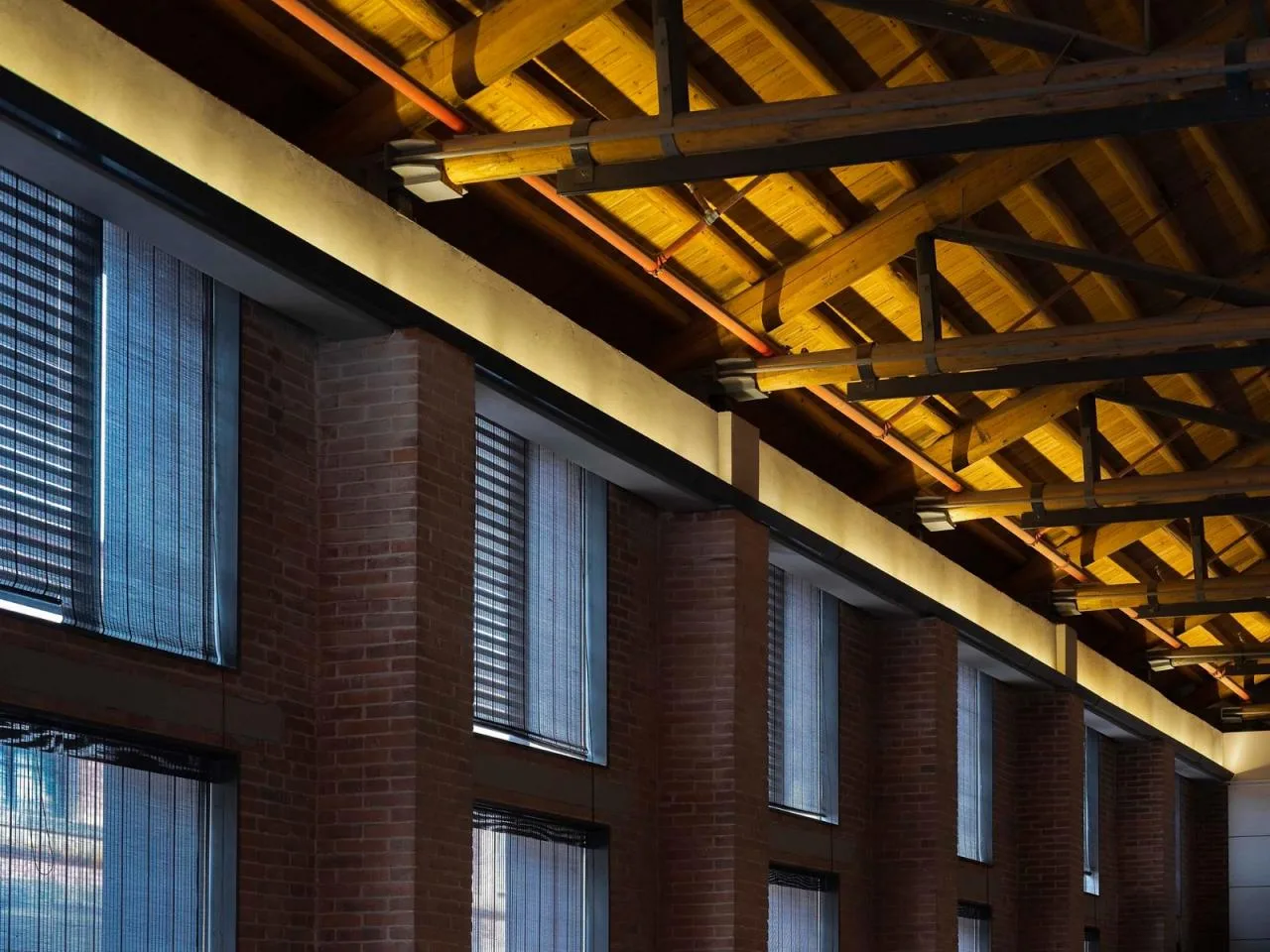
The public hall, primarily used for events, retains the factory’s original character. Renovations preserve the wooden frame structure, enhanced with steel components for structural integrity. The red brick walls have been restored, maintaining the industrial atmosphere of the 1950s Jianguo Porcelain Factory. This creates a striking contrast with the modern entrance area.
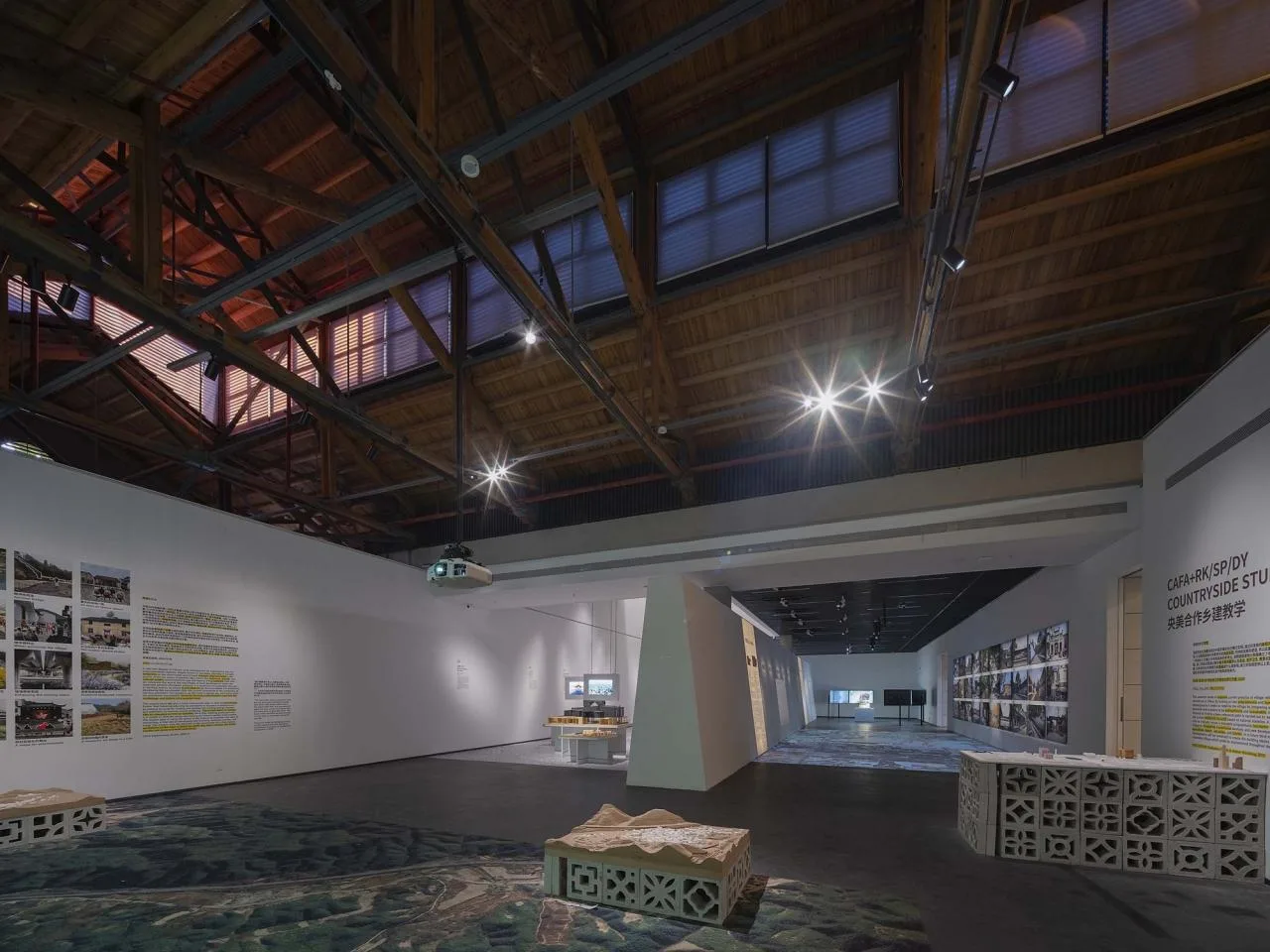
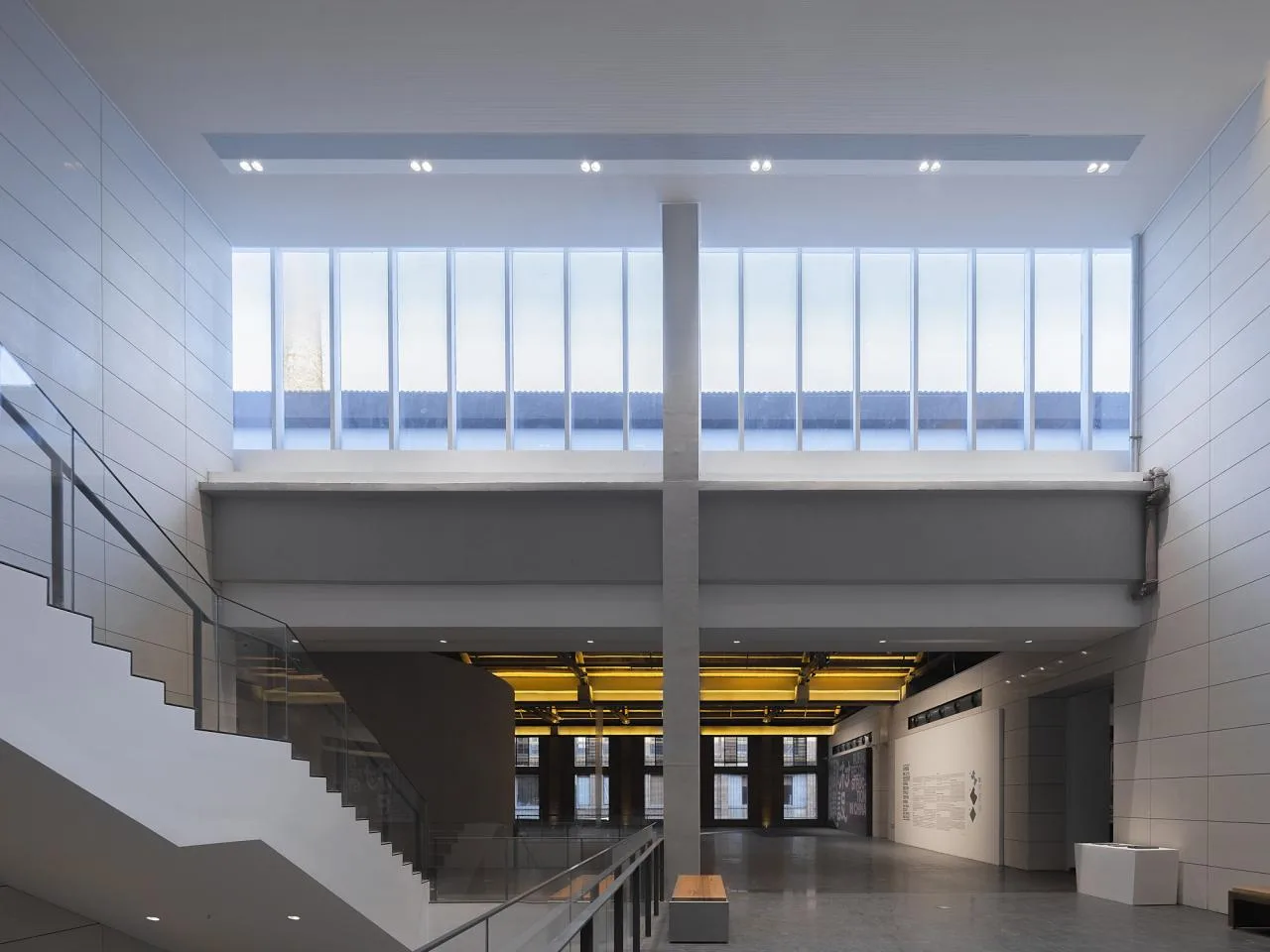
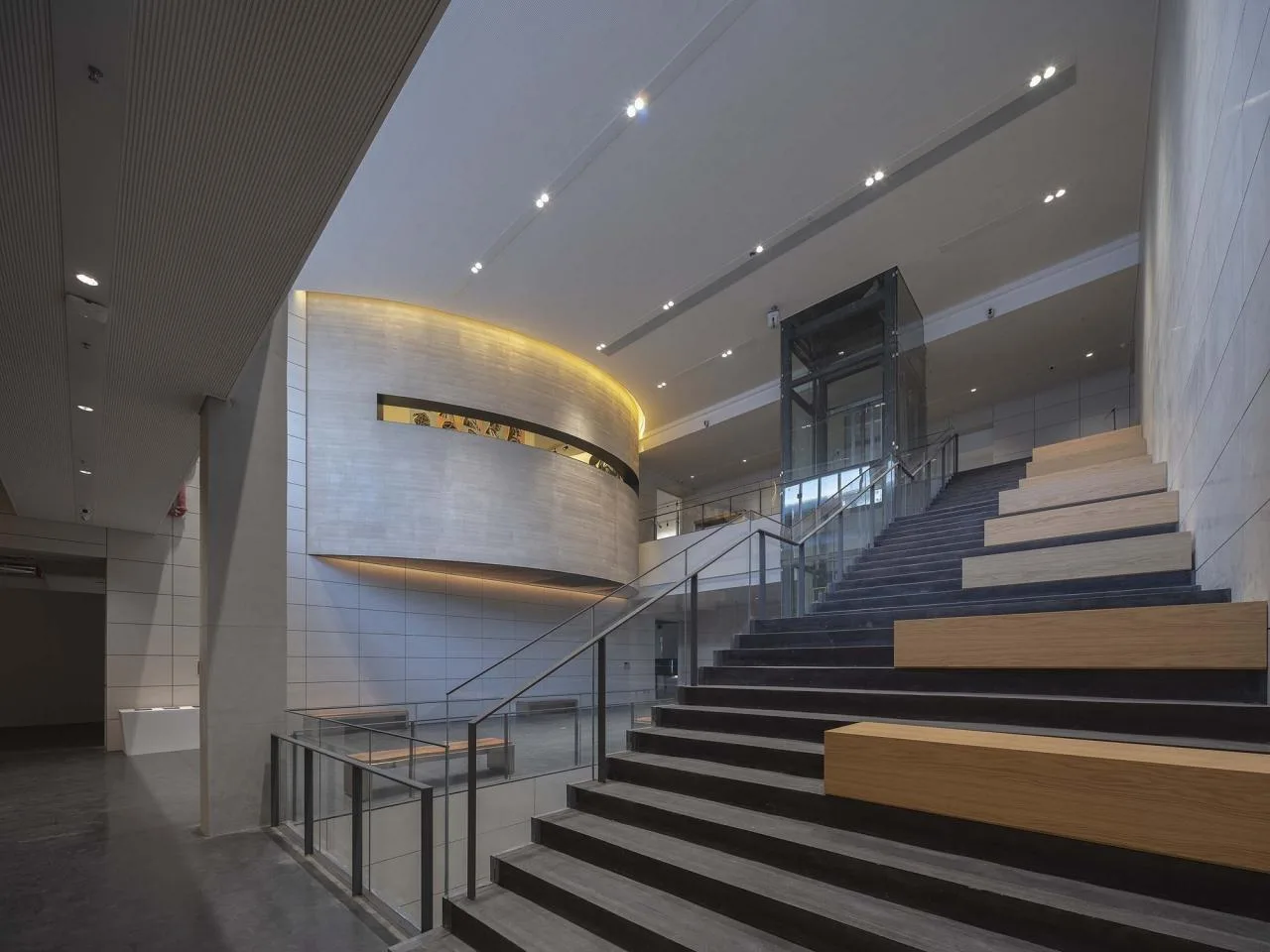
Beyond the public hall, visitors are led by a uniquely shaped projection hall into a dramatic three-story atrium. This design exploits the existing building’s protrusions and underground space to create an expansive vertical void, enriching the formerly single-level factory space with impressive spatial dynamics.
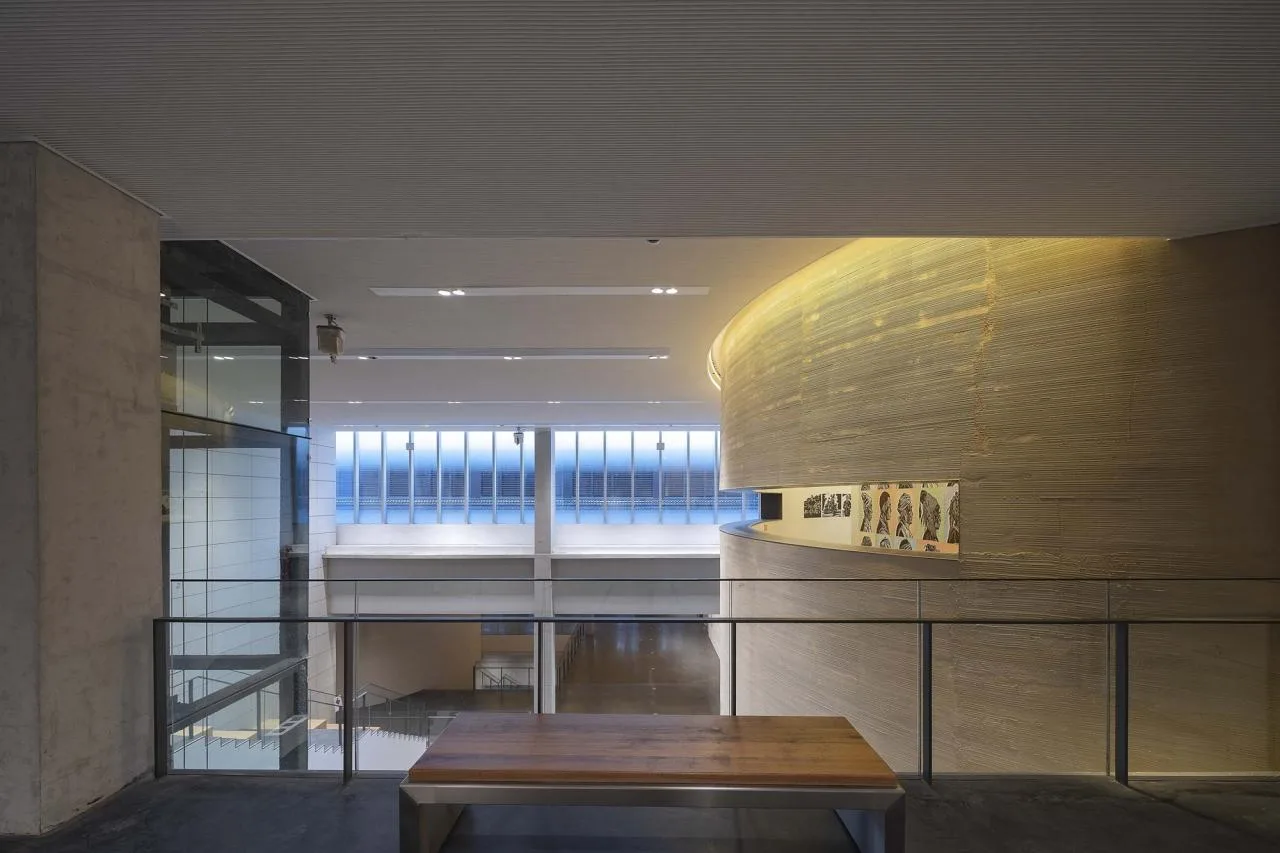
Ascending the atrium stairs leads to the second-floor exhibition hall, which features a curved wall with horizontal openings facing the public hall. These linear windows create a sense of timelessness, forming a visual connection between the exhibition space and public area. Public activities become part of the museum experience, blurring the boundaries between audience and exhibition.
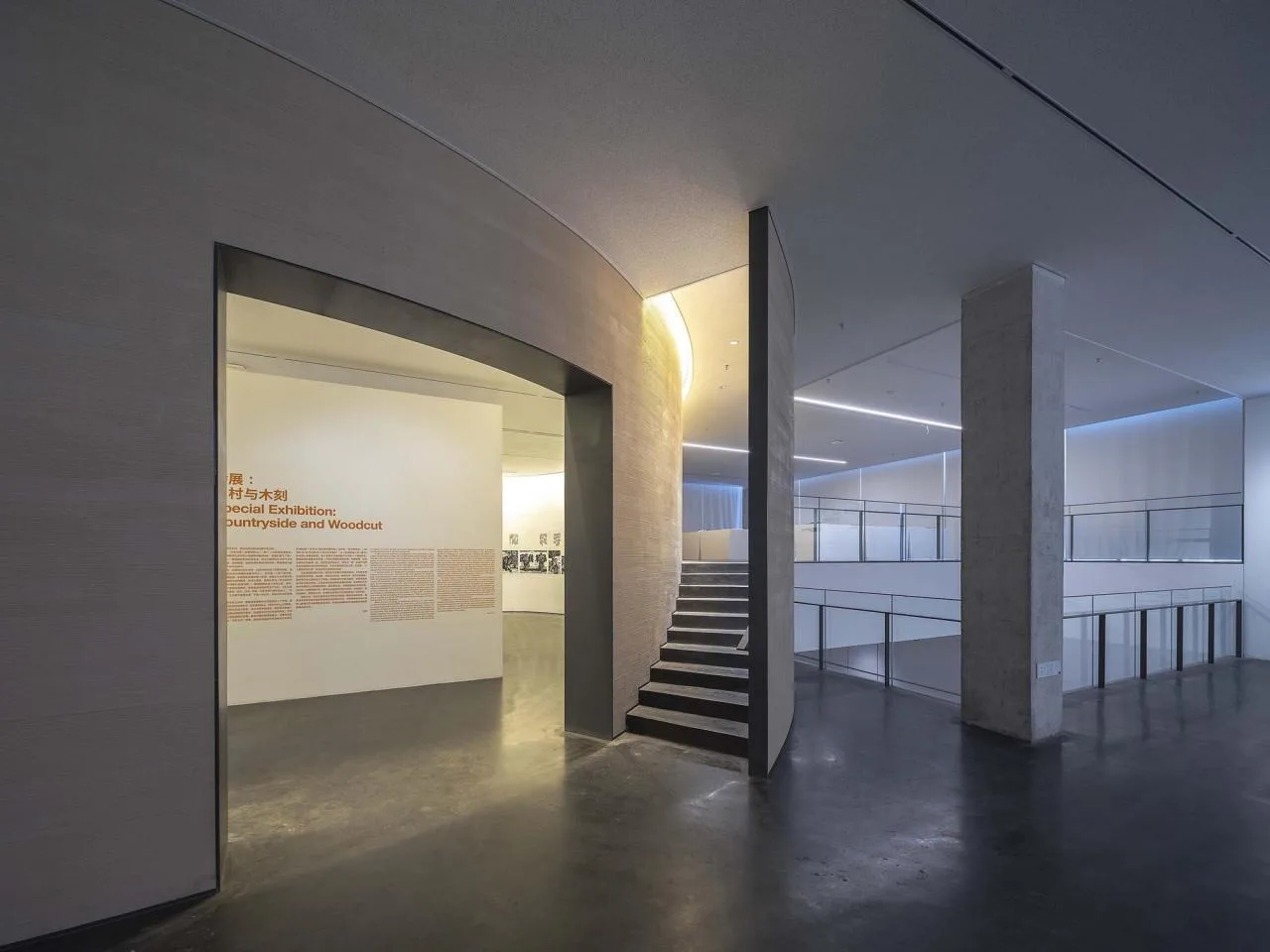
The second-floor exhibition hall is enclosed by a glazed curtain wall, open to the surrounding environment with an integrated viewing platform. This platform provides a panoramic view of the historic district framed by the factory walls, aligning sightlines with the Dragon Ball Pavilion of the Royal Kiln Factory. The hazy gradient glass blurs temporal and spatial boundaries, inviting visitors to engage in a dialogue between their thoughts and the site’s cultural heritage.
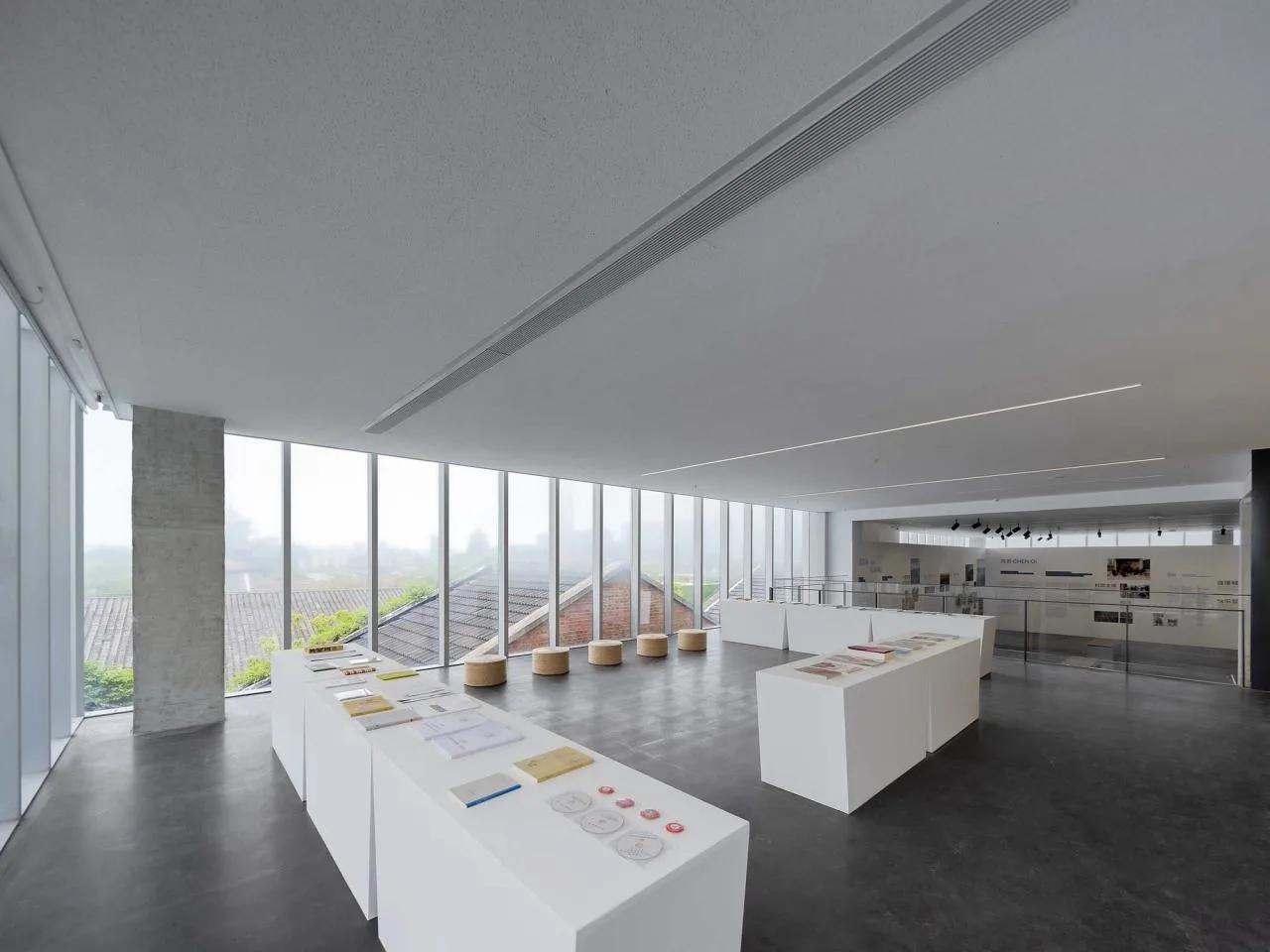
This project also addressed critical structural and technical challenges, transforming a dilapidated industrial plant into a modern art museum with climate-controlled exhibition halls.
Built in the 1950s, the original factory utilized brick columns supporting a wooden truss roof, enclosed by brick walls. To preserve the old walls, the main structure was detached and reinforced with steel wire mesh, with careful local connections. To protect the exterior wall foundations, a safe distance was maintained between the new basement outline and the existing foundations. First-floor beams and slabs were cantilevered close to the exterior walls, with new concrete columns added beside the brick columns to support the steel-wood truss roof. The old brick columns were replaced with concrete ones, but where they meet the outer walls, concrete columns were wrapped in bricks to maintain the historic appearance.
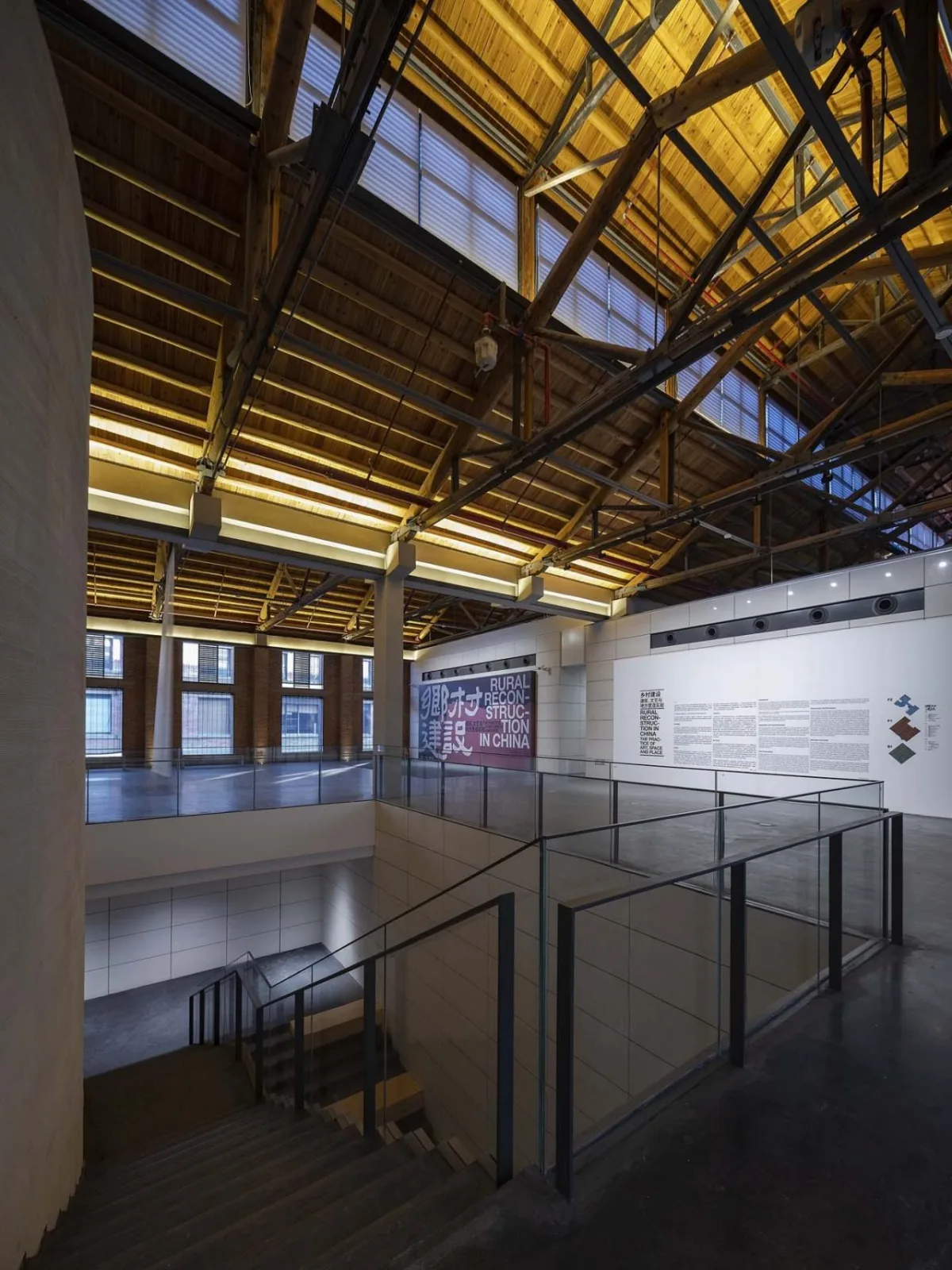
The original lightweight wooden roof trusses had deteriorated over time. During renovation, the wooden trusses were removed and the salvageable wood recycled. The new roof structure replaces them with steel-wood trusses, enhancing load capacity while retaining rustic elements through recycled wood components. The lightweight steel tile roof, previously corroded and leaking, was replaced with new waterproof and insulated layers topped with black spine tiles. Low-e glass was added to original roof side louvers, and wooden louvers were replaced with metal wood-grain versions to improve indoor comfort throughout the seasons.
Conclusion
The coexistence of buildings from different eras symbolizes the inheritance and growth of history. Adapting to new eras and functions through transformation and dialogue ensures that urban renewal remains vibrant and meaningful.
Special thanks to Chairman Liu Zili, General Manager Xiong Honghua, and Dean Lei Ziren for their professional guidance and support. Gratitude also goes to Academician Cheng Taining and Director Liao Peng for their technical expertise.
Project Drawings
△ Analysis Diagram
△ Analysis Diagram
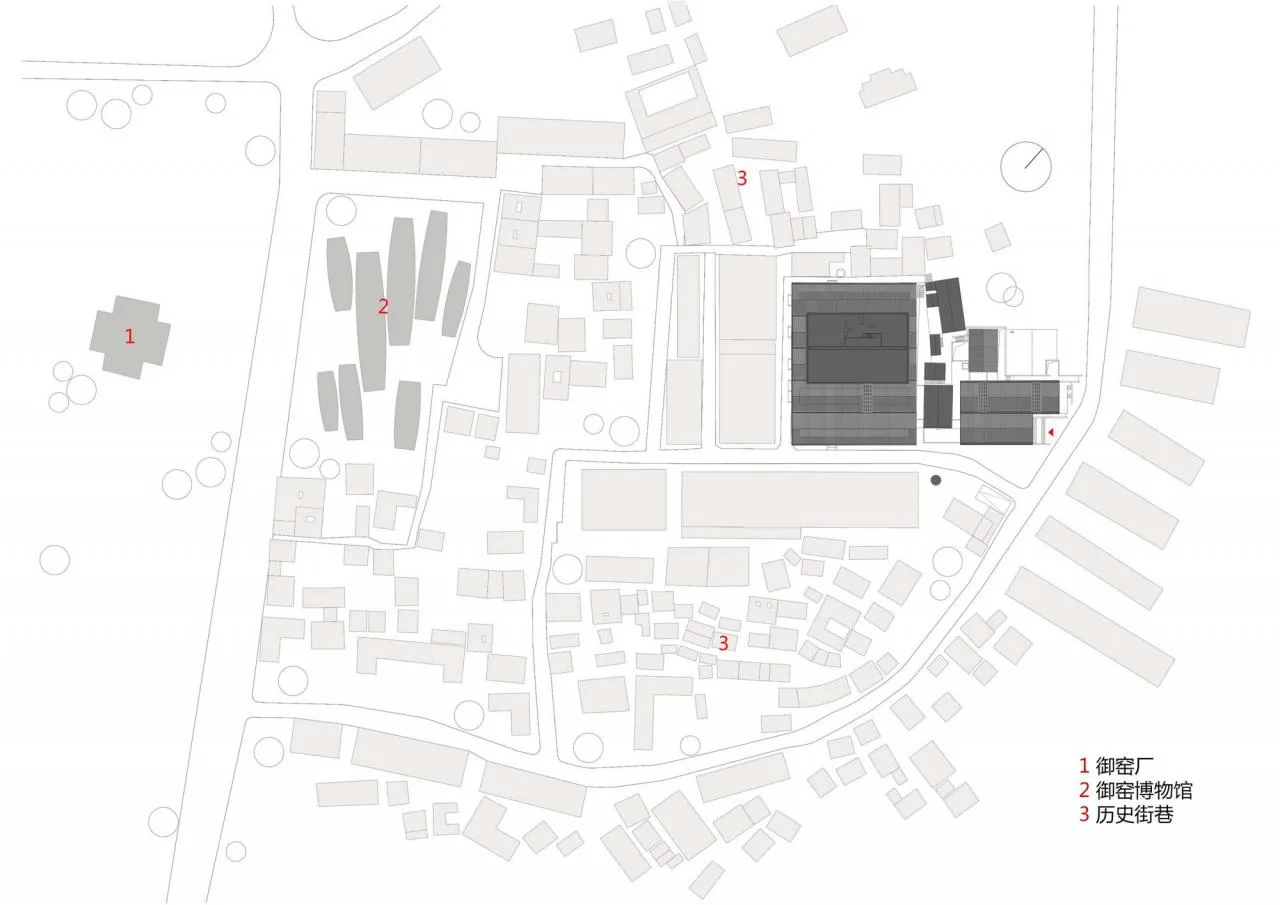
△ Texture Diagram
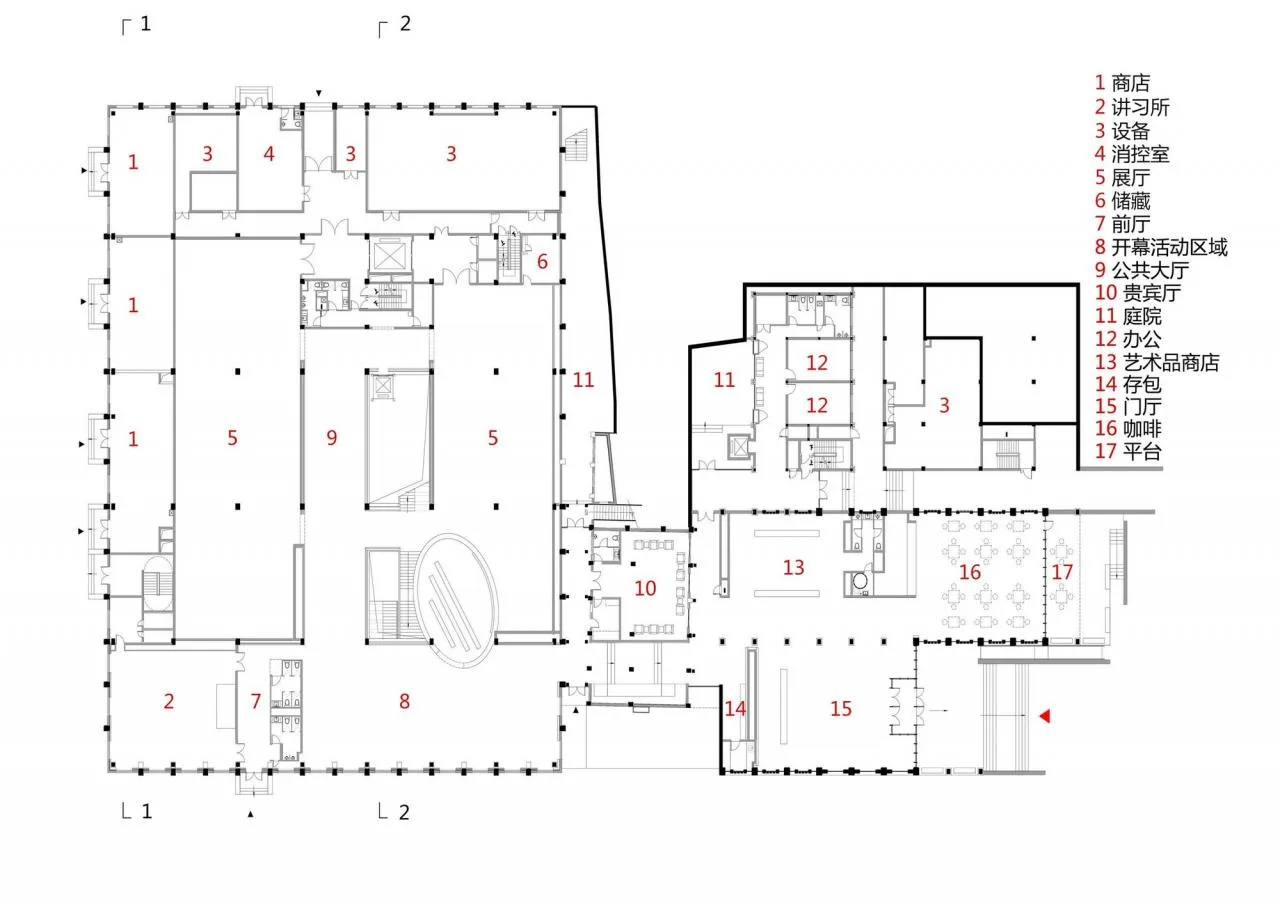
△ First Floor Plan
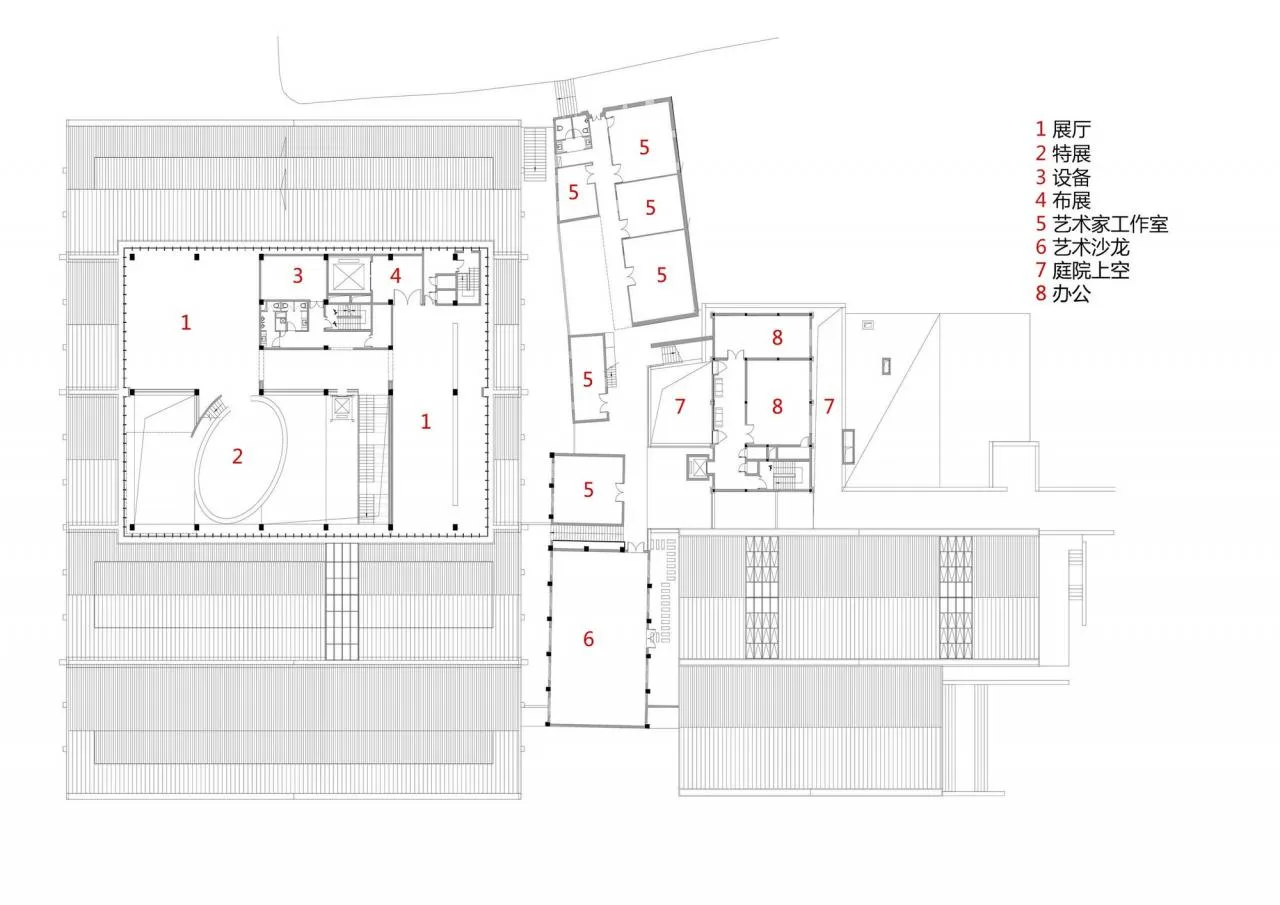
△ Second Floor Plan
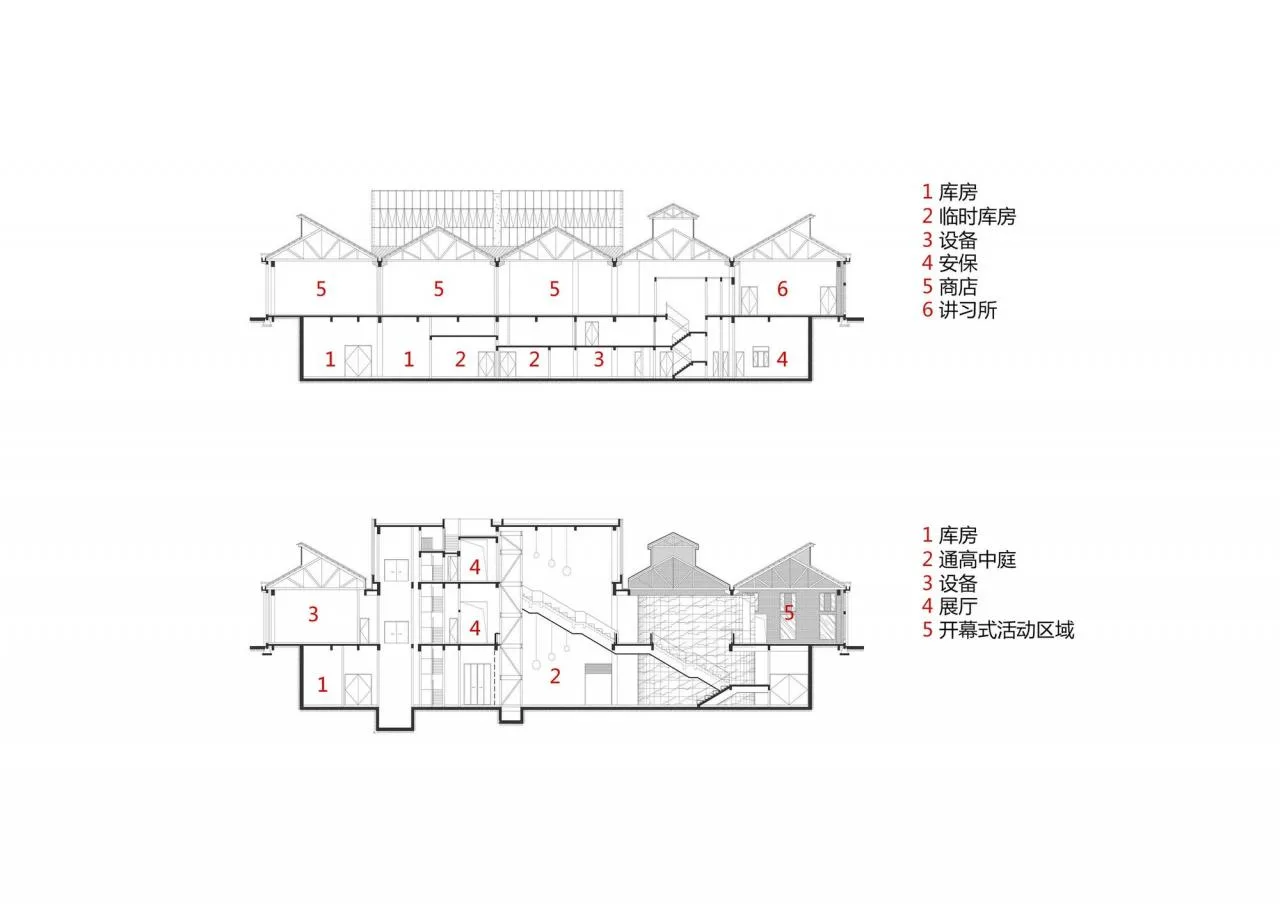
△ Section Diagram
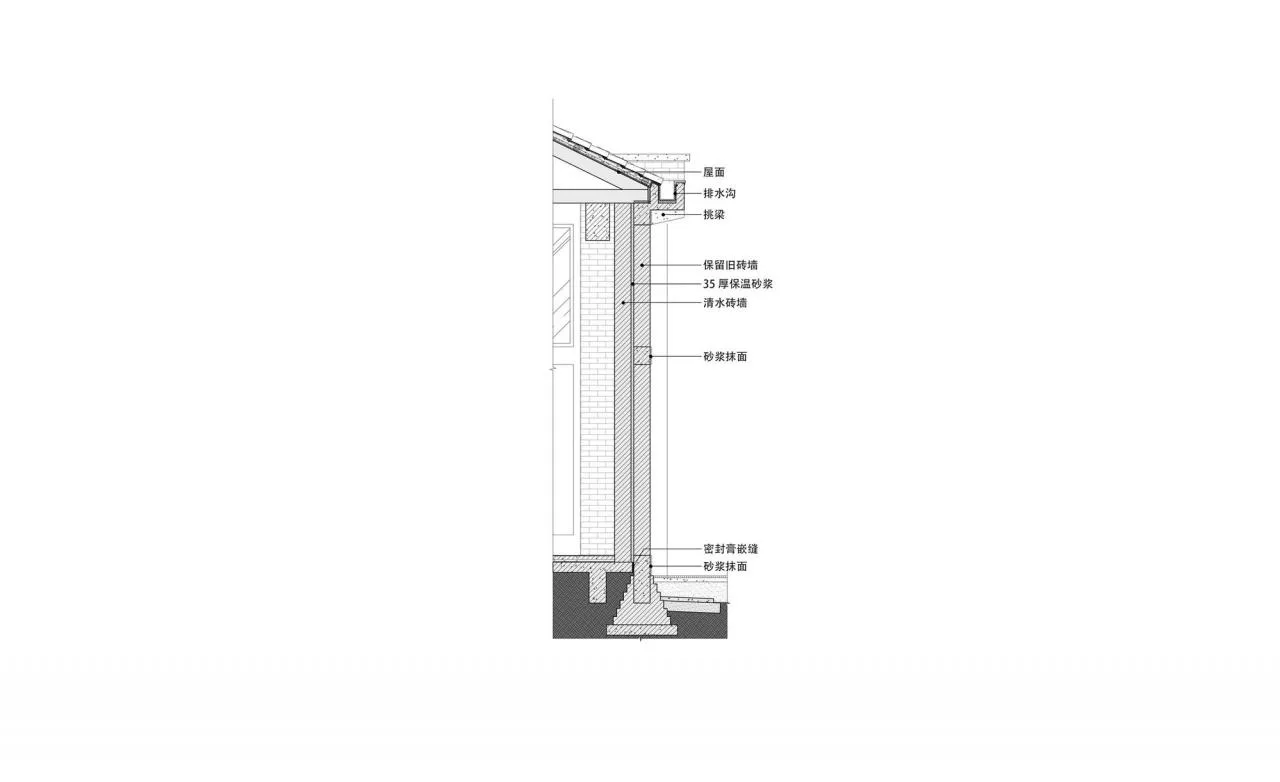
△ Detailed Drawing of Old Wall
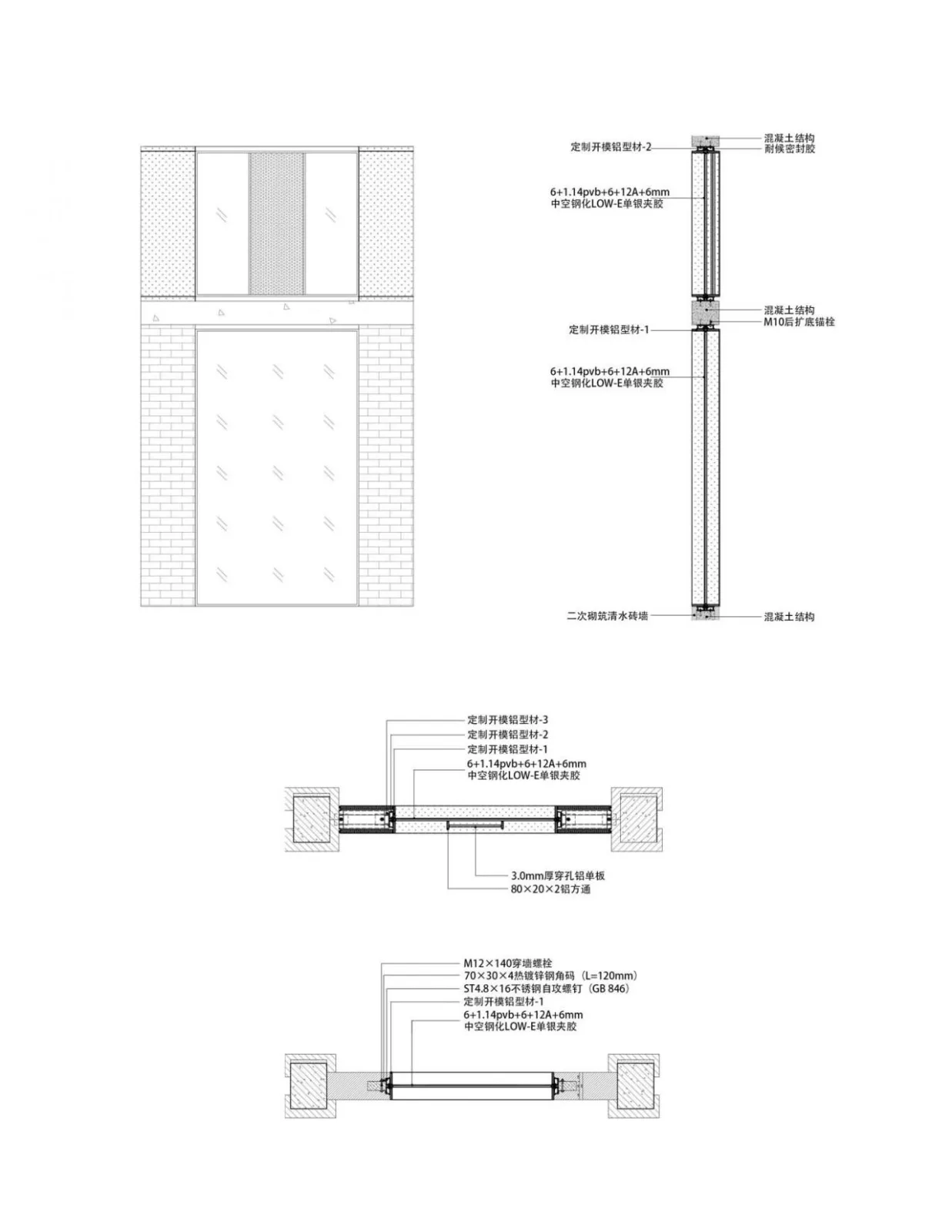
△ New Wall Detail Drawing
Project Information
Architectural Design: Landscape Design
Area: 11,332 m²
Project Year: 2021
Photographer: Genshin Hall
Manufacturer: Guangdong Nanliang Art Glass
Lead Architect: Zhou Xuhong
Architectural Scheme Design: Zhou Xuhong, Yang Jia, Zheng Congtao, Li Xuehan
Construction Drawing Design: Zhou Xuhong, Fan Jingjing, Yang Jia, Yang Leiming, Zheng Congtao, Xiao Junlong, Xu Chaohua
Structural Design: Ni Xinghui, Wang Mengxiao
Water Supply and Drainage Design: Yang Yingchun, Gu Yao
HVAC Design: Pan Jun
Equipment Design: Pan Jun, Wang Zili, Shen Danqun, Qiu Ping, Li Hao, Sun Chao
Interior Design: Zhou Xuhong, Chang Hongliang, Yang Jia
Client: Jingdezhen Ceramic Culture and Tourism Group
Location: Jingdezhen, China















Must log in before commenting!
Sign Up