
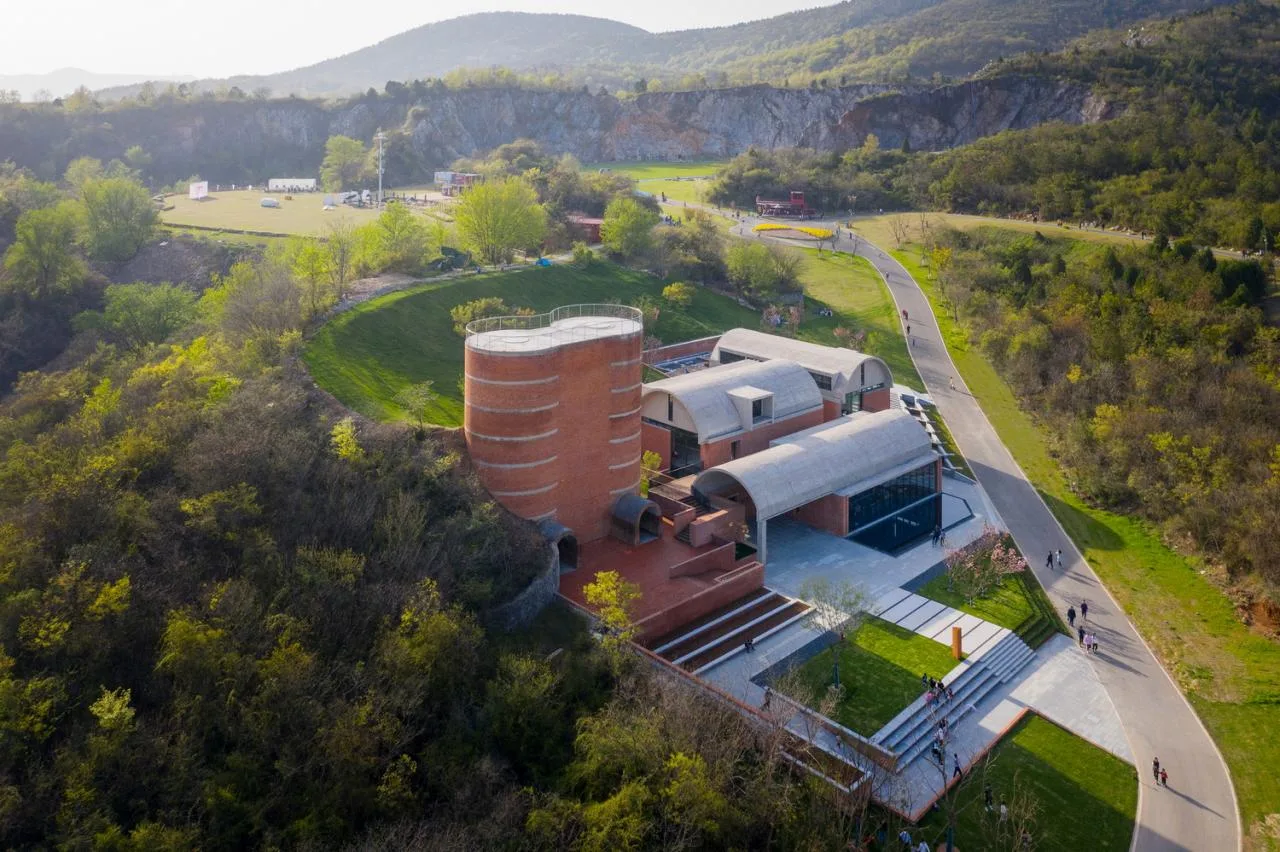
The Pioneer Tangshan Mine Bookstore is situated within Tangshan Mine Park in Nanjing. This Mining Pit Park stands as a significant example of dual restoration efforts in Nanjing and other cities across the country. Once the site of the largest abandoned mining pit, Longquan Quarry in Tangshan, it has undergone comprehensive ecological restoration and landscape redesign. Today, it has been transformed into an open-themed park that combines scenic viewing with leisure and entertainment.
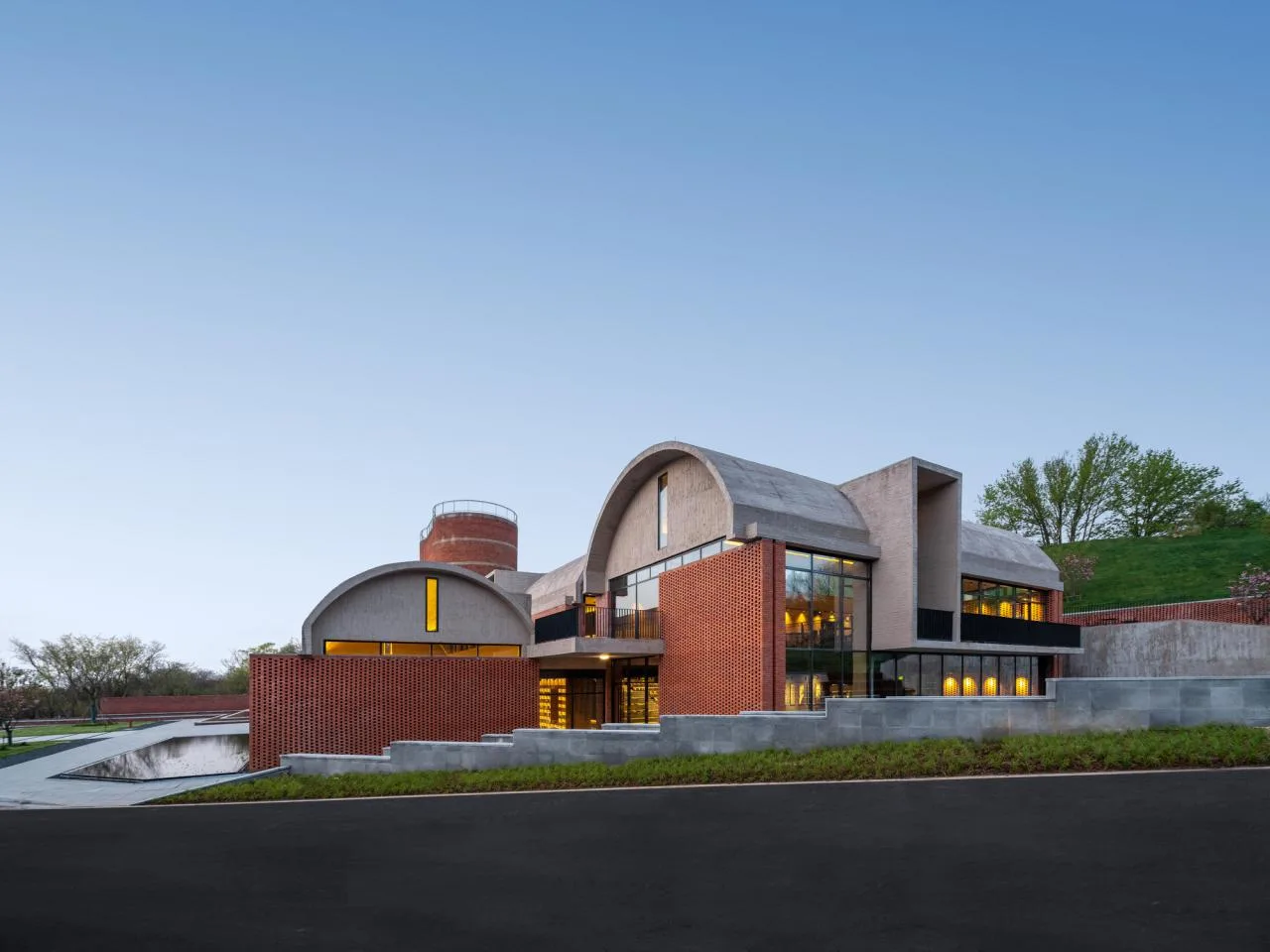
The project began with an abandoned 20-meter-high double-tube brick kiln built into the mountain at the park’s entrance. During the park’s planning and construction phase, it was decided that the Pioneer Tangshan Mine Bookstore would be established on this site. The Pioneer Bookstore is a key cultural landmark in Nanjing and nationally. The challenge was to create a harmonious blend of old and new, respecting the site’s characteristics and architectural style while developing a culturally rich and commercially viable bookstore experience.
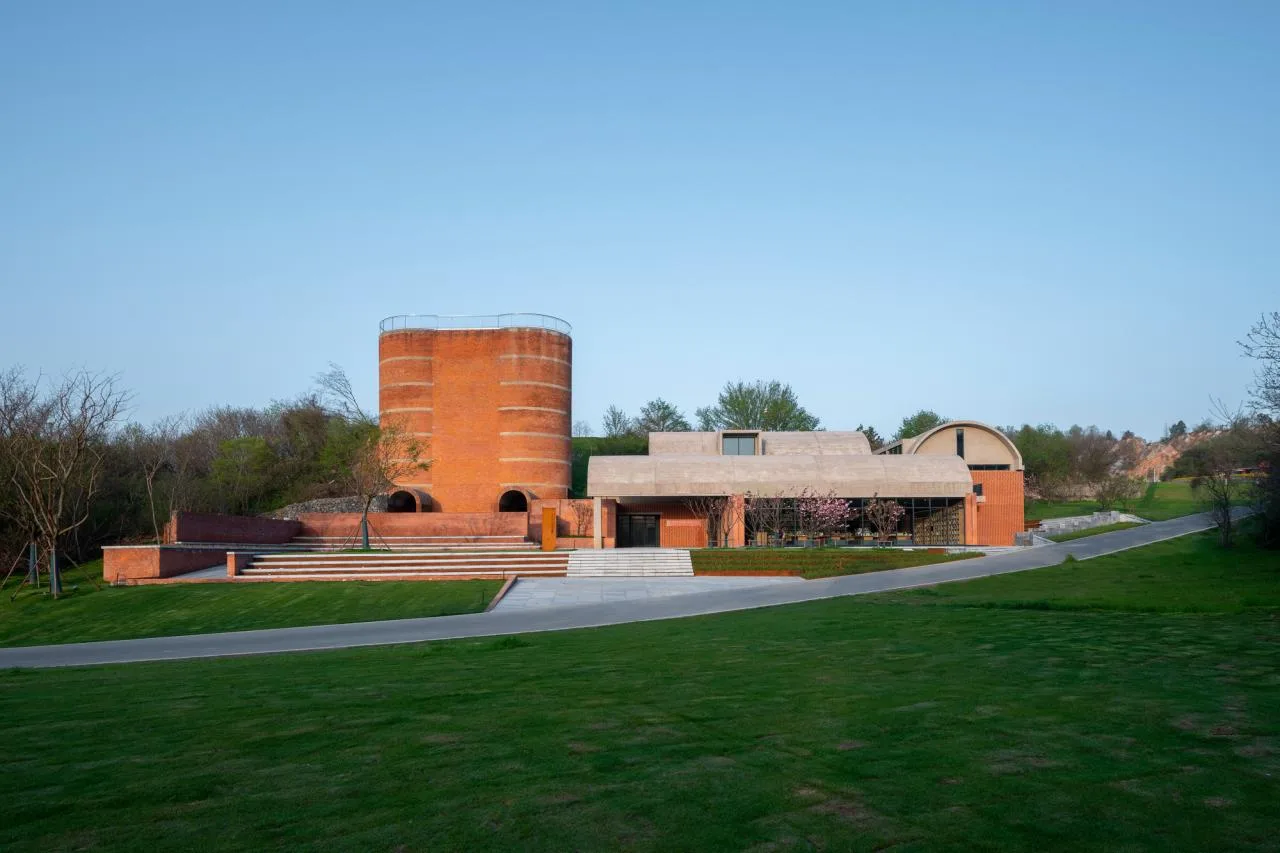
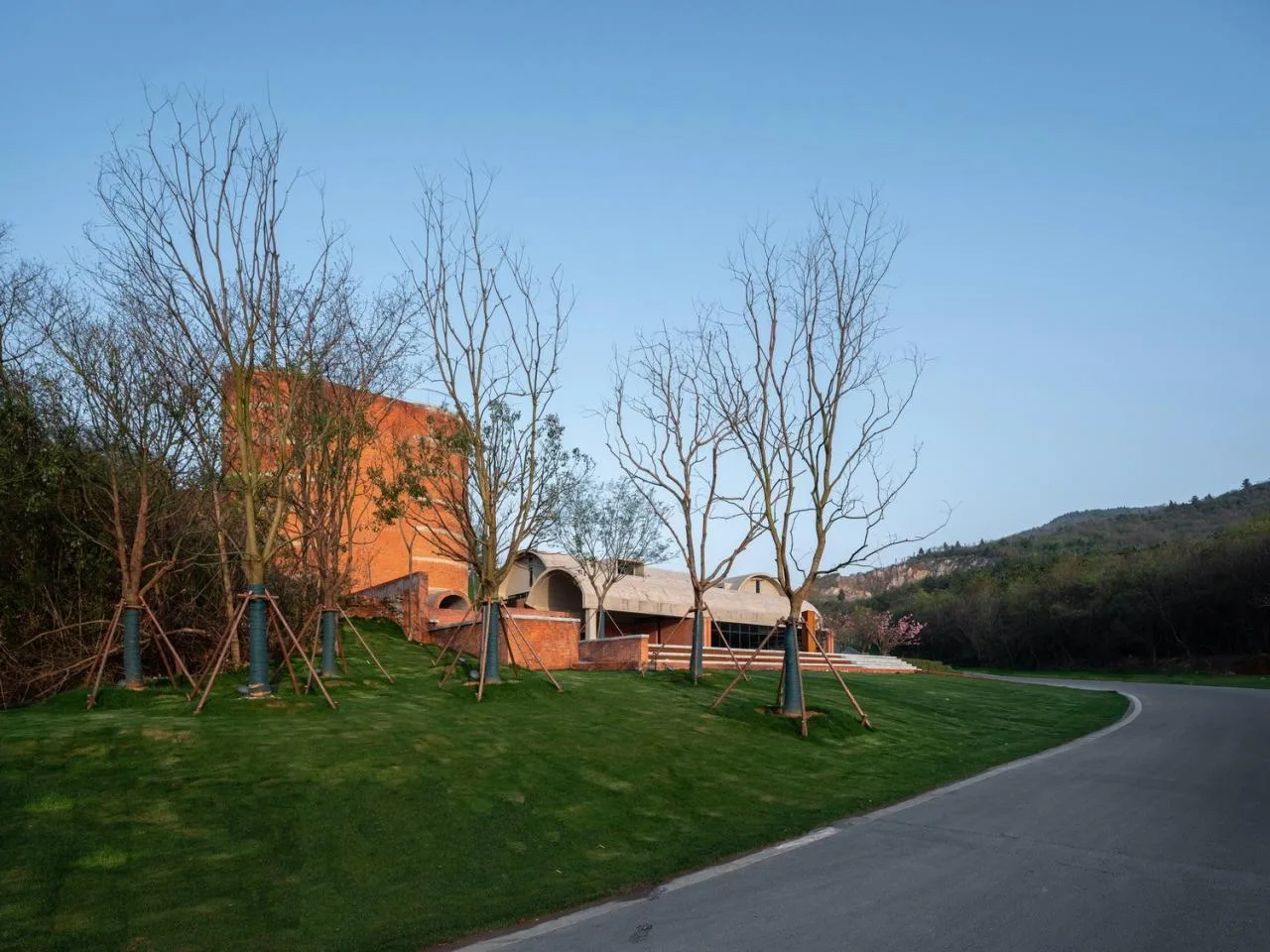
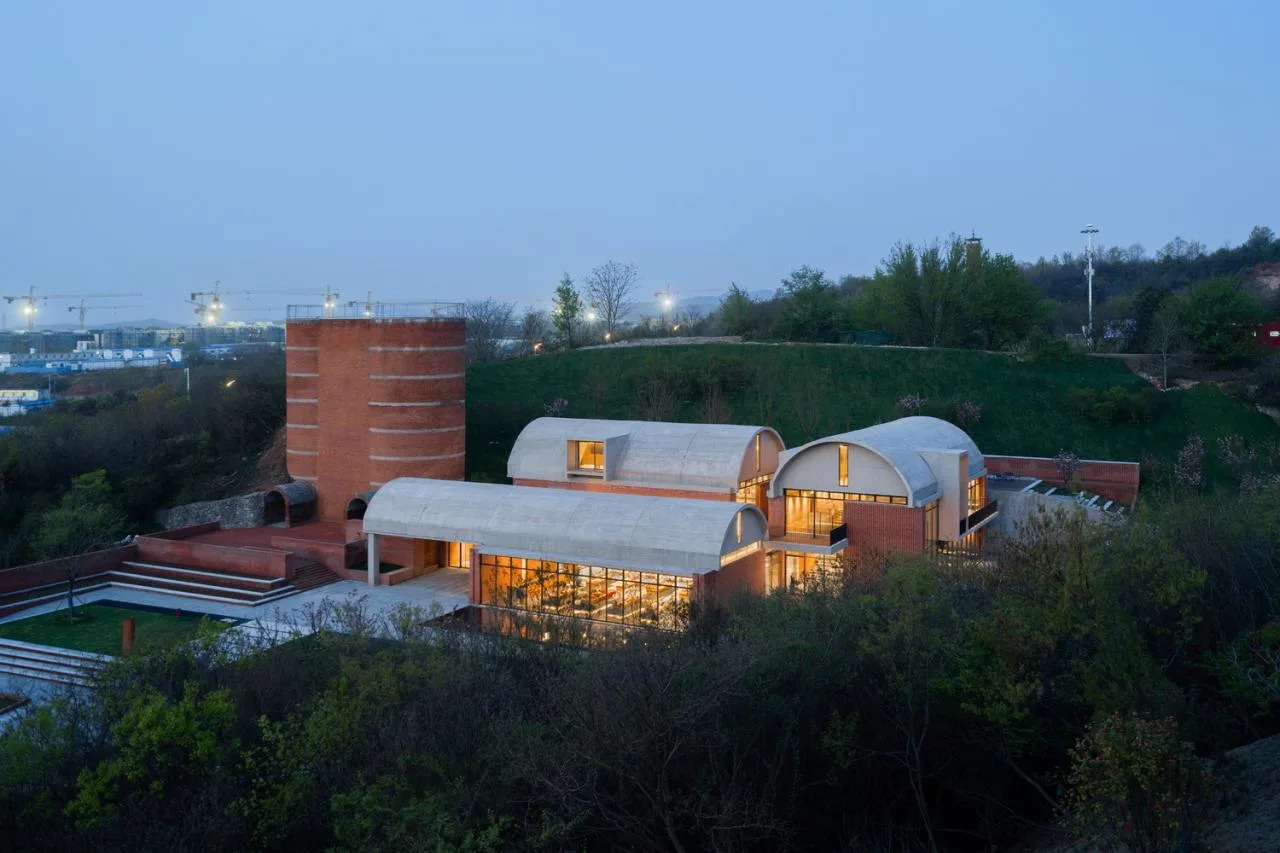
The brick kiln is strategically located near the park entrance, adjacent to the tourist service center and ecological parking lot, making it a prominent feature throughout the park. To address the complex site conditions, the design strategy transformed the vertical brick kiln form into a horizontal layout, shifting the double tubes into arches inspired by the original kiln structure. These arches reflect the kiln’s form while complementing the Pioneer Bookstore’s classical and spiritual essence. The horizontal double arches were then extended, separated, cut, and rotated to create the bookstore’s functional layout.
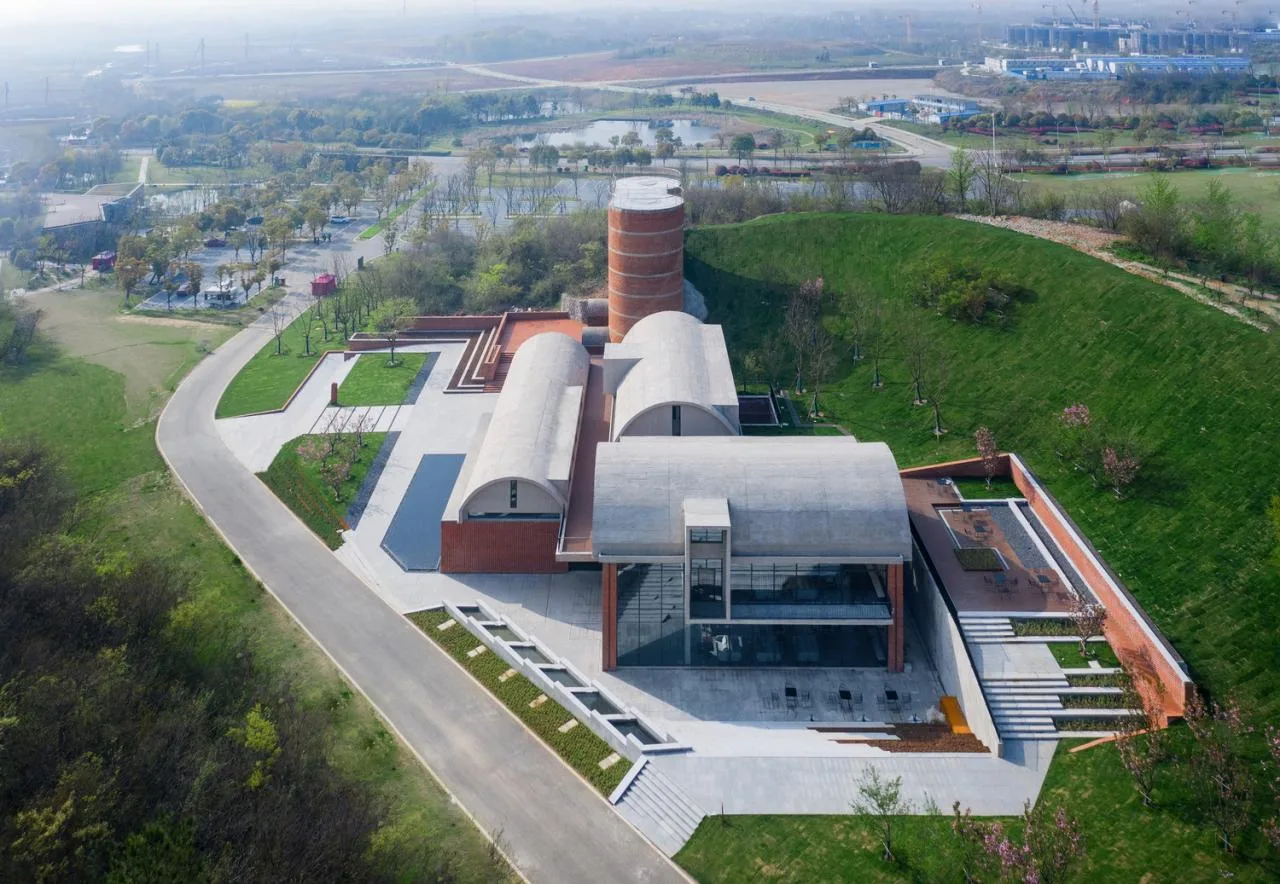
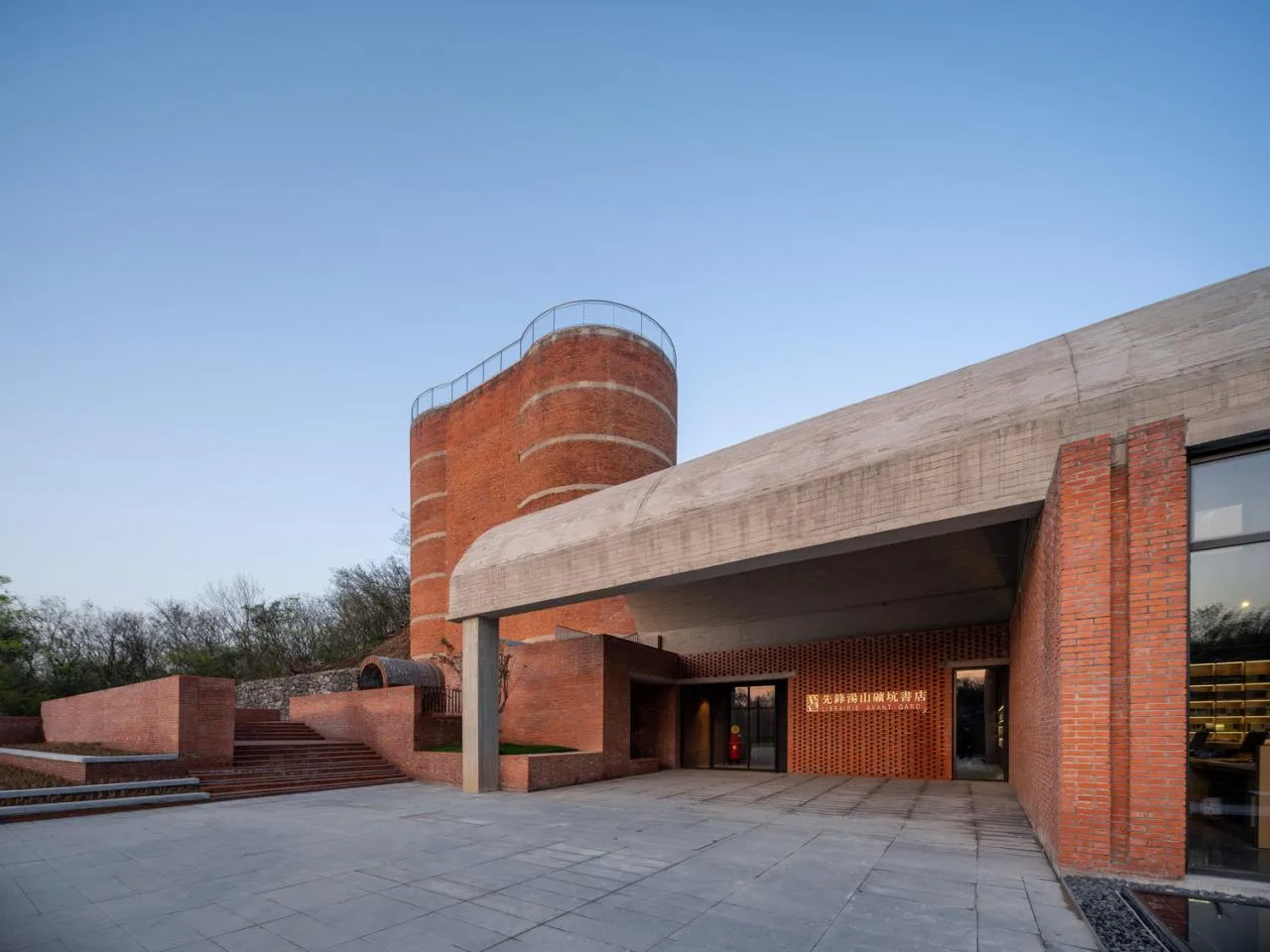
Initially, the mountain slope on-site was excavated and restored, leveraging the natural height differences to enrich the building’s vertical spatial hierarchy. The partial roof on the first floor connects the front plaza, the grassy northern slope, and the lawn behind the mountain into a unified whole, seamlessly blending the building with the surrounding landscape and mountain.
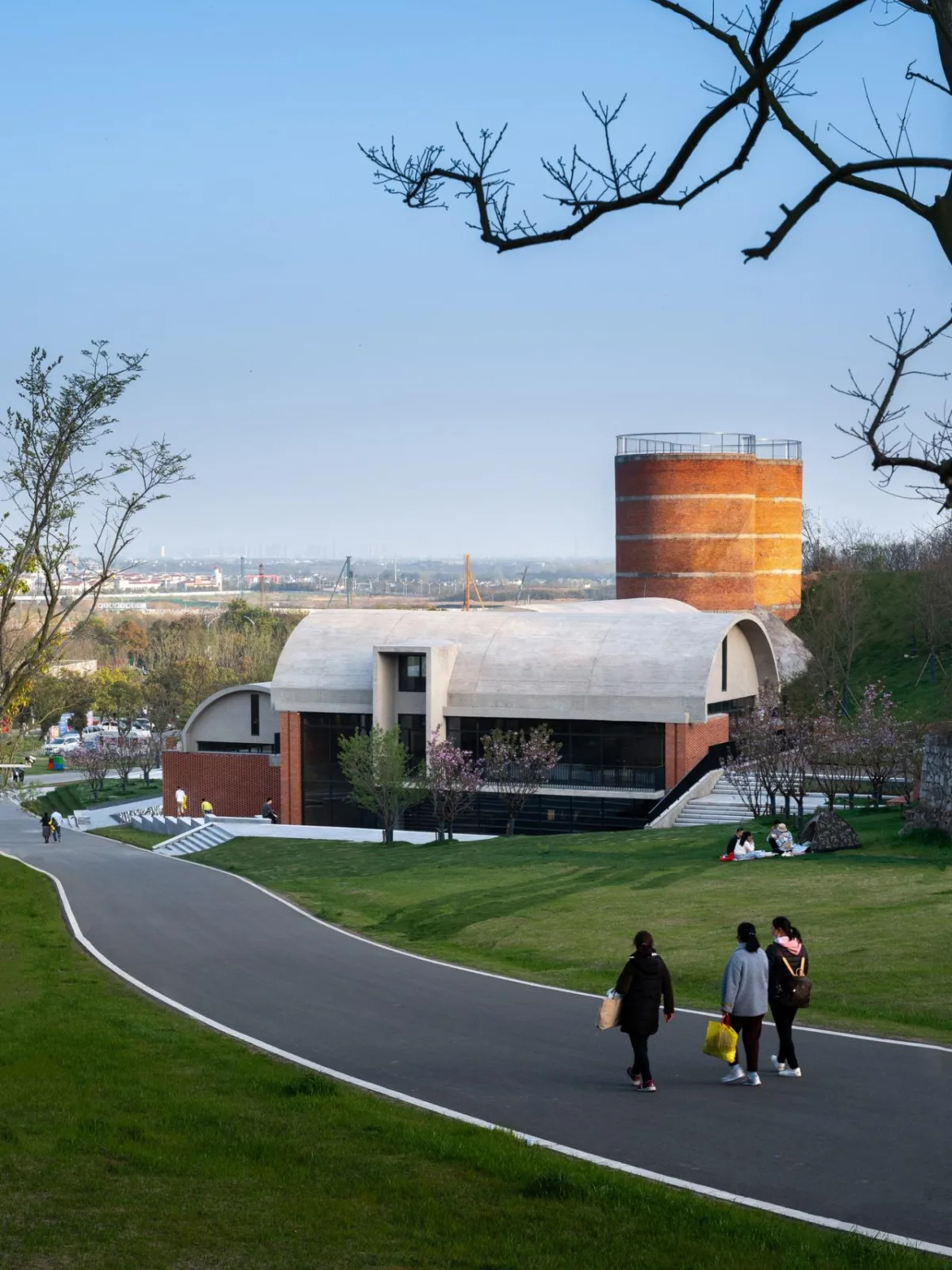
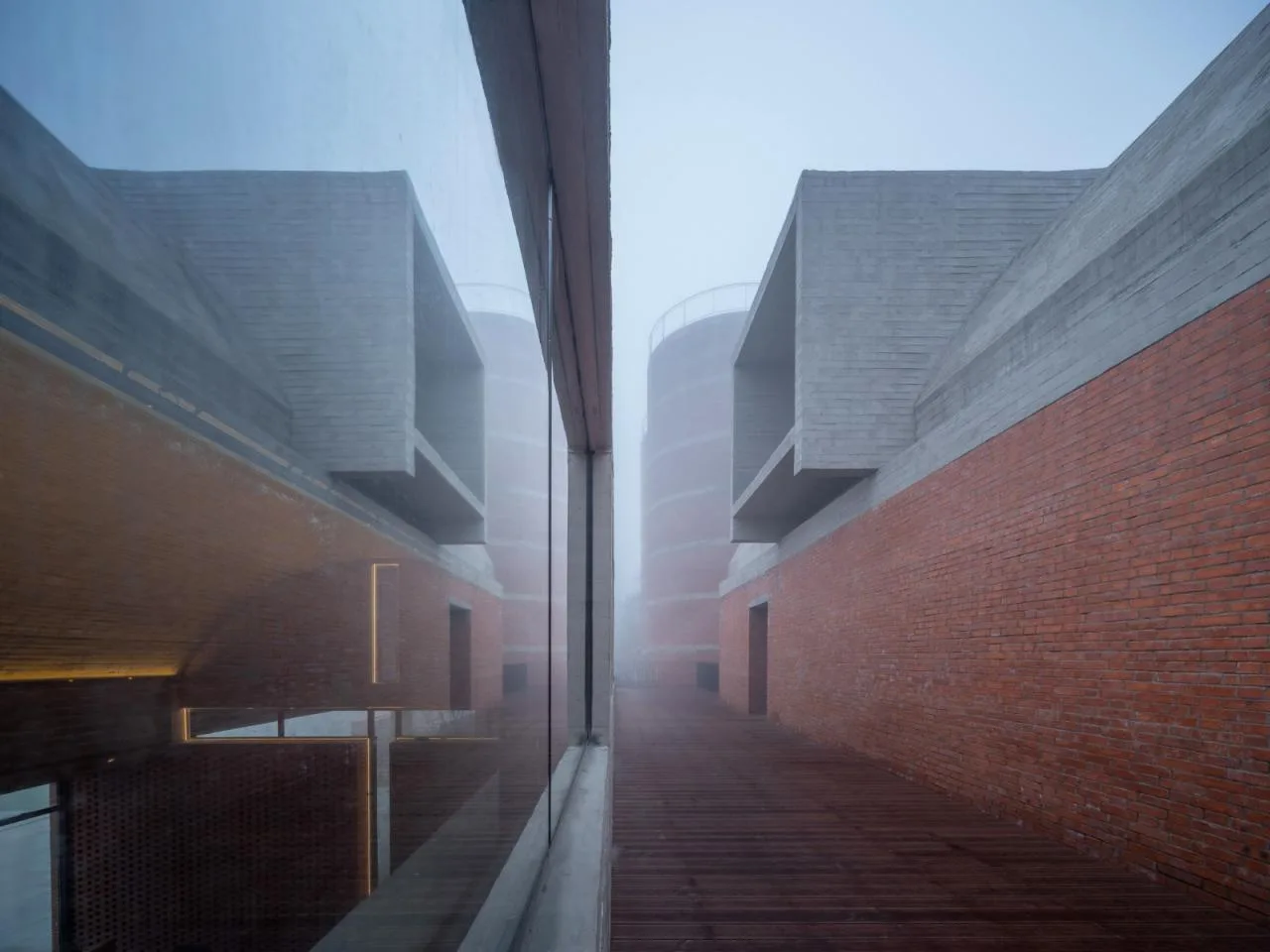
The abandoned 20-meter-high brick kiln forms a vertical visual focal point. The new structure extends horizontally, using arch forms to create a typological connection with the isolated historic kiln. This design approach, through shared design elements, integrates the old and new structures into a cohesive, layered composition, achieving a balanced and complete visual narrative.
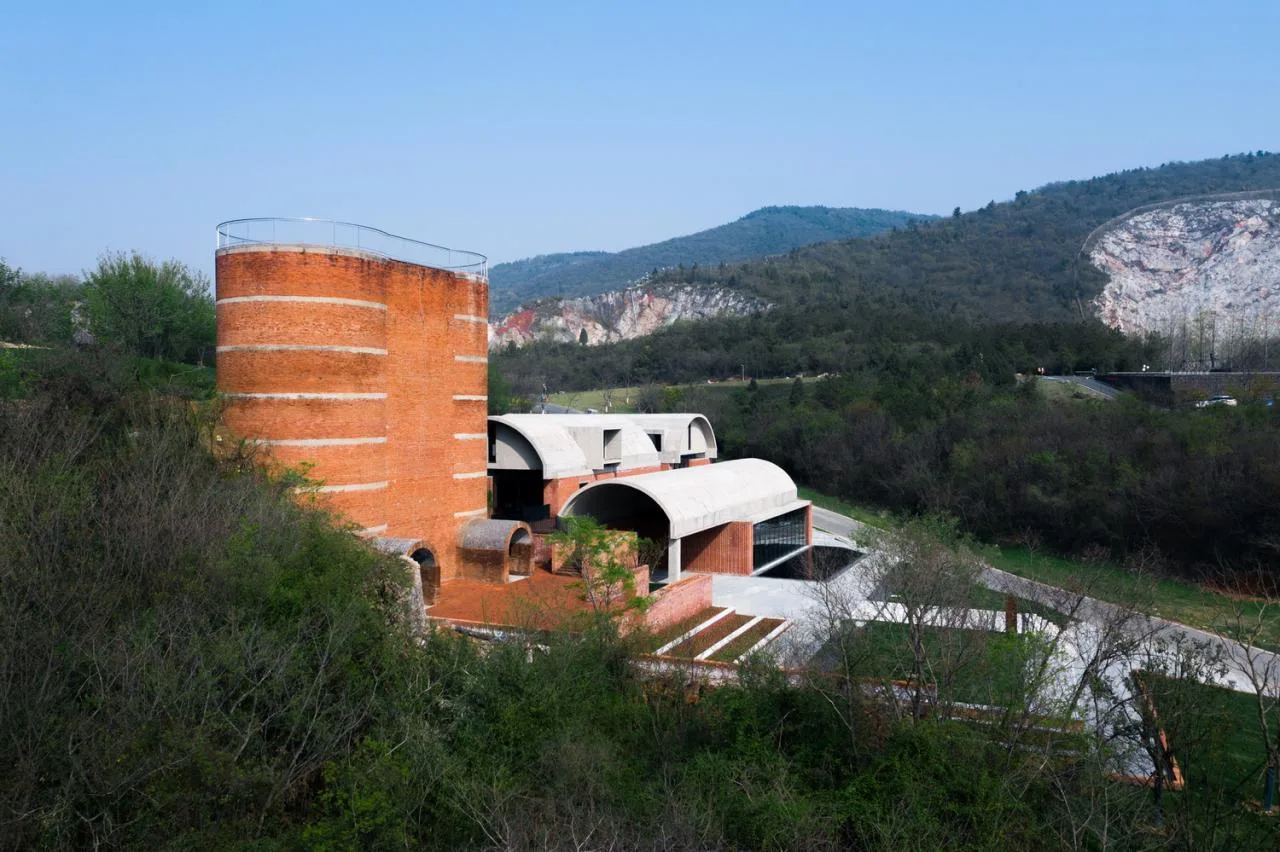
The original brick kiln exudes a “ruin” aesthetic. The design enhances this character by combining red bricks with concrete. The new building’s walls and surrounding landscape walls primarily use red bricks to echo the kiln’s texture, while the arches are made of poured concrete, reflecting the exposed quarry face found on the mine park’s mountain.
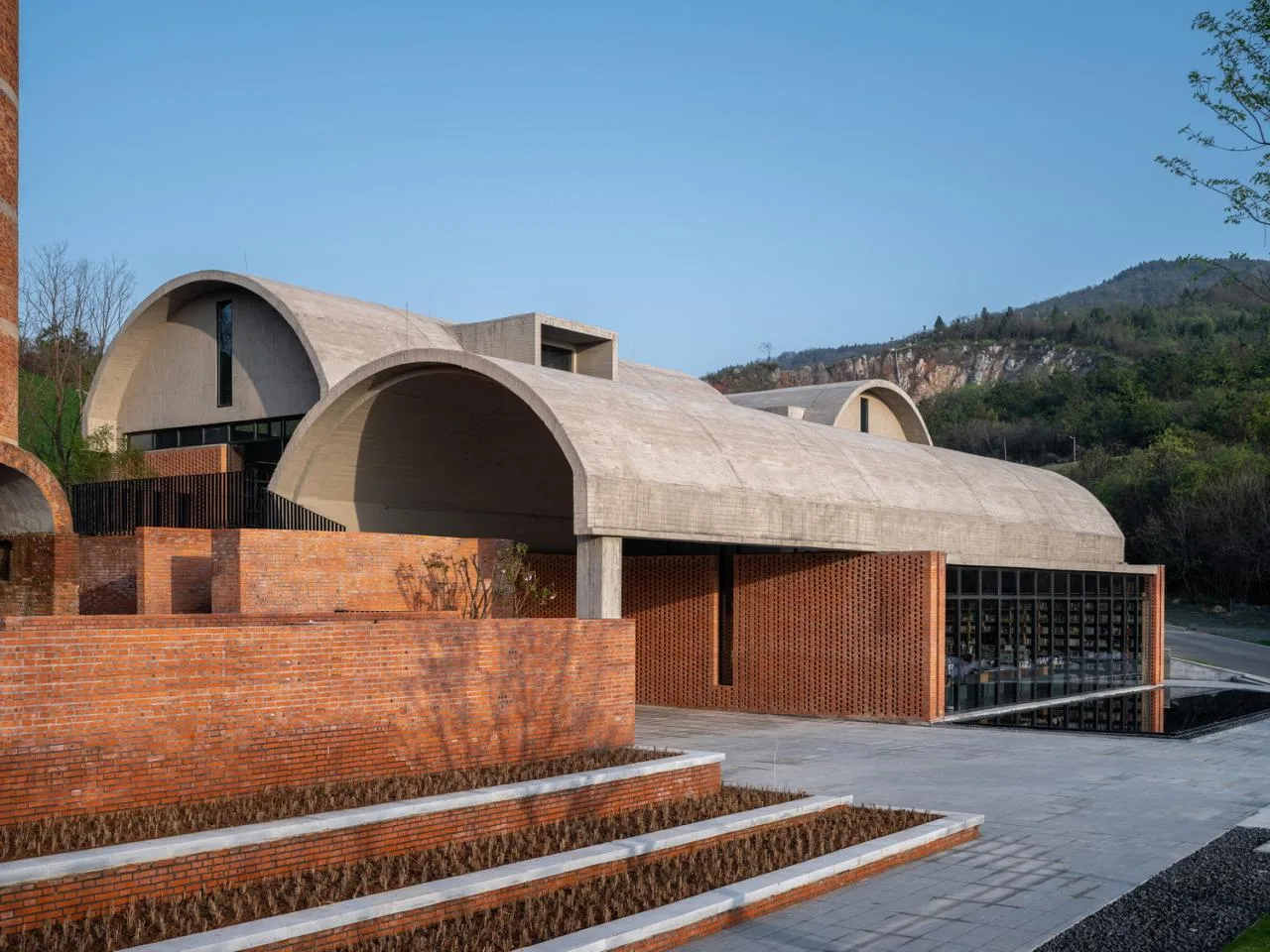
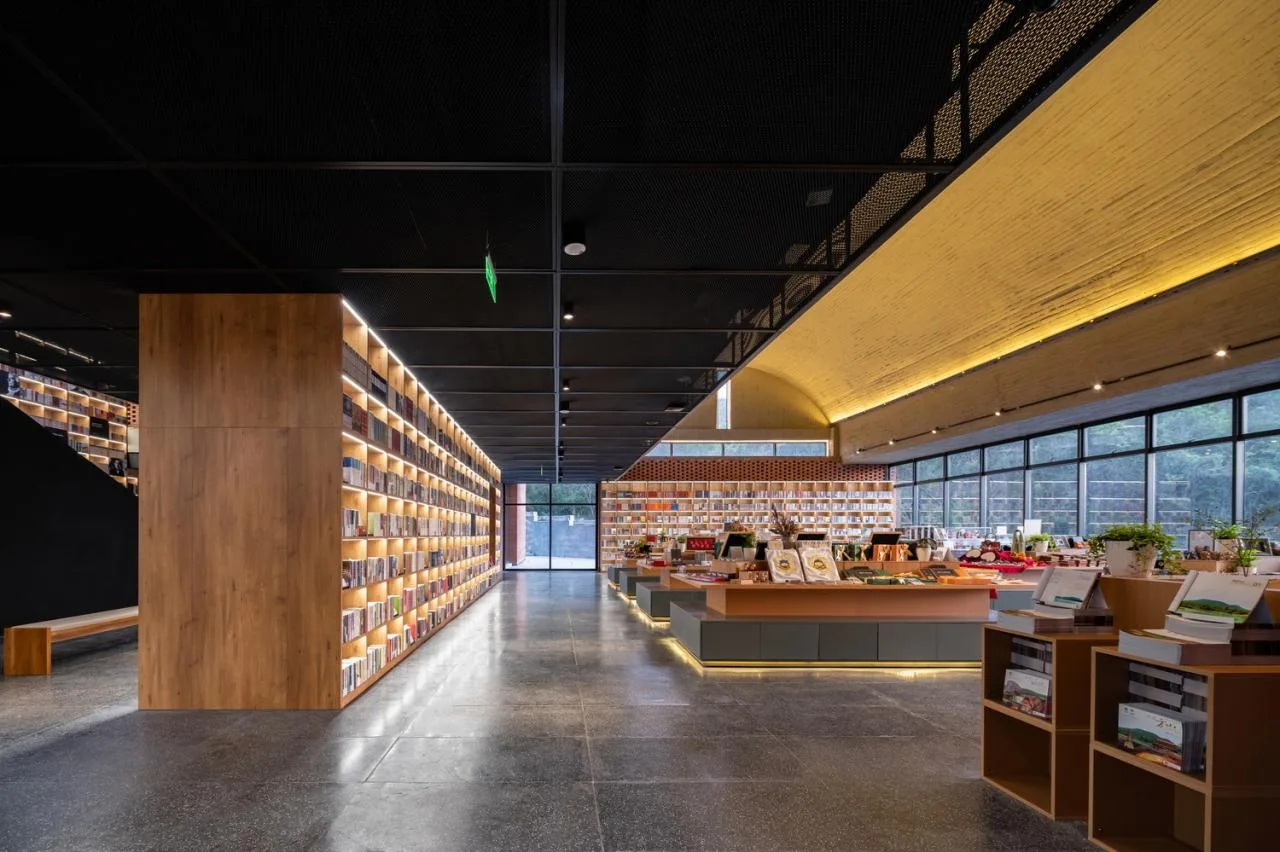
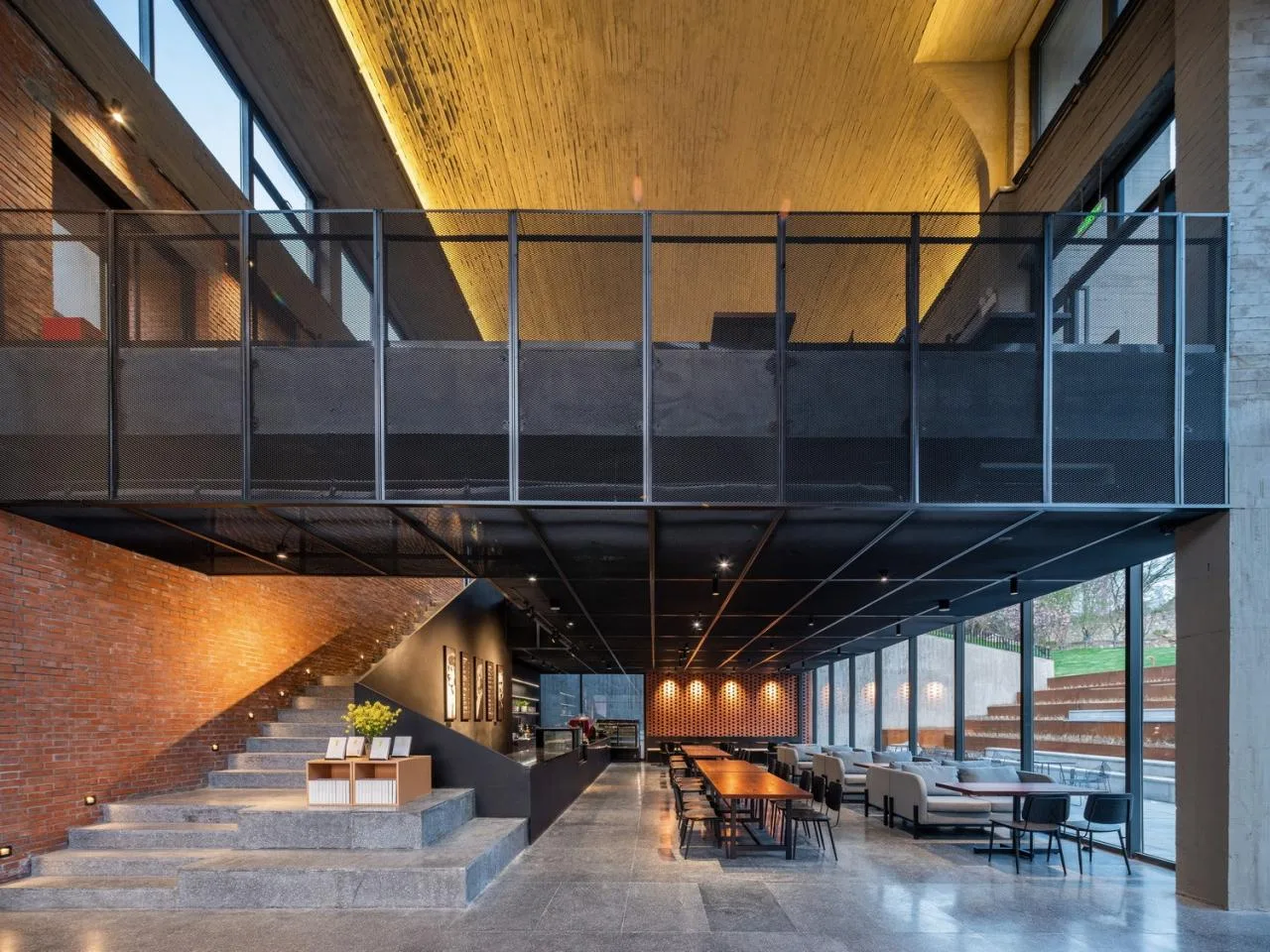
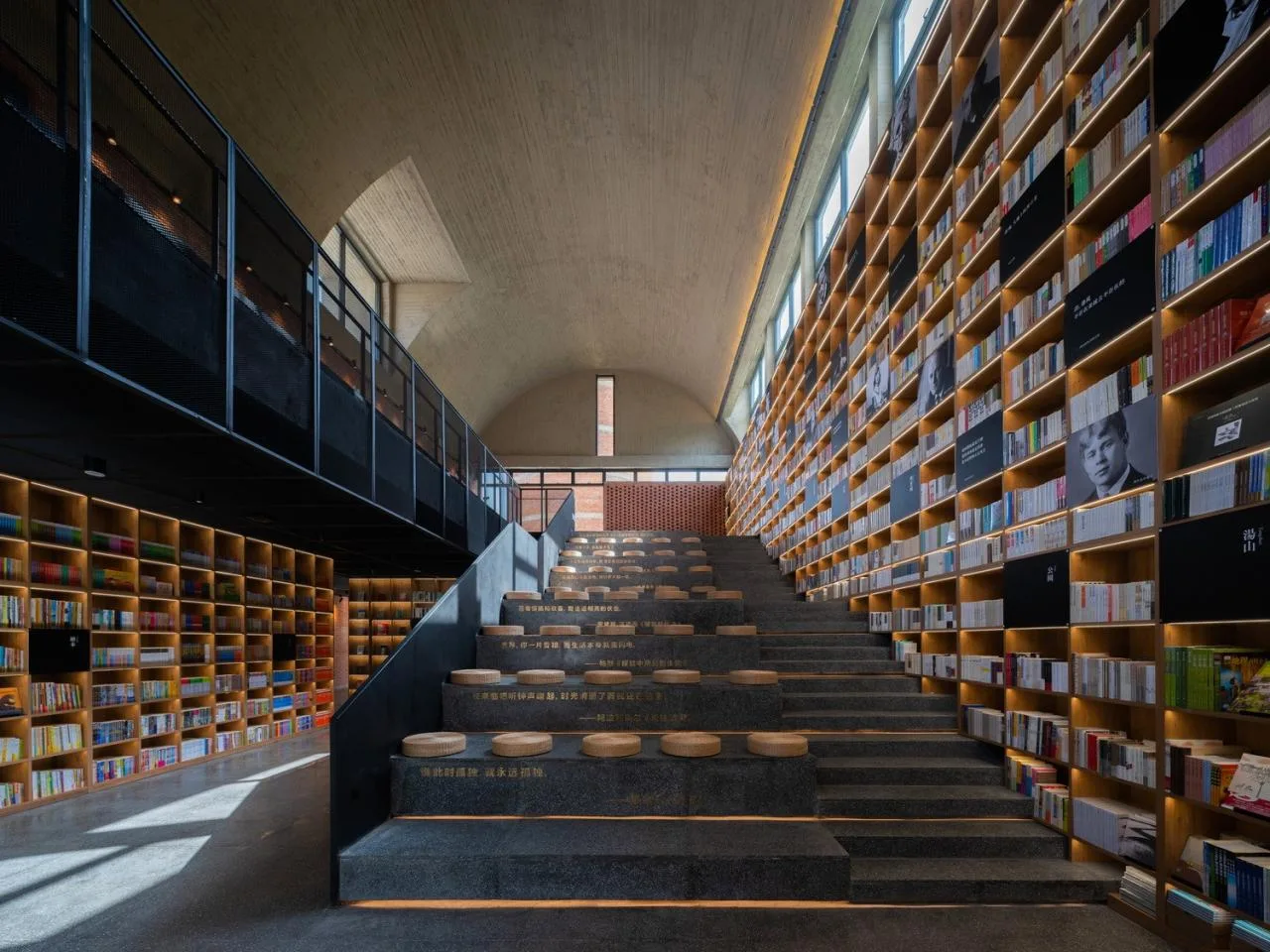
The design minimizes ornamental elements related to books, instead emphasizing authenticity and individuality to craft “a poetic reading space imbued with a pioneering spirit.” The bookstore comprises three interconnected arched cylinders on a single level: one single-story cylinder acts as an entrance foyer and hosts new book exhibitions, cashier services, and cultural product displays, spanning 8 meters. Two two-story cylinders, each spanning 10 meters, accommodate exhibitions, lecture halls, book sales, and a coffee shop.
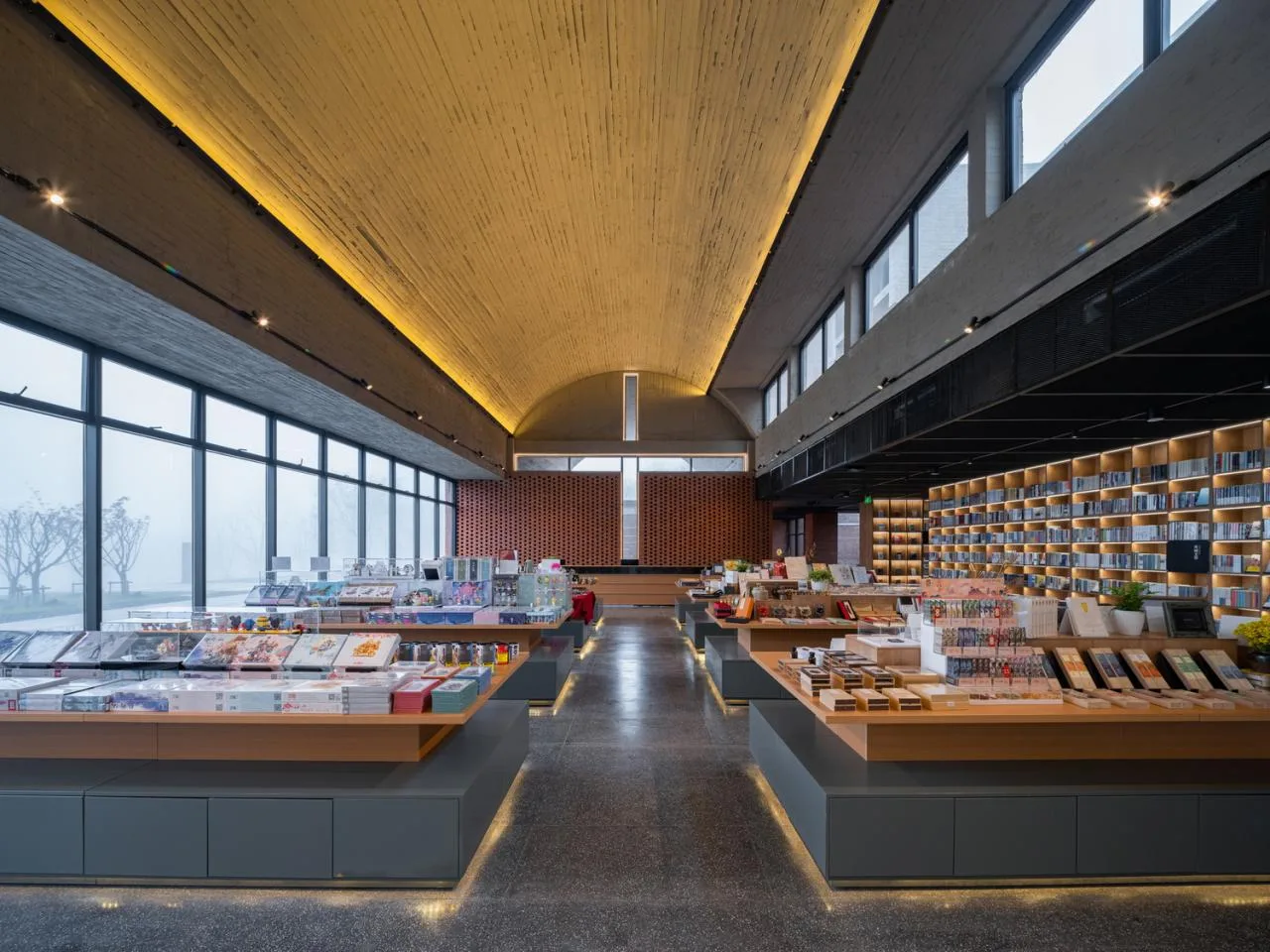
Spatially, the bookstore merges cultural (reading) spaces with spiritual ones. On a human scale, bookshelves are positioned within easy reach to facilitate browsing and reading. Vertically, the expansive concrete arches and skylights create an inspiring “spiritual space,” transcending mere function to balance material and spiritual experiences.
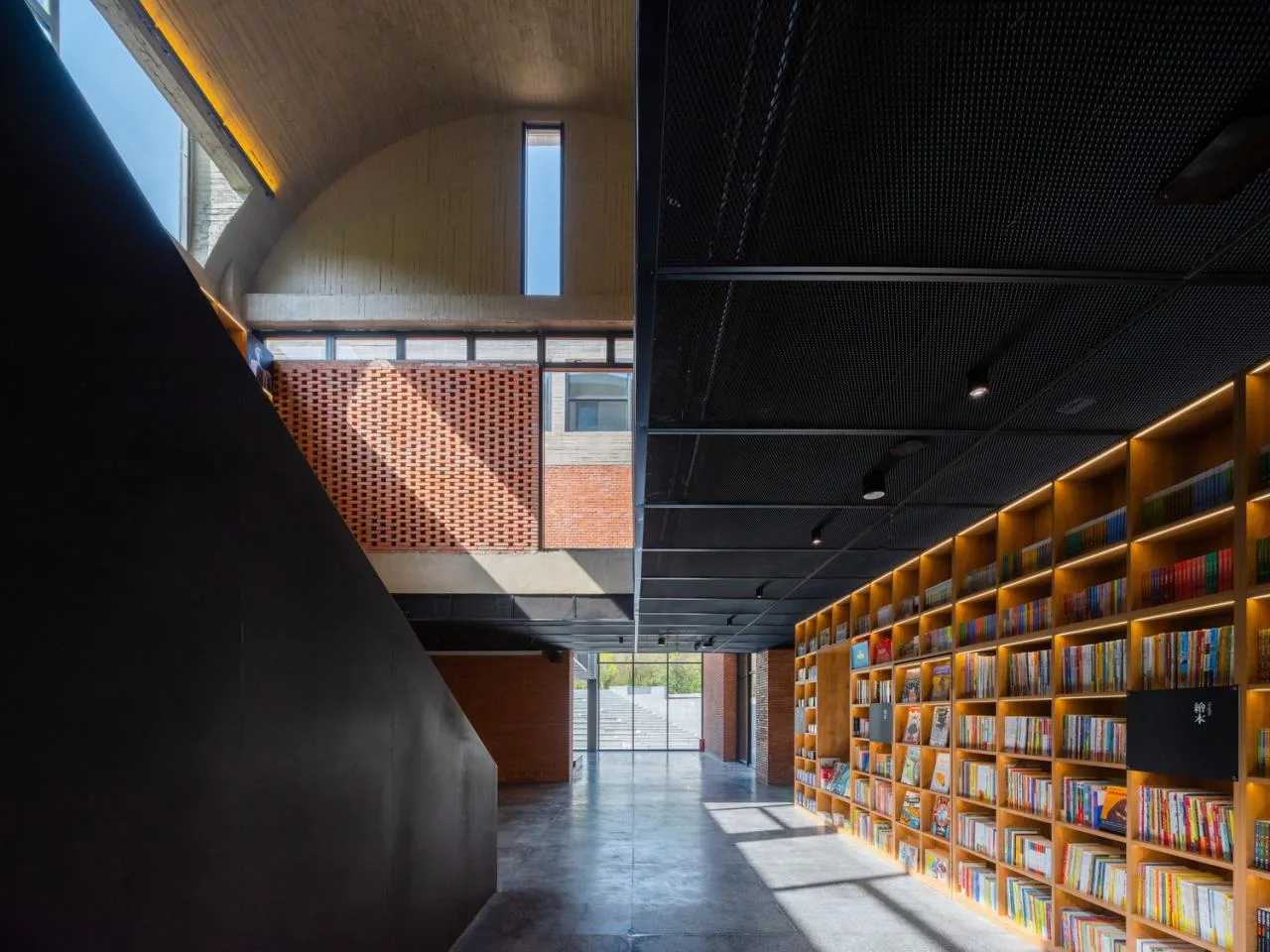
The bookstore’s interior walls remain undecorated, highlighting the natural color of the materials. Double-layered walls improve energy efficiency and conceal equipment and rainwater pipes. The ceiling and corridor railings are crafted from black brushed mesh panels, while large stair railings, the coffee shop counter, and stair railings combine black painted steel plates. This blend of black steel, plain concrete, and red brick creates a rich, impactful atmosphere.
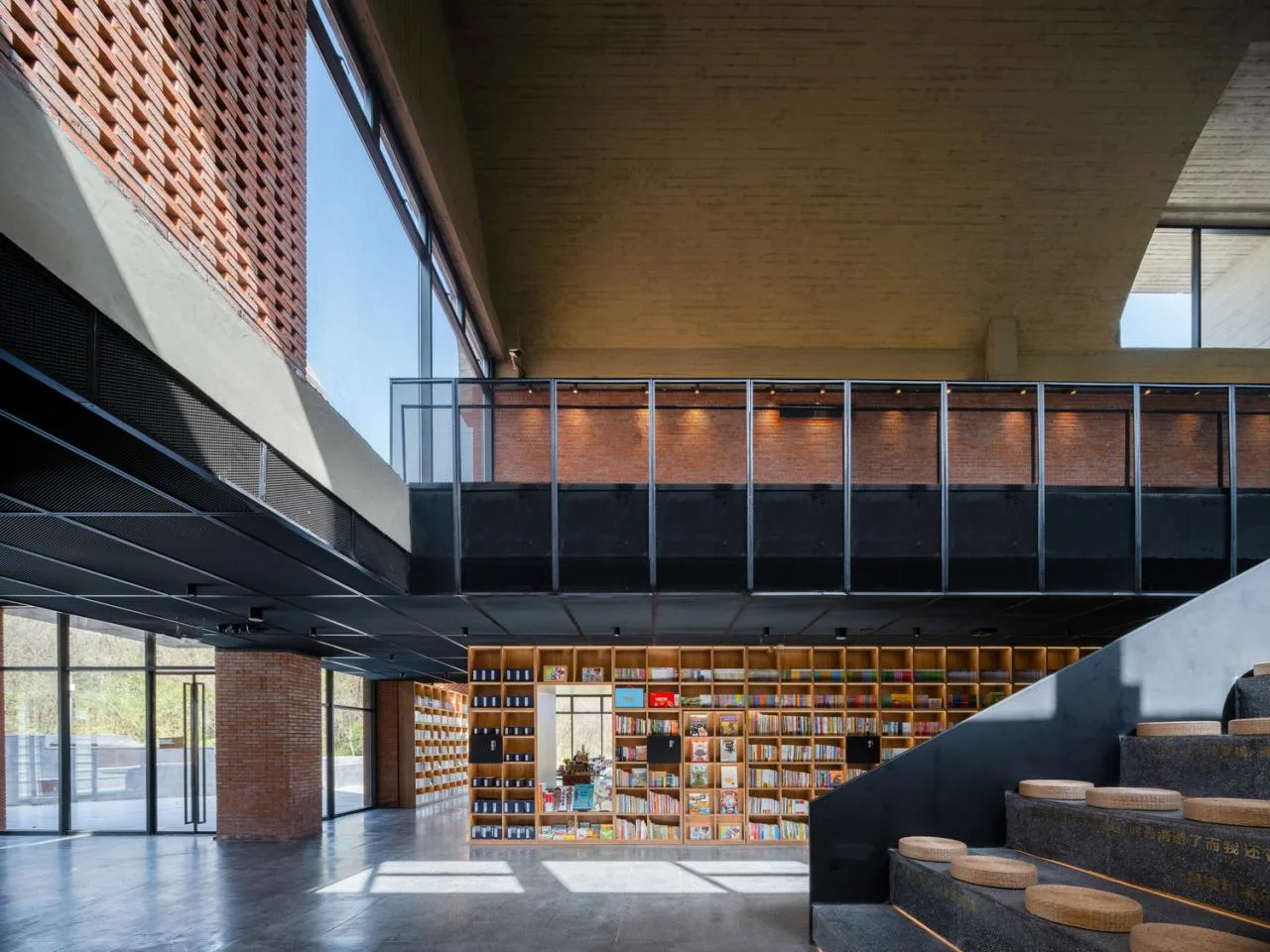
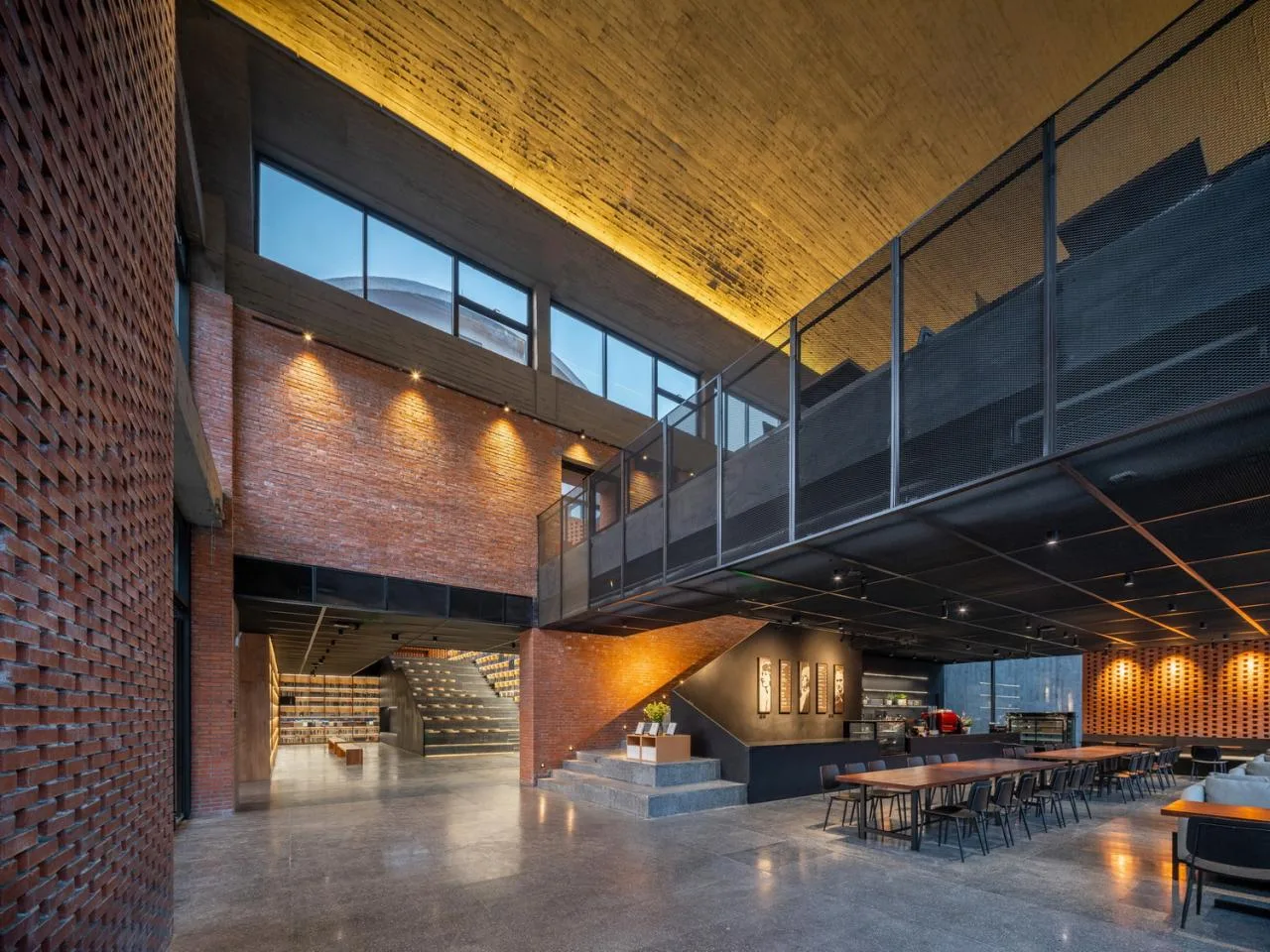
To meet lighting and smoke ventilation needs, skylights were integrated into the concrete arches. This design causes dynamic patterns of light and shadow indoors that shift and overlap throughout the day. The interplay of reading, space, and light reshapes the cultural atmosphere, reflecting the architectural embodiment of avant-garde brands seeking spiritual elegance.
Project Drawings
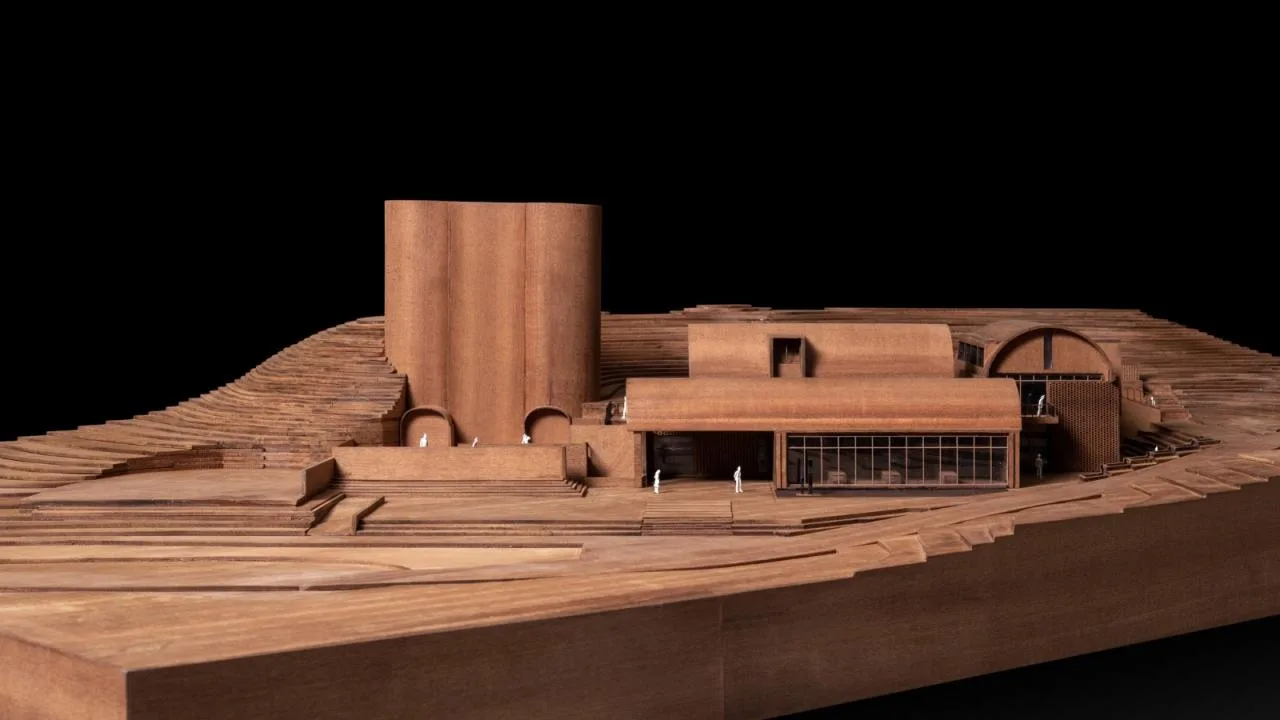
△ Model diagram
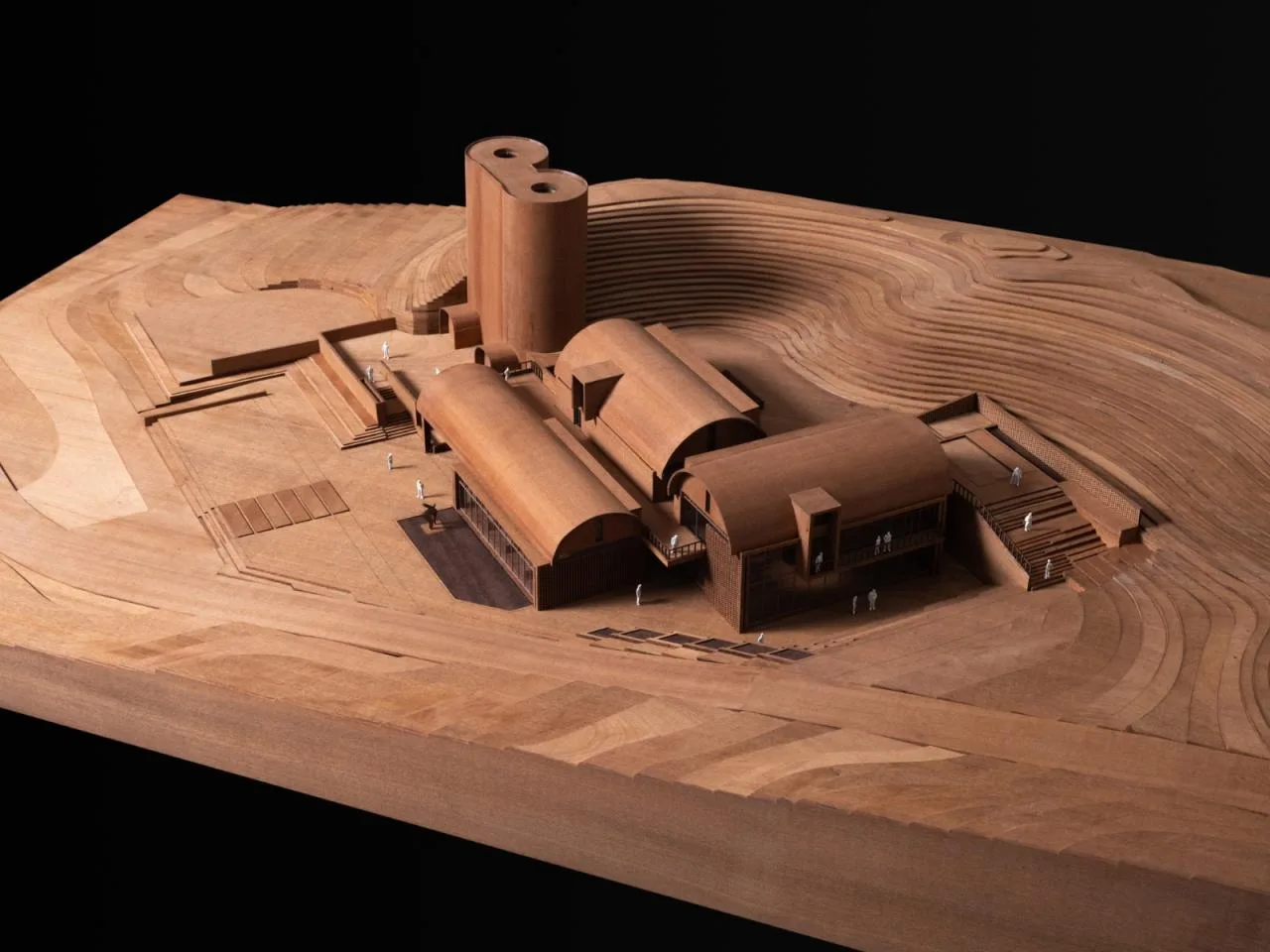
△ Model diagram
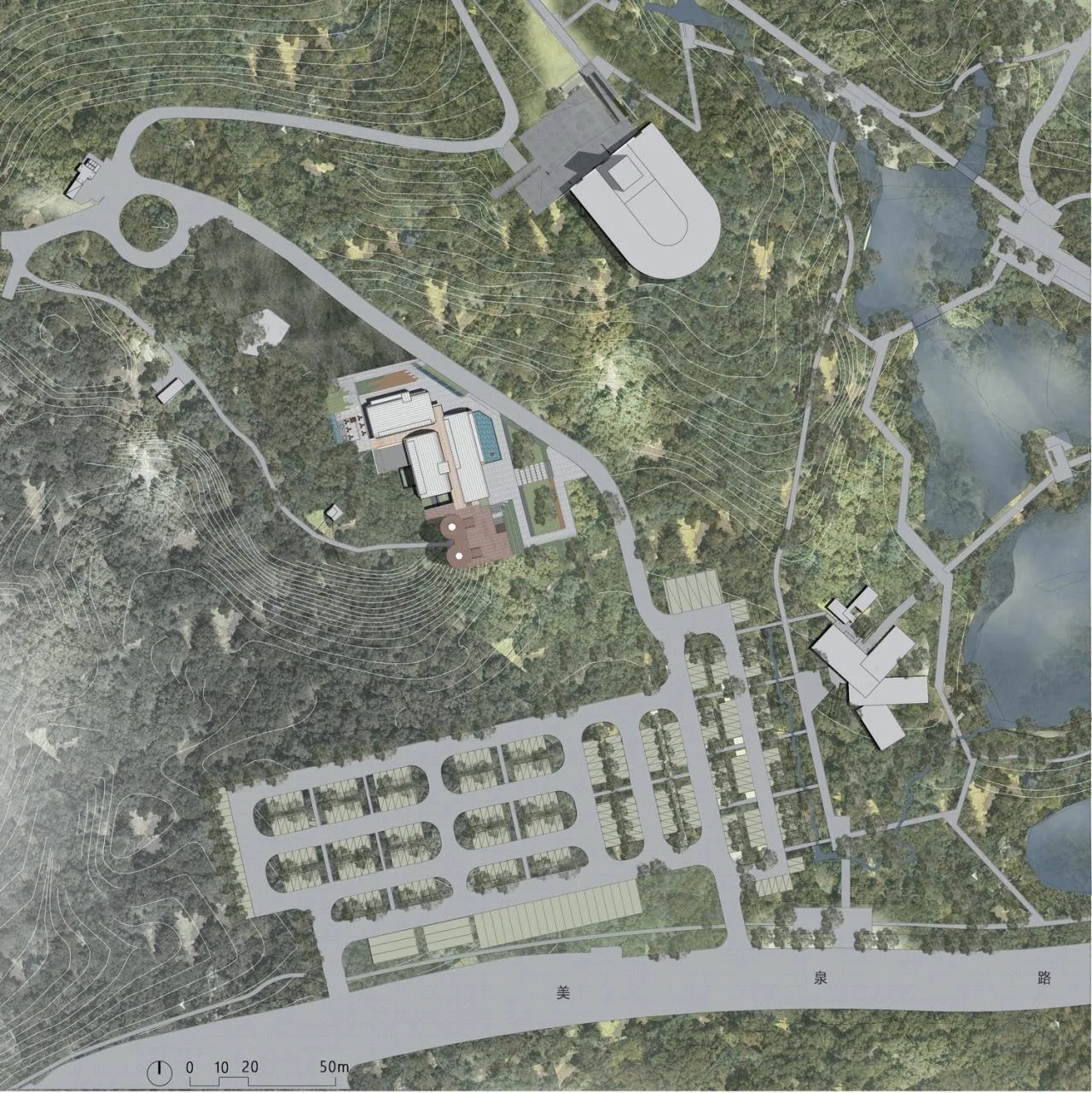
△ General layout plan
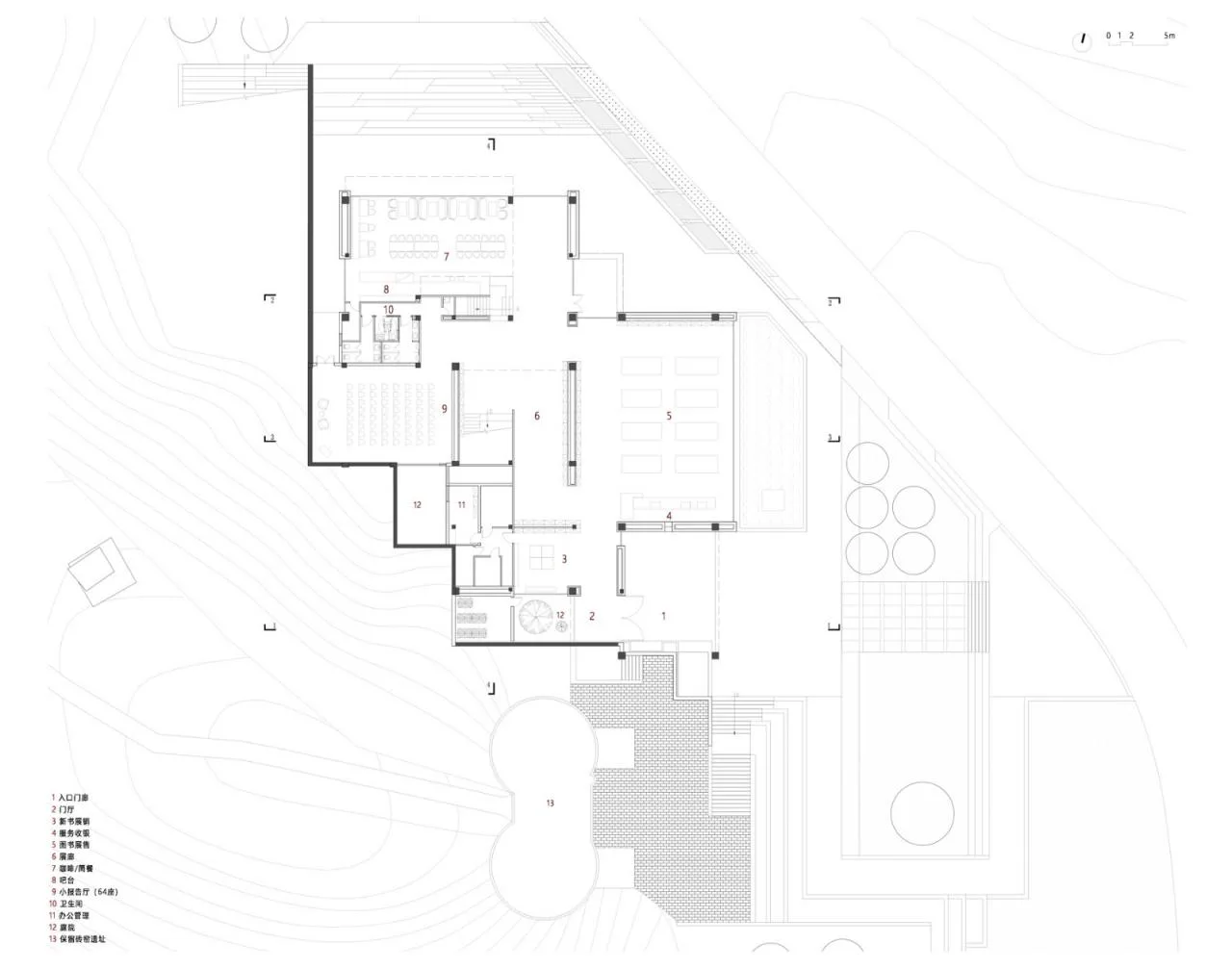
△ First floor plan
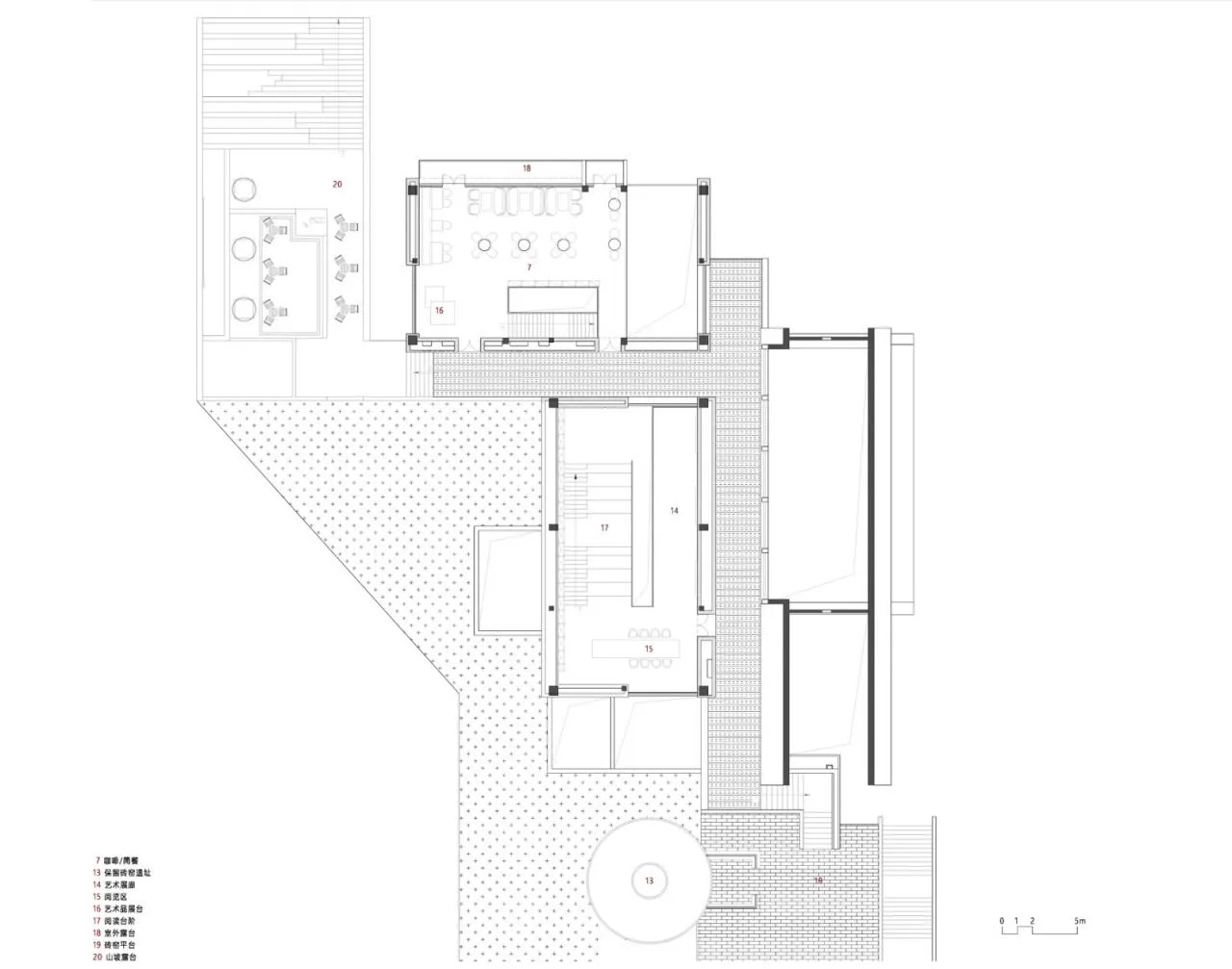
△ Second floor plan
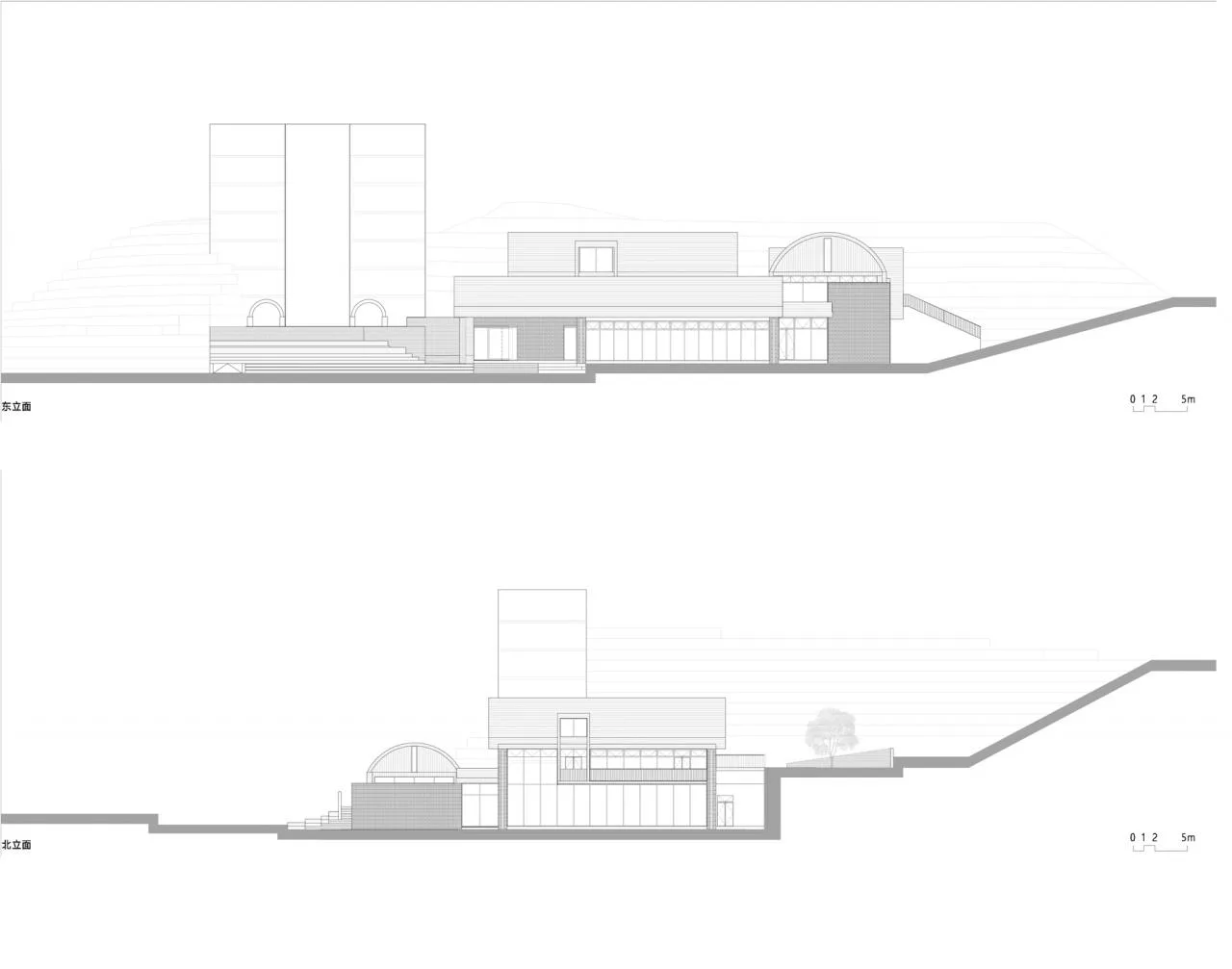
△ Elevation drawing
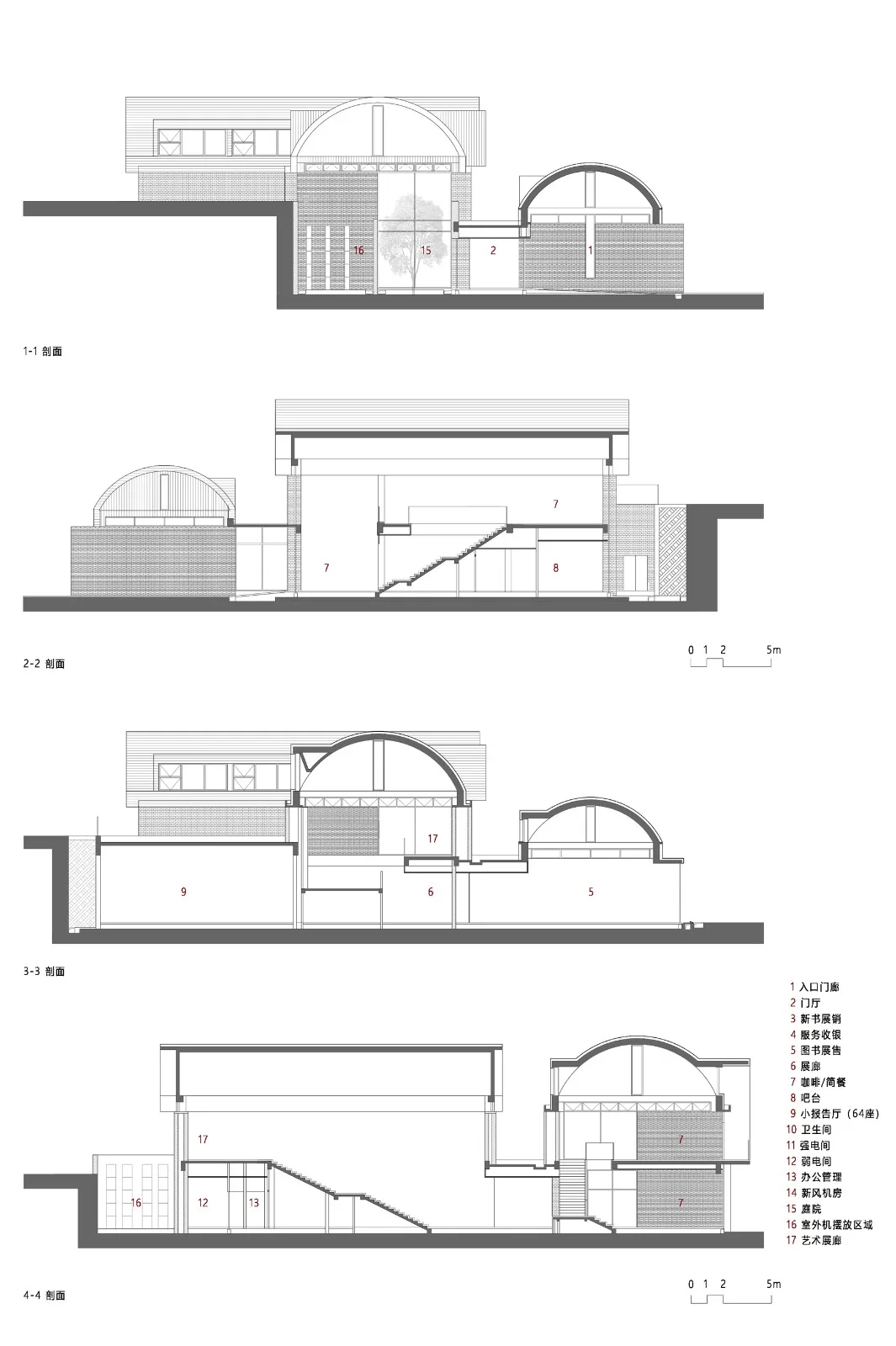
△ Section diagram
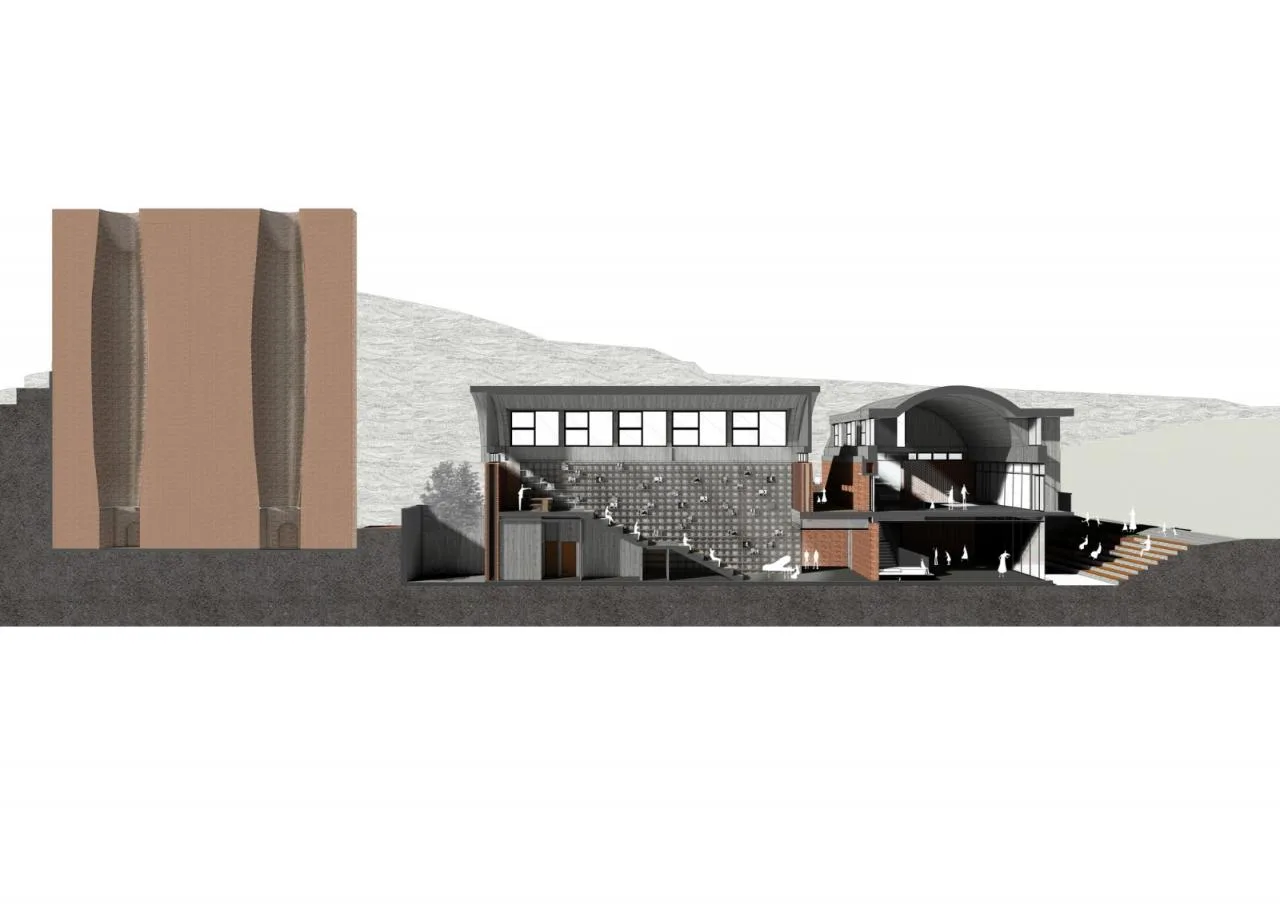
△ Sectional perspective
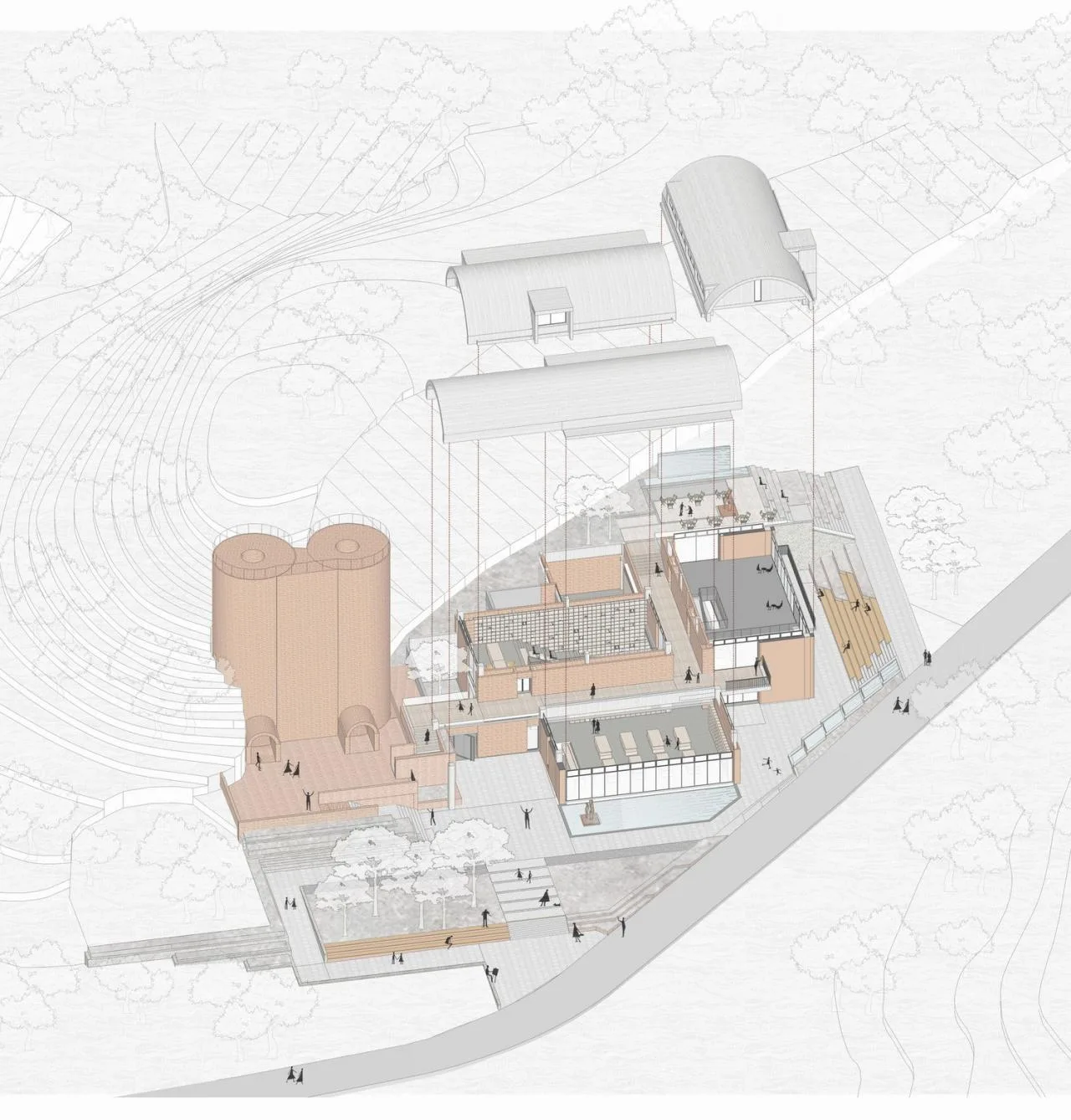
△ Axis side analysis diagram
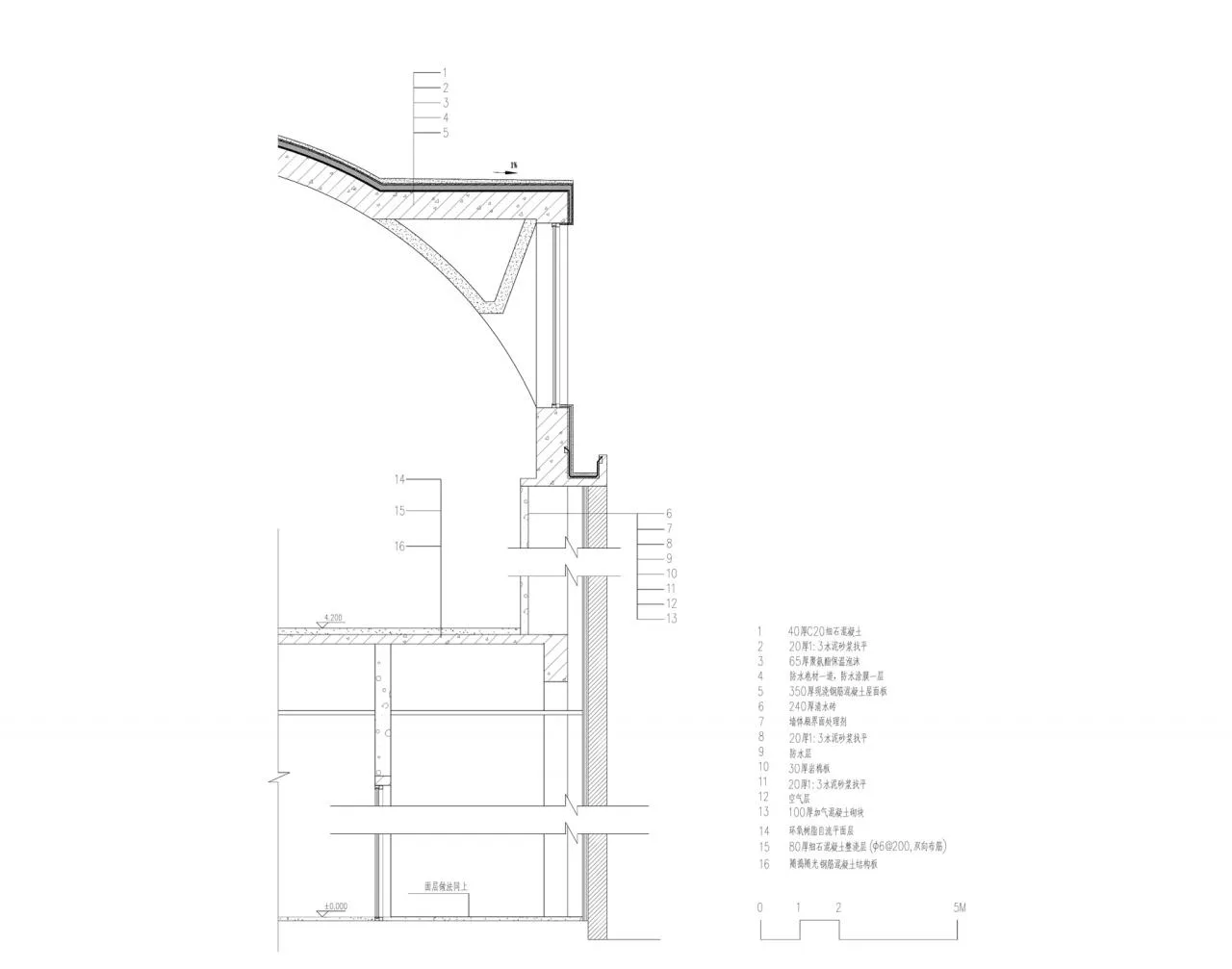
△ Wall body detailed drawing
Project Information
Architectural Design: SEU-ARCH, Artistic Harmony Architecture
Area: 1318 m²
Project Year: 2021
Photographer: Timeraw Studio
Lead Architects: Yang Zhijiang, Zhou Yanlin
Design Team: Yuan Peihua, Chen Ding
Structural Design: Peng Chong
Landscape Design: Ye Lin, Lu Surong, Zhou Yi
Client: Pioneer Bookstore
Location: Nanjing, China
















Must log in before commenting!
Sign Up