
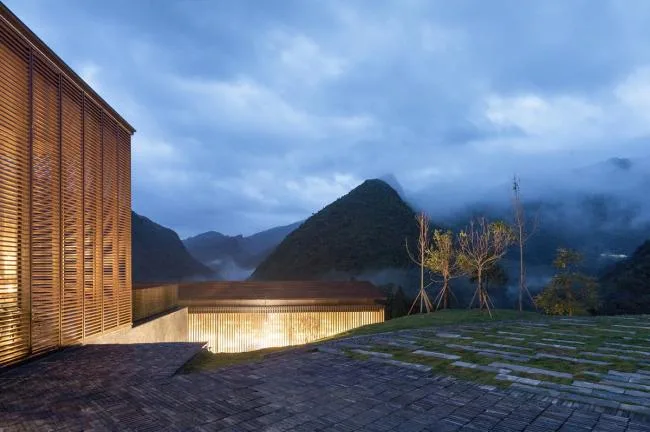
Commissioned to build a mountain restaurant and bar in Tuanjie Village, Guizhou, we faced a challenging timeline with only six months until the scheduled opening. With a tight design and construction schedule alongside a constrained budget, our approach focused on harmonizing volume, space, and environment. Utilizing readily available materials and steel structures allowed for rapid assembly, enabling us to complete this ambitious project within limited time and resources.
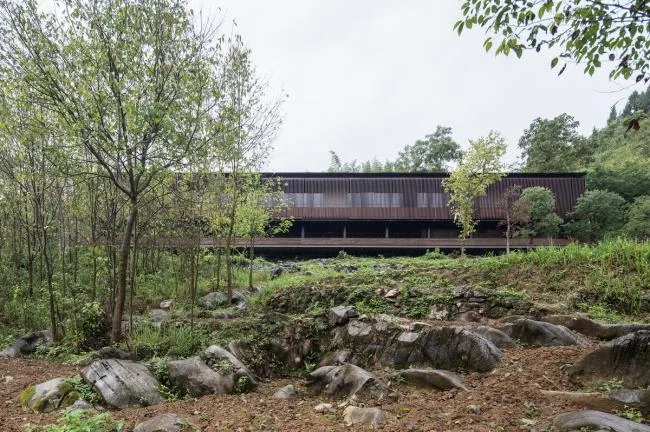
Situated on a steep slope with significant elevation changes, the site is backed by bamboo forests and overlooks river valleys and mountains. To adapt to the terrain, we positioned the bar at the entrance level, while the restaurant is located further down the hillside. This staggered layout reduces the building’s visual mass, preserves open views of the adjacent campfire area (BIM learning), and ensures that the restaurant and bar do not obstruct one another, providing excellent landscape views from inside. The façades of both structures feature similar yet distinct designs, with dark exterior materials blending the buildings into the surrounding natural landscape.
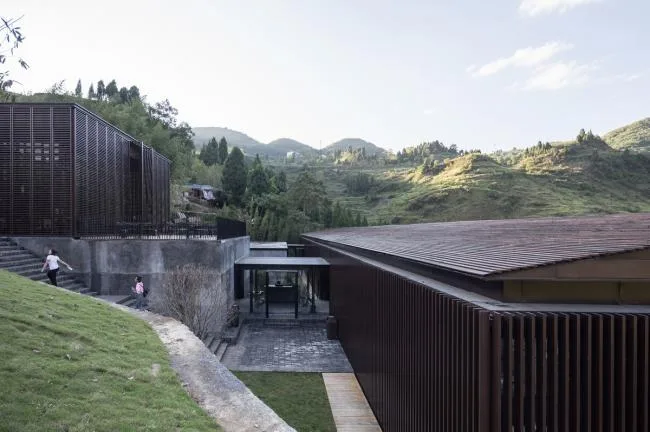
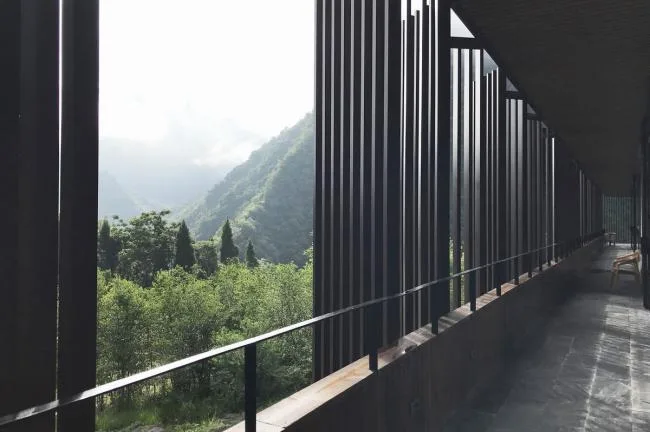
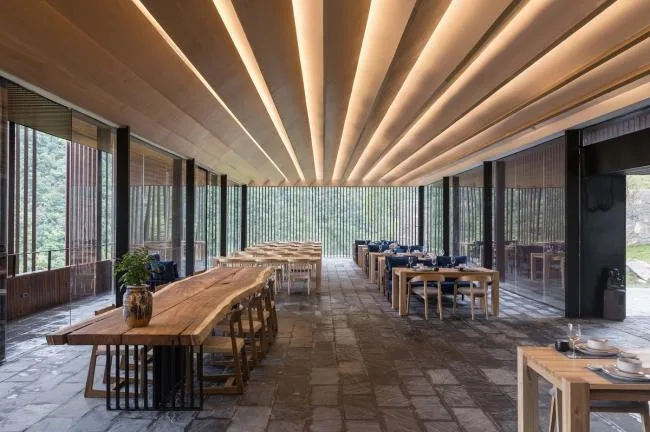
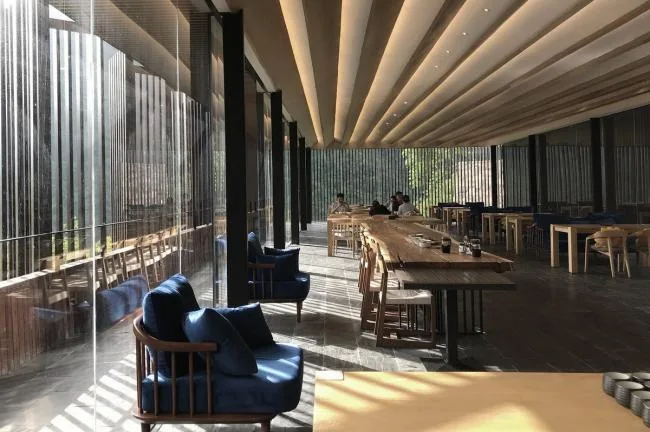
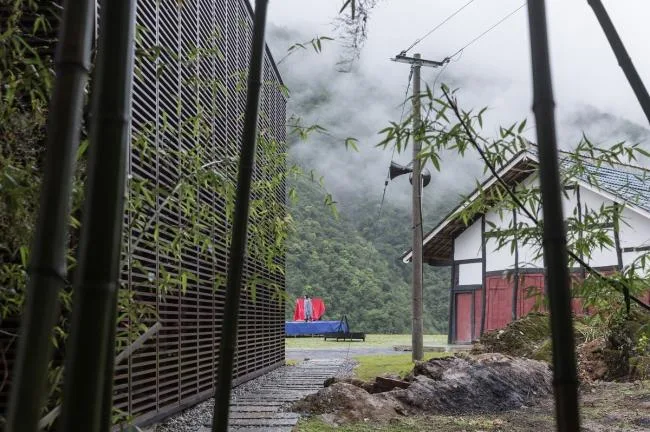
The entrance hall is located on the lower restaurant level. The restaurant’s exterior combines glass panels with vertical louvers, creating a clean and simple volume while inviting soft natural light inside. This design maintains transparency and allows guests to feel connected to the mountain scenery. A full-length semi-outdoor corridor faces the valley, with adjustable vertical louvers that open to reveal panoramic views of the majestic mountains, clouds, and mist. These features create dynamic dining atmospheres that change with the weather and seasons.
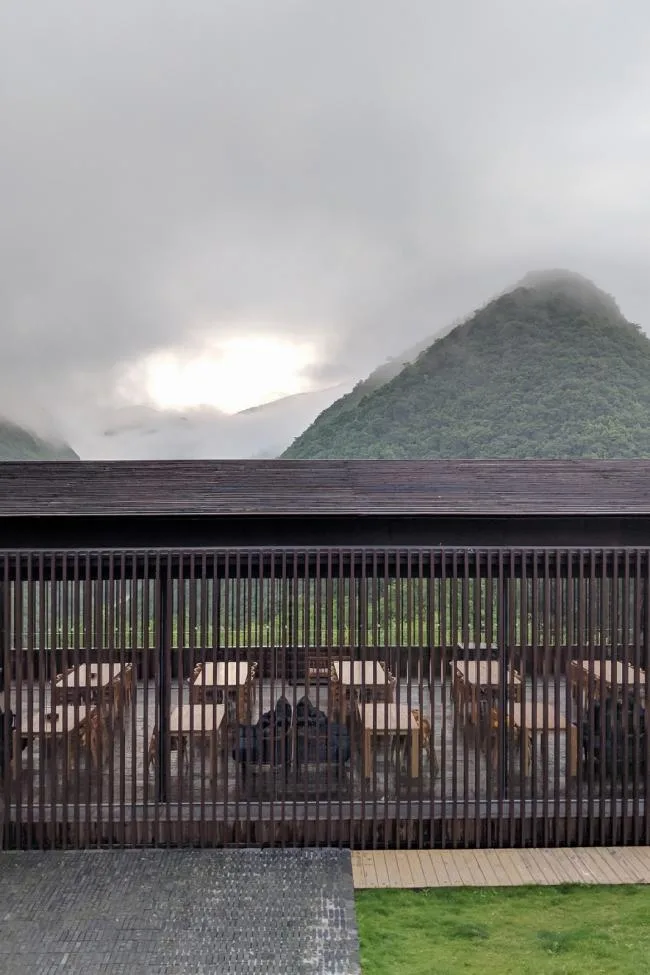
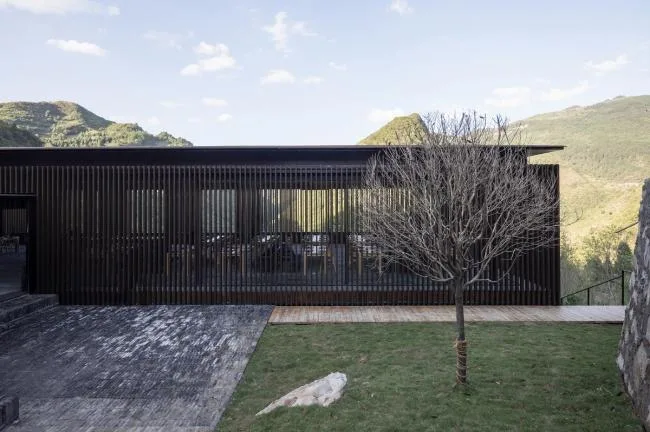
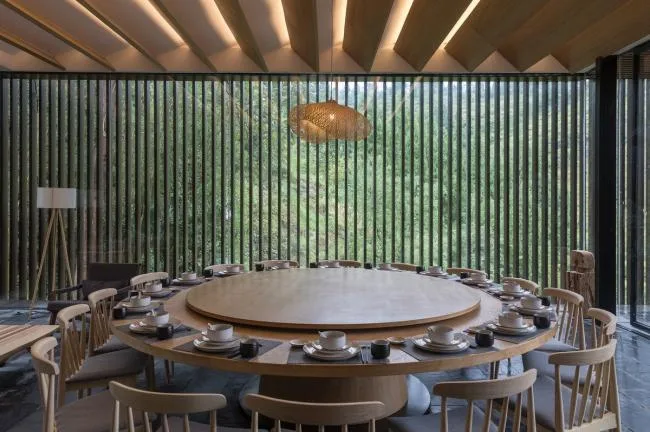
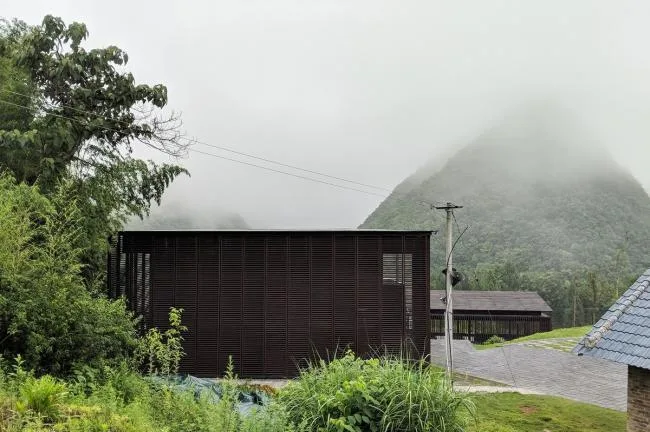
The bar, connected to the entrance hall by a spiral staircase, stands approximately 6 meters tall and harmonizes with the bamboo forest behind it. Its structure is supported by four steel columns and features a double-layered façade that creates a corridor space outside the glass partition. The outer layer consists of operable louver doors that open to the landscape when desired, linking the bar to the external plaza and terrace, effectively extending the indoor leisure area outdoors.
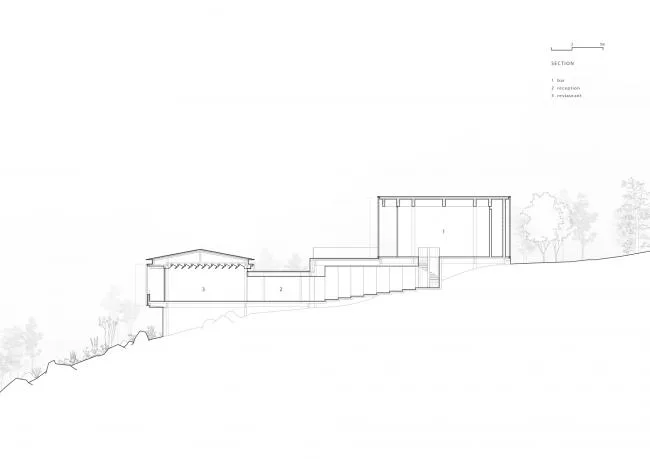
▲ Sectional view
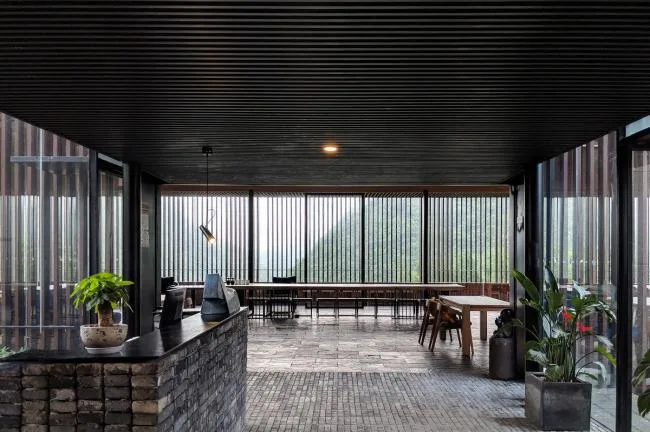
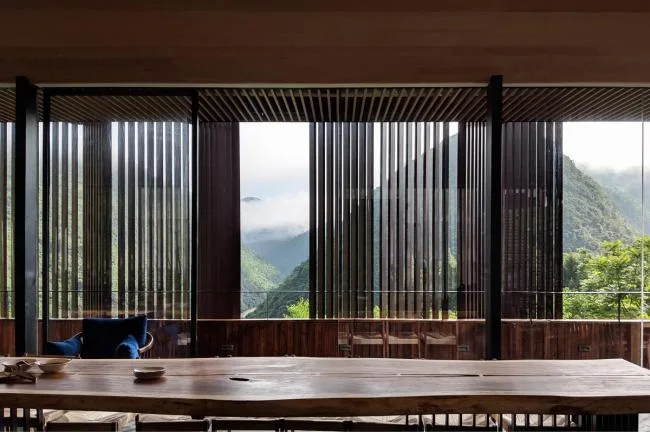
During the construction phase, local villagers joined the building team, becoming active contributors to the rural development. After opening, these villagers took on operational roles, turning the mountain restaurant and bar into key players in the region’s agricultural tourism economy. This project, part of poverty alleviation efforts, has quickly transformed local livelihoods while meeting the growing demand for tourism.
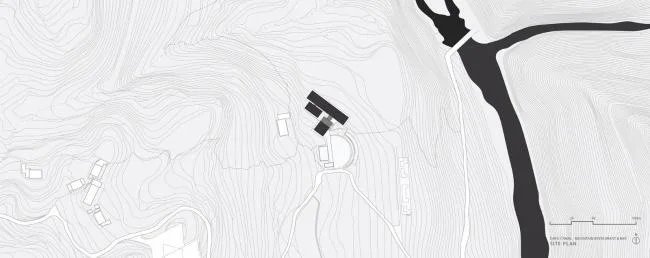
▲ General layout plan
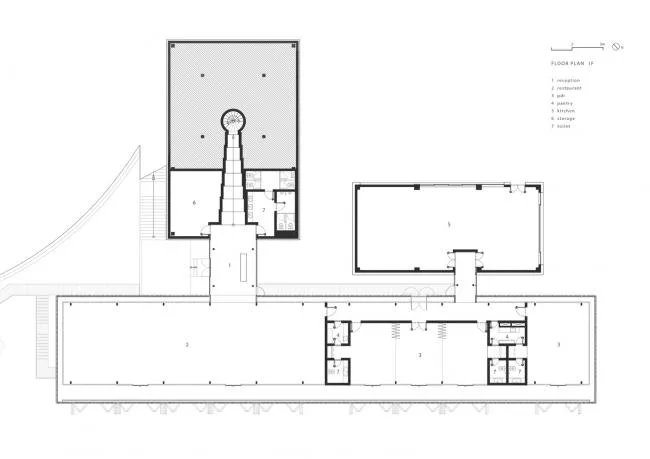
▲ First floor plan
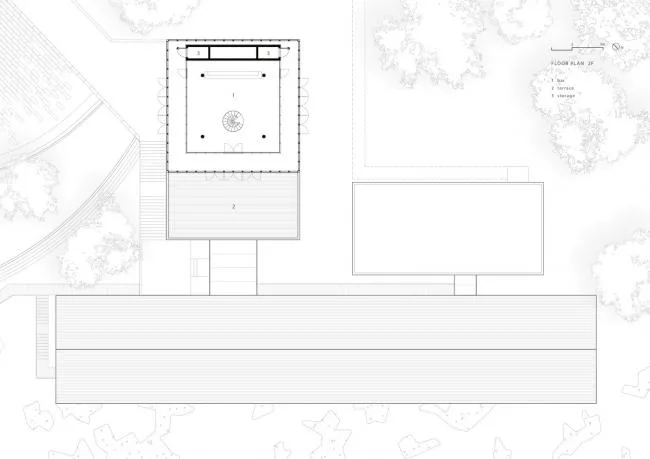
▲ Second floor plan
Project Information
Design Firm: Abandoned Buildings
Location: Dafa Tianqu Tourist Scenic Area, Guizhou, China
Category: Hospitality Architecture
Lead Architects: Cai Yuying, Shen Hongliang, Chen Xuanru
Owner: Guizhou Dafa Tourism Development Co., Ltd.
Collaborating Local Design Institute: Guiyang Architectural Survey and Design Co., Ltd.
Building Area: 1,150 square meters
Project Year: 2018
Photographer: Laurian Ghinitoiu
Manufacturers: DAaZ Muyou Furniture, Philips Lighting












Must log in before commenting!
Sign Up