
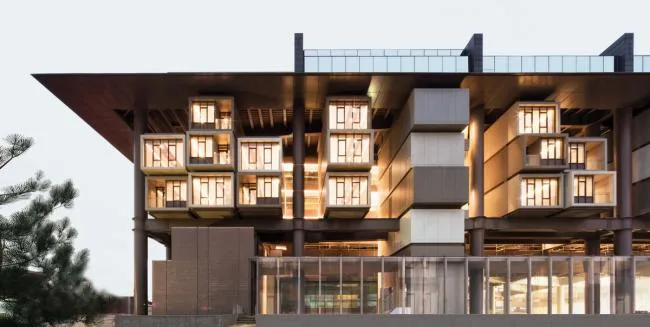
▲ Partial Facade
Located on Mount Starius in Antakya, near the historic St. Peter’s Church—famous for hosting the first Christian gathering—this 199-room hotel stands on a site rich with ancient archaeological remains. The Antakya Museum Hotel honors these discoveries, including mosaic collages, baths, and public squares uncovered during initial excavations. The design thoughtfully integrates these ancient elements with modern architecture, highlighting the close relationship between archaeology and contemporary building.
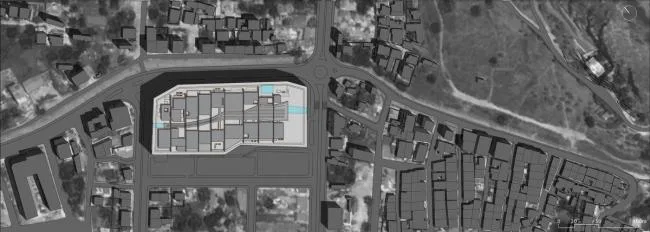
▲ General Layout Plan
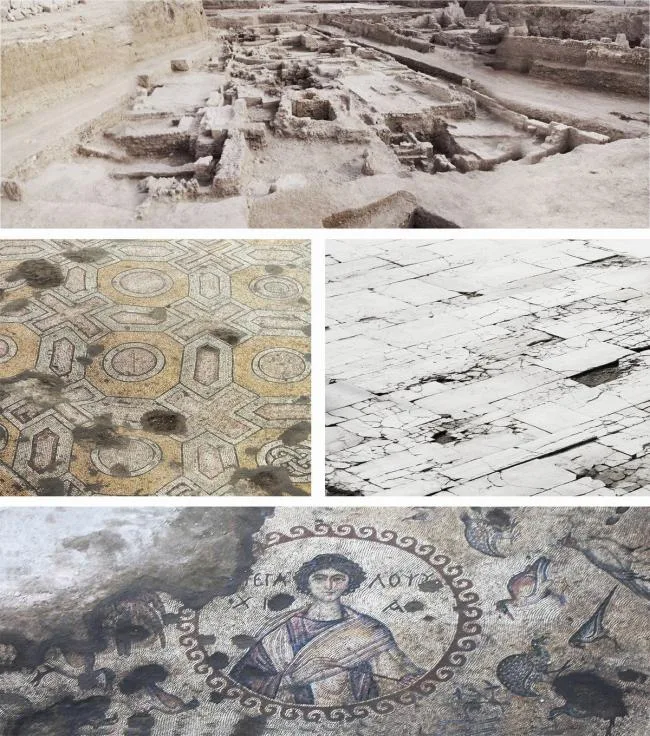
▲ Archaeological Discoveries
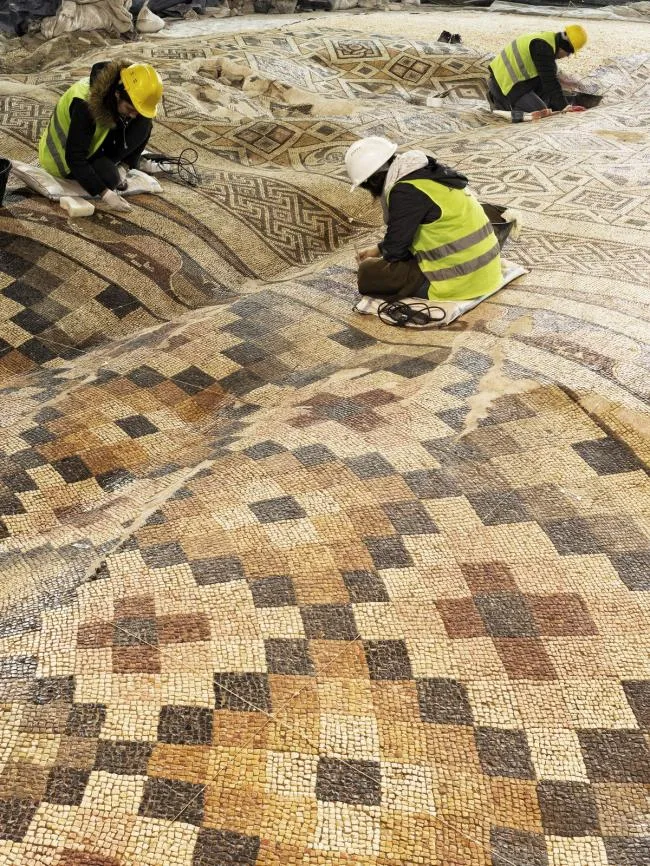
▲ Mosaic Restoration Work
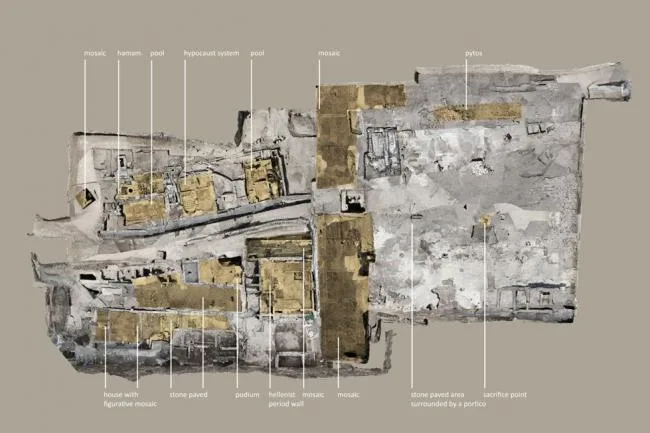
▲ Location of Site Items
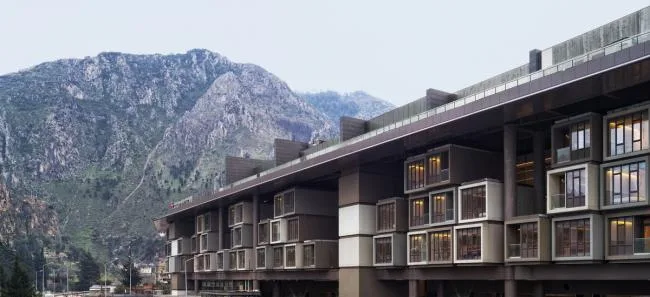
▲ Hotel Facade with Stalis Mountain in the Background
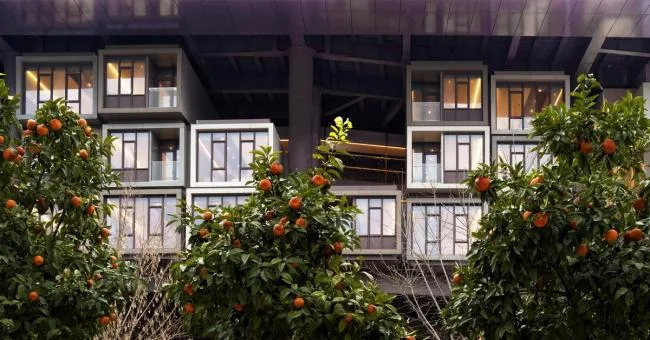
▲ Modular Guest Rooms
Understanding the unique environmental context was crucial for this project. The design respects the archaeological remains, reinterprets traditional hotel architecture, and employs modular construction techniques to harmonize with the site’s character. This approach secured approval from the heritage committee.
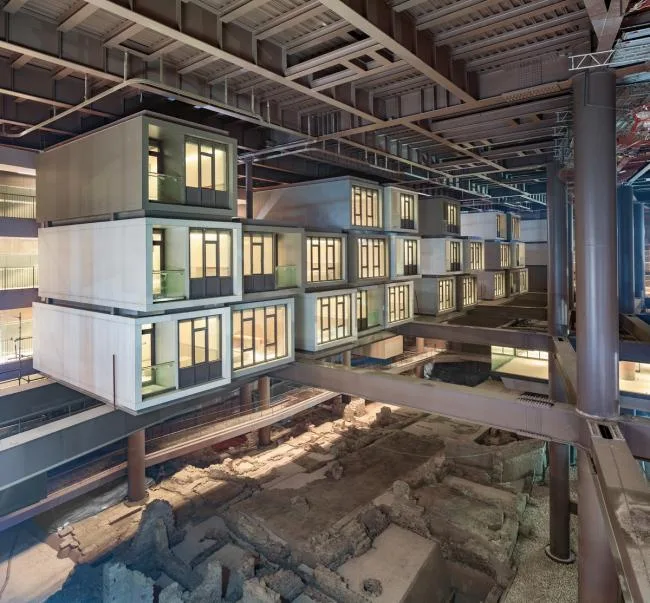
▲ Modular Guest Rooms Viewed Above the Ruins
The building’s structure adapts to the site’s natural undulations, shaped by the erosion of archaeological layers from a former riverbed. Sixty-six composite columns, each 120 centimeters in diameter, are connected with steel grilles to elevate the hotel’s common areas and guest rooms above the ground.
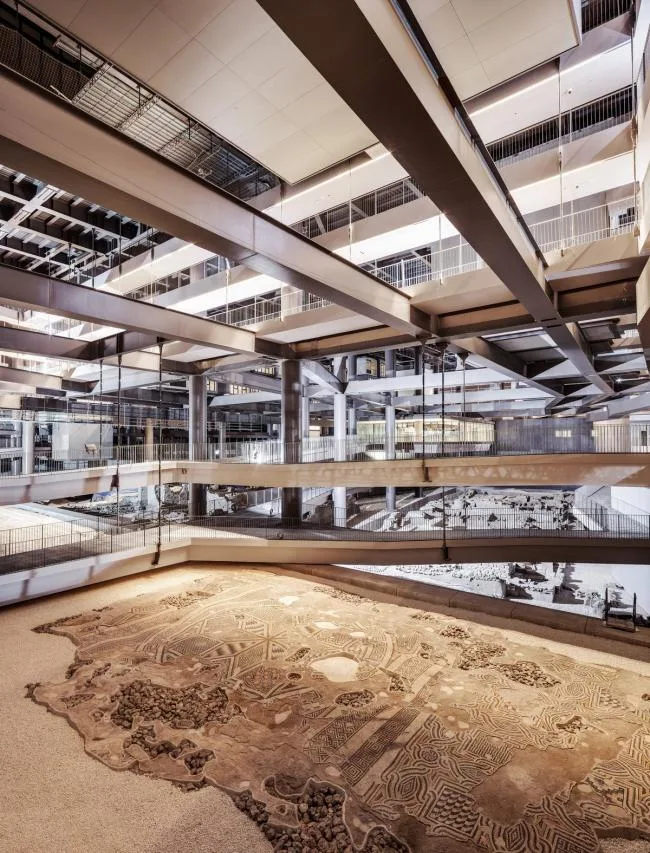
▲ Interior View of the Hotel Overlooking the Ruins
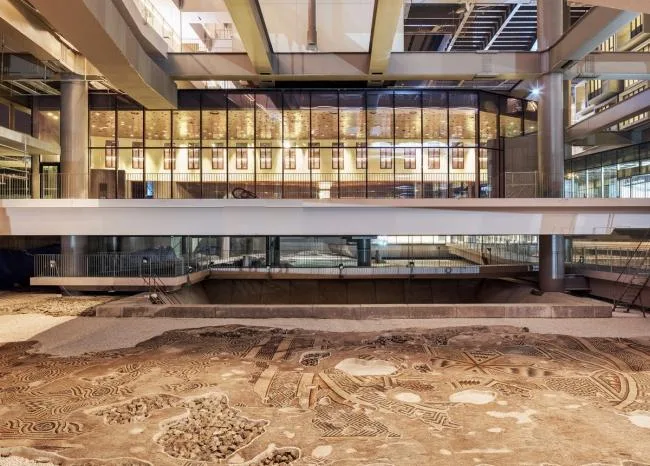
▲ Hotel Lounge Overlooking the Ruins
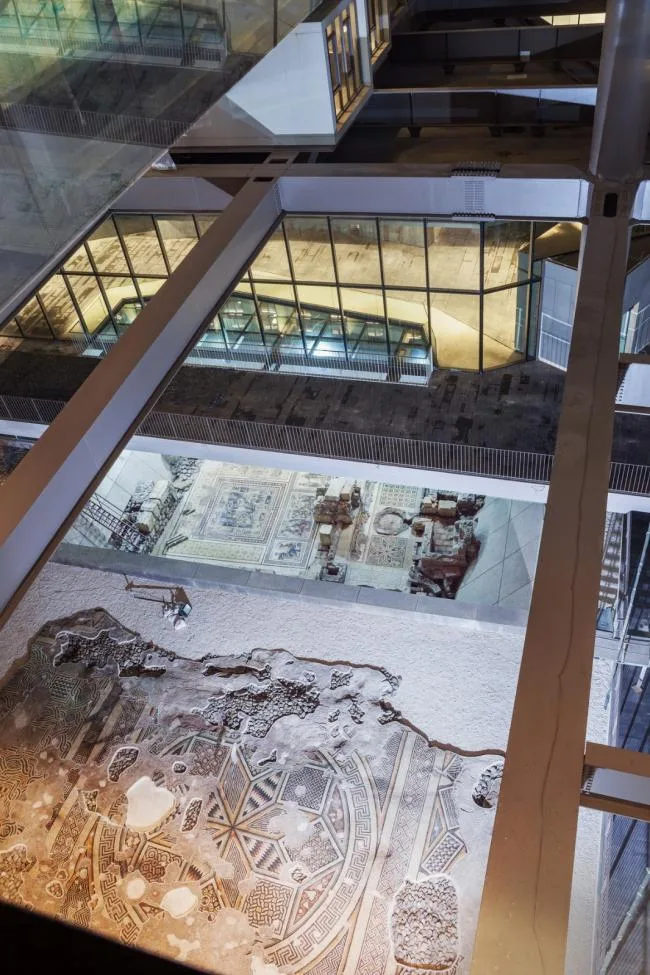
▲ Corridor View of the Lounge and Mosaic
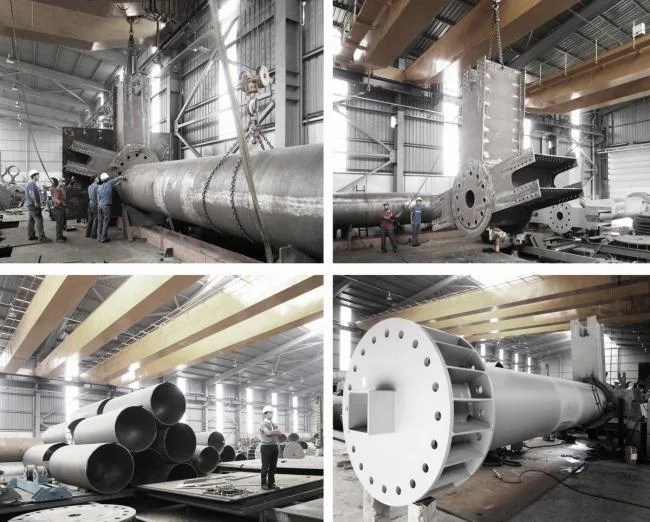
▲ Steel Column Detail
The building comprises four floors. The first floor serves as an open-air museum, situated closest to the archaeological findings. The second floor houses the public areas of the hotel, including the lobby and restaurant, which are designed to frame views of the archaeological site.
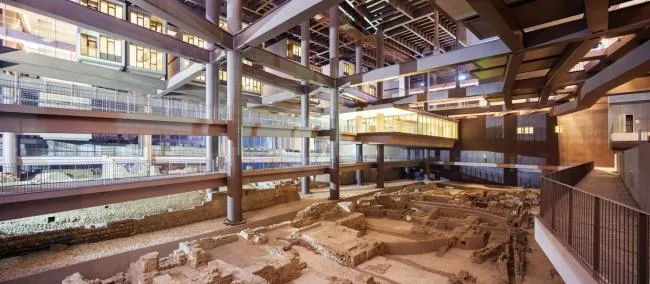
▲ View of the Restaurant from the Ruins
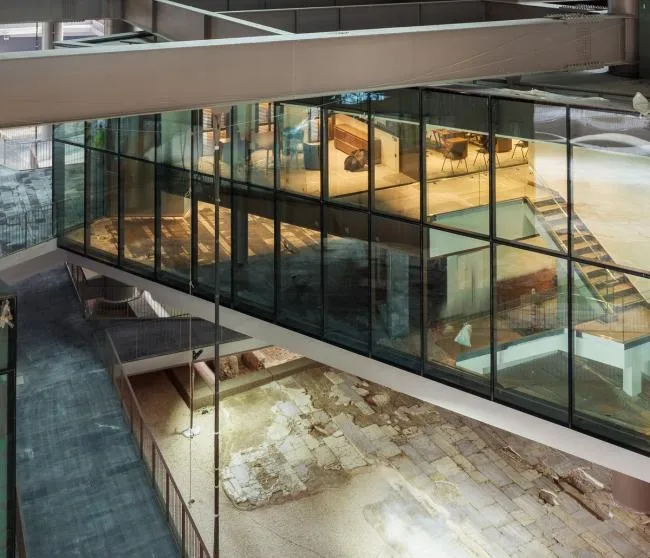
▲ Aerial View of the Lounge and Museum Floor
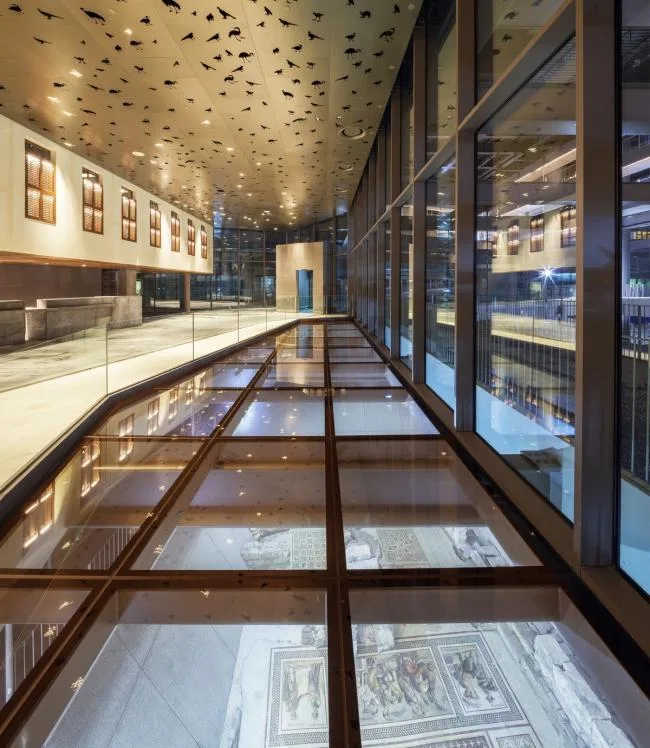
▲ Interior of the Lounge
The third floor features prefabricated guest rooms and outdoor social spaces that direct focus toward the exquisite mosaic landscape below. The rooftop canopy offers shelter while maintaining architectural unity with the ballroom, spa, conference room, and a special restaurant designed as an exhibition gallery on the ground floor. This area also functions as an open public space, harmoniously blending with the surrounding courtyard trees and local environment.
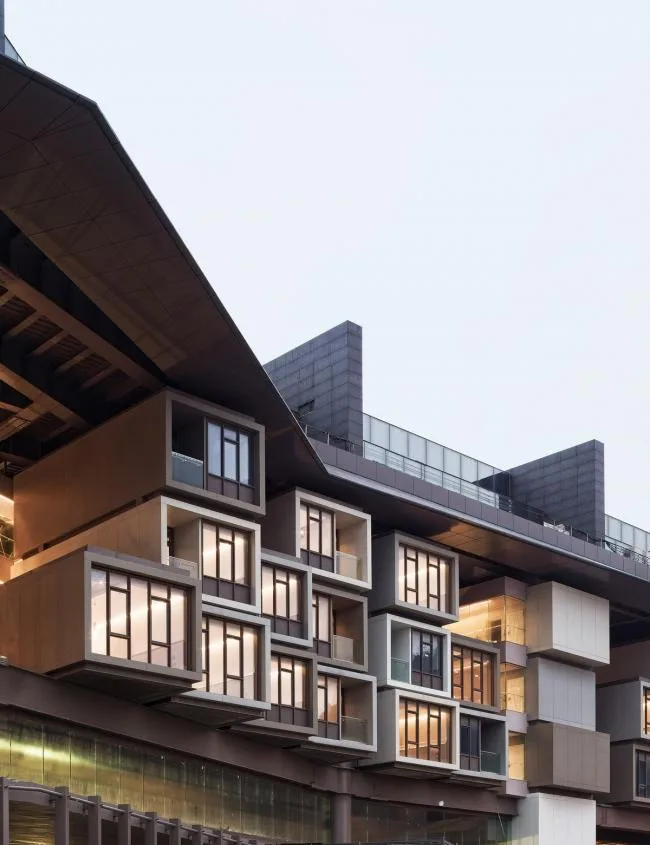
▲ Guest Room Module and Rooftop Common Area
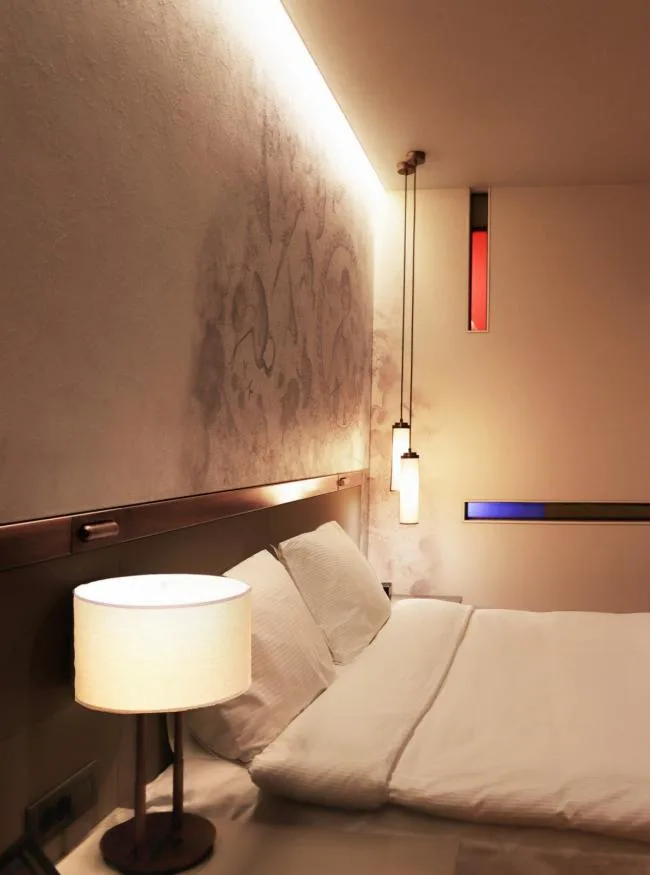
▲ Standard Room
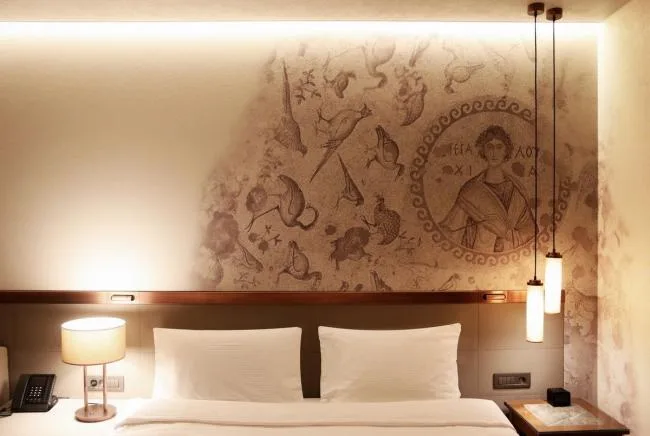
▲ Standard Room
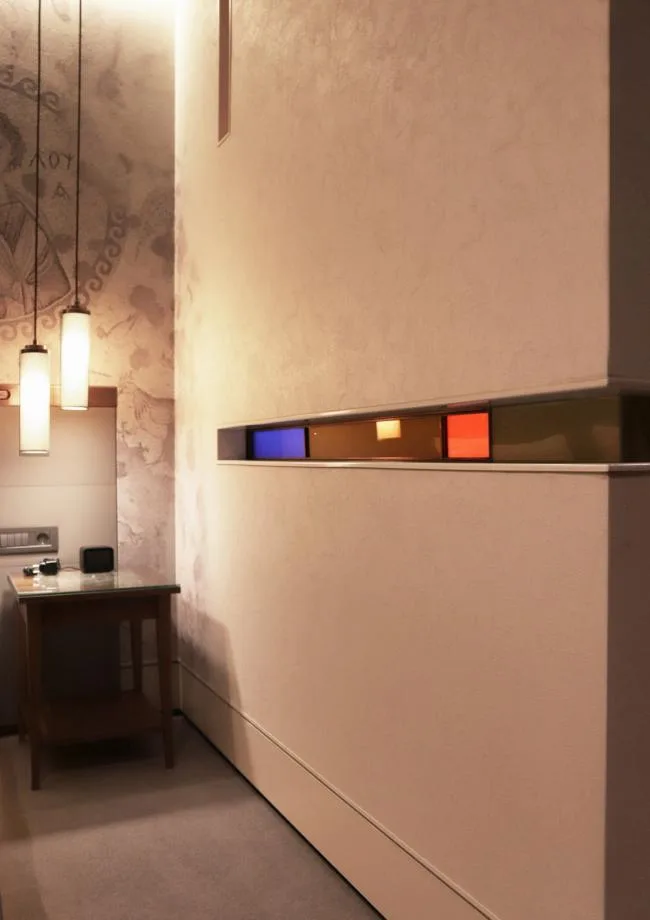
▲ Standard Room Details
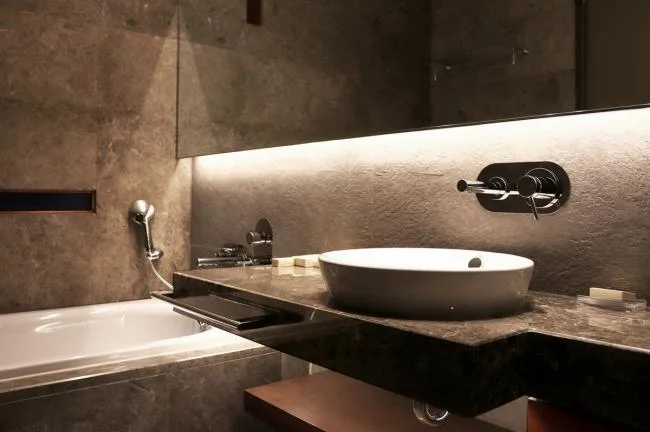
▲ Standard Guest Room Bathroom
Inspired by Antakya’s rich local history, the project pursues two primary goals: first, to represent an unprecedented level of civilization combined with hotel functionality; and second, to fully integrate modern technology with traditional physical elements within the interior.
The building incorporates an efficient passive ventilation system that reduces air conditioning needs by promoting natural air circulation. The design reduces the exterior facade to allow air to flow freely between the corridors and rooms. Additionally, a glass protective wall on the first floor (implemented via BIM techniques) shields the archaeological site from strong local winds and dust, ensuring its preservation.
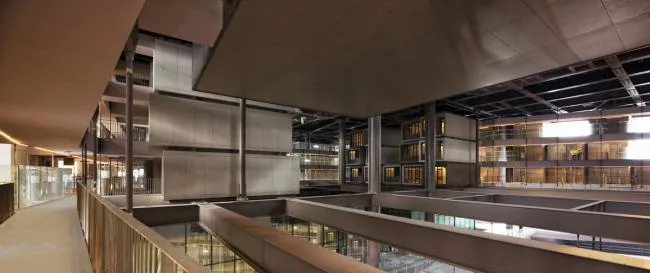
▲ View of Hotel Rooms from the Corridor
Project Drawings
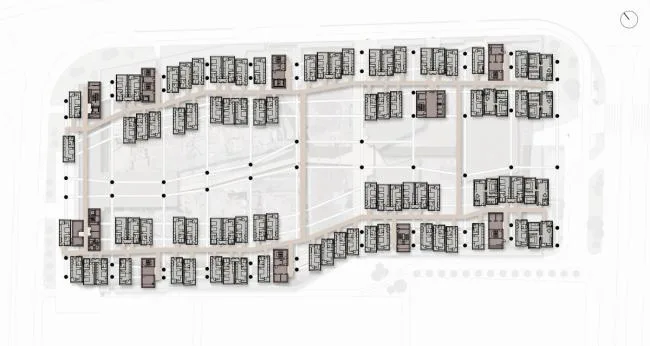
▲ Plan View
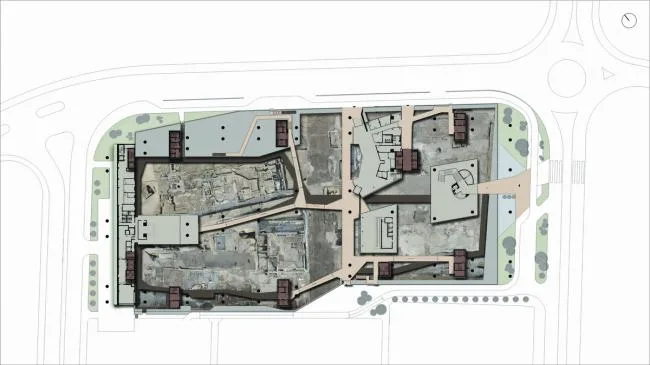
▲ Plan View
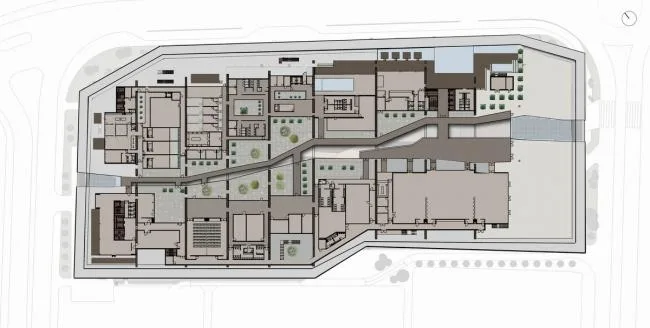
▲ Plan View
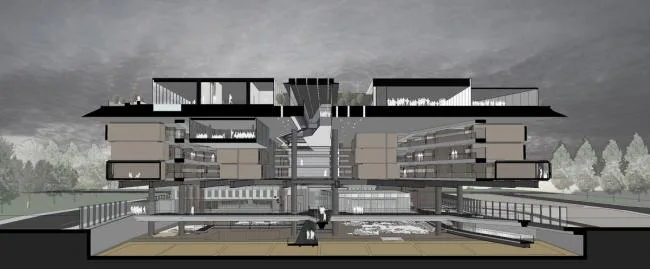
▲ Sectional Perspective
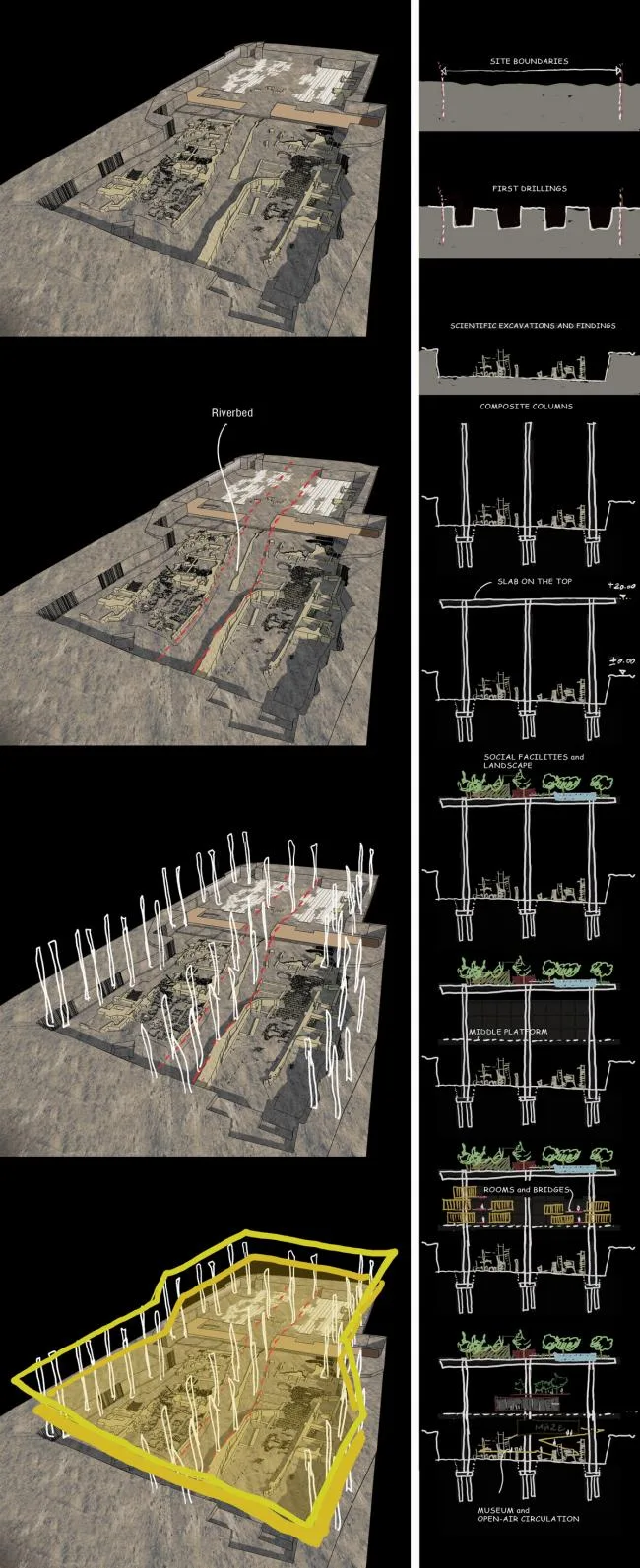
▲ Conceptual Analysis
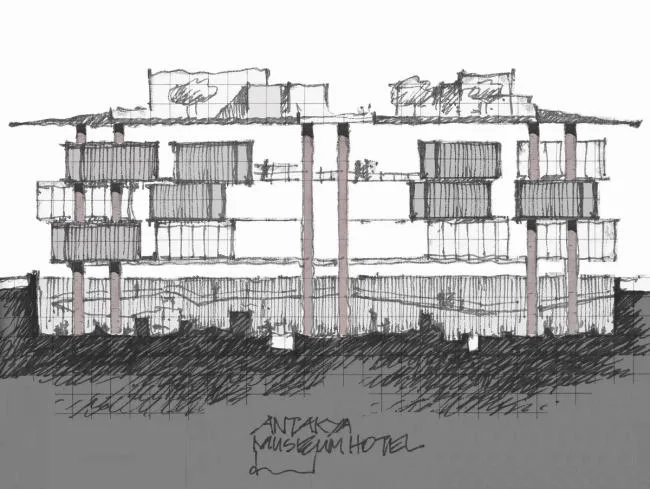
▲ Sketch
Project Information
Architectural Firm: EAA – Emre Arolat Architecture
Location: Antakya, Turkey
Building Area: 34,000 m²
Year of Completion: 2019
Photographers: Cemal Emden, Studio Maho
Manufacturers: Trimble, Autodesk, Reynaers Aluminium, KEIM, SISECAM, Jotun, VITRA
Structural Engineer: Nodus Engineering
Mechanical Engineers: Termomek Eng. & Besa Mech. Eng.
Electrical Engineer: HB Teknik Company
Municipal Facilities: Prose Eng
Landscape Design: DS Architecture
Facade Consultant: Axis Façade Istanbul
Wind Load Consultant: Alkazar Engineering & Consultancy
Acoustic Consultant: Dany (BIM) al Karagozloglu
Lighting Consultant: Studio Lighting Design
Fire Consultant: Mustafa Ozgunler & Karina Design Services
Architectural Surveying: DS Architecture, M Project Architecture
3D Scanning: Arc Tron GmbH













Must log in before commenting!
Sign Up