
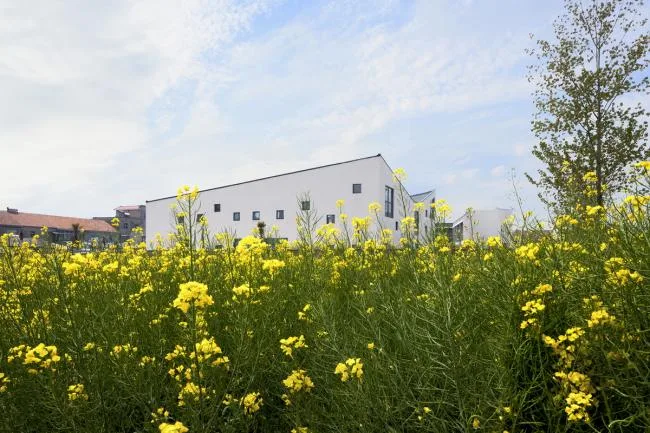
There is a well-known saying: “It takes a village to raise a child.” This not only reflects the cultural practice of communities raising children together but also highlights the importance of children being exposed to society for a rich, authentic life education. However, in many Chinese rural towns today, children are increasingly left behind or boarding at schools for extended periods. This separation often disrupts the close bonds between children, their families, communities, and society due to centralized management.
In 2015, the government of Funing County in Jiangsu Province launched a major initiative to enhance basic education. They commissioned Crossboundaries to design two public kindergartens in Beisha Village and Shuoji Community.
When we first visited the area during our master’s program, we encountered hollowed-out communities, families living apart for most of the year, mothers struggling to provide care, anxious left-behind children, and frustrated kindergarten teachers. We quickly realized that what was needed was more than just a building; it was a concept and a vision to revive the community’s appreciation for children. Even within fragmented social and family structures, we aimed to recreate the educational atmosphere reminiscent of the traditional rural landscape where young and old lived closely together.
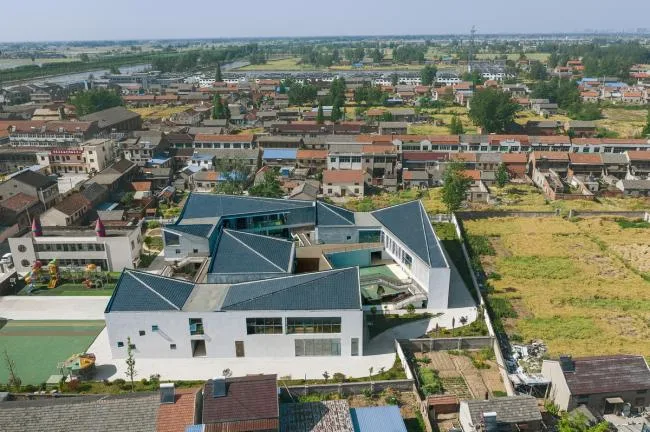
Designing the Environment as a “Valley”
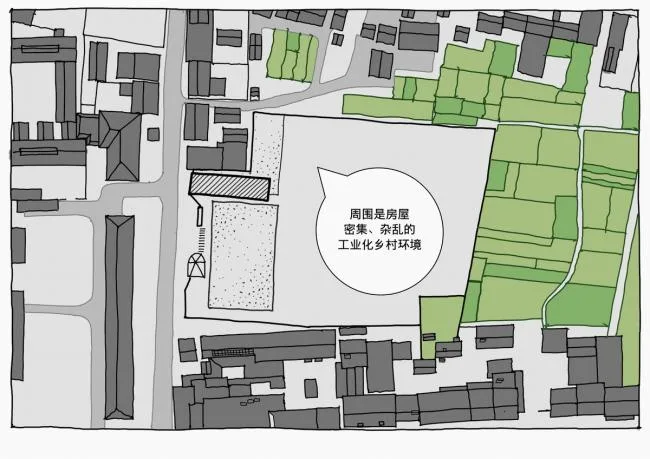
We adopted similar design strategies for both kindergartens—Beisha and Shuoji—while tailoring them to their unique contexts. Unlike Beisha Village’s kindergarten, set in a picturesque water town that mimics village forms, Shuoji Community’s kindergarten is situated in the bustling core of the county. It is surrounded by dense commercial blocks, public institutions, township enterprises, busy roads, and abandoned land. The site is enclosed and lacks open green space or notable scenery.
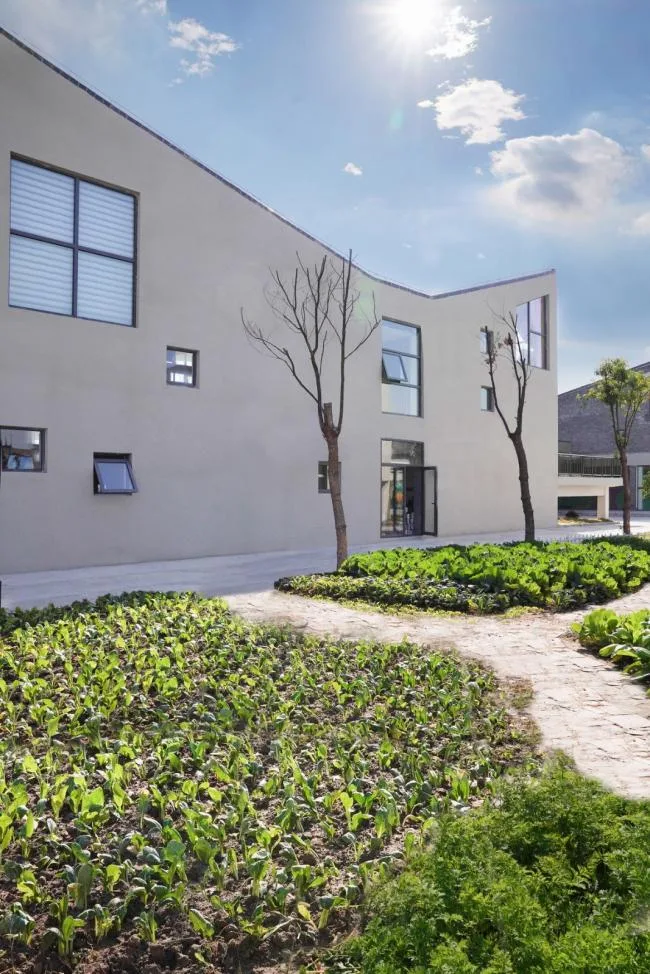
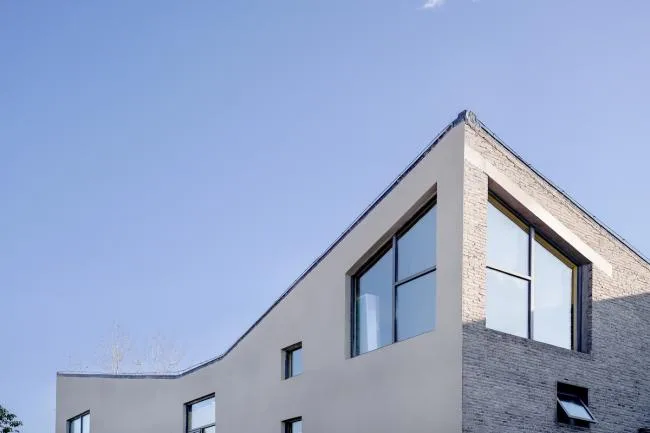
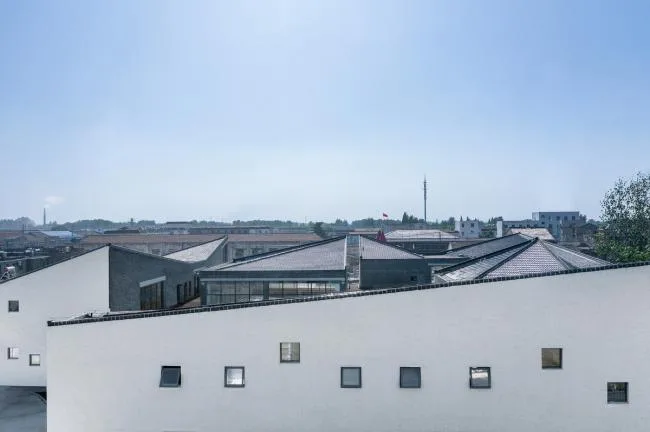
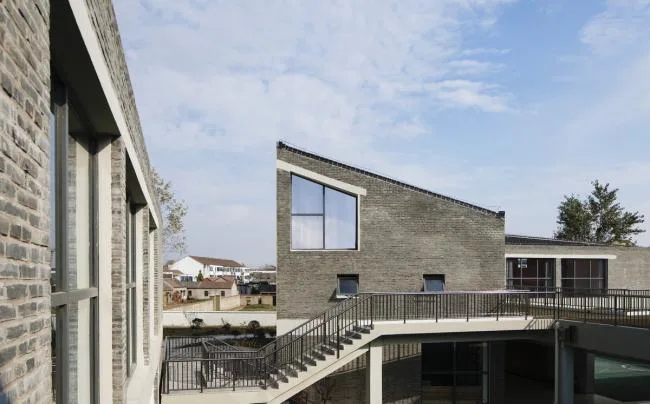
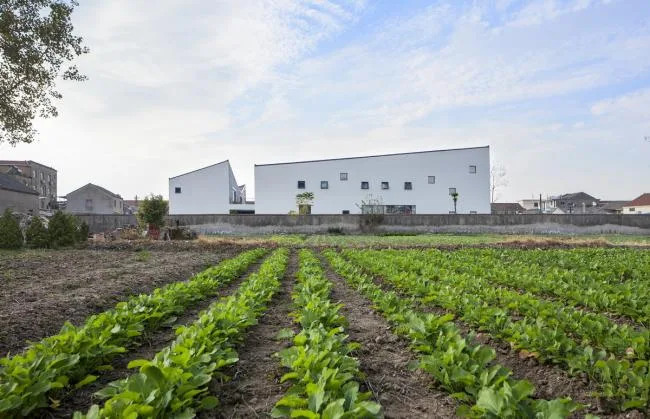
To address this, we created an inward-facing “valley” enclosed on three sides by multi-story buildings. This layout effectively blocks much of the outside noise, providing children a safe, calm environment to live, play, and learn. The kindergarten’s massing is broken down into smaller volumes to reduce scale and avoid an oppressive atmosphere for the children.
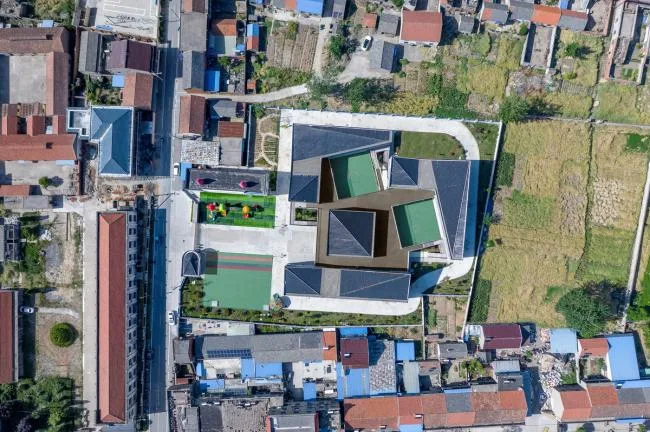
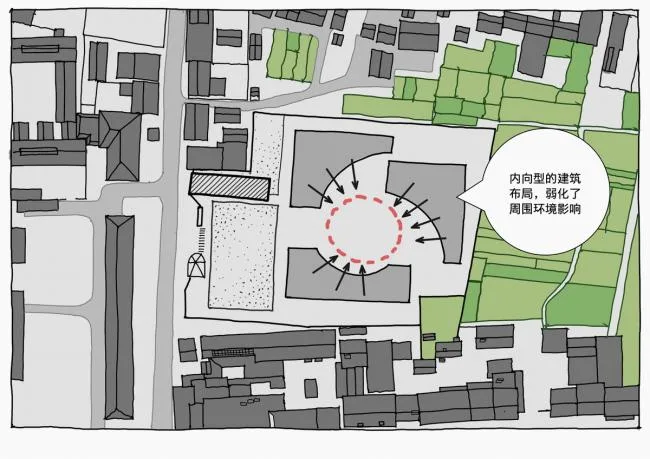
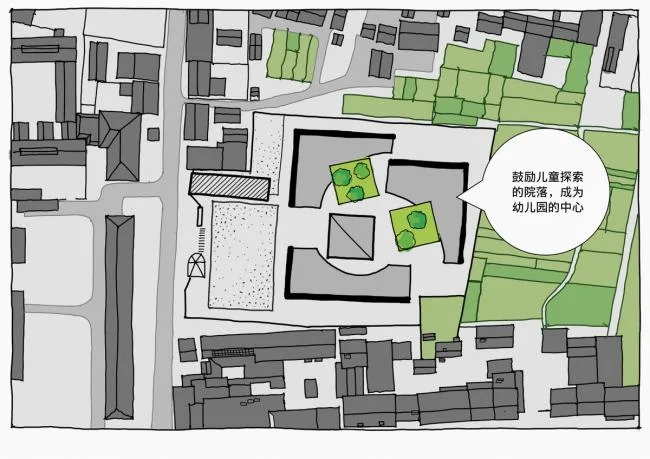
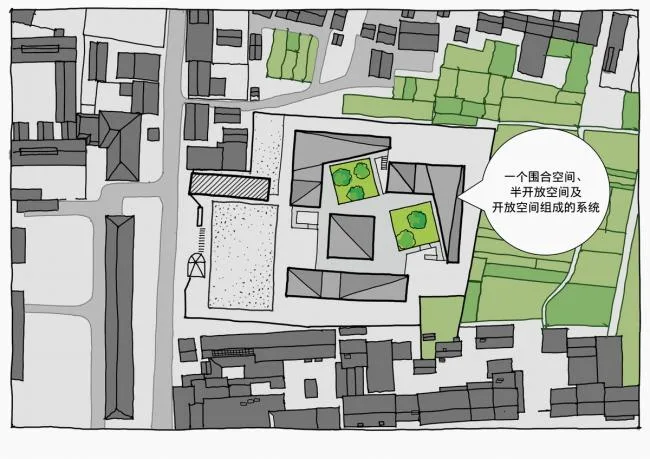
▲ The building’s exterior responds thoughtfully to its location
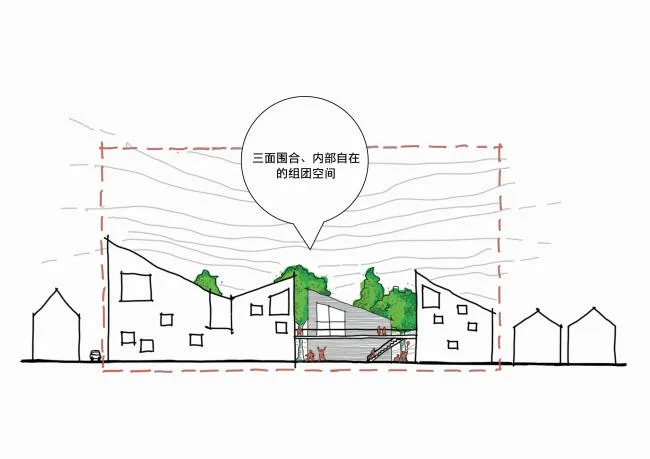
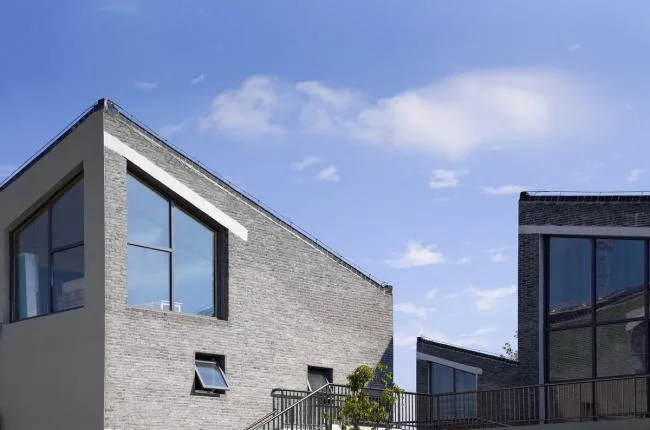
▲ Enclosed on three sides, creating a protected and open internal space
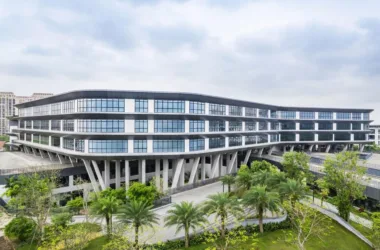
The architectural style honors and continues the traditions of central Jiangsu. It resonates with local residential forms, varying according to each building’s scale. The inner courtyard walls are constructed mainly of blue bricks, while the outer facades feature white plaster, creating a clean and pure environment amid the chaotic county surroundings. Windows of varying sizes and heights punctuate the facades, fostering a transparent, engaging relationship between indoor and outdoor spaces while maximizing natural light.
Reimagining the Community for Unrestricted Learning
The building’s exterior reflects the traditional spirit of a village united in caring for its children. Inside, the spatial layout embodies the philosophy of “child-centered” education. Educators increasingly recognize that preschoolers learn best through play, developing skills through exploration. Therefore, the kindergarten design minimizes constraints, allowing children the freedom to follow their natural curiosity.
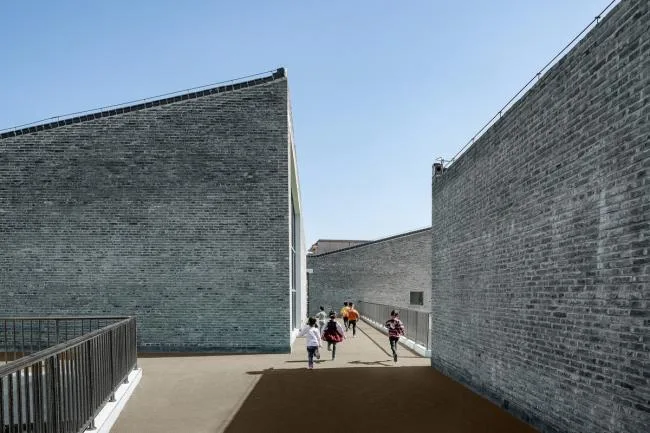
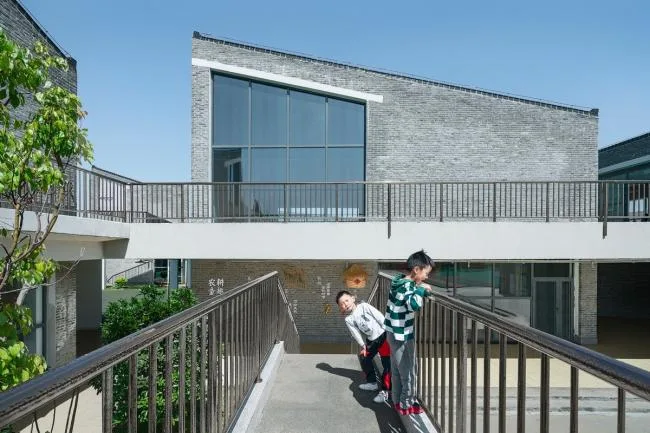
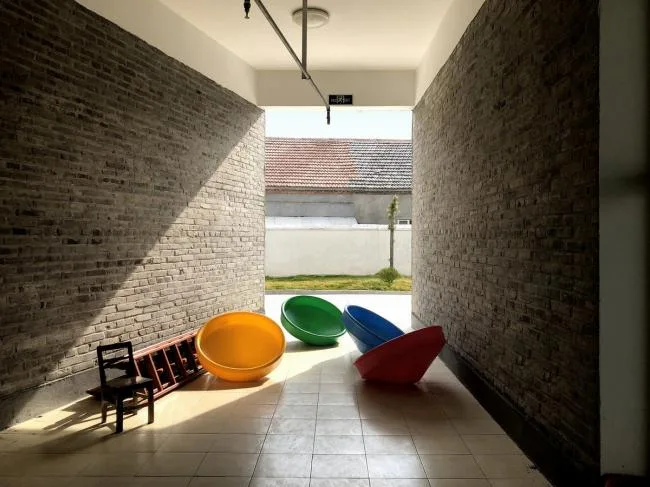
The buildings around the “valley” serve different functions while maintaining independence. We intentionally placed most circulation paths in shared outdoor courtyards. This layout ensures children pass through these courtyards whenever moving between learning, play, or living areas, significantly increasing their opportunities for outdoor activity and social interaction.
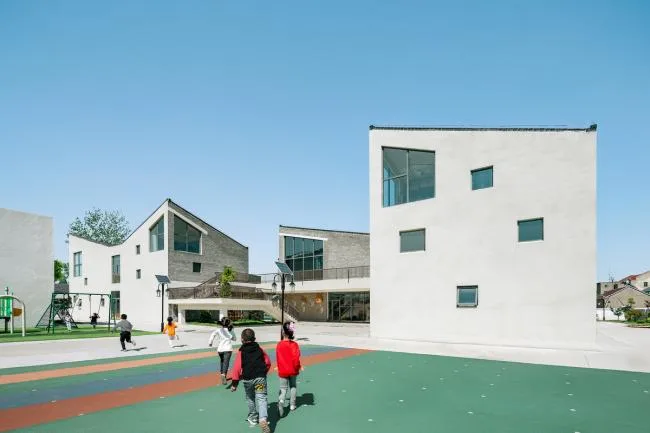
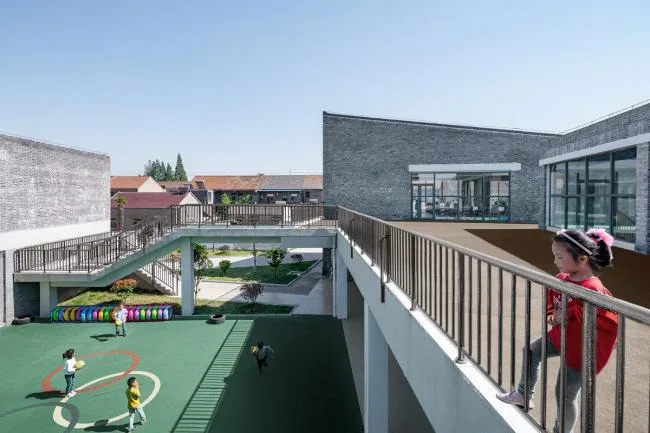
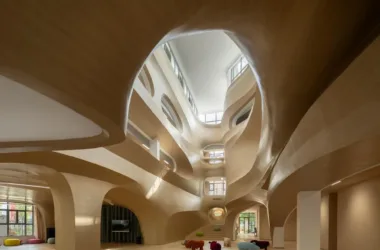
On the ground floor, two activity areas occupy the courtyard, while above them, a large open-air platform connects the second-floor spaces of the surrounding buildings. This platform functions as both a passage and an activity space. The open design, with staircases leading in multiple directions, enhances visual and physical connectivity between levels, creating a dynamic, layered outdoor play environment. Here, children can enjoy open spaces for running and jumping as well as winding paths that encourage exploration.
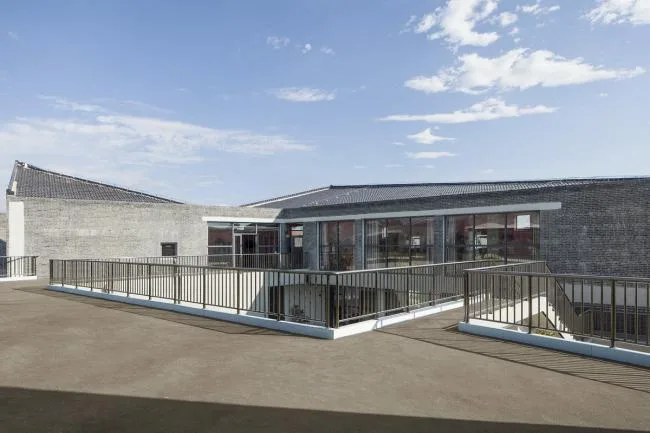
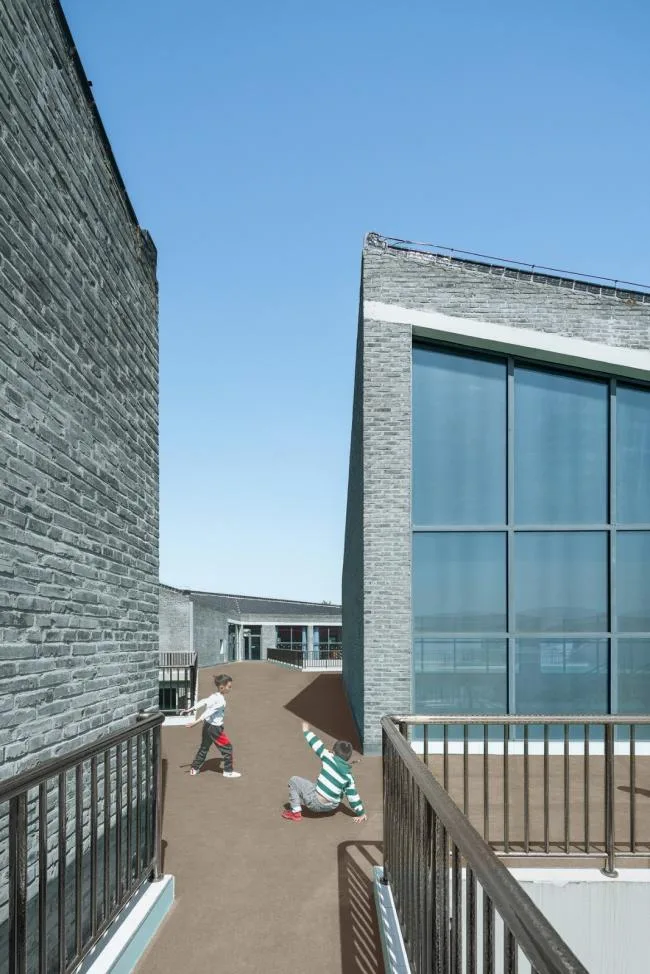
Upon entering the kindergarten, children might initially feel a bit disoriented, but their curiosity quickly takes over, encouraging exploration. The complexity of the space stimulates creativity, encourages new ways to play, fosters social skills, and strengthens spatial awareness and orientation. Emotionally, this enclosed yet welcoming environment helps children reconnect with the warmth of a community, easing feelings of loneliness.
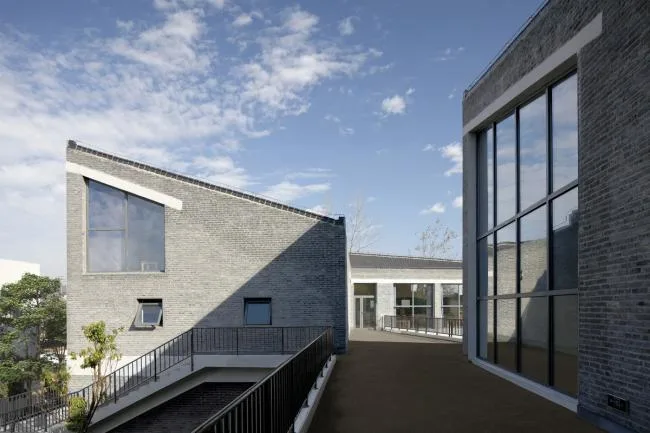
How Can Architects Support Educational Equity?
As China’s urbanization progresses and the government increases support for early childhood education, rural kindergartens are moving away from the traditional “one building, one classroom” model. There is growing attention to enhancing teaching methods. Architects can contribute by embedding the educational philosophy of “child-centered” design in typical rural early childhood facilities. Whether urban or rural, education’s ultimate goal should empower children to develop independently, form unique personalities, and make meaningful life choices in an unpredictable future. We hope this approach, grounded in love for children, will one day become a universal standard rather than a niche urban concept.
Project Drawings
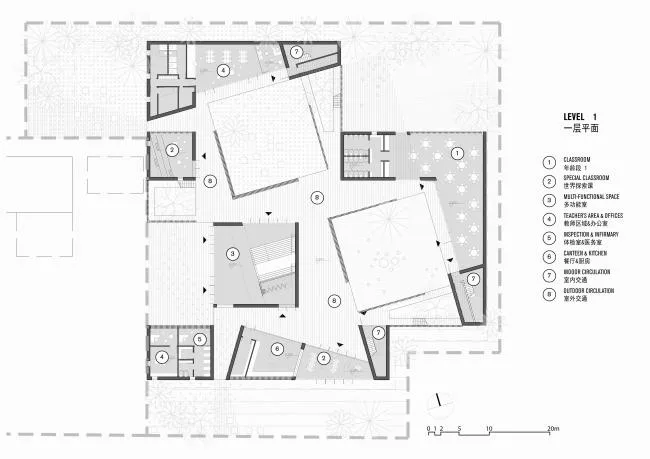
▲ First Floor Plan
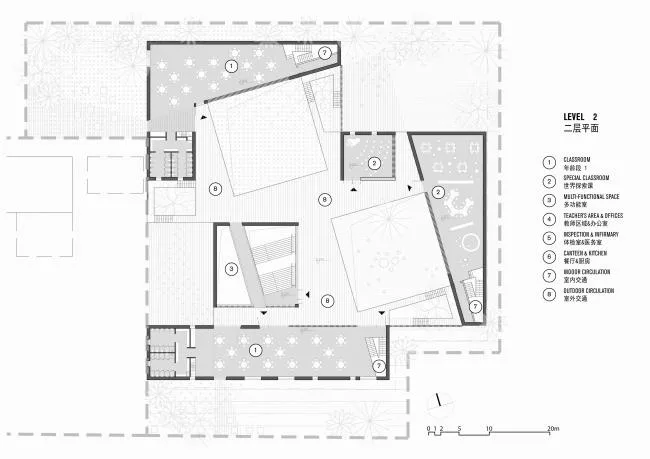
▲ Second Floor Plan
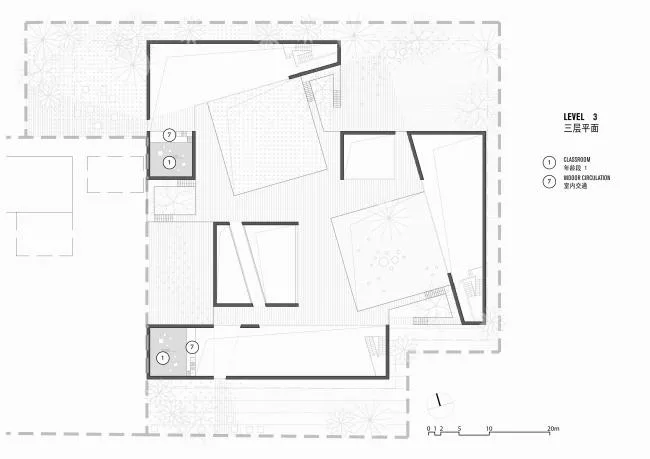
▲ Third Floor Plan
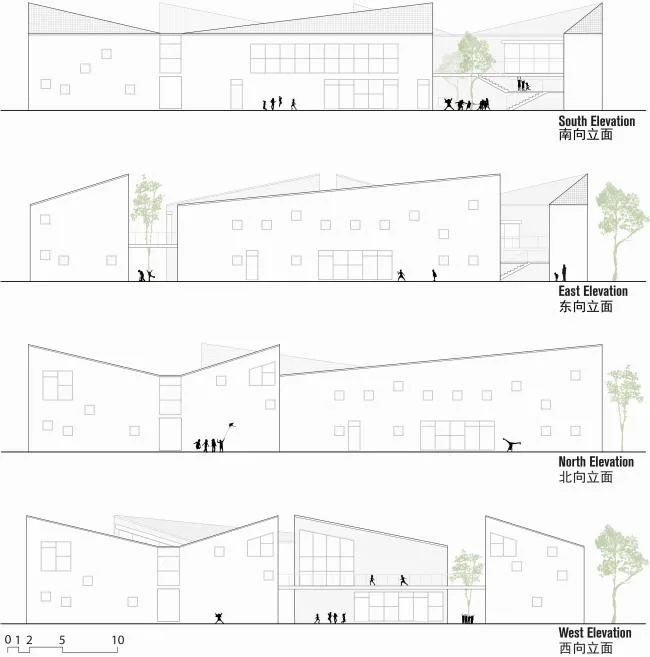
▲ Elevation View
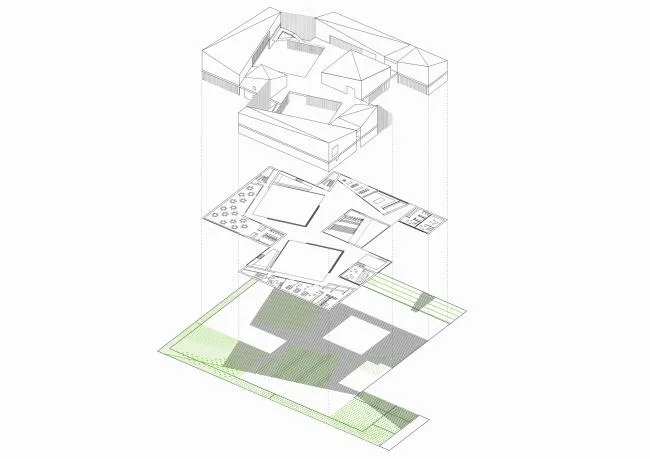
▲ Axial Unfolding Diagram
Project Information
Location: Shuoji Community, Funing County, Jiangsu Province, China (BIM Tutorial)
Client: Education Bureau of Funing County, Jiangsu Province
Total Construction Area: 3,141 square meters
Number of Students: 300
Design Period: December 2015 – September 2016
Construction Period: April 2017 – August 2018
Completion Date: August 2018
Designer: Crossboundaries, Beijing
Partners: Binke Lenhardt, Dong Hao
Design Team: Tracey Loontjens, Alan Chou (Zhou Yelun), Andra Ciocoiu, Hao Hongyi
Photography: Wu Qingshan, Hao Hongyi, Liu Minling












Must log in before commenting!
Sign Up