
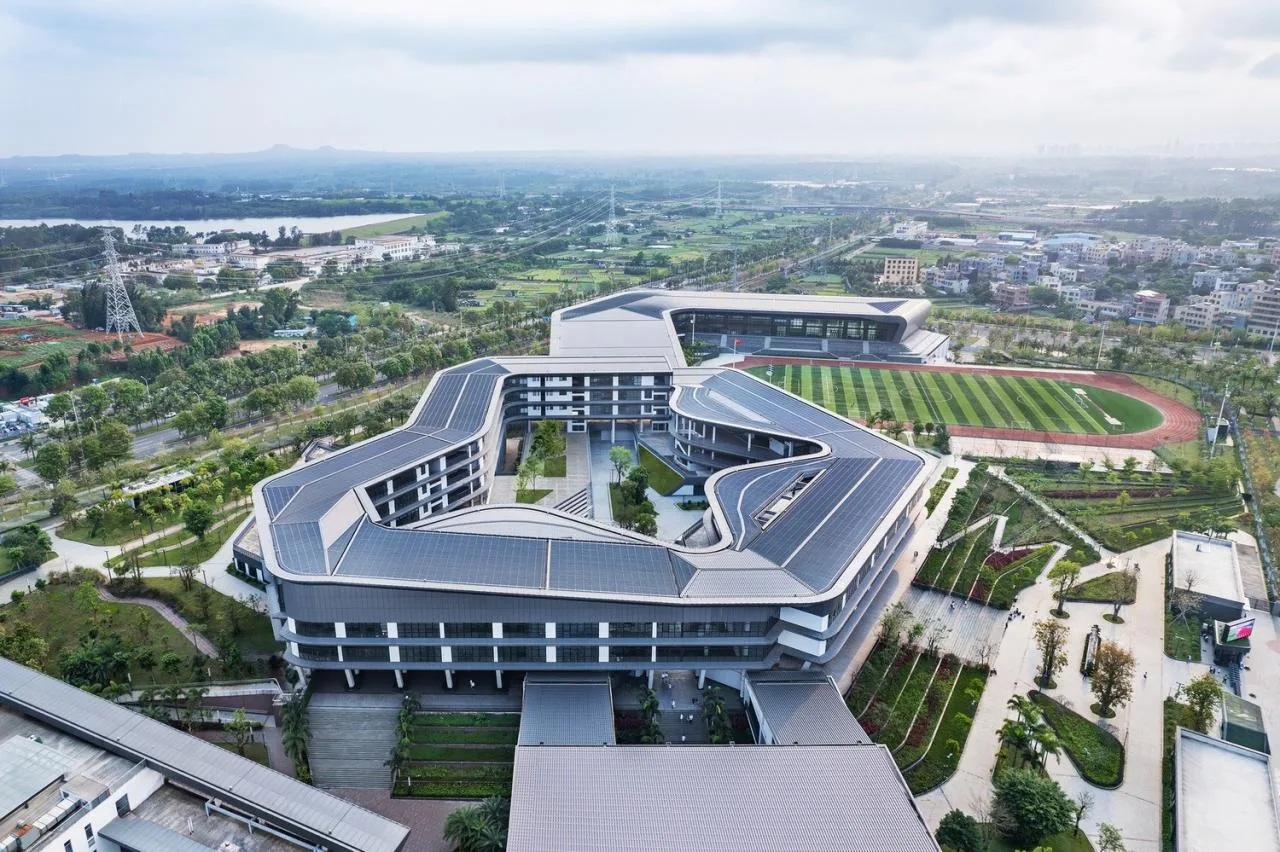
As we advance deeper into the AI era, technologies like ChatGPT have seamlessly integrated into our daily lives, transforming education in remarkable ways. The design of Peking University Affiliated Middle School Haikou School reflects this shift. Spanning 130,000 square meters and accommodating 3,600 students, the campus moves away from traditional education models toward a flexible, personalized, and tech-enhanced environment. Powered by AI, the school’s design focuses on nurturing creativity, problem-solving abilities, and teamwork, ensuring the holistic development of every student.
Hainan: A Hub for Educational Innovation
Hainan Province, celebrated for its tropical climate and stunning island scenery, has emerged as a leader in educational innovation. As a national experimental zone for education development, it receives strong support from the Ministry of Education and plays a key role in advancing education in central and western regions. The Peking University Affiliated High School Haikou School occupies over 200 acres with a total built-up area of approximately 130,000 square meters. Once fully operational, it will serve about 3,600 students across six grades: 1,500 middle schoolers and roughly 2,100 high school students. The school is dedicated to fostering innovative thinking and practical skills to prepare students for rapidly evolving societal challenges.
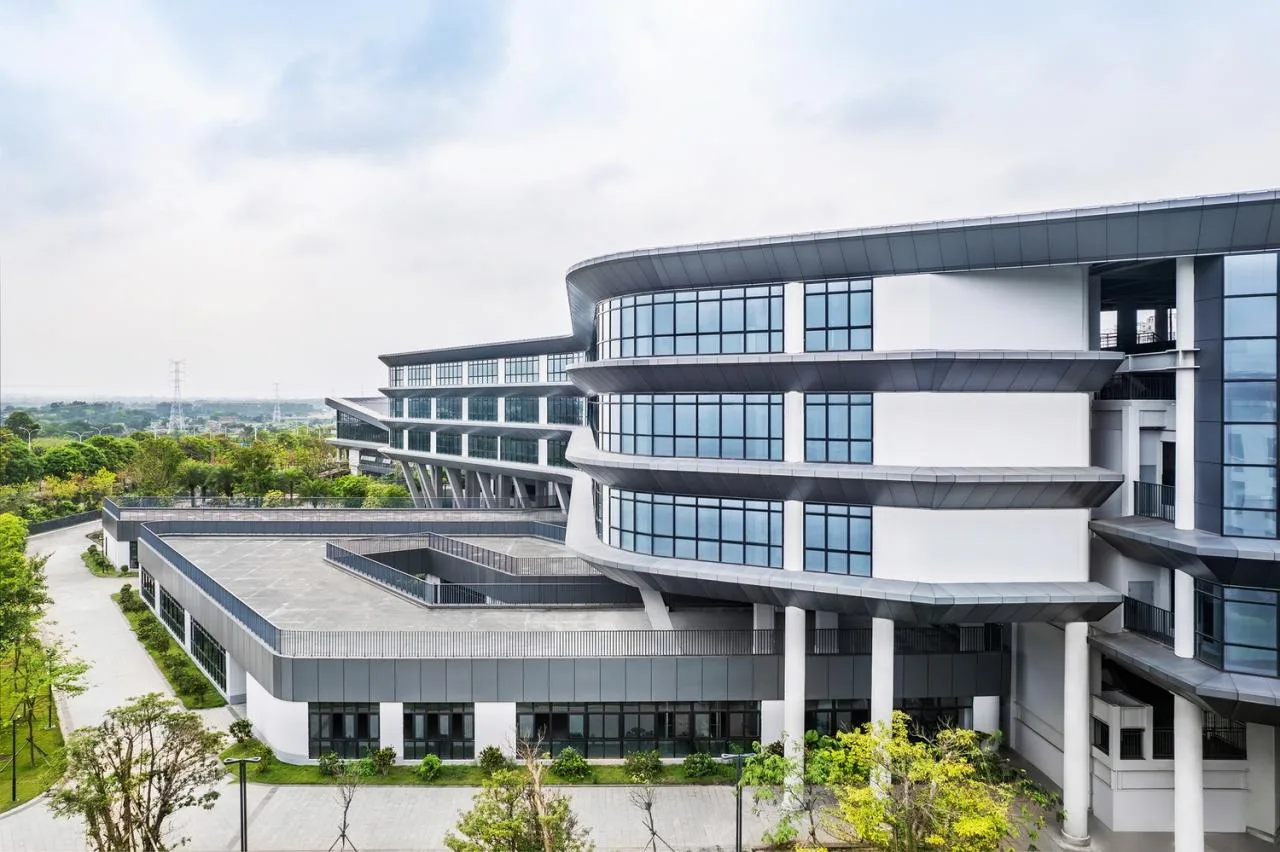
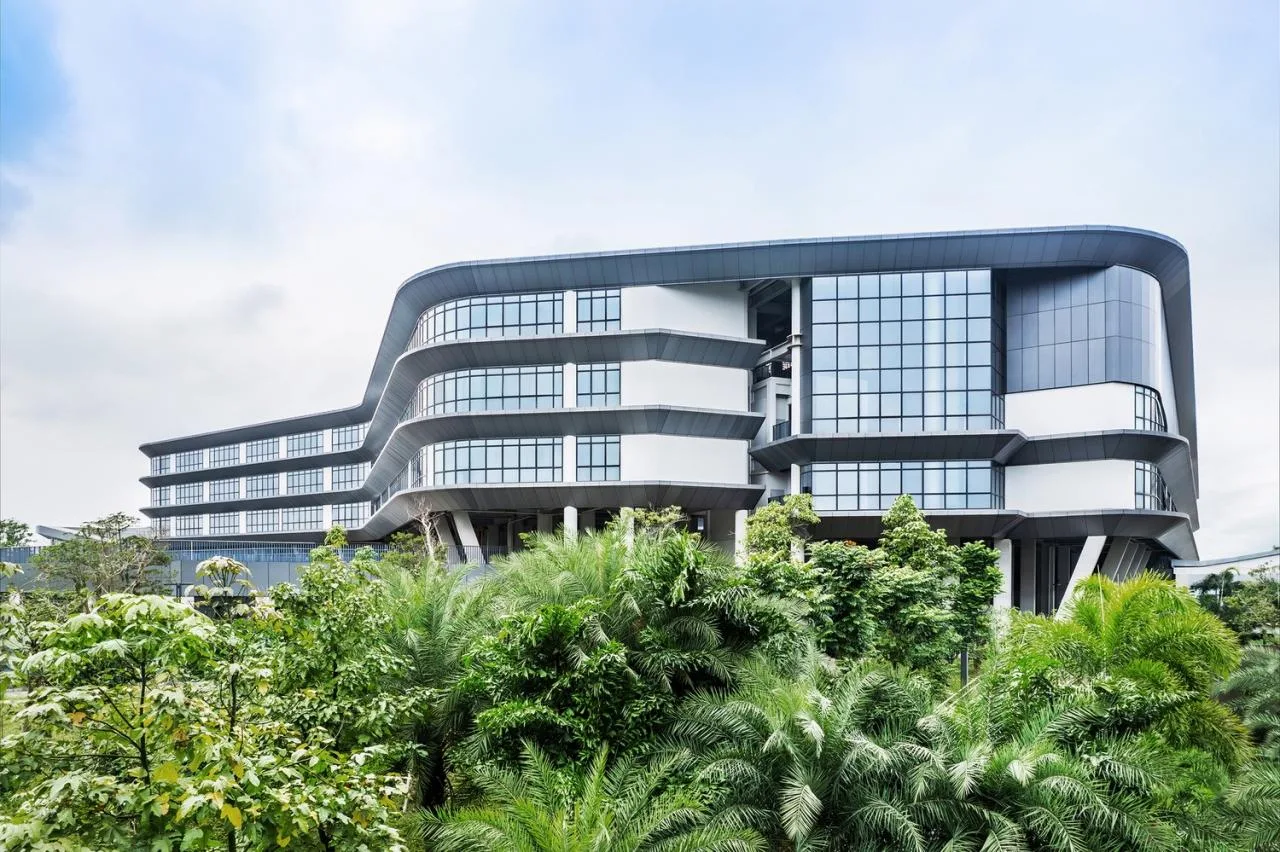
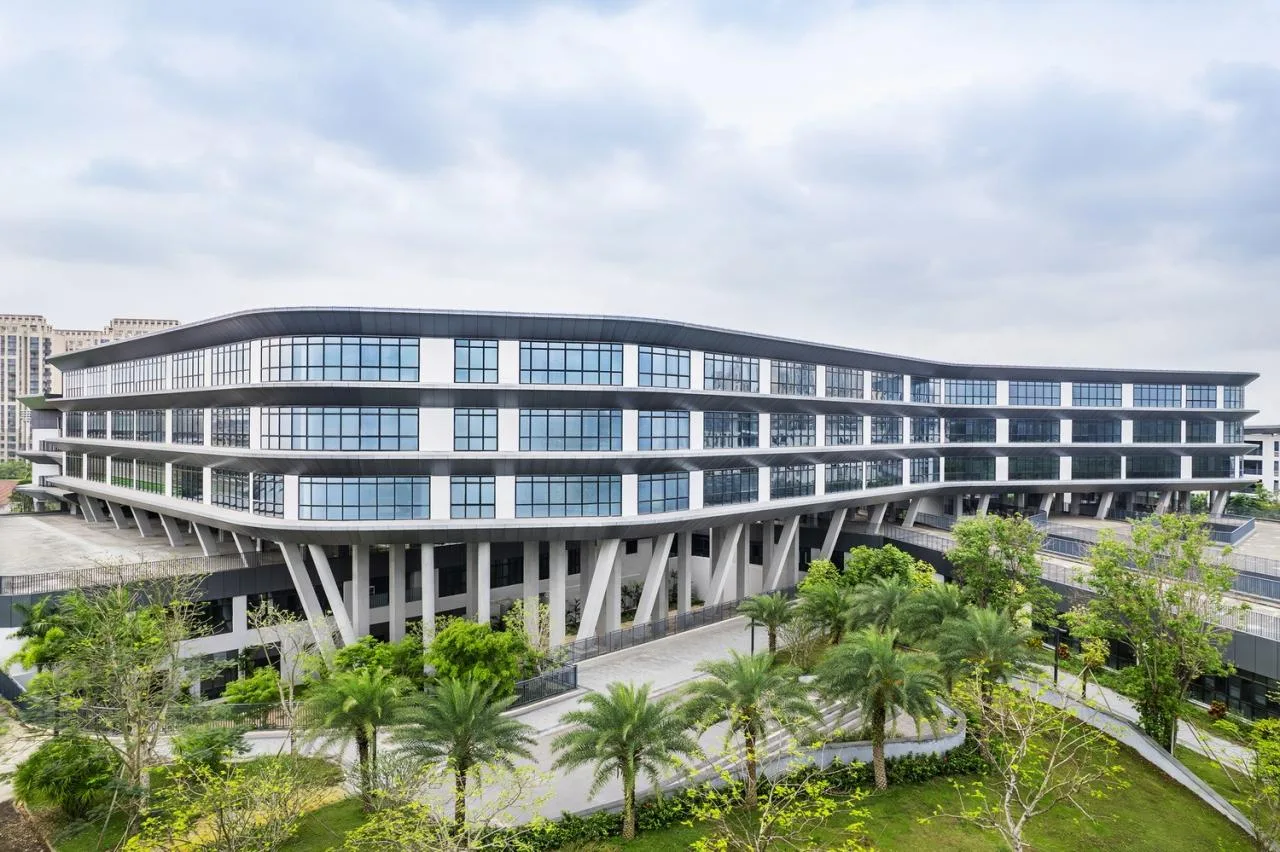
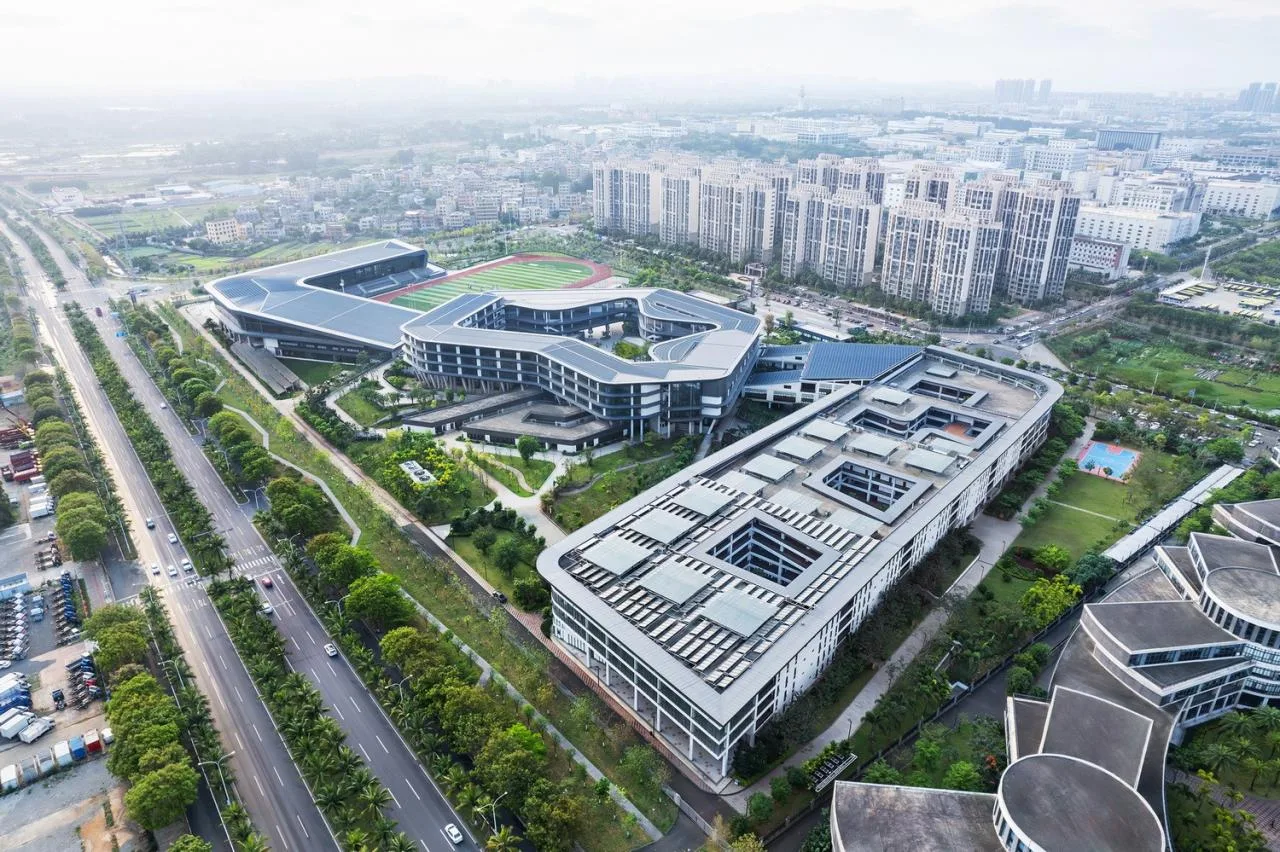
The Crossboundaries design team broke from conventional campus layouts, creating a distinctive curved “S”-shaped building, centered around an elevated, organic “cloud” learning center. This innovative shape responds to the site’s terrain challenges, especially the significant elevation difference between the north and south ends. The “S” form serves both aesthetic and functional purposes, optimizing wind flow, sunlight, and shading. The building’s slender profile promotes effective cross ventilation, while its low height minimizes shadows cast on the terrain. Natural light is maximized where beneficial and carefully moderated elsewhere. The floating “cloud” learning center sits above the library and other public spaces, serving as the main hub for teacher-student interaction with classrooms for both middle and high school students. Surrounding buildings are arranged along the terrain, creating diverse “microenvironments” including maker spaces, art centers, sports facilities, and dormitory complexes.
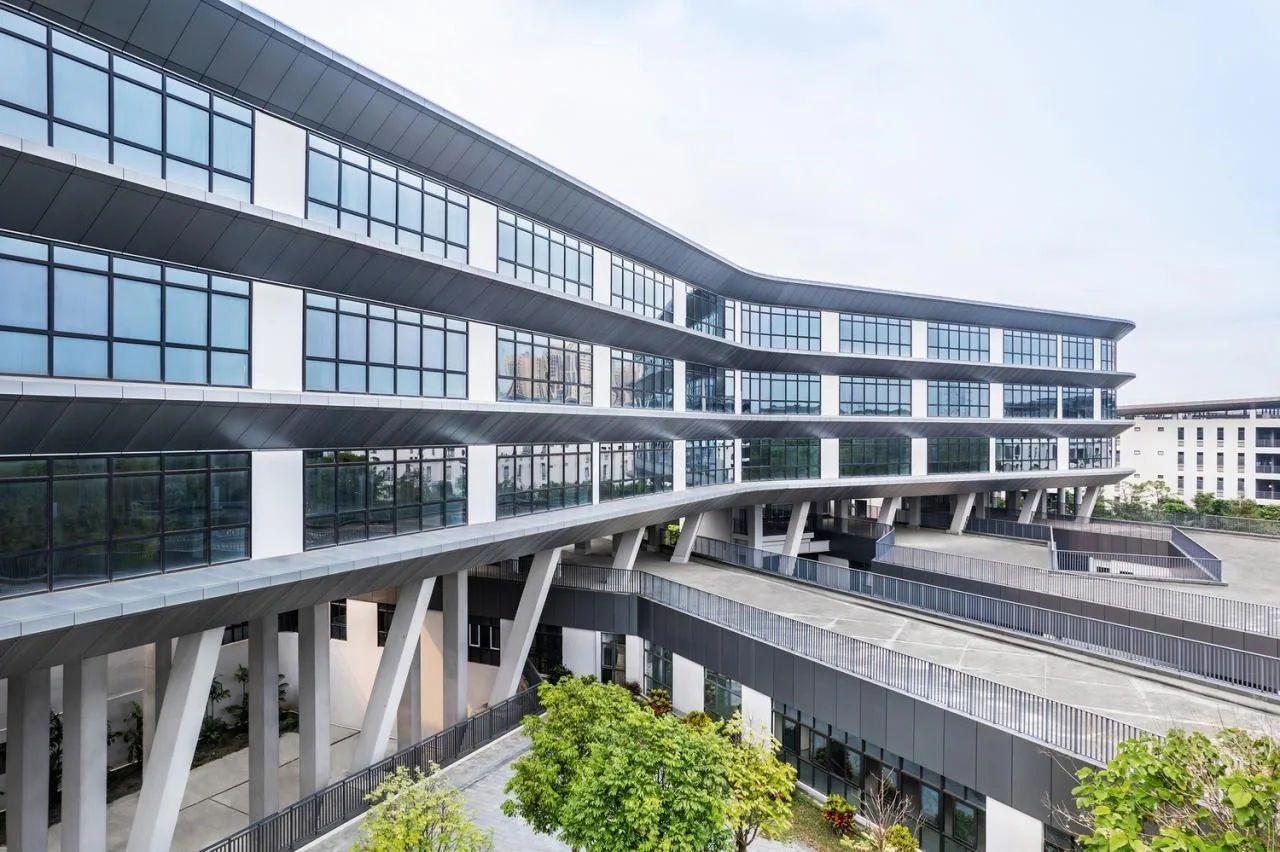
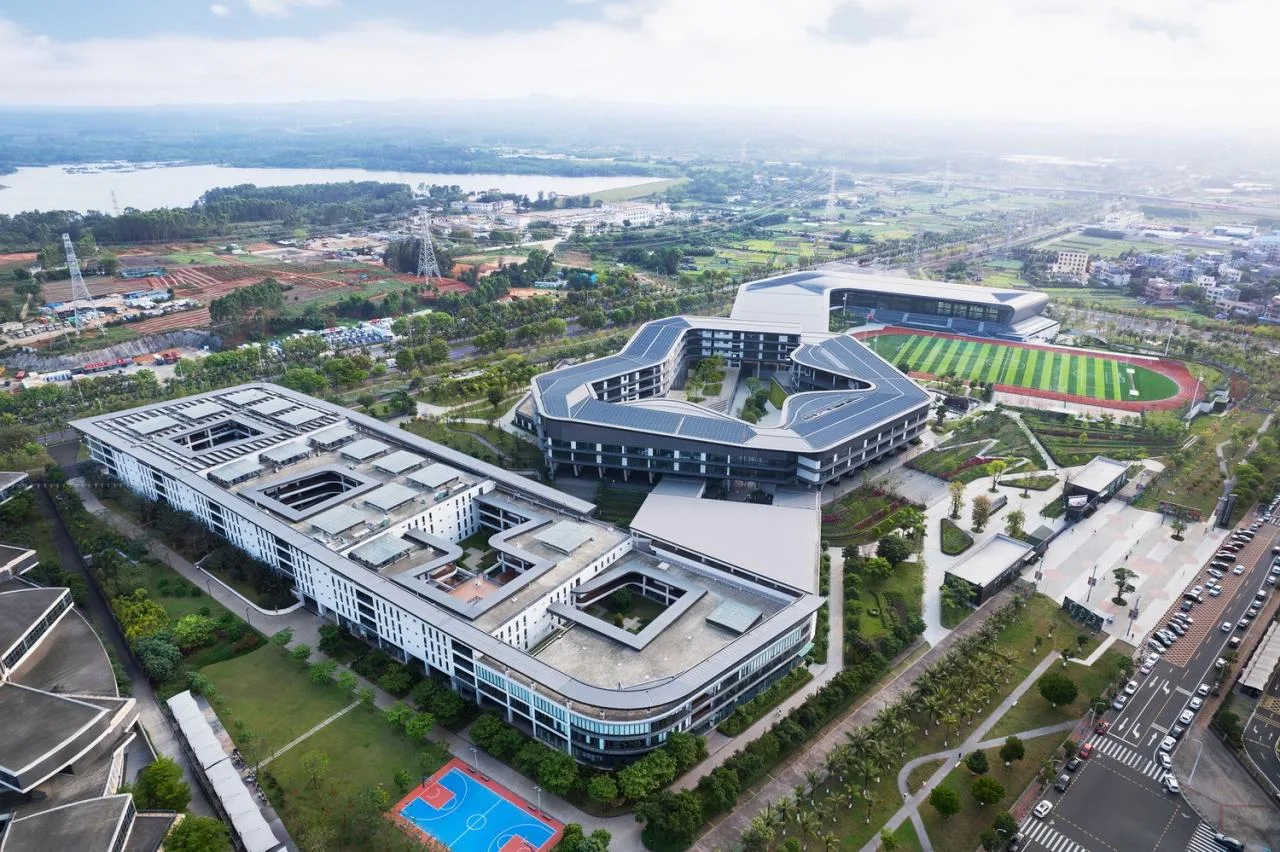
The campus design harmoniously coexists with nature, emphasizing respect for the environment and incorporating tropical architectural principles. Key considerations include shading, air circulation, ventilation, building orientation, and window openings. Sustainable design strategies are integrated throughout, such as solar energy systems and recycled water technologies, significantly reducing energy consumption, especially for cooling purposes.
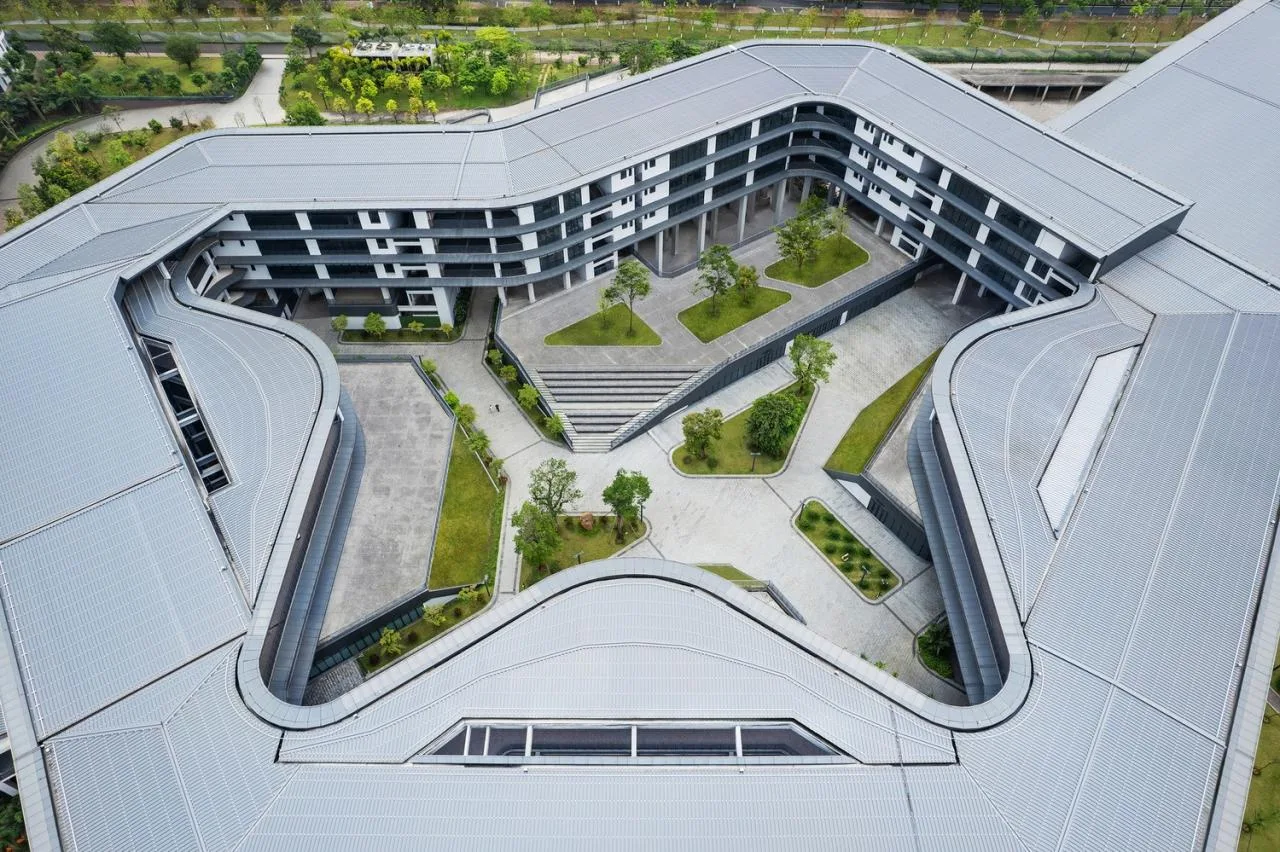
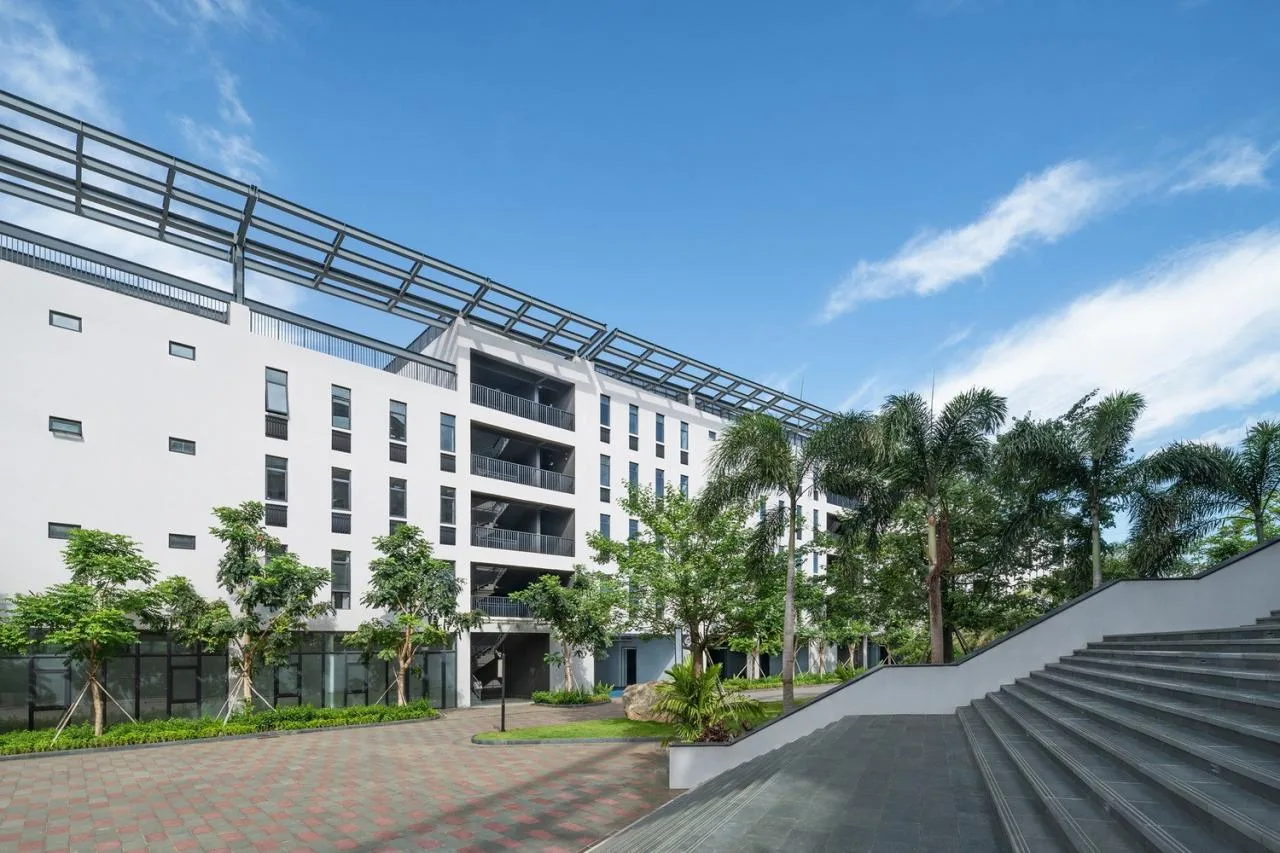
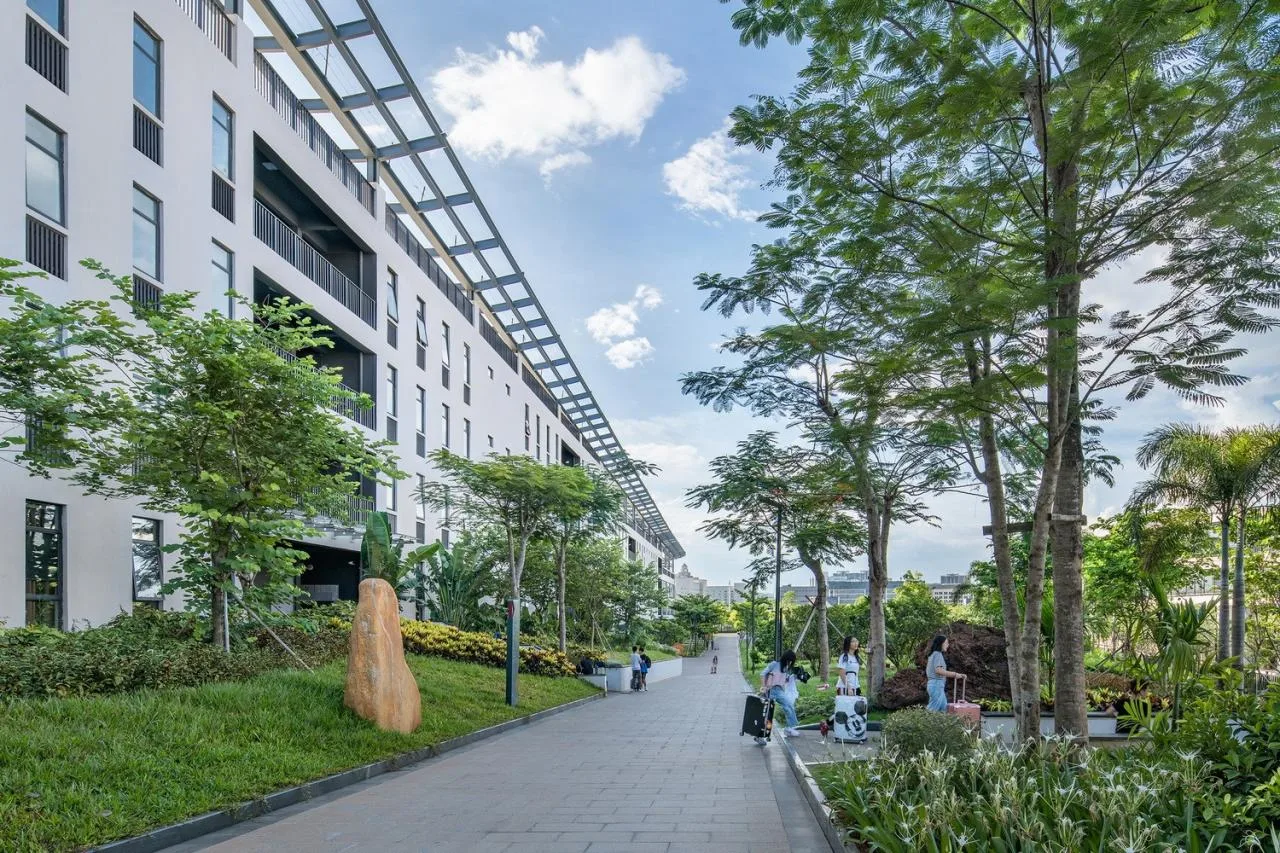
The dynamic “S”-shaped architectural belt, composed of connected learning spaces, extends throughout the campus, organically linking residential, academic, and athletic areas. Originating at the midpoint of the “Cloud” learning center, this building belt ascends, reaching its full height at the dormitory and sports center. This design achieves a harmonious balance between the central floating “cloud” and the building belt, creating a wave-like rhythm that follows the natural slope of the site. Inside the belt, interconnected corridors form vibrant social spaces where students move freely between areas to learn, communicate, showcase their talents, and immerse themselves in campus culture. This layout encourages interaction between teachers and students and offers multiple access points to the surrounding natural environment.
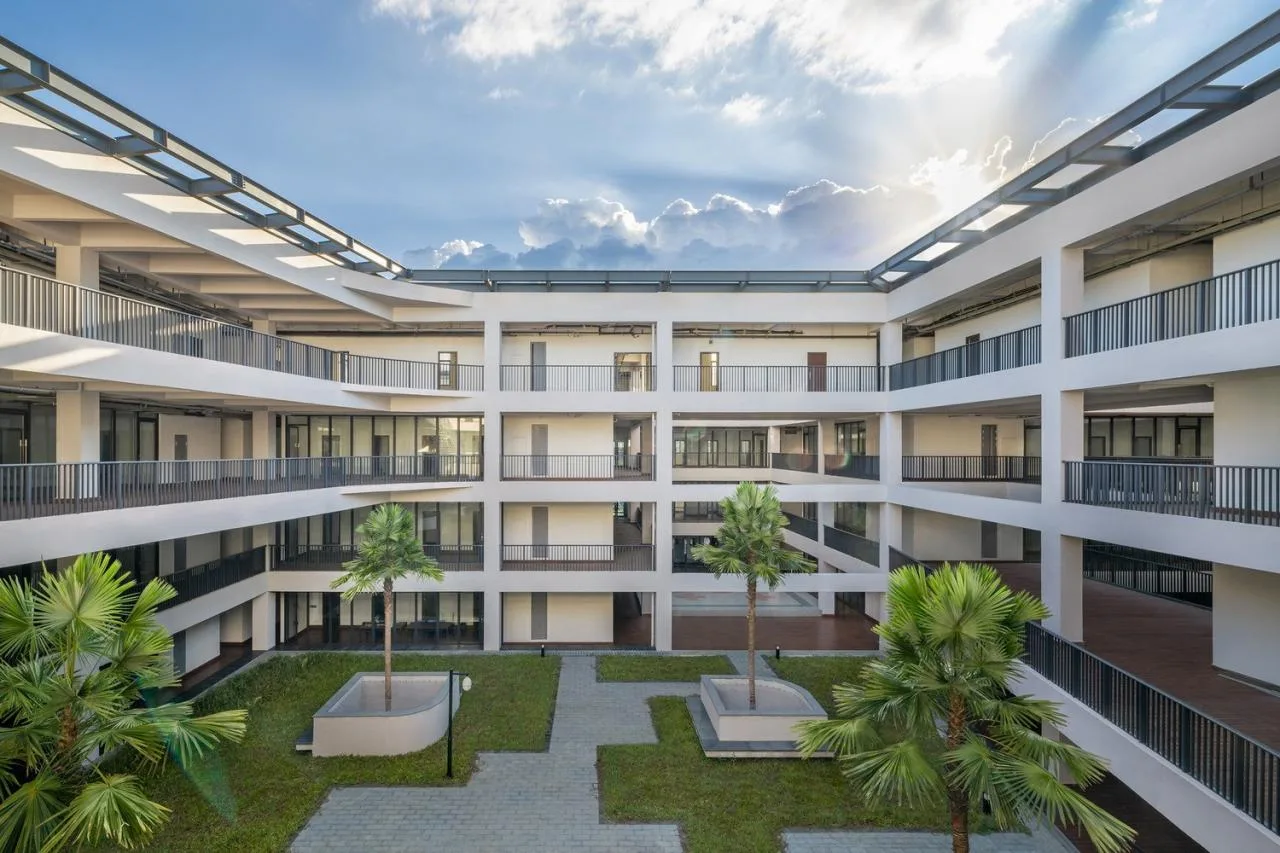
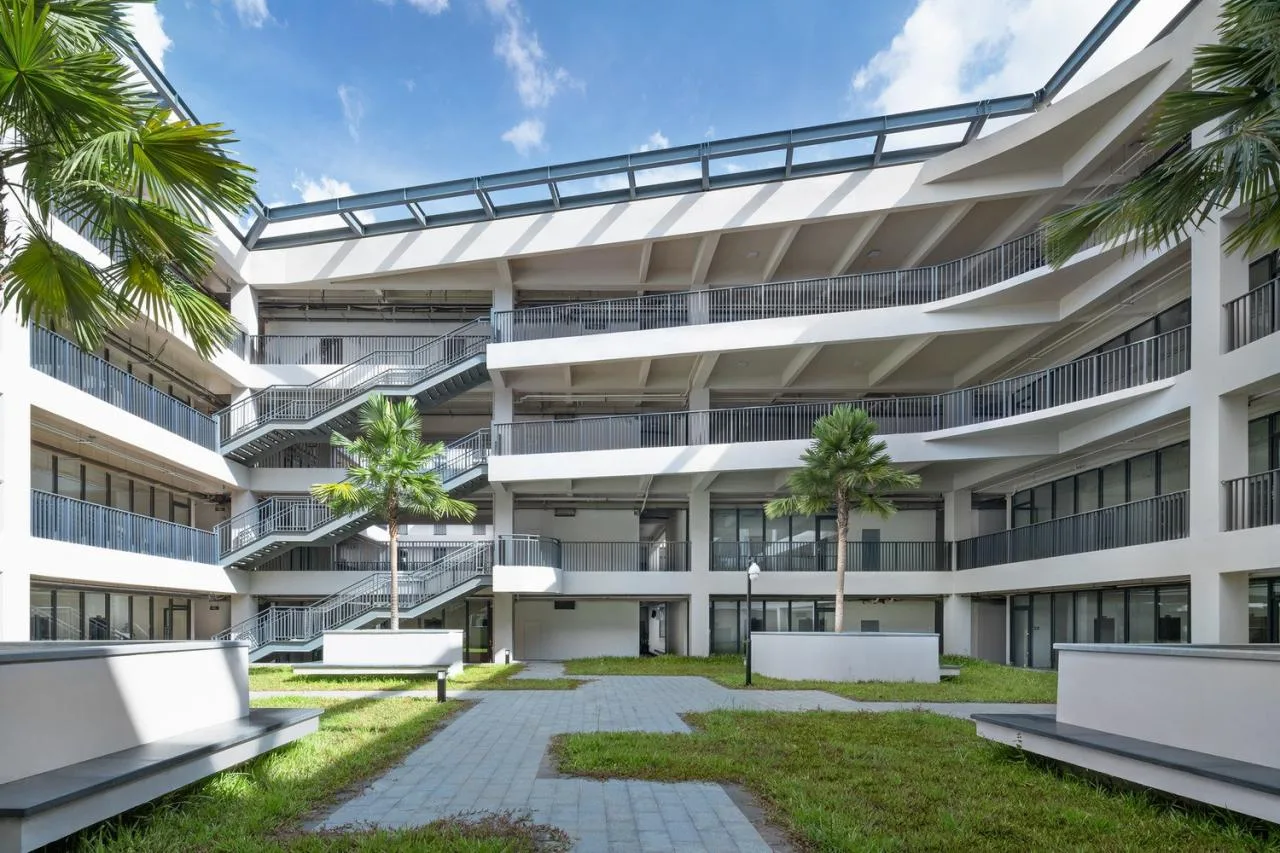
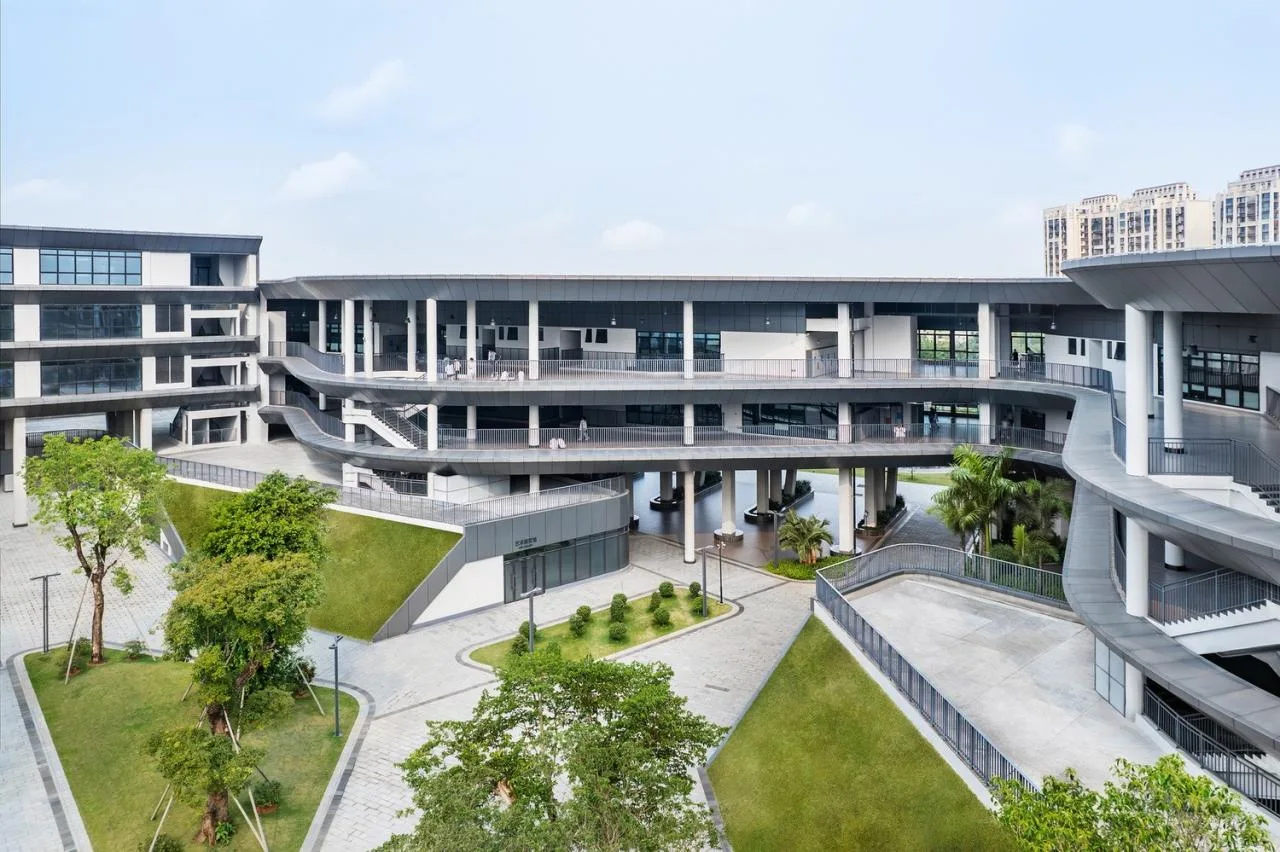
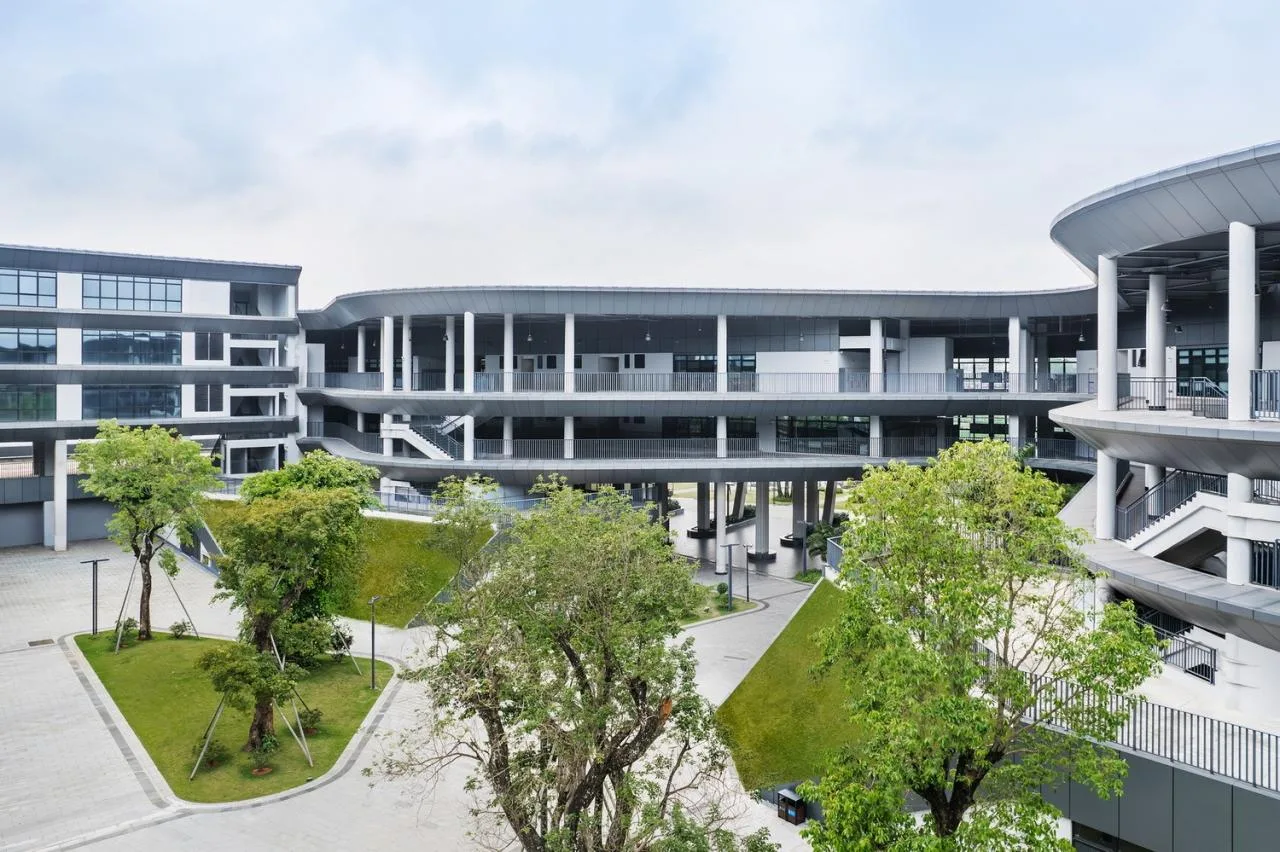
Learning at Haikou School extends far beyond traditional classrooms. Every space is designed to serve as a potential learning environment, fostering a rich, diverse, and open atmosphere. Whether in the cafeteria, communal areas, or outdoor spaces, students are encouraged to explore, collaborate, and grow. Binke Lenhardt, co-founder and partner of Crossboundaries, explains, “Learning should not stop at the classroom door—every space on campus can become a learning environment.” The “Cloud” Learning Center embodies this philosophy with its resting areas between classrooms and outdoor corridors, offering spaces for tutoring, socializing, and independent study. Students can engage anytime and anywhere through laptops and other devices, enjoying endless opportunities for interaction.
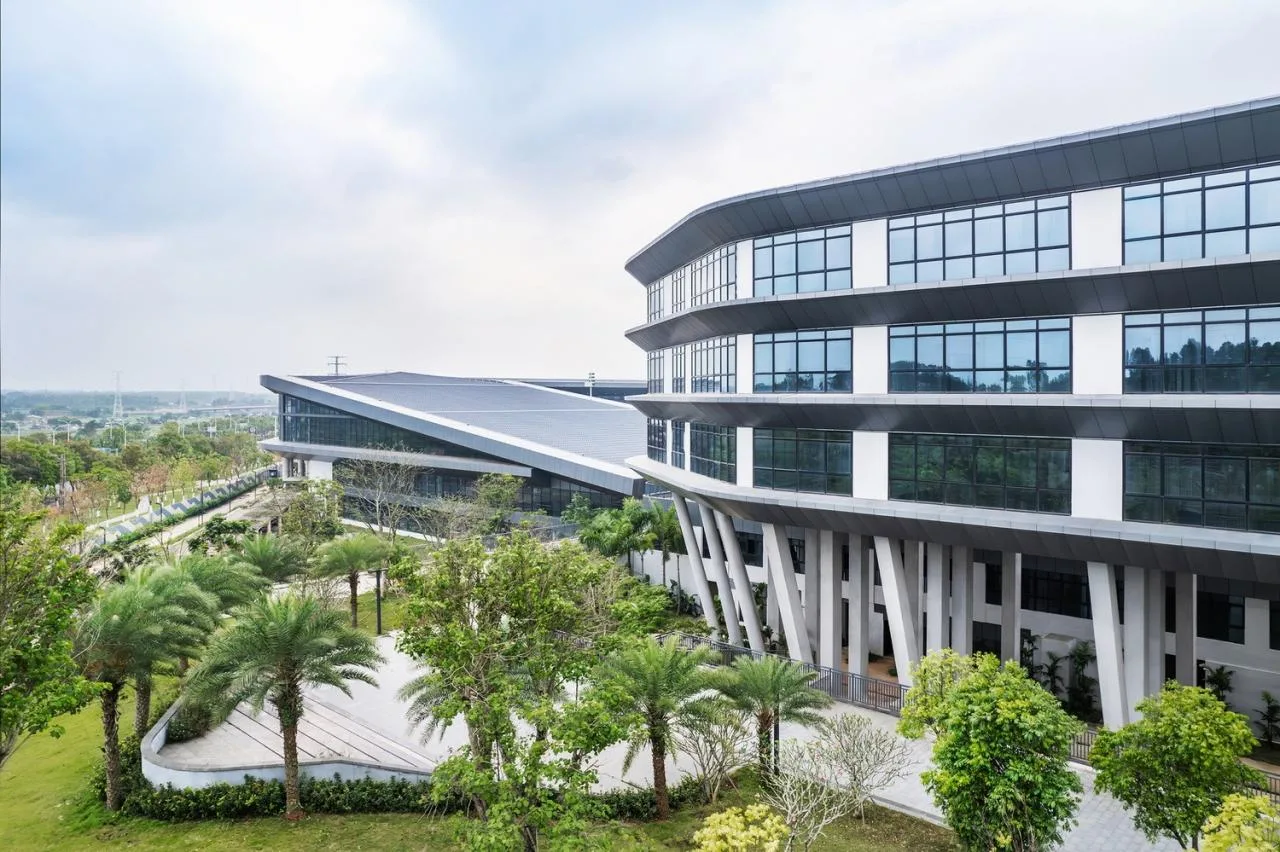
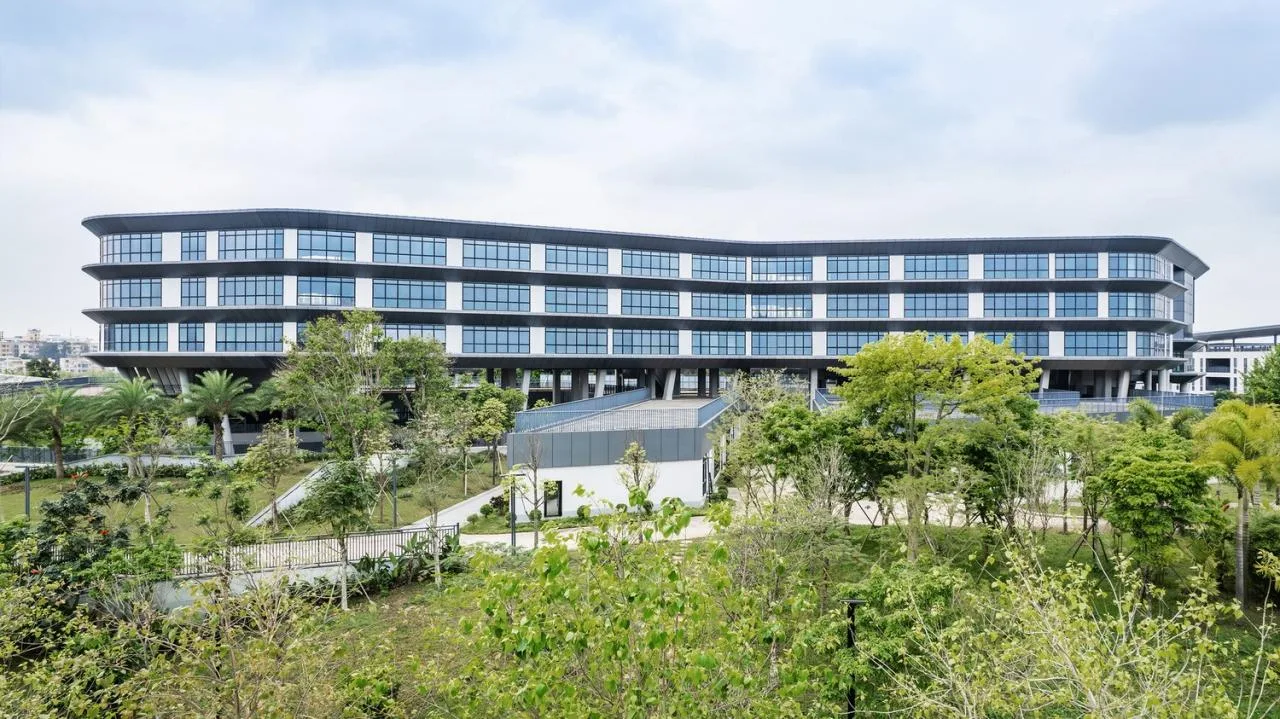
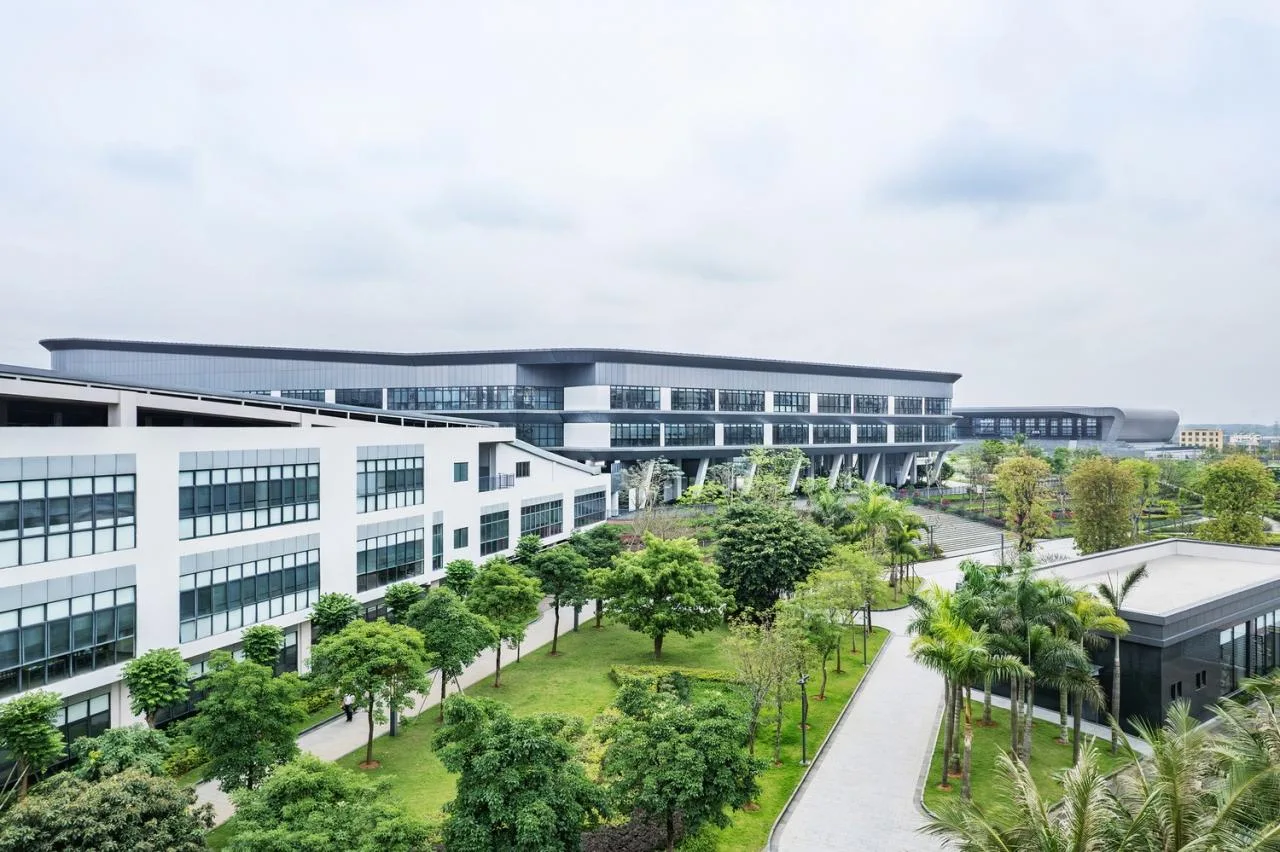
The campus’s three core elements—the dormitory complex, sports activity complex, and “Cloud” learning center—form a visually unified whole. The “Learning Cloud” at the heart of the campus is supported by 45 steel columns and houses classrooms for both middle and high school departments. Its streamlined, cloud-inspired design suspends it above other buildings, creating an interactive learning hub that supports various learning modes and teacher-student interactions. Beneath the main classrooms are integrated spaces including libraries, laboratories, maker spaces, multimedia classrooms, and more, all designed to meet the demands of modern education.
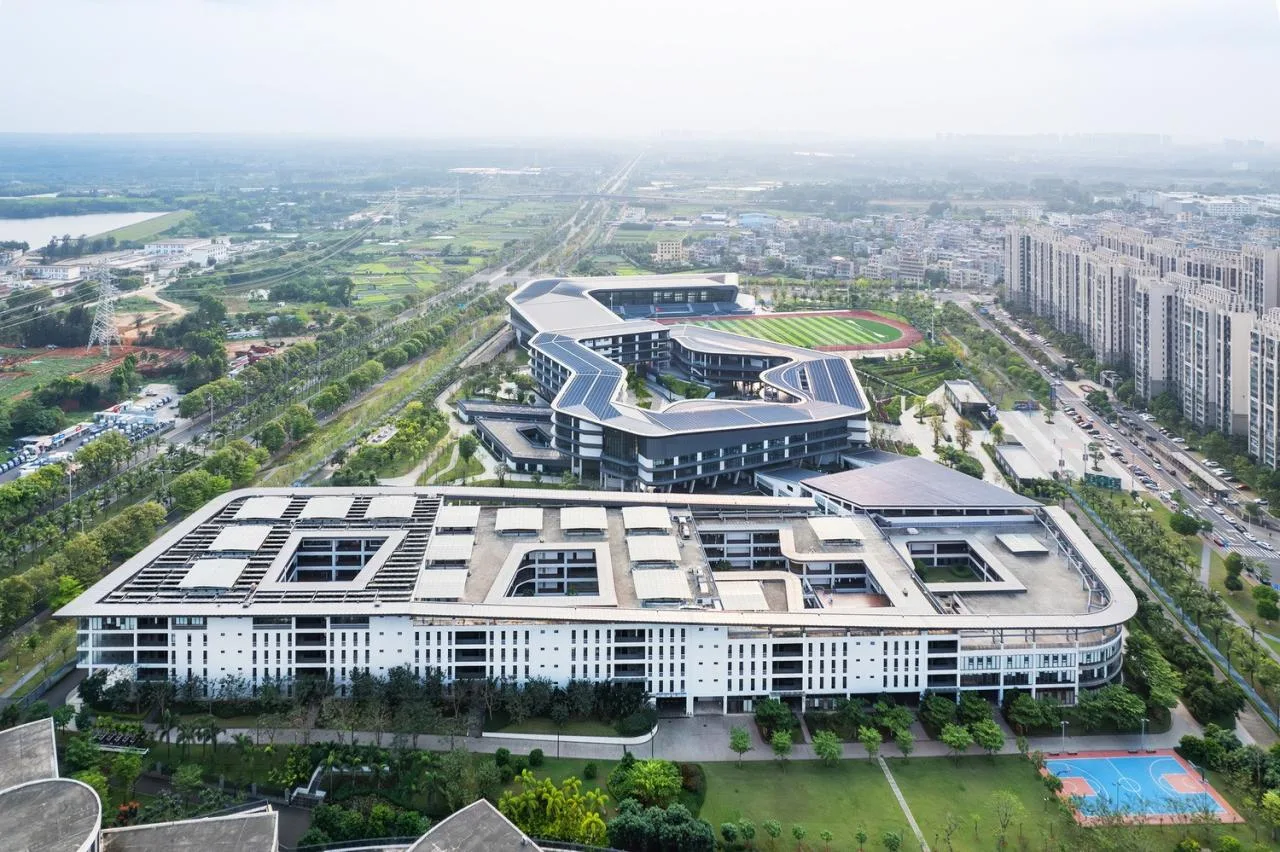
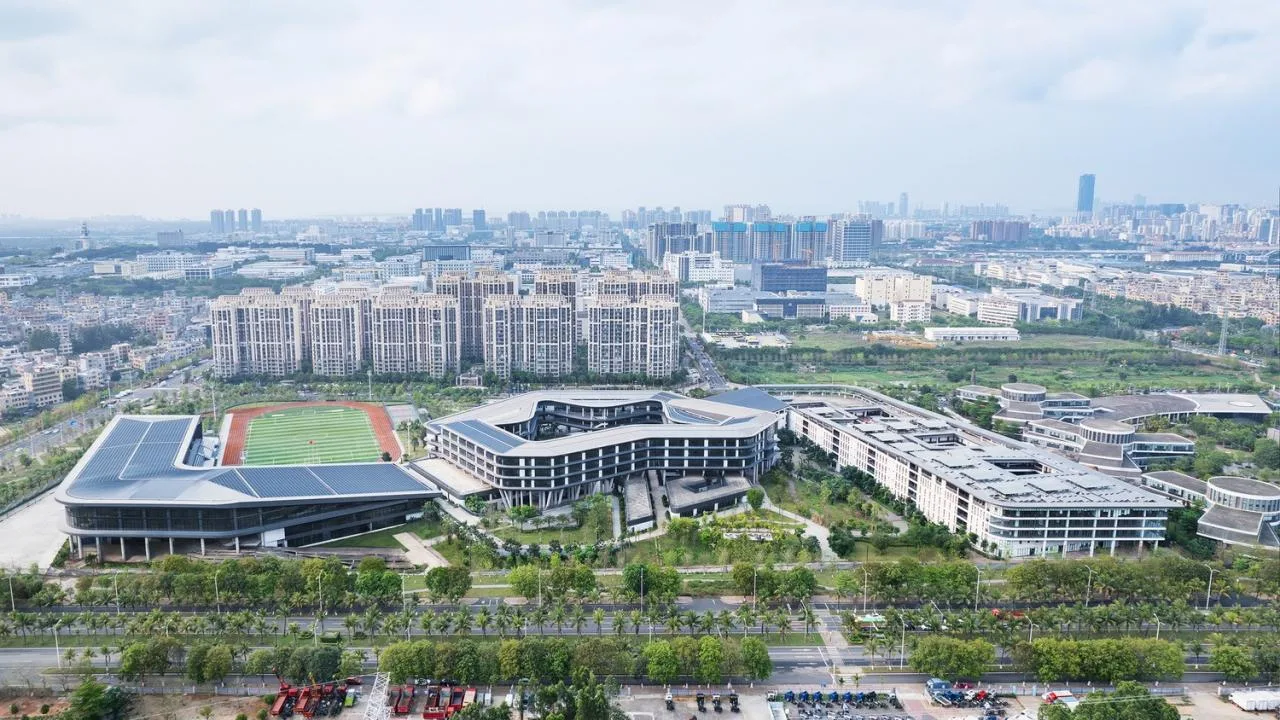
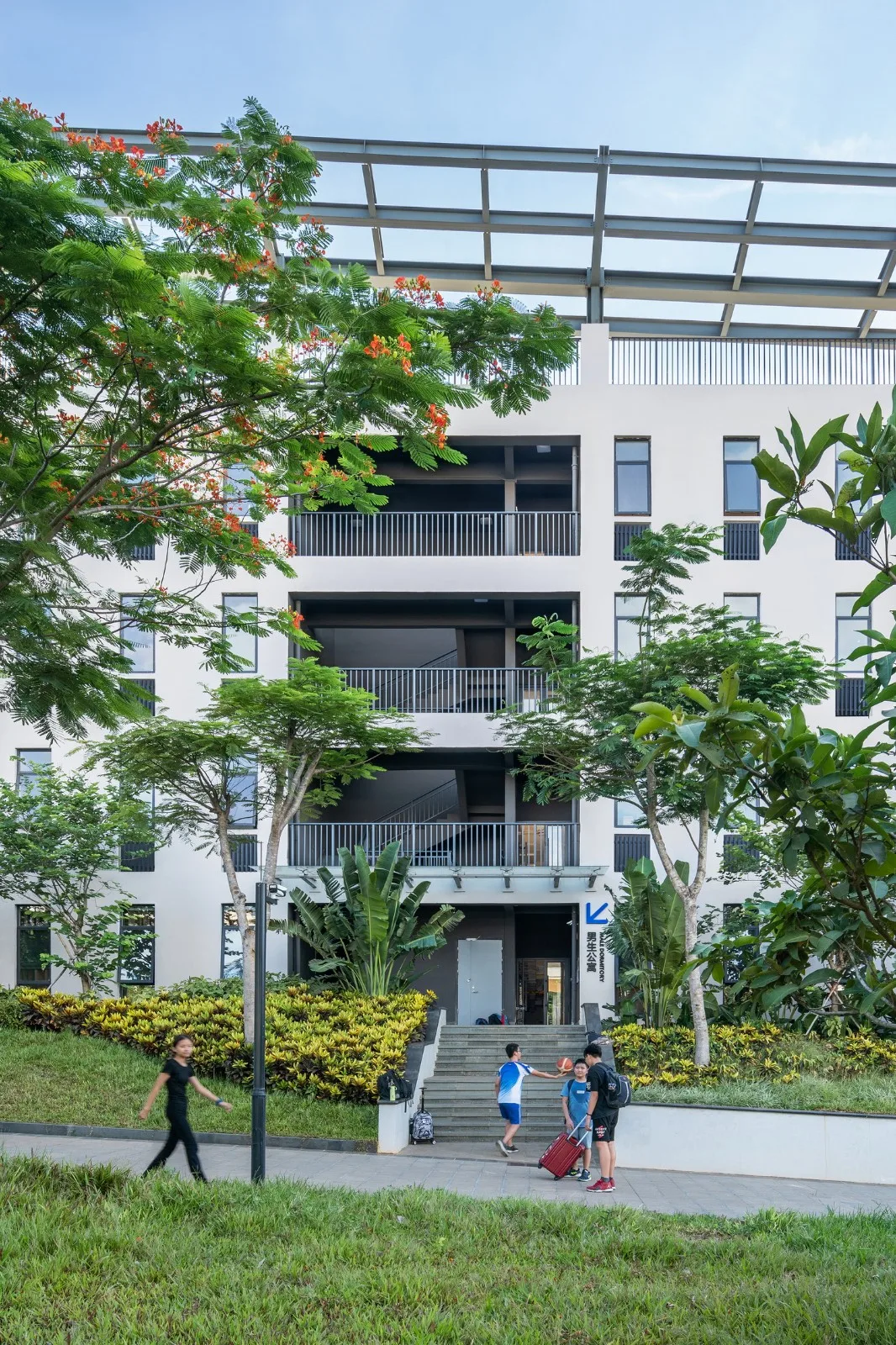
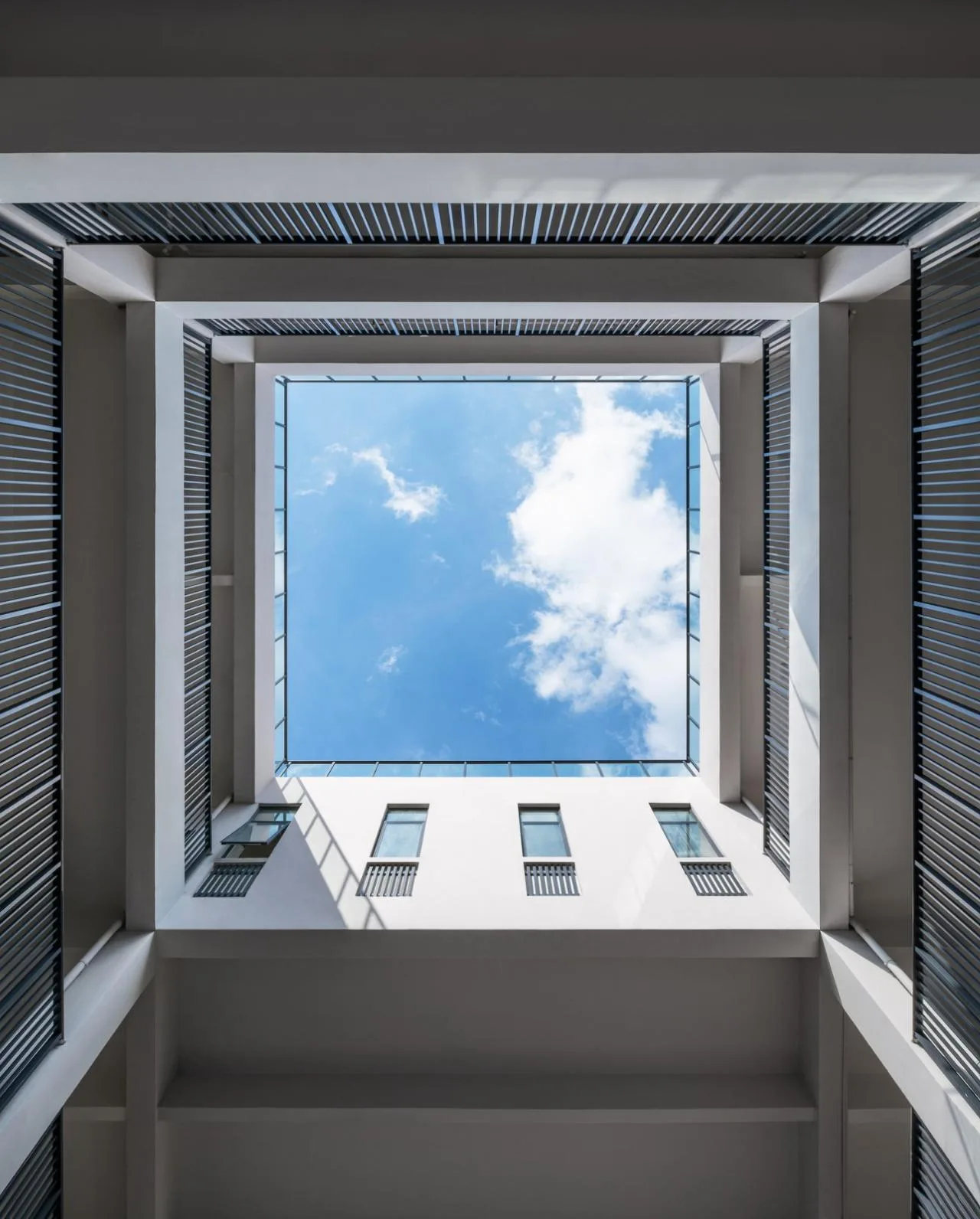
Dong Hao, co-founder and partner of Crossboundaries, highlights the impact of the space: “This learning environment inspires and guides students in their development and achievements—it actively fosters this process in the best way possible.” The dormitory complex on the campus’s east side features diverse and multifunctional spaces, including study rooms, dormitories for students and faculty, dining areas, and activity rooms. The complex is divided into four interconnected units of varying heights, descending gradually from north to south. Courtyards of different sizes enhance ventilation and natural lighting, while sloped roofs channel summer breezes to maintain a comfortable living environment.
On the campus’s west side, indoor and outdoor sports facilities are thoughtfully designed for both art and athletic activities. The sports center, featuring high ceilings, is divided into two levels and includes a basketball court, badminton courts, and a 50-meter swimming pool. Supporting facilities such as changing rooms and showers are located on the mezzanine. The outdoor sports area is slightly elevated, with parking beneath it. Like the rest of the campus, the sports and arts center was designed with careful attention to the existing site conditions. A running track circles the sports field, seamlessly integrating with the sports center’s volume, while a hidden parking area on the north side provides easy access from the public street.
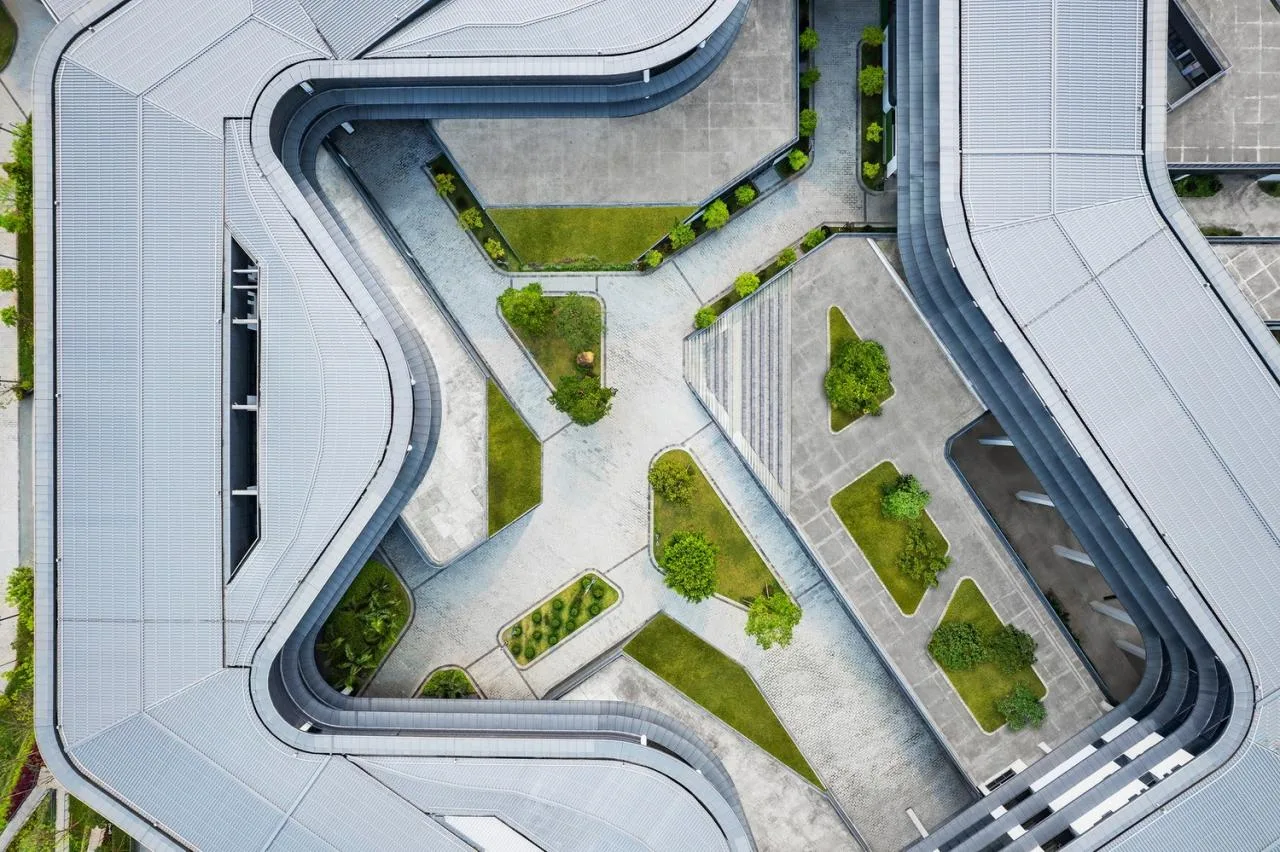
The design of Haikou School exemplifies modern educational concepts and teaching models, particularly in response to the AI era’s demands. Its fluid “S”-shaped architectural belt and suspended cloud-shaped learning center break away from rigid traditional school layouts, offering an open, flexible, and innovative environment that promotes healthy learning and living. The school actively integrates cutting-edge technologies like AI to provide personalized, intelligent teaching management and services, enhancing both teaching effectiveness and learning quality. The development of Peking University Affiliated High School Haikou School stands as a valuable model for educational innovation in Hainan Province and across China.
Project Drawings
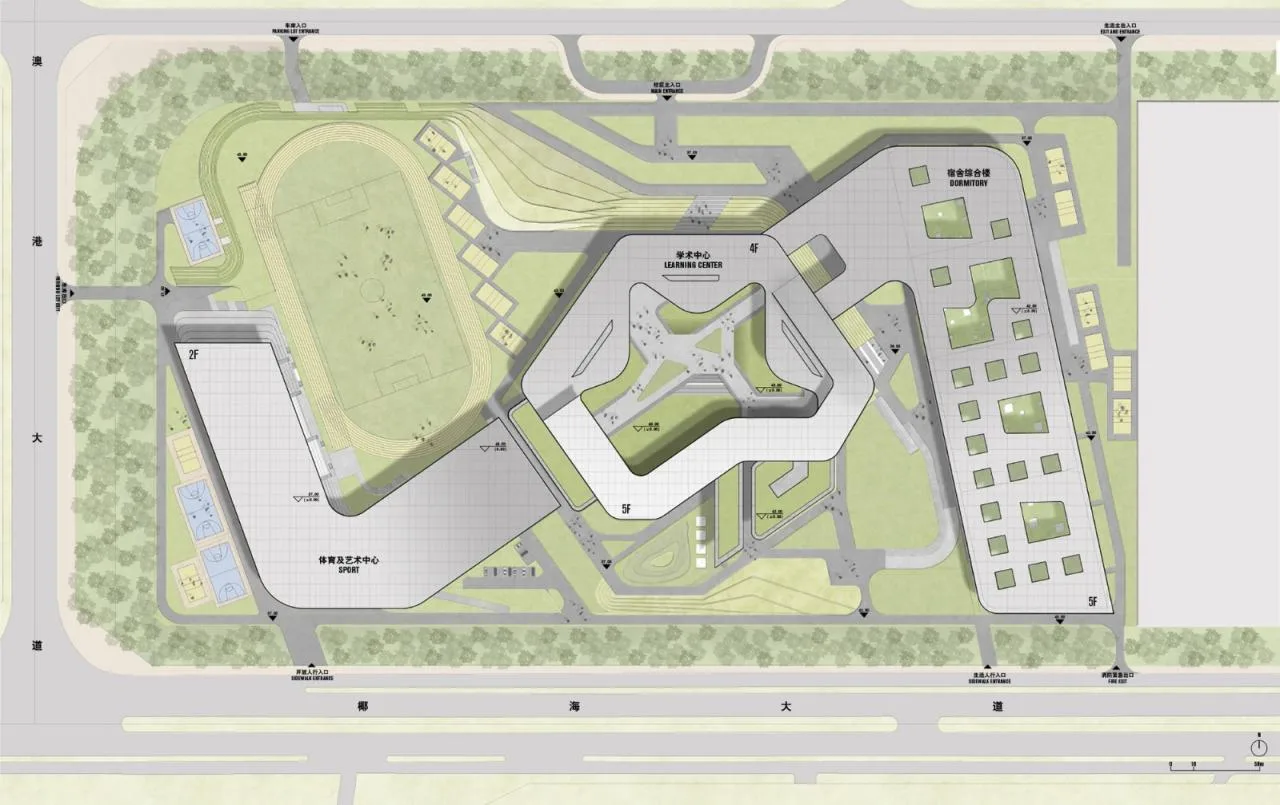
△ General layout plan
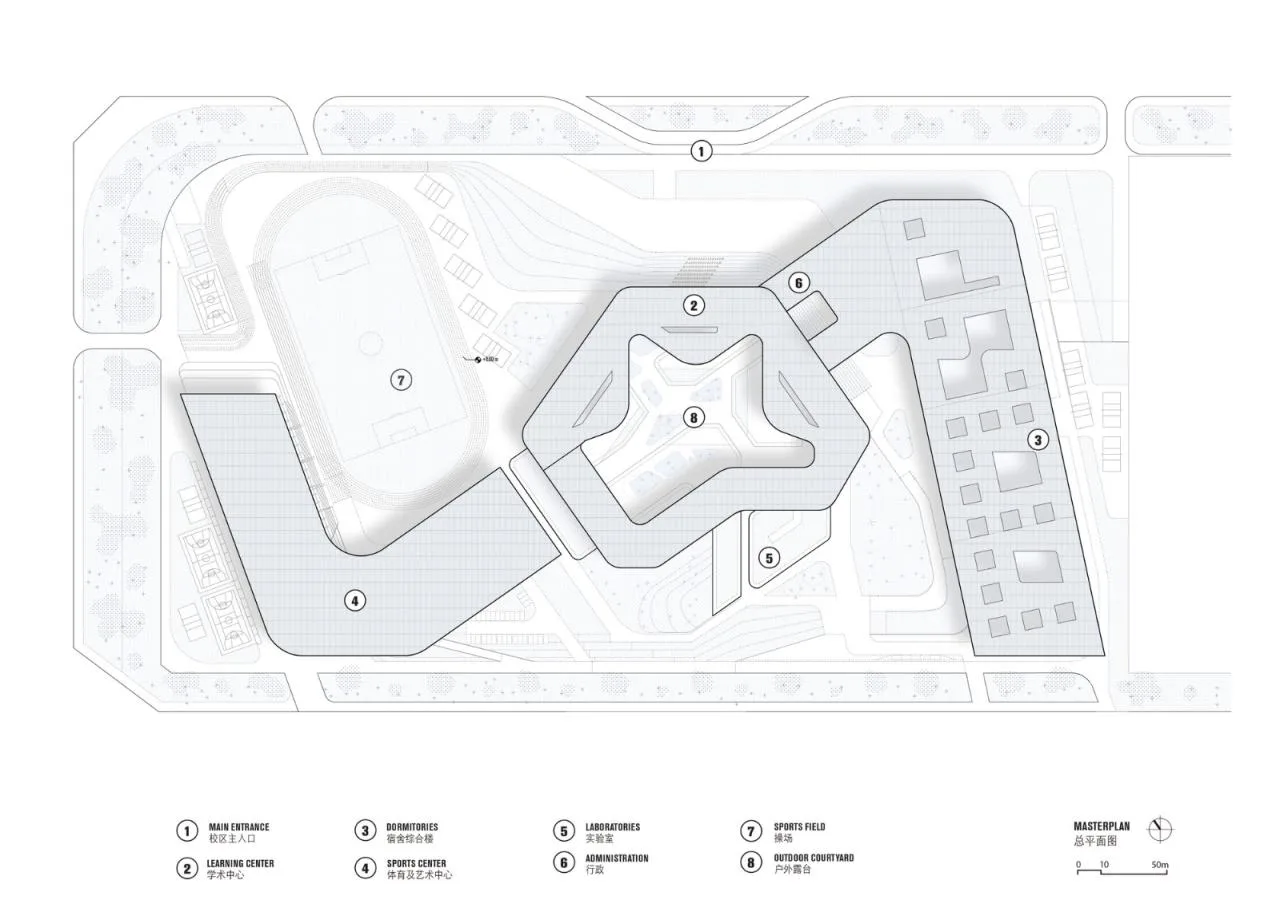
△ Roof plan
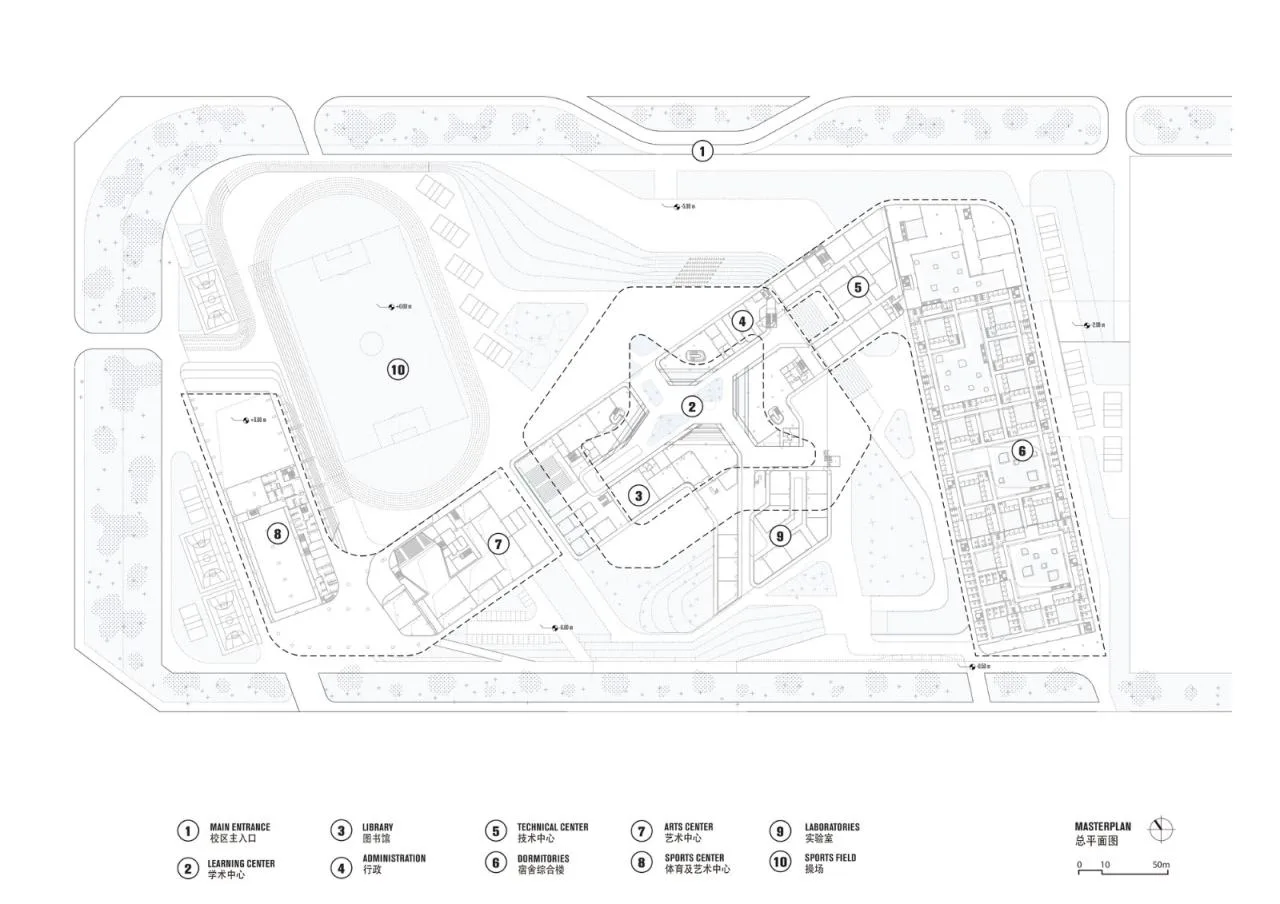
△ Floor plan
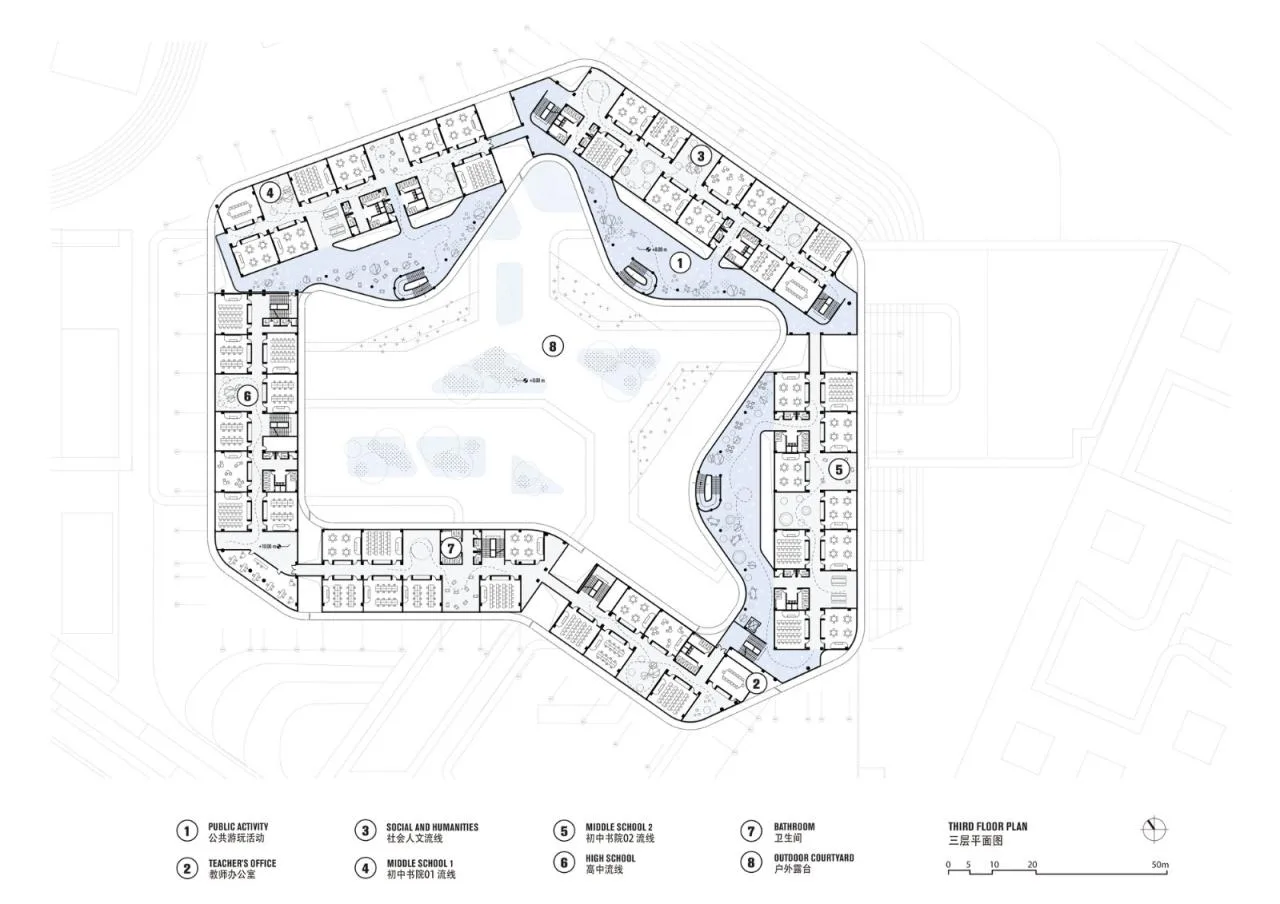
△ Third floor plan
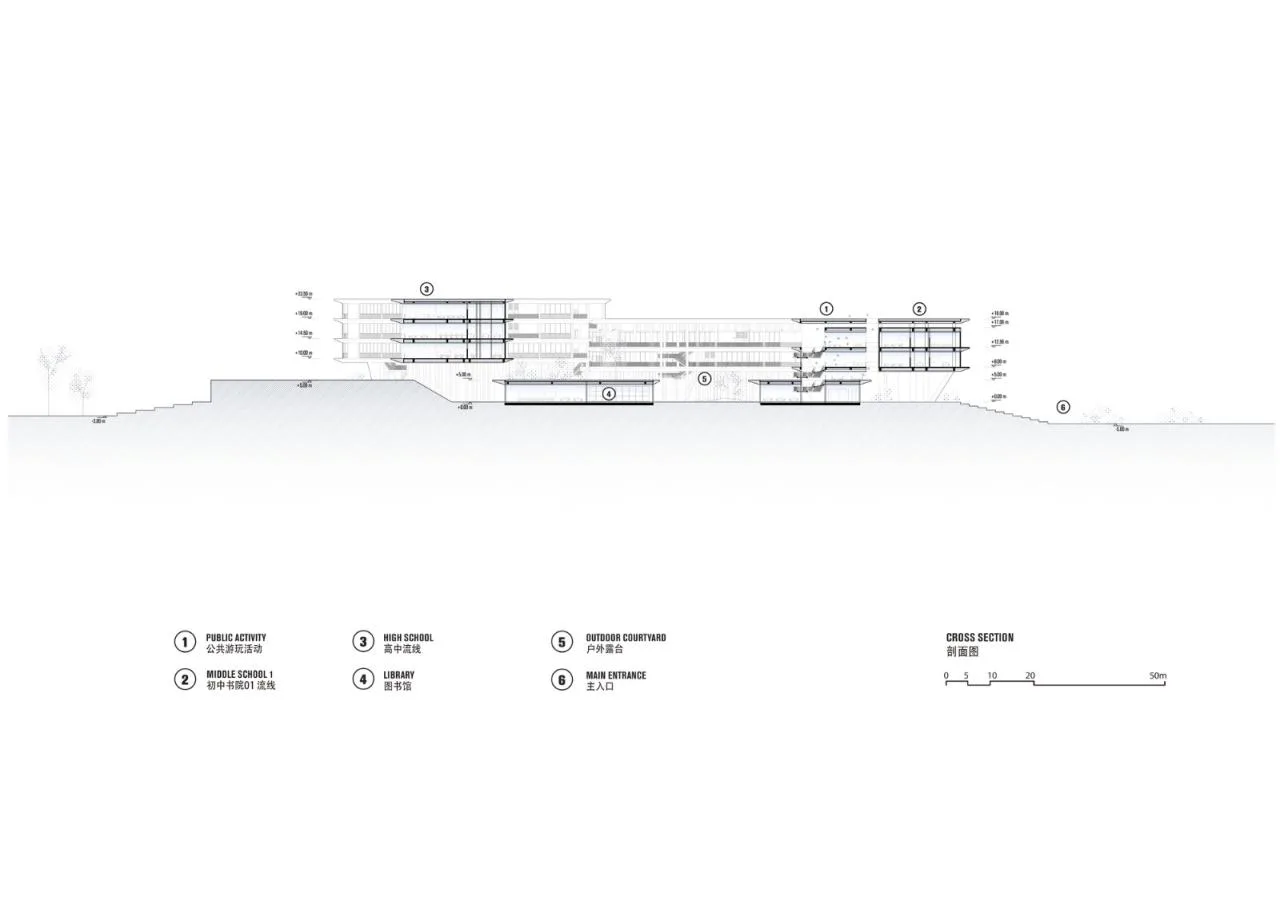
△ Section diagram
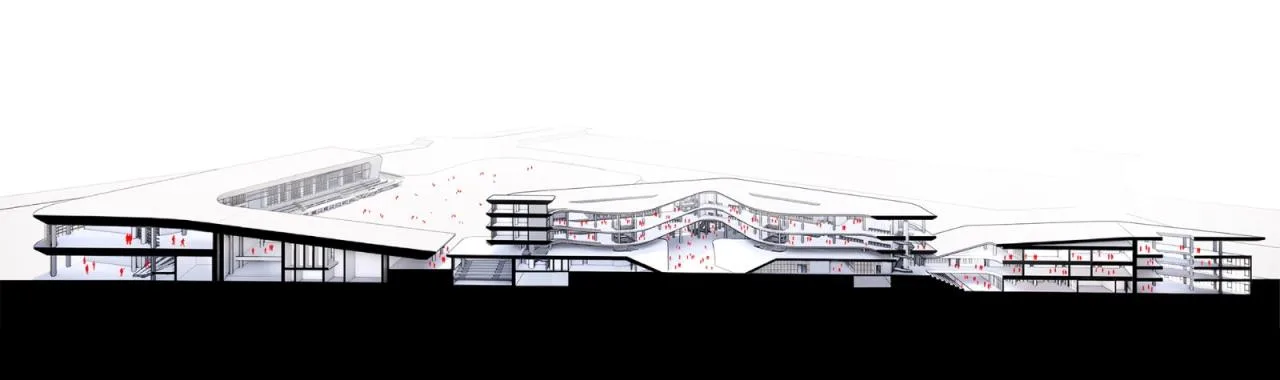
△ Sectional perspective
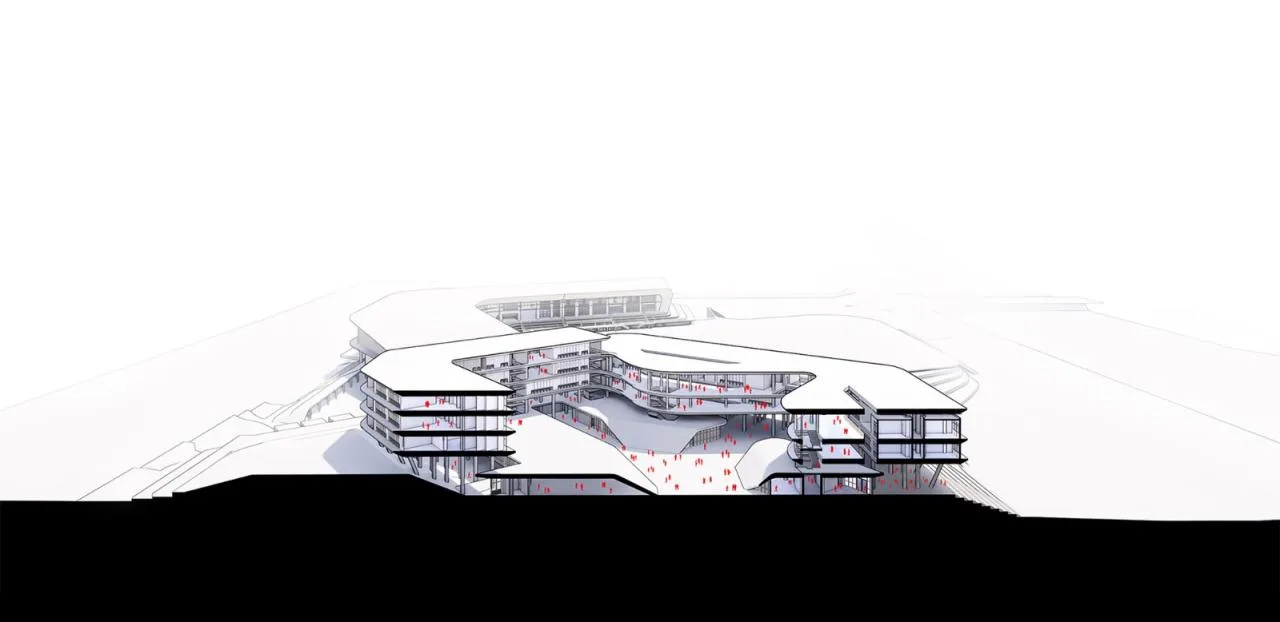
△ Sectional perspective
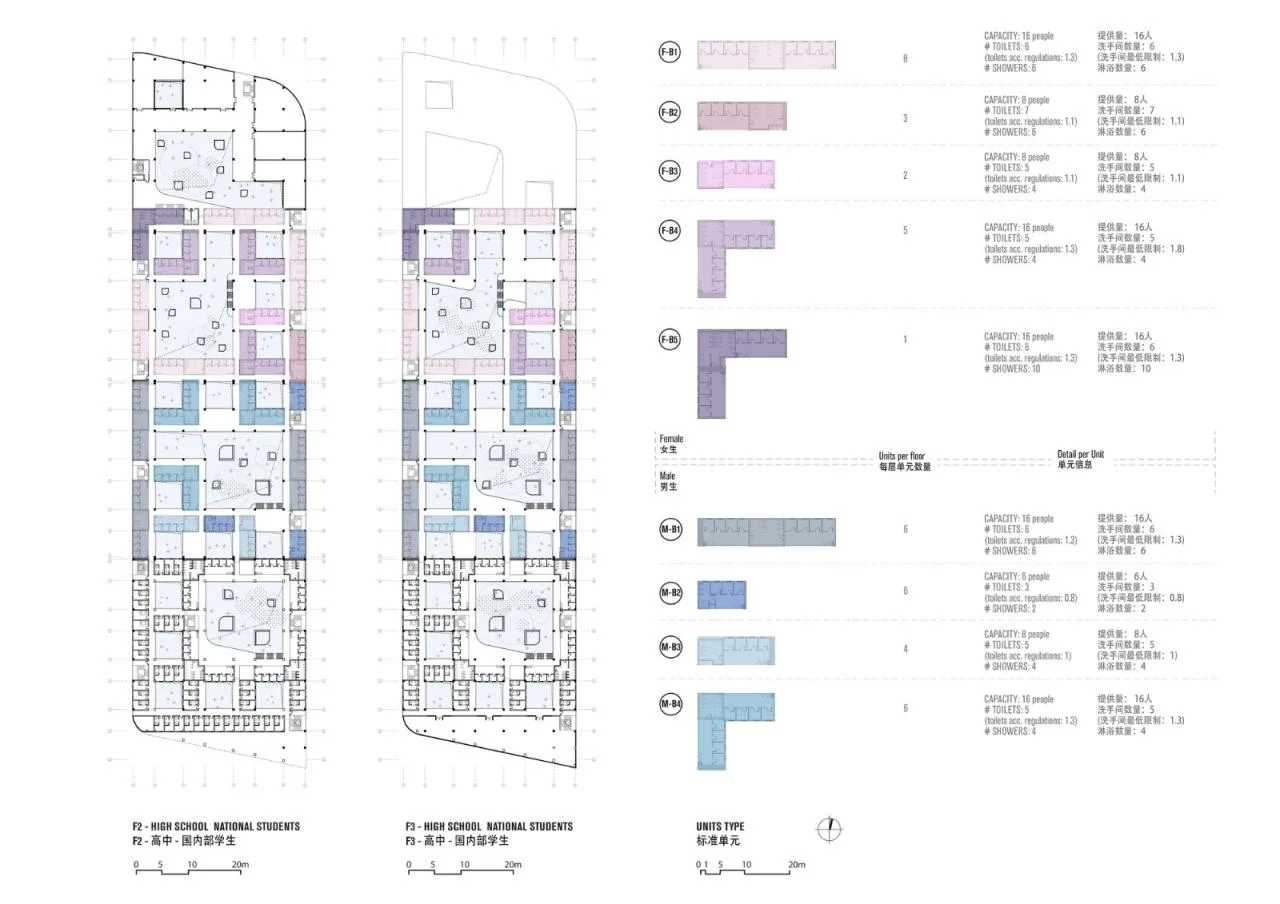
△ Unit schematic diagram
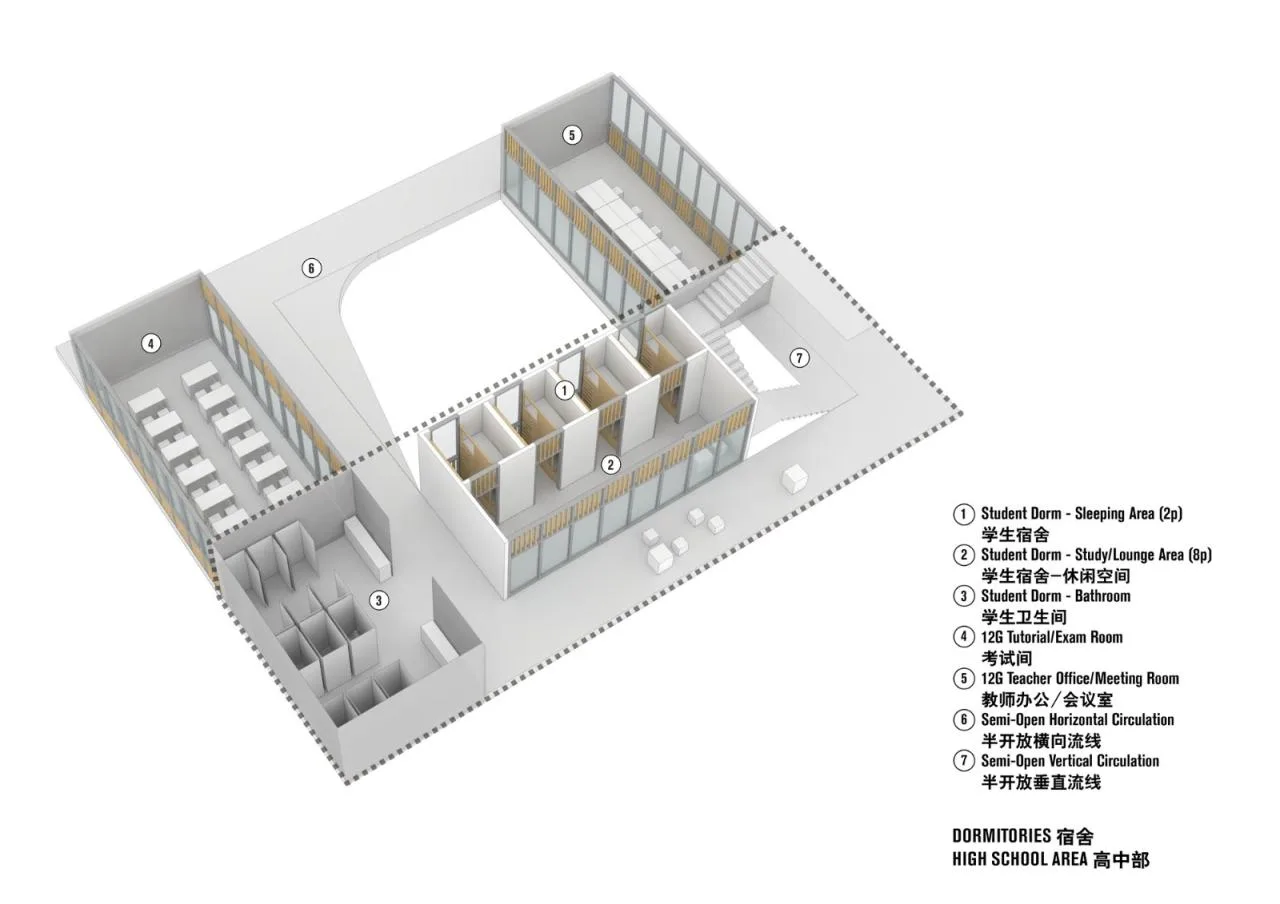
△ Dormitory diagram
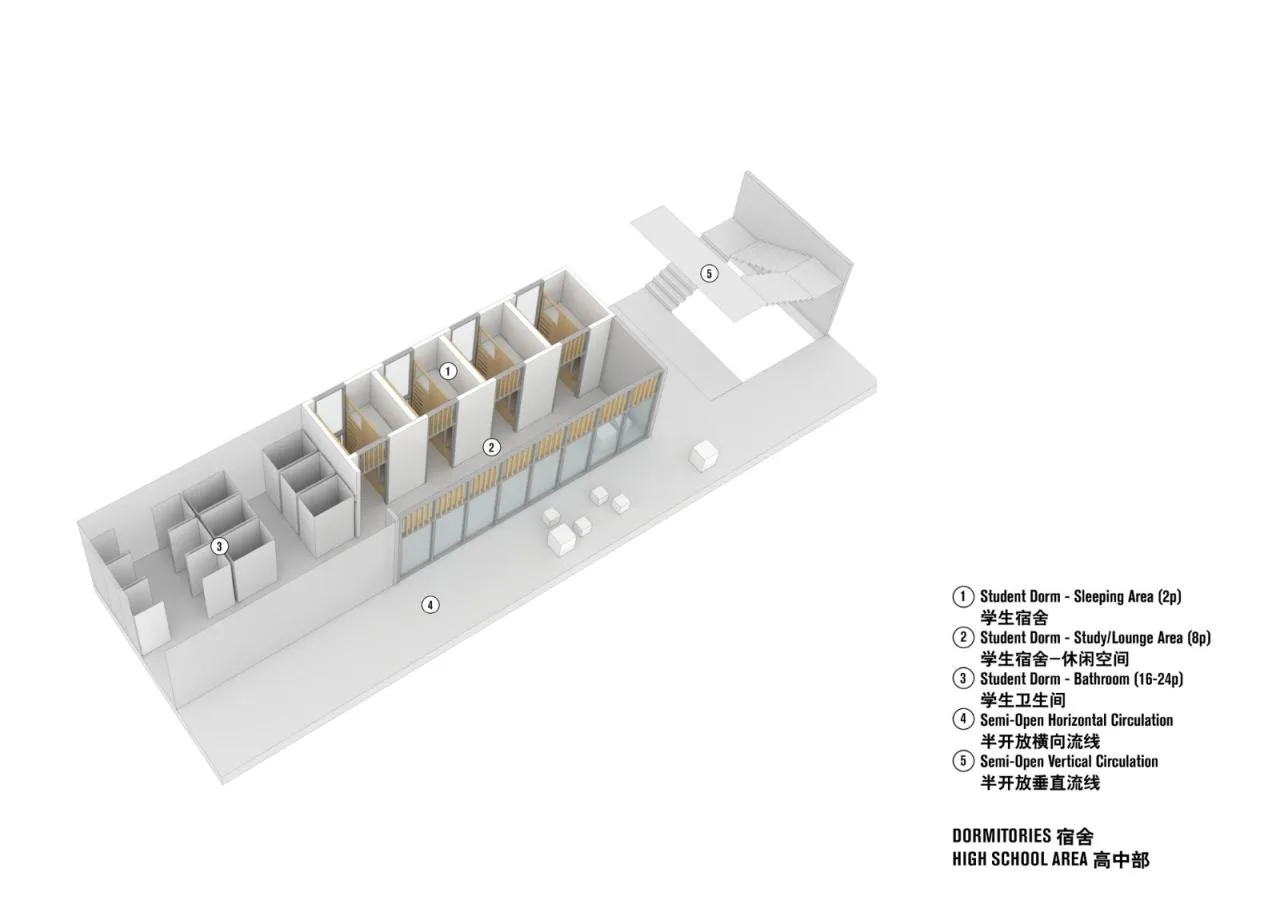
△ Dormitory diagram
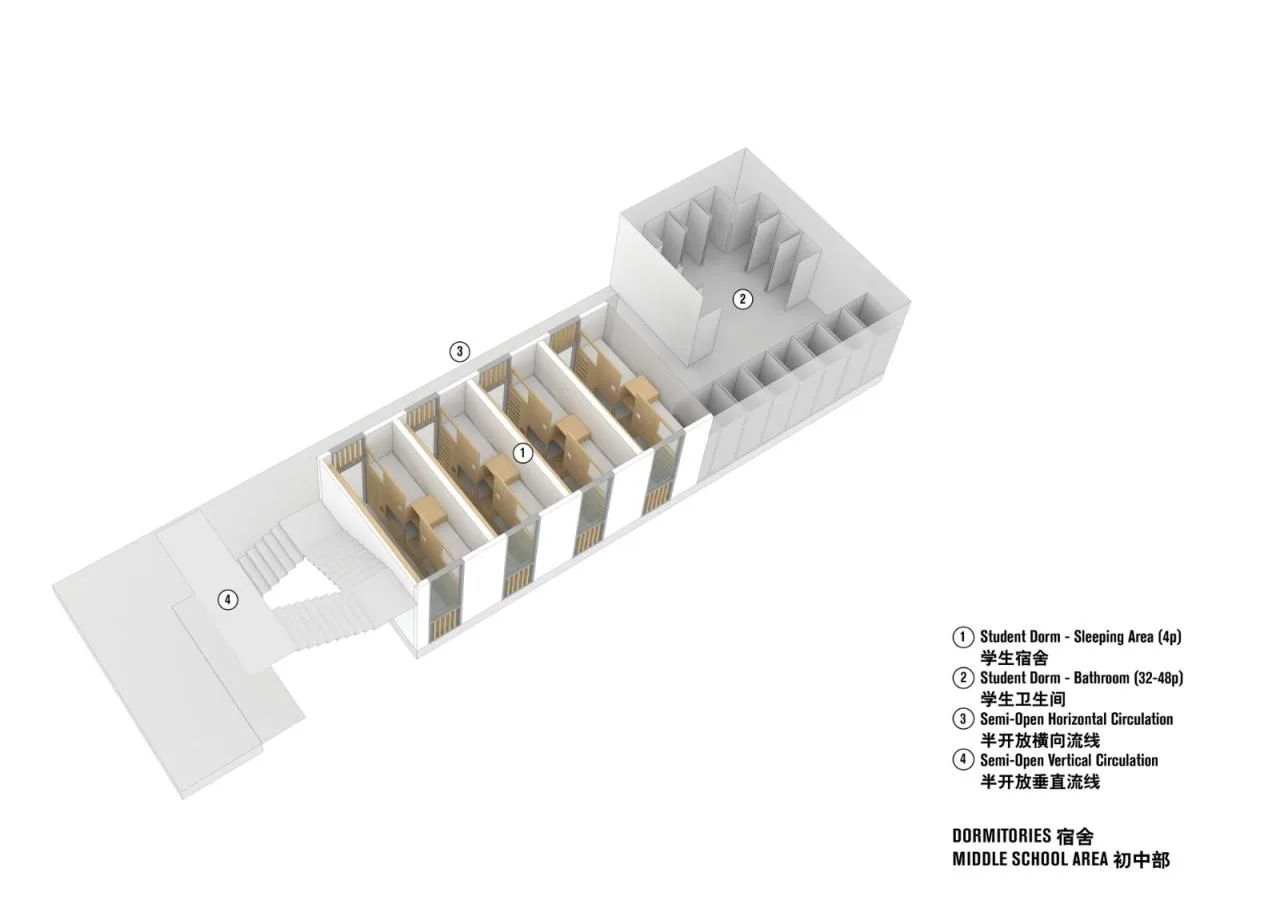
△ Dormitory diagram
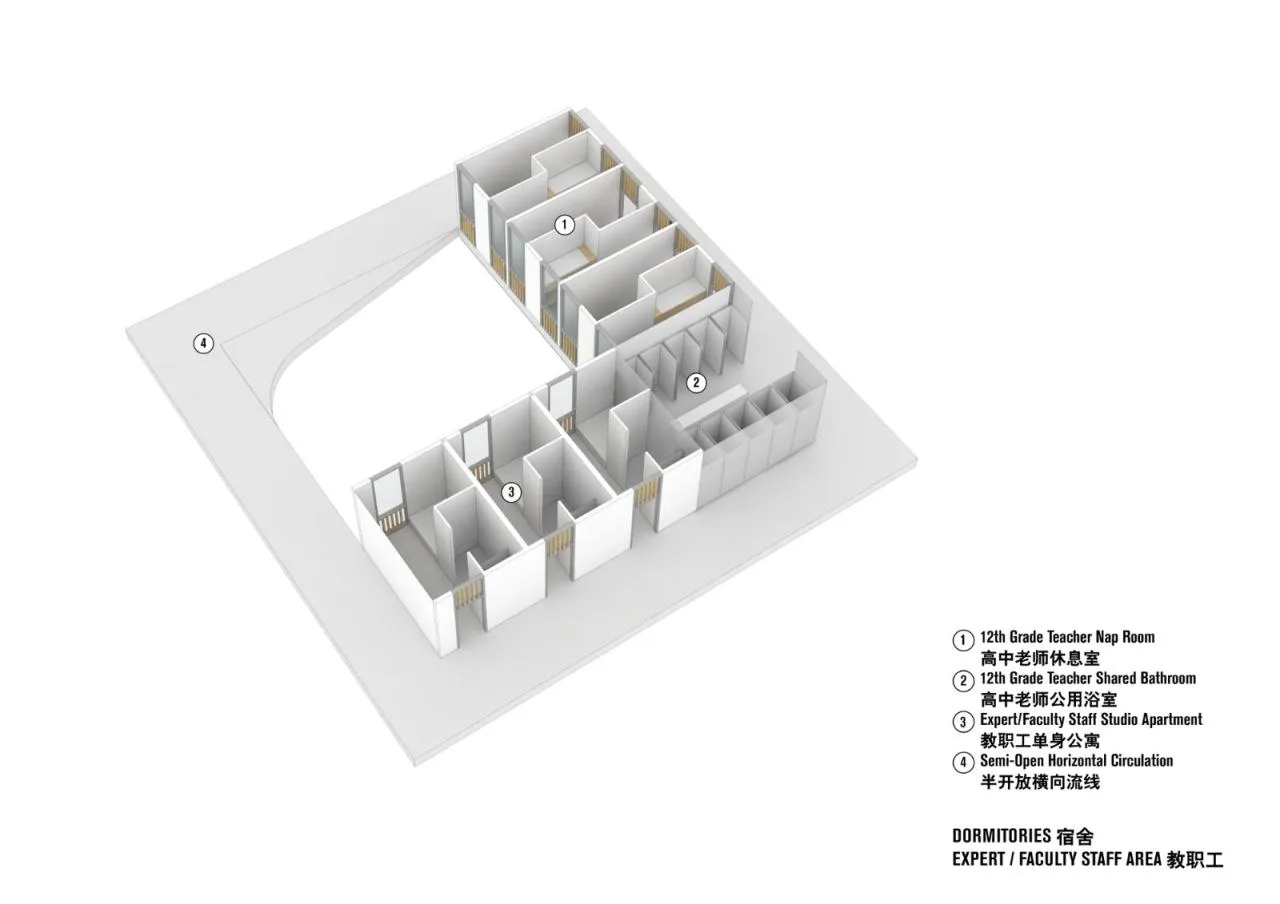
△ Staff dormitory
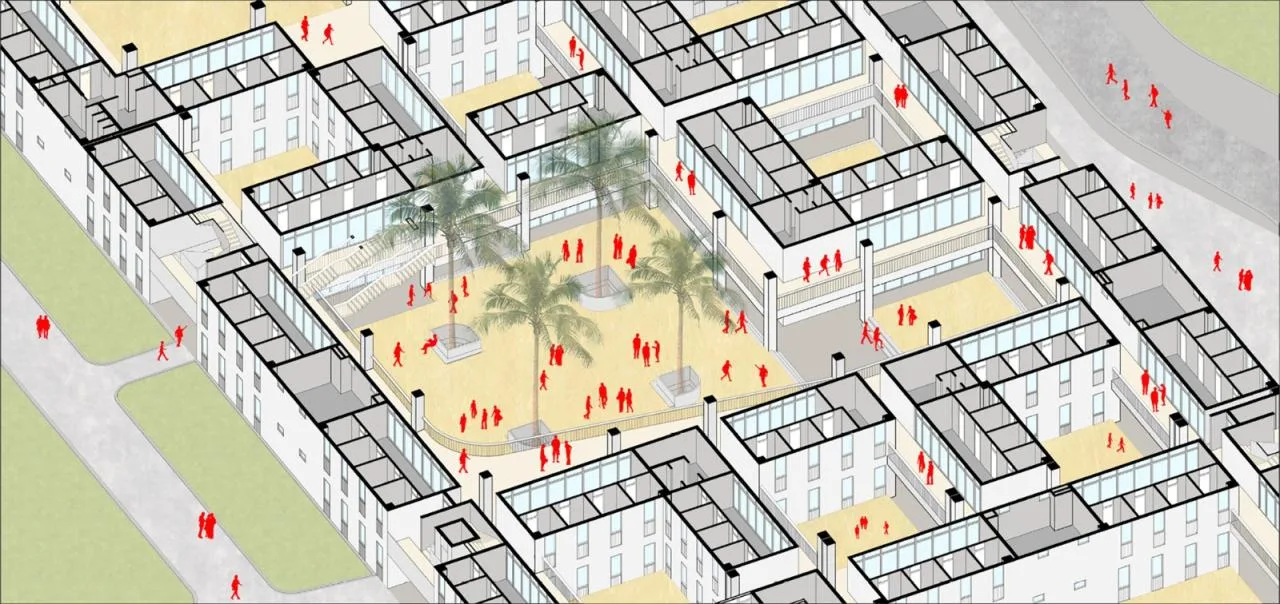
△ Axonometric diagram
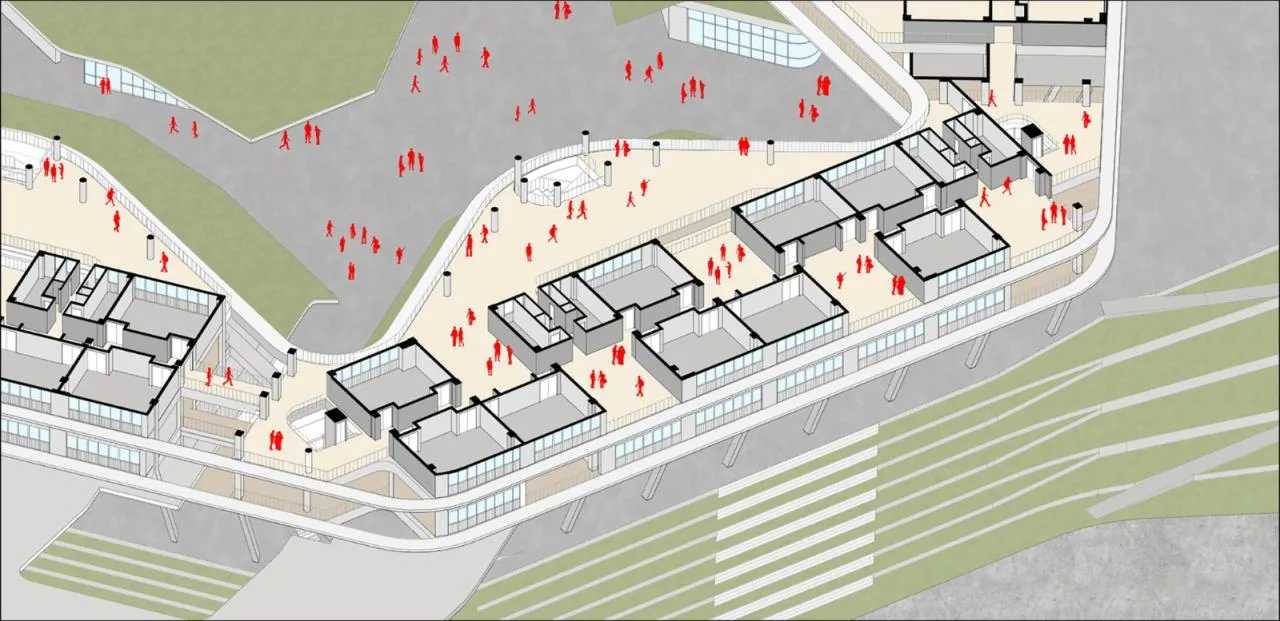
△ Axial side view
Project Information
Architect: Crossboundaries
Area: 138,095 m²
Project Year: 2024
Photographer: Bai Yu
Project Leaders: Binke Lenhardt, Dong Hao
Design Team: Libny Pacheco, Sidonie Kade, Tracey Loontjens, Cui Yurou, Tang Jiayin, Gan Li, Hao Hongyi, Yu Zhaoxiong, Silvia Campi, Wang Xudong
Partners: DGN Design Studio, Hainan Hualei Architectural Design Consulting Co., Ltd
Owner: Peking University Affiliated Middle School
Location: Haikou














Must log in before commenting!
Sign Up