
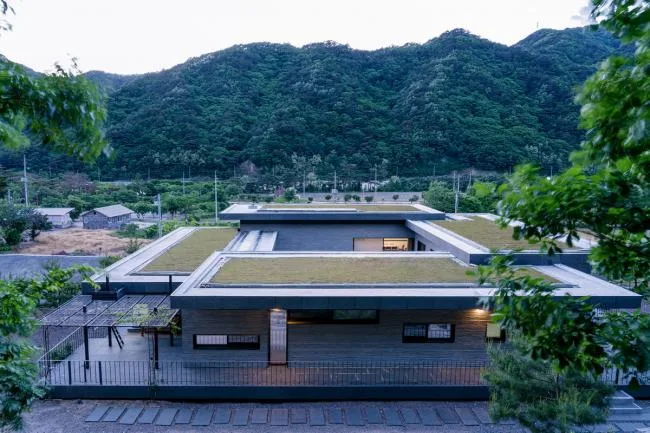
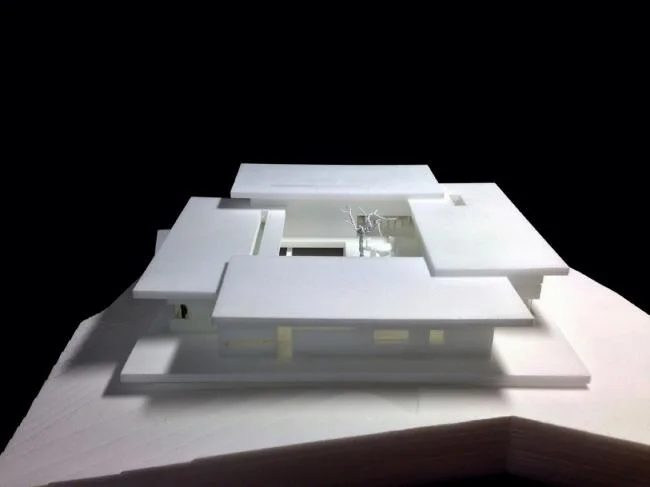
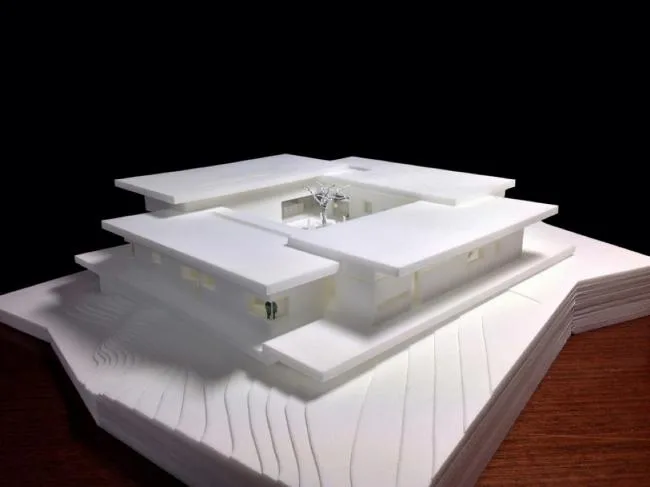
Situated at the base of Seolak Mountain, this residence presented a unique design challenge: how to harmonize with the natural site conditions. Drawing inspiration from traditional Korean courtyards, the architect adapted these ancient design principles to the sloping terrain. The structure comprises four stepped volumes that collectively form a central courtyard, responding organically to the hillside’s contours.
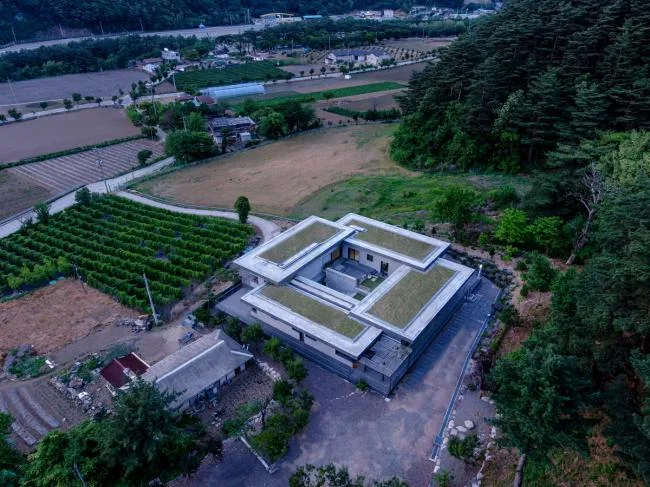
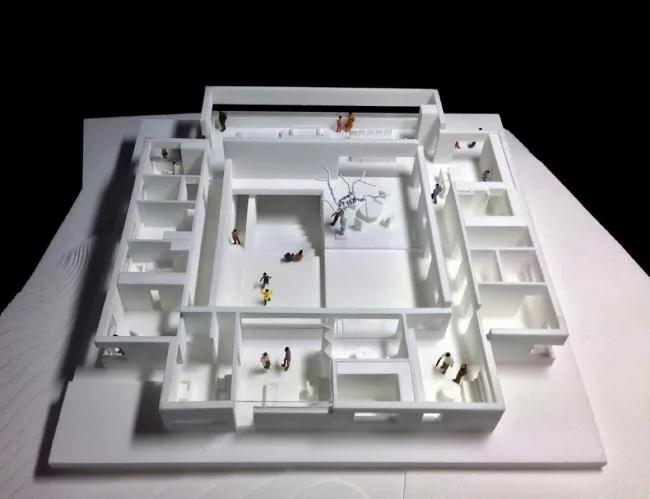
The building covers 400 square meters and includes five bedrooms, four bathrooms, and four auxiliary rooms. Its program features a master suite, living and dining rooms, kitchen, entertainment spaces, guest rooms, and a gallery. The courtyard interior not only accommodates diverse family activities but also offers a tranquil, contemplative atmosphere. Through the courtyard’s central opening, residents can enjoy serene mountain views while the design strategically screens the surrounding graves and neighboring cottages from sight.
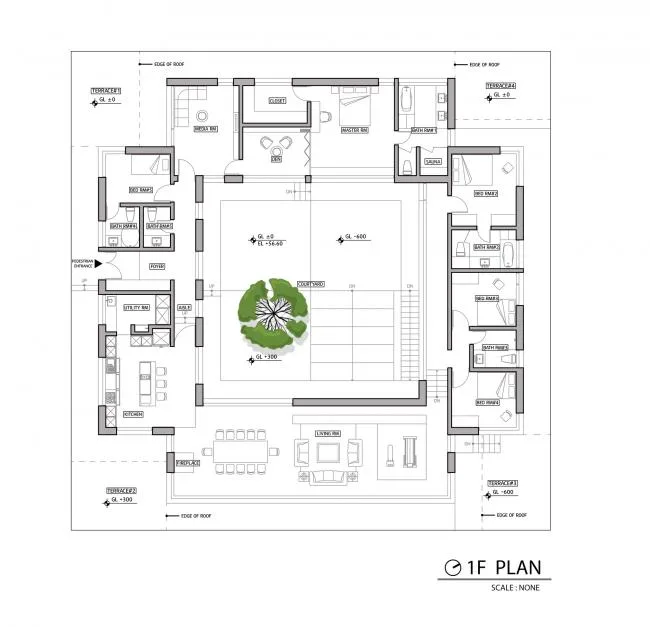
▲ First floor plan
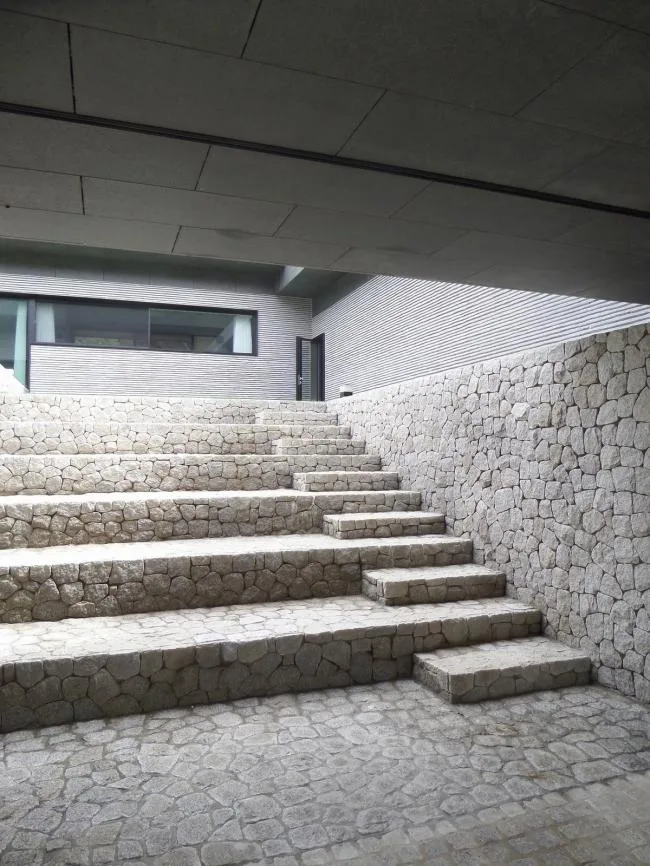
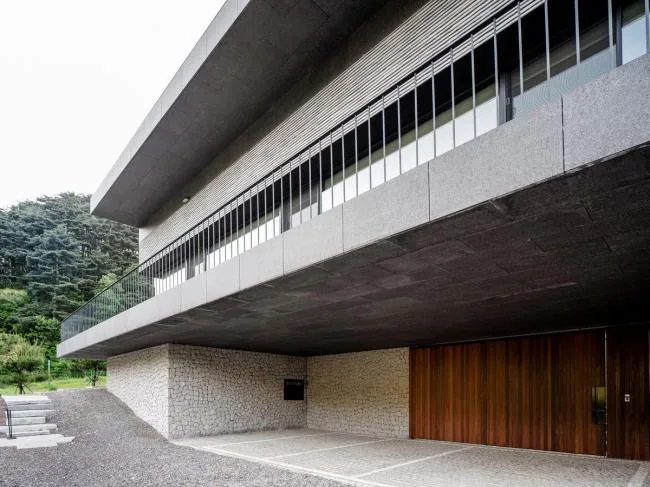
Reflecting Korean courtyard traditions, the architect employed locally sourced natural materials to reduce costs. The walls incorporate Giwa—traditional Korean ceramic roof tiles—combined with specially tinted mortar to emphasize horizontal lines on the facade. The cantilevered roof is crafted from local granite, further rooting the building in its environment.
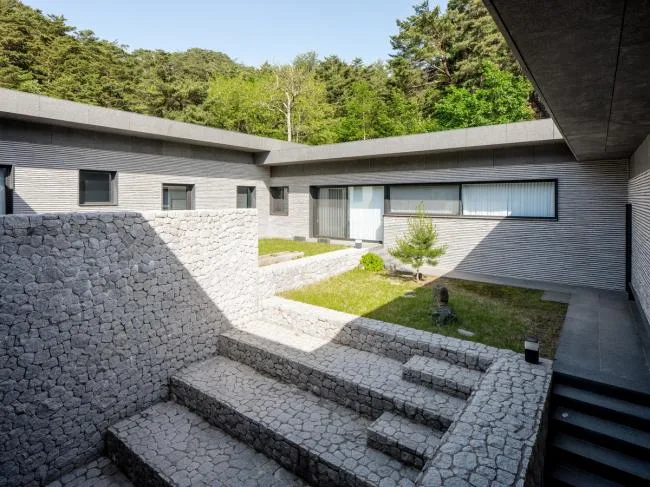
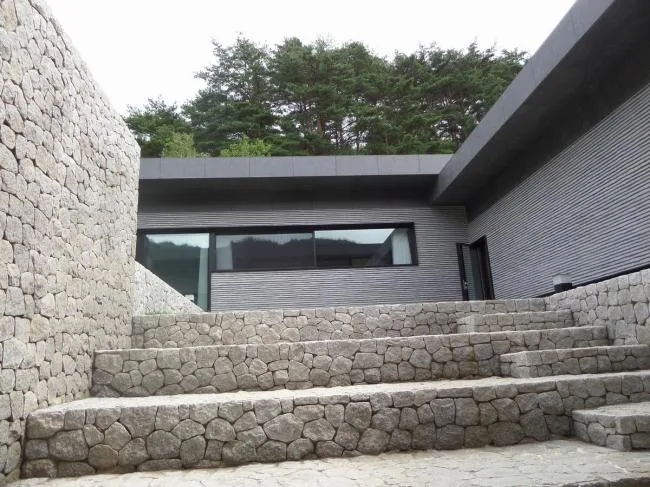
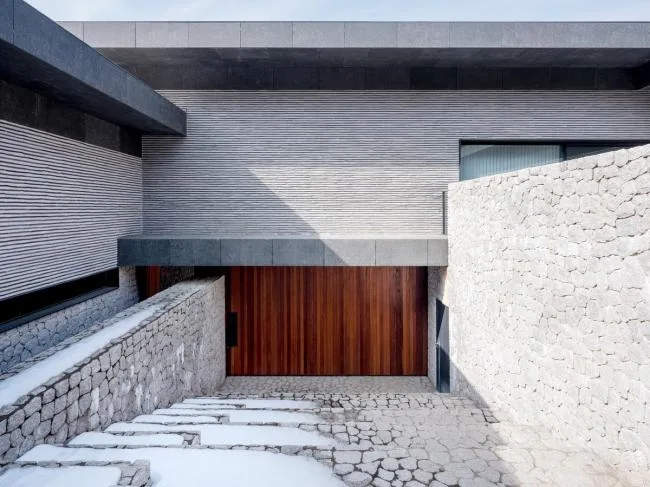
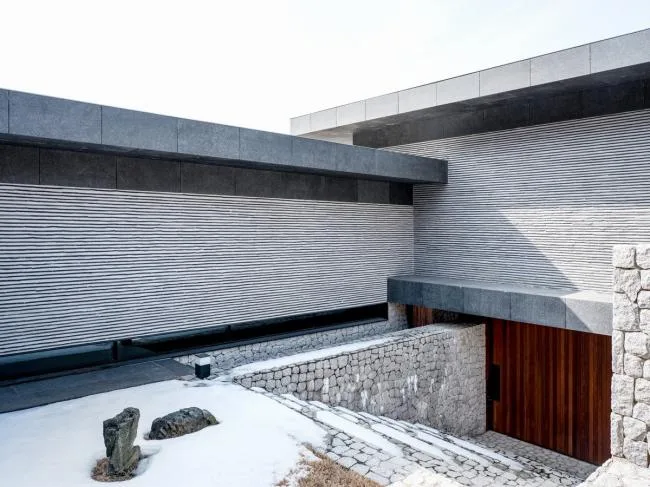
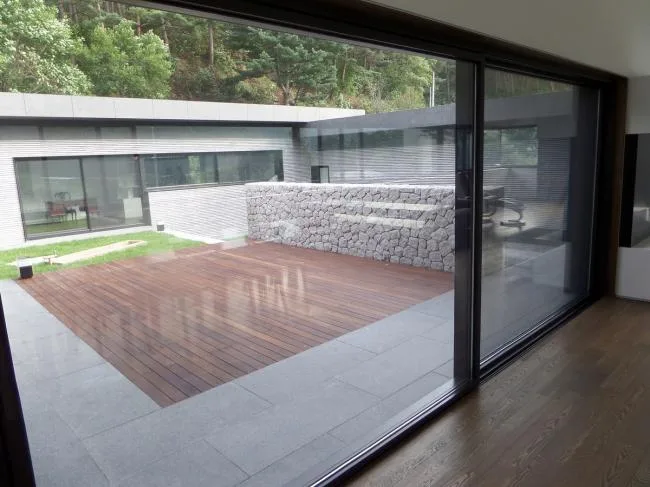
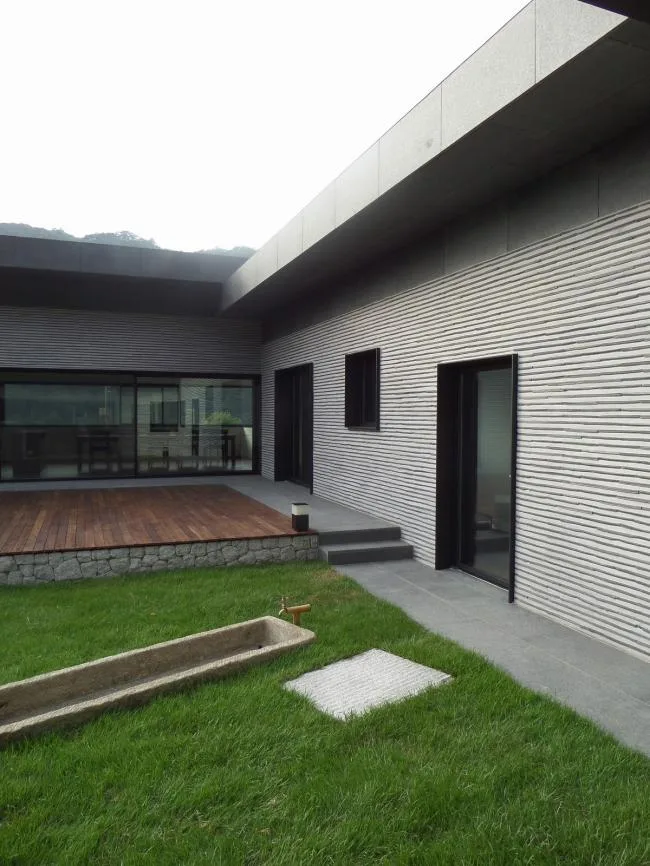
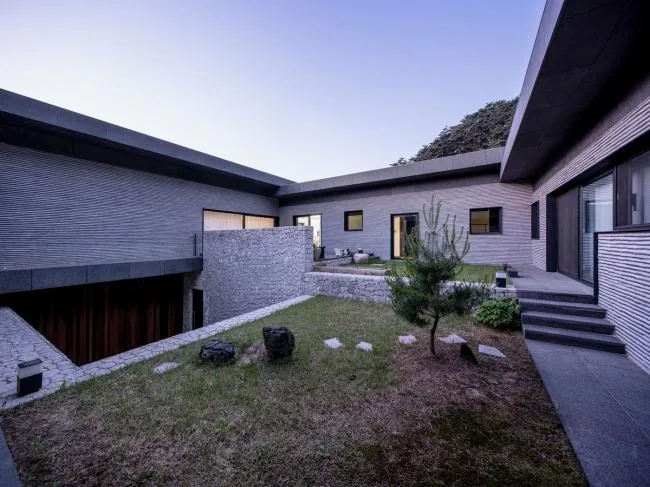
This project combines traditional and modern design with sustainable and passive architectural strategies. A geothermal system, extending 154 meters underground, replaces energy-intensive heating methods that rely on petroleum or liquefied petroleum gas. Additionally, the roof is covered with grass, providing natural insulation, minimizing heat accumulation, and significantly reducing energy consumption and maintenance expenses.
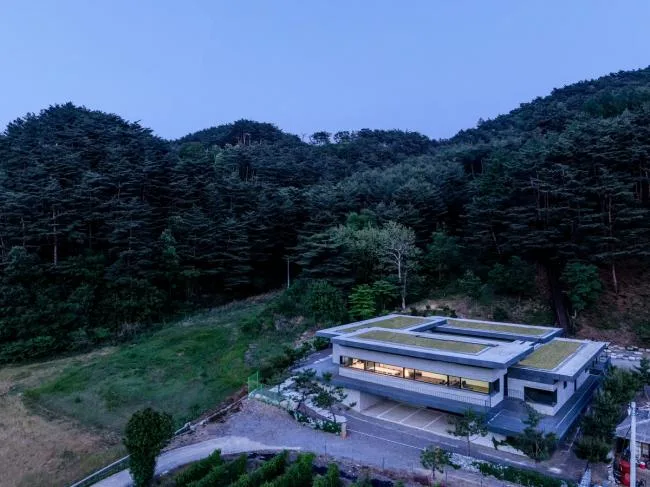
The four volumes are positioned on separate horizontal planes to accommodate the sloping site, reflecting traditional Korean housing layout principles. The living spaces are distinctly separated into individual volumes, with outdoor areas transitioning through corridors that serve as intermediary spaces between inside and outside.
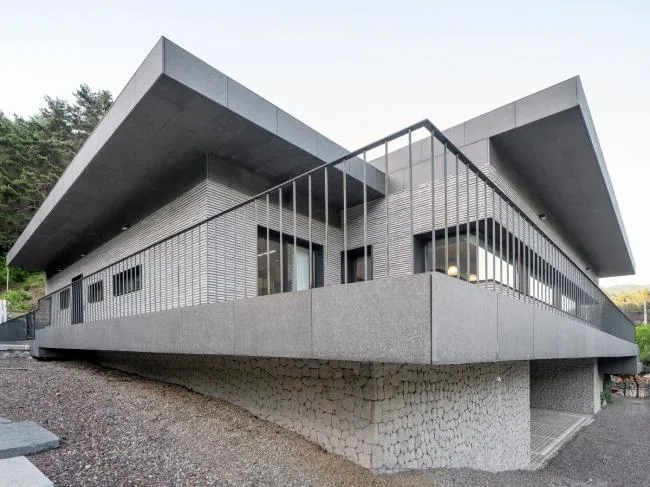
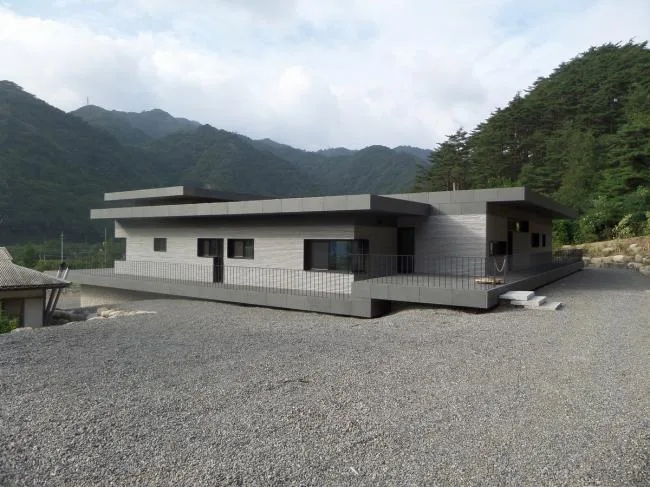
Because the volumes sit on different levels, the building’s openings are arranged across varying planes. Crossbeams rest atop continuous wall beams, creating open spaces for entrances, garages, lighting, and landscape views. Each opening defines its own boundary and reveals distinct outdoor spatial relationships.
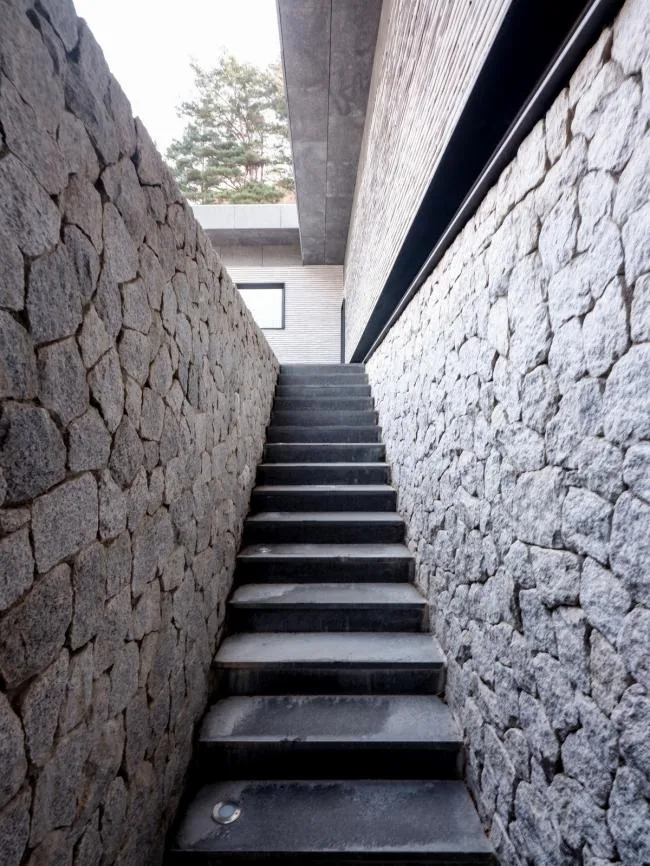
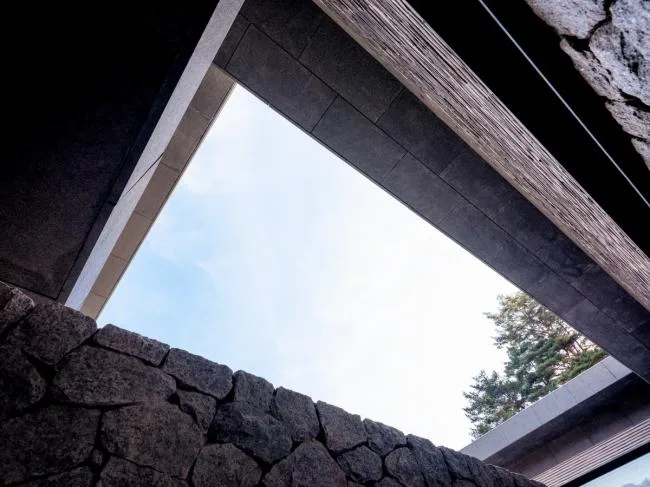
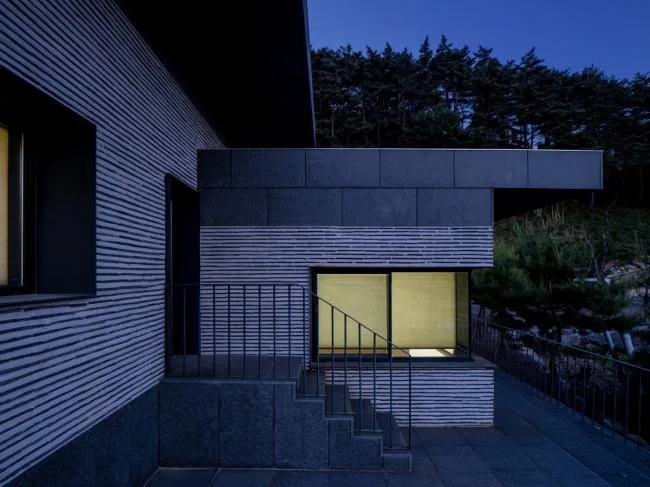
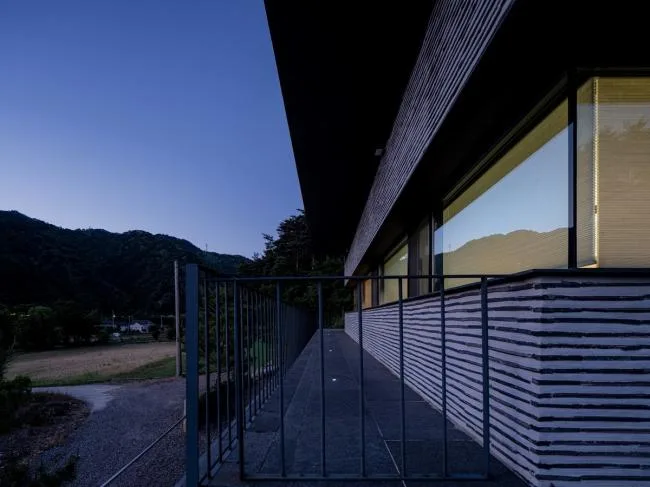
Wall Details
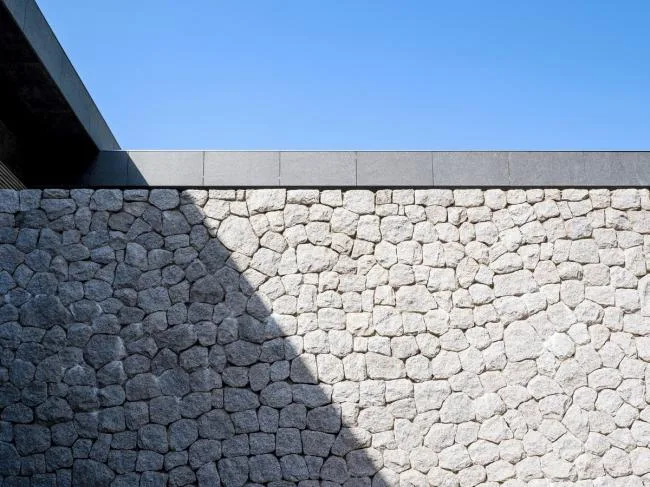
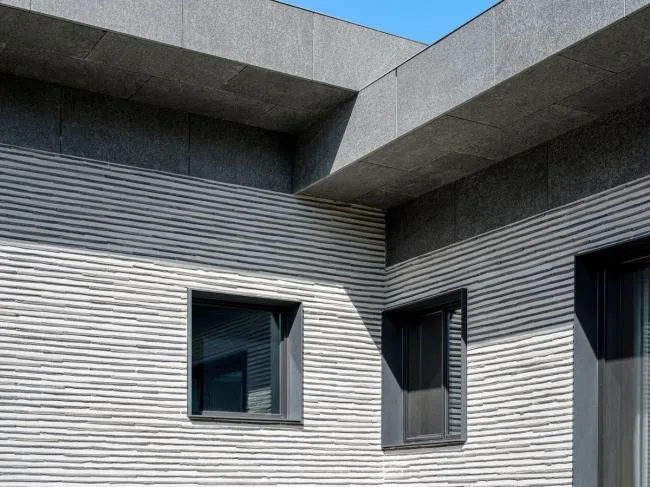
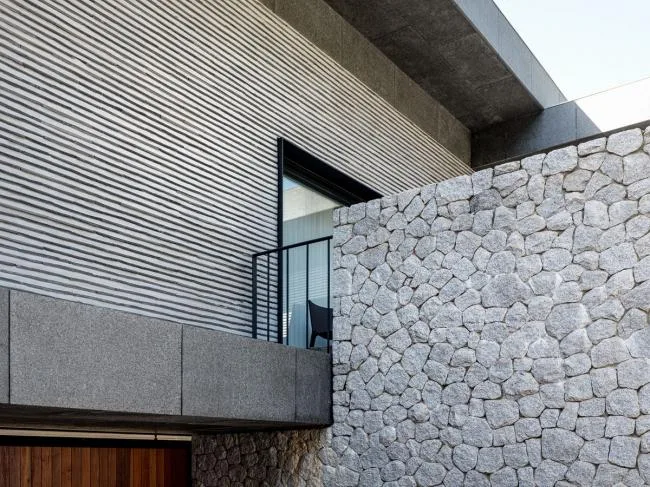
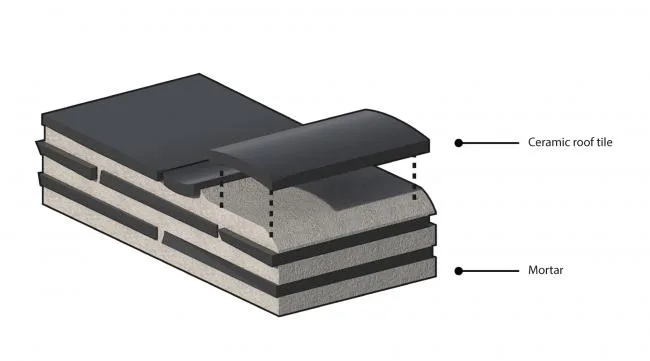
▲ Wall detail analysis
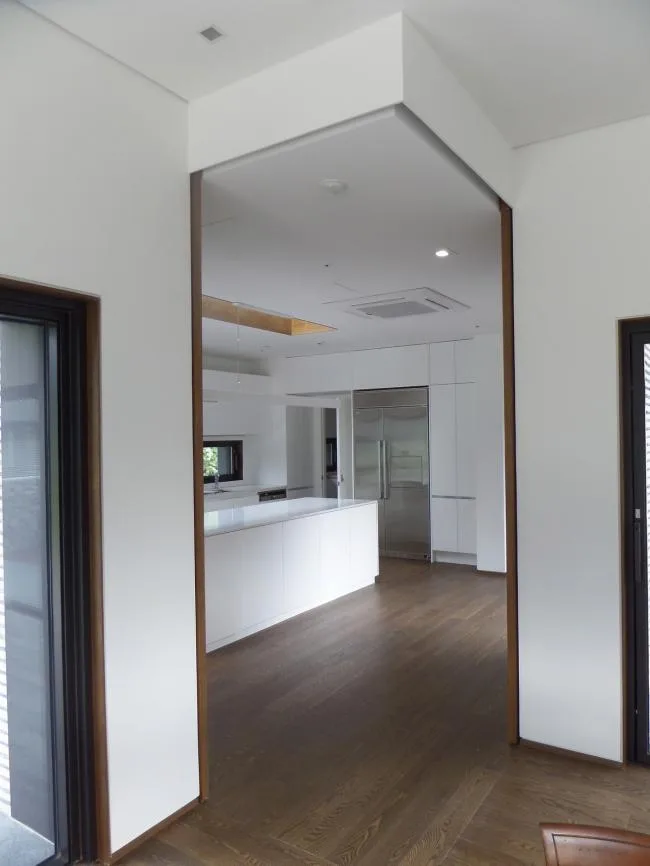
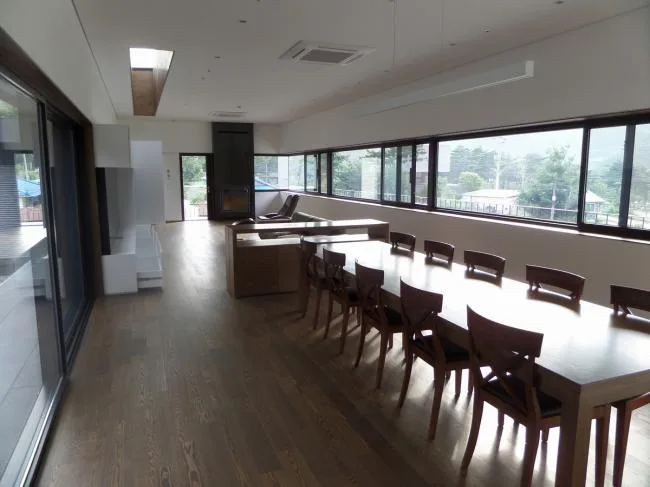
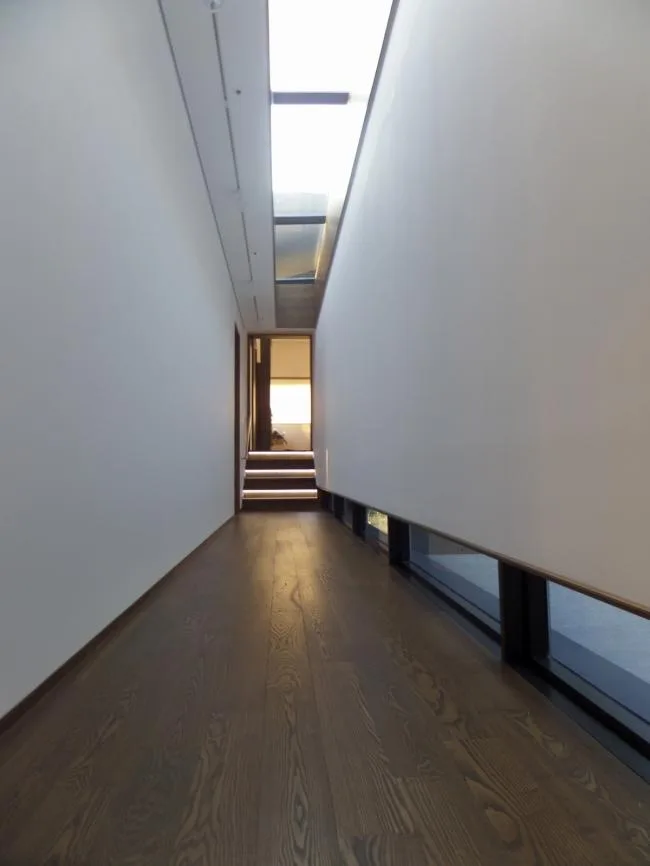
Interior Views
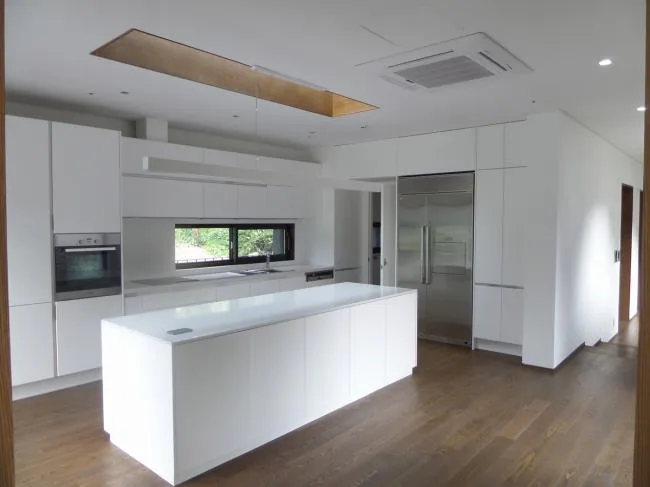
(BIM Architecture)
Model Renderings
▲ Model 1
▲ Model 2
▲ Model 3
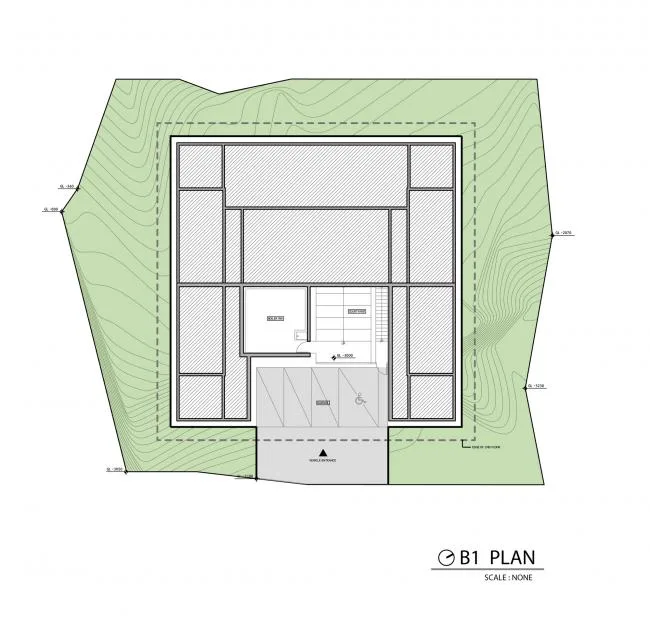
▲ Negative Floor Plan
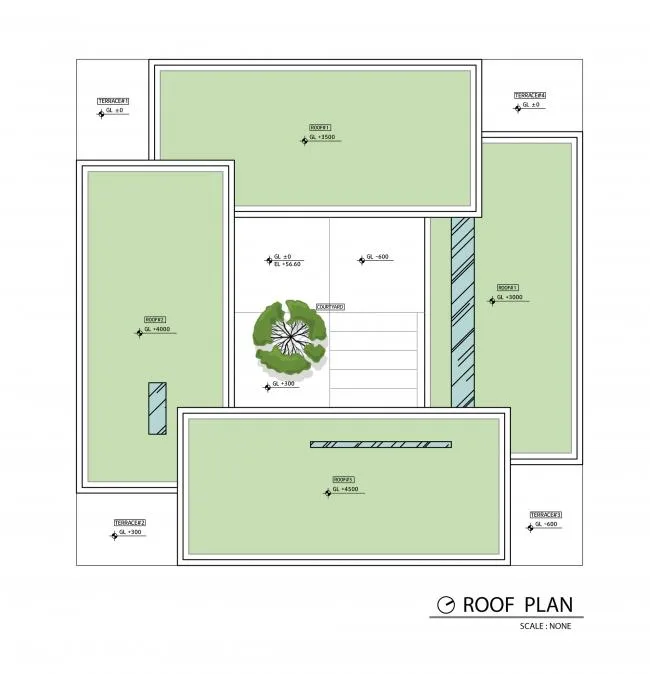
▲ Roof Plan
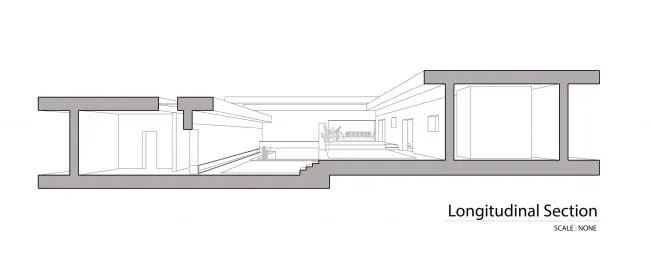
▲ Sectional View
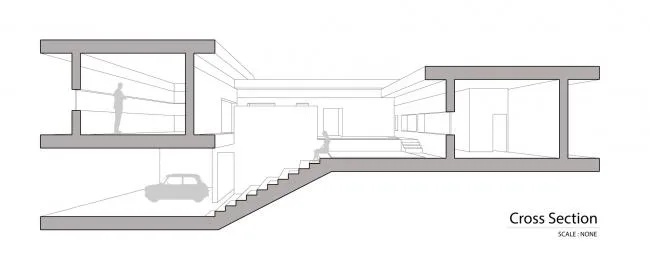
▲ Sectional View
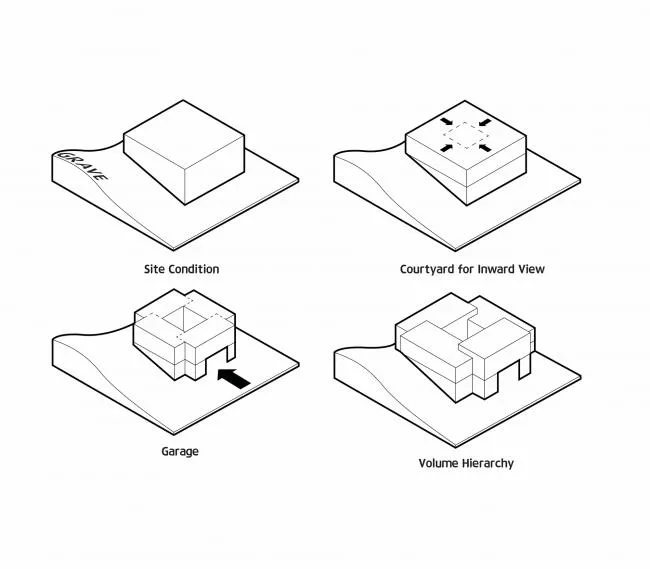
▲ Volume Generation
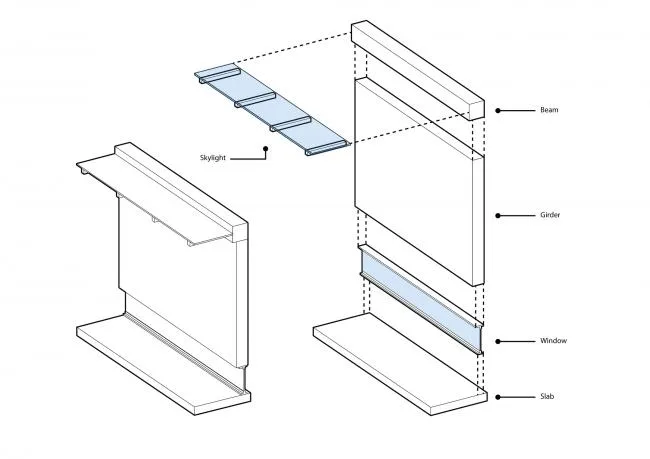
▲ Analysis Chart
Project Information
Designer: YKH Associates
Category: Sustainability & Green Design
Lead Architect: Tae Sun Hong, AIA
Design Team: Daejung Sang, Wonjin Kim
Building Area: 400.0 m²
Project Year: 2014
Photographer: Jung Dongwook, YKH Associates
Manufacturers: Autodesk, Robert McNeel & Associates, FILOBE
Client: Pyungan L& C
Construction: Yiinsigak, Inc
Site Area: 1121.0 m²












Must log in before commenting!
Sign Up