
Ole Scheeren, a former partner at OMA, is a name familiar to many in the architectural world. He has contributed to iconic designs such as the Beijing CCTV Headquarters, Singapore’s Cuicheng Xinjing, DUO Shuangjingfang, and the Beijing Jiade Art Center. Today, we focus on the Beijing Jiade Art Center.
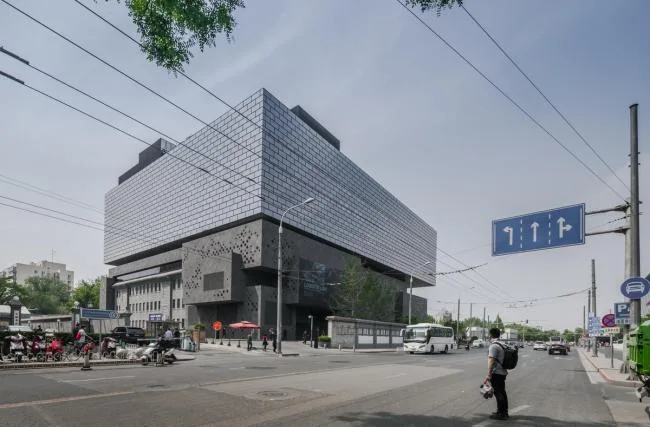
▲ Street view by © Yang Bin
Photographer Yang Bin prefers to capture buildings realistically, allowing them to blend naturally into their surroundings without modification. The Jiade Art Center exemplifies this approach, situated on a substantial plot near the imperial city with a distinctly Beijing atmosphere.
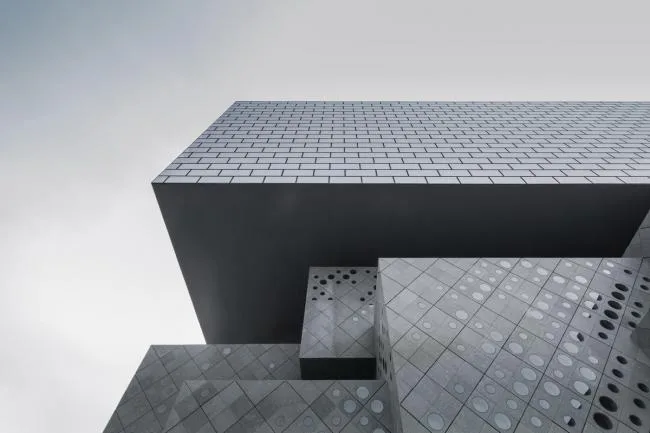
▲ View from below © Yang Bin
This complex integrates multiple functions, including a museum, activity spaces, and a cultural life center.
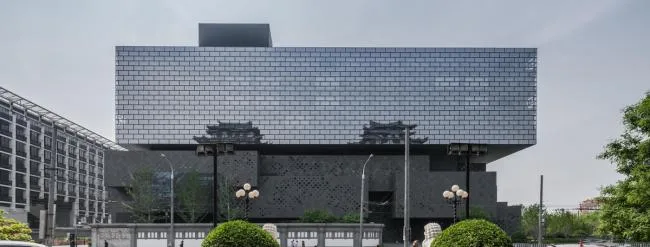
▲ Front perspective © Yang Bin
The building’s upper section aligns with the scale of the surrounding city and is embedded within Beijing’s historic core. The lower part features a pixelated volume that harmonizes with the texture, color, and intricate scale of the adjacent urban hutongs. Meanwhile, the upper portion reflects the modernity of Beijing through its larger scale. A suspended, ring-shaped volume forms an internal courtyard, echoing the traditional Beijing quadrangle courtyard style.
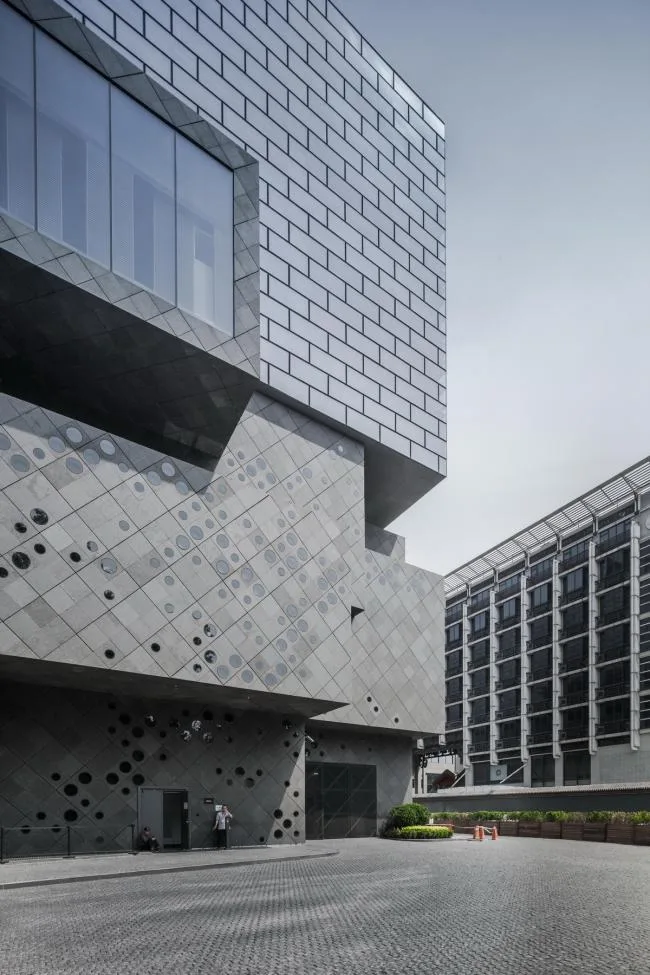
▲ Perspective view © Yang Bin
Far from being a closed institution, the Jiade Art Center embraces the diverse and mixed contemporary cultures of today. It employs Chinese-style fusion and layering techniques to connect cultural spaces and public functions, blending art and culture through events and lifestyle activities.
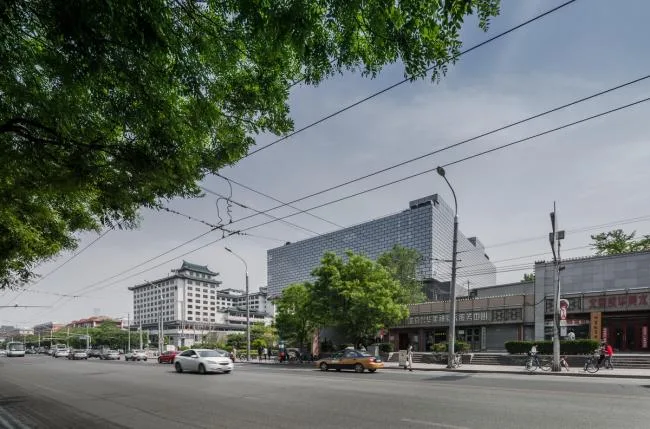
▲ Street view © Yang Bin
Situated within Beijing’s historic urban fabric, the building houses interconnected exhibition spaces, a rich variety of exhibits, and multiple auction areas designed to accommodate different events. The project also includes several restaurants and a hotel with 120 suites. At the heart of the building lies a 1,700 square meter column-free exhibition hall, maximizing spatial flexibility. Surrounding the main hall are smaller auxiliary rooms to support various functions. Two underground auction halls offer a unique and formal environment for clients, while an expanded gallery is located on the second floor.
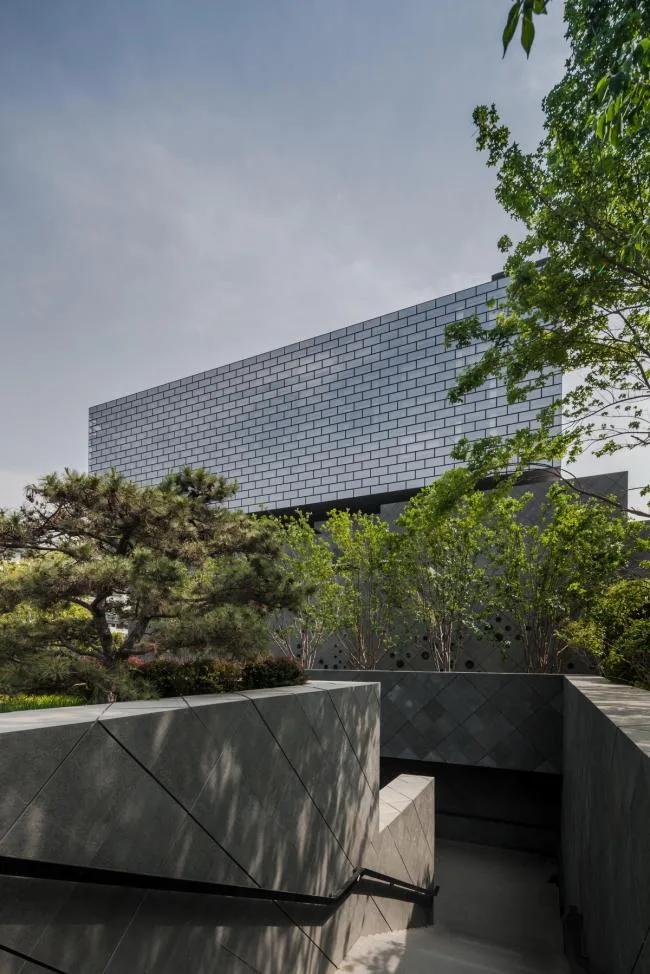
▲ Perspective view © Yang Bin
The upper inner courtyard and the circular hotel structure are constructed from large, transparent glass bricks. This architectural texture resonates with the nearby hutongs and traditional quadrangle courtyards. Unlike the imperial Forbidden City, which uses distinct bricks, these glass bricks symbolize a more universal and civil society-oriented value—a humble, non-elitist concept within Chinese culture.
The facade of the lower building features pixelated patterns resembling gray stones. Through thousands of perforations, the designer projected “Dwelling in the Fuchun Mountains,” one of the most significant landscape paintings in Chinese history, onto the facade.
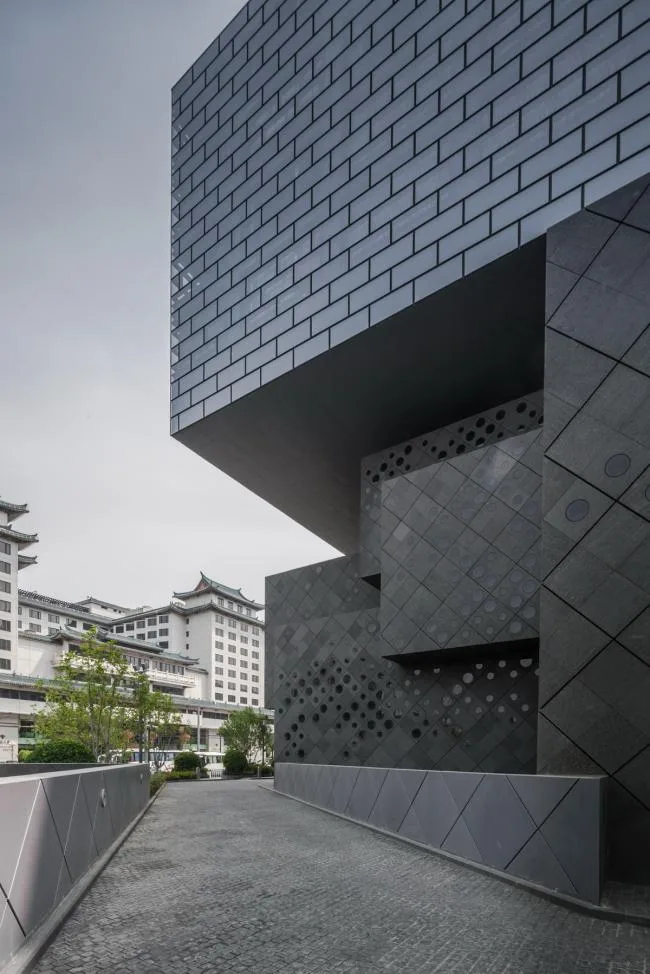
▲ Perspective view © Yang Bin
The pixelated lower volume echoes the surrounding urban texture. Ole Scheeren reflected, “I feel deeply honored to design this art center, which allows me to express my respect for the city where I’ve worked for over a decade.”
He continued, “The building is situated in a historic area with special significance for China. It stands at the intersection of two streets and, more importantly, at the crossroads of two worlds: the renowned Wangfujing Commercial Street and the May Fourth Avenue intersection, the birthplace of the New Culture Movement after the Qing Dynasty’s end. This location allows the building to respect its surroundings while reflecting the coexistence of auction culture and commerce.”
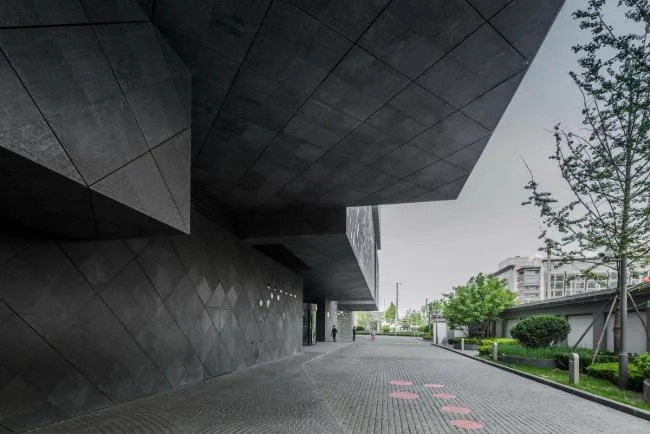
▲ Inner courtyard perspective © Yang Bin
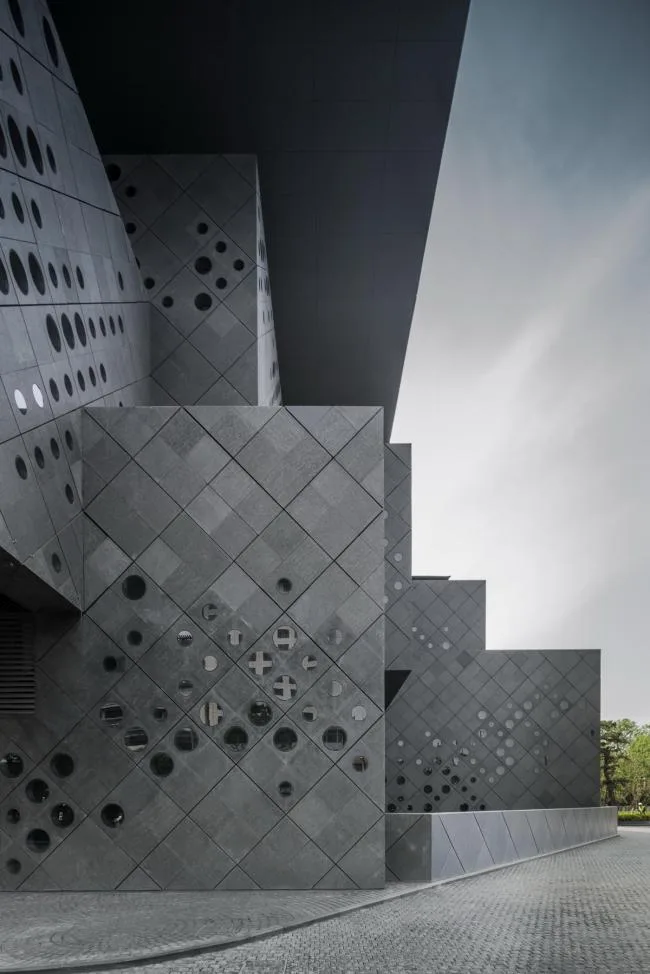
▲ Inner courtyard perspective © Yang Bin
Above the stone base, a suspended square ring of glass brick walls crowns the building. This square ring rests atop the pixelated stone base, giving the structure a substantial texture that ties closely to Beijing’s architectural heritage. The contrast and balance between stone and glass create a dynamic tension that reflects the complexity and diversity of contemporary urban life.
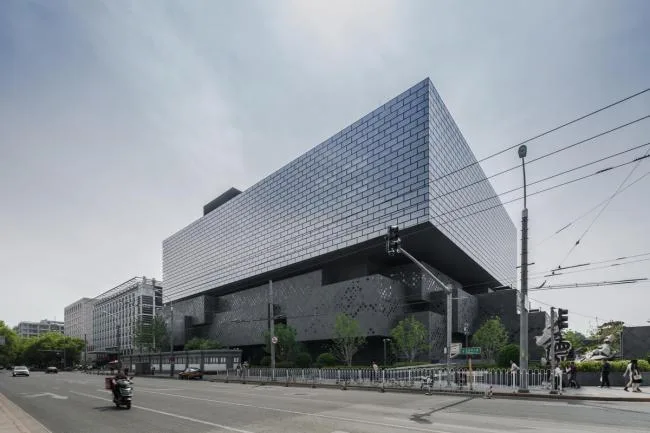
▲ Street view © Yang Bin
“There is a dialectical and reciprocal relationship between the two scales and textures of the architecture,” Scheeren explained.
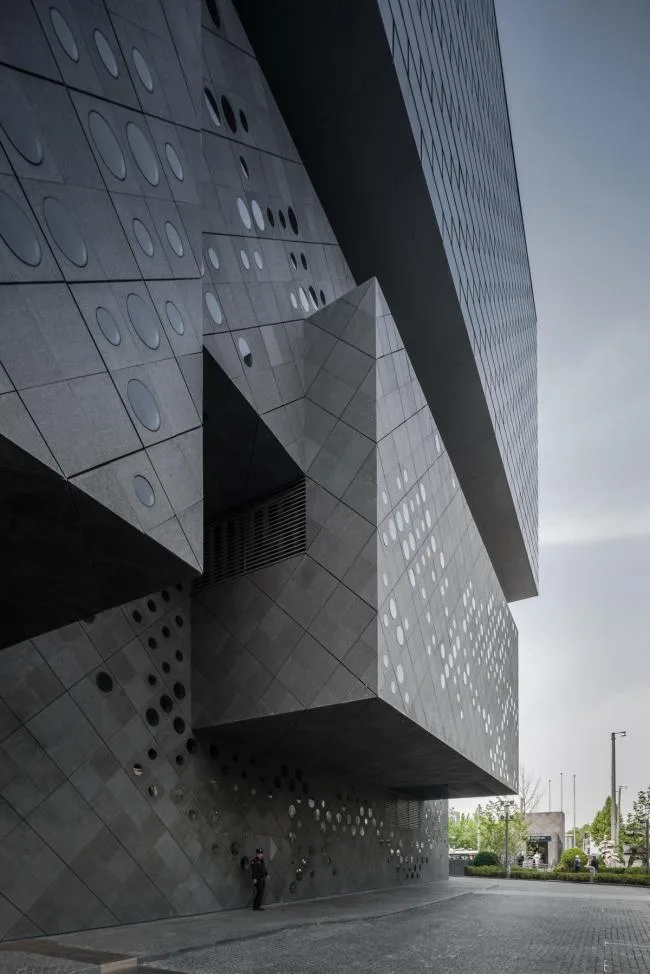
▲ Inner courtyard perspective © Yang Bin
The Jiade Art Center serves as a catalyst for cultural and artistic activities. Its spatial design is straightforward and intuitive, yet it includes subtle variations and diverse styles to accommodate the multifaceted needs and grand ambitions of auction houses.
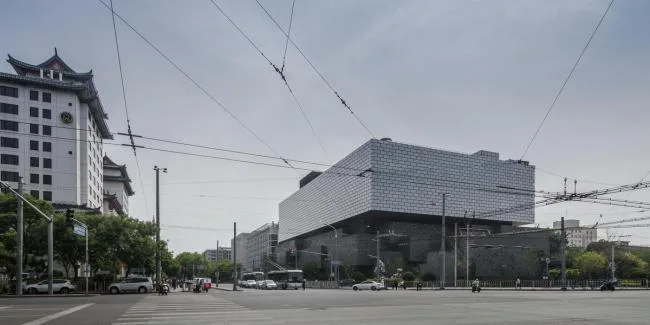
▲ Street view © Yang Bin
The emphasis on diversity underscores the Jiade Art Center’s role as an inclusive public space. Scheeren stated, “The building’s configuration and design aim to interconnect all functions.” It is a museum, a nurturing space for cultural activities, and a hub integrating lifestyle and educational facilities. This project marks the emergence of a new type of multicultural institution.
Project Information
Architect: Ole Scheeren & Associates
Design Team: Ole Scheeren, Eric Chang, Dan Cheong, Virginia Chiappa Nuñez
Collaborative Agency: Beijing Institute of Architectural Design and Research
Structural Engineering: Thornton Tomasetti, New York; Arup, Beijing (Concept)
Building Enclosure Structure Engineering: WSP, Hong Kong/Shanghai
Address: 27 Wangfujing Street, Dongcheng District, Beijing, China
Category: Art Center
Building Area: 55,987 square meters (BIM)
Project Year: 2017
Copyright Notice: All photography rights belong to © Yang Bin (official account: archkuma). Please contact the author for reprint requests.












Must log in before commenting!
Sign Up