
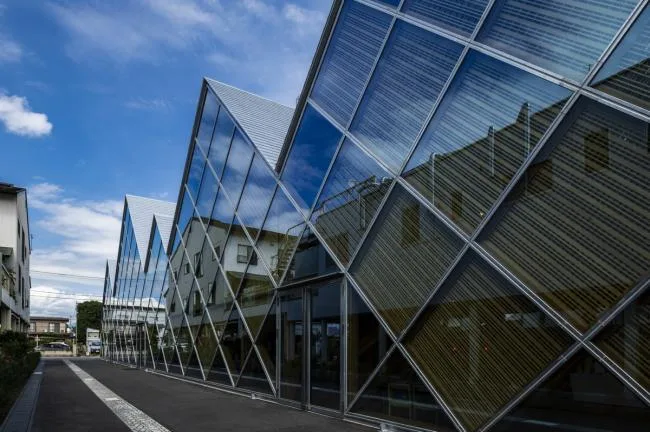
Tomioka City is famous for its Tomioka Silk Factory, a designated World Heritage Site. Amid the predominantly dark brown urban landscape, the local Chamber of Commerce acquired a traditional kimono shop called “Yoshino Gofukuo Ten” with plans to relocate it. Initially, the project focused on reviving the historical streetscape, but road expansions led to the demolition of the old conference hall.
Unlike private residences, traditional commercial buildings often struggle to retain their original style and features, requiring redesigns to meet daily needs. Yoshino Kimono Shop is no exception; it has undergone several unplanned renovations over time, including cutting wooden pillars and reinforcing them with steel frames. Remarkably, the store has been preserved in this altered state until now.
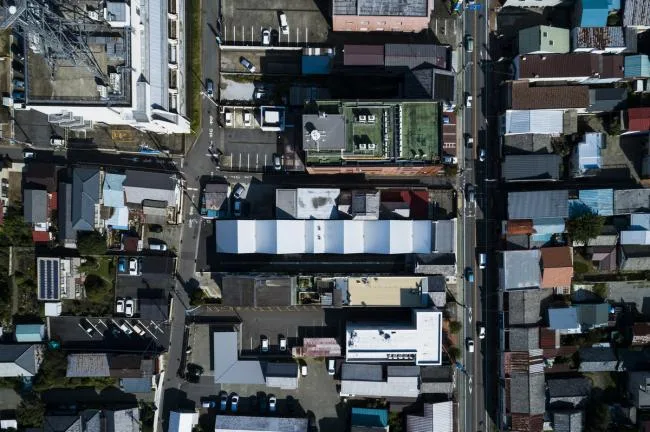
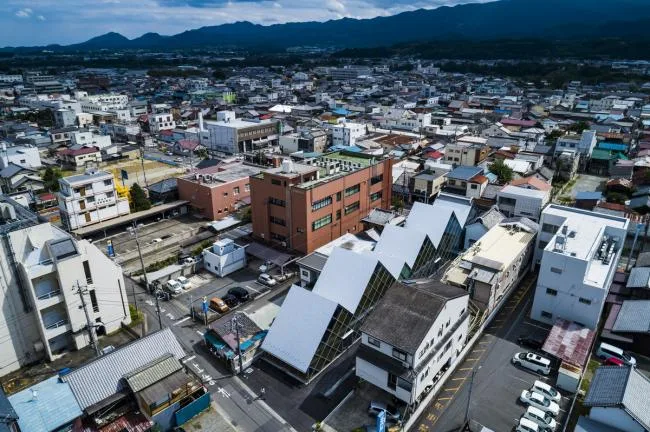
The main structure of the store eventually collapsed, leaving only the street-facing facade. The building was swiftly demolished, preserving only the roof tiles. Although the warehouse lost some pillars, it remains structurally sound enough to be reinforced and reused. Both preserved roofs are covered with traditional local plaster: the warehouse roof retains its original look, while the main roof has been renovated.
Tomioka is not a small town sustained solely by its historical heritage. The goal is to showcase the city’s future through innovative architecture. This vision was emphasized by the Chamber of Commerce chairman at the project’s outset. Tomioka is home to leading aerospace companies like IHI and medical equipment manufacturers such as Nihon Kouden, making it a hub for advanced technology.
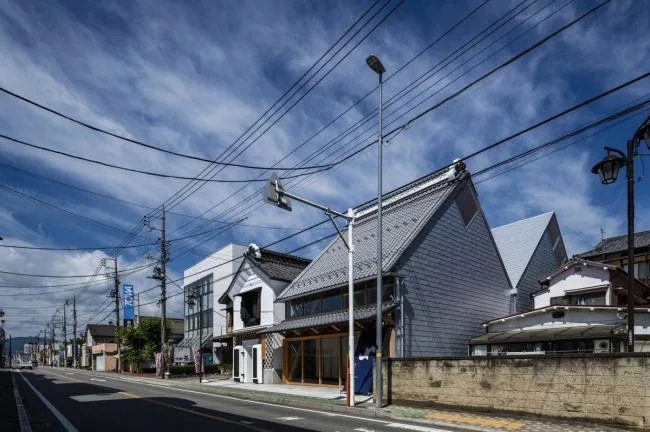
With a concept grounded in respecting traditional urban landscapes, the building is designed around a repetitive roof ridge form (BIM training). This shape also establishes the structural system as originally intended. The architect aims to revive the wooden truss imagery of the Tomioka Silk Factory. However, merely replicating historic buildings would lack innovation; the design must also express Tomioka’s future.
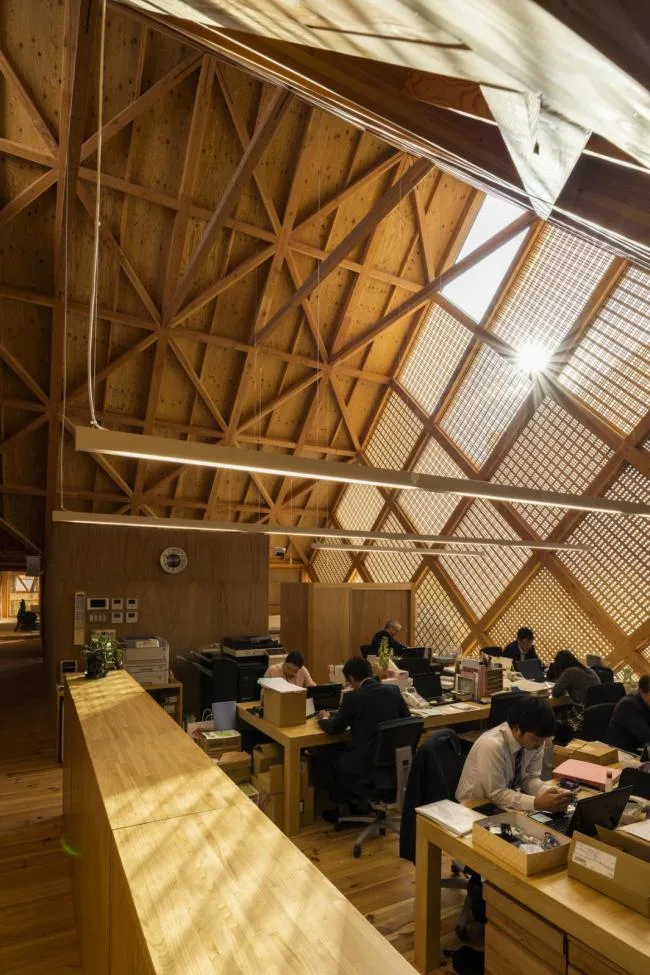
In this building, diagonal slant supports are not used as truss beams like in the silk factory, but rather as expressive elements highlighting wood’s rigidity. These horizontal components connect at edges, creating a monolithic effect. The use of slant supports and angled bracing clearly conveys a dynamic mechanical sense through its geometry.
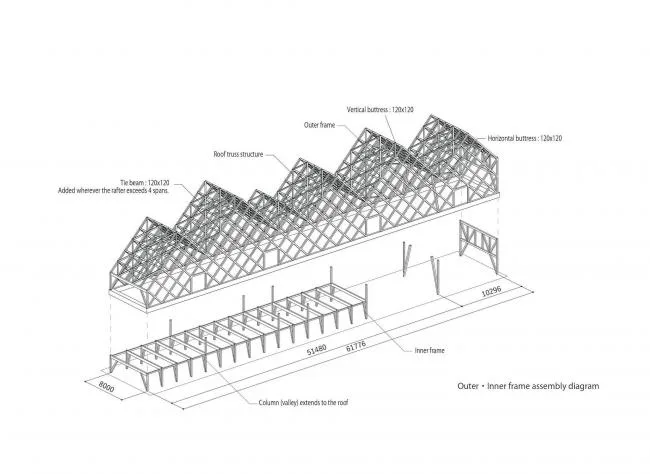
▲ Structural framework analysis
Wooden architecture combines ancient and advanced construction techniques. The true value of wood lies in the continuity between structural elements and fixed components. As such, the new Chamber of Commerce building is a genuine wooden structure crafted by skilled artisans. True wooden architecture doesn’t become outdated; instead, it matures, becoming more beautiful and distinctive over time.
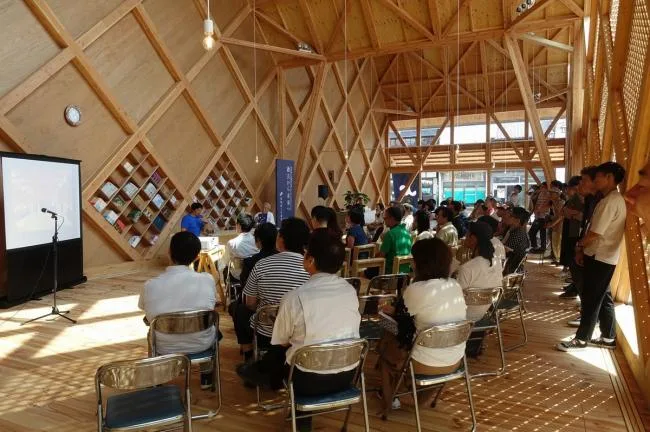
It is hoped this building will become a landmark of Tomioka for centuries to come, standing alongside the silk factory. From the structure to the sunshade canopy, diagonal grid patterns recur, even appearing in bookshelves. Initially, these patterns were inspired by the shape of building ridges.
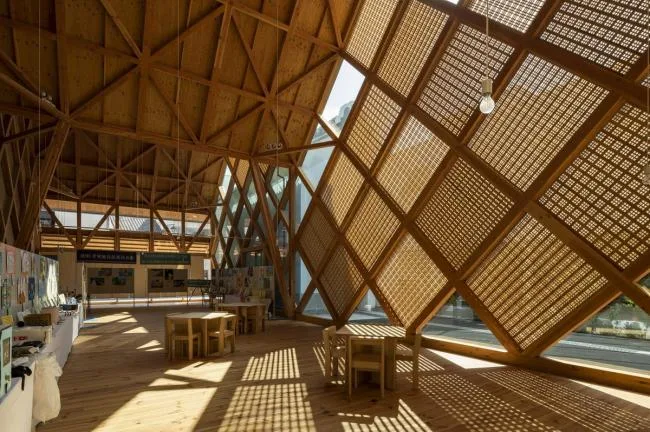
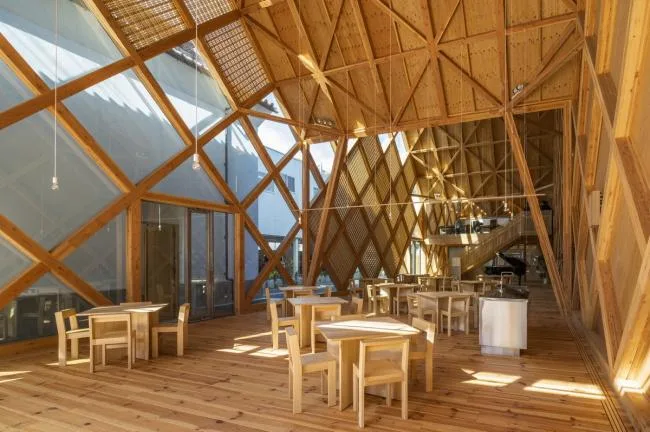
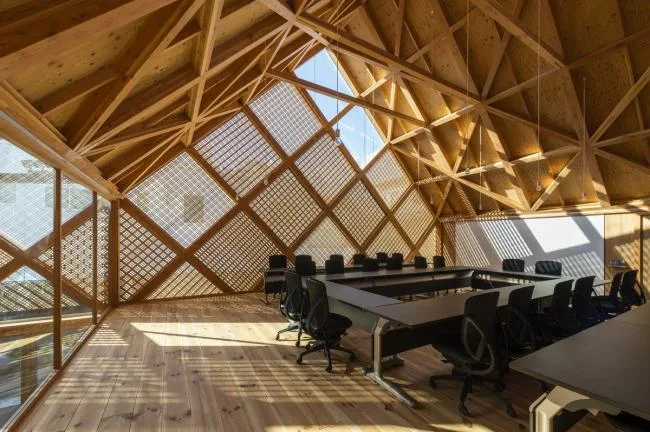
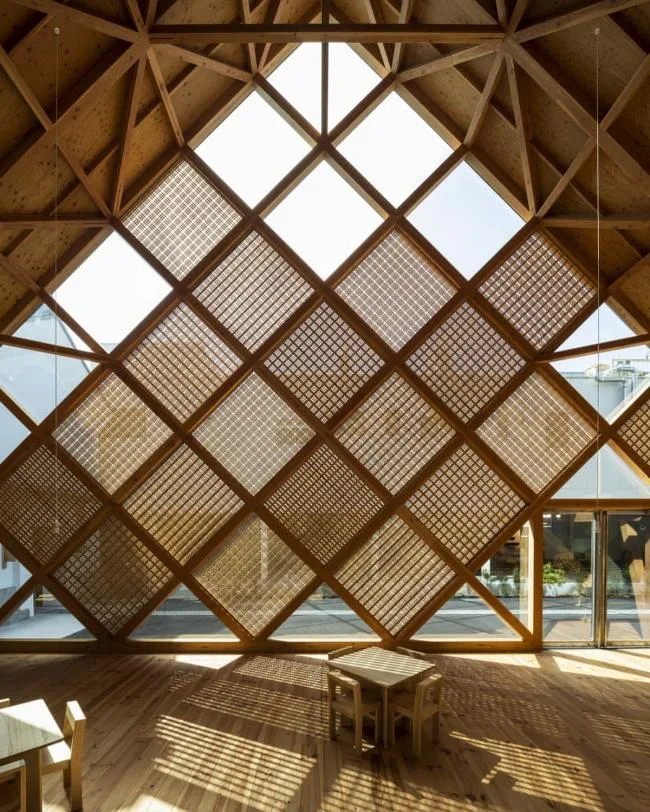
Later, it was noted that this pattern resembles the grid frame used in sericulture. Moreover, it closely mirrors the traditional Japanese diamond-patterned walls—white clay walls widely used in fire-resistant warehouses. The original warehouse of the Yoshino Kimono Shop also featured this structure.
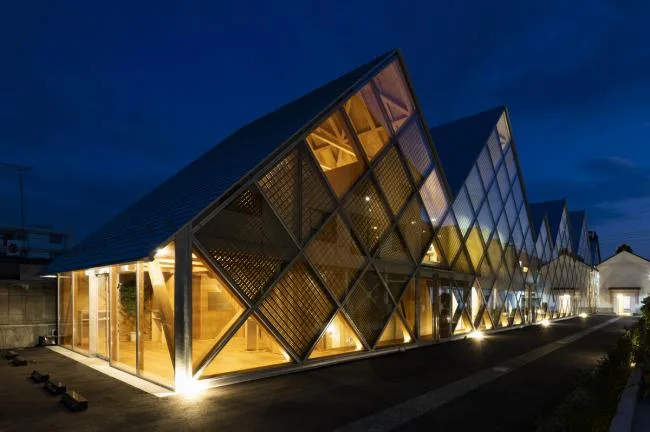
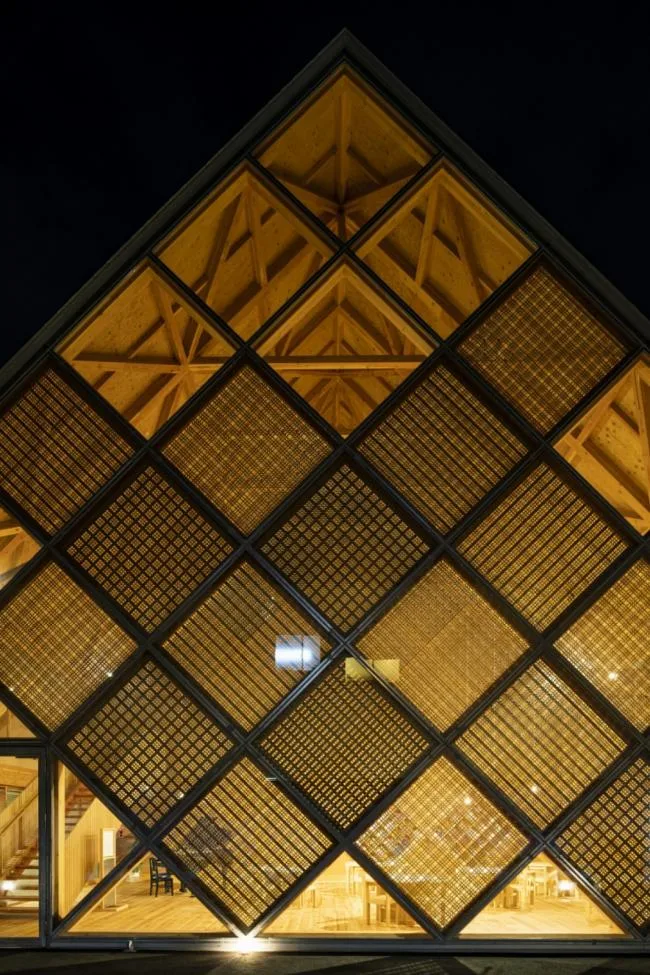
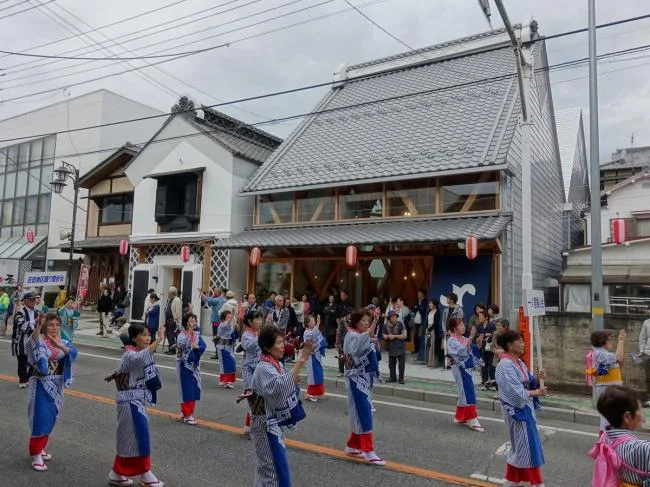
A historic pathway runs through a narrow site connecting the Tomioka Silk Factory and City Hall. This design introduces natural light and provides a shaded public space for traditional town festivals and other events. The warehouse at the end of the path has been restored and now serves as the entrance to the historic district.
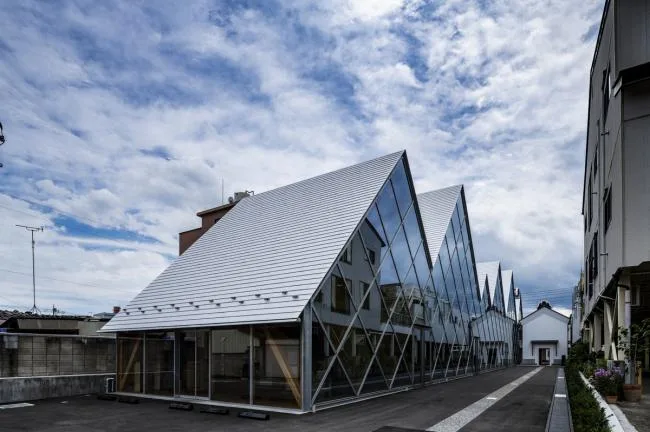
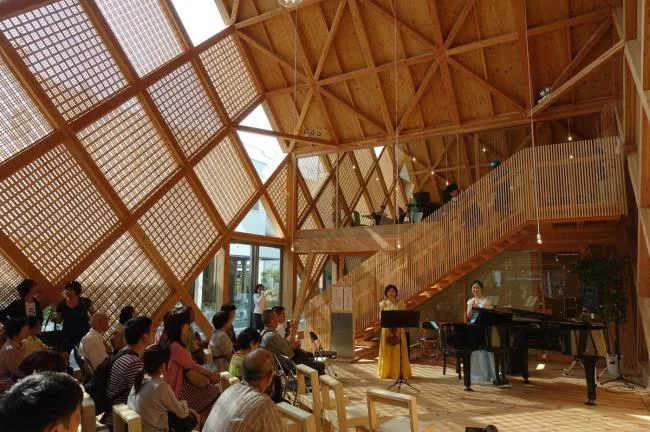
The floor tiles lining the central axis are recycled from the old Yoshino Kimono Shop. Facing the street is the hall, and behind it stands a grand piano donated by the Yoshino family. The hall has no fixed seating or sound control devices, but is easily accessible from the street. The lobby is a versatile space, accommodating symphony concerts, rehearsal venues for local festival dances, and other community activities. It serves as a gathering place and the new heart of the local community.
Project Drawings:
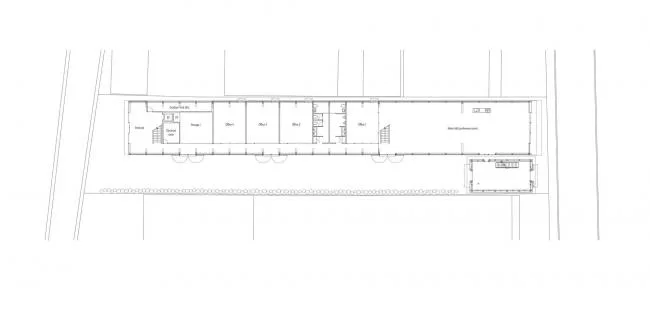
▲ First Floor Plan
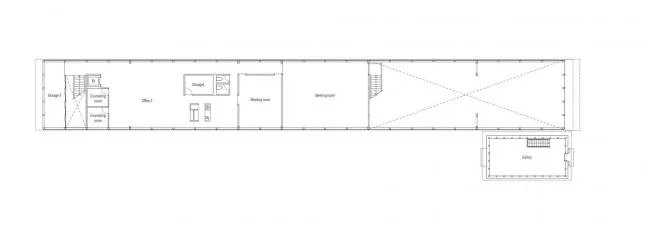
▲ Second Floor Plan
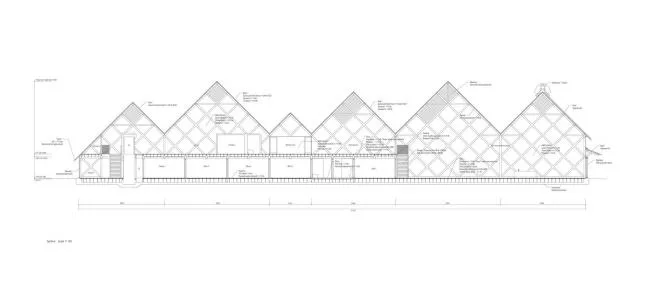
▲ Section View
Project Information:
Architectural Firm: Takaharu Tezuka Architectural Firm
Location: Tomioka, Gunma Prefecture, Japan
Category: Office Facilities
Total Construction Area: 502.34 m² (including sleeve storage: 44.95 m²)
Design Team: Takaharu Tezuka, Yui Tezuka, Keiji Yabe
Project Year: 2018
Photographer: Kida Katsuhisa – Fototeca
Manufacturer: Autodesk
Structural Engineers: Ohno JAPAN / Hirofumi Ohno, Ryuhei Fujita, Takehiro Ebisawa
Lighting Design: Bonbori Lighting Architects & Associates, Inc.
Total Floor Area: 801.64 m² (including bed (BIM design) and storage: 86.64 m²)
Site Area: 1067.24 m² (including sleeve storage: 83.25 m²)
Maximum Height: 12,060 mm
Elevation Height: 5,473 mm
Floor Thickness: 2,964 mm
Ceiling Thickness: 2,615 mm
Main Span: 1,600 mm × 1,287 mm












Must log in before commenting!
Sign Up