
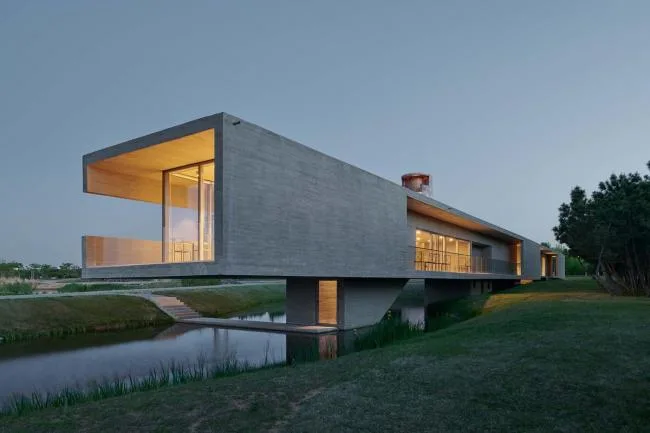
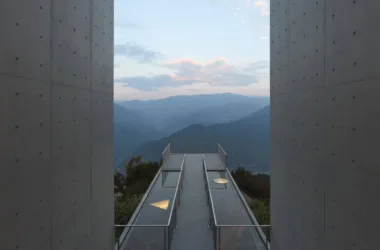
▲ Panoramic view of the landscape gallery
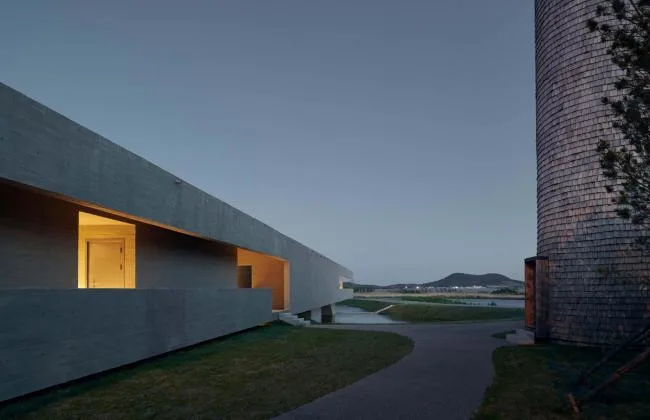
▲ Facade of the landscape corridor
Swan Lake Wetland Park is situated in Rongcheng City, Shandong Province. This natural wetland borders the Yellow Sea and features a flat, open terrain covered with reeds and winding waterways. Every October, flocks of swans migrate south from Siberia to spend the winter here. The park’s stunning scenery and the arrival of the swans attract numerous tourists for sightseeing each year.
In response, the local government proposed constructing a group of buildings within the park to offer visitors amenities such as sightseeing spots and dining facilities.
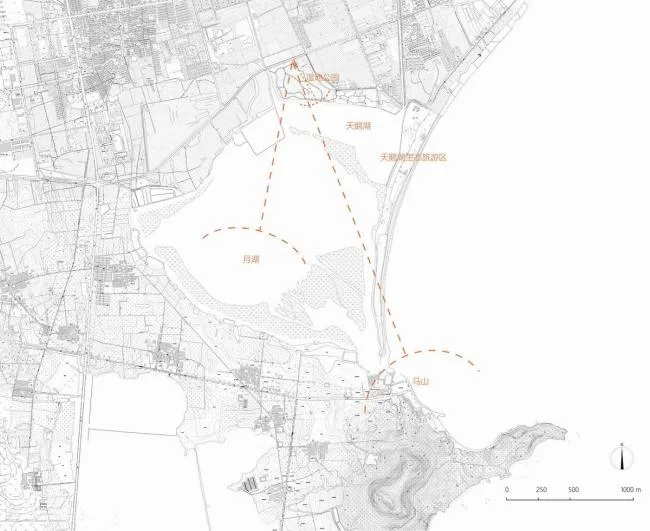
▲ Regional map
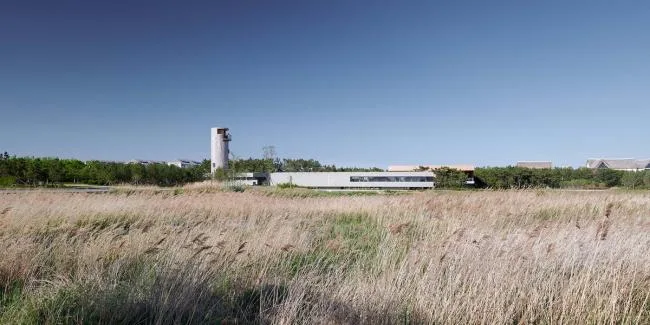
▲ Architectural panorama
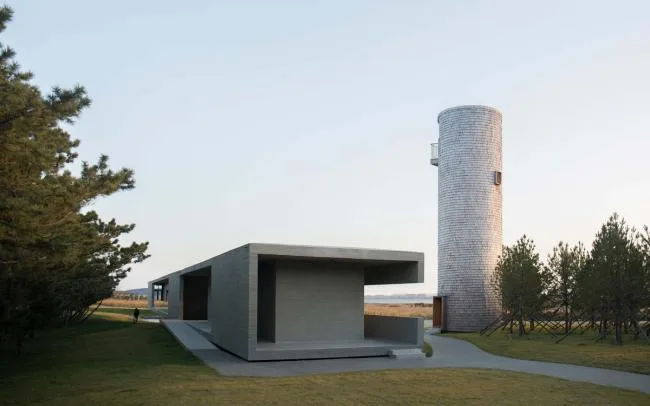
▲ Architectural panorama
The building is located at the northeast corner of the wetland, backed by a dense black pine forest and facing the entire wetland landscape. The structure can be described as both a “bridge” and a “tower”:
- The horizontal landscape corridor stretches 71 meters long, resembling a long bridge floating above soft soil and flowing water. This design maximizes the continuity of the natural terrain, acting like a ruler extending from the wetland onto the water surface, illustrating terrain changes through its levelness.
- The vertical observation tower rises 15.6 meters high, like a lighthouse beside the water, offering visitors panoramic views of the wetland and Mount Ma.
These two volumes—horizontal and vertical—are intimately connected with the site, interacting with the space in three dimensions.
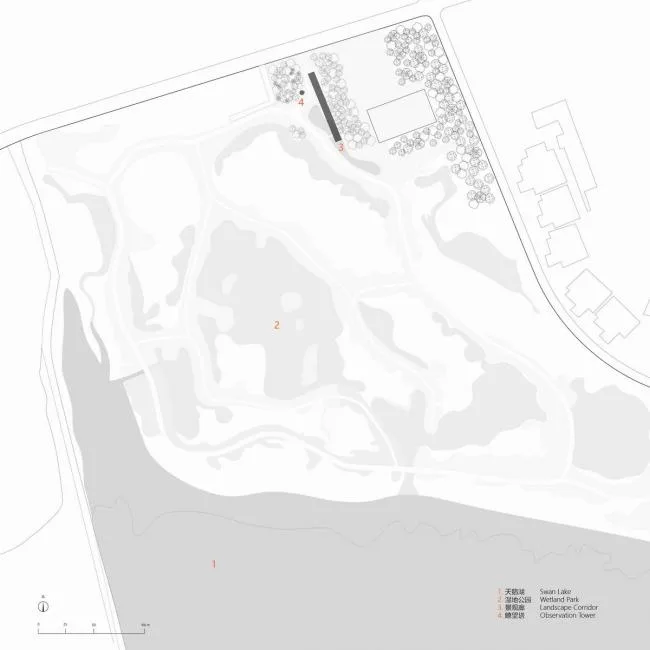
▲ Field map
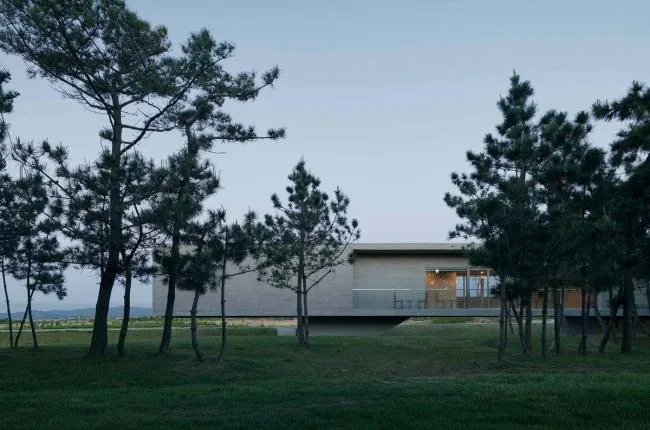
▲ Long view of the landscape gallery
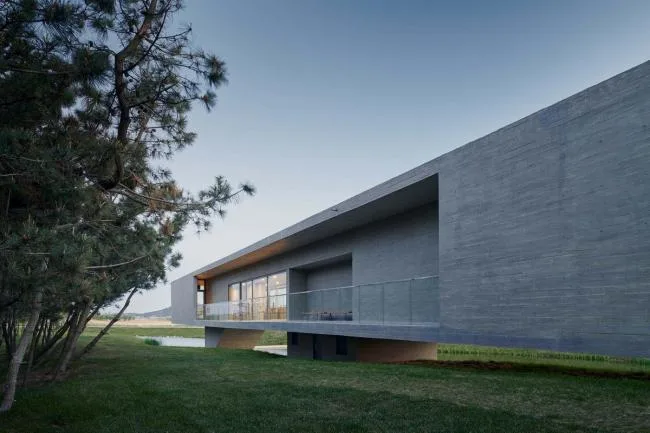
▲ Facade of the landscape corridor
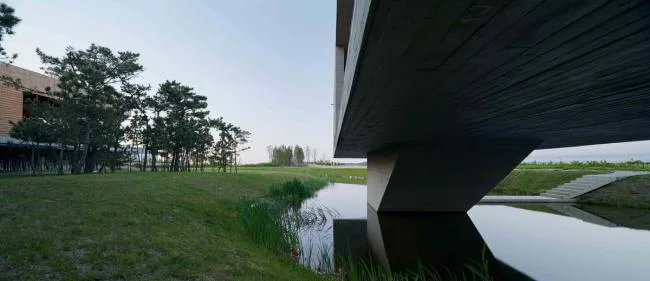
▲ View of the water surface from beneath the building
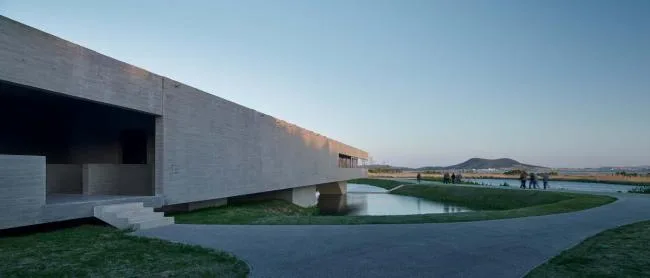
▲ Facade of the landscape corridor
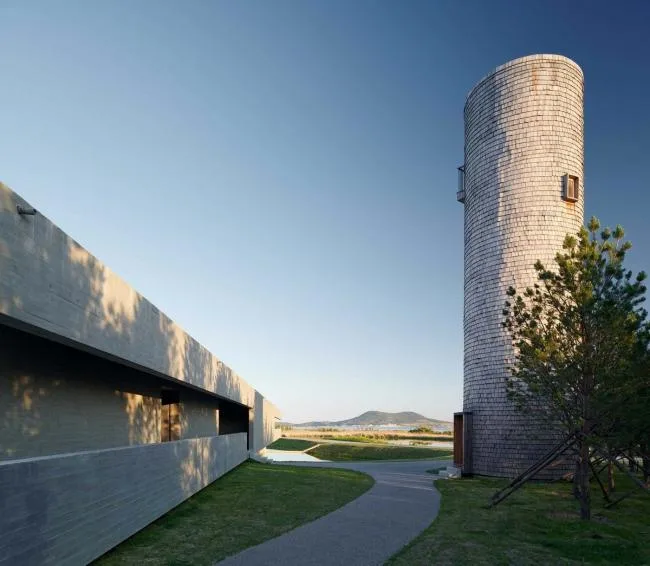
▲ Close-up view of the building
Originally, the landscape corridor was designed to function solely as a coffee shop and restrooms. However, considering the surrounding environment and user activities, the building was intentionally designed to maintain a fully open attitude toward the wetland and pine forest landscapes. This naturally added a third function of viewing and sightseeing, connecting the initial two.
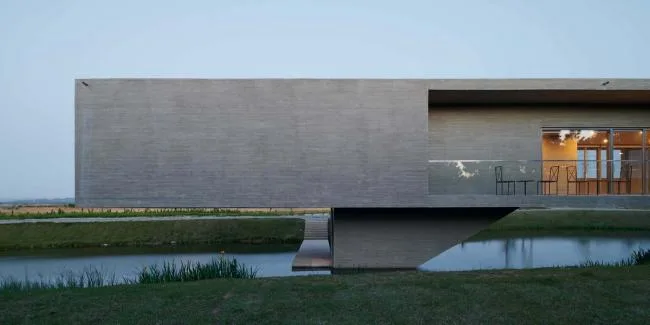
▲ Facade of the landscape corridor
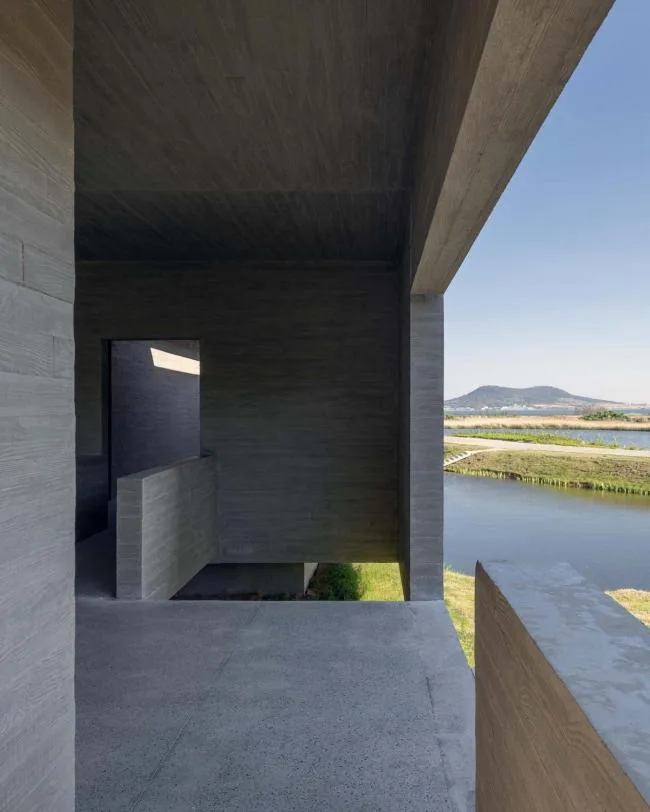
▲ Entrance to the landscape gallery
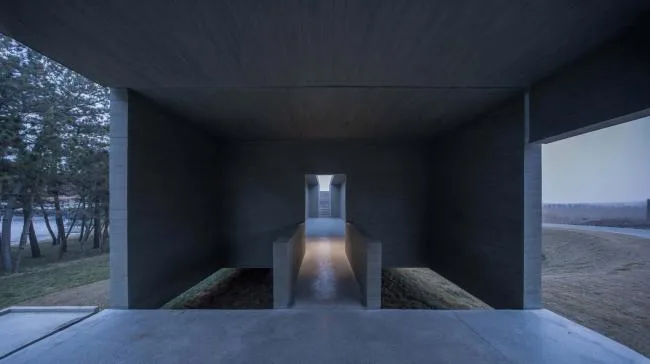
▲ Main entrance of the landscape corridor
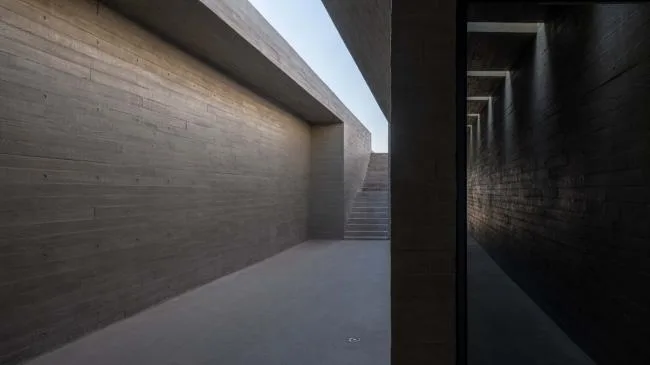
▲ Courtyard
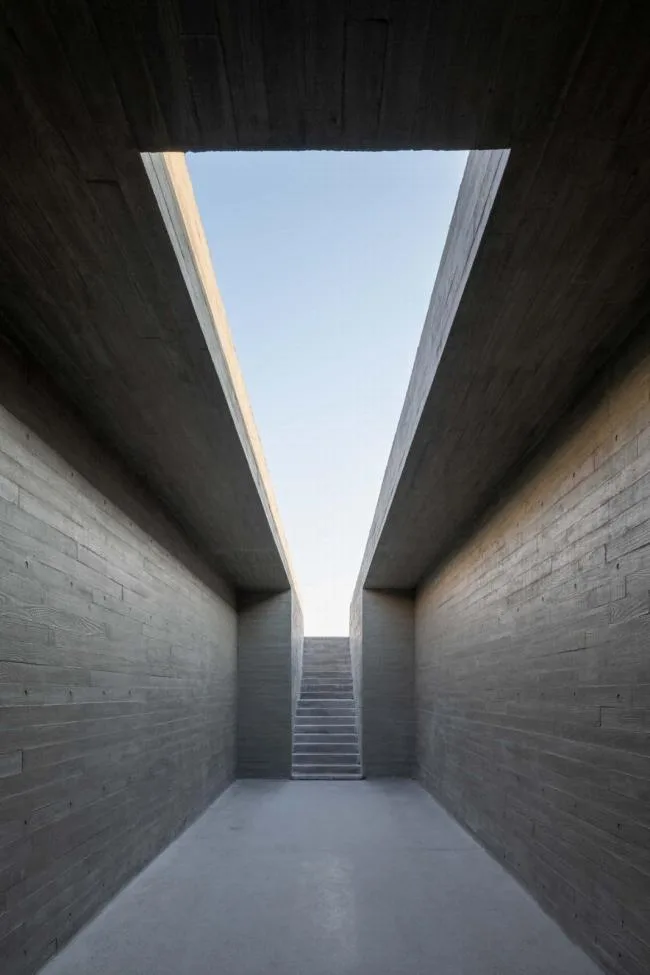
▲ Courtyard
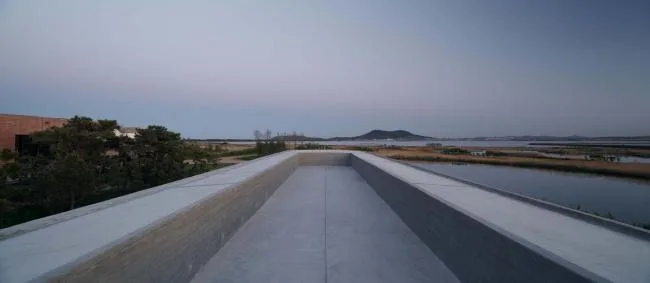
▲ Roof viewing platform
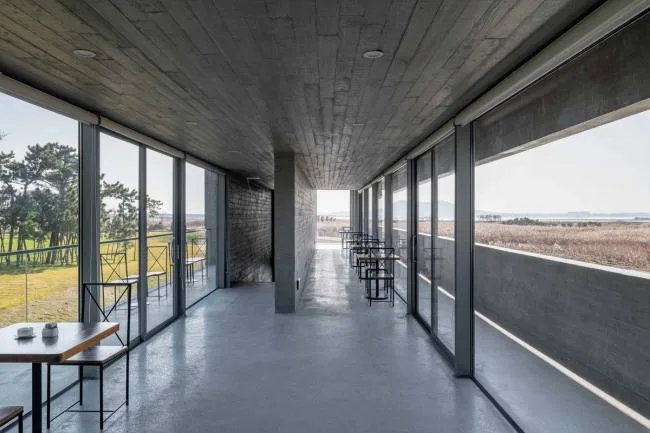
▲ Coffee shop
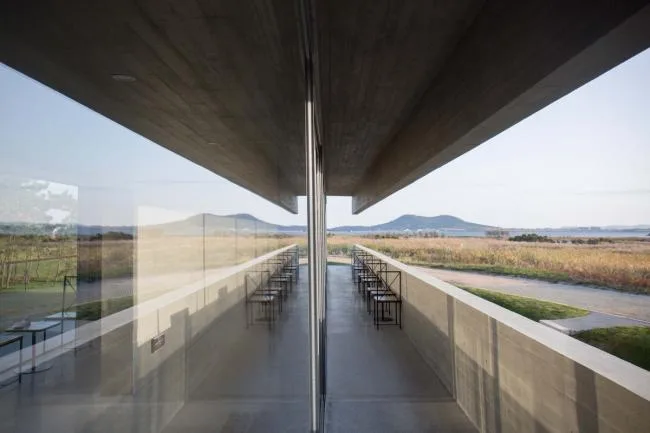
▲ Coffee shop corridor
The architectural layout is organized into three levels along the building’s longitudinal axis. The coffee shop and restrooms occupy the central section, flanked by circulation spaces on both sides. The semi-outdoor corridors on each side offer contrasting atmospheres: the eastern corridor, adjacent to the pine forest, feels more secluded and tranquil, while the western corridor faces the wetland, offering a more open and expansive experience.
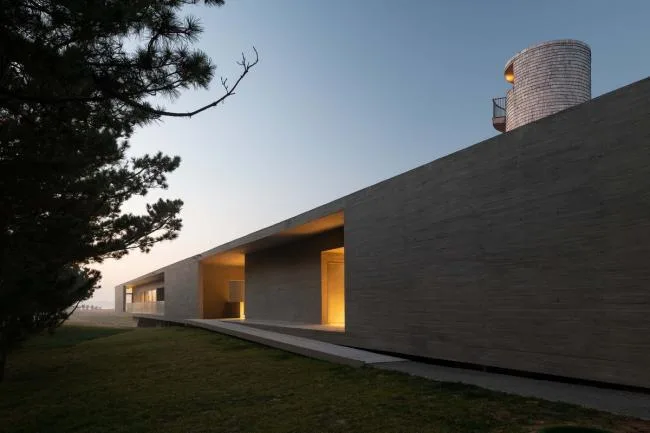
▲ Landscape gallery at night
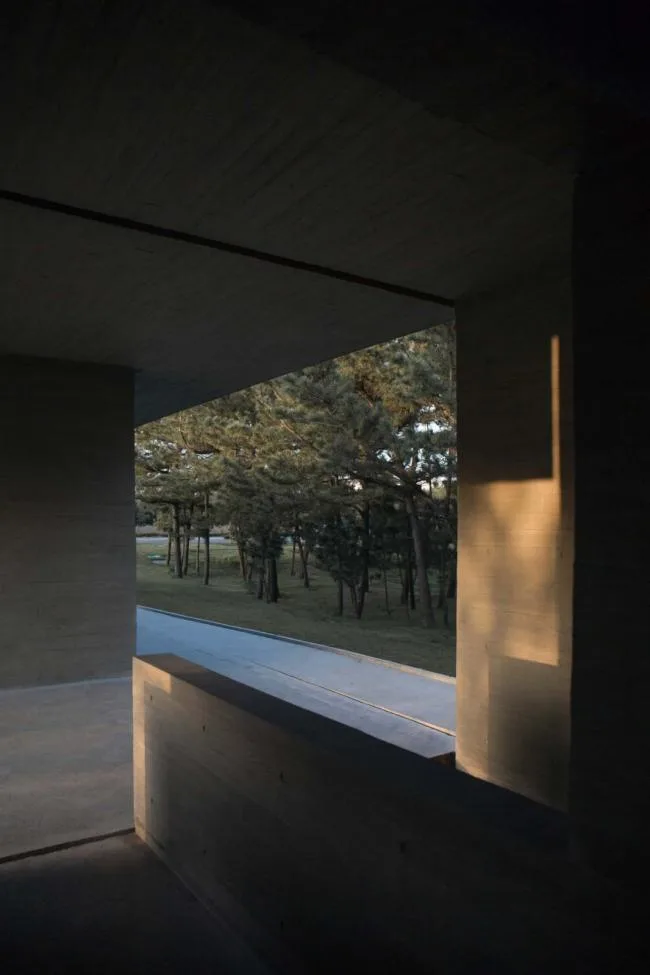
▲ Main entrance of the landscape corridor
The paths on either side occasionally converge during the journey, creating entrances, bridges, or inner courtyards. At other times, they split into staircases—leading upwards to a rooftop platform with distant mountain views, or downwards for close-up encounters with the rippling waters below. This arrangement ensures a rich variety of experiences throughout the tour.
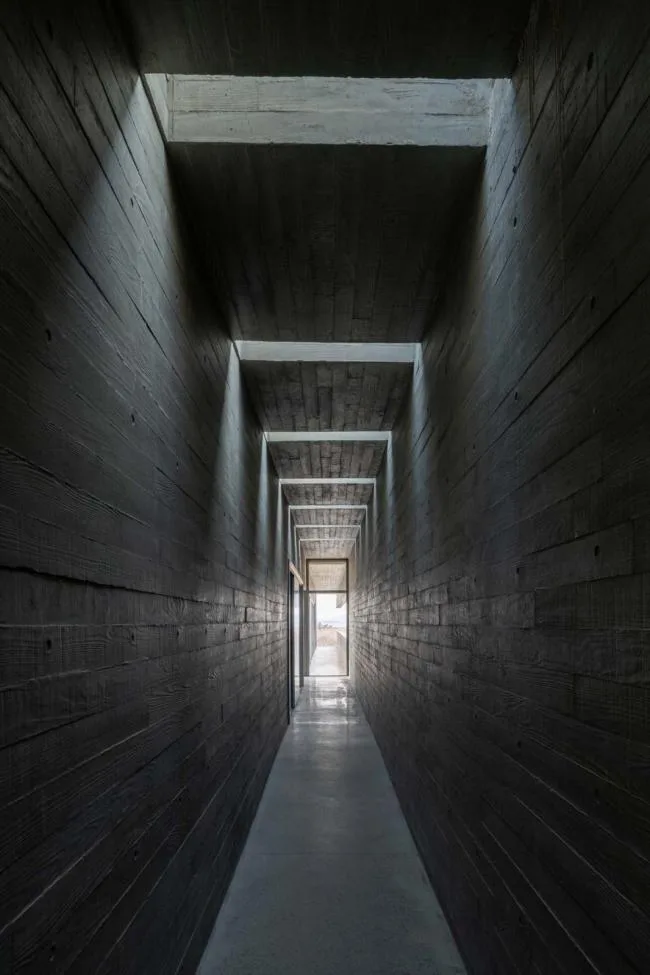
▲ Indoor gallery
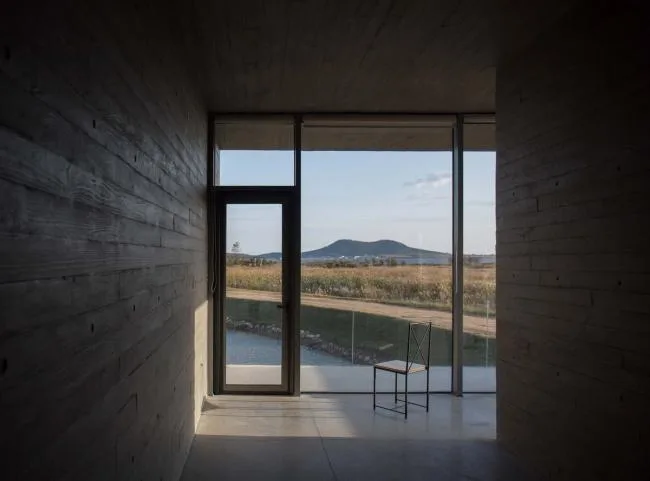
▲ Coffee shop view
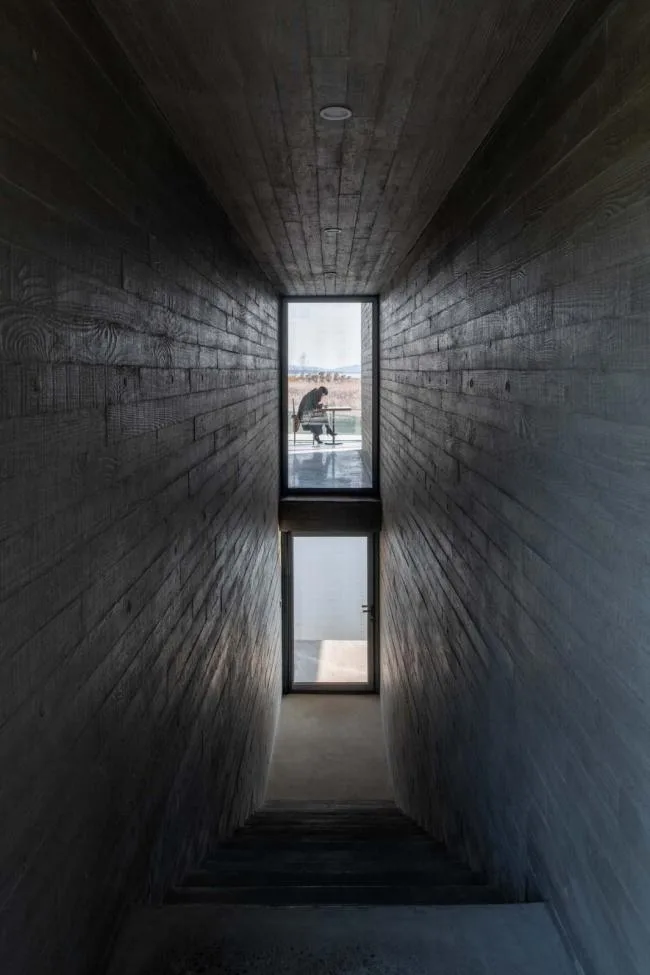
▲ Staircase leading to the water’s edge
To accommodate the large-span bridge structure, the building employs a fully cast-in-place concrete structure using wooden formwork. Multiple cast-in-place walls are arranged between two horizontal floor slabs, enhancing the overall structural integrity while dividing different architectural spaces.
The staggered pine wood formwork imprints a delicate wood grain texture onto the concrete walls, imparting warmth to the building and reflecting the surrounding pine forest environment.
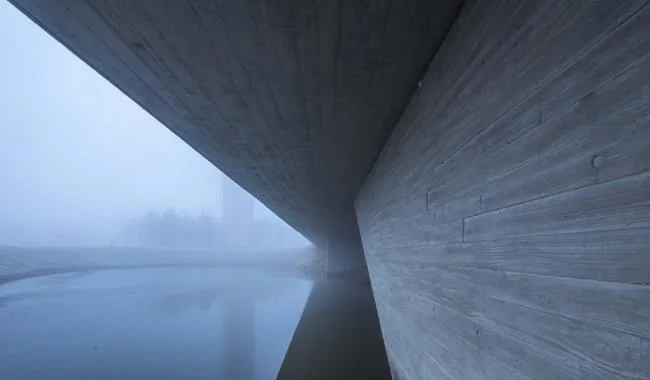
▲ Detail of the landscape corridor’s base wall
The bird watching tower is designed with a focus on the visitor experience and atmosphere during the tour. Its exterior is relatively enclosed and clad in wooden shingles. Over time, the shingles weather under sunlight and climate conditions, transitioning from natural wood tones to gray, creating a calm and serene ambience.
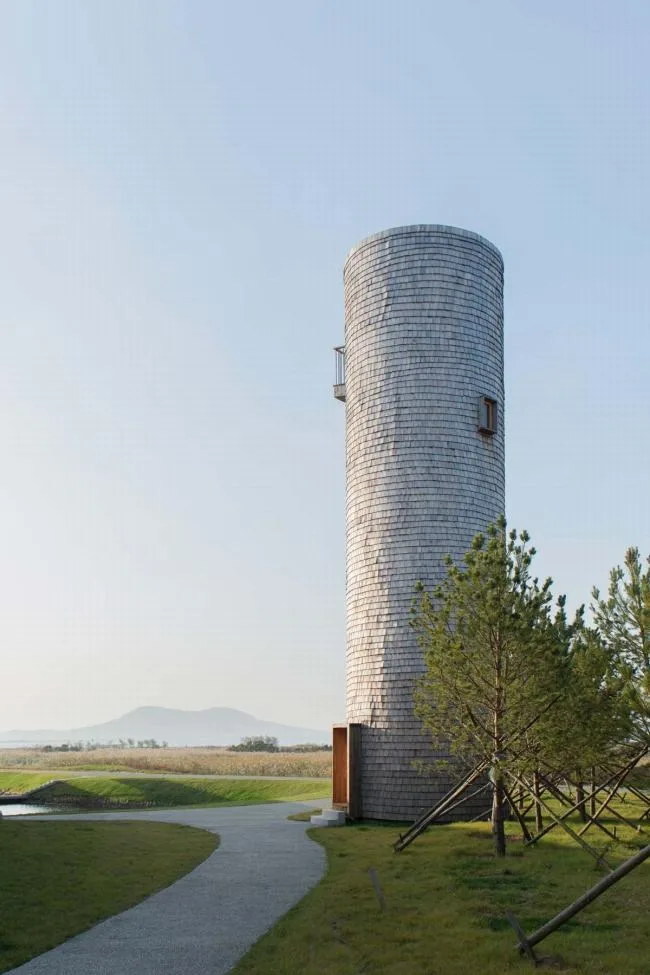
▲ Bird watching tower
The primary light source inside the wooden tower is a skylight at the center of the roof, causing the interior space to gradually brighten from bottom to top. Upon entering, visitors find the space initially dim, then spiral upward via wooden stairs. Along the ascent, small window openings reveal fragmented “frame scenes” of the surrounding wetland. As visitors climb higher, natural light increases until they reach the observation platform at the top, where expansive views of Swan Lake’s wetland unfold.
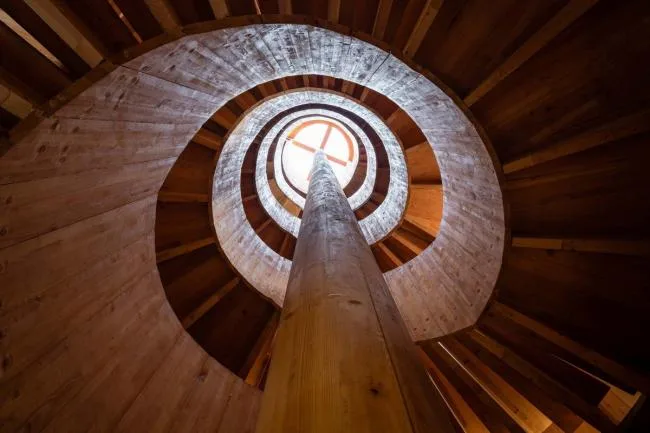
▲ Overhead view of the bird watching tower
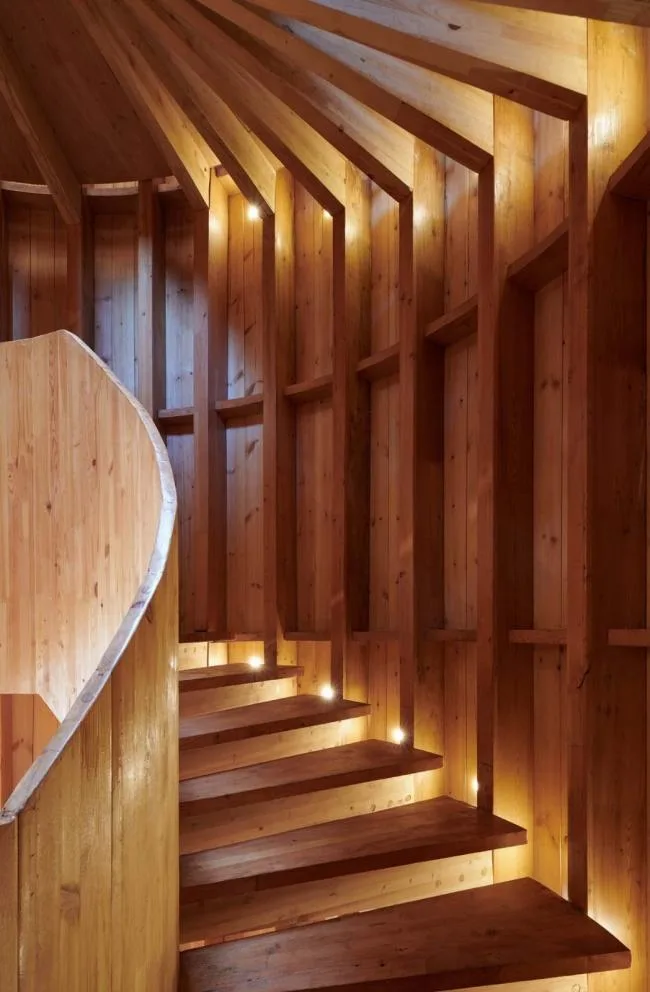
▲ Stairs inside the bird watching tower
Design Drawings:
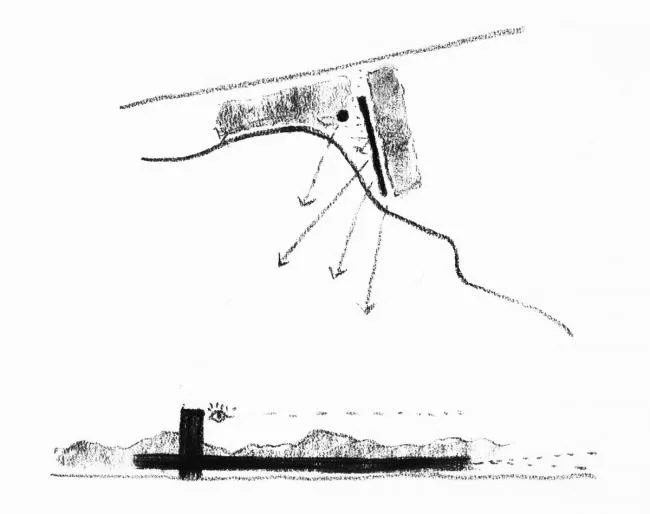
▲ Sketch
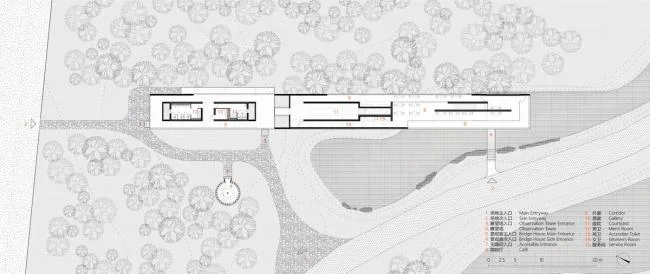
▲ Floor plan
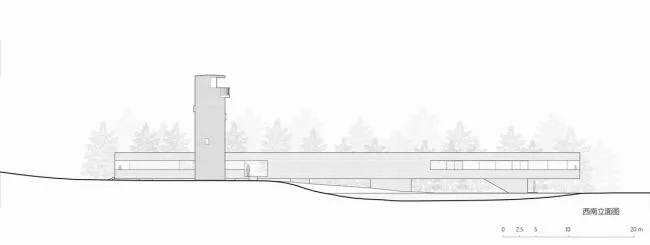
▲ Southwest elevation
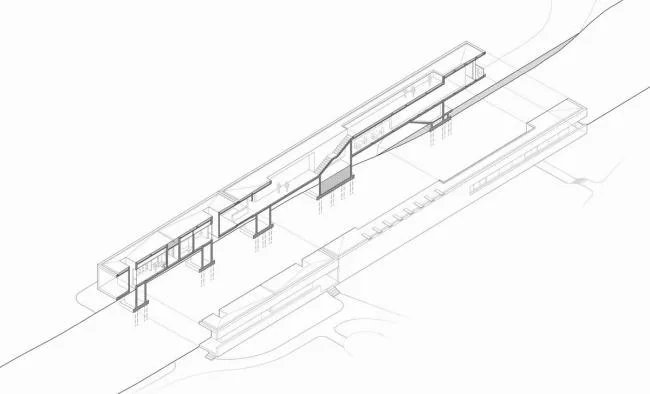
▲ Longitudinal section of the landscape corridor
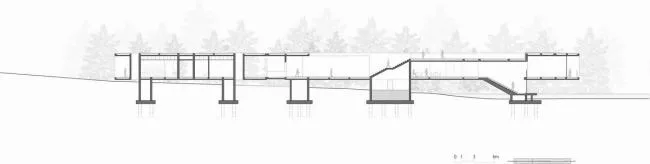
▲ Longitudinal section of the landscape corridor
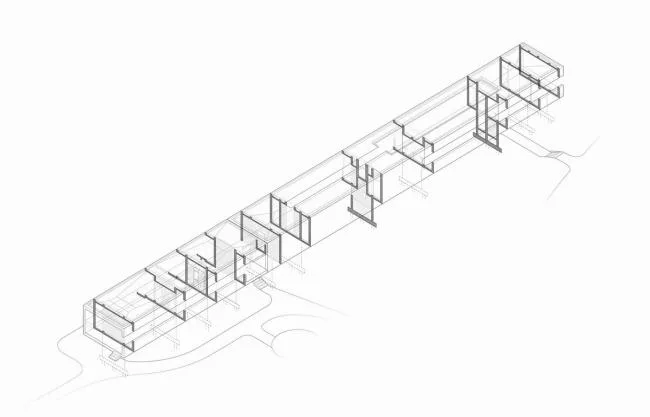
▲ Cross section of the landscape corridor
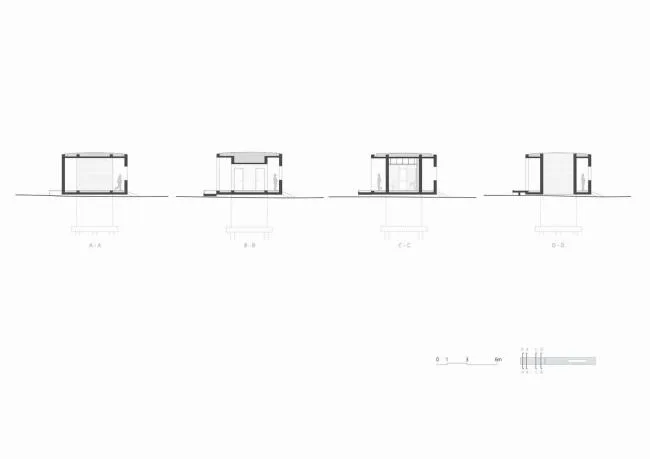
▲ Cross section of the landscape corridor
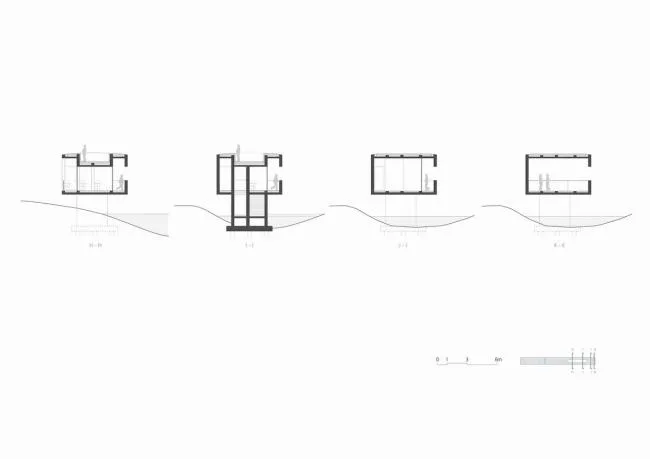
▲ Cross section of the landscape corridor
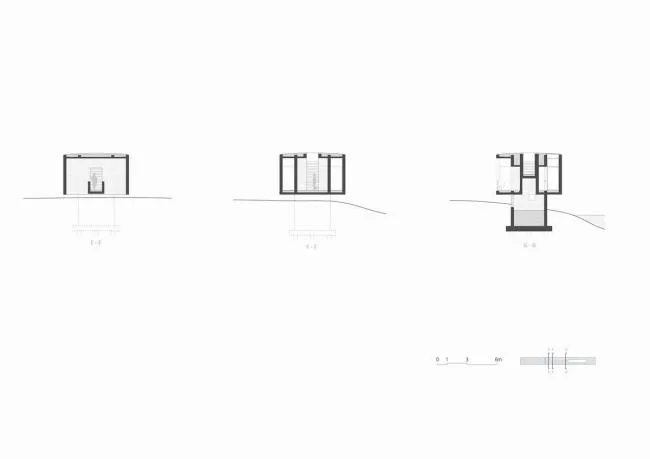
▲ Cross section of the landscape corridor
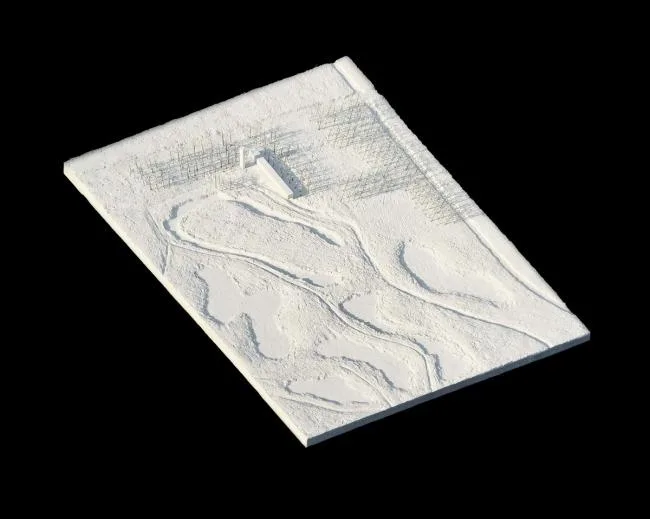
▲ Axonometric diagram
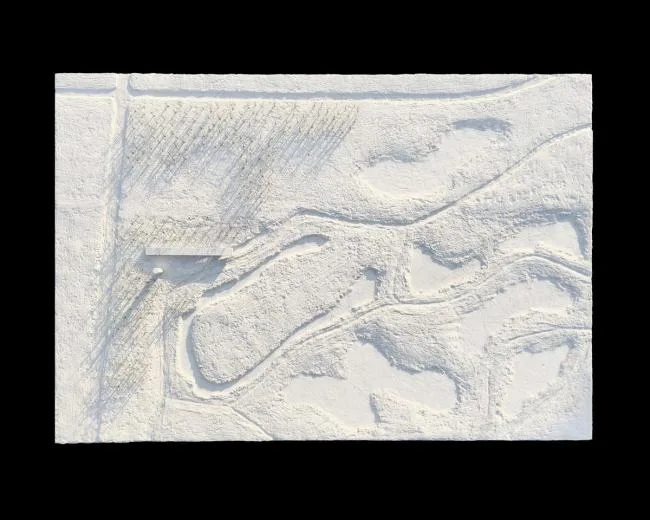
▲ Axonometric diagram
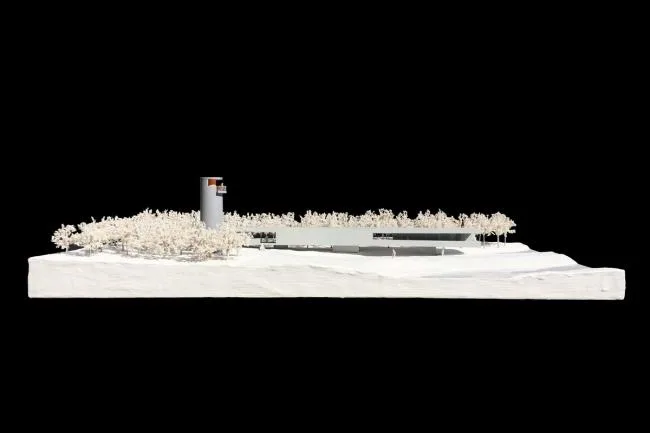
▲ Model diagram
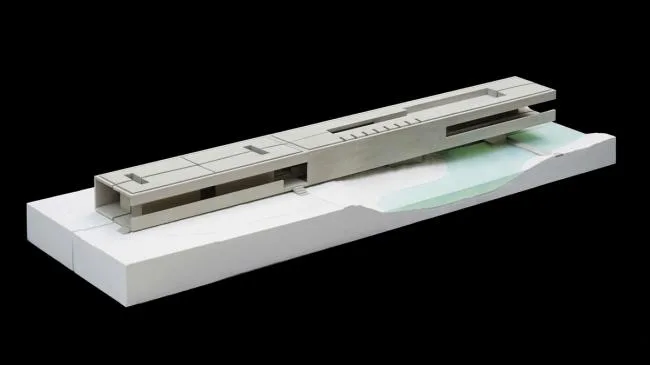
▲ Landscape gallery
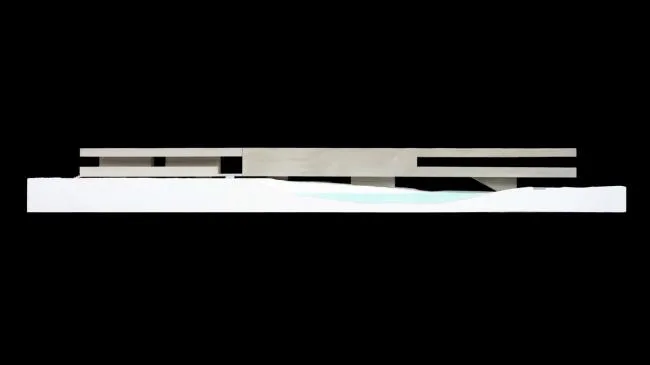
▲ Landscape gallery (BIM training) facade
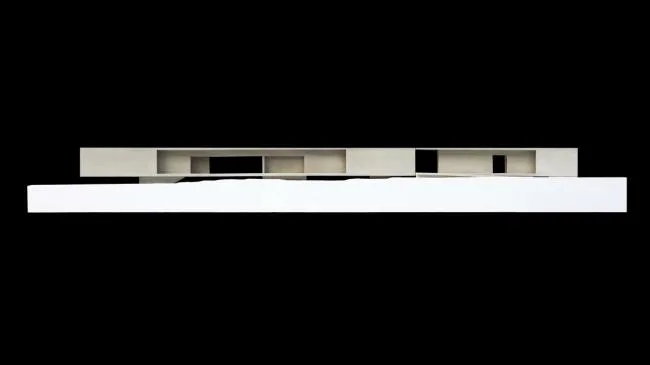
▲ Facade of the landscape corridor
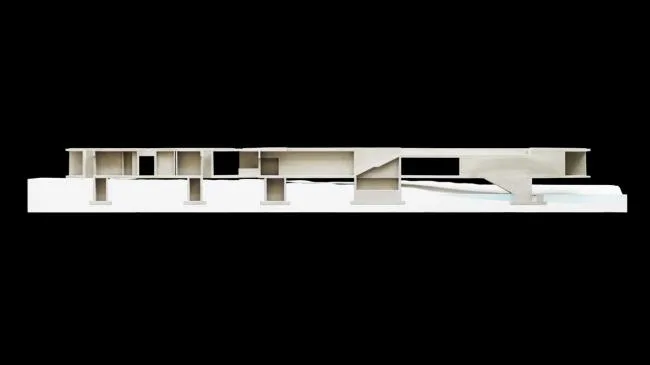
▲ Section of the landscape corridor
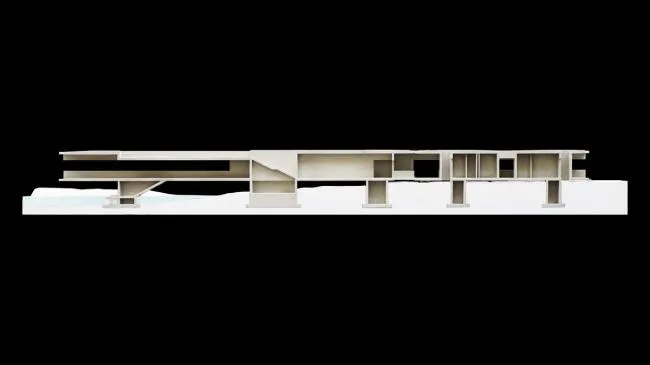
▲ Section of the landscape corridor
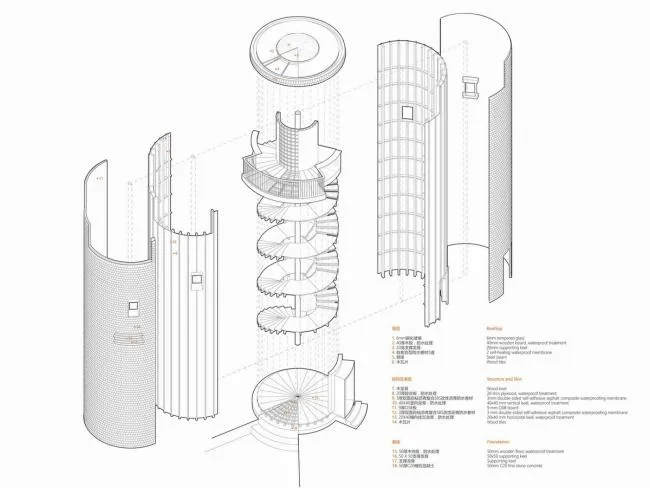
▲ Exploded axonometric view of Swan Lake Wooden Tower
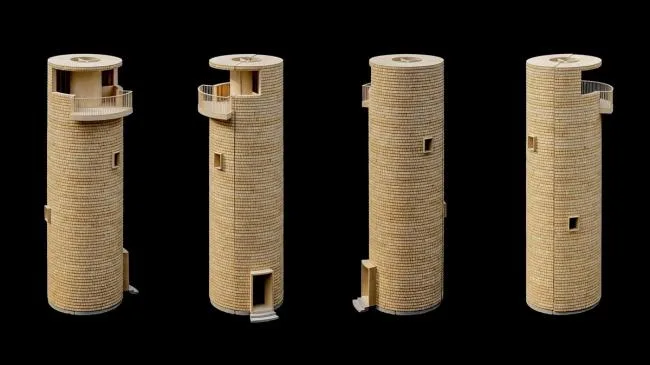
▲ Wooden tower model
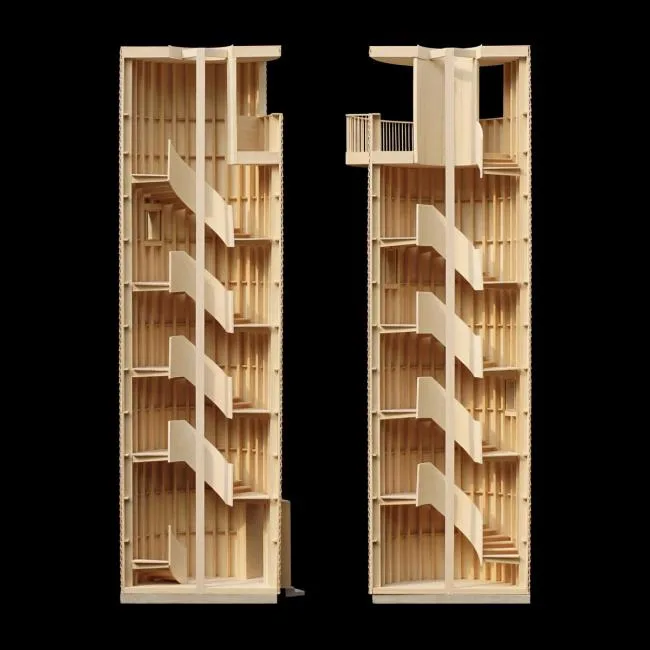
▲ Section of the wooden tower
Project Information:
Architectural Firm: TAO Architectural Firm
Location: Rongcheng City, Shandong Province, China
Project Type: Visitor Center
Lead Architect: Hua Li
Design Team: Huali, Lei Zheng, Liu Qiubing, Ma Kun
Building Area: 278.2 square meters
Year of Completion: 2018
Photographers: Chen Hao, Zhao Yilong, Yang Tianzhou
Structural Engineer: Ma Zhigang
Construction Team: Weihai Construction Group Third Company
Mechanical and Electrical Engineer: Lv Jianjun
Owner: Rongcheng Good Luck Corner Tourism Resort Construction Bureau












Must log in before commenting!
Sign Up