
An abandoned beach boat tilts and slowly sinks as the sea mist rises and disperses, leaving the air silent.
It stretches horizontally toward the sky, breaking free from the constraints of the earth, covering the pavilion with wind and shade.
The structure ascends, penetrates, and extends the horizon—rotating, hovering, converging, and pointing skyward.
Columns that are neither just columns nor concrete ladders embody both heaviness and lightness.
This is architecture beyond architecture: a state of both staying and moving, capturing an eternal moment.
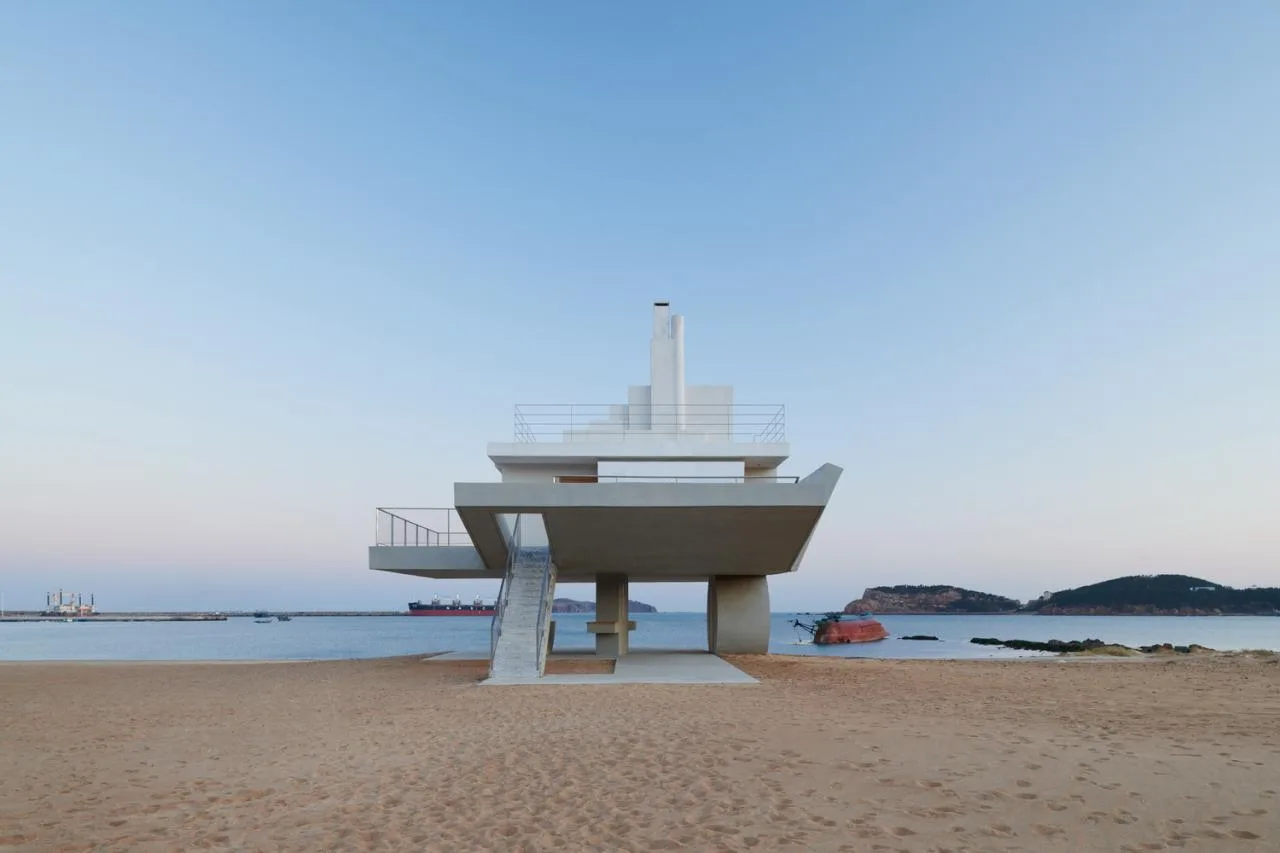
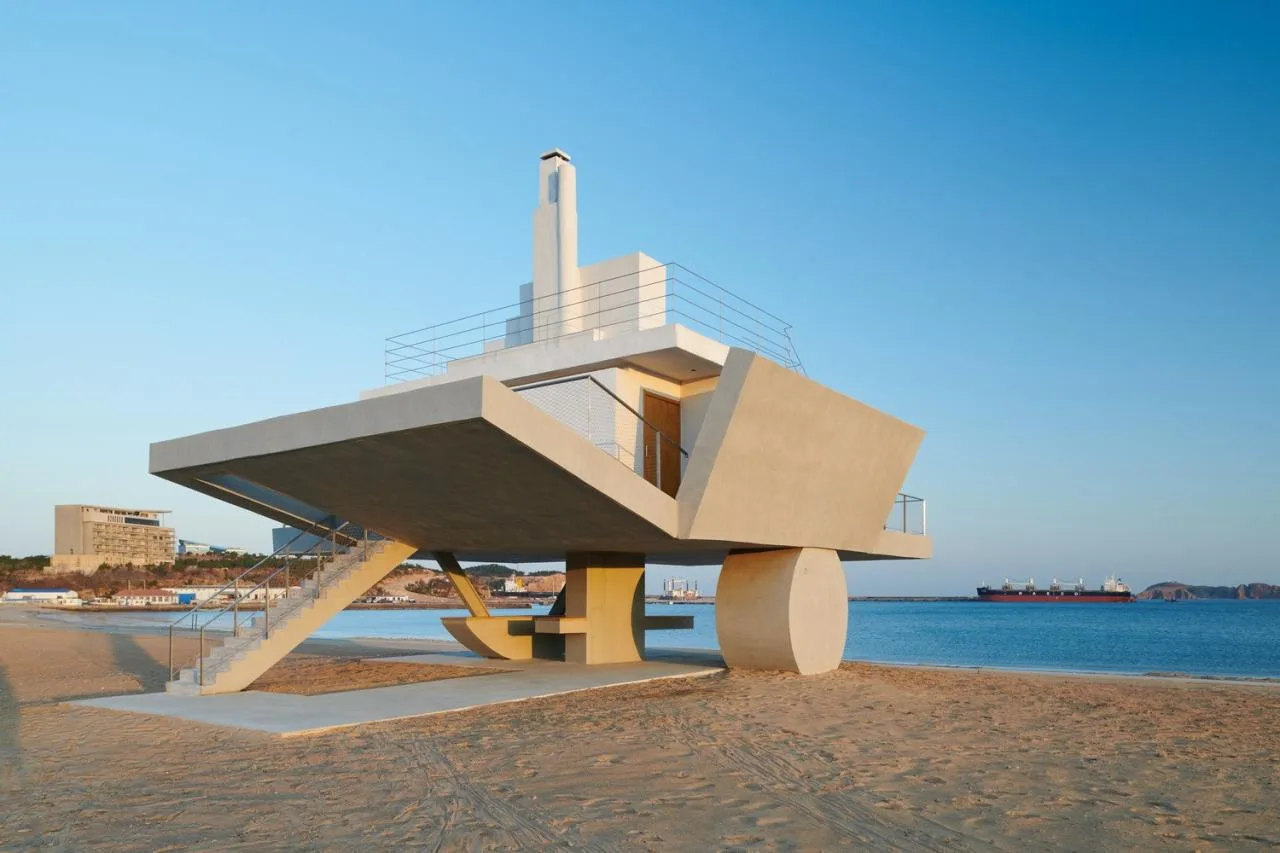
△ Overall view of the building © Chen Hao
Instantaneous
At the easternmost tip of the Jiaodong Peninsula, an abandoned fishing boat lies grounded in a pristine, undeveloped bay. The relentless erosion from waves has carved deep and shallow time marks into the boat’s surface.
Tilting as if ready to capsize, it embodies the ravages of the ocean. Between motion and stillness, life and death converge into an eternal yet fleeting image.
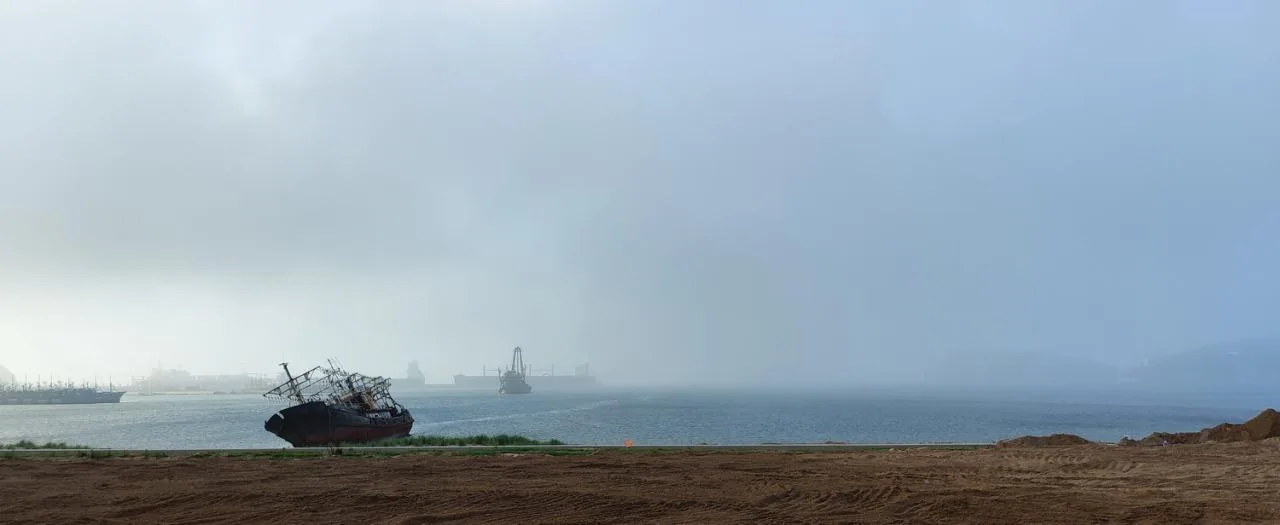
△ Site photos © Architectural Firm (TAO)
This poetic scene inspires the vision of a floating pavilion—light, small, and airy—arriving gently at this beach, yet ready to depart at any moment.
It responds delicately and compactly to the vast emptiness, balancing the weight of eternity with momentary lightness.
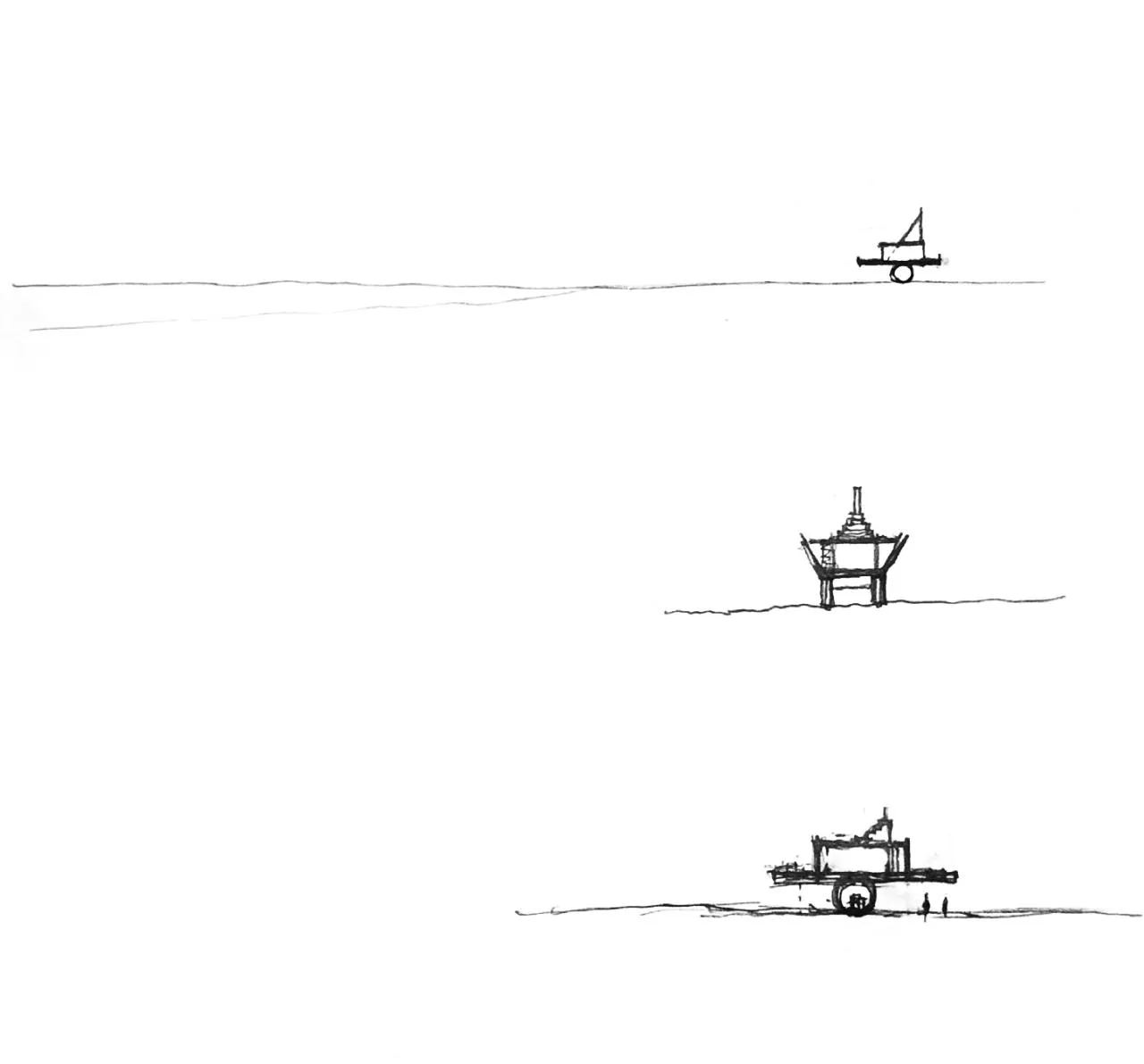
Concept sketch © Huali
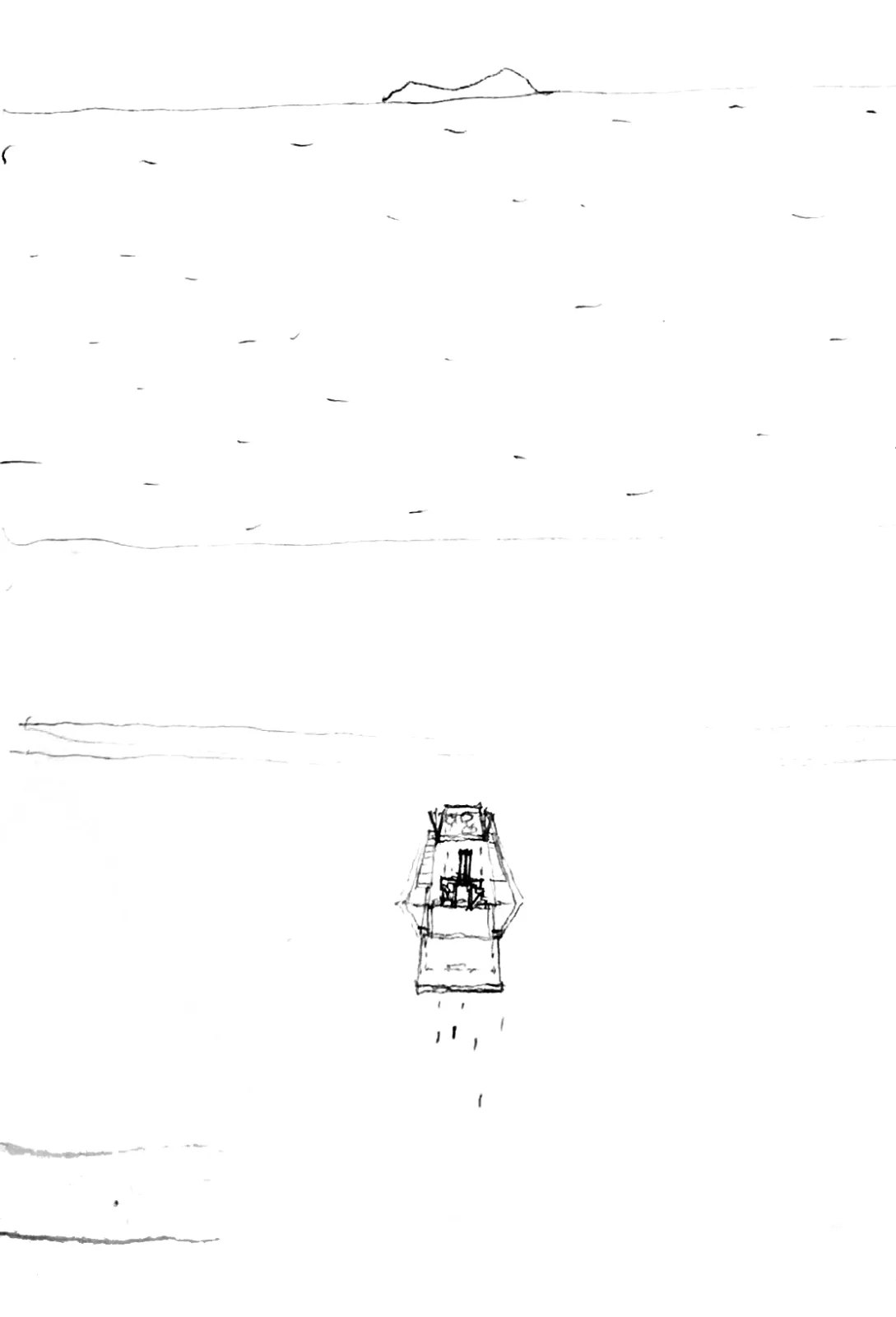
Concept sketch © Huali
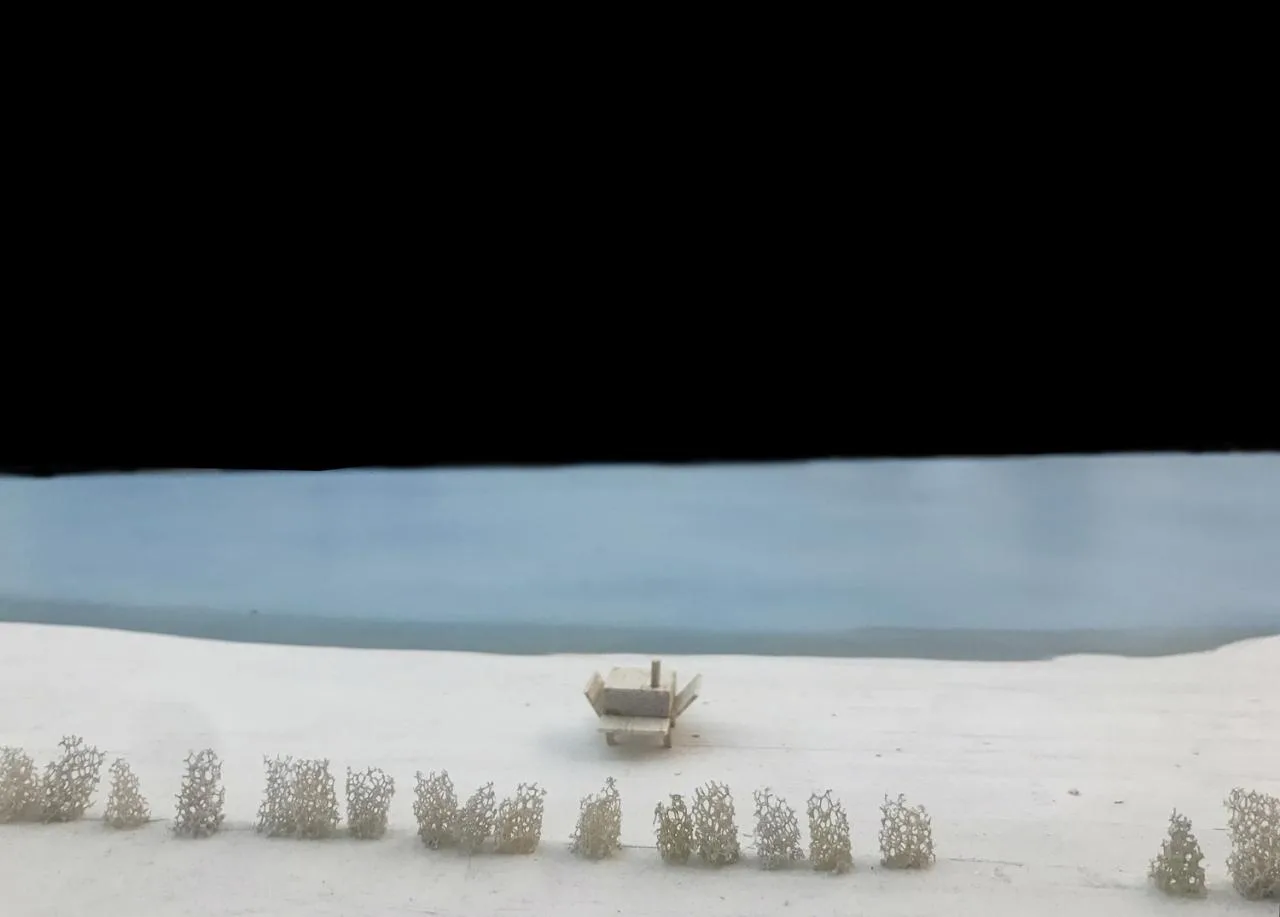
△ Conceptual Model © Architectural Firm (TAO)
Horizon
The pavilion’s defining feature is a broad horizontal plane that stretches boldly toward the sky, supporting the main functional spaces above.
Below, various shaped elements form a semi-outdoor space sheltered by this plane, creating the pavilion’s distinct image.
This horizontal surface serves a dual purpose: providing shelter from wind, rain, and sun above, while acting as a viewing platform elevated above the ground.
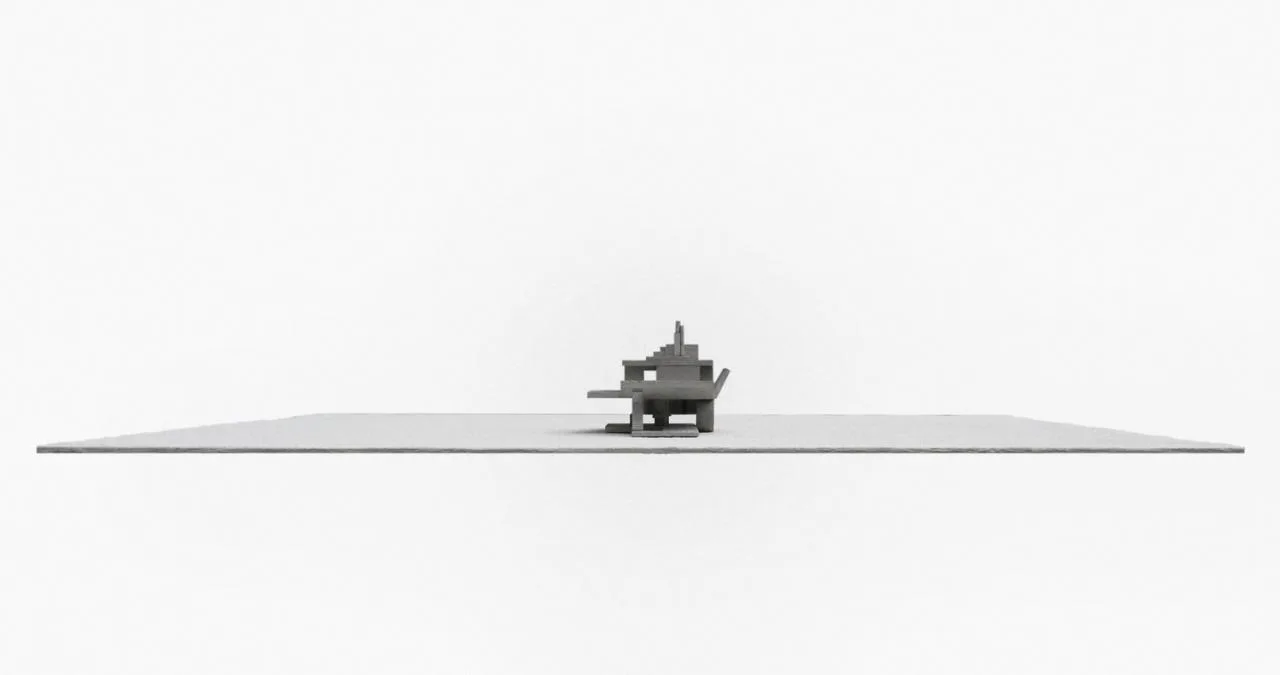
△ 1:125 handmade model © Architectural Firm (TAO)
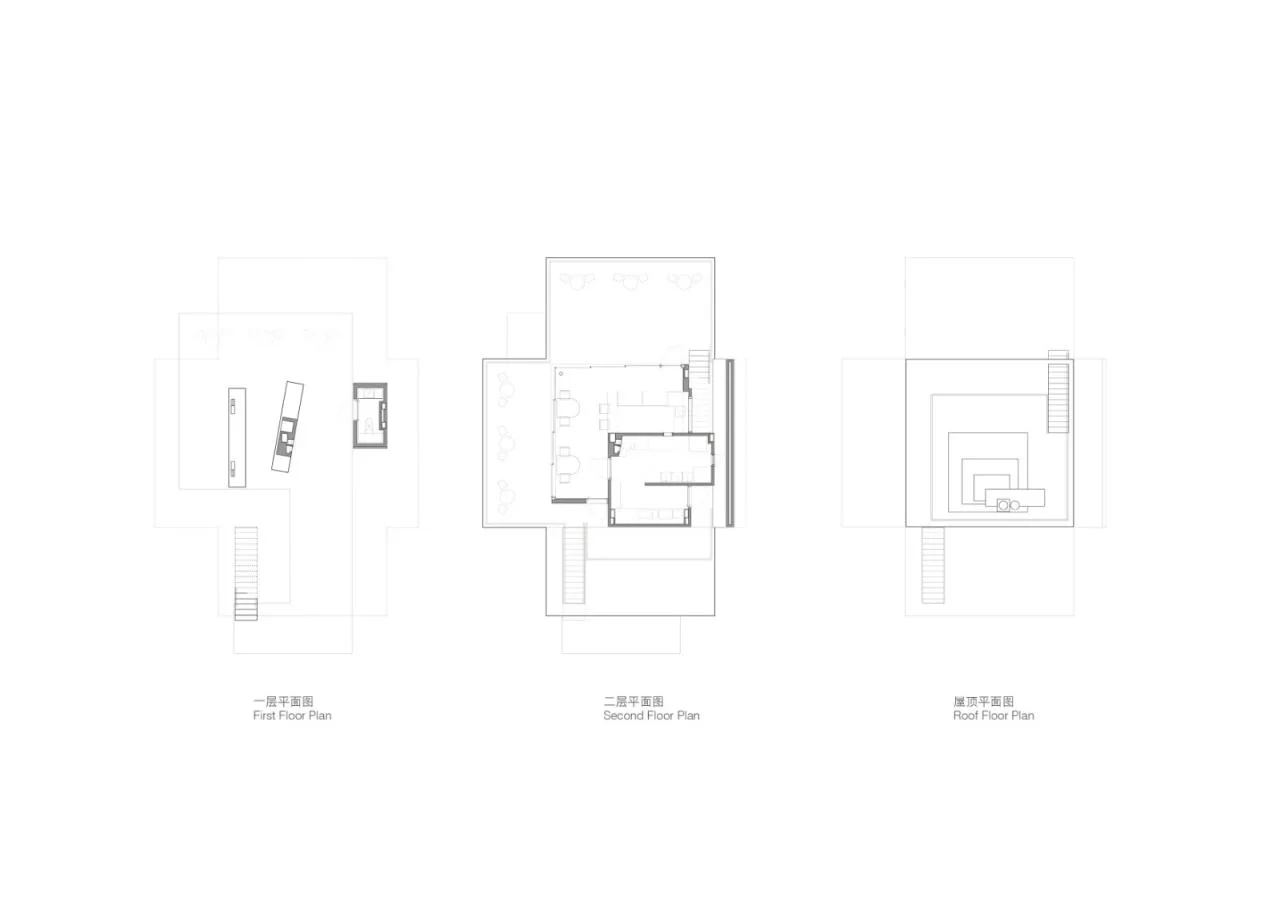
△ Plan view © Architectural Firm (TAO)
The striking horizontal plane resembles wings, lending the building a floating posture and creating a subtle separation from the site.
Its partial cantilever tilt gives the structure an unstable, dynamic appearance—either freshly landed, pausing to gaze at the sea, or ready to take flight again.
This frozen moment between movement and stillness is captured perfectly in the building’s form.
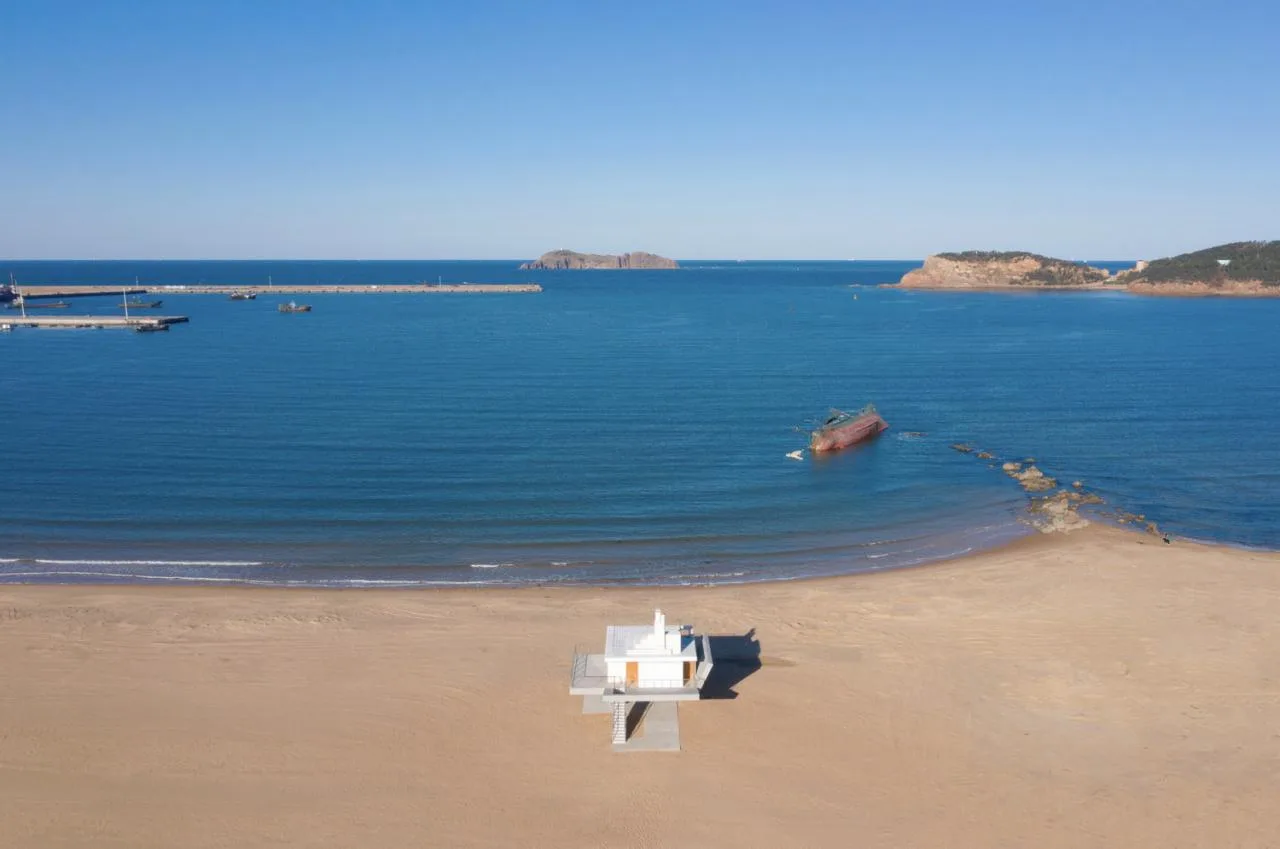
△ Aerial view of buildings © Sun Xiangzhou
The first level, elevated beneath the horizontal plane and supported by just a few components, emphasizes the separation between the upper structure and the ground, maximizing open space below.
Curved stairs, arcs, and circular forms create a dynamic, almost unstable feel that enlivens the pavilion.
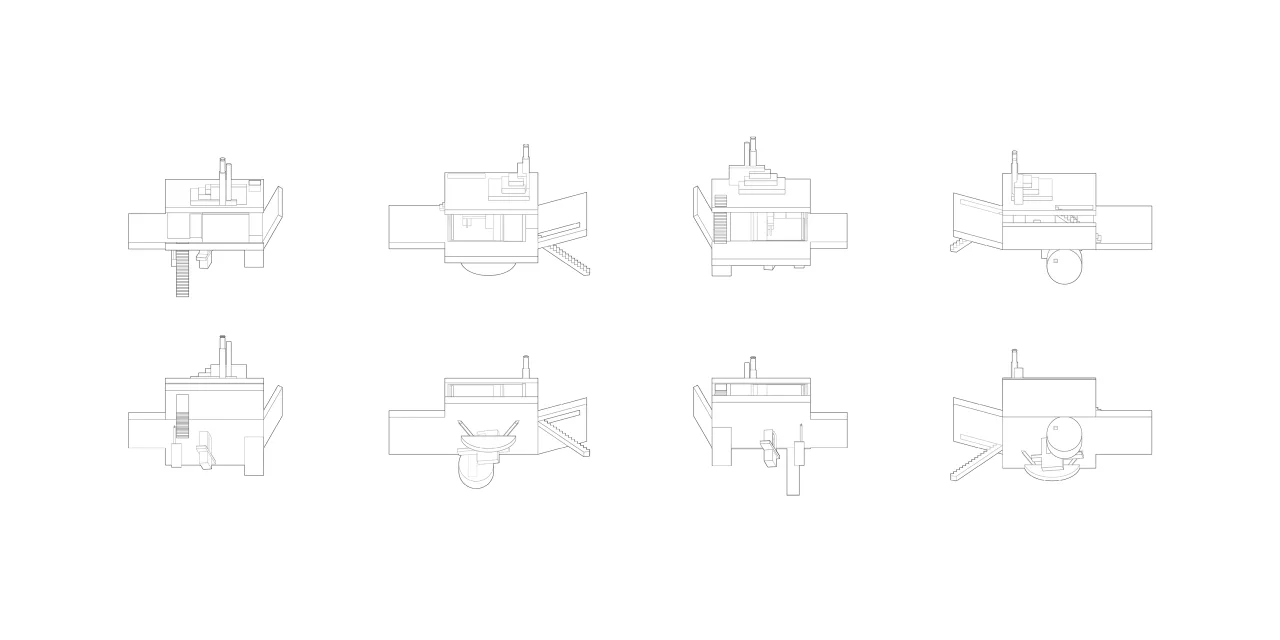
△ Axonometric diagram © Architectural Firm (TAO)
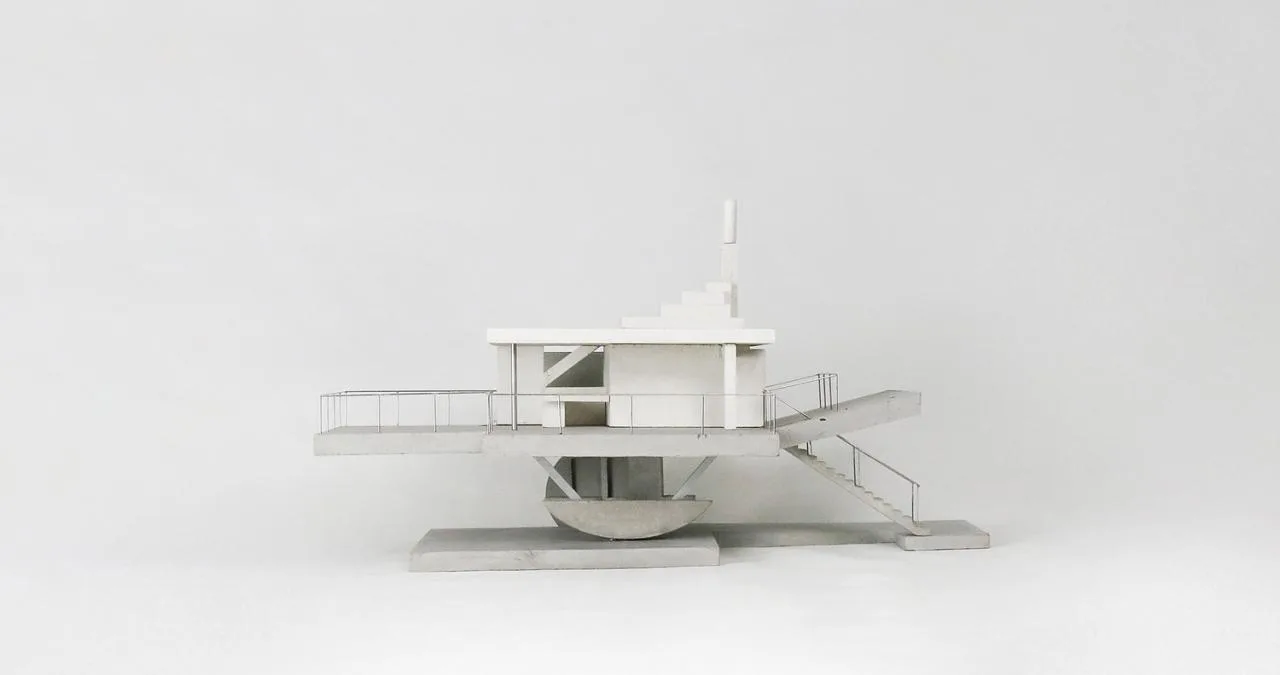
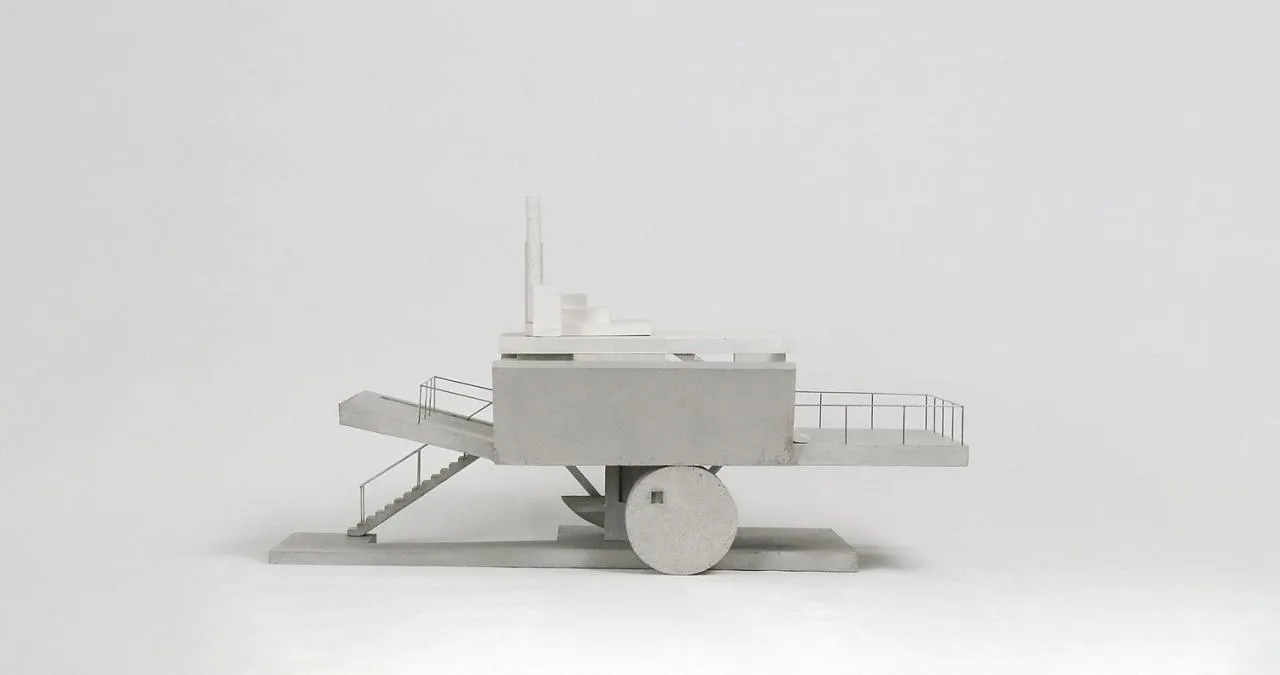
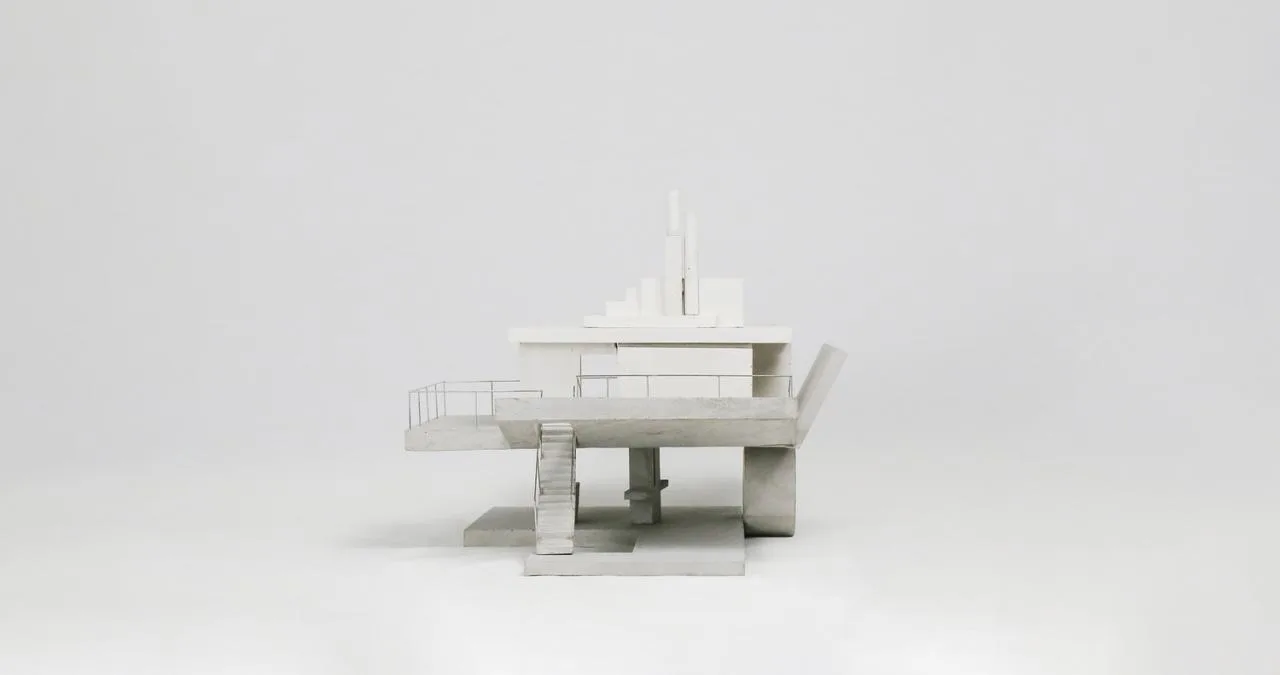
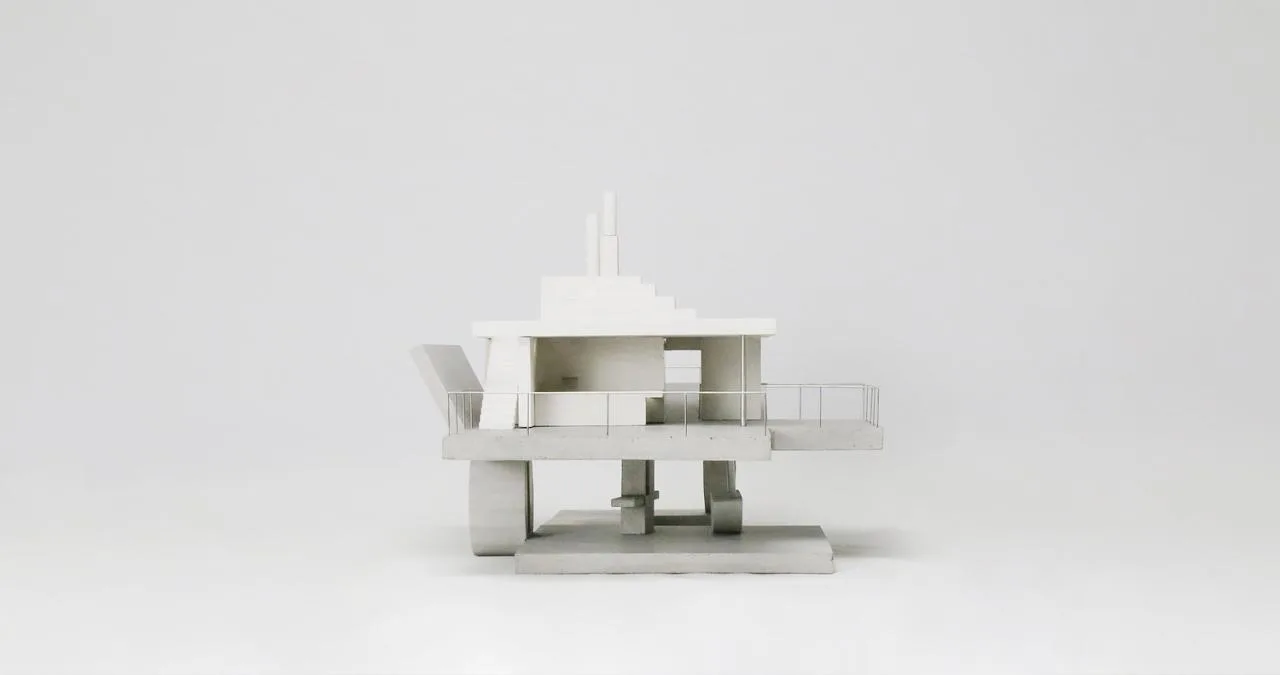
△ 1:40 handmade model © Architectural Firm (TAO)
The architectural experience begins by walking across soft sand before stepping onto solid concrete.
The space then gently descends, opening views of waves and beach on all sides.
Three key elements—a circular bathroom, a square workbench, and an arc-shaped open bar counter—define the space.
Within deep shadows, the distant sea level is framed and defined by these elements, directing the visual focus outward.
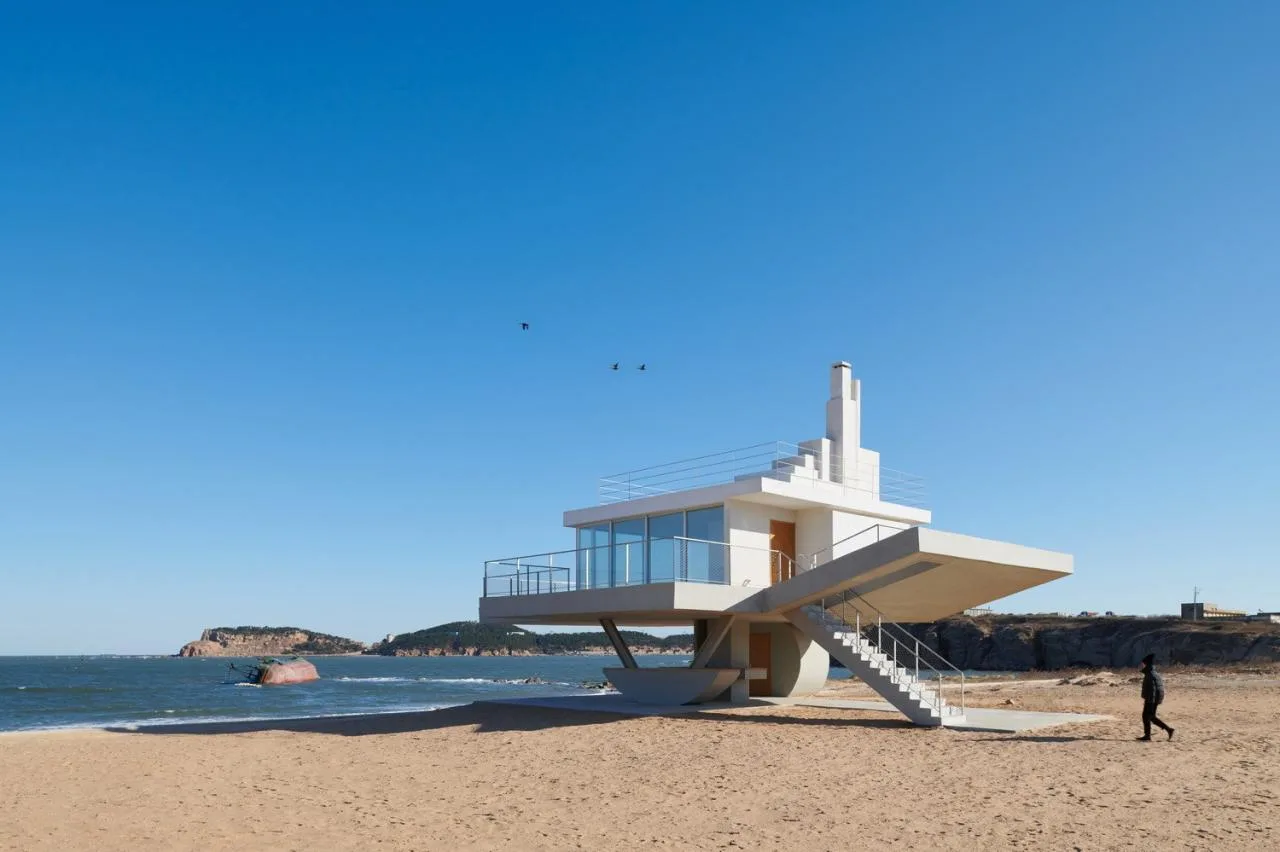
△ Architectural Vision © Chen Hao
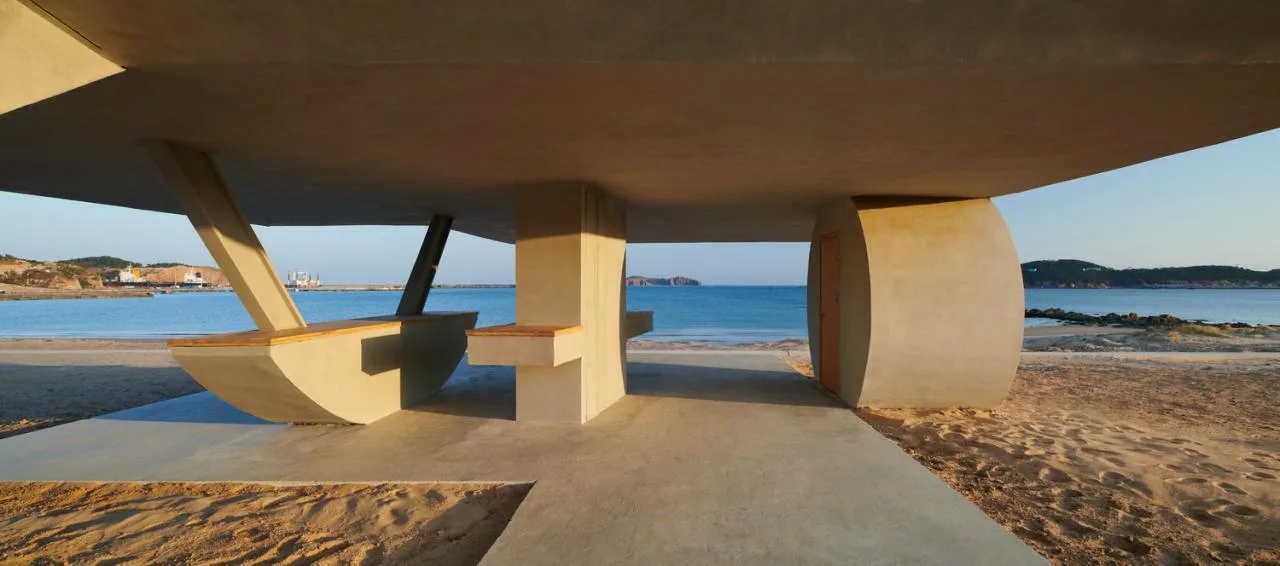
The first floor looks out toward the sea © Chen Hao
Ascending a narrow, lengthy ladder beside a sloped board to the second floor feels like rising from the interior space, through the roof, toward a new horizon.
The outward-extending platform offers panoramic views of the northern sea and western village hills.
Glass sliding doors separate indoor and outdoor spaces flexibly, adapting to different needs.
When fully opened, the platforms connect seamlessly with the interior, expanding the compact building into a spacious viewing and dining area.
Logistics and staircases to the roof are discreetly concealed within the sloped board’s interior.
Within a compact footprint, service spaces and visitor areas, as well as circulation routes, are clearly distinguished by four angled cantilever boards.
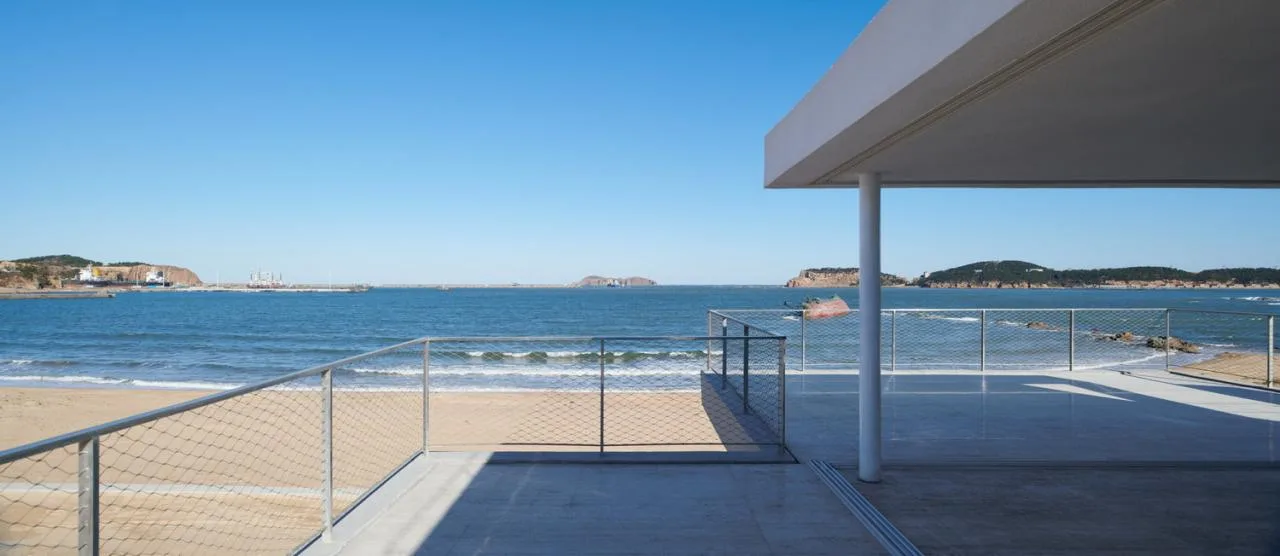
The coffee shop on the second floor gazes toward the sea © Chen Hao
△ Architectural Vision © Chen Hao
The rooftop platform on the third floor marks the trail’s end.
Its narrowing steps and slender chimneys form pyramid-like sculptures that continue the upward momentum, pointing toward the infinite sky.
The bays, beaches, hills, and villages spread far and wide, offering an all-encompassing view that connects horizon and sky.
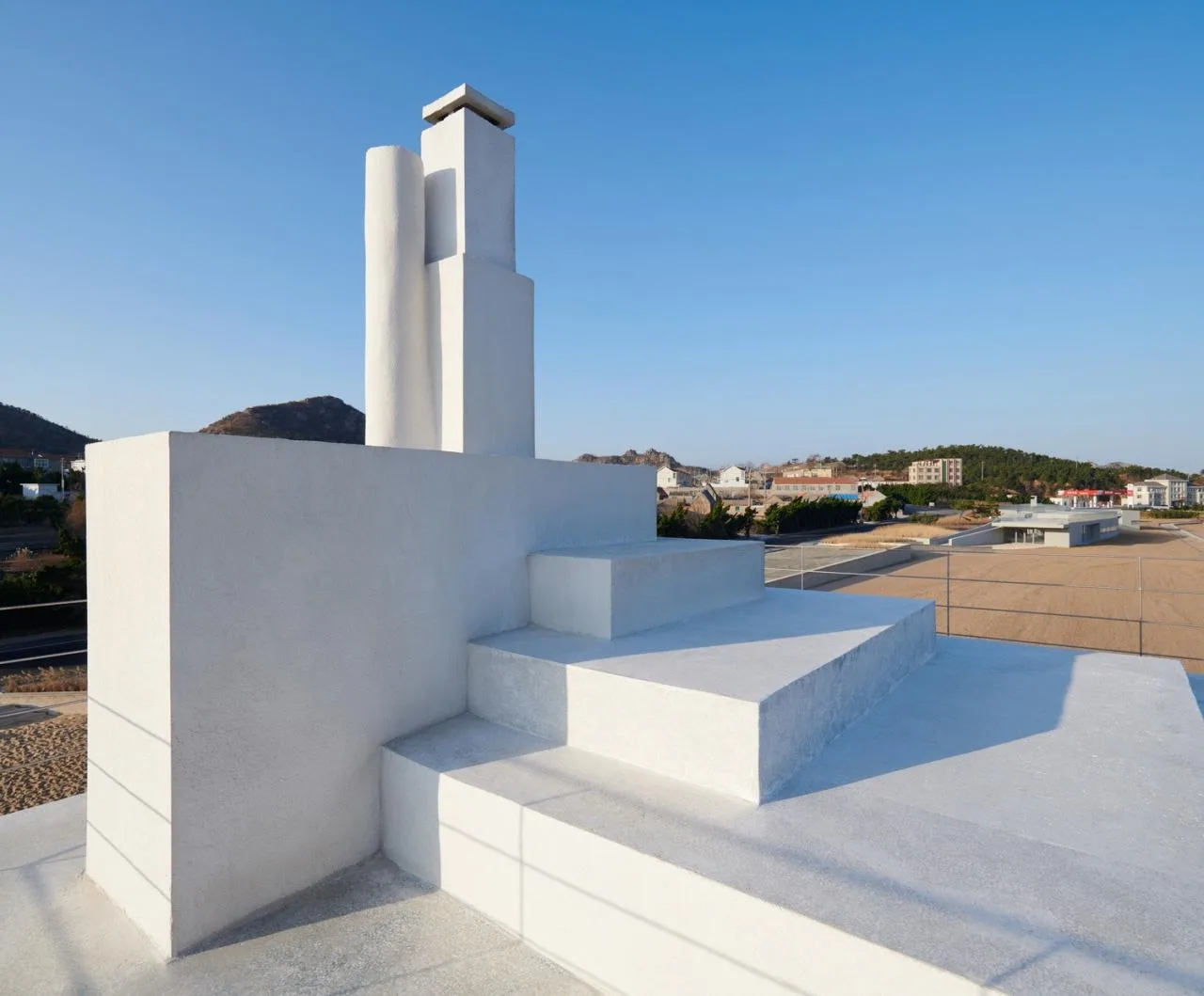
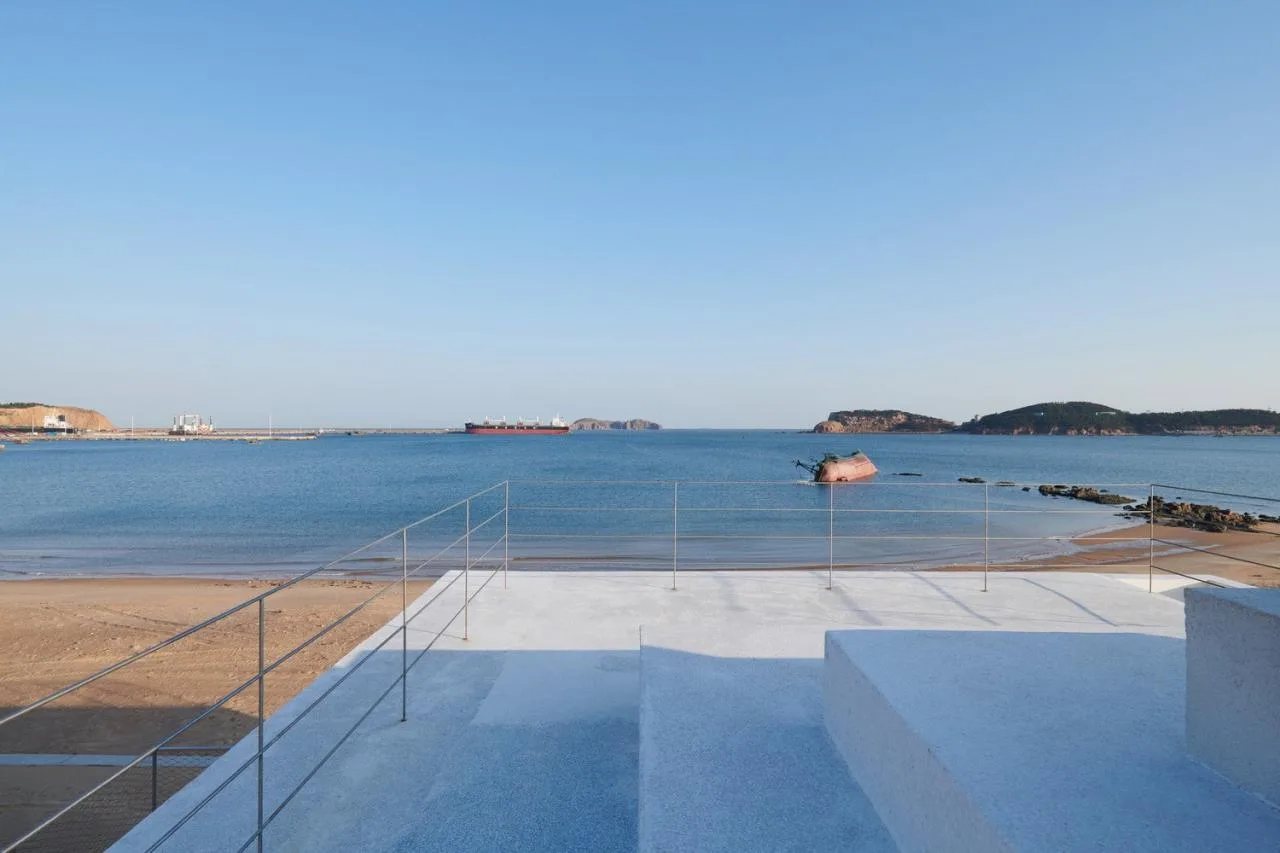
△ Roof viewing platform © Chen Hao
The design and materials follow the pavilion’s core concept of horizontal planes and horizon.
The main horizontal surface is finished in gray microcement, giving it the visual weight of concrete, while its steel structure allows for grand overhangs.
This contrast between appearance and actual structure enhances the pavilion’s sense of floating tension.
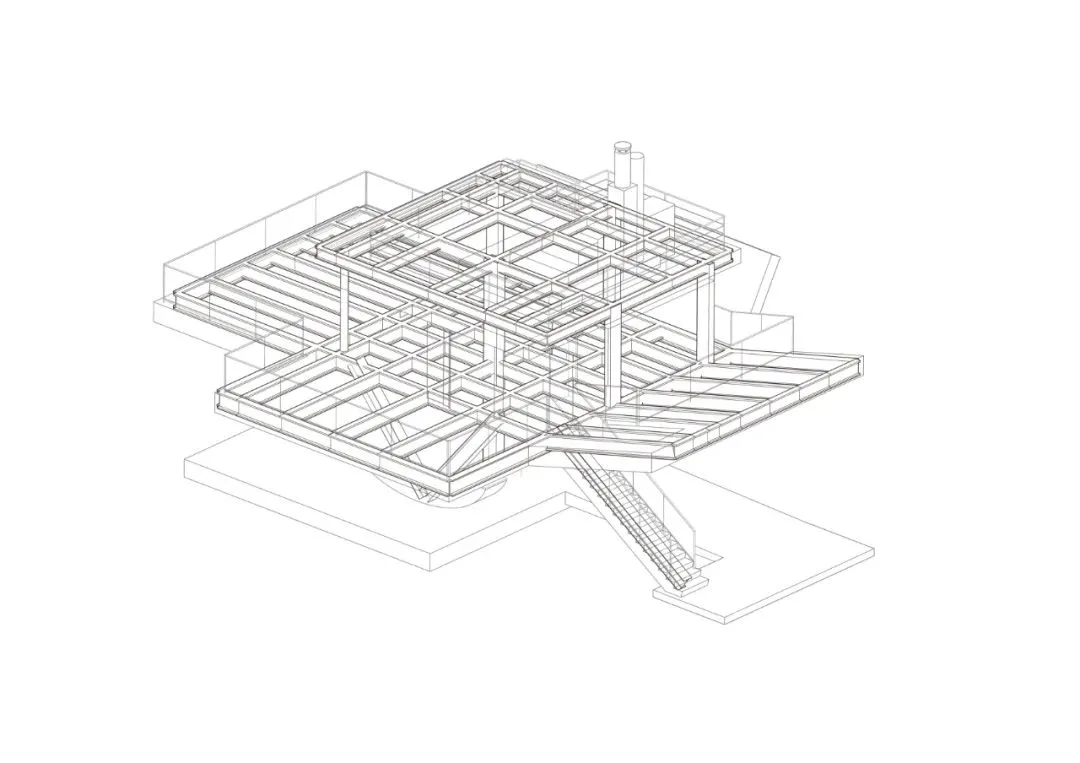
△ Structural analysis diagram © Architectural Firm (TAO)
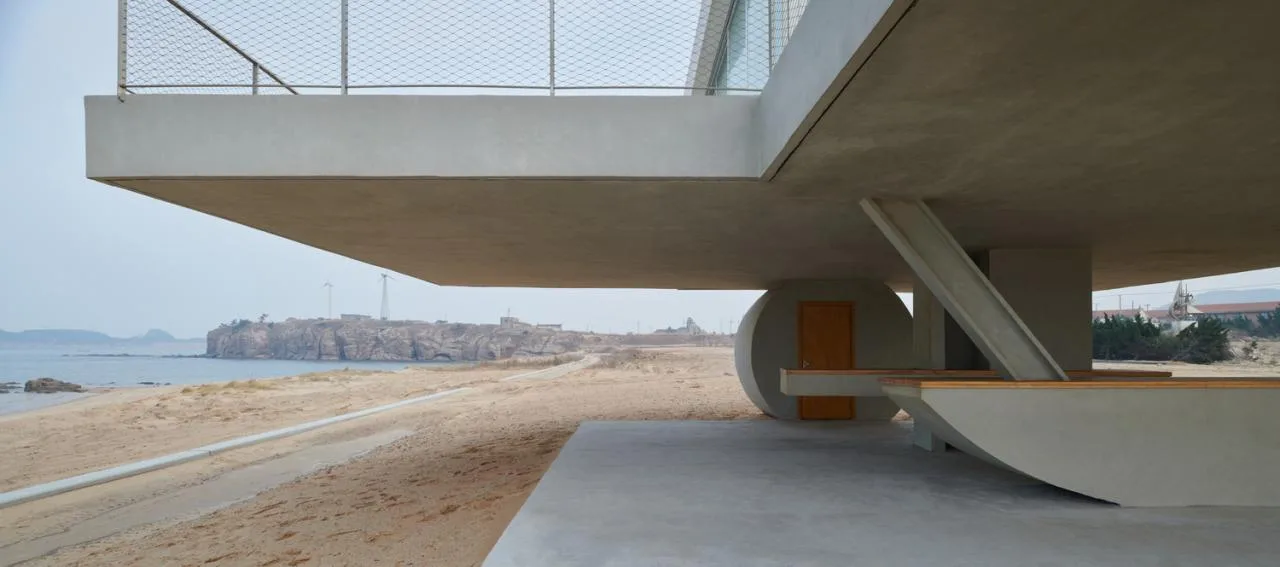
△ West side of the first floor bar counter © Chen Hao
Varied materials create vertical layers: the first floor’s gray microcement blends with the rough natural beach, fostering a casual semi-outdoor vibe.
The second floor features light-colored cave stones, presenting a solid yet elegant floating platform.
Whitewashed stones adorn the second and third floors, forming abstract volumes beneath the blue sky.
Moving through the building spirally, one’s experience transitions from exterior to interior and back outside, with views ultimately ascending from ground level to horizon and sky.
△ Architectural panorama © Chen Hao
Resolve
The floating pavilion appears to be assembled from various components of circular, triangular, curved, square, flat, and diagonal shapes.
These parts are not only formal elements but also carry functional and structural roles.
For instance, the second-floor stairs serve both as circulation and as diagonal structural supports.
Structural elements like columns, braces, and floor slabs are either fully or partially integrated into these components, merging structure and form.
They cease to be mere structural bodies and instead become equal spatial elements, imbued with meaning and forming an organic architectural language.
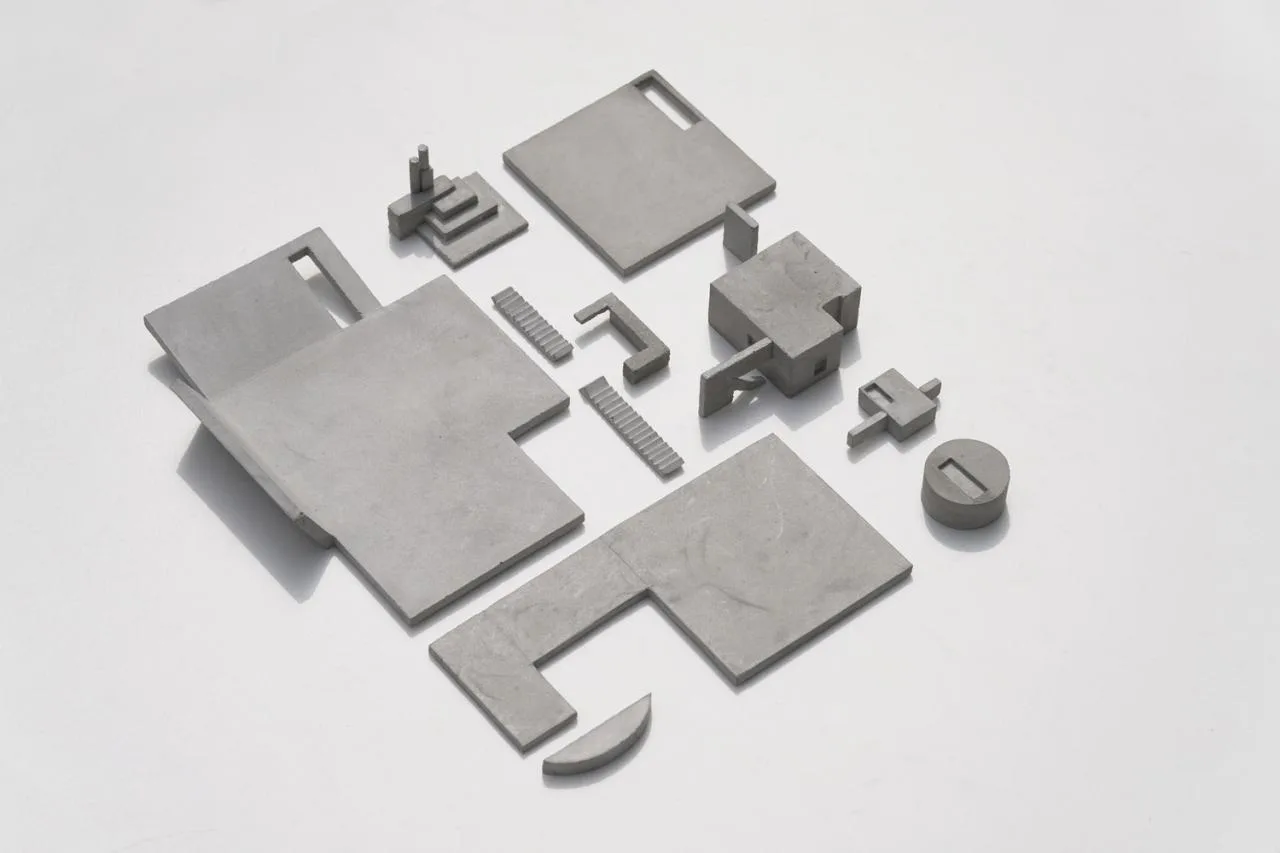
△ Model disassembly diagram © Architectural Firm (TAO)
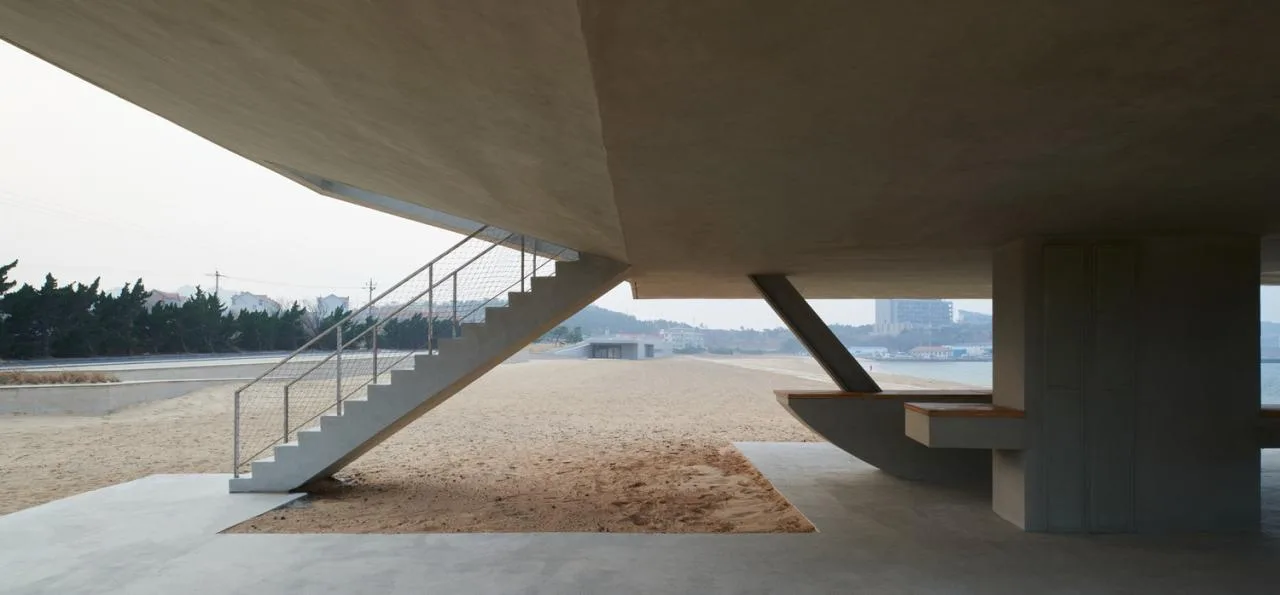
△ East side of the first floor bar counter © Chen Hao
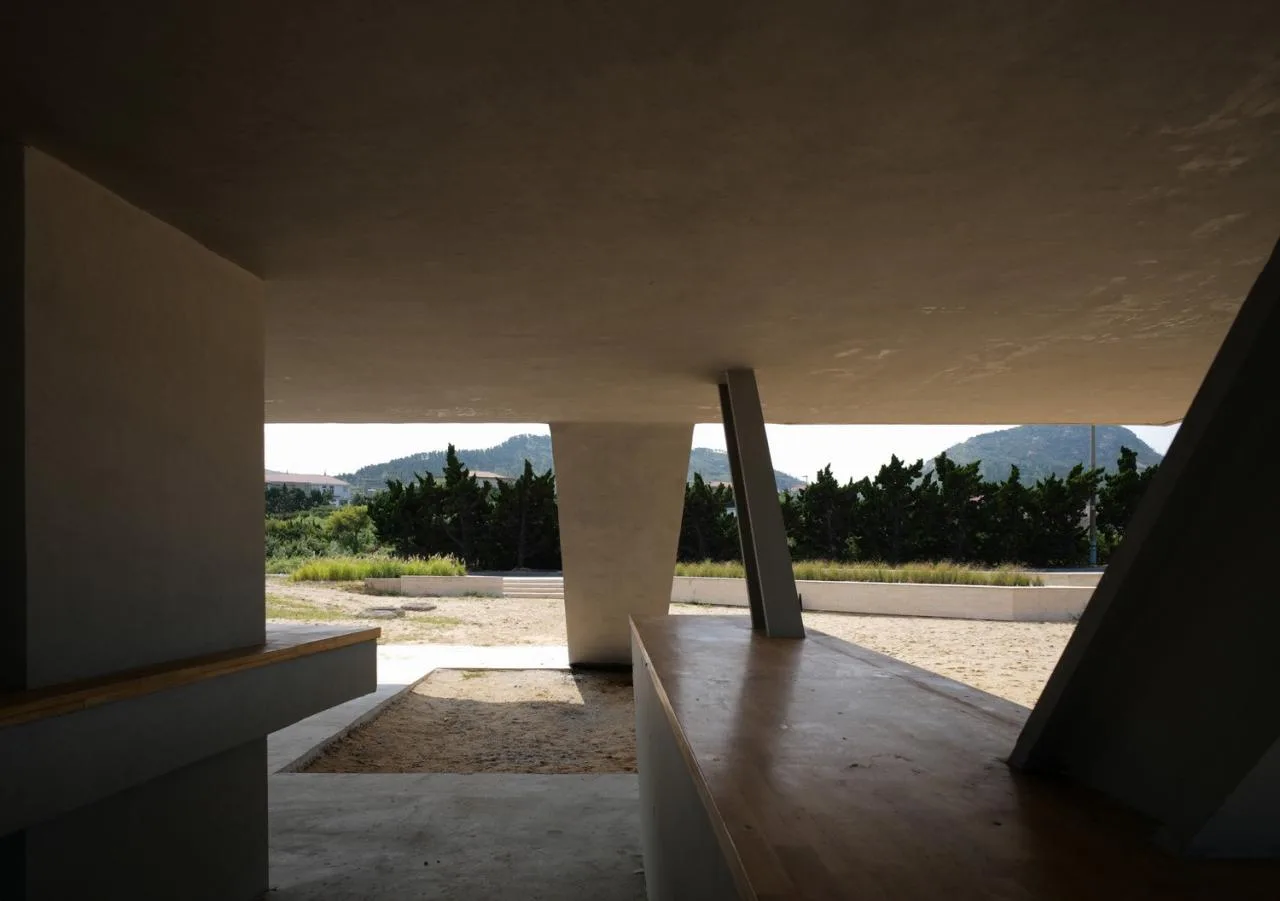
△ First floor bar counter © Huali
By dissolving conventional architectural language, the pavilion returns to a more primitive state—like the abandoned fishing boat, it arrives here by chance and together they define this bay.
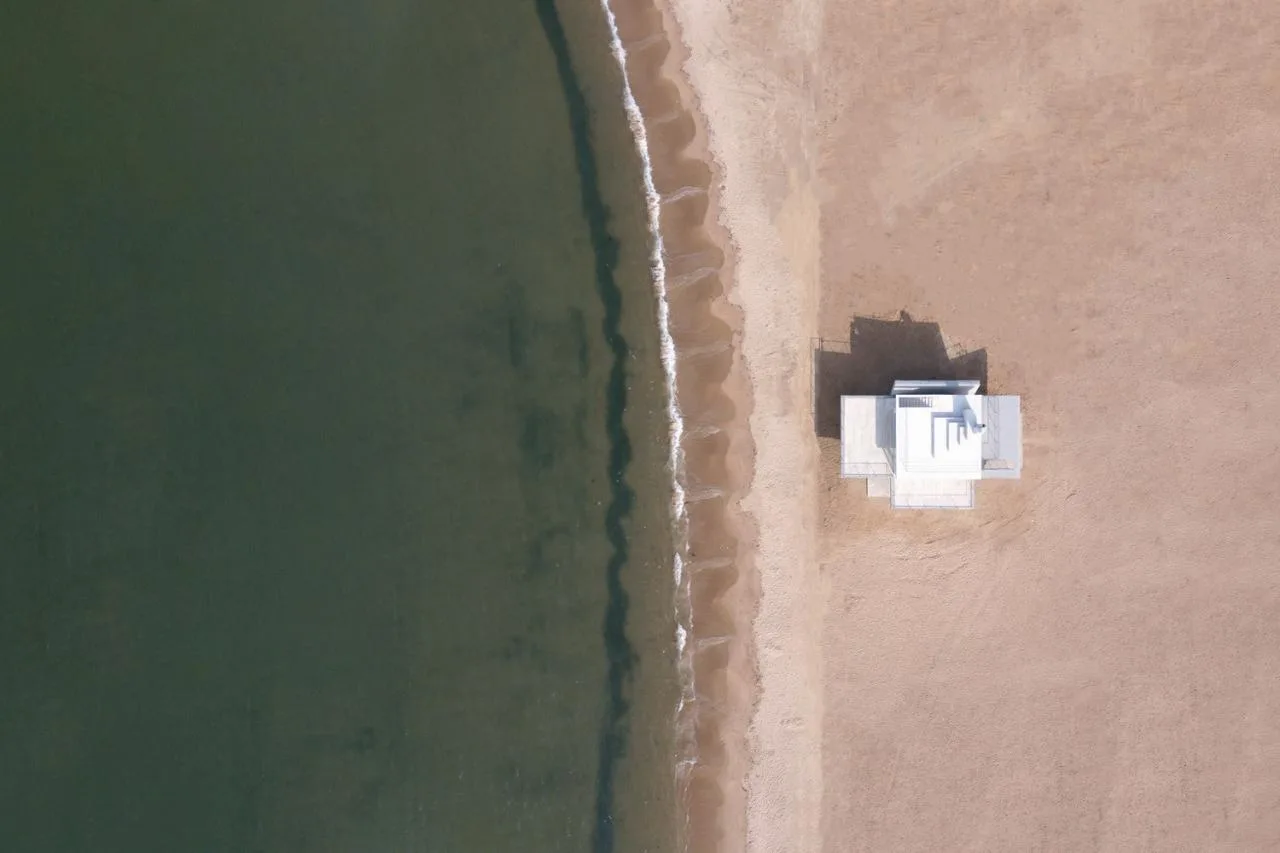
△ Aerial view of buildings © Sun Xiangzhou
Project Drawings
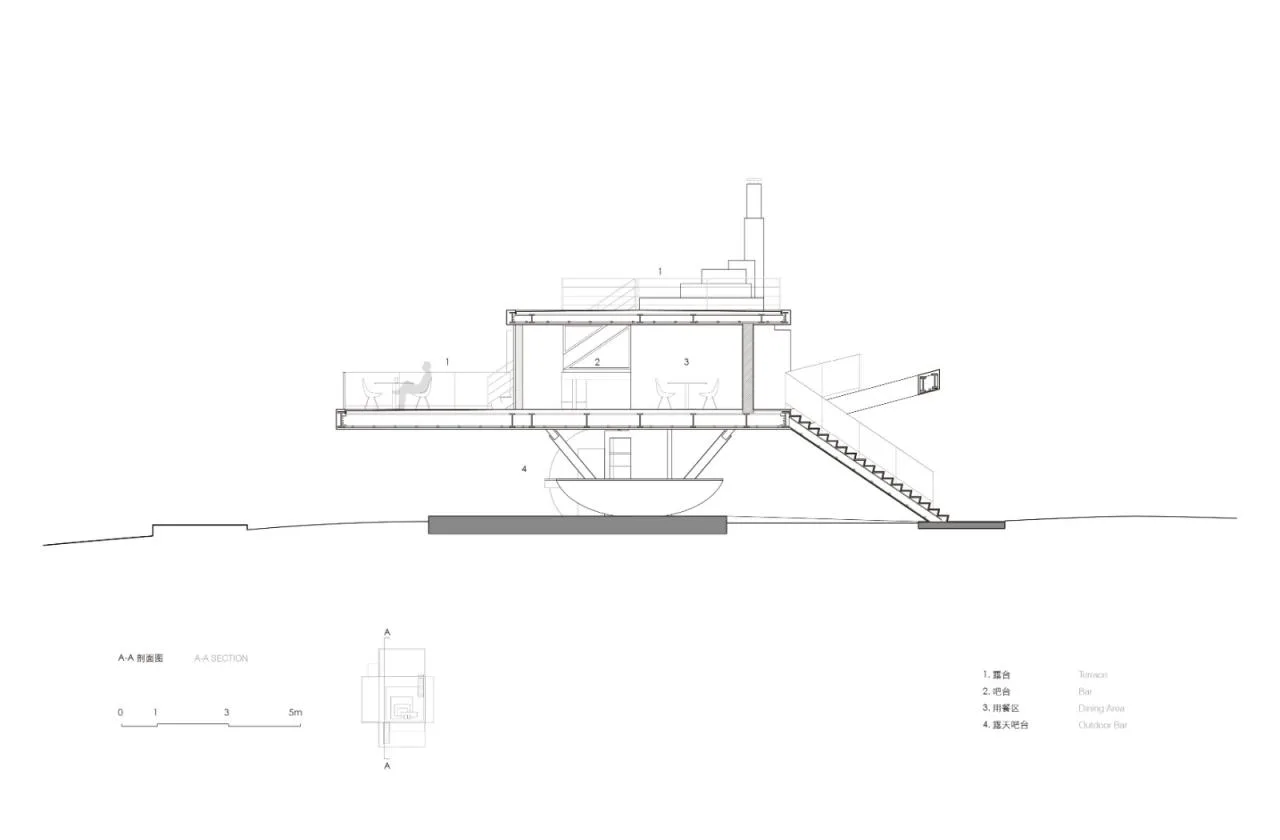
△ Section diagram
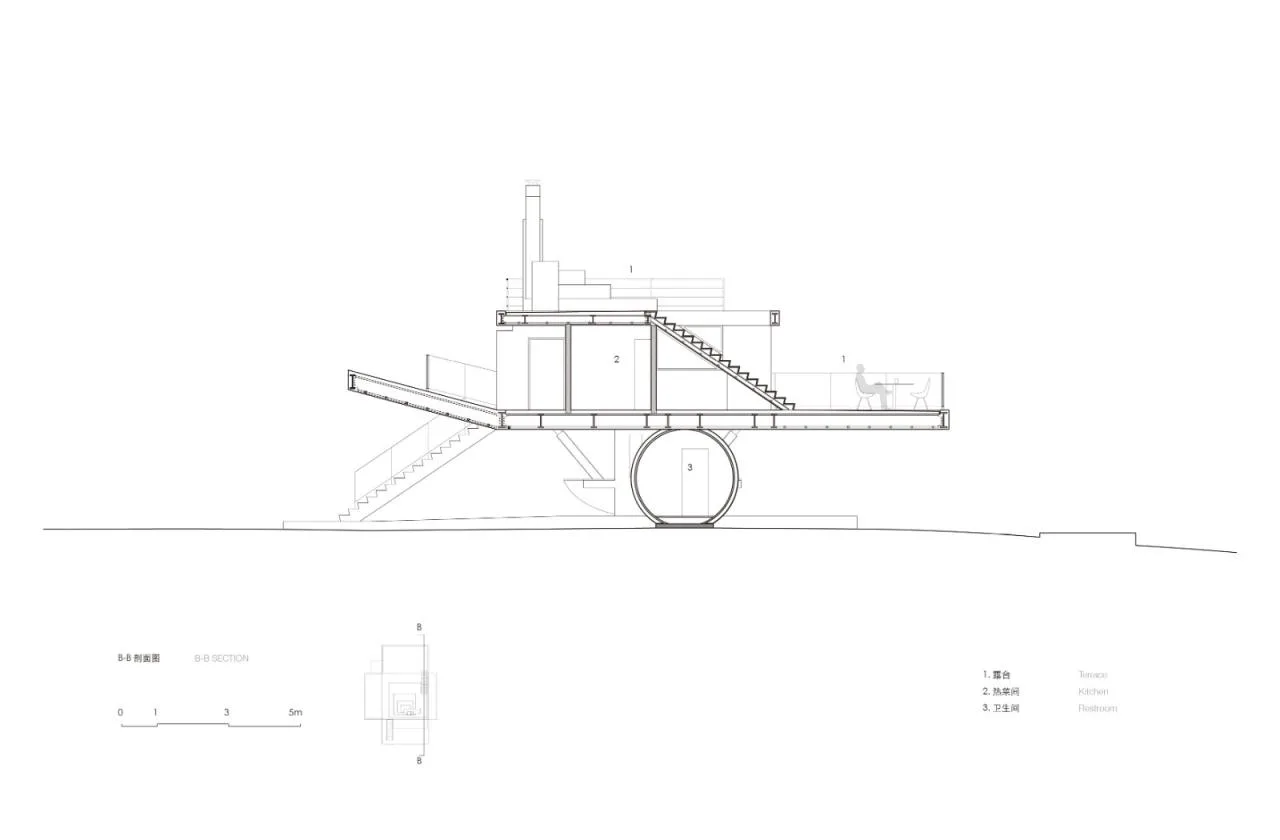
△ Section diagram
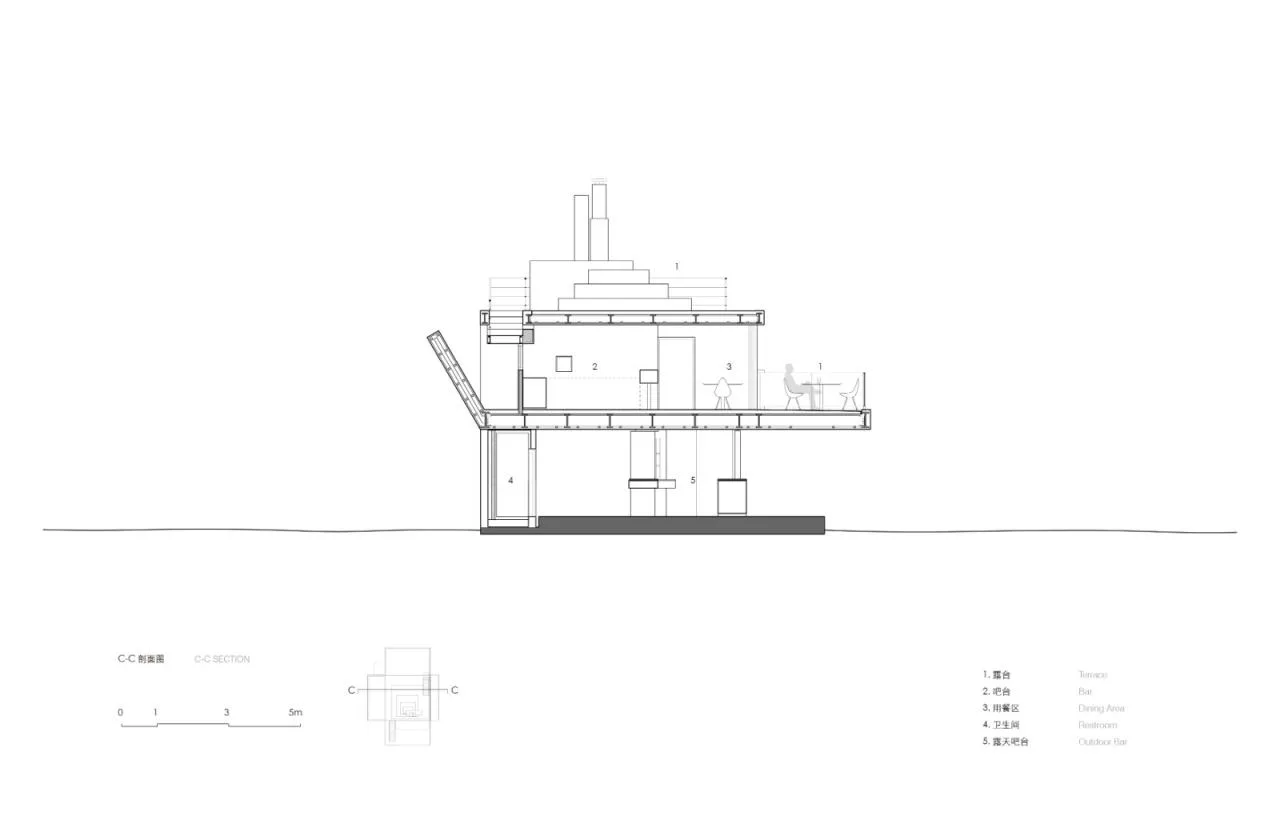
△ Section diagram
Project Information
Project Name: Seaside Floating Pavilion
Owner: Rongcheng Good Luck Corner Tourism Resort Construction Bureau
Location: Rongcheng City, Shandong Province
Function: Coffee Shop
Design Firm: TAO Architectural Firm
Lead Architect: Hua Li
Design Team: Huali, Dai Linyi, Li Ruoxin, Wang Langhuan, Liu Yu
Structural Engineer: Ma Zhigang
Mechanical & Electrical Engineers: Lv Jianjun, Kcalin Carlin
Design Team: Sun Jing, Li Xin, Zhao Zirui
Lighting Consultant: Beijing Yuanzhan Lighting Design Co., Ltd
Construction Team: Weihai Construction Group Co., Ltd
Building Area: 173 square meters
Structural System: Steel Structure
Design Year: 2019
Construction Period: 2020–2021
Photography: Chen Hao, Sun Xiangzhou















Must log in before commenting!
Sign Up