
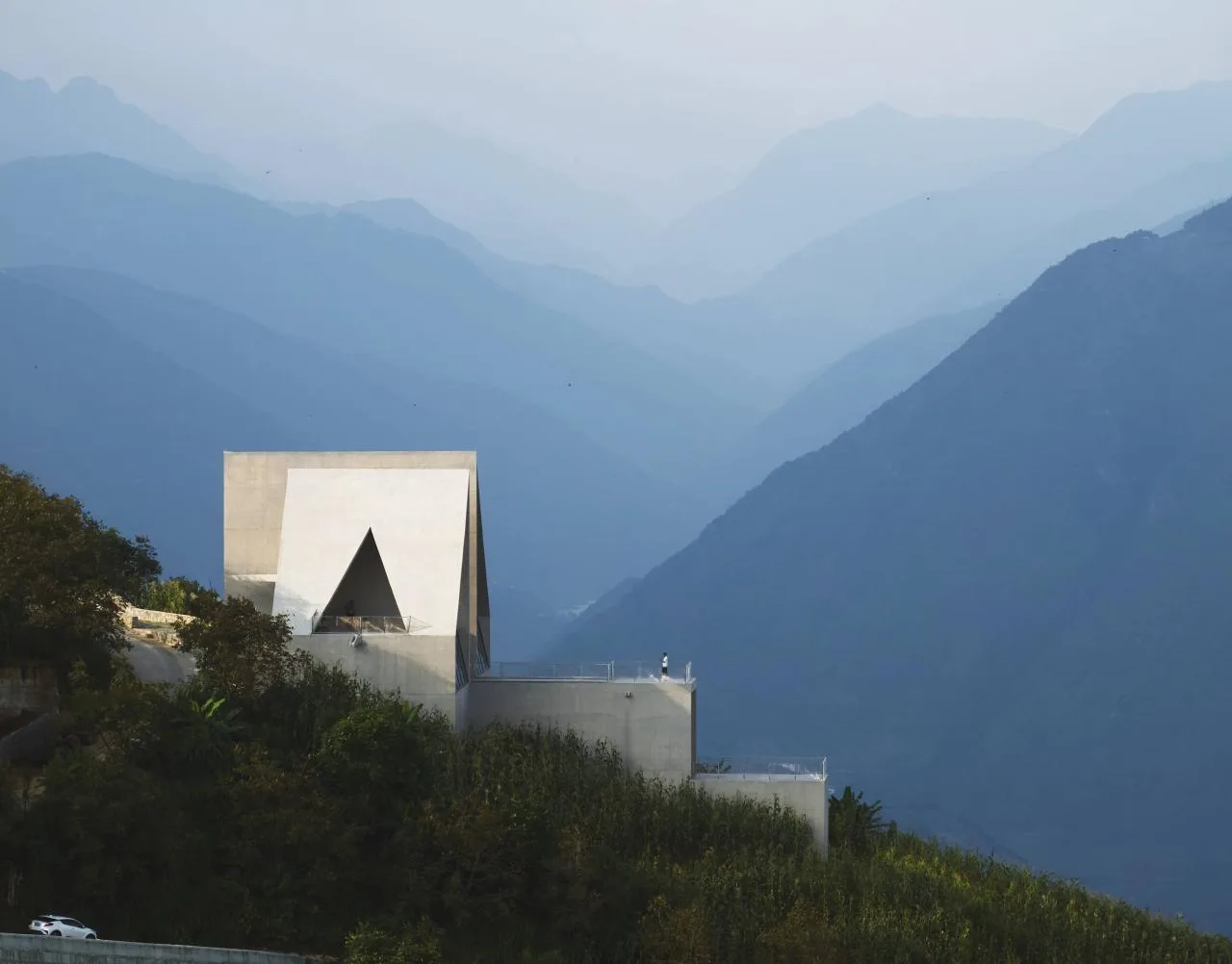
△ Bookstore Vision © AOGVISION Architectural Vision
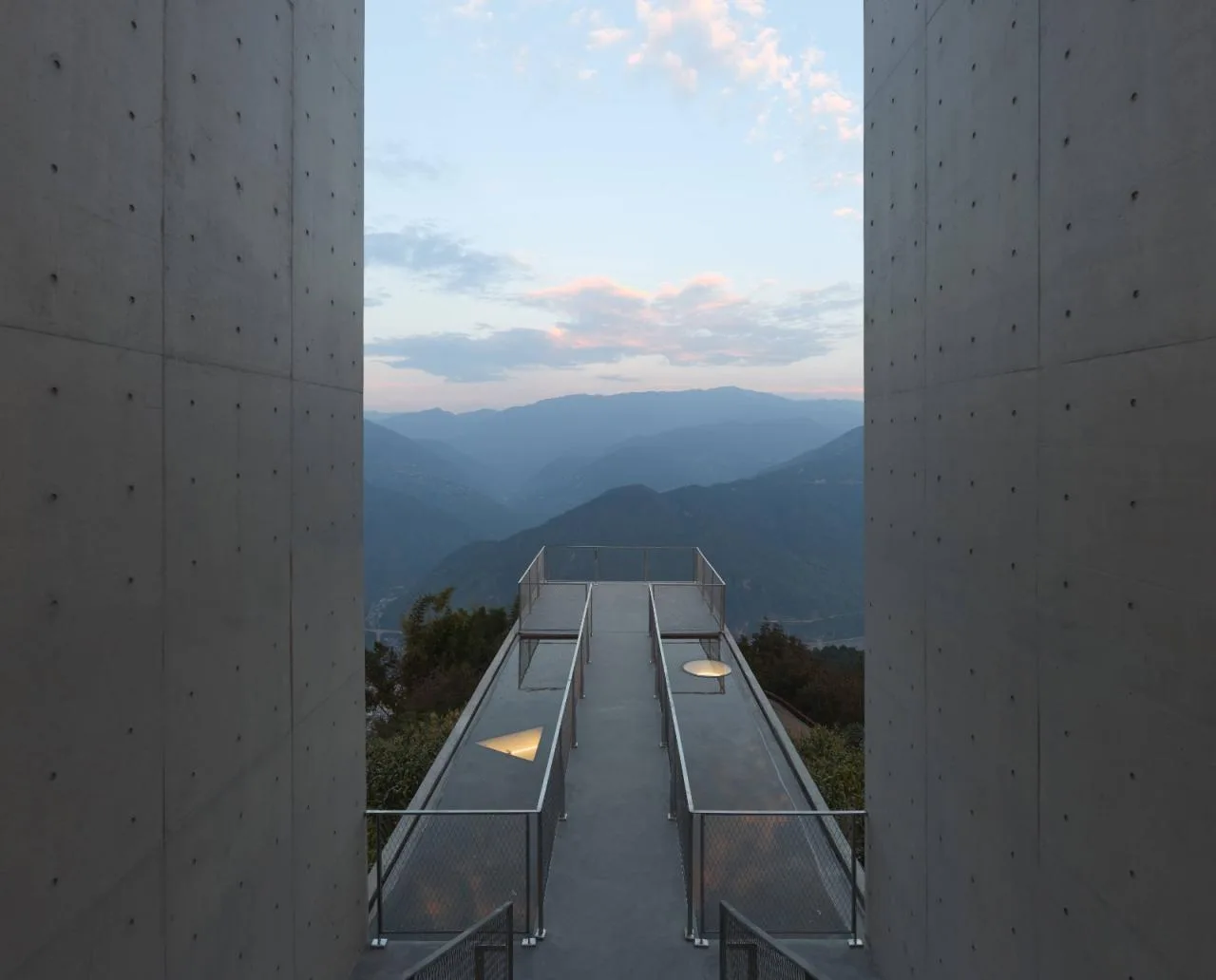
△ Outdoor Viewing Platform © AOGVISION Architectural Vision
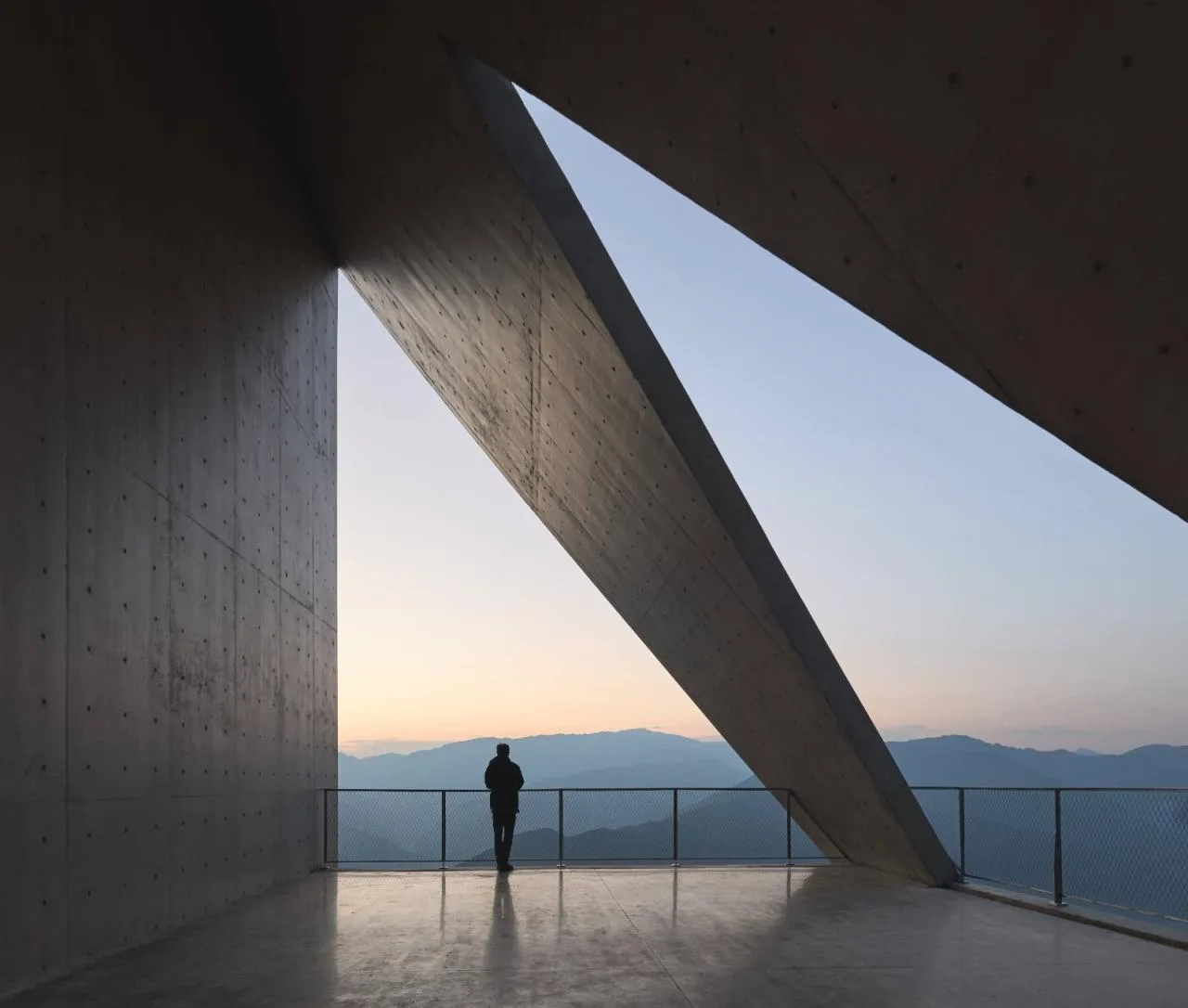
△ Viewing Platform © AOGVISION Architectural Vision
Project Background
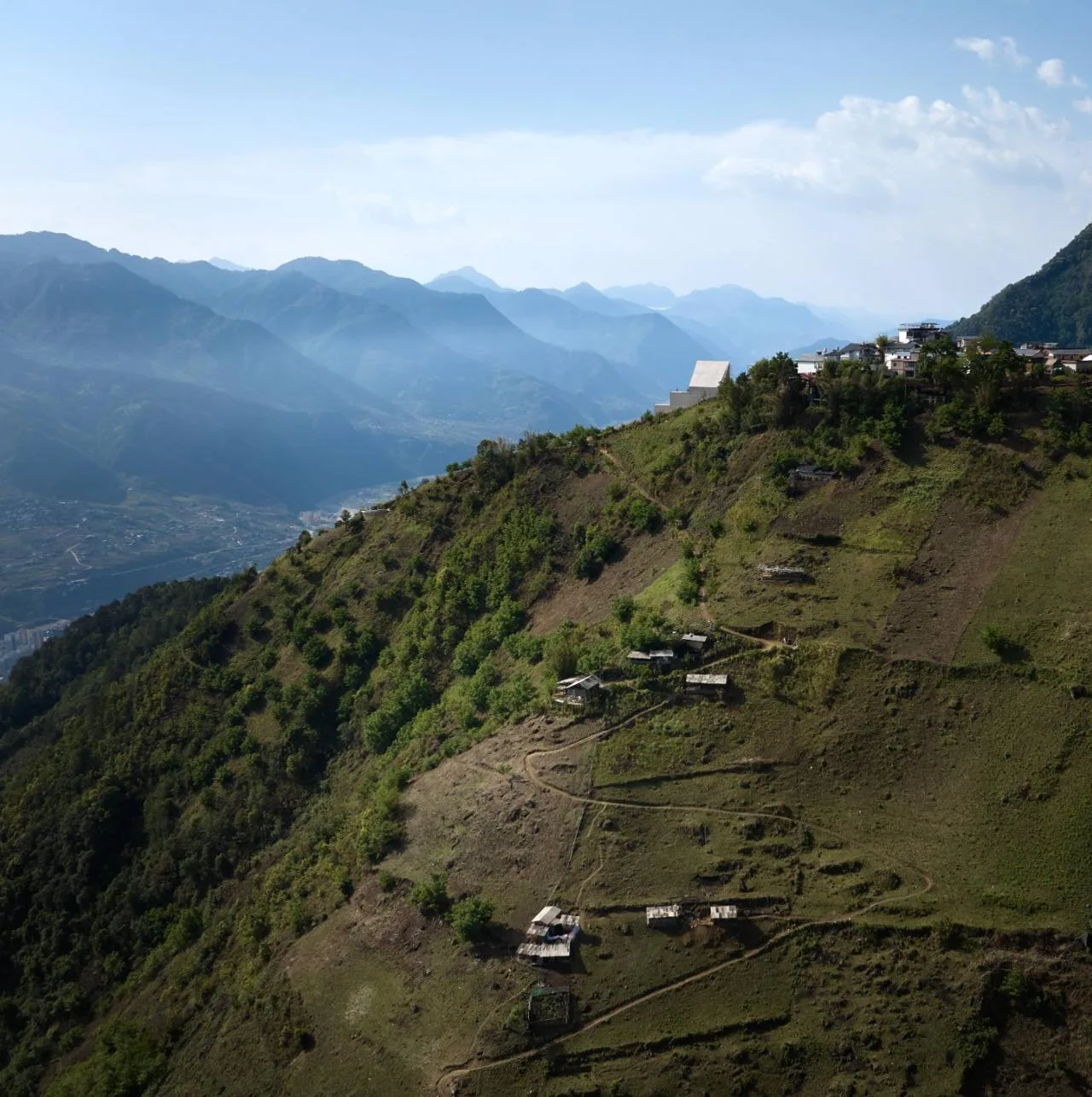
The Nu River, the last large free-flowing river in China without dams, winds through the Hengduan Mountains in western Yunnan. It separates the Gaoligong Mountain range to the east and the Biluo Snow Mountain to the west. The Nujiang Grand Canyon Pioneer Bookstore is perched atop Gaoligong Mountain, facing the sacred mountains revered by the Lisu and Bai ethnic groups across the river.
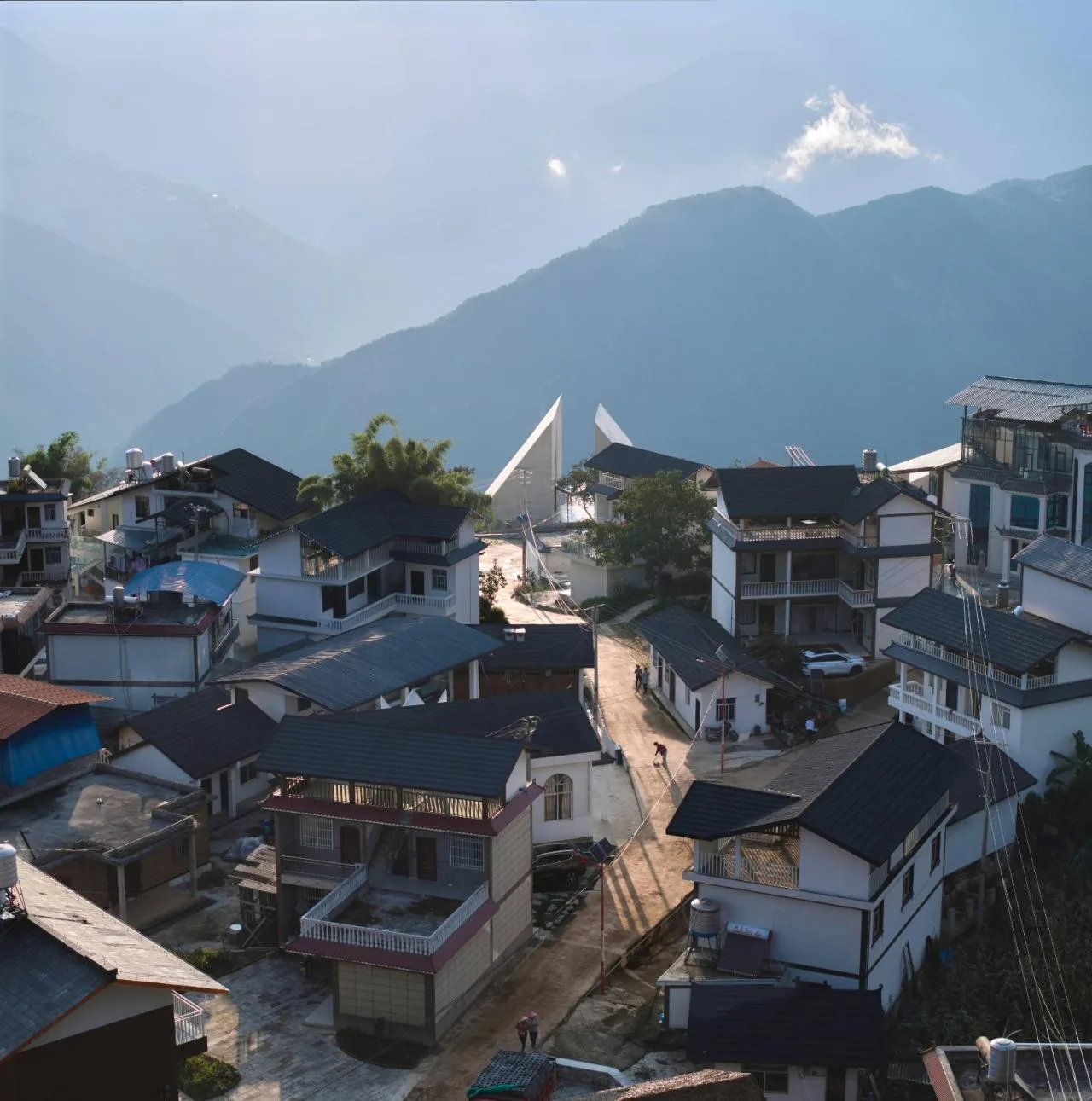
△ Village and Bookstore © AOGVISION Architectural Vision
In 2021, TAO was invited by Pioneer Bookstore to design three new locations in Nujiang Prefecture, marking their third collaboration. The project is located in Lushui city, the capital of Nujiang Prefecture, situated south of the Nujiang River. Nestled between Biluo Snow Mountain and Gaoligong Mountain, Lushui serves as the southern gateway to the Nu River Gorge and the first stop for pioneers heading upstream.
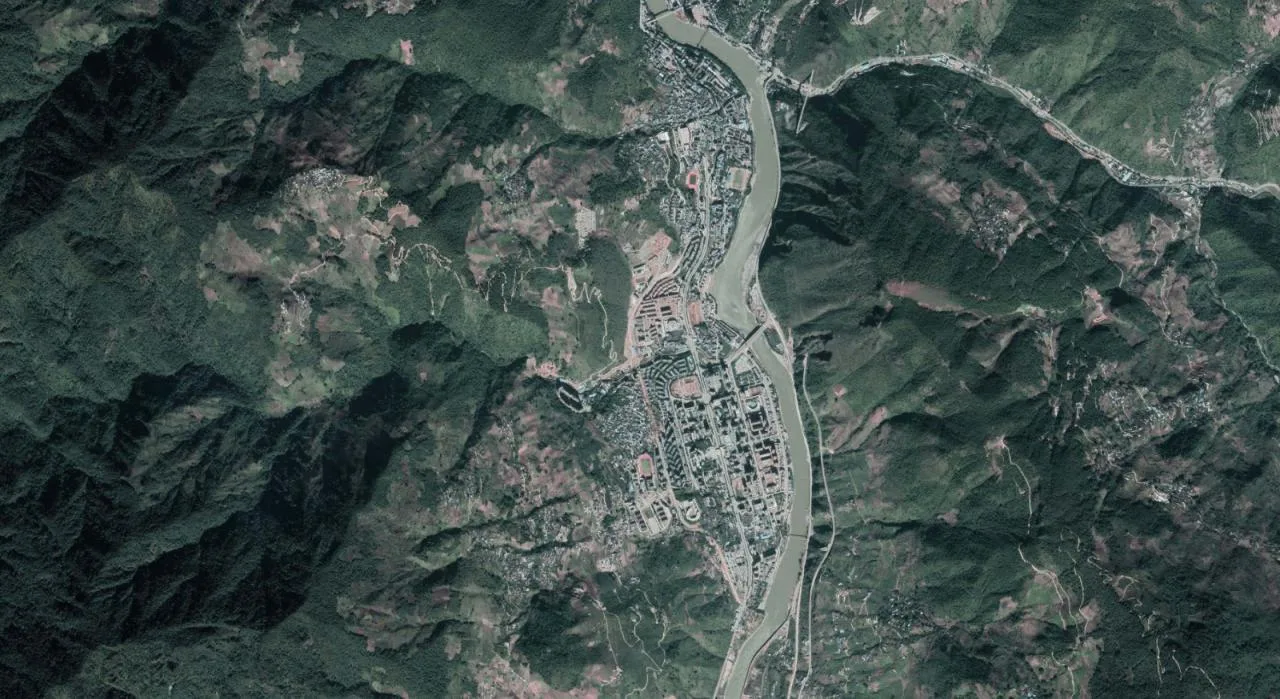
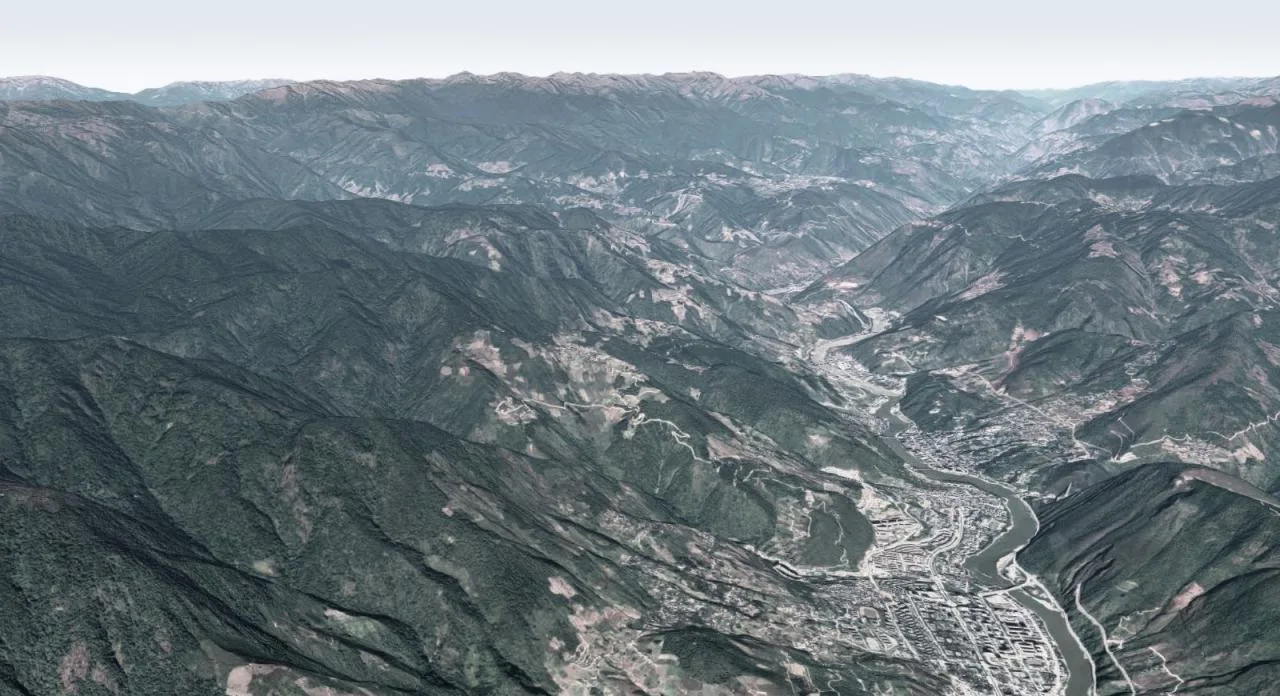

Location of the venue © Architectural Firm (TAO)

△ Venue Atmosphere © Architectural Firm (TAO)
Yangpo Village, the bookstore’s location, sits on the ridgeline of Gaoligong Mountain and is a traditional settlement of the Lisu ethnic group. The Lisu have a long history, originally inhabiting the river valleys of the Yalong and Jinsha Rivers in Sichuan and Yunnan. In the mid-16th century, they migrated northwest in Yunnan due to war, becoming a major ethnic group in the Nu River Basin. Living in high mountain valleys, they developed unique tools, notably crossbows and arrows, which have become an ethnic symbol inspiring this project.
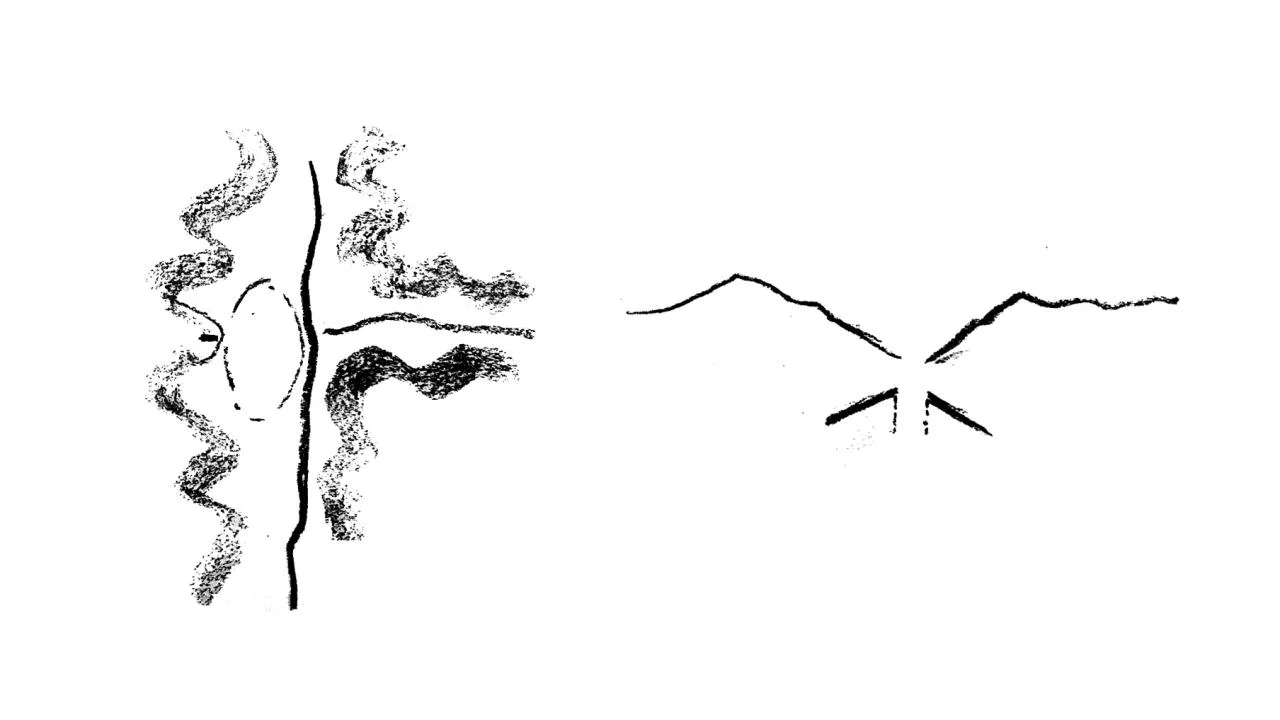
Concept Sketch © Huali
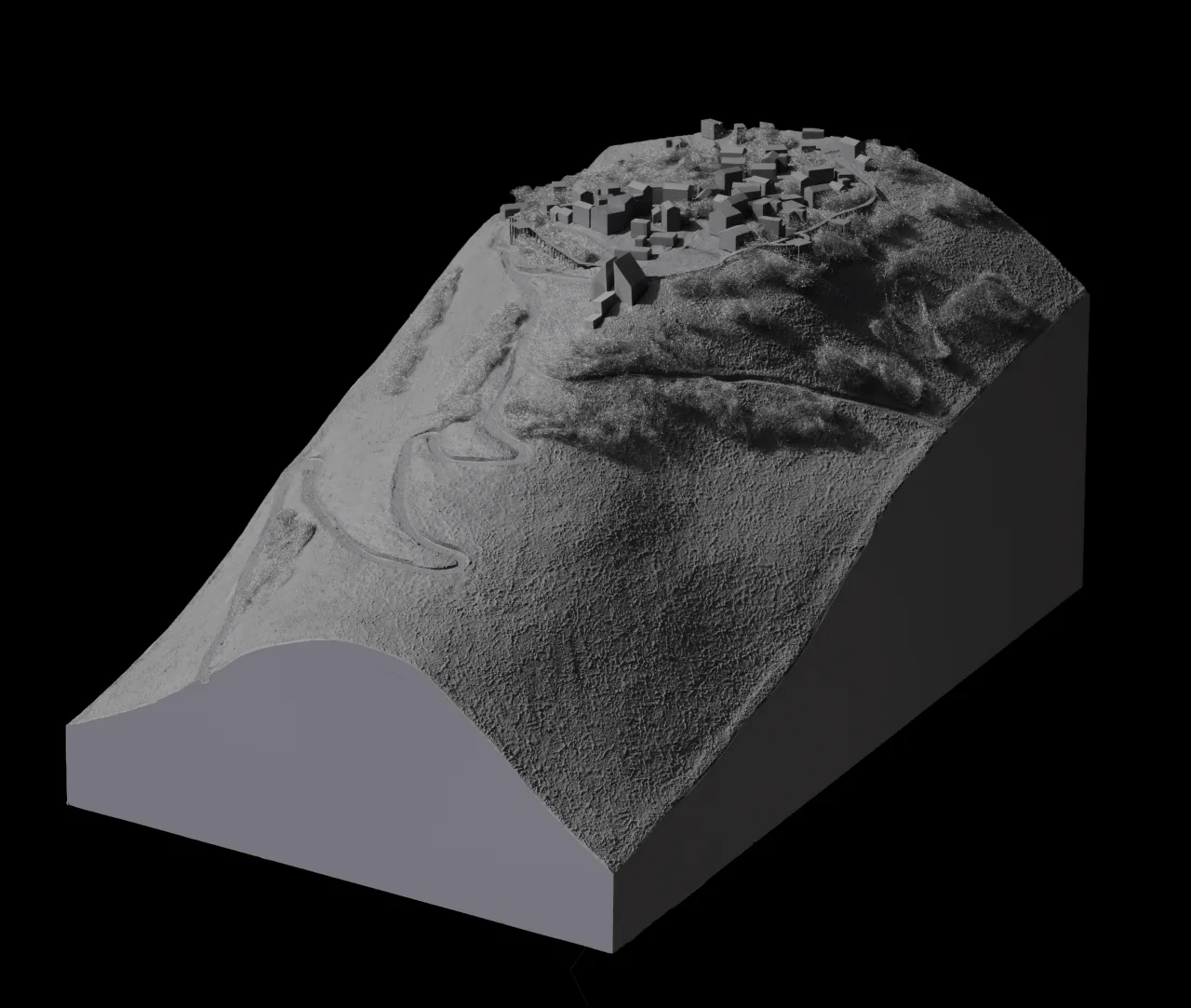
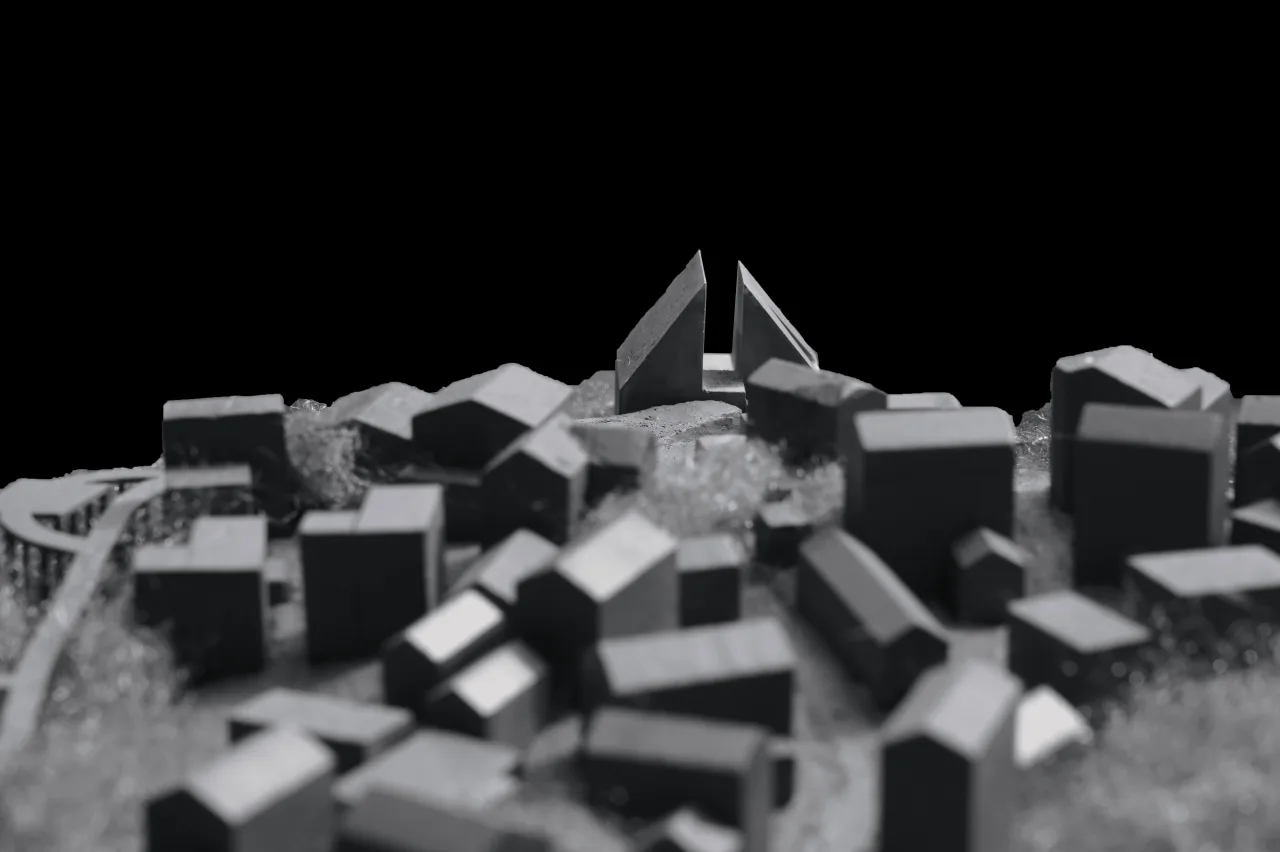
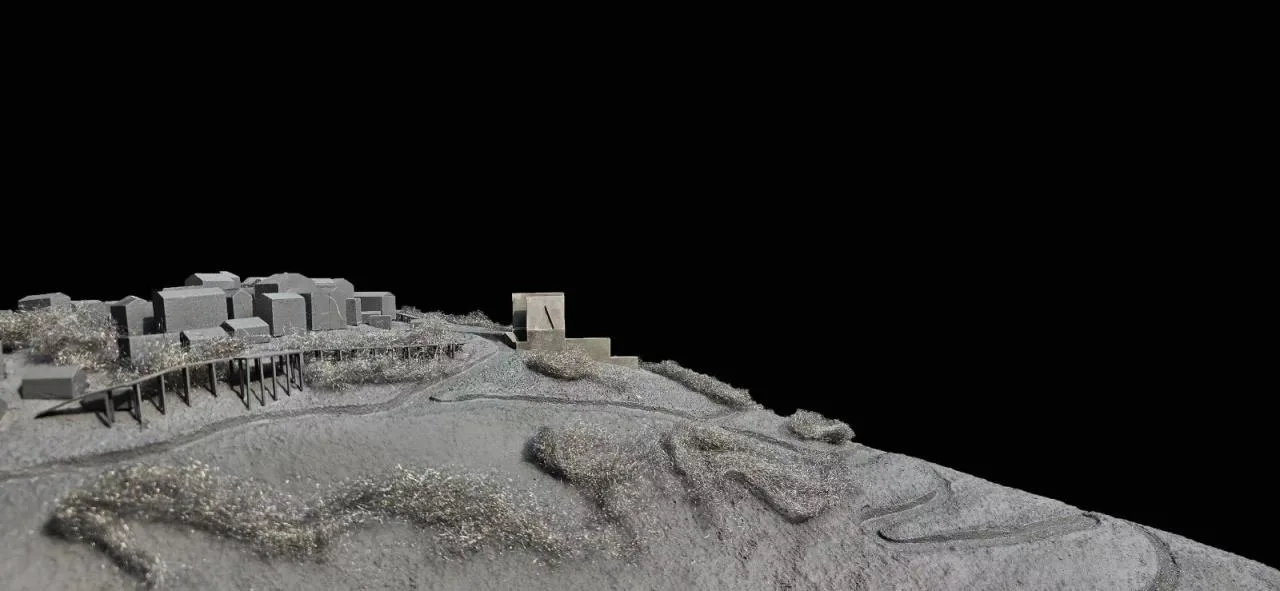
△ 1:400 Site Model © Architectural Firm (TAO)
Site Features
The project is positioned at the entrance of Yangpo Village, overlooking the canyon, naturally marking the threshold between civilization and the wild. In 2021, the site featured an unfinished observation deck facing the spectacular Nujiang Grand Canyon scenery — an excellent vantage point for observing the Hengduan Mountains. This inspired the name “Nujiang Grand Canyon Pioneer Bookstore.”
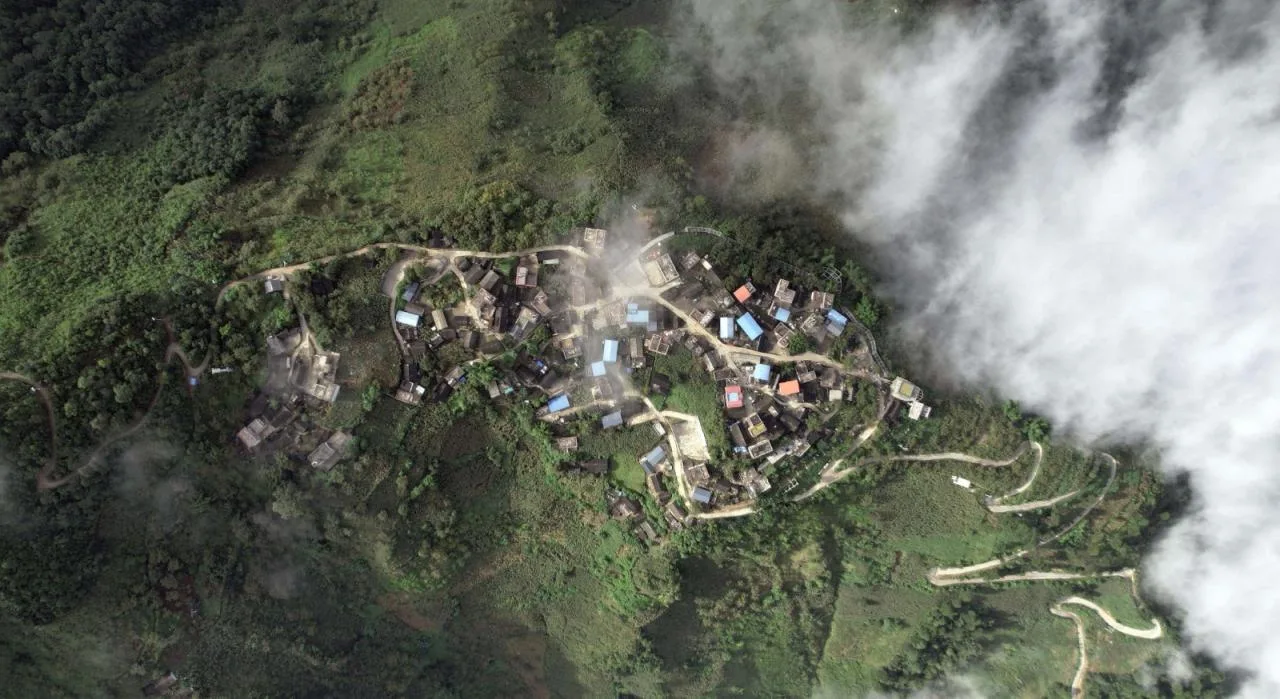
△ Venue and Village © Architectural Firm (TAO)
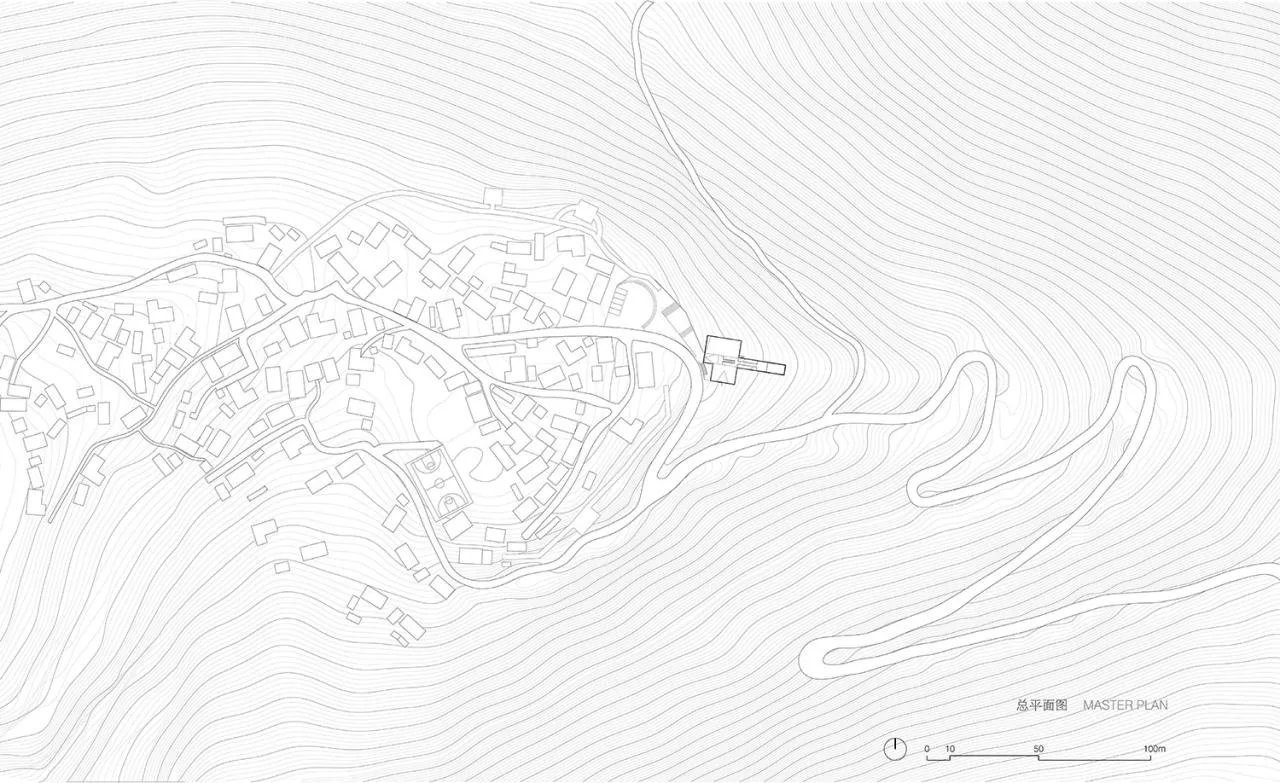
△ General Layout Plan © Architectural Firm (TAO)
The unique site conditions inspired the architect’s vision of a forward-extending volume. The steep slope and towering mountain, combined with the building’s cantilevered form, create a soaring platform. Visitors inside the bookstore are enveloped by canyon views on three sides — north, southeast, and beyond — evoking a sensation of walking among the clouds.
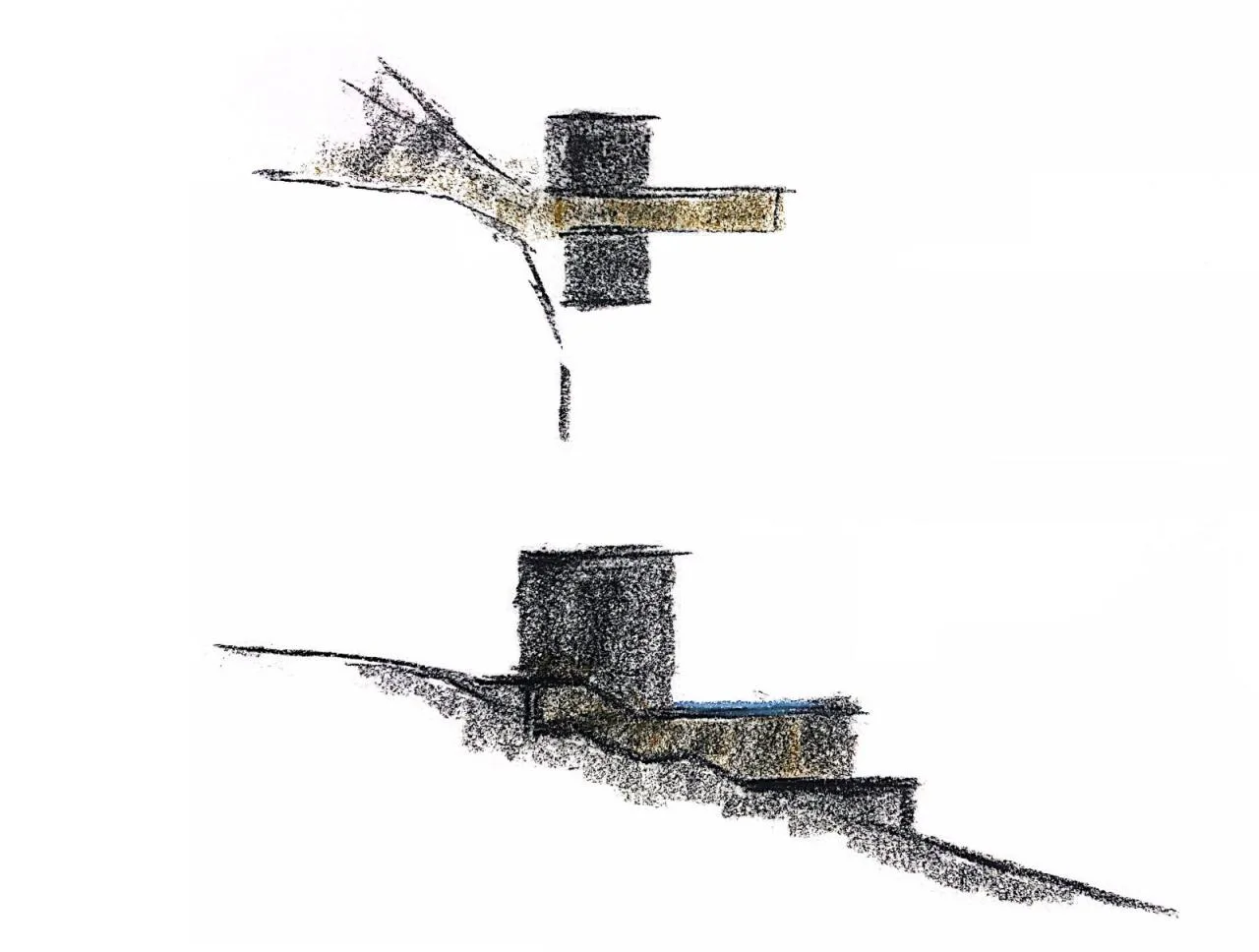
Concept Sketch © Huali
△ Bookstore Vision © AOGVISION Architectural Vision
The site also dictates that this project will become a landmark at the village entrance and a public symbol for Pioneer Bookstore. Its iconic design must be bold and avant-garde, yet still engage in a dialogue with the village—expressing character while respecting its surroundings.
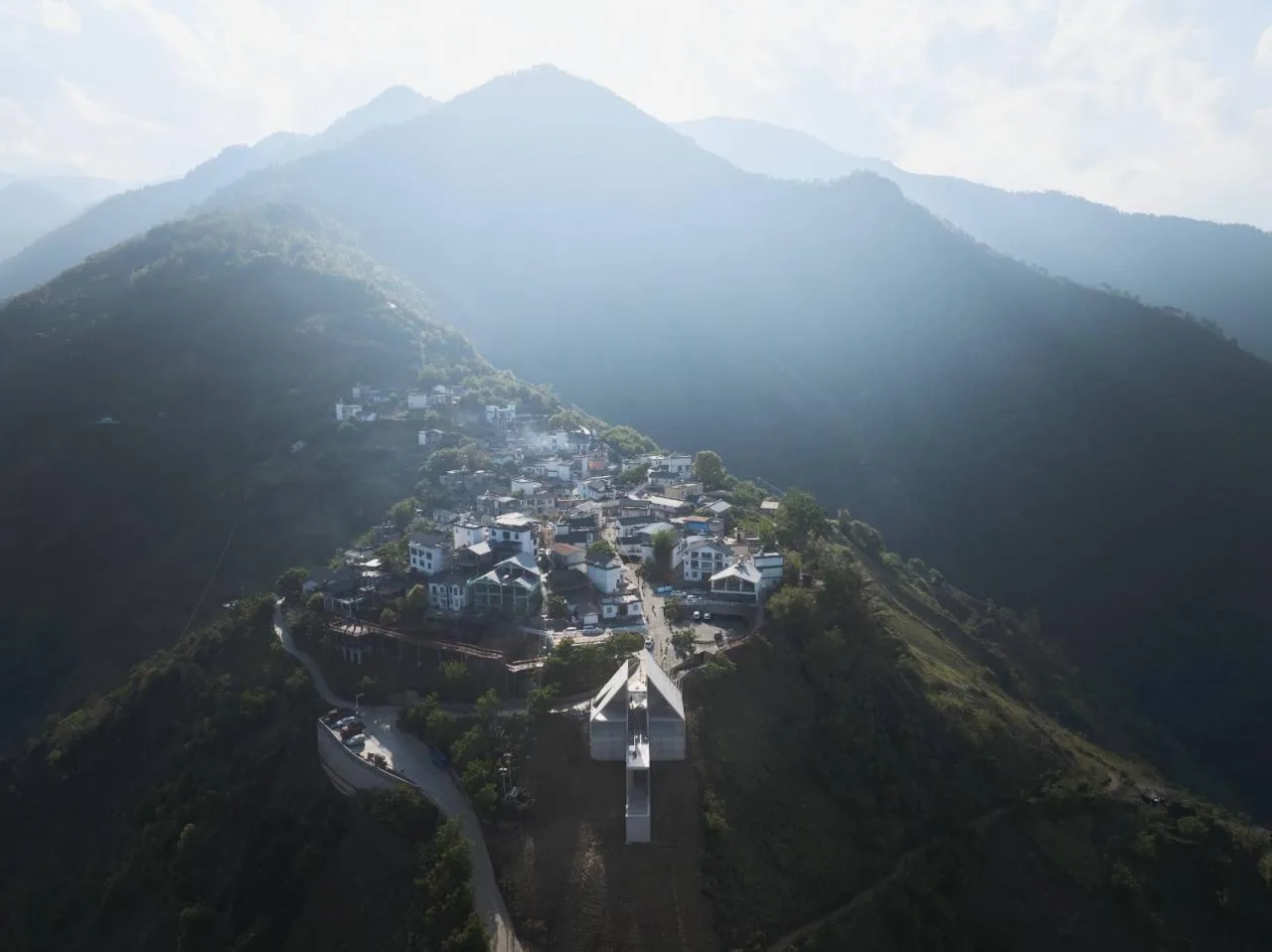
△ Aerial View © AOGVISION Architectural Vision
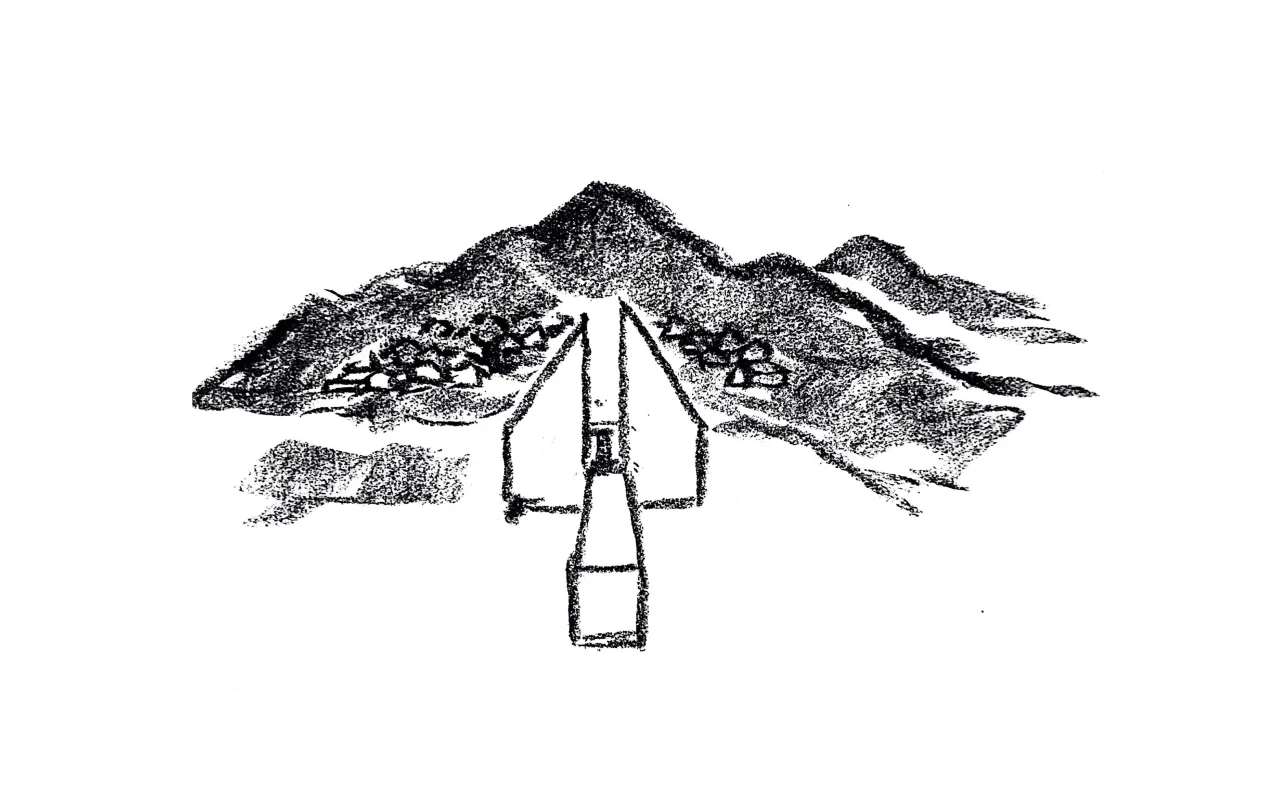
Concept Sketch © Huali
Architecture as a Medium
The project’s design process carefully balances individuality with local context. Yangpo Village, a Lisu settlement on Gaoligong Mountain’s ridge, is rich in natural beauty and cultural heritage. The architecture must respond to both.
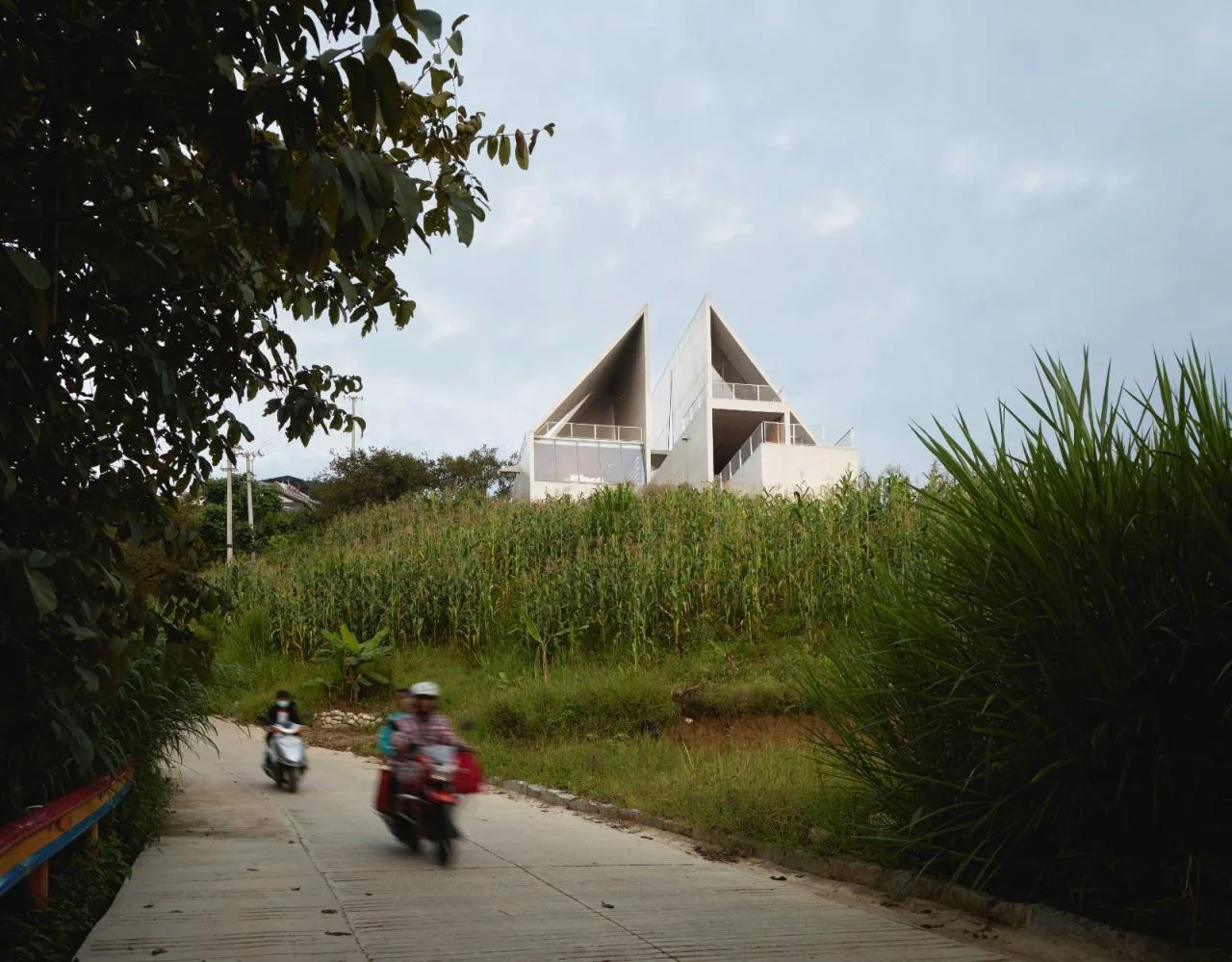
△ Street View © AOGVISION Architectural Vision
The village’s houses are scattered along the mountainous terrain, maintaining traditional mountain village characteristics. However, buildings from various eras overlap and compress, creating a complex, collage-like environment. Responding to this, the bookstore adopts a contemporary architectural language, abstracting the traditional sloping roofs found throughout the village. This dialogue between old and new positions the bookstore as a bridge connecting the village’s past and present.
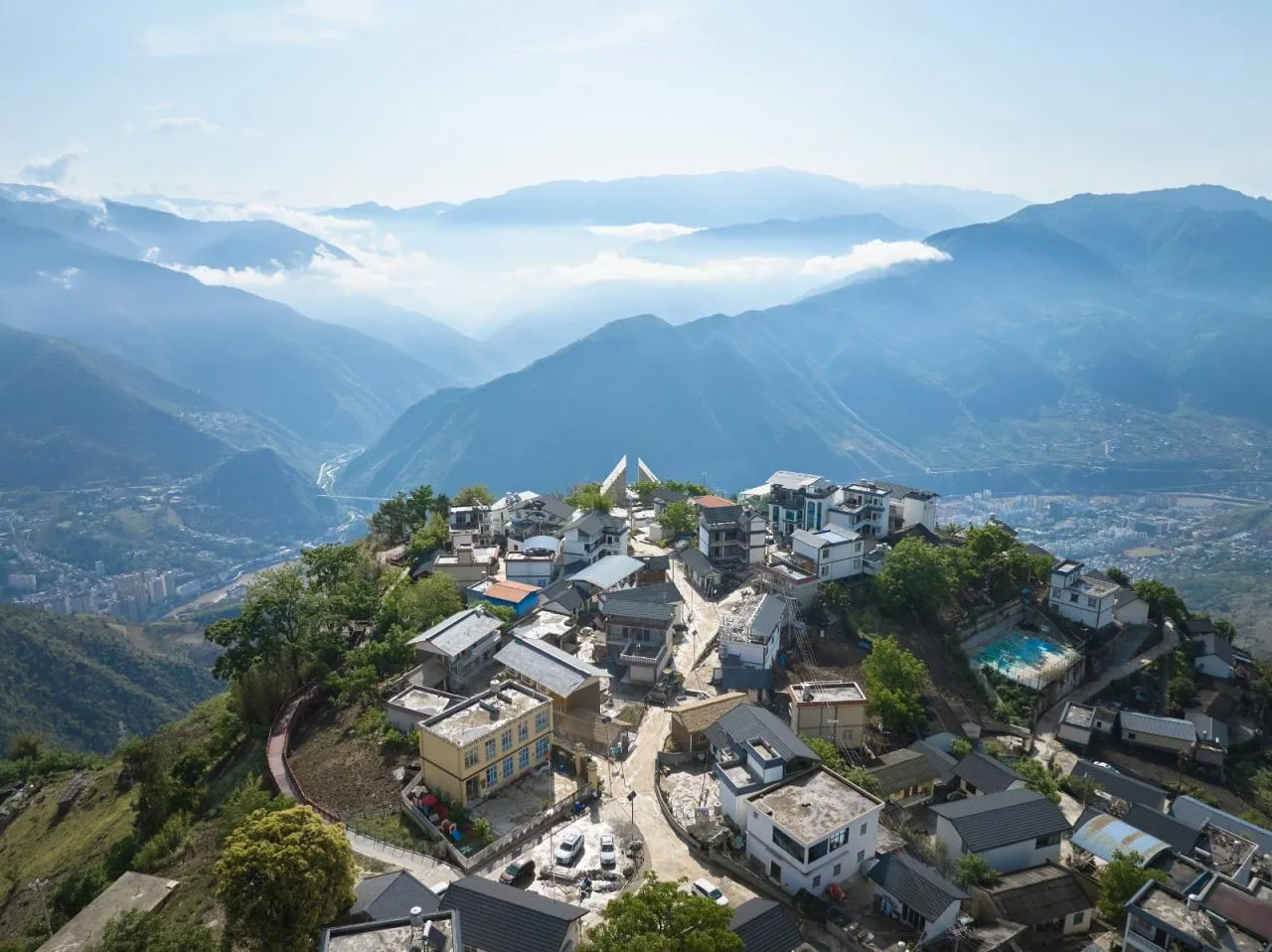
△ Village Overview © AOGVISION Architectural Vision
The building’s inclined form aligns with the mountain slope, creating a dynamic energy reminiscent of a drawn bowstring ready to release an arrow. Multiple openings punctuate the exterior walls at varying angles and sizes, each framing a unique view of the canyon landscape. As visitors move through the space, these framed vistas connect them spiritually to the surrounding nature, making architecture a medium that links people with the heavens and earth.
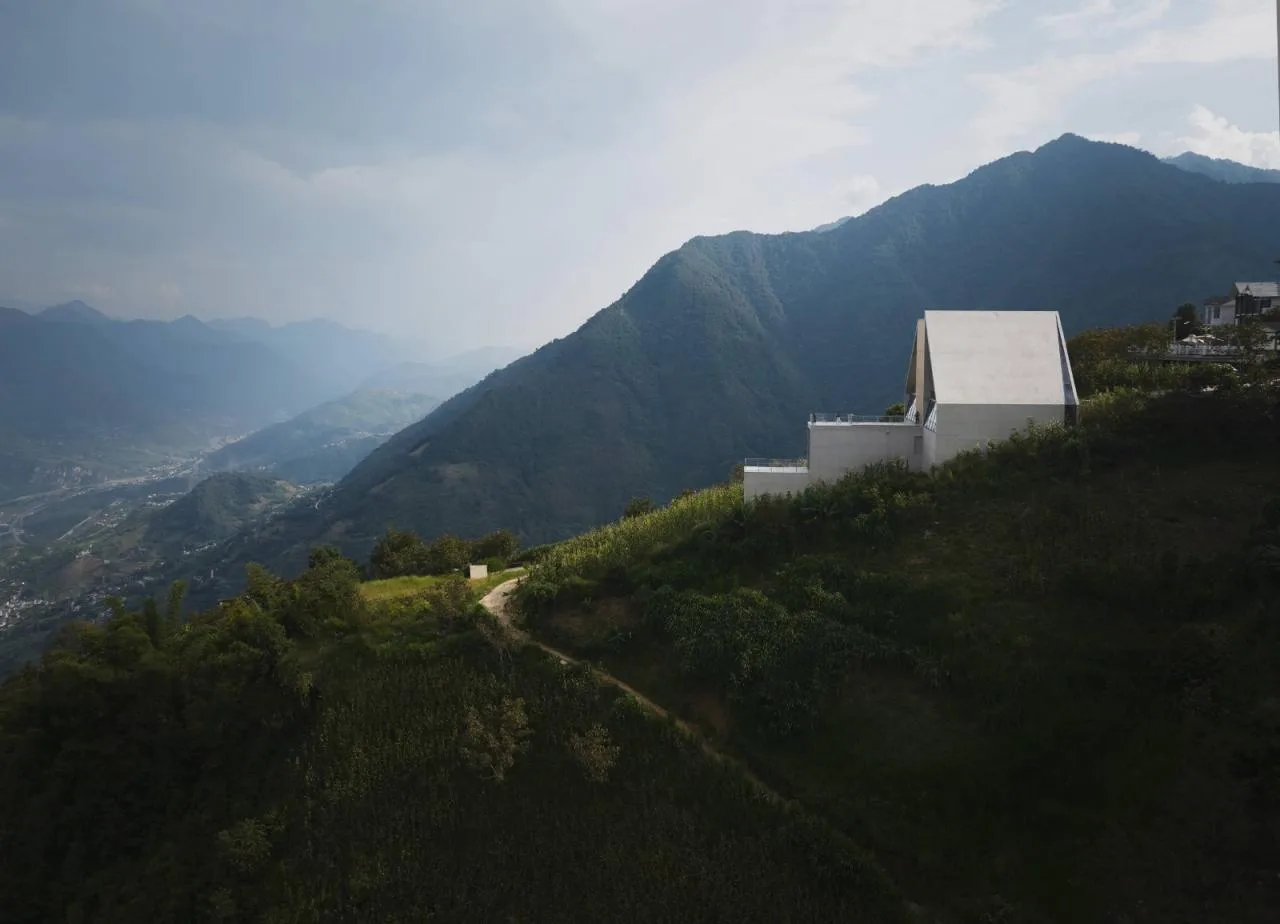
△ Bookstore Vision © AOGVISION Architectural Vision
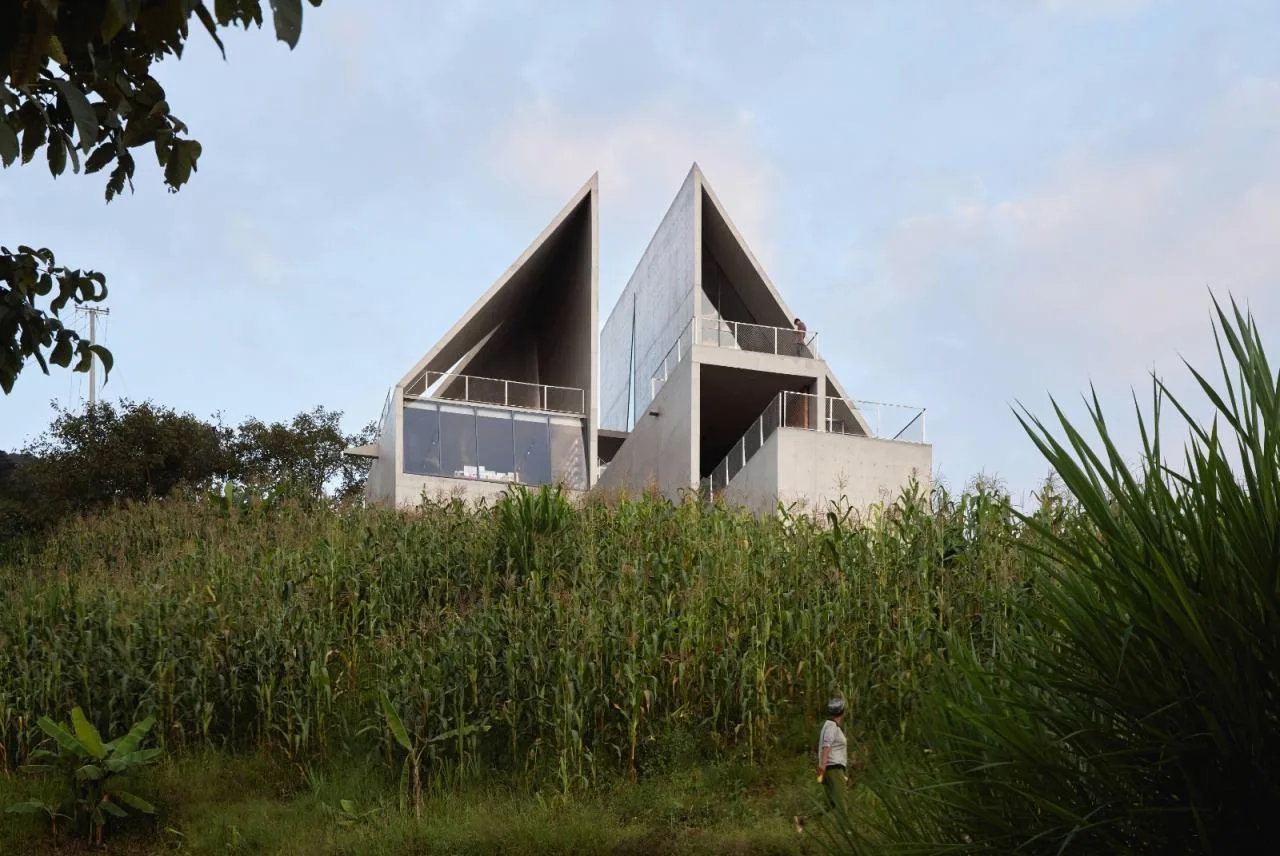
△ Architectural Panorama © AOGVISION Architectural Vision
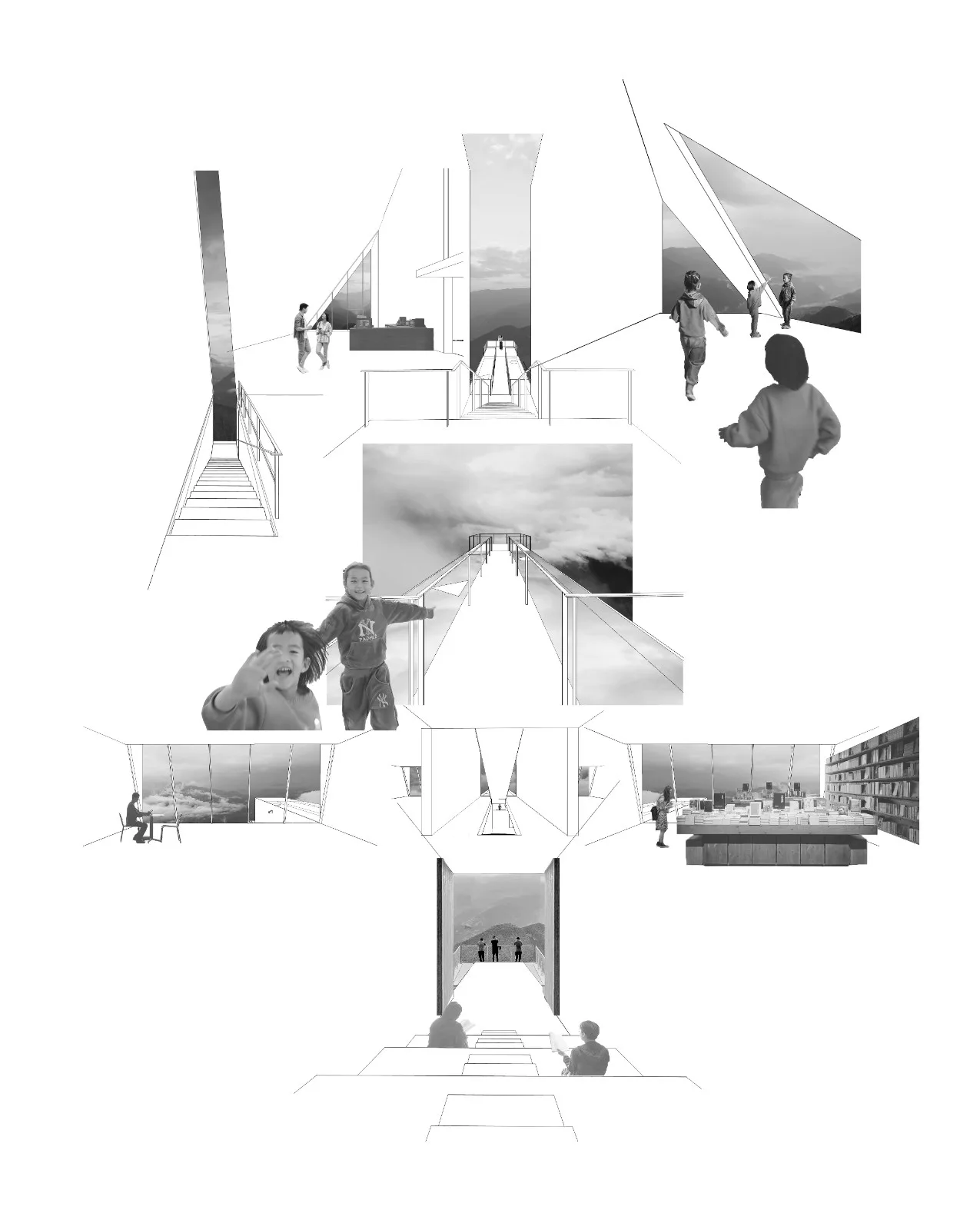
△ Concept Collage © Architectural Firm (TAO)
Two Circulation Paths
The three-story building features two distinct circulation routes — one internal and one external. Moving through these paths, visitors experience a dynamic spatial journey: spaces alternate from narrow and towering to dim and introspective, then suddenly open to light and clarity.
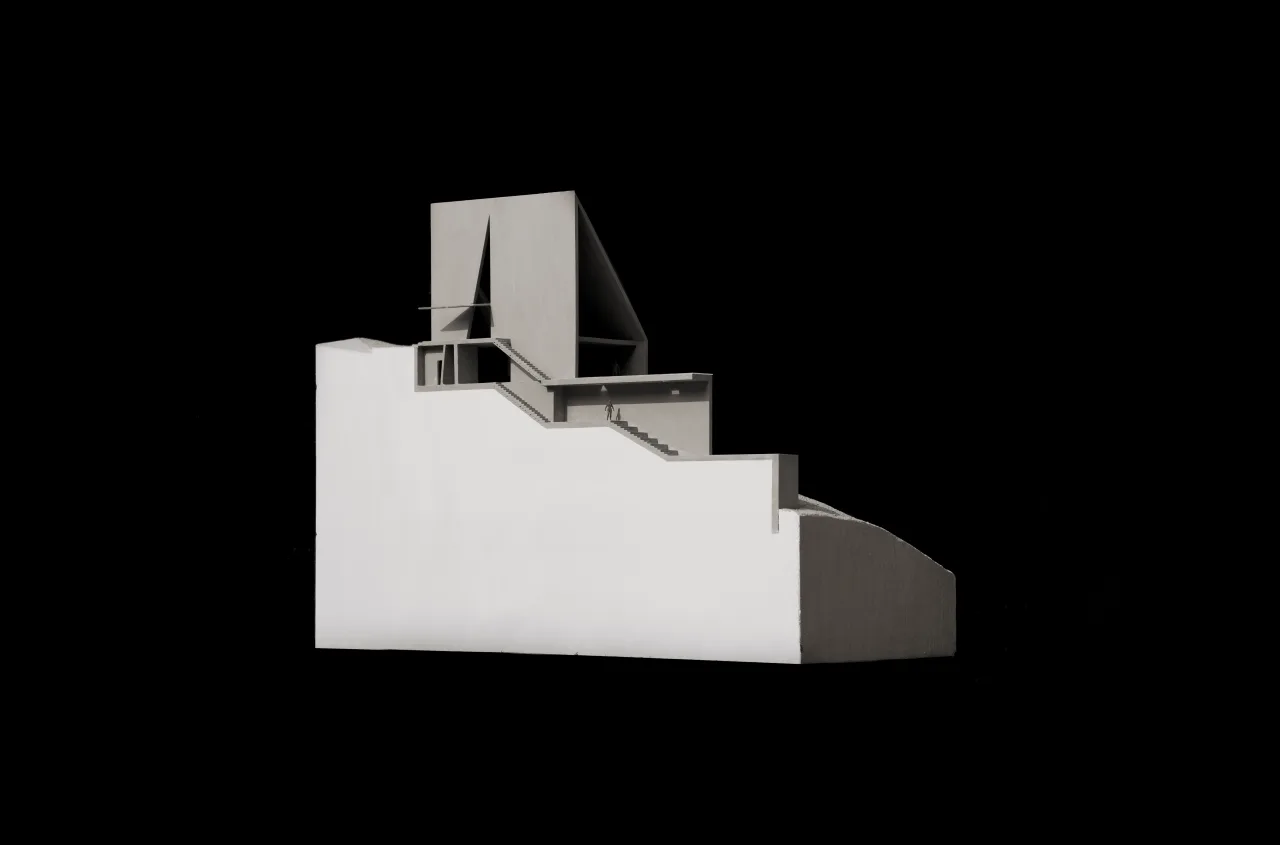
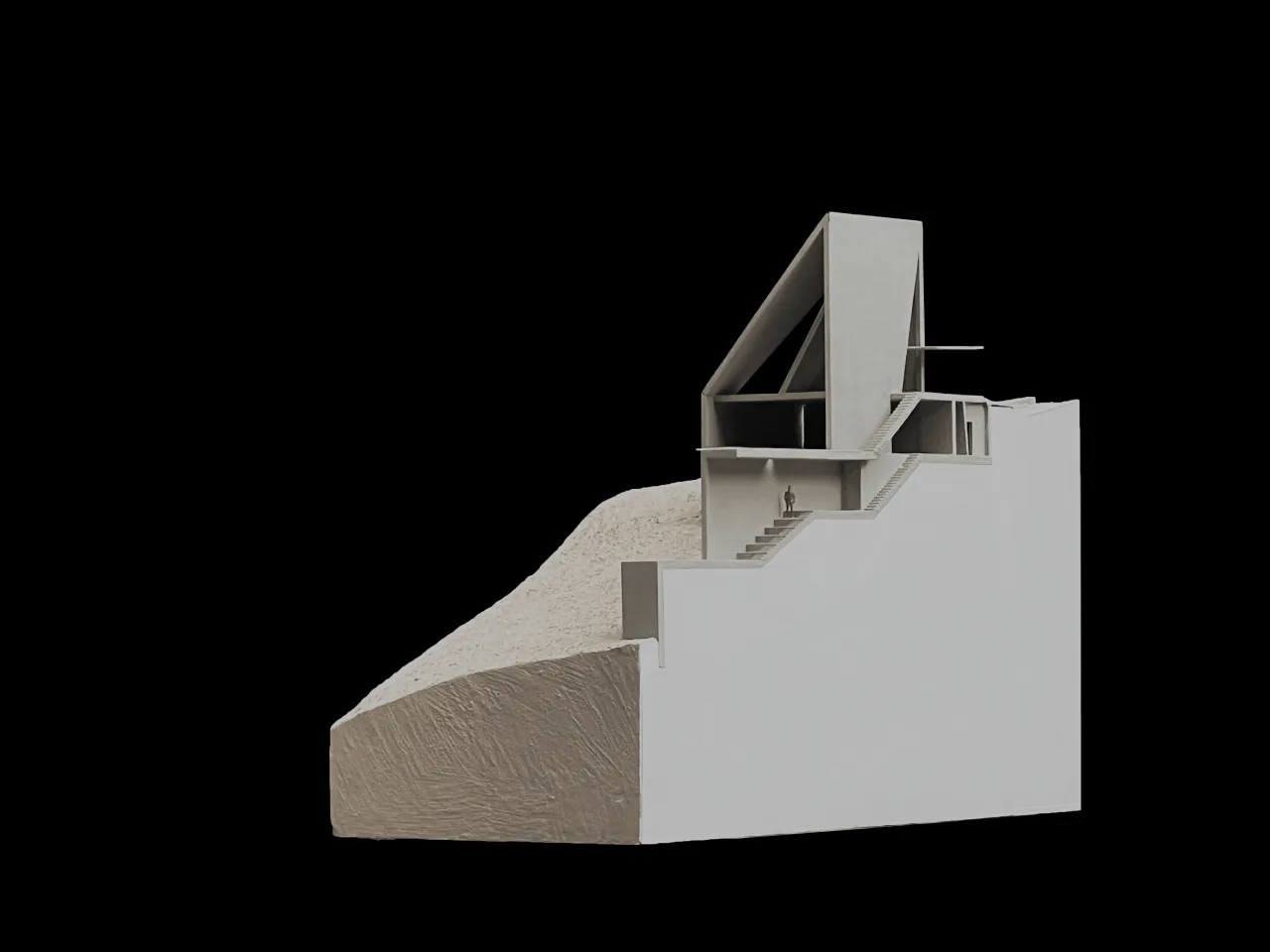
△ 1:50 Handmade Model © Architectural Firm (TAO)
The internal route begins at the lofty coffee area on the top floor, where the sloping roof points skyward, evoking a spiritual, almost religious experience. Descending the indoor stairs leads to the main book area on the middle level, enclosed by thick concrete walls on three sides, creating a sanctuary-like atmosphere facing nature. Continuing down, visitors reach the theater space on the lowest level, illuminated by two skylights beneath the water’s surface, casting shimmering light throughout the interior.
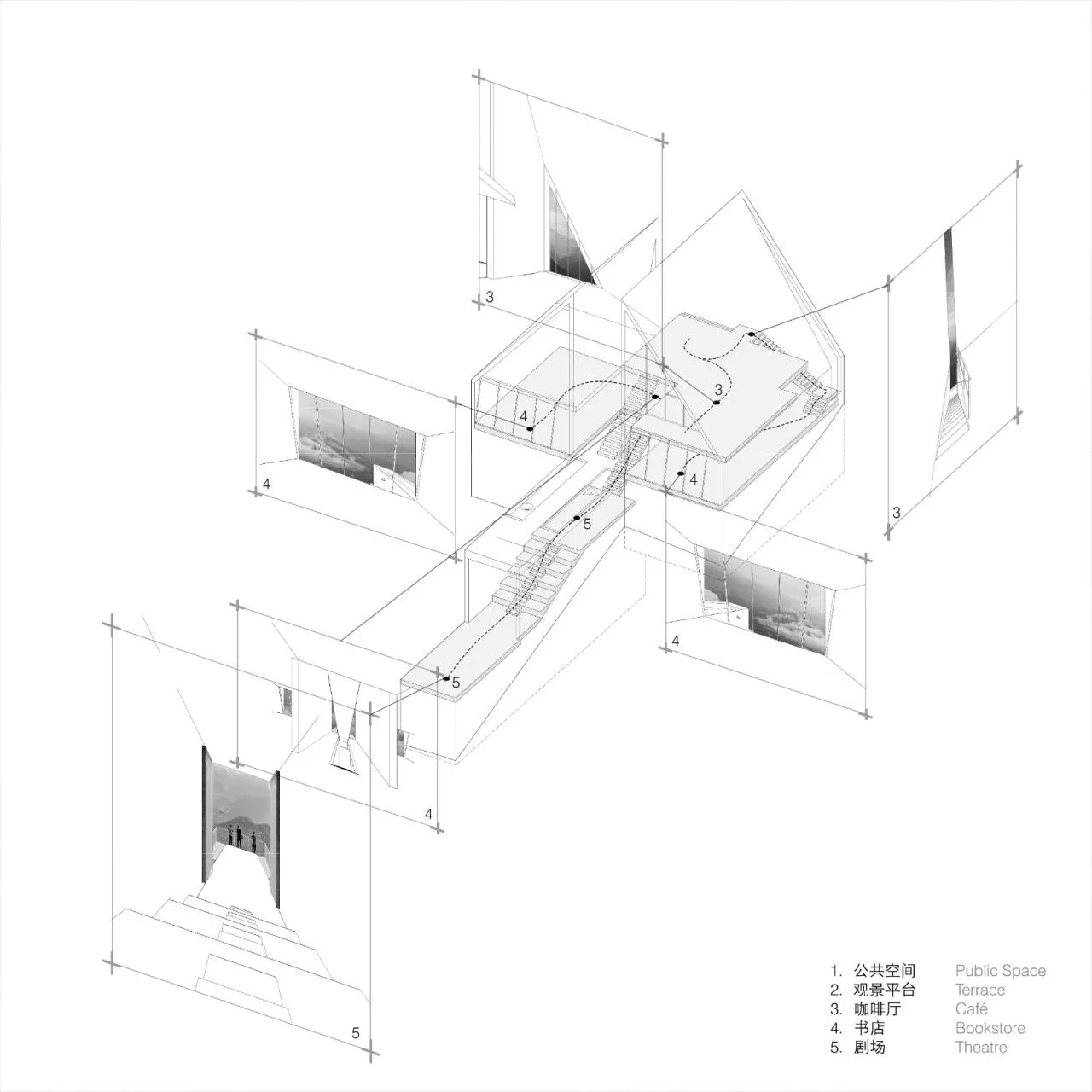
△ Indoor Streamline Analysis © Architectural Firm (TAO)
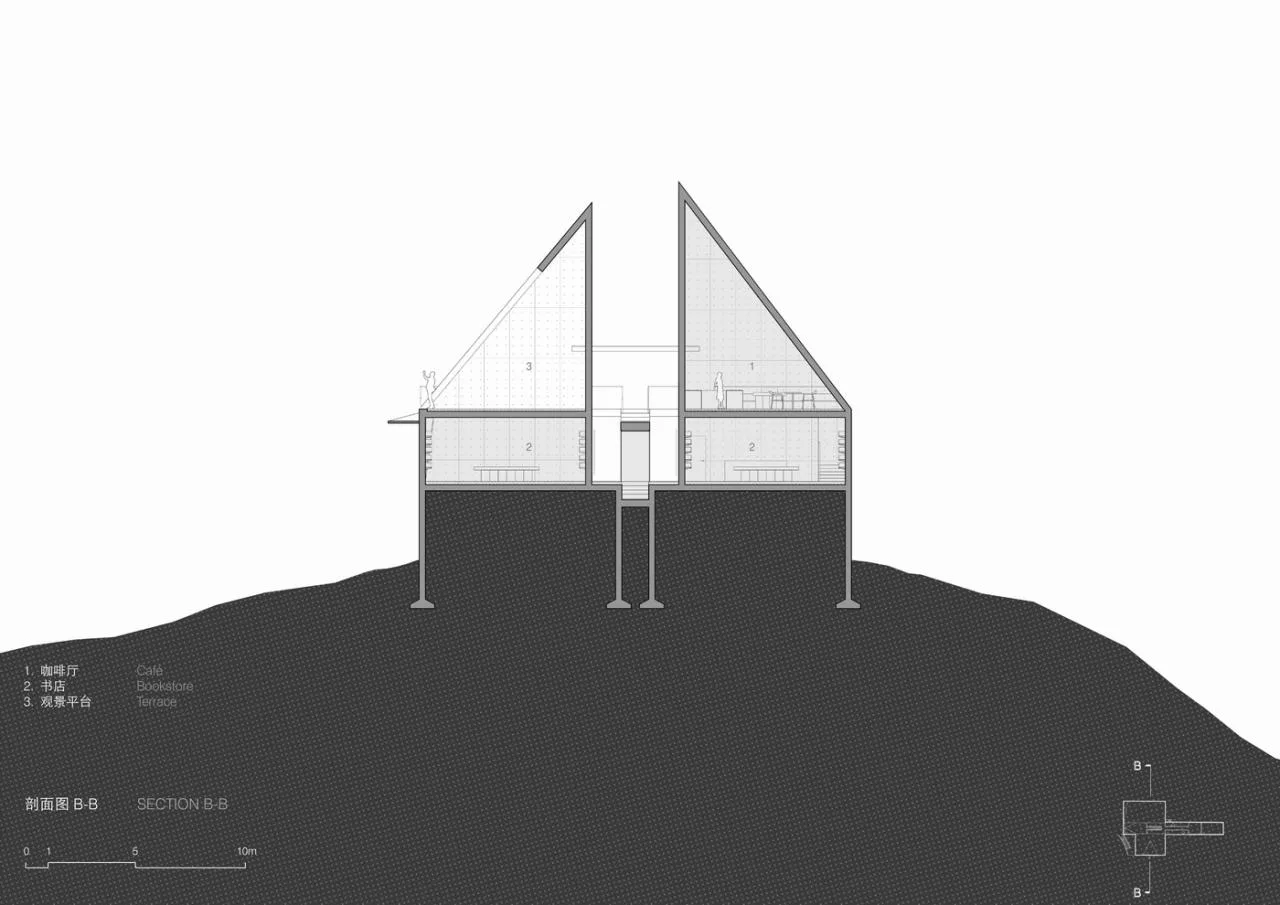
△ Overall Short Profile © Architectural Firm (TAO)
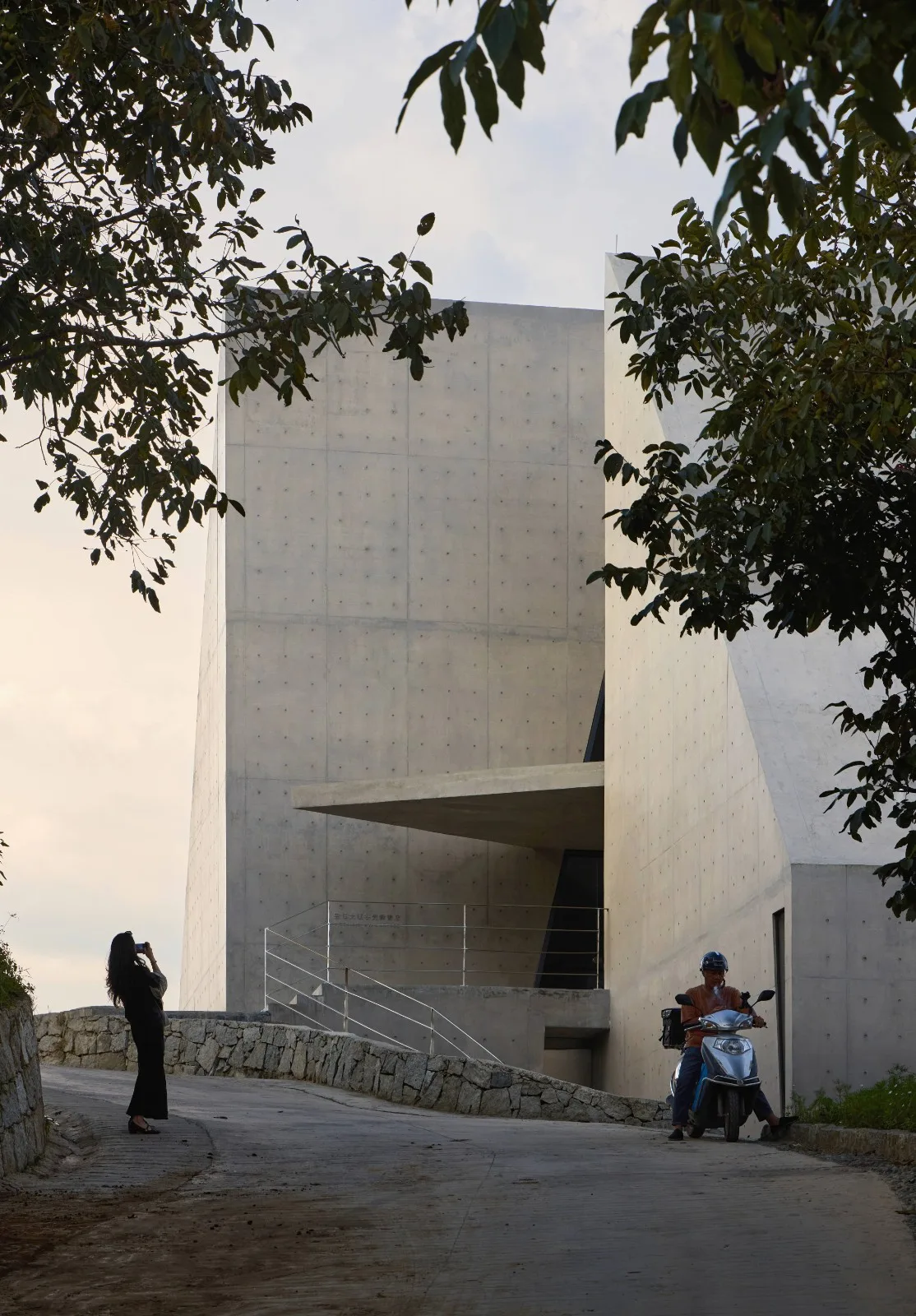
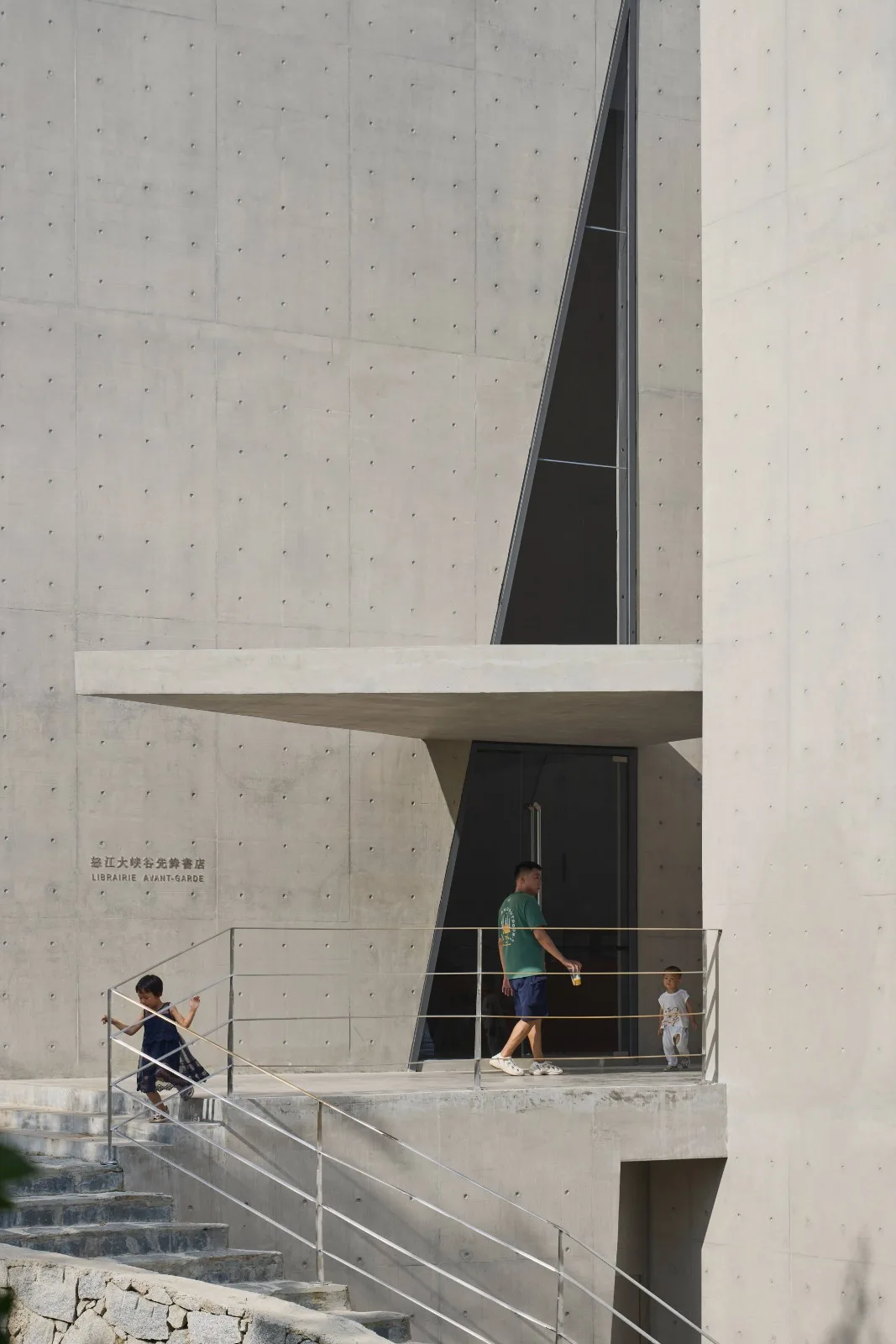
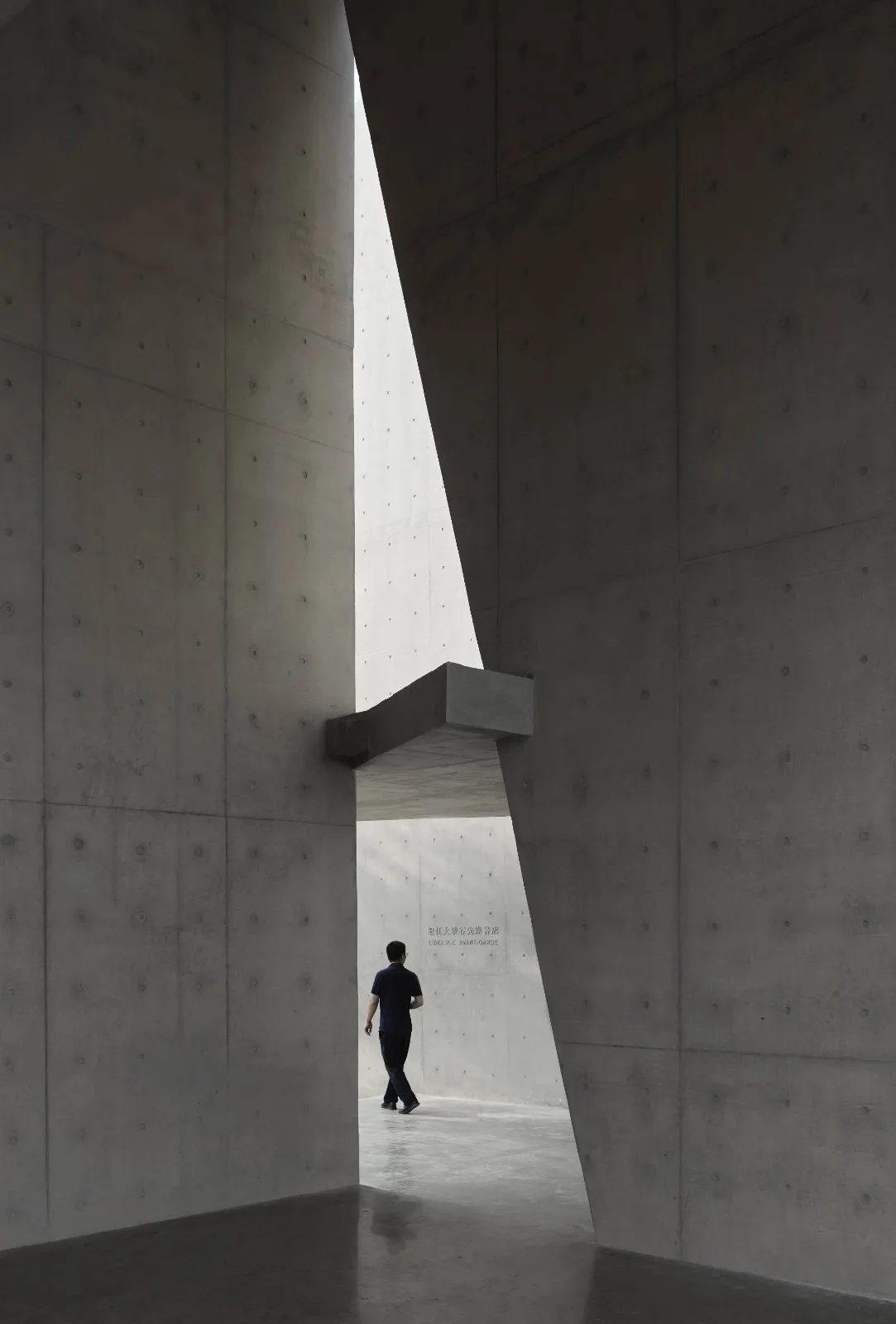
△ Entrance © AOGVISION Architectural Vision
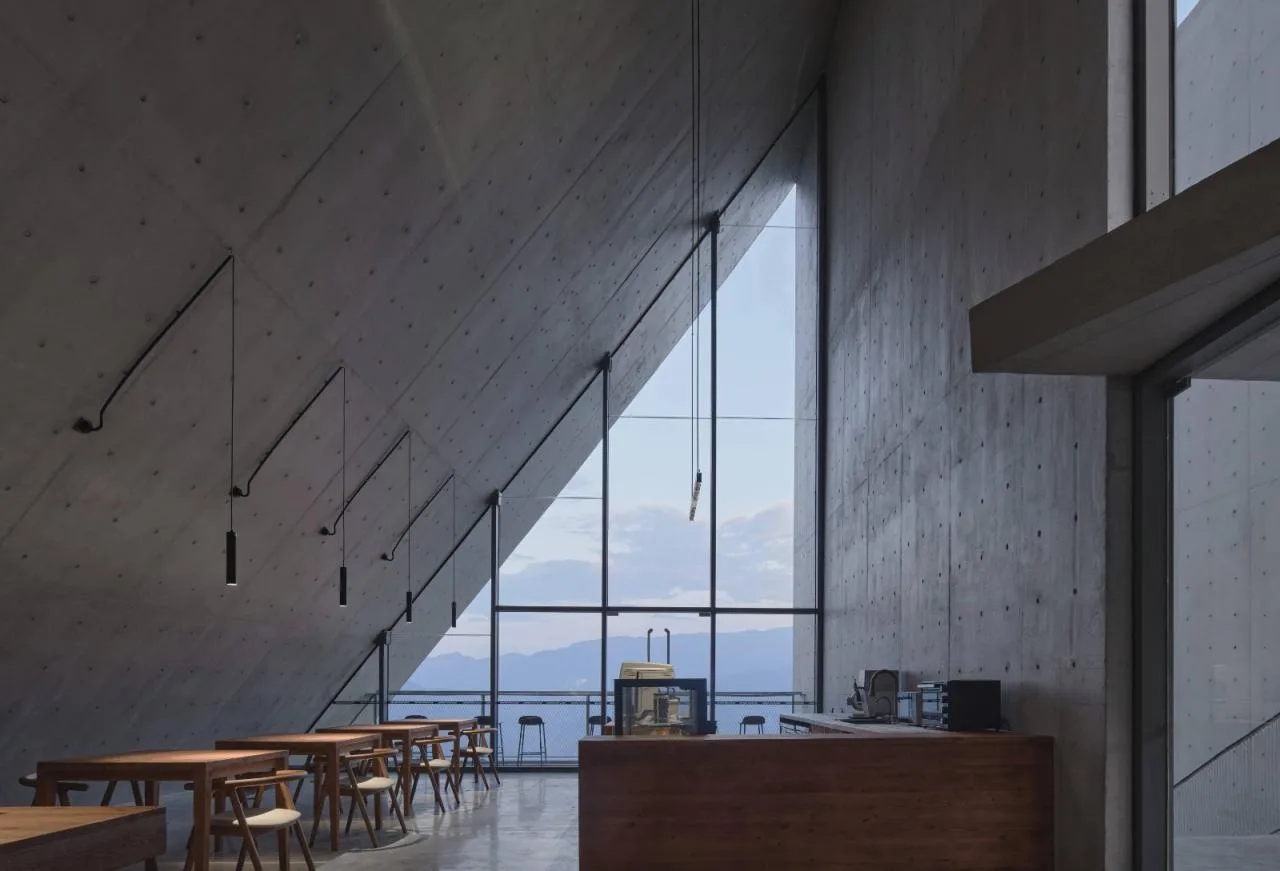
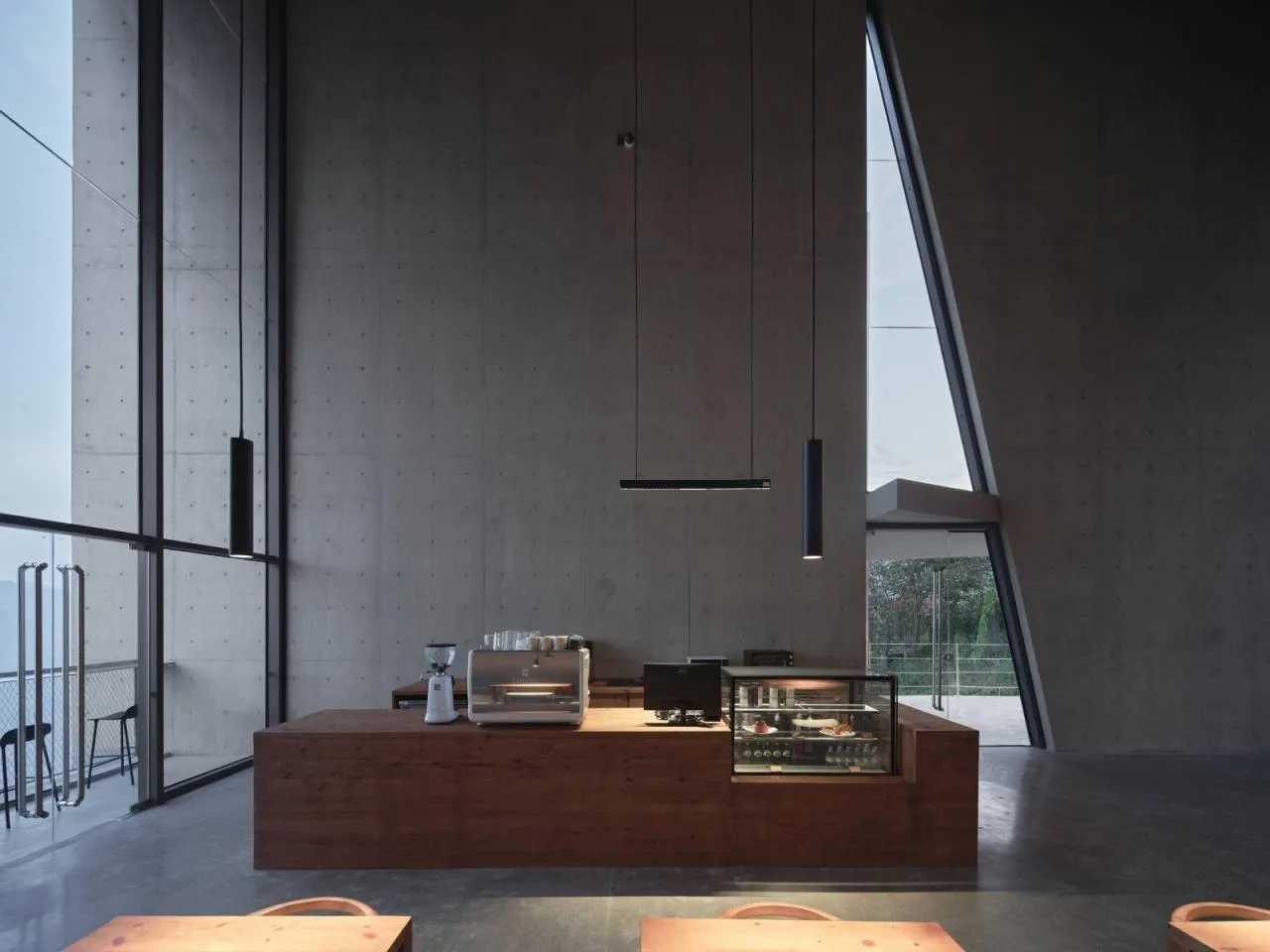
△ Coffee Shop © AOGVISION Architectural Vision
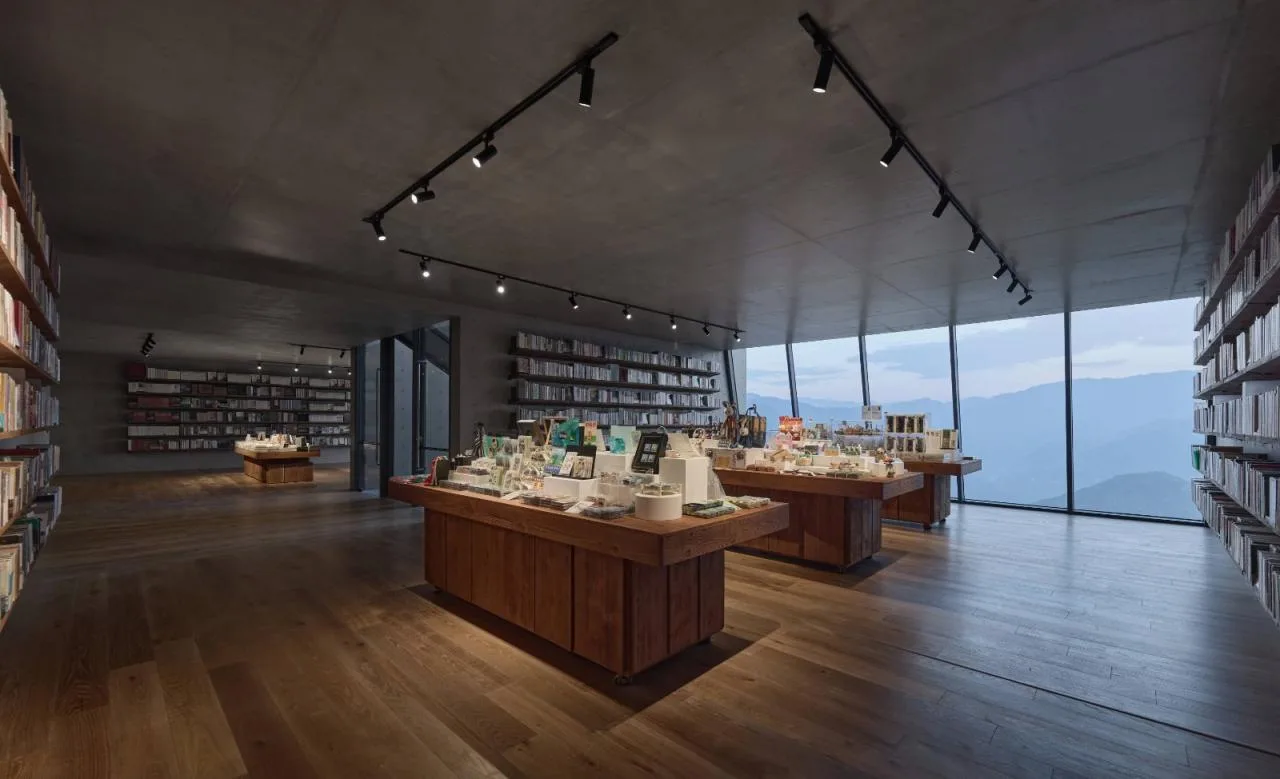
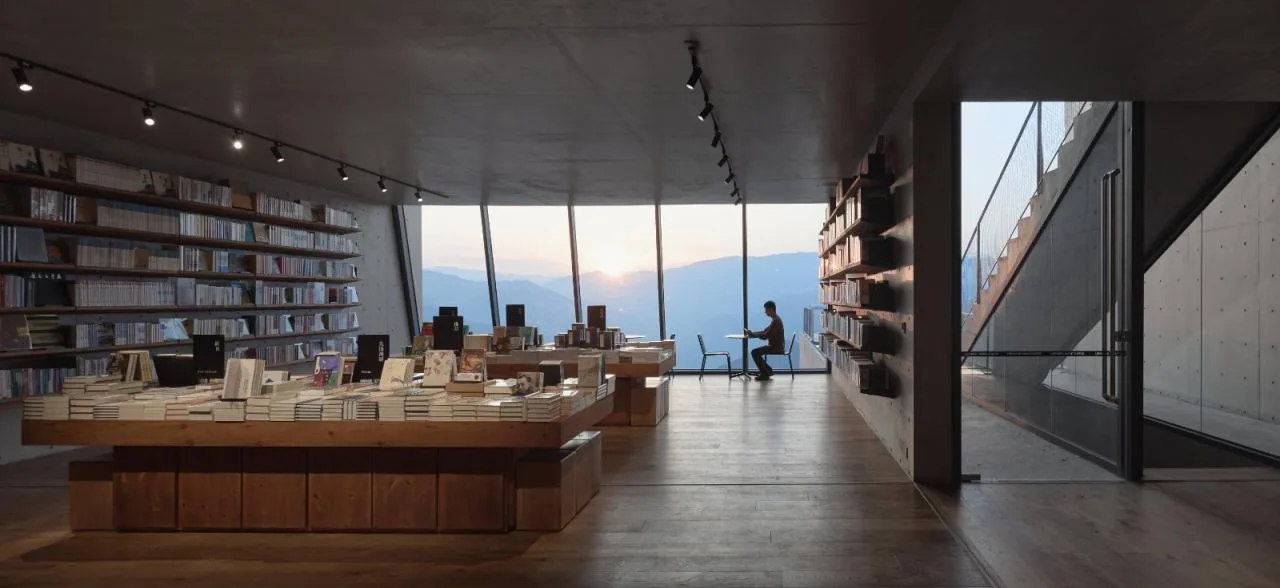
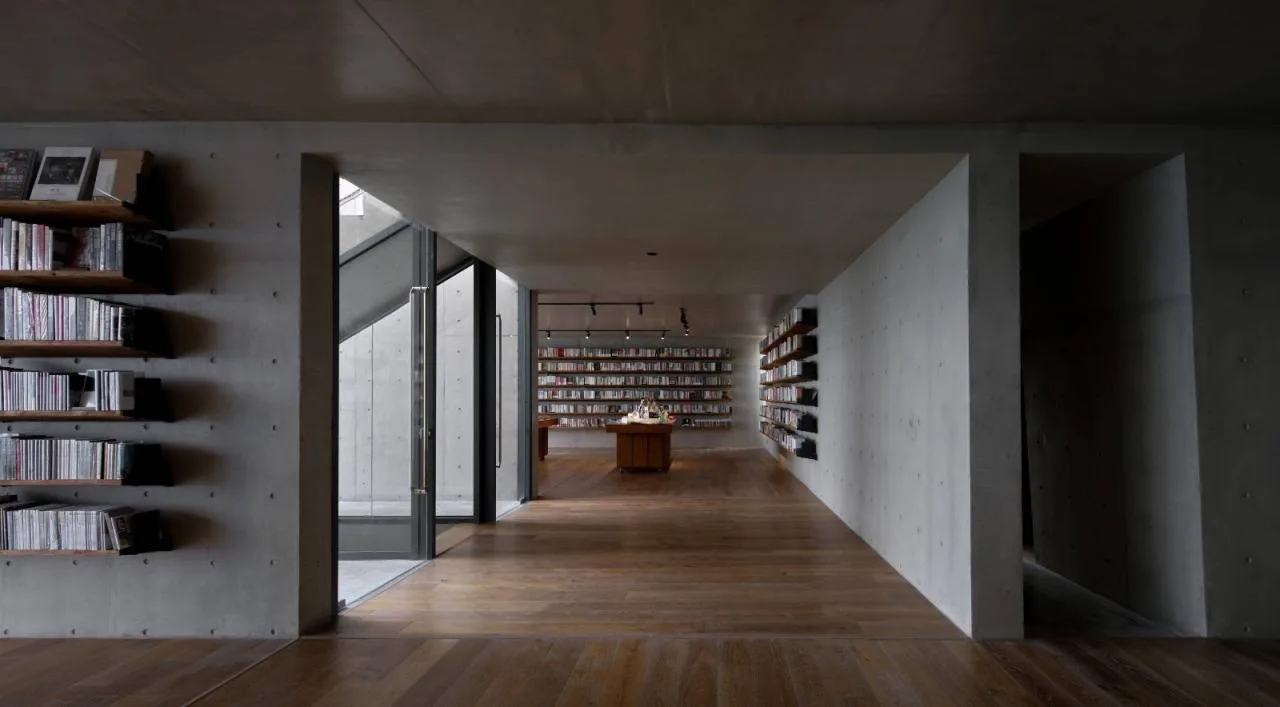
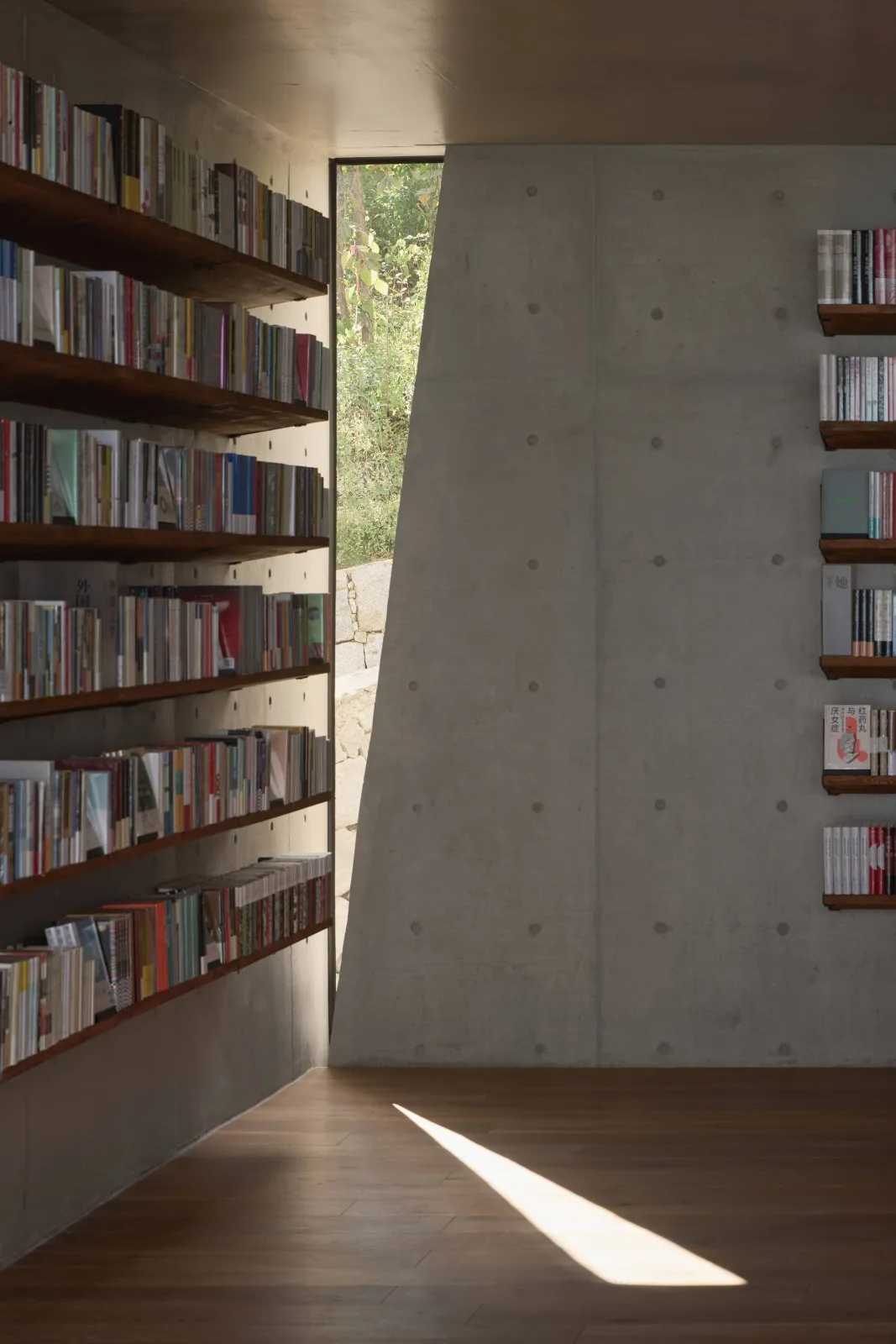
△ Bookstore © AOGVISION Architectural Vision
At the theater’s end stand two camphor pine doors, each 6 meters tall. These doors open and close once daily, like a ritual. Inside, people read, recite, and connect with the past; outside, the Nu River roars while the earth holds still. As the gate swings open, the mountain gorge forms a dramatic stage backdrop where the river and literature meet.
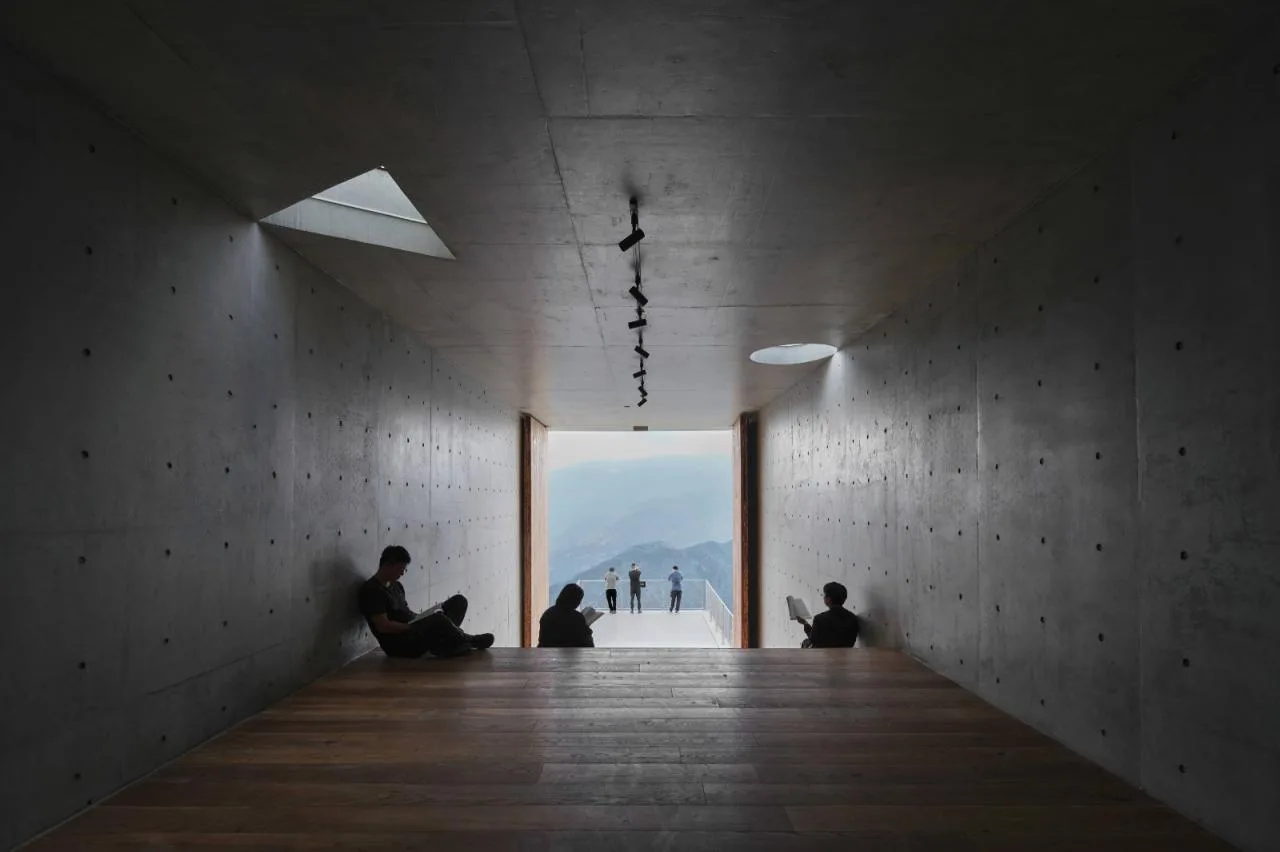
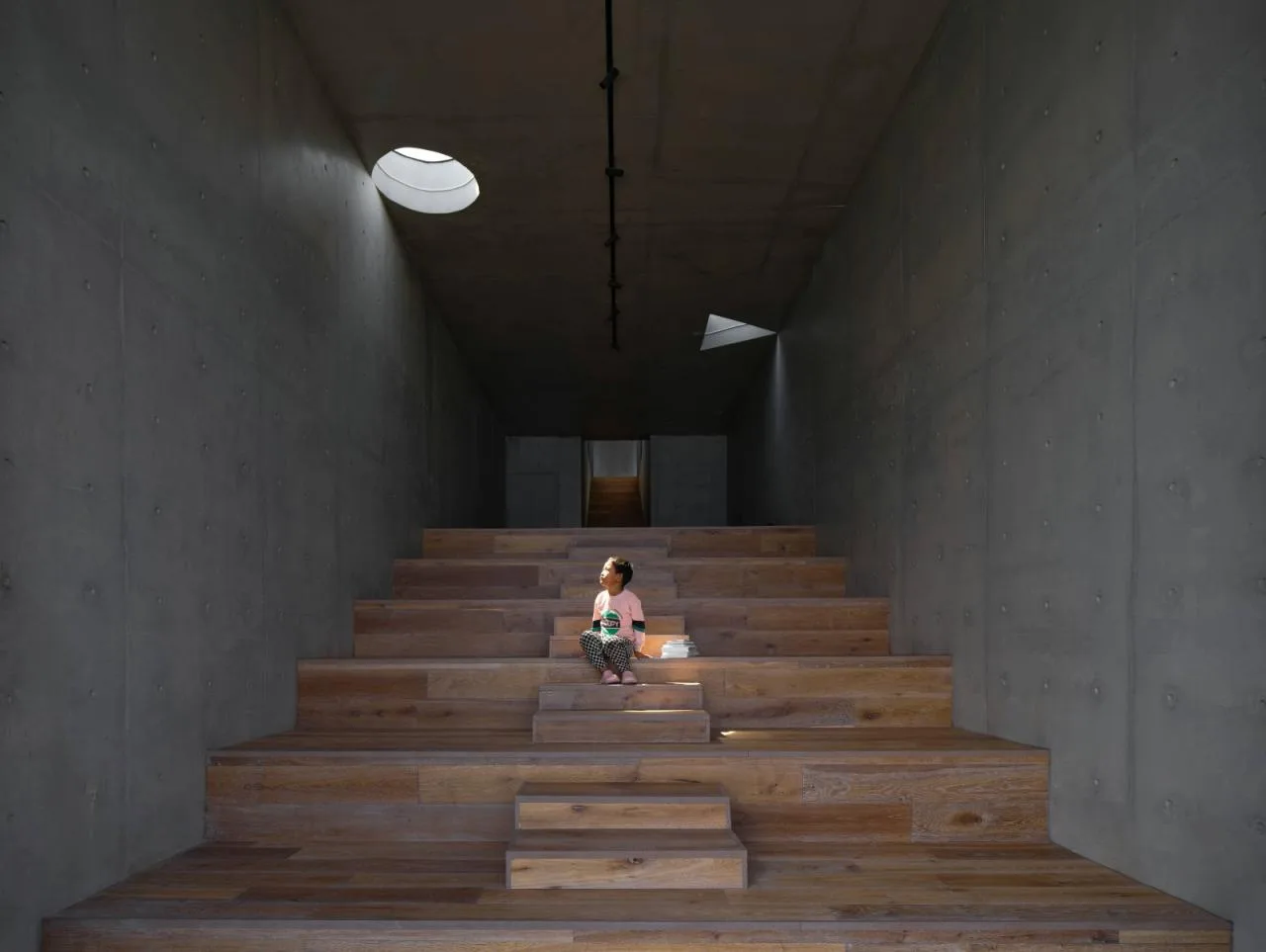
△ Theater © AOGVISION Architectural Vision
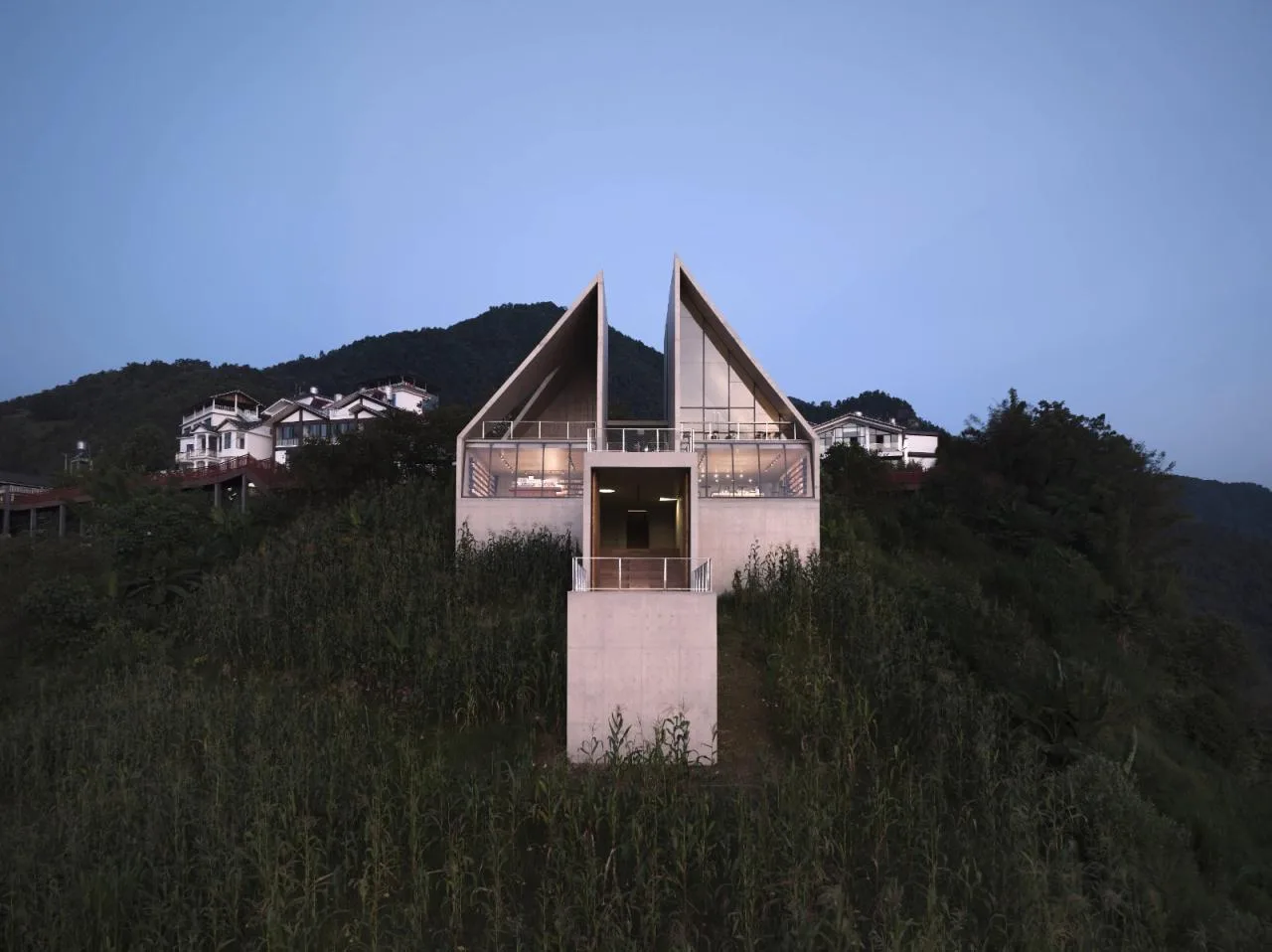
Bookstore at Sunset © AOGVISION Architectural Vision
The external circulation begins at the building’s entrance. Two opposing volumes create a narrow, soaring entryway reminiscent of the Nu River canyon, flanked by towering mountains. Moving forward and descending along the building’s central axis, visitors transition from the artificial “canyon” into the natural canyon beyond, experiencing a moment of sudden clarity.
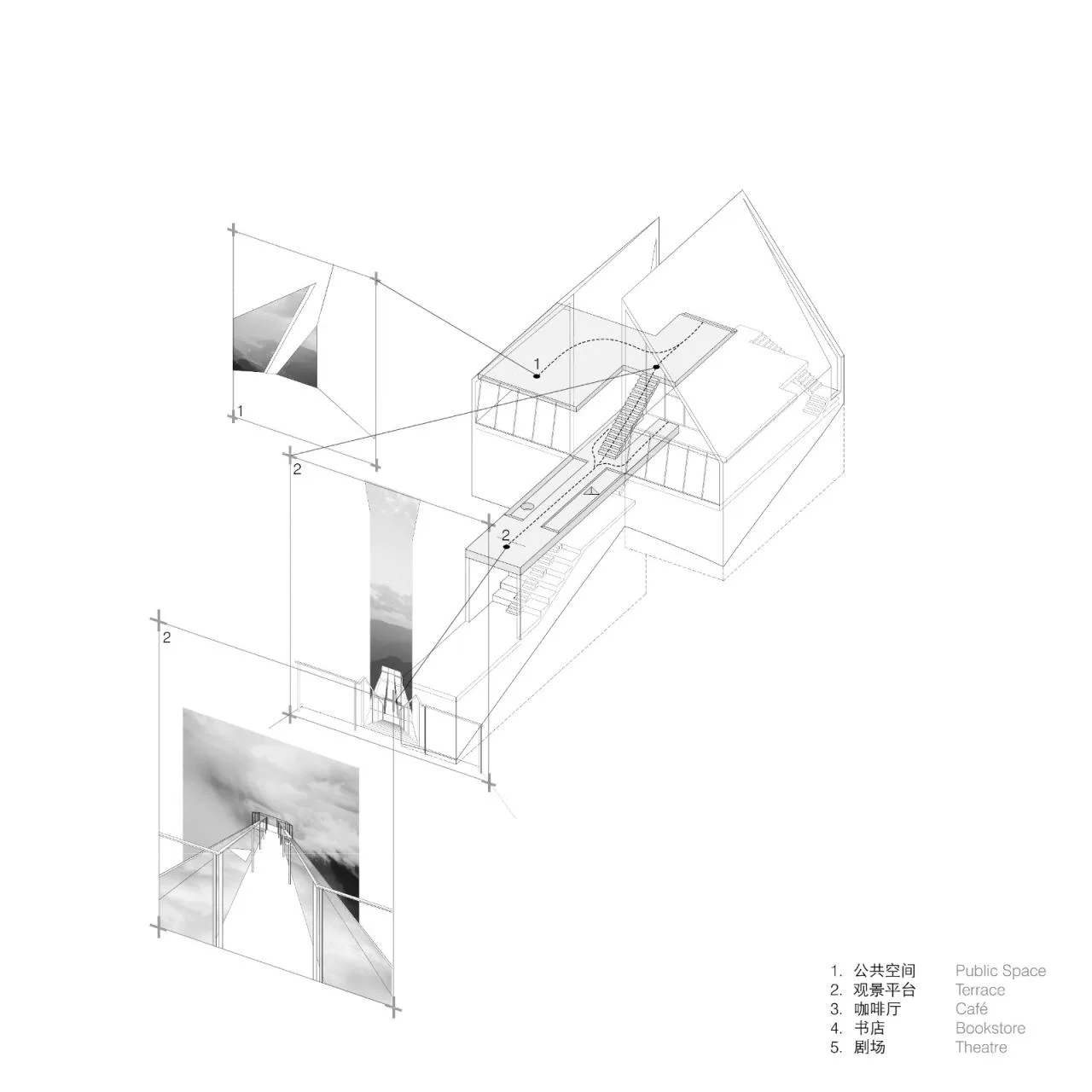
△ Outdoor Streamline Analysis © Architectural Firm (TAO)
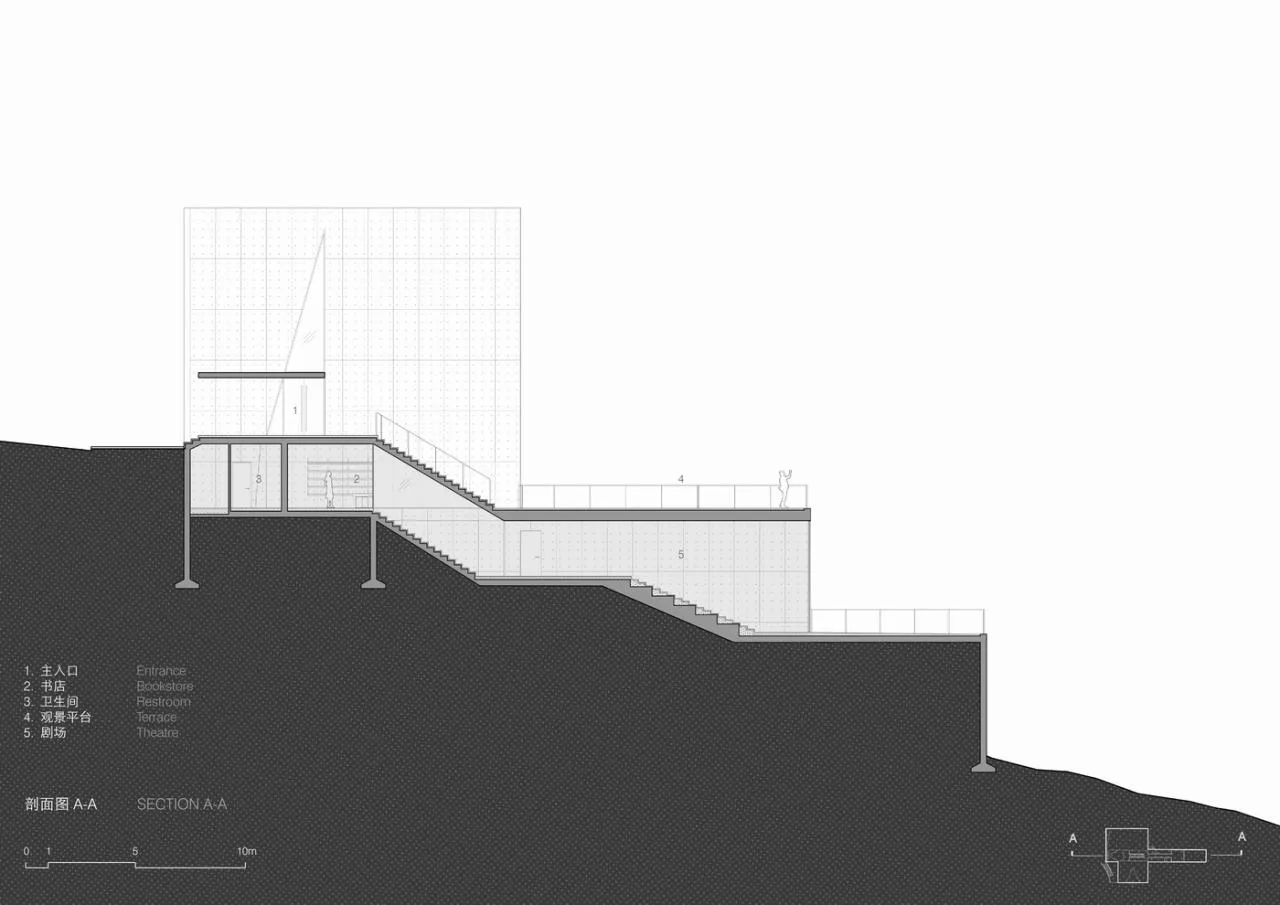
△ Overall Long Profile © Architectural Firm (TAO)
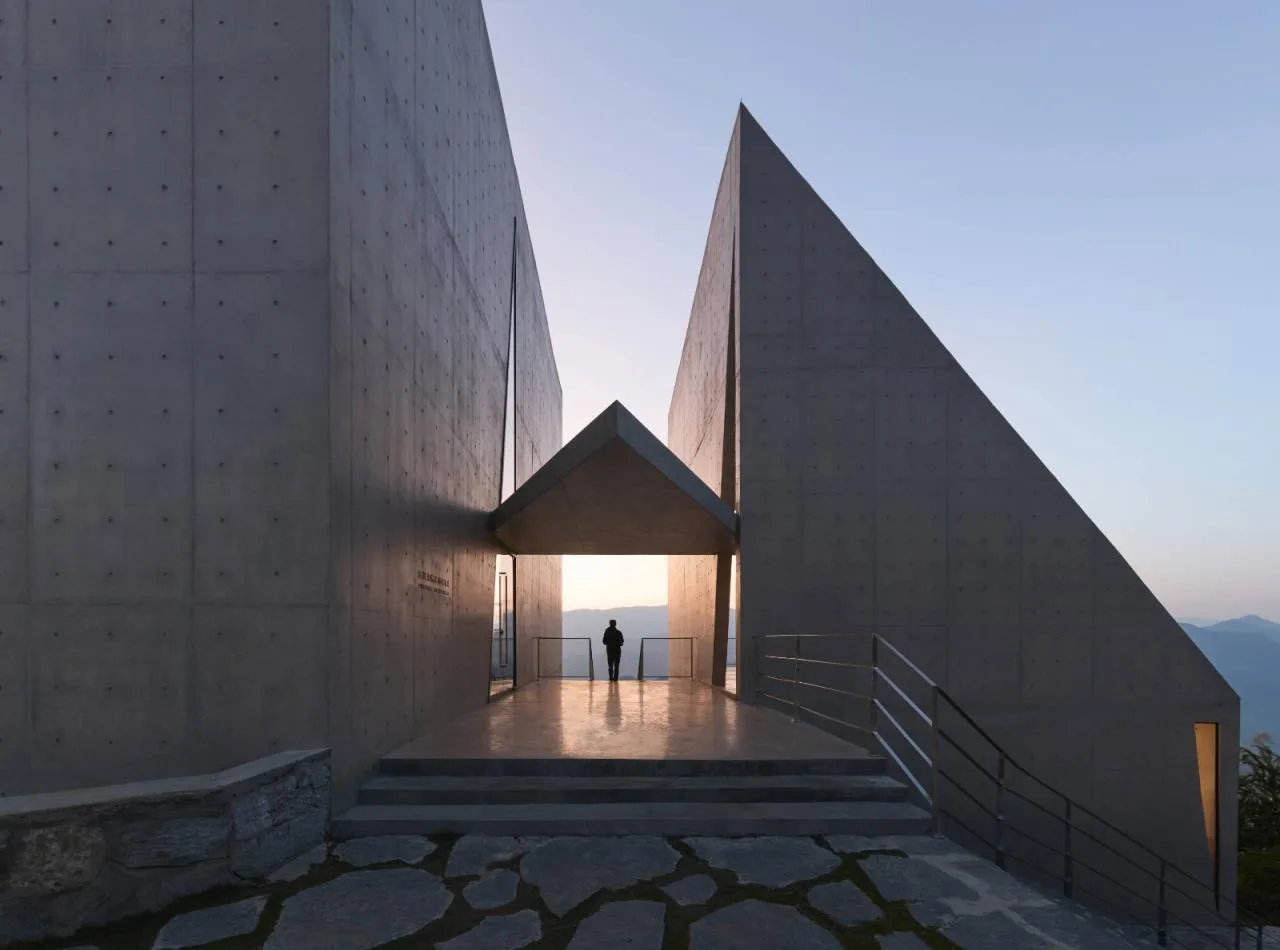
△ Entrance © AOGVISION Architectural Vision
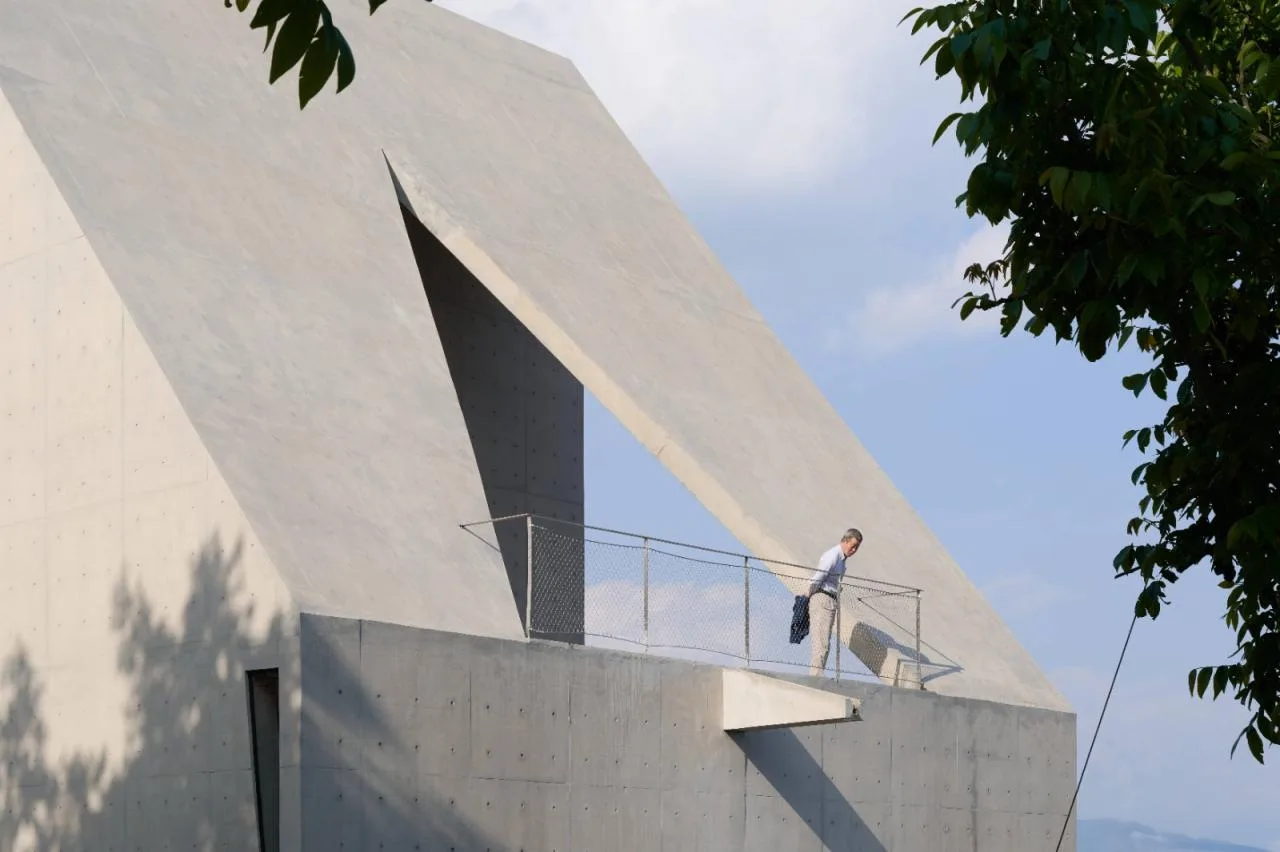
△ Viewing Platform © AOGVISION Architectural Vision
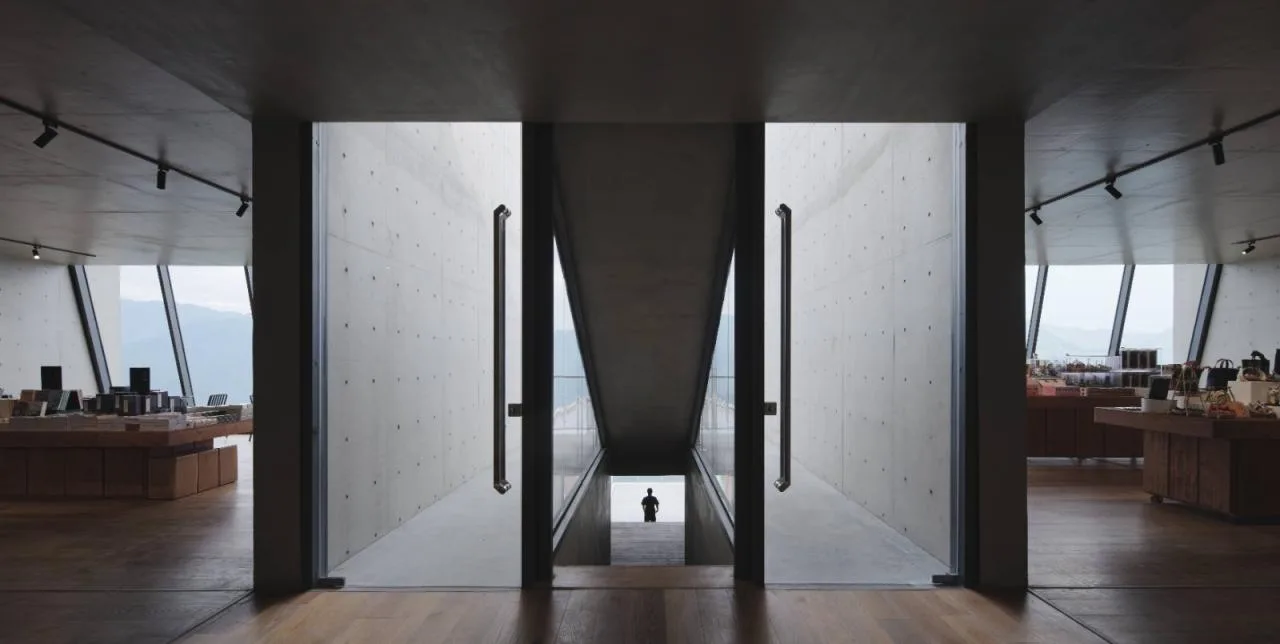
△ Access to Outdoor Viewing Platform © AOGVISION Architectural Vision
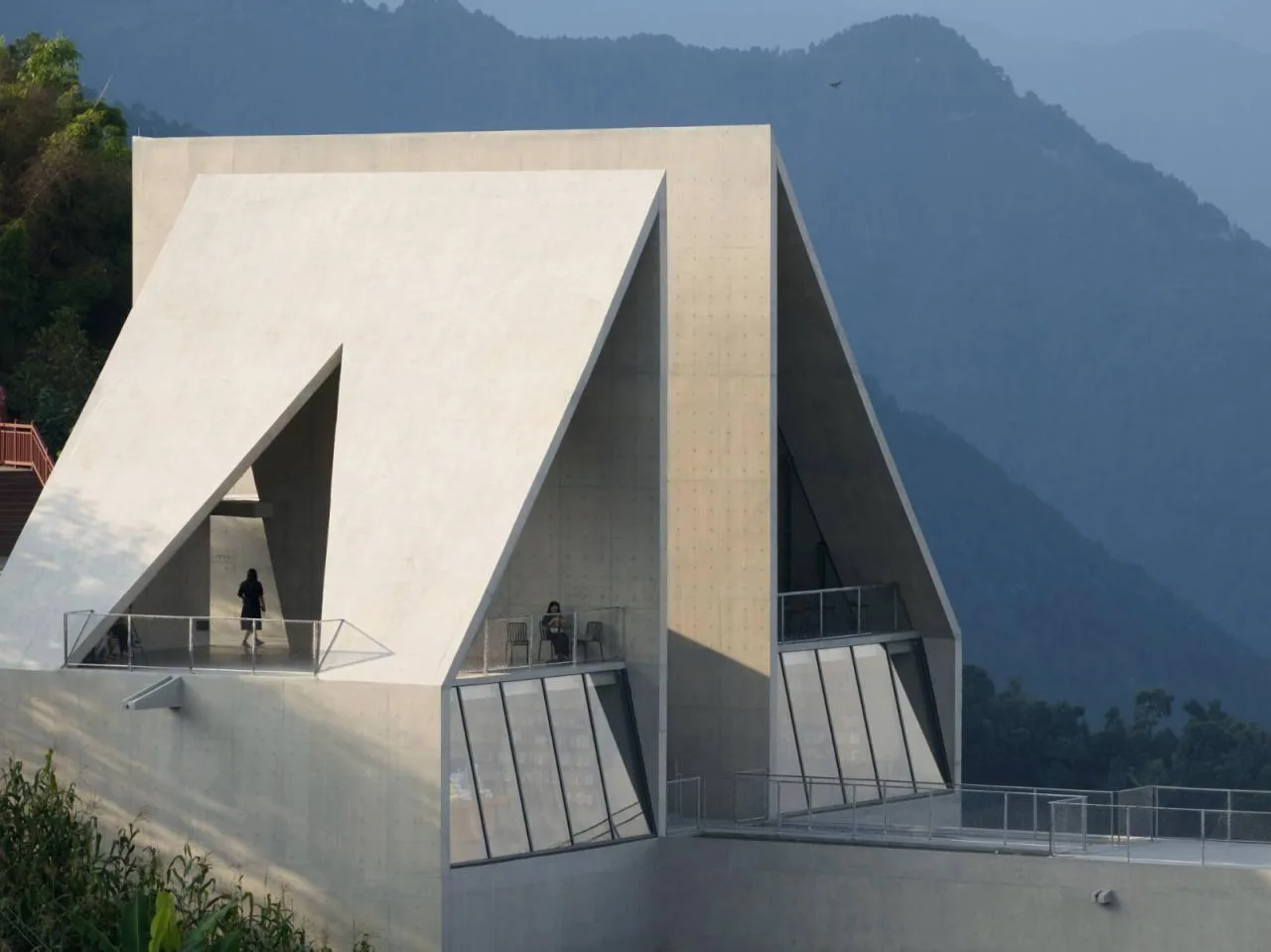
△ Outdoor Viewing Platform © AOGVISION Architectural Vision
From a bird’s-eye perspective, the building’s main entrance aligns with Yangpo Village’s main road. The outdoor pathway links two observation platforms, creating a permanent public space accessible to both villagers and visitors. In this way, the bookstore acts as a village extension, facing the canyon and blending contemporary architecture with traditional village patterns. As its name suggests, Pioneer Bookstore stands proudly at Yangpo Village’s forefront, holding the Lisu people’s crossbows and aiming them toward poetic horizons.
△ Village and Bookstore © AOGVISION Architectural Vision
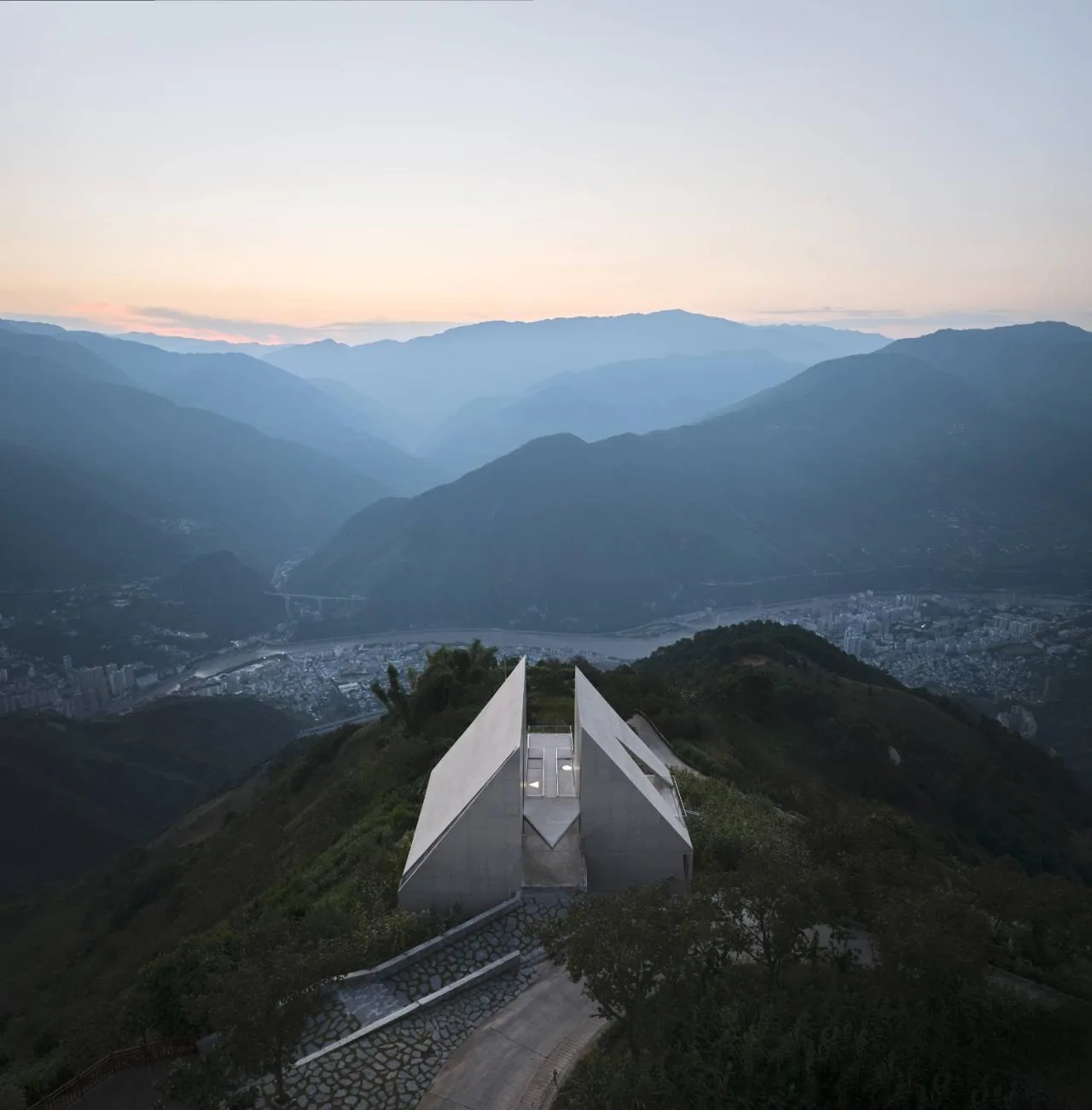
Bookstore at Sunset © AOGVISION Architectural Vision
Yangpo Village is a cultural hub for ethnic minorities, and the Pioneer Bookstore has brought modern cultural vitality to this community. With the bookstore as a focal point, Pioneer aims to invigorate ethnic villages culturally and draw global attention to the ethnic minorities and the Nu River Grand Canyon region.
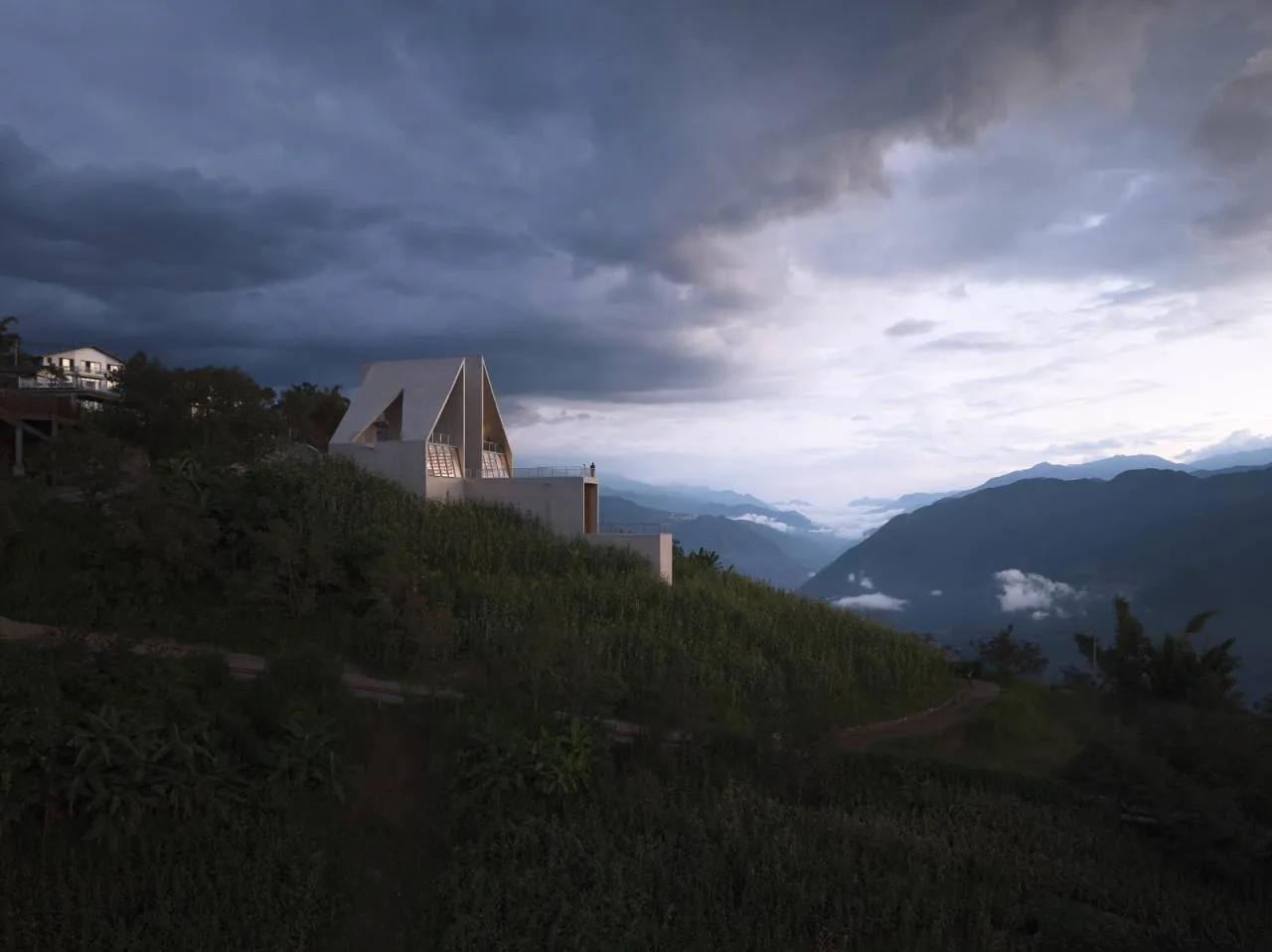
Bookstore at Sunset © AOGVISION Architectural Vision
Technical Drawings
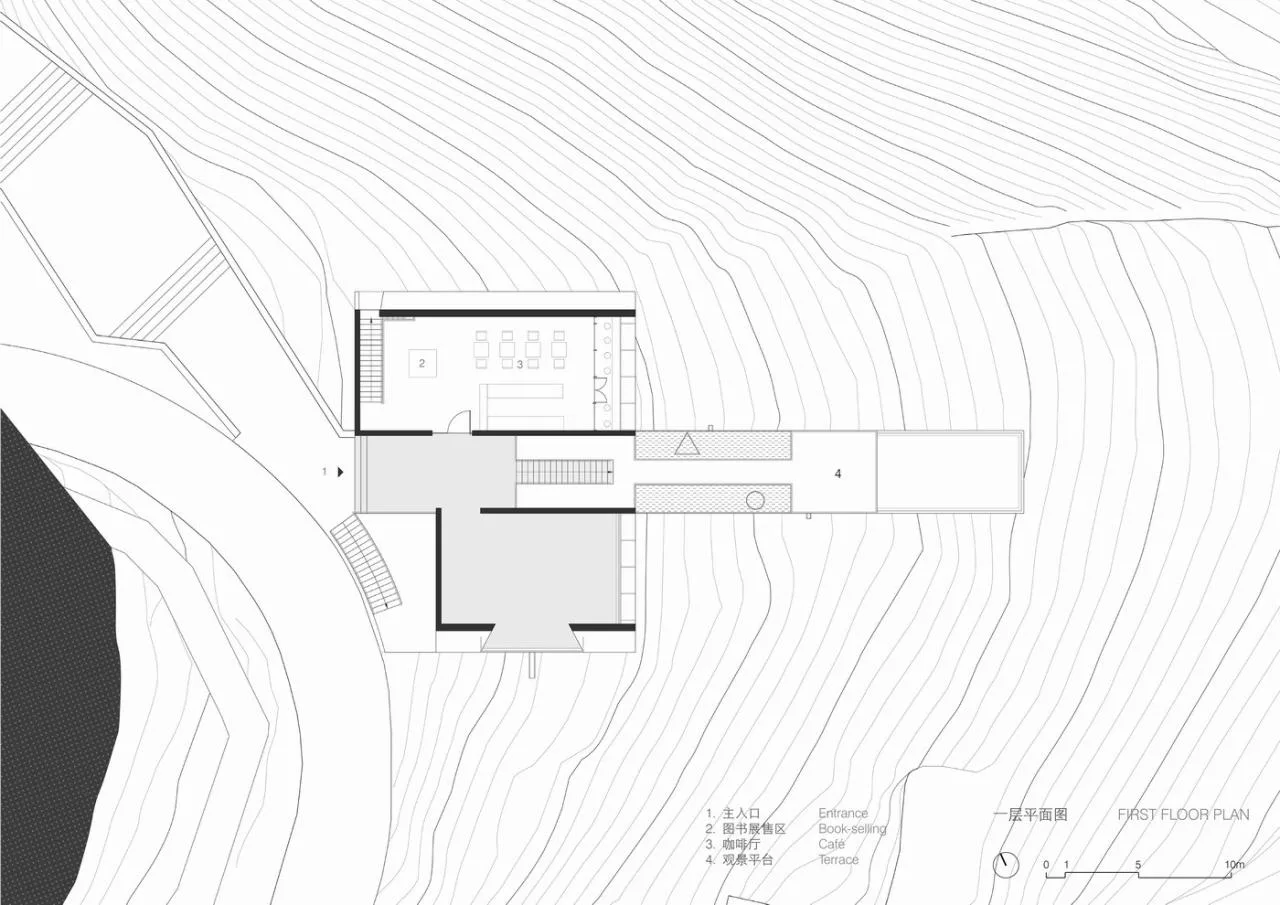
△ First Floor Plan © Architectural Firm (TAO)
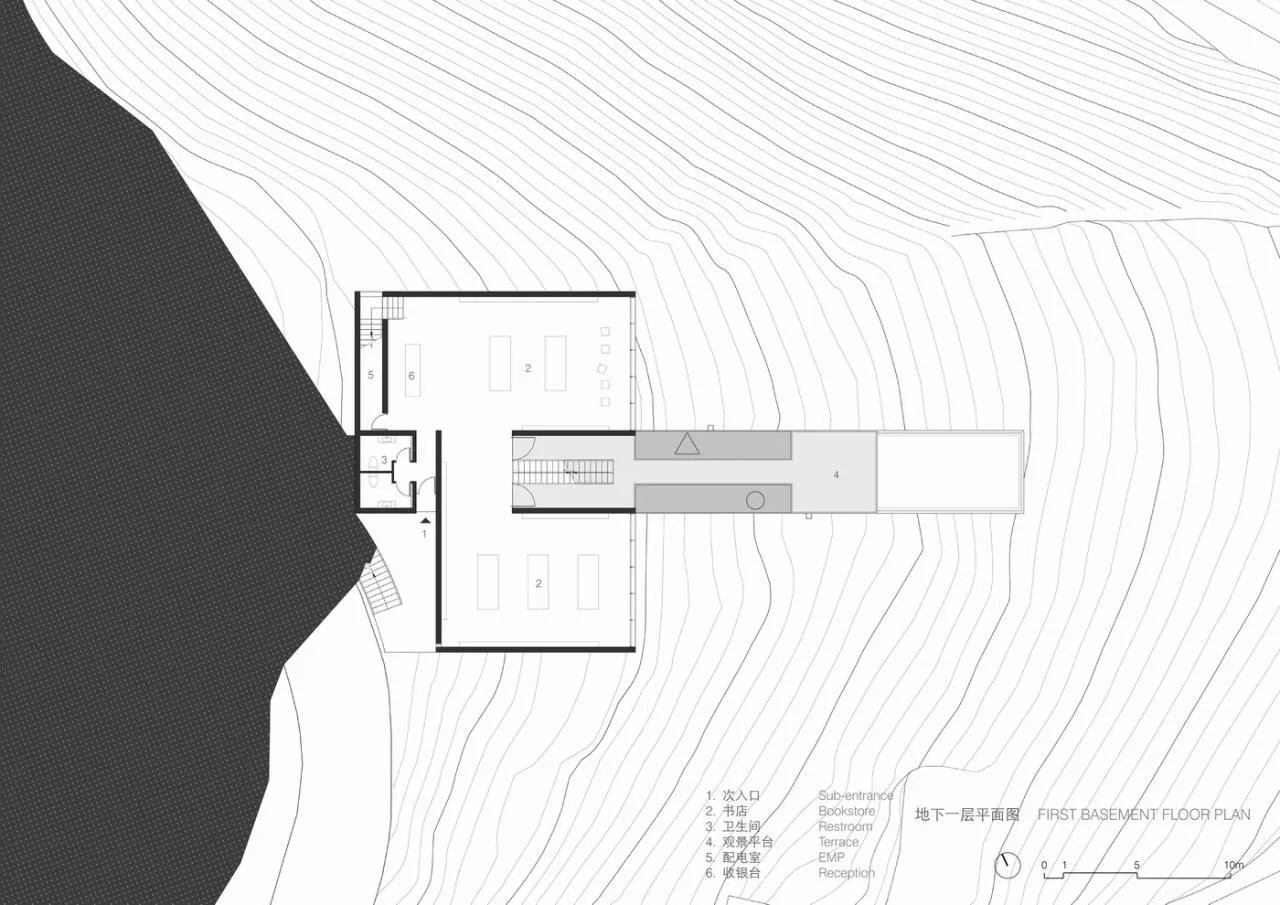
△ Underground Floor Plan © Architectural Firm (TAO)
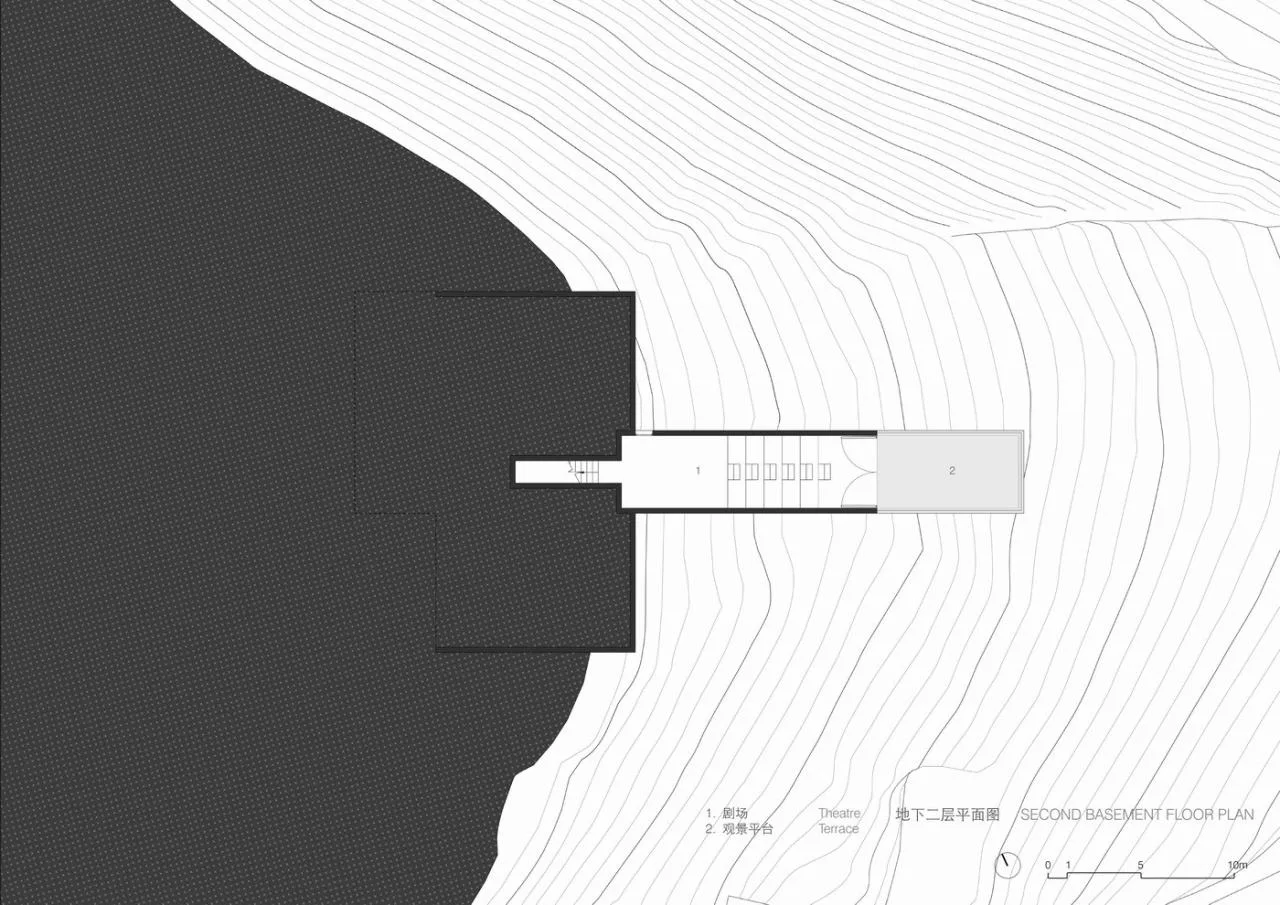
△ Underground Second Floor Plan © Architectural Firm (TAO)
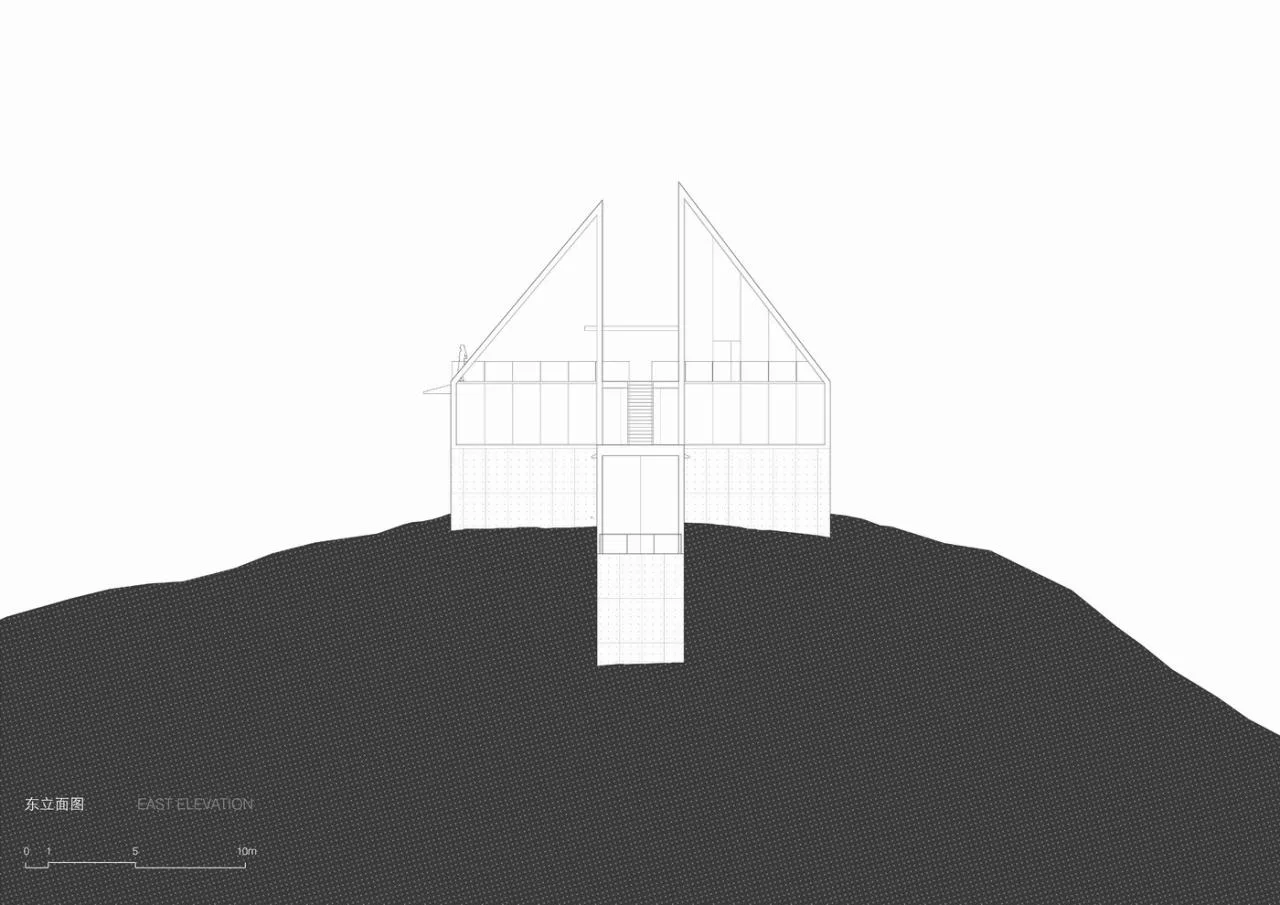
△ East Elevation View © Architectural Firm (TAO)
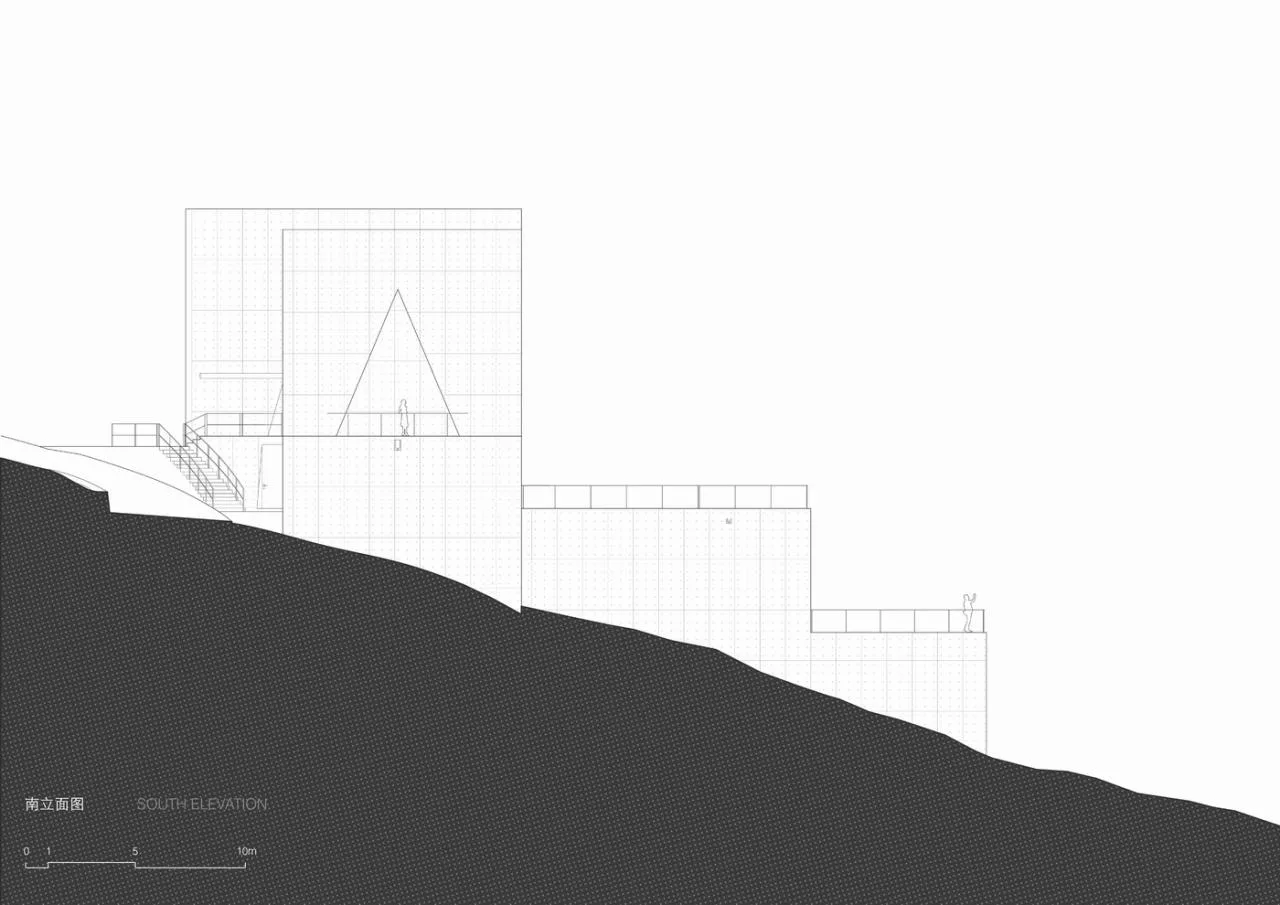
△ South Elevation View © Architectural Firm (TAO)
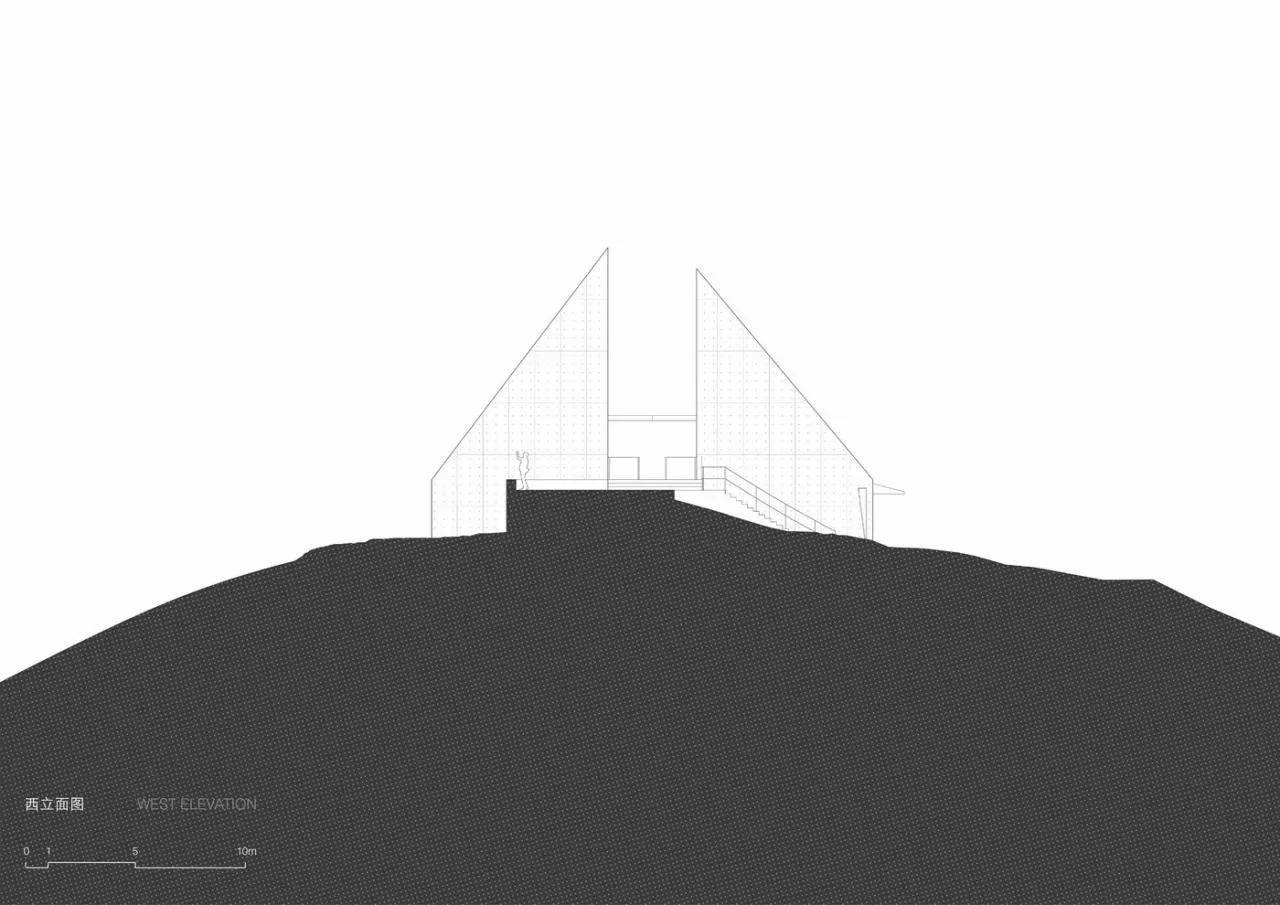
△ West Elevation View © Architectural Firm (TAO)
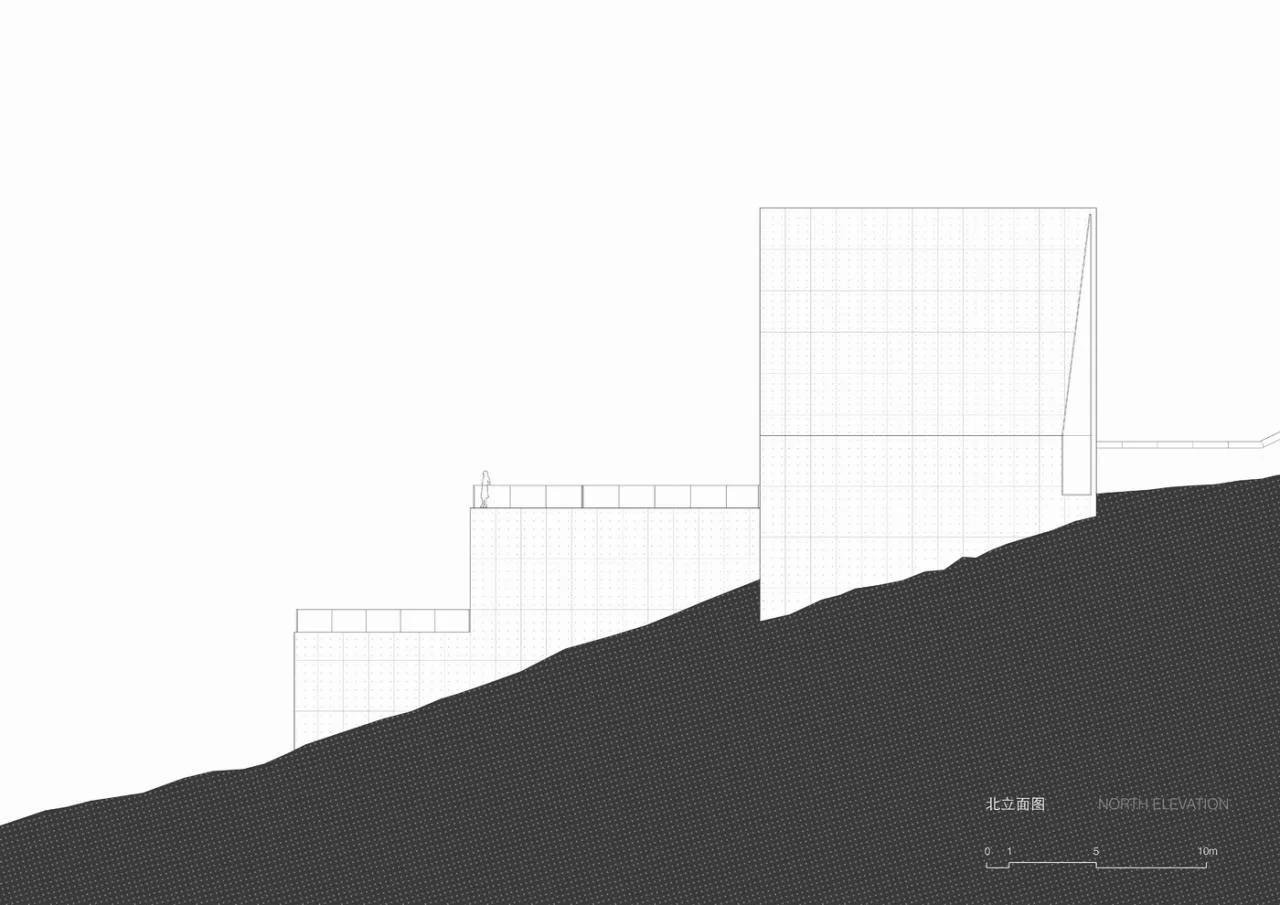
△ North Elevation View © Architectural Firm (TAO)
Project Information
Project Name: Vanguard Bookstore of Nujiang Grand Canyon
Owner: Pioneer Bookstore, Lushui Municipal Bureau of Culture and Tourism
Location: Lushui City, Nujiang Prefecture, Yunnan Province
Features: Bookstore, Observation Deck
Design Firm: TAO Architectural Firm
Lead Architect: Hua Li
Design Team: Huali, Zhang Peng, Liu Zhaorui, Zhang Yuheng, Yue Tam, Zhou Chenyue, Sun Wenhao, Wang Jiahao
Structural Engineers: Ma Zhigang, Zhao Xiaolei
Mechanical and Electrical Design: Lv Jianjun, KCLIN Carlin, Sun Jing, Li Xin
Construction Team: Main Construction – Lushui Construction and Development Investment Co., Ltd; Concrete Repair – Fan Shuming, Zhu Feifei; Interior – Wei Xiaogang, Liang Jigang, Tang Zhigang, Fu Kunhua, Meng Chunmei, Li Shibin
Building Area: 637 square meters
Structural System: Shear Wall Structure
Design Period: January 2022 – December 2022
Construction Period: February 2023 – September 2024
Photography: AOGVISION Architectural Vision














Must log in before commenting!
Sign Up