
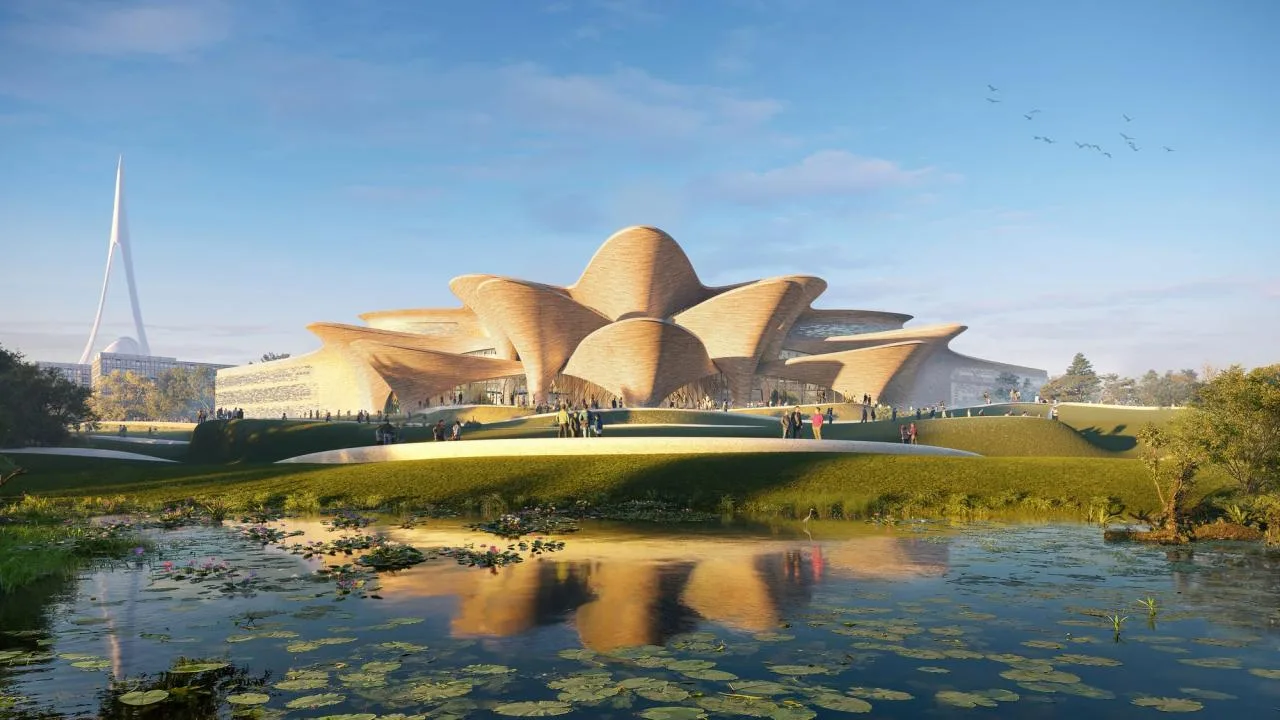
Zaha Hadid Architects (ZHA) has secured the design rights for the Alisher Navoi International Center for Scientific Research. This center will integrate the Navoi National Museum of Literature and include a 400-seat auditorium designed for performances, events, and conferences. Additionally, the center features an international research facility and a boarding school accommodating 200 students, dedicated to the study and promotion of Uzbek language, literature, and music.
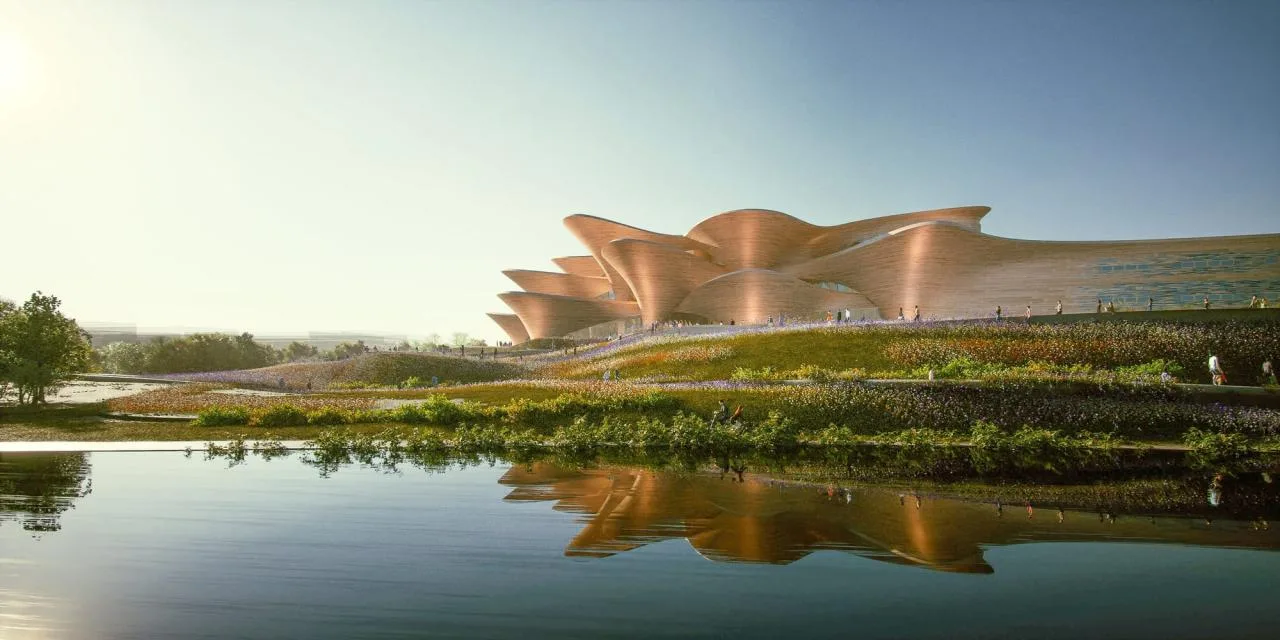
The project’s design is inspired by the dynamic rhythms of Shashmakum music, aiming to create a vibrant space where urban artists and the broader community can come together. Shashmakum music, a vital aspect of Uzbek culture, blends vocal and instrumental melodies with rhythmic expressions and poetry. The center is named after Alisher Navoi, a 15th-century poet, writer, linguist, and national figure whose works deeply influence Uzbekistan’s cultural heritage. Spanning 23,000 square meters, the international research center features interconnected spaces that foster interaction between literary education, research, and performing arts.
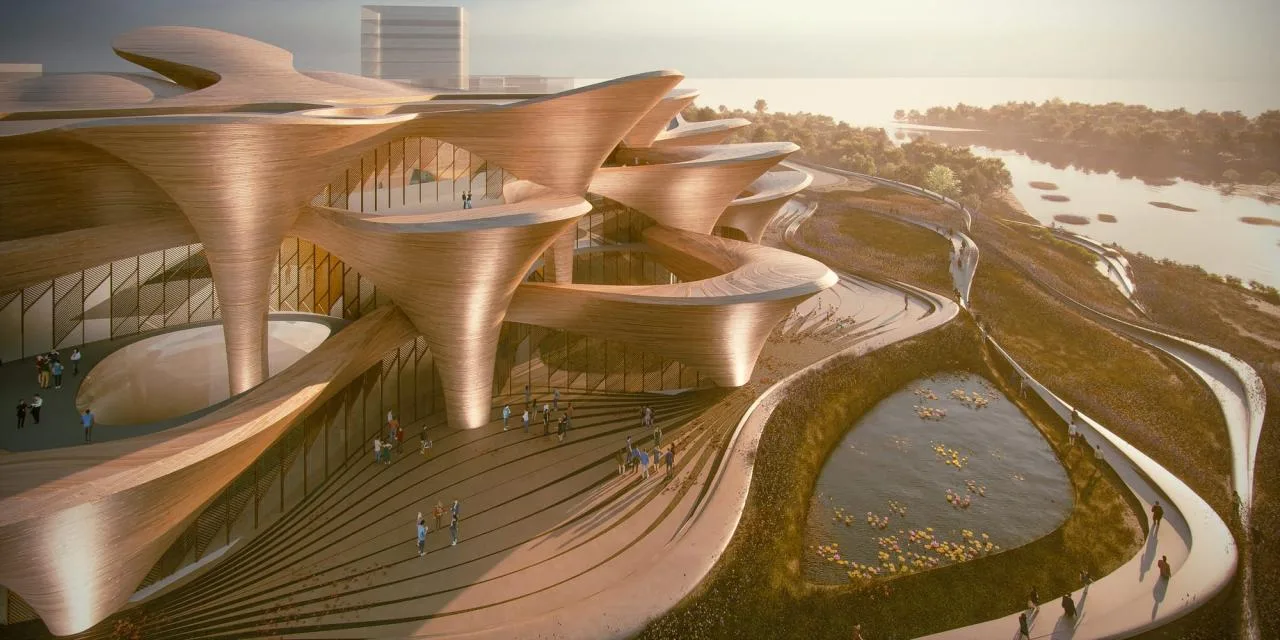
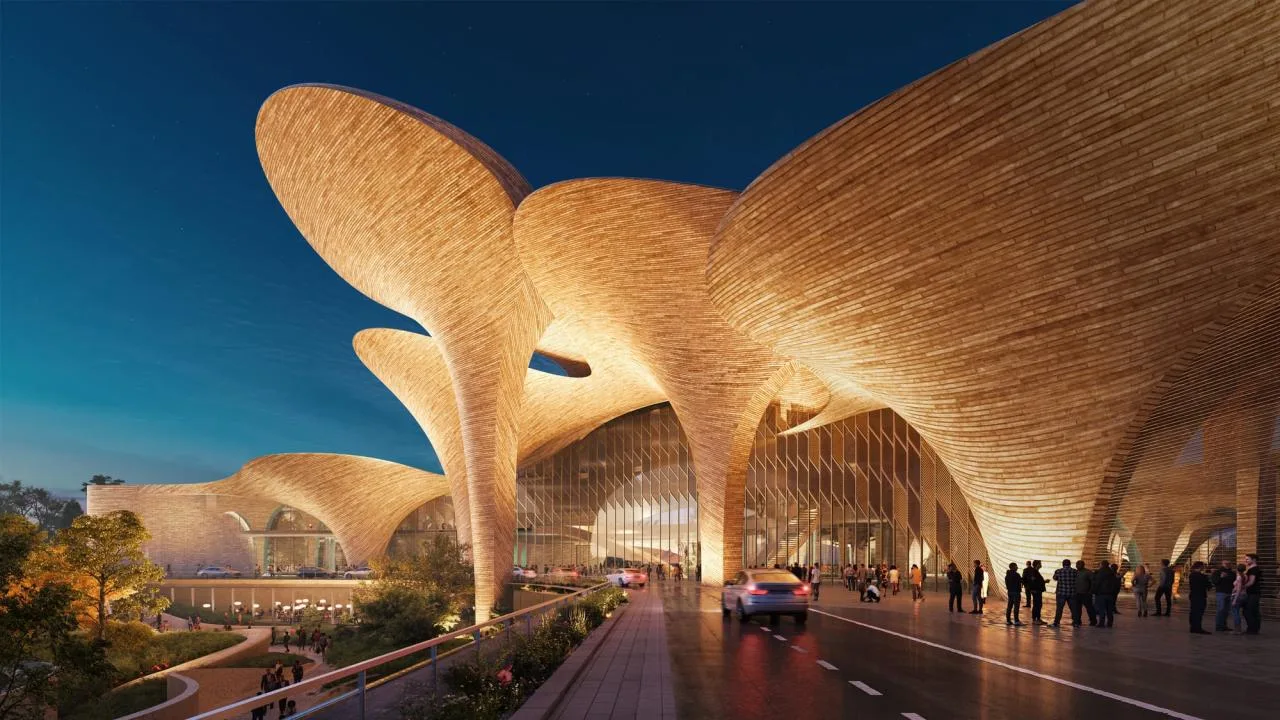
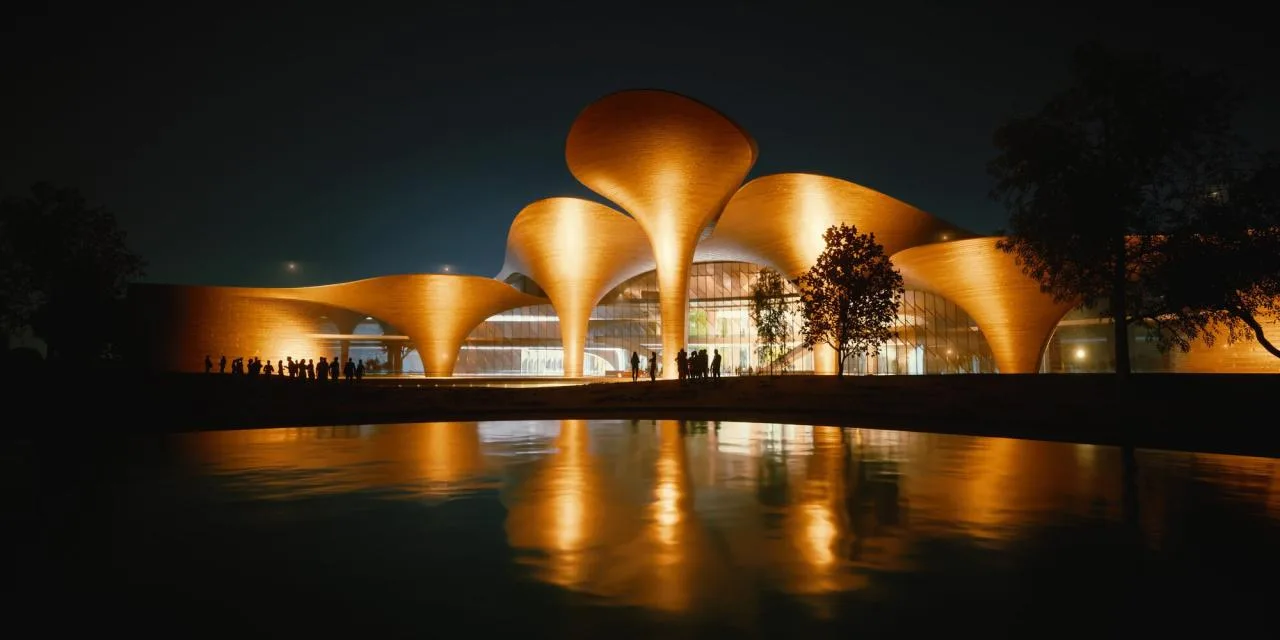
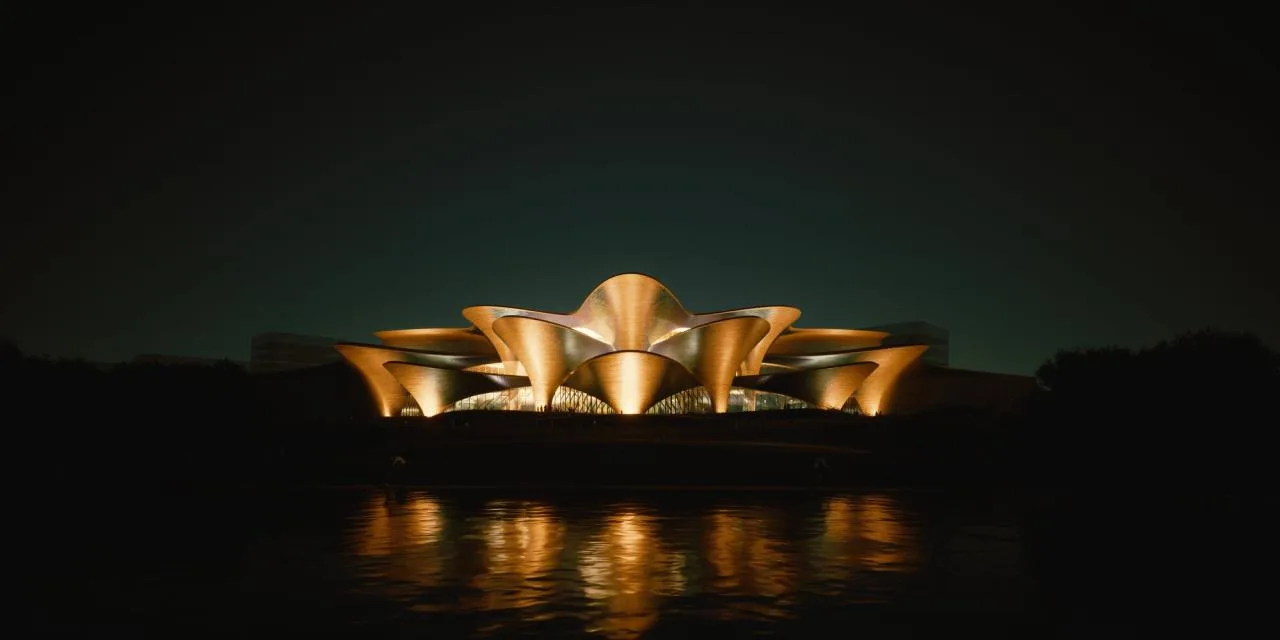
The design team selected bricks from local Tashkent kilns as the primary material for the center’s arch-shaped exterior and interior spaces, reflecting the curved geometric forms characteristic of Uzbekistan’s traditional architecture. The design prominently features a courtyard, a hallmark of local tradition, which provides natural light and ventilation while creating diverse outdoor gathering spots and secluded areas for reflection.
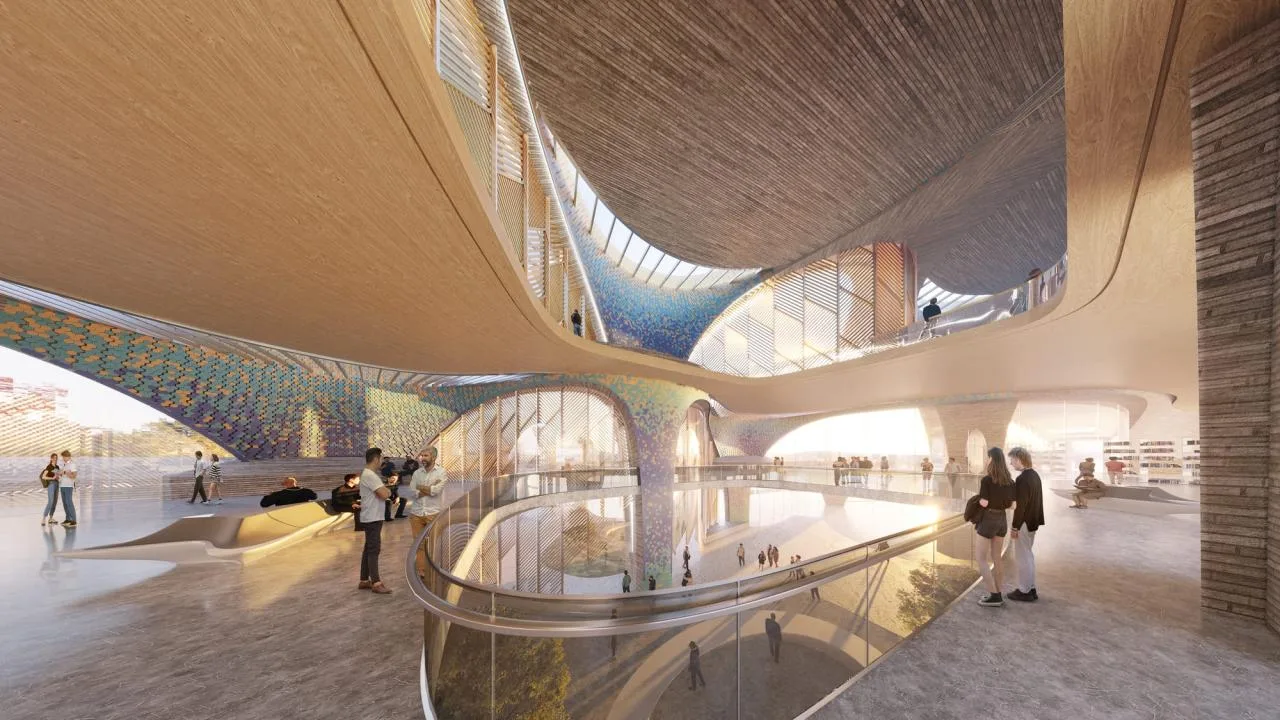
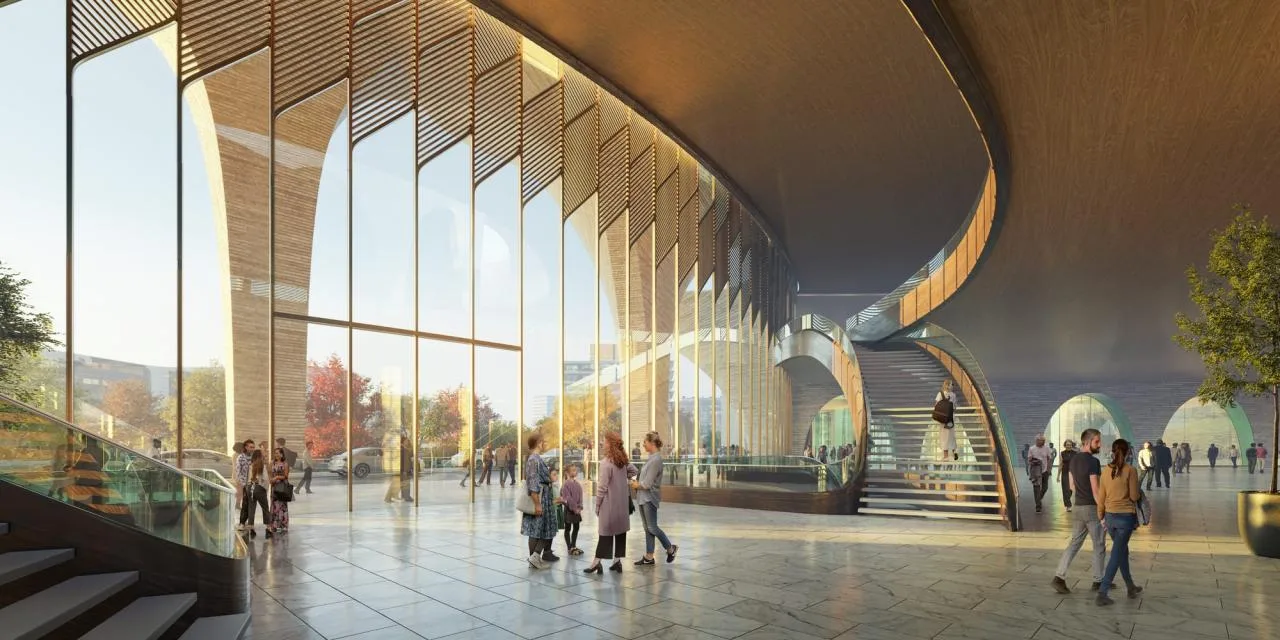
Responding to the Mediterranean and continental climate of the region, the project employs passive architectural principles to provide an optimal environment for visitors, staff, and students while minimizing energy use. Inspired by traditional wind towers found across Central Asia and the Middle East, the central support arch is designed as a hollow structure with openings that capture and channel cooling breezes into the building. During the hottest months, this natural ventilation cools the air before it circulates indoors, maintaining comfortable temperatures.
In calm weather, the hollow arches create pressure differences that draw hot air upwards, forming “hot chimneys” that allow warm air to escape through openings at the top. This ventilation process is enhanced throughout the day-night cycle, extracting warm air and keeping cooler air below. Combined with the high thermal mass of the central structure, these features enable a comfortable interior climate with minimal energy demand.
The courtyard and skylights bring abundant natural light into the building’s core, while deep roof overhangs provide effective shading during summer and allow sunlight to warm the interior in winter.
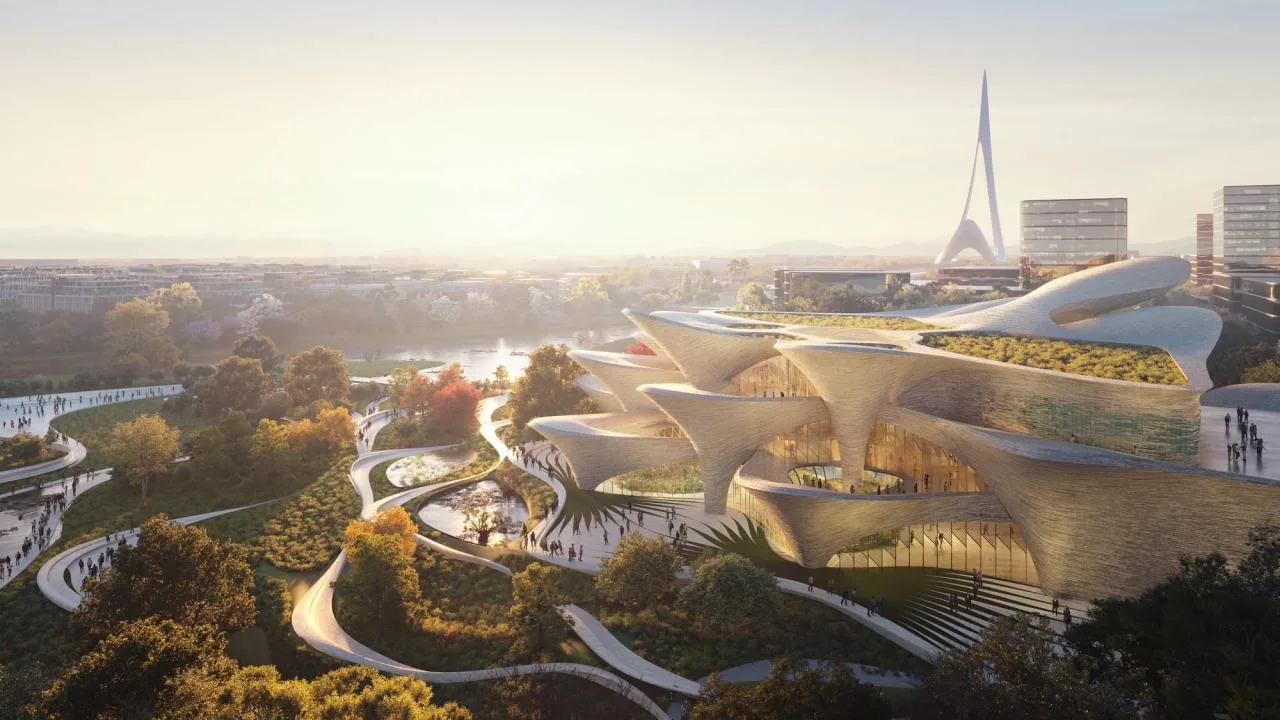
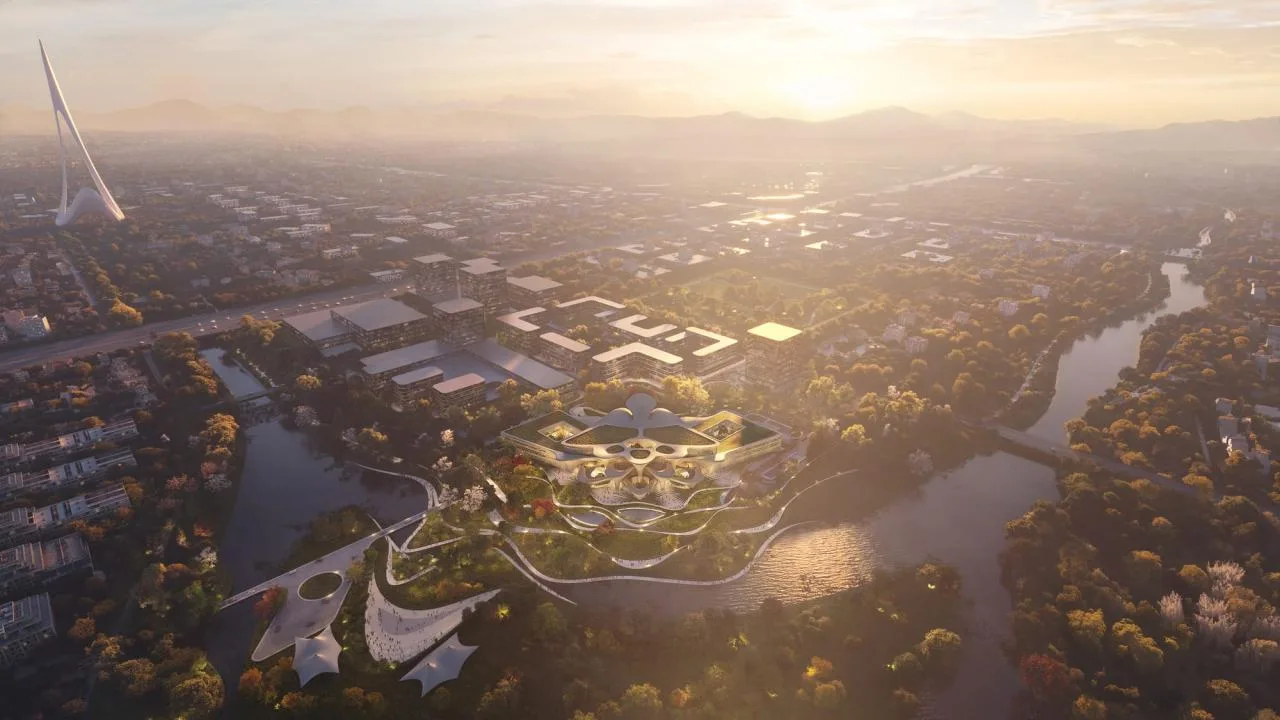
The Navoi National Literature Museum, situated at the heart of the college, offers extensive research facilities, archives, and exhibition spaces for educators and students. The museum includes a restoration workshop and a storage area for 3,500 historical books and manuscripts. Its 13 permanent exhibition halls encircle the central courtyard, showcasing centuries of Uzbekistan’s literary history alongside contemporary works by the nation’s most renowned authors.
The outdoor areas feature a series of landscaped terraces, an open-air theater designed for spontaneous performances, and a shaded garden space.
Project Drawings
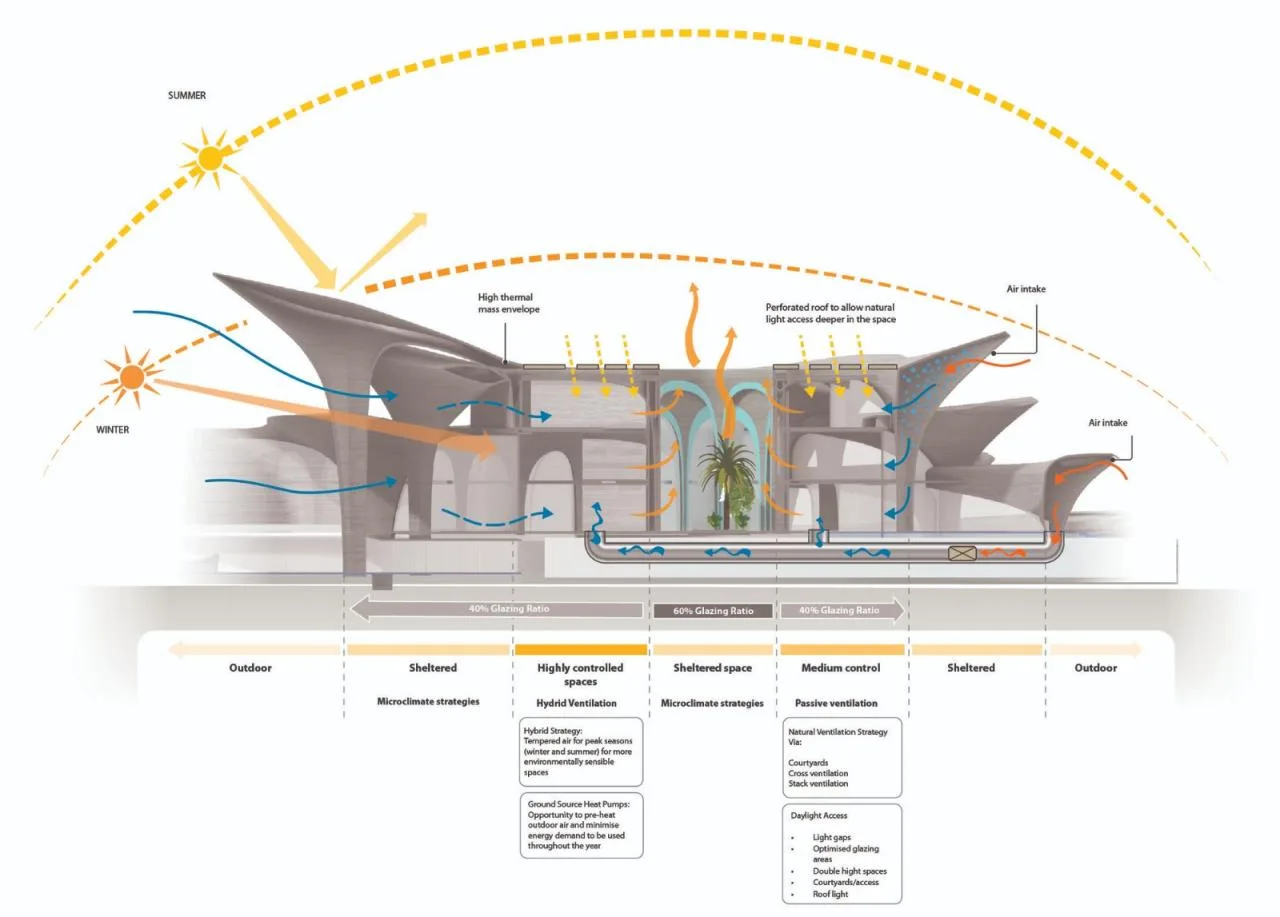
▲ Analysis Chart
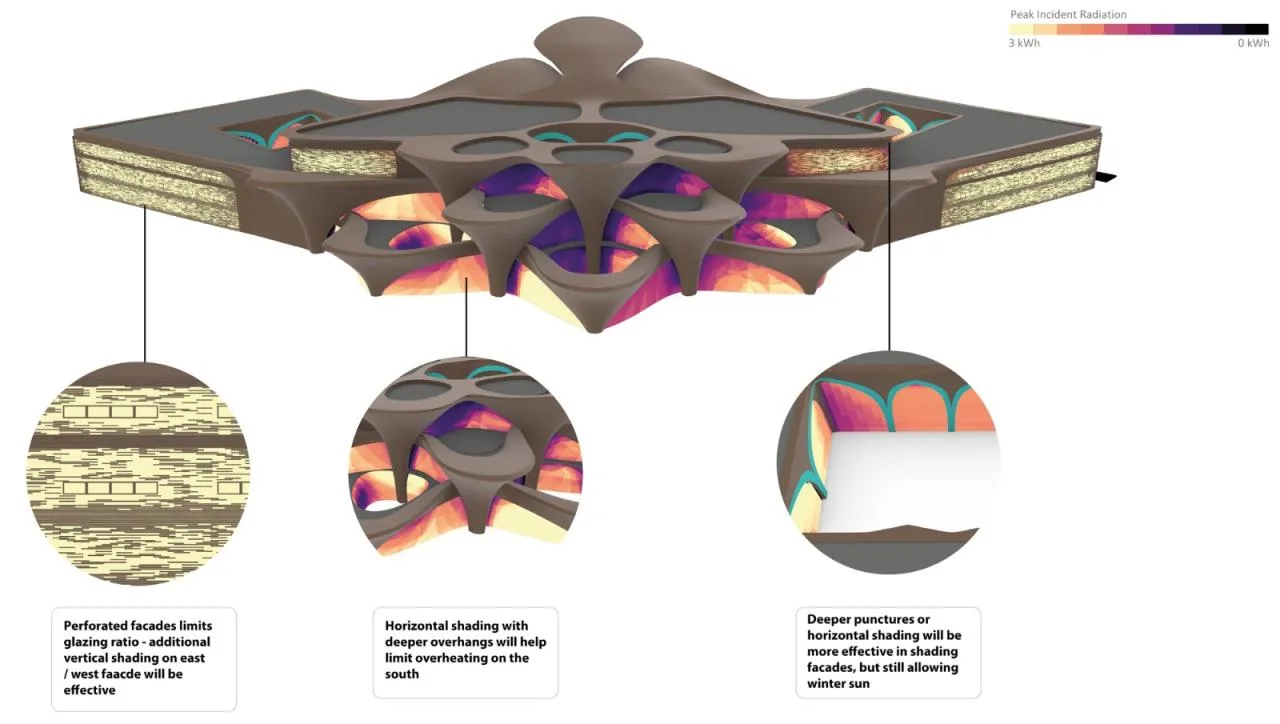
▲ Analysis Chart
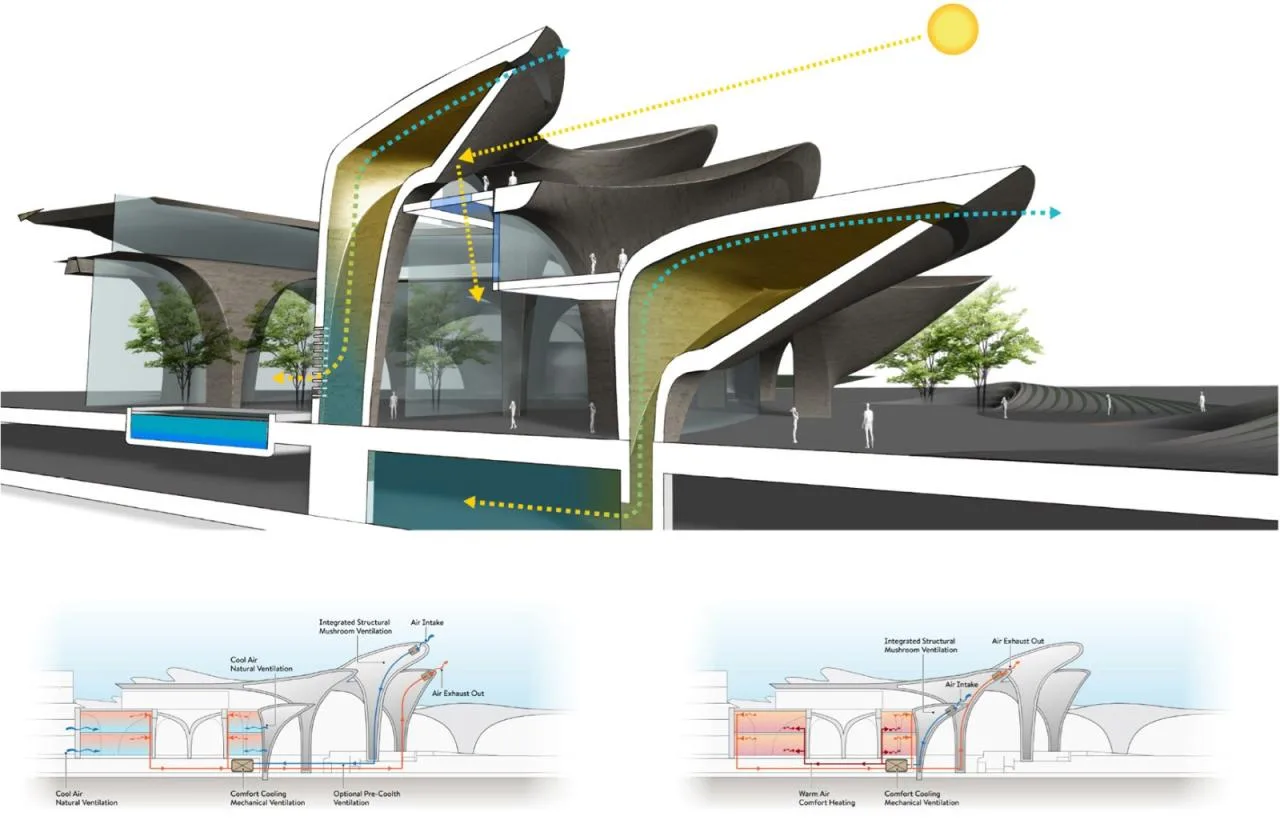
▲ Analysis Chart













Must log in before commenting!
Sign Up