
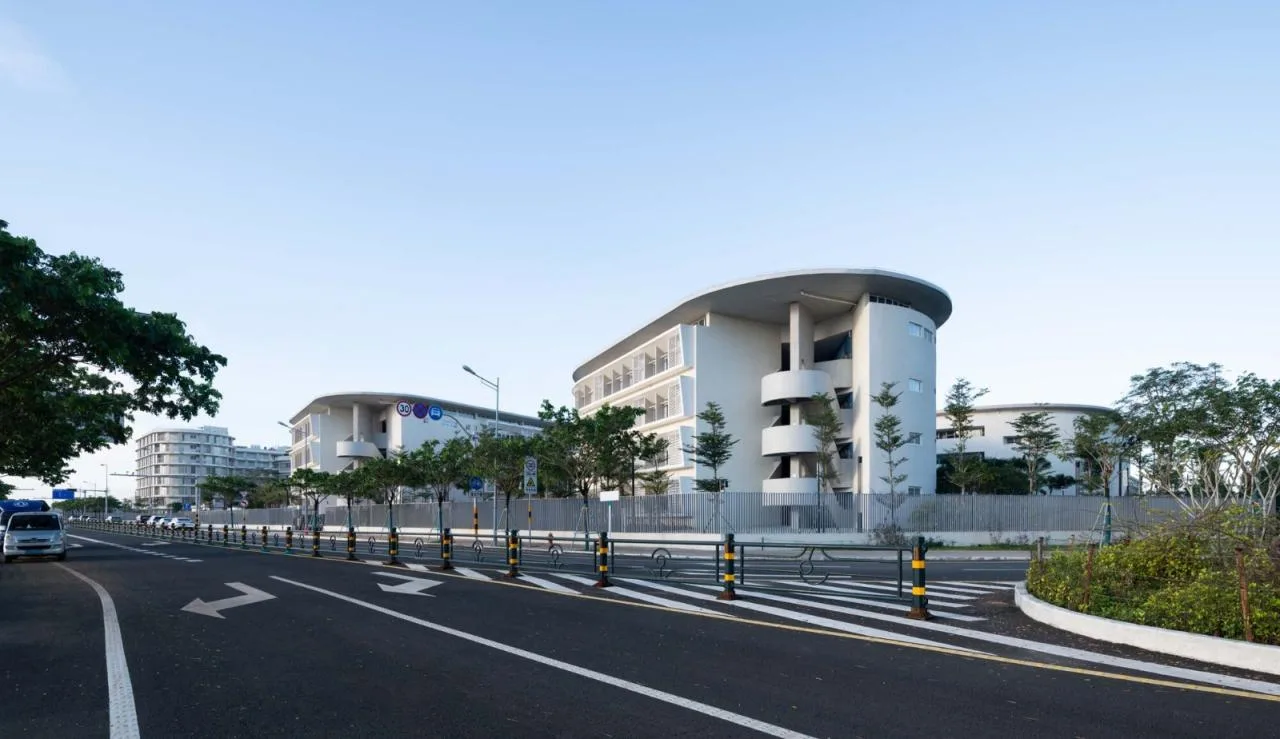
TAO’s latest educational architecture project, Haikou Jiangdong Huandao Experimental School, is now operational. Located in Haikou City, Hainan Province, the campus comprises a 48-class high school with student dormitories and an 18-class kindergarten. The total construction area spans 64,700 square meters. This marks TAO’s second school project in Haikou, continuing their exploration of educational architecture and its connection to local context.
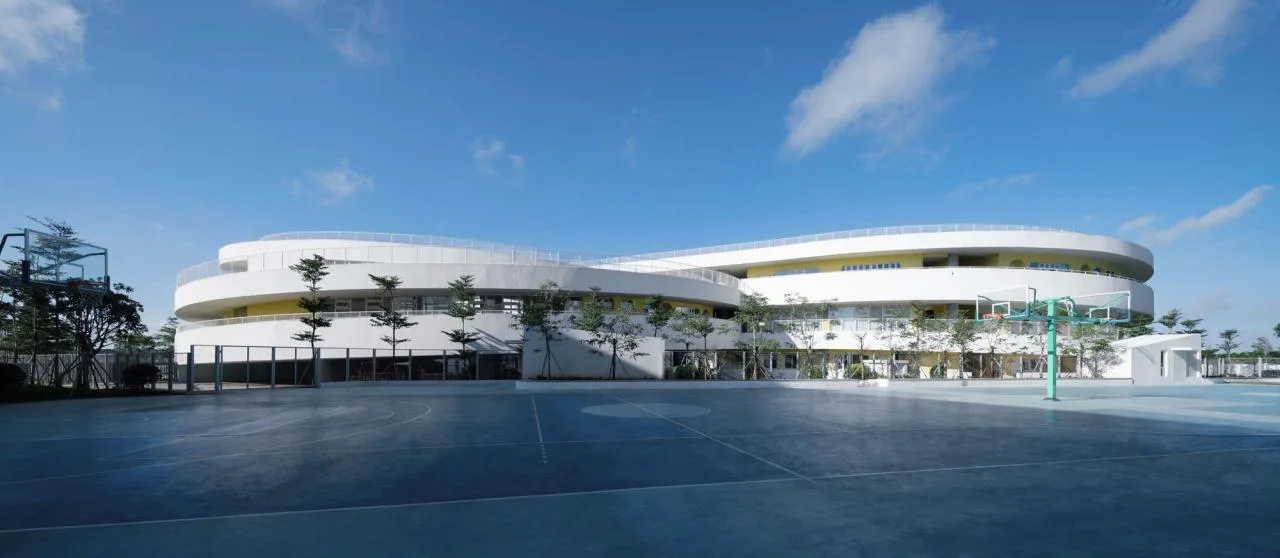
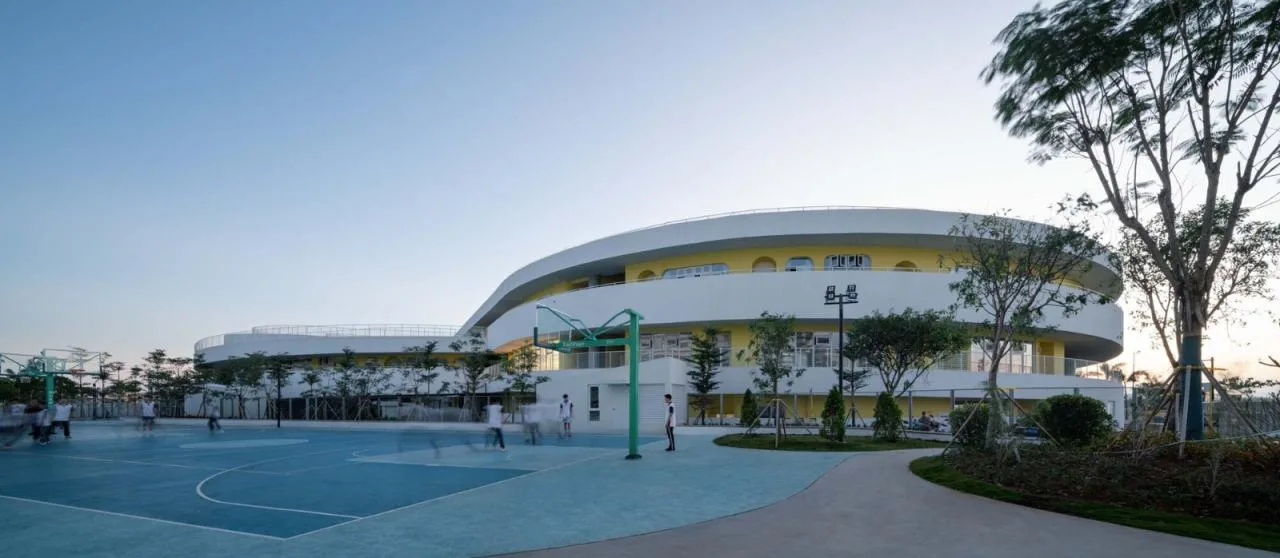
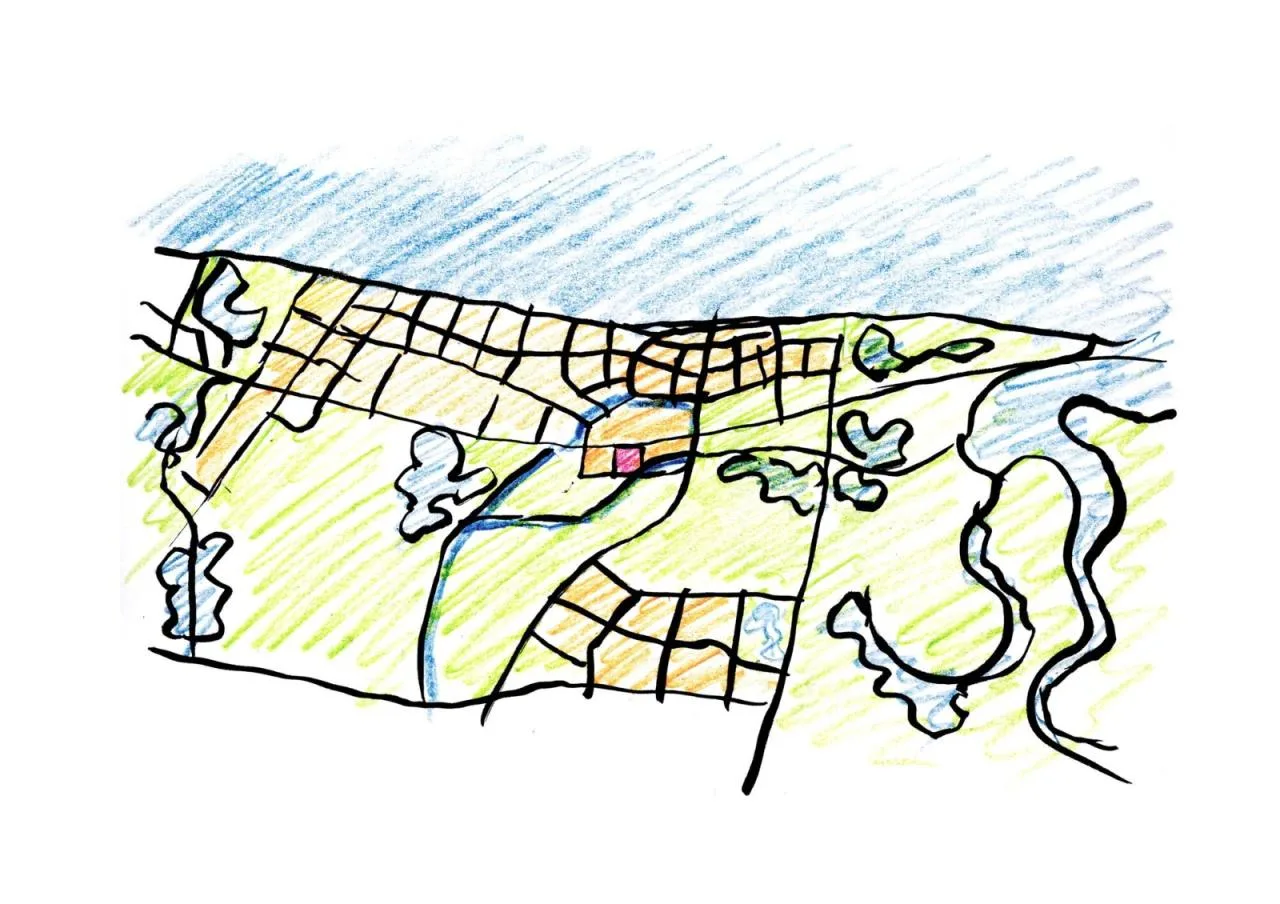
The miniature landscape project is situated on the south side of Jiangdong Avenue in Haikou’s East Coast area. Jiangdong New District boasts a long coastline and abundant natural resources including wetland parks and mangrove reserves. The master plan prioritizes ecology, blending urban and natural environments seamlessly. Originally an open wetland with water pools and green islands, the site inspired a campus designed as a miniature rural city harmonizing with its surroundings.
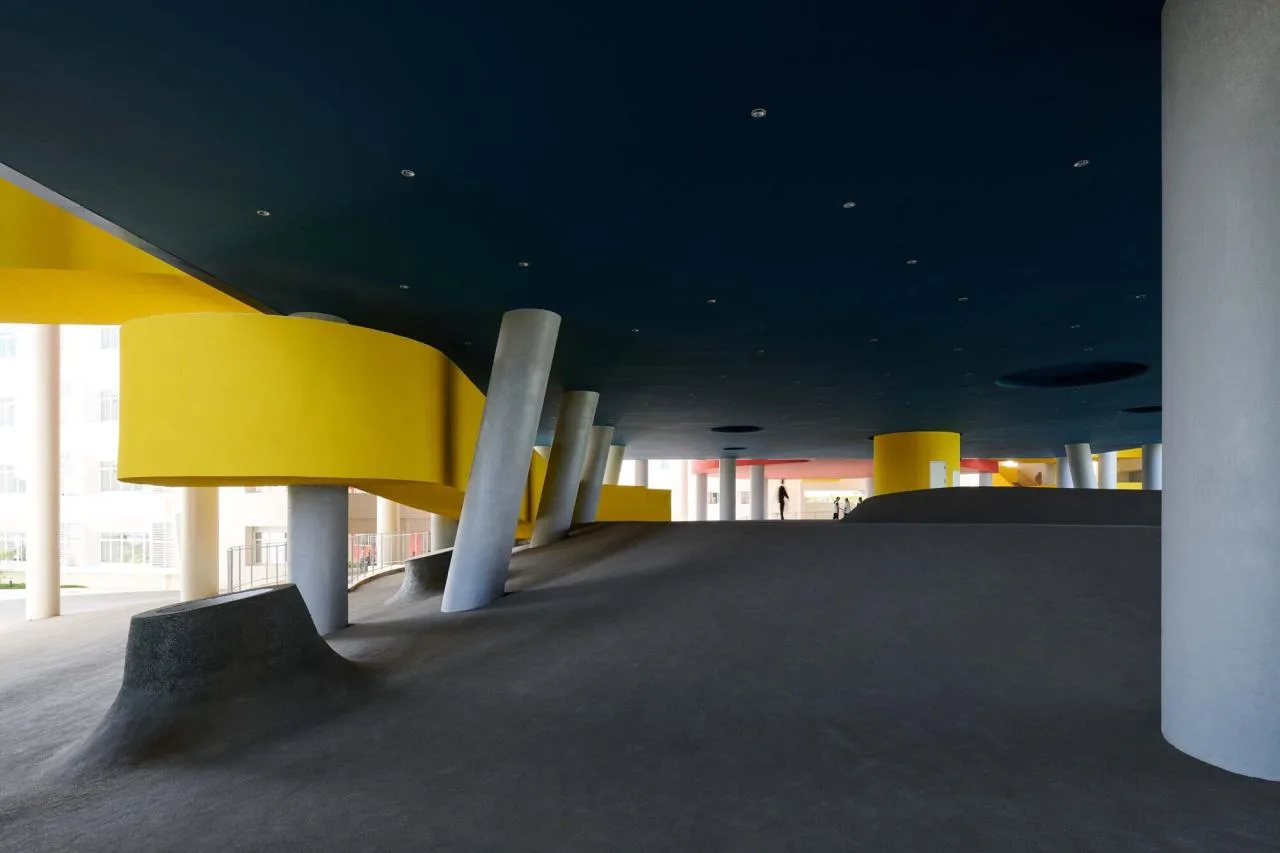
Flowing curves mimic winding rivers that converge into lakes, forming courtyards nestled between buildings. Undulating terrain creates hills that serve as continuous activity zones. Towering pillar forests evoke secluded woodlands, and light, airy roofs float like clouds above. This landscape maintains the site’s original character, integrating countryside, green spaces, rivers, wetlands, and the ocean into an organic whole.
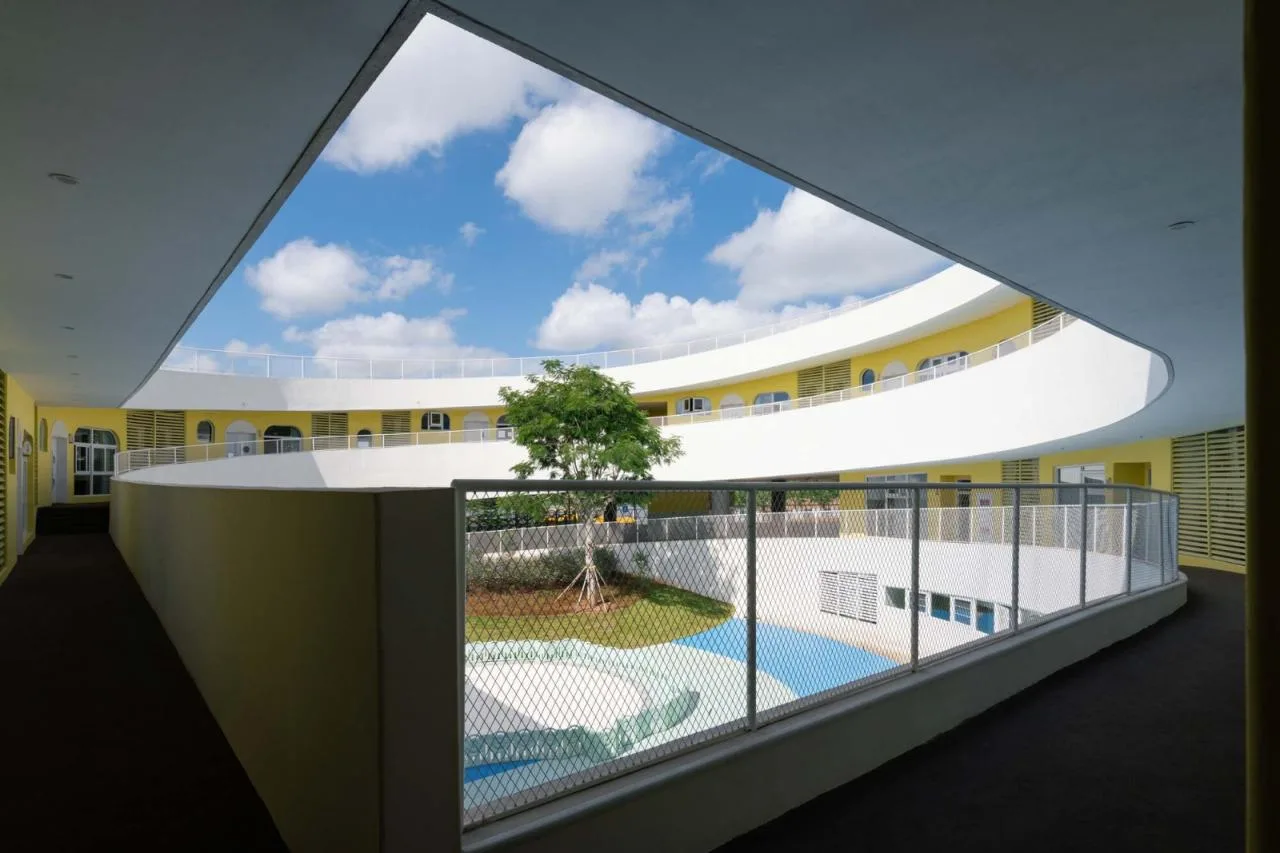
The organic, free-flowing curves and vibrant colors reflect the innocence and playfulness unique to childhood. This poetic spatial design transforms the campus into a memorable place that preserves the spirit of student life. For the high school, the design breaks away from the traditional “fishbone” layout, opting instead for a “radiating” plan that spreads outward like ripples in water. This creates fluid, open spaces while ensuring all functions are efficiently connected by the shortest paths for optimal “partition interconnection.”
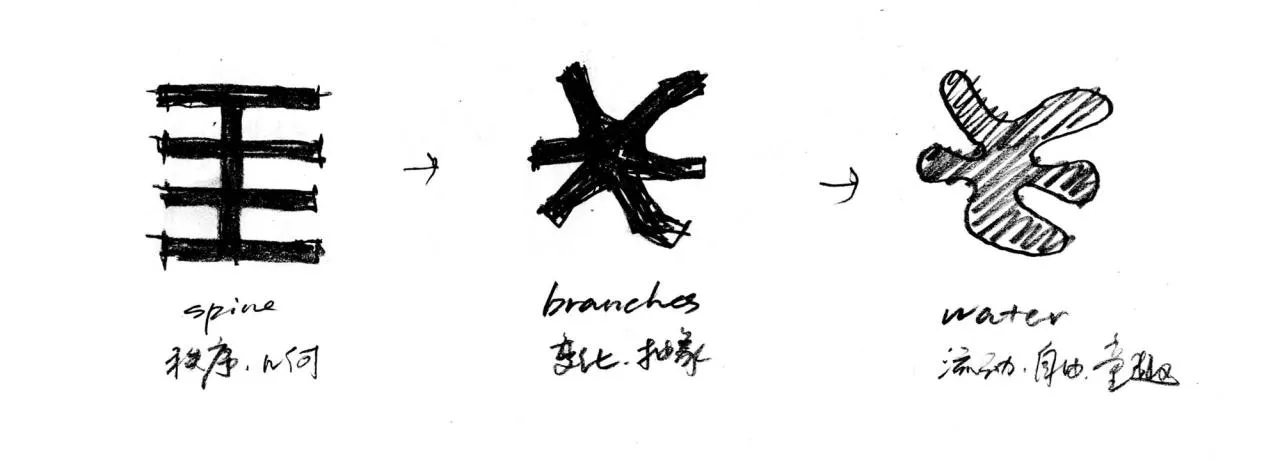
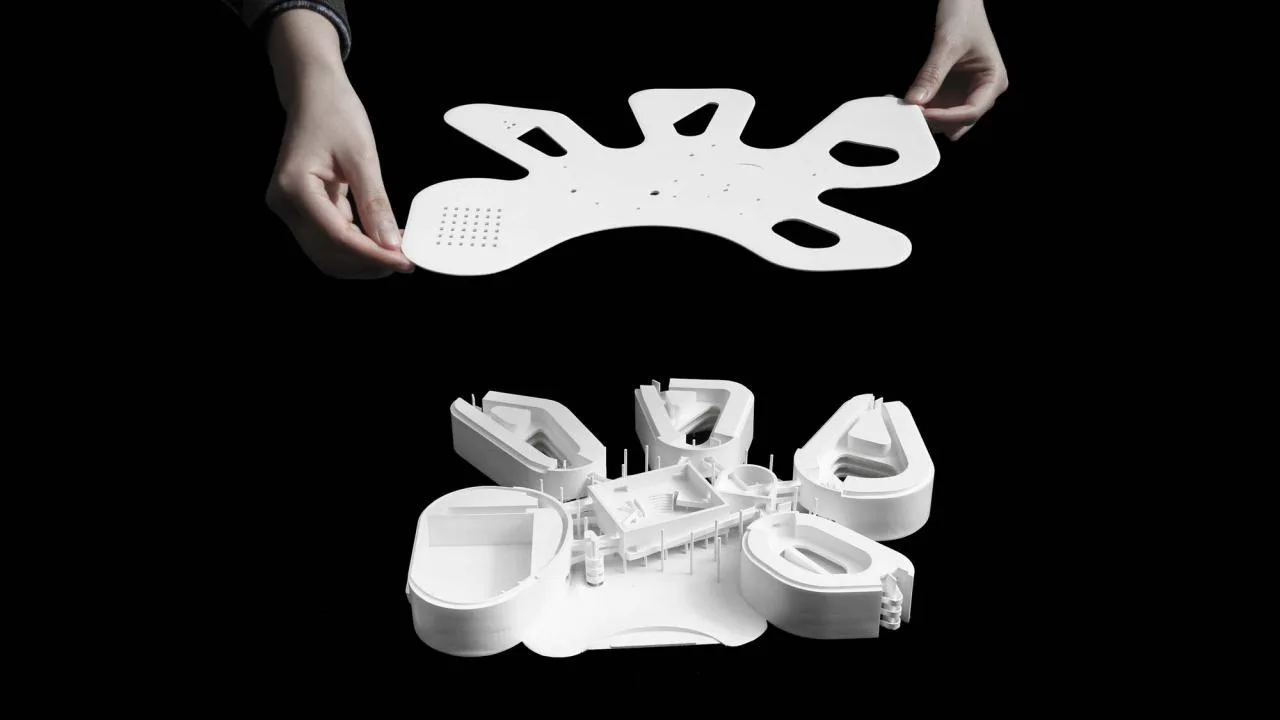
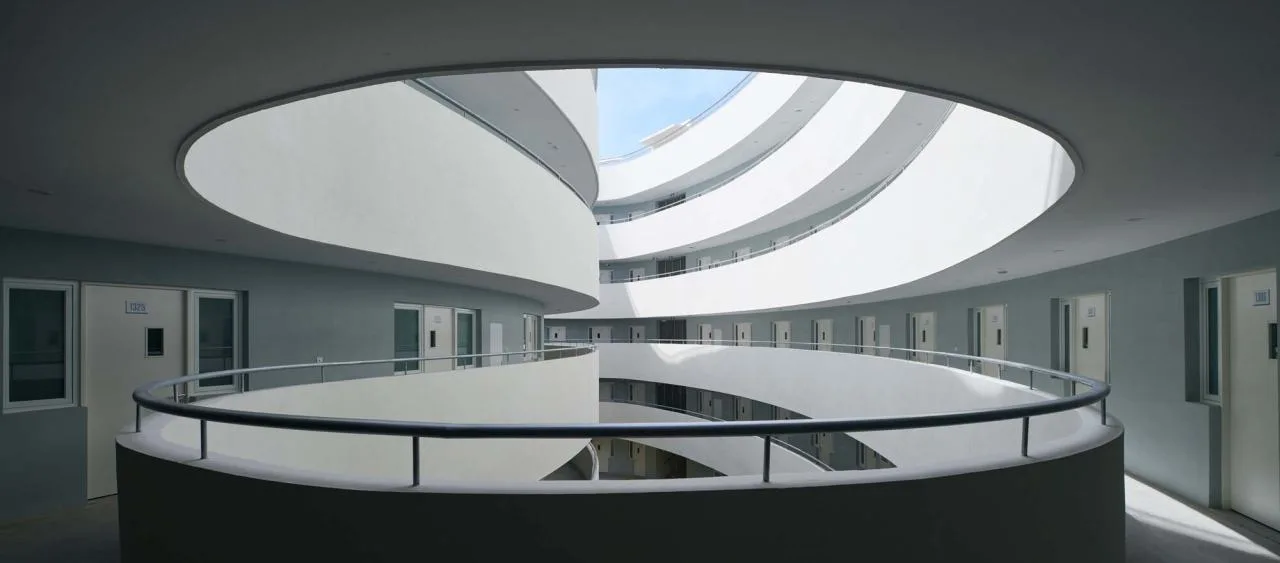
Although the architectural forms seem irregular, they are carefully controlled by precise geometric lines aligned with the overall functional layout. This balance of intuition and logic creates a free, dynamic spatial expression. Multiple arcs form concentric courtyards and curved internal spaces, while outwardly defining fluid public zones and seamless architectural silhouettes. Interior and exterior spaces interlock, creating a spatial labyrinth where paths overlap and directions shift, offering teachers and students an engaging and exploratory environment.
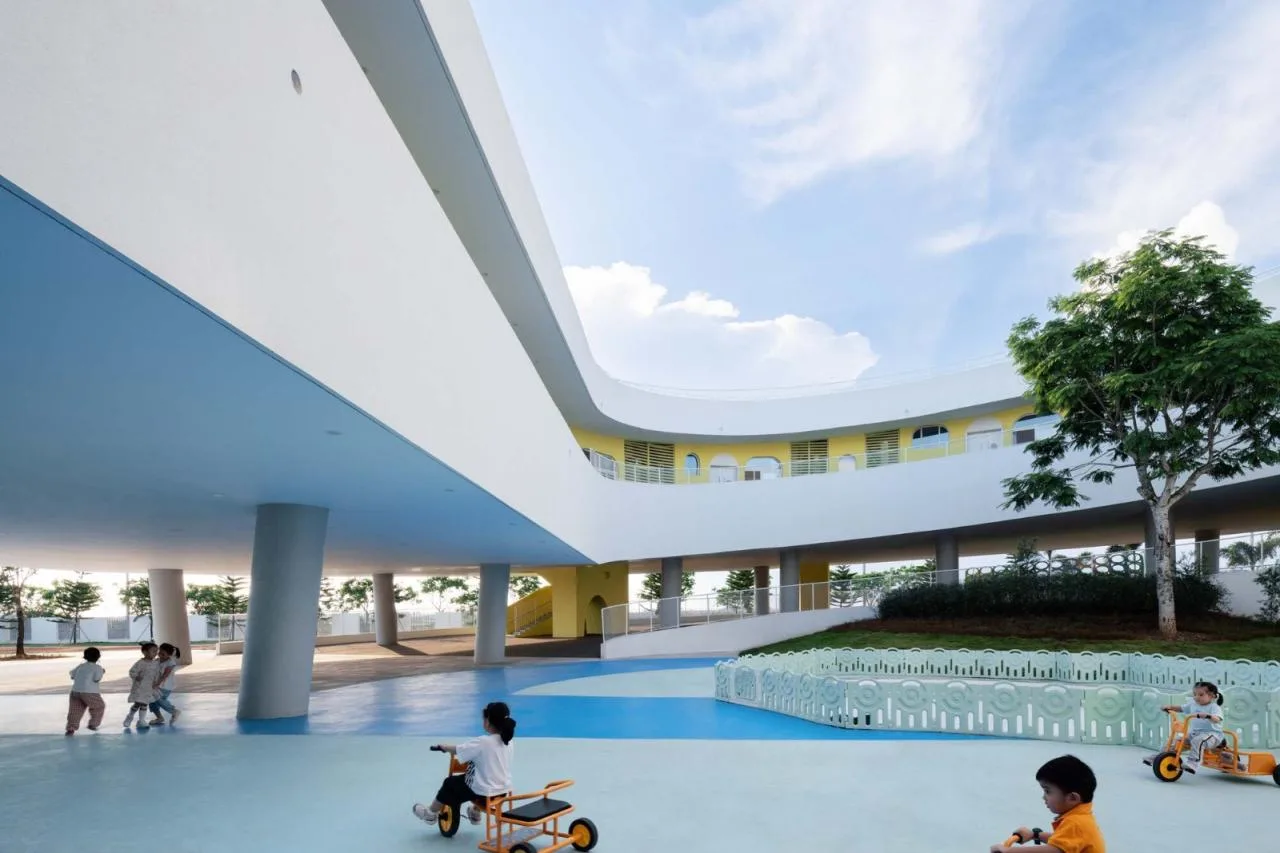
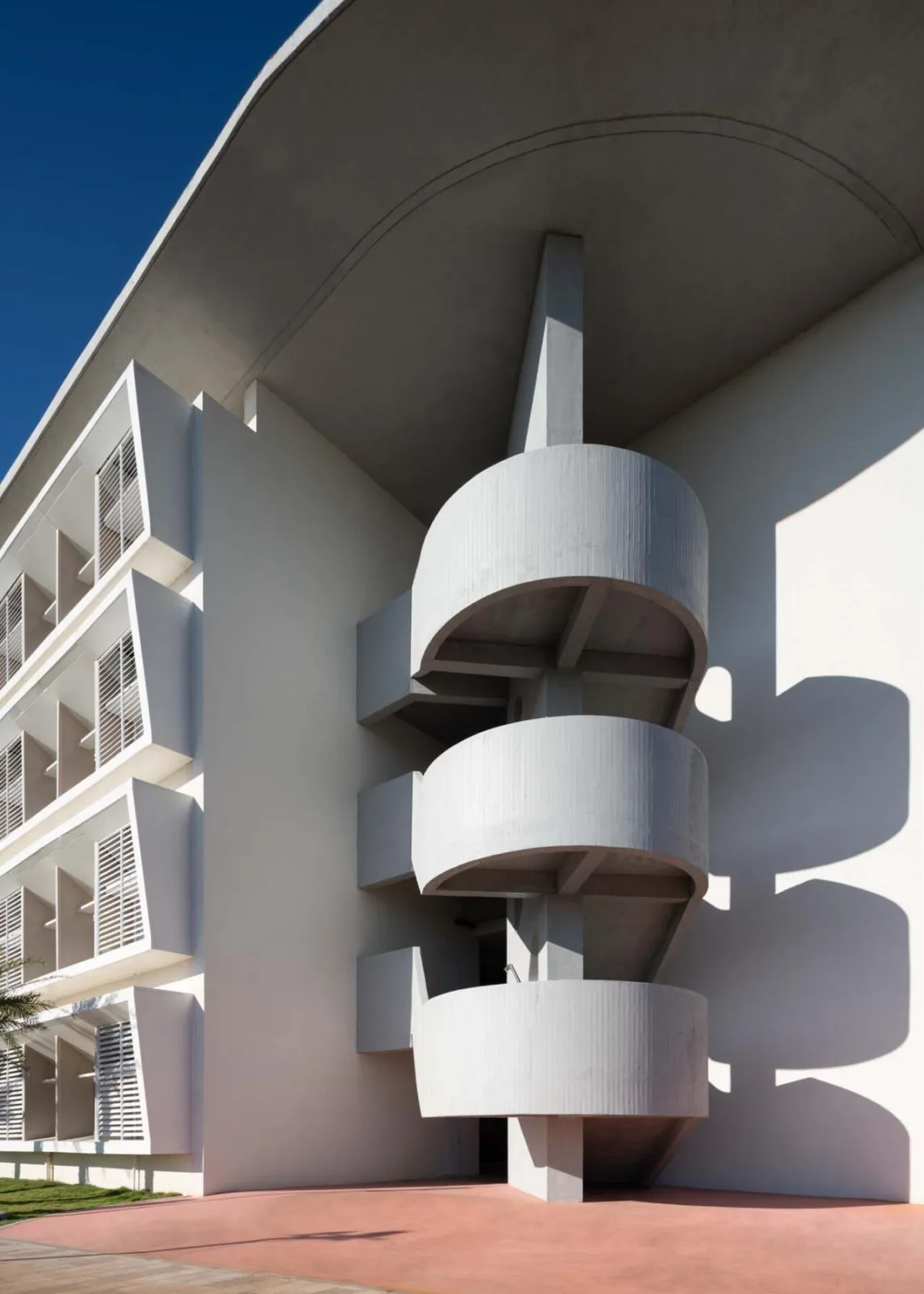
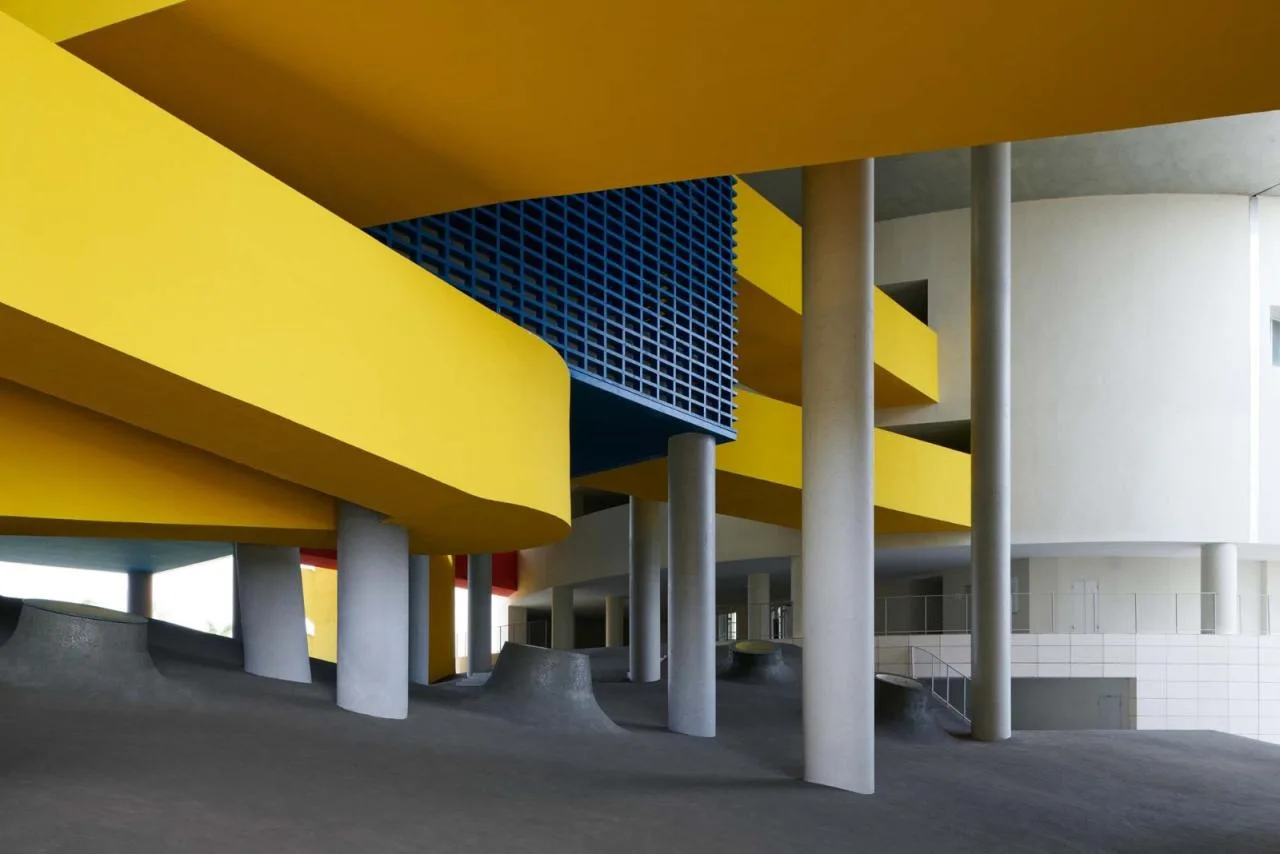
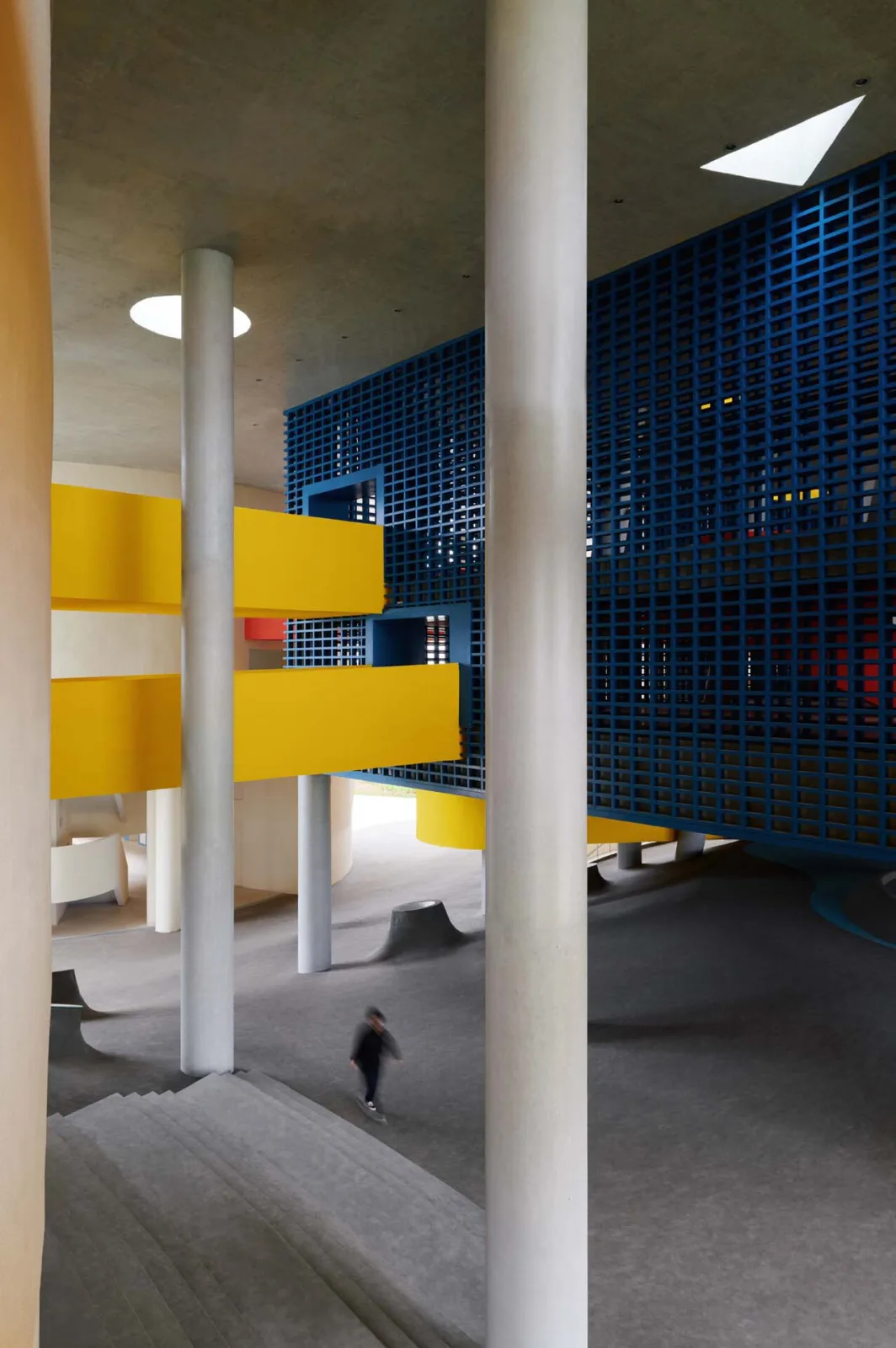
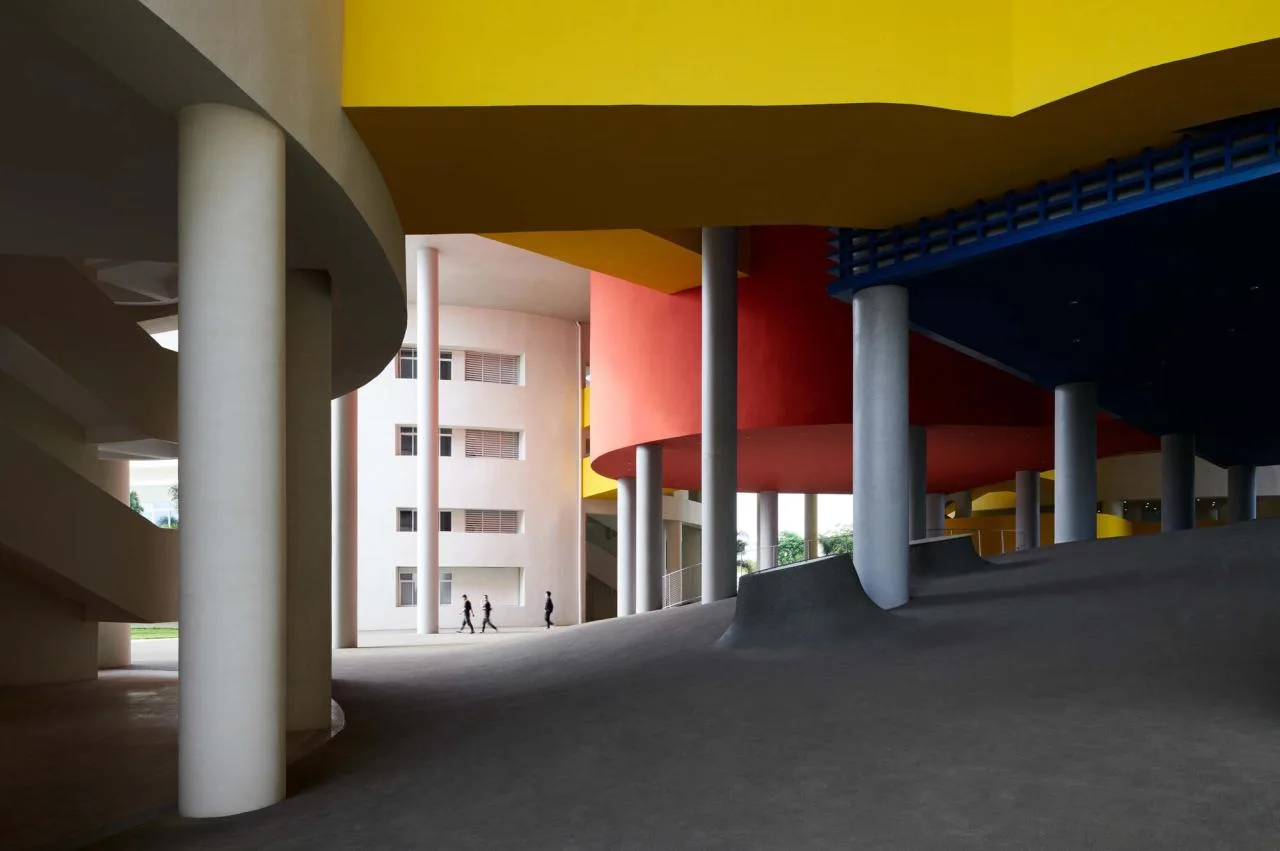
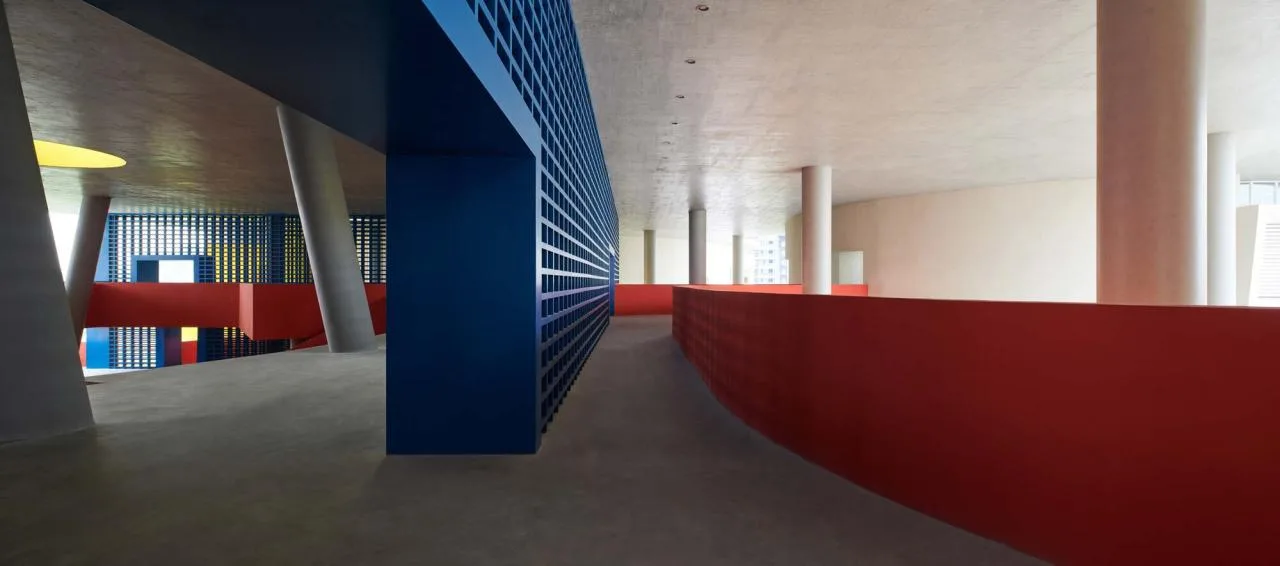
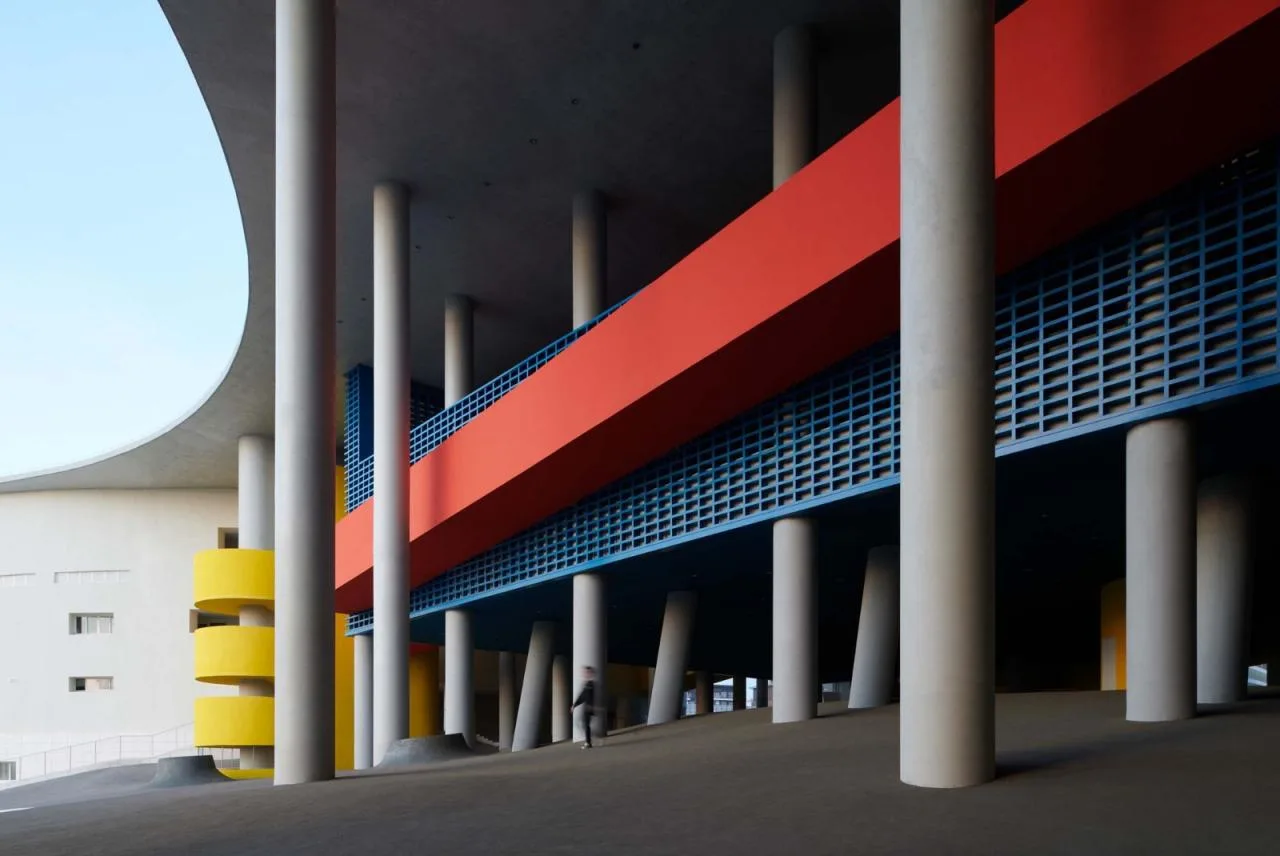
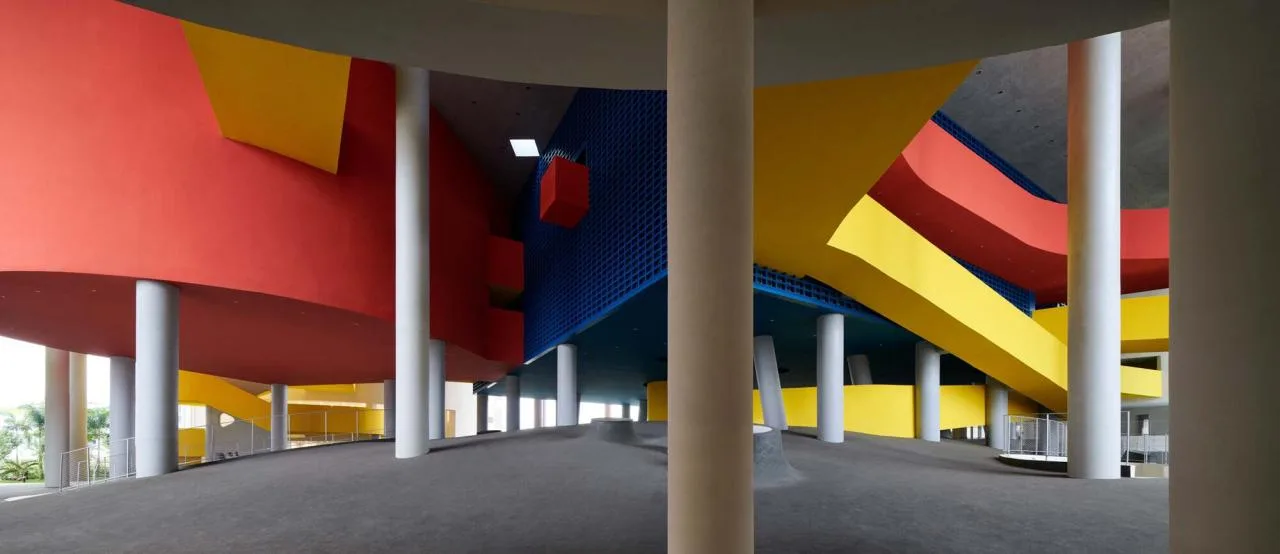
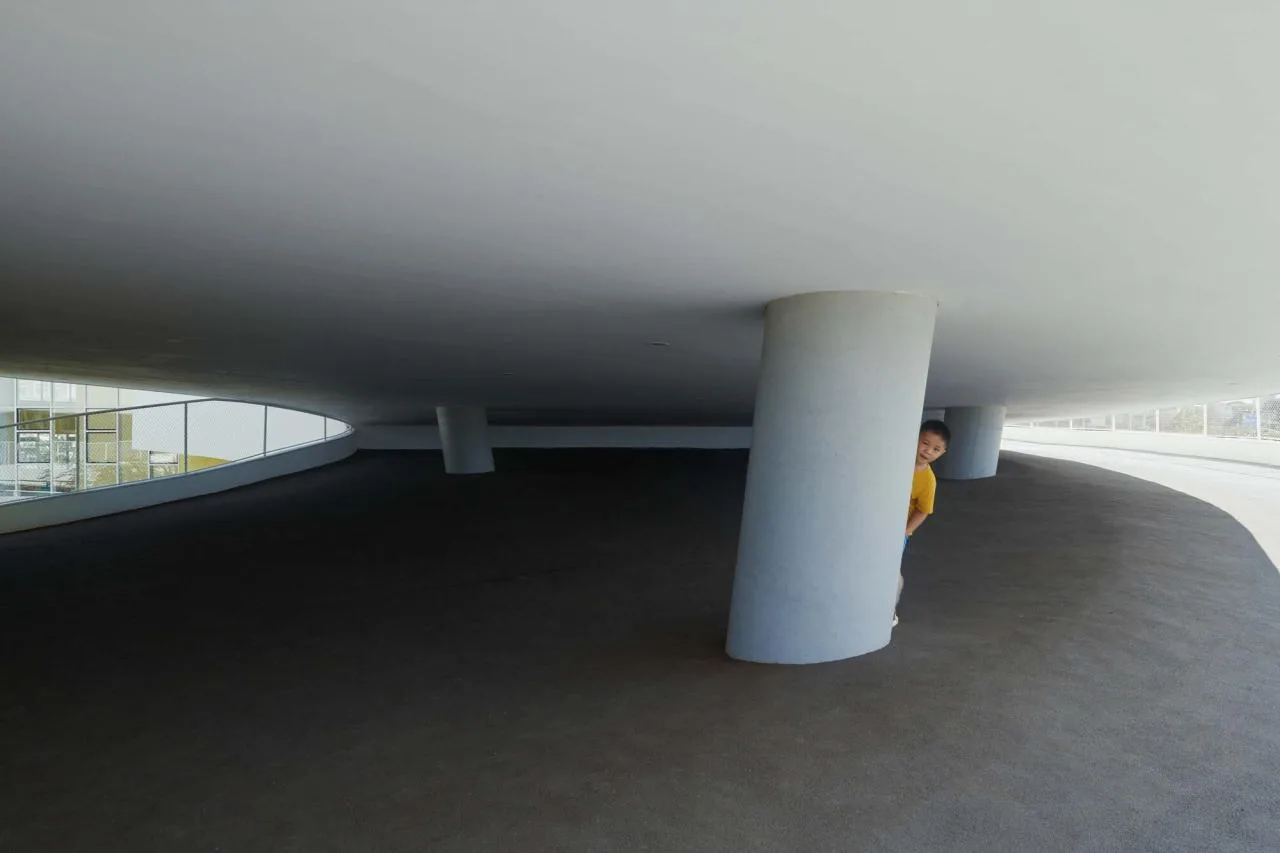
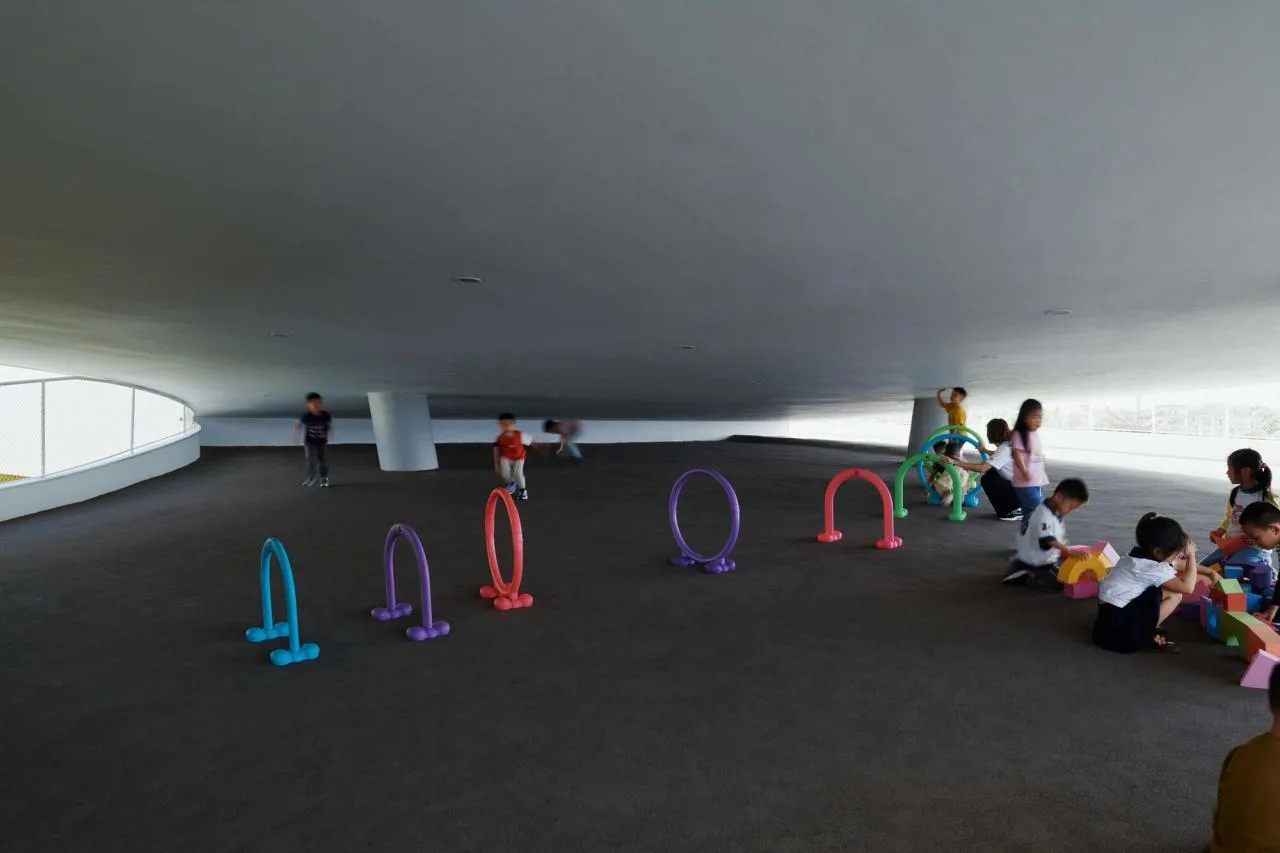
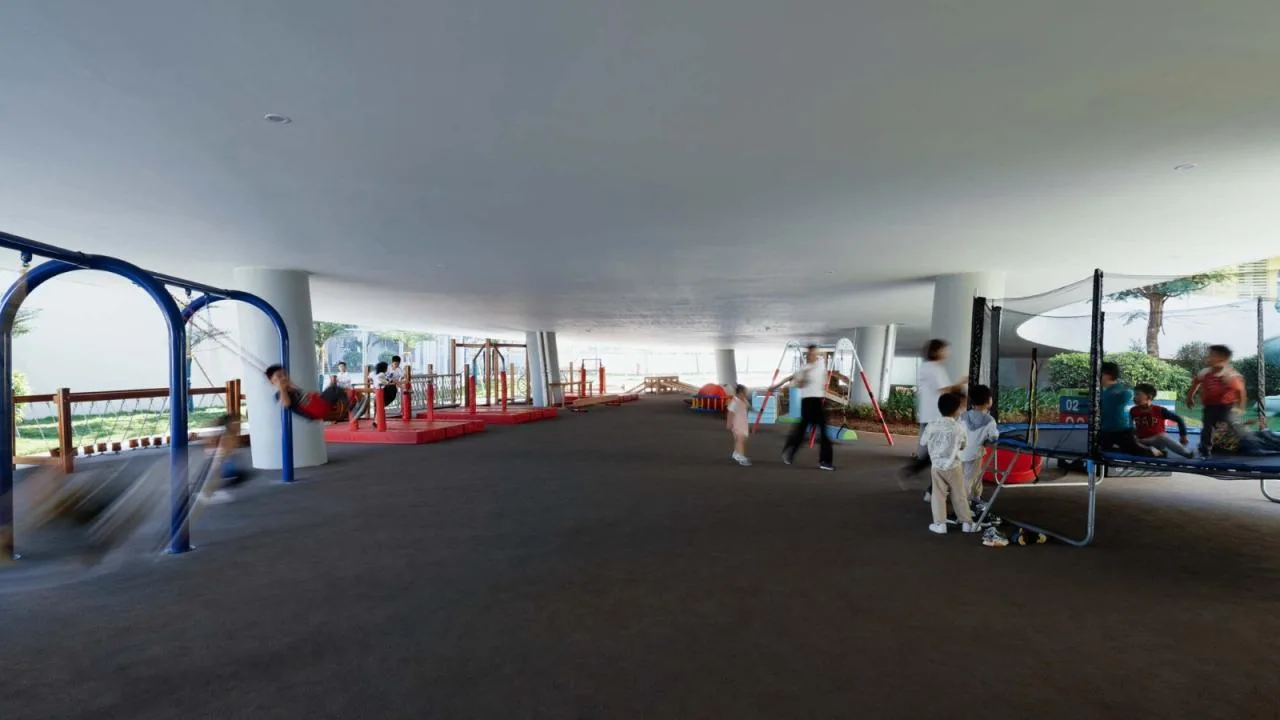
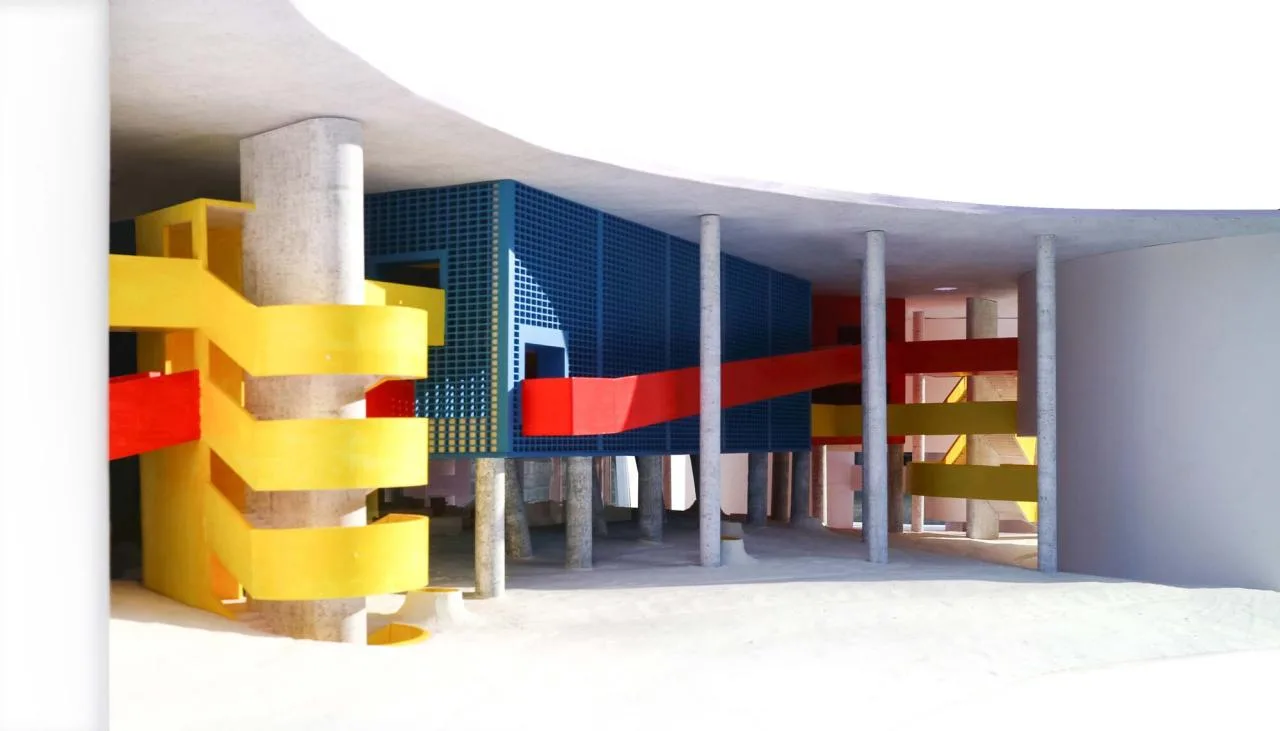
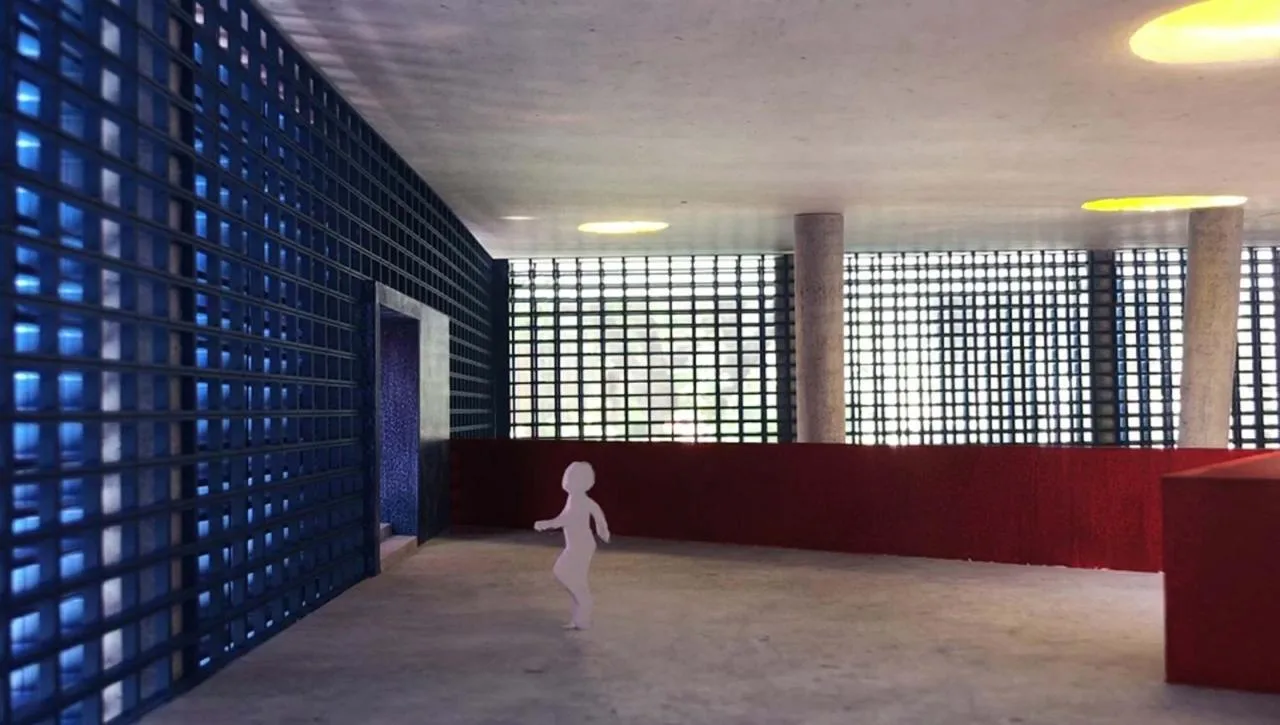
The floating roof resembles clouds hovering over several semi-independent functional groups. The ground floor is elevated, creating an open, continuous space beneath that responds to Haikou’s tropical monsoon climate by providing shading, ventilation, and shelter. This design offers ample sheltered activity areas under the eaves.
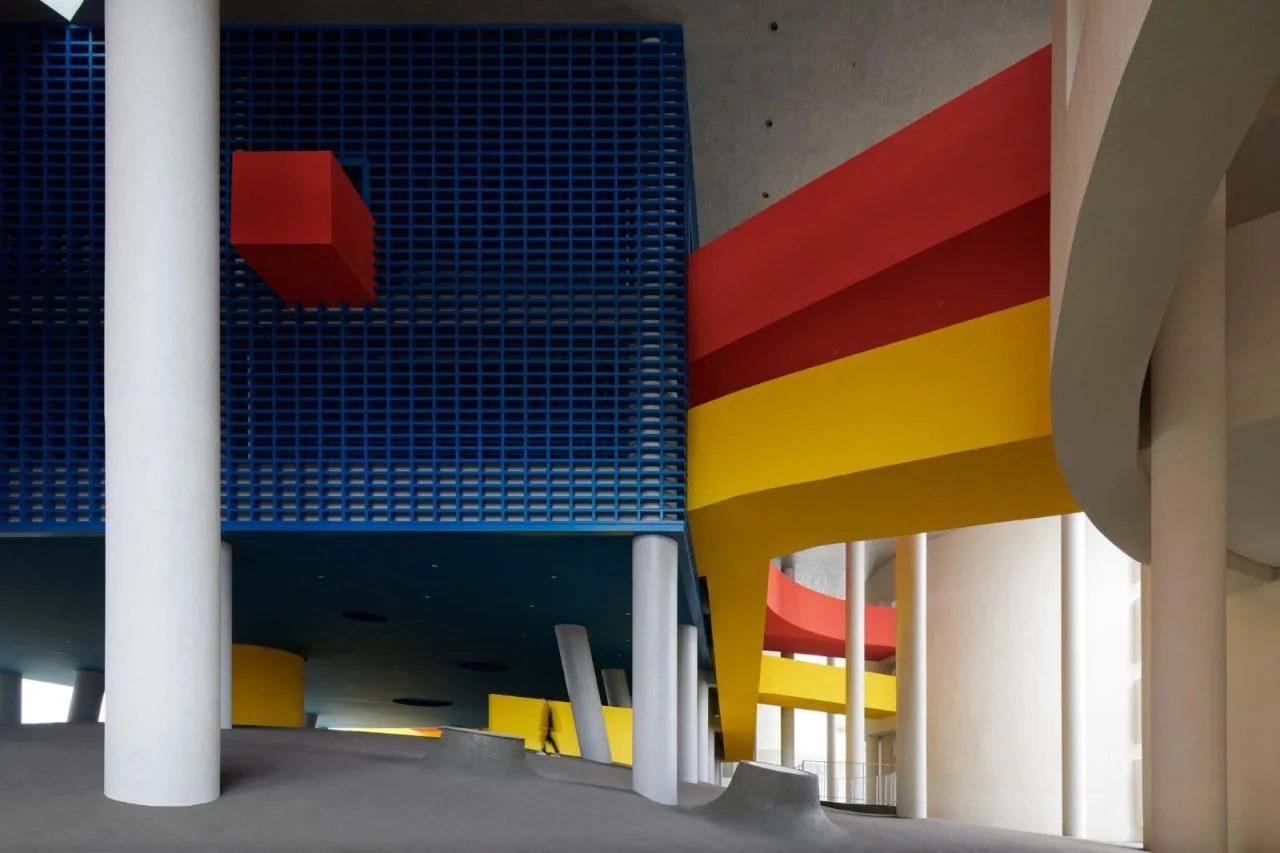
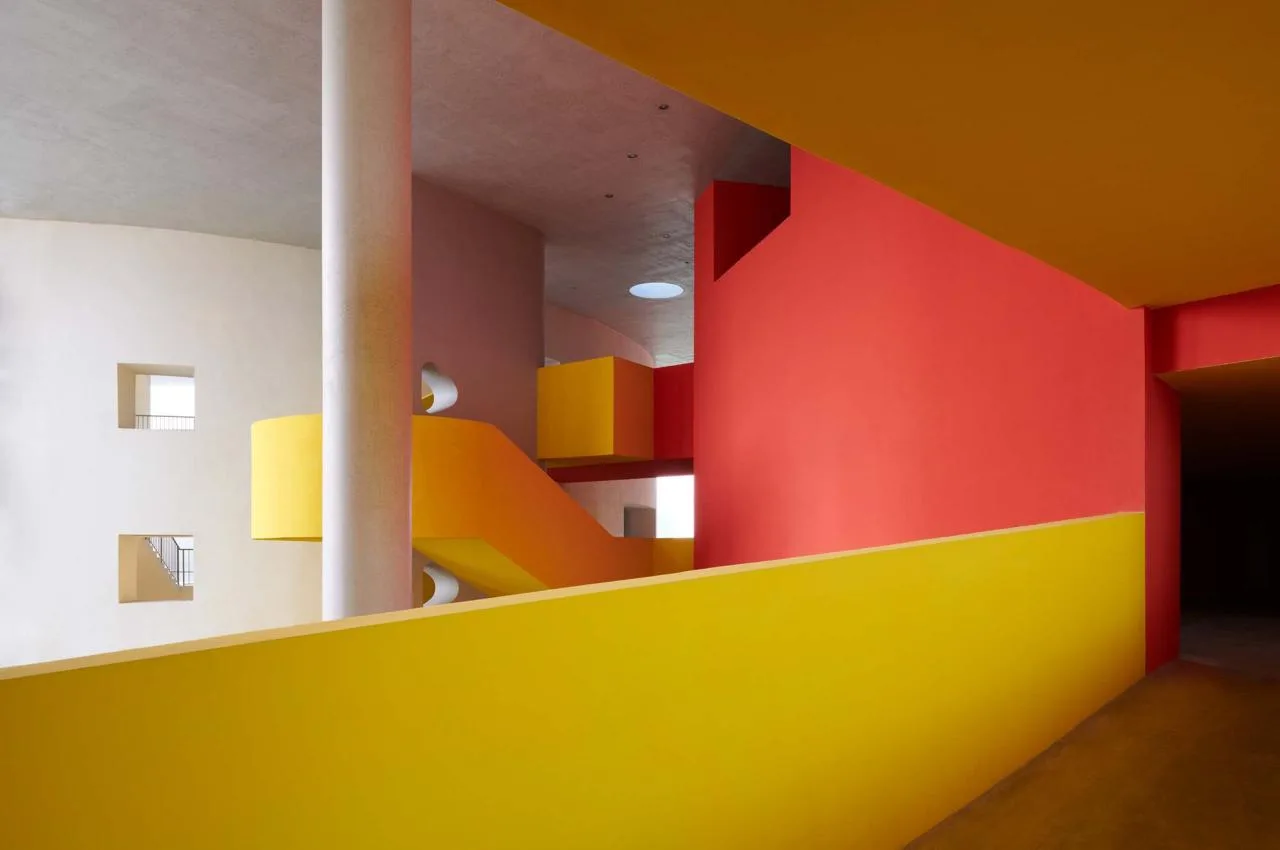
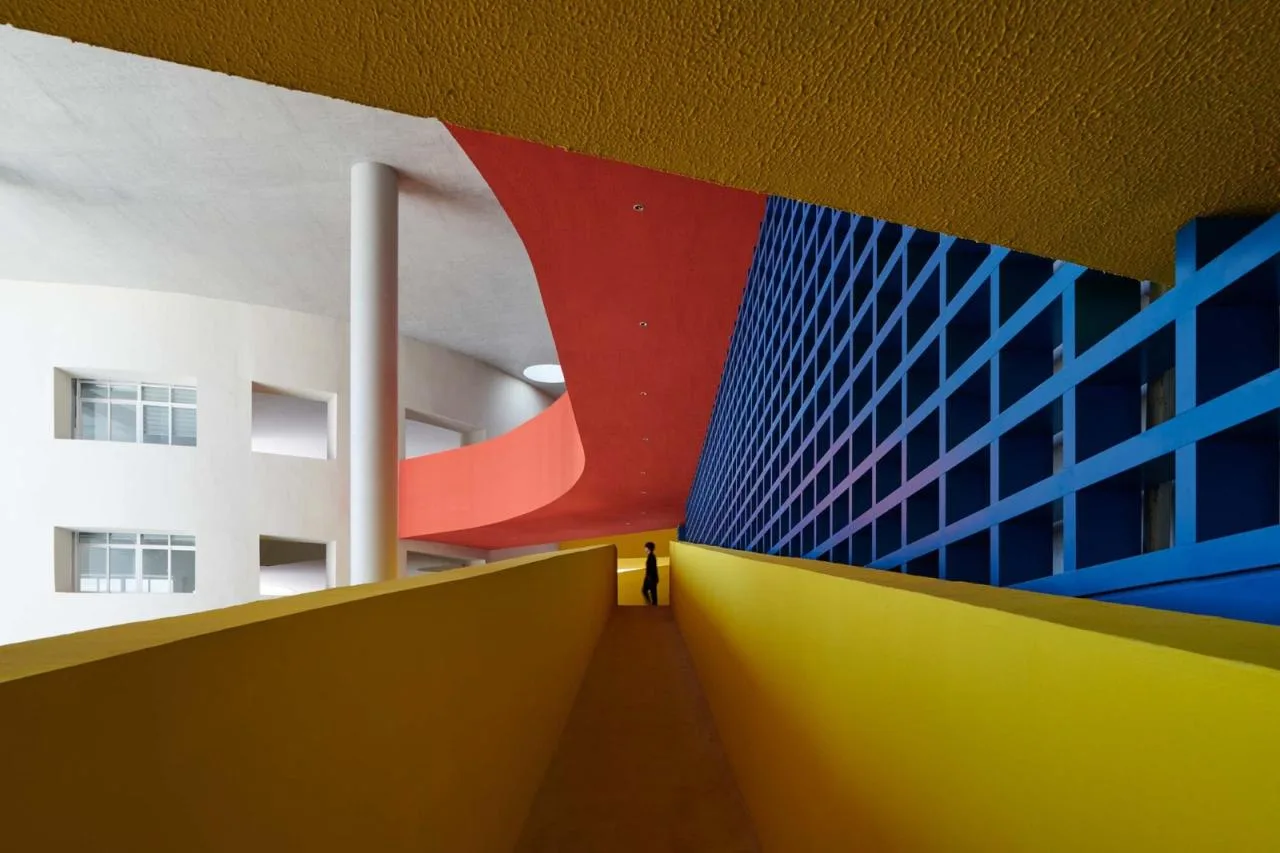
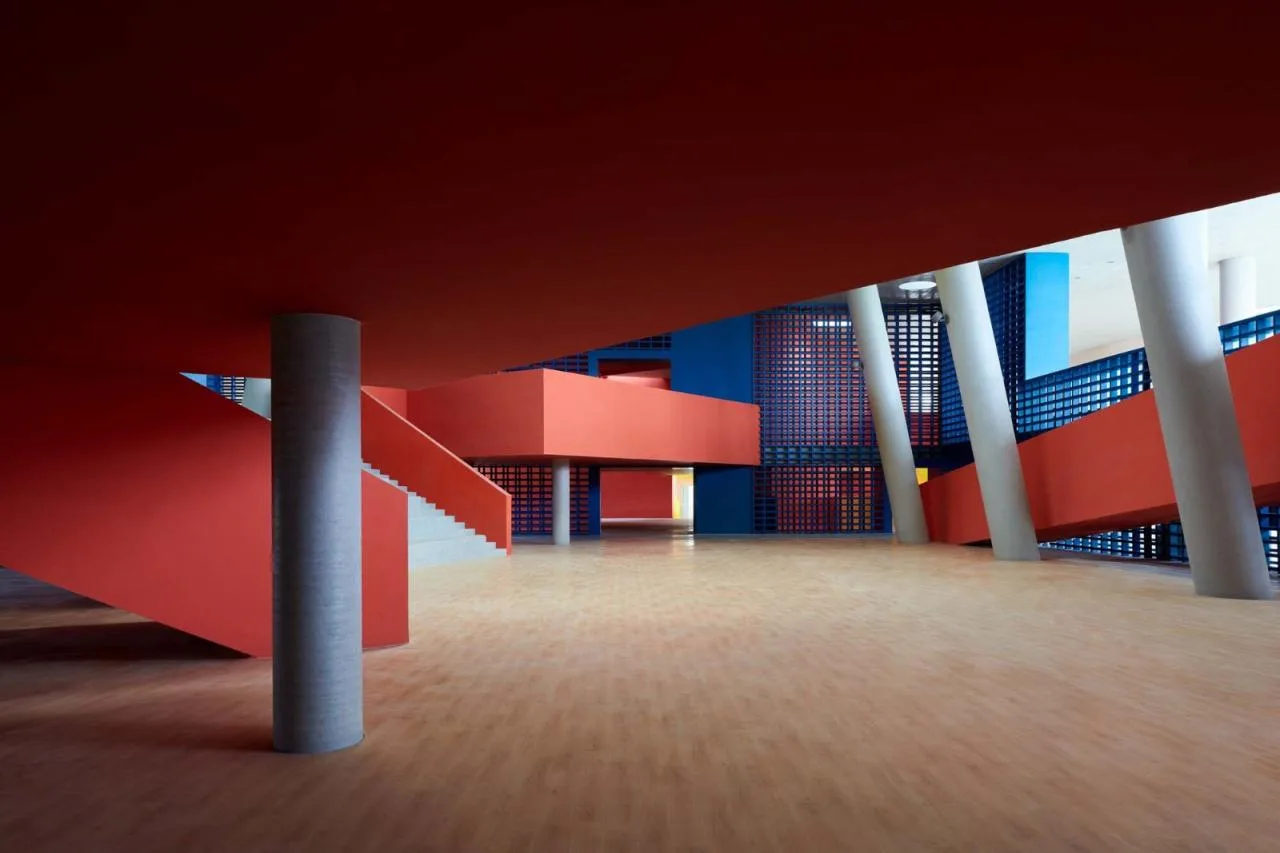
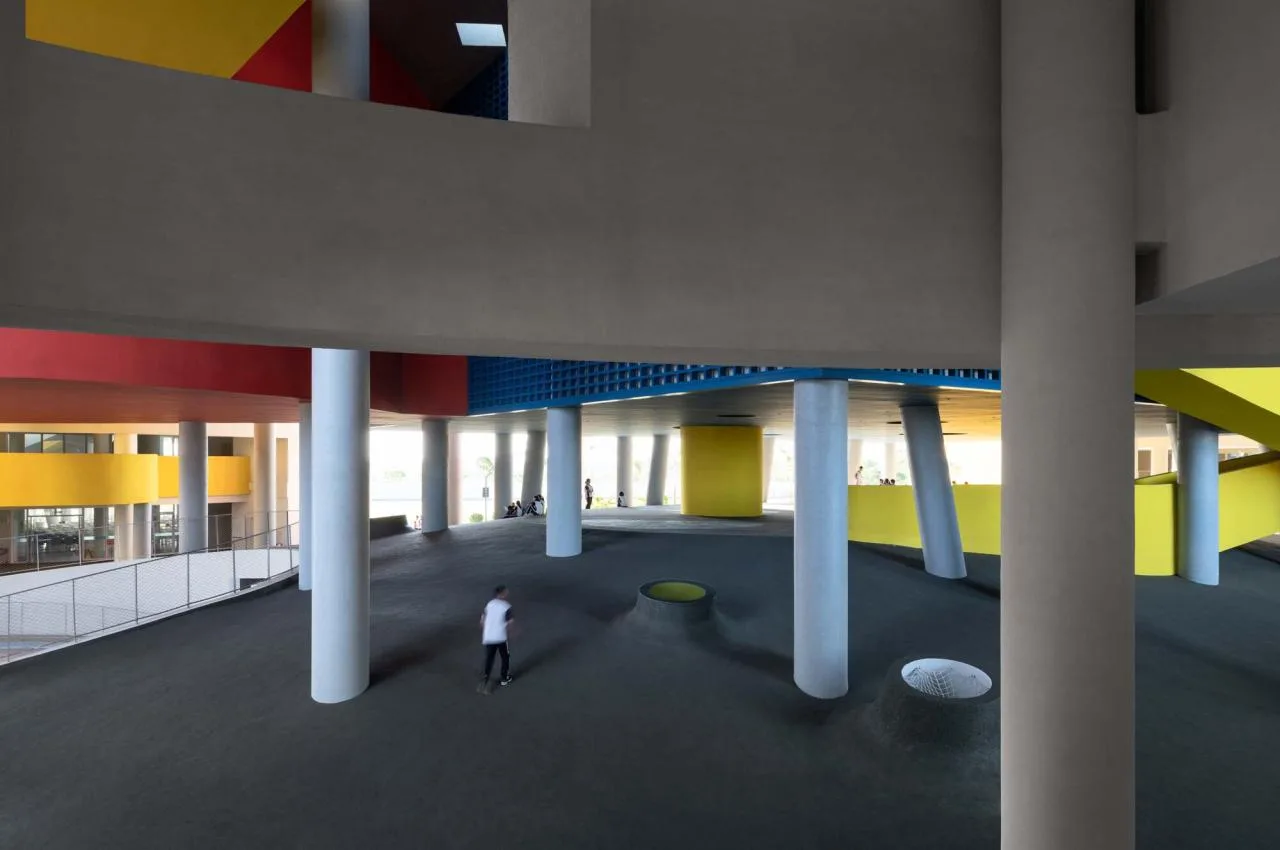
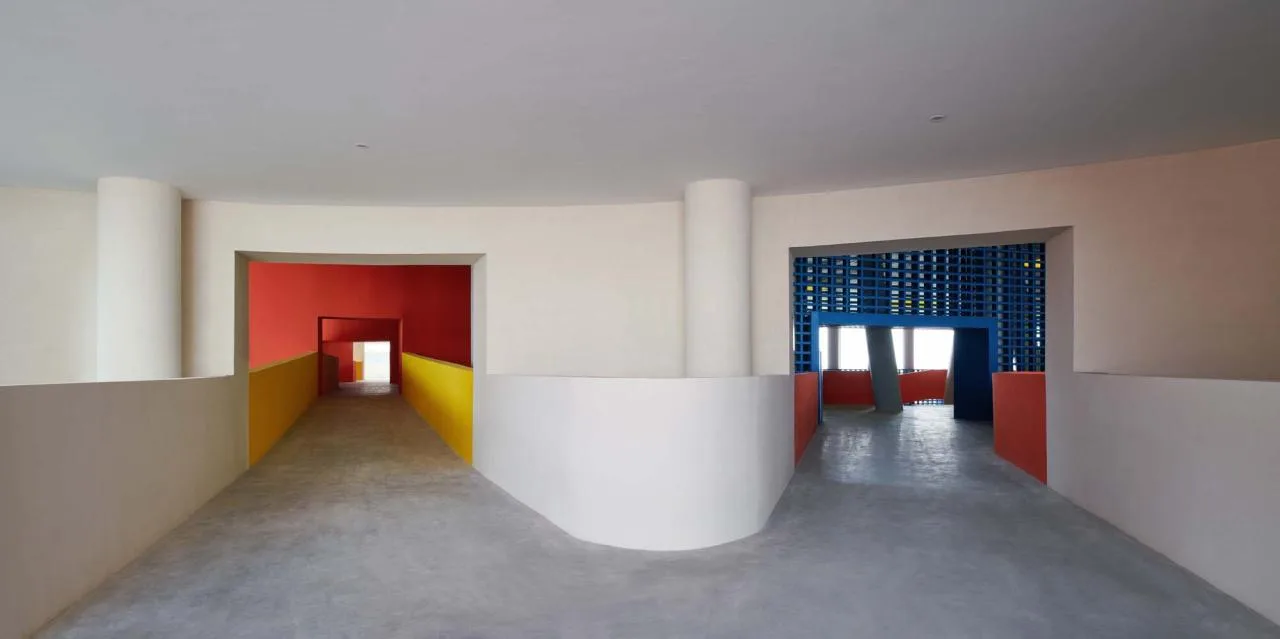
Above, micro-terrain and towering pillar forests support suspended volumes. Horizontal corridors and ramps defy gravity, weaving freely at varying heights to form a three-dimensional “garden of branching paths.”
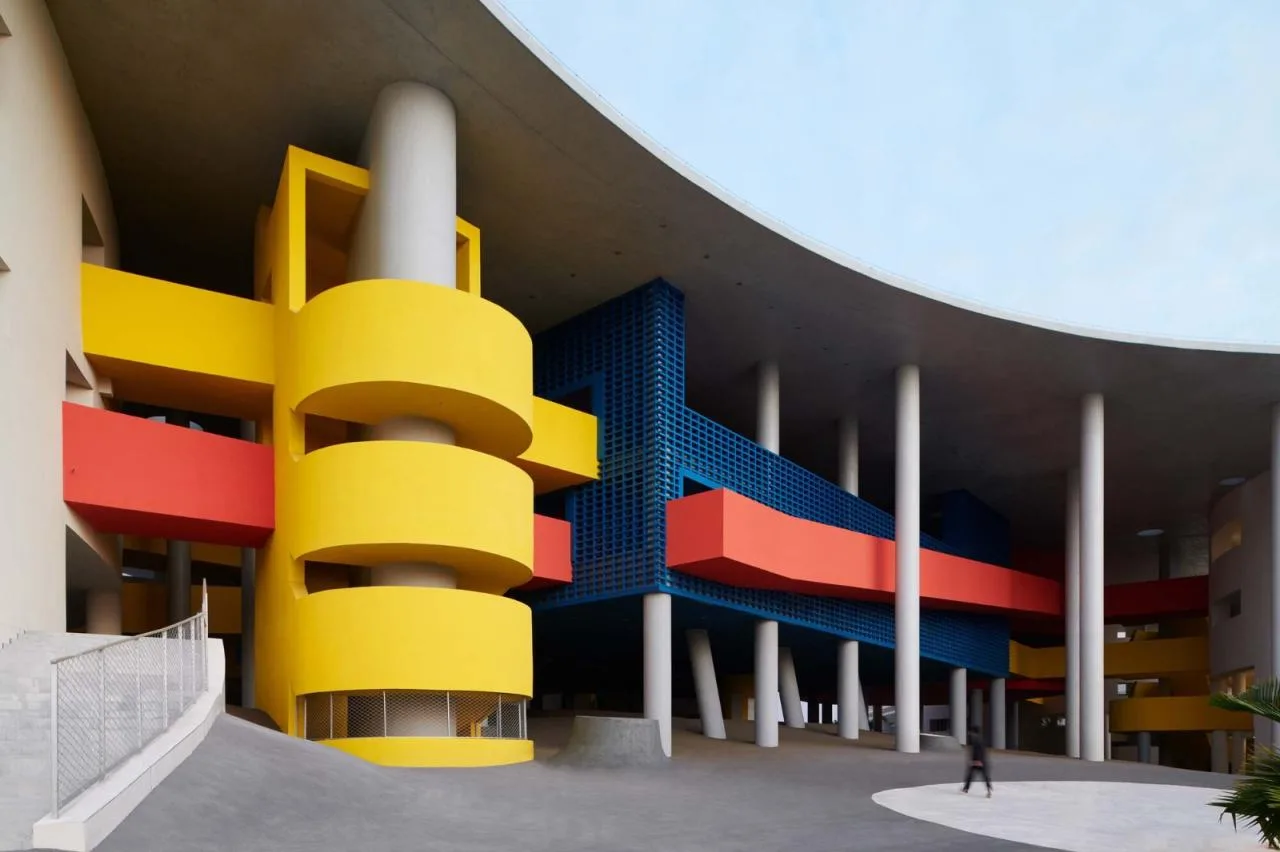
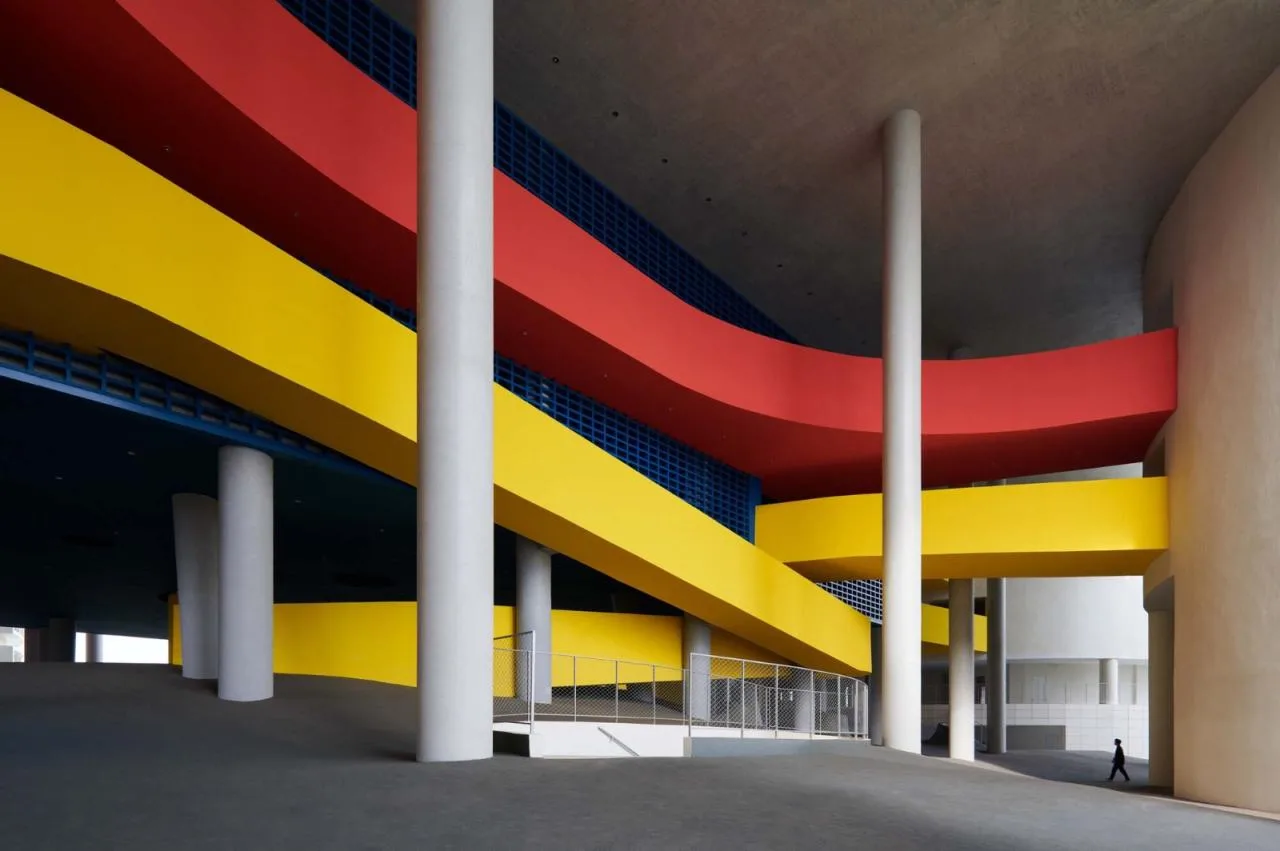
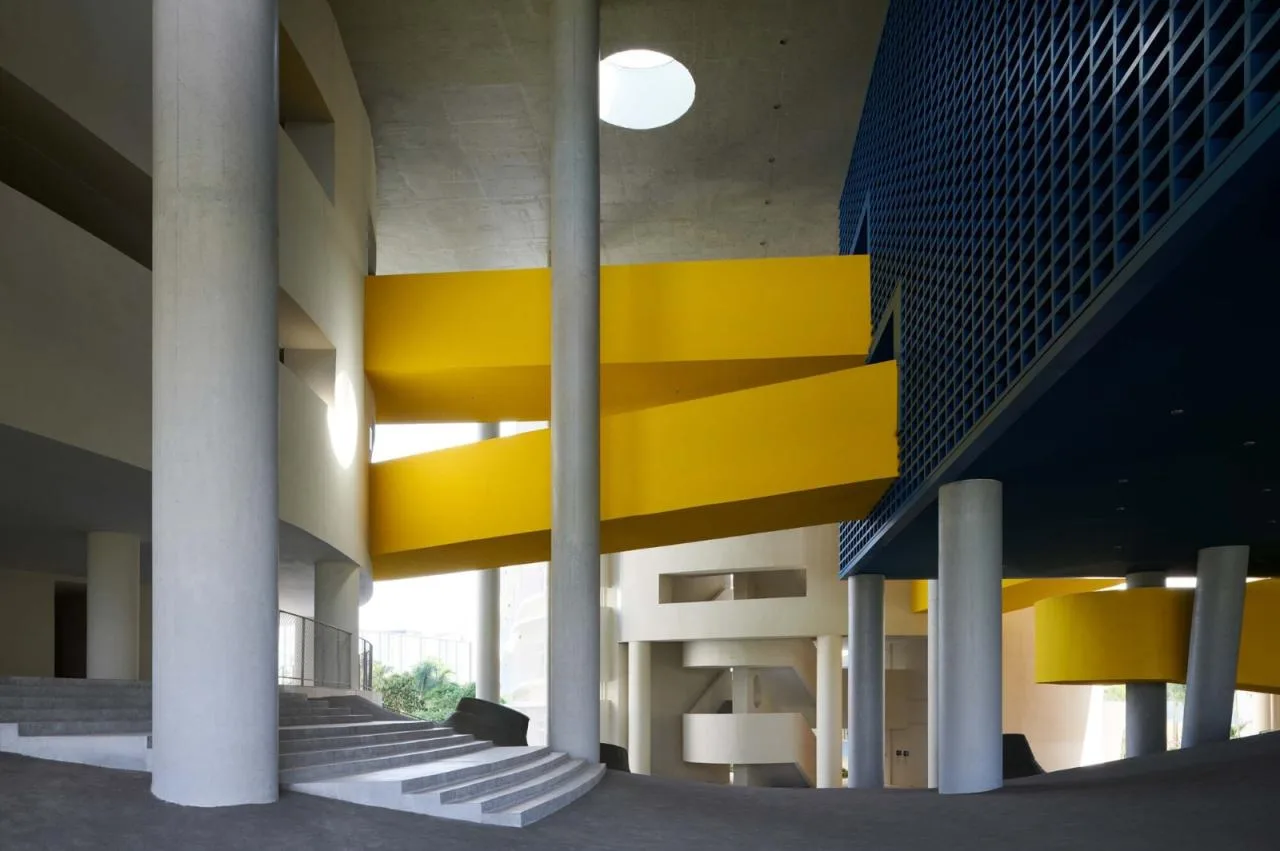
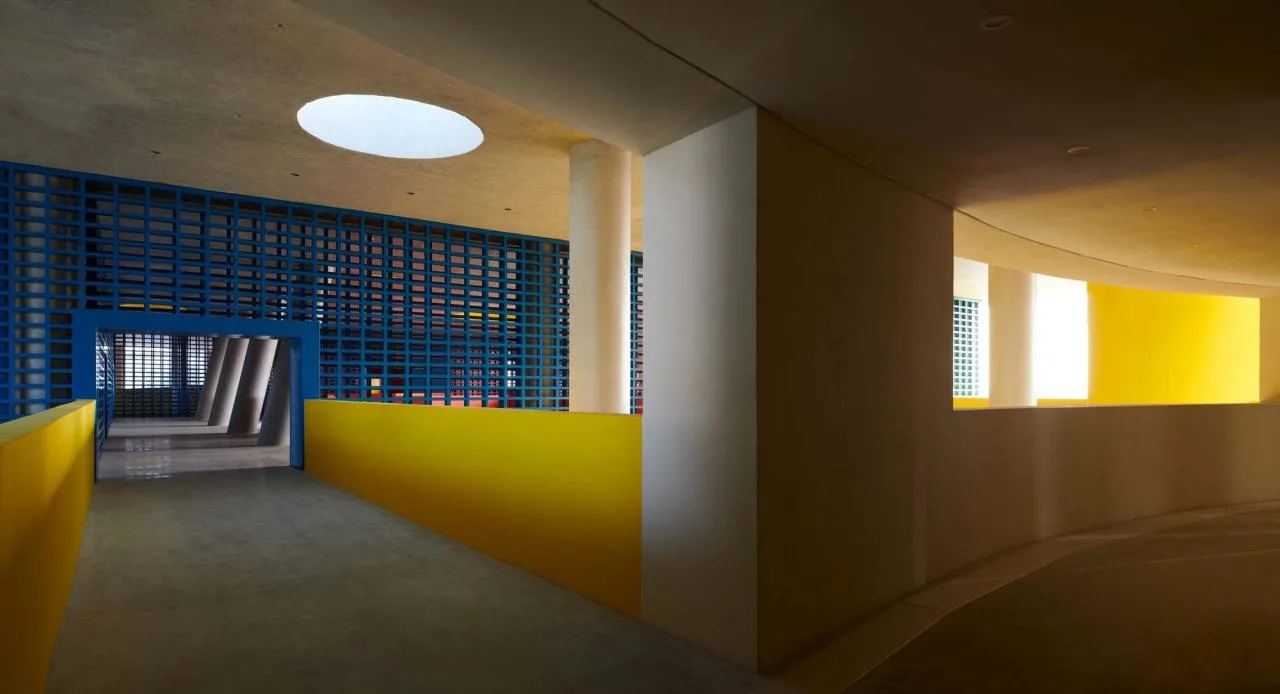
Functionally, the central zone acts as the “heart” of the high school, housing public spaces such as multifunctional halls, libraries, and lecture theaters. Semi-outdoor corridors connect all functional buildings—teaching blocks, gymnasiums, cafeterias, and administrative offices—on every floor.
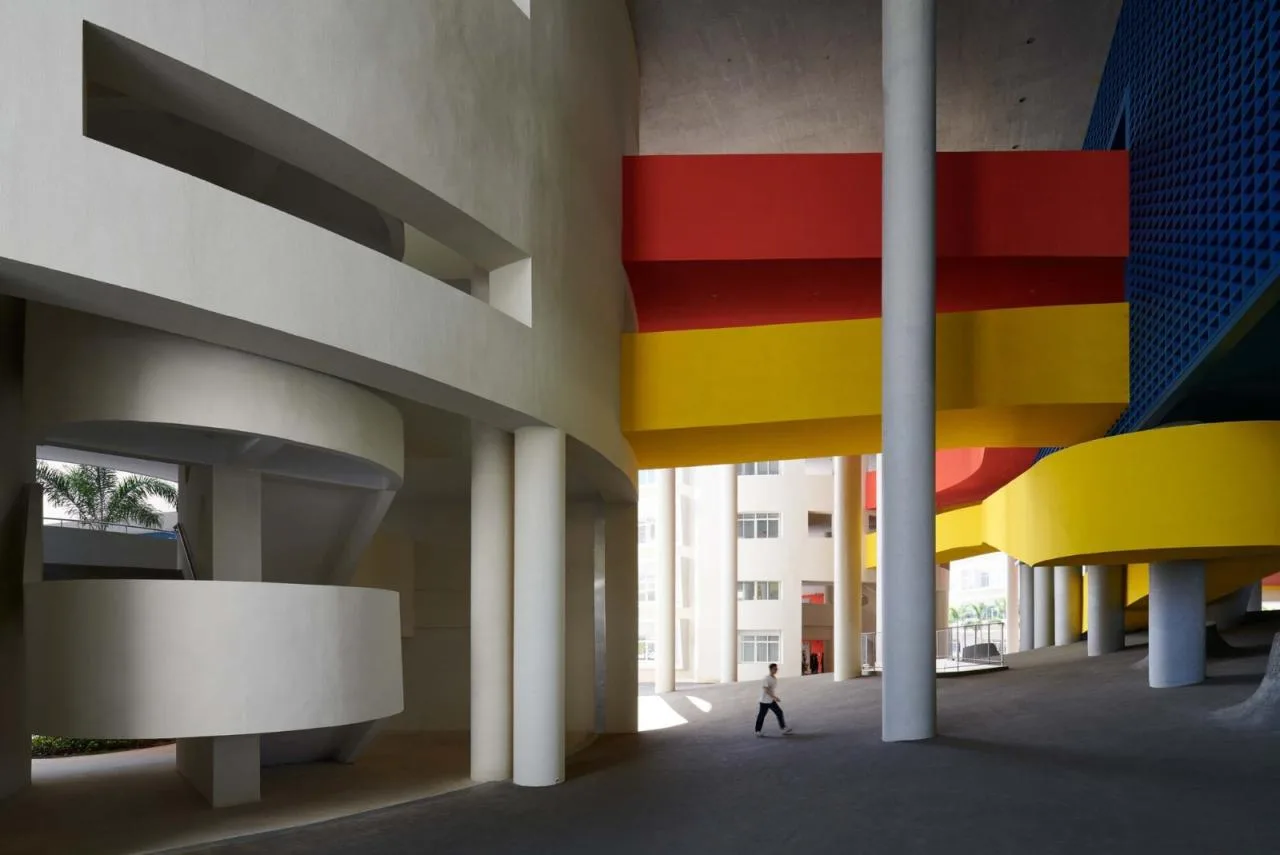
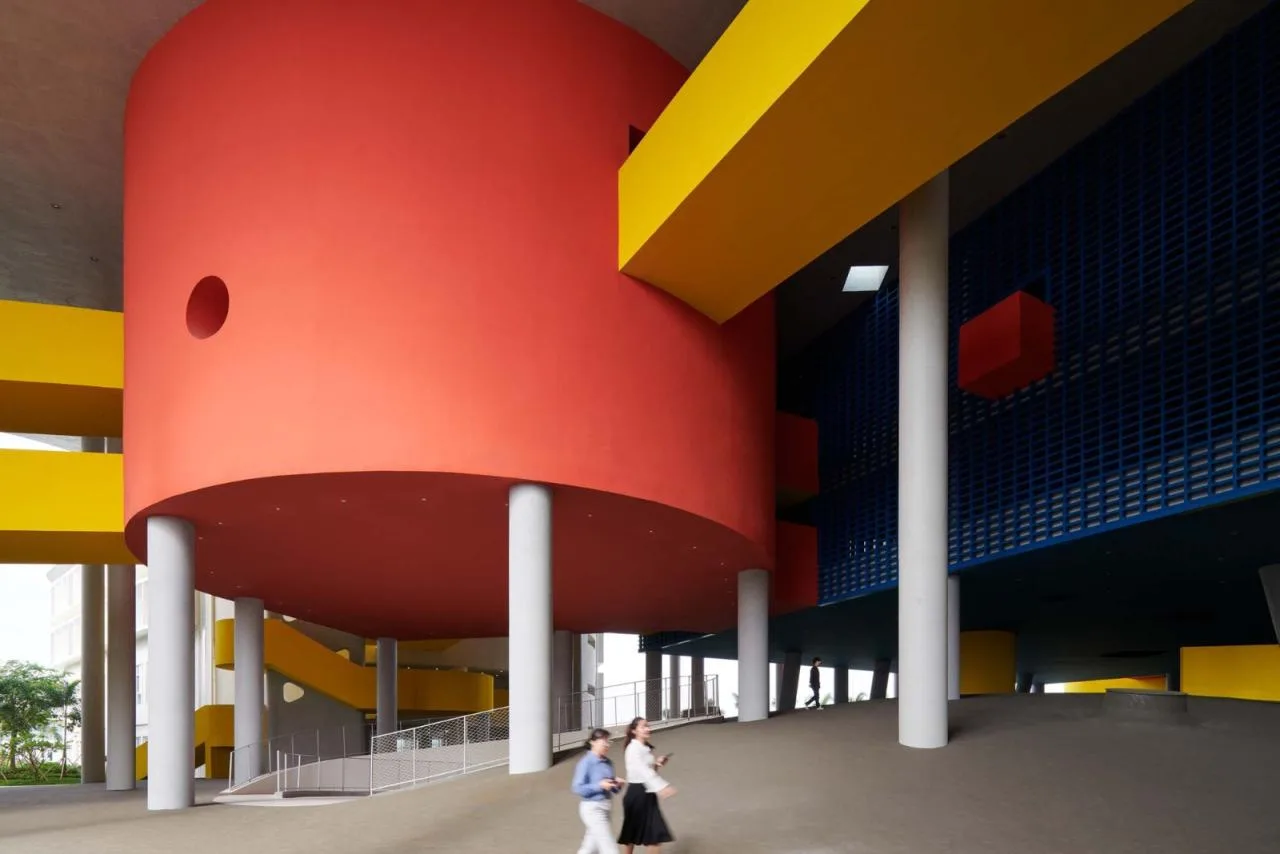
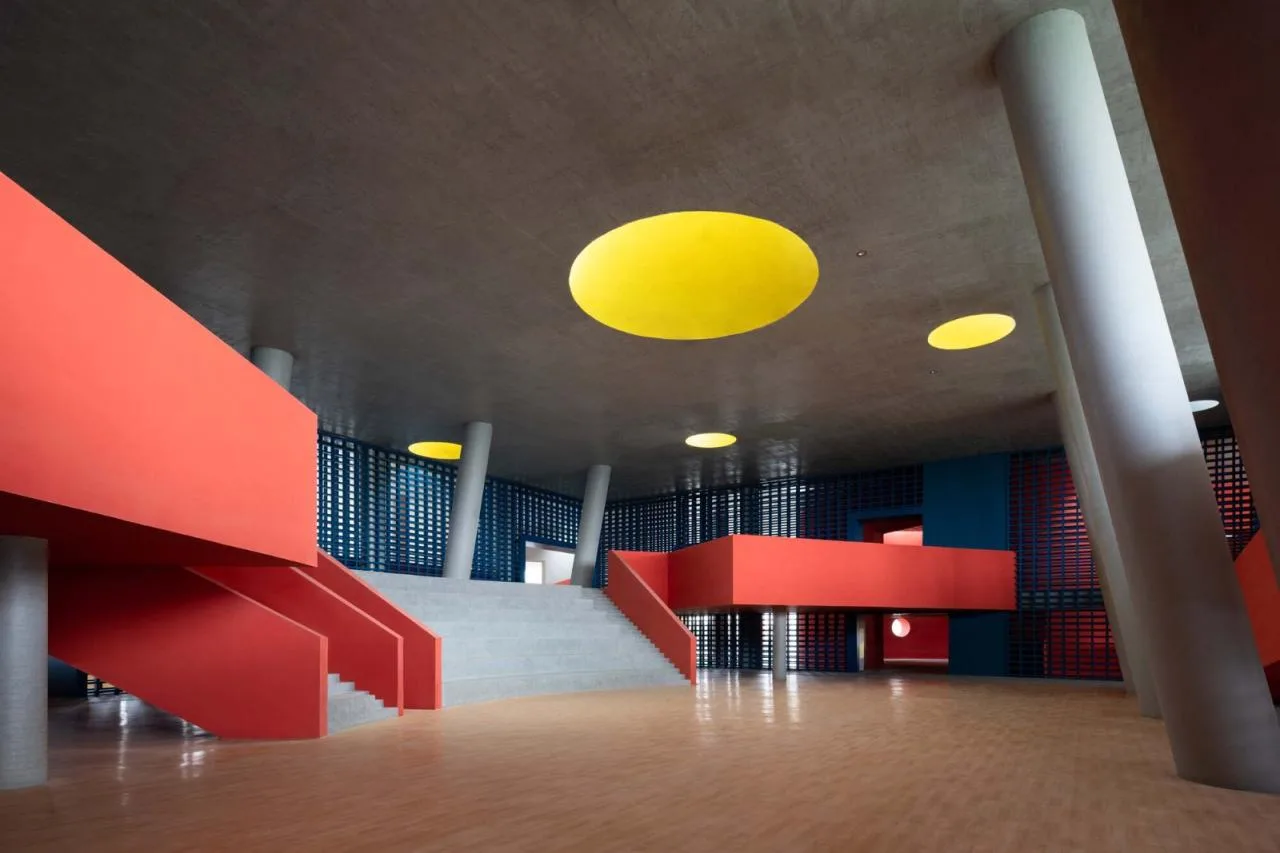
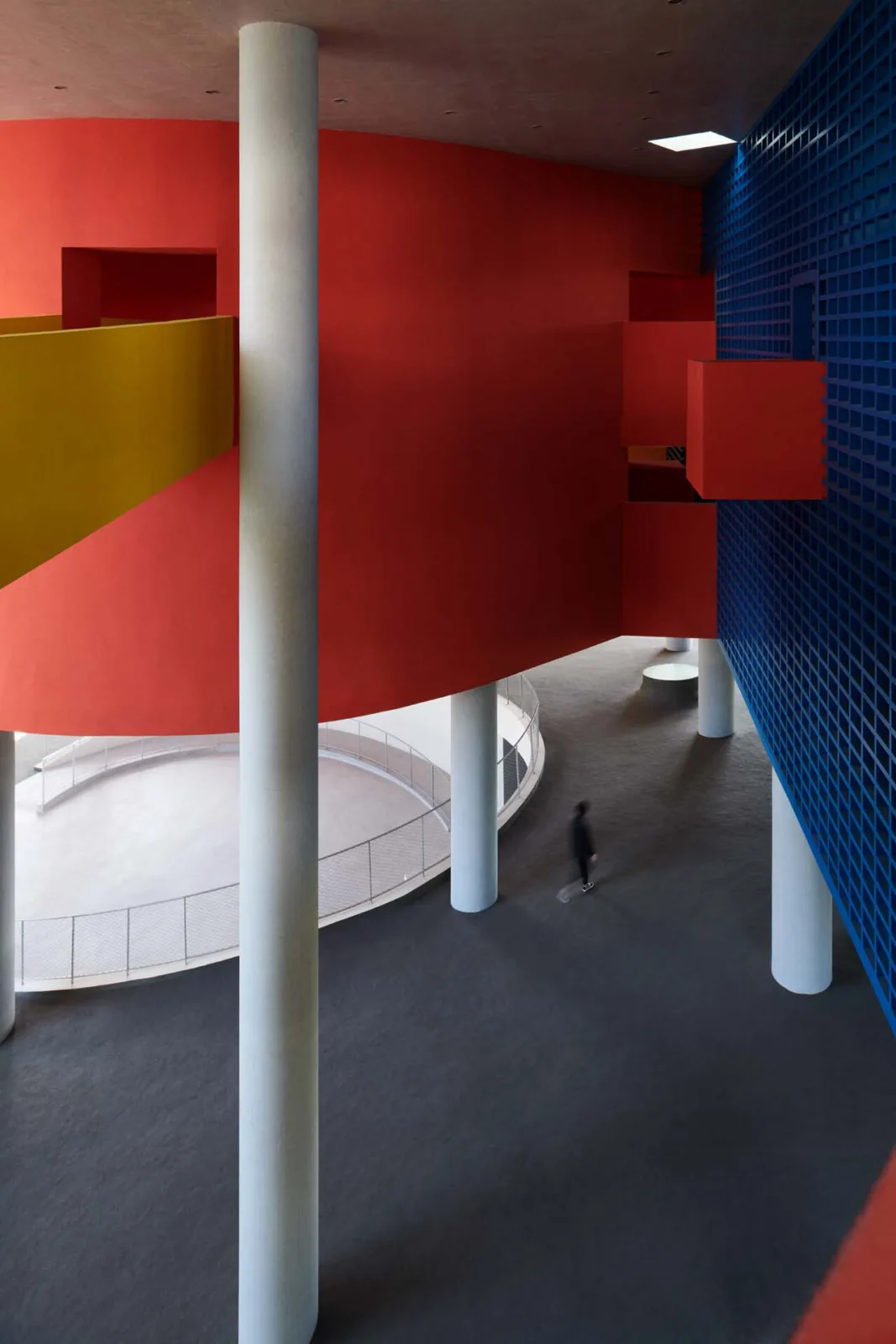
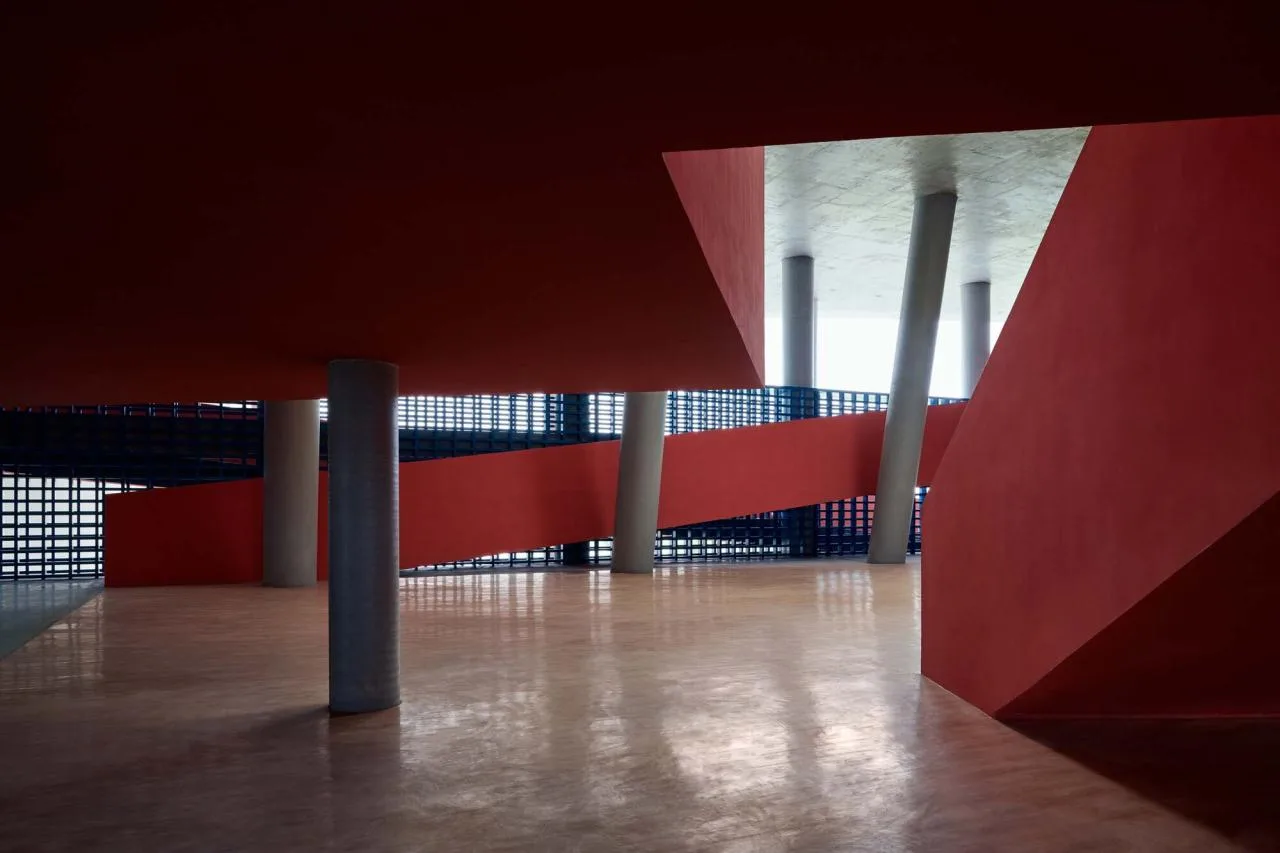
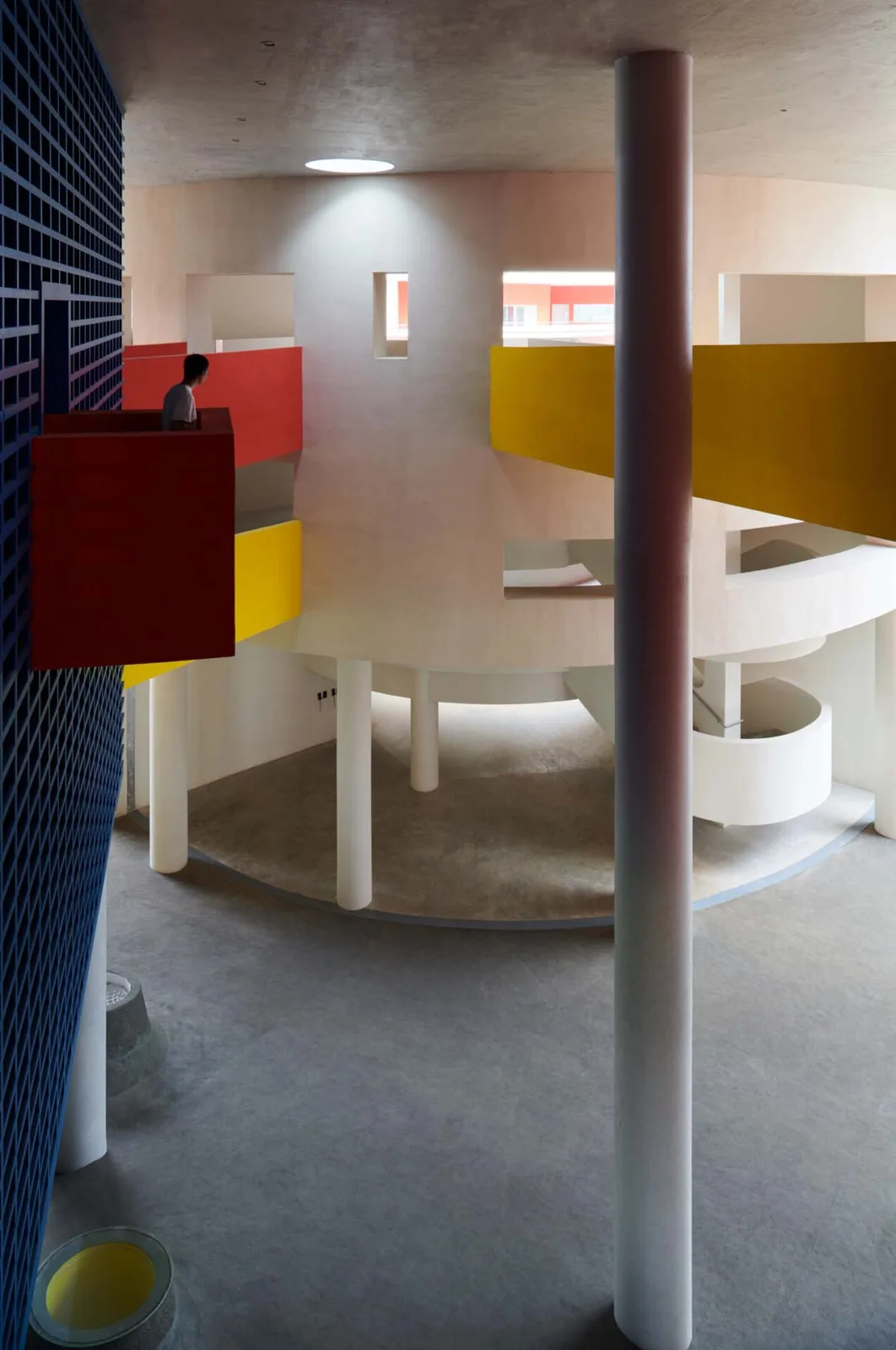
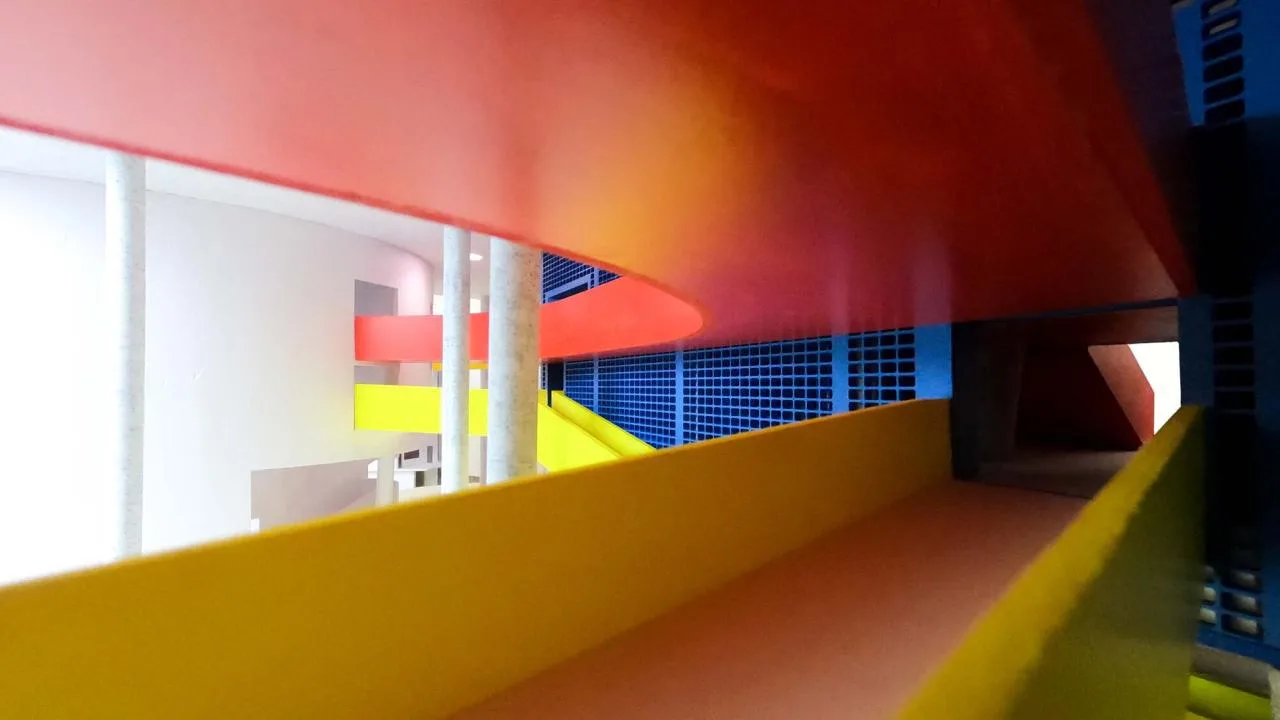
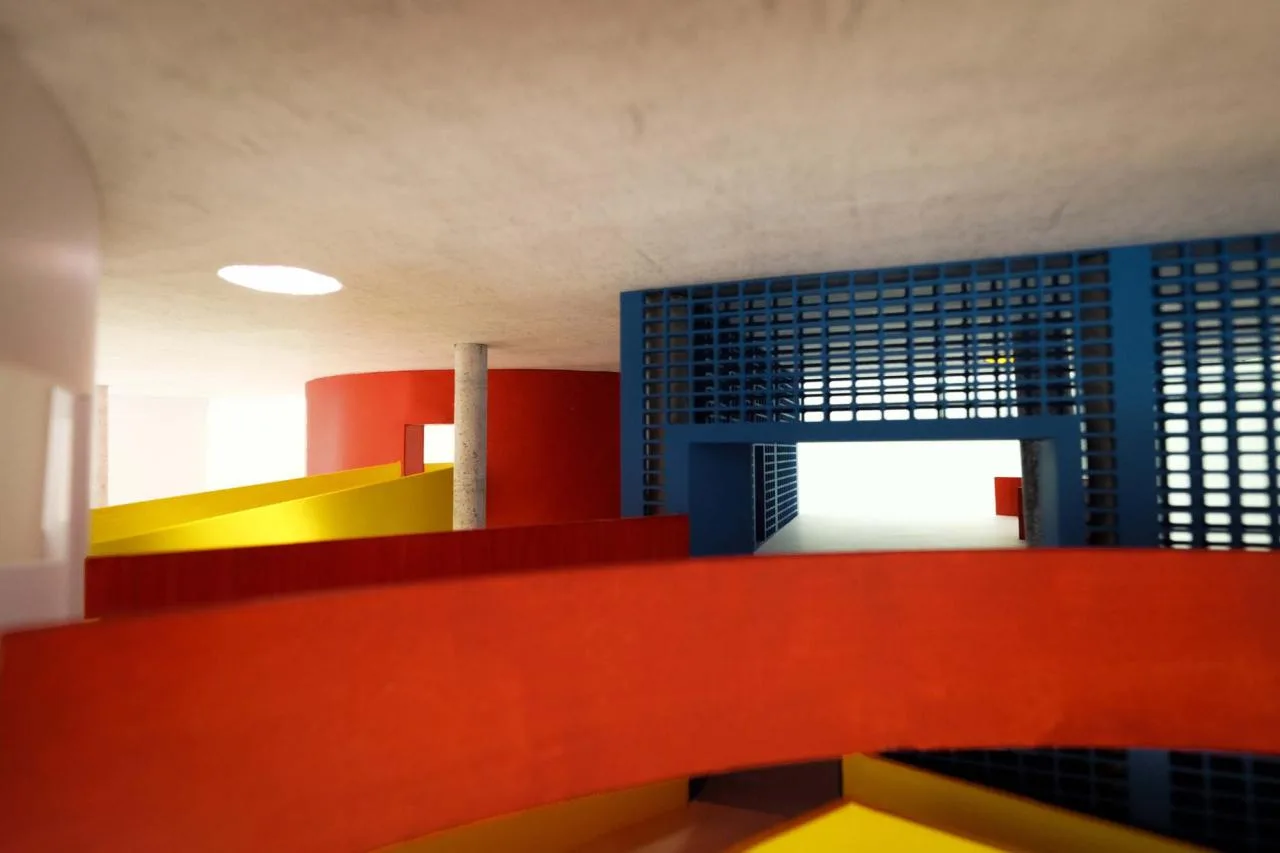
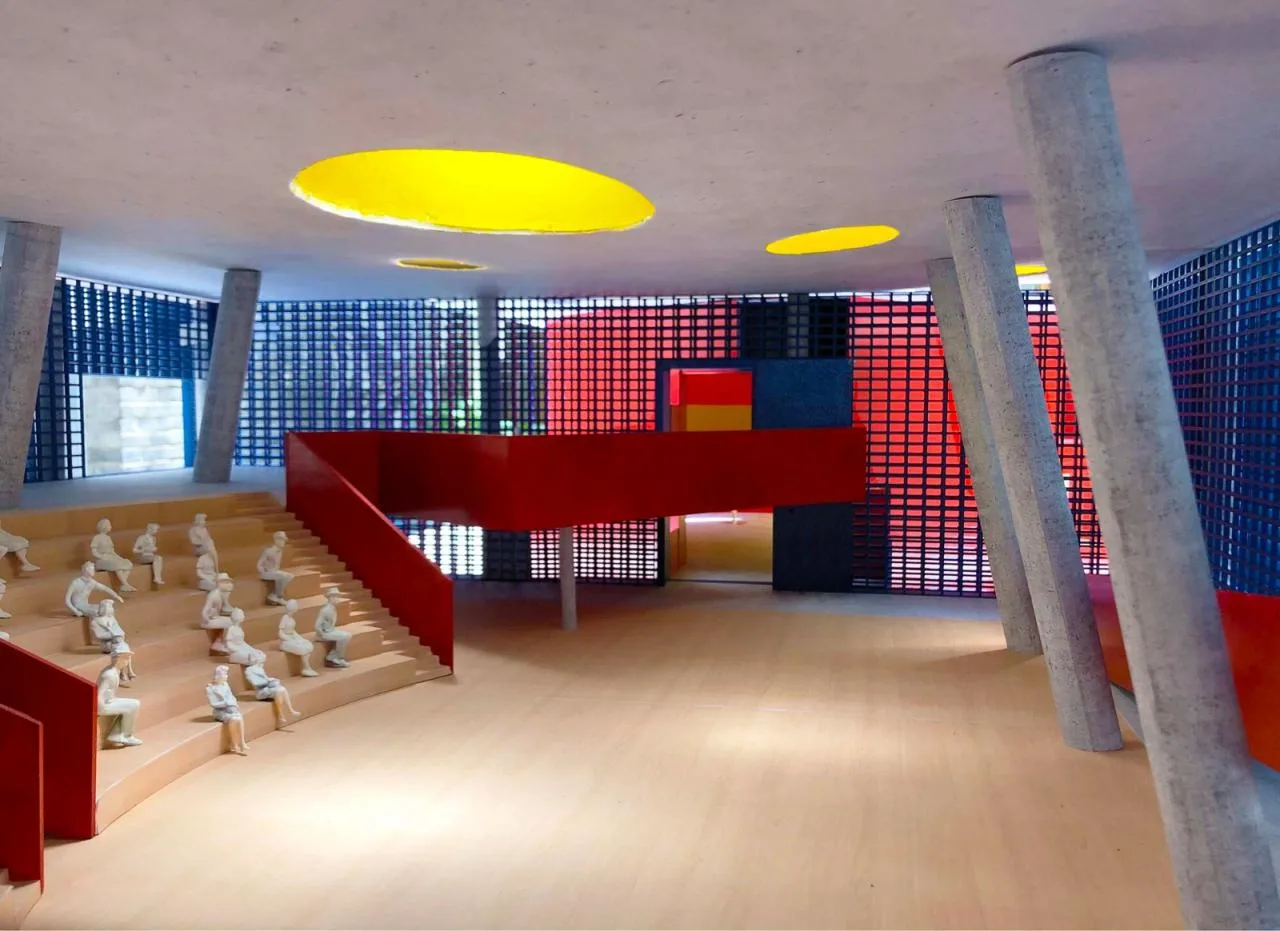
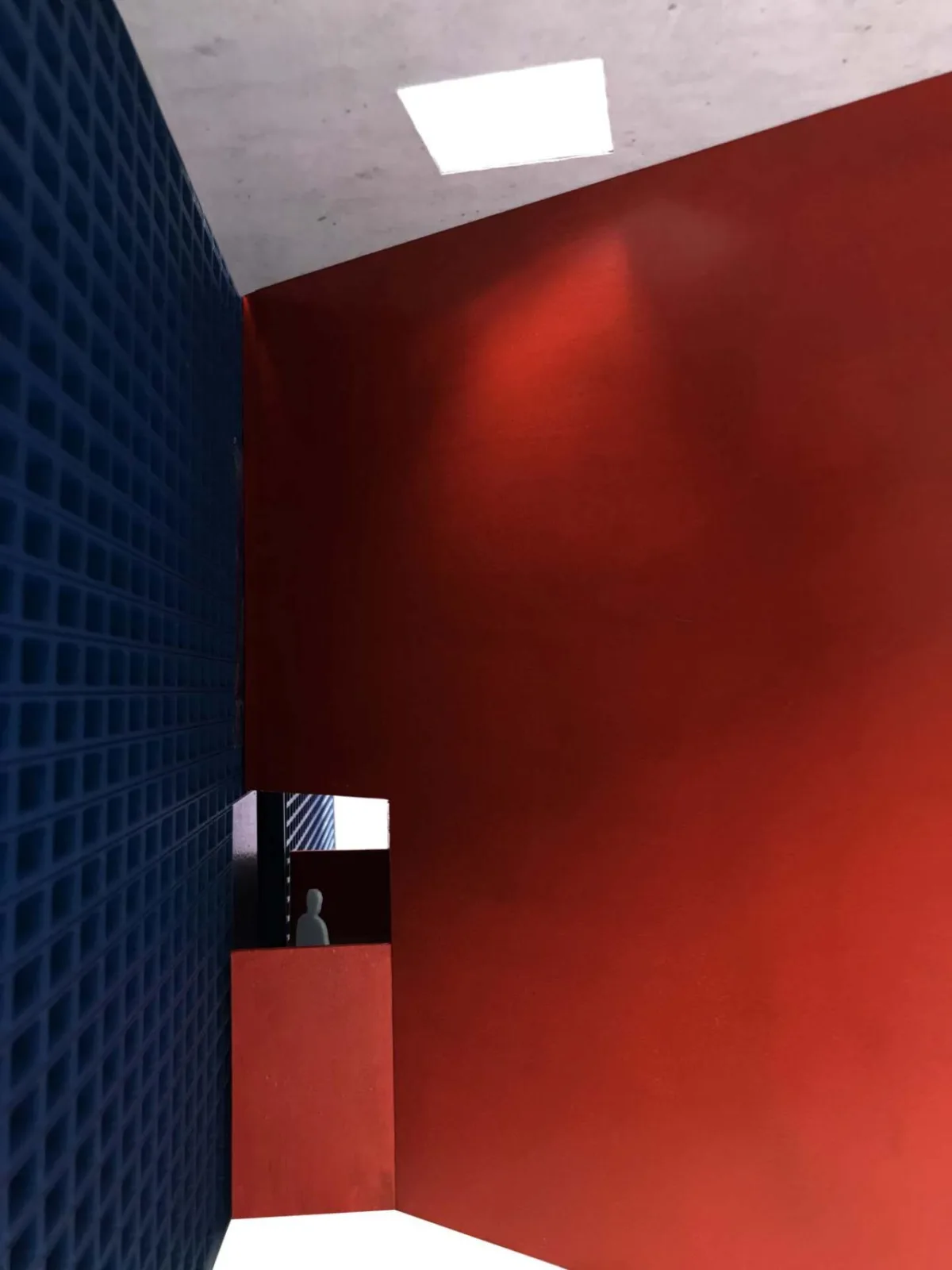
This area also serves as a vital space for extracurricular activities and social interaction, offering diverse experiences beyond traditional classrooms. Suspended blue cubes and red cylindrical volumes correspond to the multifunctional hall and exhibition space respectively, featuring large steps and lofty ceilings that accommodate varied activities. These elevated public spaces provide places for students to relax and socialize without descending to lower levels.
Given Haikou’s rainy and sunny climate, the semi-outdoor spaces beneath the eaves offer abundant shade and shelter to protect teachers and students.
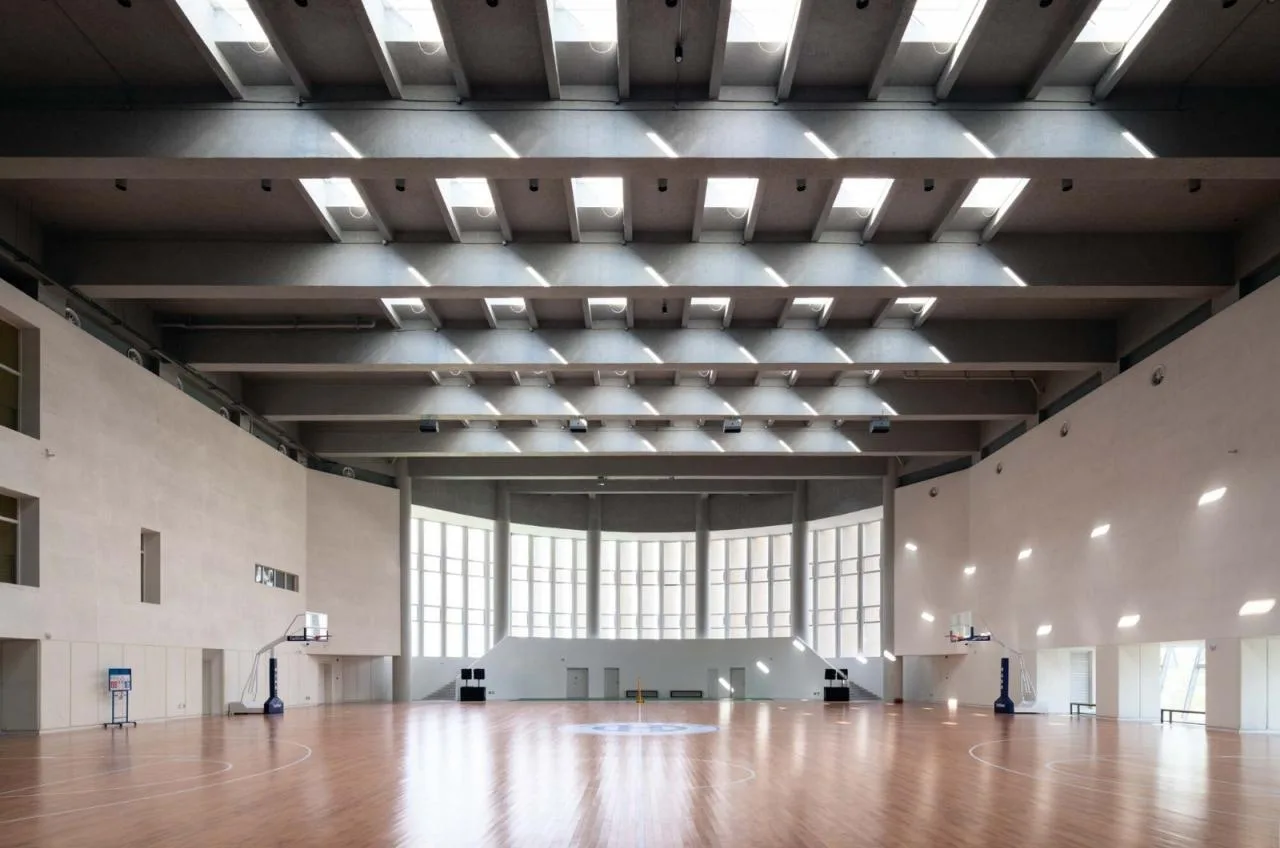
The basketball court features a three-story-high space supported by tensioned large-span structural beams, creating a raw, powerful atmosphere. Skylights between the beams flood the interior with natural light, softening the ceiling’s heaviness.
The flooring is elevated maple wood, while walls are lined with wood fiber acoustic panels and soft padding for sound absorption and collision protection. The combination of arcs and straight lines in the plan guides orientation, evoking the feeling of sailing toward light in a grand ship.
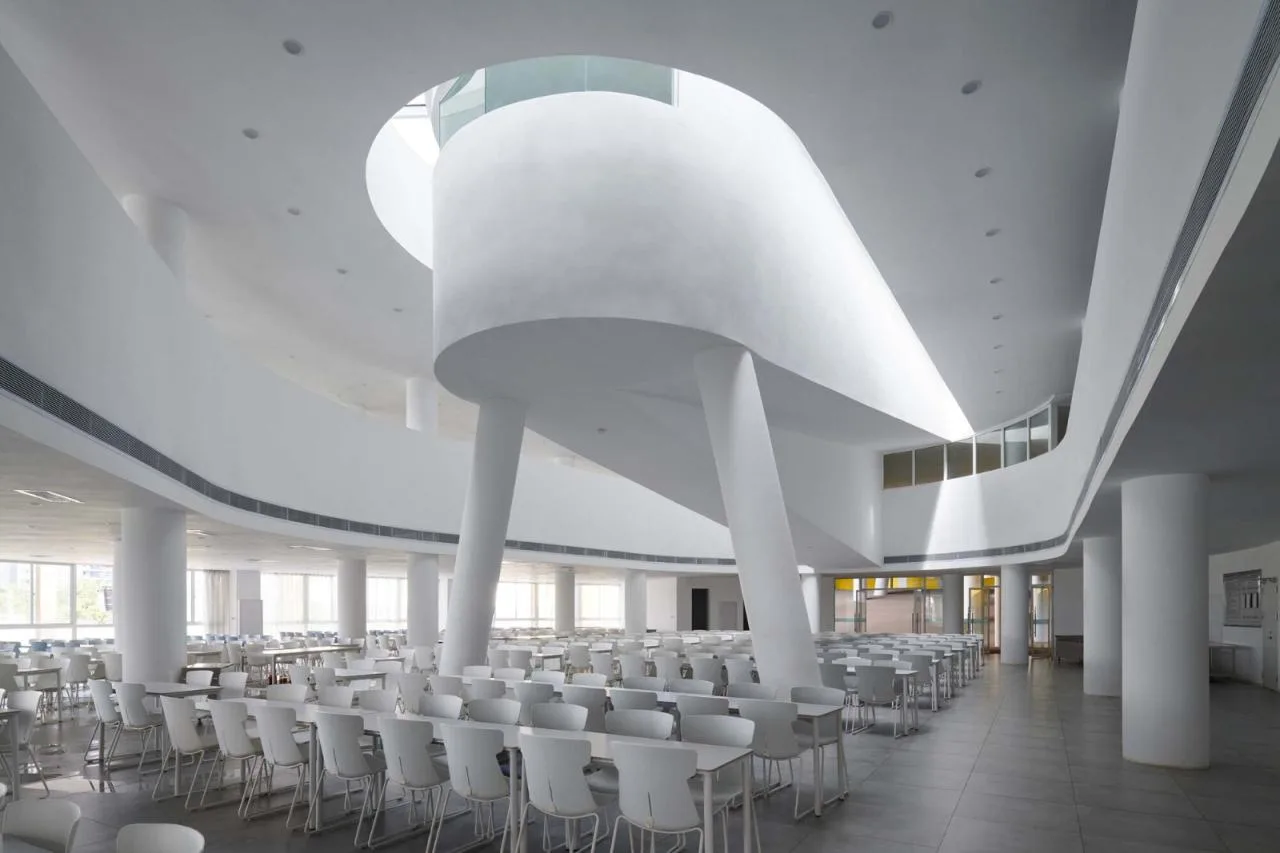
The cafeteria offers two levels of dining space, centered around a ramp structure intruding from the exterior. Light filters through the gaps between ramp and floor, creating a floating sculptural element that adds softness and weightlessness to the space.
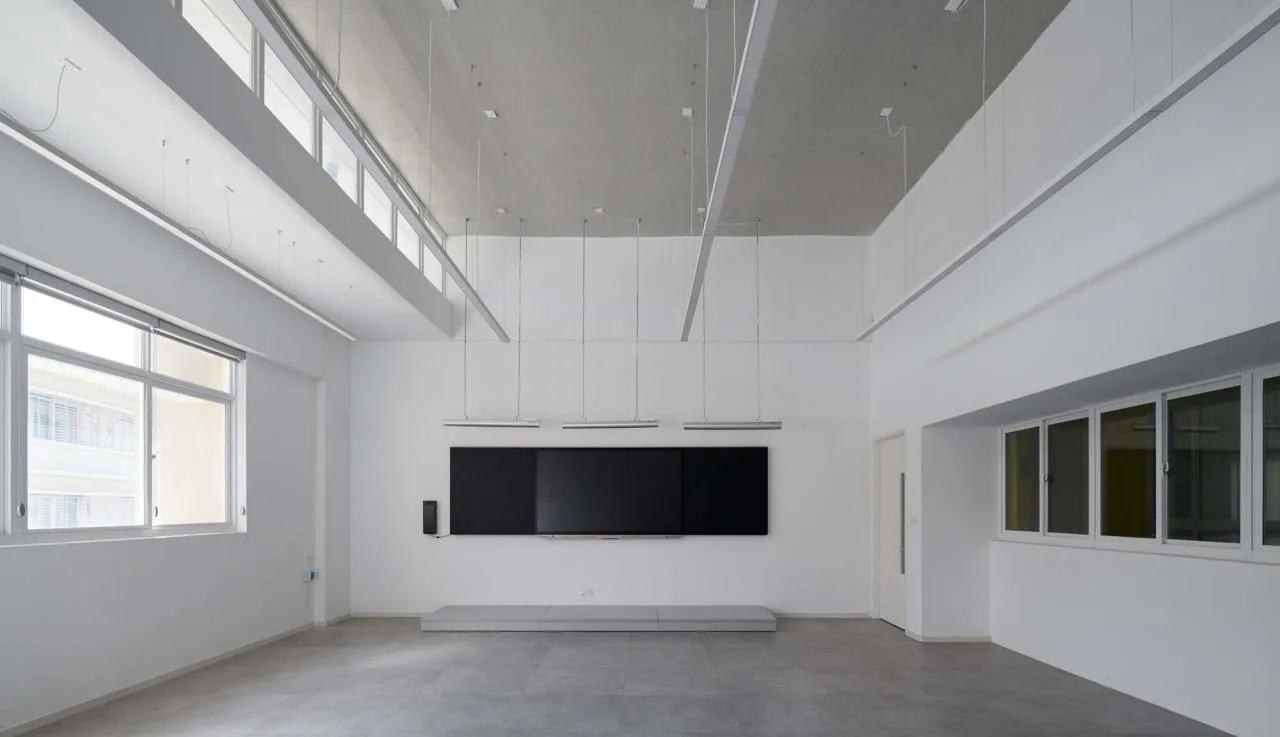
The dormitory design complements the teaching buildings, organized around courtyards to ensure ample natural ventilation and light for each room. The curved layout creates flowing public spaces and a variety of spatial configurations.
To address Haikou’s intense sunlight, diverse shading systems were applied according to orientation. The teaching building’s south facade features a curtain wall with horizontal white aluminum panels and vertical wood-grain aluminum panels, creating varied scales. The north side uses primarily horizontal shading, while the cafeteria and gymnasium on the west side have denser vertical sunshades optimized for the summer solstice sun angle.
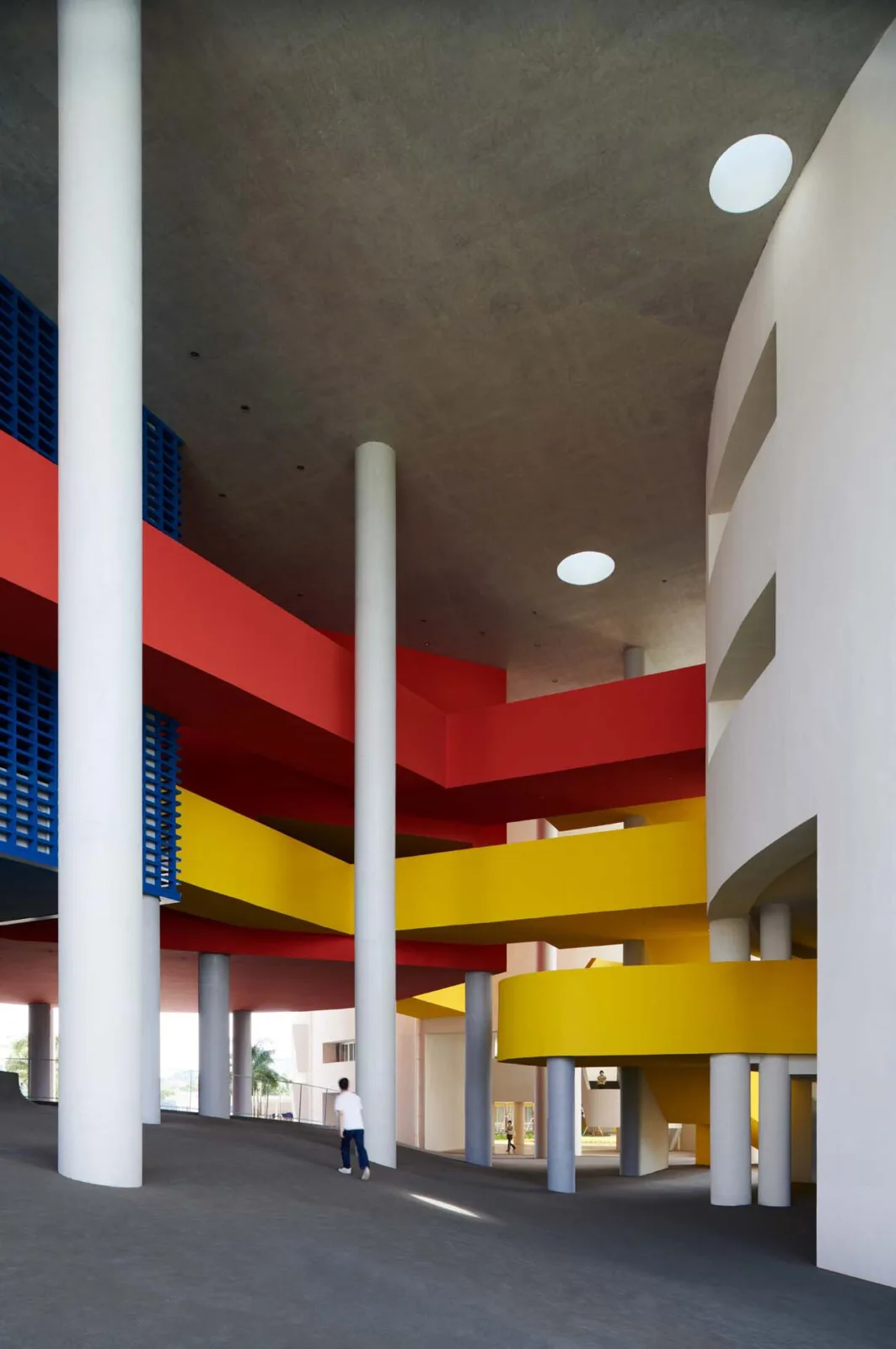
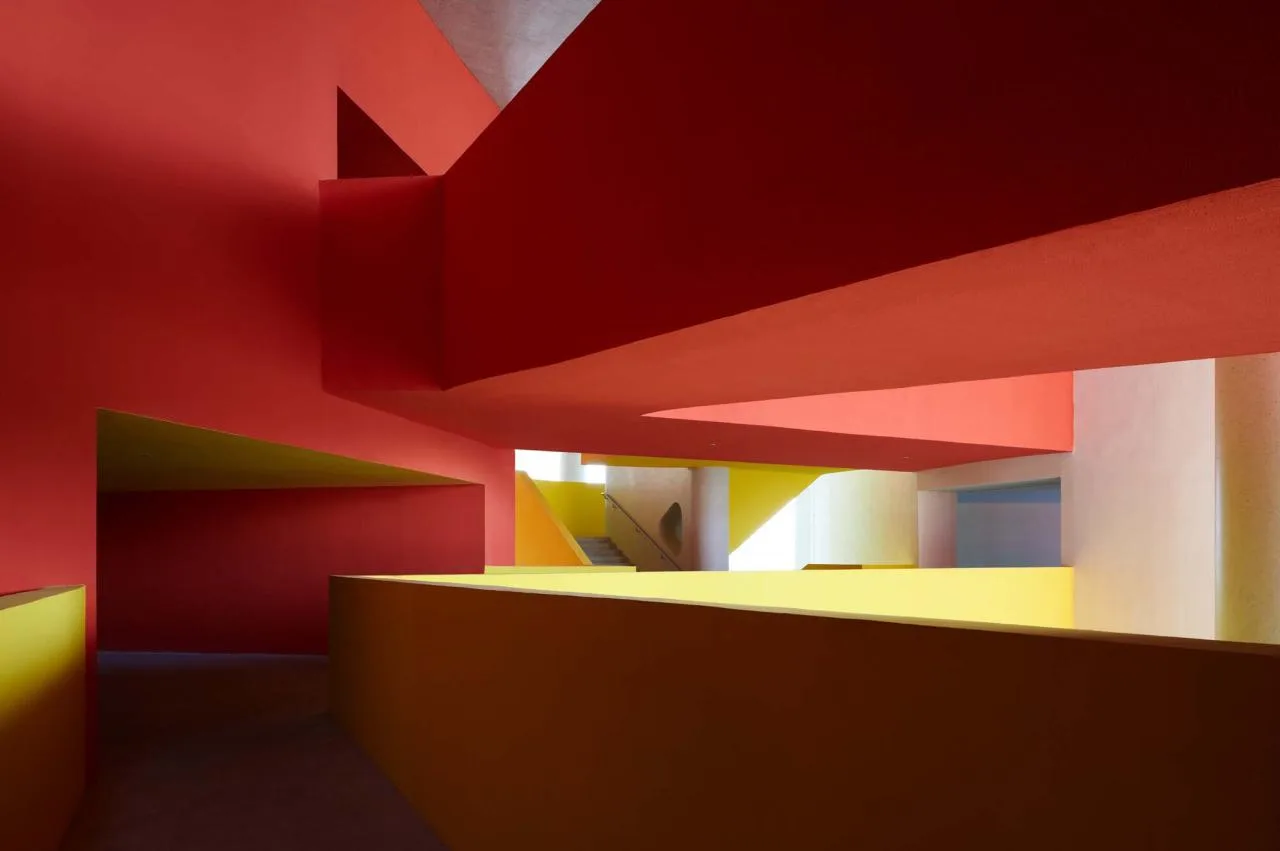
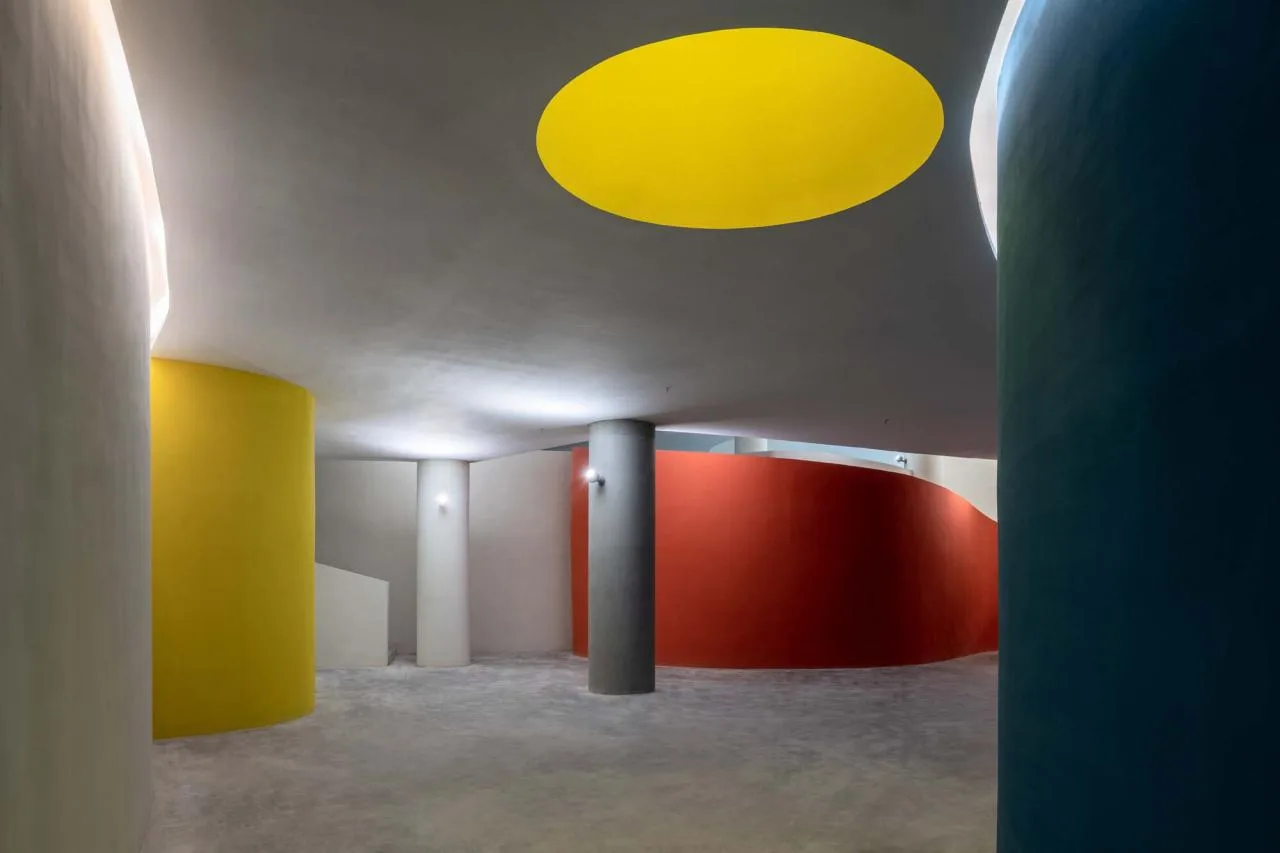
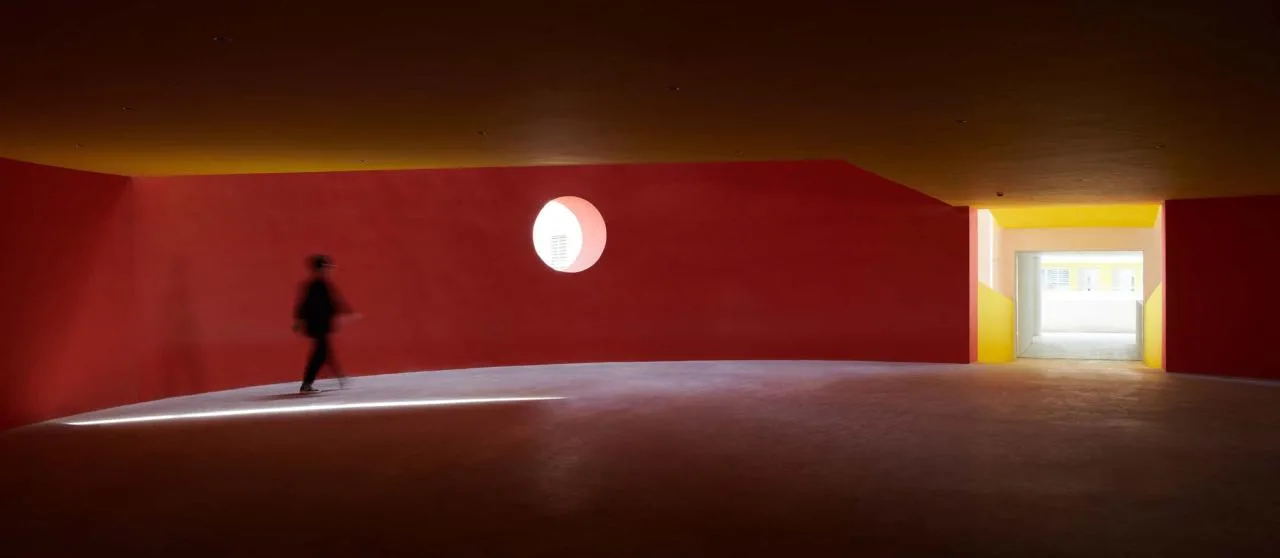
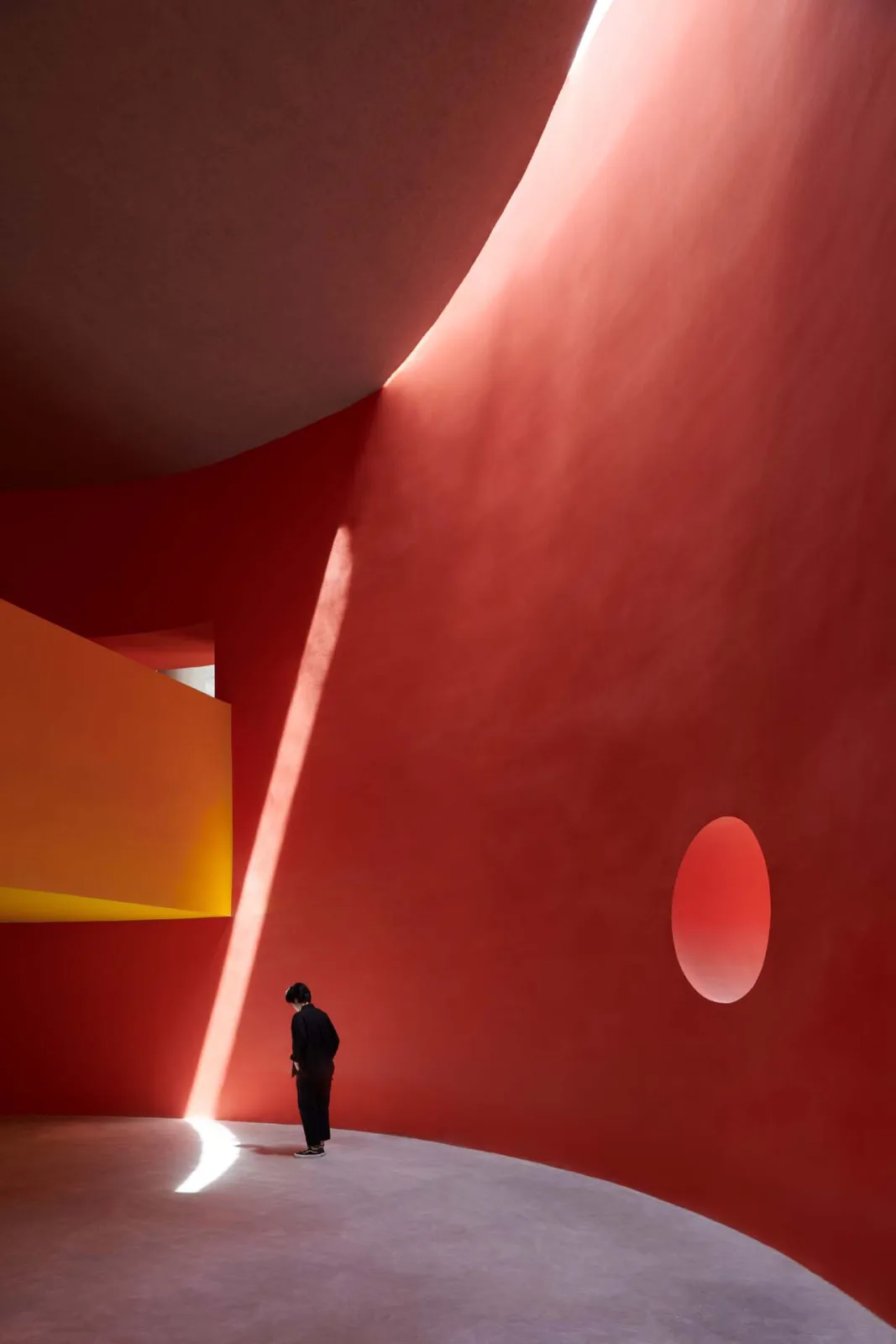
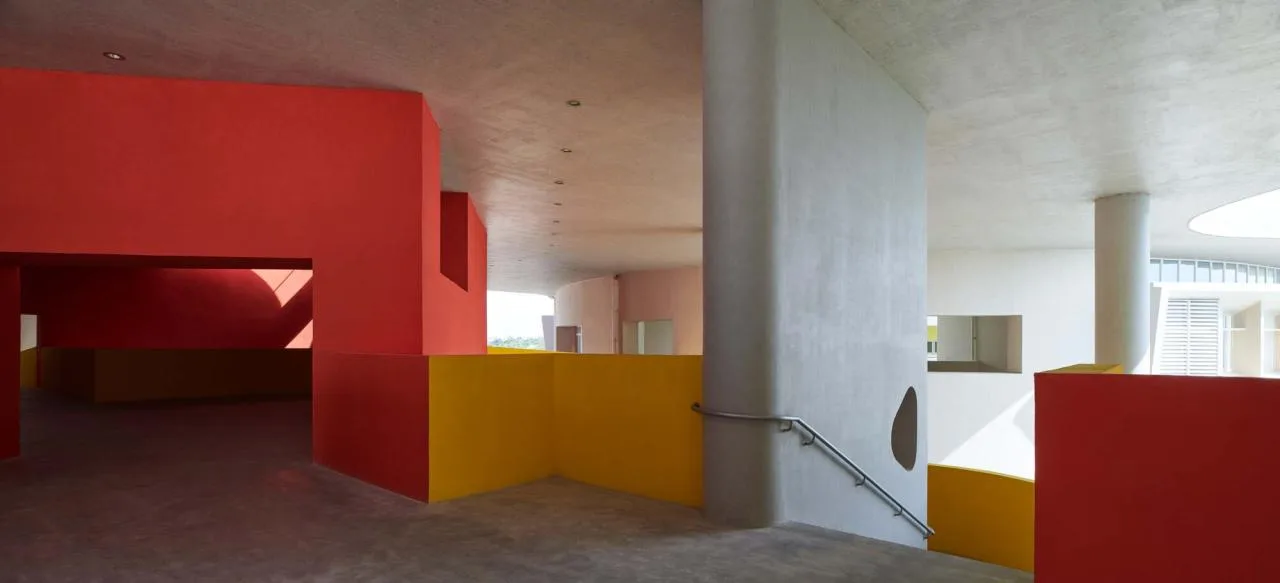
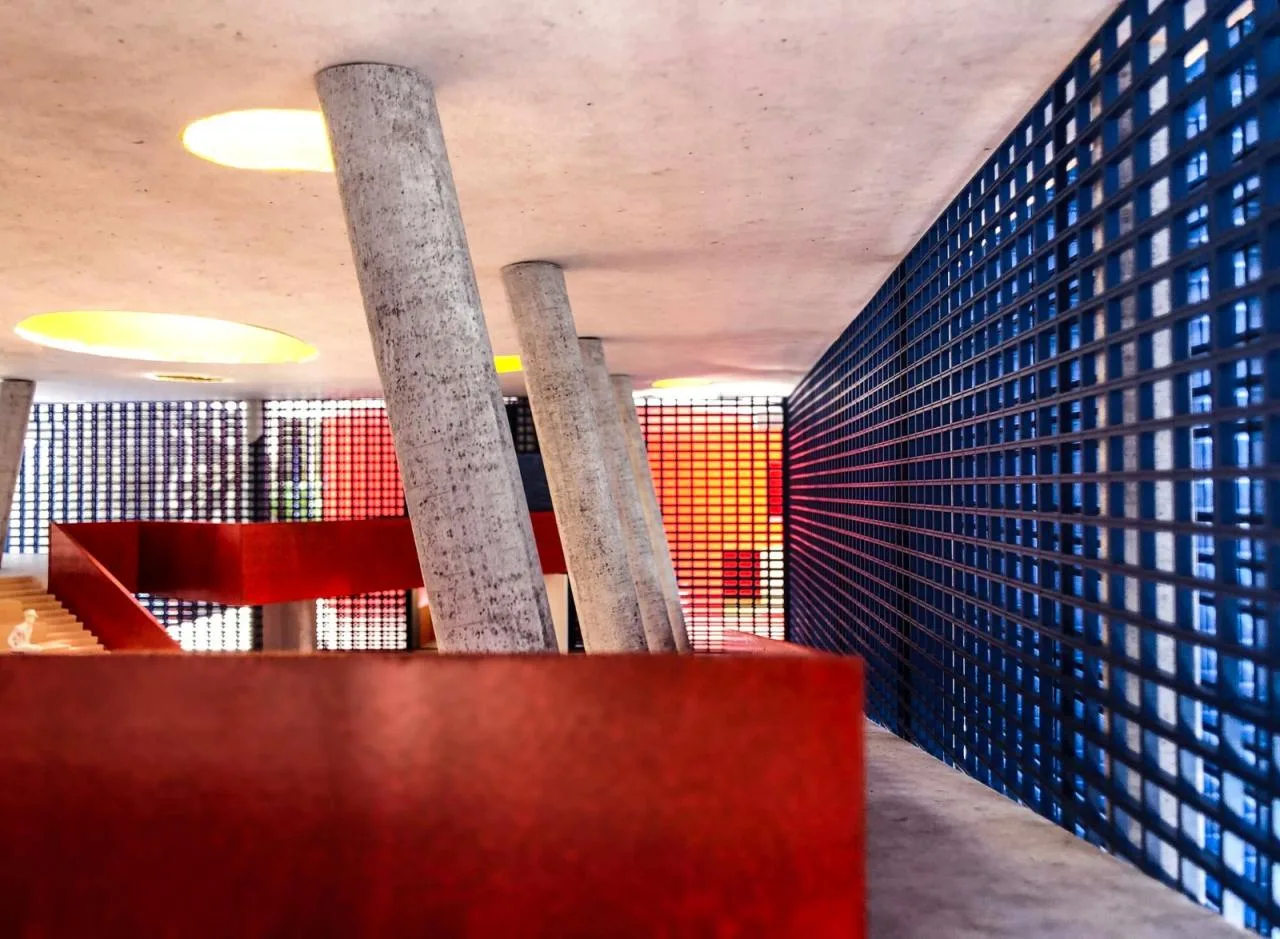
Color and light animate the space, casting strong shadows and giving materials varied expressions. A 17-meter-high column forest and a vast roof covering thousands of square meters are constructed from plain poured concrete.
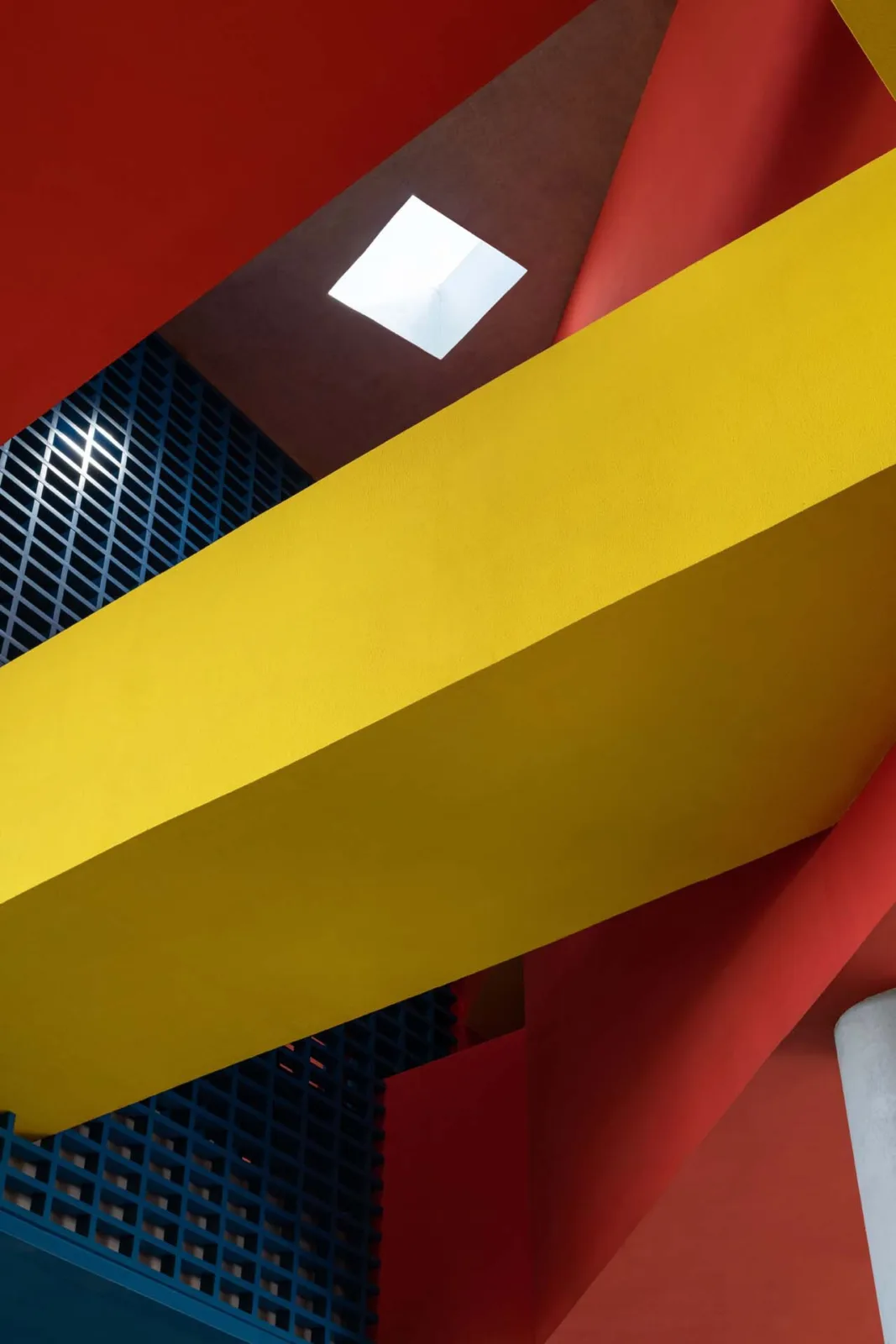
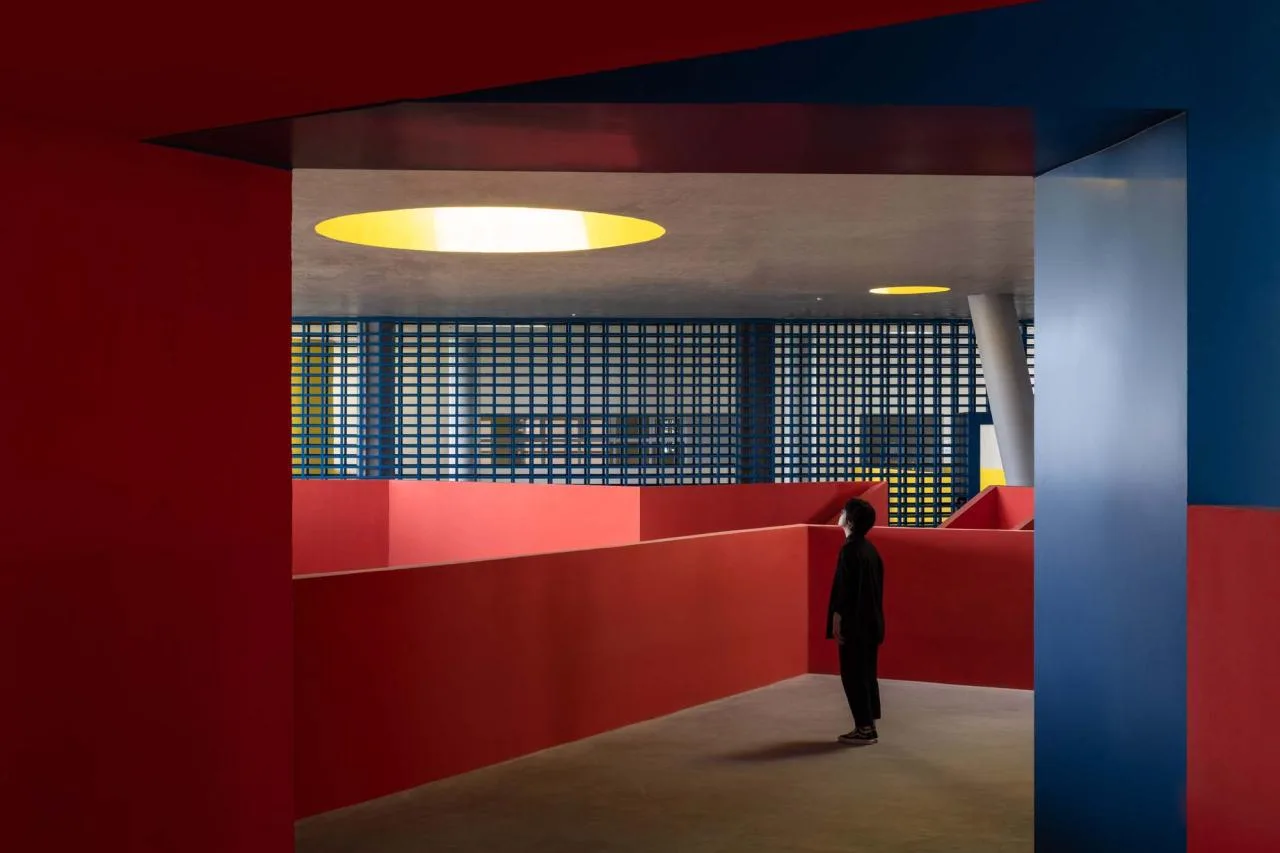
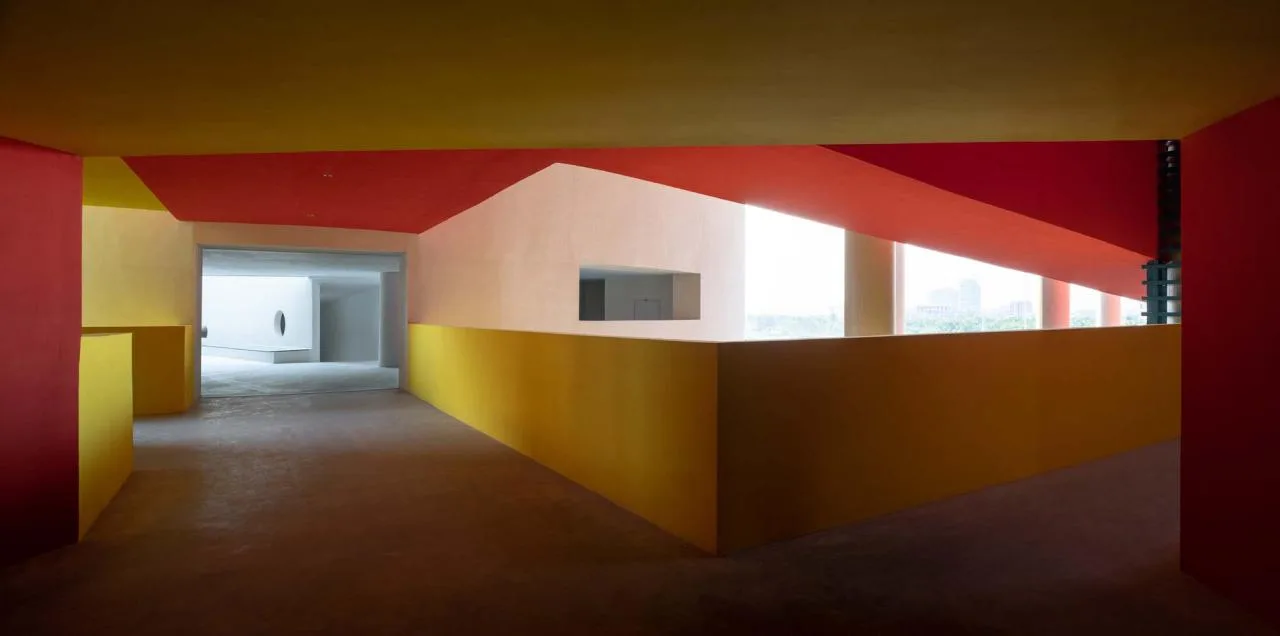
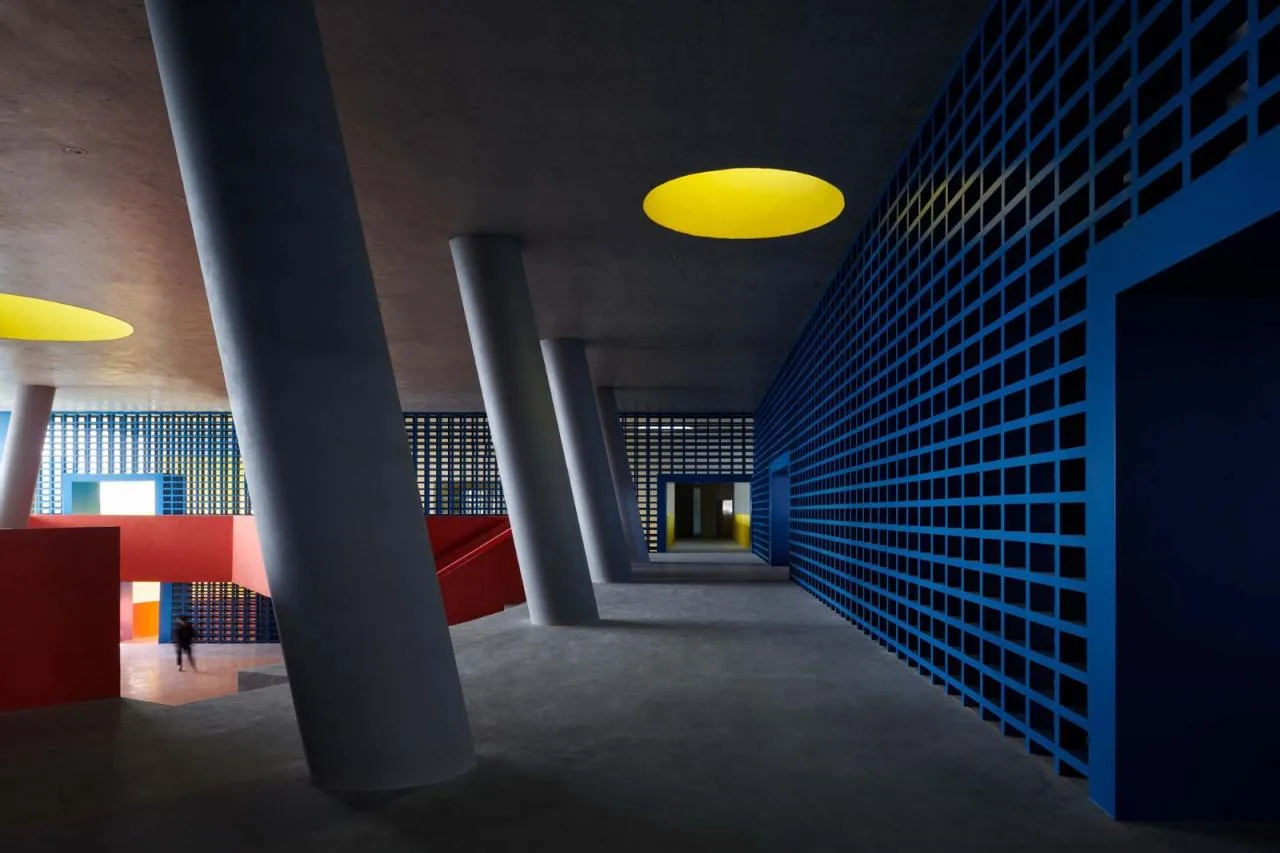
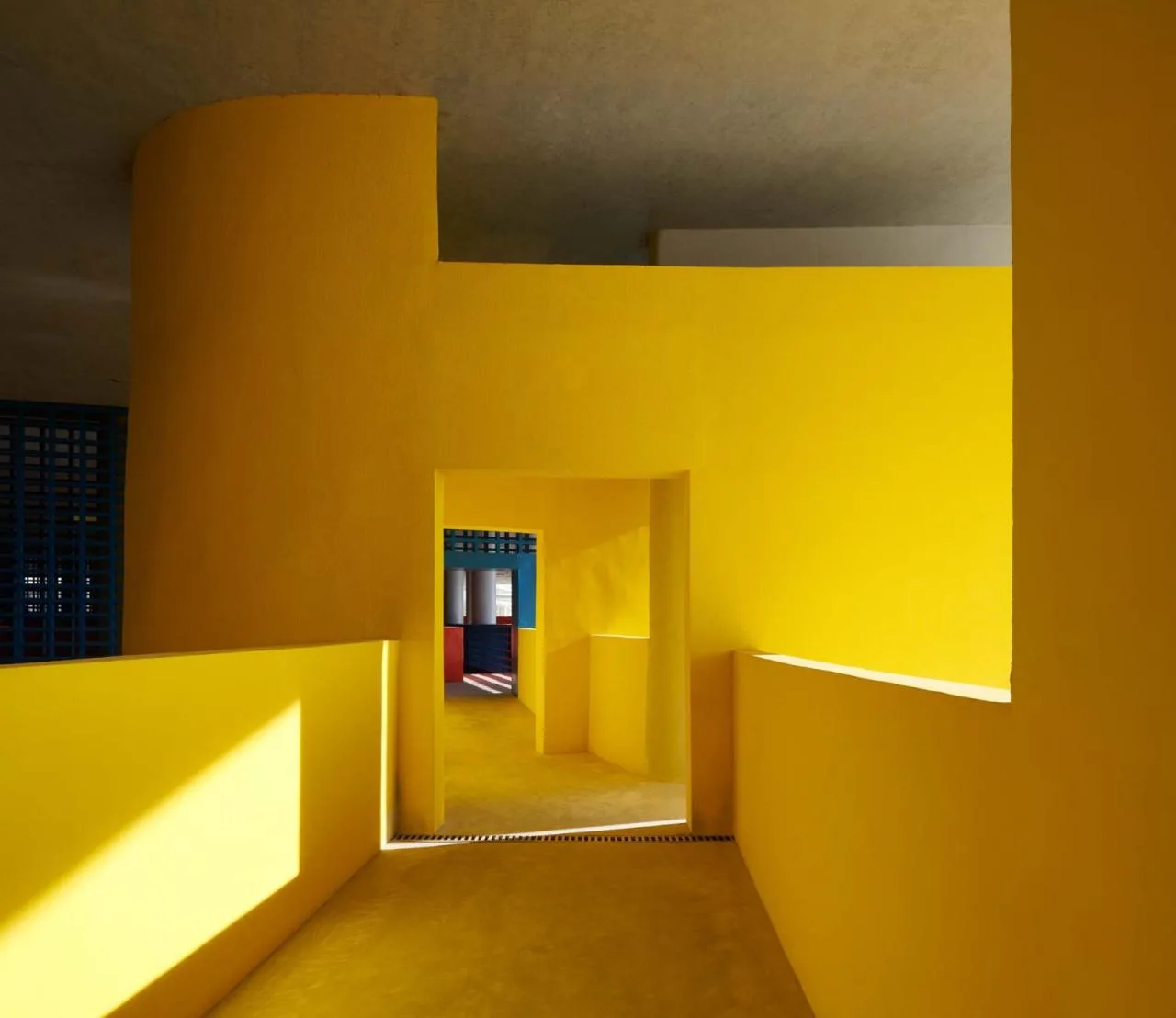
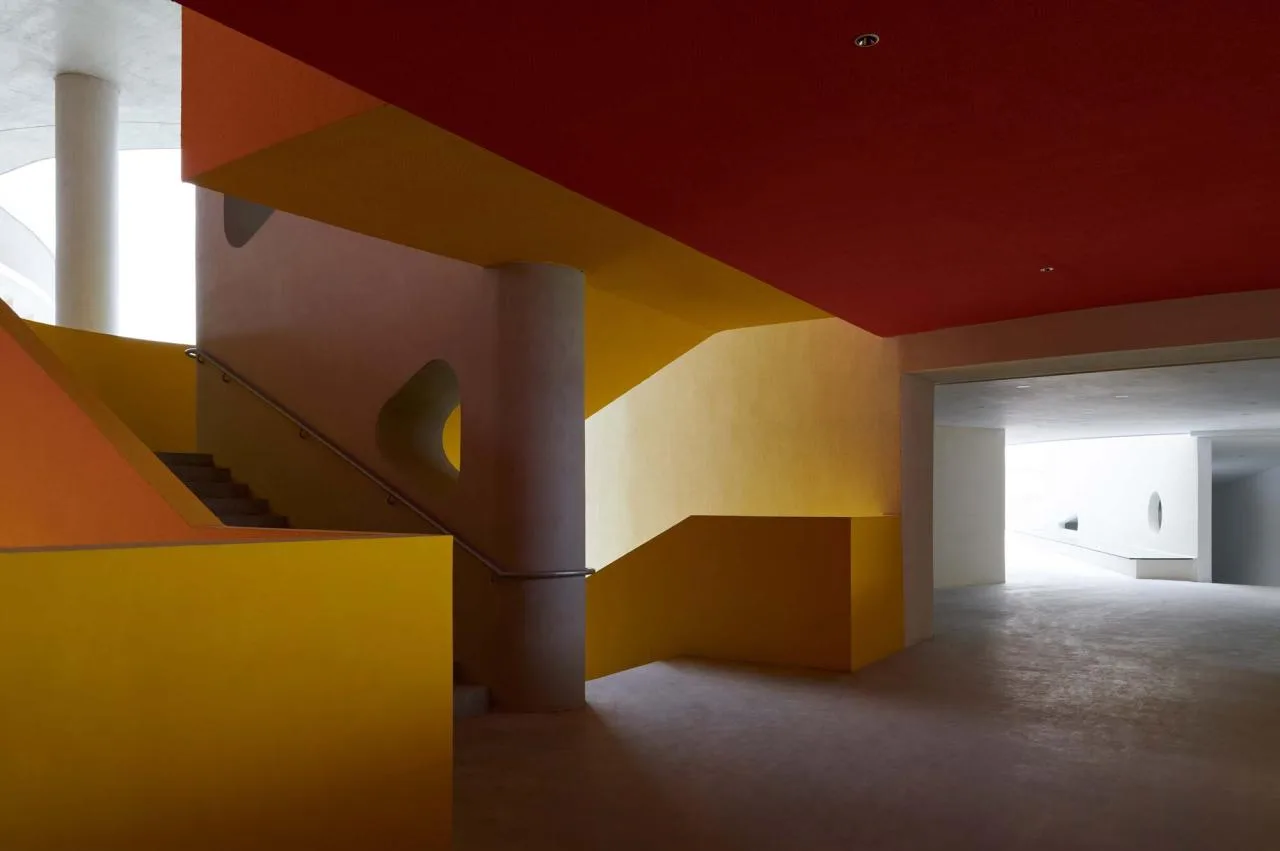
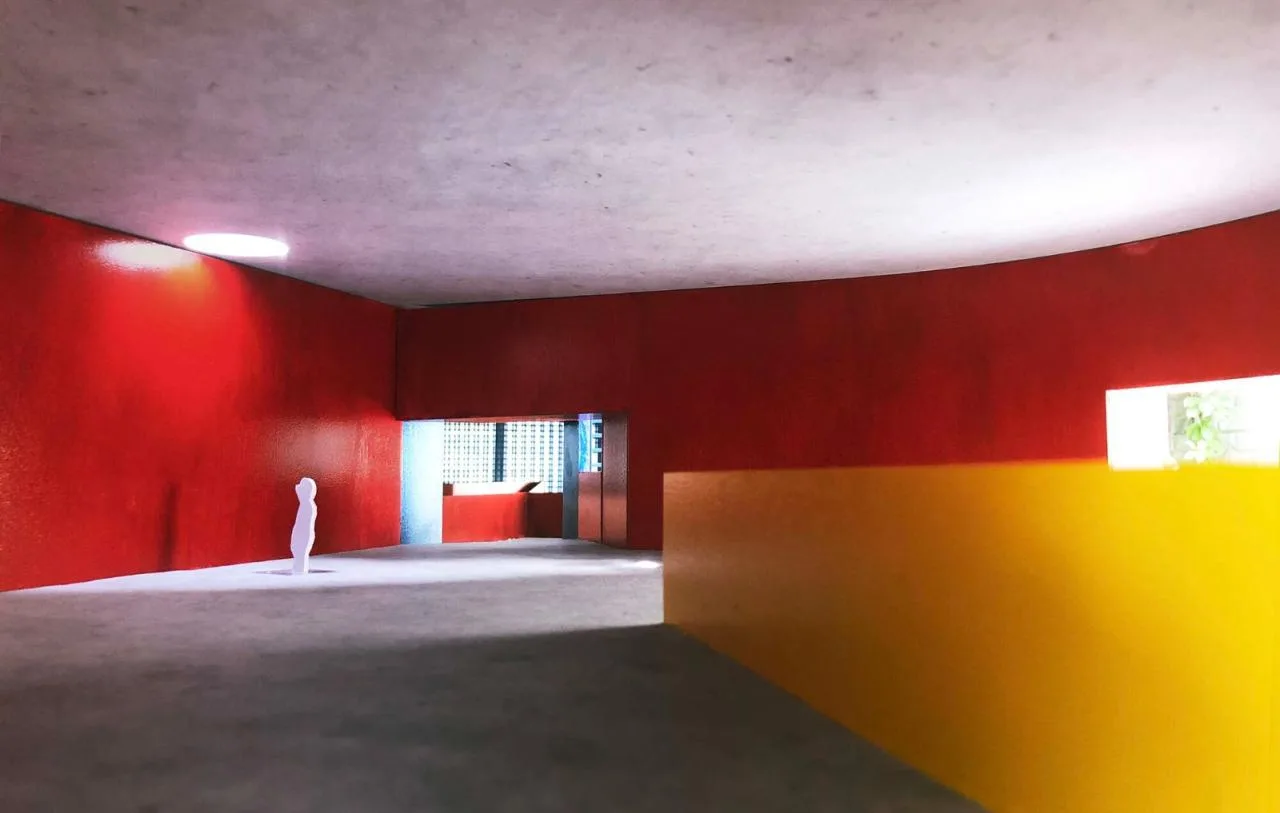
The changing light enhances the rhythmic spatial hierarchy, while the monumental scale creates a vast container for dynamic experiences and deep emotional resonance. Inside, abstract geometric volumes are coated with bold, textured colors—red for vibrancy, blue for calmness, and yellow for liveliness.
This collage of colors creates distinct spatial identities, transforming rational geometry into expressive three-dimensional “paintings.” Under intense sunlight and shadow, scattered skylights illuminate large color blocks within the towering column forest, offering chance encounters and moments of tranquility within a temporal and spatial maze.
This extraordinary environment serves as a spiritual garden where teachers and students can find freedom and inspiration beyond daily routines.
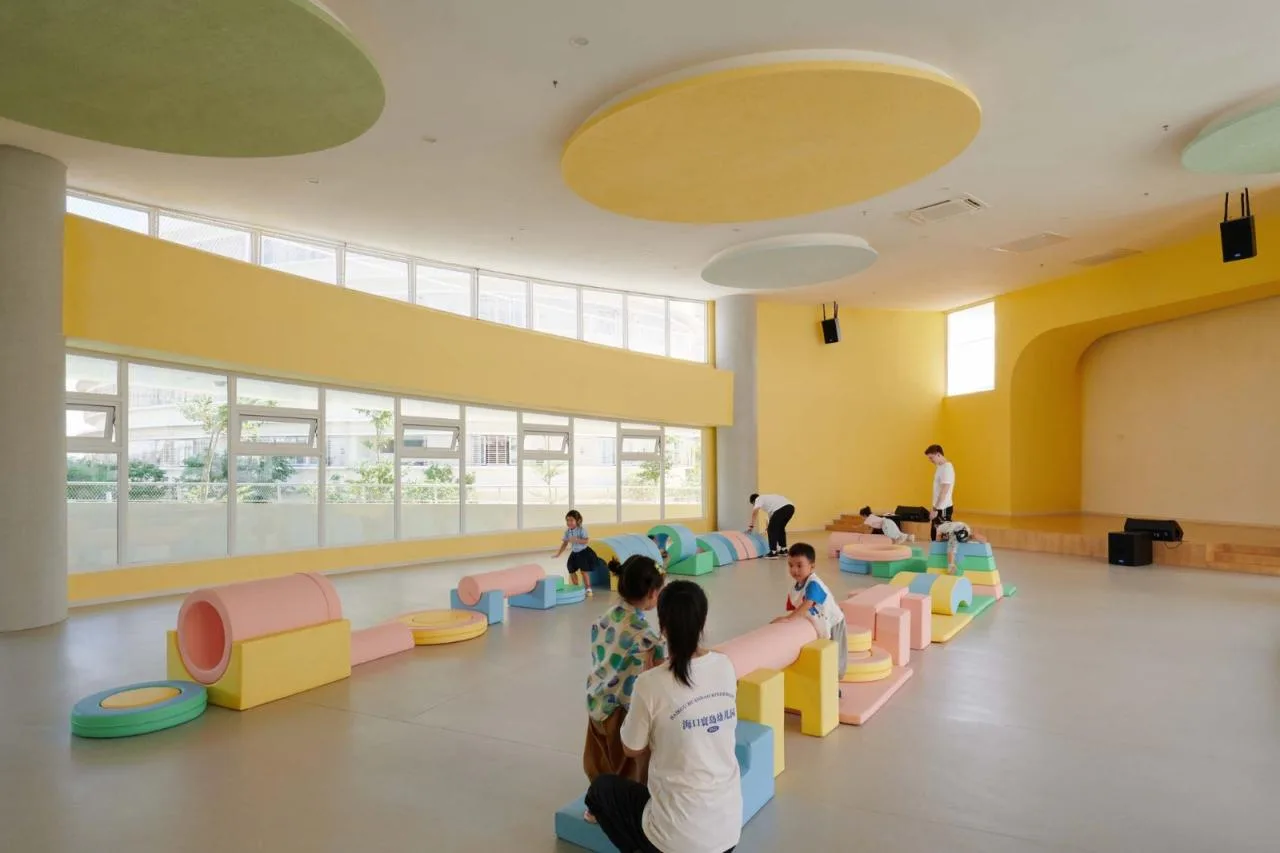
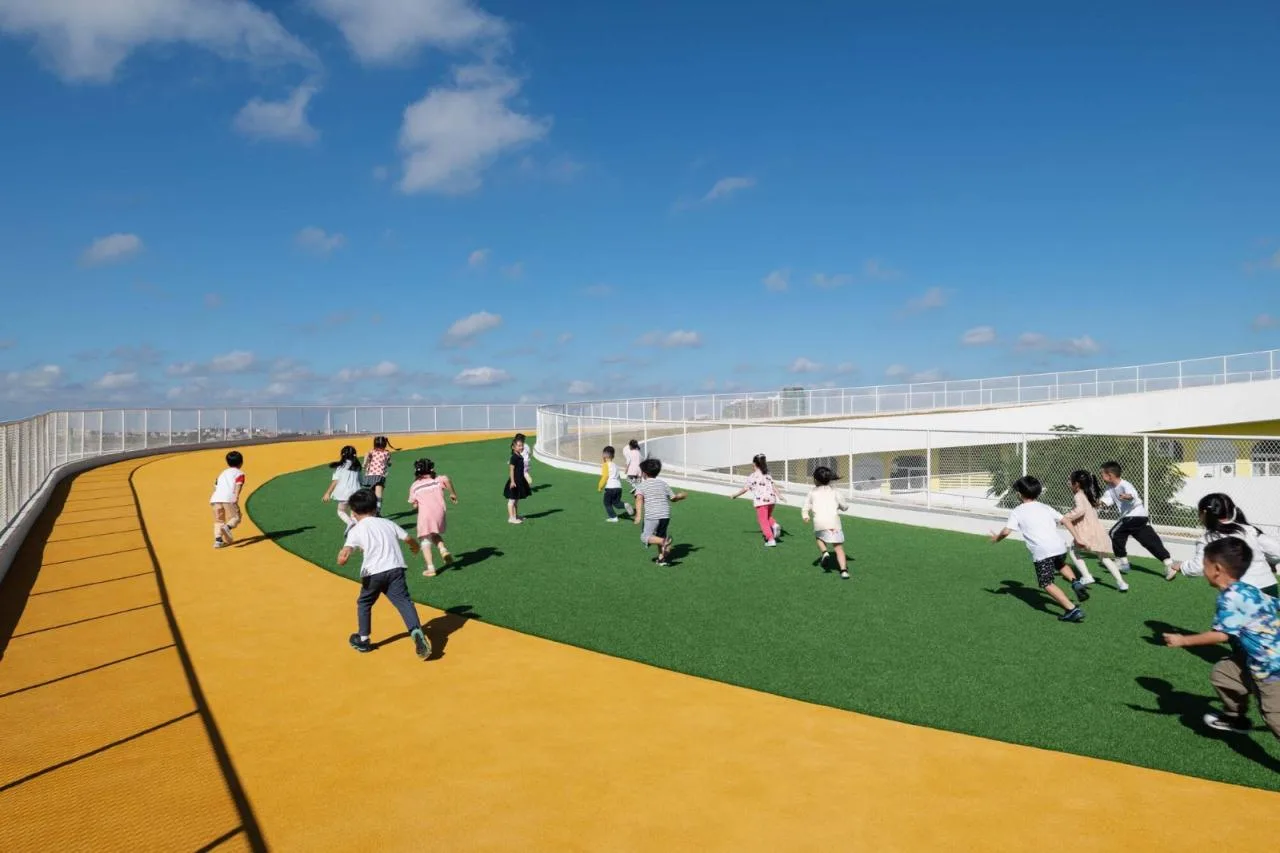
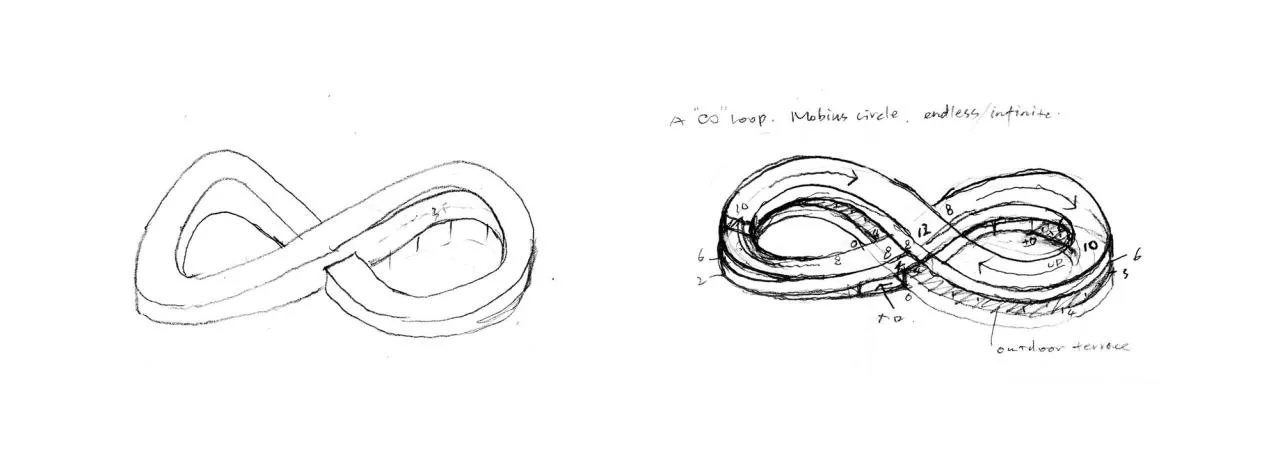
The Infinite Loop Kindergarten is positioned on the campus’s southwest side and features independent entry and exit points. Despite limited space, it offers children freedom to run and play.
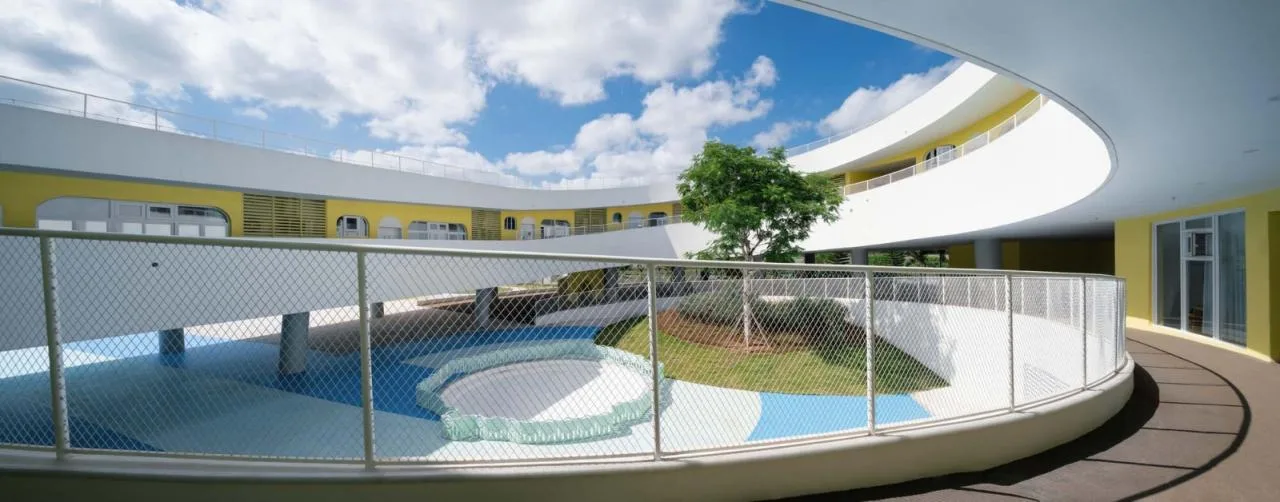
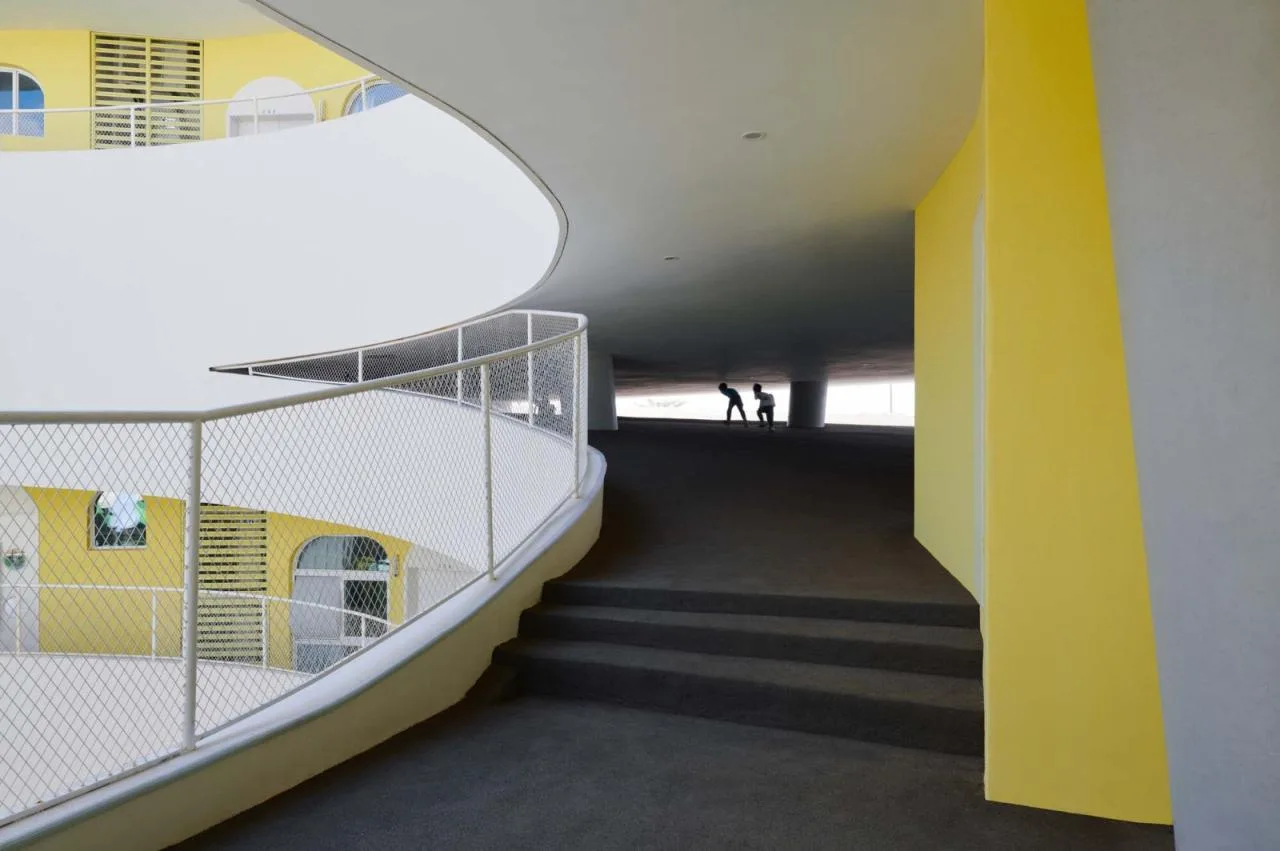
A continuous ramp connects the ground floor, first and second floors, and roof, linking classrooms and activity spaces at varying heights. This design blurs the lines between floors, forming a three-dimensional loop that allows access to different levels from multiple directions, ultimately converging at the building’s center—the figure-eight intersection, both start and endpoint.
Classrooms feature double external corridors: an outer ramp serving as the main circulation path and an inner corridor combining flat sections and steps, facing an inner courtyard that doubles as a movable balcony. The extended floor provides effective shading for rooms below.
At elevated areas, the inner and outer corridors merge, creating semi-outdoor spaces sheltered from sun and rain. Here, sloping roofs intersect with the ground, forming angled spaces scaled appropriately for children, fostering unique environments for interaction and play.
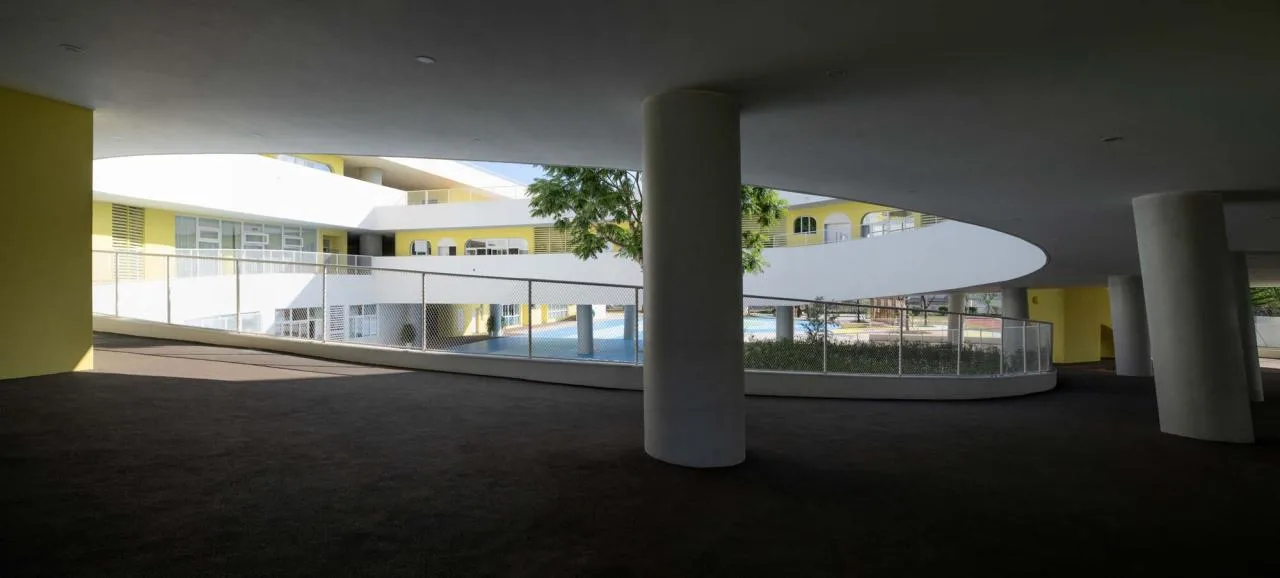
The kindergarten, high school teaching buildings, and dormitories are unified through curved architectural language, creating a seamless campus where children can move freely from ground to sky, indoors to outdoors.
Project Drawings
△ Hand-drawn sketch
△ Conceptual hand-drawn diagram
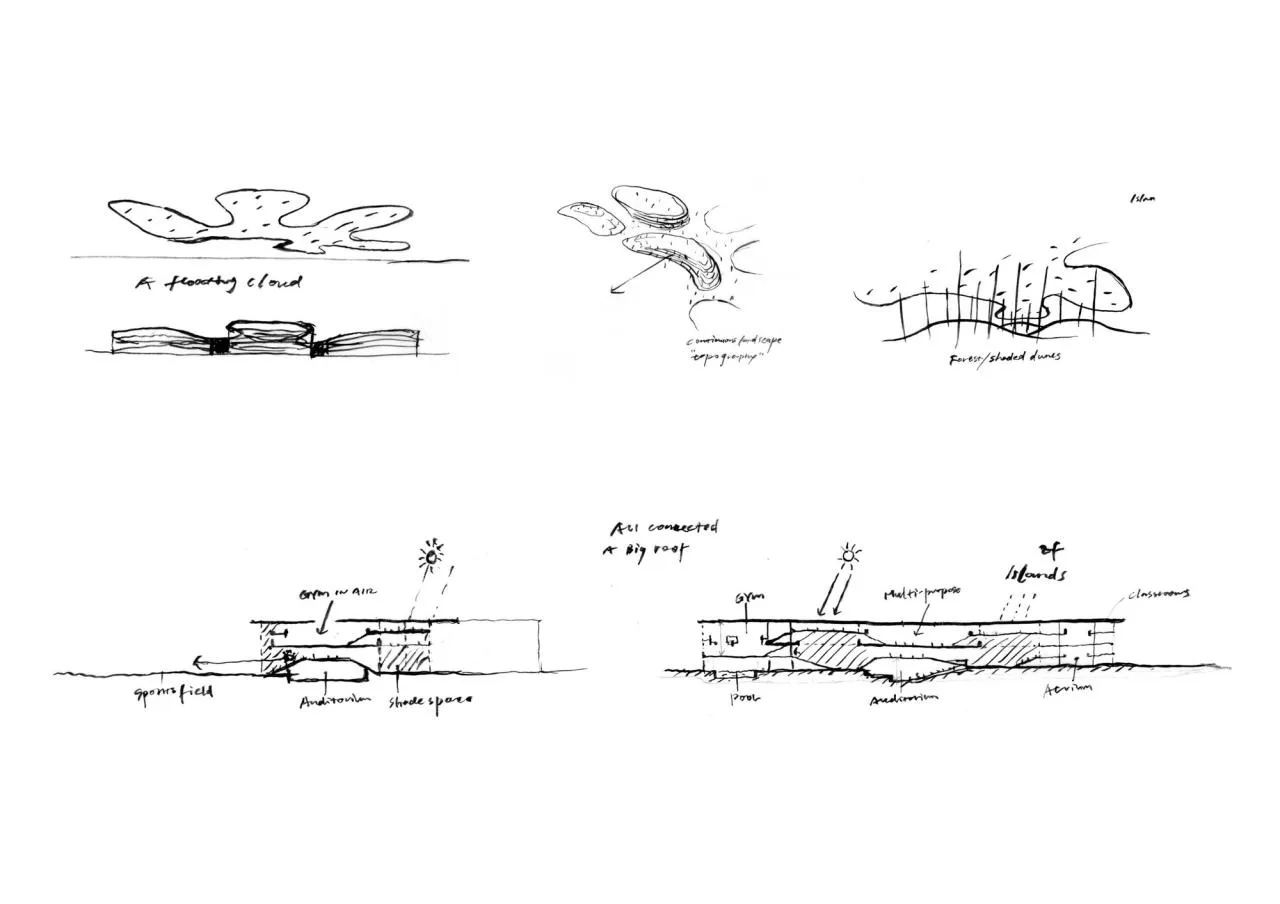
△ Conceptual hand-drawn diagram

△ Conceptual diagram
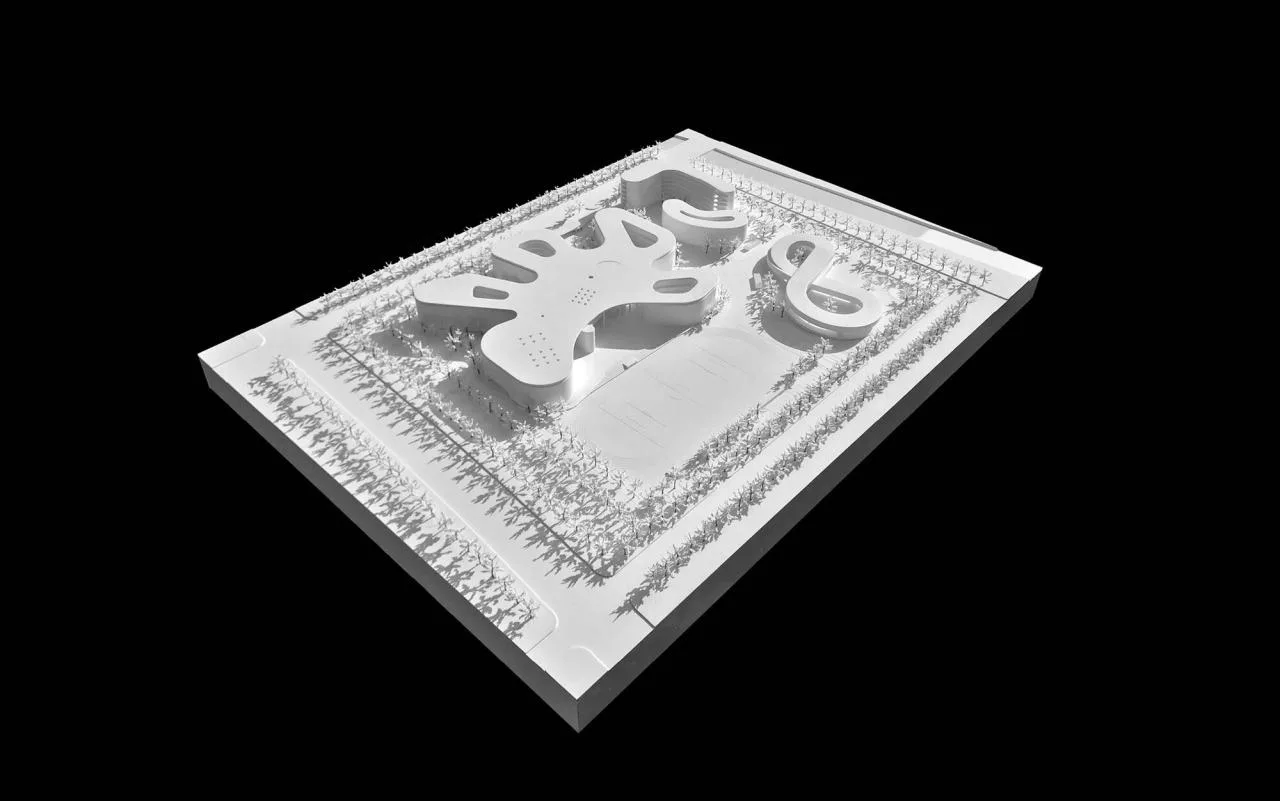
△ Model diagram
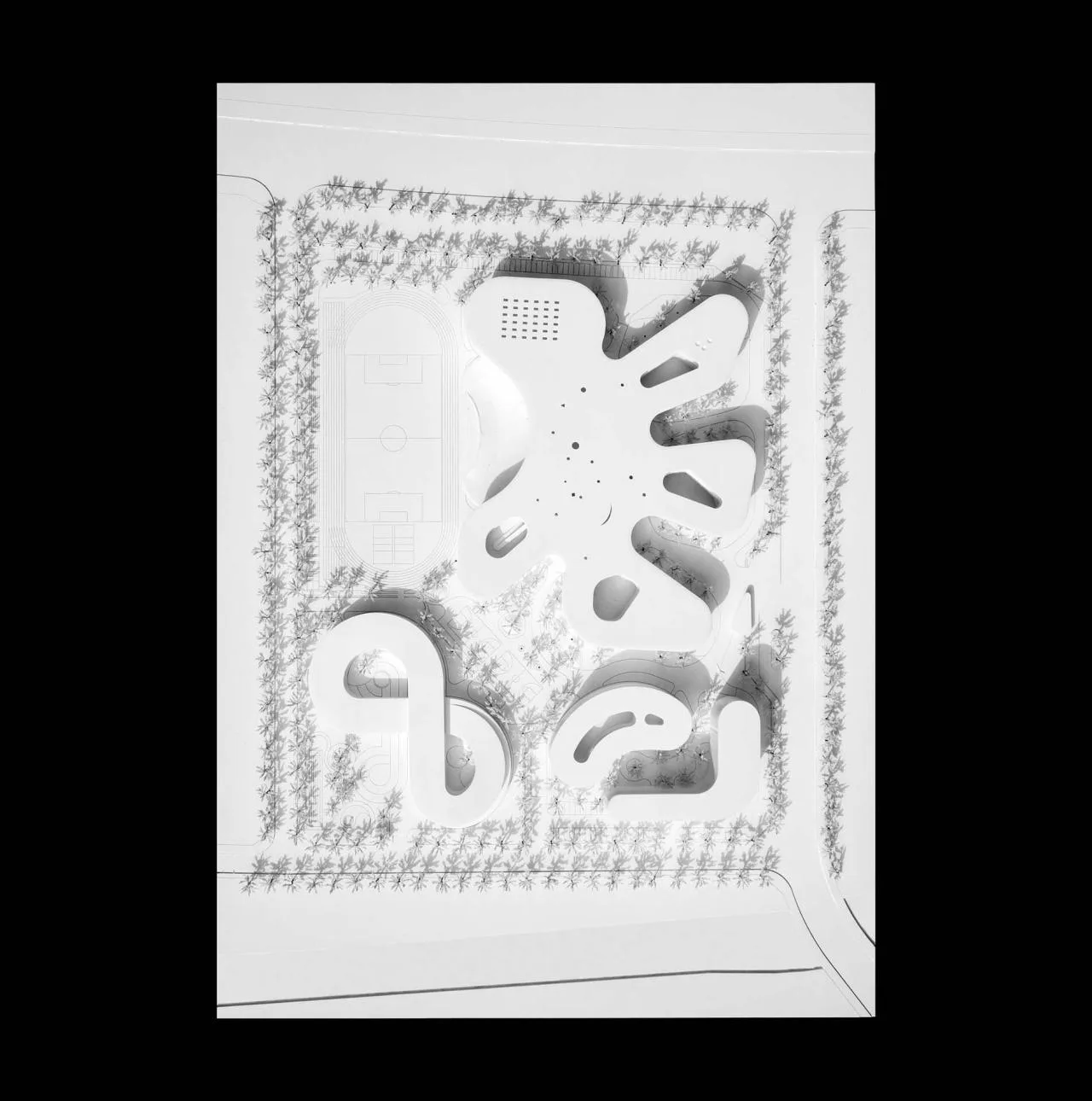
△ Model diagram
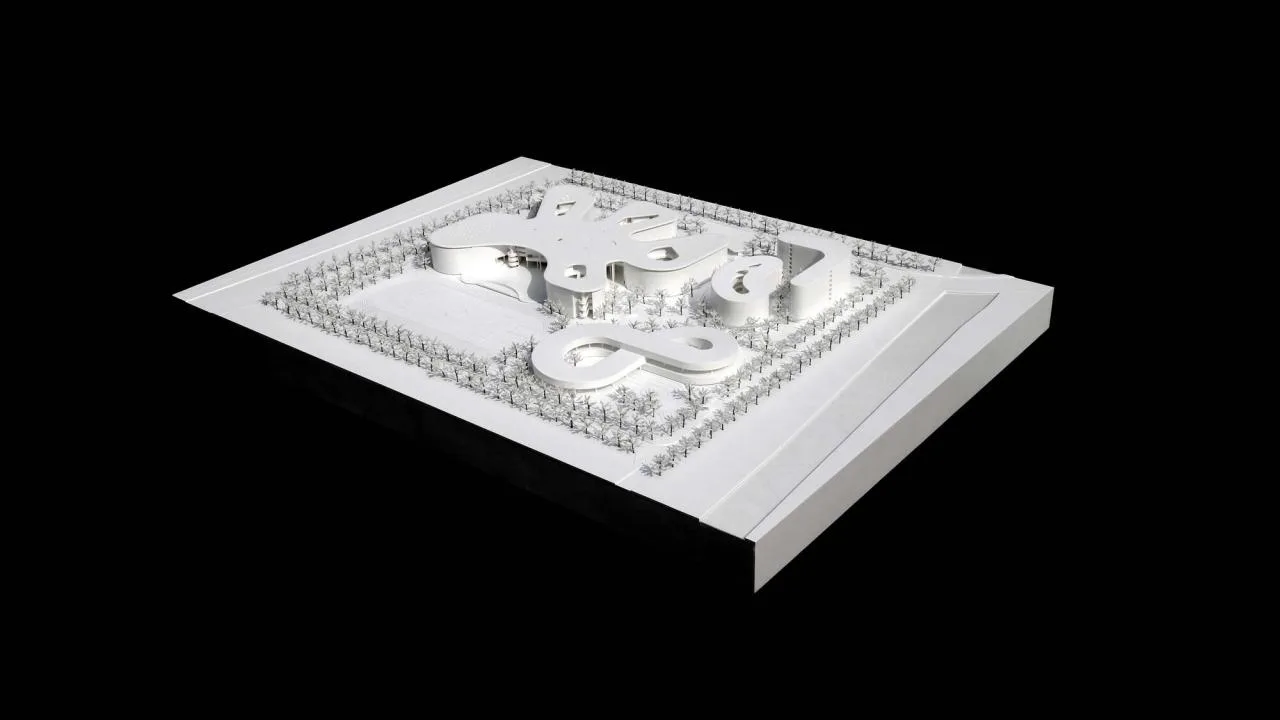
△ Model diagram
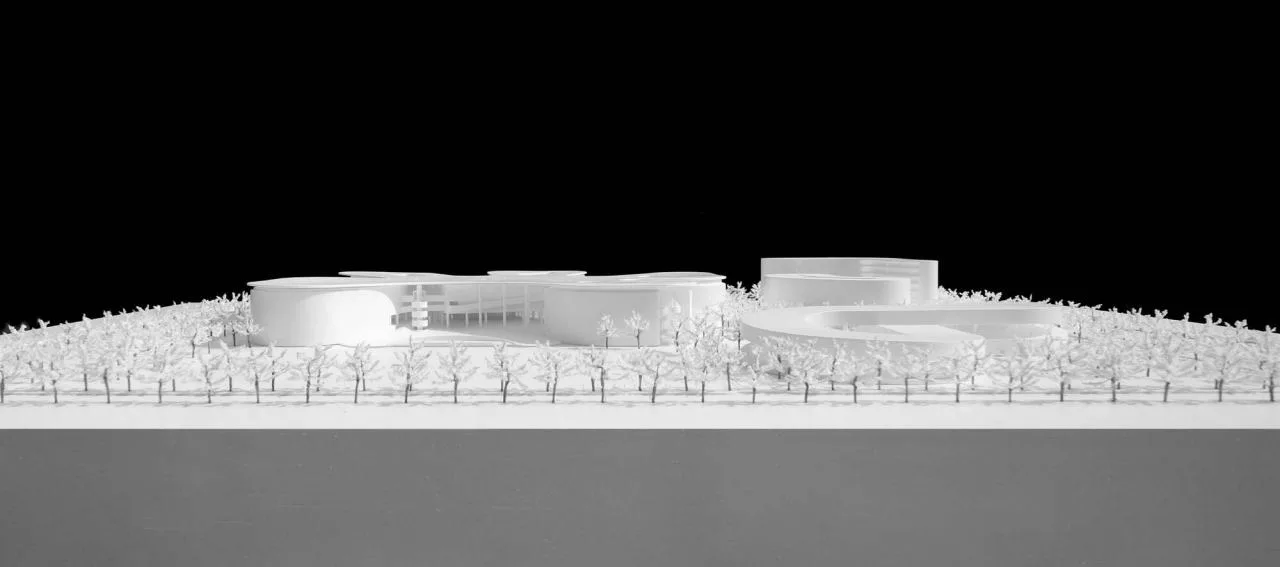
△ Model diagram
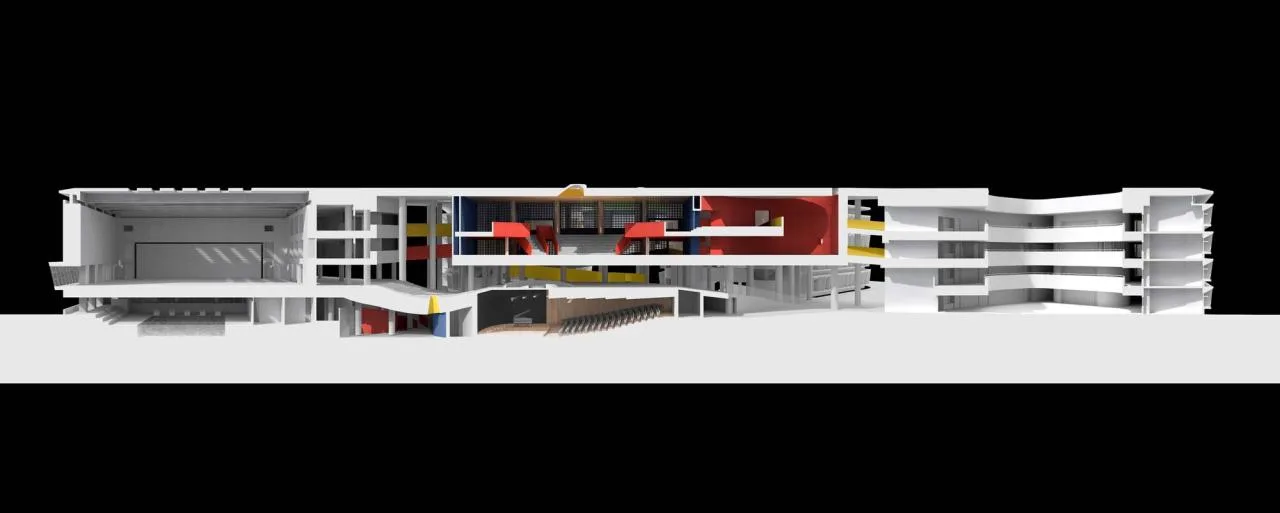
△ Model sectional perspective
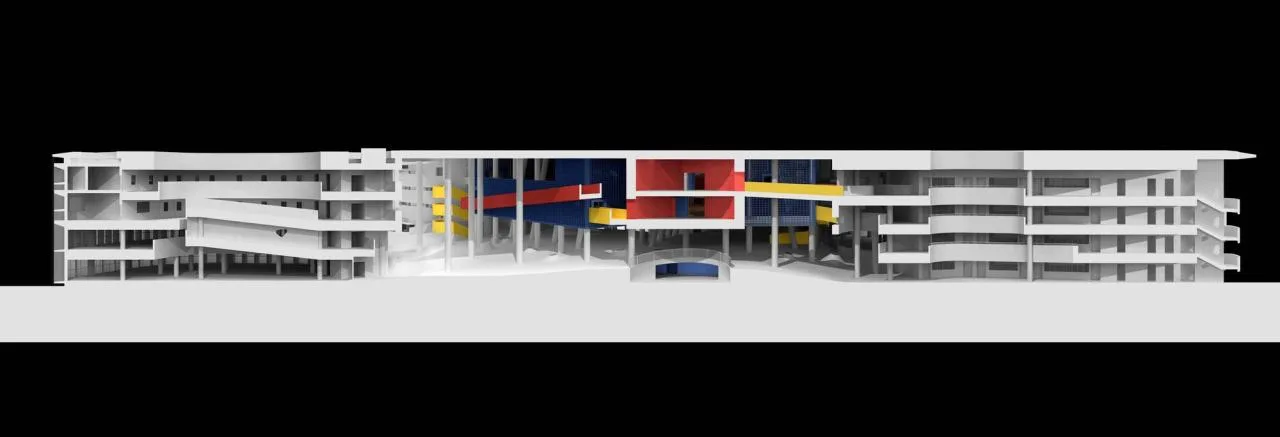
△ Model sectional perspective
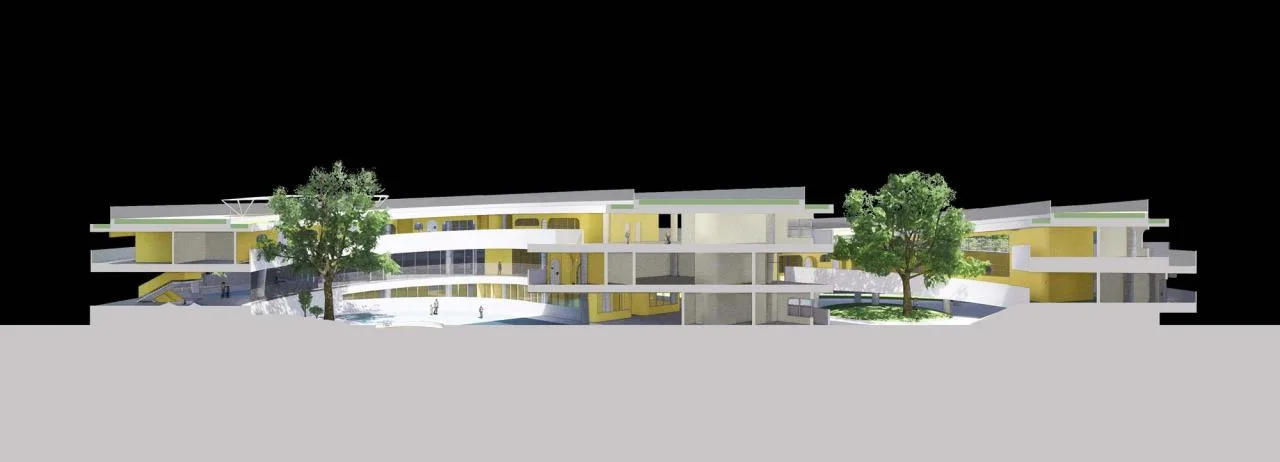
△ Model sectional perspective
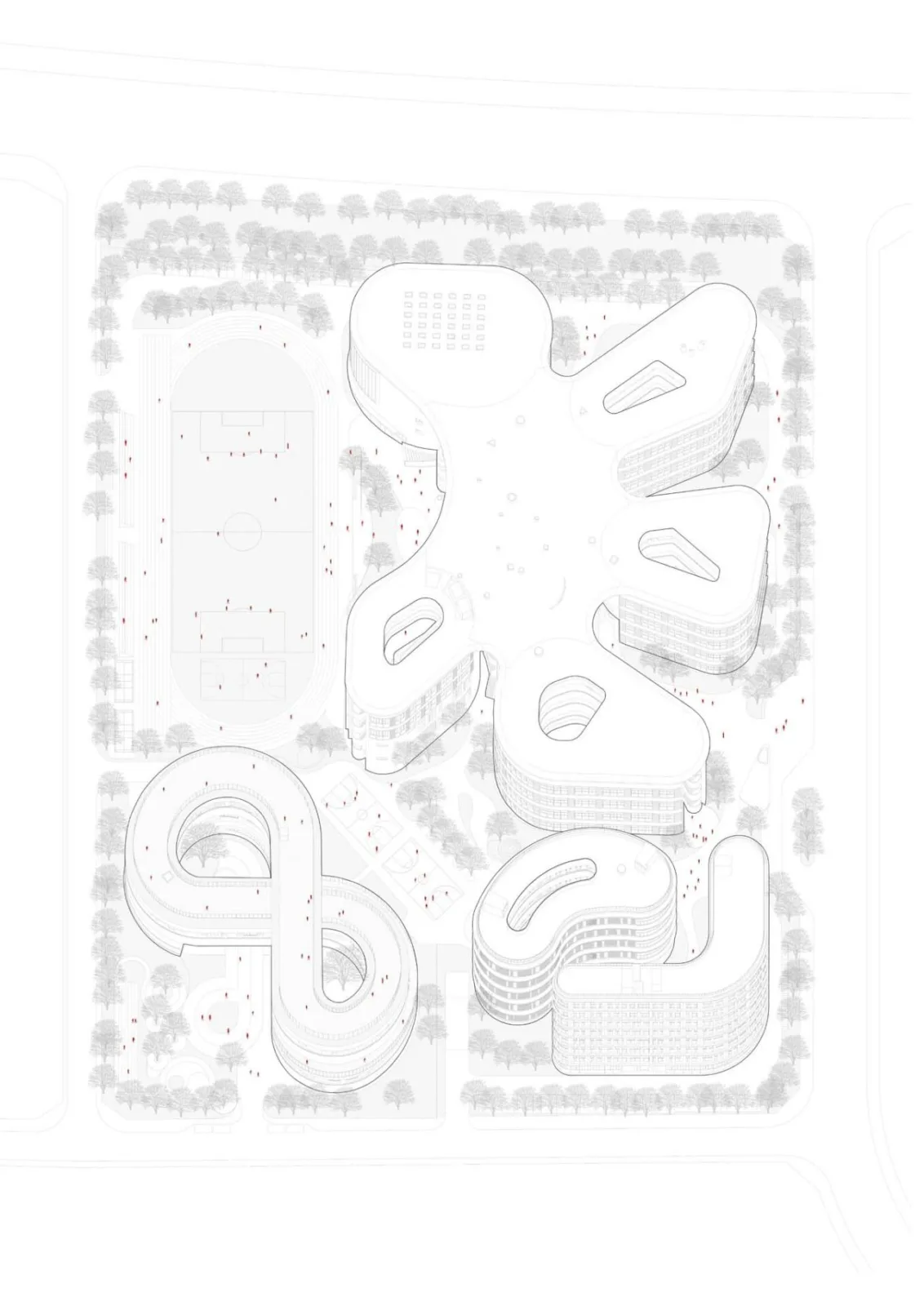
△ Axonometric diagram
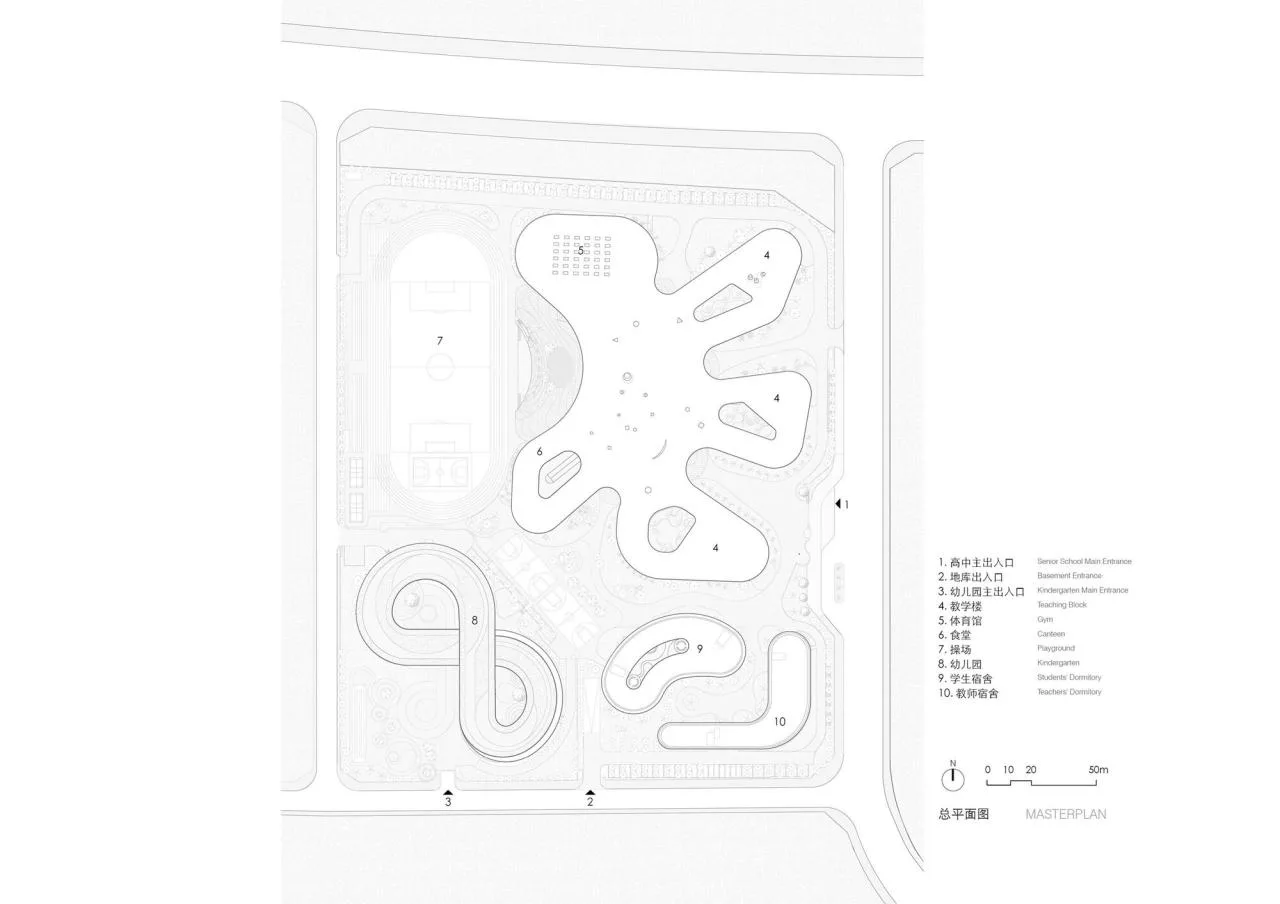
△ General layout plan
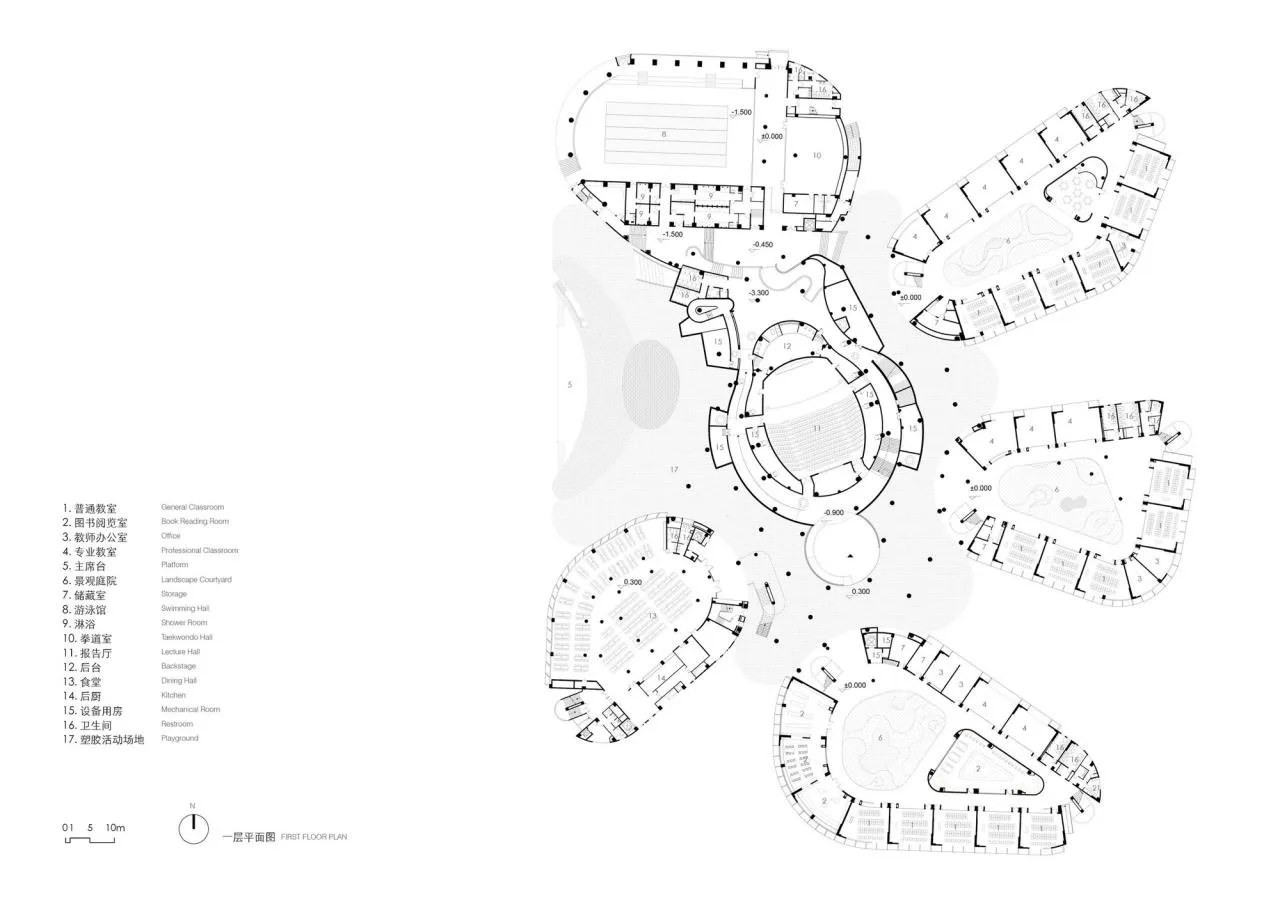
△ First floor plan
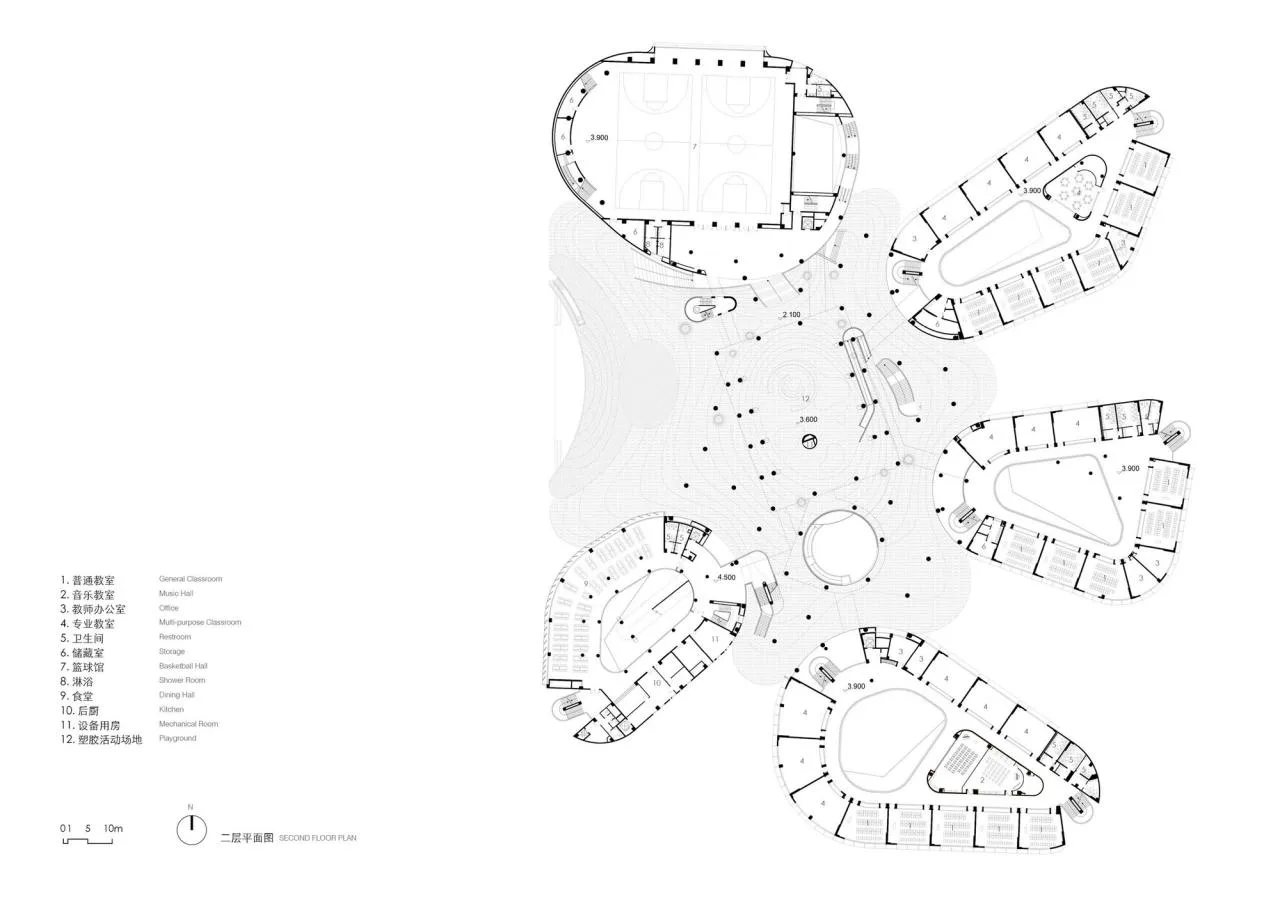
△ Second floor plan
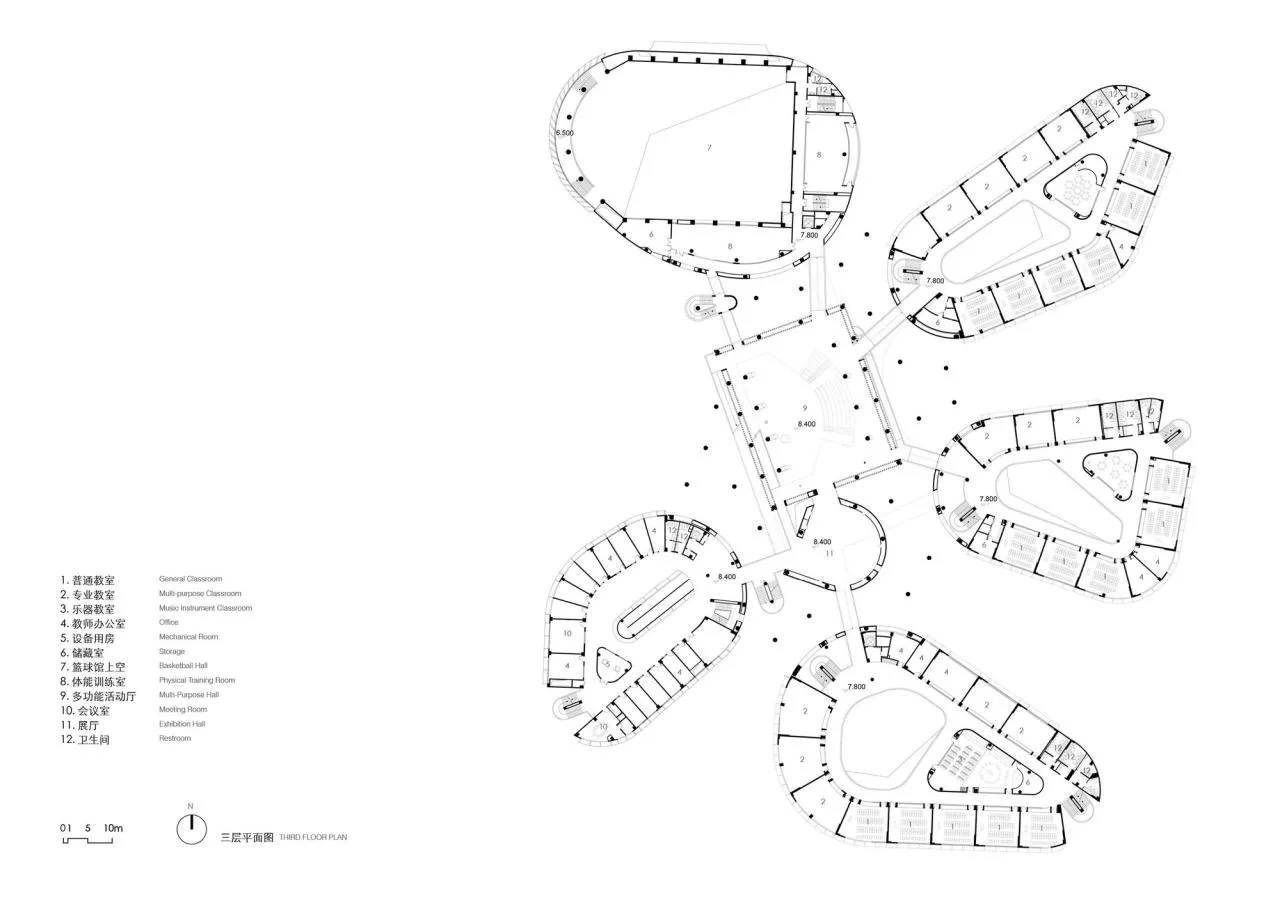
△ Third floor plan
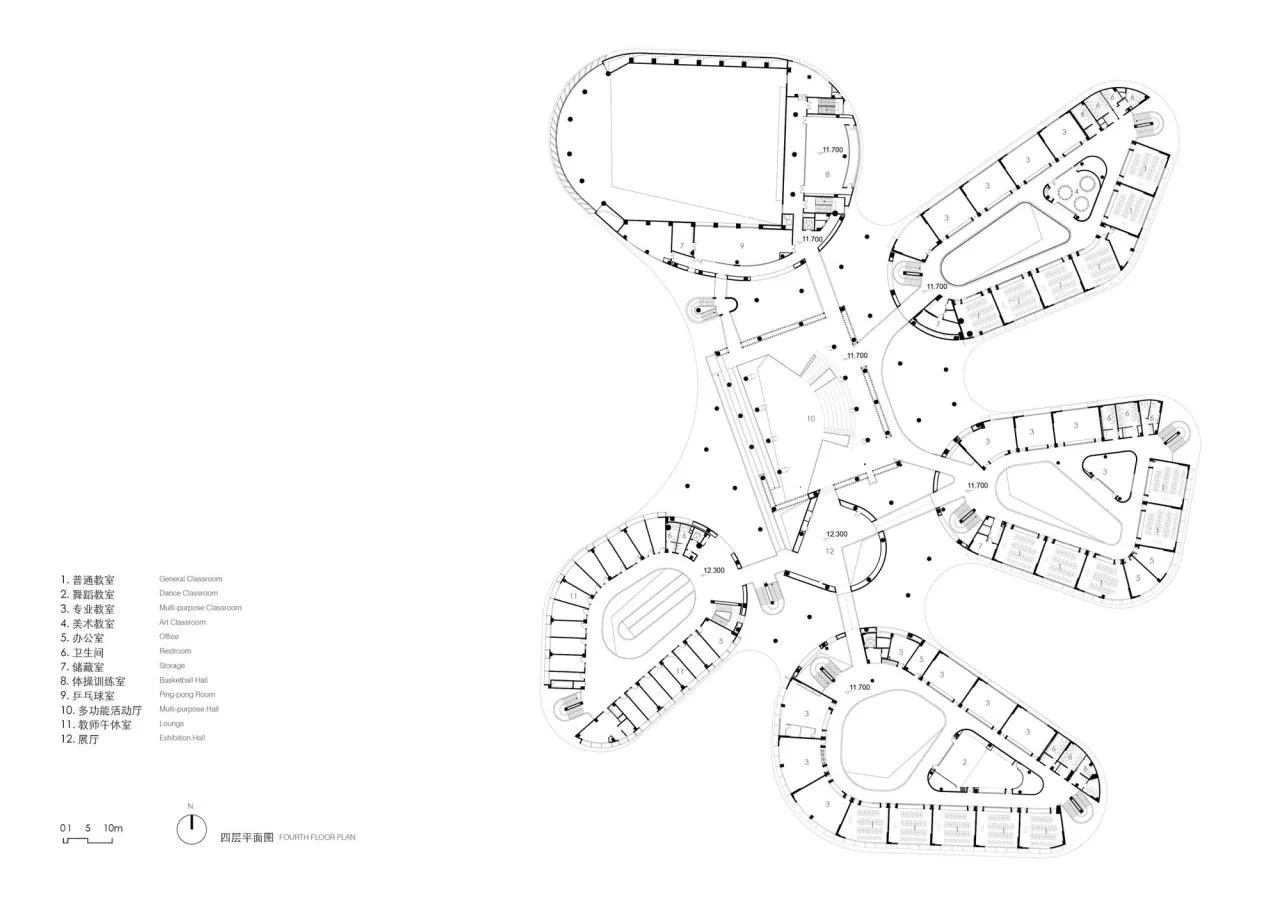
△ Fourth floor plan
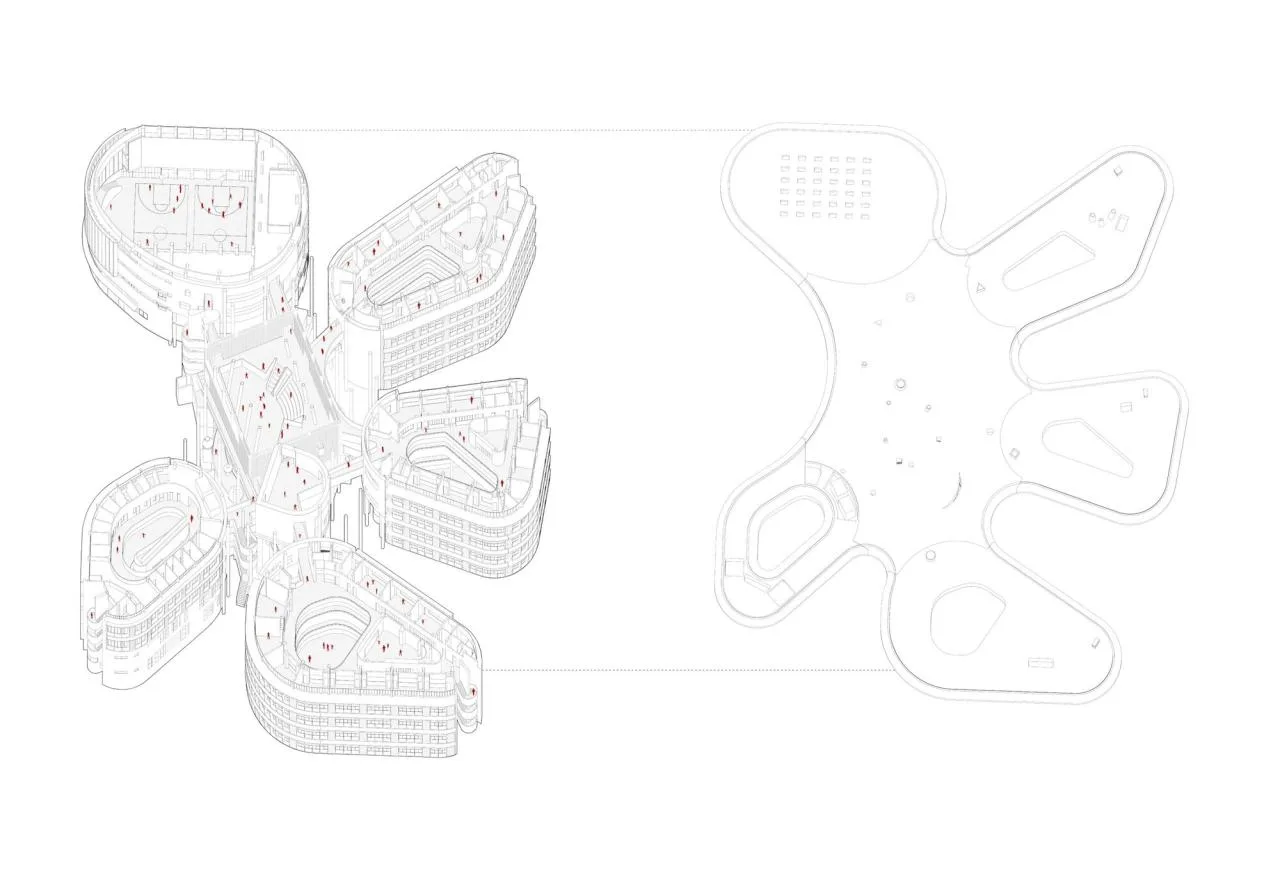
△ Analysis chart
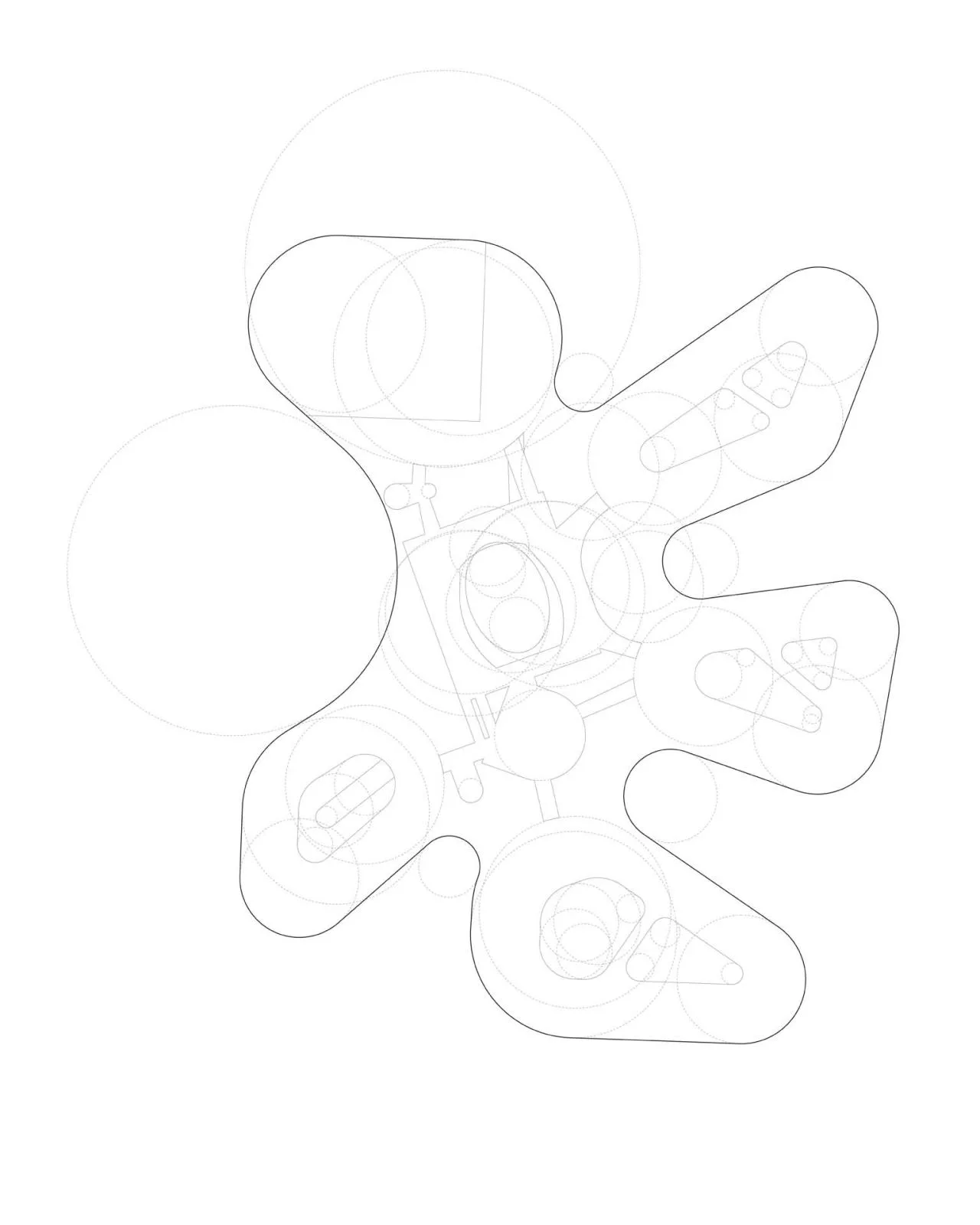
△ Analysis chart
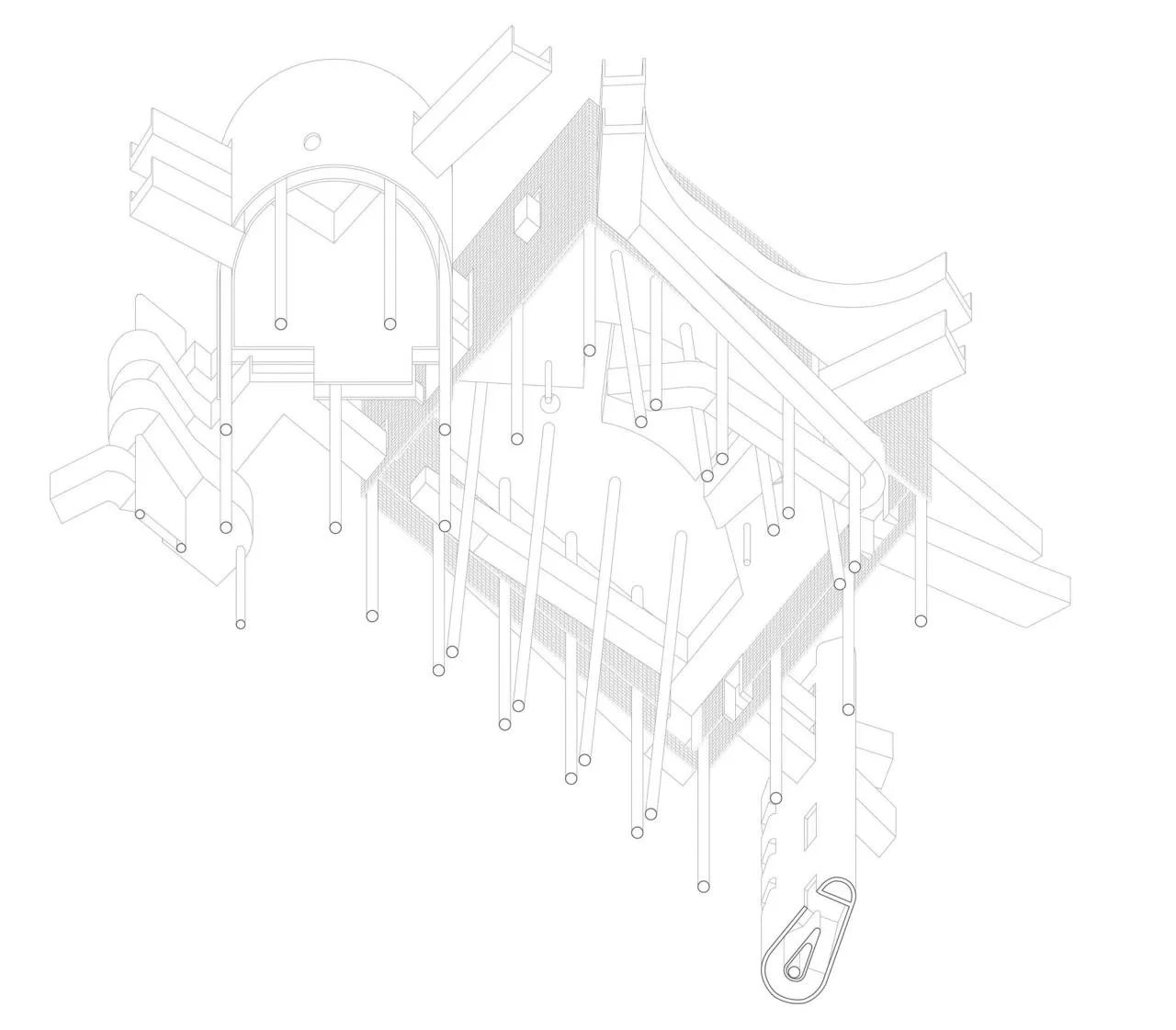
△ Sectional perspective
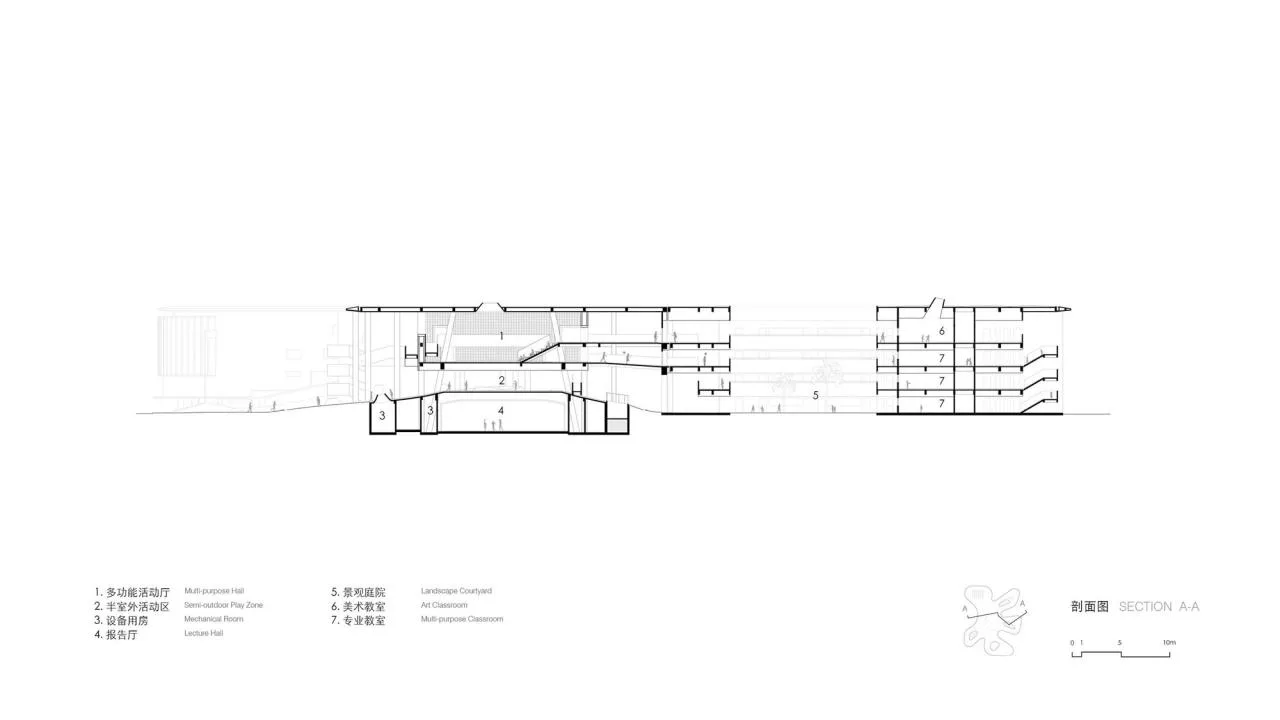
△ Section diagram
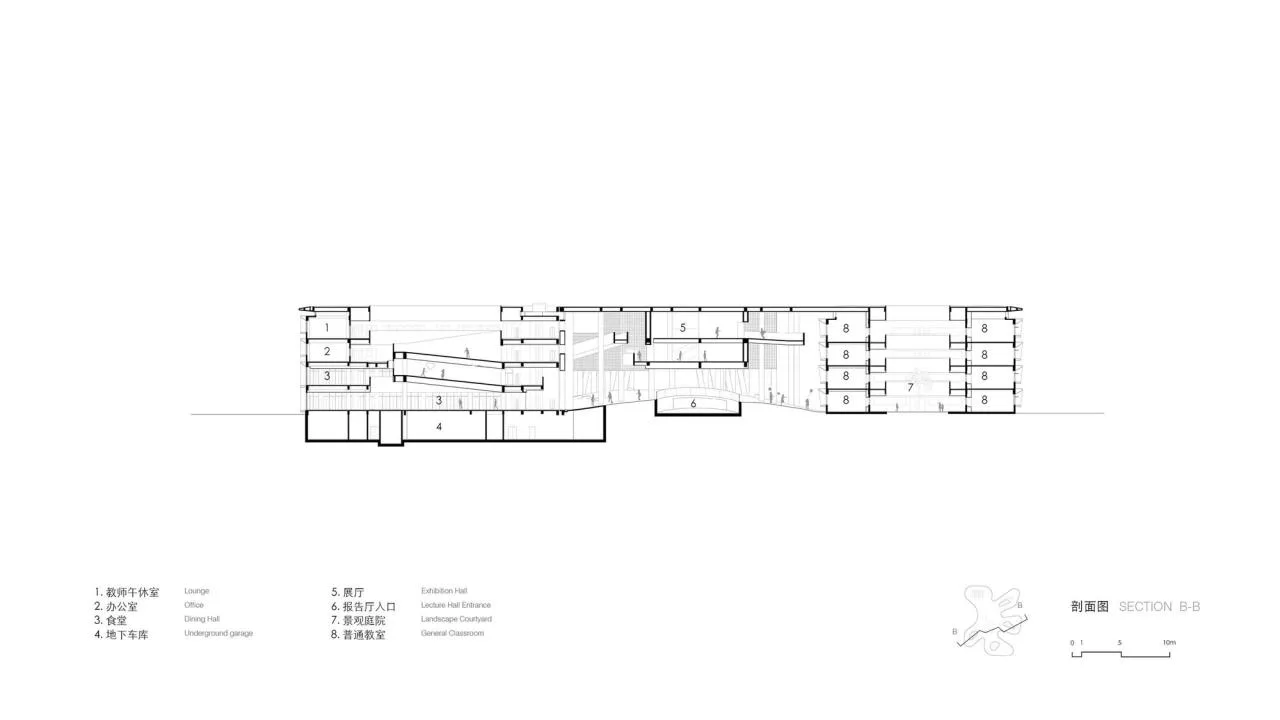
△ Section diagram
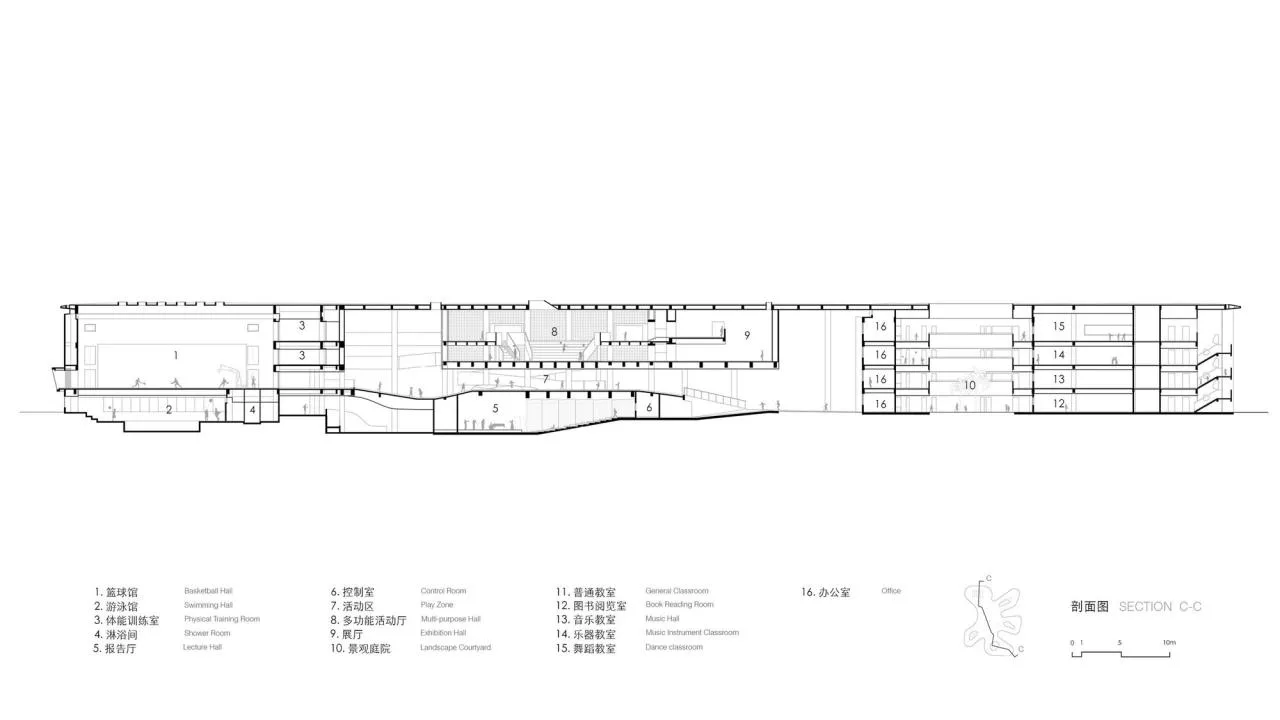
△ Section diagram
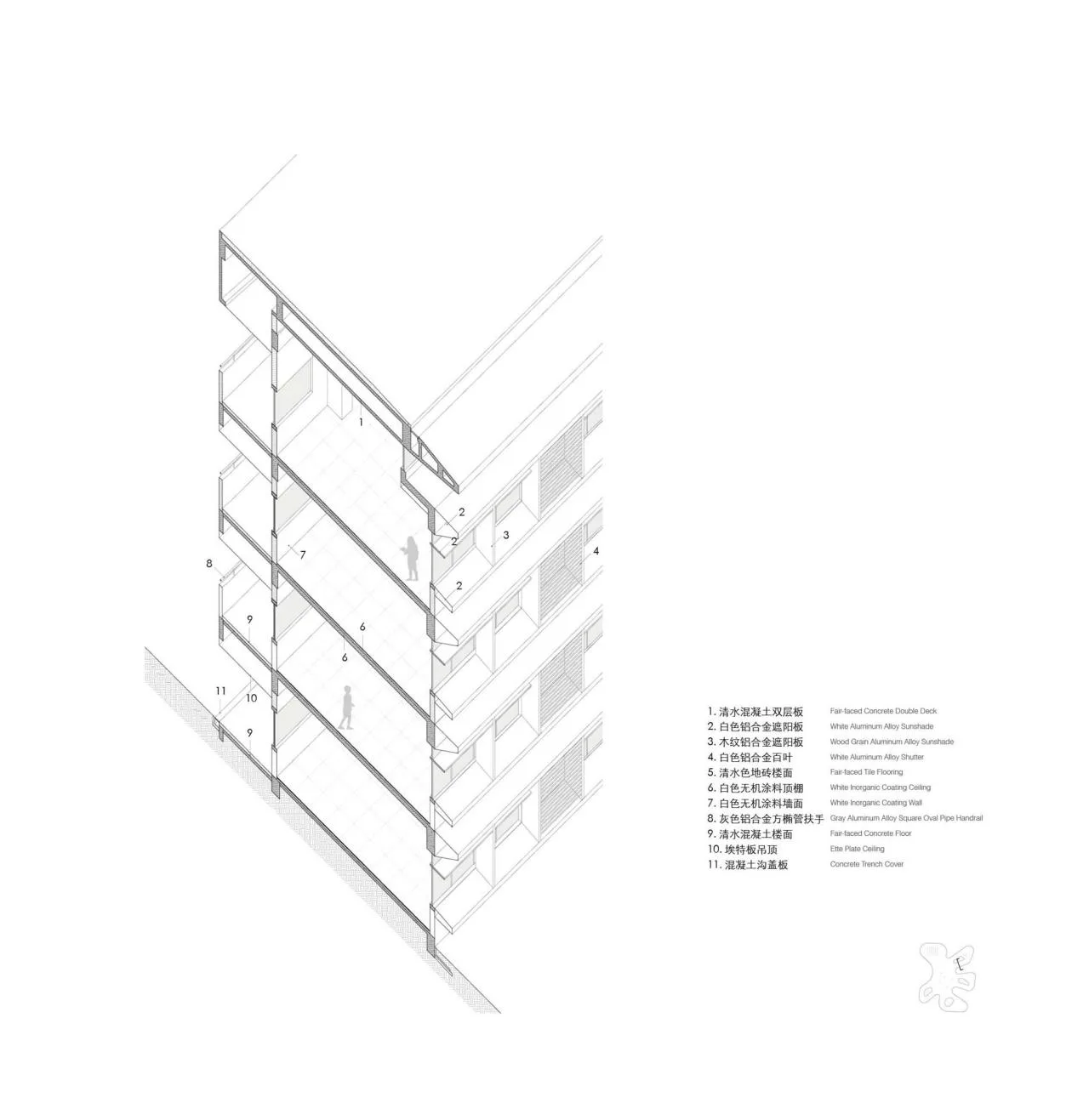
△ Schematic diagram of local section
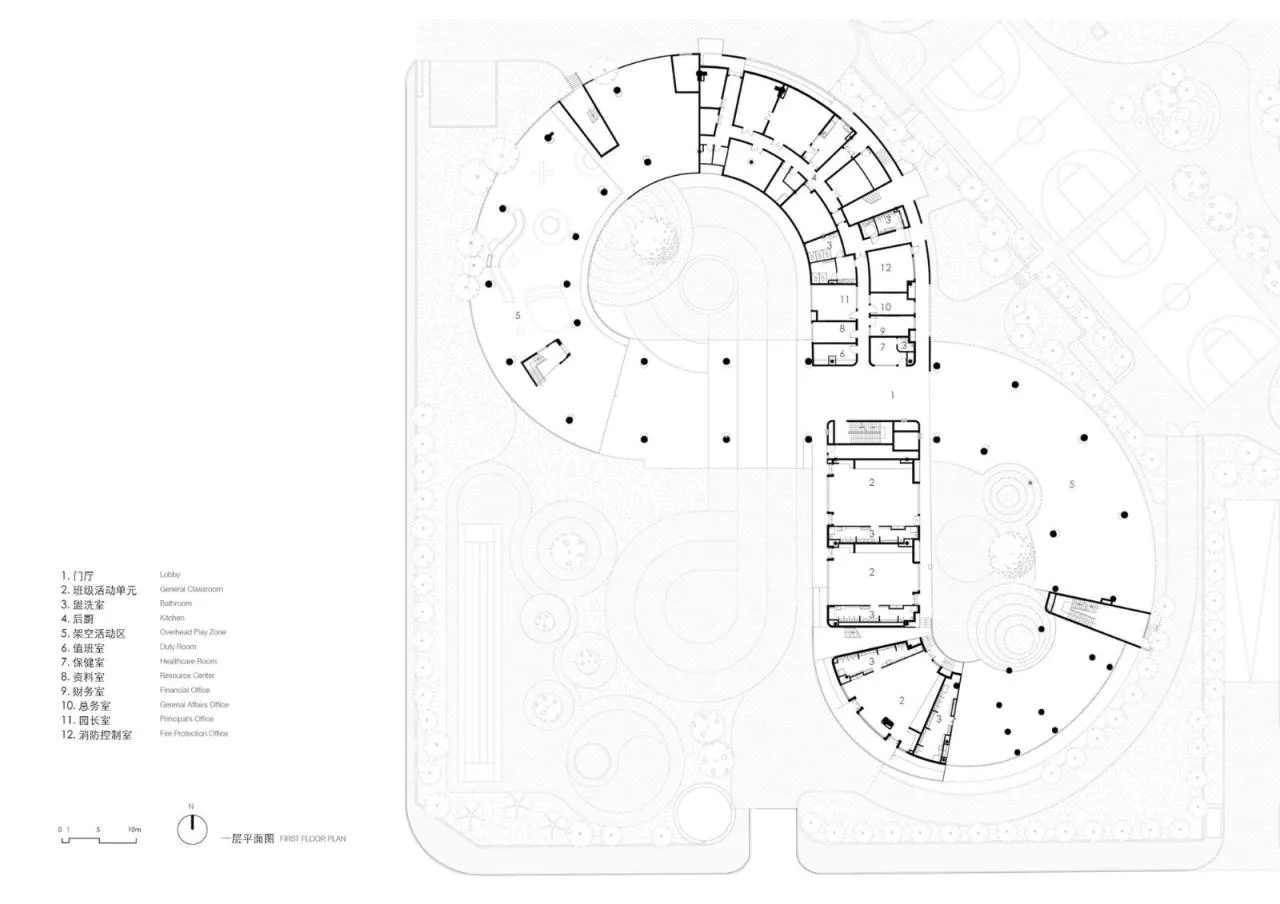
△ First floor plan
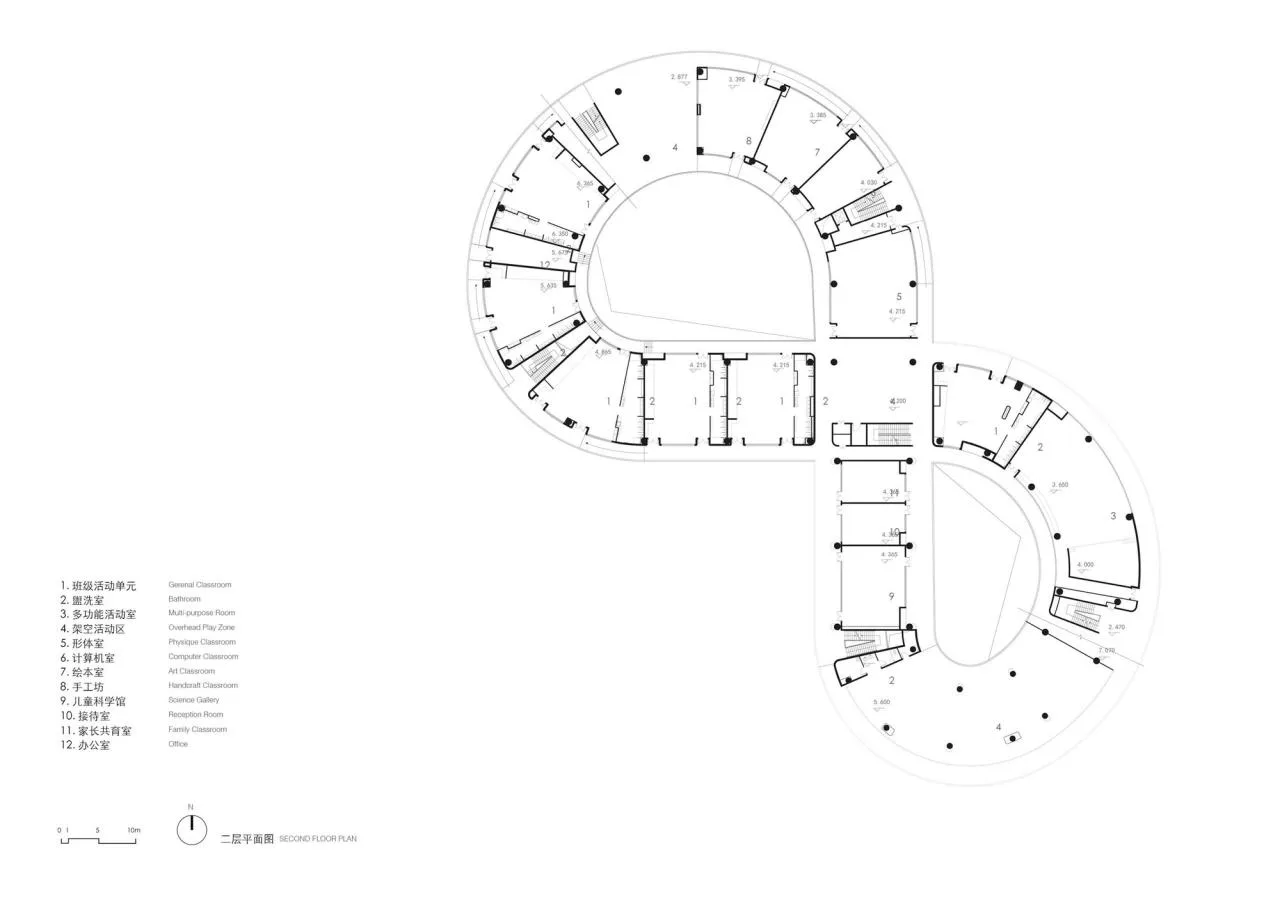
△ Second floor plan
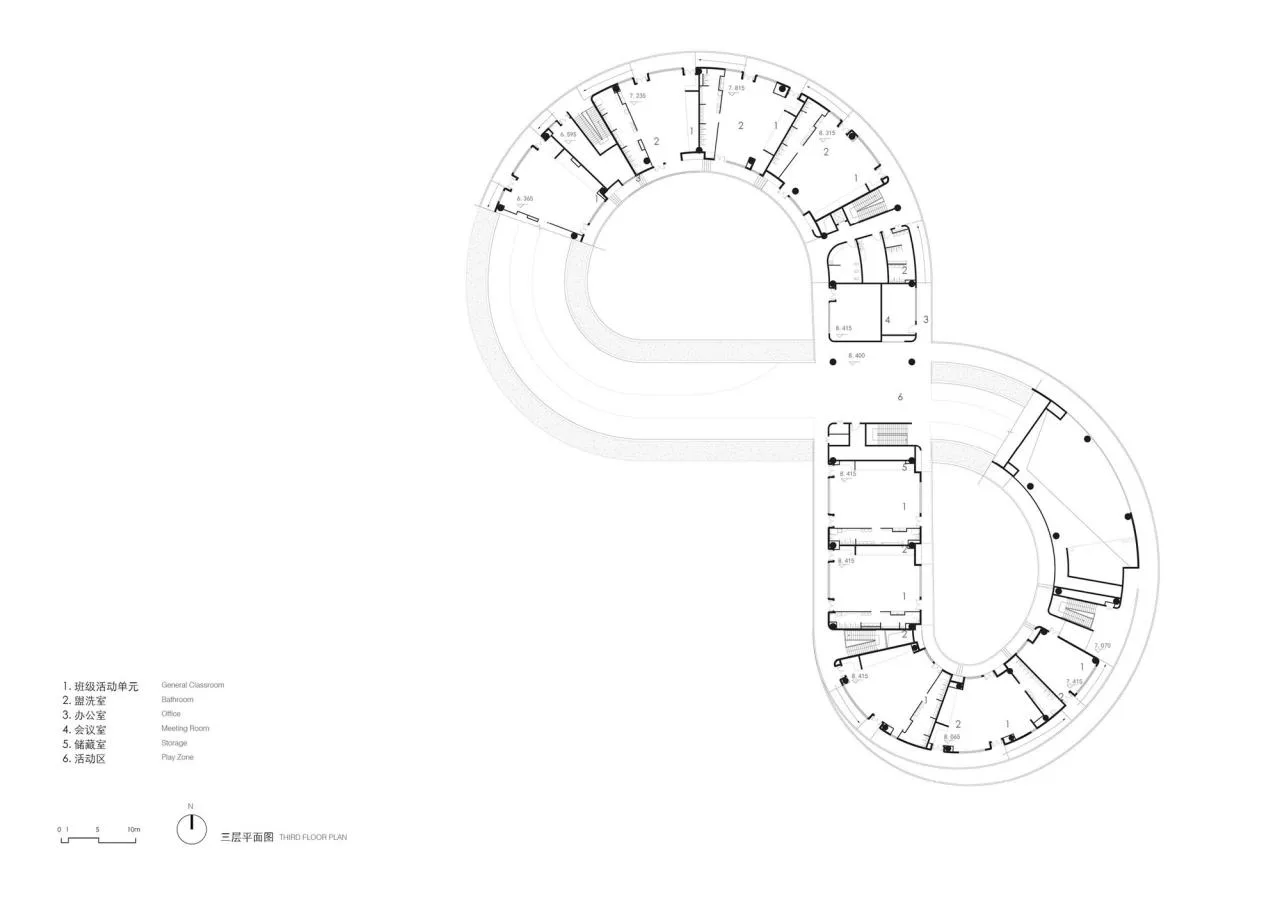
△ Third floor plan
Project Information
Architect: TAO Architectural Firm
Area: 64,700 m²
Project Year: 2022
Photographer: Chen Hao
Lead Architect: Huali
Design Team: Huali, Liu Yu, Leng Xueshuang, Wang Langhuan, Wang Yakun, Liu Jiaqi, Yang Yuting, Zhao Xinru, Li Wenjie, Xu Ting, Dai Linyi, Liu Peiyi, Wu Yongyi, Gao Kai, Li Ruoxin, Li Ziyuan, Chen Wanyu, Gong Huiqing, Liu Yingli, Li Xiang
Construction Agency: China Construction Technology Group Co., Ltd
Construction Drawing Design: Zhongyuan International (Hainan) Engineering Design and Research Institute Co., Ltd
Secondary Mechanical and Electrical Design: Lv Jianjun and KCLIN Carlin Mechanical and Electrical Design
Lighting Consultant: Beijing Yuanzhan Lighting Design Co., Ltd. (Zdp)
Landscape Consultant: Landes Design Firm (Shenzhen) Co., Ltd., Hainan Branch
Construction Unit: Hunan Sixth Engineering Co., Ltd
Client: Hainan Huandao Industrial Development Co., Ltd
Location: Haikou















Must log in before commenting!
Sign Up