
The construction of prefabricated hanging panels can be categorized into two primary methods: pre-hanging and post-hanging. The pre-hanging method involves lifting the prefabricated panel into position and accurately adjusting and securing it before the main structure is built. Afterward, the cast-in-place structure is constructed. Once the structure is complete, the panel is connected to the cast-in-place main structure via reserved steel bars. This approach offers industrial advantages such as high construction efficiency and reduced costs. So, how exactly is the pre-hanging method executed?
1. Construction Characteristics and Key Considerations
Construction Characteristics of Prefabricated Hanging Panels
Prefabricated hanging panels serve as external enclosure structures and do not contribute to the overall structural stress. Their connection to the main structure is primarily achieved through reserved steel bars or embedded components, linking them to beams and columns. Connection nodes should maintain a certain degree of flexibility. In the pre-hanging method, the process involves precise positioning and stable support of the panel, followed by reinforcement binding and formwork support for the cast-in-place structure. Temporary support elements can be removed once the cast-in-place concrete reaches the required design strength.
Key Points in Prefabricated Hanging Panel Construction
Essential aspects include: (1) proper stacking and protection of prefabricated panels on-site; (2) safe lifting and accurate positioning of panels; (3) secure connection of panels to the cast-in-place structure; (4) effective handling of joints between panel components.

2. Lifting Prefabricated Hanging Panels
Selection of Lifting Equipment
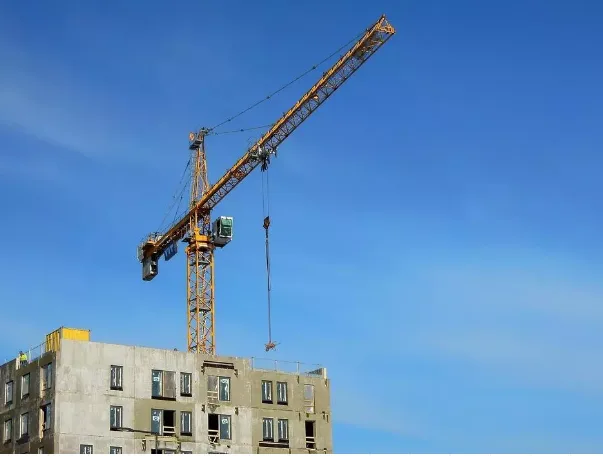
Based on the BIM design and the weight of the prefabricated panels, crawler cranes are preferred for lifting due to their capacity and safety advantages over tower cranes. Crawler cranes must work in coordination, as they also lift steel pipe fasteners, steel bars, formwork, and other structural materials. Organizing assembly line operations during construction is essential for efficiency.
Transportation and Storage
Components are transported using flatbed trucks, and prefabricated panels are stacked onsite following principles of proximity by specification, type, parts used, and lifting order. Special storage racks are employed for proper storage. Unloading involves lifting from the first two horizontal lifting points. After unloading, panels should be temporarily placed on sand piles or rubber tires for cushioning. Using a crawler crane, panels are then lifted from two vertical and two internal lifting points, flipped, and placed vertically on dedicated racks with lifting points facing upwards.

3. Construction Techniques
Construction Preparation
Prefabricated components are lifted using a truck crane. Thorough preparation is required for hoisting, positioning, and temporary support to ensure smooth operations.
- Control lines should be pre-marked on components, usually two vertical and one horizontal line. Corresponding horizontal control lines are snapped on the floor slab to guide panel positioning, while elevation control lines are marked on vertical steel bars or embedded elevation components of cast-in-place columns. Completed wiring must be inspected and corrected promptly if necessary.
- Ensure all work surfaces meet safety standards. Confirm that crane, wire ropes, snap rings, lock buckles, outer frames, electrical safety, and windproof measures are all properly maintained. Lifting equipment and hoisting tools must be inspected and verified for safe operation.
- Inspect lifting rings or embedded lifting parts for integrity, and verify their specifications, models, and BIM positioning accuracy. Conduct a trial lift by raising the component approximately 50 cm off the ground and allow it to rest momentarily to ensure safety before proceeding.
- Prior to prefabricated structure construction, select representative units for trial assembly to refine construction plans and processes based on results.
- Verify that concrete strength, appearance, and dimensional tolerances comply with standards such as GB50666-2011, JGJ1-2014, GB50204-2015, and local regulations. Confirm that prefabricated components and accessories meet design specifications.
- Check embedded sleeves and reserved holes for specification, position, quantity, and depth. Set up installation positioning marks and confirm cast-in-place component strength meets design requirements.
- Inspect temporary support embedded parts and clear debris. Confirm that supporting embedded parts facing the floor slab are installed correctly and that the floor slab’s concrete strength meets design criteria.
- Verify that temporary supports meet specifications, are flexible, adjustable, and secure after fastening, with adjustable slant supports allowing sufficient range. Check connector specifications and quantities.
- Ensure bolts and washers for precise adjustment are prepared, flexible, and user-friendly. Review the component flipping and lifting plan as well as the temporary support installation plan.
Panel Lifting, Measurement, and Layout
Before hoisting, thorough measurement and layout are essential. Each floor where panels are installed must have at least four vertical control points along the axes, measured upward from the base floor using a theodolite. One elevation control point per floor is required. Control lines should extend from the axis, and each panel should display two longitudinal and two transverse control lines.
Vertical and horizontal lines must be marked on the inside of each wall panel to correspond with floor control lines during installation. Verticality is checked at the panel’s four corners using rulers or line support plates to ensure accuracy.
Temporary Support System for Pre-hanging Panels
The temporary support system consists of horizontal and vertical constraints at the corners, combined with diagonal supports, all designed for reuse.
- Horizontal corner constraints are used to adjust and lock the panel’s horizontal position using tightened bolt groups once the panel reaches the design location.
- Vertical corner constraints handle elevation adjustments. When the panel is set to the design height, an adjustment bolt bears the panel’s weight by contacting a lower embedded steel plate, restricting vertical movement.
- Diagonal supports are made from steel pipes, with bolt sleeves reserved on the panel. During positioning, elevation is adjusted before installing diagonal supports. Connections between diagonal braces and the panel can be pre-installed, tightened, and angle-adjusted prior to panel lifting. Only the support rods are installed when setting up the braces. Connections between diagonal braces and floor slabs are laid out before hoisting. Once installed, support rod lengths are adjusted to ensure panel verticality.
4. Beam-Slab Joint Construction
(1) Formwork Installation: After panel installation, draw control lines from the floor elevation point and mark the location of the cast-in-place beams on the panels. Bottom formwork for beams is supported based on these positioning lines. One side formwork is replaced by the hanging panel, while the opposite side is fixed to the panel’s embedded bolt sleeve using tension screws after reinforcement binding. Slab supports follow cast-in-place structural methods.
(2) Reinforcement Binding: Once panels are fixed, reinforcement binding for the cast-in-place beams begins. If beam hoop reinforcement conflicts with the panel’s reserved hoop reinforcement, adjust the beam hoops accordingly. Temporary and permanent fixing of upper panels should be accurately positioned and connected with lower panels or beam reinforcement to prevent installation issues.
(3) Leak Prevention: To prevent grout leakage at joints between beam formwork and panels, apply leak-proof adhesive strips on formwork where it contacts the panel. Tighten tension screws to secure the formwork firmly against the panel. After panel installation, seal slab joints with leak-proof tape to prevent grout leakage during pouring. At panel tops flush with floor slabs, apply adhesive strips and iron sheets to prevent concrete overflow staining.
5. Joint Treatment
Joints between prefabricated panels must be treated per design specifications using waterproof and fire-resistant methods. Treatment occurs after structural work is complete. Thoroughly clean joints before application. If damaged, repair and harden with specialized materials.
A 30mm polyethylene foam rod can be pre-installed on the outdoor side of panels during lifting, serving as backing for sealant application. To protect panel surfaces from sealant contamination, cover seams with decorative paper or adhesive strips on both sides. Sealant application should complete horizontal and vertical joints within 300mm of cross joints in one operation, ensuring proper thickness, bonding quality, and appearance.
On the interior side, use water-expanding waterstop strips, carefully controlling filling depth with a steel ruler before applying refractory joint materials. Waterproof joint construction must remain dry for 72 hours and should not be performed at temperatures below 5°C or during rain.
Exposed metal parts at joints and nodes require anti-corrosion treatment. Damaged galvanized layers at welds must receive three layers of anti-corrosion coating. Metal parts with fire protection requirements should be coated with fireproof paint.














Must log in before commenting!
Sign Up